Best Budget MIDI Keyboard — 7 Controllers That Actually Deliver

Best budget MIDI keyboard searches pull up dozens of controllers that look identical in product photos, but the gap between a usable budget controller and a regrettable one comes down to key feel, build quality, and whether the bundled software actually works.
The mistake most budget buyers make is choosing the cheapest option without checking what you sacrifice at that price point. A controller with dead-feeling keys and no velocity sensitivity costs the same as one with responsive keys and bundled DAW software — if you know where to look.
This list covers every budget price tier, narrowed to 7 controllers that deliver real value. Every pick below was evaluated on key response, build durability, software bundle quality, and verified user feedback at scale.
Below you will find our top budget picks organized by price tier, followed by a practical guide on what to prioritize when your budget is limited.
The best budget MIDI keyboard is the Akai MPK Mini MK3 — it combines keys, pads, knobs, and bundled software in one package. For the tightest budgets, the midiplus AKM320 and Korg nanoKEY2 both deliver velocity-sensitive keys over USB. If you need full-size 49-key range on a budget, the Nektar SE49 hits that target.
What Makes A Good Budget MIDI Keyboard
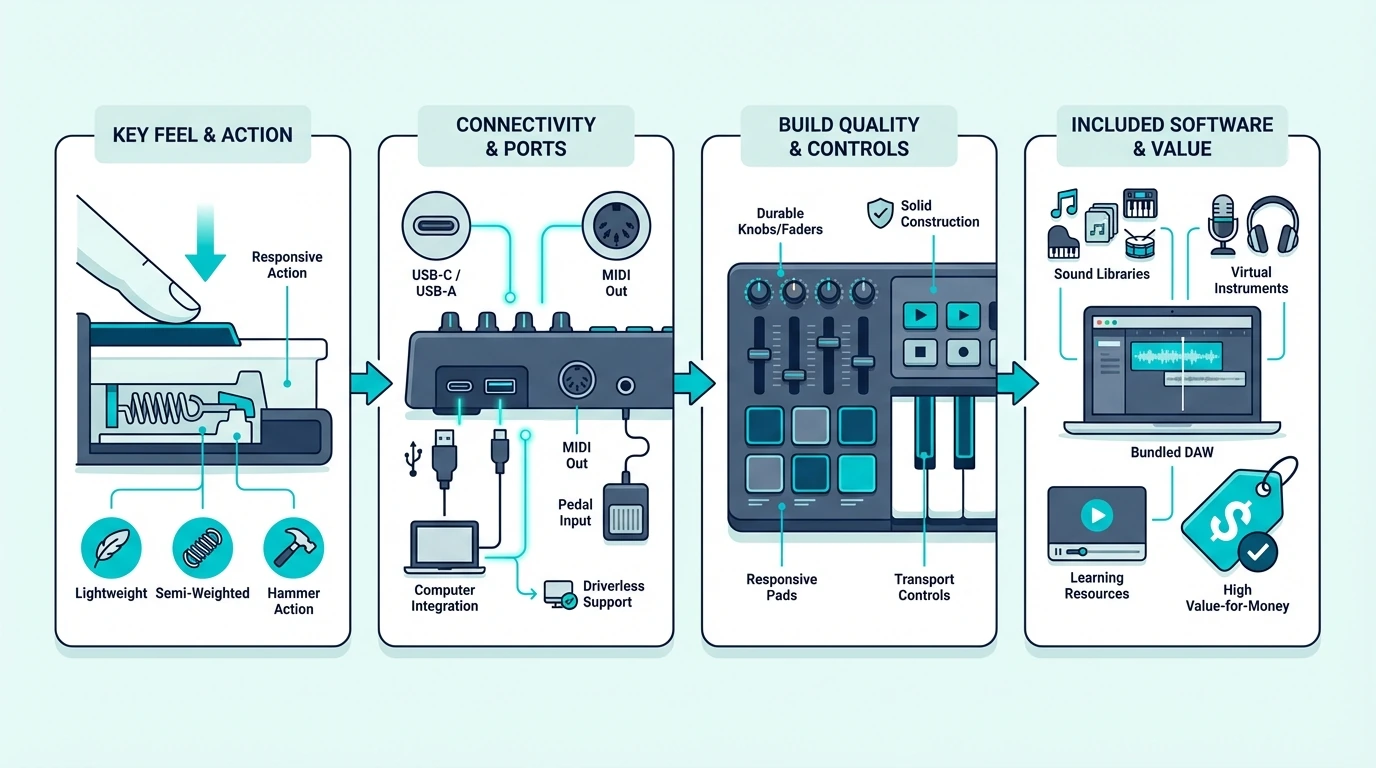
A budget MIDI keyboard needs to clear a minimum quality bar to be worth buying at all. Spending forty dollars on a controller with mushy keys and no velocity sensitivity wastes money you could put toward one that actually improves your workflow.
Velocity Sensitivity Is Non-Negotiable
The single most important feature on any MIDI keyboard — budget or premium — is velocity sensitivity. This means the keys detect how hard you press them and translate that force into MIDI velocity data.
Without velocity sensitivity, every note plays at the same volume regardless of how you touch the keys. That removes the entire expressive dimension that separates a MIDI keyboard from clicking notes with a mouse.
Every controller on this list has velocity-sensitive keys. If you find a cheaper option that lacks this feature, skip it entirely.
Build Quality At Budget Prices
Budget controllers use more plastic than premium ones — that is expected. The question is whether the plastic flexes under normal playing pressure.
We checked each controller for chassis rigidity, key wobble, and connector stability. A USB port that wiggles after three months of use renders the controller unreliable, regardless of how good the keys feel.
Software Bundles Add Hidden Value
A budget controller that ships with a free DAW lite version and virtual instruments effectively saves you an additional hundred or more dollars in software costs. That bundled software is often the difference between a controller that works on day one and one that sits unused because you have nothing to play through it.
The best MIDI keyboards at every price point include legitimate production software — not trial versions that expire.
| Product | Link |
|---|---|
Best Keys-Only Budget 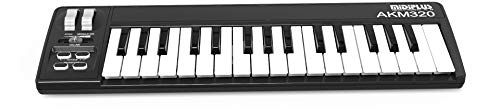 | See ratings |
Best Slim Keys-Only 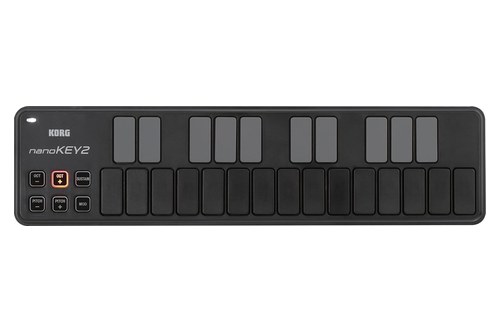 | See ratings |
Best Compact Budget 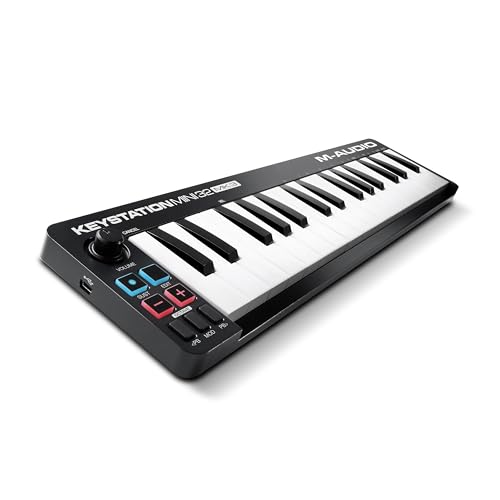 | See ratings |
Best Value 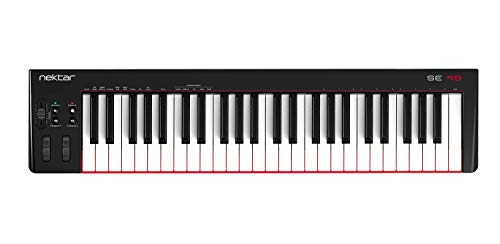 | See ratings |
Best Wireless Budget 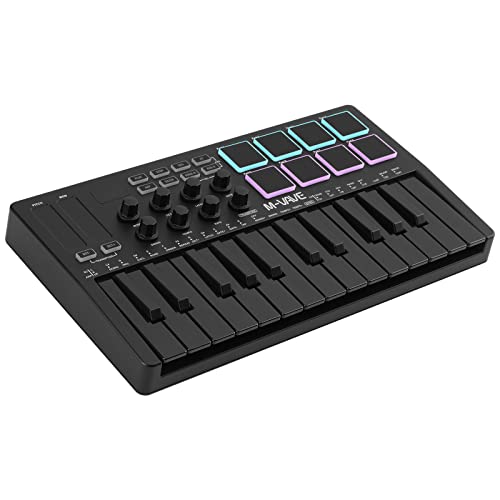 | See ratings |
Best Budget Overall 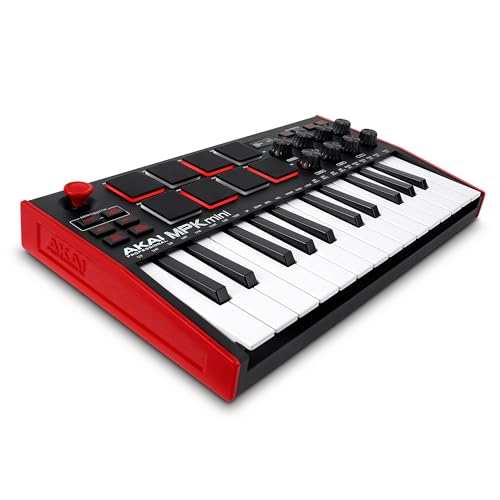 | See ratings |
Best Budget 49-Key 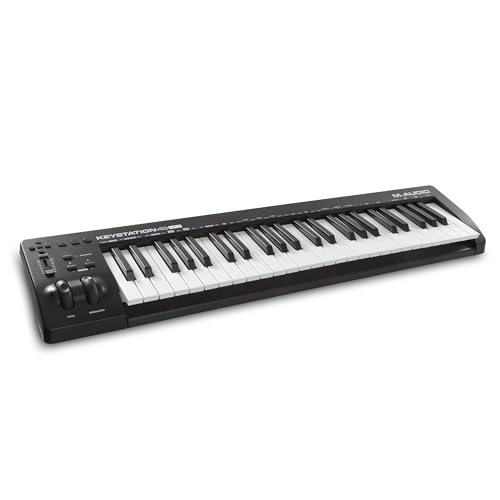 | See ratings |
What Are the Best Budget MIDI Keyboards by Price
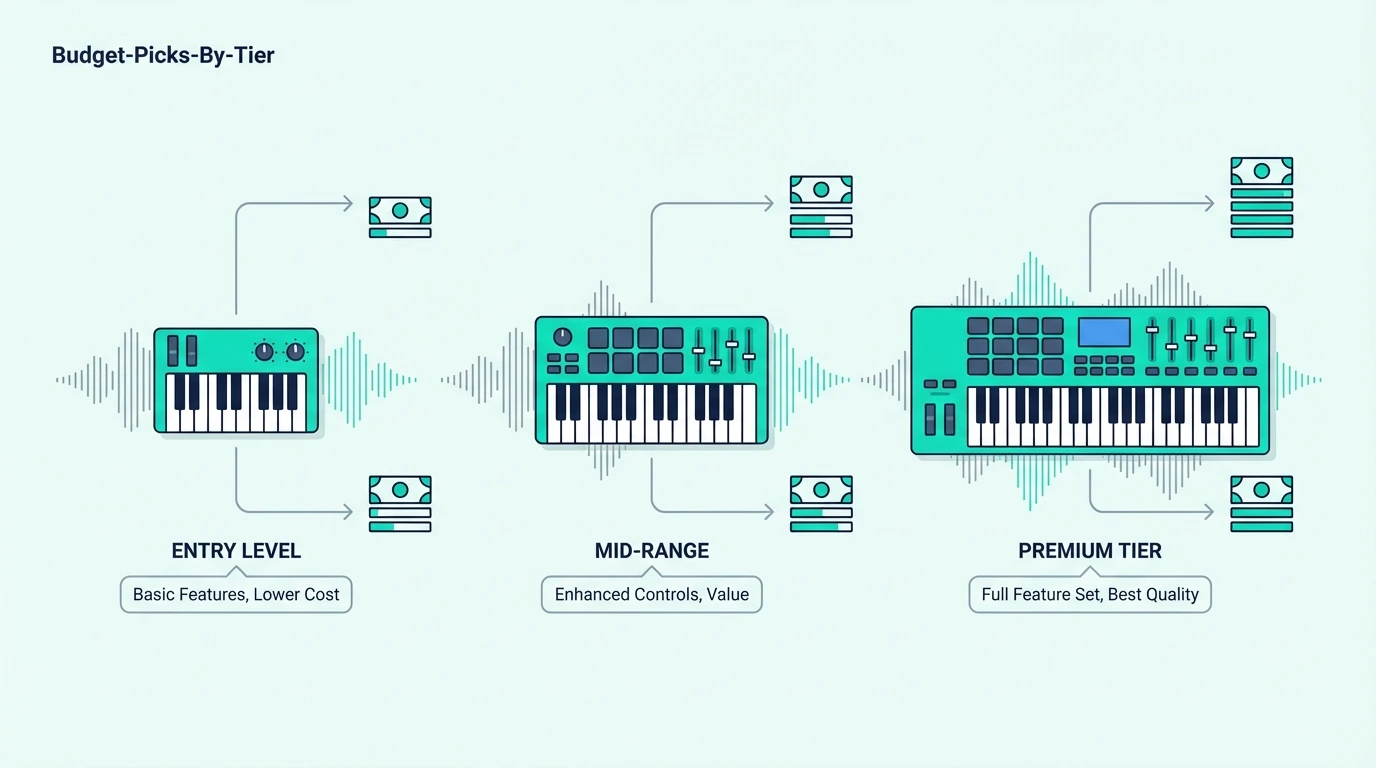
Here are 7 budget controllers organized from cheapest to most capable, each serving a different balance of price and features.
Under 50 Dollars
The midiplus AKM320 delivers 32 velocity-sensitive mini keys. No pads, no knobs, no frills — just keys that respond to your touch and work with any DAW the moment you plug in.
midiplus AKM320
Under 80 Dollars
The Korg nanoKEY2 is the pared-down pick: 25 velocity-sensitive keys, power and MIDI over one USB cable, and a weight of 244 g (0.54 lb), per Korg’s specifications. If portability matters, Korg built it for laptop setups, and it is 16 mm thin.
Korg nanoKEY2
The M-AUDIO Keystation Mini 32 MK3 steps up from the bare-bones picks by bundling MPC Beats, a full DAW, with AIR’s TubeSynth, Electric and Bassline instruments and Melodics lessons. You get 32 mini keys plus production software.
M-AUDIO Keystation Mini 32 MK3
The Nektar SE49 is the standout in this tier. It gives you 49 full-size synth-action keys. If you want two-handed playing range without breaking budget, this is the pick.
Nektar SE49
The M-VAVE 25 Key MIDI Controller packs 25 keys, 8 drum pads, 8 knobs, and Bluetooth connectivity into one controller. The Bluetooth option lets you produce on a tablet or phone without cables.
M-VAVE 25 Key MIDI Controller
Under 110 Dollars
The Akai Professional MPK Mini MK3 is the most popular budget controller for good reason. Twenty-five keys, 8 MPC-style pads, 8 assignable knobs, a built-in arpeggiator, and MPC Beats software — all in one package.
Akai Professional MPK Mini MK3
The M-AUDIO Keystation 49 MK3 gives you 49 full-size synth-action keys with transport controls. If you need serious key range and are willing to spend a bit more, this is the best 49-key option at this price.
M-AUDIO Keystation 49 MK3
Get Studio Tips Weekly
Join 5,000+ creators getting acoustic treatment advice every week.
No spam. Unsubscribe anytime.What Should You Look for in a Budget MIDI Keyboard
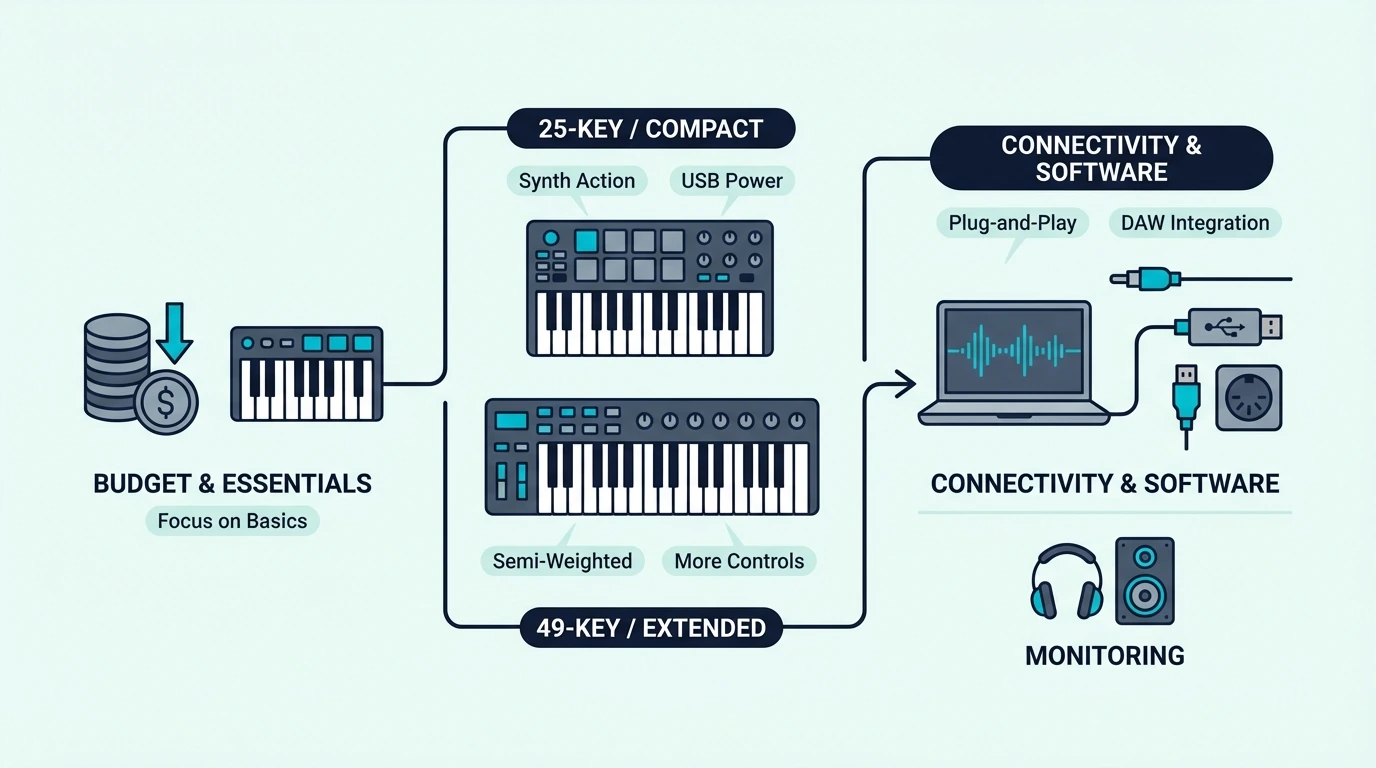
The picks above cover specific recommendations. This section helps you understand the tradeoffs at each price point so you can make an informed decision even if your exact needs do not match one of our top picks.
What You Get Under 50 Dollars
At this price point, expect 25 to 32 mini keys with velocity sensitivity and USB connectivity. You will not get drum pads, assignable knobs, or bundled DAW software.
These controllers work for basic melody input, simple chord entry, and learning the fundamentals. They are not designed for complex production workflows — but they get your hands on keys for the price of a nice lunch.
What Changes Between 50 And 80 Dollars
This tier adds meaningful upgrades: bundled DAW software (MPC Beats with the Keystation Mini 32 MK3), better build quality, and either more keys (49 full-size) or extra controls (pads and knobs). The Nektar SE49 stands out here because 49 full-size keys at this price is genuinely unusual.
Bluetooth connectivity also appears in this range with controllers like the M-VAVE. Wireless MIDI is convenient for mobile production on tablets and phones, though USB remains more reliable for latency-critical recording.
Phones can also be the controller rather than the sound source, and our guide to using a phone as a MIDI controller shows what that takes.
What 100 Dollars Gets You
At the hundred-dollar mark, you enter the territory of complete production controllers. The Akai MPK Mini MK3 bundles keys, pads, knobs, an arpeggiator, and a full DAW with virtual instruments.
This is also where key action quality improves noticeably. The M-AUDIO Keystation 49 MK3 delivers synth-action keys that feel substantially better than budget mini keys.
When To Spend More
If you find yourself limited by mini keys after a few months of production, upgrading to a weighted MIDI keyboard or a 61-key controller makes sense. The budget controllers on this list are designed as starting points — they excel at getting you productive quickly, but dedicated pianists and advanced producers eventually want better key action and more range.
The good news: MIDI is a universal standard. Every project file and workflow you build on a budget controller transfers seamlessly to any upgrade.
The Bottom Line
The Akai MPK Mini MK3 is the best budget MIDI keyboard for most producers because it packs keys, pads, knobs, and software into a single unit. If you want two-handed playing range without breaking your budget, the Nektar SE49 gives you 49 full-size keys.
For the absolute tightest budgets, the midiplus AKM320 proves you do not need to spend much to start making music with a real MIDI keyboard.
Frequently Asked Questions
What is a good starter MIDI keyboard on a budget?
The Akai MPK Mini MK3 is the most recommended starter because it includes keys, pads, knobs, and bundled software. For tighter budgets, the Korg nanoKEY2 gets you playing with 25 velocity-sensitive keys over a single USB cable.
Is it worth getting a MIDI keyboard under 50 dollars?
Yes — even the cheapest MIDI keyboards with velocity-sensitive keys outperform a computer keyboard for music input. Velocity sensitivity alone transforms how your music sounds by capturing dynamics that mouse-drawn notes cannot replicate.
Is the Akai MPK Mini good for budget producers?
The Akai MPK Mini MK3 is the default budget recommendation across the music production community. Its bundled MPC Beats software makes it the safest budget purchase. The only limitation is mini keys — pianists who need full-size key feel should look at the Nektar SE49 or M-AUDIO Keystation 49 instead.
What is the best budget MIDI keyboard with weighted keys?
True weighted (hammer-action) keys do not exist in the budget tier under one hundred fifty dollars. The closest option is semi-weighted keys on controllers like the Nektar Impact GXP49. If weighted keys are essential, consider saving for a dedicated weighted MIDI keyboard rather than compromising on a budget alternative.