Best Soundproof Interior Doors (What Actually Blocks More Noise)
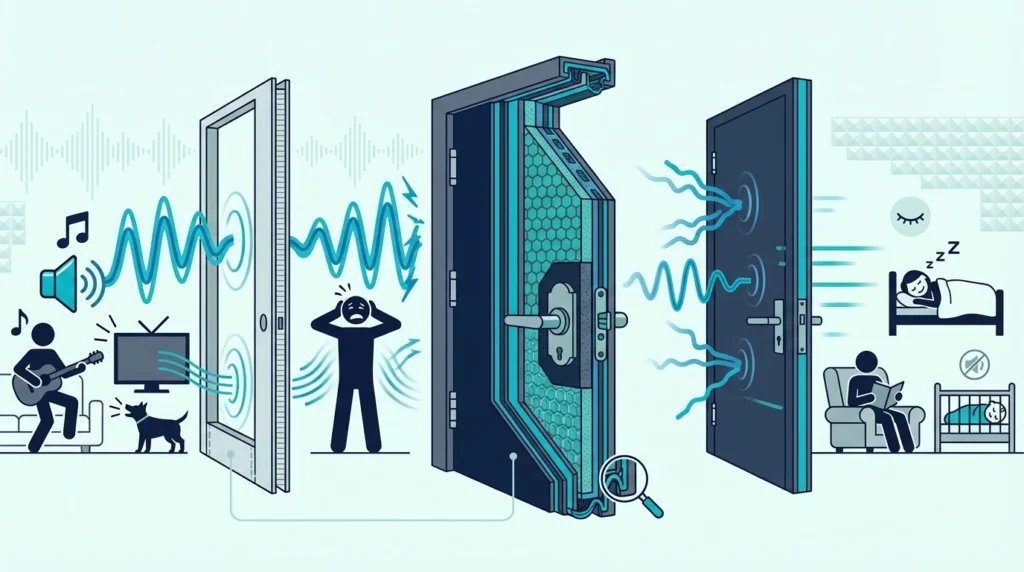
Best soundproof interior doors are usually solid-core hinged doors, but the quietest pick can still disappoint if the frame leaks and the bottom gap is wide open.
That is why people replace a hollow-core slab and still feel underwhelmed. Door weight matters, but fit, seals, sweeps, and realistic expectations matter almost as much.
The good news is that you do not need a studio-grade acoustic door to make a bedroom, office, laundry room, or media room noticeably quieter. In most homes, the biggest upgrade is choosing the right solid-core door and pairing it with proper perimeter sealing.
For the laundry room on that list, our guide to soundproofing a laundry room from the machines out adds the ventilation rule that limits how tightly a dryer’s closet door can be sealed.
Below, you’ll see which interior door types are worth buying, which ones to skip, how to choose between replacement and retrofit, and which budget upgrades help when full replacement is not practical.
The best soundproof interior doors are solid-core hinged doors with a good fit and proper perimeter sealing. Hollow-core doors are the weakest starting point, while sliding, pocket, and bi-fold doors usually seal worse than standard hinged slabs. For most homes, the smartest move is a solid-core composite or engineered-core interior door plus weatherstripping, a sweep, and realistic expectations about the rest of the wall.
Barn doors are the extreme case of a sliding door, and how soundproof a barn door really is puts JELD-WEN’s slab ratings beside the gaps.
Before You Buy: Why Most Interior Doors Fail at Blocking Sound
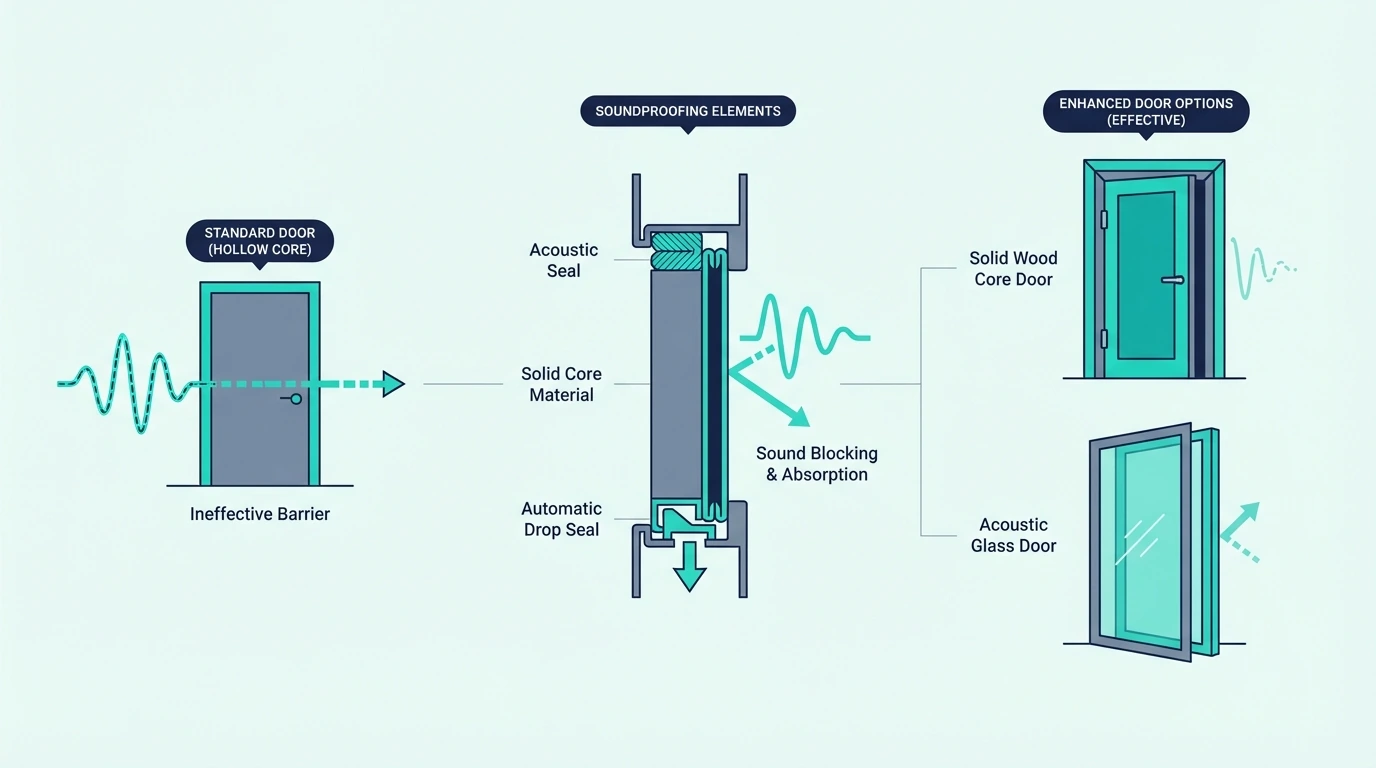
Now that the core answer is clear, interior-door soundproofing starts with fixing the weakest link. In many homes, that weak link is a lightweight hollow-core slab with open gaps around the jamb and under the door.
The hollow-core problem
Hollow-core doors are bad at blocking noise because they do not have much mass. Their thin skins and air-filled honeycomb core make them light, affordable, and easy to hang, but also easy for sound to move through.
If you’re keeping the slab for now, our page with a seal-first plan for a hollow-core door you’re keeping walks through the seals and the one-hour job.
What separates a quiet door from a loud one
That lack of mass is the starting point, but it is not the only factor. The biggest differences come from core density, slab thickness, fit, and sealing.
A heavier solid-core door usually blocks more sound than a thin hollow-core slab, but the best result still depends on a frame that closes tightly and leaves as few leak points as possible.
Replacement vs retrofit
Once you know mass and sealing drive the result, the next question is whether the current slab is worth saving. Replacing the door is better when the slab is hollow-core, flimsy, or already badly fitted.
At that point, adding accessories can help a little, but the slab itself stays the limiting factor.
If the door is already solid-core and reasonably well hung, retrofitting can make more sense. That is where the broader soundproofing hub becomes more useful than starting over with a new slab automatically.
| Product | Link |
|---|---|
Best Perimeter Seal Upgrade 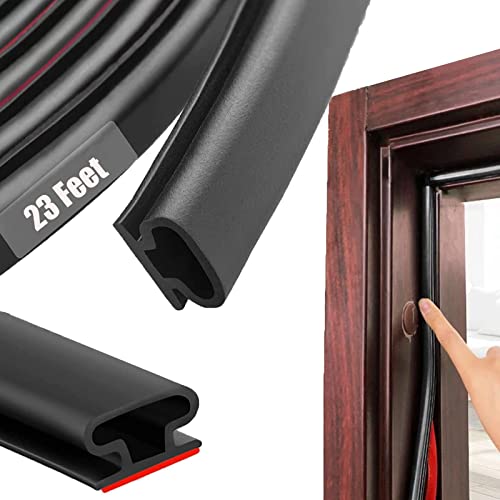 | See ratings |
Best Multi-Opening Seal 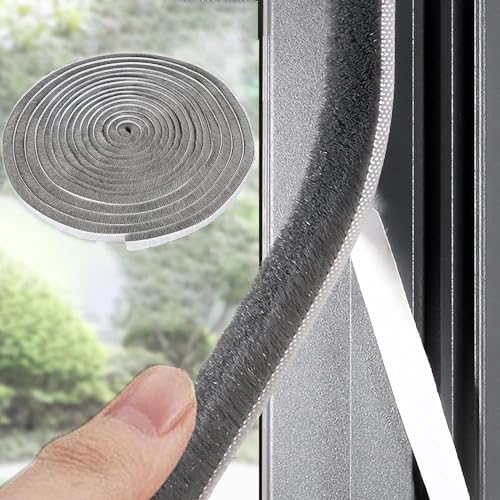 | See ratings |
Best Budget Bottom Gap Fix 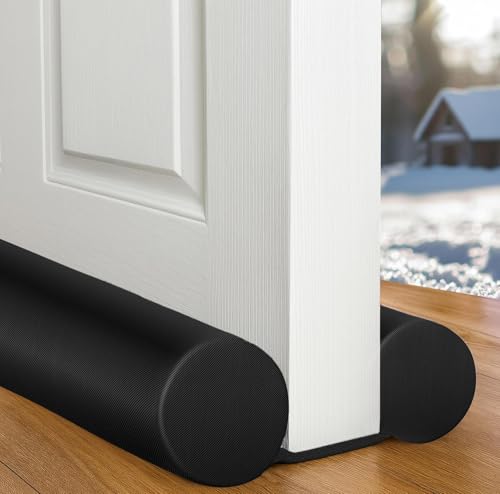 | See ratings |
Best Easy Retrofit Sweep 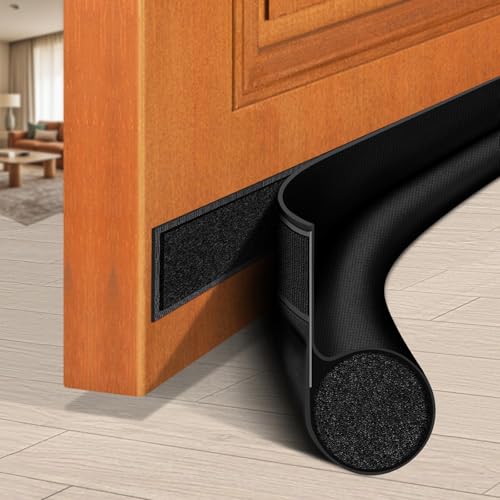 | See ratings |
Best Temporary Door Blanket 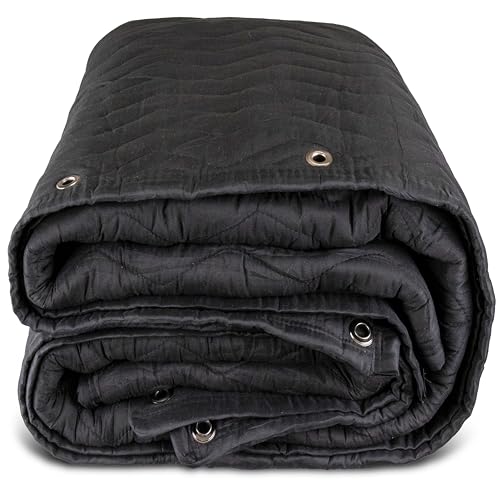 | See ratings |
Best Heavy-Duty Rebuild Layer 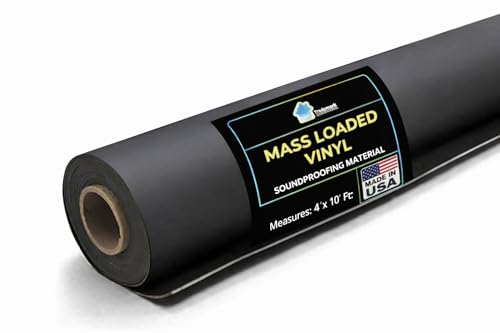 | See ratings |
The Best Soundproof Interior Doors by Use Case
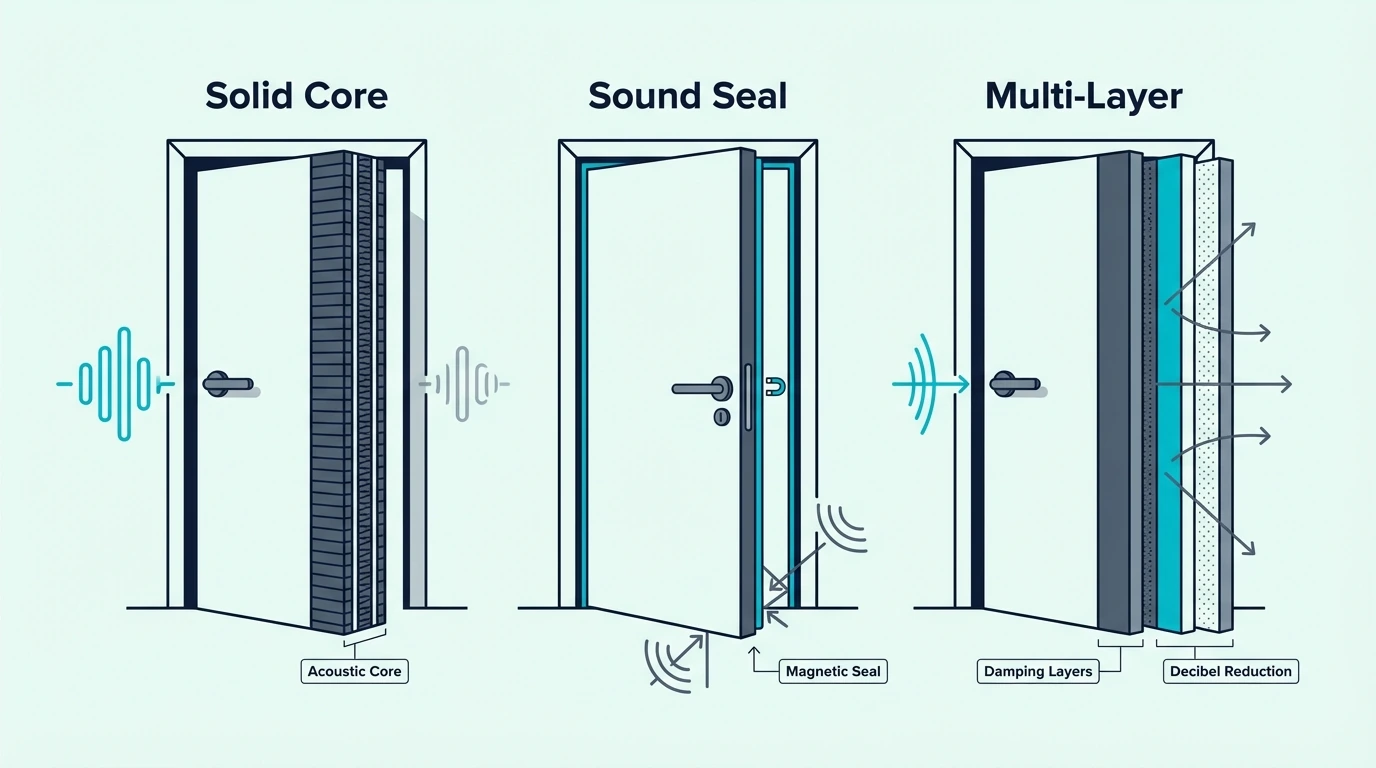
Once you know what actually matters, the best picks become more practical than flashy. The strongest interior-door options usually share the same traits: solid core, good thickness, hinged operation, and a layout that can actually seal.
The easiest way to use this section is to match the pick to the job. Start by deciding whether you need the safest all-around replacement, a stronger premium-style slab, a smarter budget jump from hollow-core, or the best fit for a bedroom or office that needs daily privacy.
That distinction matters because not every room needs the same level of finish or daily noise control. A laundry room, office, shared bedroom wall, and media room can all justify different spending even when the core soundproofing logic stays the same.
Best Overall Soundproof Interior Door
For most homes, the best overall pick is a mainstream solid-core composite or molded hinged slab from a widely available brand such as Masonite. It gives the best balance of density, availability, price, and everyday installation compatibility.
That mainstream category also tends to be easier to source locally, which matters more than buyers expect. A common solid-core slab is easier to replace, trim, hang, and pair with matching hardware than a niche premium model that creates longer lead times and fussier install decisions.
If you also care about the wider room shell, compare this with best soundproofing material and best sheetrock for soundproofing so the door upgrade fits the full partition, not just the slab.
Best Solid-Core Interior Door For Soundproofing
If you want the strongest premium-style option, an engineered solid-core interior door from brands such as Belldinni or higher-end MDF-core lines is the best category to shop. These doors pair better slab density with cleaner factory finishing and stronger sealing potential.
They also make more sense in rooms where privacy has a real daily payoff, such as work-from-home offices, media rooms, and bedrooms beside busy living spaces.
That is the tier worth considering when you already know the room is used hard every day and the door will stay there for years. If the project is more about fixing a glaring hollow-core weakness than building a polished forever room, the mainstream solid-core tier usually brings better value.
Best Budget Upgrade From A Hollow-Core Door
If the real goal is escaping hollow-core performance without overspending, the smarter budget move is keeping the finish simple and upgrading the slab quality first. The best budget upgrade is usually a plain primed solid-core slab rather than a decorative model.
That keeps the money focused on what blocks more sound: more mass and a better starting slab.
Best Interior Door For Bedrooms Or Home Offices
Once daily privacy becomes the priority, sealing consistency matters just as much as raw slab weight. For bedrooms and home offices, the best pick is a solid-core hinged slab that can close tightly against perimeter seals.
A flush or molded-panel solid-core door often works well here because privacy and voice control matter most.
This is usually the use case where buyers notice bad doors fastest. Sleep disruption, work calls, hallway chatter, and TV spill all make small sealing failures feel bigger, which is why a plain well-fitted solid-core slab often outperforms a prettier door that still leaks around the frame.
This is also where sliding and pocket doors usually fall behind. If a bedroom or office needs everyday quiet, use the same priorities you would apply to best soundproof curtains and best soundproof windows for home: fix the obvious secondary openings, but keep the solid-core door as the anchor of the room.
Choosing the Right Door: Core, Seals, and Ratings
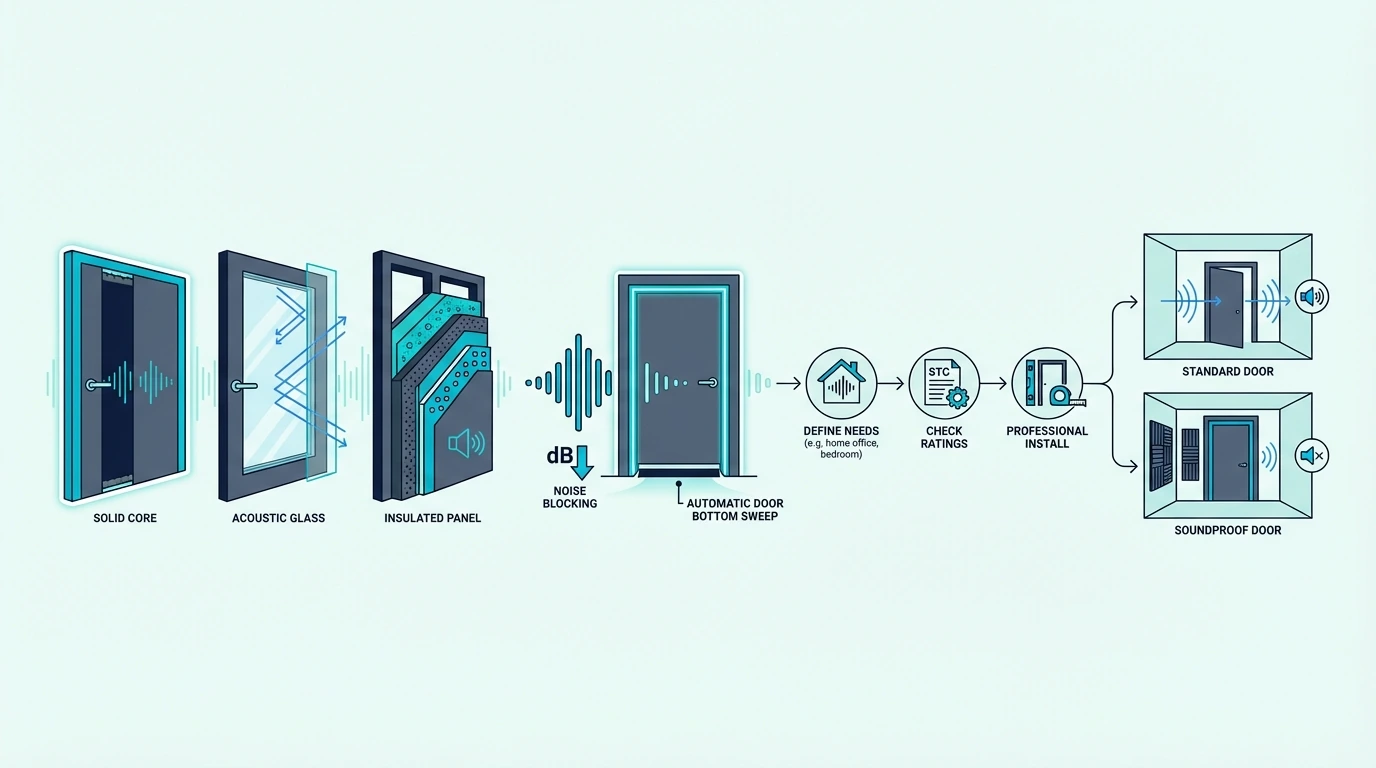
Now that the main door categories are clear, the smarter buying question is which door gives you the best total result once slab type, gaps, hardware, and room use all get factored in together.
Solid core as the default
For most interior soundproofing needs, yes, solid core is the best practical category. It gives you the mass that hollow-core doors lack without forcing you into specialty commercial acoustic-door pricing.
If you want the numbers behind that, our page on whether solid core doors are soundproof sets JELD-WEN’s hollow and solid versions of the same doors side by side.
It also gives you a better platform for every follow-up fix. Better seals, a tighter latch side, and improved bottom-gap control all matter more when the slab itself is not undermining the upgrade from the start.
Door sweeps, seals, and thresholds
A solid-core slab only delivers its full potential when the gaps around it are closed. Gaps can ruin a good slab fast.
A solid-core door with a big bottom gap or loose perimeter fit can still leak enough sound to feel disappointing.
That is why perimeter sealing belongs in the buying decision, not just the retrofit section. A product like Black Rubber Weather Stripping Door Seal Strip is the kind of low-cost upgrade that often matters more than buyers expect.
Black Rubber Weather Stripping Door Seal Strip
If you need a second perimeter option for a wider frame or mixed door-and-window leakage, 33 Ft Gray Self-Adhesive Soundproofing Weather Stripping for Doors and Windows fits the same logic.
33 Ft Gray Self-Adhesive Soundproofing Weather Stripping for Doors and Windows
What STC-style ratings actually tell you
With the right slab and seals in place, ratings help compare options. A higher STC number tells you that a tested door system resists sound better than a weaker one, but it does not guarantee silence in your exact house.
Ratings are useful for comparison, yet real-world results still depend on installation, frame quality, threshold sealing, and the surrounding wall assembly.
Retrofitting an Interior Door Without Replacing It
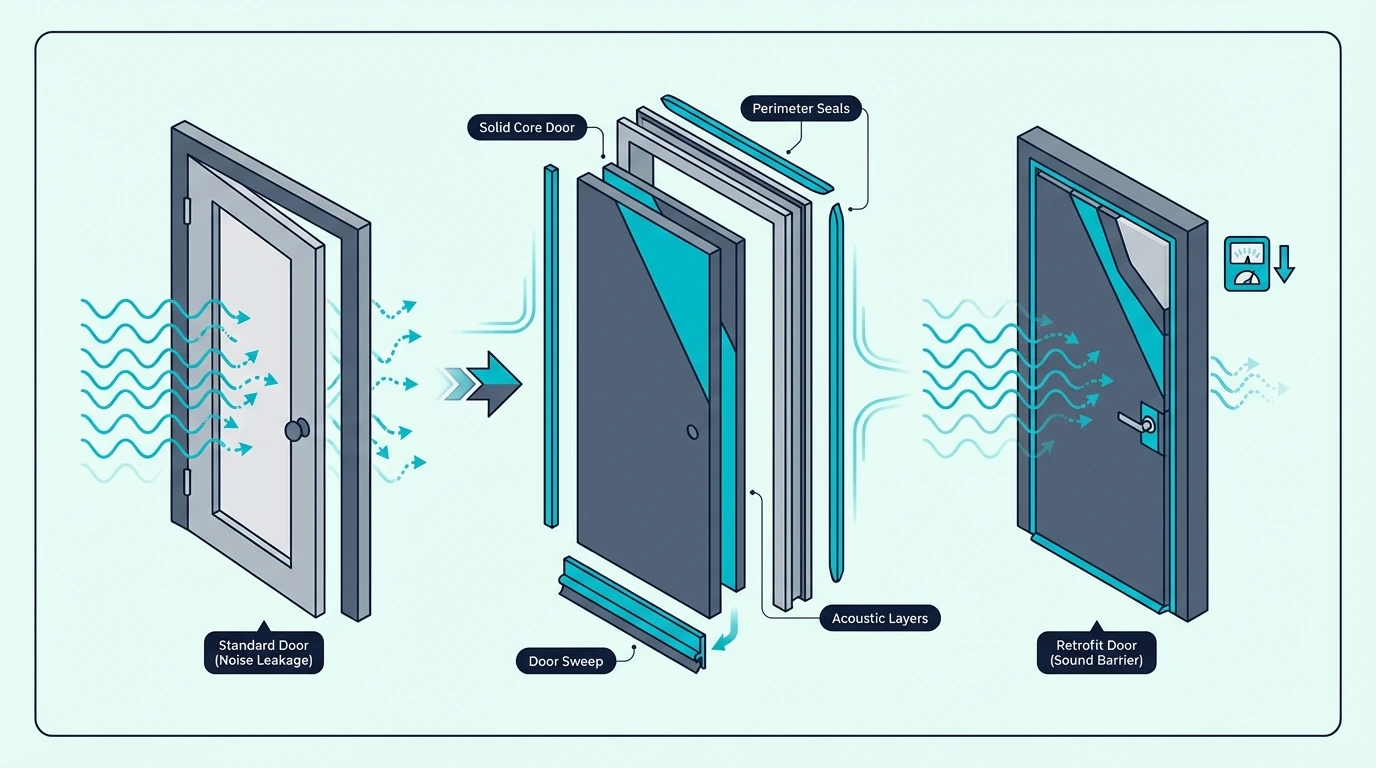
If a full replacement is not practical yet, the next best move is to attack the biggest leaks around the existing slab. Retrofitting will not turn a hollow-core door into an acoustic door, but it can still help when the gaps are doing a lot of the damage.
The retrofit fixes that help most
The best retrofit fixes are the simple ones that tighten obvious leak points. Bottom-gap blockers, better weatherstripping, and temporary heavier layers are the first things to consider.
A product like MAXTID Under Door Draft Stopper for Bottom of Doors is a practical first example because many interior doors leak heavily at the floor line.
MAXTID Under Door Draft Stopper for Bottom of Doors
A more polished alternative is HomeProtect Door Draft Stopper 36 Inch Under Door Draft Blocker Door Sweep if you want an easier quick retrofit.
HomeProtect Door Draft Stopper 36 Inch Under Door Draft Blocker Door Sweep
When retrofitting hits its limit
Those gap fixes help, but they cannot overcome a fundamentally weak slab. Retrofitting is not enough when the door is hollow-core and the privacy demand is high.
At that point, you can improve the perimeter and still remain stuck with a lightweight door that simply does not have enough mass.
That is also when a heavier temporary layer like US Cargo Control 96 x 80 in Extra Large Sound Dampening Blanket with Grommets makes more sense as a stopgap or test than as a permanent answer.
US Cargo Control 96 x 80 in Extra Large Sound Dampening Blanket with Grommets
If you are going beyond stopgaps and actually rebuilding the opening or the partition beside it, a heavier material such as Trademark Soundproofing Mass Loaded Vinyl 1lb belongs in the conversation too.
Trademark Soundproofing Mass Loaded Vinyl 1lb
Budget expectations
Expect retrofits to cost less but also do less. If you need the lowest-cost path first, compare these fixes with best soundproofing panels and best insulation for soundproofing so you do not buy a door accessory when the bigger weakness is really the surrounding build.
The practical budget ladder is simple: seal a decent door first, replace a bad hollow-core slab second, and save heavier rebuild measures for openings that still fail after those basics are done. That sequence avoids overspending on accessories when the slab is hopeless and avoids unnecessary full replacement when the real issue is just air leakage.
That order also makes troubleshooting easier. When you change one weak point at a time, it becomes much clearer whether the door, the frame, or the surrounding wall is still the main problem.
The Bottom Line
Best soundproof interior doors are almost always solid-core hinged doors that fit well and seal well. Hollow-core slabs are the main thing to avoid, while sliding, pocket, and bi-fold options usually start at a sealing disadvantage for sound control.
When an opening has to keep its bifold, our comparison of the best soundproof bifold doors shows which folding doors carry tested ratings and which seals help the one you have.
For most homes, the smartest path is simple: replace a hollow-core door with a solid-core slab, then tighten the perimeter with the right seals and bottom-gap control. If the room still leaks badly after that, check whether the next weak link is the window, the curtain strategy, or the wider opening plan instead of assuming the door is still the only problem.
Frequently Asked Questions
What are the best interior doors for sound proofing?
The best interior doors for soundproofing are usually solid-core hinged doors because they offer more mass and better sealing potential than hollow-core doors. A well-fitted solid-core composite or engineered-core door is the best practical starting point for most homes.
What is the best door to block out noise?
The best door to block out noise is usually a solid-core hinged door with tight perimeter sealing and a controlled bottom gap. A good slab helps, but the frame fit and seals matter enough that a poorly sealed premium door can still disappoint.
Is sound deadening doors worth it?
Yes, if you mean upgrading a weak interior door so it leaks less sound. Replacing a hollow-core slab or sealing a decent solid-core door is often worth it, but expectations should stay realistic because the surrounding wall and gaps still matter too.