Best Soundproof Windows for Home, Ranked by Lab Ratings
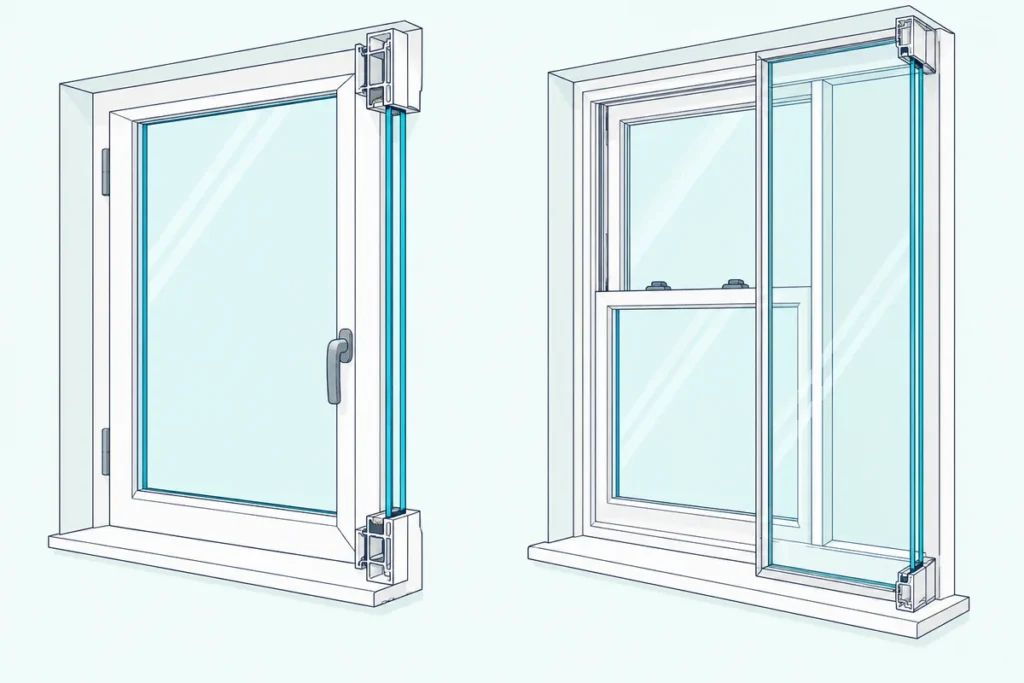
If you’re shopping for the best soundproof windows for home use, rank them by a published lab rating, not by the word “soundproof” on a brochure.
Andersen’s own report rates its standard dual-pane 400 Series casement at STC 26, the low end of what Soundproof Windows, Inc. gives for an old single-pane window, so a new window can change little.
The quietest results in makers’ published tests come from a second pane on a deep air space, which can lift an opening into the mid-40s.
This guide ranks replacement windows, interior inserts and second windows by the STC and OITC figures their makers publish, and says where a maker publishes none.
Start with the picks table, then use the sections after it to match one of them to your noise, your frame and whether you own the place.
What Are the Best Soundproof Windows for Home?
That table comes first because the ratings decide the order. The best soundproof windows for home use are second windows or inserts on a deep air space, rated STC 45 to 54 by their makers, followed by replacement windows with laminated glass and a storm or interior sash, rated about STC 37 to 47.
| Pick | Type | Published sound rating | Who publishes it |
|---|---|---|---|
| Top rated: Soundproof Windows, Inc. second window | Laminated second window behind your existing one | STC 48 to 54, no OITC published | The maker’s own STC page |
| Top rated replacement: Marvin Ultimate Casement with interior sash | Casement plus an interior sash on a 4 1/4-inch air space | STC 46 to 47, OITC 34 to 36 | Marvin’s architectural detail manual |
| CitiQuiet interior window | Removable laminated insert a few inches inside the old glass | STC 45 to 48 or higher as a system, no OITC published | The maker’s own pages |
| Marvin Ultimate Double Hung G2, laminated with storm combination | Replacement double-hung | STC 39 to 40, OITC 32 to 33 | Marvin’s manual |
| Andersen 400 Series Tilt-Wash, laminated with combination unit | Replacement double-hung | STC 37, OITC 28 | Andersen’s acoustic report |
| Best mid-range rating: Andersen 100 Series with STC upgrade | Replacement window with mismatched panes | STC 32 to 33, OITC 26 to 28 | Andersen’s acoustic report |
| Indow acrylic inserts | Press-in insert | 10 to 20 dB in Portland State lab tests, no STC or OITC in that report | Portland State’s report |
| Budget: seal the window you have | Caulk and weatherstripping | No product rating; leaks cost a window 3 to 5 STC points | NRC Canada |
Every row is the maker’s or the lab’s figure for the exact build named, so treat the ranges as the best case for that build. Guardian Glass warns of a potential 6 dB loss between a lab specimen and a panel installed on site, which is why the installation matters as much as the number.
How Do STC and OITC Ratings Compare Windows?
Those two columns need a word of explanation, because they answer different questions. STC rates how well a window blocks indoor sounds like voices and TV, while OITC rates outdoor sound like traffic, aircraft and construction, as Andersen’s sound guide puts it.
The difference is the test spectrum. ASTM E1332, the OITC standard, uses one-third-octave data from 80 to 4,000 Hz, and the standard notes that the 80 Hz band is needed to match transportation sound.
In Andersen’s 400 Series report, OITC sits below STC in every row. If your noise is a road, a rail line or a flight path, the OITC column is the one to compare.
Andersen also gives a plain-English scale. At STC 30, where most dual-pane windows perform, you’d hear and understand a loud conversation outside; at 30 to 35 you’d hear it but not follow it; at 36 to 40 it would hardly be audible.
Guardian Glass adds that each 10 dB step is roughly a halving of perceived volume. So the jump from a typical STC 28 window to an STC 48 second window is about two of those halvings, not a small upgrade.
Which Replacement Windows Have the Highest Sound Ratings?
Those scales make the replacement-window numbers easier to read. The highest-rated replacement windows in the ratings cited here are Marvin’s Ultimate Casement with an interior sash, at STC 46 to 47 and OITC 34 to 36, and Marvin’s Ultimate Double Hung G2 with laminated glass and a storm combination, at STC 39 to 40.
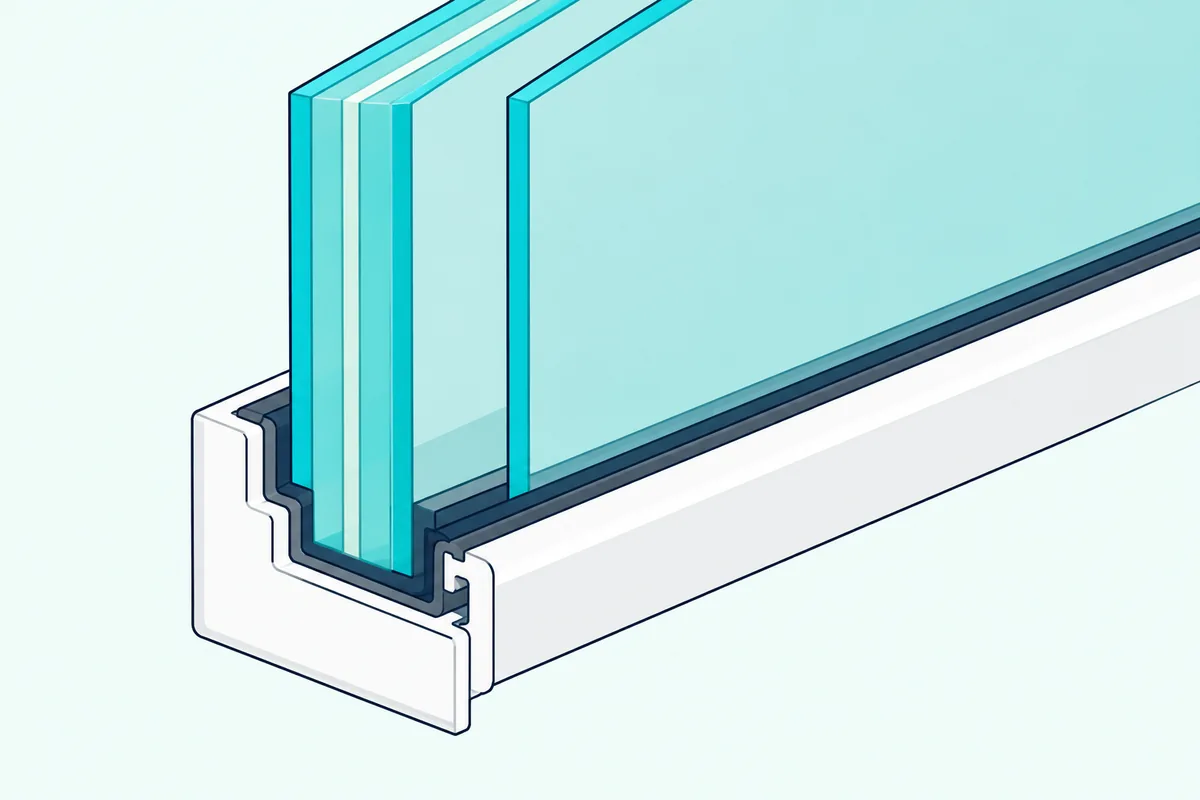
Marvin’s manual shows how much the build matters inside one model. Its Ultimate Casement with two 1/8-inch panes on a 1/2-inch space rates STC 29 and OITC 23; laminated builds of the same casement, in 3/4-inch and 1-inch units, reach STC 34 to 38 and OITC 28 to 34.
Add Marvin’s interior sash, with 1/8-inch glass on a 4 1/4-inch air space, and the same 3/4-inch unit rates STC 46 and OITC 34. The 1-inch version reaches STC 47 and OITC 36 that way.
Andersen publishes a full acoustic report for its 400 Series, with every row tested by an independent lab to ASTM E90, E413 and E1332. Its standard dual-pane casement rates STC 26 and OITC 22, its triple-pane 29 and 25, and its laminated 32 and 28.
Andersen’s 400 Series Tilt-Wash double-hung starts at STC 29 and OITC 24. Laminated glass takes it to 32 and 28, and laminated glass plus Andersen’s combination unit takes it to 37 and 28.
The 100 Series report shows a second route to better numbers. Its STC upgrade, which pairs panes of different thickness, lifts the casement from STC 30 to 33 and the single-hung from 28 to 32.
Andersen’s A-Series casement rates STC 27 and OITC 23 in standard dual pane and 33 and 29 laminated, though that report’s data dates from August 2020. Every Andersen figure here is the maker’s own, from reports dated on their cover pages.
Pella’s and Milgard’s ratings aren’t listed here. If one of them is on your shortlist, ask the dealer for the tested STC and OITC of the exact unit and glass, the way Andersen and Marvin print them.
Is Laminated Glass Better Than Triple Pane for Noise?
The Andersen rows above already hint at the answer. On the three 400 Series windows tested both ways, laminated glass beat triple pane by 2 to 4 STC points and 3 OITC points.
The casement shows it most clearly: triple pane 29, laminated 32. Andersen’s sound guide says the same thing in words, noting that going from dual to triple pane won’t necessarily give dramatic results.
NRC Canada’s Canadian Building Digest 240 explains why. Triple glazing gives essentially the same noise reduction as double glazing unless the spaces between panes are very large, and panes of different thickness give greater noise reduction (NRC Canada).
Marvin’s tables agree. Its Ultimate Double Hung G2 rates STC 27 with two 1/8-inch panes and 28 as a tri-pane, while a 3/16-inch pane paired with 1/4-inch laminated glass reaches 31.
So if you’re replacing anyway, ask for laminated glass or a mismatched pane pair before a third pane. The lab tables behind that advice are in our guide to does soundproof glass work, and Burton Acoustix’s double glazing noise guide covers dual-pane glass in more depth.
Impact-rated windows are a related case, and what hurricane impact glass adds for noise is set out there with Andersen’s Stormwatch rows. Andersen’s 400 Series impact-resistant casement rates STC 30 to 34, close to its laminated non-impact glass.
Do Window Inserts Beat Replacement Windows?
Laminated glass gets a replacement window into the 30s, but the air gap is what gets an opening into the 40s. In the published numbers, a second pane several inches from the old glass beats every standard replacement window rated in this guide.
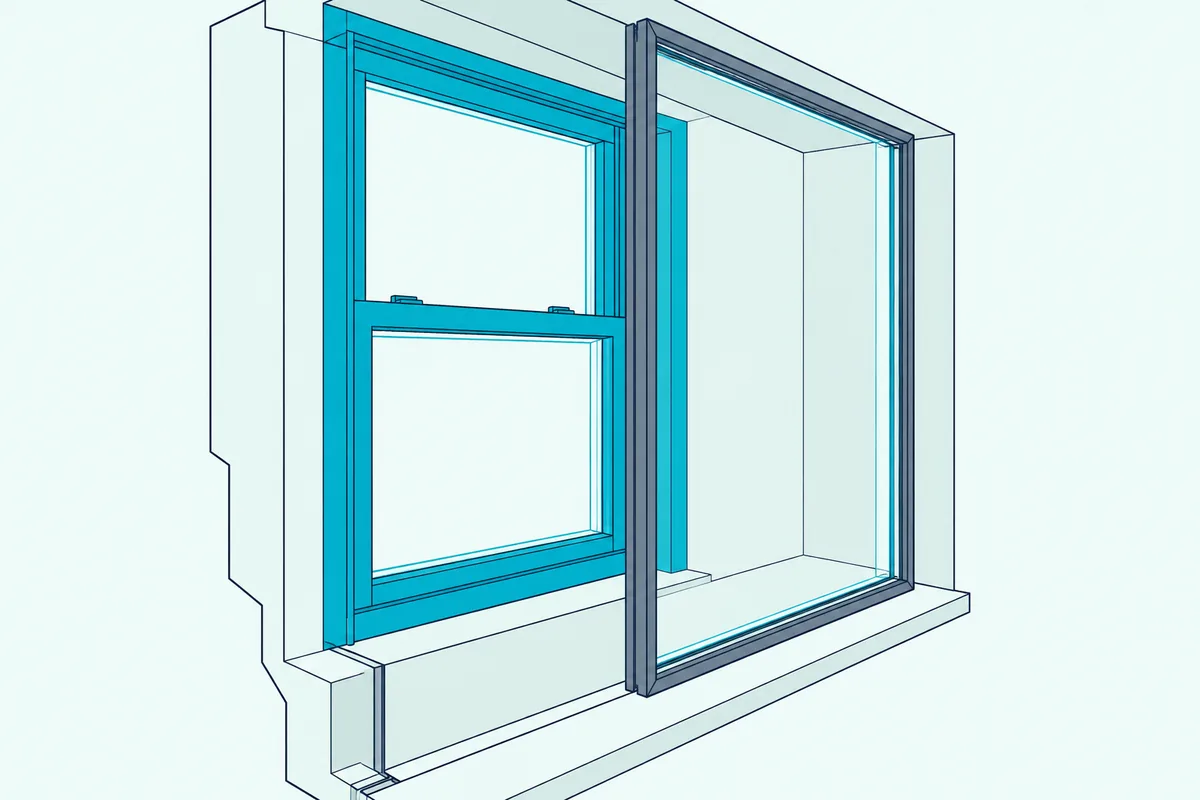
HUD’s Noise Guidebook gives the rule: the air space between panes shouldn’t be less than 2 to 4 inches if you want an STC above 40. NRC Canada puts the slope at about 3 STC points for each doubling of the air space.
Soundproof Windows, Inc. sells second windows that sit behind your existing ones, with laminated glass, an air space and spring-loaded seals. It rates them STC 48 to 54, with 48 over a single-pane window in a standard wall, and says it has tests showing up to STC 53.
Those are the maker’s own figures, and its pages publish no OITC and name no test lab. Its STC page puts typical double-pane windows at 26 to 33, close to the STC 26 to 30 Andersen’s report shows for its standard dual-pane windows.
CitiQuiet installs interior windows on the sill a few inches inside the existing window. It quotes a system rating of STC 45 to 48 or higher with an air gap often 4 to 5 inches, and says anything under 2 inches is unlikely to give meaningful results.
CitiQuiet’s own table also rates its interior units alone, from STC 29 with 1/8-inch glass to 35 with 1/4-inch laminated and 38 with 1/2-inch laminated. It publishes no OITC on the pages cited here.
Indow’s acrylic inserts, sheets of 1/8-inch acrylic edged with a silicone gasket, were tested by Portland State University’s Green Building Research Laboratory over a single 1/8-inch pane. Its final report concludes the inserts can reduce noise penetration by 10 to 20 dB under that specific test.
This guide doesn’t quote an STC or OITC for Indow’s current inserts. That’s a gap, not a verdict: ask Indow for the tested rating of the grade you’d buy.
Marvin’s interior-sash row is the same idea built into a new window, and it’s the highest-rated second-pane build in this guide with both numbers published: STC 46 and OITC 34. For which insert to buy, our roundup of the best soundproof window inserts weighs custom-fit panels against DIY and removable ones.
Is Secondary Glazing the Same as a Window Insert?
Secondary glazing is the name UK makers use for that second pane. It’s a separate interior window fitted inside the opening, which is what Soundproof Windows, Inc. and CitiQuiet sell in the US.
A UK maker of these systems adds a useful warning: a glazing Rw value is a laboratory, declared or calculated rating, not a promise that a room will become that many decibels quieter. The same caution applies to every STC figure in the picks table.
What separates a good secondary pane from a weak one is the same list HUD gives for double glazing. That means a wider air space, thicker glass, proper seals and panes of slightly different thickness.
Which Window Should You Buy for Your Noise Problem?
Those three options, replacement, insert and secondary pane, suit different homes. The right pick depends on the kind of noise, whether you own the place and whether the old windows are worth keeping.
For traffic, trains or aircraft, compare OITC first, since it’s the rating ASTM built around transportation sound. Marvin’s interior-sash casement, at OITC 34 to 36, is the highest outdoor rating any maker in this guide publishes.
For voices, TV and a neighbor’s music, STC is the fairer number. A second window or an interior insert rated in the mid-40s or higher sits well past the STC 36 to 40 band where Andersen says even loud conversations would hardly be audible.
For renters, a removable insert is the option on this list built to come out again. CitiQuiet says its units are operable and removable and that no building approval is required, though that’s its claim, so check your lease first.
For an old house with sound frames, a second window keeps the original sash. HUD’s composite-wall example shows why the window matters so much: an STC 45 wall with an STC 26 window over 30 percent of it rates only 35 overall.
If you need impact-rated windows anyway, compare their published OITC the same way; Andersen’s impact casement rates OITC 26 to 29. A sliding glass door is its own problem, and Burton Acoustix’s sliding door guide covers it.
If the window is only one weak spot among several, the sound may be getting in around a door or through the wall. The soundproofing hub lays out the room-level order, and guides like best soundproofing for walls and best door sweep for soundproofing cover the other paths.
Why Seal the Window Before You Buy Anything?
Every rating above assumes a window that’s closed tight, so the cheapest test comes first. Sealing tells you how much of the noise is leaking around the glass rather than through it.
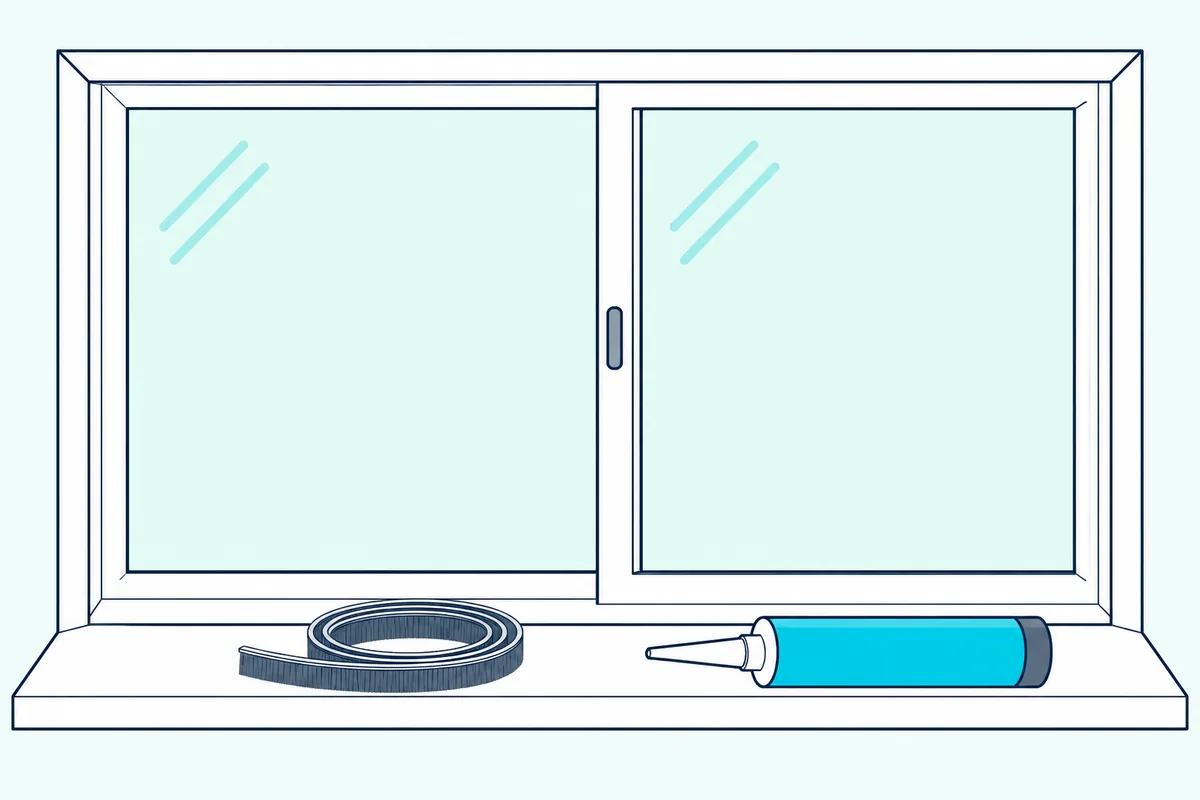
NRC Canada found that even a well weatherstripped window usually rates 3 to 5 STC points below the same window sealed shut. The better the window, the more a given leak costs it.
HUD’s figures show how small that leak can be. A one-inch-square hole or a 1/16-inch crack 16 inches long takes an STC 50 wall down to 40.
For the joints where trim meets wall and frame, a tube of TMS acoustical sealant is a 29-ounce tube of acoustical sealant sold for soundproofing. Every pick met Burton Acoustix’s rating, review and stock checks on 21 October 2026, and prices aren’t shown because they change.
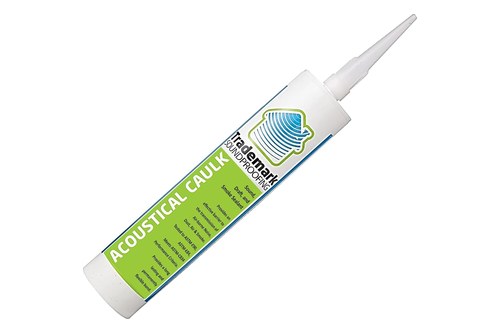
a tube of TMS acoustical sealant
For a sliding sash, this gray pile weatherstrip is a 33-foot self-adhesive strip sold for doors and windows, and its photo shows a brush pile seal fitted to a window frame. Neither product lists a sound rating, so they’re a first step, not a substitute for a better window.
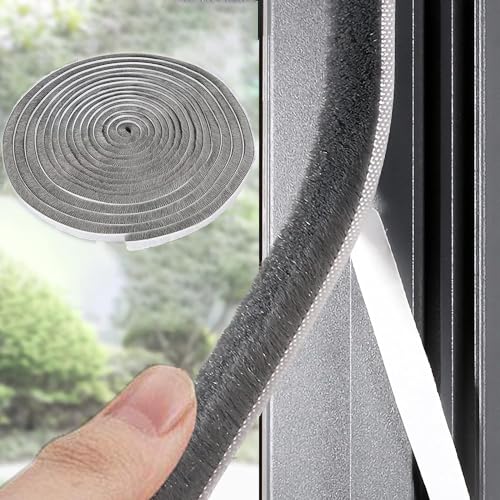
this gray pile weatherstrip
Our guide on how to soundproof windows gives the full sealing order, from caulk to locks to weatherstripping. If the room is still loud once the window is sealed, the glass is the weak point, and the picks table tells you what to move up to.
Where Do You Get a Price for a Soundproof Window?
Price is where the picks part ways, though none of the maker documents cited here prints one. CitiQuiet and Soundproof Windows, Inc. both invite you to contact them for an estimate, and Andersen points buyers to its representatives and dealers.
Soundproof Windows, Inc. claims its second windows cost about the same as replacement windows, but that’s a maker’s claim, not a survey. For dated price ranges by method, see what soundproof windows cost.
Compare quotes against the ratings, not against each other. A quote for an STC 46 interior sash and one for an STC 29 dual-pane unit aren’t buying the same quiet.
The Bottom Line
The best soundproof windows for home use are the ones with a published rating that fits your noise. On the makers’ own figures, a second window or insert on a deep air space rates STC 45 to 54, and Marvin’s interior-sash casement adds the best published OITC, 34 to 36.
If you’re replacing windows anyway, choose laminated glass or mismatched panes over a third pane, and add a storm or interior sash if the maker offers one. Seal the old window first, because a leaking window hides what the glass can do.
For the soft layers that go over the glass, see the best soundproof curtains and best soundproof blankets, but expect them to help less than a second pane.
Frequently Asked Questions
What is the most soundproof window for a home?
On the figures makers publish, a second window behind your existing one rates highest. Soundproof Windows, Inc. rates its units STC 48 to 54 and CitiQuiet its interior windows STC 45 to 48 or higher, though neither publishes an OITC. Among replacement windows, Marvin’s Ultimate Casement with an interior sash on a 4 1/4-inch air space rates STC 46 to 47 and OITC 34 to 36 in Marvin’s manual. Standard dual-pane windows sit around STC 26 to 30 in Andersen’s report.
Are soundproof windows worth it?
They’re worth it when the window is the weak point and the rating jumps enough to hear. Guardian Glass puts each 10 dB step at roughly a halving of perceived volume, so going from STC 28 to the high 40s is a big change. A swap from one dual-pane window to another may move only a few points. Seal the old window first so you know whether leaks or glass are the problem.
Can you block 100% of noise through a window?
No. Andersen says there’s no such thing as a soundproof window, only windows that reduce sound, and Guardian Glass warns of a potential 6 dB loss between a lab specimen and installed glass. A second pane on a deep air space gets closest, but the wall, door and vents still carry some sound.
Are soundproof window inserts worth it?
Yes, when the existing frame is sound and you can fit a pane several inches from the old glass. HUD says the air space should be 2 to 4 inches or more for an STC above 40, and CitiQuiet says anything under 2 inches is unlikely to give meaningful results. Portland State’s lab measured 10 to 20 dB from Indow’s inserts over single-pane glass.
Is triple-pane glass better than double pane for soundproofing?
Not by much. In Andersen’s report, triple pane added 1 to 3 STC points on the windows tested both ways, while laminated glass added more. NRC Canada found triple glazing performs essentially the same as double glazing unless the spaces between panes are very large.