Best Sound Diffuser? (4 Panels That Actually Scatter — Not Just Decorate)

Best sound diffuser won’t be the one with the highest Amazon rating — it’s the one that actually scatters sound waves instead of just absorbing them or looking acoustic.
Your room still has flutter echo and harsh reflections bouncing between walls, but most “diffuser” listings are flat PVC tiles or foam panels that can’t scatter sound because they lack the varying depths that real diffusion requires.
The four diffusers below passed our verification: real QRD wells, skyline blocks, or slat depths that create measurable scatter patterns — so you can fix those reflections without wasting money on decorative panels.
You’ll see what each panel does best, which rooms they fit, and how to avoid the fakes that dominate search results.
The BXI Wood Sound Diffuser (1D QRD) is the best overall pick for rear walls in studios and listening rooms — calculated well depths deliver precise one-dimensional scatter. For ceilings, the BXI 2D Skyline scatters in both planes. The Art3d Wood Slat panels win on aesthetics for living spaces, and the EVA Waffle diffusers are the budget entry point, four panels to a pack.
How We Chose The Best Sound Diffusers
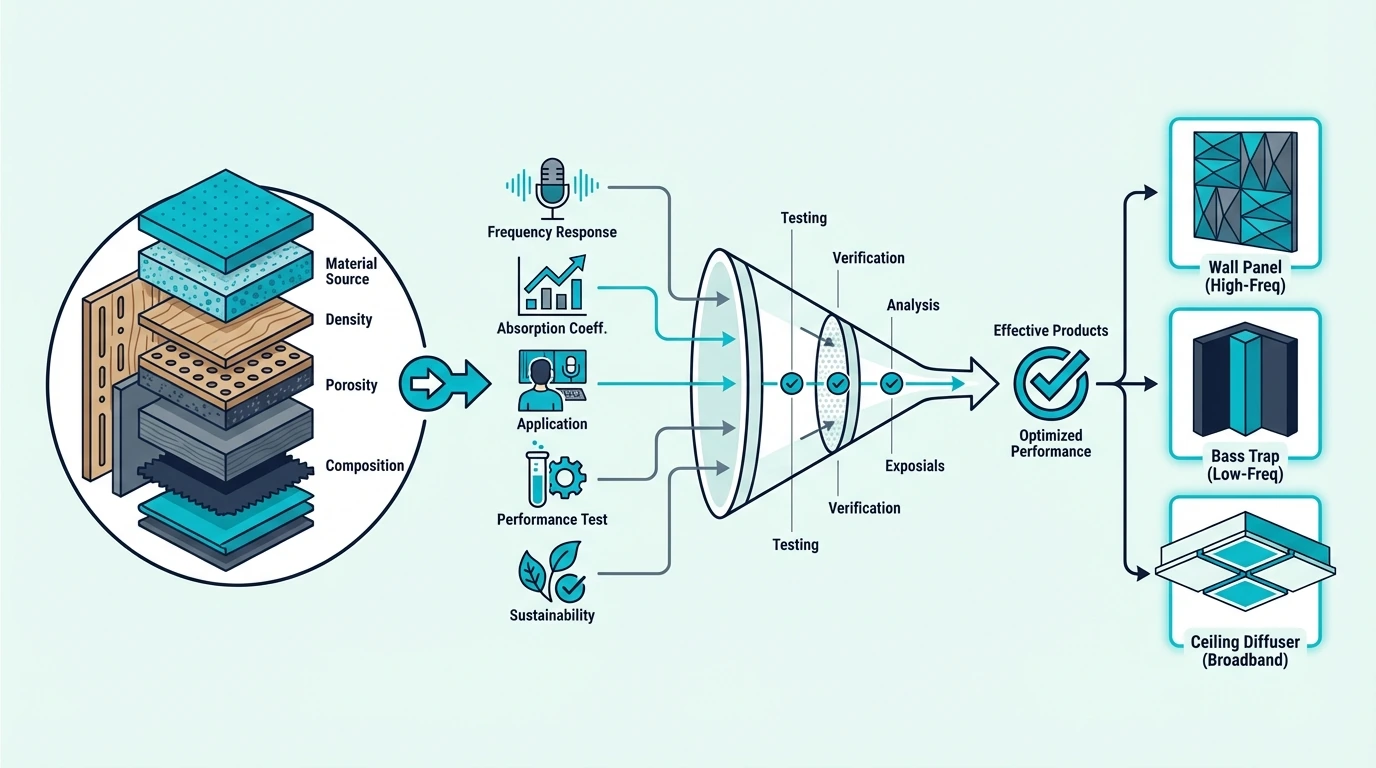
We searched Amazon for every product listed as a “sound diffuser” or “acoustic diffuser” — and rejected over 80% of the results. Most were absorption panels, decorative PVC tiles, or foam products that Amazon’s algorithm lumps into diffuser categories despite having zero scattering capability.
Material And Build Quality
A real diffuser must be rigid. Sound waves need to bounce off the surface cleanly — if the material flexes or absorbs, the panel acts as a partial absorber instead of a scatterer.
Wood is the gold standard: dense, rigid, and reflective. Every panel on this list uses either solid wood or rigid EVA composite — materials that reflect sound energy instead of converting it to heat.
We rejected all foam products (absorbers, not diffusers), all flat PVC tiles (decorative, no varying depths), and all fabric-wrapped panels (absorption panels marketed as diffusers).
Frequency Range And Room Fit
Well depth determines the lowest frequency a diffuser can scatter. A panel with 2.8-inch wells scatters from roughly 1 kHz up — covering the range where flutter echo and speech clarity live.
Deeper panels scatter lower frequencies but cost more and weigh more. For most home studios and listening rooms, the 1-4 kHz range covers the critical frequencies.
Every panel below specifies its effective scatter range so you can match it to your room size and listening distance.
| Product | Size | Link |
|---|---|---|
Best Overall QRD Diffuser 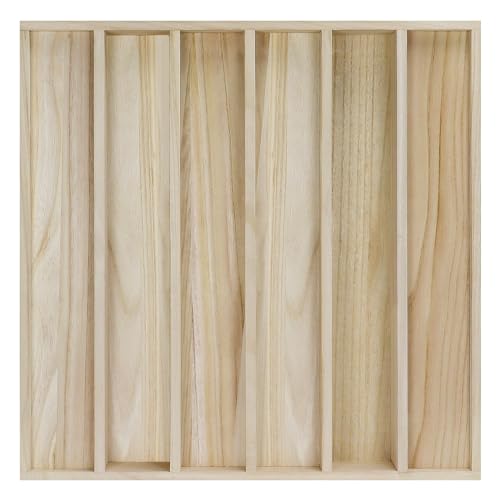 | 8 inch | See ratings |
Best Skyline Diffuser For Ceilings 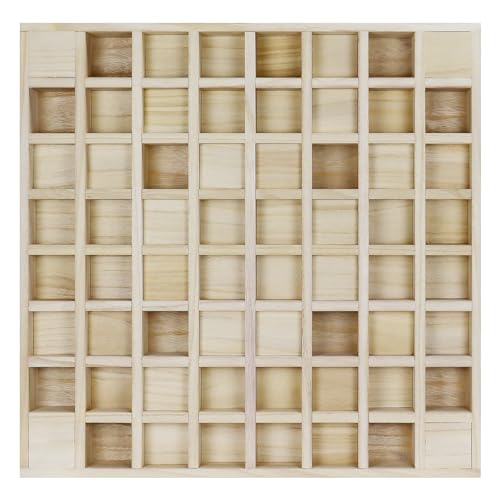 | 8 inch | See ratings |
Best Looking Diffuser For Living Spaces 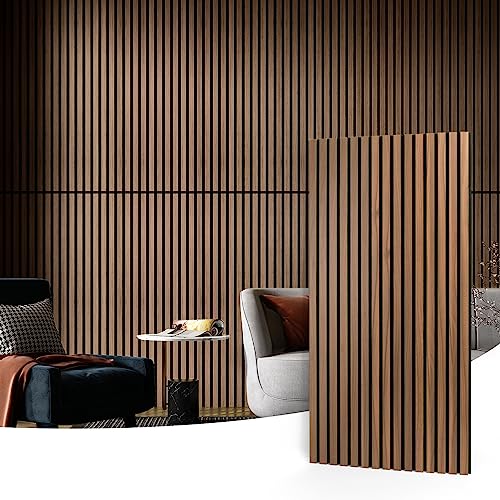 | 8 inch | See ratings |
Best Budget Diffuser Pack  | 5 inch | See ratings |
Best Sound Diffusers — Our Top Picks
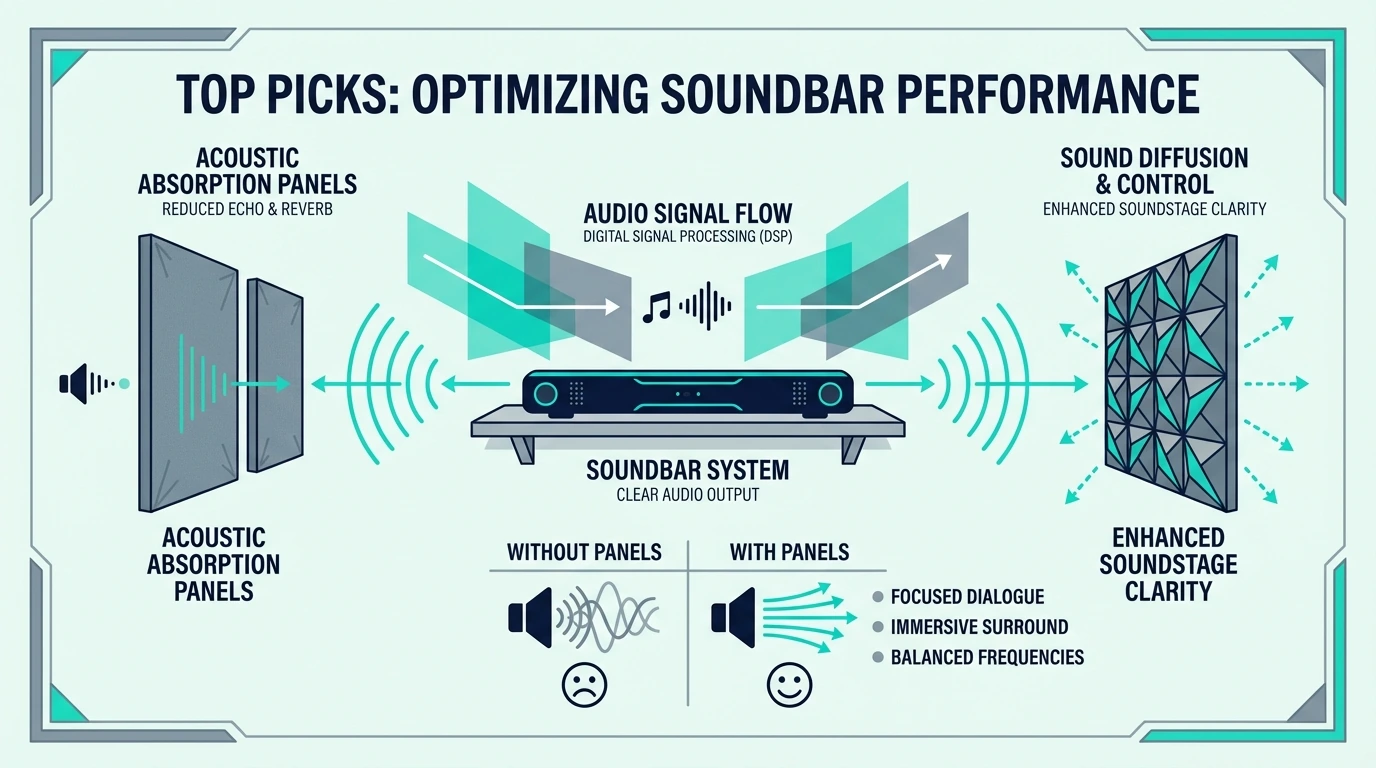
Four verified diffusers that actually scatter sound. Each serves a different use case — rear wall, ceiling, living space aesthetics, or budget entry point.
Best Overall: BXI Wood Sound Diffuser (1D QRD)
The BXI Wood Sound Diffuser (1D QRD) is a textbook Quadratic Residue Diffuser — wells of mathematically calculated depths that scatter sound horizontally across a wide arc.
BXI Wood Sound Diffuser (1D QRD)
The 1D design means it scatters in one plane (left-right when mounted vertically on a wall). For most rear-wall applications, that’s exactly what you want — the primary reflection path from speakers to rear wall to your ears is horizontal.
Solid wood construction at 9 lbs per panel means it reflects cleanly without flexing. The 2.8-inch maximum well depth scatters from roughly 1 kHz up, covering the frequency range where flutter echo and comb filtering cause the most problems in home studios.
Mount two or three panels side by side on the rear wall, centered behind your listening position. If you need vertical scatter too, rotate one panel 90 degrees.
Best For Ceilings: BXI Wood Sound Diffuser (2D Skyline)
The BXI Wood Sound Diffuser (2D Skyline) uses blocks of varying heights to scatter sound in both horizontal and vertical planes simultaneously.
BXI Wood Sound Diffuser (2D Skyline)
The 2D scatter pattern makes it purpose-built for ceilings, where reflections arrive from all directions — not just one plane like a rear wall. It also works well in small rooms where you can’t control the primary reflection path.
Same solid wood construction as the QRD model, slightly heavier at 9.3 lbs. The included mounting hardware simplifies ceiling installation, which is the hardest part of any diffuser setup.
The higher price reflects the more complex manufacturing — each block height is individually calculated rather than cut from a single well-depth sequence.
Best Looking: Art3d Wood Slat Acoustic Panels
The Art3d Wood Slat Acoustic Panels bridge the gap between acoustic treatment and interior design. The wood slat pattern scatters mid-high frequencies while looking like modern wall art.
Art3d Wood Slat Acoustic Panels
The scatter depth is shallower than the BXI models, which limits diffusion to higher frequencies. For a dedicated mixing studio, the BXI QRD or Skyline is a better acoustic choice.
But for living rooms, home theaters, and multipurpose spaces where your partner has veto power over what goes on the walls, the Art3d delivers real acoustic benefit without looking like studio equipment.
At 47×24 inches, each panel covers nearly twice the wall area of the BXI models — fewer panels needed for the same coverage.
Best Budget: EVA Acoustic Diffusers (4-Pack)
The EVA Acoustic Diffusers (4-Pack) give you four lightweight panels in one budget pack. The waffle-pattern surface creates multi-directional scatter from a rigid EVA composite.
EVA Acoustic Diffusers (4-Pack)
EVA is less dense than wood, which means slightly less clean reflection at the highest frequencies. The tradeoff is weight — at 1.2 lbs per panel, these mount with adhesive strips instead of heavy-duty hardware.
The smaller 12×12-inch size makes them versatile for odd spaces: above a desk, around a podcast mic setup, or scattered across a ceiling where full-size panels won’t fit. Use four panels to cover a 24×24-inch area — the same footprint as one BXI panel.
For home studios on a tight budget, the EVA pack lets you experiment with diffuser placement before investing in premium wood panels.
Get Studio Tips Weekly
Join 5,000+ creators getting acoustic treatment advice every week.
No spam. Unsubscribe anytime.How To Choose The Right Diffuser For Your Room
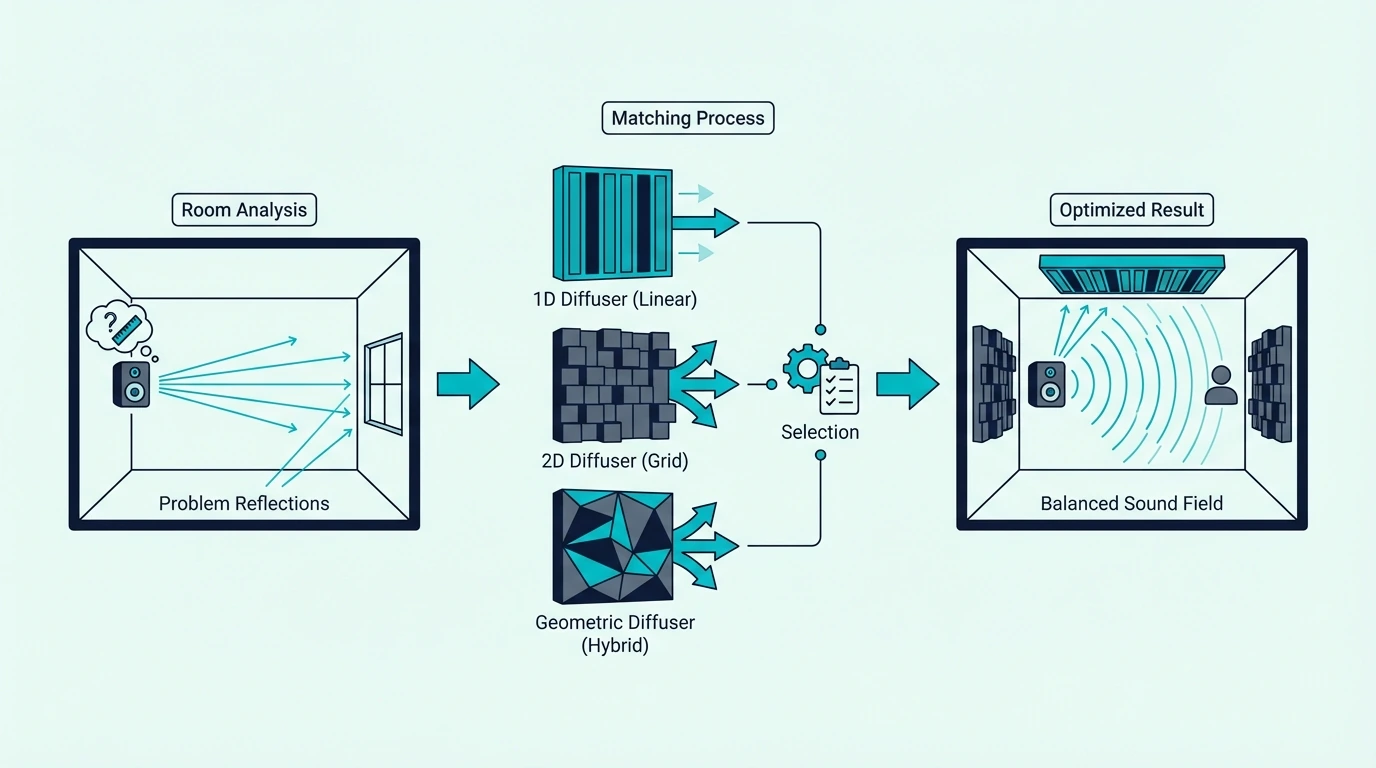
The right pick depends on three factors: where you’re mounting, what the room is used for, and how much the panel’s appearance matters.
How Big Of A Diffuser Do I Need?
Bigger panels scatter lower frequencies. The BXI 24×24-inch panels cover down to roughly 1 kHz — adequate for most studios and listening rooms.
The Art3d’s larger 47×24-inch footprint covers more wall area per panel but doesn’t scatter lower frequencies (the slat depth is shallower). It’s better for broad coverage of higher frequencies.
For full rear-wall treatment, plan for enough panels to cover the width of wall directly behind your listening position — typically 4-6 feet of coverage.
In smaller rooms under 150 square feet, two 24×24-inch panels often provide enough scatter to break up the rear wall reflection. Larger rooms or dedicated mixing suites benefit from three or four panels spanning the full wall width behind the mix position.
What Is The Best Height For A Diffuser?
Center wall-mounted diffusers at seated ear height — roughly 36-42 inches from the floor for most chairs. This positions the panel in the direct reflection path between your speakers and ears.
Ceiling diffusers go directly above the listening position. The BXI Skyline with its 2D scatter pattern is specifically designed for this orientation.
Avoid mounting diffusers too close to the listening position — sound needs at least 2 meters of travel distance between the panel and your ears for the scatter pattern to develop fully. Closer than that and the reflections arrive too quickly to separate from the direct sound.
The Bottom Line
The BXI 1D QRD is the best overall choice for rear-wall diffusion in studios and listening rooms — precise scattering, solid construction, and a reasonable price per panel.
Add the BXI 2D Skyline for ceiling treatment if vertical flutter echo is a problem. Choose Art3d for living spaces where aesthetics matter, and EVA for budget experimentation.
For a deeper understanding of how these panels work and why material rigidity matters, our sound diffuser guide covers the physics behind every design type.
Frequently Asked Questions
Are sound diffusers worth it?
Yes — if your room sounds too dead after adding absorption panels, diffusers restore the natural ambience that makes a space sound alive. They’re essential for mixing rooms and home theaters where you need controlled reflections without the claustrophobic feel of over-absorption.
What’s the best diffuser brand?
BXI offers the best combination of real acoustic engineering and reasonable pricing for home studios. For premium commercial installations, RPG and Vicoustic are the industry standards.
What is the best sound diffuser for a home studio?
A QRD diffuser on the rear wall is the standard starting point. The BXI 1D QRD gives you calculated well depths in solid wood — mount two or three behind your mix position for immediate improvement in stereo imaging and depth.