Best Mini MIDI Keyboard — Compact Controllers That Fit Anywhere Without Sacrificing Features
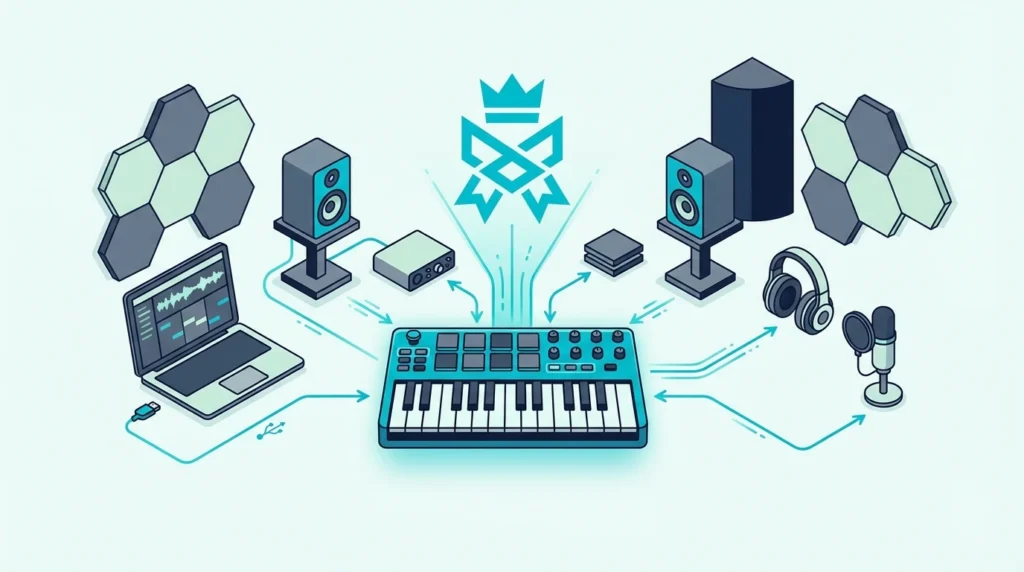
Best mini MIDI keyboard is the search that leads to the most crowded product category in music production hardware, but the controllers hiding behind that label range from bare-bones key strips to full production command centers — and picking the wrong type wastes money on a form factor that does not match how you actually create.
The problem is caused by “mini” meaning two different things depending on the manufacturer. Some mini keyboards shrink only the physical size while keeping feature density high (pads, knobs, arpeggiators). Others strip everything except tiny keys to hit the lowest possible price point. Both get labeled “mini,” but they serve completely different producers.
We sorted the mini MIDI keyboards by what they actually deliver beyond compact size. Every pick below was evaluated on key feel despite the smaller form factor, build quality under travel conditions, and whether the extras justify the price premium over keys-only alternatives.
Below you will find our top picks sorted by feature set and price, followed by a guide on choosing between mini and full-size controllers based on your real workflow needs.
The best mini MIDI keyboard is the Akai MPK Mini MK3 — it packs 25 keys, 8 MPC pads, 8 knobs, an arpeggiator, and bundled software into a backpack-friendly package for ninety-nine dollars. For pure portability at the lowest price, the Nektar SE25 weighs 1.3 pounds and costs under fifty dollars. Bluetooth users should consider the M-VAVE for wireless iPad and phone production.
What Makes A Mini MIDI Keyboard Worth Buying
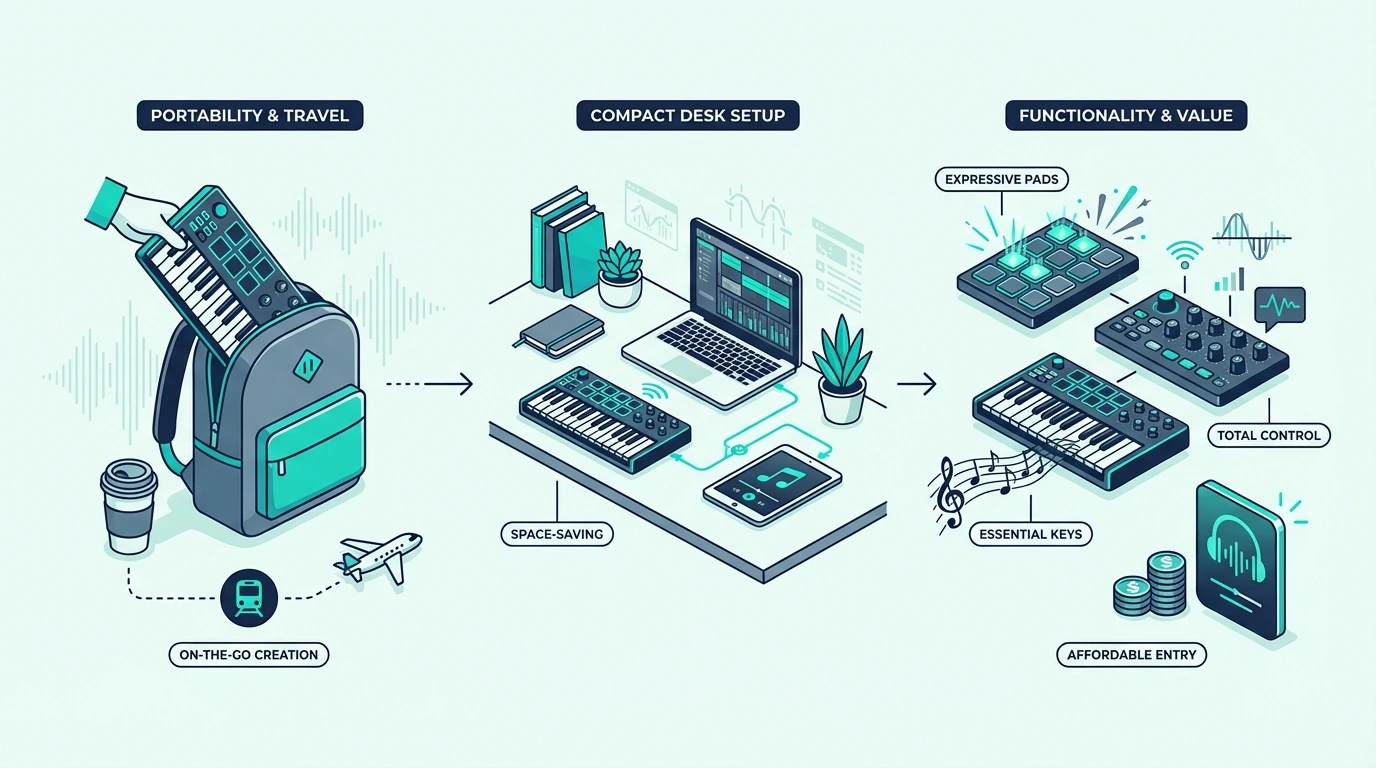
A mini MIDI keyboard earns its place in your setup by solving a specific problem: getting musical input into your DAW when space, portability, or budget eliminates full-size options. The controllers that solve this problem best balance compact size with enough features to be genuinely productive.
Size And Weight Define The Category
Mini MIDI keyboards typically measure 12 to 16 inches wide and weigh between 1 and 2.5 pounds. That footprint fits beside a laptop on an airplane tray table, in a backpack alongside textbooks, or on a crowded desk where a 49-key controller simply will not fit.
The weight matters for mobile producers. The Nektar SE25 at 1.3 pounds adds almost nothing to a bag. The Akai MPK Mini MK3 at roughly 1.6 pounds is barely noticeable. Compare that to a 49-key controller at 4-8 pounds that requires its own carrying case.
Mini Keys Are A Tradeoff, Not A Limitation
Mini keys measure roughly 60 percent the width of full-size piano keys. Trained pianists find them cramped because muscle memory developed on standard keys does not transfer directly to narrower spacing.
For beat makers and electronic producers who tap out one-handed melodies, trigger chord stabs, and program synth lines, mini keys are perfectly functional. The velocity sensitivity captures dynamics just as accurately as full-size keys — the difference is physical comfort during extended playing sessions, not data quality.
Most producers who start on mini keys never feel limited by them because their workflow centers on short melodic phrases and chord stabs rather than full piano performances. The key size only becomes an issue when you try to play classical or jazz repertoire that demands precise finger spacing across multiple octaves.
The Feature Density Advantage
The real selling point of premium mini controllers is not their size — it is how much they pack into that size. The Akai MPK Mini MK3 fits 25 keys, 8 velocity-sensitive drum pads, 8 assignable knobs, a joystick, an arpeggiator, note repeat, and an MPC Beats software bundle into a controller smaller than a laptop.
Buying those features separately — a pad controller, a knob controller, and a keyboard — would cost two to three times as much and take up three times the desk space. The mini all-in-one format eliminates that multi-device setup entirely.
| Product | Link |
|---|---|
Best Overall 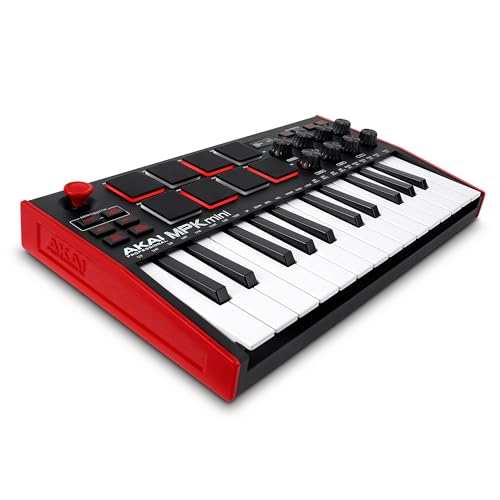 | See ratings |
Best Bluetooth Mini 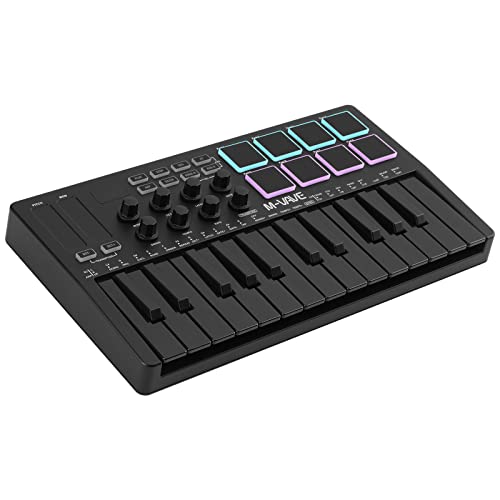 | See ratings |
Best 32-Key Mini 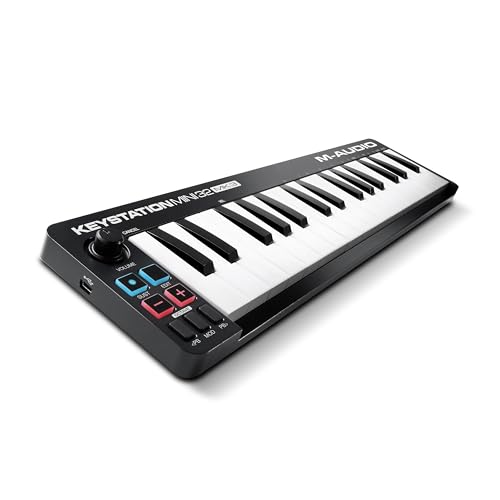 | See ratings |
Best Ultra-Portable 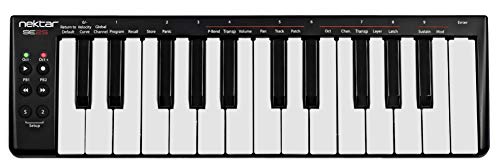 | See ratings |
Best Budget Mini 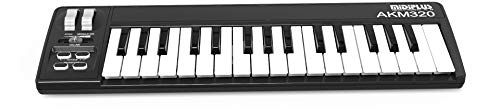 | See ratings |
Best Full-Size Upgrade 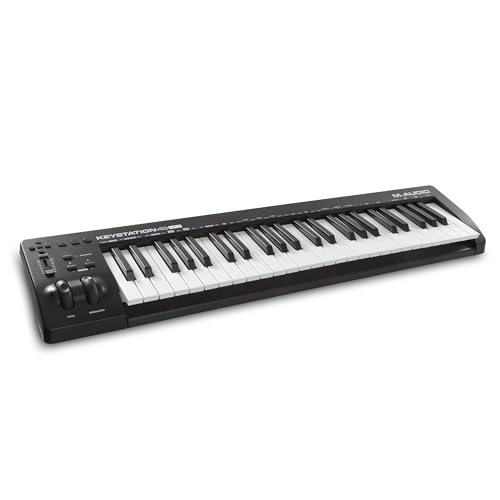 | See ratings |
What Are the Best Mini MIDI Keyboards
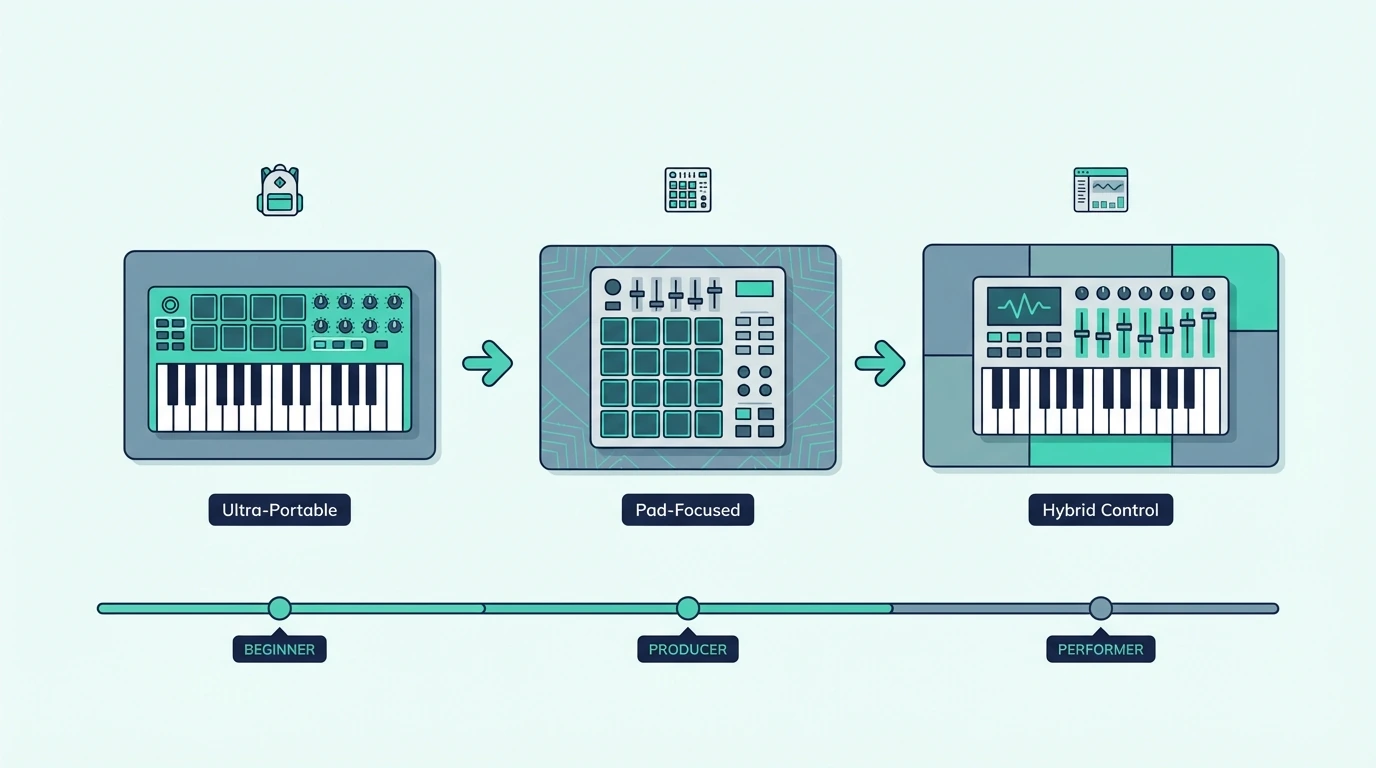
Here are 6 controllers sorted from the most feature-complete to the most affordable, plus a full-size alternative for producers who want to compare.
The Akai Professional MPK Mini MK3 wins Best Overall because no other mini controller matches its feature density at ninety-nine dollars. The 8 MPC-style pads respond to velocity for realistic drum programming, the 8 knobs map to any DAW parameter, and the built-in arpeggiator generates patterns from single key presses.
Akai Professional MPK Mini MK3
The M-VAVE 25 Key MIDI Controller takes Best Bluetooth Mini for producers who want wireless connectivity with iPad, phones, and tablets. The Bluetooth MIDI pairs directly without adapters, and USB mode handles latency-critical desktop recording.
M-VAVE 25 Key MIDI Controller
The M-AUDIO Keystation Mini 32 MK3 earns Best 32-Key Mini by adding seven extra keys over the standard 25-key layout while bundling Ableton Live Lite. Those seven keys give you nearly three octaves instead of two — a meaningful range upgrade for producers who play wider intervals.
M-AUDIO Keystation Mini 32 MK3
Three full octaves are the next step up, and 37-key boards compared by key size and ports show what that costs in width.
The Nektar SE25 is the Best Ultra-Portable pick at 1.3 pounds — the lightest controller on this list. Twenty-five velocity-sensitive keys with DAW integration for under fifty dollars. If weight and budget are your primary constraints, nothing else comes close.
Nektar SE25
The midiplus AKM320 at under forty dollars delivers 32 velocity-sensitive mini keys with zero extras. Pure key input at the lowest price point — ideal as a disposable travel controller or a test purchase before investing in a premium mini.
midiplus AKM320
And if you decide mini keys are too small, the M-AUDIO Keystation 49 MK3 is the natural upgrade path — full-size synth-action keys across four octaves for the same price as the MPK Mini MK3. The tradeoff is desk space for key feel and range.
M-AUDIO Keystation 49 MK3
Get Studio Tips Weekly
Join 5,000+ creators getting acoustic treatment advice every week.
No spam. Unsubscribe anytime.Should You Choose a Mini or Full-Size MIDI Keyboard
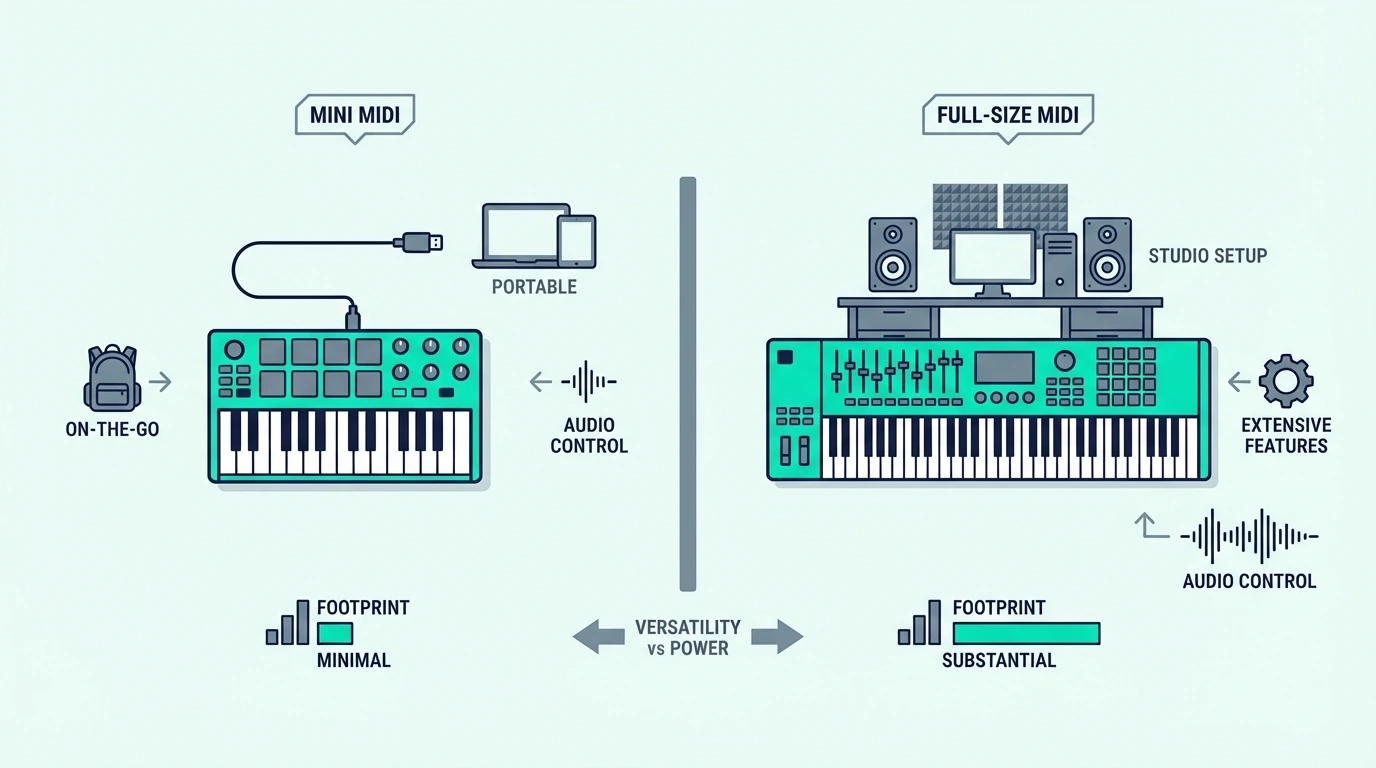
The choice between mini and full-size keys comes down to three questions that most buyers do not ask before purchasing.
How Do You Actually Input Notes
If you tap out melodies one note at a time, play single-hand bass lines, and trigger chord stabs with three or four fingers, mini keys handle your workflow perfectly. The narrower spacing does not affect one-handed playing because your fingers stay in a confined area regardless of key width.
If you play two-handed piano parts, practice scales, or record performances where both hands move across the keyboard simultaneously, full-size keys are worth the extra desk space. The muscle memory difference between mini and full-size keys causes errors when switching between them.
Where Do You Produce
Desktop studio with a permanent desk setup — full-size wins because the keys are always accessible and desk space is dedicated. Mobile production between locations, coffee shop sessions, or airplane tray table work — mini wins because it actually fits in those environments.
Many producers own both: a full-size controller at home and a mini controller for travel. The home controller handles serious recording sessions while the mini handles idea capture and sketching on the go.
What Is Your Budget Starting Point
Mini controllers start at forty dollars (midiplus AKM320) while full-size 49-key controllers start at eighty dollars (Nektar SE49). That forty-dollar gap matters for beginners testing whether MIDI production fits their creative goals.
Starting with a mini controller carries zero risk — if you outgrow it, the mini becomes your travel backup when you upgrade to a 49-key or 61-key board. Starting with a budget full-size controller skips the mini phase entirely if you already know you need more range.
The Bottom Line
The Akai MPK Mini MK3 is the best mini MIDI keyboard for producers who want a complete production tool in a compact package. For pure portability at the lowest weight and price, the Nektar SE25 delivers at 1.3 pounds for under fifty dollars.
Mini keys work for beat making, synth programming, and portable production. Piano players who need proper technique development should skip mini and go directly to a 49-key full-size controller.
Frequently Asked Questions
Are mini MIDI keyboards good for beginners?
Mini MIDI keyboards are excellent starting points for beginners focused on beat making and electronic production. The Akai MPK Mini MK3 includes everything a beginner needs — keys, pads, knobs, and bundled software — in one affordable package. Piano learners should start with full-size keys instead.
What is the smallest MIDI keyboard available?
The Nektar SE25 and similar 25-key mini controllers are the smallest practical MIDI keyboards, measuring roughly 12 inches wide and weighing around 1.3 pounds. Smaller options exist but sacrifice velocity sensitivity, which makes them impractical for real production work.
Can I use a mini MIDI keyboard for live performance?
Yes — many electronic performers use mini controllers on stage for clip launching, synth triggering, and real-time knob manipulation. The compact size fits on small performance surfaces where full-size keyboards would not. The Akai MPK Mini MK3’s pads and knobs are specifically designed for live performance workflows.
Is a mini keyboard or a pad controller better for beats?
A mini keyboard with built-in pads (like the MPK Mini MK3) covers both melody and beat input in one unit. A dedicated pad controller offers more pads and better pad feel for finger drumming, but requires a separate keyboard for note input. For most producers, the all-in-one mini keyboard is more practical.