Best Acoustic Panels (Tested for Studios, Offices & Rooms) [2026]
Best acoustic panels make a real difference in any room — but only if you pick real fiberglass panels instead of the cheap foam that dominates Amazon’s first page.
Untreated rooms create echo at first reflection points, muddy low-mids from corner buildup, and reverb that makes recordings and mixes unreliable. Most “acoustic panels” sold online are lightweight foam that absorbs high frequencies while leaving these problems untouched.
The right panels fix these issues at the source — so you can trust what you hear in your room. Start with four panels at first reflection points, and the picks below help you choose the best match for your space and budget.
The acoustic panels hub has the full category breakdown.
The UMIACOUSTICS 47”x24” panels offer the best overall value for serious acoustic treatment — large coverage area, 2-inch thickness for effective mid-bass absorption, and professional fabric-wrapped construction. For budget-conscious buyers, the smaller UMIACOUSTICS 4-pack provides excellent performance at half the investment.
What Are the Best Acoustic Panels Right Now?
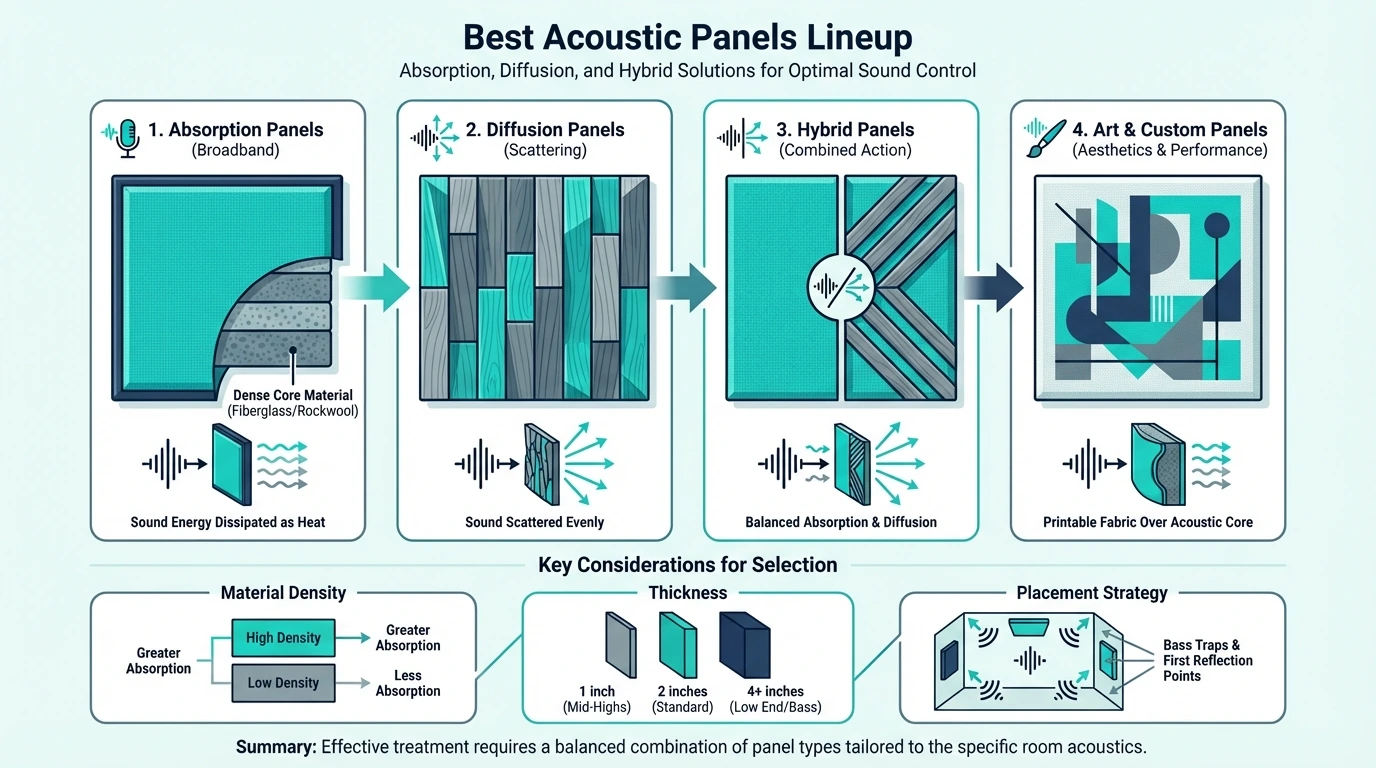
After analyzing dozens of options, three panels consistently outperform the competition in their respective categories. These recommendations prioritize actual acoustic performance over marketing claims and flashy packaging.
Best Overall: The UMIACOUSTICS 47.2”x23.6” 2-inch panels deliver professional-grade absorption in a package that covers serious wall space. Two panels give you nearly 16 square feet of treatment — enough to address first reflection points in most home studios.
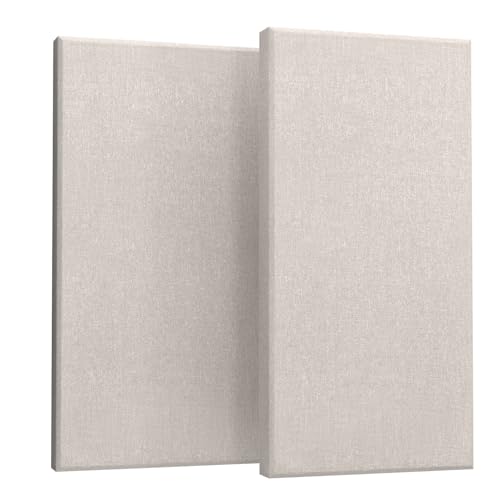
UMIACOUSTICS 47.2”x23.6” 2-inch panels
Best Value: The UMIACOUSTICS 4-pack of smaller panels offers the same fiberglass core construction at a more accessible price point. You get four panels totaling roughly 8 square feet, which works perfectly for vocal booths or supplementing existing treatment.
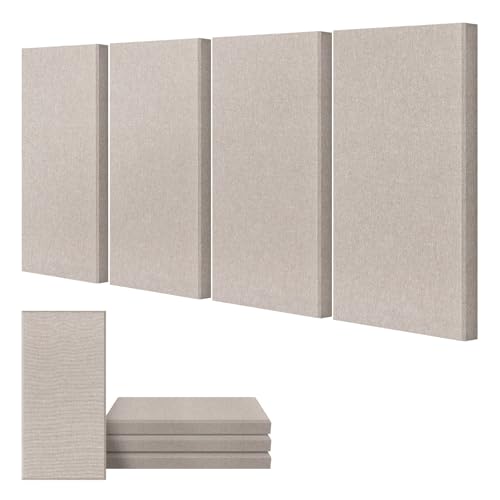
UMIACOUSTICS 4-pack
Best for Coverage: The Olanglab 24”x48” panels provide maximum coverage per panel. At 2 inches thick with high-density fiberglass, these handle frequencies down to 250Hz effectively.
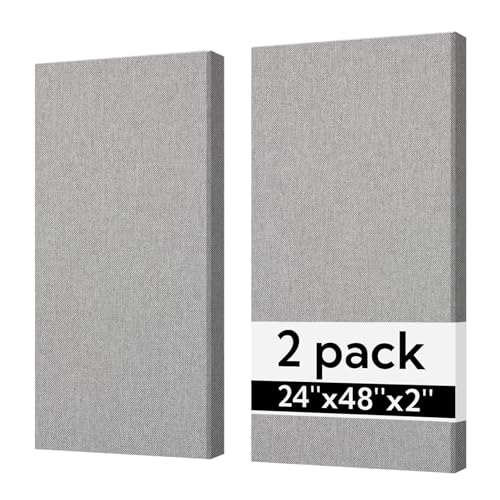
Olanglab 24”x48” panels
What Makes a Panel “Best”?
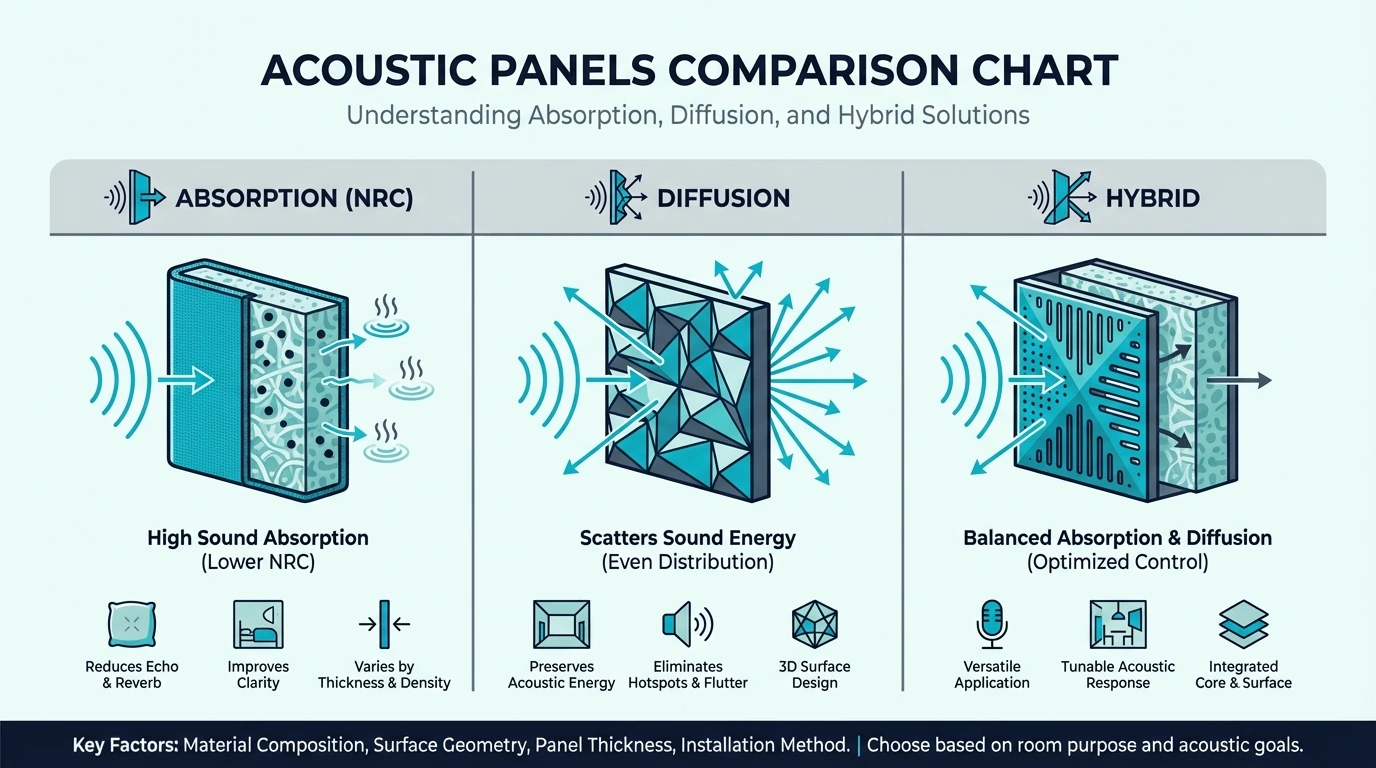
Three factors determine acoustic panel quality: NRC rating, thickness, and core material. NRC (Noise Reduction Coefficient) measures how much sound a panel absorbs — a rating of 1.0 means total absorption, while 0.5 means half the sound reflects back.
Thickness matters because thicker panels absorb lower frequencies. A 2-inch panel starts absorbing around 250Hz, while a 4-inch panel reaches down to 125Hz.
Most home studios need at least 2-inch panels to control the frequencies that cause muddy recordings.
How Were These Panels Tested and Chosen?
Those NRC ratings, thickness specs, and core materials were the starting filter — each panel was evaluated against verified acoustic data and construction quality. Panels with vague specifications or suspiciously perfect reviews were eliminated immediately.
Price-per-square-foot calculations revealed which panels actually deliver value versus those charging premium prices for standard materials. The winners consistently offered superior materials at competitive price points.
What Are Acoustic Panels and How Do They Actually Work?
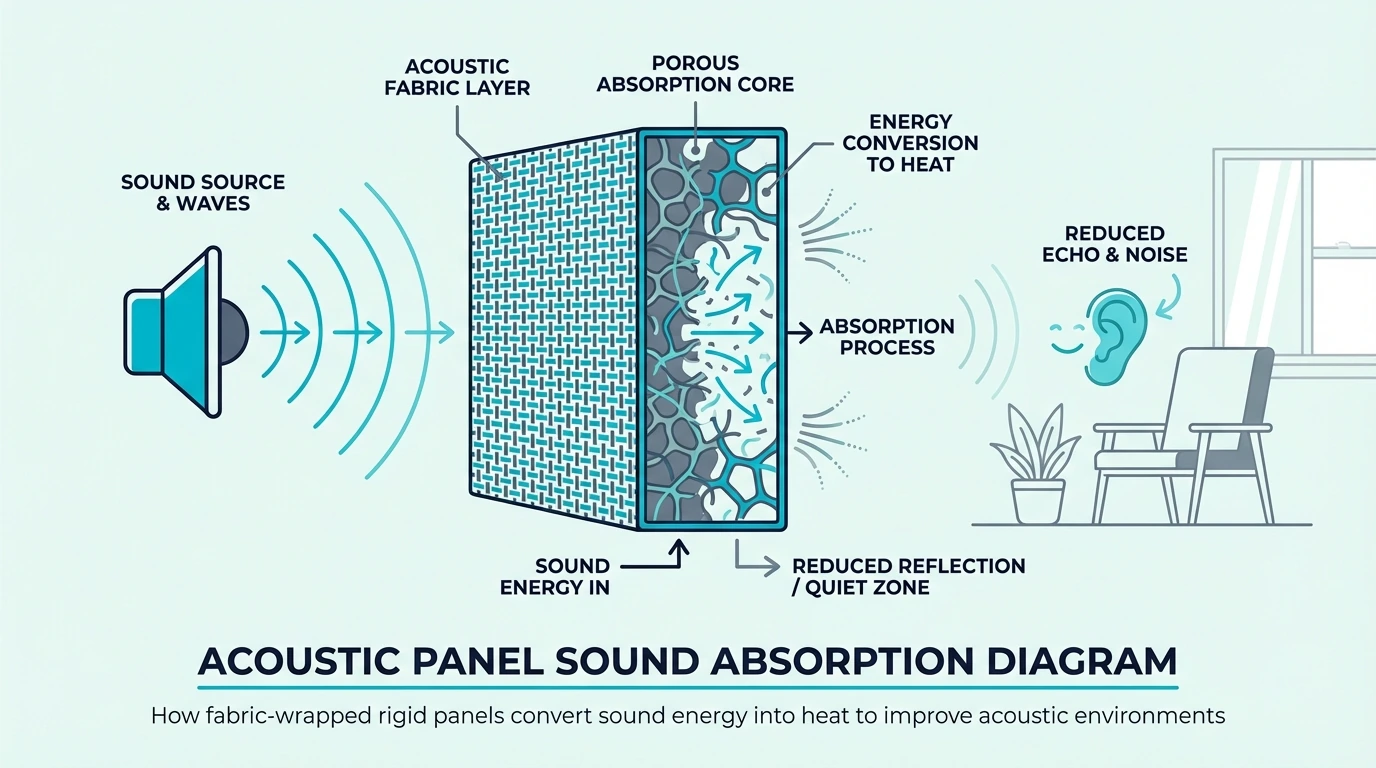
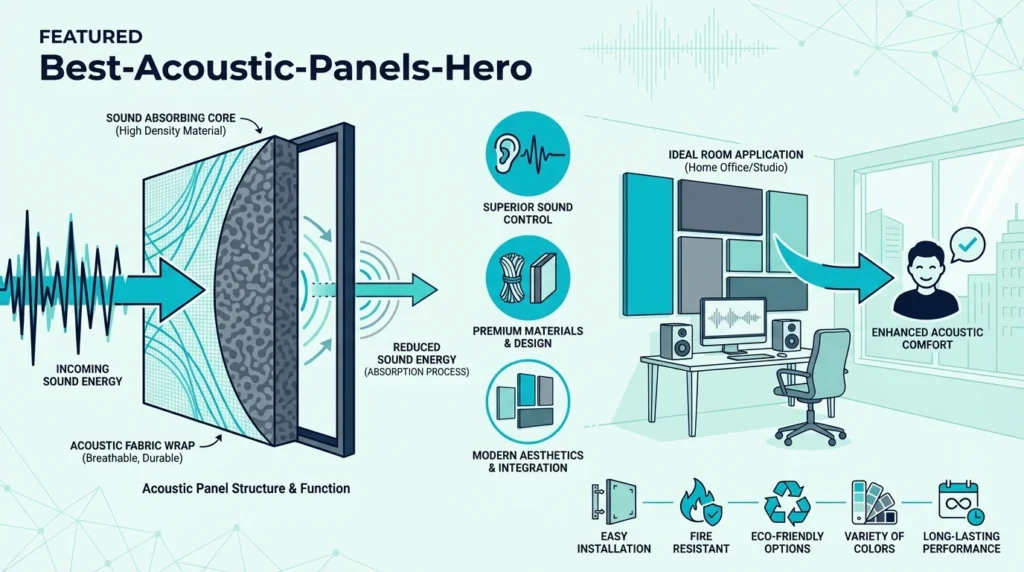
Acoustic panels absorb sound energy that would otherwise bounce around your room creating echo and reverb. When sound waves hit the porous surface, they enter the panel material and convert to tiny amounts of heat energy instead of reflecting back.
This is fundamentally different from soundproofing, which blocks sound from entering or leaving a space. Three things matter: how absorption actually works, why fiberglass outperforms foam, and where the limits are.
How Do Acoustic Panels Absorb Sound?
Sound waves penetrate the fabric covering and encounter the fibrous core material — typically fiberglass or mineral wool. As waves travel through these fibers, friction converts acoustic energy to thermal energy.
The thicker and denser the material, the more effective this conversion process.
High-frequency sounds (4kHz+) absorb easily in almost any porous material. Low frequencies require either thick panels or panels mounted with an air gap behind them to achieve meaningful absorption.
What’s the Difference Between Panels and Foam?
Professional acoustic panels use rigid fiberglass or mineral wool cores wrapped in acoustically-transparent fabric. Budget foam products use lightweight polyurethane that absorbs only high frequencies while letting problematic mid-bass frequencies bounce freely.
Panels typically achieve NRC ratings of 0.85-1.0, while foam rarely exceeds 0.4-0.5. For the same coverage area, panels cost more upfront but deliver far better acoustic results.
Do Acoustic Panels Soundproof a Room?
No. This is the most common misconception in acoustic treatment.
Acoustic panels reduce echo and reverb inside your room — they do nothing to block sound from traveling through walls, floors, or ceilings.
Soundproofing requires mass, decoupling, and sealing. Acoustic treatment requires absorption and diffusion.
These are completely separate acoustic problems with completely different solutions.
Get Studio Tips Weekly
Join 5,000+ creators getting acoustic treatment advice every week.
No spam. Unsubscribe anytime.Which Acoustic Panels Are Best for Home Studios?
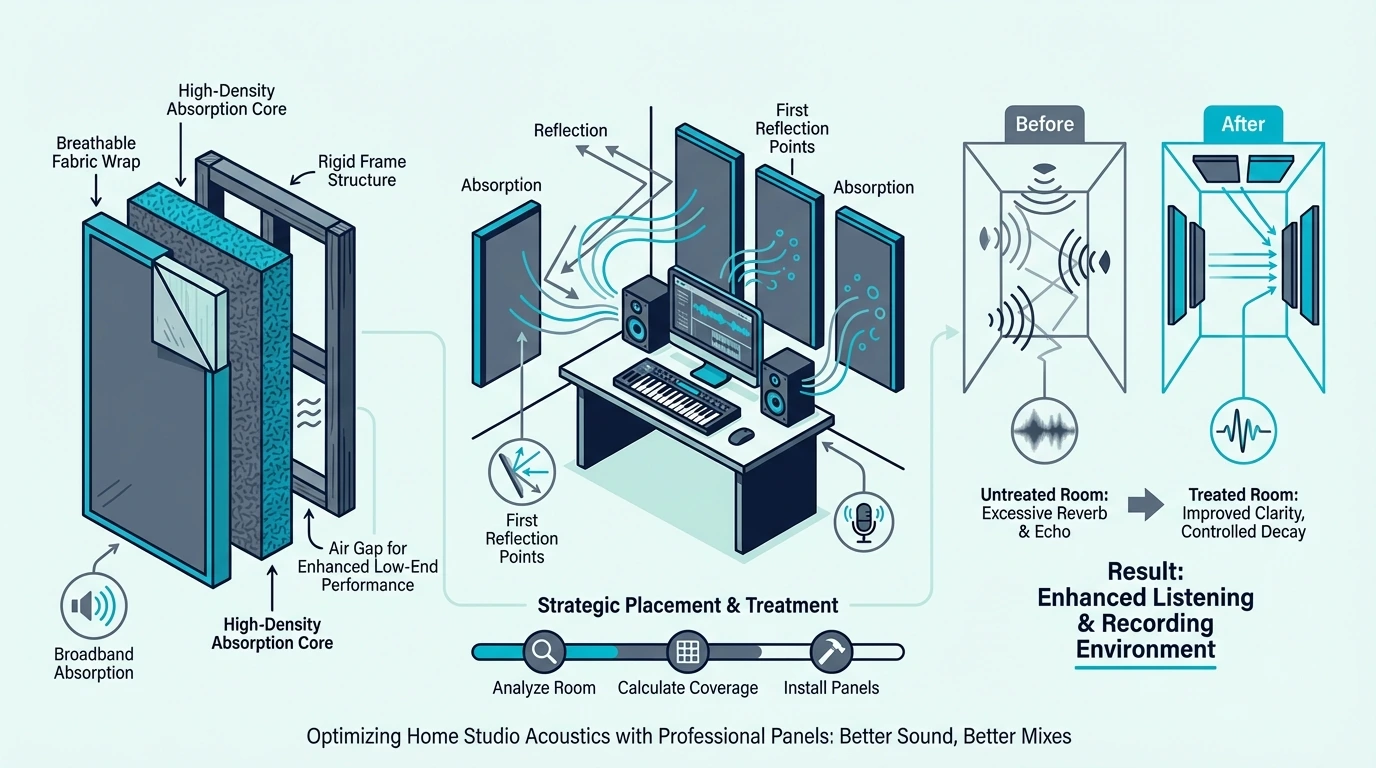
Home studios face unique acoustic challenges: parallel walls create flutter echo, bare drywall reflects mid-frequencies harshly, and corner buildup muddies bass response. The answer depends on what you’re recording, how many panels you need, and what the pros actually use.
For most home studios under 200 square feet, first reflection points are the priority. The best panels for recording studios are built around that exact layout — typically two panels on each side wall between monitors and listening position.
What Panels Work Best for Recording Vocals?
Vocal recording benefits most from panels placed behind and beside the microphone position. The UMIACOUSTICS 4-pack works excellently here — position two panels in a V-shape behind the mic to create an absorption zone.
Two-inch thickness handles the primary vocal frequency range (80Hz-8kHz) effectively. Thicker panels help if you’re recording bass vocals or dealing with heavy room resonance.
How Many Panels Does a Home Studio Need?
Beyond the vocal mic setup, a typical 10×12 foot room needs 6-8 panels for full treatment: two at first reflection points on each side wall, two behind the listening position, and two addressing ceiling reflections. More isn’t always better — overdampening creates a lifeless, uncomfortable acoustic environment.
Start with four panels and add more only if specific problems persist. Many home studios achieve professional results with just first reflection treatment.
A combination like the UMIACOUSTICS 4-pack for side walls plus two Olanglab large panels behind the listening position covers most needs.
What Do Professional Music Producers Actually Use?
Professional studios typically use 4-inch thick rigid fiberglass panels (like Owens Corning 703 or Rockwool Safe’n’Sound) in custom-built frames. The panels above use similar materials in pre-built, consumer-friendly packages.
The main difference is thickness and customization options. Consumer panels at 2 inches thick handle most home studio needs, while professional facilities install thicker treatment for full-range absorption.
How Do You Choose the Right Thickness?
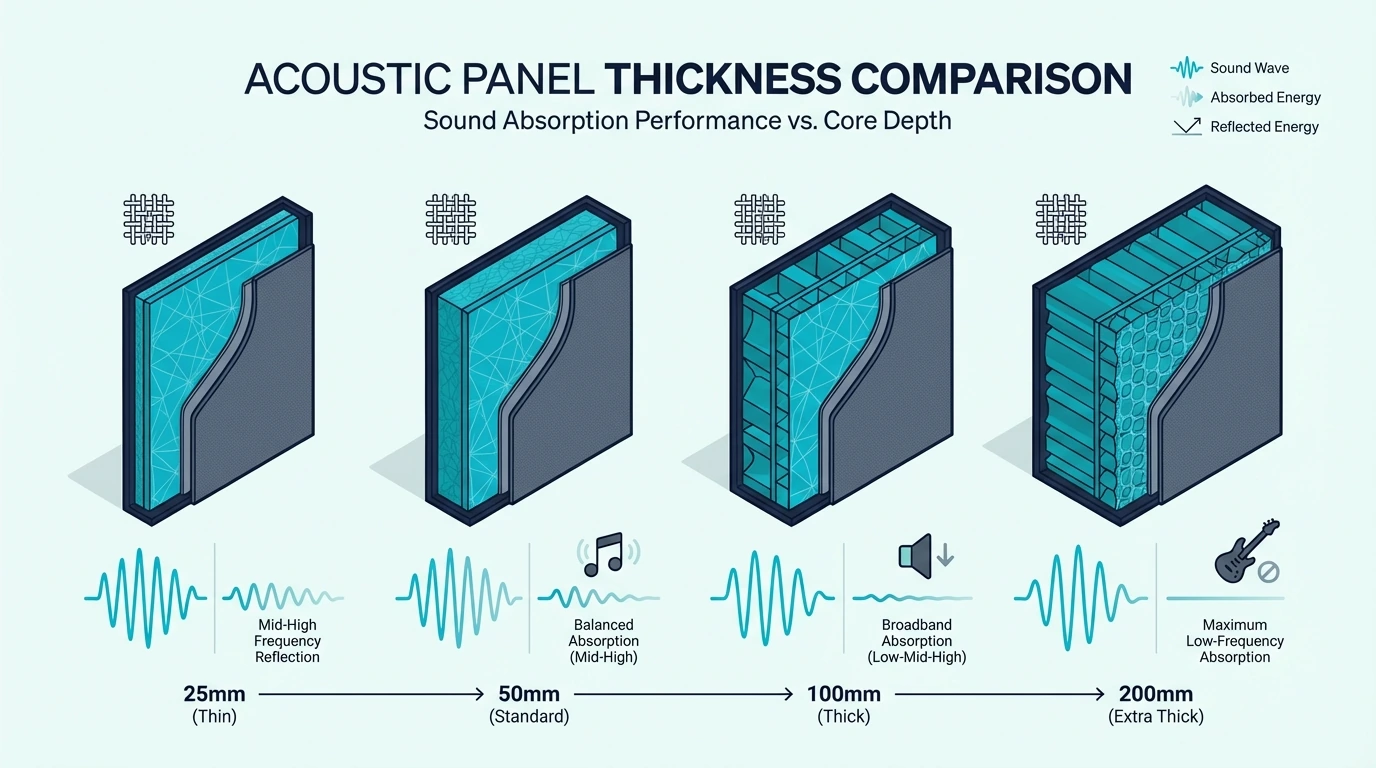
Panel thickness directly determines which frequencies get absorbed — thicker panels need more material depth to convert sound to heat. This isn’t marketing — it’s physics.
Two thicknesses dominate the market: 2-inch and 4-inch. Choosing the wrong one wastes money on treatment that misses your actual acoustic problems.
When Should You Choose 2-Inch Panels?
Two-inch panels work for most home studios, offices, and rooms where speech clarity matters most. They effectively absorb frequencies from approximately 250Hz upward — covering the vocal range, guitar fundamentals, and most musical content.
If your main problems are echo, reverb, and general “room sound” issues, 2-inch panels solve them efficiently. The UMIACOUSTICS and Olanglab panels both offer 2-inch options.
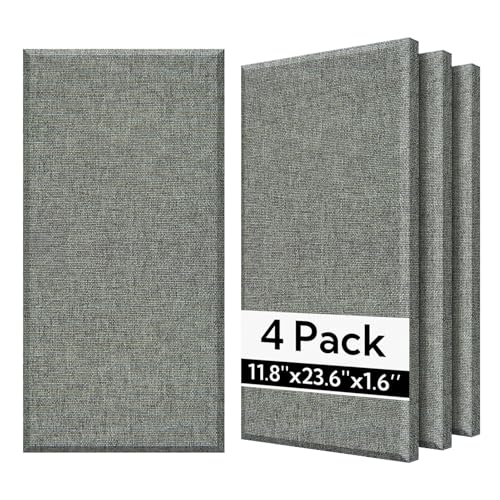
Olanglab 4-Pack Mid-Size Panels
When Do You Need 4-Inch Panels?
Rooms with heavy bass buildup or those used for mixing benefit from 4-inch treatment. These panels absorb down to roughly 125Hz — addressing the low-mid frequencies that cause “muddy” mixes.
Four-inch panels cost more and take up more wall space. Unless you’re doing critical listening or mixing work, 2-inch panels provide 80% of the benefit at half the investment.
Does Thicker Always Mean Better?
No. Those 4-inch panels absorb more frequencies, but full absorption isn’t always the goal.
Rooms need a balance of absorption and reflection to sound natural. All-absorption treatment creates an anechoic environment that sounds unnatural and fatiguing.
Match panel thickness to your actual acoustic problems. Treating flutter echo with 4-inch bass traps is overkill — 2-inch panels eliminate flutter while preserving natural room ambience.
Which Material Is Best: Fiberglass or Rockwool?
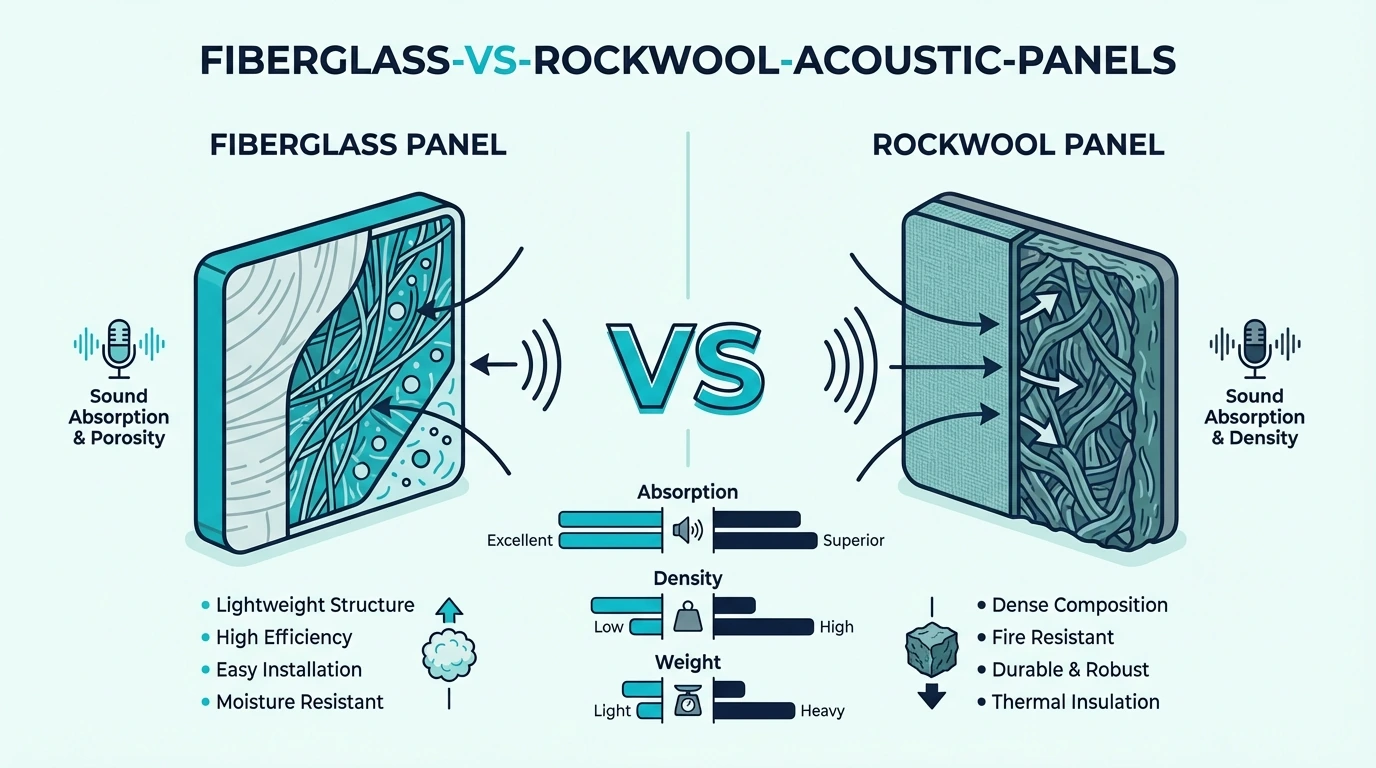
Both fiberglass and mineral wool (Rockwool) deliver excellent acoustic performance. The practical differences come down to handling characteristics, fire ratings, and personal preference rather than absorption capability.
All panels on this list use fiberglass cores, which dominate the consumer acoustic panel market due to cost efficiency.
What Are the Pros and Cons of Fiberglass?
Fiberglass offers slightly better high-frequency absorption and lower cost per square foot — the best fiberglass acoustic panels are all built on this advantage.
It’s the industry standard for manufactured acoustic panels because it’s easy to work with and achieves consistent NRC ratings.
The downside is that fiberglass fibers can irritate skin and lungs during installation. Always handle panels carefully and use fabric-wrapped versions that contain the fibers safely.
What Are the Pros and Cons of Rockwool?
Where fiberglass falls short on fire resistance, Rockwool (mineral wool) picks up — it also provides slightly better low-frequency absorption. The higher density helps with frequencies below 250Hz.
The tradeoff is higher weight and cost. For DIY builders, Rockwool is easier to cut and handle without protective equipment.
For pre-built panels, the core material matters less than the final NRC rating.
Which Material Offers Better Value?
Rockwool’s fire rating is a nice bonus, but for pre-built panels the NRC rating and price matter more than core material (the panel material comparison has the full data). Both fiberglass and Rockwool panels achieve NRC ratings above 0.85 when built to spec.
The UMIACOUSTICS panels use high-density fiberglass that performs identically to equivalent Rockwool panels.
If you’re building DIY panels, Rockwool’s easier handling may justify the slight cost premium. For buying pre-built panels, let the specifications and price guide your decision.
What Are the Best Budget Acoustic Panels?
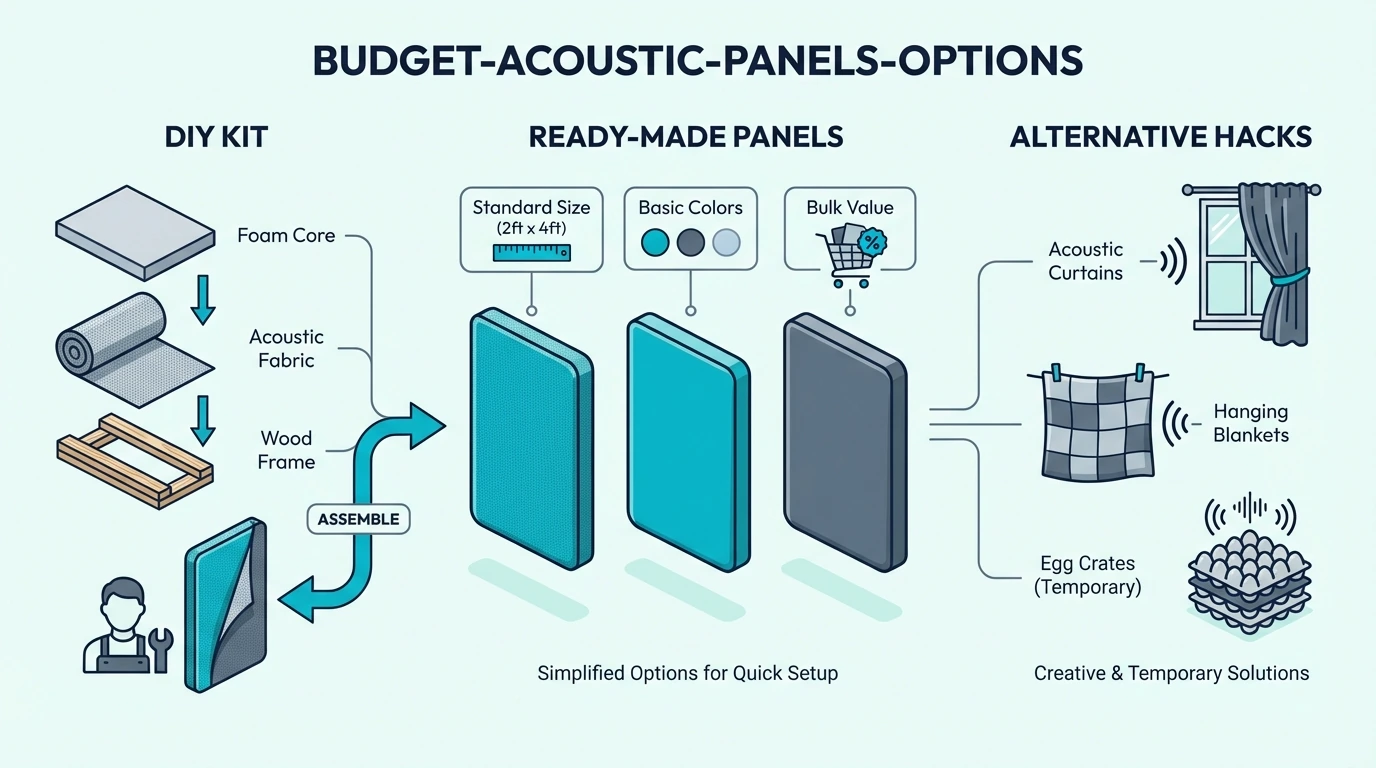
Budget acoustic treatment requires strategic thinking — you can’t cover every wall, so you need to maximize impact with limited panels. The real questions are which panels perform under $100, whether cheap options actually work, and where the minimum spend threshold sits.
Focus spending on first reflection points rather than buying cheap panels for every wall.
Which Panels Offer the Best Value Under $100?
The UMIACOUSTICS 4-pack provides the best value at this price point. You get four fiberglass panels totaling roughly 8 square feet of coverage — enough for first reflection treatment on side walls or a vocal recording setup.
For even tighter budgets, the 2-pack 24×12 inch panels offer entry-level treatment under $30.
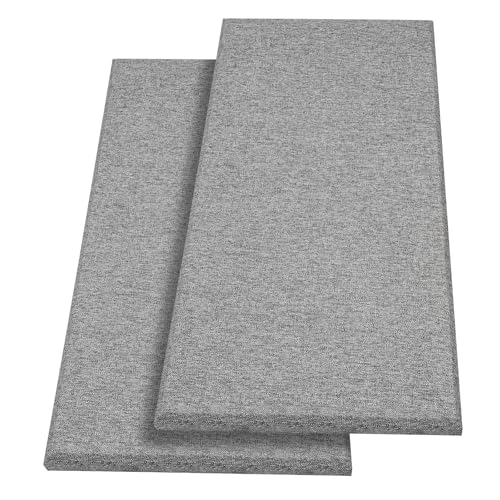
2-pack 24×12 inch panels
The smaller panel size (23.6”x11.8”) means flexible placement options. Two panels side-by-side equal one large panel, but you can also spread them for broader coverage.
Are Cheap Acoustic Panels Actually Worth It?
Those sub-$100 panels from unknown brands often use low-density foam instead of fiberglass. They absorb high frequencies but let problematic mid-bass frequencies reflect freely.
The result is a room that sounds “muffled” without actually solving acoustic problems.
Verify that any panel you consider uses rigid fiberglass or mineral wool core material. If the listing doesn’t specify core material, assume it’s inferior foam and look elsewhere.
What’s the Minimum You Should Spend?
Expect to invest at least $15-25 per square foot for panels with actual acoustic benefit. Below this threshold, you’re likely getting polyurethane foam with minimal absorption capability.
A reasonable starting setup — four 2-square-foot panels for first reflection points — costs approximately $80-150 depending on brand and thickness. This investment addresses the most impactful acoustic problems in any room.
How Does Each Panel Perform?
Eight panels made the cut after filtering for construction quality, verified acoustic specs, and real buyer feedback. Every option below uses genuine fabric-wrapped fiberglass — not foam marketed as panels.
UMIACOUSTICS 47.2”x23.6” 2-Inch Panels (Best Overall)
These panels deliver serious coverage with professional construction. Each panel covers nearly 8 square feet, meaning two panels treat most first reflection points in standard rooms.
The 2-inch fiberglass core achieves effective absorption from 250Hz upward. Fabric wrapping comes in multiple neutral colors that work with most room decor.
Installation hardware is included.
For anyone serious about acoustic treatment, these provide the best balance of size, performance, and value. The larger panel size means fewer mounting points and cleaner installation.
UMIACOUSTICS 4-Pack Smaller Panels (Best Value)
Same fiberglass construction as the larger panels in a more accessible package. Four panels totaling 8 square feet give you flexibility in placement — use together for concentrated treatment or spread across the room.
The smaller 23.6”x11.8” size works perfectly for vocal booths, podcast setups, or supplementing existing treatment. Price-per-square-foot matches the larger panels while requiring less upfront investment.
These are ideal for anyone starting their acoustic treatment journey or working in smaller spaces where full-size panels feel overwhelming.
Olanglab 24”x48” Fiberglass Panels (Best for Coverage)
Maximum coverage per panel with professional-grade fiberglass construction. Each panel covers 8 square feet with 2-inch thickness — addressing the same frequency range as other quality panels.
The 4.3 rating across verified purchasers confirms consistent quality. These panels make sense when you need maximum coverage with minimum installation complexity.
Olanglab 4-Pack Mid-Size Panels (Most Flexible)
The Olanglab 4-Pack Mid-Size Panels pack four high-density fiberglass cores into a compact frame. The 11.8”x23.6” dimensions allow creative placement options that larger panels can’t match.
Excellent for addressing specific problem areas, corner placement, or creating modular treatment systems. The fabric wrapping resists dust and maintains appearance over years of use.
2-Pack Fabric Acoustic Panels (Best Budget)
Entry-level acoustic treatment at the lowest price point. These smaller panels work for desktop podcast setups, small vocal corners, or testing acoustic treatment before committing to full room coverage.
Don’t expect these to transform a room — they’re supplemental treatment. For serious acoustic work, invest in the larger fiberglass panels.
BUBOS 4-Pack Acoustic Panels (Best Alternative)
The BUBOS 4-Pack Acoustic Panels are a solid competitor to the UMIACOUSTICS 4-pack at a similar price point. The 23.6”x11.8” panels use fabric-wrapped construction with high-density cores.
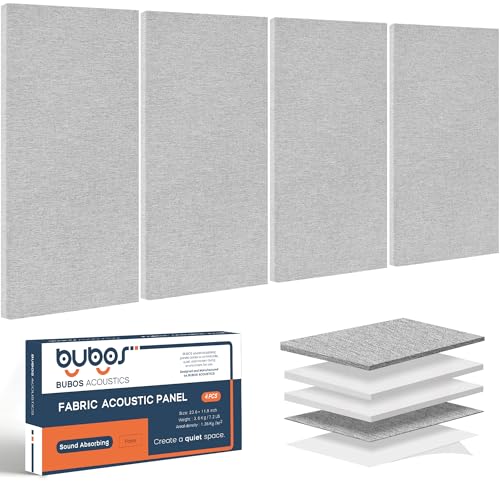
BUBOS 4-Pack Acoustic Panels
If UMIACOUSTICS is out of stock or you want to compare options, BUBOS delivers comparable performance. The 4.2 rating reflects consistent quality across verified purchasers.
BUBOS Large Format Panels (Best for Aesthetics)
The BUBOS Large Format Panels are large 47.2”x23.6” panels with a focus on decorative appeal. If your acoustic treatment needs to look as good as it performs (see also: best acoustic art panels) — living rooms, podcast studios visible on camera — these deliver.
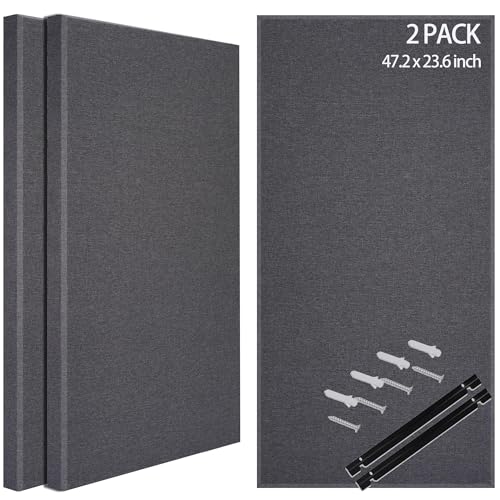
BUBOS Large Format Panels
The 4.4 rating and fabric options make these ideal for spaces where appearance matters alongside acoustic performance.
BXI High-Density Acoustic Panels (Highest Rated)
The BXI High-Density Acoustic Panels earn a 4.8 rating — the highest customer satisfaction score in this roundup. The high-density core construction delivers consistent absorption performance.
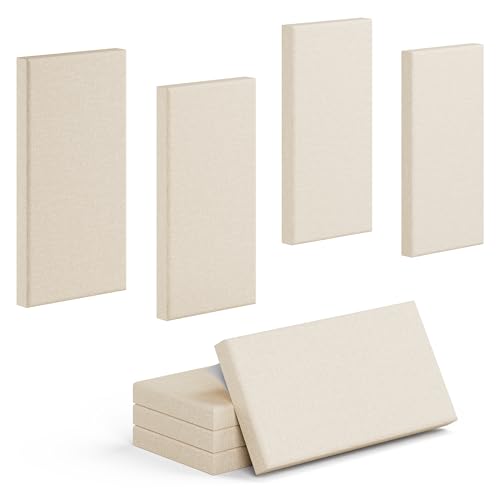
BXI High-Density Acoustic Panels
If reviews and proven reliability matter most to your buying decision, these panels have the track record to back up the premium.
Where Should You Place These Panels?
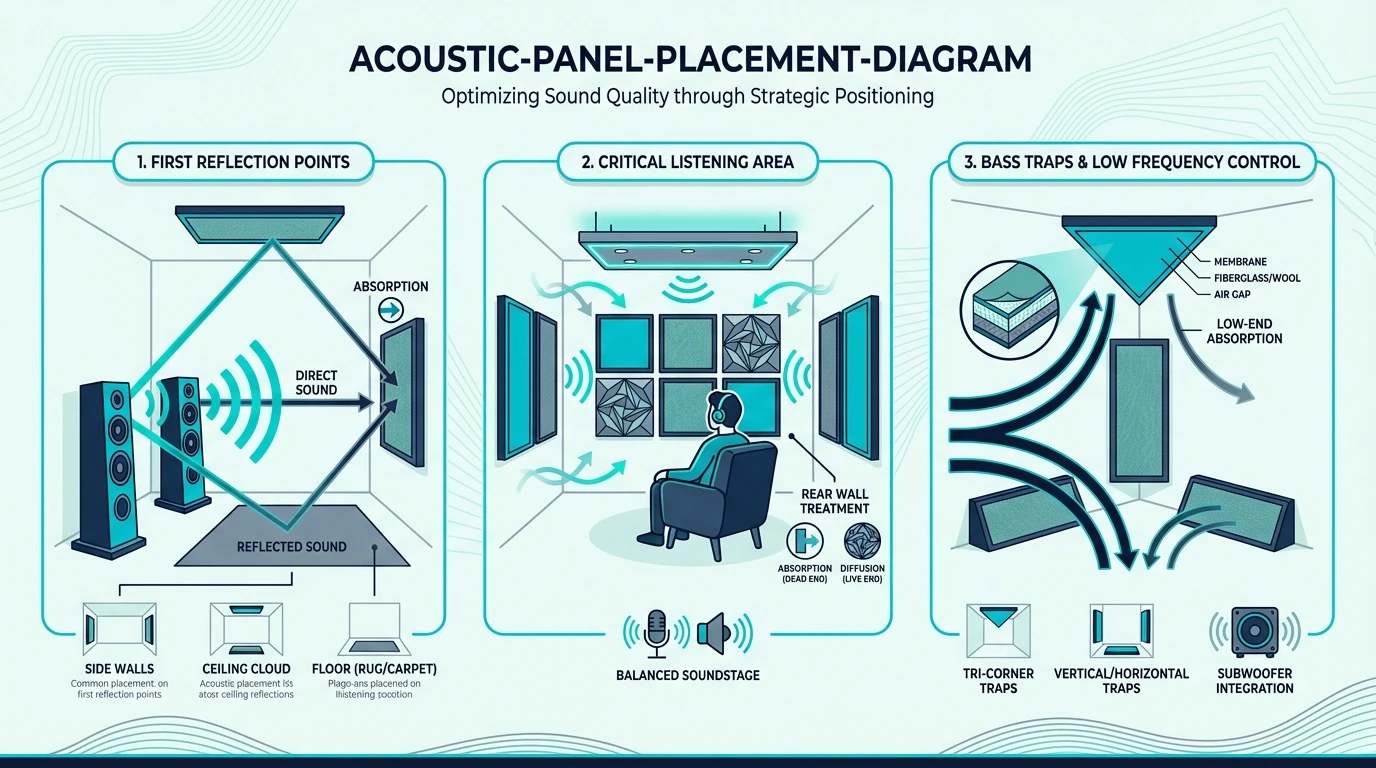
Panel placement determines 80% of acoustic treatment effectiveness. The best panels in the world won’t help if they’re mounted in the wrong locations.
Two things to sort out first: where your first reflection points are, and how many panels the room actually needs.
What Are First Reflection Points?
First reflection points are the spots on your walls where sound from your speakers bounces directly to your ears. These reflections arrive milliseconds after the direct sound, causing comb filtering and imaging problems.
Find them using the mirror trick: sit in your listening position and have someone slide a mirror along the wall. Any point where you can see a speaker reflection in the mirror is a first reflection point.
How Many Panels Do You Actually Need?
Once those first reflection points are marked, start with four panels — two per side wall. Add ceiling panels if flutter echo persists.
Then consider the wall behind your listening position.
More coverage isn’t automatically better. A room with too much absorption sounds dead and fatiguing.
Target 20-30% wall coverage for most rooms, concentrated at first reflection points.
The Bottom Line
Four panels at first reflection points will transform any room — the question is which ones to buy.
For home studios and serious acoustic treatment: The UMIACOUSTICS 47.2”x23.6” panels offer the best combination of coverage, performance, and value. Start with four panels for first reflection treatment, add more if needed.
For budget-conscious buyers or small spaces: The UMIACOUSTICS 4-pack provides excellent performance at a lower entry point. Perfect for vocal booths, podcasting, or testing treatment before full commitment.
For maximum coverage with minimum panels: The Olanglab 24”x48” panels cover the most area per panel. Ideal when you know exactly where treatment goes and want clean, minimal installation.
For the highest-rated option: The BXI High-Density 4-Pack with its 4.8 rating delivers proven reliability backed by customer satisfaction.
Every panel on this page uses genuine fiberglass construction with fabric wrapping — not foam products marketed as panels.
The most important factor isn’t which specific panel you choose — it’s placing panels at first reflection points rather than randomly on walls. Four panels in the right spots outperform twelve panels scattered around a room.
Frequently Asked Questions
Are acoustic panels worth the money?
Yes, if you understand what they do. Panels noticeably improve room acoustics for recording, mixing, podcasting, and video calls.
They don’t soundproof rooms or block noise from neighbors — that requires construction modifications.
Do acoustic panels really work?
Yes. The physics of sound absorption is well-understood.
Quality panels with fiberglass or mineral wool cores reliably absorb 85-100% of sound energy in their effective frequency range. The key is choosing panels with verified specifications.
Can you use acoustic panels on ceilings?
Yes — ceiling treatment often provides the biggest improvement after side wall first reflections, and most panels include hardware compatible with ceiling mounting.
How long do acoustic panels last?
Quality fabric-wrapped panels last 10-20 years with minimal care. The fiberglass core doesn’t degrade, and fabric wrapping protects against dust and damage.
Avoid mounting in high-humidity areas where moisture could affect the fabric.
Can acoustic panels reduce noise from neighbors?
No — panels absorb sound inside your room but do nothing to block sound traveling through walls, floors, or ceilings. Reducing neighbor noise requires adding mass to walls, decoupling with resilient channel, and sealing every gap.