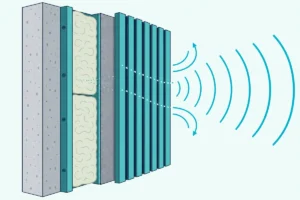
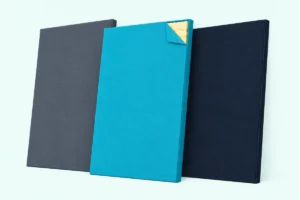
Fiberglass and mineral wool make the best acoustic panels, with 2-inch Owens Corning 703 at NRC 1.00 and Comfortboard 80 at 0.95.
The picks
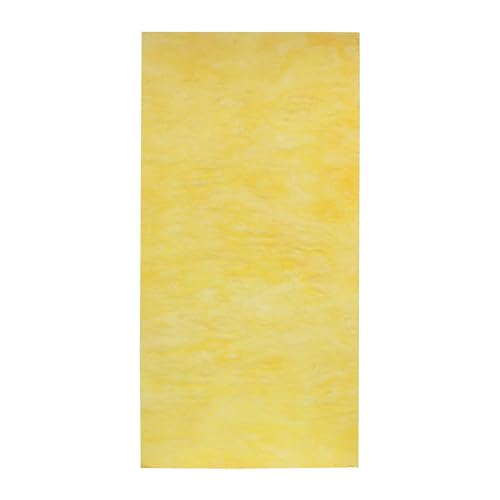
Owens Corning 703 six-pack
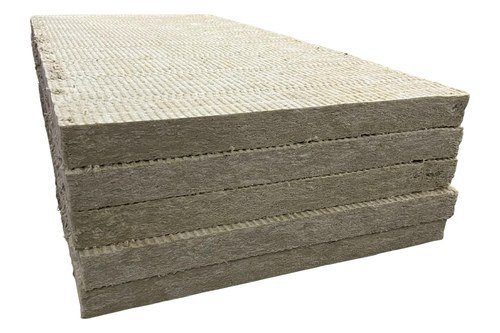
ROCKWOOL ProRox five-pack
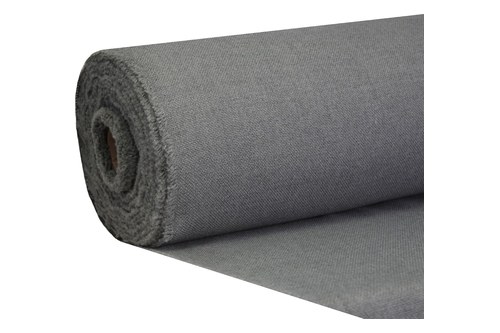
Guilford of Maine Sona Acoustical Fabric
Picking the best material for acoustic panels, or the best acoustic treatment material for a whole room, gets easier once you read the makers’ lab sheets, because the makers of fiberglass, mineral wool, foam and PET felt all publish absorption figures, just not on equal terms.
A single NRC can make two cores look alike, since it averages four frequency bands and leaves out 125 Hz, the lowest band most of these sheets print.
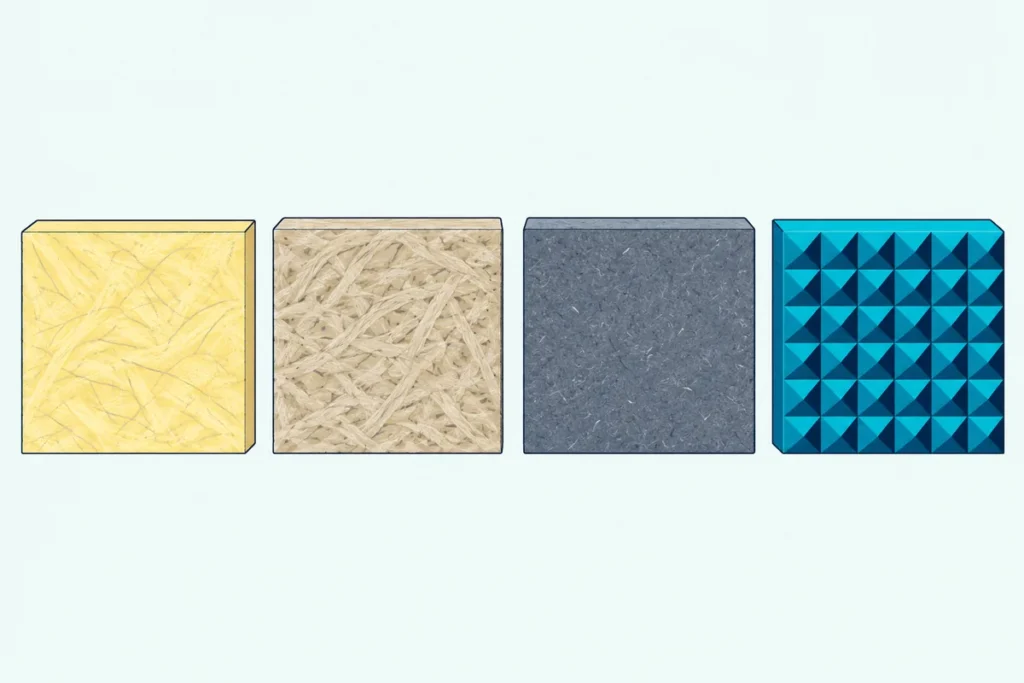
Read the band-by-band figures behind it and you can match the core and its thickness to the boom, echo or harsh highs you hear.
This guide lines up Owens Corning’s 703 and 705 fiberglass, ROCKWOOL’s Safe’n’Sound and Comfortboard 80, Auralex’s Studiofoam, Autex’s Cube felt and Armstrong’s Tectum, then the fabric that covers them.
Start with the side-by-side table, then use the NRC section to read any other sheet the same way.
What Is the Best Material for Acoustic Panels?
The table below puts every core on its maker’s own numbers. On those figures, fiberglass and mineral wool post the highest NRCs from 2 inches up: Owens Corning gives unfaced 2-inch 703 an NRC of 1.00 and ROCKWOOL gives 2-inch Comfortboard 80 0.95, against 0.75 for Auralex’s 2-inch Studiofoam Wedges.
| Core and product | Thickness | NRC | At 125 Hz | At 250 Hz | Fire figure from the maker |
|---|---|---|---|---|---|
| Owens Corning 703 fiberglass, unfaced | 2 in | 1.00 | 0.15 | 0.71 | ASTM E84 flame spread 5, smoke 5 |
| Owens Corning 705 fiberglass, unfaced | 2 in | 1.05 | 0.18 | 0.86 | ASTM E84 flame spread 5, smoke 5 |
| ROCKWOOL Safe’n’Sound stone wool batt | 3 in | 1.10 | 0.44 | 0.98 | ASTM E84 flame spread 0, smoke 0; noncombustible |
| ROCKWOOL Comfortboard 80 stone wool board | 2 in | 0.95 | 0.37 | 0.82 | ASTM E84 flame spread 0, smoke 0; noncombustible |
| Auralex Studiofoam Wedges, open-cell foam | 2 in | 0.75 | 0.21 | 0.24 | UL 94 HF-1 |
| Auralex Studiofoam Wedges, open-cell foam | 4 in | 1.10 | 0.31 | 0.85 | UL 94 HF-1 |
| Autex Cube PET felt panel | 3/8 or 1 in | 0.30 to 0.80 | Not listed | Not listed | ASTM E84 Class A |
| Armstrong Tectum wood fiber in cement | 1 in | 0.40 | Not listed | Not listed | Not given in its installation guide |
The descriptions come from the makers’ manuals and spec pages. Owens Corning’s sheet and the Riverbank Acoustical Laboratories reports Auralex publishes state Type A mounting, flat against a hard surface, while ROCKWOOL’s sheets, Autex’s page and Armstrong’s guide don’t say how their samples were mounted.
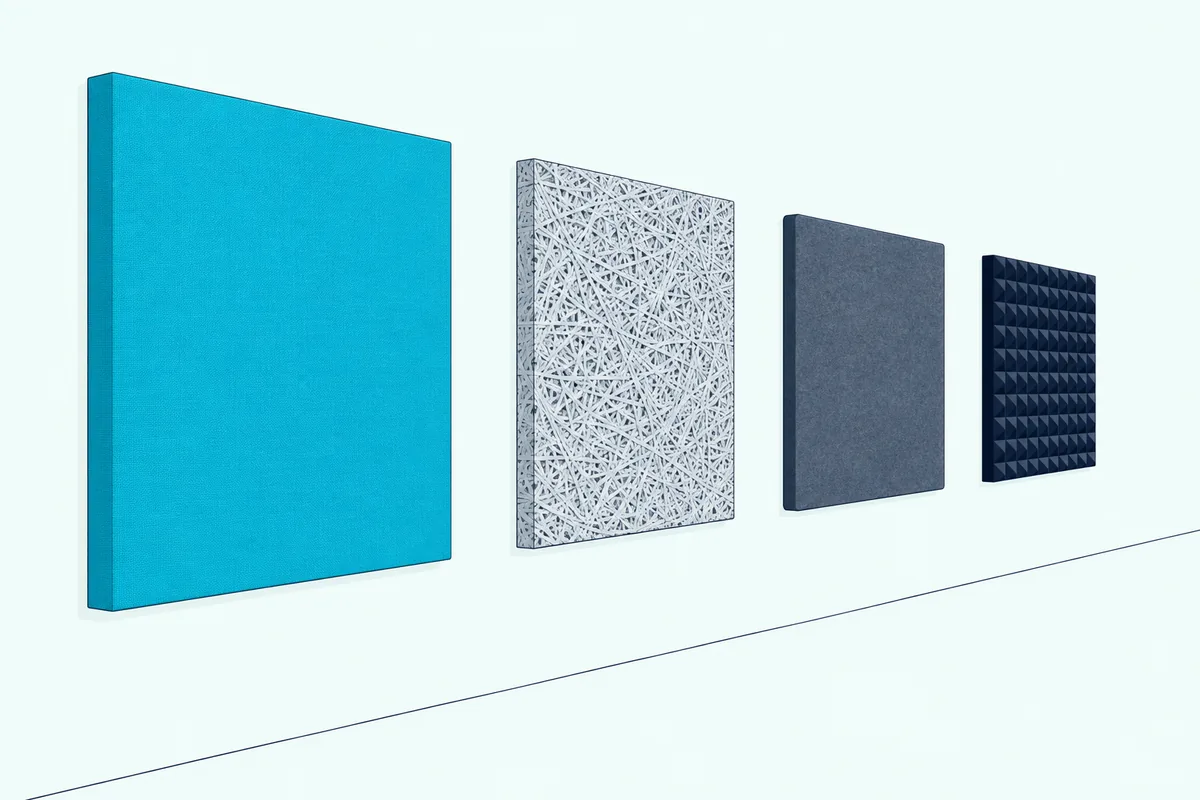
Auralex’s Acoustics 101 adds that when two materials have very similar NRCs, the band coefficients matter more than the single number. The same figures answer the wider question of the best material for acoustic treatment, since Owens Corning lists walls and ceilings among the 703 board’s uses.
For who makes these boards, see the guide to fiberglass and mineral wool brands.
How Do You Read an NRC Rating Without Being Misled?
Those 125 and 250 Hz columns earn their place because the NRC leaves the lower one out. Auralex defines NRC as the average of a material’s absorption coefficients at 250, 500, 1,000 and 2,000 Hz, so a core can score well while doing little at 125 Hz.
An NRC isn’t a percentage of the sound absorbed, either. Auralex says an NRC of 1.10 simply means more sound is absorbed, on average, than by a material rated 0.50, which is how Owens Corning can list 1.15 for 3-inch 703.
Auralex adds two checks that work on any sheet. NRCs come only in multiples of 0.05, so a figure like 0.72 probably wasn’t tested to the standard, and coefficients only hold for the mounting the lab used.
Two 2-inch cores show why the bands matter more than the headline number. In the Riverbank report Auralex publishes for its 2-inch Studiofoam Wedges, the foam’s coefficient at 250 Hz is 0.24, while Owens Corning gives 2-inch 703 a coefficient of 0.71 in the same band.
Try it on any panel you’re weighing: find the 250 Hz figure before the NRC.
Is Fiberglass the Best Acoustic Panel Material?
That 0.71 belongs to the board Auralex says you’ll hear called by its Owens Corning name, 703. On Owens Corning’s Fiberglas 700 Series data sheet, unfaced 703 posts NRCs of 0.70 at 1 inch, 1.00 at 2 inches and 1.15 at 3 and 4 inches, and at 4 inches or less none of the sheets on this page prints a higher NRC.
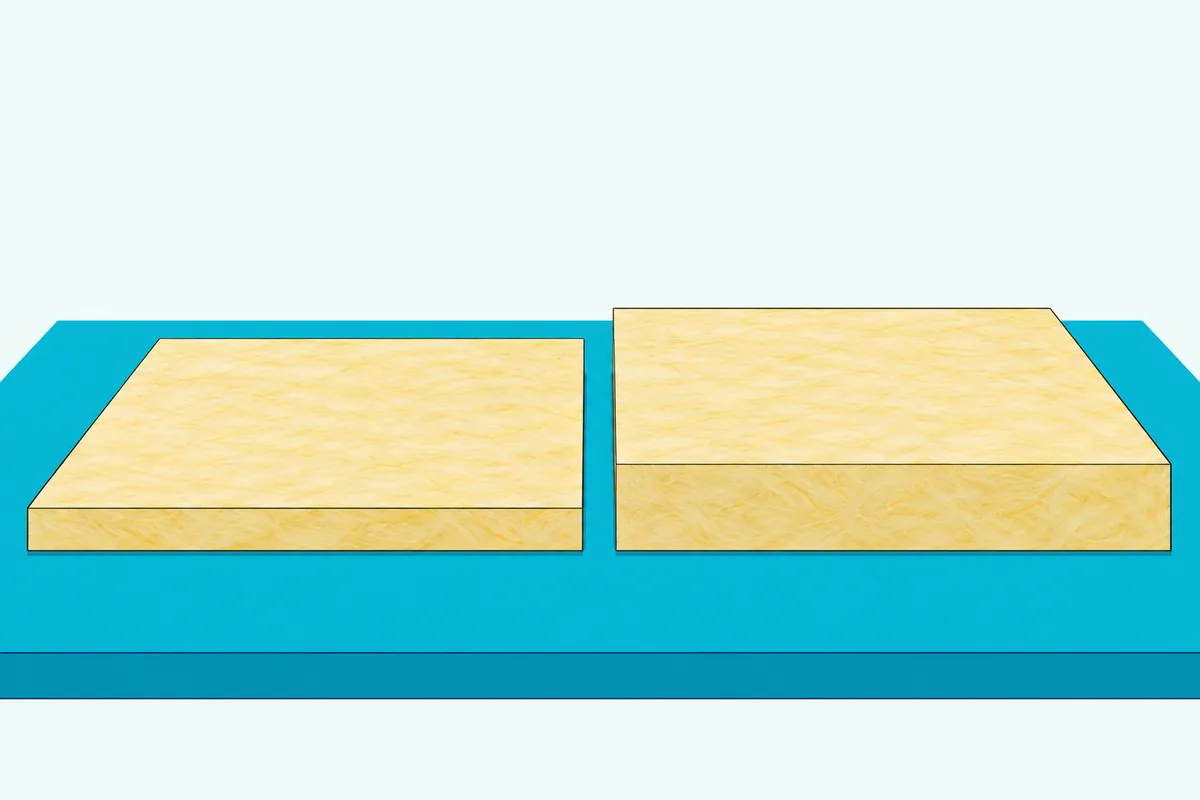
Owens Corning makes 703 and 705 from inorganic glass fibers in a thermosetting resin binder: 703 is a semi-rigid board at 3.0 pcf and 705 a rigid board at 6.0 pcf. Doubling the density moves the 2-inch NRC from 1.00 to 1.05, while doubling 703’s thickness from 2 to 4 inches lifts its 125 Hz coefficient from 0.15 to 0.56.
On those figures, thickness moves the low end far more than density does. The page on what density does to a panel’s absorption works through that trade-off board by board.
Buy the boards unfaced for a panel. Owens Corning’s foil-faced (FRK) 2-inch 703 falls to 0.32 at 4,000 Hz against 1.00 unfaced, and Auralex lists lower high-frequency absorption as one effect of a facing on a board outside a wall.
Auralex also mentions the irritation that comes with handling glass fiber, so look up the maker’s handling advice before you cut the boards. On fire, Owens Corning reports unfaced 703 and 705 at a flame spread index of 5 and a smoke developed index of 5 under ASTM E84, against Class A’s 0 to 25 for flame spread in Intertek’s summary of ASTM E84.
For a 703 core, the Owens Corning 703 six-pack sells 2-inch semi-rigid boards.
Owens Corning 703 six-pack
Is Rockwool a Good Material for Acoustic Panels?
Rockwool is ROCKWOOL’s stone wool, and the company’s own sheets put it right beside 703. Its Safe’n’Sound technical data sheet lists an NRC of 1.10 at 3 inches and 1.25 at 6 inches, and its rigid Comfortboard 80 lists 0.75 at 1 inch, rising to 1.00 at 3 and 5 inches.
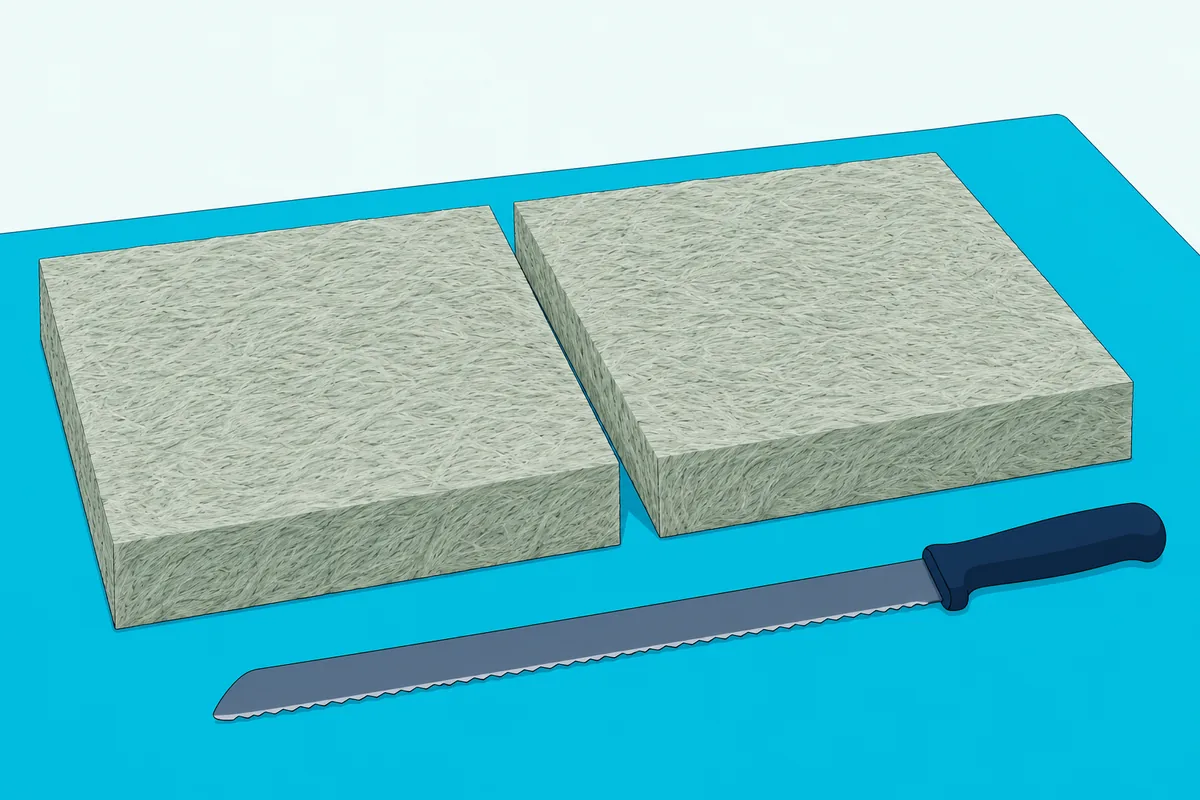
Safe’n’Sound is a friction-fit batt for wood and steel stud walls at a nominal 2.5 pcf, sold 3 or 6 inches thick. Comfortboard 80 is a rigid board at an actual 8 pcf, 1 to 5 inches thick.
ROCKWOOL rates both noncombustible under ASTM E136, with a flame spread index and a smoke developed index of 0 under ASTM E84.
The low end is where the sheets differ most: at 125 Hz, 3-inch Comfortboard 80 lists 0.84 and 3-inch Safe’n’Sound 0.44, against 0.34 for 3-inch 703, and 6-inch Safe’n’Sound reaches 1.38. ROCKWOOL also says density “is not a performance criteria” and changes with thickness, so choose from the absorption table rather than the pcf figure.
For a ROCKWOOL board 24 x 48 inches, the ROCKWOOL ProRox five-pack sells 2-inch boards. ProRox isn’t one of the boards charted above, so look up its own absorption figures before you compare.
ROCKWOOL ProRox five-pack
Which Is Better for Panels, Fiberglass or Rockwool?
Set side by side, the fiberglass and stone wool sheets differ band by band more than overall. At 3 inches, Owens Corning’s 703 lists an NRC of 1.15, ROCKWOOL’s Safe’n’Sound 1.10 and Comfortboard 80 1.00, while at 125 Hz the order turns around: 0.34, 0.44 and 0.84.
| At 3 inches thick | Owens Corning 703, unfaced | ROCKWOOL Safe’n’Sound | ROCKWOOL Comfortboard 80 |
|---|---|---|---|
| NRC | 1.15 | 1.10 | 1.00 |
| 125 Hz | 0.34 | 0.44 | 0.84 |
| 250 Hz | 1.09 | 0.98 | 0.86 |
| 500 Hz | 1.25 | 1.22 | 1.02 |
| ASTM E84 flame spread and smoke | 5 and 5 | 0 and 0 | 0 and 0 |
| Mounting stated | Type A | Not stated | Not stated |
The fire figures differ in kind. ROCKWOOL lists both stone wool products as noncombustible under ASTM E136, a test Owens Corning’s 700 Series sheet doesn’t report, and Auralex says its own studio mineral fiber has a much higher burning point than standard fiberglass insulation.
Moisture doesn’t rank them: Owens Corning gives 703 under 5% water vapor sorption by weight at 120°F and 95% relative humidity, ROCKWOOL gives Comfortboard 80 0.2% by volume, and the different units keep the two apart. The page on how each core copes with damp rooms covers humid spaces.
So the choice turns on your room: the stone wool sheets list more at 125 Hz, 703 lists more from 250 to 500 Hz at 3 inches, and all three sit inside Class A’s flame spread band.
Does Foam Work as Acoustic Panel Material?
Foam is where those mid-band figures drop. Auralex lists NRCs of 0.50, 0.75, 0.90 and 1.10 for its 1-, 2-, 3- and 4-inch Studiofoam Wedges, and its lab reports show the 2-inch Wedges at 0.24 at 250 Hz against 0.85 for the 4-inch.
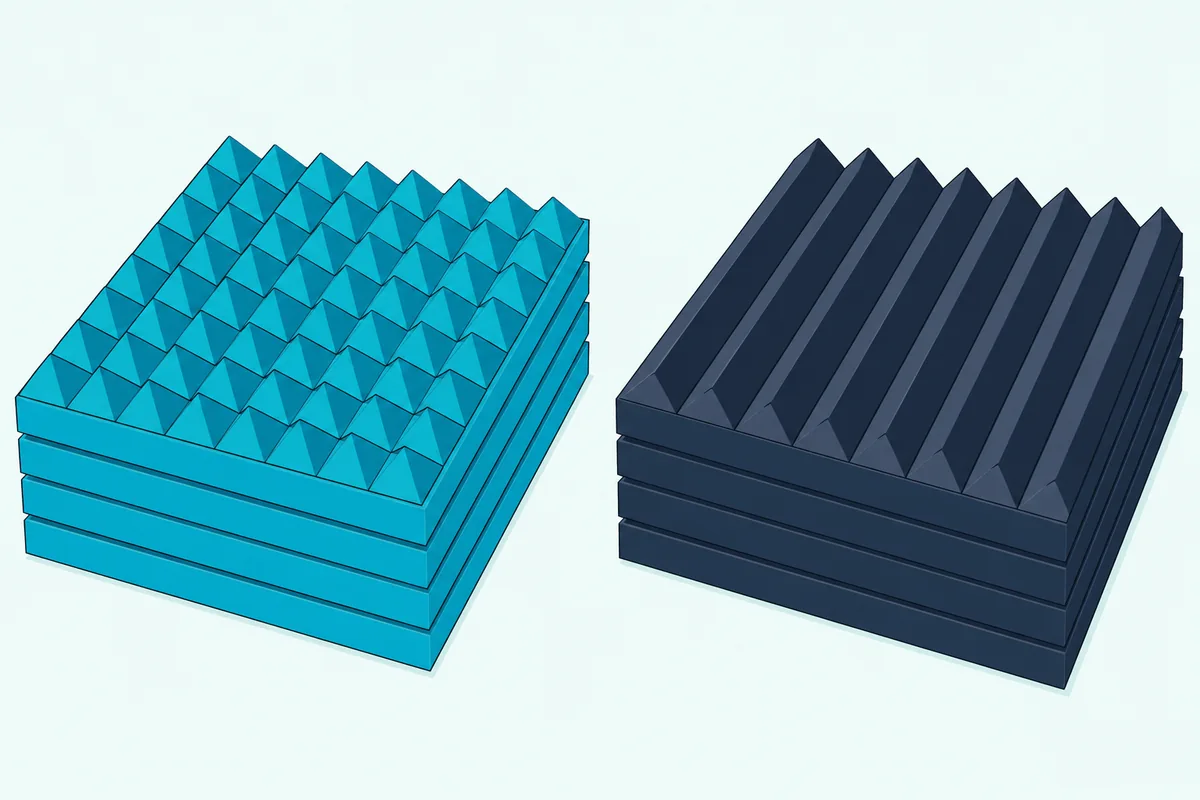
Thickness does the work here too. Auralex’s 4-inch test, dated 1993, lists 0.31 at 125 Hz and 0.85 at 250 Hz, above 2-inch 703’s 0.15 and 0.71, though 4-inch 703 lists 0.56 and 1.26.
Auralex says plainly that acoustic foam won’t soundproof a room: it absorbs reflected sound and won’t keep noise in or out on its own.
Auralex rates its Wedges UL 94 HF-1, and its Studiofoam safety data sheet warns that ignited foam “can produce rapid flame spread, intense heat, and dense black smoke and toxic gases” and can melt into a burning liquid. The same sheet calls the foam essentially non-toxic and non-allergenic in normal use and says respiratory protection isn’t normally required.
How Does PET Felt Compare for DIY Panels?
Unlike foam and the boards above, Autex’s PET felt arrives as a finished face rather than a core to wrap. Autex describes its Cube panel as semi-rigid compressed polyester felt, 100% PET with at least 80% recycled content, sold 3/8 inch or 1 inch thick with an NRC range of 0.30 to 0.80.
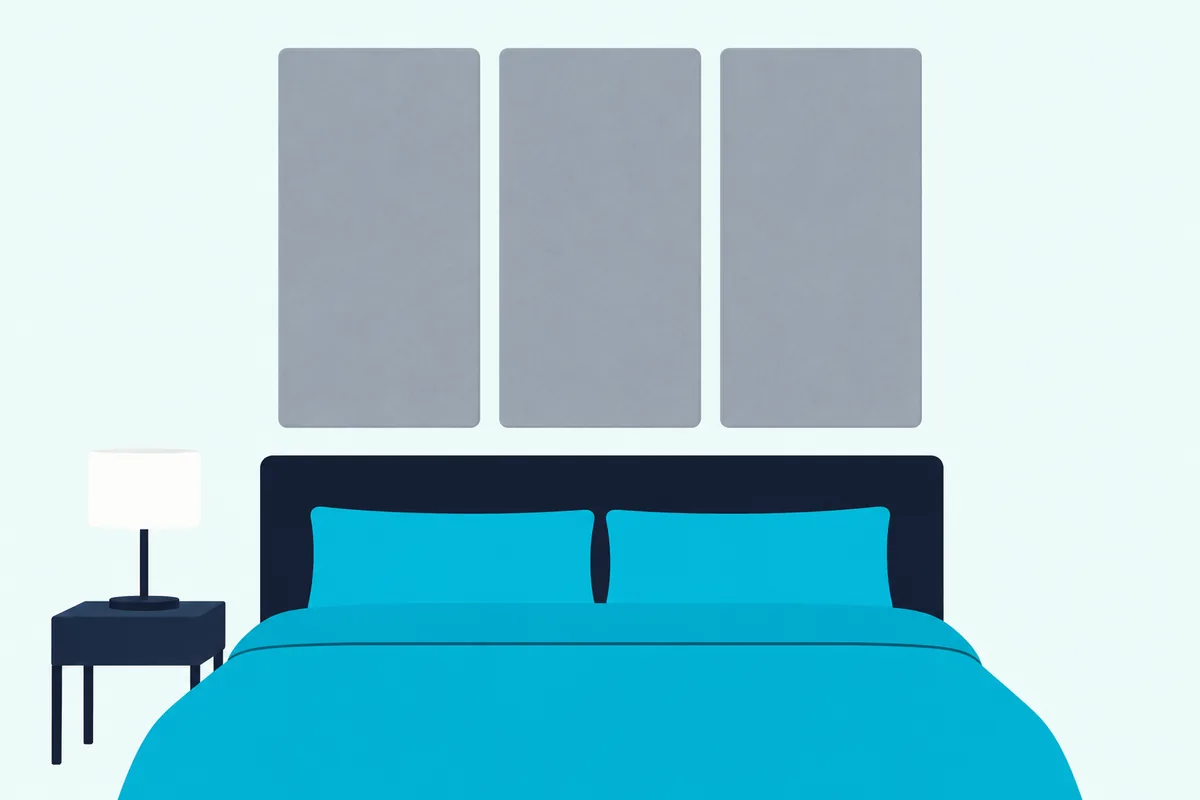
Autex says Cube “works hard to reduce reverberation and control background chatter” and rates it Class A under ASTM E84, but its page doesn’t say which thickness or mounting gives which end of that NRC range, and it gives no band figures.
For DIY work, Autex’s Cube installation guide asks for clean cloth gloves to keep the felt from getting soiled. For cutting, it calls for a circular saw with a narrow blade of at least 80 teeth.
Felt like Cube is bought as finished wall panels, and the room guides for home offices, bedroom setups, streaming setups and gaming setups pick panels room by room.
Should You Use Wood Wool for Acoustic Panels?
Wood fiber bound in cement is the other core sold as a finished face. Armstrong’s Tectum, aspen wood fibers held together with a cementitious binder, lists an NRC of 0.40 for its standard 1-inch lay-in panels and 0.85 for its Tectum High NRC panels, in Armstrong’s Tectum installation guide.
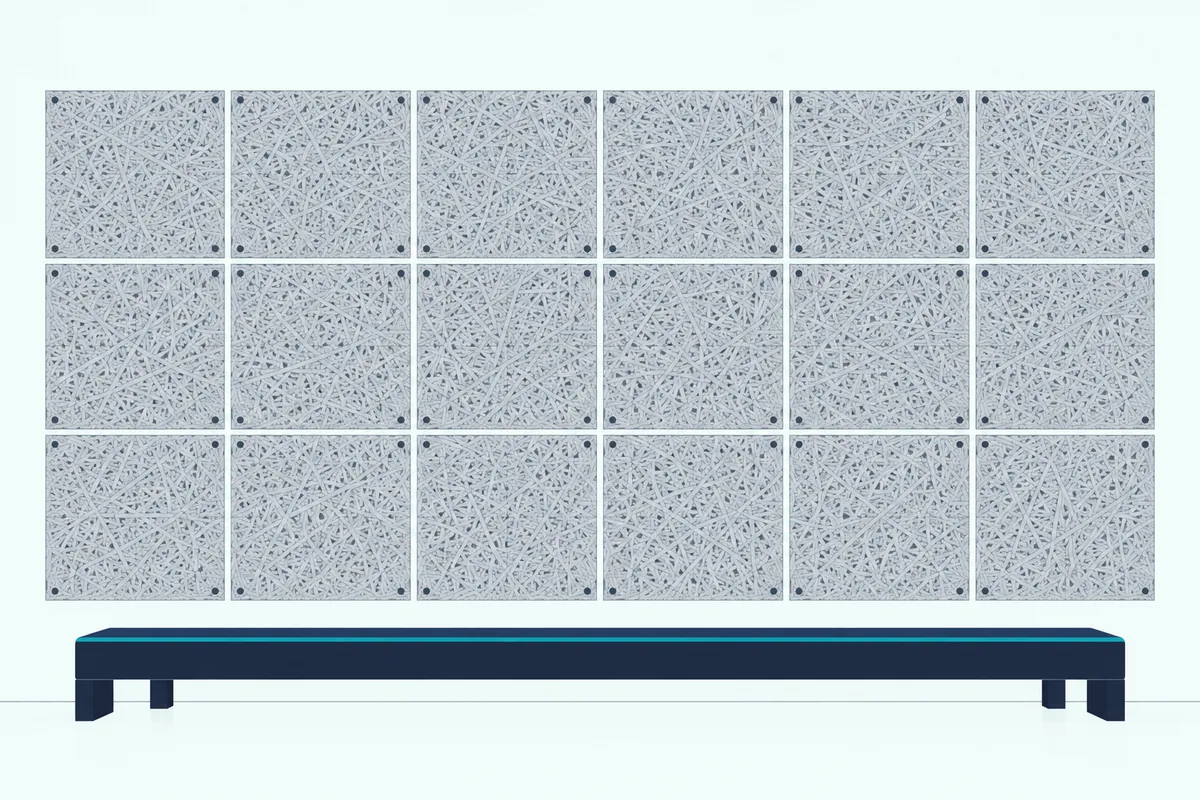
Armstrong reaches an NRC of 0.90 by laying a School Zone Fine Fissured panel behind 1-inch Tectum, and it describes the panels as highly durable. Cutting them is a different job from cutting felt: Armstrong warns that sawing, sanding or machining Tectum can produce wood dust and crystalline silica, classed as carcinogens when respirable, and calls for safety glasses, impervious gloves and, depending on the cutting, respiratory protection.
Armstrong sells Tectum as lay-in and tegular ceiling panels for suspended ceiling systems and asks for room humidity between 25% and 85%. Solid wood boards are a different material from wood fiber, and the page on wood and sound explains why most wood reflects sound.
Does the Fabric Cover Change What the Core Absorbs?
The fiberglass and stone wool boards still need a cover, and Guilford of Maine’s FR701 data sheet shows how much an acoustic fabric takes away. Its impedance-tube test gives the bare reference termination an NRC of 1.00 and 0.95 with FR701 in front of it (ISO 10534-2).
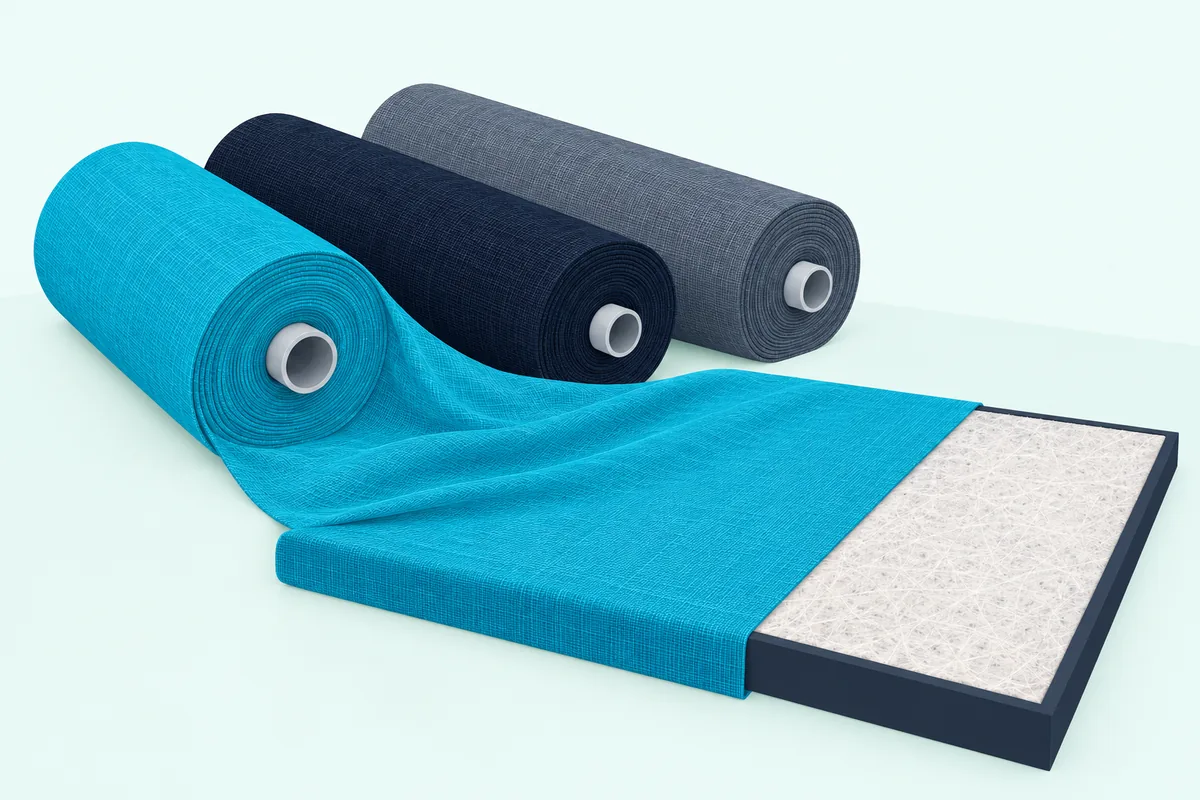
FR701 is 100% post-consumer recycled polyester, comes in dozens of colors and is rated ASTM E84 Class I or A. Facings are a different story: Owens Corning’s FRK and ASJ Max facings cut 2-inch 703’s NRC to 0.75 and 0.65, so a panel needs open fabric over bare board, not a foil or film face.
Choosing among fabrics by breathability, flame rating and fit is a topic of its own, and the acoustic panels fabric guide covers it. For a Guilford-made cloth by the yard, Guilford of Maine’s Sona acoustical fabric comes 60 inches wide, and ATS, which sells it, describes Sona as an alternative to FR701.
Guilford of Maine Sona Acoustical Fabric
What’s the Best Insulation for Acoustic Panels You Build Yourself?
Under that fabric, the best insulation for acoustic panels on these sheets is a semi-rigid or rigid board bought without a facing. Owens Corning’s 703 or 705 fits that description, and Owens Corning calls both easy to handle and fabricate on the job site.
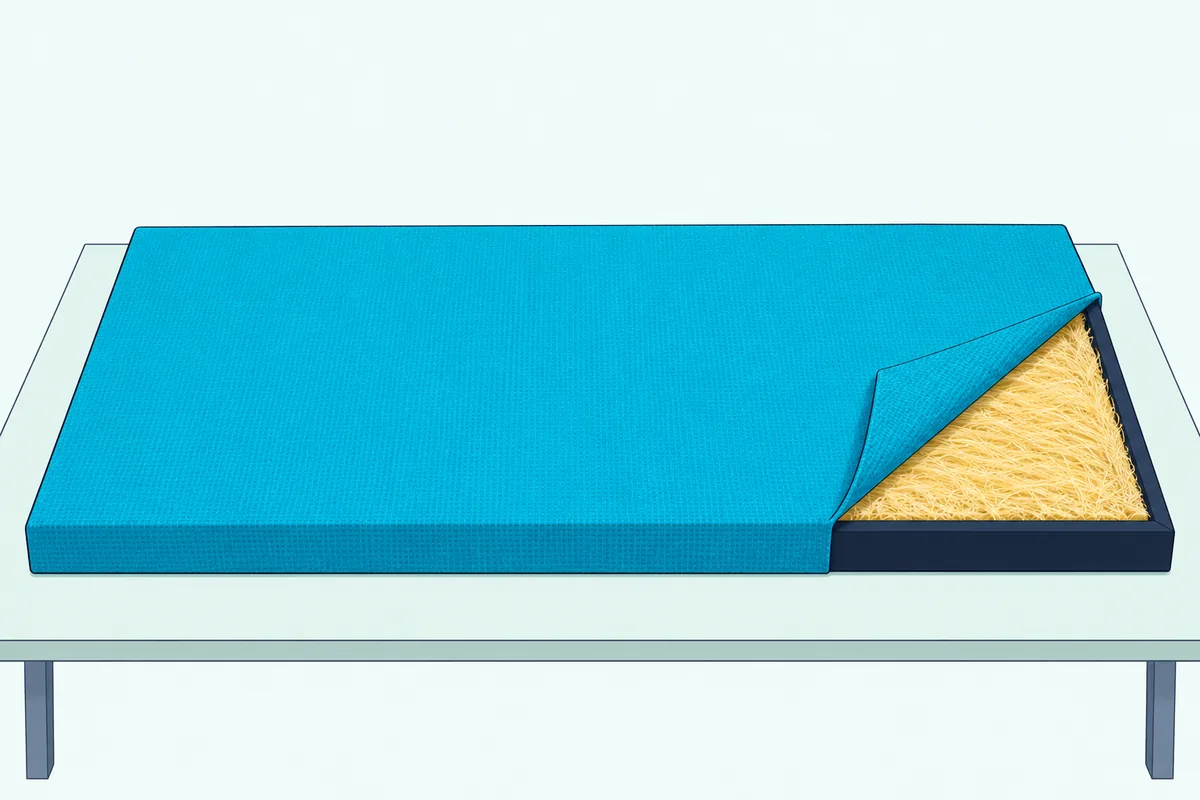
Batts absorb well too, as Safe’n’Sound’s 1.10 at 3 inches shows, but ROCKWOOL designs Safe’n’Sound to friction-fit between studs. It designs Comfortboard 80 as exterior continuous insulation, though that sheet carries a full absorption table.
Among materials for acoustic insulation inside walls, Auralex puts ordinary batts at 0.7 to 1.0 pcf and board insulation such as 703 and 705 at 2.0 to 8.0 pcf, calling the boards more effective against cavity resonances. That’s a separate job from a panel on the wall’s face, and the page on insulation in a wall cavity versus foam on the wall lays out the split.
Which Insulation Material Works Best for a Home Theater Room?
A home theater raises the stakes on that 125 Hz column. On the makers’ figures, thick stone wool and fiberglass lead there: 6-inch Safe’n’Sound lists 1.38 at 125 Hz, 3-inch Comfortboard 80 0.84 and 4-inch 703 0.56, against 0.31 for 4-inch Studiofoam Wedges.
Owens Corning’s and ROCKWOOL’s sheets stop at 125 Hz, so they can’t tell you how a panel handles the deepest notes in a film. For where the panels go, the home theater guide covers the side walls and the ceiling.
The Bottom Line
On the makers’ own figures, unfaced fiberglass and stone wool post the highest NRCs at 2 to 4 inches, and added thickness, more than added density, lifts the 125 Hz figure. Foam needs about twice the thickness to pass 2-inch board at 250 Hz, PET felt and wood fiber come as finished faces, and an open fabric takes little away: 0.05 of NRC in Guilford’s FR701 test.
If you’d rather skip raw materials entirely, the best acoustic panels guide lists ready-to-hang options with the absorption figures their makers publish. For music rooms and recording spaces, the studio panel guide picks panels by application, and the acoustic panels hub collects the other buying guides.
Frequently Asked Questions
Does Thickness Matter More Than Material?
Both show up in the figures. Auralex’s 4-inch Studiofoam Wedges outscore Owens Corning’s 2-inch 703 on NRC (1.10 against 1.00), at 125 Hz (0.31 against 0.15) and at 250 Hz (0.85 against 0.71), while at an equal 4 inches, 703 leads at both bands. Within each material, every sheet that prints band figures shows the 125 Hz figure rising with thickness.
Is Recycled Material Less Effective?
These sheets don’t compare recycled and virgin versions of one product, but recycled content sits behind several figures here. Owens Corning certifies an average of 53% recycled glass in its 700 Series boards and still lists 2-inch 703 at an NRC of 1.00, Guilford’s FR701 is 100% post-consumer recycled polyester, and Autex makes Cube with at least 80% recycled PET.
Do Acoustic Panels Need a Fire-Rated Core?
The makers rate their own materials but leave the code question to you. ROCKWOOL notes that its sheets meet the IBC’s Class A flame spread and smoke requirements, Owens Corning gives E84 indices of 5 and 5 for unfaced 703, and Autex rates Cube Class A. Auralex says it can’t guarantee any product meets your local building code and asks you to check with your fire marshal or building inspector before you buy or install.