Are Acoustic Panels Safe? What You Need to Know [2026]
Are acoustic panels safe? Yes — but only when the core material stays sealed inside fabric and the manufacturer can back up its fire and VOC claims.
Cheap foam off-gasses for weeks, exposed fiberglass irritates lungs and skin, and most budget panels ship with zero safety documentation. These problems are avoidable, but only if you know what to check before buying.
Three things separate safe panels from risky ones: material type, encapsulation quality, and third-party certifications. The first step is understanding what each core material does to your indoor air — from there, the certification table will help you verify any manufacturer’s safety claims.
Fabric-wrapped fiberglass and rockwool panels are safe because the encapsulation traps particles inside — PET polyester is the safest option with no fibers and very low VOCs. Cheap foam may off-gas initially; air new panels out for 48–72 hours before installing in bedrooms or enclosed spaces.
Are Acoustic Panels Safe?
The short answer is yes — acoustic panels are safe for home and commercial use. Two factors decide the safety level: the core material and how well it is sealed inside the panel.
Professional Panels
Fabric-wrapped panels from reputable manufacturers go through three rounds of testing before they reach consumers. VOC emission tests confirm the adhesives and fire retardants do not off-gas harmful chemicals into your breathing space.
Fire resistance ratings verify the panel will not ignite and spread flames — untested panels can do exactly that. Particle containment checks confirm the fiberglass or mineral wool core stays sealed inside the fabric enclosure for the panel’s full lifespan.
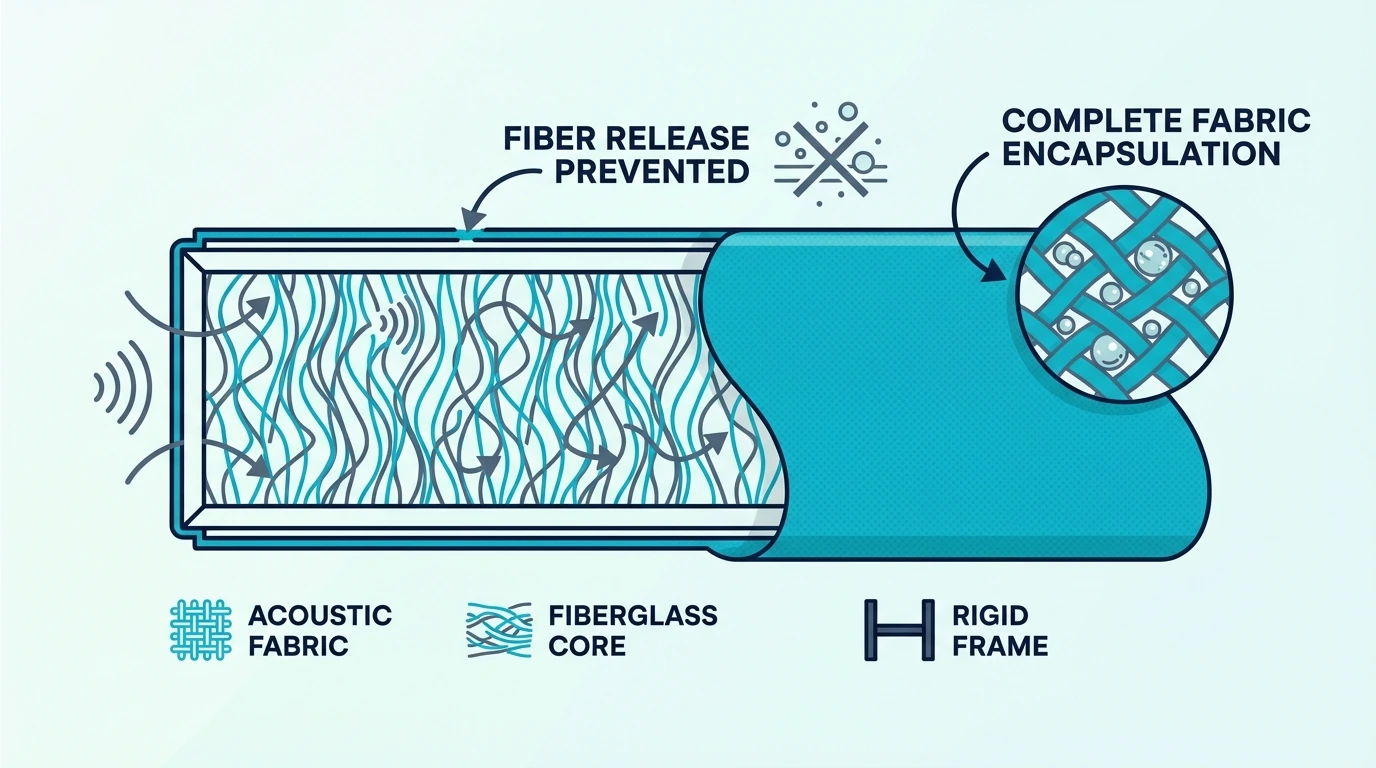
The fabric wrap does more than look good — it locks the core material in, preventing fiber release during normal use. That encapsulation is the main reason professional panels cost more than raw insulation or bare foam.
The NRC rating guide explains how material choice affects both sound absorption and safety.
Budget Foam
Lower-cost acoustic foam panels have more variable safety profiles. The main issue with cheap imports is VOC off-gassing — some budget panels emit chemical odors for weeks after unboxing, while quality foam clears within days.
Fire ratings vary just as much. Panels that pass domestic safety standards cost more to produce, so ultra-cheap imports often skip testing entirely.
Certification paperwork rarely ships with budget panels, making it impossible to verify what is actually in the material.
None of that means all foam is unsafe — it means you need to verify certifications before buying, especially for bedrooms or rooms where children spend time.
What Are the Main Safety Concerns?
Three concerns come up more than any others: chemical off-gassing from foam, loose fiberglass particles, and fire resistance. Each one has a straightforward fix once you know what to look for.
VOC Emissions (Off-Gassing)
VOCs are chemicals that evaporate at room temperature, creating that “new product” smell. The concern is prolonged exposure in enclosed, poorly ventilated spaces.
A simple test: if you can still smell a strong chemical odor from new panels after a week of airing out, that is a red flag. Quality panels have minimal smell within 48–72 hours.
Professional panels typically use low-VOC adhesives and fire retardants. Budget foam panels — especially those shipped directly from overseas — may contain higher VOC levels that take weeks to dissipate.
Mitigation: Unpack new panels in a garage or well-ventilated area for 48–72 hours before installing in living spaces.
Fiberglass and Mineral Wool Particles
VOC off-gassing fades over time, but particle exposure is an immediate physical reaction. Raw fiberglass and rockwool can irritate skin, eyes, and respiratory passages if particles become airborne — fabric-wrapped panels solve this completely because the encapsulation prevents particle release during normal use.
The only time particles become a concern is during DIY panel construction when cutting raw insulation. In that case, wear an N95 mask, safety glasses, long sleeves, and gloves.
The DIY acoustic panels guide covers safe handling practices for raw fiberglass and rockwool.
Fire Safety
Particles stay trapped inside wrapped panels, but fire behavior depends on something else entirely: the panel’s fire rating. Building codes in commercial spaces often require Class A, but residential installations have fewer requirements — and that gap matters in an emergency.
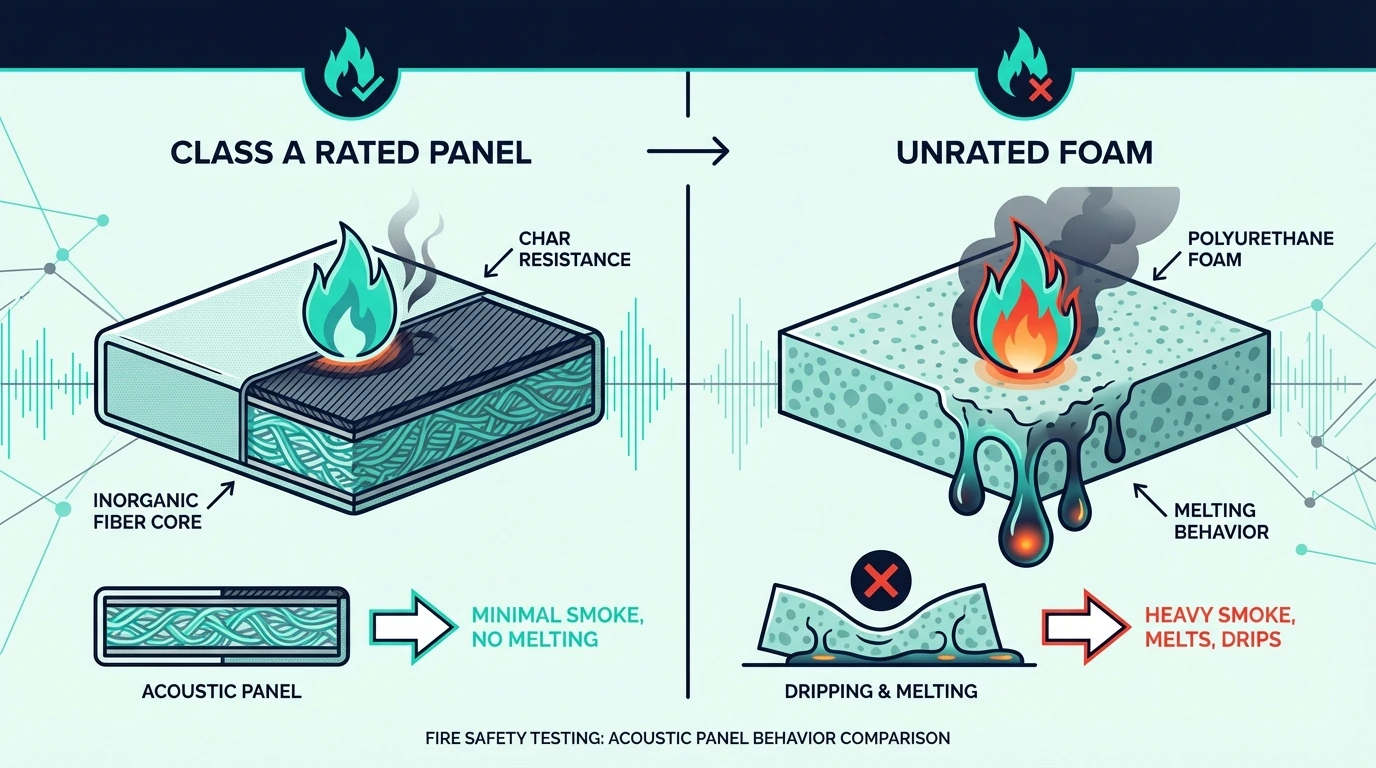
Fire ratings use a standardized scale: Class A provides the highest protection (flame spread index 0–25), Class B offers moderate protection (26–75), and Class C represents the minimum acceptable level (76–200). Unrated panels can score 200+ on this index, meaning flames spread rapidly across their surface.
The core material matters most. Rockwool and fiberglass are inherently non-combustible — a blowtorch held to rockwool will char the surface without igniting or spreading.
The fabric wrap adds another barrier — manufacturers treat the polyester or cotton fabric with fire-retardant chemicals that prevent flames from spreading across the panel surface. Even the adhesives are formulated to resist ignition rather than fuel a fire.
For home studios, the fire safety gap between budget foam and fabric-wrapped panels might seem abstract — until you factor in electrical equipment, hot lights, and enclosed spaces. Look for Class A or Class B fire ratings on any panel destined for a studio, office, or commercial space.
Get Studio Tips Weekly
Join 5,000+ creators getting acoustic treatment advice every week.
No spam. Unsubscribe anytime.Are Fiberglass Acoustic Panels Safe?
Fiberglass gets more safety questions than any other panel material. The answer splits into two scenarios: wrapped panels that contain every fiber, and exposed boards that should never go into occupied rooms.
Fabric-Wrapped Fiberglass
Professional fiberglass panels like those made with Owens Corning 703 or 705 rigid boards have been used in recording studios, theaters, and commercial buildings for decades. The fabric encapsulation is the key safety feature.
Once wrapped, the fiberglass cannot release particles into the air during normal use. You would need to physically tear open the panel to expose the core — and even then, the rigid board format sheds fewer particles than loose batt insulation.
For perspective: the fiberglass insulation already in your walls contains the same material. The fabric wrap on acoustic panels provides an extra layer of containment that wall insulation does not have.
The panel density guide explains how core density affects both safety and sound absorption.
Exposed Fiberglass
Without that fabric covering, fiberglass should not be installed in occupied spaces. The loose fibers create real problems during normal activities.
Brushing against an exposed panel leaves microscopic glass strands on your skin, causing that persistent itchy sensation that will not stop until you shower. Breathing near uncovered fiberglass releases airborne particles that irritate your throat and nasal passages.
People with dust allergies or respiratory conditions may experience more severe reactions, including persistent congestion or asthma-like symptoms.
If you are building DIY panels, always wrap the fiberglass completely. Do not leave any gaps where fibers could escape.
The fabric cover guide explains which wrapping materials work best for different panel types.
Are Foam Acoustic Panels Safe?
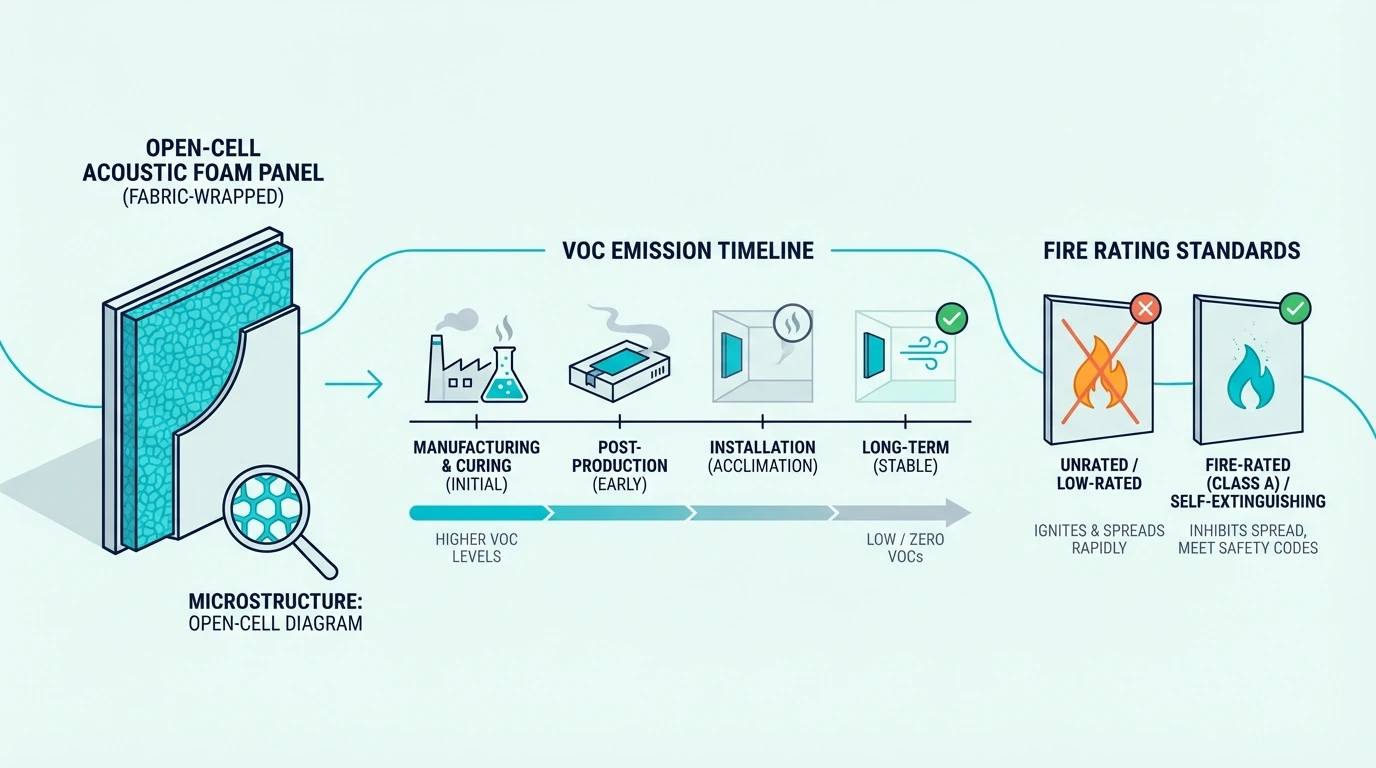
Foam trades the particle risk of fiberglass for a different concern: chemical off-gassing. Two categories define the foam market — certified products with documented safety data, and unregulated imports with none.
Quality Foam
Acoustic foam from reputable brands with safety certifications poses minimal health risks. The CertiPUR-US certification tells you the polyurethane was made without ozone depleters, heavy metals like mercury or lead, formaldehyde, or phthalates.
A Class B or higher fire rating means the foam passed standardized burn tests and will not rapidly spread flames if ignited. Low-VOC documentation from the manufacturer confirms they tested the chemical emissions and found them within safe limits.
These foams may have mild initial off-gassing but reach negligible levels within a few weeks. CertiPUR-US certified foams must emit less than 0.5 ppm of total VOCs — roughly 10x lower than unregulated imports.
If you want fabric-wrapped panels with documented safety data, the Olanglab Fiberglass Acoustic Wall Panels carry the certifications covered in the next section.
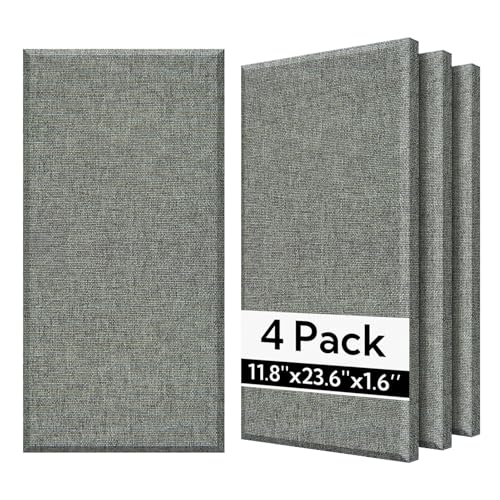
Olanglab Fiberglass Acoustic Wall Panels
Cheap Imported Foam
Budget foam panels — often sold in large packs at very low prices — may present legitimate concerns. The chemical smell from cheap foam can persist for weeks, indicating higher VOC levels that take longer to dissipate from indoor air.
Without fire rating documentation, you are gambling on whether the foam will melt and drip (spreading flames) or char in place (containing the fire). Some imported foams contain flame retardants banned in certain countries due to health concerns, but without testing paperwork there is no way to know what is in the panels.
None of that means cheap foam is unusable — it means you should air panels out thoroughly, avoid installing in bedrooms immediately, and ensure adequate room ventilation.
What Makes Acoustic Panels Safe?
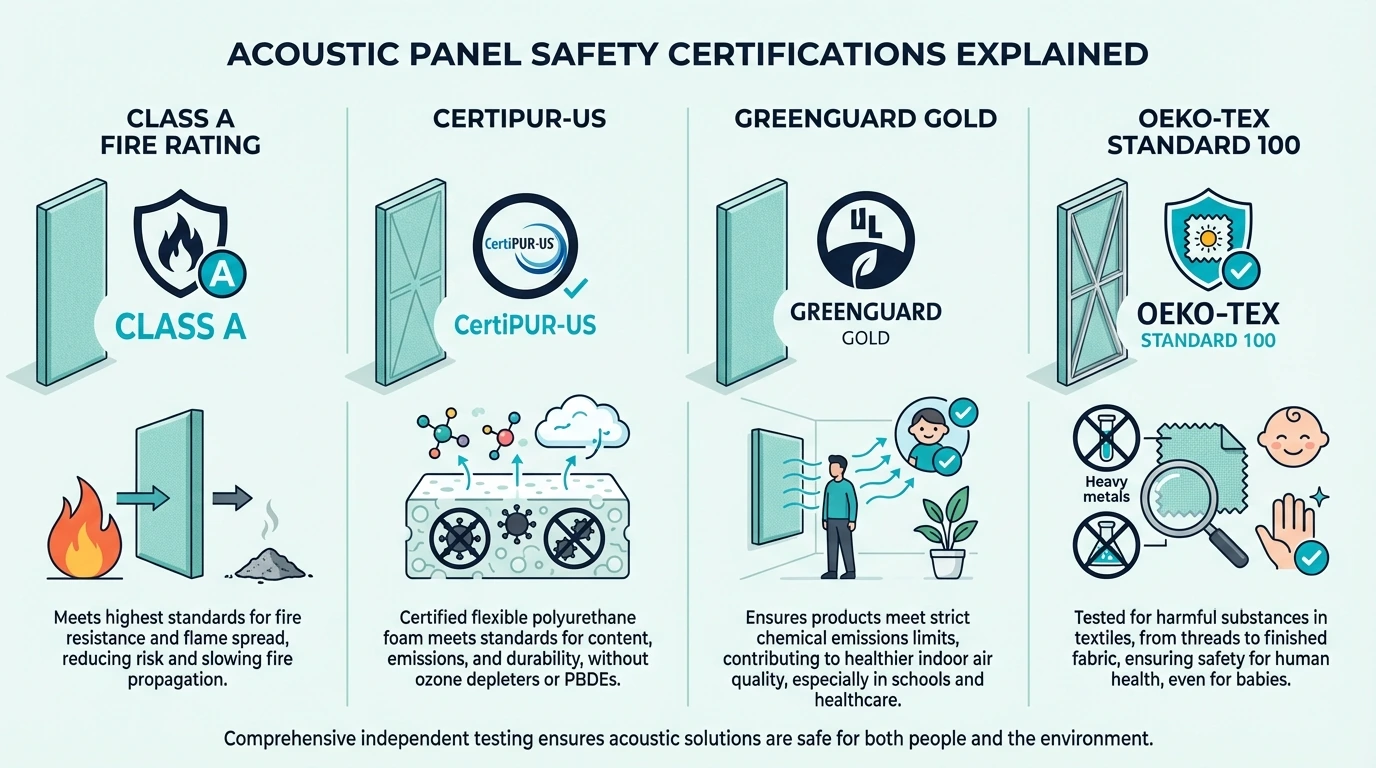
Material and encapsulation get a panel most of the way to “safe.” Two things close the remaining gap: low-VOC construction and third-party certifications that verify every claim under lab conditions.
Low-VOC Materials
Quality manufacturers specify VOC levels and use low-emission adhesives. Some panels achieve Greenguard Gold certification, which limits total VOCs to 0.5 mg/m³ — strict enough for schools and healthcare facilities where vulnerable populations spend time.
The certification process involves placing panels in a sealed chamber for 7 days, then measuring chemical emissions at various intervals. Products must pass both immediate and long-term emission tests.
That testing investment is the main reason certified panels cost more than uncertified alternatives.
Safety Certifications to Look For
Low-VOC construction only matters if an independent lab verified the numbers. Four certifications cover the safety claims that matter most for acoustic panels.
| Certification | What It Means | Applies To |
|---|---|---|
| Class A Fire Rating | Highest fire resistance | All panel types |
| CertiPUR-US | Low VOC foam | Polyurethane foam |
| Greenguard Gold | Low chemical emissions | All materials |
| OEKO-TEX | Textile safety | Fabric and PET panels |
Any panel carrying one of these certifications has undergone third-party lab testing to back up its safety claims.
Are Acoustic Panels Safe for Kids and Bedrooms?
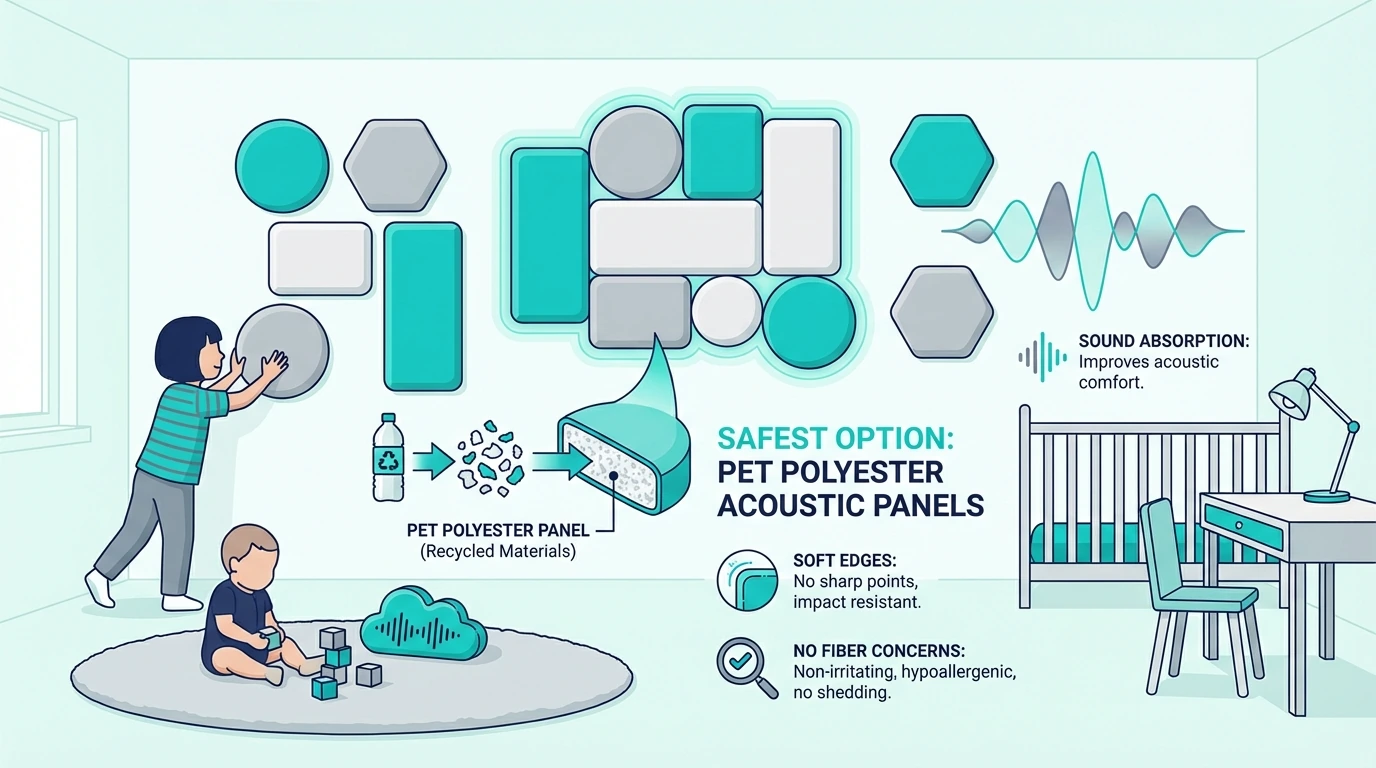
Kids’ rooms raise the stakes on every concern covered so far — encapsulation, VOC off-gassing, and certifications all matter more when children are involved. The safest material choice and the mounting method both deserve extra attention.
Safe Panel Materials for Bedrooms
Fabric-wrapped fiberglass panels are safe for bedroom installation. The Olanglab Fiberglass Acoustic Panels are a good example — the fiberglass core is fully sealed inside fabric, so particles stay contained and off-gassing is minimal.
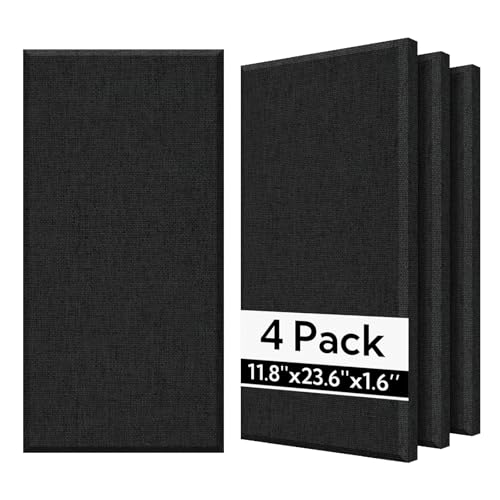
Olanglab Fiberglass Acoustic Panels
For maximum safety in children’s rooms, PET polyester panels eliminate fiber concerns entirely. The TroyStudio Felt Acoustic Panels are made from recycled plastic bottles, similar to the material in fleece jackets.
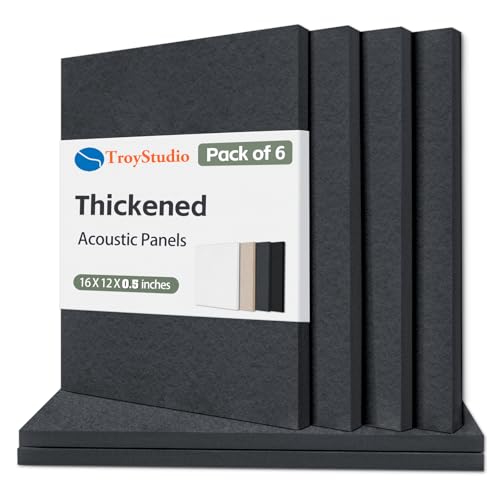
TroyStudio Felt Acoustic Panels
No fiberglass, no mineral wool, and very low VOC emissions because there is no chemical adhesive binding the fibers together.
The acoustic panels resource hub covers more options across every price range.
Extra Precautions for Sensitive Spaces
The fiber-free construction of PET panels makes them the default choice for nurseries. Even with safe materials, air out any new panels for 3–7 days in a ventilated area before moving them into a child’s bedroom.
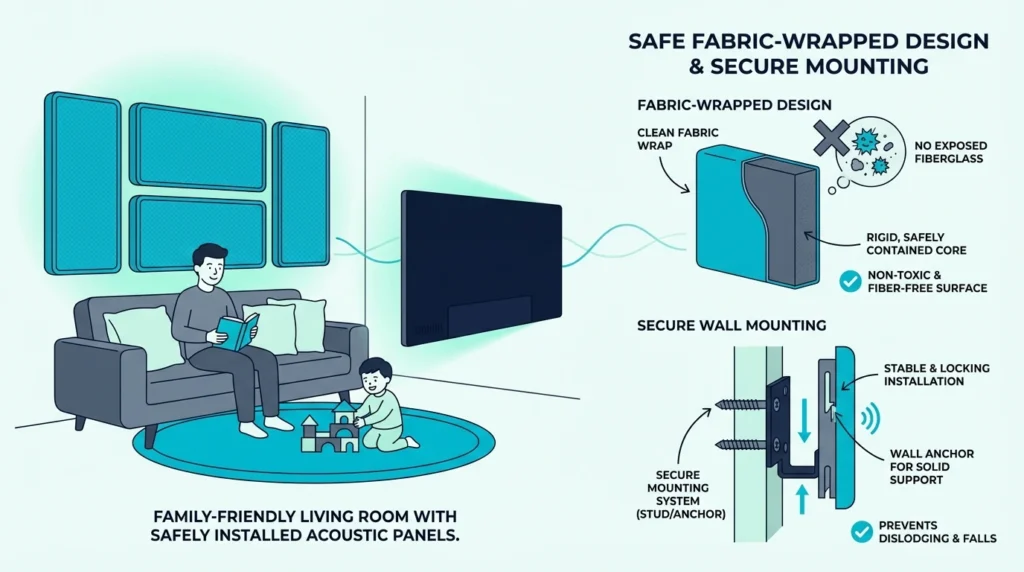
Mounting security matters more in kids’ rooms than anywhere else. A falling panel can injure a toddler, so use mounting hardware rated for twice the panel weight and check fasteners every few months — the hanging guide covers every mounting method.
Avoid sharp-edged metal clips or exposed hardware at child height — rounded mounting systems or panels positioned above reach are the safest approach.
Material Safety Comparison
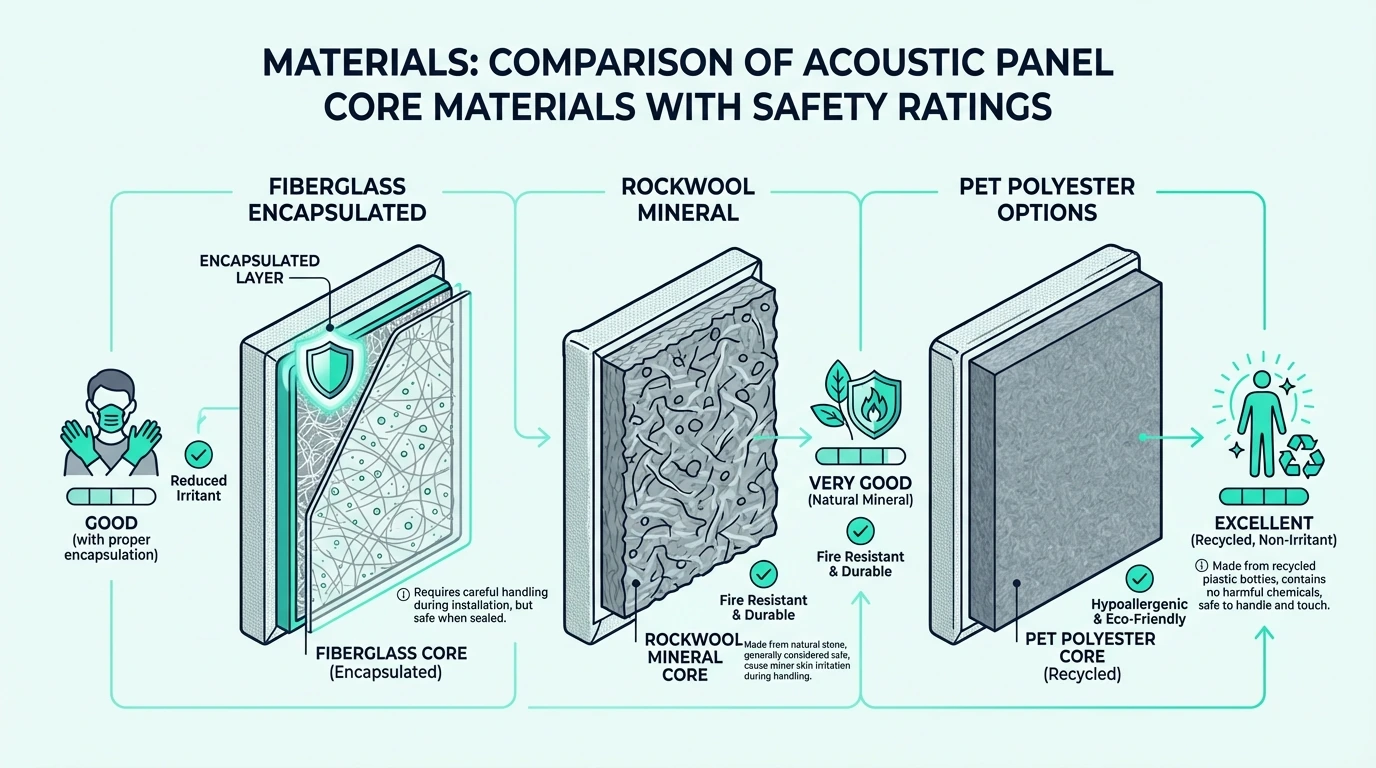
This table pulls together the VOC risk, particle risk, and best use case for each panel material.
| Material | Safe? | VOC Concern | Particle Concern | Best For |
|---|---|---|---|---|
| Fiberglass (wrapped) | ✅ Yes | Low | None when wrapped | Studios, offices |
| Rockwool (wrapped) | ✅ Yes | Very low | None when wrapped | Fire-sensitive areas |
| PET Polyester | ✅ Yes | Very low | None | Bedrooms, kids rooms |
| Quality Foam | ✅ Usually | Moderate initially | None | Home studios |
| Cheap Foam | ⚠️ Varies | Higher initially | None | Air out first |
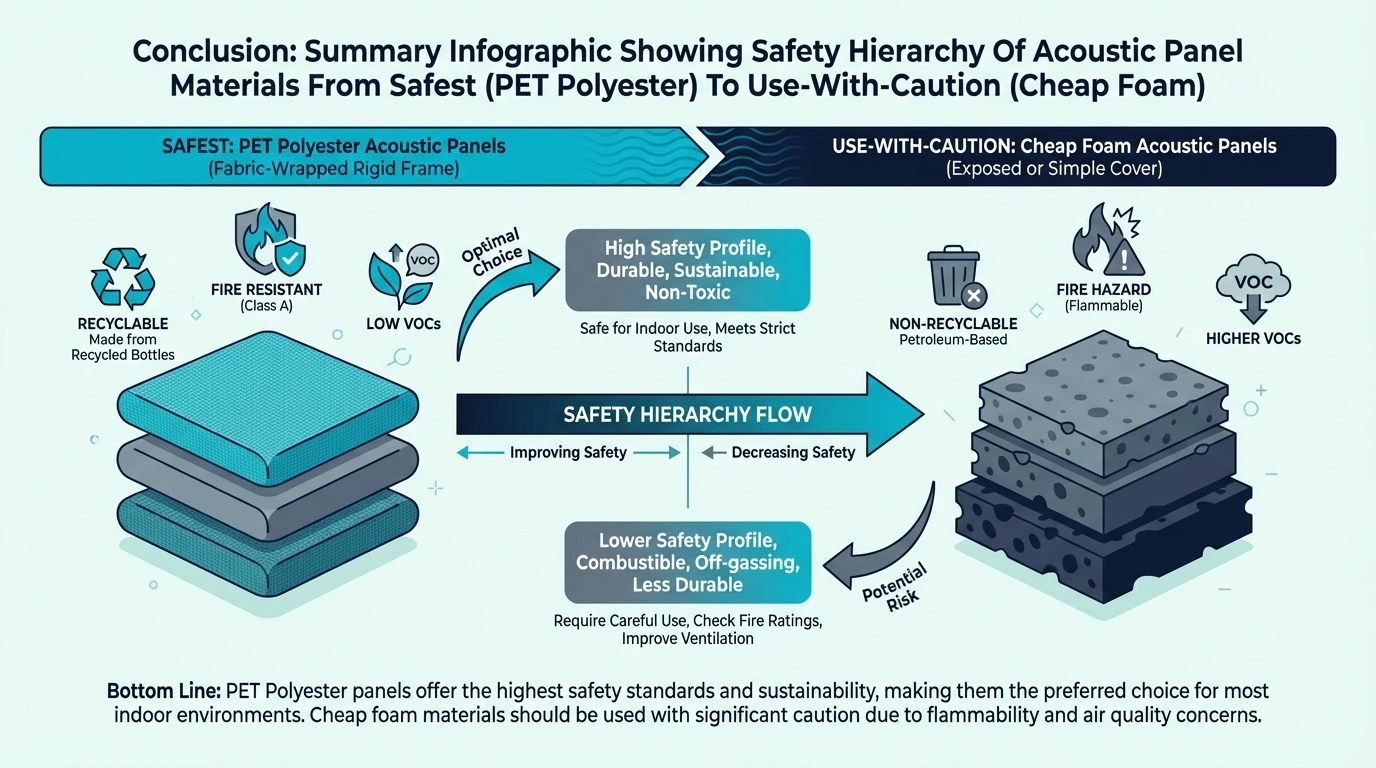
The biggest takeaway: wrapped panels and PET polyester carry the lowest combined risk across every category. Cheap foam is the only material that needs active mitigation — airing out before installation — and even that risk drops to near zero after the first week.
If the room has children, pets, or anyone with respiratory sensitivity, PET polyester is the safest default. For studios and offices where fire codes apply, fiberglass or rockwool with a Class A rating covers both safety and performance.
Conclusion
Are acoustic panels safe? Yes — when the material is sealed inside fabric and the manufacturer backs up its claims with third-party certifications.
Professional fabric-wrapped fiberglass and rockwool panels keep particles contained, and certified foam keeps VOC levels within safe limits. The VOC off-gassing issues tied to cheap foam resolve with 48–72 hours of airing out in a ventilated space.
The safest options are PET polyester panels (no fibers, very low VOCs) and fabric-wrapped fiberglass or rockwool from reputable manufacturers. Budget foam works fine for home studios but should be aired out before going into bedrooms or enclosed spaces.
For nurseries or rooms where occupants have respiratory conditions, stick with certified low-emission panels and allow ventilation during the first few weeks after installation. The best acoustic panels buying guide covers top-rated options across every budget.
Professional panels have been used safely in schools, hospitals, and homes for decades. Choose a certified product, air it out if it is foam, and start treating your room.
Frequently Asked Questions
Are Acoustic Panels Toxic?
No. Professional acoustic panels are not toxic — they are made from fiberglass, mineral wool, polyester, or polyurethane foam, all commonly used in buildings, furniture, and consumer products.
The main concern is VOC off-gassing from some foam products, which dissipates over time. Fabric-wrapped panels contain their core materials completely, preventing any particle release.
Can Acoustic Panels Make You Sick?
Quality acoustic panels should not cause illness. Some people report sensitivity to new foam products during the initial off-gassing period — symptoms might include headache or mild respiratory irritation in poorly ventilated spaces.
These symptoms typically resolve within days to weeks as VOCs dissipate. If you are chemically sensitive, choose PET polyester panels or air out foam panels extensively before installation.
Do You Need to Wear Protection When Installing Panels?
For pre-wrapped panels, no special protection is needed — just standard precautions for any wall-mounting project. The installation guide covers safe mounting techniques.
For DIY panels where you are cutting raw fiberglass or rockwool, wear an N95 respirator, safety glasses, long sleeves, and gloves. The particles irritate skin and respiratory passages during handling but pose no long-term health risk with basic precautions.
Are Acoustic Panels Safe Near Heat Sources?
It depends on the panel’s fire rating. Fiberglass and rockwool cores are inherently non-combustible, but fabric wraps and foam cores may have varying fire resistance.
Never place non-rated foam panels near heat sources, radiators, or in locations where fire codes require rated materials. For areas near heat, choose panels with Class A fire ratings.
The placement guide covers safe positioning away from hazards while maximizing acoustic benefit.