Why Are Acoustic Panels So Expensive? Cost Breakdown [2026]
You finally decide to fix your room’s echo, but you’re immediately hit with a question: why are acoustic panels so expensive? Yes, professional treatment can cost thousands, but understanding the price breakdown changes everything.
The sticker shock comes from the reality of sound physics—cheap foam bounces low frequencies right back at you, while dense professional materials actually absorb the energy. That persistent muddiness in your recordings or the harsh ring in your living room won’t disappear with cheap foam squares; you’re paying for actual mass and structure that stops sound dead.
Knowing exactly what drives the price up lets you build a treatment plan that delivers clean, direct sound without overspending.
Your first step is identifying which components matter most for your specific space—starting with the difference between core materials and aesthetic finishes.
Acoustic panels are expensive because of material costs (rigid fiberglass cores and specialized acoustic fabric), labor-intensive manufacturing, and fire safety testing. Cheap foam costs a fraction of the price because it skips these materials and certifications entirely. You can save money by building DIY panels, choosing budget-friendly commercial alternatives, or mixing premium and budget options by room zone.
Why Are Acoustic Panels So Expensive?
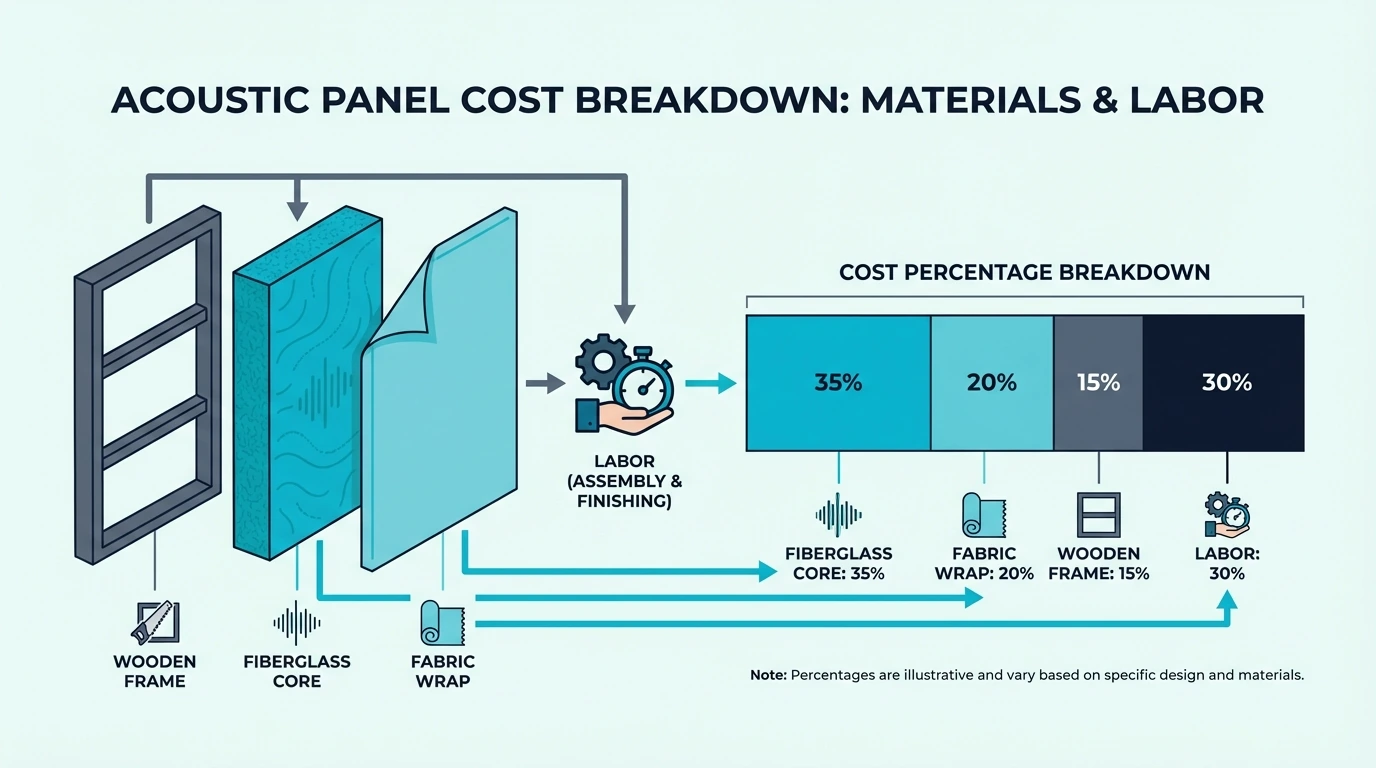
Premium materials, intensive manufacturing, and safety certifications add up quickly. Five specific cost drivers explain why a single 2×4-foot panel cost $79.95 to $133.99 on ATS Acoustics’ own site on 15 October 2026, depending on thickness and fabric.
Quality Core Materials
The absorptive core eats the largest share of the budget. Professional panels use rigid fiberglass boards or dense mineral wool that cost several times more than standard wall insulation.
A basic 2-inch thick rigid fiberglass board — the kind used in the top fiberglass panels — cost about $21 to $23 per 2×4-foot board in a case of six at ATS on 15 October 2026 ($124.99 for its own board, $139.99 for Owens Corning 703). Multiply that by the dozen panels a typical room needs (if you’re wondering how many acoustic panels you need), and the cores alone come to about $250 to $280 before framing or fabric.
These dense rigid boards absorb sound energy effectively across a wide frequency range. Cheap alternatives use thinner, highly porous materials that only absorb high frequencies, leaving your room sounding muddy and unbalanced.
Specialized Acoustic Fabric
You cannot use standard decorative fabric to cover an acoustic panel. The covering must be acoustically transparent to allow sound waves to pass through into the absorptive core.
Brands like Guilford of Maine produce industry-standard acoustic fabrics: ATS sold Guilford’s Sona at $25.45 a yard and FR701 from $27.20 on 15 October 2026, against $7.99 for plain jute burlap. ATS says just under a yard wraps a 24 by 48 by 2 inch board, so the wrapping adds about $8 to $27 per panel.
Acoustic fabric also has to hold up visually in professional environments. Regular, tightly woven fabric reflects sound back into the room instead of letting it pass through — defeating the panel’s purpose entirely.
Frame Construction
Quality panel frames use solid wood like poplar or pine rather than cheap particle board or MDF. Solid wood frames resist warping over time and provide a secure anchor for mounting hardware.
ATS also sells its empty panel frames on their own, at $37.99 for a 24 by 48 by 2 inch frame and $52.99 for the 4 inch on 15 October 2026. It says they’re made for mineral wool fill and that a rigid board such as Owens Corning 703 won’t fit flush, and it recommends building a wood frame if you wrap a board yourself.
Some premium manufacturers go further with edge-hardening techniques or metal internal frames. The result is crisp, professional edges that hold their shape even after years on the wall.
The Hidden Cost of Shipping “Air”
One major reason acoustic panels cost so much is the logistical nightmare of shipping them. Acoustic panels are lightweight, bulky boxes of air that consume cargo space far out of proportion to their weight.
Shipping carriers charge based on dimensional weight rather than actual physical weight. Because fully assembled panels cannot be flat-packed or compressed, manufacturers pass the inflated freight bill straight to the buyer.
Buying panels locally or building them yourself avoids that freight, though some makers absorb it: ATS ships most of its panels and boards free within the continental US, so compare delivered prices rather than sticker prices.
Fire Safety Certification
Professional acoustic panels undergo rigorous fire testing to achieve Class A fire ratings. This critical testing ensures the materials will not easily ignite or rapidly spread flames across your walls.
Earning and maintaining these safety certifications requires expensive laboratory testing. Manufacturers who skip this step cut overhead, but they leave you with unrated products of unknown fire behavior.
If you are treating a commercial space or a public building, these fire ratings are legally required by building codes. You are paying a premium for guaranteed, documented safety standards.
What’s the Difference Between Cheap and Expensive Panels?
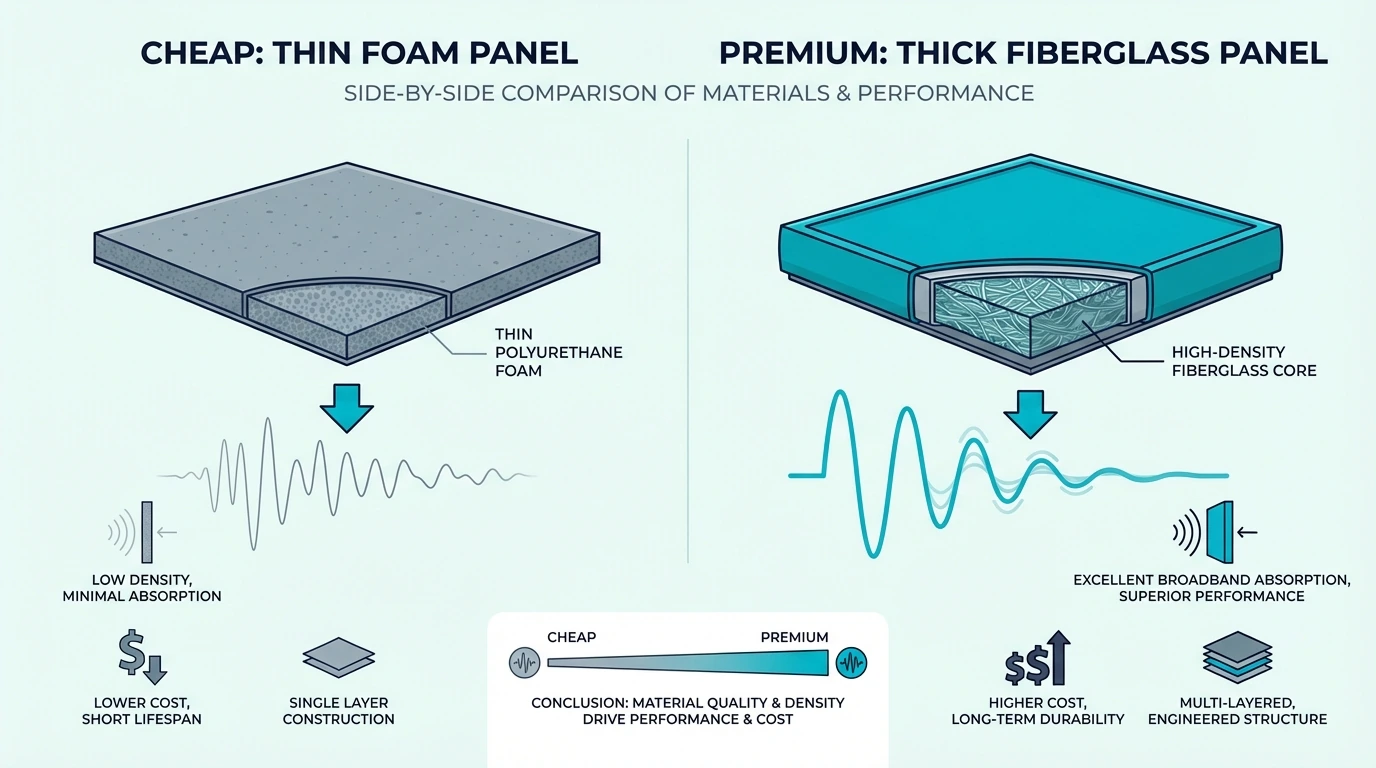
Price alone tells you nothing — what matters is the performance gap between a pack of foam squares and a fabric-wrapped fiberglass panel. The functional differences are larger than most buyers expect.
Performance and NRC Ratings
The Noise Reduction Coefficient (NRC) measures exactly how much sound energy a panel absorbs. Higher ratings indicate better absorption, with 1.0 representing theoretically perfect sound absorption.
Premium fiberglass panels typically achieve outstanding NRC ratings between 0.85 and 1.05. Budget foam panels often struggle to reach NRC 0.40 to 0.65, absorbing less than half as effectively as their premium counterparts.
In practice, you need roughly twice as many cheap panels to match the absorption of a single quality one. The upfront “savings” vanish once you account for the extra coverage.
Durability and Longevity
High-quality acoustic panels are designed to last for decades without degrading. The rigid fiberglass core refuses to sag or compress, while the premium fabric resists fading under UV light.
Conversely, cheap acoustic foam typically begins degrading within three to five years. It discolors, crumbles at the edges, and loses its structural integrity as the open-cell structure breaks down from oxidation.
Treat the room once with premium panels, and the job is done for decades. Cheap foam, on the other hand, crumbles within a few years — and scraping degraded adhesive off your walls is nobody’s idea of a good time.
Aesthetic Quality
Professional acoustic panels look like intentional, premium architectural design elements. Their tight fabric wrapping, perfectly square edges, and flawless construction make them suitable for highly visible, high-end installations.
Budget panels almost always look exactly like what they are—cheap, temporary acoustic treatment. Wrinkled fabric, visible glue seams, and inconsistent sizing severely limit where you can install them without looking amateurish.
Why Is Foam So Much Cheaper?
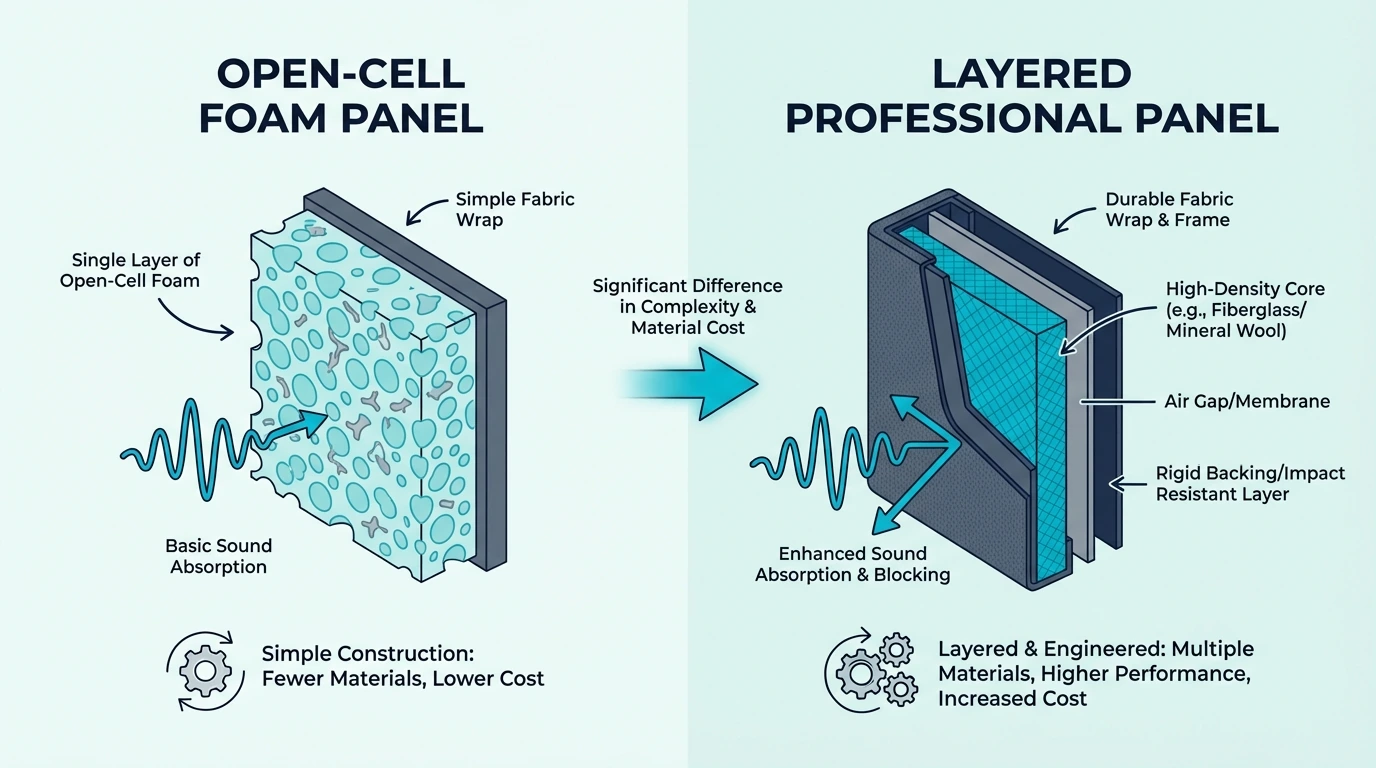
Foam sells in multi-packs that cost far less per square foot than fabric-wrapped fiberglass. The price gap reflects what manufacturers leave out.
What Foam Manufacturers Skip
Acoustic foam production is far simpler and cheaper than rigid panel manufacturing. There are no wooden frames to build, no expensive fabrics to stretch, and usually no fire testing to pass.
Foam can also be vacuum-sealed and shipped in tiny boxes, wiping out the dimensional shipping costs that inflate fiberglass panel pricing.
When Cheap Foam Actually Makes Sense
Despite its flaws, cheap acoustic foam is not always the wrong choice for every situation. For temporary treatment, budget-constrained experiments, or spaces where appearance simply does not matter, foam offers an accessible entry point.
If you are treating a raw garage band practice space or testing panel positions before investing heavily, foam serves an excellent purpose. Just temper your expectations and do not expect it to perform like dense, professional treatment.
The acoustic panels vs soundproofing comparison explains exactly where lightweight foam hits its absorption ceiling.
Are Expensive Acoustic Panels Worth It?
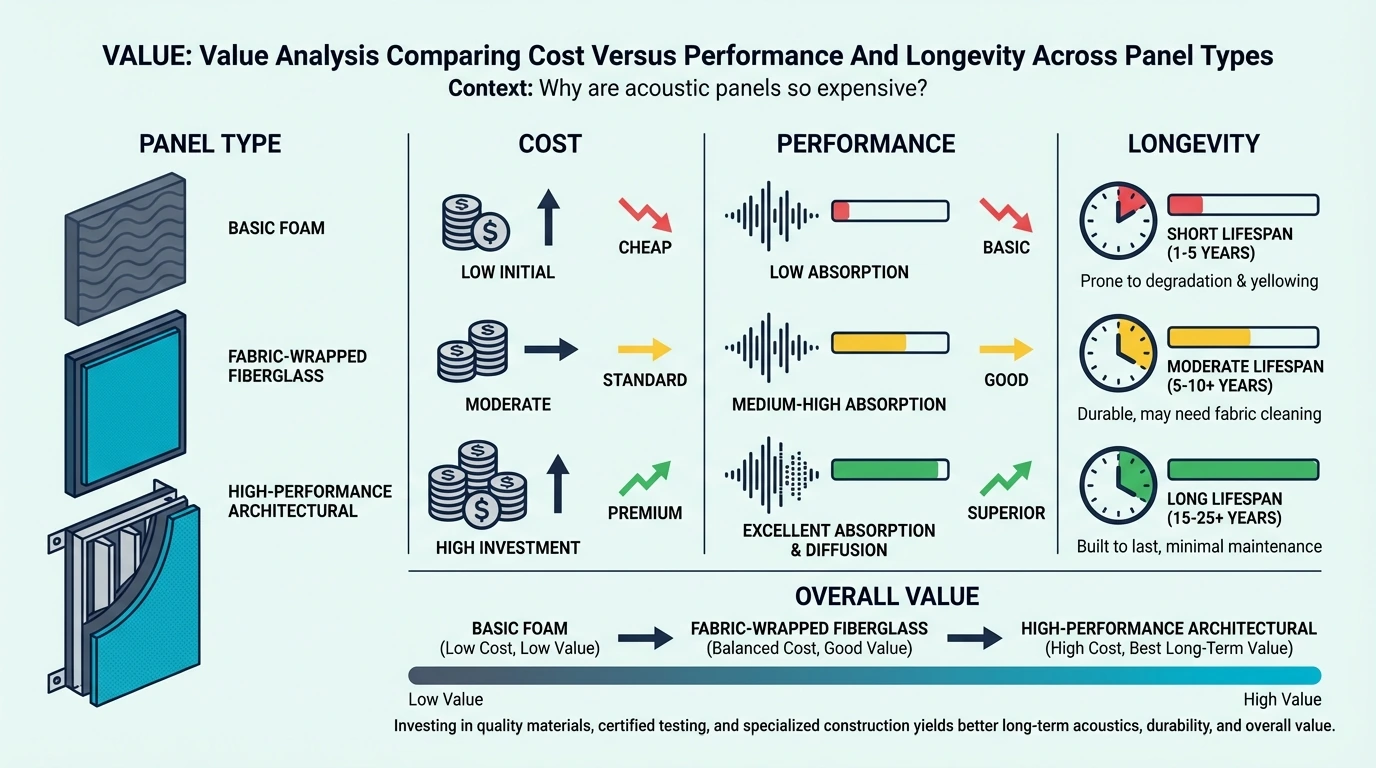
The performance gap is clear — but does paying for fiberglass panels instead of foam actually pay off? You have to calculate that return on investment based strictly on how you intend to use the space.
For Studios and Critical Listening
If you are mixing music or recording professional voiceovers, buying premium panels is completely non-negotiable. Accurate sound reproduction depends entirely on dense panels that absorb effectively down into the tricky lower midrange where voice and instruments clash.
Cheap treatment creates a highly unpredictable, unbalanced acoustic environment that actively lies to your ears. Your mixes will never translate accurately to other sound systems because you are constantly making EQ decisions to compensate for your room’s terrible acoustic coloration rather than the mix itself.
For Home Theaters
Dedicated cinematic viewing rooms also demand that higher tier of investment to sound right. High-quality panels strip out the muddy, booming bass buildup that plagues untreated rooms, instantly tightening dialogue clarity so you aren’t constantly reaching for the volume remote to hear what characters are saying.
Over thousands of hours of movie watching, that initial investment compounds rapidly. You actually hear the complex surround sound mix the audio engineers intended rather than a blurred, phasey mess of room reflections masking the details.
For Bedrooms and Casual Offices
However, if you are treating a casual, non-critical space, dumping thousands of dollars into premium panels is a complete waste of money. If your only goal is reducing the harsh, ringing echo on your Zoom calls or softening the loud slapback in a minimalist living room, budget alternatives work exceptionally well.
You simply do not need Class A fire-rated, studio-grade fiberglass treatment just to make a home office sound slightly less hollow (the home office acoustic treatment guide helps you decide how much is enough). In these scenarios, mid-range PET felt panels or strategic budget foam packs will serve the acoustic purpose perfectly without draining your wallet.
How Can You Save Money on Acoustic Panels?
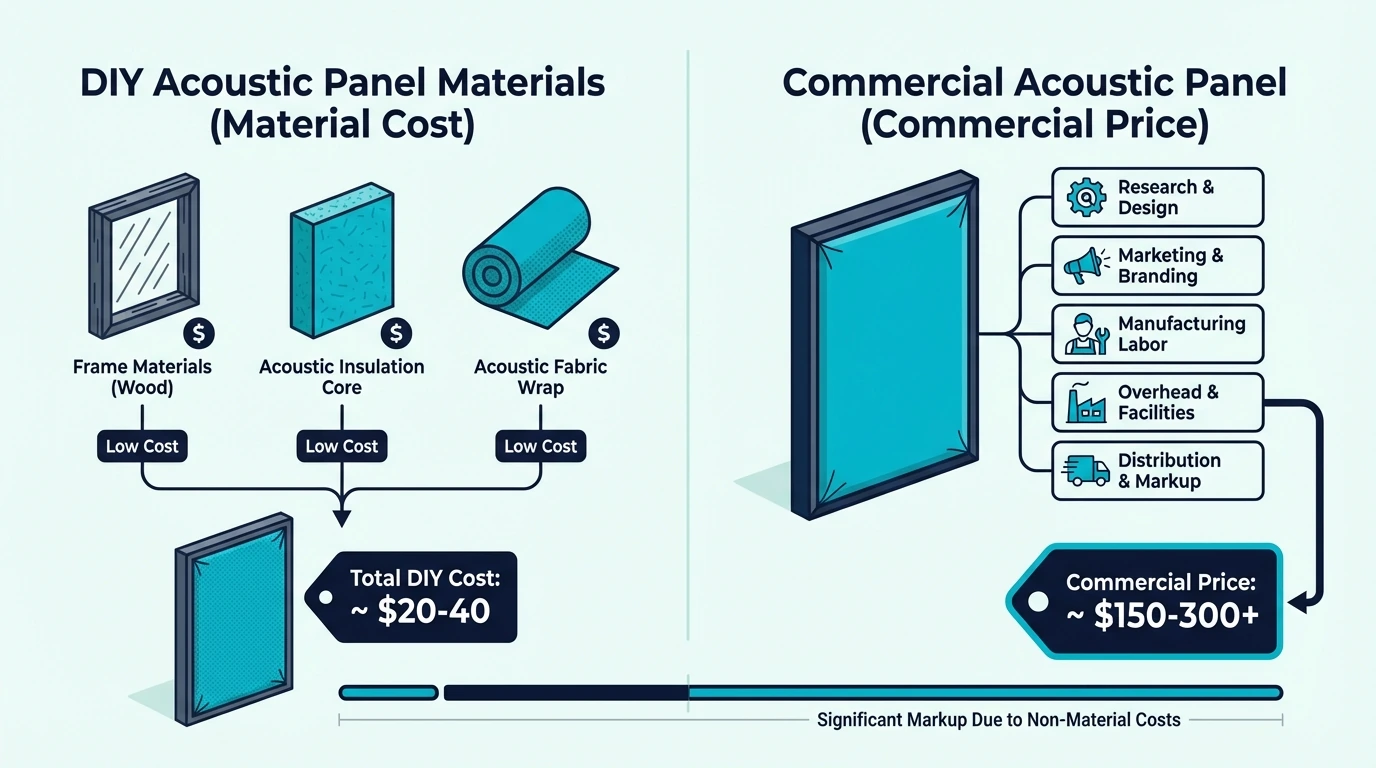
Every cost driver above has a workaround — and the savings depend on how much labor you are willing to trade.
Build Your Own DIY Panels
DIY panels use the exact same core materials as high-end commercial products. You eliminate the labor and shipping markups by providing the elbow grease yourself.
At ATS’s 15 October 2026 prices the core and fabric for one 2×4-foot panel come to about $29 to $51 (a case-price board plus a yard of burlap or Guilford fabric), against $79.95 for ATS’s finished 2 inch panel and $95.99 for the same panel in Guilford’s Sona. Across a dozen panels that gap comes to about $540 to $620, less the wood for the frames.
The obvious catch is that you need adequate tools, dedicated space, and basic woodworking skills.
For some busy professionals, trading an entire weekend of free time just isn’t worth the financial savings. (The DIY acoustic panels guide walks through the build if you want to try it).
Choose Budget-Friendly Commercial Options
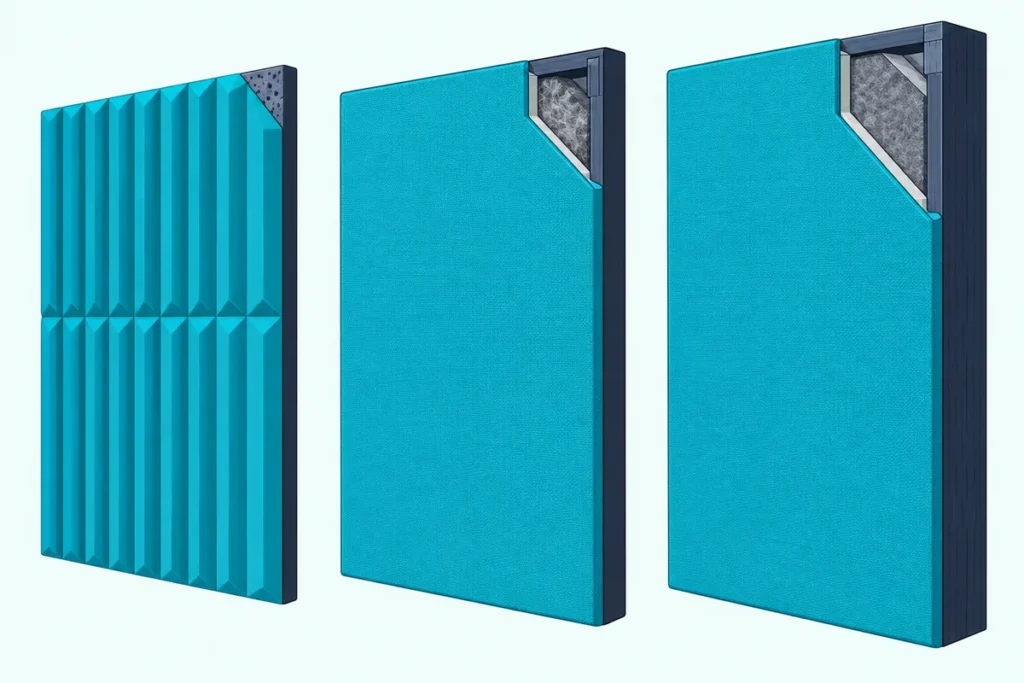
Not all effective commercial panels demand premium, studio-tier prices. Several reputable manufacturers offer thinner or frameless options that still outperform cheap acoustic foam by a wide margin.
For basic residential room treatment, prioritize core density and proven NRC ratings over expensive wood framing or designer fabrics. A budget 12-pack of high-density foam panels covers a lot of wall, though absorption stays limited to highs.
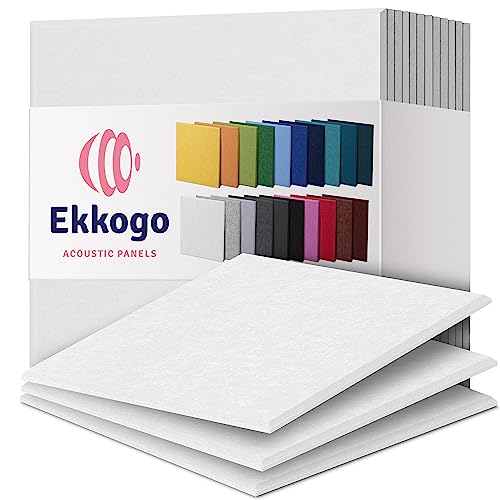
budget 12-pack of high-density foam panels
Stepping up to a 2-inch fiberglass panel set with hanging hardware brings real broadband absorption.
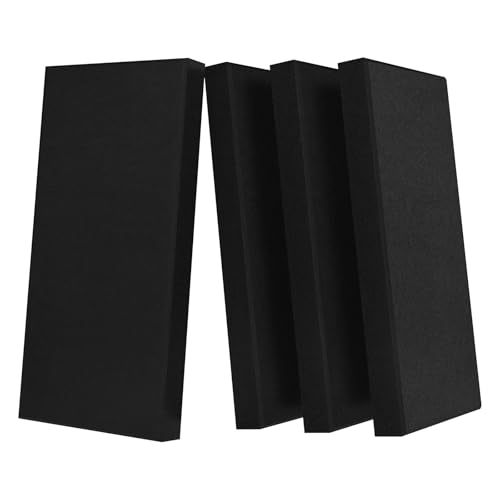
2-inch fiberglass panel set with hanging hardware
For larger coverage, a dual-layer thickened panel 4-pack delivers wide coverage at a mid-range price point.
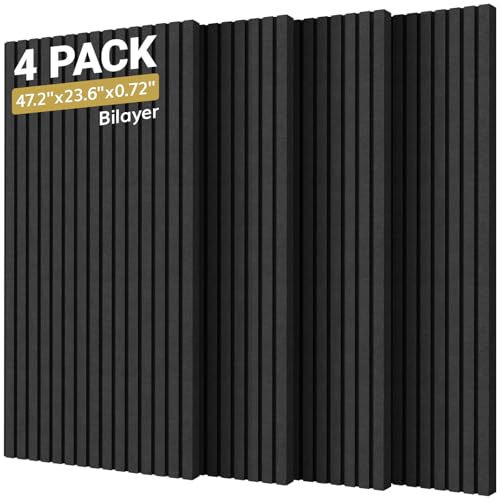
dual-layer thickened panel 4-pack
Buy Standard Sizes
Custom architectural panel sizes cost exponentially more than standard, mass-produced dimensions. Manufacturers must price custom work heavily to cover setup time, material waste, and disrupted production lines.
You should strictly stick with common dimensions like 2×4 feet or 2×2 feet whenever possible. If your unique room architecture demands odd dimensions, try bridging the gap by arranging multiple standard panels creatively (panel placement matters more than having perfect custom sizes).
Custom sizes also tend to be final sale, since several makers won’t take them back once production starts, so see which sellers take custom panels back before you order one.
Wait for Seasonal Sales
Acoustic treatment sellers often run promotions around major retail holidays. Black Friday, Cyber Monday, and end-of-year clearances are the usual times to look for discounts on treatment packages.
If your acoustic project is not time-sensitive, a few weeks of patience can pay off. Set price alerts on the panels you want and buy when the seasonal discounts land.
Acoustic Panel Price Comparison
The table below puts all four tiers side by side.
| Panel Type | Price (ATS, 15 Oct 2026) | NRC Rating | Lifespan | Best Application |
|---|---|---|---|---|
| Budget Foam | Lowest; sold in packs | 0.40–0.65 | 3–5 years | Temporary spaces, tight budgets |
| Mid-Range PET Panels | $61.99 for a 2×4-ft, 1 in PET panel | 0.70–0.85 | 10–15 years | Home offices, living rooms |
| Professional Panels | $79.95–$133.99 per 2×4-ft panel | 0.85–1.05 | 20+ years | Recording studios, home theaters |
| Premium DIY Panels | About $29–$51 in core and fabric, plus a frame | 0.85–1.05 | 20+ years | Budget-conscious pro studios |
Budget foam sits at the bottom of the table for a reason. The low NRC range (0.40–0.65) means it only absorbs mid-to-high frequencies, leaving bass and lower mids almost untouched.
Foam also degrades within a few years as the open-cell structure oxidizes. You will likely replace it at least once over the same period a single professional panel would last.
Mid-range PET panels close most of that performance gap without the studio-tier price tag. A 0.70–0.85 NRC handles the full speech range and tames most room flutter, which is exactly what a home office or living room needs.
PET felt is also lightweight, easy to mount, and does not shed fibers the way exposed fiberglass can.
Professional fiberglass panels occupy the 0.85–1.05 NRC band because their dense, rigid cores absorb energy across the entire audible spectrum, including the lower midrange that foam and thin PET miss. The 20+ year lifespan reflects the dimensional stability of the core and the UV-resistant acoustic fabric — once mounted, these panels rarely need maintenance or replacement.
DIY panels match that professional NRC band at a fraction of the retail price because you are buying the same rigid fiberglass and fabric directly. The $29–$51 covers the core and fabric only; the rest of a finished panel’s price pays for the frame, the assembly and, at ATS, free shipping on most items.
Conclusion
Dense cores, acoustic fabric, solid frames, fire testing, and dimensional shipping — each one adds real cost for a reason. The question is never “cheap or expensive” but “which tier matches this room.”
Build DIY panels if you have a weekend and basic tools, or buy mid-range PET and frameless fiberglass if you don’t. Reserve studio-grade fabric-wrapped fiberglass for rooms where accurate monitoring or critical listening pays for itself.
The best acoustic panels guide ranks top options across every tier.
Frequently Asked Questions
Why are acoustic panels so expensive?
Professional panels cost a premium because they use dense fiberglass cores, acoustically transparent fabrics, and solid wood frames. Add Class A fire safety testing, skilled assembly labor, and bulky dimensional shipping, and ATS’s own 2×4-foot panels cost $79.95 to $133.99 on 15 October 2026.
Are expensive panels actually better than cheap ones?
Yes. High-end fiberglass panels achieve NRC ratings of 0.85 to 1.05, while cheap foam rarely breaks 0.50.
Quality panels also hold their shape for decades — cheap foam crumbles within three to five years.
Can I make my own acoustic panels cheaper?
Yes — and the savings are dramatic. Rigid fiberglass and acoustic fabric from the same suppliers commercial brands use came to about $29 to $51 per 2×4-foot panel at ATS on 15 October 2026, before a frame.
You get identical professional performance, provided you are willing to invest the weekend labor yourself.
What is a fair retail price for acoustic panels?
ATS Acoustics’ own fabric-wrapped 2×4-foot fiberglass panels cost $79.95 (2 inch) to $133.99 (4 inch in Guilford fabric) on 15 October 2026, with shipping included on most items. Compare thickness, core and fire rating rather than price alone.