Do Acoustic Slat Panels Work? Complete Guide [2026]
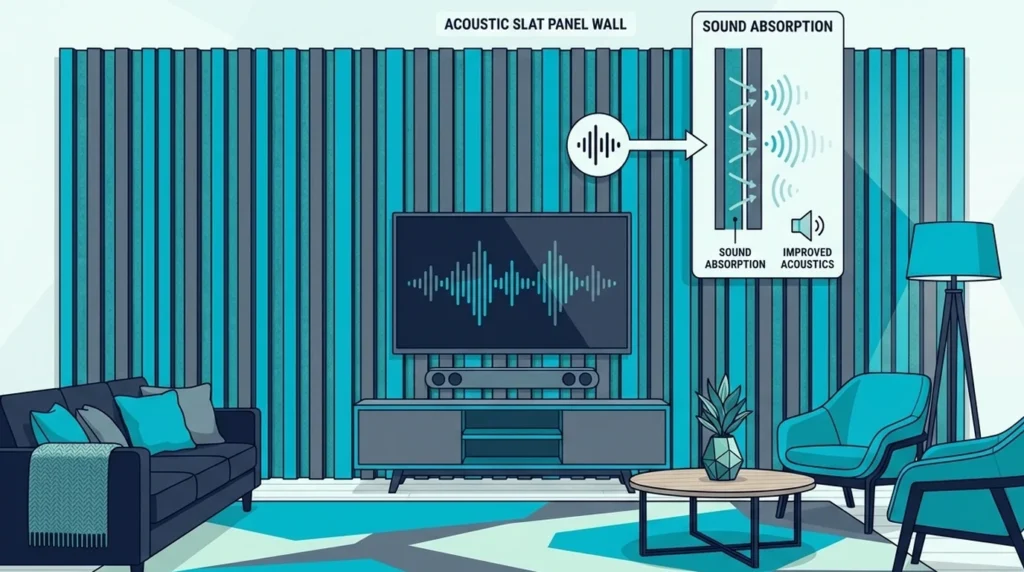
Acoustic slat panels work — but only when the wood slats sit over real acoustic backing (usually PET felt).
If there is no backing, you are paying for a feature wall that still sounds echoey. Get the backing right, and slats can tame reverb without turning your room into a black-fabric studio.
By the end of this guide, you’ll know what to look for, where to place them, and when fabric or PET panels are the smarter buy.
Slat panels work if they have real acoustic backing behind the wood, because the backing does most of the absorbing. If a listing won’t name the backing material or an NRC rating, assume it’s decorative and buy a different treatment.
What Are Acoustic Slat Panels?
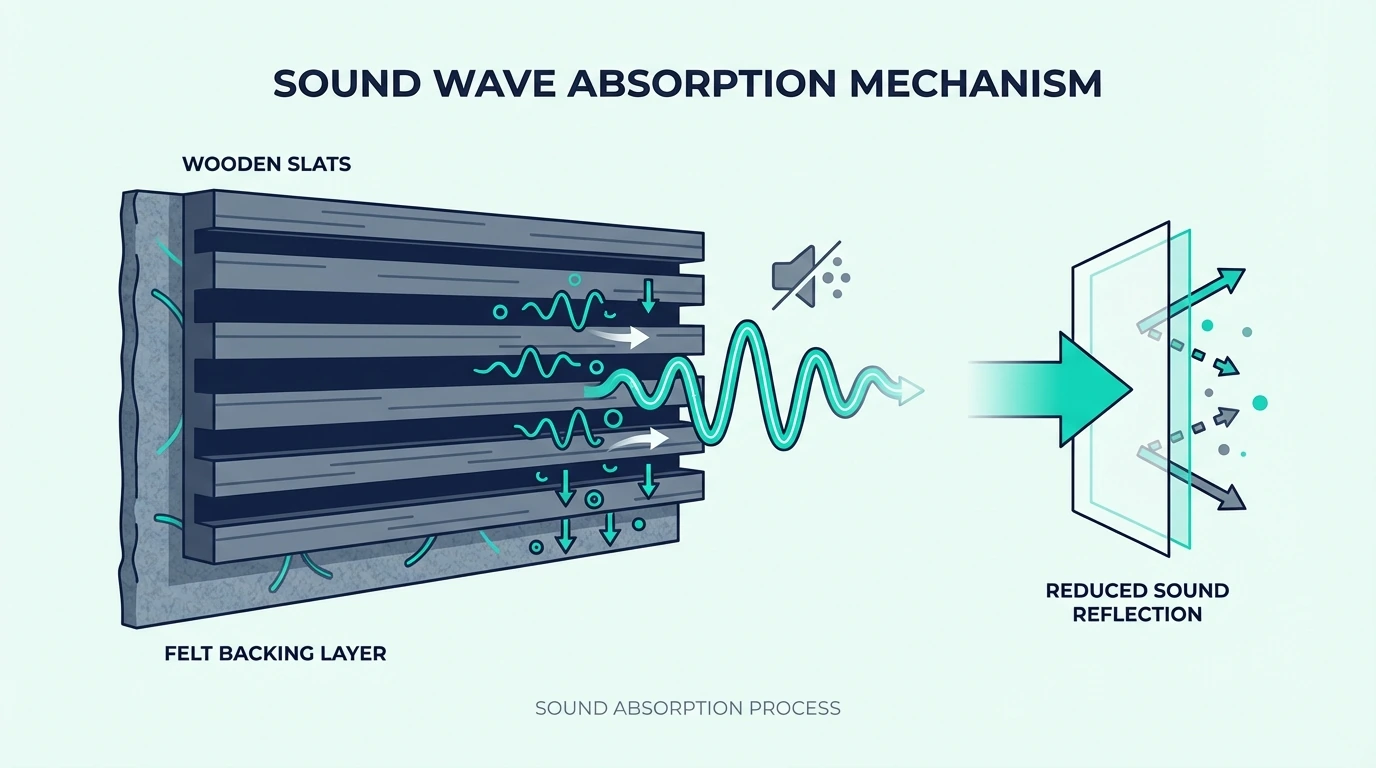
Slat panels are a soft absorber wearing a decorative wood exterior. That hybrid construction explains both why they look great in a living room and why they can’t perform like a thick fiberglass studio panel.
How Do Timber Slatted Panels Work?
Sound waves pass through the gaps between the wood slats and hit the backing material. That backing absorbs a large portion of the sound energy instead of letting it bounce straight back into the room.
The wood slats themselves—whether MDF, natural veneer, or solid wood—do not absorb any meaningful sound energy. They exist for visual aesthetics, and solid wood is naturally a reflective acoustic surface.
The simplest mental model: picture a decorative wooden screen mounted in front of a standard acoustic panel. The screen provides the look; the backing behind it does all the acoustic work.
The NRC rating guide covers the physics behind how absorption numbers work. Here is how these panels are constructed to achieve those numbers.
What Is Inside Slat Panels?
Behind the decorative slats, most legitimate panels use a sheet of dark felt as the primary absorbing layer. Quality panels use dense, recycled PET felt; cheap knock-offs use thin decorative craft felt that looks similar but absorbs far less sound.
Thicker PET felt absorbs deeper into the low-mids, while thin felt mostly handles flutter echo and upper-mid harshness.
The popular Art3d Wood Slat Panels are a typical felt-backed option—wood slats mounted over a dense, dark PET sheet, with the felt visible from the side profile and raw edges. This construction creates a specific set of acoustic limitations.
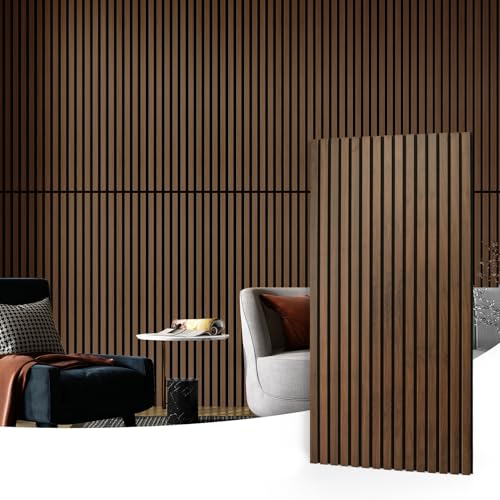
Art3d Wood Slat Panels
What Makes Them Different From Fabric Panels?
The gaps between the slats—which let sound reach the backing—also limit how much total surface area is actively absorbing. A fabric-wrapped fiberglass panel, by contrast, presents its entire unbroken face to the incoming sound wave.
That is the core acoustic trade-off. Every square inch of a fabric panel works on absorption, while a slat panel reserves most of its visible surface for reflective, decorative wood.
Whether slats are worth it depends on your room’s aesthetic goals, your budget, and how much absorption you need to fix the echo.
How Effective Are Acoustic Slat Panels?
With that construction clear, the nextion, the real numbers follow. Performance varies widely based on backing material and slat spacing.
What NRC Rating Do Slat Panels Have?
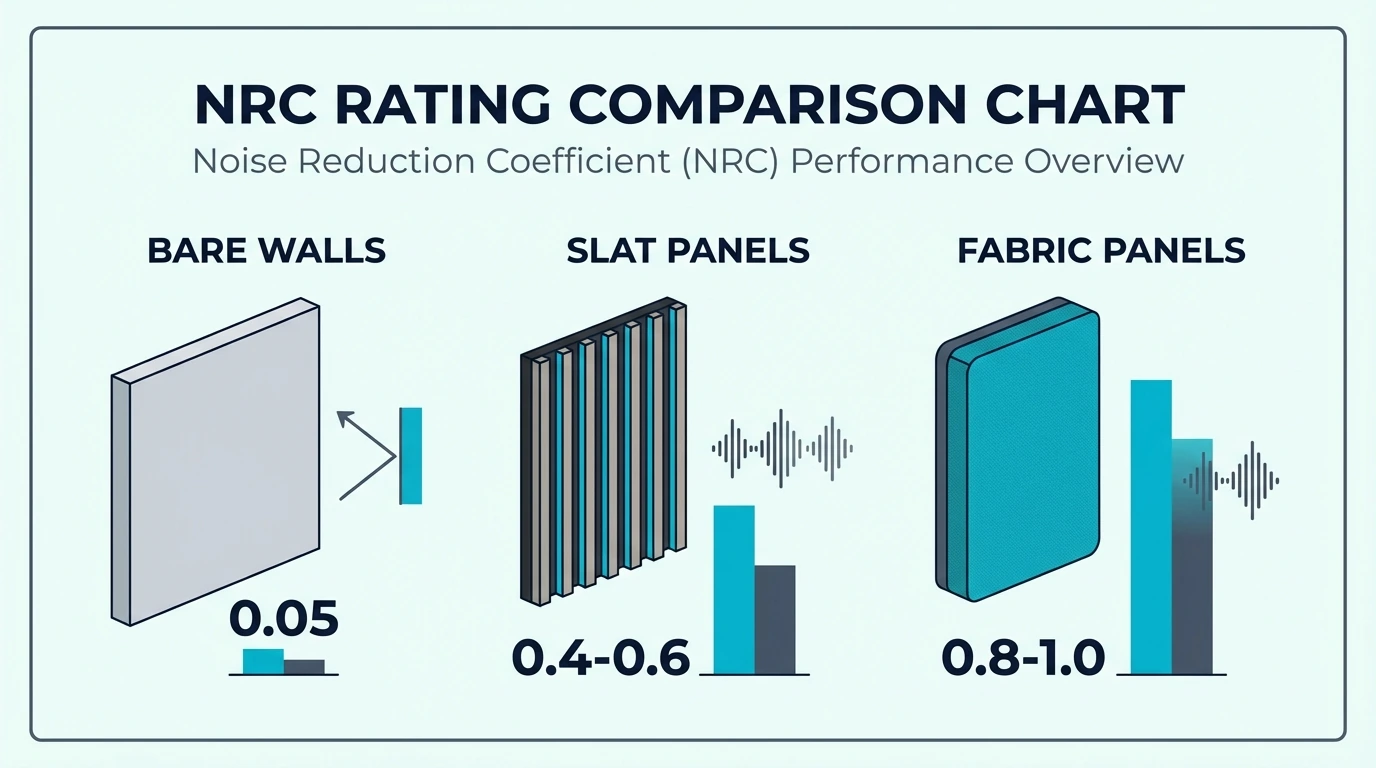
Most legitimate felt-backed slat panels land around a 0.40–0.65 NRC rating when tested as a complete system. That provides meaningful, noticeable absorption, but it sits well below a thick fiberglass panel designed for maximum acoustic performance.
Premium fabric-wrapped fiberglass panels sit around 0.85–1.0 NRC—the performance range professional studios aim for when sound control matters more than visual aesthetics.
Core density drives this performance gap. Denser fiberglass cores absorb more sound energy across a wider frequency range, a reality the panel density guide covers in detail.
However, a standard slat panel still far outperforms untreated drywall. Even moderate absorption can make an echoey room feel noticeably less harsh and more comfortable to listen in.
Do They Work as Well as Fabric Panels?
That 0.40–0.65 range falls short of fabric panels, which start at roughly 0.85 and climb to a perfect 1.0. The performance gap comes from the wood slats themselves—because they are reflective, they bounce sound away instead of letting it penetrate into the backing.
That does not make slats “bad” acoustic products. It means they are engineered for living rooms where you need acoustic improvement without the studio look—not for critical control rooms where every decibel of absorption counts. Here is what that actually sounds like.
What Performance Can You Expect in a Room?
Despite the NRC gap, the jump from bare drywall (0.05) to a felt-backed slat panel (around 0.50) is immediately audible to anyone in the room. The slap echo drops off, the metallic “ring” on loud claps softens, and conversation gets noticeably clearer.
Slat panels won’t turn a lively living room into a dead recording room—but for most living spaces, maintaining some natural acoustic energy is the point.
If you need to treat a dedicated listening room, combine slats with higher-performance fiberglass panels. Use slats where you want them visible, and place fabric panels where aesthetics don’t matter.
Get Studio Tips Weekly
Join 5,000+ creators getting acoustic treatment advice every week.
No spam. Unsubscribe anytime.Where Do Slat Panels Work Best?
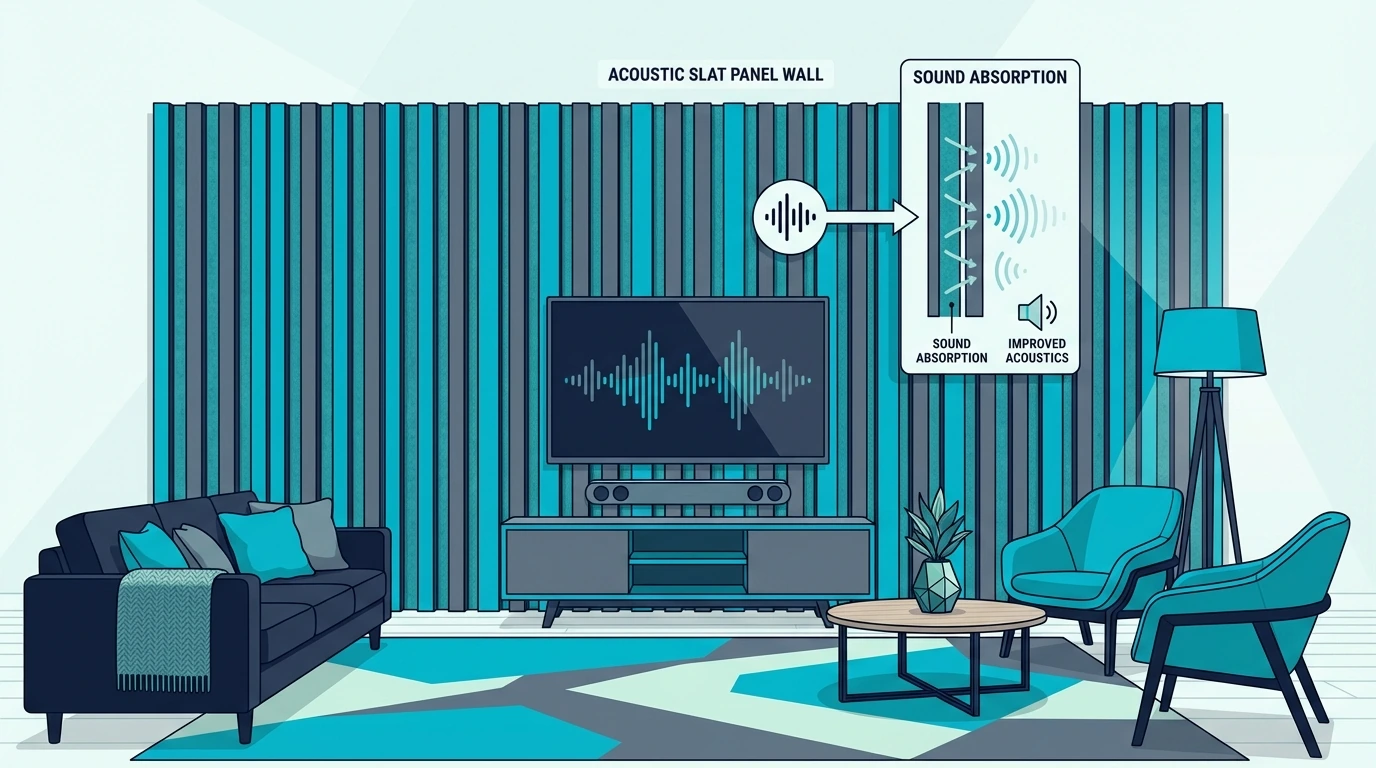
With performance expectations set, the next step is identifying where slat panels shine. The right application maximizes their strengths while minimizing limitations.
What Rooms Benefit Most?
Living rooms and open-plan spaces benefit the most because they are reflective spaces that are also visually important to the homeowner. Slat panels improve the sound without making your living space look like a studio gear closet.
Home offices and video-call setups benefit too. Mounting a slat wall behind your desk reduces the roominess of your microphone audio while making your webcam background look intentional and professional.
Commercial restaurants and hospitality spaces use slats for the same reason. They reduce the harsh room noise from dozens of conversations while staying on-brand visually. Once you know the room, you need to know exactly where to put them.
Where Should Slat Panels Be Placed?
Panel placement follows the same rules as any other absorber: first reflection points and rear-wall slapback zones matter the most. The classic mirror trick placement method is the fastest, most accurate way to find those spots.
Slats also work well when covering a single feature wall. If you can only treat one wall due to budget, prioritize the surface creating the strongest early reflections.
Can You Use Them on Ceilings?
The ceiling follows the same placement logic—first reflections bounce off the ceiling too—but weight changes the installation equation. Wood slat panels are much heavier than foam or fabric panels, so ceiling installs require heavy-duty anchors and serious structural planning.
The mounting principles in the ceiling panel mounting guide apply to slats, but the extra weight makes every fastener choice more critical.
Do Slat Panels Work for Soundproofing?
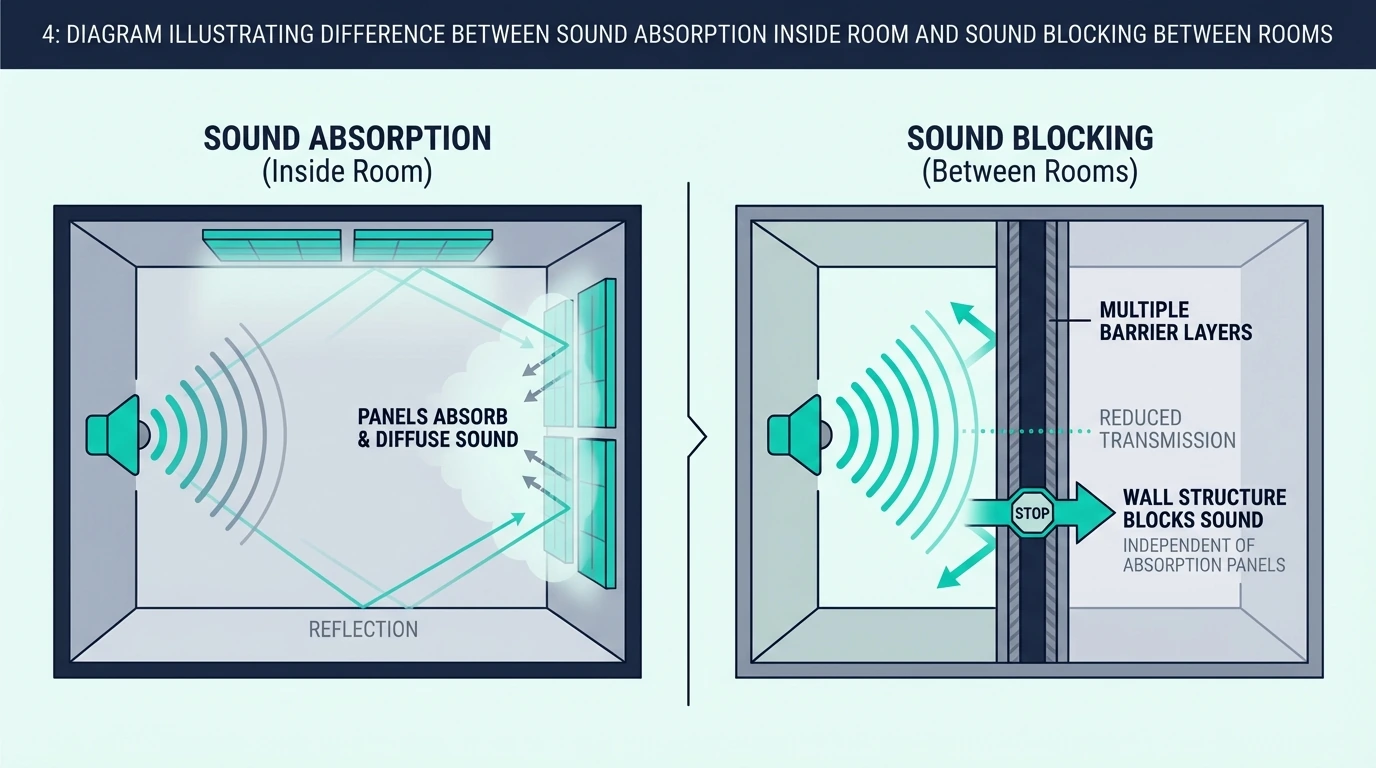
This question reveals a common misunderstanding. This section clarifies what slat panels can and cannot do regarding sound isolation.
Can Slat Panels Block Sound?
No. Soundproofing requires mass, mechanical damping, and airtight sealing—none of which surface treatments provide.
Slat panels are porous and installed with air gaps. That open structure is good for absorption, but the opposite of what’s required for sound blocking.
What Is the Difference Between Absorption and Soundproofing?
That “no” trips people up because hanging slat panels does make a room sound different—just not between two separate rooms. Absorption reduces reflections and reverb inside your space; soundproofing blocks transmission through walls and ceilings.
Slat panels are purely absorption. If sound leaking to the next room is the problem you need to solve, the soundproofing vs acoustic panels guide explains what materials actually work.
How Do Acoustic Slat Panels Compare to Alternatives?
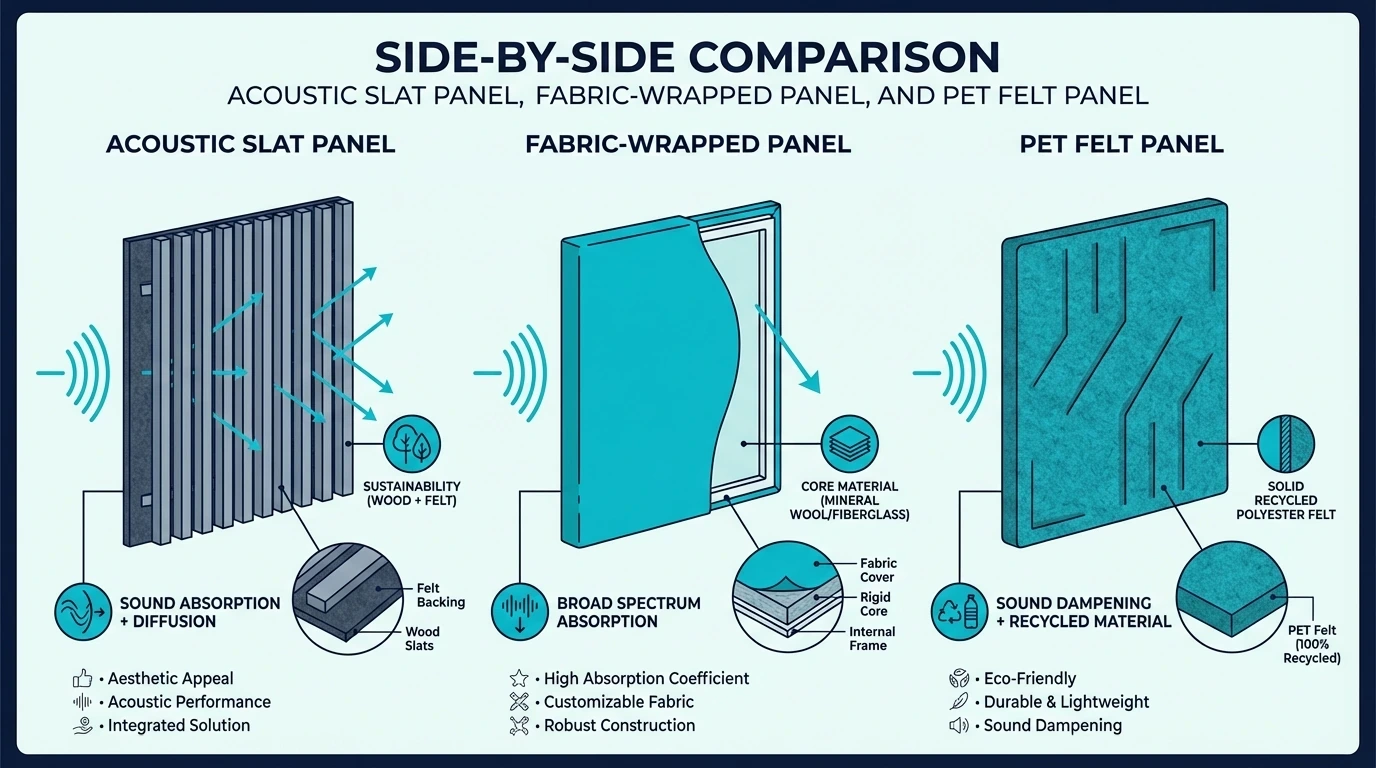
Understanding alternatives helps you make informed choices. Each option serves different priorities.
Slat Panels vs Fabric-Wrapped Panels
Fabric panels win on raw acoustic performance per square foot. They are the better choice for dedicated recording studios, home theaters, and critical listening environments.
The UMIACOUSTICS Fiberglass Acoustic Panels (4-Pack) are a typical fiberglass option at this price range. They deliver a high NRC rating, feature simple wall-mount brackets, and skip the wood aesthetics that drive up cost.
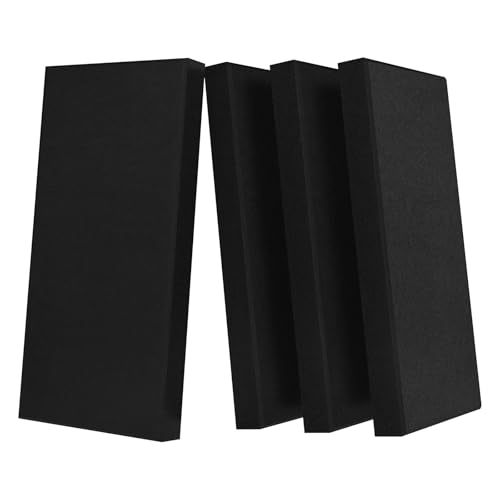
UMIACOUSTICS Fiberglass Acoustic Panels (4-Pack)
Conversely, slats win on high-end aesthetics. They are often the smartest choice for guest-facing living rooms where you would never install a wall of black fabric panels.
Slat Panels vs PET Felt Panels
If fabric panels sit at the performance end of the spectrum, PET felt panels split the difference. They provide more absorption per dollar than wood slats, and they come in modern geometric shapes and vibrant colors.
Dense PET is also naturally moisture-resistant, making it a safer choice than raw wood or fabric in bathrooms, kitchens, and humid climates.
Weight is the other advantage PET holds over wood slats. PET is light, which makes wall mounting simpler and opens up ceiling installs that would be risky with heavy wood panels. Here is how to make the final call.
When Should You Choose Slats?
Choose slats when you want a feature wall that also noticeably improves the sound of the room. Choose thick fabric panels when you want maximum absorption per square foot of surface area.
The polyester vs foam comparison covers the two most common non-wood alternatives if slats aren’t the right fit for your project.
Quick Performance Comparison (Slats vs Fabric vs PET)
| Factor | Slat Panels | Fabric Panels | PET Felt Panels |
|---|---|---|---|
| Typical NRC | 0.40-0.65 | 0.85-1.0 | 0.65-0.85 |
| Aesthetics | Premium wood finish | Functional/Industrial | Modern colors |
| Cost | High ($$$)</td><td>Moderate ($$) | Moderate ($$) | |
| Weight | Heavy | Light-Medium | Light |
| Installation | Moderate difficulty | Easy | Easy |
| Best For | Feature walls | Studios/Performance | Design + function |
| Moisture Resistance | Poor | Poor | Good |
What Should You Look for When Buying Acoustic Slat Panels?
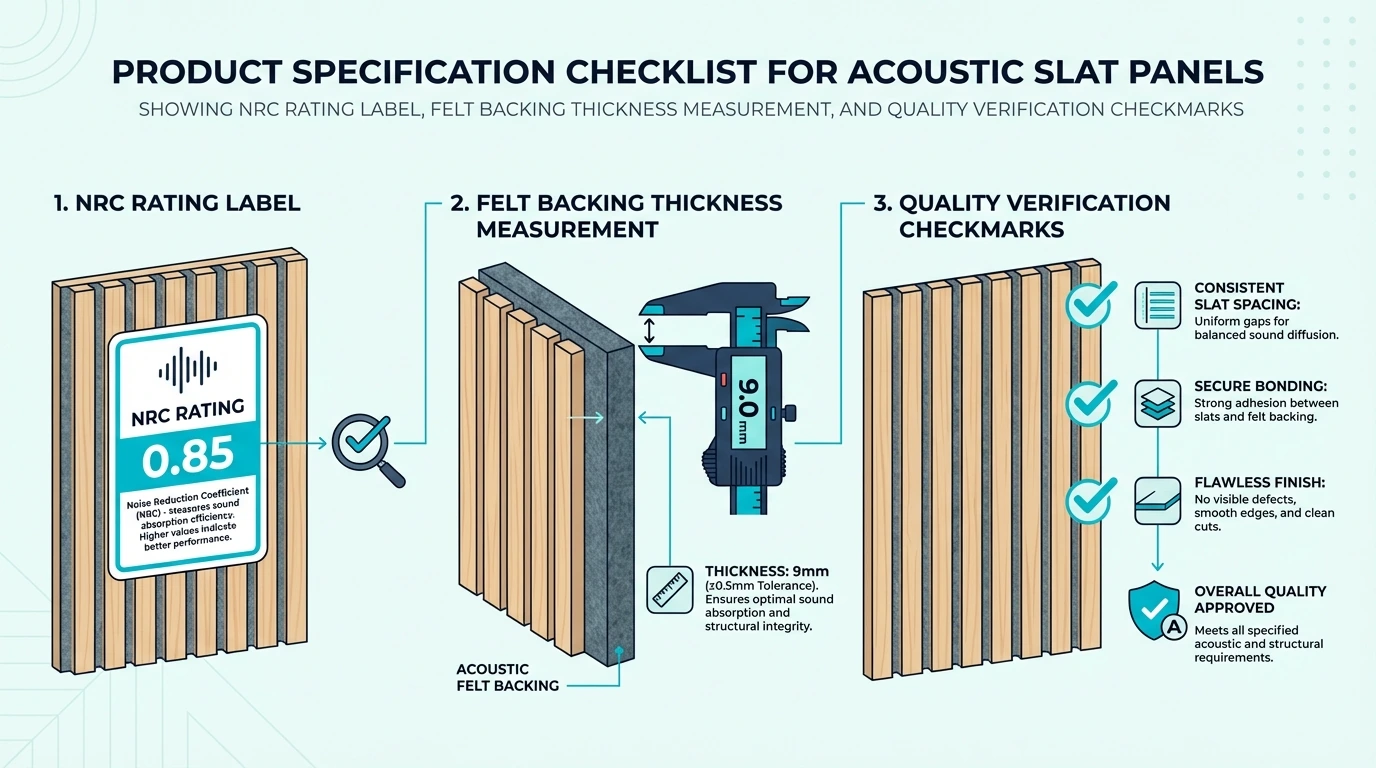
Buying legitimate slat panels depends on verifying what is behind the wood. Three checks—backing material, NRC rating, and total coverage needed—separate a real acoustic product from a decorative scam.
Verify the Backing Material
The felt backing is the entire acoustic point of the product. If the product photos and specs never mention a dense felt or PET backing, assume the panel is decorative and acoustically worthless.
Core thickness matters too. A thicker, denser felt backing absorbs more sound, especially as the problematic frequencies drop lower.
The best acoustic panel material guide explains why core thickness and density matter more than the front finish. But finding actual density specs can be difficult, which leads to the next check.
Check NRC Ratings (and Who Measured Them)
Backing quality is hard to judge from a product photo—which is why standardized NRC ratings exist. A legitimate acoustic product publishes a real NRC from an independent test report.
If a listing claims the product is “soundproof” but skips mentioning the specific NRC, the hidden backing is almost certainly cheap, decorative garbage. You must watch for cherry-picked acoustic numbers—citing one single high-frequency absorption figure is not a legitimate NRC rating. Once you verify the numbers are real, you have to buy enough of them to matter.
Plan Total Coverage (Slats Need More Area)
Even with a confirmed NRC rating, slat panels still require more total wall coverage than fabric panels. The reflective wood between the slats does not contribute to absorption, so you need to plan for roughly 30–50% more surface area to match the equivalent echo reduction from fabric.
The ATS Acoustics PET Panels are a dense PET-based alternative that covers more wall area per dollar. Useful if you need broad acoustic coverage on a tighter budget.
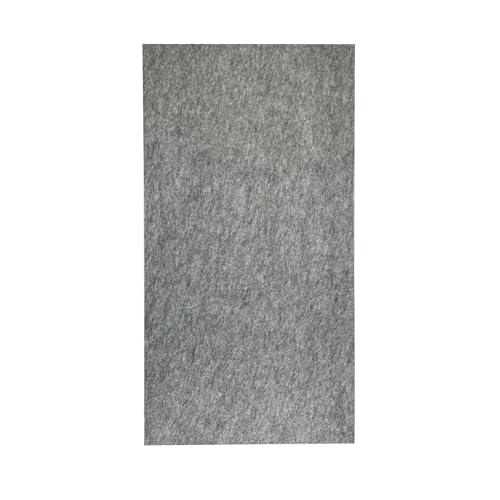
ATS Acoustics PET Panels
The panel count calculator gives you room-by-room area estimates, though placement usually matters more than chasing a slightly higher NRC.
Conclusion
Acoustic slat panels work well when the wood slats sit over real, dense acoustic backing. Without that backing, they are purely decorative.
They are a strong aesthetic choice for living rooms, home offices, and restaurants where you want less echo without changing the visual style of the space. For dedicated recording studios and home theaters, thick fabric-wrapped fiberglass panels give you more absorption per panel.
The hybrid approach is the sweet spot: use slats as the visible feature wall, paired with higher-absorption fiberglass panels where looks don’t matter. The best acoustic panels guide has a full shortlist comparing materials and budgets, and the acoustic panels hub ties everything together.
Frequently Asked Questions
Do Slat Panels Work Without Acoustic Backing?
No. Without the acoustic backing, the wood slats are purely decorative and highly reflective, so any acoustic absorption is minimal.
Are Slat Panels Better Than Solid Panels?
Not acoustically. Thick fabric panels outperform wood slats on raw absorption because every square inch of a fabric panel is an absorptive surface.
Wood slats trade some maximum absorption for a premium wood finish. If visual aesthetics matter as much as acoustic quality, slat panels are the stronger choice.
Can You DIY Acoustic Slat Panels?
Yes, if you can build a flat acoustic backing layer and tightly mount wood slats with perfectly consistent spacing. The hard part is making it look clean enough for a feature wall.
Do Slat Panels Reduce Echo?
Yes, when the backing is real acoustic felt or dense PET. Expect a noticeable reduction in slap echo, but not a completely dead room.
The thicker the backing behind the slats, the deeper the frequencies it can absorb. Most standard felt-backed slat panels handle mid and high frequencies well but leave deep sub-bass untouched.