Best Soundbar For Projector — What Actually Works When The Screen Gets Bigger Than Your TV
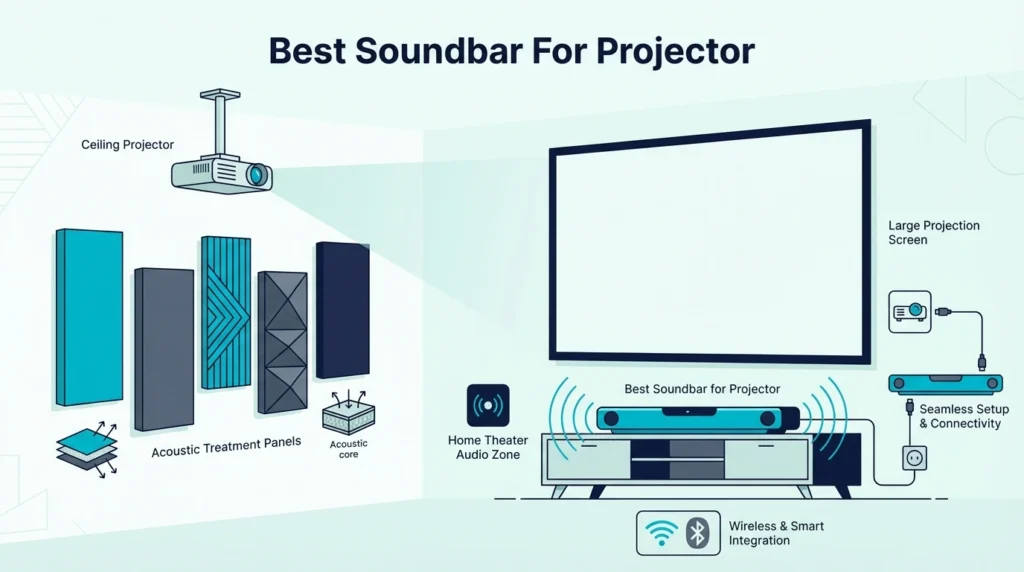
Best soundbar for projector setups can make a giant image feel cinematic, but only if the bar actually fits your projector chain, seating distance, and room instead of just chasing the biggest Atmos badge.
The pain is that projectors usually sit farther from the seating, throw a larger image, and often rely on an external streamer, so weak built-in speakers, lip-sync issues, and underpowered dialogue become obvious much faster than they do on a TV.
Choose the right bar and the whole setup starts sounding coherent, with clearer voices, more believable scale, and bass that finally matches the size of the screen.
So start with the connection path and room size first, because those two decisions tell you whether a compact single-bar unit, a 2.1 system, a 3.1 or 3.1.2 Atmos bar, or a budget 5.1 package actually makes sense.
Now that the real bottlenecks are clear, let us break down how to pick the best soundbar for projector use without paying for features your setup will never exploit.
To get the best soundbar for projector use, start with the audio path before you start shopping by brand. For most indoor projector rooms, a 3.1 or 3.1.2 bar with HDMI eARC and a real subwoofer is the sweet spot, while compact all-in-one bars make more sense for bedrooms, dorms, and portable projector setups. Full 5.1 bundles only pay off if you can place the rears properly and actually want a more theaterlike experience.
How Did We Choose the Best Soundbar for Projector?
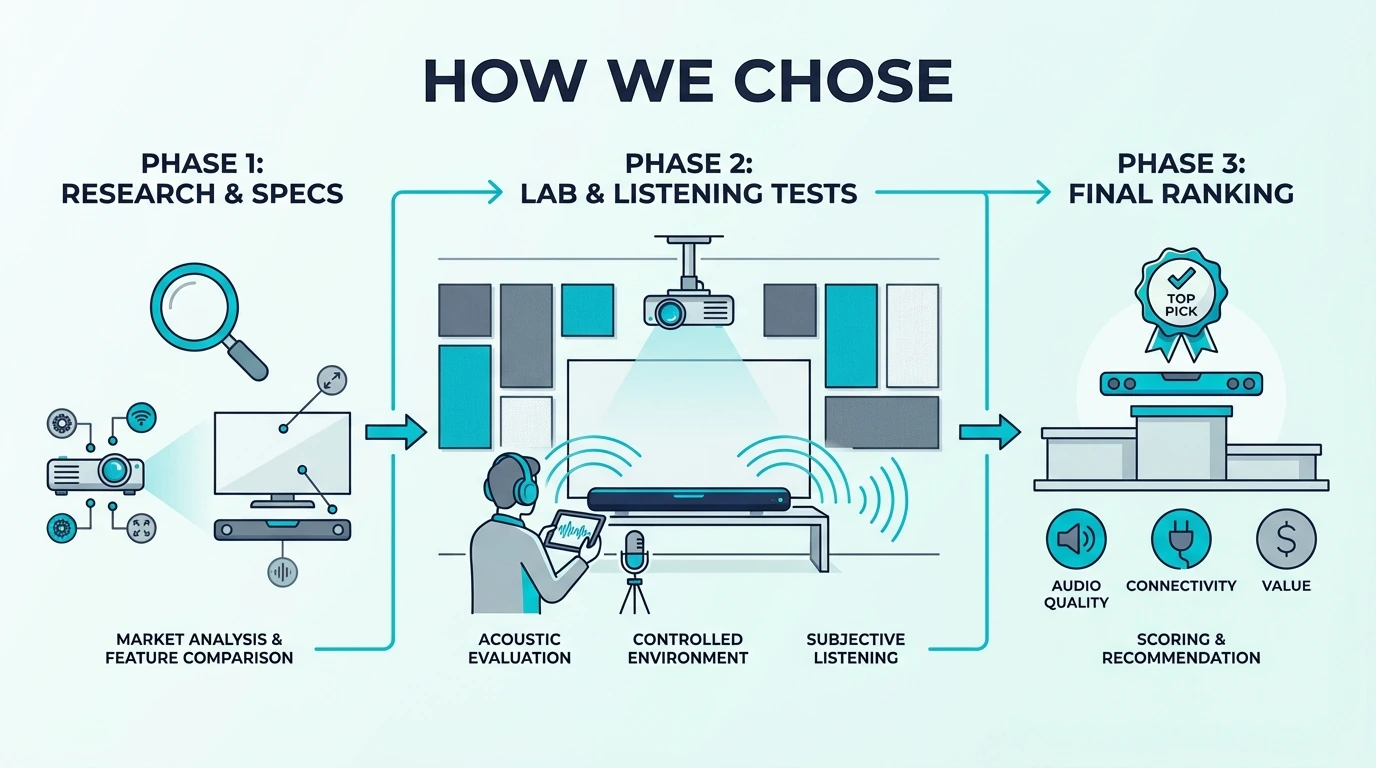
Projector audio fails for a different reason than TV audio. With a TV, buyers usually need an upgrade from weak speakers; with a projector, buyers often need a complete audio plan.
That changes what matters most. We weighted connection flexibility, dialogue clarity, bass performance, and latency ahead of flashy specs that look impressive on a retail box but fall apart in an actual projector room.
We also scored every pick against the physical reality of projector setups. Some people have a permanent media room with an AVR cabinet and wall-mounted screen, while others have a living-room projector on a shelf, a portable unit on a coffee table, or an outdoor setup that gets packed away after movie night.
That is why we separated simple bars from true movie-room bars instead of pretending one answer fits everyone. If you already know how a bar compares in the wider market, our soundbar guide provides the broad category context this guide narrows down.
Subwoofer performance mattered more than usual because projector screens make underpowered sound feel even smaller. Once the image expands past 90 or 100 inches, thin built-in speakers or lightweight front bars stop feeling merely modest and start feeling obviously mismatched.
Dialogue handling mattered just as much. Projectors are often used in rooms with more distance between the screen and the seating, which means weak center focus becomes tiring faster than it does on a bedroom TV.
We also penalized bars that are too ecosystem-dependent for the average projector owner. Projector buyers often mix devices, streamers, and consoles more than TV buyers do, so hardware that only shines inside one brand family needs to justify that limitation.
Finally, we judged value through the lens of real projector use, not just raw channel count. A well-chosen 2.1 or 3.1 bar can outperform a badly placed surround package, which is why our soundbar guide often overlaps with projector-friendly recommendations.
Which Projector Audio Problems Matter Most?
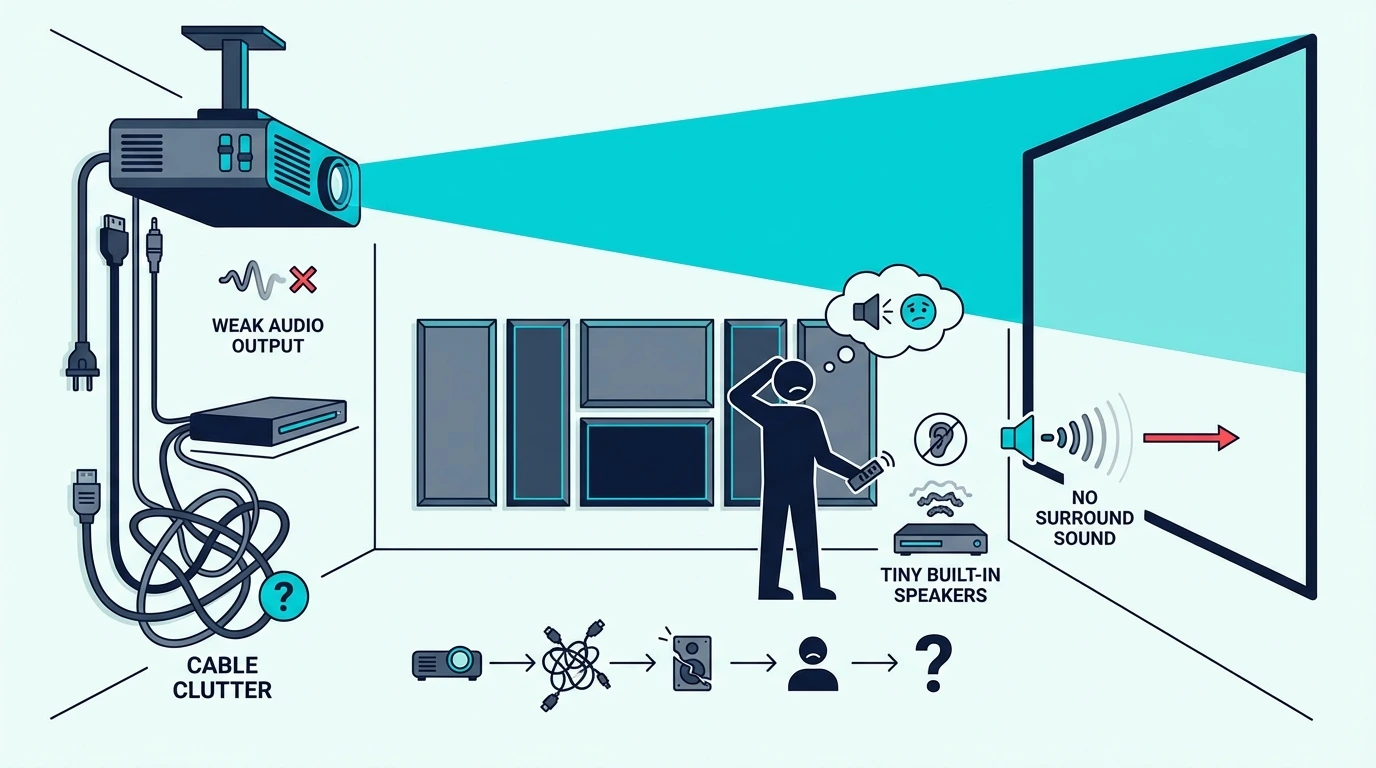
Now that the scoring framework is clear, the next step is understanding why projector audio is so easy to get wrong. The biggest mistakes usually happen before the first movie starts, not after.
HDMI eARC, Optical, And Bluetooth Do Not Behave The Same
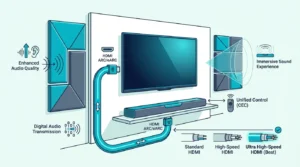
The cleanest projector setup is still HDMI ARC or eARC, because it gives you the best chance of stable control, proper lip sync, and higher-quality audio formats. Optical works, but it is a fallback path that usually strips away convenience and limits what the soundbar can decode.
Bluetooth is the last resort, not the standard plan. It looks convenient for portable projectors, but once you care about dialogue timing, gaming latency, or reliable movie sync, Bluetooth becomes the connection that causes the most frustration.
This is where projector buyers tend to oversimplify the problem. They assume a projector is just a TV without a tuner, when in practice the projector often sits farther from the bar and relies on an external streamer or console that changes the audio path entirely.
If your projector has ARC or eARC, use it. If it only has optical, plan around Dolby Digital-level performance and keep expectations realistic about Atmos.
If your projector is basically a display and your streamer does the heavy lifting, routing the streamer into the soundbar first can be the smarter move. That approach often gives you better format support than sending audio out of a mid-range projector that was never designed to be the center of a full theater chain.
That is why buyers who already care about latency should compare this problem against our soundbar guide. The same timing issues that annoy gamers also ruin projector movie nights when audio arrives just a fraction late.
Bigger Screens Expose Thin Sound Faster
A 55-inch TV can get away with mediocre audio more easily because the experience is compact. A 100-inch projected image creates an expectation of scale that instantly makes weak sound feel fake.
That mismatch is why projector buyers should stop thinking only in terms of volume. Loudness is easy; convincing scale is harder, and it usually comes from a subwoofer, better center focus, and a wider front stage rather than from raw wattage claims.
This is also why projector bars need better dialogue control than many TV bars. When you sit farther back, every soft-spoken line competes against fan noise, room reflections, and the simple fact that voices must fill a larger cinematic presentation.
For movie-heavy households, a projector bar that handles speech well is often more satisfying than a cheaper model that gets louder on paper. That is the same reason buyers cross-shopping our soundbar guide discover that refinement matters as much as impact once the room gets bigger.
Where The Streaming Box Lives Matters More Than Buyers Expect
A projector setup rarely lives on one neat HDMI cable forever. You might have a streaming stick in the projector, an Apple TV on the shelf below, a game console near the seating area, or a portable projector that changes rooms week to week.
That affects which bar makes sense. A streaming-integrated model can simplify a lightweight setup dramatically, while a premium bar with eARC makes more sense when you already have a stable indoor source chain.
This is why some projector buyers are happier with a compact streaming bar than with a theoretically better speaker system. Convenience becomes part of sound quality when the easier system is the one you actually connect correctly every time.
That trade-off shows up clearly if you compare a streaming-first option against our soundbar guide. Ecosystem convenience is not everything, but in projector land it can be the difference between a clean setup and a constant workaround.
Get Studio Tips Weekly
Join 5,000+ creators getting acoustic treatment advice every week.
No spam. Unsubscribe anytime.Which Kind of Soundbar Works Best for Projector Use?
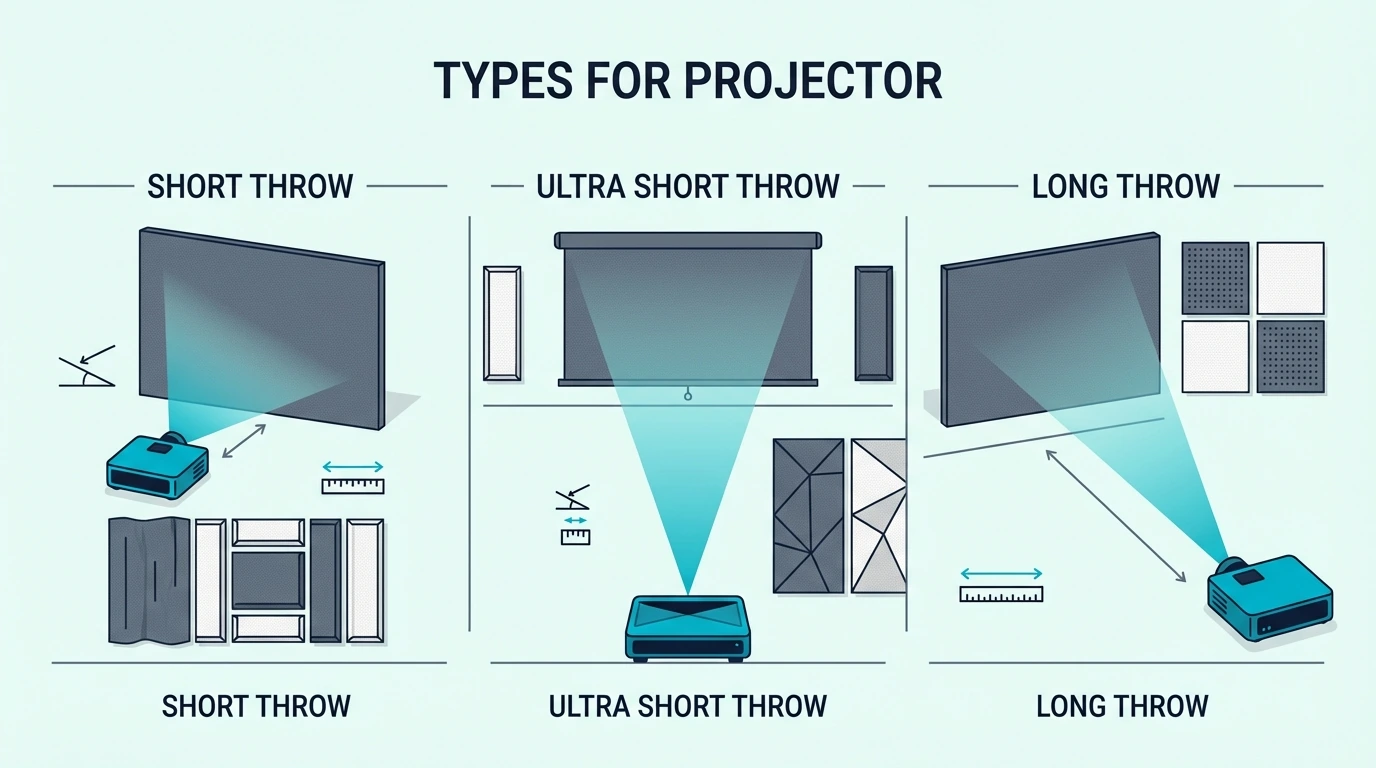
With the connection path in view, the right soundbar category becomes much easier to identify. The best projector bar is rarely the most channels you can buy for the money; it is the format that matches the room and the wiring.
Compact All-In-One Bars
Compact single-bar units work best when the projector room is small, the seating is close, and you care more about simplicity than bass. The Sonos Beam Gen 2 is the best version of this idea because it sounds refined without taking over the front wall.
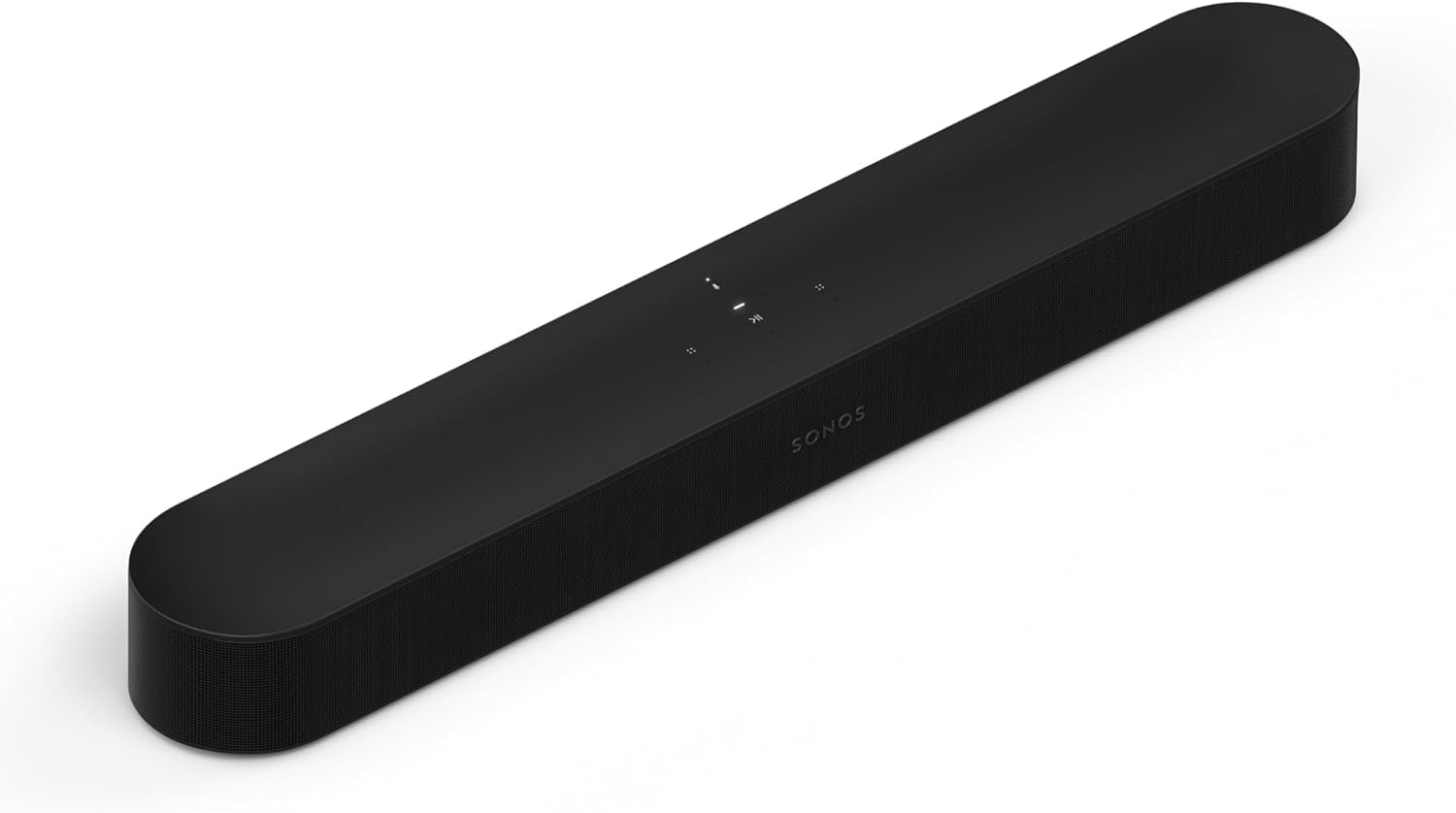
Sonos Beam Gen 2
A bar like this makes sense when you use a bedroom projector, a compact media room, or a small living-room setup where a separate subwoofer would be more clutter than upgrade. That is why it overlaps so heavily with our soundbar guide.
The same logic also shows up in our soundbar guide. Compact projector rooms reward control and clarity long before they reward brute-force output.
2.1 Bars When Bass Matters More Than Atmos
For a lot of projector buyers, a 2.1 bar is the most honest answer. The Samsung HW-C450 is a strong example because it gives the screen real low-end support without forcing you into premium pricing.
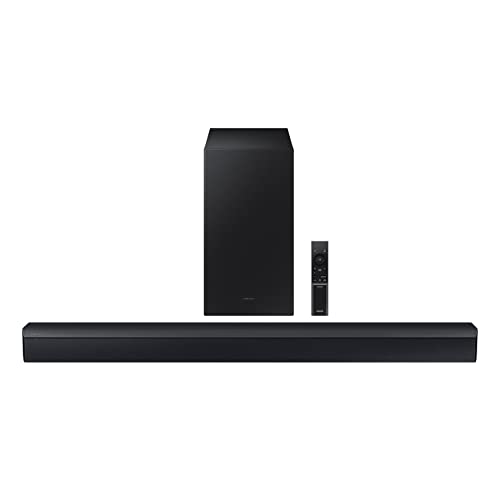
Samsung HW-C450
This category makes the most sense when your projector tops out at ARC or optical anyway. In that situation, paying a lot more for premium Atmos branding often gives you less real benefit than paying for a competent bar with an included sub.
3.1 And 3.1.2 Bars For Most Indoor Projector Rooms
This is the real sweet spot for dedicated indoor projector use. A bar like the Polk Audio Signa S4 gives you better dialogue anchoring than a 2.0 or 2.1 bar, plus the subwoofer weight that makes large images feel more believable.
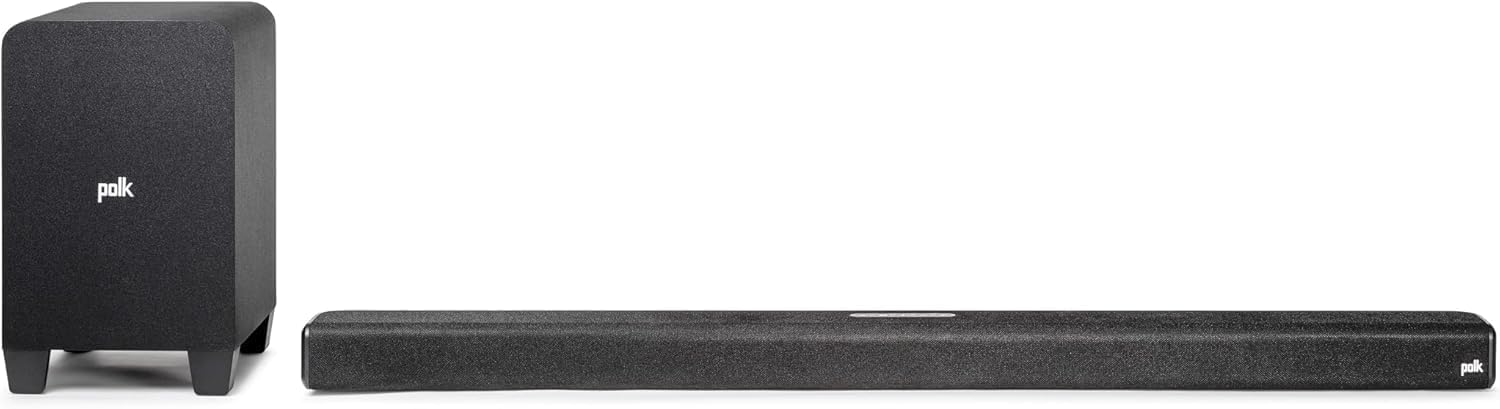
Polk Audio Signa S4
This is also where projector buyers can sensibly choose between refinement and convenience. The Amazon Fire TV Soundbar Plus trades some theater ambition for simpler ownership and cleaner furniture footprint.
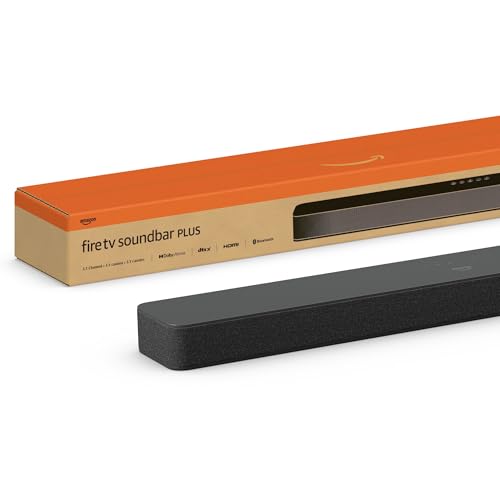
Amazon Fire TV Soundbar Plus
That is why the indoor sweet spot often looks less glamorous than buyers expect. It is usually a well-judged 3.1 or 3.1.2 package, not the cheapest bar on a cart and not the most extreme Atmos system in a showroom.
Budget Surround Bundles
Budget surround systems only make sense if you can actually place the rears. The LG S40TR 4.1 System is the kind of pick that makes sense when you want real rear-speaker immersion without jumping to a much pricier theater package.
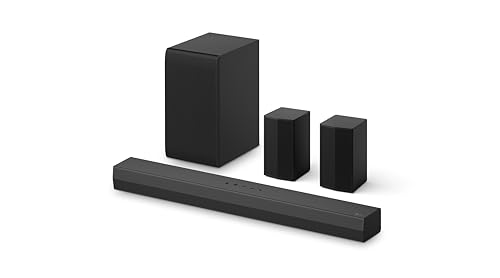
LG S40TR 4.1 System
The catch is discipline. If the rears end up in bad positions, or if the setup is temporary and you stop unpacking them, the value equation falls apart fast.
Premium Theater Bars
Premium projector rooms can justify a larger theater-focused bar because the screen size and seating distance make those gains easier to hear. The Klipsch Flexus CORE 210 is a better expression of this approach than a random flagship TV bar with projector-unfriendly ergonomics.
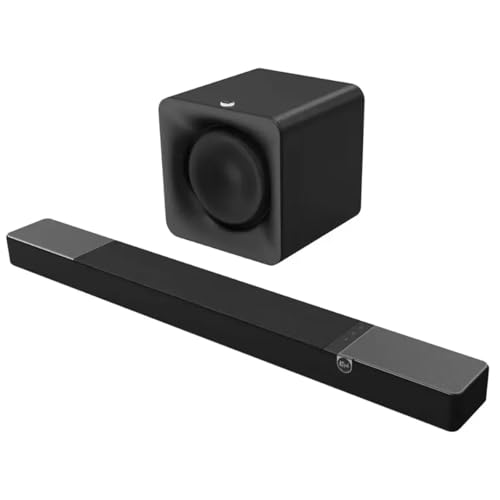
Klipsch Flexus CORE 210
This is the part of the market where projector owners should also compare against our soundbar guide. Once you move above the mid-range, room behavior and feature fit matter more than brand loyalty.
Which Soundbar Picks Work Best for Projector Use?
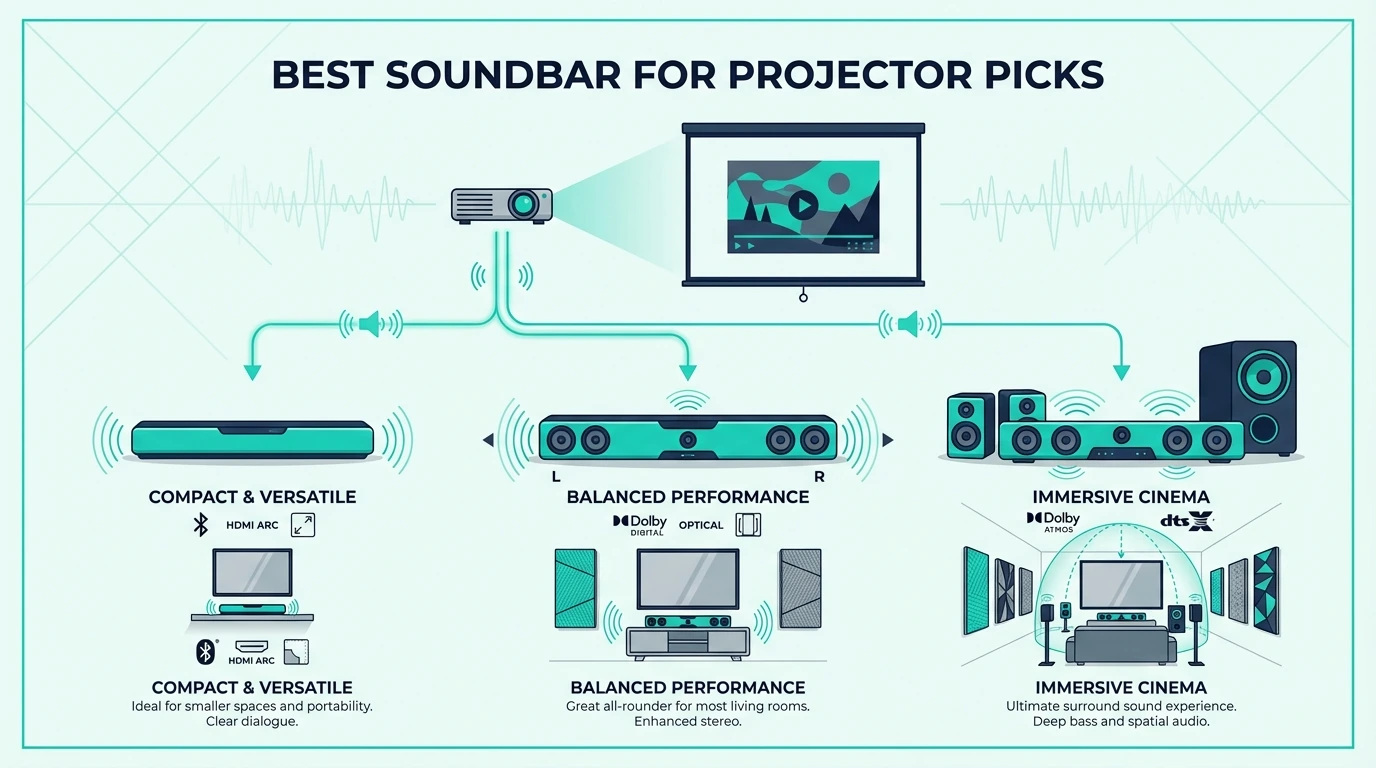
Now we can rank the actual projector-friendly options without pretending they solve the same problem. Some are better for simple streaming rooms, some are better for budget indoor setups, and some only make sense if your projector room is close to permanent.
The smartest way to read this list is not from cheapest to most expensive. Read it from the setup that most closely resembles yours.
Best Overall For Most Indoor Projector Rooms: Polk Audio Signa S4
The Polk Audio Signa S4 is the best soundbar for projector setups because it balances the three things projector owners actually notice: dialogue focus, subwoofer scale, and format support. At $379, it is expensive enough to feel serious but not so expensive that the room has to be perfect before it makes sense.
The dedicated center channel matters more here than it does in many TV setups. Projector seating is often farther back, so dialogue drift becomes annoying fast unless the bar keeps speech anchored and intelligible.
The included wireless sub also does exactly what a projector room needs. It makes a 100-inch movie feel sonically large instead of just visually large, which is the gap cheaper all-in-one bars fail to close.
If you are already comparing indoor movie-room options, this is the same logic that makes the Polk attractive in our soundbar guide. It consistently lands where projector buyers need it to land: in the real-world sweet spot.
Best Budget Indoor Pick: Samsung HW-C450
The Samsung HW-C450 is the budget answer for projector owners who want a real subwoofer without spending projector-screen money on audio. At roughly $150, it solves the most obvious projector problem: a big image with weak, tiny sound.
The subwoofer is the real selling point here, not the brand badge. Once the projector image gets large, bass support changes the emotional weight of movies far more than another checkbox feature on a spec sheet.
Its ARC-only limitation is real, but many budget projector setups were never going to exploit premium Atmos formats anyway. If your projector chain is simple and your goal is just to make movies, sports, and streaming feel fuller, the HW-C450 is a smarter buy than a barebones cheap bar with no sub.
That is the same reason it stays relevant in our soundbar guide. It is not fancy, but it solves the right problem.
Best Compact Premium Pick: Sonos Beam Gen 2
The Sonos Beam Gen 2 is the right projector bar for buyers who care about compactness, app polish, and future expandability more than they care about included bass right now. At $369, it is not cheap, but it is far easier to place cleanly than many longer theater-focused bars.
This is a particularly good fit for small projector rooms, bedrooms, and multipurpose spaces where a massive front soundbar would look wrong or feel disproportionate. The Beam also works well when you sit relatively close to the screen, which helps its virtual Atmos presentation feel more convincing.
The downside is predictable: you do not get the visceral low-end a sub-backed package gives you at the same price. That means projector buyers choosing the Beam are choosing refinement, footprint, and expandability over raw cinematic impact.
If that trade sounds right, it helps to compare it against our soundbar guide. The Beam makes the most sense when projector simplicity matters as much as projector scale.
Best For Fire TV Projector Households: Amazon Fire TV Soundbar Plus
The Amazon Fire TV Soundbar Plus is the cleanest answer for projector buyers already living inside the Fire TV ecosystem. At $249.99, it gives you a 3.1 layout with a built-in subwoofer, which keeps the room tidier than a separate-box 2.1 setup.
That built-in-sub design matters more than it sounds like. Many projector owners are managing furniture, cables, and screen placement already, so removing one more floor component can make the whole room easier to live with.
It is also an unusually sensible choice for casual projector users who stream everything and do not want a more elaborate AVR-style signal chain. You trade away some long-term flexibility, but you gain a setup that is much harder to mess up.
This is where projector logic diverges from general home-theater advice. The easier system is often the better one if it prevents you from falling into constant connection and control issues.
Best Streaming-Bar Shortcut: Roku Streambar SE
The Roku Streambar SE is the sleeper projector pick for buyers who care more about simplifying the whole chain than maximizing theater impact. At $79, it is one of the cheapest ways to improve projector audio and streaming convenience at the same time.
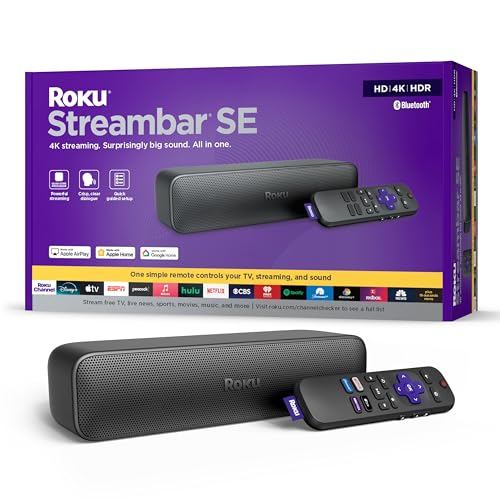
Roku Streambar SE
This is not the bar for large indoor theaters. It is the bar for bedrooms, dorm rooms, spare rooms, and portable projector setups where the all-in-one nature is more important than deep bass.
It is also one of the few options that makes projector ownership feel less fiddly. If your projector is slow, dumb, or simply annoying to navigate, having the streaming platform built into the bar removes one more layer of friction.
That is the same reason it fits naturally beside our soundbar guide. Convenience is not a side benefit here; it is the whole reason this product exists.
Best Value Rear-Speaker Upgrade: LG S40TR 4.1 System
The LG S40TR 4.1 System is the value wild card in this list because it gives projector owners a real subwoofer plus rear speakers without jumping to premium theater pricing. At $196.99, it is the pick for buyers who want more wraparound scale than a front-only bar can deliver.
That said, cheap surround only beats a better single bar if you can place it properly. If the rear speakers end up crammed into bad corners or never get unpacked, the whole point disappears.
Use the LG S40TR when the room is permanent enough for a real rear-speaker layout and the budget is fixed. Skip it when you really want a clean, polished front-stage solution and are only tempted by channel count.
Buyers chasing the biggest value jump should compare this against our soundbar guide. It is one of the few affordable options that can make a projector setup feel genuinely more cinematic instead of merely louder.
Best Theaterlike Audio For Dedicated Rooms: Klipsch Flexus CORE 210
The Klipsch Flexus CORE 210 is the projector pick for buyers who want a more theaterlike experience without jumping straight to a full AVR and speaker package. At $499, it earns its place by sounding appropriately large for larger screens.
The 44-inch bar and 10-inch subwoofer suit a dedicated front wall better than compact bars do. That matters because a projector room often has enough visual scale to expose when the soundbar underneath it is simply too small.
This is not a casual-use choice, though. It wants a stable indoor setup, proper placement below the screen, and an owner who values movies more than minimalist furniture.
For buyers at this level, it is also worth sanity-checking your taste against our soundbar guide. Premium projector audio is less about the badge and more about which bar fits your room geometry and priorities.
How Do You Connect a Soundbar to a Projector?
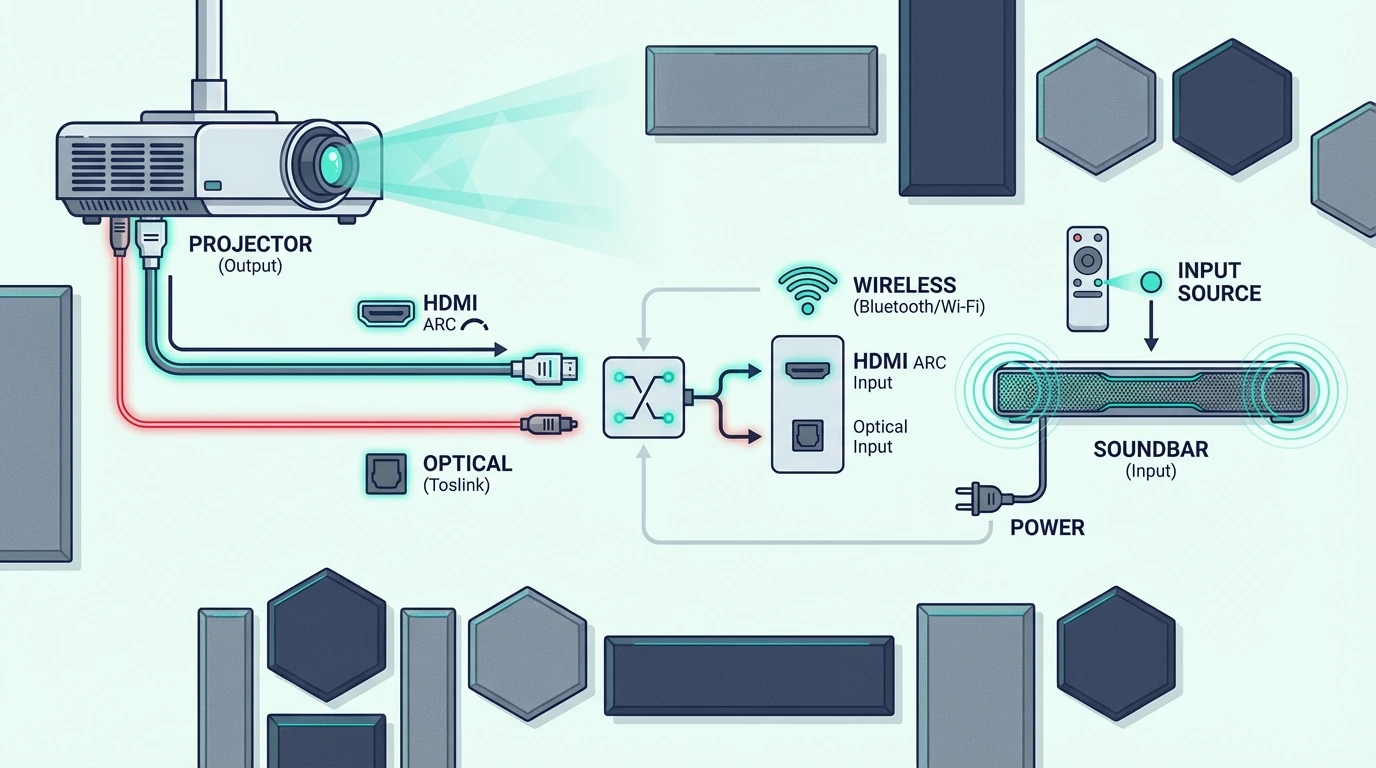
This is the part most buyers underestimate until something refuses to handshake correctly. A projector setup can be perfectly good on paper and still feel miserable if the audio path is clumsy.
Use HDMI ARC Or eARC If The Projector Supports It
If your projector has HDMI ARC or eARC, start there because it gives you the simplest long-term control path. You get a better shot at volume control through one remote, steadier lip sync, and cleaner handling of source switching.
This is where a bar like the Polk Audio Signa S4 or the Sonos Beam Gen 2 makes immediate sense, because both reward a cleaner ARC or eARC connection more than they reward adapter-heavy workarounds.
If the projector only offers ARC, do not panic. Many streaming services are compressed enough that the audible difference between ARC and more ambitious format support matters less than the stability of the setup.
If The Projector Is Audio-Limited, Route The Streamer Through The Bar First
A lot of projectors are better displays than audio hubs. When that is true, running your streaming box or media player into the soundbar first and then sending video to the projector can be the cleaner architecture.
This works especially well when your projector has awkward audio output options but your bar has the right inputs and decoding. The trade-off is that your source chain becomes more centralized, so you need a permanent setup instead of a casual unplug-and-move workflow.
This is often the better move for buyers using Apple TV, Fire TV, or a dedicated media box. It is also why buyers comparing source-chain complexity sometimes end up choosing simpler bars from our soundbar guide even if the projector itself is the display.
The same source-routing question shows up for console-heavy rooms and OLED living rooms too, which is why the projector decision overlaps with our soundbar guide. The display changes, but the audio handoff problems are often the same.
Optical Is Fine When You Keep Expectations Realistic
Optical is not glamorous, but it is still workable for projector owners who mainly watch streaming apps, casual cable replacements, or downloaded content. The main thing it does not give you is future-proof excitement.
If you are building around optical, prioritize bars that still solve the core projector problems: clearer dialogue, enough bass, and stable volume behavior. In that situation, a sub-backed 2.1 bar often makes more sense than an Atmos-branded model whose best features you will never hear properly.
That is why the Samsung HW-C450 remains so practical for projector use. It is honest about what it is, and projector buyers benefit from that honesty more than they benefit from inflated format marketing.
Bluetooth Should Stay The Backup Plan
Bluetooth is great for proving a projector and bar can talk to each other. It is not the connection you want to rely on once you care about lip sync, game responsiveness, or stable movie playback.
Use it for truly portable projector nights, outdoor setups where speed matters more than perfection, or temporary rooms where nothing stays put. Just understand that the convenience comes with a quality and timing ceiling.
Are Outdoor And Portable Projector Setups Different?
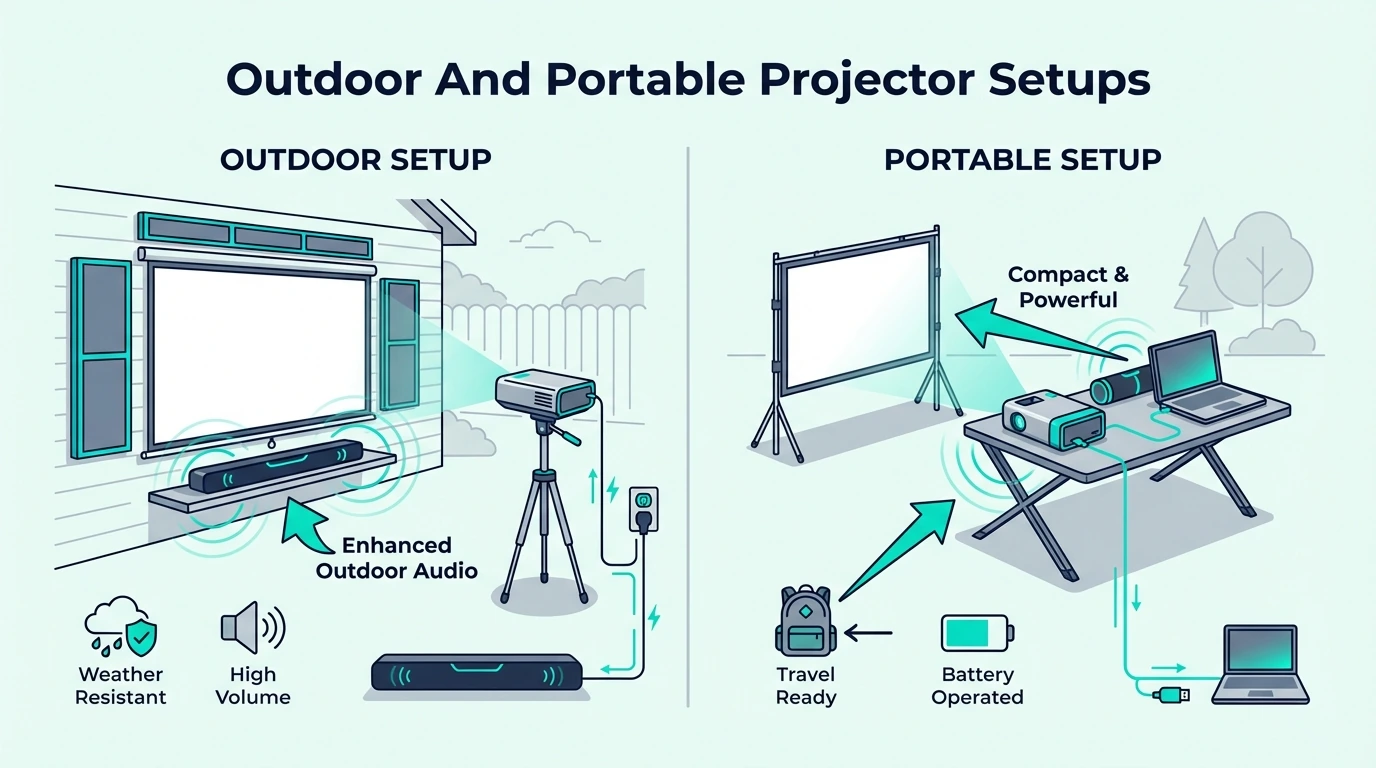
Yes, and this is where a lot of projector advice from indoor home theater threads becomes useless. Outdoor and portable setups reward simplicity, easy packing, and fewer boxes long before they reward premium audio nuance.
Outdoor Movie Nights Need Simplicity More Than Spec-Sheet Perfection
The best outdoor projector soundbar is usually the one that sets up fast and behaves predictably. Wind, ambient noise, seating spread, and extension-cord logistics erase a lot of the advantage that premium indoor bars deliver.
That is why the Roku Streambar SE works so well for casual projector nights. It gives you a compact audio upgrade and a streaming interface in one object, which reduces the number of pieces you have to power, place, and troubleshoot.
The Amazon Fire TV Soundbar Plus is the better outdoor choice if you want more vocal clarity and a little more weight without adding a separate subwoofer box. It is still simple enough to manage, but it feels more substantial once the audience gets larger.
Portable Bedroom And Apartment Projectors Reward Small, Clean Bars
Portable indoor projectors have a different problem than outdoor rigs. They are often used in tighter rooms where a huge bar or separate subwoofer is simply too much equipment for the space.
That is where compact bars like the Sonos Beam Gen 2 or the Roku Streambar SE make more sense than a larger theater package. The goal is not to re-create a cinema; it is to stop the projector from sounding thin, harsh, and distant.
If your portable projector is used mostly in apartments or small bedrooms, compare this logic against our soundbar guide. That broader category view solves the same space and simplicity problem from slightly different angles.
Temporary Setups Should Avoid Rear-Speaker Complexity
Temporary projector setups rarely benefit from rear speakers as much as buyers hope. The reason is boring but important: if the rears are annoying to place every time, they stop being part of the setup.
That is why I would rather recommend a strong single bar or 2.1 system for most portable projector owners than a surround bundle they only fully deploy twice. Even buyers who love surround in theory often end up happier with a cleaner system they can use weekly.
That same trade-off appears when people compare projector use against our soundbar guide. Different display types change the furniture and cable logic, but convenience still decides what gets used consistently.
It also lines up with what buyers discover in our soundbar guide. The cleaner the room and furniture plan, the more often a simpler front-stage bar wins over a fiddlier surround package.
How Do You Improve Sound on a Projector Beyond the Soundbar?
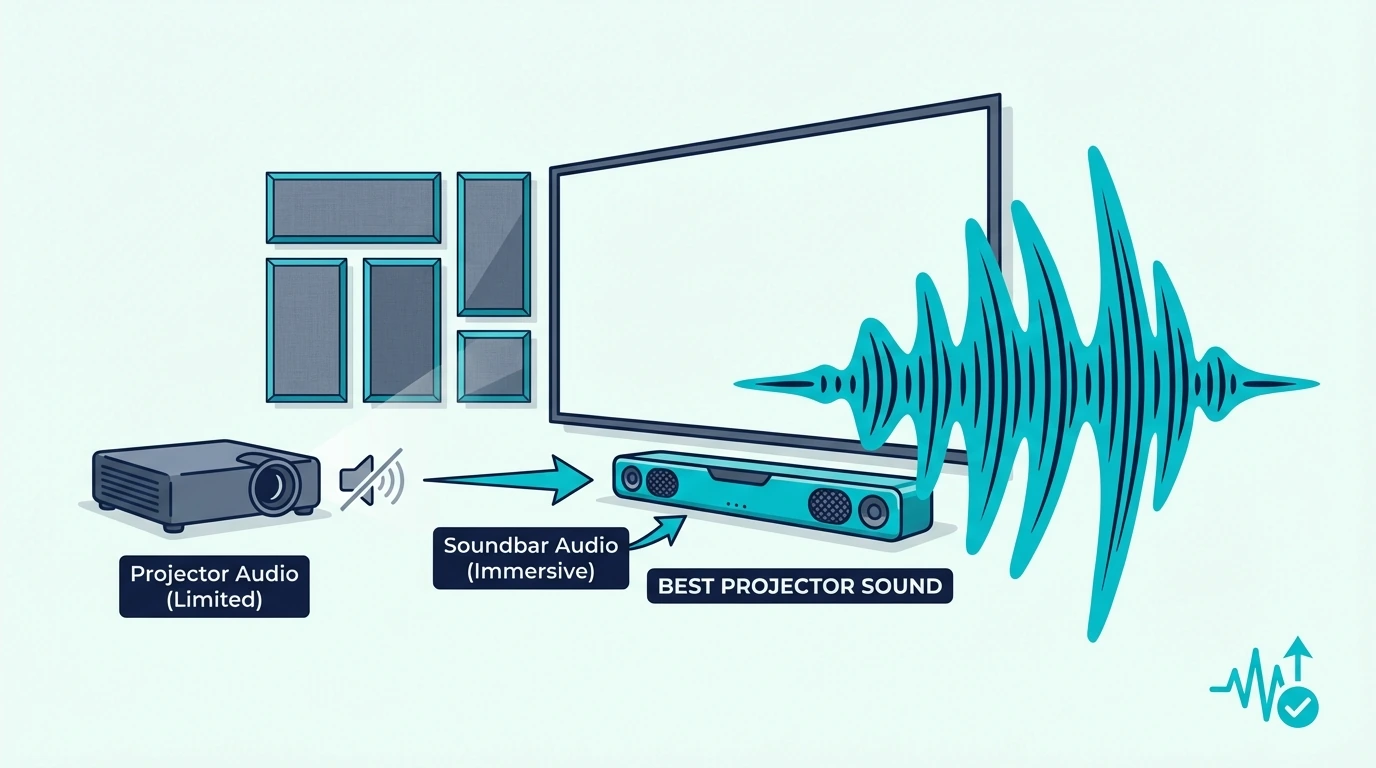
A better soundbar fixes a lot, but it does not fix lazy placement or sloppy source routing. Projector setups still respond dramatically to a few low-effort improvements.
Put The Bar As Close To The Screen Centerline As You Can
Dialogue feels wrong faster with a projector because the image is larger and the seating is often farther back. The closer the soundbar sits to the center of the screen, the less the sound feels detached from the picture.
Below the screen is still the default best answer. If the projector is ceiling-mounted and the screen is high, mounting the bar above the screen can still work, but only if the angle and room reflections remain controlled.
Treat The Subwoofer As Part Of The Screen Experience
Projector buyers often hide the subwoofer wherever it fits. That is usually the wrong instinct, because the sub is what gives the huge image the physical weight it otherwise lacks.
Start on the same front wall as the screen unless the room forces a different compromise. That keeps the low-end energy tied more naturally to the visual action instead of making the room feel split.
Fix Lip Sync Before You Judge The Bar
Many buyers decide a bar sounds bad when the real issue is timing. Even a high-quality bar feels cheap if dialogue lags behind mouths by a fraction of a second.
That is why you should work through the projector’s audio-delay menu, the streaming box settings, and the soundbar sync controls before judging the hardware. It is also why projector owners who switch between streamer brands should pay attention to the connection logic from our soundbar guide when they compare ecosystems.
Use The Right Sound Mode Instead Of Leaving Everything On Auto
Auto mode is not always wrong, but projector rooms often benefit from more deliberate choices. Dialogue or voice modes help more in larger rooms, while movie modes matter once the projector becomes the main weekend viewing screen.
This is especially true when the projector fan is audible or the room is lively. A small change in center emphasis can make voices far easier to follow than simply turning the whole system up.
Seat Distance Matters More Than Buyers Admit
If you sit too far back in a large room, even a good soundbar can start feeling smaller than the picture. Before you blame the bar, make sure the seating distance still makes sense for both the visual and audio scale of the room.
This is one reason projector audio can feel disappointing even with a solid bar underneath it. The room may be asking the soundbar to behave like a full speaker system spread across a space it was never designed to cover.
The Bottom Line
The best soundbar for projector use is the Polk Audio Signa S4 for most permanent indoor rooms because it solves the projector-specific trio of problems better than anything else here: scale, dialogue, and connection quality. It sounds large enough for a big image without demanding an overbuilt theater room to justify itself.
If your budget is tighter, the Samsung HW-C450 is the smart budget indoor pick, while the Roku Streambar SE is the most practical portable and casual-use shortcut. If your projector room is more serious, the Klipsch Flexus CORE 210 is the upgrade for buyers chasing a more theaterlike result.
The real win, though, comes from matching the bar to the projector path instead of shopping by hype alone. If you want one last broader check before buying, compare your shortlist against our soundbar guide so you can see where projector logic overlaps with the rest of the category and where it does not.
Frequently Asked Questions
Is a soundbar good for a projector?
Yes, a soundbar is usually the simplest serious audio upgrade for a projector because most projectors have weak built-in speakers and awkward sound projection. The right soundbar gives you clearer dialogue, fuller bass, and a more believable sense of scale without the complexity of a full AVR setup.
What is the best soundbar for a projector?
For most indoor projector rooms, the Polk Audio Signa S4 is the best overall match because it balances dialogue, bass, and projector-friendly connectivity. For smaller or more portable setups, the right answer often shifts toward simpler bars like the Roku Streambar SE or the Amazon Fire TV Soundbar Plus.
How do you connect a soundbar to a projector?
Use HDMI ARC or eARC first if the projector supports it, because that gives you the best mix of sync, control, and format support. If the projector is weak on audio output, route your streaming box into the soundbar first and then pass video to the projector, with optical as a workable fallback and Bluetooth as the last resort.
How do you improve sound on a projector?
Place the soundbar as close to the screen centerline as possible, put the subwoofer on the same front wall when you can, and fix lip-sync before you judge the hardware. After that, use dialogue or movie modes intentionally and make sure the seating distance still makes sense for the size of the room and the bar you bought.