Denon Soundbar vs Sonos Arc: Which Premium Ecosystem Wins? [2026]

The Denon soundbar vs Sonos Arc comparison looks simple, but the wrong premium soundbar can waste money and lock you into an ecosystem that does not fit your room. Denon brings AV receiver heritage and HEOS integration, while Sonos brings room calibration, app polish, and a tighter whole-home ecosystem.
The tension is that the wrong choice can lead to a costly mismatch, with the soundbar feeling like a poor fit for your room, TV, and upgrade plans. This usually happens because buyers overlook the importance of calibration, software, and expansion path in favor of raw driver specs.
The pain of this mismatch is real: wasted money, frustration with daily use, and the hassle of upgrading or replacing the soundbar down the line. But what if you could avoid this pain and choose the perfect soundbar for your setup?
The promise is that by understanding the key differences between Denon and Sonos, you can make an informed decision that saves you money, simplifies future upgrades, and delivers a soundbar that truly fits your needs. The result is a decision based on ownership reality, not just brand reputation.
Start by separating sound quality from ecosystem fit, because this distinction explains why Sonos wins for some rooms while Denon makes more sense for others.
Below, we break down Denon and Sonos across audio performance, ecosystem value, and upgrade path so you can choose the better match with less guesswork.
That gives you a cleaner way to match the bar to your room, your current gear, and the upgrades you may want later.
Choose the Denon Home Sound Bar 550 if you already own Denon AV equipment, want Dolby Atmos at a lower price point, or prefer HEOS multi-room that integrates with existing Denon gear. It also fits buyers who want a premium soundbar without committing to Sonos pricing for every future expansion.
Choose the Sonos Arc if you prioritize the most polished multi-room streaming ecosystem and want Trueplay room calibration. It is the better fit if you plan to build a whole-home Sonos system and want the smoothest app experience in the industry.
What Are the Key Differences in Audio Performance and Room Calibration?
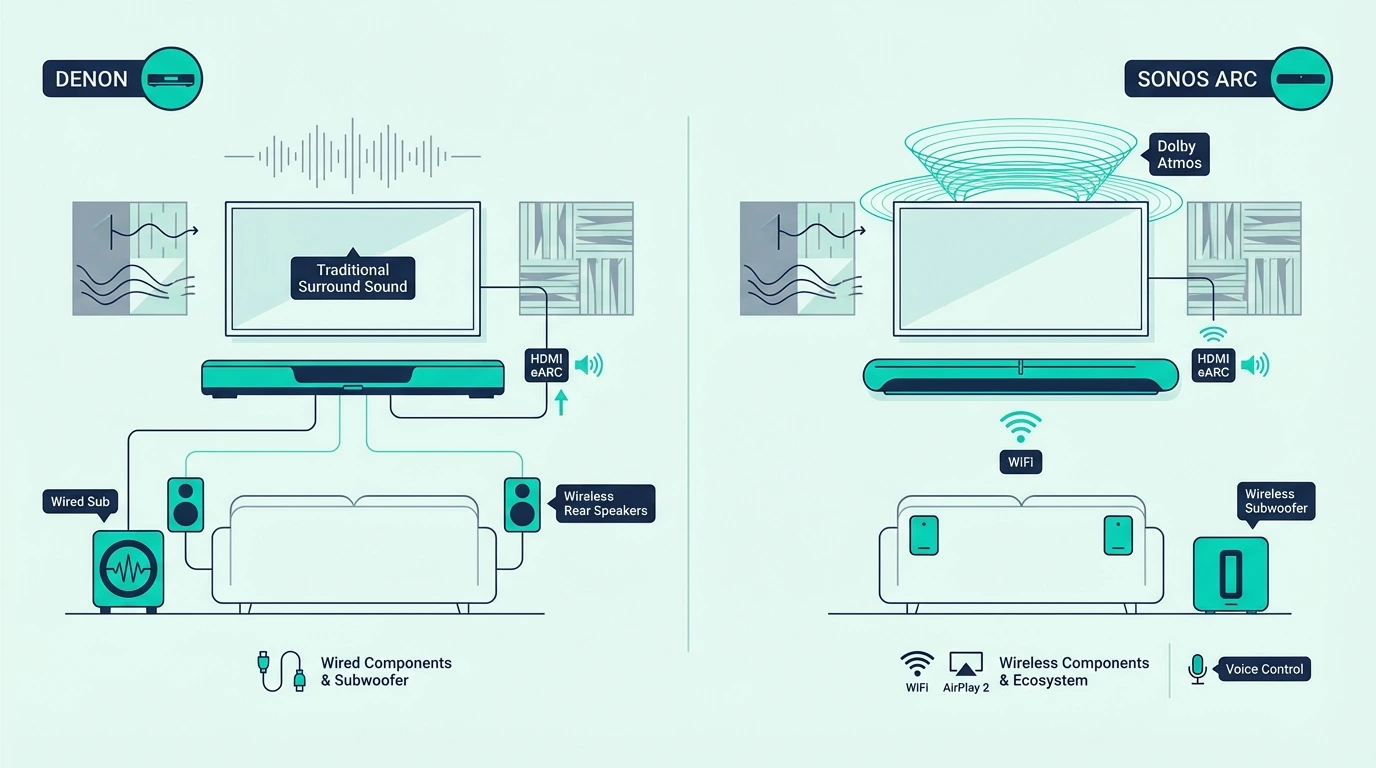
Both Denon and Sonos deliver premium Dolby Atmos from their flagship soundbars. They approach audio quality and room optimization differently — and these differences matter more for daily satisfaction than raw specs suggest.
Sonos Arc: Eleven Speakers and Trueplay
The Sonos Arc packs eleven custom-designed drivers (including upfiring Atmos channels) into a single premium bar with wide, immersive spatial audio. Sonos’s Trueplay room calibration uses your iPhone’s microphone to measure your room’s acoustics and automatically adjusts the Arc’s output for your exact space.
The result is consistently impressive audio that sounds good in virtually any room without manual tweaking. Trueplay handles acoustic optimization that most buyers would never configure themselves.
That convenience matters most in open living rooms where placement is imperfect and the bar needs help adapting to reflections. The main catch is that Trueplay still favors Apple-device households, so some buyers do not get the same easy calibration workflow.
For this kind of small-room, dialogue-first setup, a current example is Sonos Arc, which is a strong fit for Atmos streaming and immersive TV audio.

Sonos Arc
Our soundbar fundamentals guide explains how soundbar types work, and the broader soundbar hub is the safer next stop if you are still comparing premium categories before you buy.
Denon Home Sound Bar 550: AV Heritage Sound
The Denon Home Sound Bar 550 delivers Dolby Atmos and DTS:X processing with a sound signature tuned by the same engineers behind Denon’s acclaimed AV receivers. Denon’s approach favors accurate reproduction with detailed midrange and controlled bass rather than Sonos’s processed warmth.
The tradeoff: Denon relies on manual EQ adjustment rather than automatic room calibration. Experienced users get more control, but less experienced buyers miss the automatic optimization Trueplay provides.
That manual approach can be a strength if you already understand speaker placement, bass management, and source settings from receiver-based systems. It can also feel like extra work if you want a premium bar that sounds dialed-in the same day you unbox it.
The Denon Home 550 Wireless Smart Soundbar shows why that approach appeals to experienced home-theater buyers who want control rather than automatic processing.
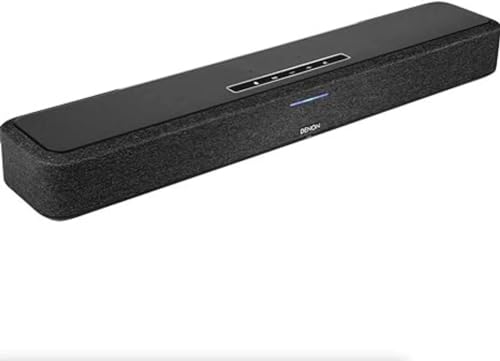
Denon Home 550 Wireless Smart Soundbar
If you are still deciding between a soundbar and a larger system, the soundbar fundamentals guide and broader soundbar hub are the best next stops.
Which Ecosystem Delivers Better Expansion and Value?

Beyond audio, the most consequential difference is their ecosystem approach. This determines what speakers you can add, what streaming services integrate natively, and how much expansion costs.
Sonos: The Best Multi-Room Ecosystem
Sonos’s multi-room ecosystem is widely regarded as the most polished in the industry. The Sonos app manages every speaker from a single interface, supports virtually every major streaming service natively, and provides seamless room-to-room audio grouping.
Expanding the Sonos Arc into full surround means adding Era 100 or Era 300 speakers and a Sonos Sub. Premium pricing adds up quickly, but it buys a cohesive system where every component works together cleanly.
That polish is what many buyers are really paying for when they choose Sonos over less expensive alternatives. The downside is that the same lock-in makes Sonos a weaker fit if you expect to mix brands or fold the bar into a receiver-based theater later.
The broader soundbar hub and soundbar fundamentals guide help if you still need to compare premium soundbar priorities before you commit.
Denon: AV Receiver Integration and HEOS
Denon’s HEOS multi-room platform supports wireless audio across Denon and Marantz products. The Home Sound Bar 550 integrates with Denon’s AV receivers, letting existing owners add it to a secondary TV while keeping their main receiver setup.
Sonos simply cannot offer this cross-product integration.
For buyers who already own Denon receivers or HEOS speakers, the Home Sound Bar 550 makes more sense because it extends the existing system instead of forcing a second ecosystem. If you want the lower-cost end of that Denon path, something like the Denon DHT-S316 TV Sound Bar with Subwoofer shows how Denon can undercut Sonos even harder on total system cost.
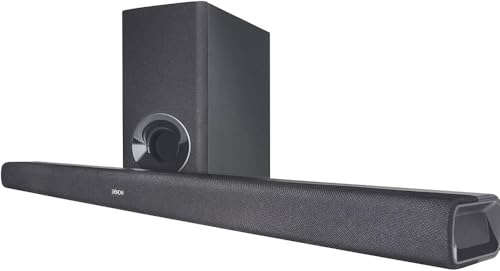
Denon DHT-S316 TV Sound Bar with Subwoofer
This matters most if the soundbar is not your forever living-room centerpiece. Denon gives you a cleaner path to move the bar to a second room later without abandoning the rest of your home-theater setup.
If you still need the connection basics before buying, the soundbar fundamentals guide and broader soundbar hub are safer starting points than over-reading brand claims.
How Much Does the Price Gap Matter Once You Expand?
The price gap between Denon and Sonos is still meaningful even though retailer pricing moves around over time. Sonos usually stays the more expensive ecosystem once you add surrounds or a sub, while Denon leaves more room in the budget for expansion.
Buyers often focus on the first purchase and underestimate the second and third. Once you price surrounds, a subwoofer, or a second-room speaker, the long-term cost difference becomes easier to feel.
That same overall spend can also overlap with packages like the JBL Bar 700MK2 7.1 Channel Soundbar System, which matters if your real priority is getting more physical surround hardware per dollar rather than buying into either brand ecosystem.
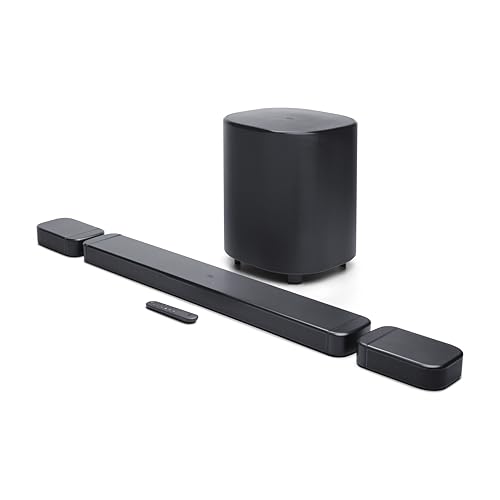
JBL Bar 700MK2 7.1 Channel Soundbar System
The broader soundbar hub and soundbar fundamentals guide help if you need to compare total-system value before you commit.
Get Studio Tips Weekly
Join 5,000+ creators getting acoustic treatment advice every week.
No spam. Unsubscribe anytime.The Bottom Line
Choose the Denon Home Sound Bar 550 if AV receiver integration, HEOS compatibility, and lower expansion cost matter more than automated calibration. Choose the Sonos Arc if you want the most polished multi-room ecosystem and the easiest room-tuning experience.
In plain terms, Sonos is the better software-first choice and Denon is the better flexibility-and-value choice. If you already own one brand, staying inside that ecosystem usually matters more than trying to rank them on isolated sound quality alone.
If you want the smoothest daily streaming experience, Sonos usually earns the premium. If you want premium performance without locking every future upgrade into one brand, Denon is easier to justify.
The broader soundbar hub and soundbar fundamentals guide help if you still need to sanity-check whether either premium bar is the right category for your setup.
Frequently Asked Questions
Which is better, Denon or Sonos?
Neither is universally better. Denon delivers excellent Dolby Atmos at a lower price with AV receiver integration.
Sonos delivers the industry’s best multi-room ecosystem with automatic room calibration. Choose Denon for integration and value; choose Sonos for ecosystem polish.
Is the Sonos Arc outdated?
The Sonos Arc Ultra (released late 2024) is the latest flagship. The original Arc remains capable with Dolby Atmos, Trueplay, and full ecosystem integration.
Sonos continues firmware updates that keep it competitive, though the Arc Ultra adds improved bass and spatial processing.
What are the benefits of a Denon soundbar?
Denon soundbars leverage decades of AV receiver engineering for detailed audio with Dolby Atmos and DTS:X support. They integrate with existing Denon and Marantz equipment through HEOS multi-room.
Premium features at lower prices make them especially valuable for buyers already in Denon’s ecosystem.
What is the highest rated soundbar?
The Sonos Arc and Arc Ultra consistently rank among the highest-rated for audio quality, room calibration, and ecosystem polish. The Samsung HW-Q990D and JBL Bar 1300X lead in raw surround performance with physical rear speakers.
The “highest rated” depends on whether you prioritize ecosystem, performance, or value.