Best Soundproofing For Walls (Ranked By What Actually Works)
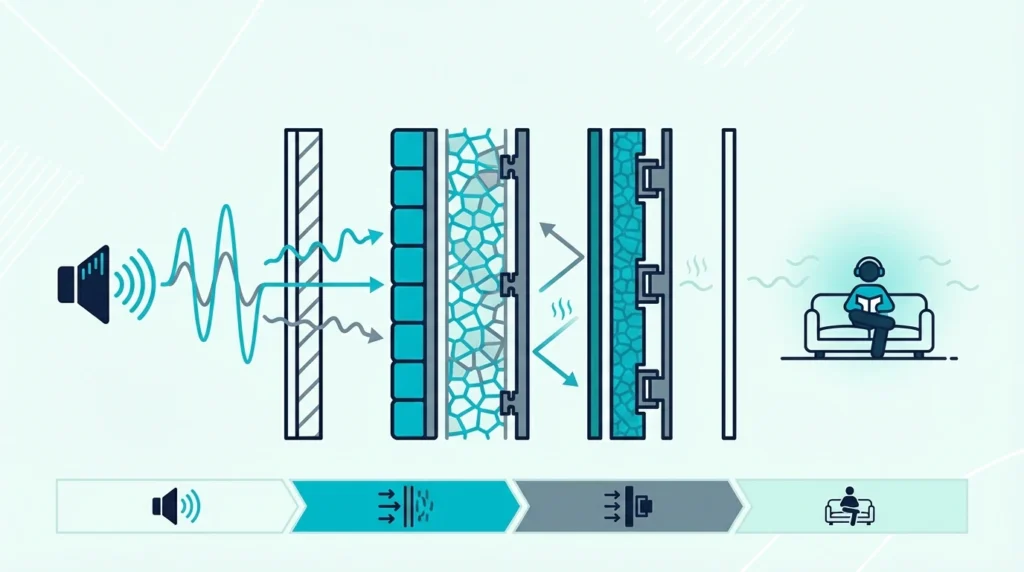
Best soundproofing for walls sounds like it should be one product, but wall noise is rarely that simple. The best option changes depending on whether the wall is already built, whether the noise is voices or low bass, and whether you can open the assembly or need a renter-safe workaround.
That is why so many people waste money on foam tiles, decorative wall panels, and stick-on “soundproof” products that barely reduce transmission. Wall soundproofing works when you add mass, reduce vibration, seal air leaks, and stop treating echo-control products like they belong in the same category.
The good news is that the strongest wall upgrades are predictable once you know your constraint. Once you match the build to the noise path, wall soundproofing becomes much more about choosing the right system than chasing mystery products.
Start by deciding whether you need a full wall assembly upgrade or a temporary compromise for a finished wall, then choose products that actually fit that job. Below, you’ll find the best soundproofing for walls by wall type, budget, and use case, plus which products are worth buying now versus which ones only make sense as temporary compromises.
For most serious wall-noise problems, the best-performing material is mass loaded vinyl installed inside a rebuilt wall assembly, while the best cost-to-performance upgrade for many homes is still extra drywall plus damping and good sealing. For renters or finished walls you cannot open, heavy sound blankets can help as a temporary mass layer, but they should be treated as a compromise rather than a permanent wall soundproofing system.
Wall Soundproofing Basics: Noise Type, Assembly, and Build Stage
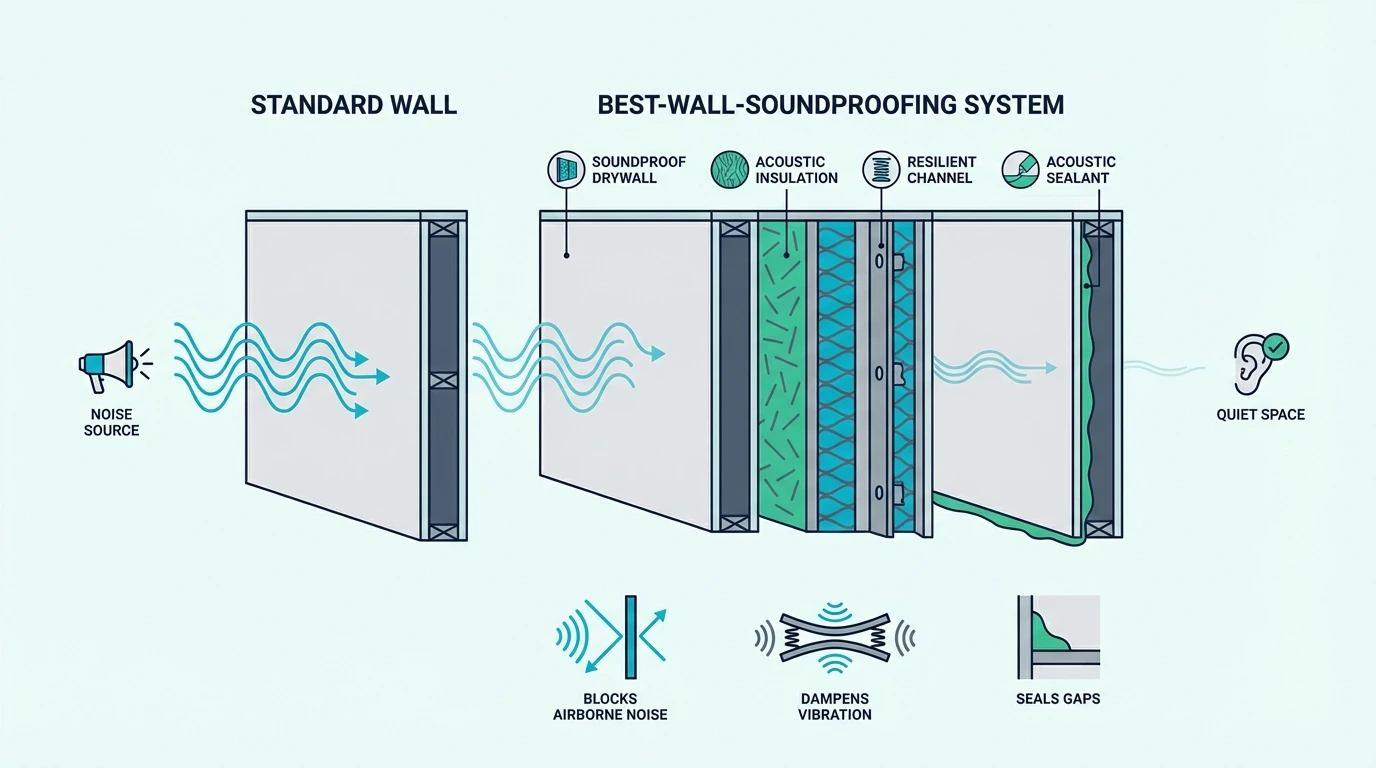
The best wall soundproofing depends on whether you are trying to block airborne noise, reduce neighbor noise through a party wall, or improve a finished wall without demolition. The best answer for a new build is not always the best answer for an already-finished bedroom wall.
Airborne noise vs structural vibration
Voices, TV, barking dogs, and general household noise are airborne problems, which means the wall needs more mass and better sealing. Bass, subwoofers, and repeated impacts are harder because vibration travels through the framing as well as the drywall surface.
That distinction is why a product that looks impressive on the wall can still fail badly. If you want the broader breakdown of what different materials actually do, our best soundproofing material guide is the best starting point before you buy the wrong wall product.
Why no single product works alone
That noise-type split explains why no single product handles everything. A wall assembly needs several things at once: mass to resist vibration, damping to reduce resonance between rigid layers, cavity absorption when the wall is open, and sealed edges so sound does not leak around the upgrade.
No single product does all of that by itself.
That is why Trademark Soundproofing Mass Loaded Vinyl is one of the strongest products in this roundup, but it still works best as part of a wall system rather than as a magic sheet hung randomly on a finished surface. If you only want one rule, it is this: systems beat products.
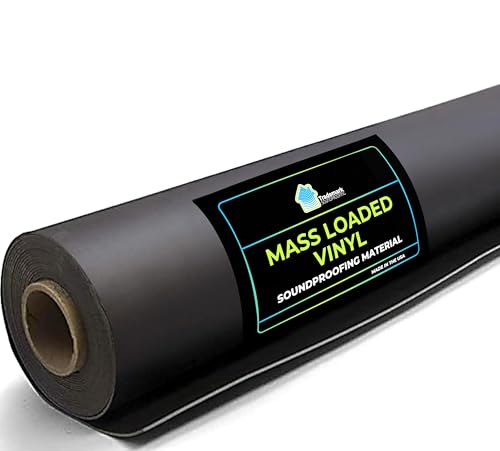
Trademark Soundproofing Mass Loaded Vinyl
New construction vs existing walls
How many of those system layers you can actually install depends on whether the wall is open. New construction or a wall that is already being opened gives you the best results because you can combine cavity insulation, mass layers, damping, and even decoupling.
That is the moment when wall soundproofing can move from “better” to “meaningfully quieter.”
Existing finished walls are more constrained, which is why retrofit advice often sounds less exciting. You can still improve them, but you usually get the best return from added drywall, damping, and strategic sealing rather than chasing thin decorative wall products.
Existing Wall Upgrades: Drywall, Insulation, and Decoupling
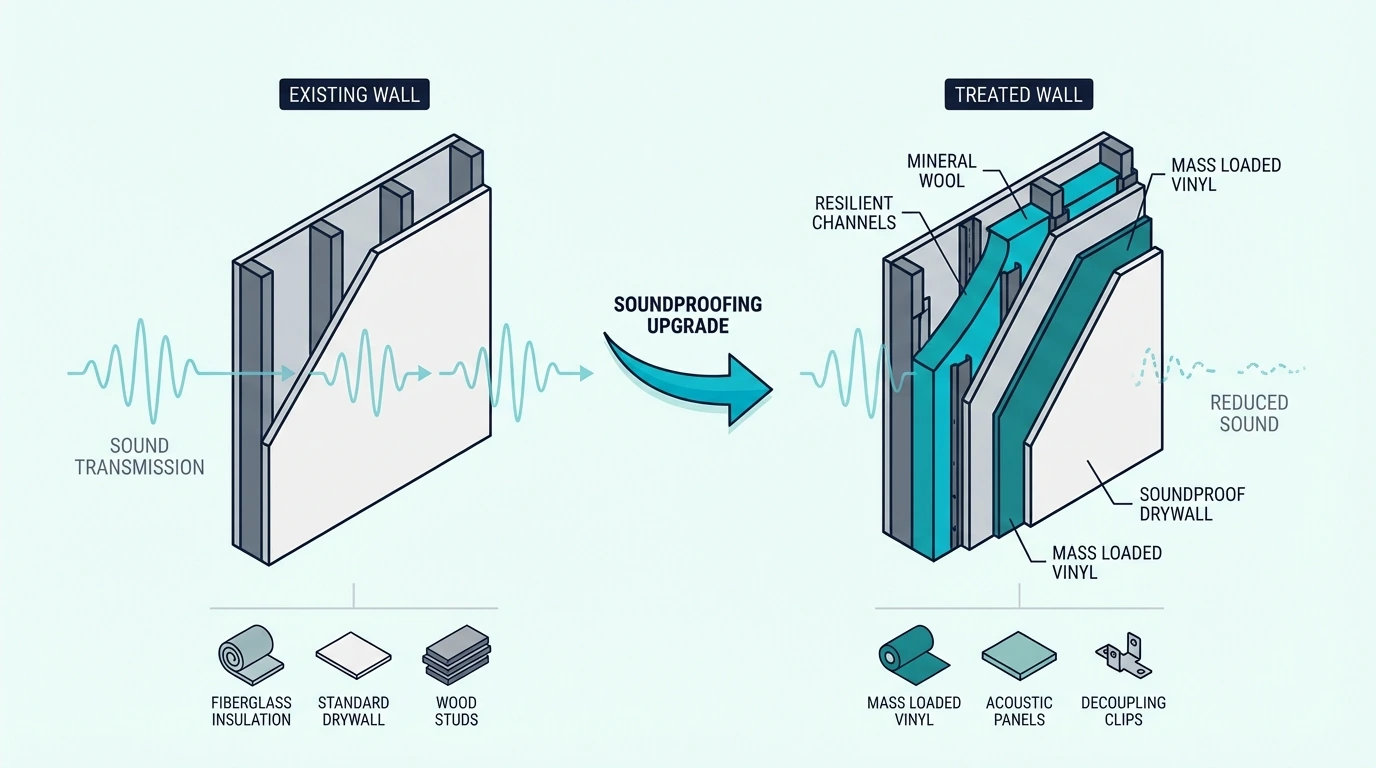
Existing walls are where most people need the clearest buying advice because demolition is expensive and many rooms need a better result without full reconstruction.
Extra drywall and damping
Adding another layer of 5/8-inch drywall with a damping layer between the old and new surfaces is the best cost-to-performance move for many finished walls. It adds mass across the whole wall plane and improves performance more consistently than thin stick-on solutions.
If you are already opening the wall or rebuilding a problem surface, Trademark Soundproofing Mass Loaded Vinyl becomes one of the strongest wall-upgrade products you can add without eating much thickness. For the full material decision tree, compare it against the other barrier and insulation options in best soundproofing material and best insulation for soundproofing.
Insulation inside the cavity
Drywall and damping handle the face of the wall, but the cavity behind them still needs attention. Insulation matters when the wall cavity is open or when you are building a new stud wall.
Mineral wool is usually the better choice because it is denser, friction-fits well, and helps reduce resonance inside the cavity more effectively than lightweight fiberglass.
What insulation does not do is replace mass. If the wall is already closed and you are hoping blown-in or cavity-only insulation will turn a loud shared wall into a quiet one, expectations usually get ahead of reality.
Decoupling for serious vibration problems
Mass and insulation handle most airborne noise, but structure-borne vibration needs a different layer. Decoupling is worth it when the wall is part of a home theater, music room, duplex party wall, or any situation where ordinary drywall upgrades still leave too much transfer.
Isolation clips, resilient channel, or double-stud strategies reduce the direct vibration path between the noisy side and the quiet side.
It is more work, but it is the difference between a cosmetic upgrade and a serious wall assembly. That matters especially when the same room is already dealing with ceiling or floor transfer, which is why our main soundproofing hub breaks these surfaces apart instead of treating every noise problem like a wall-only issue.
Get Studio Tips Weekly
Join 5,000+ creators getting acoustic treatment advice every week.
No spam. Unsubscribe anytime.Budget Wall Soundproofing: What Helps and What Wastes Money
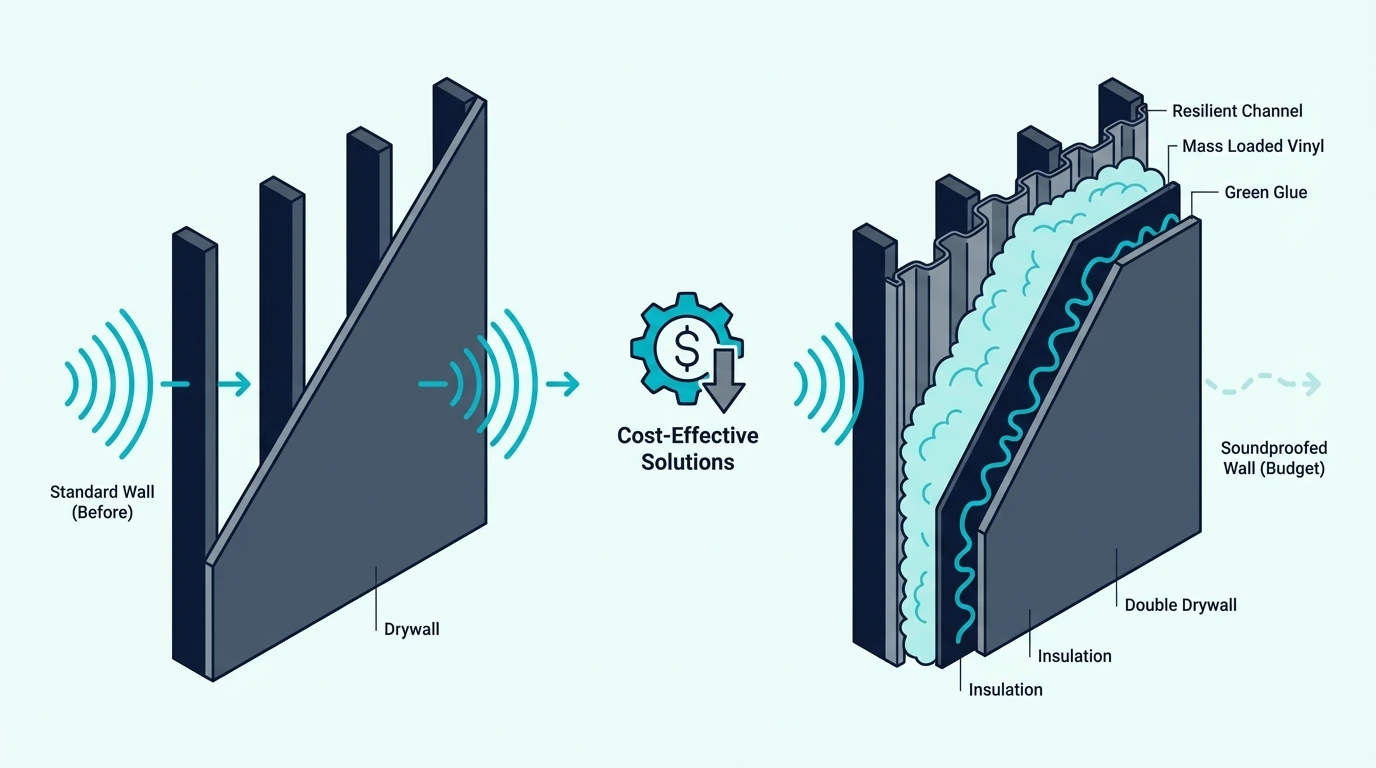
Cheap wall soundproofing can help a little, but only when you are honest about what “cheap” can realistically do. Low-cost wall fixes are mostly about reducing leakage and adding temporary mass, not creating a true high-isolation wall.
Cheap fixes that actually help
Sealing gaps around outlets, baseboards, trim edges, and obvious penetrations is the cheapest place to start. Rearranging furniture, adding a full-height bookcase on the noisy wall, or upgrading soft finishes can also help a little when the problem is mild.
For finished walls you cannot open, a VEVOR Sound Dampening Blanket is one of the few low-cost products that at least adds some real mass. It is not a permanent wall solution, but it makes more sense than foam when you need a reversible first step.
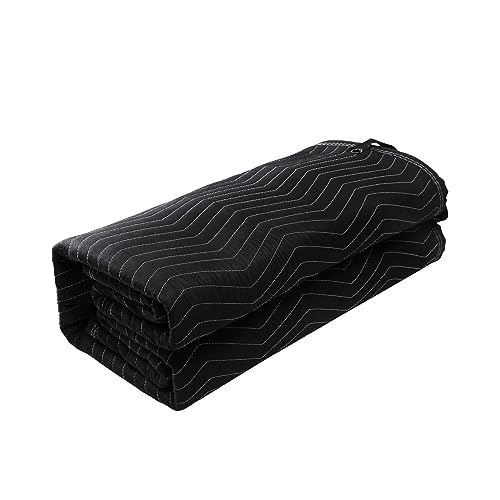
VEVOR Sound Dampening Blanket
Which Cheap Wall Ideas Are Mostly Hype?
Foam tiles, decorative acoustic squares, and lightweight “soundproof wall panels” are the biggest traps in this category. They can reduce echo inside the room, but they do not block much sound through the wall itself because they add very little mass.
That is the key difference between room treatment and sound blocking. If you are sorting out that confusion, compare this article with best soundproofing panels so you can separate absorptive wall products from actual wall soundproofing materials.
When saving beats spending now
If the cheap fixes barely dent the problem, that is the signal to save rather than buy more of the same. If you are dealing with a shared bedroom wall, noisy neighbors, or persistent TV and speech transfer, cheap surface products usually end up costing more in the long run because they delay the real fix.
In those cases, it is smarter to save for a full wall upgrade than buy several rounds of products that were never strong enough.
If you need a heavier temporary option while you save, the US Cargo Control Sound Dampening Blanket adds more mass than ultra-light blanket options. It still belongs in the temporary column, but it is the more serious renter or utility-room pick.
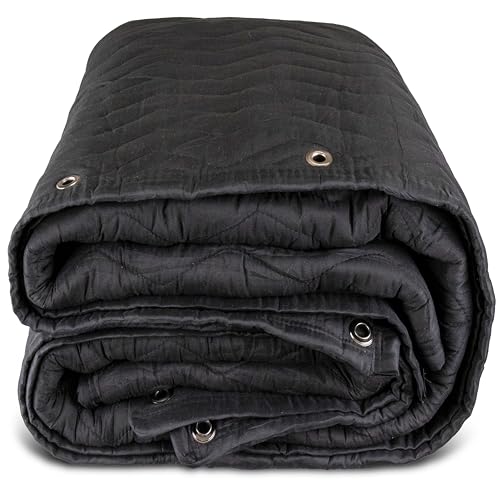
US Cargo Control Sound Dampening Blanket
Shared Walls with Noisy Neighbours
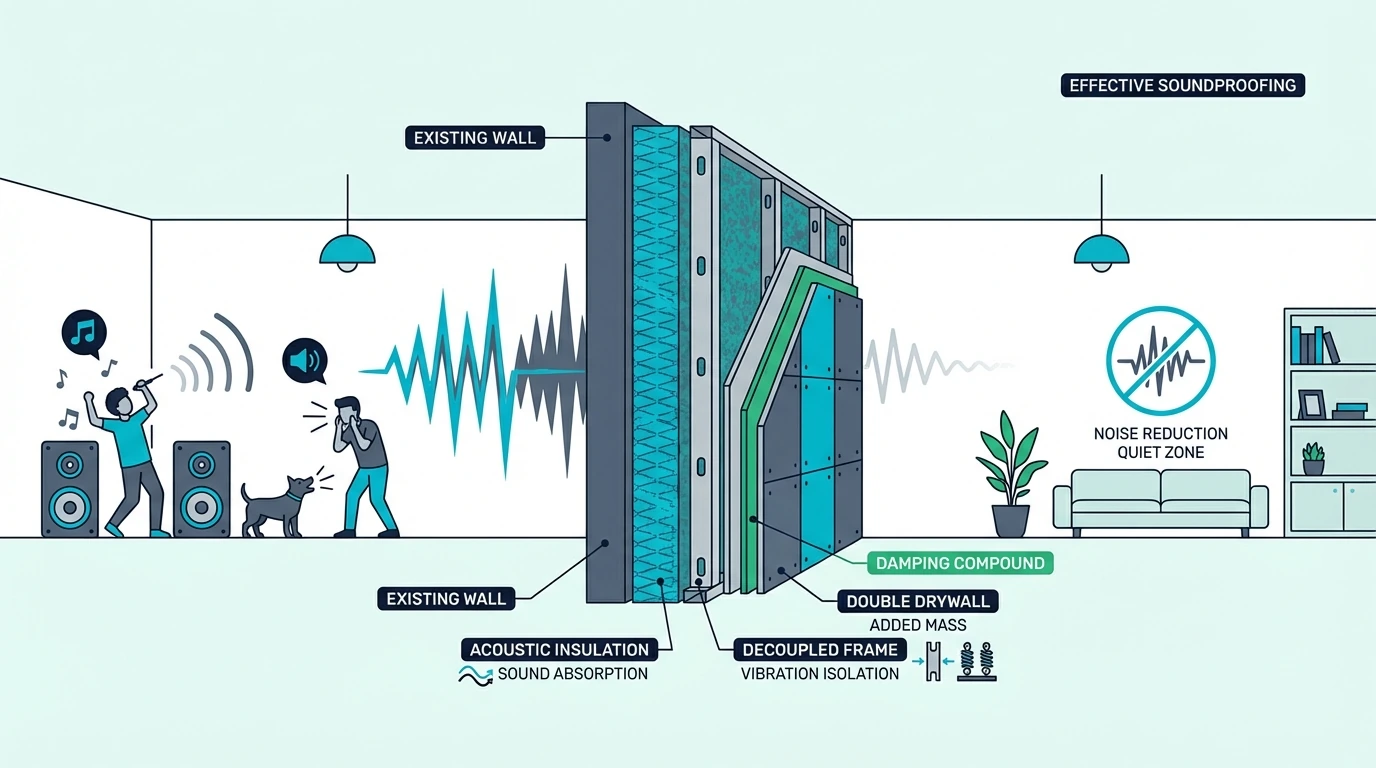
Shared-wall noise is one of the most common reasons people search for the best wall soundproofing in the first place. It is also where weak products get exposed fastest, because party-wall noise tends to be persistent and frustrating.
The materials that matter most
For a shared wall, the strongest materials are the ones that add mass across the full surface and work inside a wall system rather than just on the face. That usually means additional drywall, damping, mineral wool if the wall is open, and optionally a barrier layer like Soundsulate Next Generation MLV.
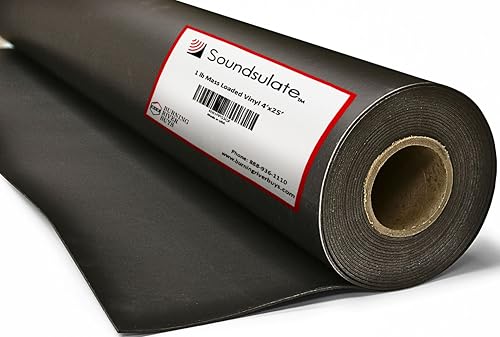
Soundsulate Next Generation MLV
The reason MLV stays near the top of most serious wall shortlists is simple: it adds a lot of mass without eating much thickness. For shared-bedroom walls, duplex walls, and condo walls, that matters more than decorative surface products ever will.
When the wall is already finished
Those material choices assume you can open the wall, but most shared-wall complaints come from rooms that are already finished. If the wall is already finished, the best move is usually to add another drywall layer with damping rather than try to stick thin products directly on the paint.
Existing-wall soundproofing is always a compromise, but a full-surface mass upgrade still beats small patch fixes.
When you cannot rebuild the wall yet, heavy blankets can serve as a temporary layer over the noisiest section. They are not permanent solutions, but a properly mounted US Cargo Control Sound Dampening Blanket can at least reduce some surface leakage until you commit to a real wall build.
When Might The Noise Be Flanking Around The Wall Instead?
Not all “wall noise” is actually traveling straight through the wall. It can flank through the ceiling line, floor framing, electrical boxes, HVAC paths, doors, or even adjacent window assemblies, which is why some wall projects seem underwhelming even when the materials were technically correct.
If the noise still feels oddly loud after you improve the wall, step back and compare the whole room against the broader options in the soundproofing hub. That keeps you from overspending on one surface while the real weak point sits right next to it.
Choosing the Right Wall Material: Budget, Performance, and Thickness
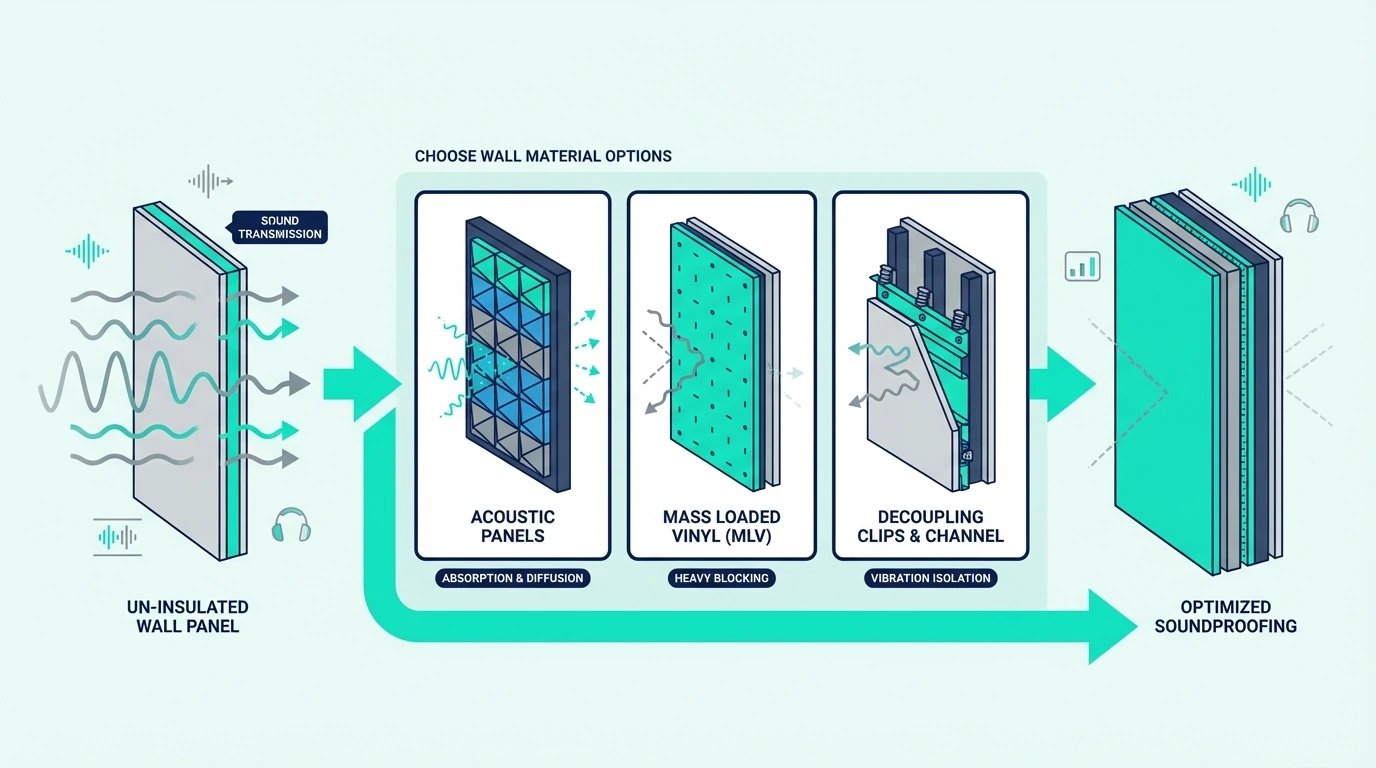
The easiest way to choose is to stop asking for the single best product and start asking what role the product needs to play in the wall. Once you do that, the shortlist gets much clearer.
Budget vs performance vs thickness
For pure performance inside a rebuild, Trademark Soundproofing Mass Loaded Vinyl is the strongest all-around barrier in this roundup. For a cheaper temporary first step on a finished wall, VEVOR Sound Dampening Blanket is the better starter pick.
Thickness matters most when the wall cannot move far into the room. That is where MLV holds its value, because it gives you meaningful mass in less space than building up the wall with several bulky surface products.
Realistic cost expectations
Those product choices set the price range, but the full picture depends on how deep the project goes. Surface-level fixes can stay under a few hundred dollars, especially if you are just sealing and trying a temporary blanket layer.
A real wall upgrade with drywall, damping, insulation, finishing labor, and possible decoupling quickly moves into the much more serious renovation range.
That difference is exactly why cheap wall soundproofing advice is so often misleading. The goal is not to pretend a temporary product equals a rebuilt wall, but to help you spend intelligently between “buy time” and “fix it properly.”
The combination that works best
Cost makes more sense once you see what a complete wall system actually includes. The best wall builds usually combine cavity absorption, added mass, damping, and airtight detailing.
In practice, that often means mineral wool inside the cavity, a damping layer, an extra drywall layer, and sometimes MLV or decoupling if the wall needs stronger performance.
If you want the most reliable buying path, treat this article as the BOFU layer and use best soundproofing material, best insulation for soundproofing, and best soundproofing panels as your supporting comparison set. That gives you the full product context without mixing wall blocking with acoustic treatment.
The Bottom Line
The best soundproofing for walls is not the prettiest product or the one with the most marketing claims. It is the material that fits the wall type, the noise path, and the amount of construction you can actually do.
If you want the strongest real wall barrier in this roundup, Trademark Soundproofing Mass Loaded Vinyl is the best fit when the wall is being rebuilt and performance matters most.
If you need a premium wall-build option with a similar role, Soundsulate Next Generation MLV is the upgrade pick for higher-end wall assemblies.
If you are still in the temporary stage, US Cargo Control Sound Dampening Blanket is the better renter-safe stopgap, while VEVOR Sound Dampening Blanket is the cheapest place to begin.
For the broader comparison set, keep this article tied to the rest of your BOFU research in the soundproofing hub, best soundproofing material, best insulation for soundproofing, and best soundproofing panels.
Frequently Asked Questions
How To Block Out 100% Of Noise?
You usually cannot block 100 percent of noise with a normal residential wall retrofit. The closest approach is a full isolated wall assembly with mass, damping, cavity insulation, and airtight detailing, but even then flanking paths can still carry sound around the wall.
How Do You Soundproof A Wall That’s Already Built?
The best retrofit method is usually adding another drywall layer with damping and sealing the perimeter carefully. If you cannot rebuild the wall yet, heavy temporary barriers can help a little, but they do not replace a full wall assembly upgrade.
How To Install Sound Insulation In Walls?
Sound insulation works best when the wall cavity is open, because the material needs to sit between the studs rather than on the surface. Install the insulation without compressing it, then pair it with added mass and good sealing so the wall system does more than absorption alone.