Bose Solo Soundbar 2 vs Bose TV Speaker: HDMI, Bass and Remotes

Most people weighing the Bose Solo Soundbar 2 vs Bose TV Speaker are really choosing a TV connection, because the TV Speaker adds HDMI ARC and a subwoofer port that the Solo never had.
Both bars are small, both have Bluetooth and a Dialogue mode button, and they even share a remote, so their spec sheets blur together.
Get the ports right and you’ll know whether your TV’s own remote can run the bar, and whether a Bose bass module is ever on the table.
This guide lines the two up from Bose’s owner’s guides and product pages: speakers, inputs, remotes, Dialogue mode, bass, Bluetooth and size.
The side-by-side table comes first, then each difference in turn, and finally which buyer each bar suits.
What Separates the Bose Solo Soundbar 2 vs Bose TV Speaker?
Those two ports are most of the story. Bose’s guide gives the TV Speaker an HDMI IN for the TV’s HDMI ARC port and a BASS port for a Bose Bass Module, while the Solo Soundbar Series II, as Bose names it, connects by optical, coaxial or analog cable only (Bose’s TV Speaker owner’s guide).
| Feature | Bose Solo Soundbar Series II | Bose TV Speaker |
|---|---|---|
| Speakers, per Bose | Two angled full-range drivers | 3 total speakers |
| Size | Not on Bose’s pages | 2.21 x 23.38 x 4.02 in, 4.34 lb |
| TV connection | Optical or coaxial | Optical or HDMI ARC |
| Other ports | AUX, Service, power supply input | AUX IN, USB, BASS, power |
| Bluetooth | 30 ft range | Version 4.2, 30 ft range |
| Remote | Eight buttons, not programmable | Same eight buttons |
| Dialogue mode and bass button | Yes | Yes |
| Auto-off | After 60 minutes of inactivity | After 20 minutes without interaction |
| Bose Bass Module 500 or 700 | Not on Bose’s lists | By wire only |
| Wall bracket | In the box, per Bose’s US page | Sold separately |
Think of the TV Speaker as the Solo with a third speaker, an HDMI input and a subwoofer port added, and the coaxial input taken away. For the TV Speaker against Bose’s bigger bars, see our Bose TV Speaker vs smart soundbar comparison.
What’s Inside Each Bar?
That third speaker is the clearest hardware gap Bose states. Bose’s Solo page says two full-range drivers are angled for wide, spacious sound, while Bose’s own product comparison lists 3 total speakers for the TV Speaker (Bose TV Speaker page).
Bose’s page doesn’t name the third one, but the TV Speaker’s Amazon listing describes two angled full-range drivers plus a center tweeter “specifically focused on elevating vocals.”
Neither product page gives wattage or a frequency range, and only the TV Speaker gets a suggested room size: 8 ft x 8 ft.
Both owner’s guides carry a Dolby Audio license notice, and neither mentions DTS. Bose marks the TV Speaker “No” for Dolby Atmos and ADAPTiQ, and the Solo’s documents mention neither.
Get Studio Tips Weekly
Join 5,000+ creators getting acoustic treatment advice every week.
No spam. Unsubscribe anytime.Which Inputs Does Each One Have?
Those speakers are fed very differently. The Solo’s rear panel takes optical, coaxial and a 3.5 mm AUX input, while the TV Speaker’s takes HDMI, optical and AUX, with a BASS port beside them (Bose’s Solo Soundbar Series II owner’s guide).
The Solo also has a port labeled Service and the TV Speaker one labeled USB, but neither guide gives it a job in its setup steps. Bose’s pages don’t say what it’s for either.
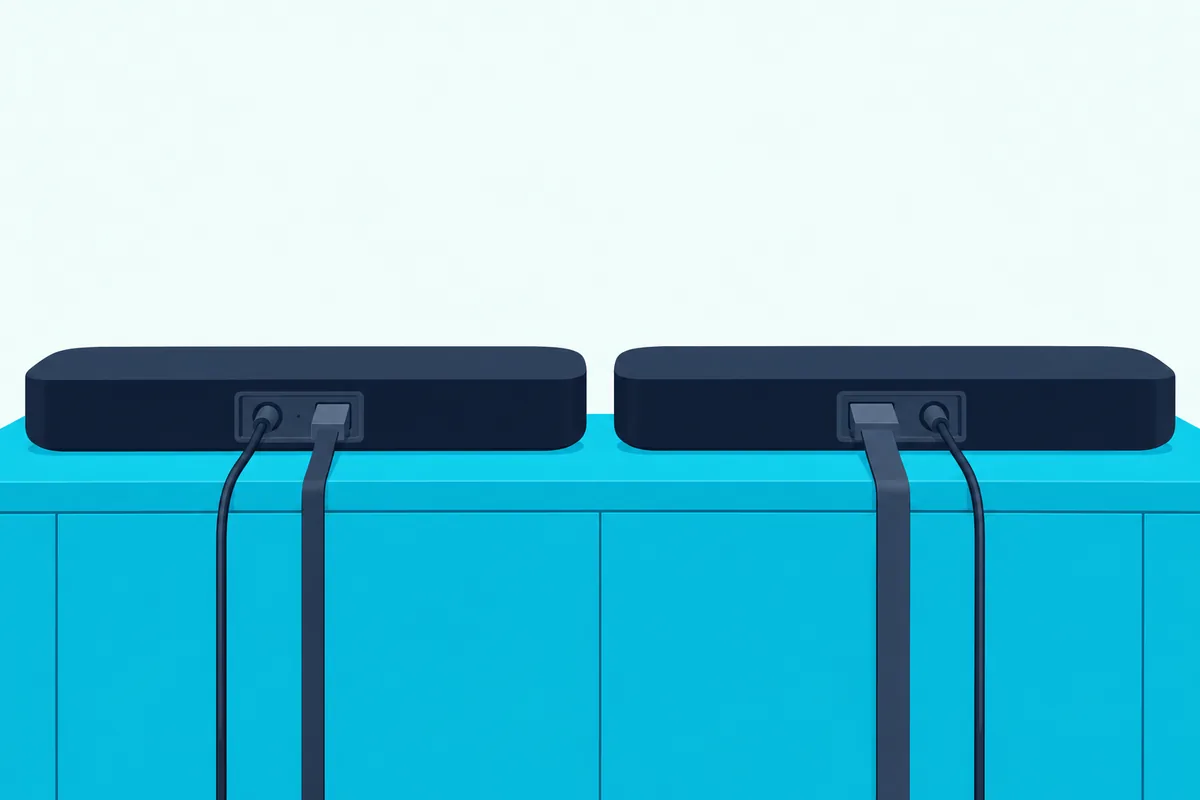
Plugged into the TV’s HDMI ARC port, the TV Speaker lets the TV remote handle power, volume and mute, and Bose’s guide calls it Roku TV Ready for setup and control from a Roku TV.
The only audio cable in either box is optical, though, and the TV Speaker’s guide marks HDMI “not provided.”
The Solo has a trick of its own. Its guide shows two sources wired straight into the bar, one by optical or coaxial and one by analog cable, with the unused source switched off.
Is Either Remote a Universal Remote?
Once the cables are in, the remotes turn out to be twins. No: both bars ship with the same eight buttons for power, TV, Bluetooth, volume up and down, mute, Dialogue mode and bass, and Bose lists one replacement for both, the “Bose TV Speaker / Solo Soundbar series 2 Remote Control.”
Bose’s help page for the Solo says that remote isn’t programmable. It names a universal remote, the RC-PWS III, sold separately, as compatible.
The Solo’s guide says a third-party remote, such as a cable or satellite box remote, can be programmed for basic functions like power and volume.
The TV Speaker goes further. Its guide walks you through teaching it the volume and mute buttons of an infrared remote, though Bose warns that not every remote works, and over HDMI the TV’s own remote takes over through HDMI-CEC.
A TV Speaker bought around mid-2020 may need a firmware update first, Bose’s help page adds. If a lost remote is the worry, Burton Acoustix’s no-remote guide for Bose bars covers both models.
Does Dialogue Mode Work the Same on Both?
Both remotes also carry a Dialogue mode button. Yes, on paper: each guide says Dialogue mode improves the clarity of dialogue and vocals in movies, TV programs and podcasts by adjusting the audio balance, and keeps it on for that source until you press the button again.
Bose’s TV Speaker page says its mode analyzes what you’re watching, separates the vocals and amplifies them. That claim compares it with the older Solo 5, not this Solo.
Bass works the same way on both, with the bass button and volume keys stepping through five settings from -2 to +2.
Both also adjust the sound for wall mounting the same way: hold Dialogue mode for 5 seconds.
Can You Add a Bass Module to Either One?
That bass button is as far as the Solo goes. Only the TV Speaker takes one: Bose’s Bass Module 500 and 700 pages say each can only be added to a list of bars that includes the Bose TV Speaker, which their compatibility lists mark “wired connection only,” and the Solo isn’t on either list (Bose Bass Module 700 page).
The TV Speaker’s guide says to run a 3.5 mm audio cable from the bass module to the port marked BASS, not the AUX port. Bose’s page names its Bass Module Connection Cable or a standard 3.5 mm cable, both sold separately.
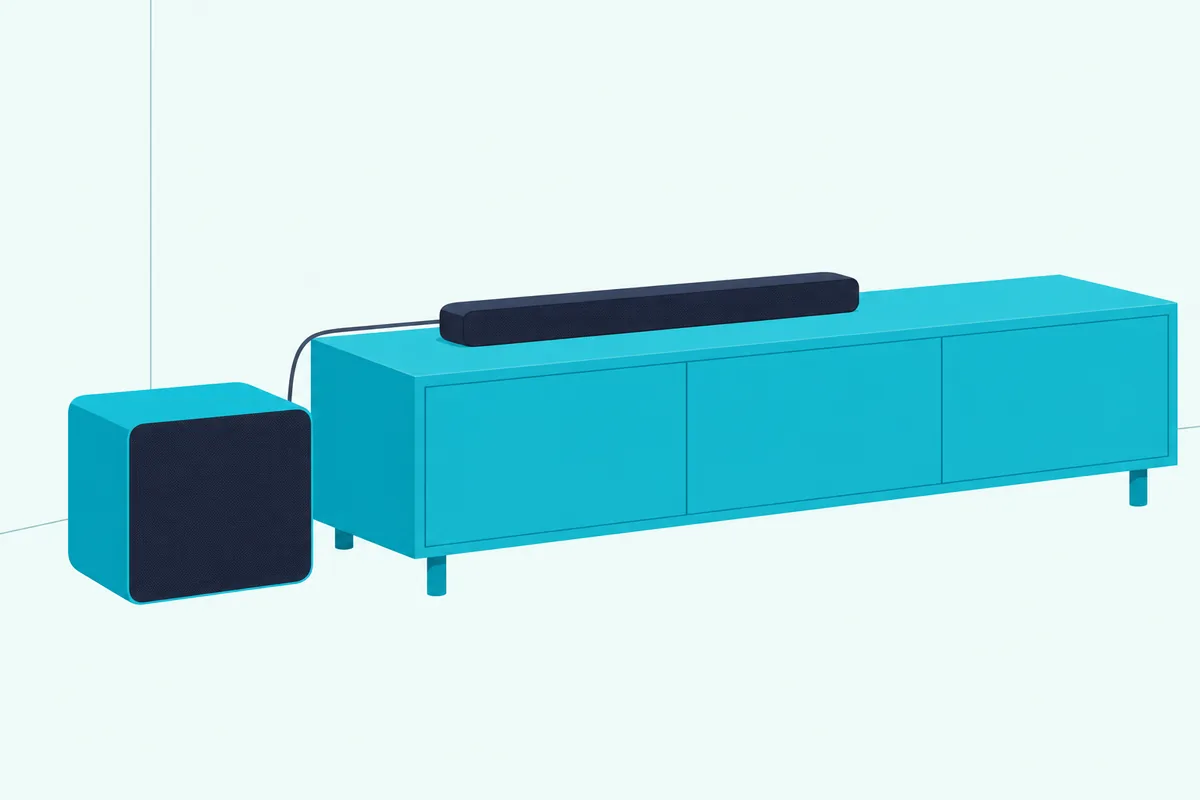
Bose’s FAQ rules out satellite surround speakers, so a Bass Module is the only speaker you can add.
The Solo has no bass port at all: its rear panel stops at Service, AUX, optical, coaxial and power. If a sub is on your list for later, that settles it, and connecting a Bose subwoofer to a soundbar walks through the cable route.
How Do Bluetooth and SimpleSync Compare?
Unlike the bass, Bluetooth is close to a tie. Both guides give a 30 ft (9 m) range and a list of up to eight stored devices, with two connected at once and audio from one at a time.
Bose lists Bluetooth 4.2 for the TV Speaker, but its Solo pages give no version. Either bar can also join a Bose smart speaker or soundbar through SimpleSync, set up in Bose’s app, to play the same song in two rooms.
Neither is a Wi-Fi speaker. Bose’s 2025 Solo guide says it can’t be configured to a network over Wi-Fi or Ethernet, and Bose lists only Bluetooth as the TV Speaker’s wireless connectivity, while its guide says it can’t connect Bluetooth headphones.
Which One Fits Under Your TV or on the Wall?
Those wireless details matter less than shelf space. Bose gives the TV Speaker as 2.21 inches tall, 23.38 inches wide and 4.02 inches deep at 4.34 lb, but its pages list no dimensions for the Solo.
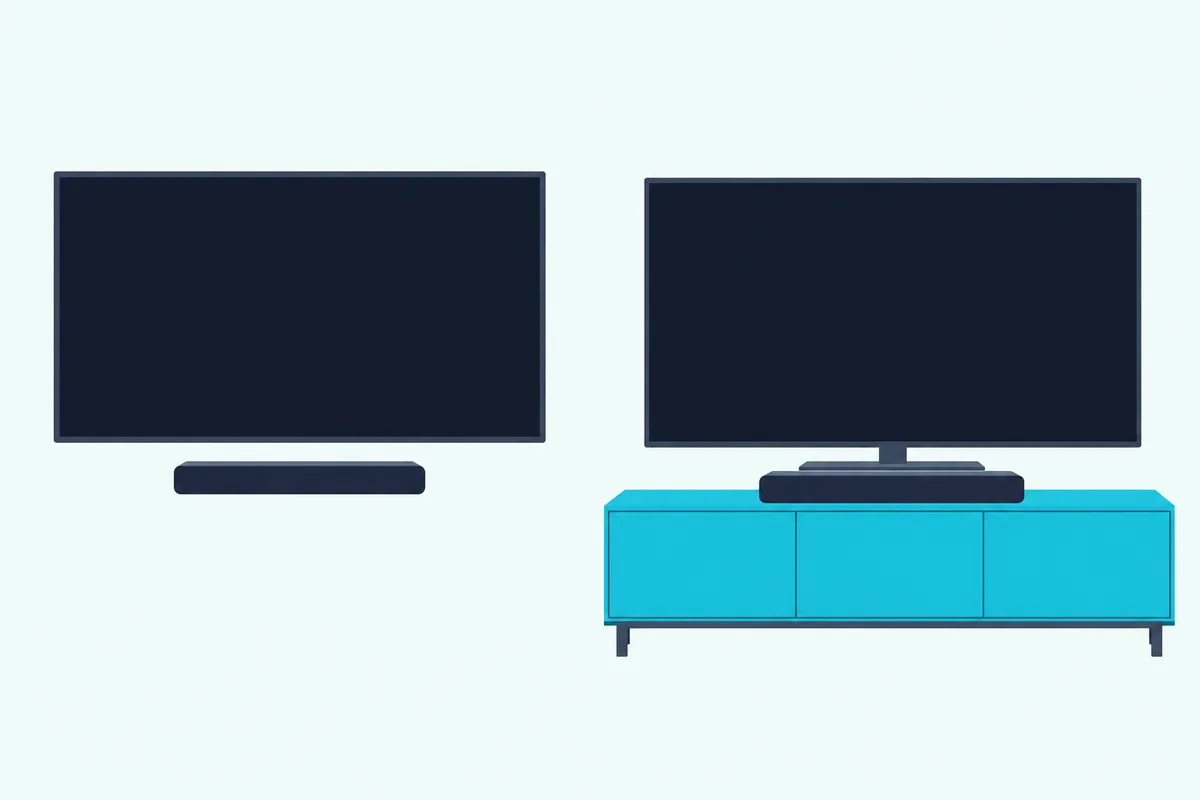
The Solo’s Amazon listing calls it a 21.6-inch soundbar, and the listing’s main photo marks it 2.8 inches tall and 3.4 inches deep. That makes the Solo about 1.8 inches narrower but 0.6 inches taller, which matters below a low TV screen.
Both guides want the bar on its rubber feet, below the TV if possible, with its back at least 0.4 in (1 cm) from any surface.
Wall mounting splits them. Bose’s US page lists a wall bracket in the Solo’s box, though its guide’s parts list doesn’t, while the TV Speaker uses the Bose Soundbar Wall Bracket, sold separately.
Power differs as well. The Solo runs from an external power supply, with a mounting ring to hide it behind a wall-mounted TV, while the TV Speaker plugs in with just a power cord.
Can You Still Buy Both New?
All of that only matters if you can find one. On 25 October 2026, Bose’s US store showed the Solo Soundbar Series II as “Sold out” with a “Notify me when available” button, while the TV Speaker page still had an Add to Cart button (Bose Solo Soundbar Series II page).
Bose’s help pages list both bars as sold from 2020. Bose’s US soundbar range that day showed the TV Speaker and a TV Speaker (2nd Gen), but not the Solo.
Amazon still had both that day, with the Solo’s listing down to its last unit and the TV Speaker in stock. A renewed Solo listing also turned up, so check that yours is new.
Which One Should You Buy?
That stock picture and the table point the same way. If your TV has HDMI ARC, or you might add a Bose bass module later, get the TV Speaker.
For one cable to the TV, volume from the TV remote and a sub you can add later, the Bose TV Speaker is the safer buy.
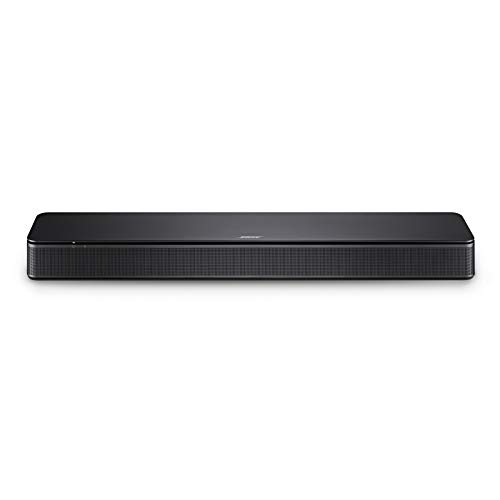
the Bose TV Speaker
The Solo makes sense in a narrower case: a TV with only optical or coaxial out, two sources wired straight into the bar, or a shelf where every inch of width counts.
If that’s your setup and you can find a new one, the Bose Solo Soundbar Series II covers it with the wall mount in the box.
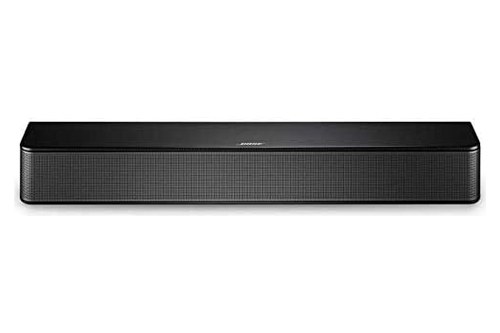
the Bose Solo Soundbar Series II
Either way, skip the Solo if a sub is on your list. For Bose’s bigger bars, up to the Smart Ultra, see the rest of Bose’s lineup.
The Bottom Line
The table comes down to three ports: HDMI and BASS on the TV Speaker, and coaxial on the Solo. The rest, from the shared remote to Dialogue mode and Bluetooth, mostly matches, so pick by your TV’s outputs first and your subwoofer plans second.
Frequently Asked Questions
Is the Bose Solo Soundbar 2 the same as the Solo Soundbar Series II?
Yes. Bose sells it as the Bose Solo Soundbar Series II, model 418775 in its owner’s guide, and lists its replacement remote as the “Bose TV Speaker / Solo Soundbar series 2 Remote Control.”
Is the Bose Solo Soundbar 2 wireless?
Only for music. It connects to the TV by optical, coaxial or analog cable and streams music over Bluetooth from up to 30 ft (9 m) away, and Bose says it can’t be put on a network over Wi-Fi or Ethernet.
Can my TV remote control the Bose TV Speaker?
Yes. Over HDMI ARC with HDMI-CEC turned on, your TV remote controls power, volume and mute.
Over optical, you can teach the speaker your TV remote’s volume and mute buttons, as long as that remote sends infrared.
What changed in the Bose TV Speaker (2nd Gen)?
Bose says it builds on the original with improved acoustic performance and clarity. It ships with an HDMI cable instead of an optical one, and its guide adds the Lifestyle Ultra Subwoofer to the Bass Module 500 and 700 as wired bass options.