Best Soundbar Under $1000: 8 Picks Compared by Maker Specs
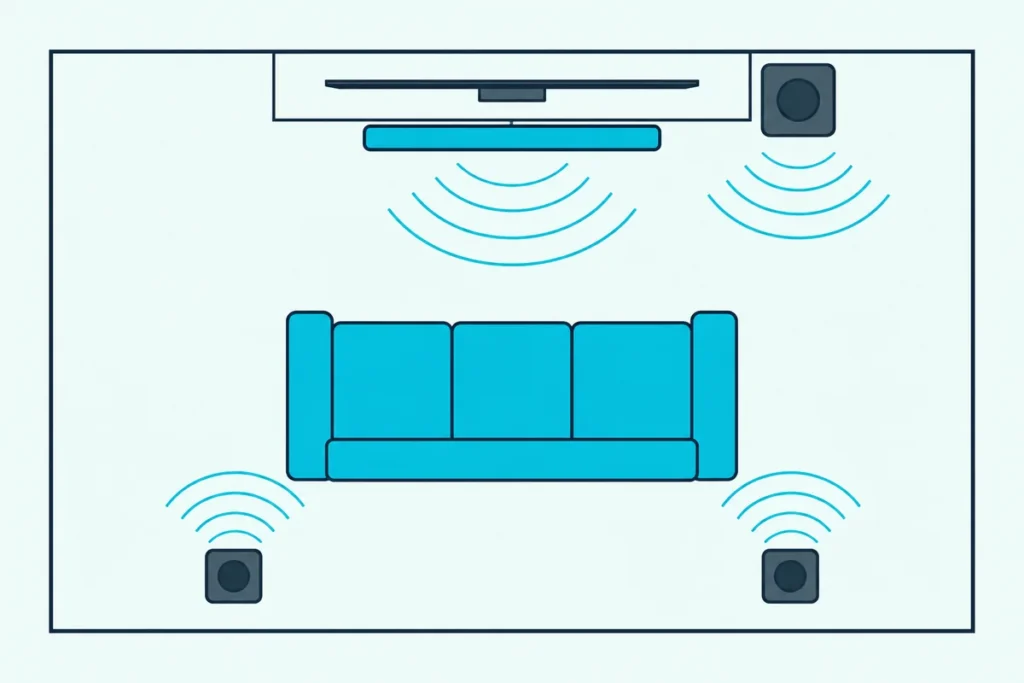
Shopping for the best soundbar under $1000 means choosing between one very capable bar and a full system with a subwoofer and rear speakers in the box.
Every spec sheet in this range promises Dolby Atmos, yet some put real speakers above and behind you while others build the height and surround from processing.
Match the layout to your room and your seat, and this budget buys sound from behind and overhead, clearer voices and more sockets for a console.
Below are eight picks from Polk, LG, Sony, Bose and Denon, each normally sold between $500 and $1000 on Amazon, checked on 25 October 2026 and described from its maker’s documents.
The quick answer and a comparison table come first, then the systems with rear speakers, the bars with a subwoofer, the single bars and the setup questions that decide which one fits.
What Is the Best Soundbar Under $1000?
That choice between one bar and a full system settles it, and for most living rooms the Polk MagniFi Max AX SR is the best soundbar under $1000. Polk lists a 7.1.2 system with an 11-speaker bar, up-firing height drivers, a 10-inch wireless subwoofer, two wireless surrounds and three HDMI inputs (Polk).
If you own an LG TV, the S80TR is the full system that adds LG’s TV features. If you’d rather keep one box under the screen, the Bose Smart Ultra pairs two up-firing speakers with Bose’s dialogue mode and ADAPTiQ room tuning.
| Pick | Layout | In the box | Height speakers | HDMI inputs | Best for |
|---|---|---|---|---|---|
| Polk MagniFi Max AX SR | 7.1.2 | Bar, 10 in sub, 2 surrounds | 2 up-firing | 3 | Best overall |
| LG S80TR | 5.1.3 | Bar, sub, 2 rears | 3 channels | 1 | LG TVs, 120 Hz gaming |
| Sony BRAVIA Theater System 6 | 5.1 | Bar, sub, amplifier, 2 rears | None listed | 0 | Simple 5.1 system |
| Polk MagniFi Max AX | 5.1.2 | Bar, 10 in sub | 2 up-firing | 3 | Bar and sub with inputs |
| Sony BRAVIA Theater Bar 6 | 3.1.2 | Bar, sub | Top speakers | 0 | Simple bar and sub |
| Bose Smart Ultra Soundbar | Single bar | Bar only | 2 up-firing | 0 | Clear dialogue |
| Sony BRAVIA Theater Bar 8 | Single bar | Bar only | Top speakers | 1 | Sony TVs |
| Denon Home Sound Bar 550 | Single bar | Bar only | None listed | 1 | Music in every room |
Every pick was sold new between $500 and $1000 on Amazon, with a regular price inside that range too, and met Burton Acoustix’s rating, review and stock checks on 25 October 2026. Prices, ratings and review counts change daily, so none is printed here, and several picks were down to their last few units.
Each description rests on its maker’s spec sheet, product page or manual. If your budget stops lower, the best soundbars under $500 are compared the same way.
| Product | Size | Link |
|---|---|---|
Best Overall 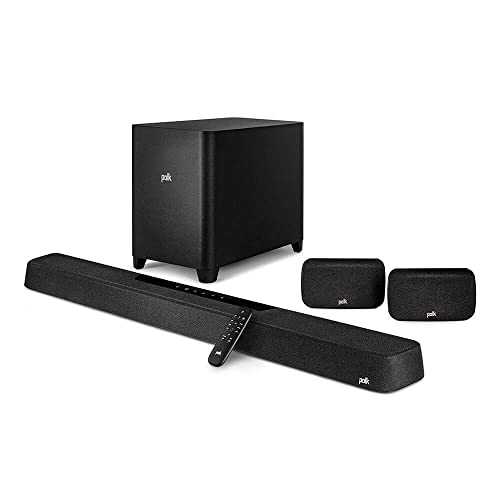 | 10 inch | See ratings |
Best for LG TVs 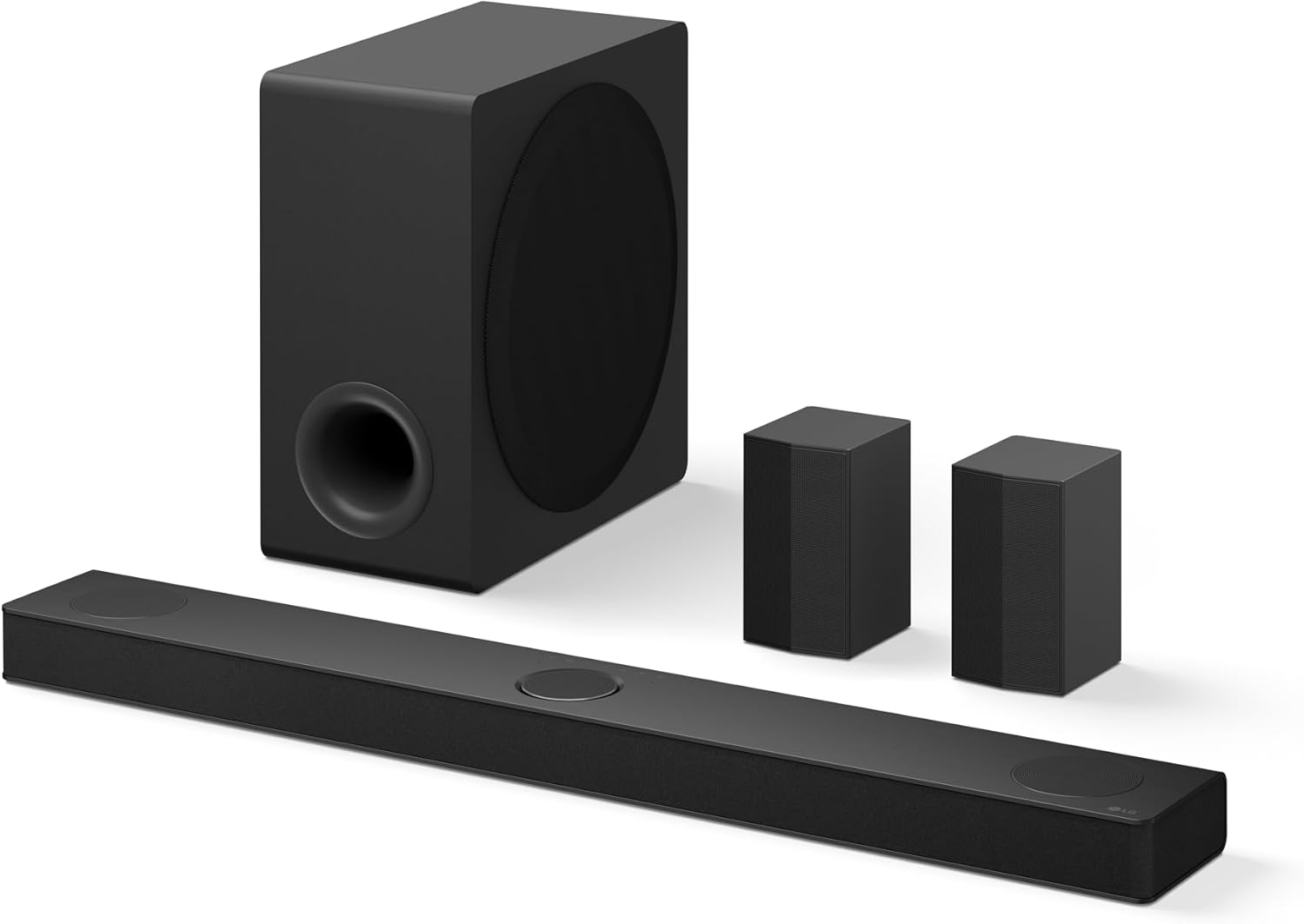 | 39.4 inch | See ratings |
Simple 5.1 System 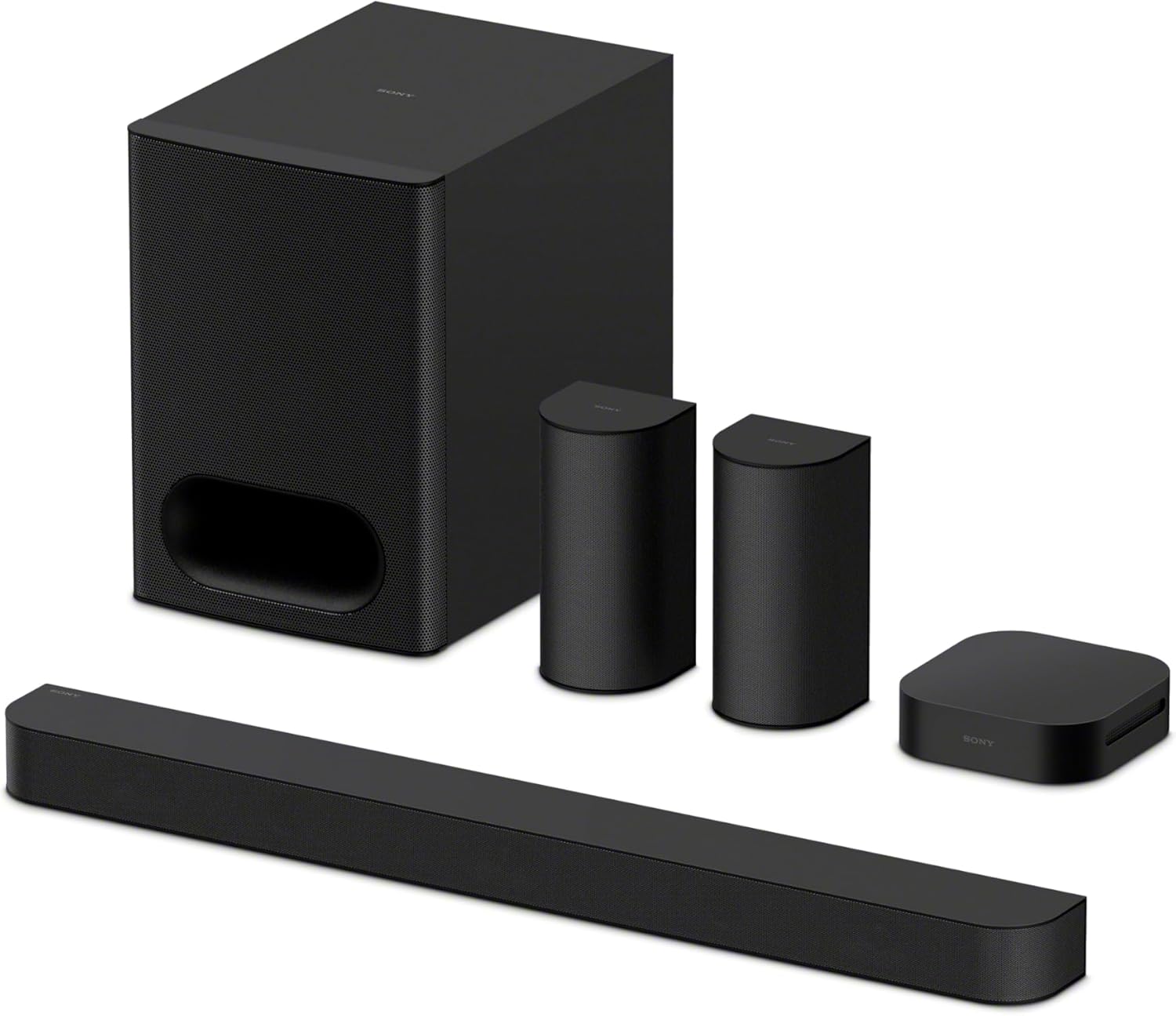 | 8 inch | See ratings |
Bar and Sub With Inputs 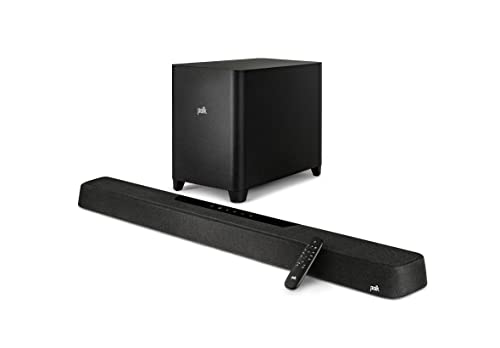 | 10 inch | See ratings |
Simple Bar and Sub 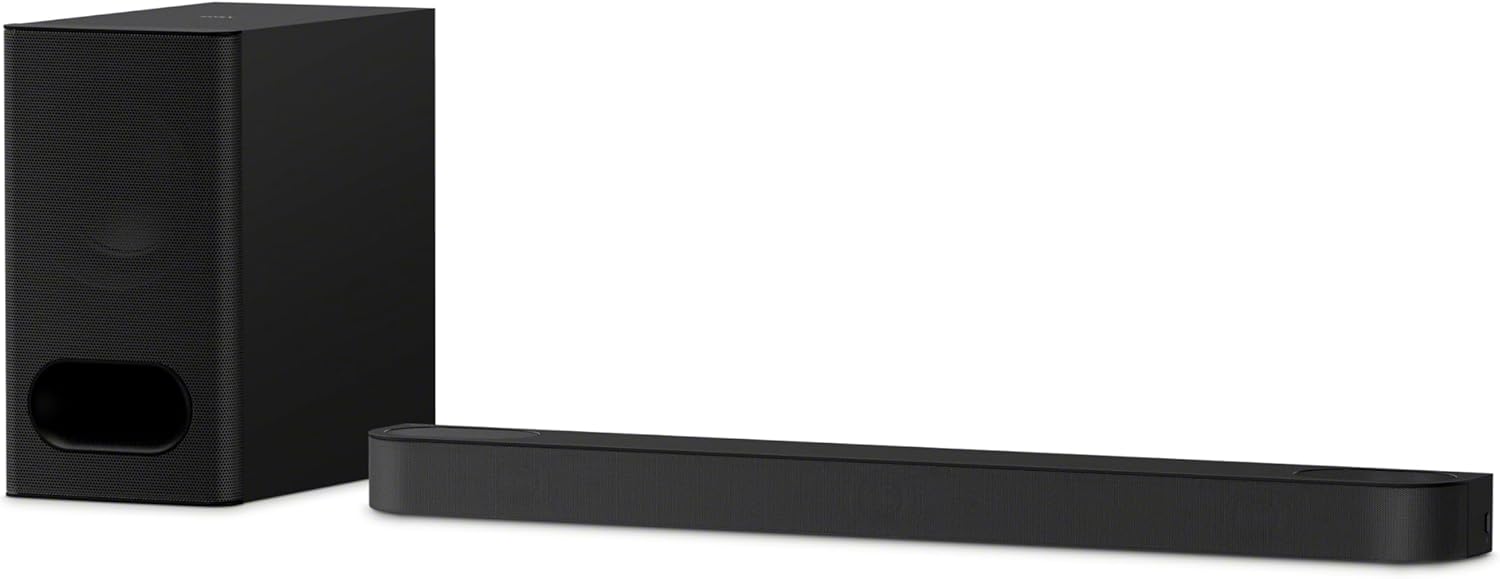 | 8 inch | See ratings |
Best for Dialogue 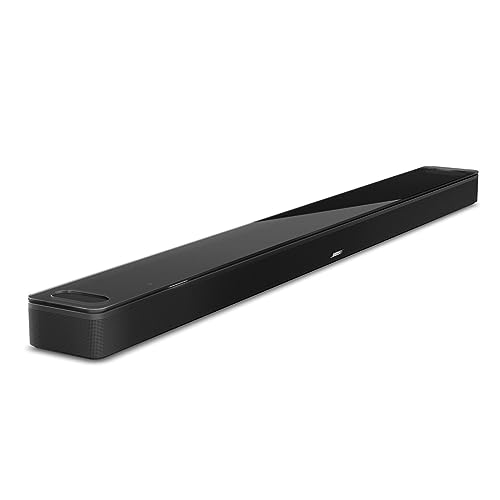 | 41.14 inch | See ratings |
Best for Sony TVs 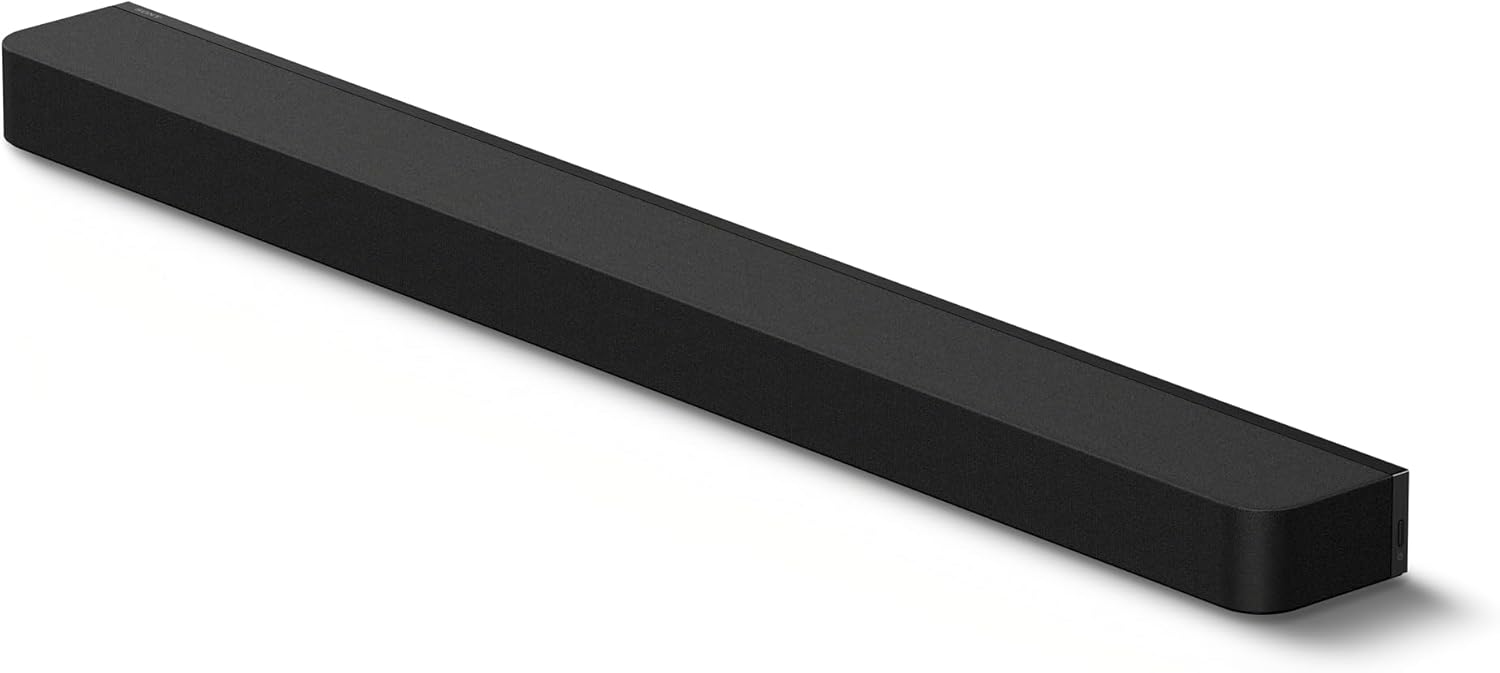 | 43.375 inch | See ratings |
Best for Music  | 25.95 inch | See ratings |
What Does a $500 to $1000 Soundbar Add Over a Cheaper Bar?
That table splits into systems, bars with a subwoofer and single bars, and the same makers’ cheaper models show what the extra money buys. Polk’s Signa S4, a 3.1.2 pick in the under-$500 guide, lists a 5.9-inch subwoofer and connects through HDMI eARC, optical or a 3.5 mm input, with no HDMI input and no Wi-Fi in its info sheet.
The MagniFi Max AX adds a 10-inch subwoofer, three HDMI inputs and Wi-Fi, and the Max AX SR adds two wireless surrounds on top. Sony’s ladder reads the same way: the BRAVIA Theater Bar 5 lists front and center speakers only, the Bar 6 adds a top speaker section, and the Bar 8 adds side speakers, an HDMI input and Wi-Fi.
Here’s what this range adds, feature by feature, from the makers’ documents. Each item is a line on a spec sheet, not a verdict on sound.
Rear speakers in the box. Three of the eight picks ship with rear or surround speakers: the Polk MagniFi Max AX SR, the LG S80TR and the Sony System 6. Below $500, the under-$500 guide found no complete rear-speaker system that passed every check on its day.
More HDMI inputs. Both Polks list three each, so a console, a streaming box and a disc player can all plug into the soundbar.
More height channels. LG’s S80TR lists three, adding a top-center speaker to its top speakers, while the Signa S4 below this range lists two.
Wi-Fi music. Six of the eight join your Wi-Fi network for streaming, against Bluetooth only on the Signa S4. Denon’s DHT-S517, the under-$500 guide’s best overall, lists no Wi-Fi in its spec table either, while the Home 550 here builds its case on HEOS streaming.
What the range doesn’t change is the room itself. A ceiling, a seat against the back wall and the outlets you have still decide which of these makes sense.
Which Soundbar Systems Under $1000 Include Rear Speakers?
Those rear speakers are the clearest step up, and three systems here put them in the box. They differ in how the rears connect, how many height channels they add, and which TV brand gets extra features.
Polk MagniFi Max AX SR
For most living rooms, the Polk MagniFi Max AX SR is the pick.
the Polk MagniFi Max AX SR
Polk’s spec list puts 11 drivers in the soundbar: four racetrack mid-woofers and two tweeters for left and right, two racetrack drivers and a tweeter for the center channel, and two 2.5-inch height drivers. Polk describes those height drivers as up-firing, the 10-inch subwoofer fires down, and each wireless surround carries one 3-inch driver.
Three HDMI inputs and one HDMI eARC output sit on the back, and Polk lists 4K, HDR and Dolby Vision pass-through. An optical input covers older TVs, though Polk’s manual says an optical connection doesn’t support Dolby Atmos or DTS:X.
Wi-Fi brings AirPlay 2, Chromecast and Spotify Connect, with Bluetooth 5.0 as a fallback. VoiceAdjust raises dialogue without lifting the rest of the soundtrack, and a height control on the remote turns the up-firing drivers up or down.
Setup is mostly plugging things in, because Polk says the subwoofer and surrounds pair with the soundbar automatically when powered on. Plan on four power plugs, for the soundbar, the subwoofer and each surround.
The soundbar is 45 inches wide and the subwoofer stands 16 inches tall, so check both the stand and the corner you have in mind.
LG S80TR
For an LG TV or 120 Hz gaming, the LG S80TR is the pick.
the LG S80TR
LG’s manual places front, center, top and top-center speakers in the soundbar, with the subwoofer and two wireless rear speakers around the room (LG). With the rears connected, LG says Dolby Atmos and DTS:X play in 5.1.3 channels.
Its HDMI input supports 4K at 120 Hz for sources using HDCP 2.3, so a console can plug into the soundbar. LG says the eARC port carries DTS-HD Master Audio, DTS:X, Dolby TrueHD and Dolby Atmos from the TV.
With an LG TV, WOW Orchestra plays sound through the TV and the soundbar at the same time once eARC is on. SIMPLINK lets the LG TV’s remote handle power, volume and mute.
The manual lists AirPlay, Spotify Connect, Alexa and Google Assistant, with setup through the LG ThinQ app. Clear Voice Pro is the sound mode aimed at voices, and AI Sound Pro, LG says, customizes the sound with artificial intelligence.
LG’s spec table gives the soundbar as 1000 mm wide and 63 mm tall, about 39.4 by 2.5 inches. The subwoofer is 201.7 by 407.0 by 403.0 mm, about 7.9 by 16 by 15.9 inches.
Sony BRAVIA Theater System 6
For a simple 5.1 system, the Sony BRAVIA Theater System 6 is the pick.
the Sony BRAVIA Theater System 6
Sony’s package list holds a bar speaker, a subwoofer, a wireless amplifier, two rear speakers and an HDMI cable (Sony). The soundbar connects to the subwoofer by cable, and the wireless amplifier links to the subwoofer wirelessly and drives the rear speakers through their own cables.
That design puts the TV connections on the subwoofer: HDMI eARC, an optical input and an analog input. Sony’s spec page lists no HDMI input, so a console stays plugged into the TV.
Sony says the system supports Dolby Atmos and DTS:X, but its spec page lists no top speakers in the bar or the rears. The Atmos section below explains what that means for height effects.
Night mode and a voice mode sit on the remote, and with a compatible Sony TV, Voice Zoom takes the voice mode’s place.
The soundbar is 35 3/4 inches wide and 2 5/8 inches tall, and each rear speaker stands 8 5/8 inches tall. The subwoofer’s driver is 7 7/8 inches.
Is a Soundbar and Subwoofer Enough at This Price?
Those three systems all need floor space and outlets behind the sofa, and two picks keep the subwoofer but skip the rears. For a room where the sofa backs onto a wall, yes: that pairing covers the front of the room and the bass.
Polk MagniFi Max AX
For a bar and subwoofer with three HDMI inputs, the Polk MagniFi Max AX is the pick.
the Polk MagniFi Max AX
Polk lists the MagniFi Max AX as a 5.1.2 Dolby Atmos and DTS:X system with 11 speakers, up-firing drivers and a 10-inch down-firing wireless subwoofer (Polk). Polk sells its SR2 wireless surrounds separately or included with the MagniFi Max AX SR above, so this is the place to start if rears can wait.
Three HDMI inputs switch 4K video to one eARC output, which lets a console, a streaming box and a disc player all plug into the soundbar. Polk says it’s Roku TV Ready, works with most TV remotes out of the box and includes an HDMI cable.
Wi-Fi brings AirPlay 2, Chromecast and Spotify Connect. VoiceAdjust raises dialogue, and Polk’s Night Mode turns up dialogue and turns down bass.
Polk’s spec sheet lists two height channel drivers among the 11 and gives the bar the same 45-inch width as the SR.
Sony BRAVIA Theater Bar 6
For a simple bar and subwoofer with height speakers, the Sony BRAVIA Theater Bar 6 is the pick.
the Sony BRAVIA Theater Bar 6
Sony’s spec list gives the soundbar front, center and top speaker sections, and the wireless subwoofer a 6 3/8-inch driver (Sony). The listing calls it 3.1.2, and Sony says it supports Dolby Atmos and DTS:X.
Connections are HDMI eARC to the TV and an optical input, and Sony’s spec list shows no HDMI input and no Wi-Fi section. Bluetooth handles music from your phone.
Night mode, a voice mode and, with a compatible Sony TV, Voice Zoom are on the remote. Next to Sony’s Bar 5, which lists front and center speakers only, the Bar 6’s top speakers are the step up.
The soundbar is 37 1/2 inches wide and 2 5/8 inches tall, and the subwoofer is 8 3/8 inches wide and 15 3/8 inches tall.
Which Standalone Soundbars Under $1000 Are Worth Buying?
Those two subwoofers still need a patch of floor, and three single bars here skip it. Each keeps everything in one box and names a way to add a subwoofer or rears later.
Bose Smart Ultra Soundbar
For clear dialogue, the Bose Smart Ultra Soundbar is the pick.
the Bose Smart Ultra Soundbar
Bose says its A.I. Dialogue Mode senses when dialogue is happening and balances voice against surround sound, so you hear voices clearly without losing the effects (Bose).
The soundbar has nine speakers in total, two of them firing upward. That puts real height drivers and the dialogue feature in one box with no subwoofer to place.
ADAPTiQ tunes the sound to your room using a microphone on a headset that comes in the box, along with an HDMI eARC cable and an optical cable. TrueSpace upmixes stereo and 5.1 content to add a sense of height.
Bose answers no on 4K pass-through and says every source connects to the TV, which then sends one HDMI or optical connection to the soundbar.
Streaming covers AirPlay 2, Spotify Connect and Chromecast, and Bose lists Ethernet as well as Wi-Fi. You can add two matching Bose bass modules and Bose’s optional surround speakers later.
It measures 41.14 inches wide, 2.29 inches tall and 4.21 inches deep, and weighs 12.68 pounds.
Sony BRAVIA Theater Bar 8
For a Sony TV, the Sony BRAVIA Theater Bar 8 is the pick.
the Sony BRAVIA Theater Bar 8
Sony’s help guide lists front, center, top and side speaker sections plus front and center tweeters, and the listing counts 11 speakers (Sony). The top speaker section handles height, and the side speakers sit alongside it in the same bar.
If your Sony TV has an S-CENTER SPEAKER IN jack, the bar’s S-CENTER OUT jack sends it the center part of the sound. With a compatible Sony TV, Voice Zoom replaces the voice mode when the TV input is selected.
An HDMI input lets a console or player connect to the soundbar directly, and Sony says that route carries Dolby Atmos from the device even if your TV lacks eARC. Sony’s guide lists 4K video at up to 120 Hz through it, with VRR and ALLM for games.
Wi-Fi covers Spotify and AirPlay, Bluetooth supports LDAC, and Sound Field Optimization adjusts the sound to where you sit. Sony’s optional SA-RS5 rear speakers, with built-in rechargeable batteries, and an optional subwoofer can join later.
The soundbar is 43 3/8 inches wide, 2 5/8 inches tall and 10 lb 6 oz.
Denon Home Sound Bar 550
For music around the house, the Denon Home Sound Bar 550 is the pick.
the Denon Home Sound Bar 550
Denon’s spec list gives two 19 mm tweeters, four 55 mm full-range drivers and three passive radiators on a 4-channel amplifier (Denon). Denon says it plays Dolby Atmos and DTS:X, but that driver list names no up-firing speakers.
HEOS is the reason to pick it. The bar streams Spotify, Amazon Music HD, TIDAL and more over Wi-Fi, AirPlay 2 or Bluetooth, and plays the same song or a different one in each room with other HEOS speakers.
Alexa is built in, Siri works through AirPlay 2, and Denon’s manual lists a dialog enhancer and a night mode.
It connects through one HDMI input with 4K pass-through, HDMI eARC, optical, a 3.5 mm aux input, USB and wired Ethernet, and the box holds HDMI and optical cables.
At 25.95 inches wide, 2.95 inches tall and 7.3 pounds, it’s the smallest pick here. Denon sells a matching Denon Home Subwoofer and surrounds to add later.
Can You Get Real Dolby Atmos Height Speakers Under $1000?
The Denon’s driver list is a reminder that Atmos on the box doesn’t always mean speakers aimed up. Yes, six of the eight picks list speakers aimed at the ceiling, and Dolby’s sound bar guide separates those upward-firing speakers from a height virtualizer that works through listener-level speakers only (Dolby).
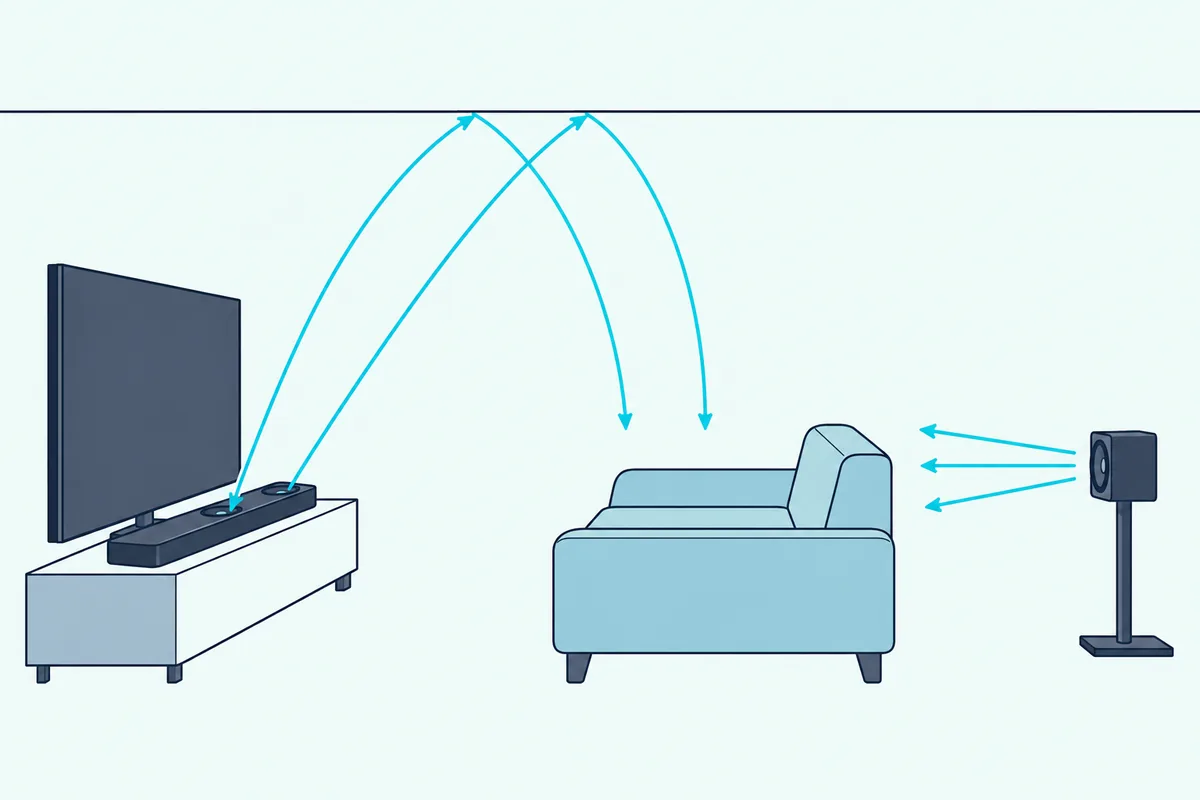
The third number in a layout counts those height speakers, as Dolby’s speaker guide explains, so 5.1.2 means two and 7.1.4 means four (Dolby speaker guide). LG’s S80TR lists three, counting its top-center speaker, and both Polks and the Bose list two up-firing drivers each.
Sony’s Bar 6 and Bar 8 list a top speaker section. Sony’s System 6 and the Denon are the exceptions, since both play Dolby Atmos but neither lists speakers aimed at the ceiling.
Any overhead effect on those two would come from processing, the virtualizer approach Dolby describes, rather than from the ceiling. If your budget can stretch past $1000, Burton’s best Dolby Atmos soundbars at any price are sorted by where each one’s height comes from.
Think of up-firing drivers as a bank shot in pool. The ceiling is the cushion, so its height and surface decide where the sound lands.
Does Your Ceiling Suit Up-Firing Speakers?
That cushion is the ceiling, and Dolby gives numbers for it. Its guide puts the ideal ceiling height at 7.5 to 12 feet and asks for a flat surface of an acoustically reflective material such as wallboard, plaster or hardwood.
A shallow vaulted ceiling gives acceptable performance, Dolby says, and even a popcorn finish doesn’t interfere. Ceilings with acoustic tiles are the ones to avoid, because they tend to absorb the overhead sound.
The soundbar’s height drivers need a clear line of sight to the ceiling, so Dolby says to avoid mounting the bar in a cabinet or under a soffit. It also suggests sitting at least 4 to 5 feet from the bar.
Try this before you choose: stand at your seat and look up at the ceiling between you and the TV. If it’s flat and hard, every height pick here has a good surface, and if it’s acoustic tile, the three systems still put surround sound behind you through their rear speakers.
Do You Need HDMI eARC for These Soundbars?
Those height effects only reach the soundbar if the TV can pass them along, and the TV’s HDMI socket decides that. HDMI Licensing Administrator says eARC supports formats up to 192 kHz, 24-bit, uncompressed 5.1 and 7.1, plus DTS-HD Master Audio, DTS:X, Dolby TrueHD and Dolby Atmos, through one HDMI cable (HDMI LA).
Every pick here connects to the TV through an eARC port, and Dolby’s article on connecting an Atmos soundbar says “we recommend using eARC whenever possible.” Look for the HDMI socket on your TV marked ARC or eARC.
Optical still works as a fallback on seven of the eight, but Polk’s manual says an optical connection doesn’t support Dolby Atmos or DTS:X. Burton’s explainer on how eARC and optical compare walks through the trade for your own TV.
How Many HDMI Inputs Should a Soundbar Have for Gaming?
That eARC port brings sound back from the TV, while an HDMI input does a different job: it takes a console or player directly. The two Polks list three HDMI inputs each, the LG, Sony Bar 8 and Denon one each, and the Bose, System 6 and Bar 6 none.

For 120 Hz gaming, LG states 4K at 120 Hz through the S80TR’s input, and Sony’s guide lists 4K at up to 120 Hz on the Bar 8 with VRR and ALLM. Polk lists both Polks’ inputs at 4K 60 Hz, and Denon’s page says 4K without giving a frame rate.
Dolby’s connection article warns that HDMI passthrough has some potential pitfalls and suggests checking that the soundbar supports HDMI 2.1. If your soundbar’s input doesn’t match your console’s frame rate, plug the console into the TV and let eARC carry the sound back.
Say you own a console, a streaming box and a disc player. Either Polk takes all three, while an LG, Sony Bar 8 or Denon owner keeps two of them on the TV.
Which Bar Is Best for Clear Dialogue?
Consoles aside, if voices are what you strain to hear, the Bose Smart Ultra is built around them, with a mode Bose says balances voice and surround sound automatically. Every other pick names a voice tool of its own.
Both Polks have VoiceAdjust, LG has Clear Voice Pro, the three Sonys have a voice mode with Voice Zoom on compatible Sony TVs, and Denon lists a dialog enhancer. The center channel matters too, and the Polks, the LG and the Sonys all list a center speaker.
Try this test: watch the news at your normal volume, then a loud movie scene. If you reach for the remote every time someone speaks, a center channel and a dialogue control matter more than a bigger subwoofer.
Night modes help in apartments, too. Polk’s reduces bass and volume dynamics while improving voice intelligibility, and the Sonys and the Denon list a night mode as well.
Which Soundbar Under $1000 Is Best for Music?
Dialogue tools matter less once a playlist starts, and Wi-Fi decides the music features. Six picks list Wi-Fi streaming, both Polks, the LG, the Bose, the Sony Bar 8 and the Denon, while the System 6 and Bar 6 stay with Bluetooth.
The Denon Home 550 is the most music-minded pick here, in this guide’s view, because HEOS groups it with other HEOS speakers around the house. Bose groups its bar with other Bose smart speakers in the Bose app, and the Polks and the Bose list Chromecast and AirPlay 2.
For bass-heavy music, the Polks’ 10-inch subwoofers are the largest drivers listed here. LG’s S80TR manual and Amazon listing don’t give its subwoofer’s driver size.
Sony’s Bar 8 adds LDAC over Bluetooth and 360 Reality Audio from a device connected to its HDMI input.
Does Room Calibration Make a Difference?
Music and movies sound different in a bare room than a furnished one, and room calibration is the makers’ answer. Bose lists ADAPTiQ for the Smart Ultra, and Sony lists Sound Field Optimization for the Bar 8.
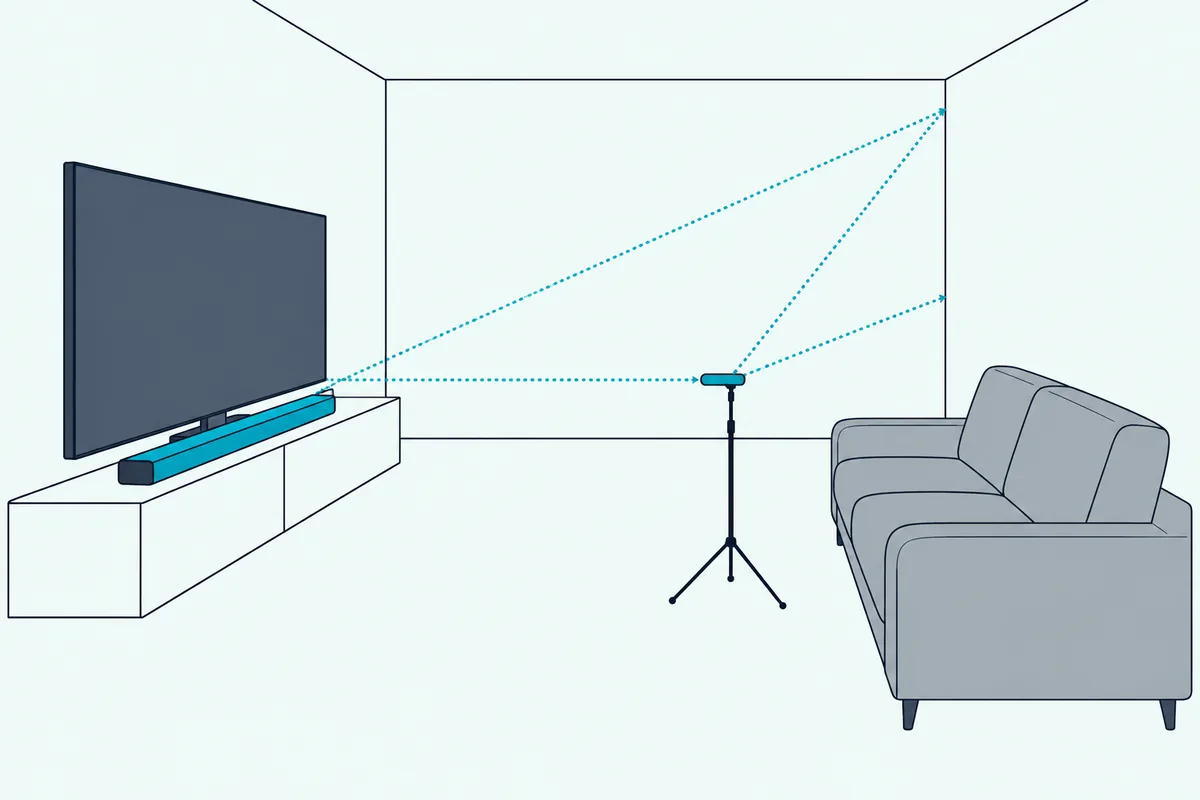
They work in different ways, by the makers’ own descriptions. Bose’s ADAPTiQ takes measurements at several spots in the room through a microphone on a headset, and Sony optimizes the sound field for the viewing position measured at setup.
Neither Bose’s nor Sony’s documents for these bars show before-and-after measurements, so treat calibration as a setup step worth running, not a promise.
Run it again when the room changes. Bose says to rerun ADAPTiQ after moving the soundbar or the furniture, and Sony says to redo Sound Field Optimization when the speakers move.
Should You Match the Soundbar to Your TV Brand?
Calibration tunes the bar to the room, and brand matching tunes it to the TV. LG and Sony list features that only work with their own TVs, and Polk lists one for Roku TVs, so the TV you own can break a tie.
LG’s WOW Orchestra plays sound through the soundbar and an LG TV together over HDMI or LG WOWCAST, and SIMPLINK lets the LG remote run the bar. Sony’s Bar 8 can feed a compatible Sony TV’s center speaker jack, and all three Sonys switch to Voice Zoom with a compatible Sony TV.
Both Polks are Roku TV Ready, which Polk says brings the bar into a Roku TV’s sound settings and onto its remote. Denon’s documents for the Home 550 name no TV-brand feature.
Samsung owners are the gap on this list. Samsung’s Q-Symphony needs a Samsung soundbar, and no Samsung bar passed every rule here on the day, as the left-out section explains.
How Big a Soundbar Fits Under Your TV?
The brand question settles which features switch on, and the tape measure settles where the bar goes. These eight run from 25.95 inches wide for the Denon to 45 inches for the two Polks.
| Pick | Bar width | Bar height | Subwoofer |
|---|---|---|---|
| Polk MagniFi Max AX SR | 45 in | See below | 11.9 x 16 x 15.7 in |
| LG S80TR | 39.4 in (1000 mm) | 2.5 in (63 mm) | 7.9 x 16 x 15.9 in |
| Sony BRAVIA Theater System 6 | 35 3/4 in | 2 5/8 in | 10 7/8 x 15 3/8 x 15 3/8 in |
| Polk MagniFi Max AX | 45 in | See below | 10 in driver |
| Sony BRAVIA Theater Bar 6 | 37 1/2 in | 2 5/8 in | 8 3/8 x 15 3/8 x 15 3/8 in |
| Bose Smart Ultra Soundbar | 41.14 in | 2.29 in | Optional |
| Sony BRAVIA Theater Bar 8 | 43 3/8 in | 2 5/8 in | Optional |
| Denon Home Sound Bar 550 | 25.95 in | 2.95 in | Optional |
Polk’s pages print the bar as 45 by 2.8 by 4.6 inches in one place and list a 4.6-inch height in the SR’s spec table, so measure against the box before you rely on either figure. Subwoofer sizes are width, height and depth.
Try this: measure the gap between your stand and the bottom of the screen. A bar taller than that gap can block the bottom of the picture.
How Do You Set Up a System With Rear Speakers?
Width matters less for the three systems than outlets, since each subwoofer and each powered rear speaker needs one. LG’s manual sets an order for power: subwoofer first, then the rear speakers, then the soundbar.
- Plug the HDMI cable into the TV’s socket labeled ARC or eARC, not a plain HDMI input.
- Set the TV’s sound output to the soundbar in its audio menu.
- Place the subwoofer; Polk says along the same wall as the TV and no more than 30 feet from the bar.
- Place the rears beside or behind your seat and plug each one in, then run any calibration step.
Sony’s System 6 is wired differently, since its rears run on cables from the wireless amplifier, which is the box that needs the outlet. If you’d rather have rear speakers you can move, Sony’s optional SA-RS5 rears for the Bar 8 have built-in rechargeable batteries.
If a subwoofer or rear speaker doesn’t connect, each maker lists a pairing step. Polk and LG use a button on each speaker, and Polk says its subwoofer and surrounds pair automatically when powered on.
What Didn’t Make the List, and Why?
Those setup rules apply to every system here, but the picks also had to pass a set of checks on 25 October. Several well-known bars missed one, and here’s why.
Samsung HW-Q990F and HW-Q800F, LG S90TR and S95TR, Klipsch Flexus Core 300 and JBL Bar 1300X. All six were between $500 and $1000 on Amazon on the day, but only through discounts from regular prices above this guide’s $1000 ceiling. A pick has to normally sell in this range, so none of them made it.
Samsung HW-Q900F and HW-S800D. The Q900F’s listing showed no regular price to confirm it normally sells in this range; if the S800D is on your list, check its specs on Samsung’s own page.
Sonos Arc Ultra and Beam Ultra. The Arc Ultra was above this guide’s $1000 ceiling on Amazon on the day, and the new Beam Ultra had too few reviews for this guide’s rule.
JBL Bar 700MK2, Bar 800 and Bar 1000MK2. Each was in this range with enough reviews but isn’t described here, so check JBL’s own spec page before you buy one.
TCL Q85H and Ultimea Skywave X70. On 25 October, Amazon’s listing for the TCL wasn’t available to buy, and neither bar is described here, so check each maker’s spec page before you buy one.
Nakamichi Shockwafe 9.2.4. The listing passed the checks, but its name doesn’t say which Shockwafe Ultra generation it is, so confirm the generation with the seller before you buy.
Vizio Elevate, LG Sound Suite H7 and Sennheiser Ambeo Mini. The Elevate was unavailable, and the LG and Sennheiser bars fell short of this guide’s rating rule.
How Were These Soundbars Checked?
The exclusions follow the same rules as the picks. Each pick had to be sold new between $500 and $1000 on Amazon on 25 October 2026, with a regular price inside that range, pass the same rating, review and stock checks, and be described only from its maker’s spec sheet, product page, manual or listing.
No soundbar was played, measured or compared by ear for this guide. Where a maker’s documents disagree, the text says so, as with Polk’s bar height.
The Polk MagniFi Max AX card also draws on Polk’s spec sheet for that bar. LG’s S80TR manual gives its sizes in millimeters, so the inch figures here are conversions.
Several picks were down to one to three units on the day. Stock and prices move fast in this range, so the card is the place to check before you buy.
What Should You Check Before You Buy?
Those checks are the same ones worth running at home before you click. Here’s the short list, in the order the sections above covered it.
- Count the outlets and the space behind your seat, since rear speakers need both.
- Look up: a flat ceiling 7.5 to 12 feet high suits up-firing speakers.
- Count your HDMI sources, and note whether any of them runs at 120 Hz.
- Note your TV’s brand, then measure the stand and the gap under the screen.
If those answers point to a different budget, Burton Acoustix’s guide to soundbar prices maps what each price tier adds.
The Bottom Line
In this guide’s view, that checklist points most living rooms to the Polk MagniFi Max AX SR, with up-firing height drivers, two surrounds, a 10-inch subwoofer and three HDMI inputs in one box. The LG S80TR is the full system for LG TVs, and the Sony System 6 is the simplest one with rear speakers.
If one box under the TV is the rule, pick the Bose Smart Ultra for dialogue, the Sony Bar 8 for a Sony TV or 120 Hz gaming, or the Denon Home 550 for music around the house. The Polk MagniFi Max AX and the Sony Bar 6 give you a subwoofer without the rear speakers.
Whichever you choose, check the card on the day you buy, because stock and prices in this range change fast.
Frequently Asked Questions
What is the best sounding soundbar under $1000?
No spec sheet can rank sound, so this guide doesn’t name a best-sounding bar. On paper, the Polk MagniFi Max AX SR and the LG S80TR put the most speakers around you, with a subwoofer, rear speakers and height speakers in the box.
If bass matters most, the Polks’ 10-inch subwoofers are the largest drivers listed here. If voices matter most, look for a center channel and a dialogue control such as Bose’s A.I. Dialogue Mode.
Do you need a subwoofer with a soundbar under $1000?
Not always. Five picks include a subwoofer, while the Bose Smart Ultra, Sony Bar 8 and Denon Home 550 ship without one and name optional subwoofers or bass modules.
Choose by floor space and by how much bass you want, since the separate subwoofers here carry drivers from 6 3/8 to 10 inches where the makers give a size. A single bar with a subwoofer added later is a fine way to spread the cost.
Is a JBL Bar or a Sonos Arc better under $1000?
Neither made this list on 25 October. Sonos’s Arc Ultra was above the $1000 ceiling on Amazon, JBL’s Bar 1300X was inside it only through a discount from a regular price above it, and JBL’s other bars in this range aren’t described here, so check JBL’s own spec pages for them.
With neither on the list, this guide gives no verdict on which sounds better. If you want one bar instead, the Bose Smart Ultra, Sony Bar 8 and Denon Home 550 are this guide’s single-bar picks, and either Polk gives you three HDMI inputs.
Is it worth spending close to $1000 on a soundbar?
It’s worth it if you’ll use what this range adds: rear speakers, more height channels, HDMI inputs for your sources or room calibration. If your sofa sits against the back wall and your sources plug into the TV, a bar from the under-$500 guide may cover what you need.
Count your seats, your HDMI sources and your outlets first. Those three answers usually decide whether the extra boxes earn their place.
Can you add rear speakers to a soundbar later?
Yes, with several picks here. Polk sells SR2 wireless surrounds for the MagniFi Max AX, Bose lists optional surround speakers and bass modules for the Smart Ultra, and Sony lists its SA-RS5 rears and an optional subwoofer for the Bar 8.
Denon’s manual describes connecting HEOS built-in speakers wirelessly as surround speakers for the Home 550, and Denon sells a matching subwoofer. Each wireless rear speaker still needs power, though Sony’s SA-RS5 can run on its built-in rechargeable battery.
Do these soundbars work with any TV?
Yes, each one connects to the TV through HDMI eARC, and seven of the eight also take an optical cable for older sets; Sony’s Bar 8 lists HDMI only. Through optical, Polk’s manual says Dolby Atmos and DTS:X aren’t supported, so eARC is the connection to use.
Some extras need a matching brand: LG’s WOW Orchestra, Sony’s center speaker link and Voice Zoom, and Polk’s Roku TV Ready features only work with compatible TVs.