Can Acoustic Foam Get Old? Lifespan, Degradation & When to Replace [2026]
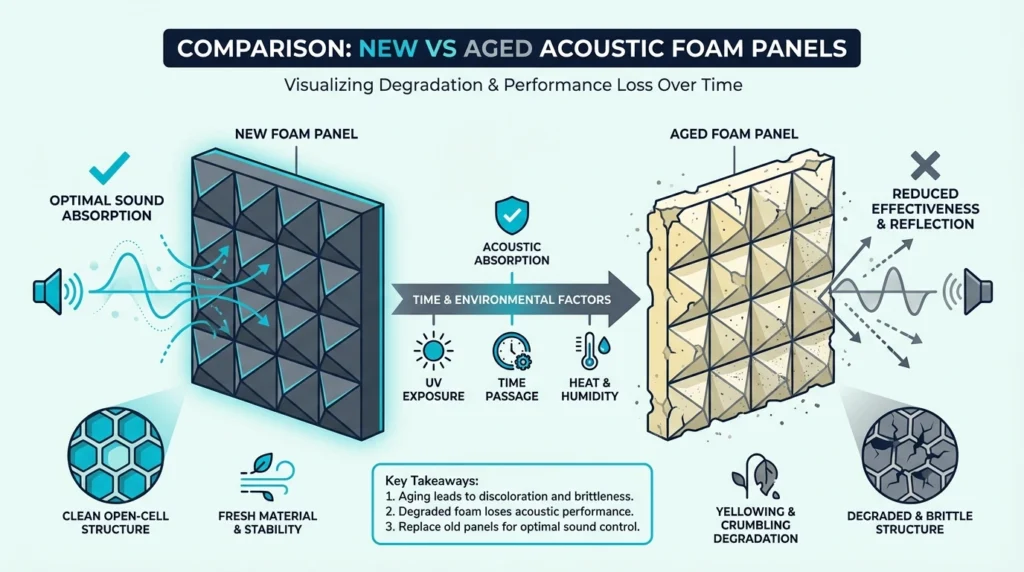
Can acoustic foam get old—yes, but it doesn’t just fade; it can go from “fine” to brittle dust once the cells start breaking down.
If your panels are yellowing, smelling musty, or leaving residue on your fingers, you’re already seeing the first failure modes.
Below, you’ll learn what actually causes foam to degrade, how long different foam types tend to last, and how to decide whether to keep, patch, or replace.
We’ll start with the biggest accelerators (sunlight and humidity), then walk through a quick replace-vs-keep decision flow.
Acoustic foam degrades over time—especially cheap polyurethane exposed to sunlight and moisture. If it’s brittle, crumbling, permanently compressed, or smells moldy, replacement is usually the right call; mild yellowing alone usually isn’t.
How Acoustic Foam Ages
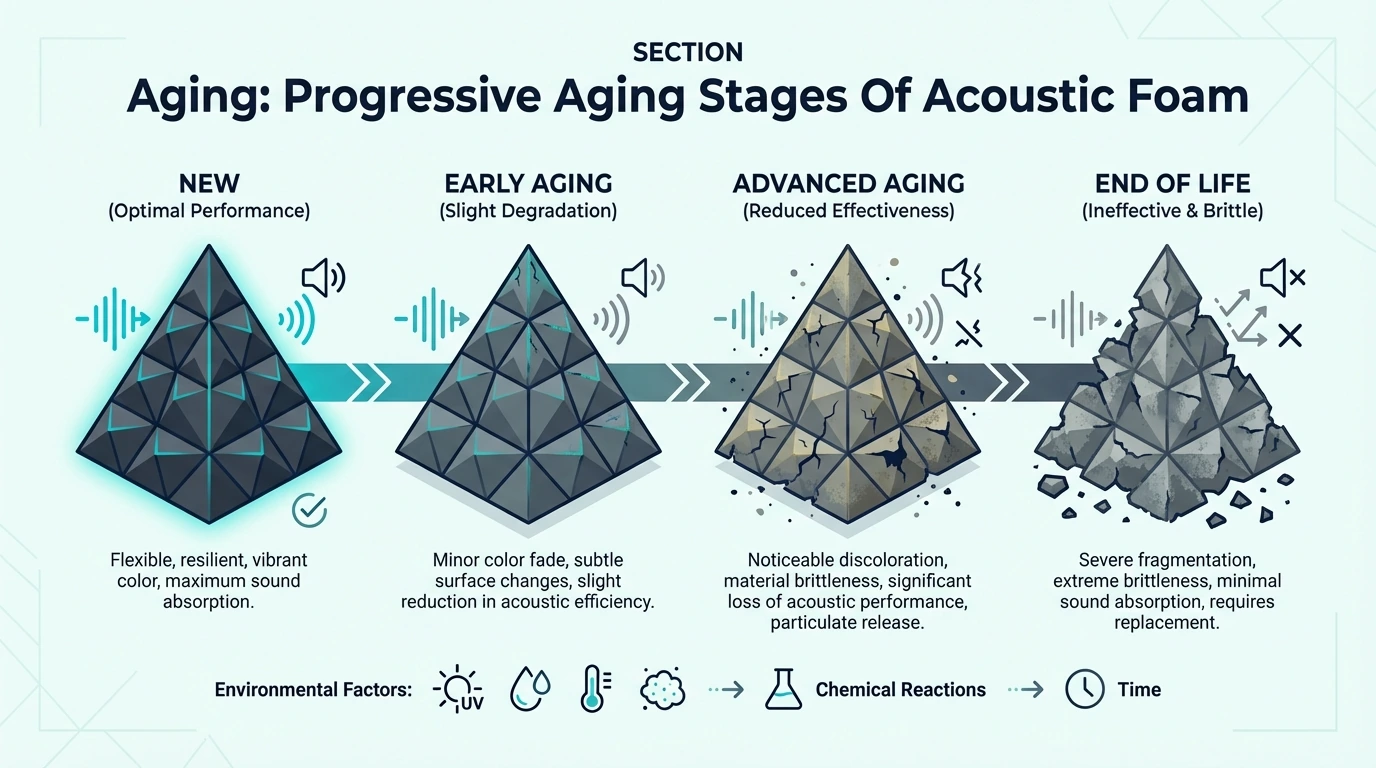
Foam “aging” is mostly chemistry plus stress. The cells that make foam absorb sound also make it vulnerable to UV, moisture, and repeated compression.
UV degradation (sunlight)
UV light breaks down polyurethane chains, which is why foam near windows yellows first. Once the surface turns brittle, the cell structure starts collapsing and absorption drops.
Even indirect light adds up over years. If you can’t move the foam, treat sunlight like a slow leak—control it or expect faster replacement.
Oxidation (air exposure)
Foam also oxidizes just from being exposed to air over time. You’ll often see this as gradual stiffening and loss of “spring,” even in a darker room.
Oxidation is slower than UV, but it’s inevitable. That’s why a decade-old foam panel can feel “dry” even if it was never in direct sun.
Humidity and temperature swings
Moisture doesn’t just cause mold—it stresses the foam structure through wet/dry cycles. High humidity can also make adhesives fail, which leads to panels sagging or tearing during removal.
If your foam ever gets damp, dry it fully and fast to avoid odor and mold. Use the safe process in acoustic foam dryer rather than leaving damp foam on a wall.
Physical wear (touching, cleaning, moving)
Foam degrades faster when it’s constantly pressed, brushed, or remounted. Oils from hands and aggressive cleaning can also change the surface texture and speed up breakdown.
If you’re cleaning foam, be gentle and keep expectations realistic. Cleaning removes dust, but it doesn’t “restore” collapsed cells.
Lifespan by Foam Type
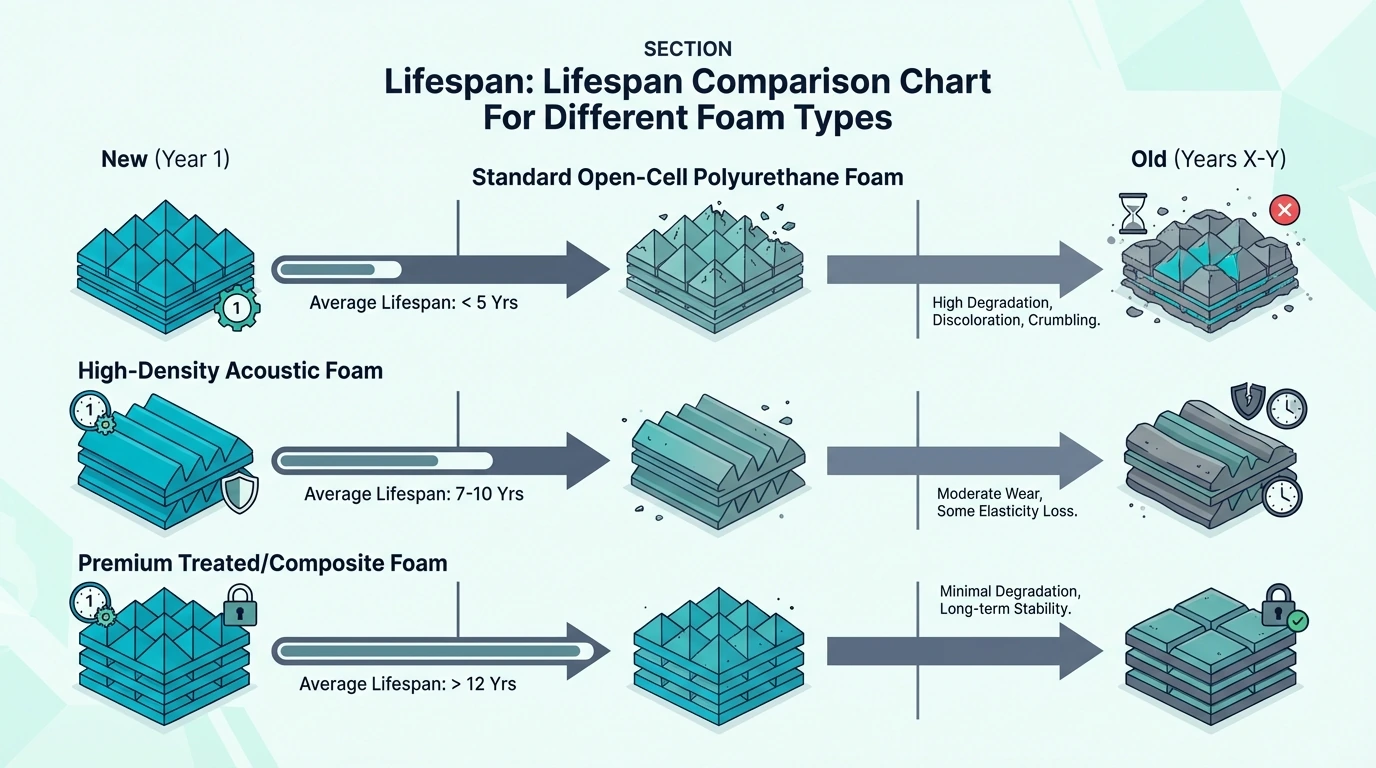
There isn’t one universal lifespan, because “acoustic foam” includes a lot of very different materials and manufacturing quality. The range is mostly driven by density, stabilizers, and what kind of environment the foam lives in.
If you’re still building your first treatment plan, start with the acoustic foam hub. It’ll help you separate “echo control” problems from “bass” problems before you spend money.
Budget polyurethane foam
Budget foam often lasts a few years before it starts getting brittle or losing shape, especially if it’s thin. The common pattern is cosmetic yellowing first, then soft crumbling at edges and corners.
If you bought foam that felt extremely light and spongy out of the box, expect a shorter lifespan. It’s not always “bad,” but it’s not built for long service life.
Higher-quality polyurethane foam (Auralex-class)
Higher-quality foam typically holds up longer because the cell structure is more consistent and the foam is less fragile. In practice, it tends to stay springy longer and sheds less dust as it ages.
If you’re replacing foam and you want something that feels less disposable, quality matters more than shape. Start with the buying checklist in how to choose acoustic foam.
If you’re not sure what kind of foam you have, acoustic foam materials can help you identify the common types and what they’re good at.
Melamine foam (stable, long-lived)
Melamine foam is generally more stable than cheap polyurethane. It’s also commonly chosen when safety and longevity matter, because it’s less prone to the “crumbly sponge” failure mode.
If your room is harsh and reflective, melamine can be a smart upgrade. It still won’t solve bass like a thick panel, but it ages more gracefully than bargain foam.
Fabric-wrapped panels (not foam, but worth mentioning)
If you’re tired of replacing foam, fabric-wrapped panels are the “buy once” alternative. The core doesn’t degrade the same way, and even the fabric can often be refreshed later.
If you’re considering switching, compare outcomes in acoustic foam vs acoustic panels. That page helps you decide whether you’re actually trying to fix echo, bass, or both.
Signs Your Foam Needs Replacement
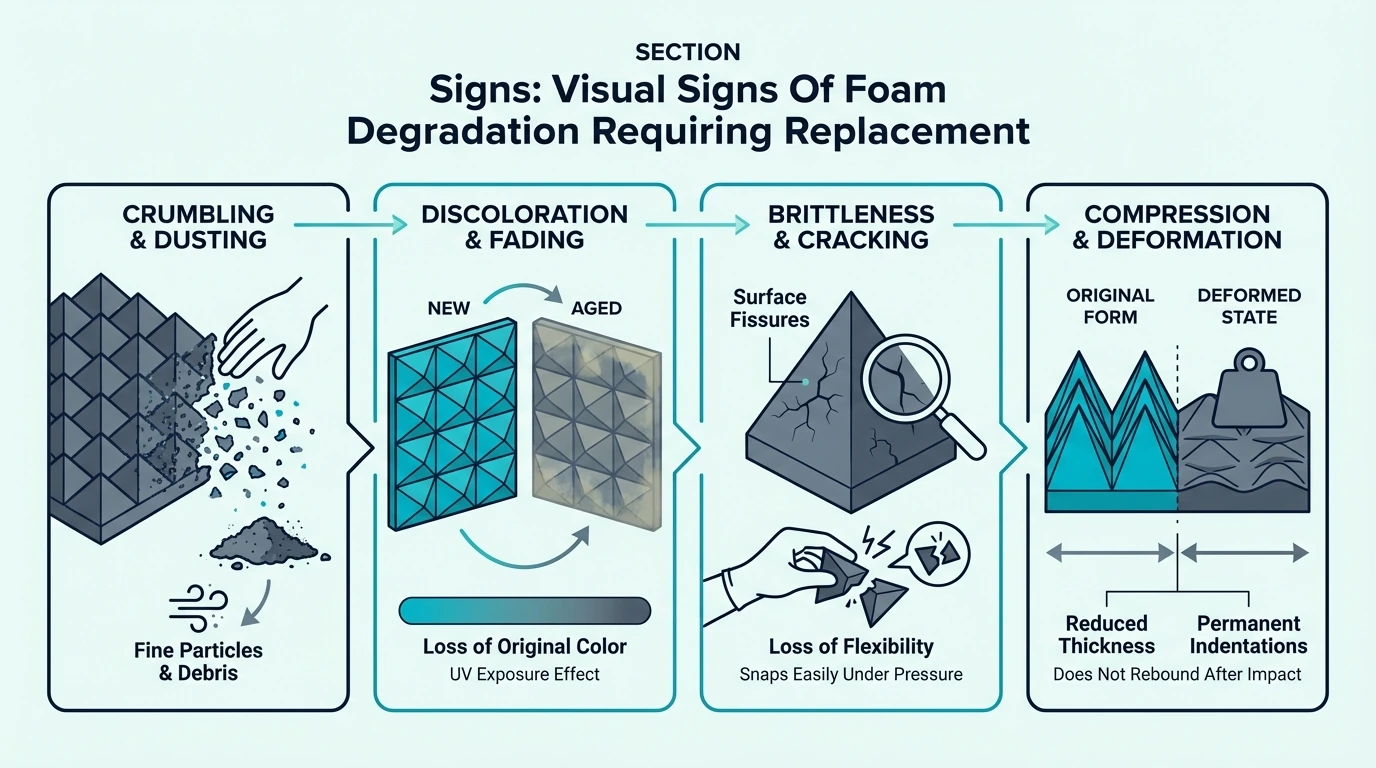
The most important question is simple: does the foam still behave like foam? Color is a clue, but structure is the real test.
Cosmetic changes (often OK)
Light yellowing is common and doesn’t automatically mean “replace.” If the foam is still flexible and springs back when you press it, it’s usually still doing its job.
Structural failure (replace)
If foam crumbles when you touch it, flakes at the edges, or leaves powder behind, it’s past the useful stage. At that point, it’s also harder to remove cleanly without damaging your wall.
Permanent compression is another strong replacement signal. If the foam stays dented or feels “dead,” the cells that absorb sound have already collapsed.
Smell and health signals (replace)
Musty odor usually means moisture got into the foam and mold is possible. If the smell persists after drying and gentle cleaning, replacement is safer than trying to salvage it.
Chemical or “old sponge” odor can also show breakdown. The room shouldn’t smell like the treatment.
Extending Foam Lifespan
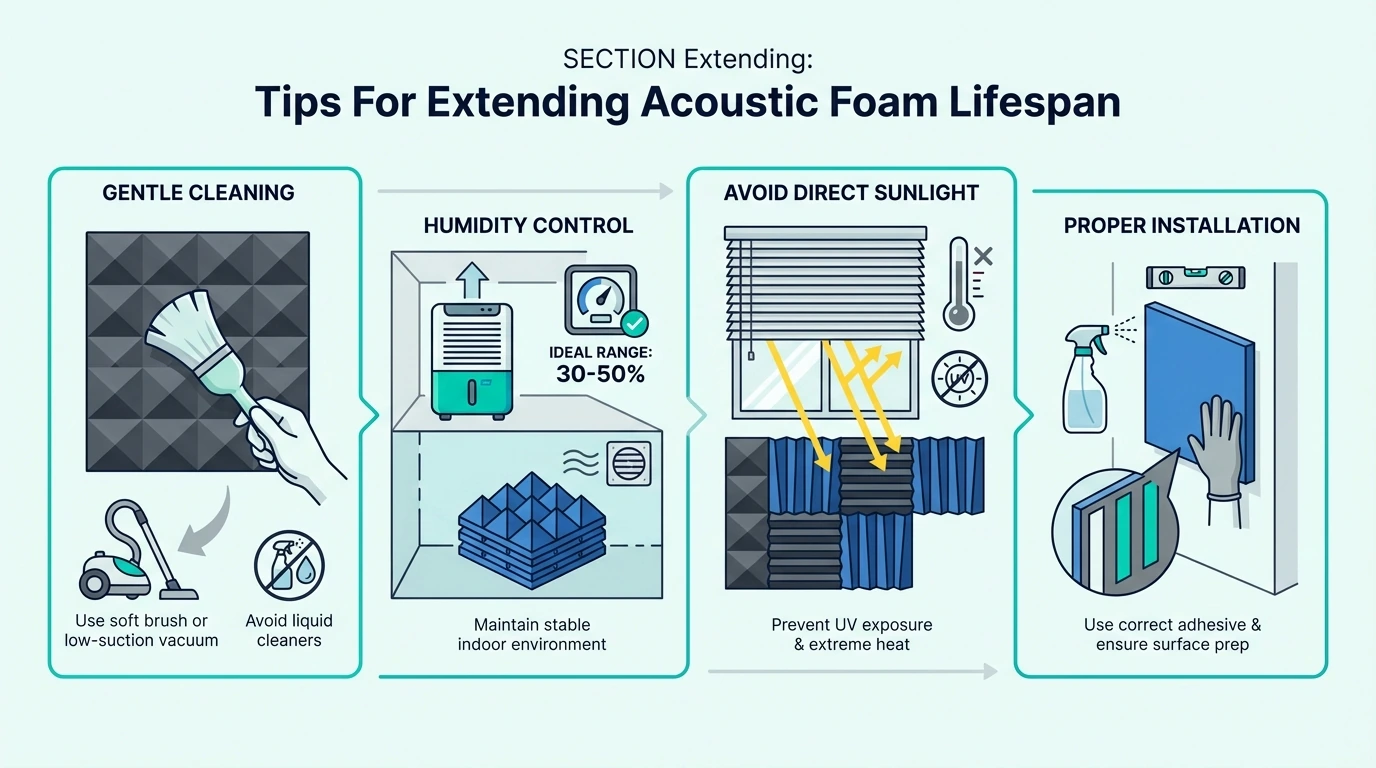
The goal is to reduce the three accelerators: UV, moisture, and wear. You won’t make foam immortal, but you can stop “fast failure.”
Keep foam out of sunlight
Move foam away from windows whenever possible. If the room has strong sun, use curtains or UV film so the foam isn’t cooking slowly every afternoon.
Control humidity and airflow
Foam lasts longer in a stable, dry environment. If you’re dealing with damp walls, leaks, or frequent condensation, fix that first or you’ll keep replacing foam forever.
Install in a way you can remove cleanly
Bad mounting accelerates aging because panels tear and deform during removal. Use methods that don’t rip foam apart and keep the wall surface intact.
If you’re re-mounting or replacing panels, use the safest approach in acoustic foam wall install so you don’t turn “replacement” into a drywall repair project.
When to Replace vs Repair
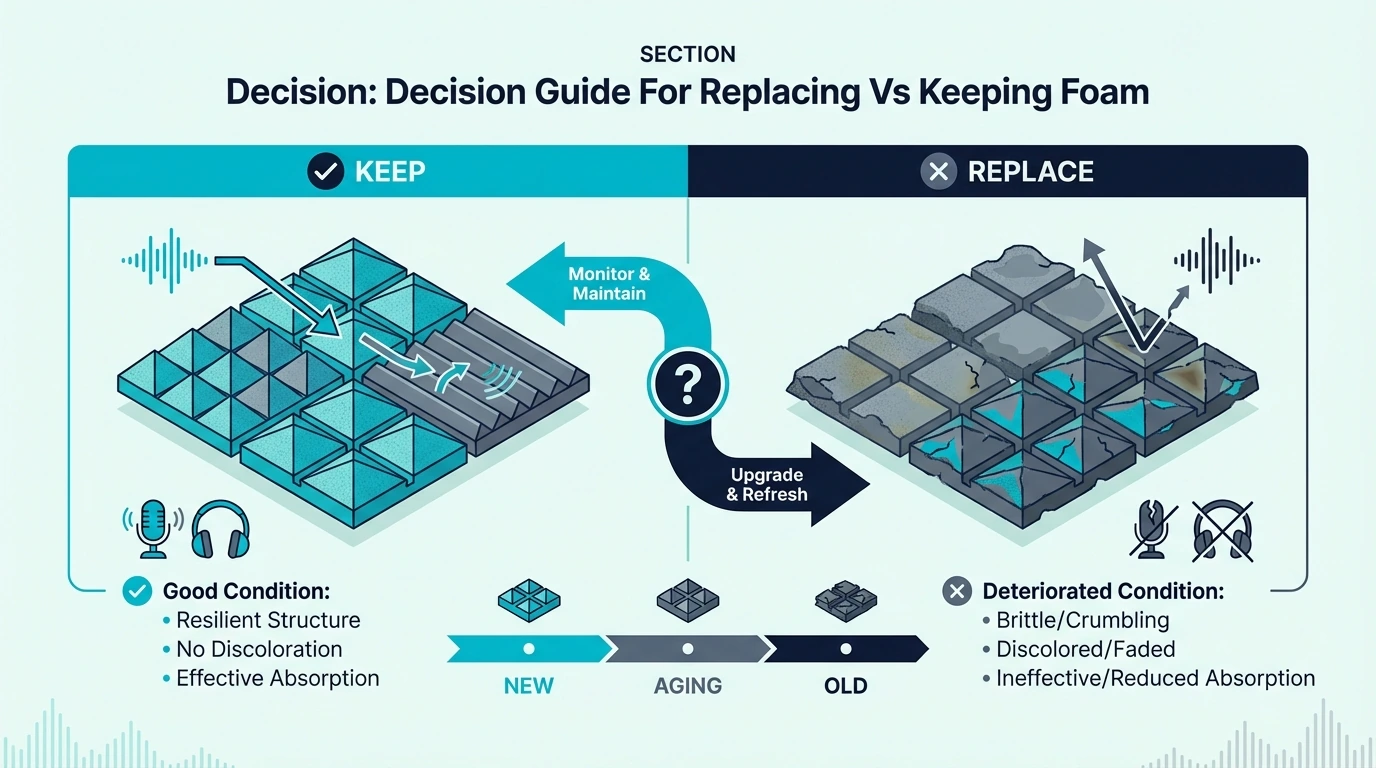
Most of the time, foam is worth repairing only when the foam is still structurally healthy. Once the cells are collapsing, “fixing” just delays the inevitable.
If the foam is slightly yellowed but still springy, you can usually keep it and focus on preventing further UV/moisture exposure. If it’s brittle, crumbling, permanently compressed, or smells moldy, replacement is the smarter move.
If only a few panels are failing, replace those first and keep the rest. Prioritize the panels closest to windows and the panels in your most important reflection zones.
If you’re replacing: three foam options worth considering
If you’re replacing foam, it’s a chance to stop the cycle of buying the cheapest panels and replacing them again. These picks are common “step up” options without jumping straight to full fabric panels.
If you want a high-count coverage pack for a full refresh, the 96 Pack Acoustic Foam Panels is the “replace a lot at once” style of buy.
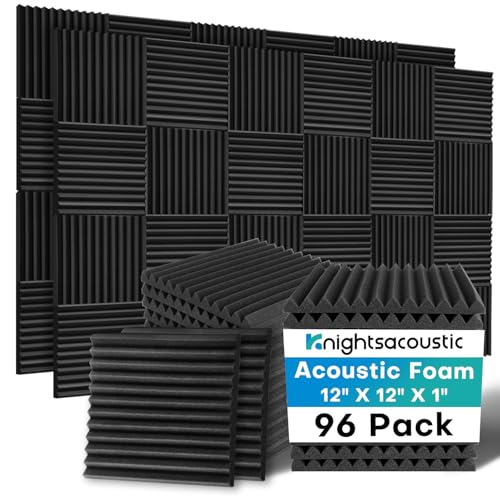
96 Pack Acoustic Foam Panels
If you want thicker foam that’s less fragile than most 1-inch tiles, the TroyStudio Thick Acoustic Foam Panels is a better “small-room” upgrade.
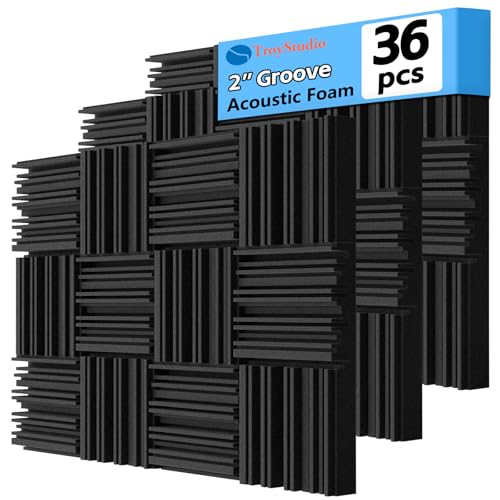
TroyStudio Thick Acoustic Foam Panels
If you want a more premium foam that’s known for consistent quality, the Auralex Studiofoam Wedgies are the quality-first pick.
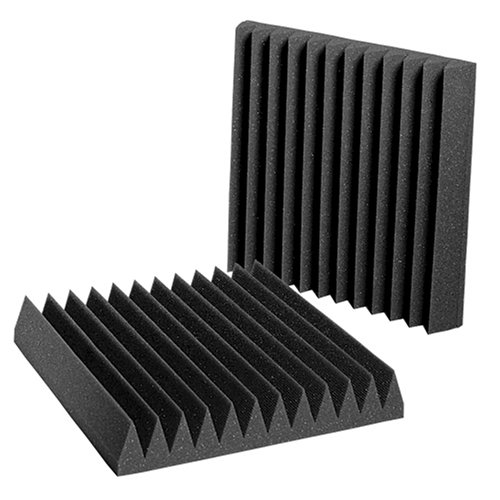
Auralex Studiofoam Wedgies
Cost Considerations
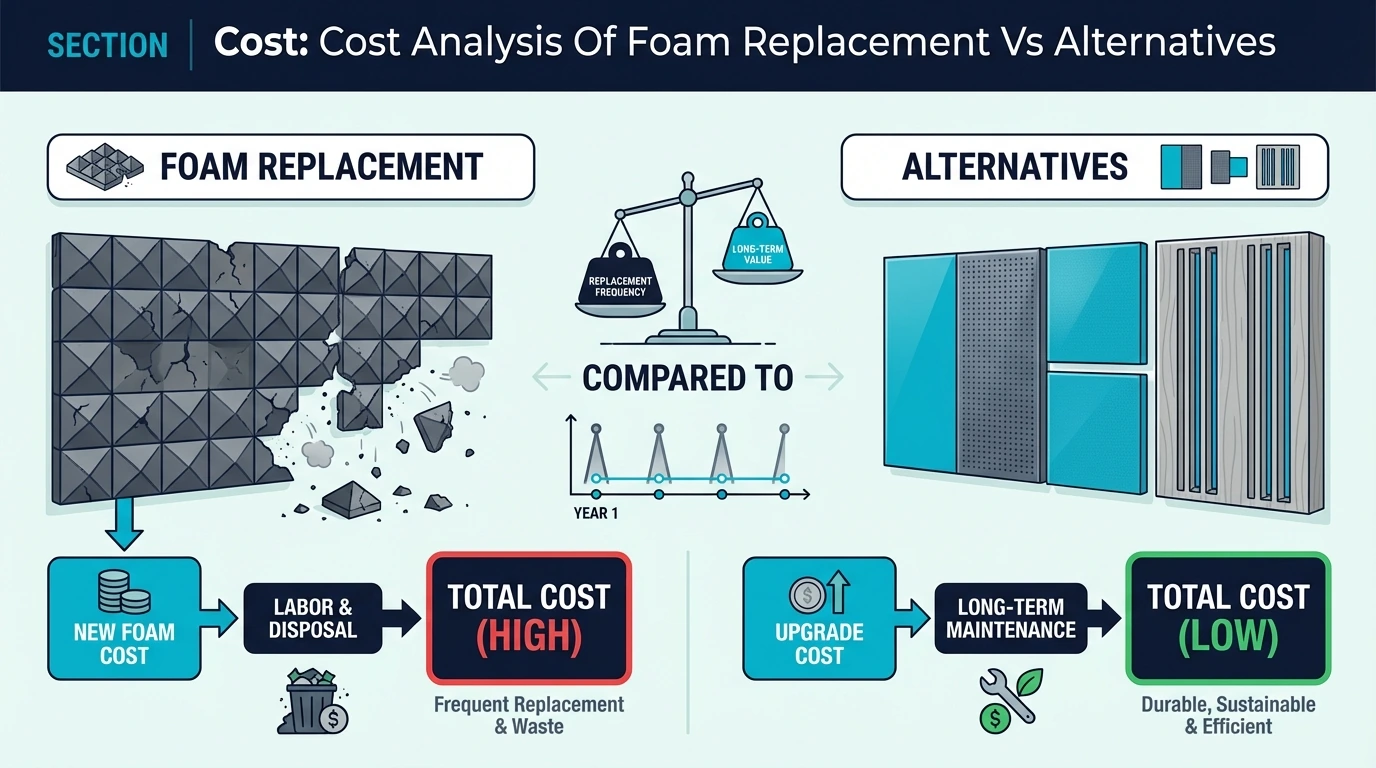
The real cost of foam isn’t just the product—it’s the replacement cycle. If you replace foam every few years, the “cheap” option becomes less cheap over time.
It also costs time: removing old foam, cleaning residue, and mounting new panels. If you’ve already done that once, upgrading to a longer-lived option can be worth it even if the initial spend is higher.
If you’re debating whether foam is worth replacing at all, read is acoustic foam worth it. It’s a good reality check on what foam can and can’t do.
If you’re thinking about switching away from foam entirely, start with acoustic foam alternatives. It’s the fastest way to decide whether you want thicker panels, PET felt, blankets, or a hybrid.
Disposal Considerations
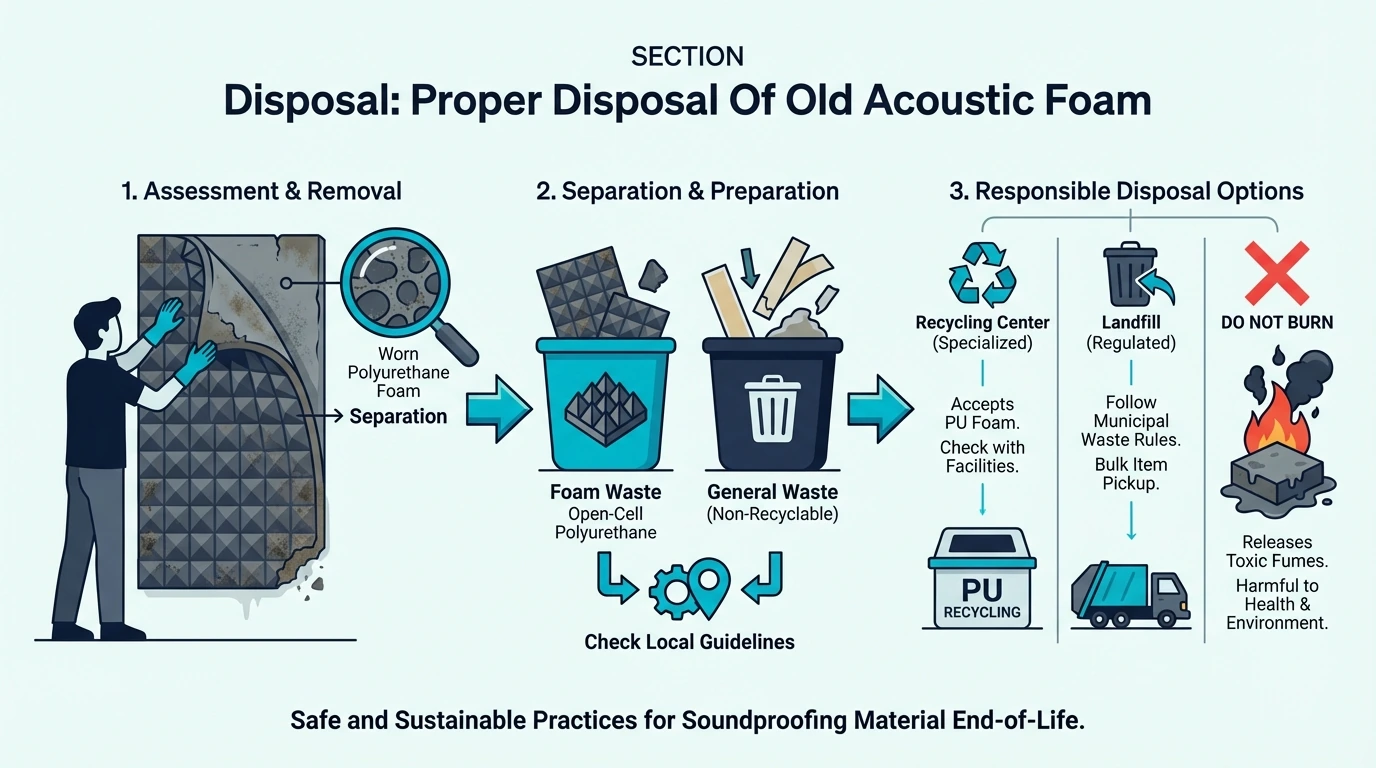
Most acoustic foam ends up in the trash because recycling options are limited. If you’re replacing a whole room, plan disposal like any other bulky material job.
If you’re removing foam from drywall and you want to avoid wall damage, follow remove acoustic foam before you start scraping. Old adhesive plus brittle foam is where most of the mess happens.
If the foam is dusty or moldy, bag it and remove it from the room promptly. The goal is to avoid spreading residue through your space.
Some people repurpose old foam for packing material or non-critical experiments, but don’t expect it to perform like new treatment. If it’s crumbling, it’s better gone than “reused.”
Conclusion
Acoustic foam gets old because its cell structure breaks down from UV, moisture, and repeated stress. Yellowing alone isn’t the end, but brittleness, crumbling, permanent compression, and persistent odor usually mean it’s time to replace.
If you want foam that lasts longer, buy better material, install it cleanly, and protect it from sun and humidity. If you’re tired of replacing foam, use acoustic foam vs acoustic panels to decide whether it’s time to upgrade.
Frequently Asked Questions
How long does acoustic foam last?
It depends on foam quality and environment, but budget foam tends to age faster than premium foam. Sunlight and humidity are the two biggest accelerators.
Does old acoustic foam still work?
Sometimes. If it’s still flexible and springy, it can still absorb sound, but performance usually drops as cells collapse and the foam hardens.
Can I restore old acoustic foam?
Not in a meaningful way. You can remove dust and reduce odor, but you can’t rebuild the foam’s cell structure once it has degraded.
Why is my acoustic foam turning yellow?
Usually UV exposure. Yellowing is often cosmetic at first, but it’s also a sign the polymer is breaking down over time.
Should I replace yellowed foam?
Not automatically. Replace it when yellowing comes with brittleness, crumbling, permanent dents, or noticeable performance loss.
Is old acoustic foam a fire hazard?
It can be, especially if it’s very old, degrading, or of unknown origin. If you’re concerned, replace it with foam that has clear, current fire-rating information.