Open-Cell vs Closed-Cell Foam: Why Cell Structure Decides Whether Foam Absorbs Sound
Open-cell vs closed-cell foam sounds like jargon until you buy the wrong kind. Then you’re stuck with foam that feels right in your hand but performs wrong in your room.
The difference comes down to whether the air pockets connect (open-cell) or stay sealed (closed-cell). Get it backwards and you’ll cover your walls with material that reflects sound instead of absorbing it.
Once you know what to look for, picking the right foam takes about ten seconds. Below you’ll find how each type works, how to tell them apart, what the absorption numbers actually say, and three safe open-cell picks to start with.
Open-cell foam has interconnected pores, so air can move through it. Closed-cell foam has sealed bubbles, so it resists air and water movement. For sound absorption (echo control), open-cell is the right structure. For moisture resistance and sealing/insulation, closed-cell is usually the better fit.
What’s the Difference Between Open-Cell and Closed-Cell Foam?

The difference isn’t the shape or the color you see in product photos. It’s whether the air pockets connect to each other (open-cell) or stay sealed as tiny bubbles (closed-cell).
How Open-Cell Foam Works
Open-cell foam has interconnected pores, so air can move through it. That permeability is what lets sound energy get inside the material instead of bouncing off.
When sound enters the foam, air molecules rub against the cell walls as they vibrate. That friction converts a small amount of acoustic energy into heat, so the reflection you hear gets quieter.
The key is penetration: absorption requires the wave to travel through the structure. If it can’t get inside, it can’t be meaningfully absorbed.
How Closed-Cell Foam Works
Closed-cell foam is made of sealed bubbles, so air can’t pass through the bulk material. Sound hits the surface and behaves more like it would on a dense barrier: most of it reflects.
You might get a tiny amount of surface damping, but the foam’s thickness doesn’t get used for absorption because the cells are closed. That’s why closed-cell foam can feel “solid” and still be acoustically reflective.
The Numbers
You’ll sometimes see this difference summarized with absorption coefficients (often rolled up into a single NRC number). Open-cell acoustic foam can land anywhere from roughly 0.3–0.9 depending on thickness and the frequency band being measured.
Closed-cell foams tend to measure much lower for airborne sound absorption, often around the 0.1 range. In practice, they behave closer to a reflective surface than a treatment.
For more on absorption measurements, see what frequencies acoustic foam absorbs.
How Can You Tell If Foam Is Open-Cell or Closed-Cell?

Before you buy foam (or glue it to anything), verify the cell structure. A 10-second test beats trusting a product title that says “soundproof foam.”
Visual Inspection
Visually, open-cell foam usually shows visible pores and a sponge-like surface. On a cut edge, the structure looks interconnected, and thin pieces can sometimes look slightly “see-through.”
Closed-cell foam tends to look smoother and more uniform. On a cut edge, you’ll see sealed bubbles, and the material won’t look porous.
Physical Tests
Breathability test: hold the foam to your mouth and try to blow air through it. If air passes easily, it’s open-cell; if it feels blocked, it’s closed-cell.
Compression test: press the foam and release. Open-cell compresses more easily and recovers as air re-enters, while closed-cell resists compression and springs back faster.
Water test: place a drop of water on the surface. Open-cell absorbs; closed-cell beads.
Common Products by Type
Open-cell examples include polyurethane acoustic foam panels, acoustic-grade melamine foam, and reticulated foam. These materials are breathable by design.
Closed-cell examples include neoprene, EVA (yoga mats), polyethylene packaging foam, many “rubbery” foams, and most pool noodles and closed-cell spray foams.
Get Studio Tips Weekly
Join 5,000+ creators getting acoustic treatment advice every week.
No spam. Unsubscribe anytime.Why Does Closed-Cell Foam Get Mistaken for Acoustic Foam?

People get this wrong for the same reasons most people do: the foam looks similar in photos, the listing language is slippery, and the cheaper option feels like a win.
Visual Similarity
Closed-cell foam can look similar to acoustic foam, especially in egg-crate or textured patterns. If you walk into a hardware store and see foam sheets with acoustic-looking shapes, it’s easy to assume they’ll treat echo.
Some manufacturers even sell closed-cell foam in those familiar “studio” patterns. If you don’t check cell structure, you can buy the look without getting absorption.
Price Difference
Closed-cell foam is often noticeably cheaper than quality open-cell acoustic foam. When you’re on a budget and two products look similar in photos, it’s easy to grab the cheaper one and assume the difference is mostly branding.
The problem is that the performance difference isn’t subtle. If you use the wrong structure, you can spend less and still end up with the same echo you were trying to fix.
Misleading Marketing
Some products use acoustic-adjacent language (“sound foam,” “noise reduction foam”) without being acoustic treatment. If you search for “studio foam” or “soundproofing foam,” you’ll often see closed-cell products mixed in with real open-cell foam.
Always verify cell structure and absorption data. Marketing words alone don’t tell you how the material behaves.
Confusion with Other Properties
Closed-cell foam is excellent at other jobs – thermal insulation, moisture resistance, and flotation. That’s exactly why people assume it will also “insulate” sound.
But thermal insulation and acoustic absorption are different physics. A foam that blocks water and air movement is usually the same kind of foam that reflects sound.
For a deeper breakdown, see acoustic foam vs insulation.
What Is Open-Cell Foam Used For? What About Closed-Cell Foam?

Both types are useful. The trick is matching the foam to the job: airflow and absorption versus sealing and resistance.
Open-Cell Foam Applications
Open-cell foam is common in acoustic treatment (studio foam, absorption panels, podcast rooms, home theaters, and offices) because air can move through it. That airflow is what makes absorption possible.
Real-world example: if you’re recording in a spare bedroom, open-cell foam at first reflection points can reduce the “echoey bathroom” sound that makes dialogue feel amateur. You’ll usually hear a bigger change from placement and coverage than from the foam’s surface pattern.
Outside acoustics, open-cell foams show up in cushions and mattresses (comfort), filtration (air needs to pass), and packaging where breathability matters. Open-cell spray foam is also used for insulation in some builds because it expands and fills cavities, though its role is still different from acoustic treatment.
For acoustic product recommendations, see best acoustic foam for recording.
Closed-Cell Foam Applications
Closed-cell foam is great when you need a barrier. It’s commonly used for thermal insulation, moisture resistance, flotation, weatherstripping/gaskets, protective packaging, and vibration damping at contact surfaces.
Real-world example: if you’re sealing gaps, insulating a cooler, or building something that needs buoyancy, closed-cell foam is perfect. But if you glue that same foam to your walls expecting it to absorb echo, you’ll be disappointed.
Closed-cell foam is excellent for these purposes—just not for sound absorption.
Understanding foam composition helps explain these differences—see what type of foam is acoustic foam.
Does Closed-Cell Foam Absorb Sound?

This is where “open vs closed” stops being a nuance and becomes a yes/no. If air can’t get into the foam, most of the sound energy can’t either.
Absorption Comparison
| Frequency | 2” Open-Cell Foam | 2” Closed-Cell Foam |
|---|---|---|
| 250 Hz | 0.25-0.35 | 0.05-0.10 |
| 500 Hz | 0.55-0.70 | 0.10-0.15 |
| 1000 Hz | 0.80-0.90 | 0.15-0.20 |
| 2000 Hz | 0.85-0.95 | 0.15-0.20 |
| NRC | 0.60-0.75 | 0.10-0.15 |
Values are representative ranges; specific products vary.
Practical Implications
Using closed-cell foam for acoustic treatment usually means you get a fraction of the absorption you expected. Even if you cover more area, the foam still behaves reflective because the wave can’t meaningfully penetrate the structure.
That’s why the “cheap foam” route often ends with buying the right material anyway. If your goal is echo control, put your effort into open-cell treatment placed at reflection points.
For understanding why quality acoustic foam costs more, see why acoustic foam is so expensive.
How Do You Avoid Buying the Wrong Foam?

If you’re buying foam for sound, don’t let the listing decide for you. Use a simple checklist and treat “soundproof foam” as marketing until proven otherwise.
What to Look For
In specs, look for “open-cell” explicitly stated, an NRC/absorption rating, a stated density, and a fire rating. Those details don’t guarantee quality, but the absence of them is a red flag.
Brand names can help, but specs matter more than a logo. If a listing won’t tell you cell structure and absorption data, treat it as “unknown” no matter how confident the copy sounds.
Red flags include no absorption data, vague phrases like “sound foam” without specs, and foam that feels rubbery or unusually firm. If the listing won’t say open-cell vs closed-cell, assume it’s not designed for absorption until you verify.
Questions to Ask
Before purchasing (especially from unknown brands), ask four questions: is it open-cell or closed-cell, what is the NRC/absorption data, what is the foam density, and what fire rating does it carry?
Legitimate acoustic foam sellers can answer these questions. Sellers of repackaged closed-cell foam often cannot.
Three safe open-cell foam picks to start with
If you want to test placement with real open-cell foam, you don’t need to overthink it. Start with a small set you can move around, then scale coverage once you hear the difference.
If you want a thicker, easy-to-mount option for first reflections, try these TroyStudio 2-inch self-adhesive foam panels. They’re a practical way to learn what open-cell absorption actually sounds like in your room.
TroyStudio 2-inch self-adhesive acoustic foam panels (18 pcs)
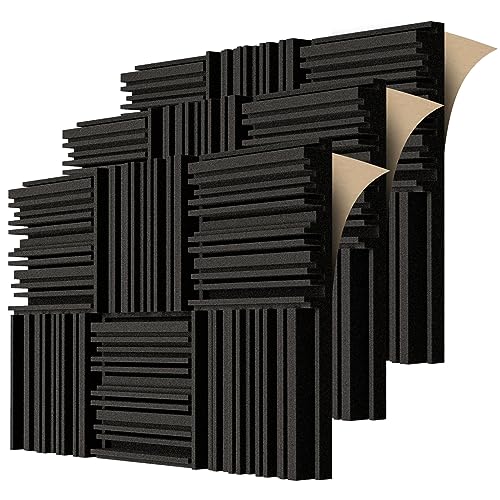
TroyStudio 2-inch Self-Adhesive Acoustic Foam Panels (18 pcs)
If you want a simple starter pack that can help tame high-frequency flutter echo, try these Sonicism pyramid foam panels. Just remember: thin foam helps reflections, but it won’t meaningfully treat deep bass.
Sonicism pyramid acoustic foam panels (12 pack)
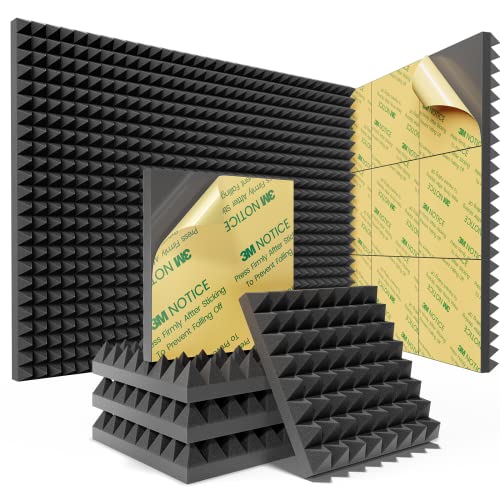
Sonicism Pyramid Acoustic Foam Panels (12 pack)
If you’re buying from an unfamiliar brand, a “high density” claim is not enough on its own. Use the breathability test and look for real absorption data, even with a budget option like these FONESO panels.
FONESO high-density acoustic foam panels
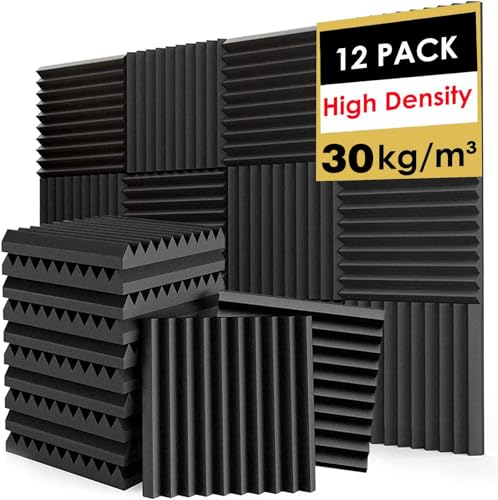
FONESO High-Density Acoustic Foam Panels
For budget-friendly alternatives that actually work, see what to use instead of acoustic foam.
For guidance on selecting quality foam, see how to choose acoustic foam.
Are There Exceptions to the Open-Cell vs Closed-Cell Rule?

A few foams live in the gray area between obviously open-cell and obviously closed-cell. These are the ones that confuse people most (and when they actually matter).
Partially Open-Cell Foam
Some foams have a mix of open and closed cells, so performance falls between the extremes. They may provide some absorption, but they won’t match fully open-cell acoustic foam.
Reticulated Foam
Reticulated foam is open-cell foam with the cell membranes removed, leaving only the skeletal structure. It’s extremely open and breathable, sometimes used in specialized acoustic applications.
Melamine Foam
Melamine foam (similar to Magic Eraser material) is open-cell and can absorb sound well. Acoustic-grade melamine is used in professional installations.
It’s more expensive, but you get stronger performance and better fire resistance than most cheap polyurethane foams.
Composite Materials
Some acoustic products combine foam with other materials. The foam component should still be open-cell for the absorption function to work.
For recording applications specifically, see whether acoustic foam improves recording.
What Are the Most Common Open-Cell vs Closed-Cell Foam Questions?

“Can I Make Closed-Cell Foam Work for Acoustics?”
Not in any practical way. You can cut it, stack it, or poke holes in it, but the cells are still sealed at the microscopic level, so sound can’t penetrate the way it needs to for absorption.
“Is My Existing Foam Open or Closed Cell?”
Use the breathability test: try to blow air through it. If air passes easily, it’s open-cell; if it feels blocked, it’s closed-cell.
“Why Do Some Cheap Foams Claim Acoustic Properties?”
Marketing. If there’s no cell-structure info and no absorption data, treat the claim as noise and verify the material yourself.
“Does Thickness Compensate for Cell Structure?”
No—thickness helps open-cell foam reach lower frequencies, but it can’t turn closed-cell foam into an absorber. A thick piece of closed-cell foam still reflects because the wave can’t get inside.
The Bottom Line
Open-cell vs closed-cell foam isn’t a small detail—it’s the core property that changes how the material behaves. Open-cell breathes, compresses, and can absorb sound; closed-cell resists air and water and behaves more like a barrier.
If you’re treating echo in a room, prioritize open-cell material and placement. If you’re sealing gaps, insulating, or dealing with moisture, closed-cell is often the better tool.
Before you buy, verify cell structure with a quick breathability test and look for real absorption data if the listing claims acoustics. That one check saves you from covering walls with foam that doesn’t actually change your sound.
For more guides on foam types, placement, and mounting, start at the acoustic foam hub.
Frequently Asked Questions
How can I tell if foam is open-cell or closed-cell?
The easiest test is breathability: hold the foam to your mouth and try to blow air through it. If air passes easily, it’s open-cell; if it feels blocked, it’s closed-cell.
You can also look at a cut edge. Open-cell foam shows interconnected pores, while closed-cell foam looks more solid with sealed bubbles.
Will closed-cell foam provide any sound absorption?
Minimal. Compared to open-cell acoustic foam, closed-cell foam absorbs only a small fraction of airborne sound energy.
That small amount usually doesn’t meaningfully improve room acoustics. For practical echo control, treat closed-cell foam as ineffective.
Is memory foam open-cell or closed-cell?
Most memory foam is open-cell, which is why it’s breathable and comfortable for sleeping. But it isn’t optimized for acoustic absorption the way studio foam is.
It can provide a little absorption, but you’ll usually need more material (and more thickness) to get the same effect as purpose-made acoustic foam.
Why is acoustic foam more expensive than other foam?
Acoustic foam uses open-cell formulations tuned for sound absorption, with controlled density and cell structure. It also needs fire-retardant treatment and tighter quality control for consistent performance.
Generic foam is built around other priorities like comfort, insulation, or impact protection. That’s why it can be cheaper and still be the wrong choice for echo control.
Can I use packing foam for acoustic treatment?
Most packing foam is closed-cell (to protect items from moisture and impact), so it won’t absorb sound effectively. Some packing foam is open-cell, but it’s usually low-density and not designed for acoustics.
If you want predictable results, use purpose-made acoustic foam or panels. Otherwise you’re guessing – and often re-buying later.
Does spray foam insulation work for acoustics?
Closed-cell spray foam insulation is not a sound absorber. It tends to reflect airborne sound because it acts like a sealed barrier.
Open-cell spray foam can provide some absorption, but it’s designed for thermal insulation and cavity filling, not room treatment. For sound absorption, use purpose-made acoustic foam or panels placed at reflection points.