2 Inch vs 4 Inch Acoustic Panels: Which for Bass? [2026]
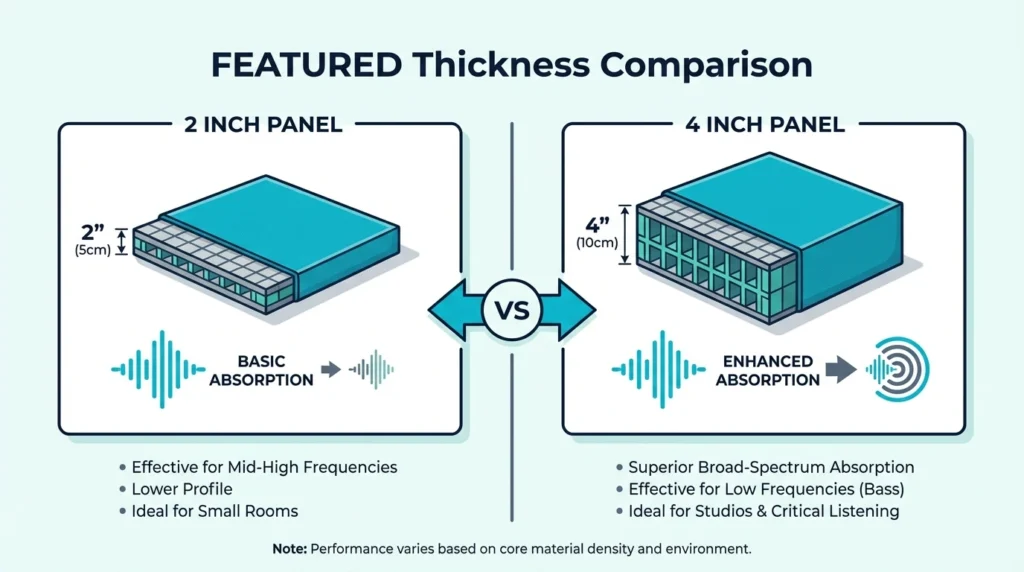
2 inch vs 4 inch acoustic panels is really a decision about your problem type: are you fixing reflections and clarity, or are you fighting low-mid boom? 4-inch panels reach lower, but they are not a replacement for bass traps.
If your room sounds muddy, the cause is often a mix of reflection buildup and modal energy in roughly the 80-200Hz zone. Panel thickness helps, but only when placement is right.
This guide gives you practical decision rules: what each thickness actually absorbs, where 4-inch depth pays off, and when to stop buying thicker panels and move to corner bass treatment. Start by identifying the main issue in your room, then match panel depth to location.
4-inch panels extend absorption down to approximately 125Hz compared to 250Hz for 2-inch panels, helping with upper bass and low-mid frequencies. Neither handles deep bass below 100Hz—you need dedicated bass traps for that.
What’s the Difference Between 2” and 4” Panels?
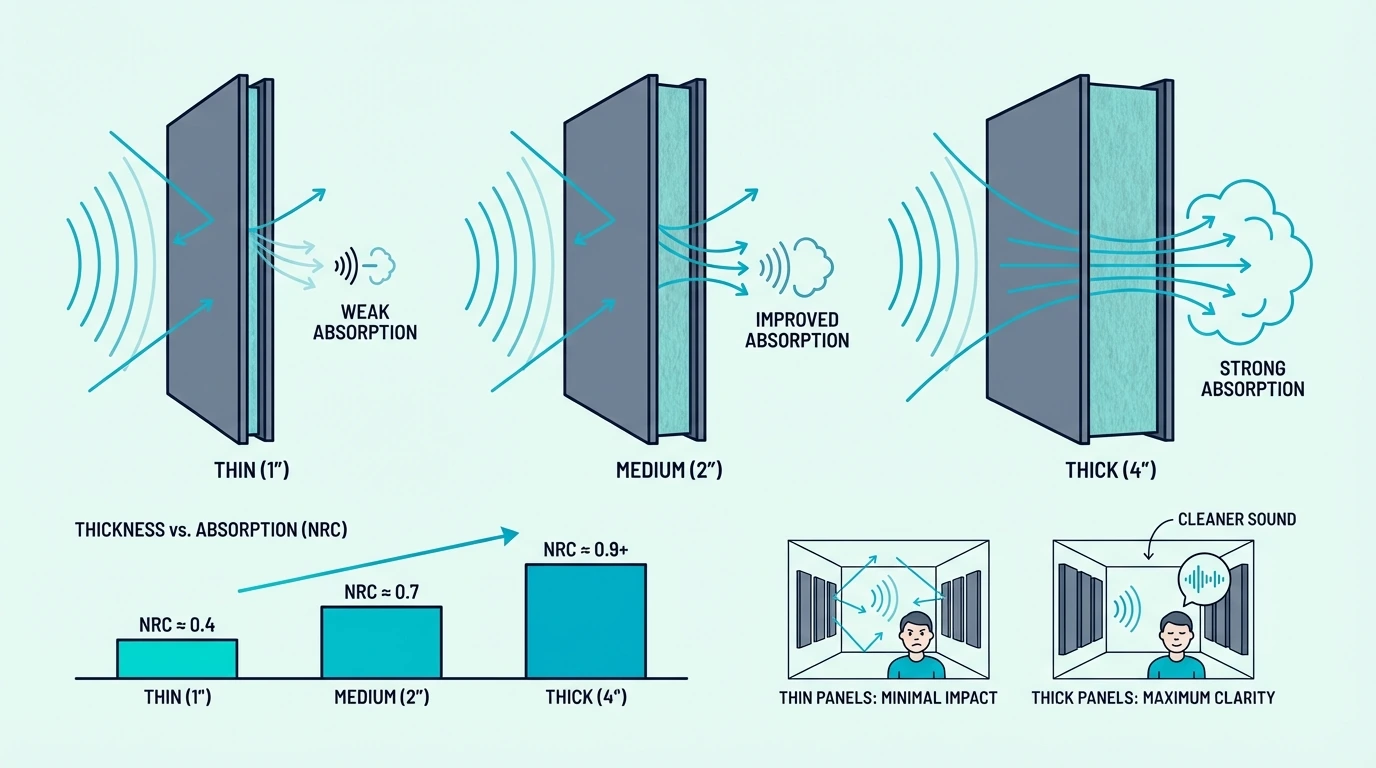
The core difference between the two is simply how low each panel absorbs — lower frequencies have longer wavelengths and need more porous depth before enough energy is dissipated to matter. In real rooms, doubling the material depth from 2 inches to 4 inches extends useful absorption down by exactly one octave.
What Do 2-Inch Panels Absorb?
That standard 2-inch depth represents the industry default for acoustic treatment because it covers the vast majority of problems. The material absorbs effectively from approximately 250Hz upward, handling the critical mid-range and all high frequencies without eating up massive amounts of wall space.
This upper frequency range includes voice fundamentals, most musical instruments, and the harsh reflections that cause flutter echo and clarity issues. For many applications, 2-inch panels compared to 1-inch represent the absolute sweet spot between cost, visual footprint, and acoustic performance.
The UMIACOUSTICS 2-Inch 4-Pack exemplifies this quality 2-inch construction at a reasonable price point.
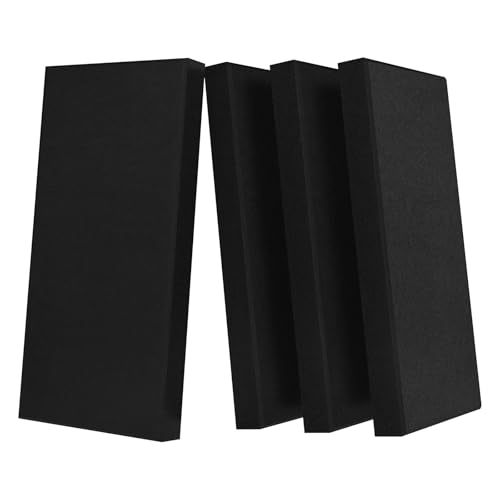
UMIACOUSTICS 2-Inch 4-Pack
What Do 4-Inch Panels Absorb?
When you double the thickness to 4 inches, you push that effective absorption floor down from 250Hz to approximately 125Hz. This newly captured octave covers the problematic upper bass region—kick drum fundamentals, bass guitar lower notes, and the specific “chest thump” frequencies that create a boomy, overwhelming sensation in untreated rooms.
That added physical depth gives the slower, longer waves more path length to travel through the absorber, creating enough friction to pull the low-mid energy out of the room.
But that extra depth does not magically turn a flat wall panel into a bass trap. Deep bass energy below 100Hz (subwoofer territory) largely ignores the 4-inch panel and passes right through it.
If your room has heavy bass buildup vibrating the floorboards, thicker wall panels will help tighten the low-mids, but dedicated corner trapping is the only way to close the final gap.
What Frequencies Does Each Absorb?
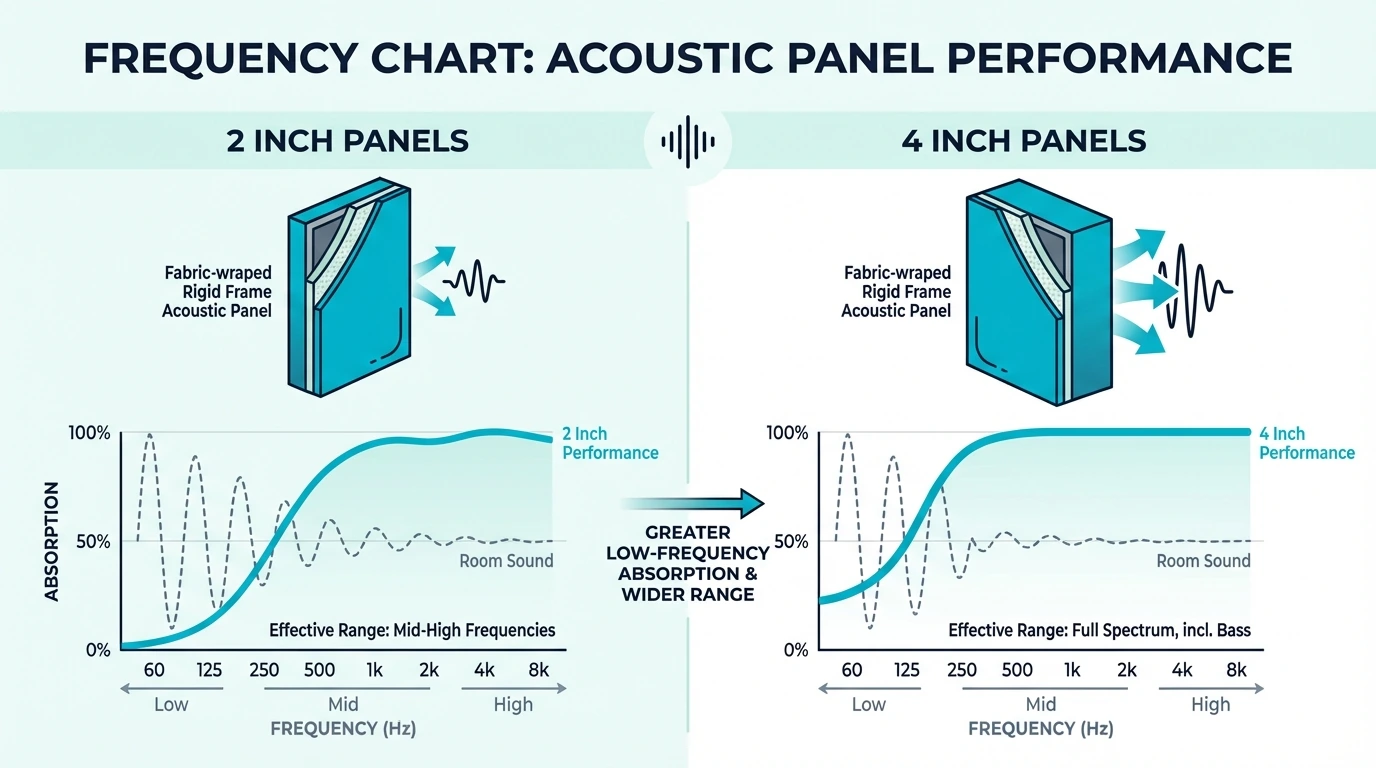
These technical specs are easier to use when you translate them into what you actually hear in your chair. Play a bass-heavy track and listen to whether each note stops cleanly or hangs on after the beat.
That lingering tail usually sits in the muddy 80-200Hz band, which dictates exactly which panel you need.
What Is the 2-Inch Frequency Range?
If the tail isn’t there and the room just sounds bright or harsh, standard 2-inch panels will provide strong absorption (NRC 0.85+) from 250Hz all the way up to 4000Hz. Performance drops off a cliff below 250Hz, reaching minimal effectiveness around 150Hz.
To put this in musical terms: 250Hz is roughly middle C on a piano. Everything above that note—vocals, guitars, cymbals, most of the sound you actively listen to—gets absorbed beautifully by a 2-inch core.
This covers the critical range for speech intelligibility and the mid-frequency reflections that cause comb filtering at your desk. Because of this, recording studios and home theaters benefit massively from 2-inch treatment even if they never add bass extension.
The limitation only becomes obvious when you’re mixing heavy electronic music or watching action movies at reference volume. Those massive low rumbles and kick drums punch right through 2-inch panels like they’re not even mounted to the wall.
What Is the 4-Inch Frequency Range?
Adding the extra two inches of depth extends that strong absorption down to approximately 125Hz while maintaining excellent mid and high-frequency performance above it. The overall NRC rating increases slightly (typically hitting 0.95+), but the real gain is the new low-frequency extension.
That extra octave of absorption (the gap between 250Hz and 125Hz) captures the critical “body” frequencies that give music its warmth and impact. Male vocals, cello fundamentals, and the physical punch of a kick drum all live in this exact range, making it vital for critical listening.
The UMIACOUSTICS Large Panels demonstrate the deeper, heavier frame construction that these 4-inch cores require.
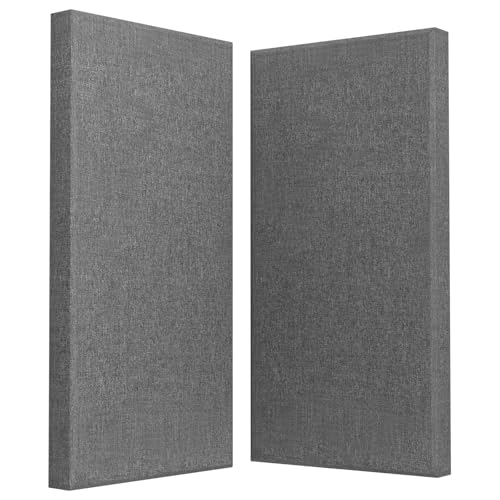
UMIACOUSTICS Large Panels
Can Either Handle Deep Bass?
No matter which option you pick from the chart above, neither 2-inch nor 4-inch panels can effectively absorb frequencies below 100Hz. The 50-80Hz range where heavy subwoofers operate requires an entirely different approach—either corner-mounted bass traps or thick, heavy membrane absorbers.
The room modes and standing waves that create massive boom and dead null spots typically concentrate below 100Hz. If these severe pressure zones are your primary problem, debating panel thickness on your flat walls is a waste of time.
You need dedicated bass traps to handle that specific physics problem.
Get Studio Tips Weekly
Join 5,000+ creators getting acoustic treatment advice every week.
No spam. Unsubscribe anytime.When Should You Choose 4 Inch?
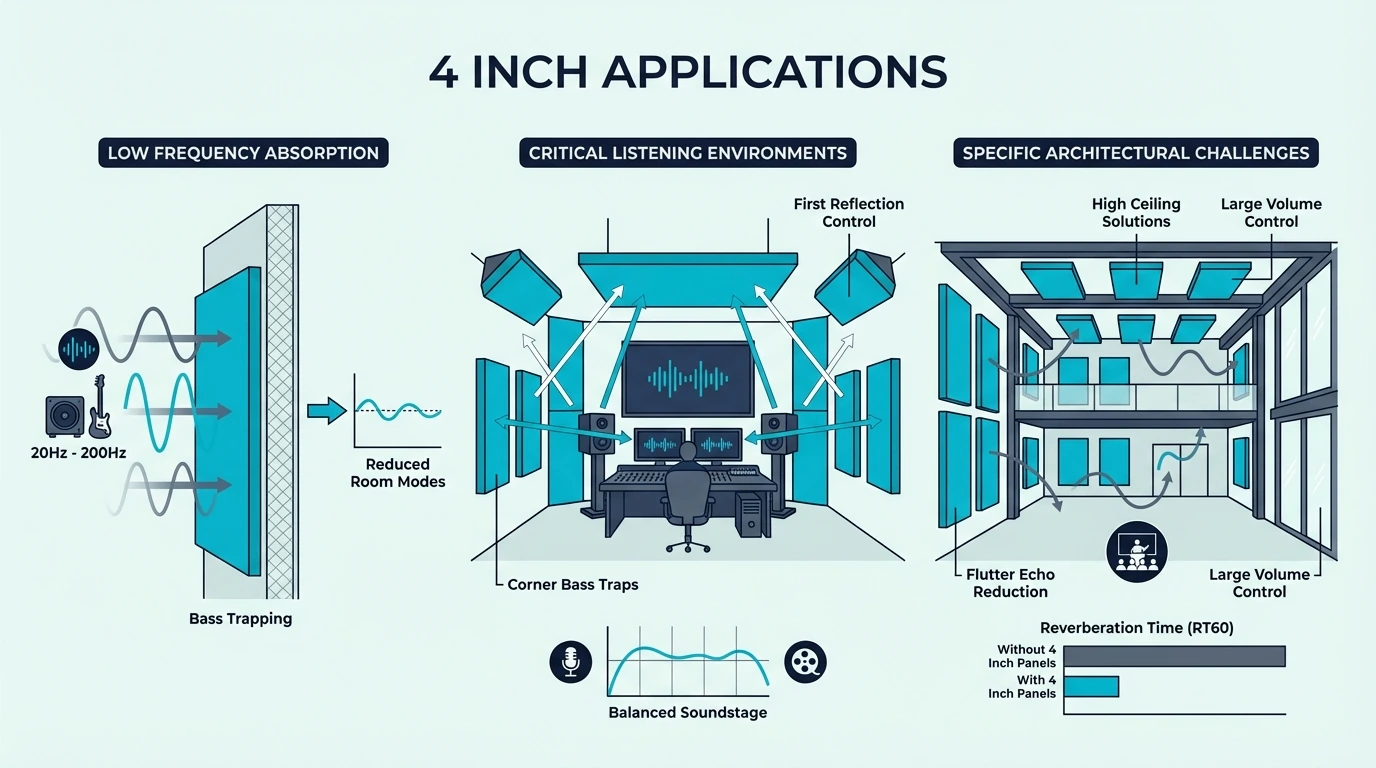
4-inch panels are worth the investment in some rooms and completely unnecessary in others. They cost more, project twice as far off the wall, and only pay off when low-mid control is explicitly part of the goal.
Do Home Studios Need 4-Inch Panels?
Because recording and mixing rooms often struggle heavily with low-mid frequency masking, they are the most obvious candidates for thicker treatment. The 125-250Hz range contains voice warmth, guitar body, and the fundamental frequencies of many instruments.
If your mixes sound muddy in the car but fine at your desk, upgrading to 4-inch panels at the first reflection points can strip away that masking. They won’t fix deep sub-bass problems, but they address the upper bass buildup that causes 90% of mix translation issues.
Those first reflection points—the specific spots on the walls beside and behind your listening position—benefit most from 4-inch treatment, and the recording studio panels guide has placement maps for those positions.
Do Home Theaters Need 4-Inch Panels?
Home theaters also fall into the high-priority category because modern surround systems rely heavily on the 80-200Hz range for cinematic impact. Crucially, dialogue intelligibility also depends on clean mid frequencies without any bass masking bleeding upward.
Placing four-inch panels directly behind and beside the primary seating area improves both the explosive dynamics and the vocal clarity—the home theater acoustic panels guide has placement maps for cinema rooms.
What If Budget Isn’t a Concern?
Even if budget isn’t constrained, defaulting to 4-inch panels everywhere is rarely the smartest move. While they provide objectively better performance across the entire frequency spectrum, the sheer physical bulk of hanging 4-inch boxes all over a small room can make the space feel cramped and claustrophobic.
For critical listening applications—mixing, mastering, high-end home theater—the thicker panels are usually worth the visual tradeoff. For general room treatment, podcast recording, or zoom calls, 2-inch panels deliver excellent results while keeping a much lower profile on the wall.
Is 4 Inch Worth the Extra Cost?
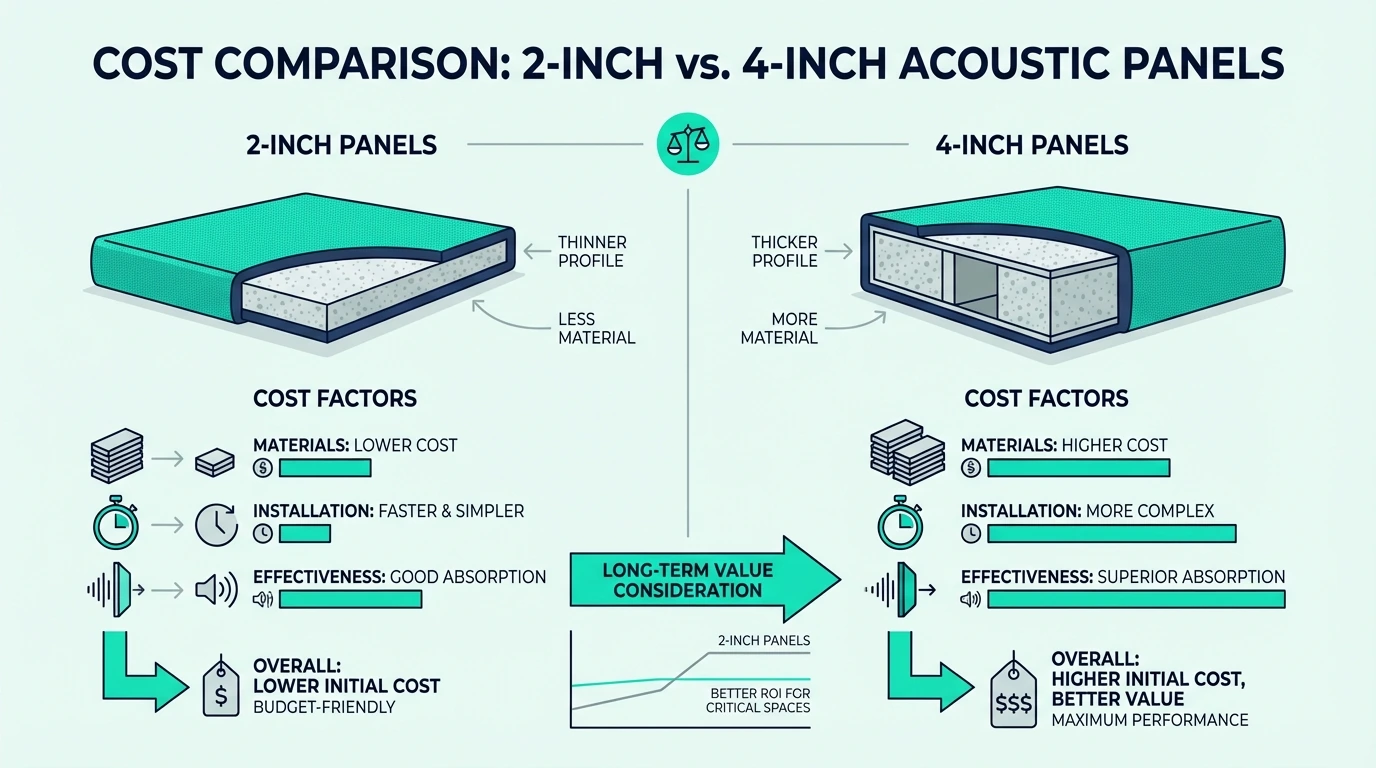
Cost is where most decisions get made. The jump from 2-inch to 4-inch is often 60–100% more for identical square footage, and you are strictly paying for lower-frequency extension, not a dramatic change in the mids and highs.
How Much More Do 4-Inch Panels Cost?
A typical 2-inch professional fiberglass panel often lands in the low-to-mid triple digits. A comparable 4-inch option from the exact same brand usually runs roughly 60–100% higher because it requires double the core material and a deeper, stronger internal frame.
When you multiply that premium across a full-room setup of 12 to 16 panels, that pricing gap adds up to a massive difference in your total budget.
The Olanglab 4-Pack Fiberglass Panels represent a mid-range 2-inch option that delivers solid value for general treatment, allowing you to cover far more wall area for the same money.
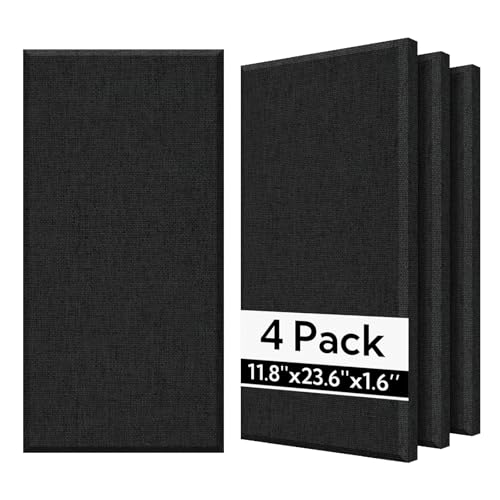
Olanglab 4-Pack Fiberglass Panels
Is the Performance Gain Worth It?
The performance improvement is absolutely real, but it is proportional to the physical thickness, not the dollar cost. You are not getting double the total absorption for double the price—you are simply unlocking one extra octave of frequency extension at the bottom end.
For rooms where bass is not the primary problem, that extra octave of extension may not even be audible. If your main issues are slap echo, harsh glare, and speech intelligibility, spending double on 4-inch panels solves those exact same problems no better than 2-inch panels would have.
Can You Mix 2” and 4” Panels?
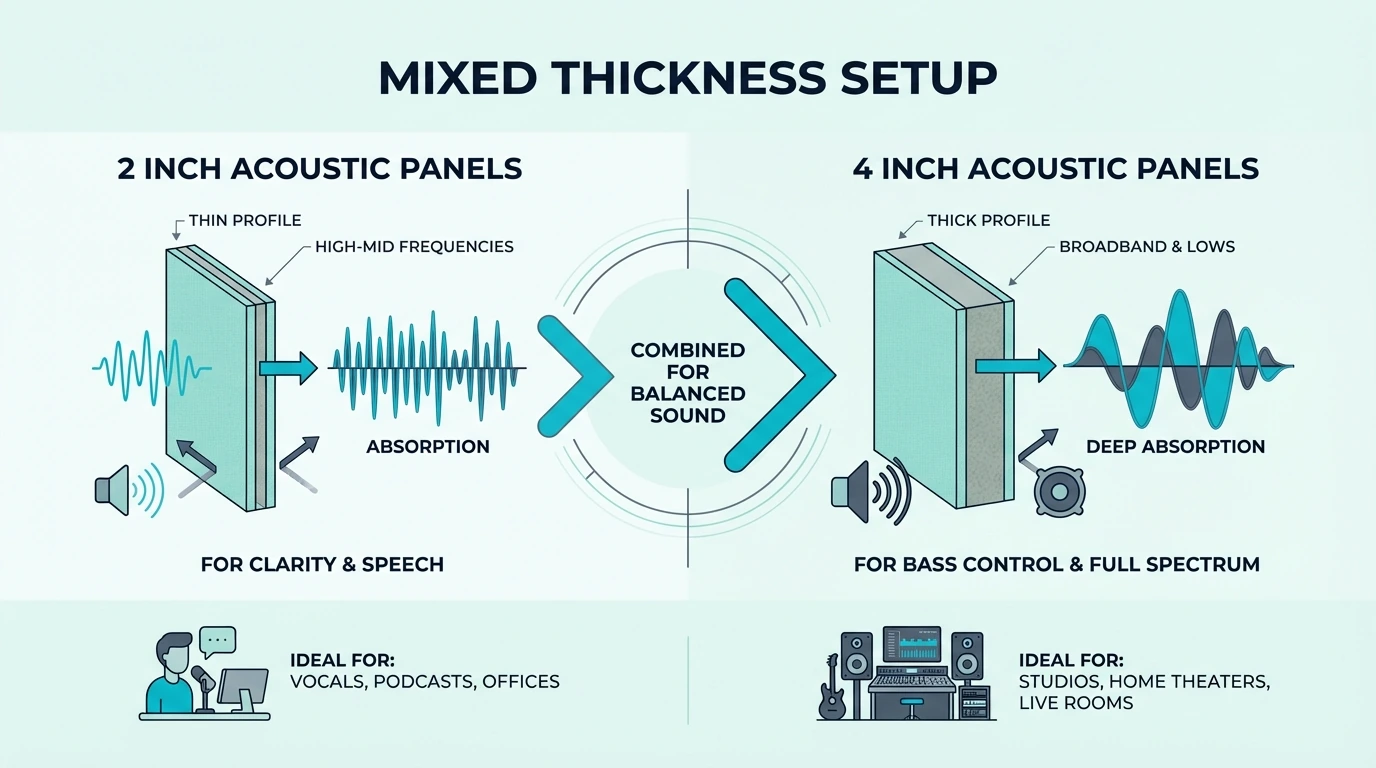
Because of that cost gap, you do not need one uniform thickness across the entire room. A mixed layout is often the smartest, most cost-effective setup you can build.
Can You Mix 2-Inch and 4-Inch Panels?
The strategy is simple: deploy 4-inch panels strictly where bass extension matters most, then fill the rest of your coverage targets with 2-inch panels for broader reflection control.
Concentrating your thickest treatment at the first-reflection spots puts your budget where it has the biggest physical impact. The listening triangle—the direct path between your speakers and your listening chair—benefits the most from maximum low-mid treatment.
The closer the panel is to what you hear directly, the more its low-frequency extension matters. Peripheral wall coverage away from the desk can easily be thinner without an audible compromise to your mix.
Where Should You Place 4-Inch Panels?
Your absolute highest priority positions for the 4-inch panels are the side walls at the first reflection points (the “mirror trick” spots) and the center of the rear wall directly behind your monitors.
All secondary positions work perfectly fine with 2-inch boards: the ceiling cloud, the front wall out wide, and any additional scatter coverage. The ceiling cloud specifically benefits from using 2-inch panels because the 4-inch depth creates severe mounting challenges overhead.
Keep the 4-inch panels out of the corners entirely—those spots should get dedicated, triangular bass traps. Corners are where bass builds up most severely, and even a 4-inch flat panel cannot provide adequate corner trapping.
How Do 2-Inch and 4-Inch Panels Compare Side by Side?
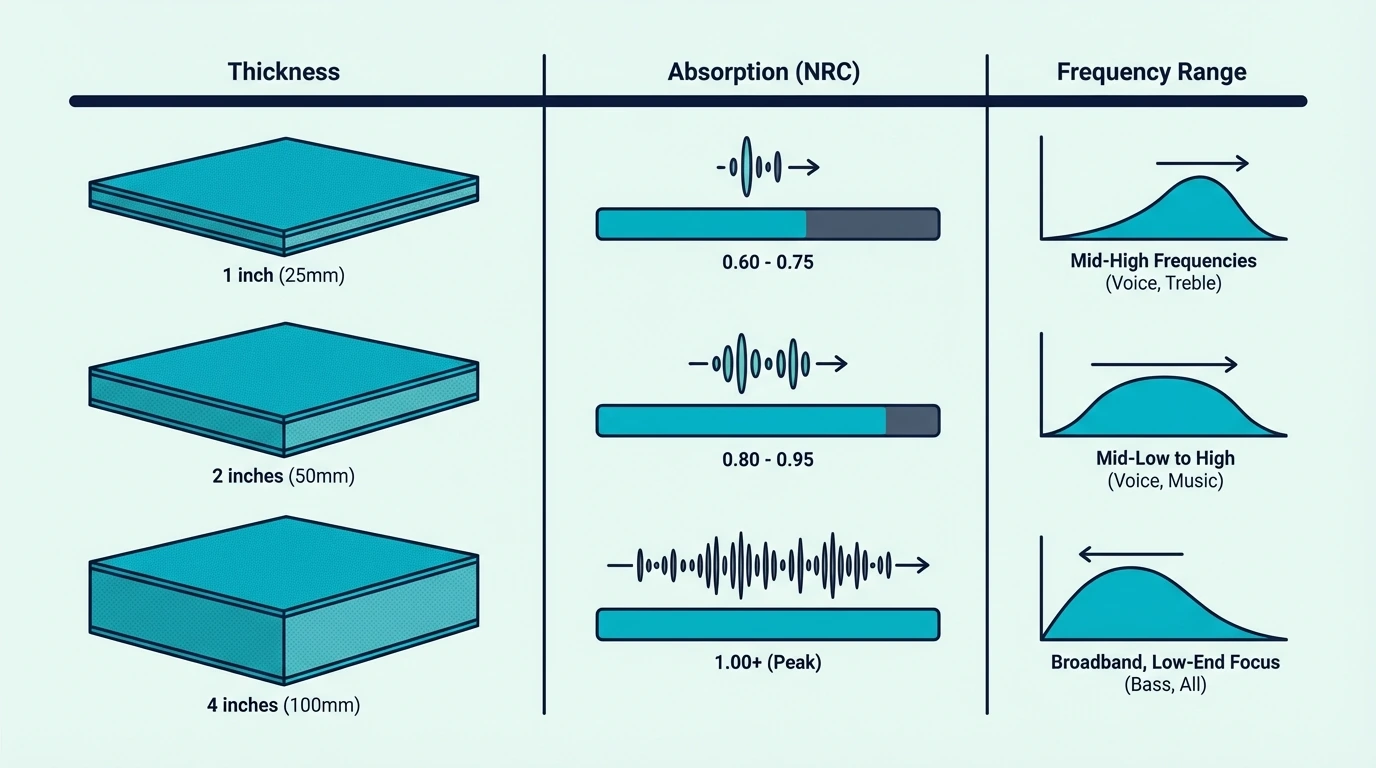
| Factor | 2 Inch | 4 Inch |
|---|---|---|
| Effective Range | 250Hz+ | 125Hz+ |
| Typical NRC | 0.80-0.90 | 0.90-1.0 |
| Wall Projection | Moderate | 4+ inches |
| Cost | Standard | 60-100% more |
| Best For | General treatment | Studios, theaters with bass issues |
| Bass Absorption | Upper bass only | Better but still limited |
| Deep Bass (<100Hz) | None | Minimal |
Which Should You Choose?
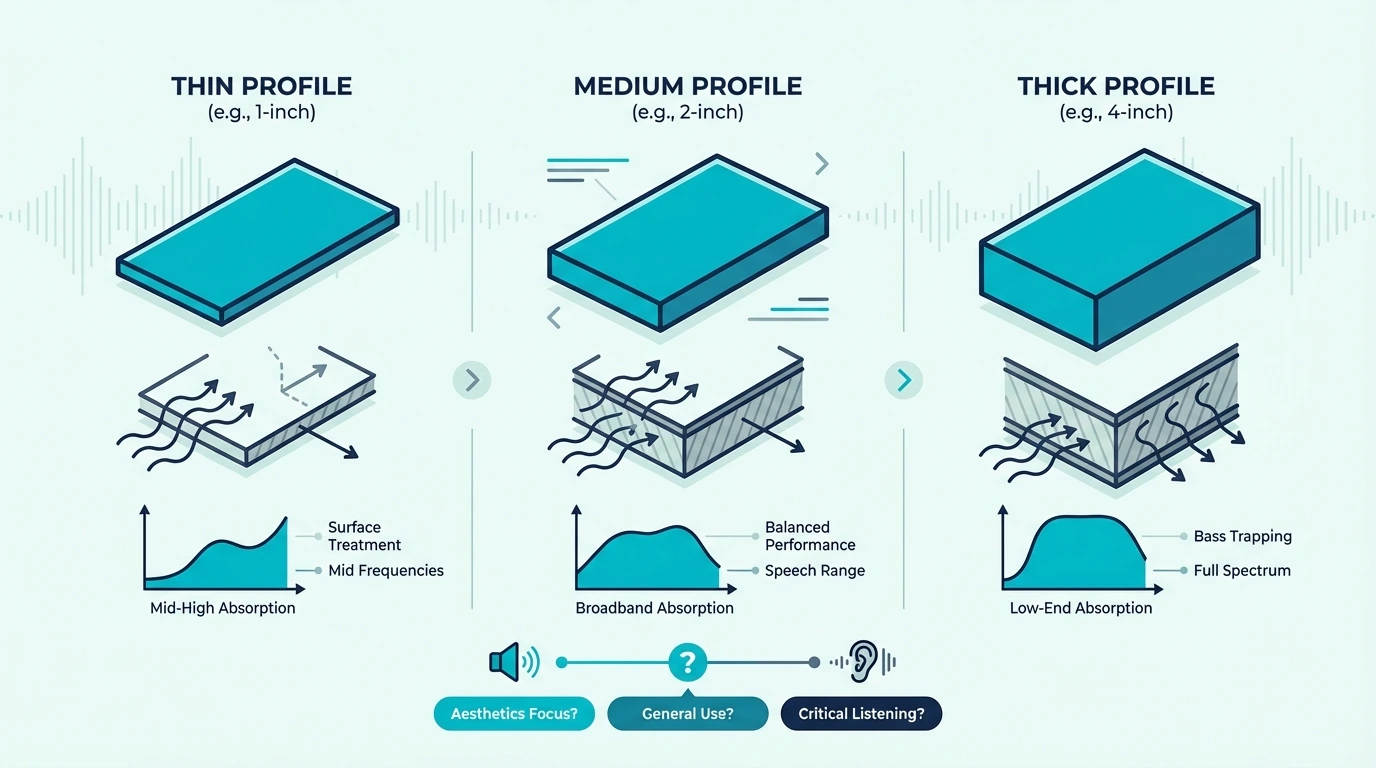
The right choice depends on the room’s dominant problem, not specs alone. Neither option is universally better.
If bass notes linger and the room feels swollen around kick and low vocals, place 4-inch panels at first reflection points and rear-wall hotspots.
If the room mostly has slap echo, glare, or weak speech clarity, 2-inch panels usually solve it at lower cost.
For many spaces, the best result is hybrid: 2-inch reflection treatment plus corner bass traps, then selective 4-inch upgrades only where listening tests still show low-mid buildup. The best acoustic panels guide has product picks across both thicknesses, and the NRC rating guide explains how to read the absorption specs on any panel you compare.
Conclusion
2 inch vs 4 inch is not a quality ranking; it is a targeting choice.
Use 2-inch panels when your priority is reflection control and clarity. Use 4-inch panels when you need more control in the 125-250Hz region.
For sub-100Hz boom, skip the thickness debate and add bass traps.
In most rooms, the fastest path is staged: treat first reflections, add corner traps, then upgrade select panel positions only if low-mids are still muddy.
Frequently Asked Questions
Before you buy, here are the two questions most people ask when deciding between 2-inch and 4-inch acoustic panels.
Do I Need 4” for a Home Studio?
Usually not at the start.
If your main issues are echo and imaging blur, 2-inch panels at first reflection points will get you most of the improvement.
Add corner bass traps early, then reassess.
Move to 4-inch panels only if low-mid buildup (roughly 125-250Hz) remains after placement and bass trapping are dialed in.
Can 2” Panels Handle Bass at All?
They can tame some upper bass in roughly the 200-300Hz range, but effectiveness drops quickly below that.
Treat 2-inch panels primarily as mid/high-frequency absorbers.
If your problems sit in the 125-250Hz zone—boomy lower vocals, muddy guitars, undefined kick—4-inch panels usually perform better. Below 125Hz, neither thickness provides meaningful absorption.