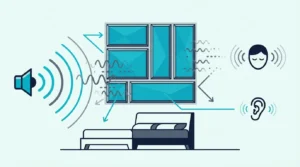
Do Acoustic Panels Work Both Ways? Quick Answer
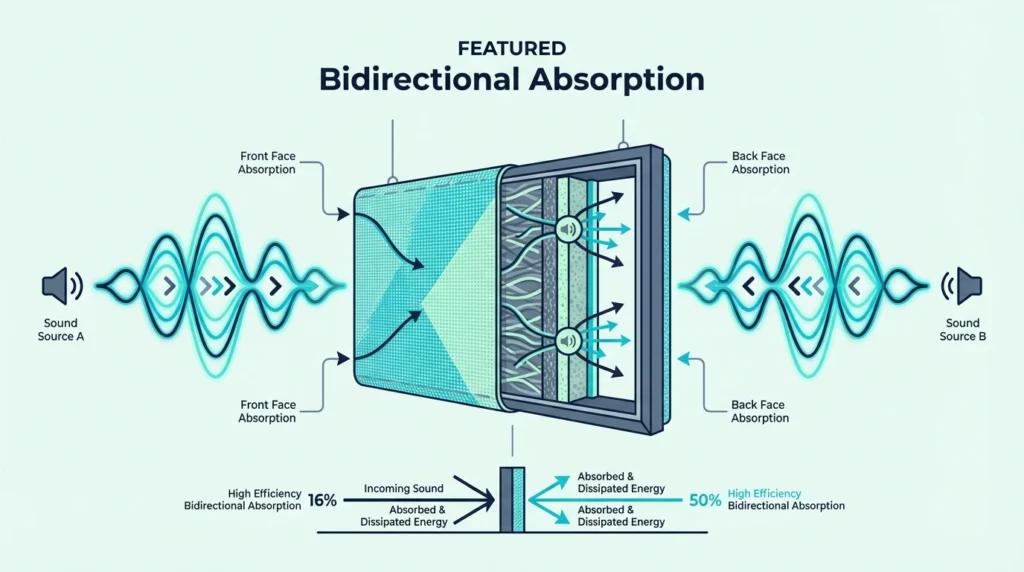
Do acoustic panels work both ways? Yes, but the real question is what “both ways” means once sound starts bouncing around your room.
If you’re hanging a ceiling cloud or using panels as dividers, it’s easy to get confused about which face should point at the speakers. That confusion can waste time and money and still leave you with a room that sounds echoey or roomy.
The reason is simple: porous panels work because reflections enter the fibers and lose energy, and reflections come from every direction once sound bounces off walls and ceilings. Once you understand that, you can focus on the moves that actually reduce harsh reverb and slapback.
Start by treating first reflection points, then use clouds or freestanding panels when both faces are exposed to the room. The rest of the answer depends on orientation, backing material, and the gap between absorption and soundproofing.
Acoustic panels absorb sound from both sides, so flipping a standard panel does not change performance. They improve acoustics inside a room (echo and reverb), but they do not block sound between rooms — printed art panels can be an exception if they use a rigid backing.
Do Acoustic Panels Work Both Ways?
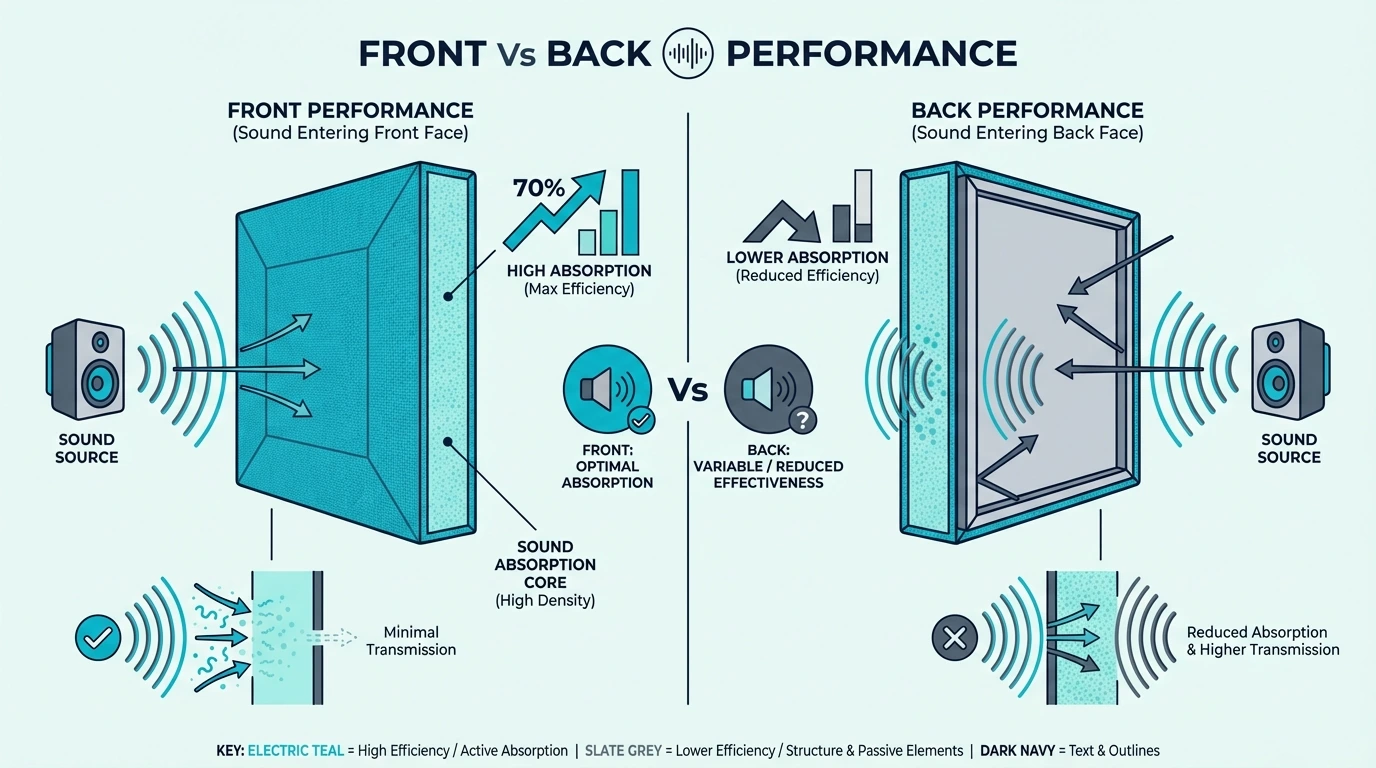
The basic physics of porous material dictate that sound is absorbed regardless of which face the wave hits first. Understanding how that works changes how you approach five common installation scenarios.
How Do Panels Absorb From Both Sides?
Because sound travels as pressure waves through the air, absorption is simply the process of slowing that air down. When waves enter an acoustic panel’s porous core—whether it is fiberglass, mineral wool, or dense polyester—the physical friction of rubbing against the microscopic fibers converts the acoustic energy into tiny amounts of heat.
That friction happens regardless of the wave’s entry point. A wall-mounted panel absorbs reflections coming back off the drywall just as effectively as it absorbs the direct sound hitting its front face.
The panel possesses no “listening side” and no directional bias. If the core material and the outer fabric layers are breathable, the wave enters, slows down, and dissipates from either direction. Airflow is the only metric that matters here: if you can easily breathe through the face fabric, sound waves can easily pass through it too.
Does Orientation Matter?
Because of that omnidirectional absorption, the orientation of a standard fabric-wrapped panel makes absolutely zero difference to the room’s acoustics. You can flip a panel upside down or mount it backward during installation without changing the performance curve at all.
The only variable that actually changes is the visual finish. Manufacturers typically wrap the front and sides tightly while stapling the excess fabric to the back, meaning the front simply looks better.
If you want a baseline example of a lightweight, highly breathable design, a thin multi-pack like this 12×12” multi-pack panel set fits the description perfectly—it is simply thin foam completely open to airflow on both faces.
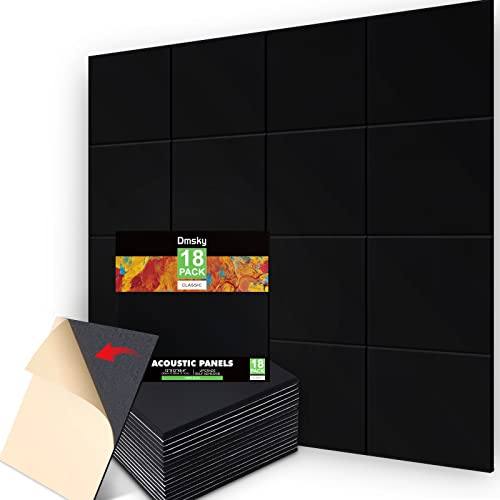
18 Pack Black Acoustic Panels 12x12
Does It Matter Which Side Faces the Room?
Lab testing confirms what the physics predict: NRC ratings remain entirely unchanged regardless of which side faces the room. A fiberglass board rated at NRC 0.85 will absorb roughly the exact same amount of mid-range energy whether you are staring at its fabric face or its raw backing.
That consistency exists because the dense core does all the heavy lifting. The decorative fabric and the thin backing scrim are acoustically transparent compared to the heavy insulation trapped between them.
Rather than worrying about which way the panel faces, you must focus entirely on where you place your panels. Treating the first reflection points, hitting the corners, and flying a ceiling cloud will transform your room long before you ever need to worry about front-versus-back orientation. If you are debating between buying one massive panel or scattering multiple smaller ones, the panel count guide explains the math behind those coverage choices.
Do Printed or Art Panels Behave Differently?
The one major exception to this rule involves decorative panels printed with custom artwork. These specialty panels often require a heavy layer of ink or a dense canvas-style wrap to hold the high-resolution image, which partially seals the front face and forces it to reflect high frequencies rather than absorbing them.
Many of these printed products also rely on a rigid backing board to keep the canvas perfectly stiff. If you are mounting a standard art panel flat against a wall, this rigid backing doesn’t matter because it is hidden against the drywall anyway. But if you try to use an art panel as a freestanding room divider, you will quickly discover that the two sides perform very differently.
How Does a Solid Backing Change Absorption?
Any rigid backing immediately ruins the bi-directional nature of an acoustic panel. While a thin felt backing changes nothing, a solid sheet of MDF, rigid plastic, or foil-facing completely seals the rear airflow.
When sound hits that solid backing, it has zero paths into the porous core and simply bounces off the hard surface. The panel might still absorb some residual energy that wraps around the edges, but it will no longer behave as a fully breathable, two-sided absorber.
If you specifically need true two-sided performance for a freestanding studio gobo or an office divider, you must buy panels explicitly designed as baffles. Those specific products guarantee breathable, acoustically transparent coverings on both faces. If you are shopping for thicker, studio-grade fiberglass that remains breathable front-to-back, look for a 2-inch fiberglass panel pack like this.
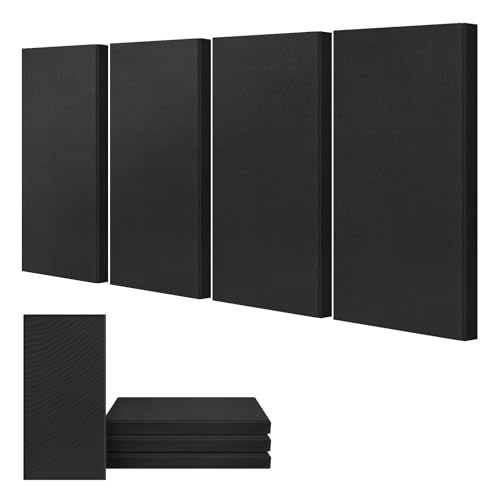
UMIACOUSTICS 2 inch Fiberglass Acoustic Panels
Do Panels Block Sound in Both Directions?
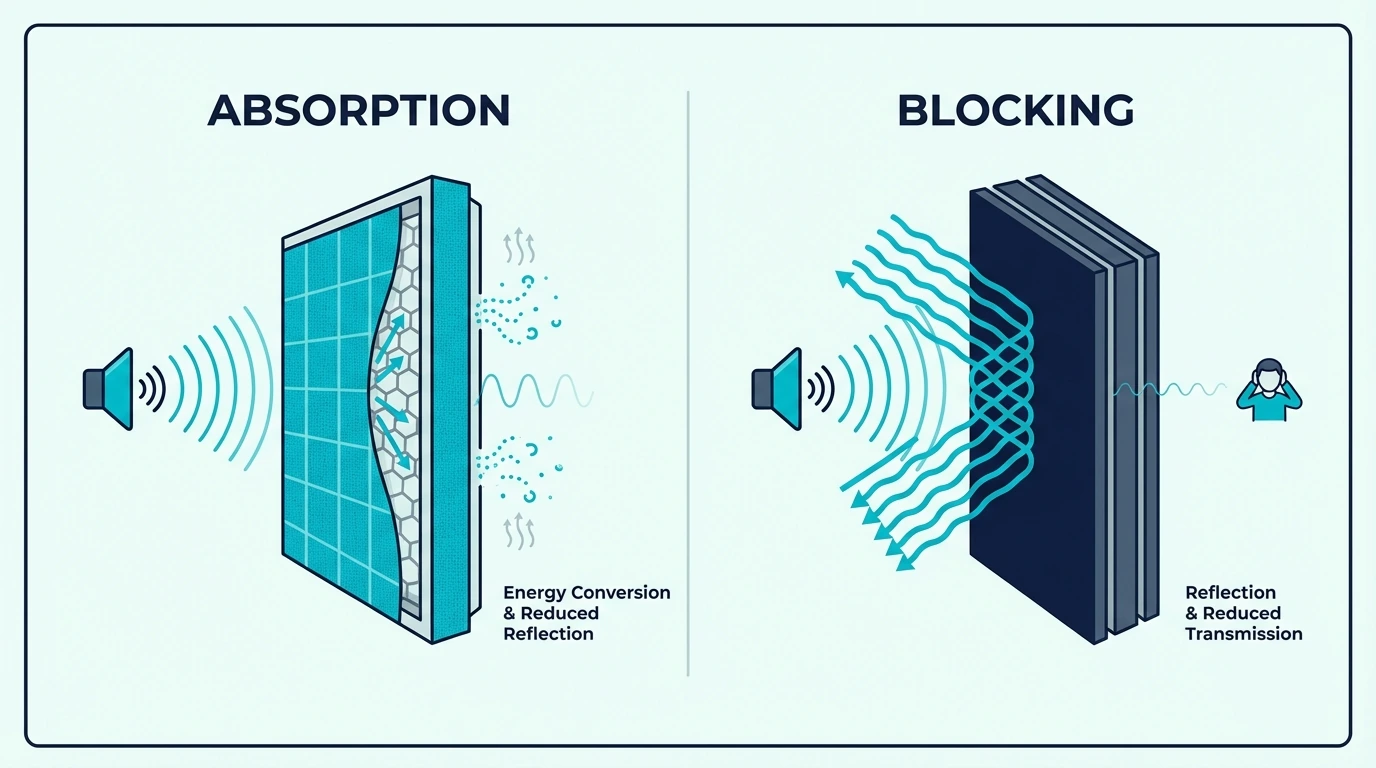
Most people asking about sound working “in both directions” are actually asking a completely different question: they want to know if hanging panels on a shared wall will block the neighbor’s noise from coming into their room. The answer is a hard no.
Absorption Is Not Blocking
Acoustic panels act as acoustic sponges; they do not act as brick walls. Expecting a porous fiber panel to block sound transmission through a wall leads to immediate disappointment every single time.
Absorption means capturing the reflections and reducing the reverb inside the specific room you are sitting in. When you install acoustic panels on your drywall, you are treating the air space between the four walls of that room, and nothing else.
Sound blocking requires an entirely different set of physics: massive weight, airtight sealing, and physical decoupling. A 2-inch fiberglass panel possesses none of those traits. The panel interacts with sound from both directions inside the room, but it will never isolate that room from the rest of the house.
If you suddenly notice that a room feels “quieter” after hanging panels, it is entirely because the internal reverberation dropped, masking the harshness of the source. The actual transmission of the noise through the drywall didn’t change at all. If your true goal is isolation, the acoustic panels vs soundproofing comparison explains the heavy construction required to actually stop sound.
When Panels Can Still Help With “Privacy” Complaints
While panels absolutely fail at stopping voices from traveling through a wall, they excel at reducing how far those voices carry across a large, open space. Pulling the reverb out of a room makes the space feel instantly calmer, which allows people to hold clear conversations at noticeably lower speaking volumes.
In an open-plan office, dropping the overall speaking volume translates into fewer distracting reflections bouncing across the room, which creates a noticeable improvement in perceived speech privacy. The effect mathematically falls short of true isolation, but the psychological comfort improvement for the workers is impossible to ignore.
Get Studio Tips Weekly
Join 5,000+ creators getting acoustic treatment advice every week.
No spam. Unsubscribe anytime.Can You Hang Panels Mid-Room?
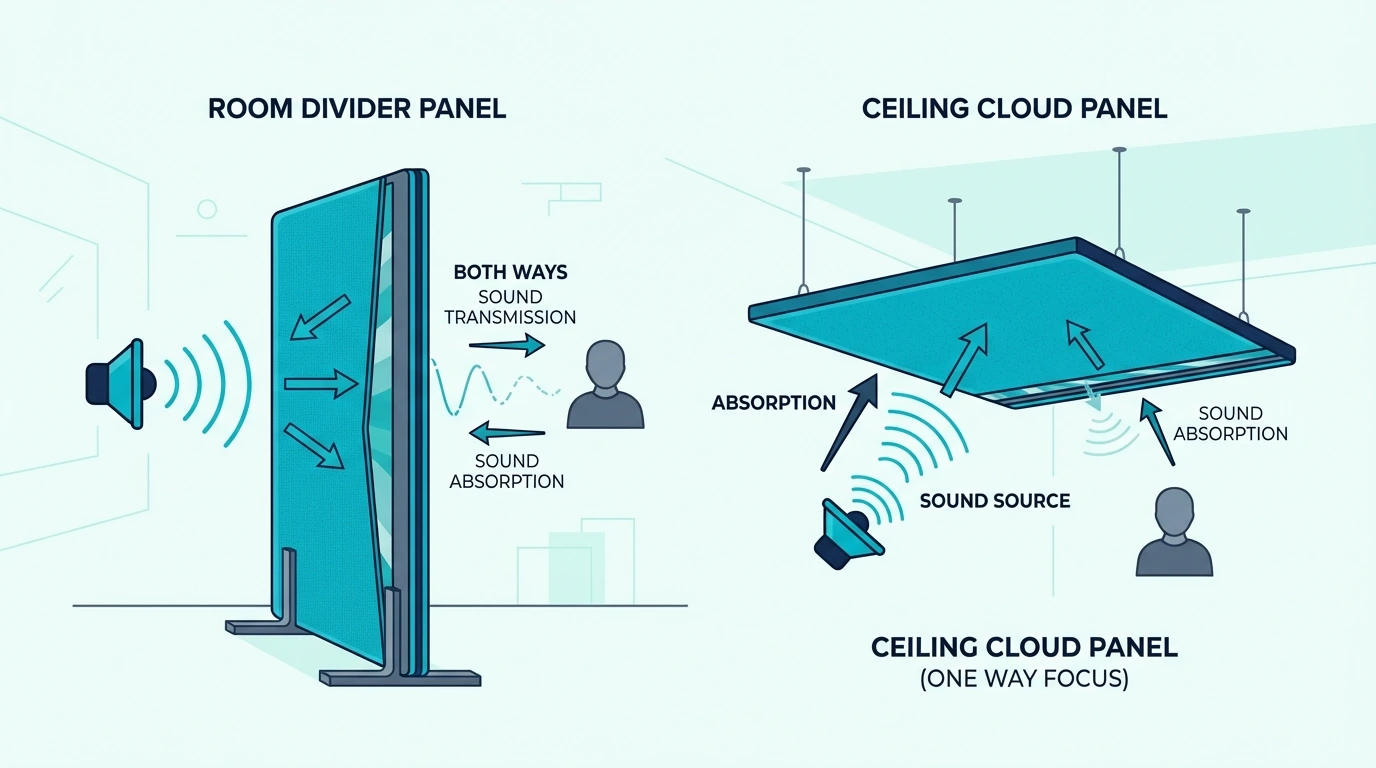
Because these panels work perfectly from either face, their bi-directional absorption delivers the absolute biggest payoff when you expose both sides to the open air. Suspending them from the ceiling or using them as freestanding room dividers exploits this physics trick perfectly.
Cloud Panels on Ceilings
Ceiling clouds are simply standard acoustic panels suspended several inches below the drywall using chains or wire. In this configuration, they actively absorb the direct sound firing up from the studio monitors, while the rear face simultaneously absorbs any lingering reflections bouncing back down from the hard ceiling above.
That intentional air gap forces the sound wave to pass through the fiberglass twice, sharply improving the panel’s low-frequency absorption compared to mounting it flush against the drywall. This two-for-one efficiency is exactly why ceiling panels are universally deployed above mix positions and drum kits in professional studios.
Because both sides of the cloud are working simultaneously, a suspended panel pulls far more acoustic energy out of the room than a wall-mounted panel of the exact same size. If you are flying a cloud over expensive studio gear, the hardware matters far more than the orientation. You must use secure anchors and follow a strict guide like how to hang acoustic panels to guarantee the heavy frame stays flat, level, and safely suspended over your head.
For smaller bedroom studios where a massive 48-inch cloud would overwhelm the ceiling, a compact panel size is far easier to suspend directly over the desk. Sets like these fiberglass wall panels provide the rigid core required for overhead mounting without dominating the visual space of the room.
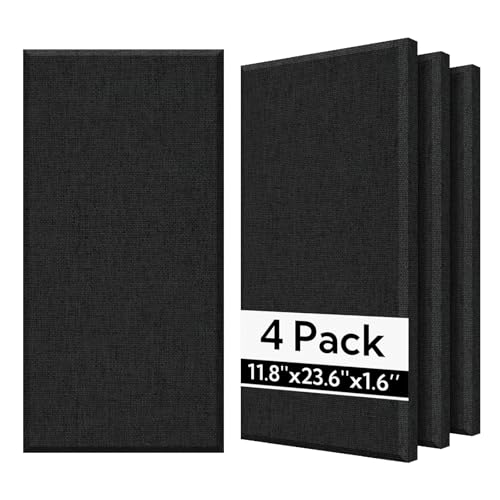
Olanglab Fiberglass Acoustic Wall Panels
Divider Panels and Freestanding Absorbers
The exact same bi-directional physics apply to portable gobos, heavy office dividers, and freestanding vocal screens. Because both faces are fully exposed to the room, sound from either side of the barrier gets absorbed immediately, reducing harsh reflections and killing speech spill in both directions simultaneously.
In a dense, open-plan corporate office, deploying these thick dividers between desks violently cuts the crosstalk between adjacent employees. In a recording studio, a heavy gobo acts as a portable wall of absorption, allowing an engineer to control the reflections around a wildly loud drum kit without having to build permanent isolation booths.
To get the most out of a freestanding setup, you must verify that the core breathes. A cheap divider with a sealed plastic back will only absorb sound from one side, acting as a hard reflector to anyone sitting behind it. If your goal is to tame a brutal flutter echo bouncing between two hard walls, placing a fully breathable, bi-directional divider squarely between them breaks the reflection path instantly.
Conclusion
Do acoustic panels work both ways? In almost all normal panel designs, yes—sound absorption is effectively bi-directional.
You can stop worrying about “which side faces out” and focus on placement, coverage, and thickness instead. Those factors determine how much reflection control you actually get.
Use the mirror trick to find reflection points: sit in your listening spot and mark where you can see the speaker in a mirror moved along the wall. Then start with panels there and add a ceiling cloud if the room still feels live.
If you’re trying to block noise between rooms, panels aren’t the right tool. Read soundproofing vs panels to choose fixes that actually improve isolation.
Frequently Asked Questions
Can You Flip Panels Around?
Yes. Flipping a standard panel won’t change absorption because the core is doing the work.
The only difference is appearance: the front is usually more finished than the back. If both sides are wrapped, flip them whenever it looks best.
For DIY panels you have built yourself, both faces are typically identical because you wrapped the fabric. That makes orientation purely a design choice.
Does the Fabric Side Need to Face Out?
Fabric side out is a visual choice, not an acoustic one — acoustic fabric lets sound pass through with minimal reflection. If the back will not be visible (behind furniture or in a utility space), mount whichever way is easier.