Do Acoustic Panels Keep Sound In? The Honest Answer [2026]
Do acoustic panels keep sound in? The short answer is no — but most “soundproofing panel” marketing will never tell you that, and buying the wrong solution wastes hundreds of dollars.
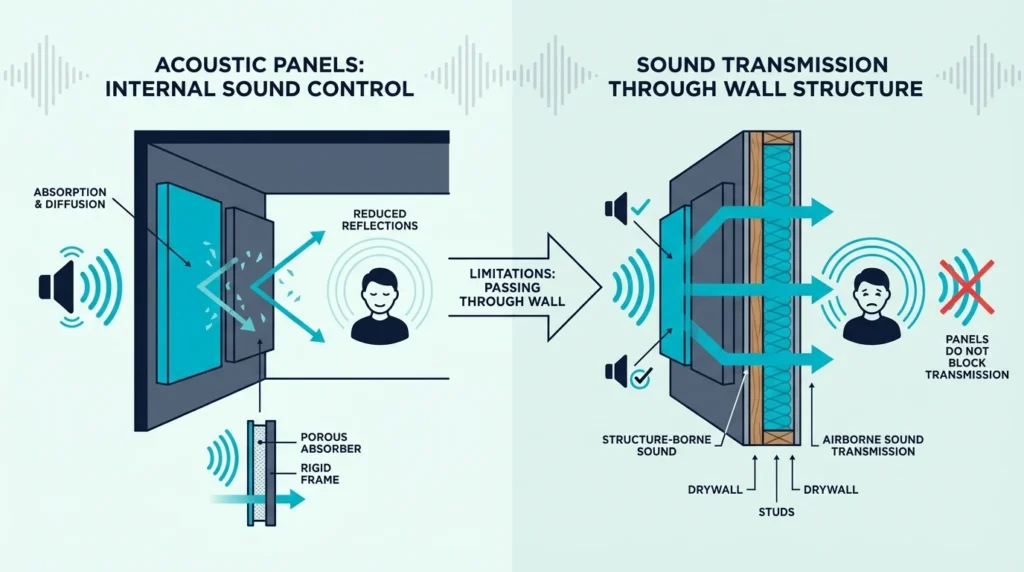
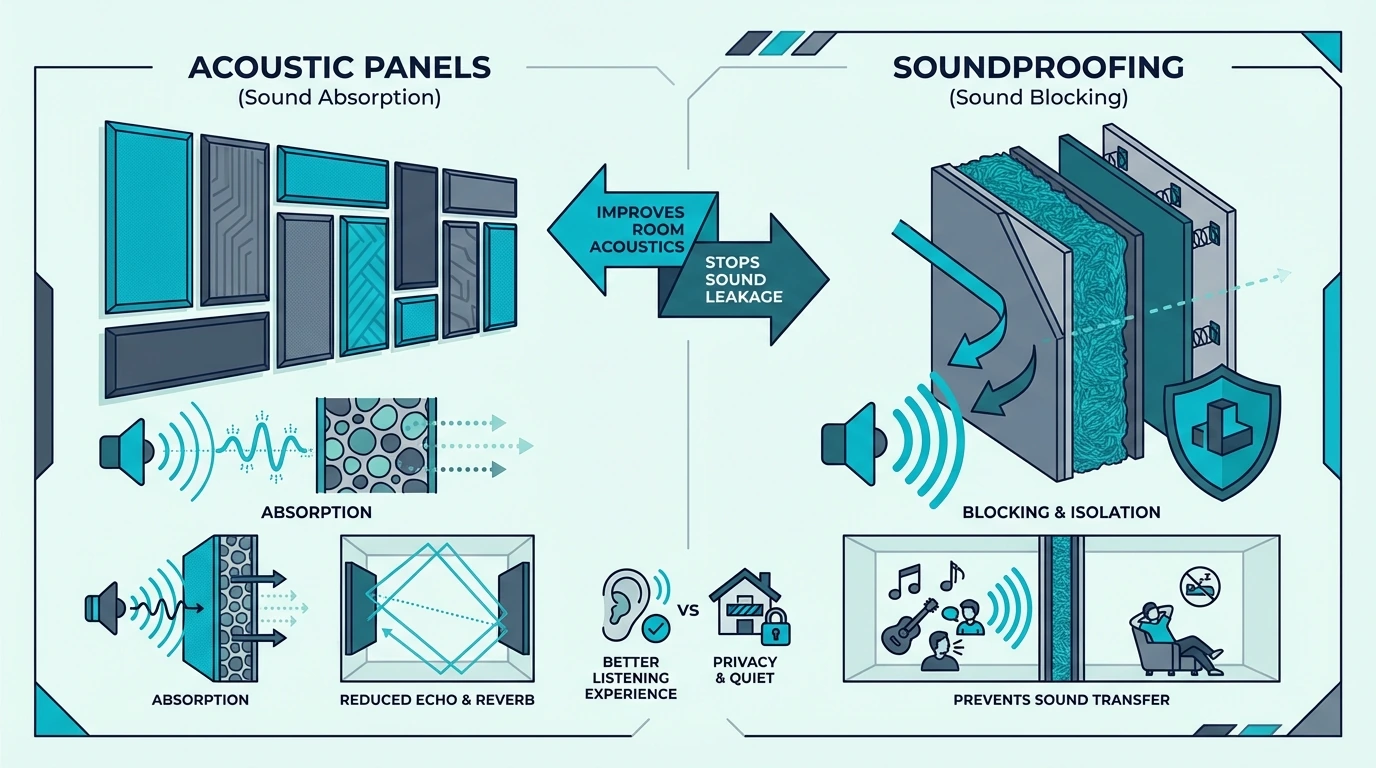
Acoustic panels absorb sound waves bouncing around inside your room. They reduce echo and reverb, but they do not block sound from traveling through walls, floors, or ceilings.
If you are hoping panels will stop your neighbors from hearing your music, the physics works against you.
Once you understand the difference between absorption and blocking, you’ll know exactly which approach fits your actual problem. Below you’ll find what panels do, what they cannot do, and what actually works for keeping sound contained.
No — acoustic panels do NOT keep sound in or out. They reduce echo and reverb inside your room by absorbing sound waves, but they cannot block sound from traveling through walls. For actual sound containment, you need mass, decoupling, and sealing.
Do Acoustic Panels Actually Keep Sound In?
Acoustic panels cannot keep sound contained in a room. The reason is not quality or price — it is physics.
The confusion usually starts with misleading product labels, then gets worse when people misread the results of their own installation. Both problems have the same root cause.
Why People Think Panels Block Sound
The confusion starts with marketing. Terms like “soundproofing panels” and “noise reduction” appear everywhere, even on products that provide zero sound blocking.
When people install panels and notice their room sounds different, they assume the difference extends outside. It does not.
The room sounds better because there is less echo bouncing back — but the sound leaving your room has not changed at all. People cover entire walls with expensive acoustic foam expecting neighbors to stop complaining, yet the same amount of sound energy still reaches them.
What Panels Actually Do
Acoustic panels excel at one specific job: absorbing sound waves that would otherwise bounce off hard surfaces. The result is less echo, less reverb, and a tighter sound that benefits recordings and room clarity.
When sound hits a panel, the porous material — usually fiberglass, mineral wool, or dense foam — converts kinetic energy into tiny amounts of heat through friction. The sound does not bounce back into your room.
That absorption is valuable for cleaning up recordings and reducing “bathroom echo.” It just has nothing to do with keeping sound contained.
Can Acoustic Panels Block Noise From Entering or Leaving?
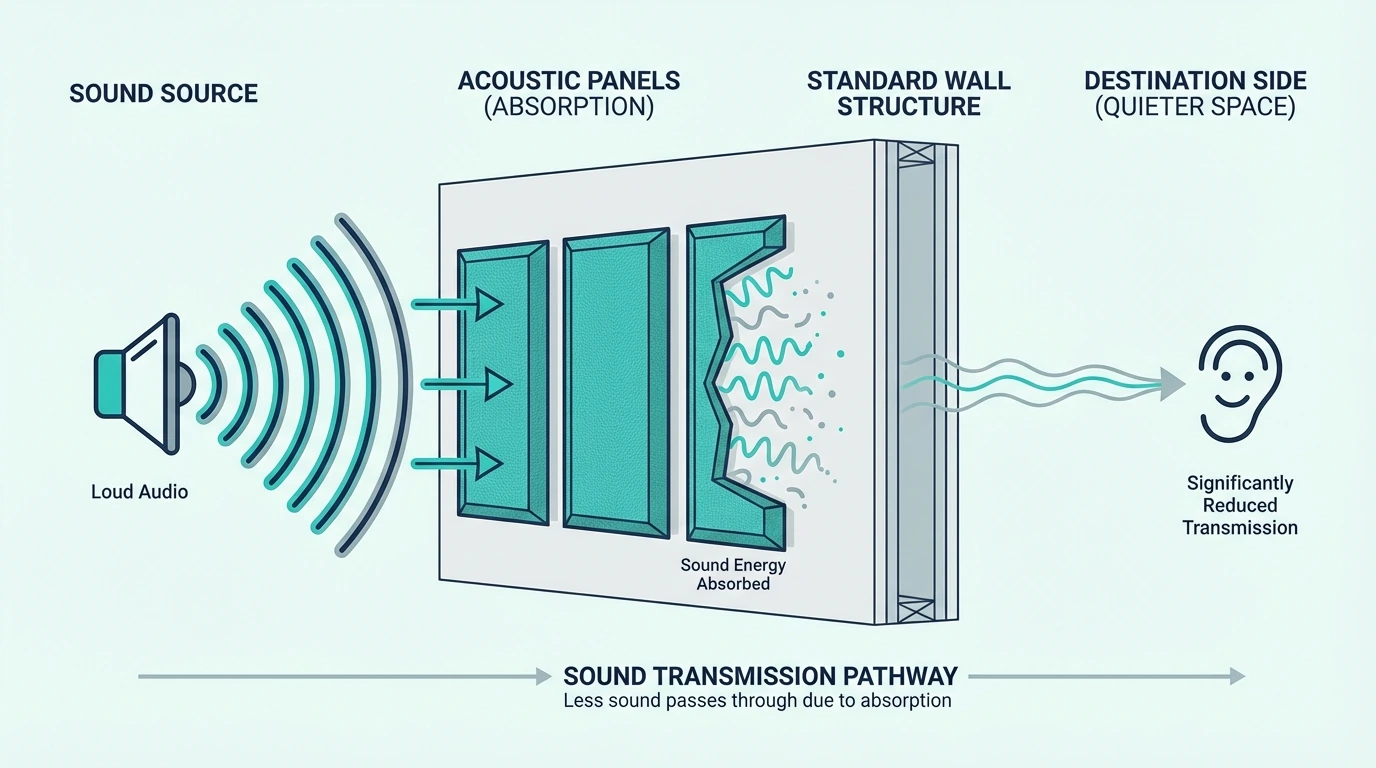
The answer is no across the board — but the reasons matter for finding the right solution. Two scenarios cover most questions.
Do Panels Stop Sound From Leaving Your Room?
No. Sound leaves your room primarily through structural vibration — your speakers or voice create pressure waves that vibrate the drywall, which vibrates the framing, which vibrates the adjacent room’s drywall.
Panels sit on top of the drywall. They might absorb some sound before it reaches the wall, but the vast majority of transmission happens through the structure itself.
Even covering every square inch of wall with panels does not meaningfully reduce what your neighbors hear.
Do Panels Stop Sound From Entering Your Room?
Also no. External noise — traffic, neighbors, airplanes — enters through the same structural paths.
Sound vibrates your walls, floor, and ceiling, then radiates into your room. Panels absorb some of that sound after it enters, potentially making the noise slightly less reverberant.
But the volume of outside noise reaching your room stays the same.
You might notice a subtle difference in how the noise sounds, but not how loud it is.
Why Absorption Does Not Equal Blocking
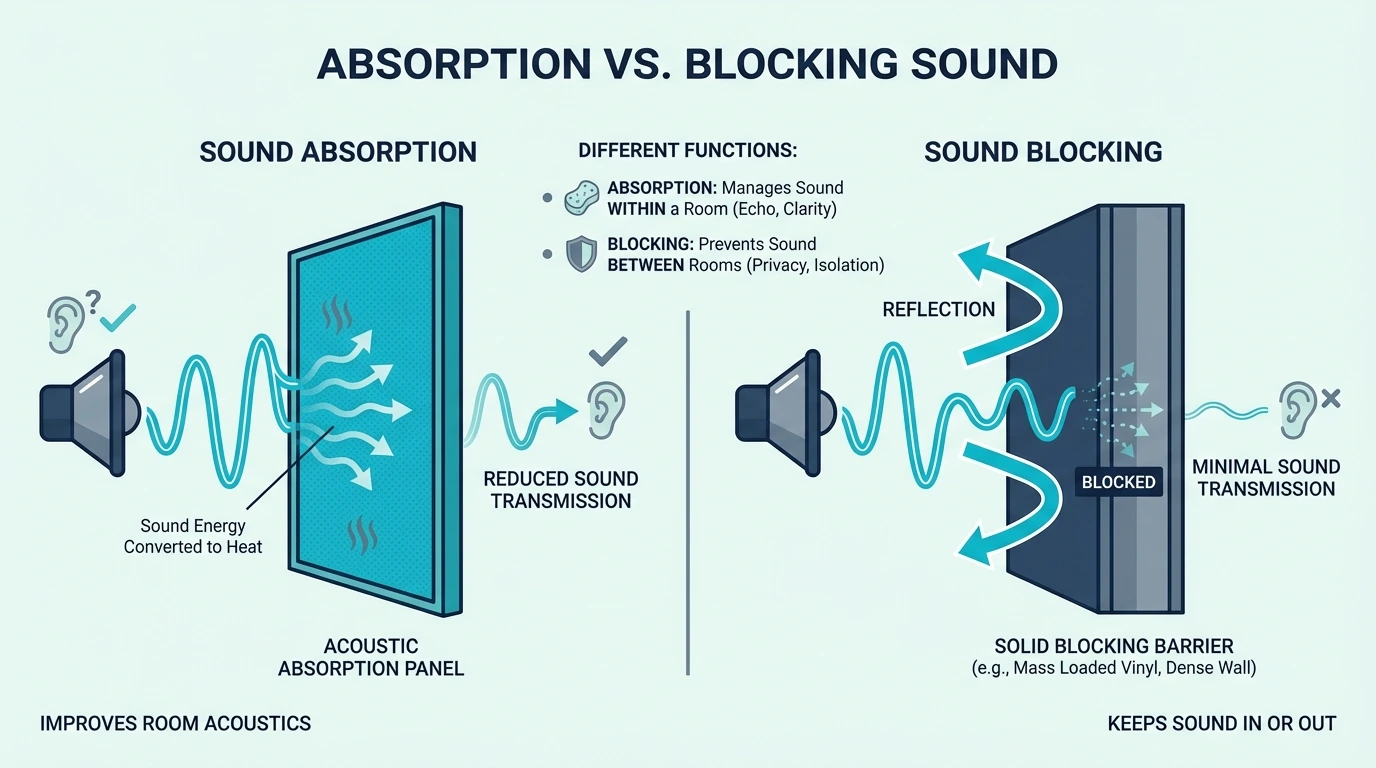
Think of it like a sponge versus a brick wall. A sponge absorbs water that touches it — but water still passes through if you push.
A brick wall blocks water entirely because it is dense and impermeable.
Acoustic panels are sponges. They are porous by design because absorption requires sound energy to enter the material and dissipate.
That same porosity means sound passes right through to whatever is behind them.
Sound blocking requires mass — heavy, dense materials like concrete, multiple layers of drywall, and mass-loaded vinyl that resist vibration. The opposite of what makes good acoustic panels.
Get Studio Tips Weekly
Join 5,000+ creators getting acoustic treatment advice every week.
No spam. Unsubscribe anytime.What Is the Difference Between Absorption and Blocking?
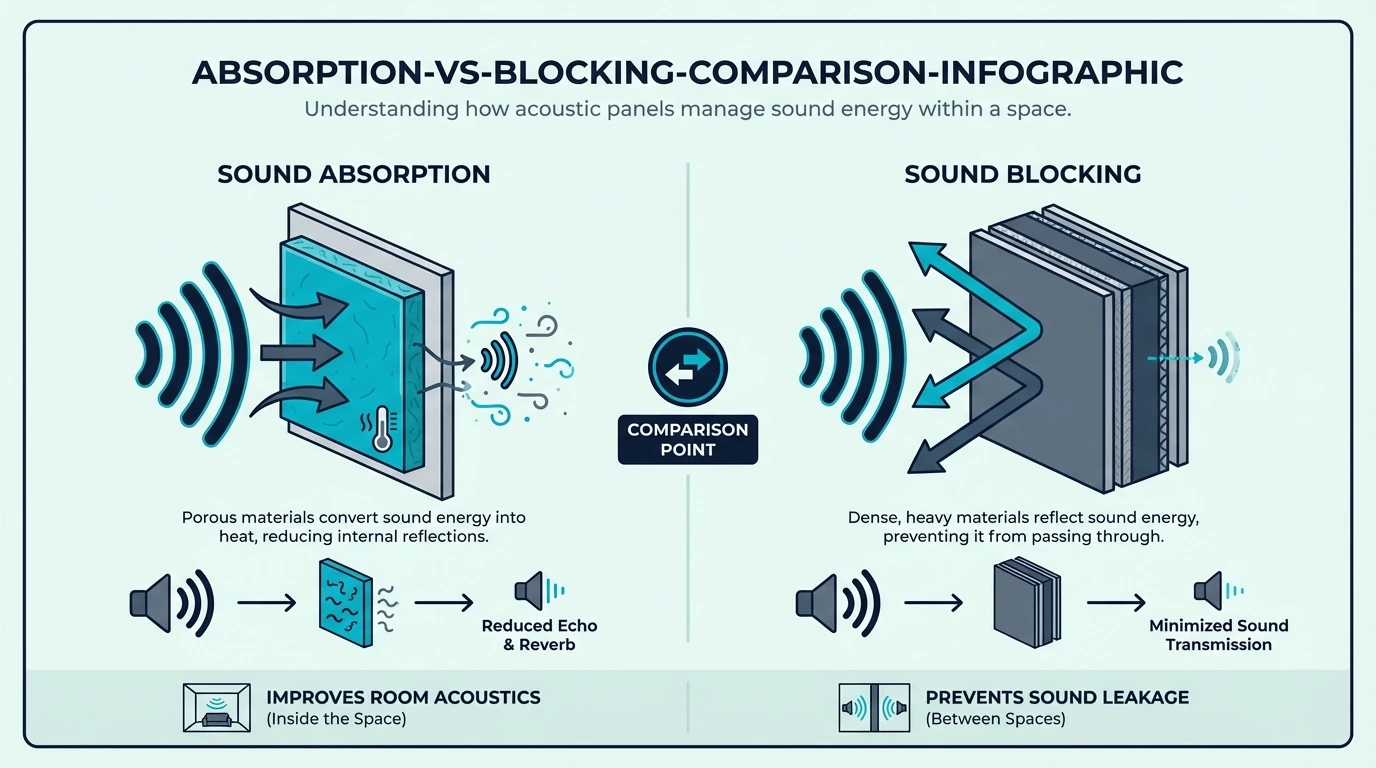
Absorption and blocking solve different physics problems — one kills reflections inside your room, the other stops energy from passing through walls. Each mechanism has its own materials, metrics, and practical limits.
How Sound Absorption Works
Sound absorption happens when sound waves enter a porous material and lose energy through friction. The fibers in acoustic panels create a maze that sound travels through, converting movement into heat.
High absorption means less sound bounces back into your room. An NRC rating of 0.85 means 85% of sound energy gets absorbed rather than reflected — and thicker panels reach deeper into the frequency range.
The practical effect is shorter reverb time, fewer distinct echoes, and better overall clarity. Absorption makes your room sound “tighter” and “deader” — exactly what recording studios want.
How Sound Blocking Works
Sound blocking — actual soundproofing — prevents sound from transmitting through a barrier. The physics are completely different: mass, isolation, and sealing.
Mass means heavy materials that resist vibration. Sound has to physically move the barrier to pass through, and heavier materials are harder to move.
Concrete walls block more sound than drywall because concrete is far heavier per square foot.
Decoupling means breaking the vibration path. If your drywall directly touches the framing, vibrations travel straight through.
Adding resilient channels or separate stud walls creates air gaps that interrupt transmission.
Sealing means eliminating air gaps. Sound travels through any opening — under doors, around electrical outlets, through HVAC ducts.
Even excellent wall mass fails if sound can go around it. For doorways and uncovered windows where rigid materials are not practical, a VEVOR Sound Dampening Blanket hung from a tension rod adds a temporary mass barrier without permanent modifications.
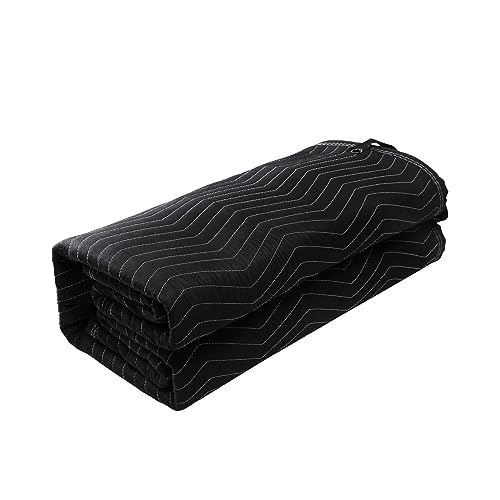
VEVOR Sound Dampening Blanket
Critical sealing points include door perimeters (weatherstripping and door sweeps), electrical outlets (putty pads behind boxes), HVAC penetrations (flexible duct connections), and any pipe or wire pass-throughs. If air can pass through, so can sound.
Why These Problems Need Different Solutions
You probably need one approach or the other, not both.
If your problem is echo, reverb, or muddy recordings — panels solve it. If your problem is noise transfer between spaces — you need construction work, not panels.
Some situations benefit from both. A recording studio needs absorption for clean sound AND isolation to prevent bleed.
But these are separate systems solving separate problems.
Will Acoustic Panels Help With Neighbor Noise?
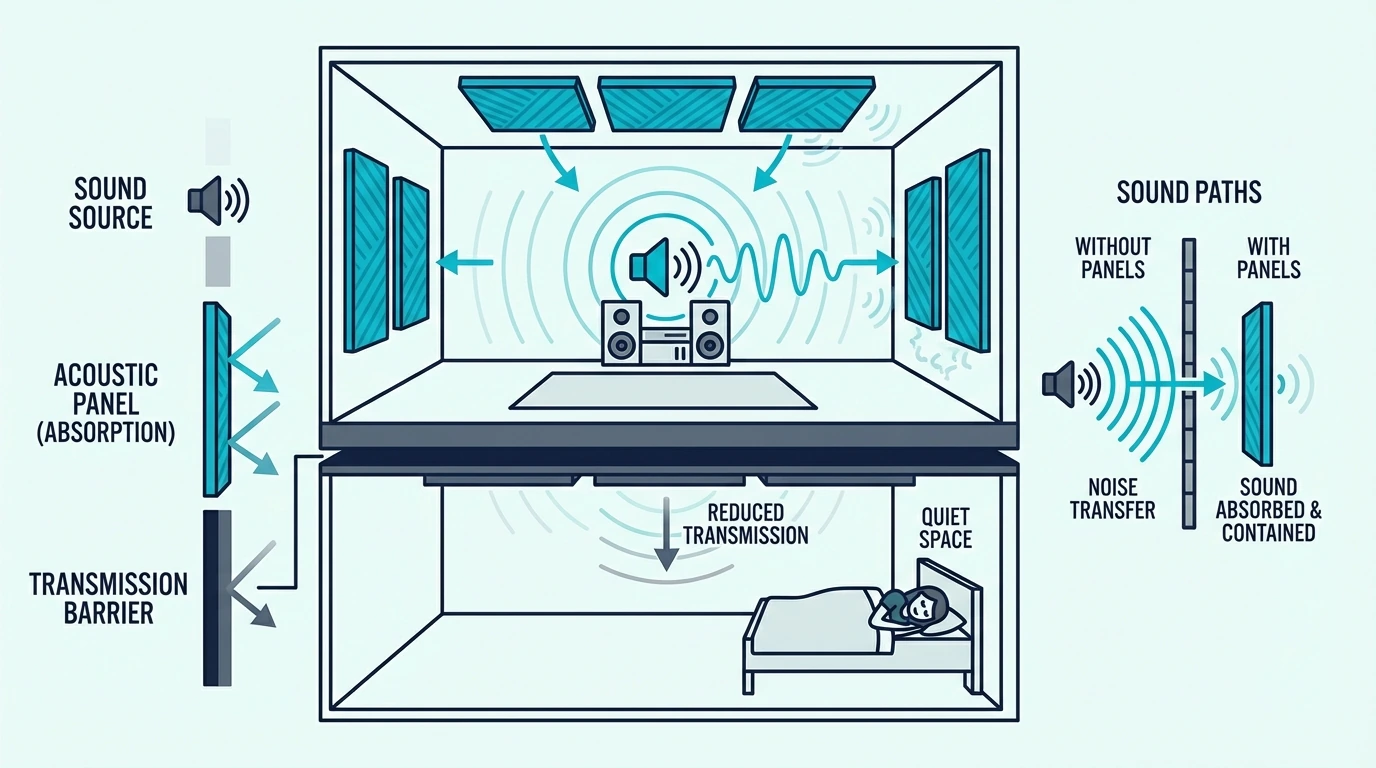
Panels will not meaningfully reduce noise from neighbors above, below, or beside you. The sound travels through the building structure — shared walls, floor/ceiling assemblies, sometimes even through the entire building frame.
The two most common complaints — impact noise from above and street noise through windows — show why panels miss the mark entirely.
Impact Noise From Above or Below
Footsteps, dropped objects, and bass from speakers create impact noise that travels through floor joists. The ceiling and walls in your apartment vibrate because they are physically connected to the source.
Ceiling panels might slightly reduce how reverberant the noise sounds in your room, but they will not make it quieter. The structural transmission overwhelms any absorption benefit.
Real solutions for footstep noise include adding mass to your ceiling (another layer of drywall), decoupling (resilient channels or a dropped ceiling with air gap), or asking upstairs neighbors to add rugs and underlayment.
Street and Traffic Noise
Traffic noise typically enters through windows, which are the weakest point in any wall. Acoustic panels elsewhere in your room will not help because they are not in the sound’s path.
Window treatments matter here: heavy curtains, secondary glazing (adding a second window), or acoustic window inserts. Even sealing gaps around the window frame helps more than panels on your walls.
What Actually Keeps Sound In (or Out)?
For actual sound blocking, Trademark Mass Loaded Vinyl adds the mass needed to reduce transmission through walls and floors. Panels alone will not do it, though — blocking sound between two rooms is a mass-and-gaps problem.
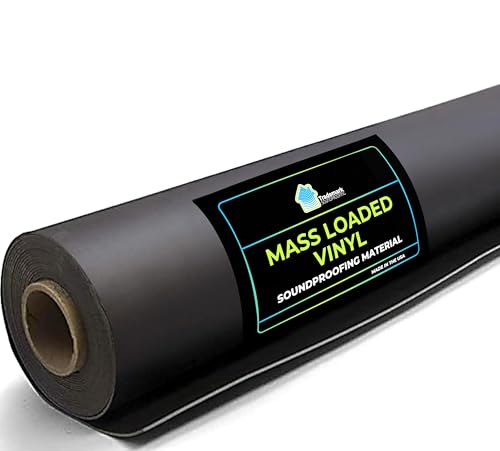
Trademark Mass Loaded Vinyl
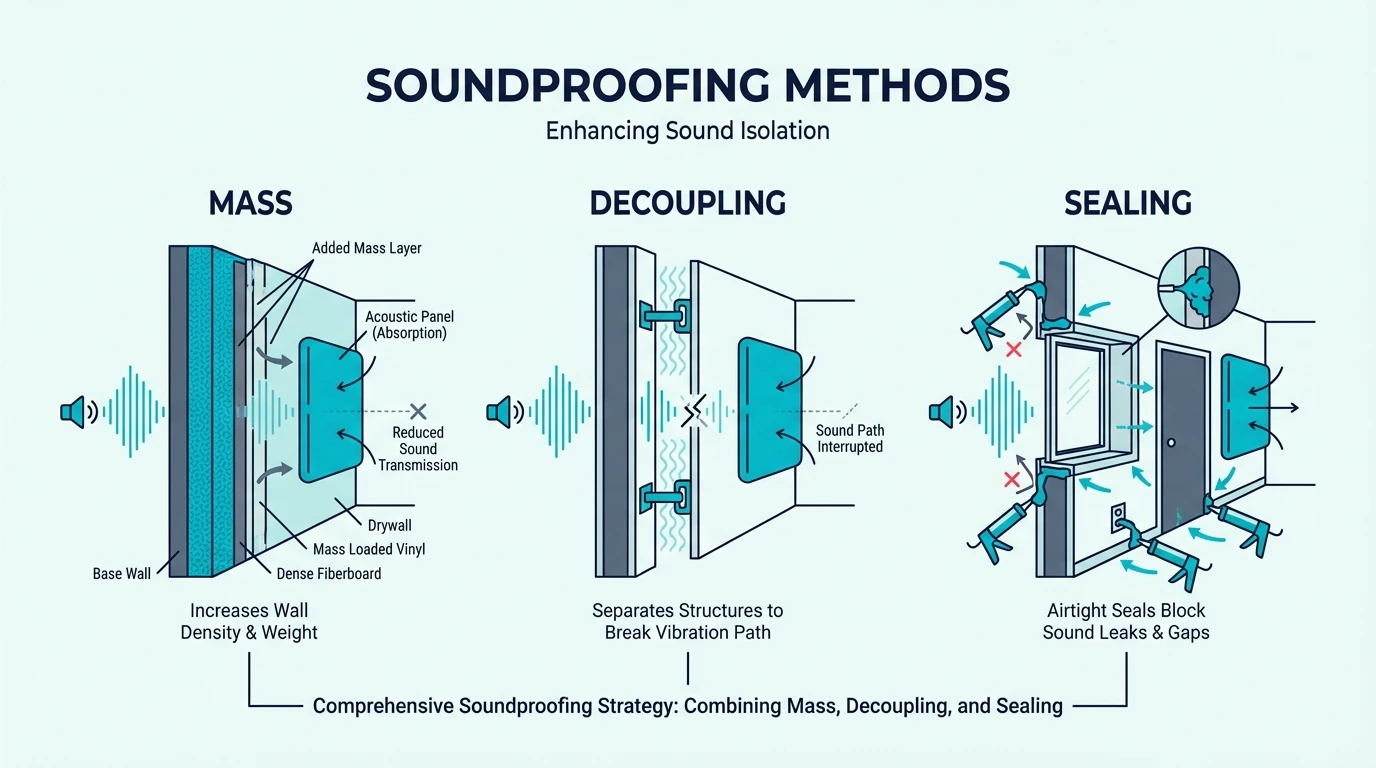
Mass alone is only part of the equation though. Real sound containment requires three elements working together — mass, decoupling, and sealing — and skipping any one of them leaves an obvious weak point.
Mass: Heavy Materials
Sound struggles to vibrate heavy objects. Adding mass to walls, floors, or ceilings directly reduces transmission.
Options range from simple (additional drywall layers) to specialized (mass-loaded vinyl, or MLV). Double drywall with Green Glue compound between layers is a popular DIY approach — the compound converts vibration to heat.
For context: a single layer of 5/8” drywall provides about STC 33 (Sound Transmission Class). Double drywall can reach STC 40-45.
Full soundproof construction hits STC 55-65+.
Decoupling: Breaking Vibration Paths
Mass alone has limits because vibrations still travel through the structure. Decoupling interrupts this path with air gaps or resilient connections.
Resilient channels are metal strips that attach drywall to studs with a spring-like connection — a completely different mechanism from hanging acoustic panels on a finished wall. The drywall can vibrate somewhat independently from the framing, reducing transmission.
Separate stud walls — building a new wall with a small air gap from the existing wall — provide better decoupling. Professional studios use separate stud walls where maximum isolation matters.
Sealing: Eliminating Air Gaps
Sound finds every opening. A wall with excellent mass and decoupling fails if there is a 1/4” gap under the door.
Critical sealing points include door perimeters (weatherstripping and door sweeps), electrical outlets (putty pads behind boxes), HVAC penetrations (flexible duct connections), and any pipe or wire pass-throughs. If air can pass through, so can sound.
When to Use Acoustic Panels vs Soundproofing
If room acoustics — not soundproofing — is your actual problem, 2-inch absorption panels like the UMIACOUSTICS 4-Pack with Brackets are the right tool for the job. These two checklists sort out which path fits your situation.
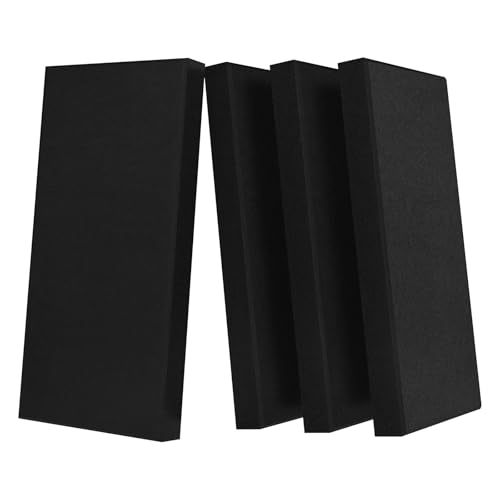
UMIACOUSTICS 4-Pack with Brackets
Panels Are Right For
Echo and reverb control — If your room sounds like a gymnasium or bathroom, with voices trailing off and music sounding muddy, absorption solves this immediately.
Recording and mixing — You need to hear what your microphones and monitors actually capture, not what your room adds. Properly placed panels at first reflection points give you accurate sound.
Home theater clarity — Dialogue intelligibility improves when you reduce competing reflections, and surround effects localize better in a treated room. The home theater panel guide covers placement specifics.
Video calls and podcasts — That hollow, echoey sound on calls comes from room reflections. Even a few panels behind your camera noticeably improve audio quality.
Soundproofing Is Right For
Reducing what neighbors hear — If complaints about your music, drums, or home theater are the issue, you need mass and sealing, not absorption.
Blocking external noise — Traffic, construction, airplanes — these require window treatments, mass additions, and sealing rather than panels.
Privacy between rooms — Preventing conversation from being overheard requires sound blocking, not absorption.
Home studios in apartments — Recording yourself is one thing; preventing sound from bothering others requires actual construction. The studio panel guide covers recording-focused treatment.
Soundproofing typically requires professional assessment and construction work. It costs more and is more invasive than acoustic treatment.
Conclusion
Panels fix how your room sounds — mass, decoupling, and sealing fix what your neighbors hear. Buying the wrong solution is the most expensive mistake in room acoustics.
If your issue is room acoustics — echo, reverb, recording quality — acoustic panels are the right fix. Start with choosing the right panel thickness, then work out how many panels you need for your room size.
If your issue is sound transfer — neighbor noise, keeping sound contained — panels will not help. Mass-loaded vinyl, additional drywall, and door sealing are the starting points, and a soundproofing professional can assess the highest-impact improvements for your space.
For many home studios, the realistic approach is accepting some sound transfer while optimizing what you can control. Treat your room acoustically for better recordings, record during reasonable hours, and focus soundproofing efforts on the highest-impact areas like doors.
Frequently Asked Questions
Will panels make my room quieter?
Sort of — but not in the way you might hope. Panels reduce reverb, which makes the room feel less chaotic and “busy.” You might perceive this as quieter because there is less overlapping sound.
But the actual sound pressure level (dB) in your room does not drop meaningfully. External noise stays the same volume; it just sounds less reverberant.
And sound leaving your room is not reduced at all.
Can I record without soundproofing?
Yes — most home recordings happen without professional soundproofing. The key is managing what you can control.
Record during quiet times, use directional microphones that reject off-axis noise, and treat your room acoustically to get cleaner recordings. Some background noise is inevitable; noise reduction in post-production handles minor issues.
What is the cheapest way to block sound?
Mass-loaded vinyl (MLV) behind drywall and sealing doors properly offer the best cost-to-effectiveness ratio for DIY soundproofing. Weatherstripping around doors costs under fifty dollars and can noticeably reduce sound transfer if your door currently has gaps, and adding a second layer of 5/8” drywall with acoustic caulk at edges is the next most affordable step up.
Do acoustic foam panels block any sound?
Technically, any material blocks some sound — a piece of paper “blocks” sound too. But foam panels block so little (1-2 dB) that it is not meaningful for practical purposes.
Foam absorbs well at high frequencies, making it useful for reducing flutter echo. But its light weight means it has close to zero sound blocking capability.
Do not expect foam to help with neighbor noise or keeping sound contained.