Acoustic Panels vs MLV: Which Do You Actually Need? [2026]
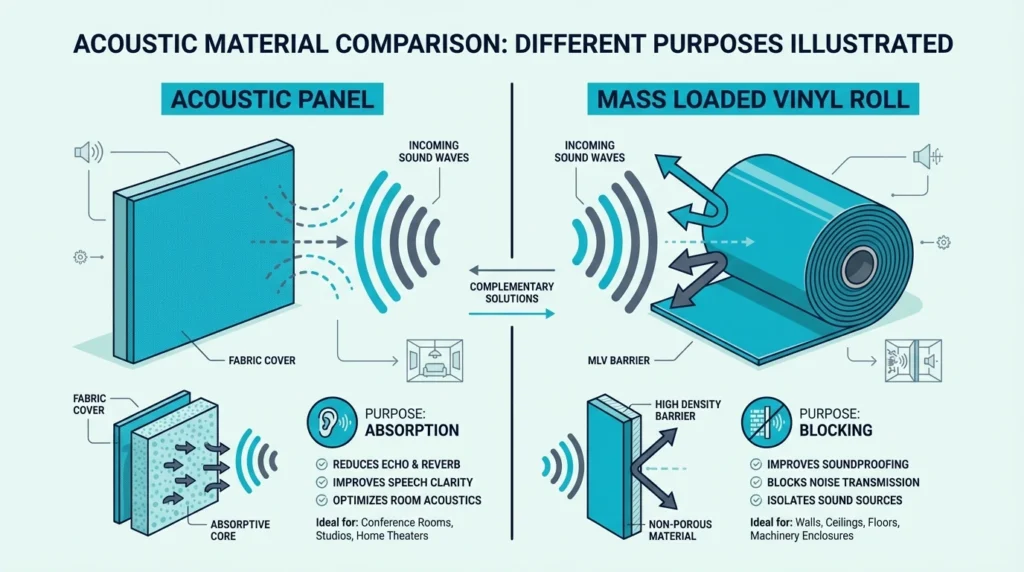
Acoustic panels vs MLV—they sound like they do similar things, but they’re designed for completely different purposes. Acoustic panels absorb sound inside your room.
Mass loaded vinyl blocks sound from passing through walls. Choosing the wrong one wastes money on a product that can’t solve your actual problem.
Below you’ll find when you’ll want each, whether combining both makes sense, and the mistakes that send people back to square one.
First, the core difference between absorption and blocking.
Acoustic panels absorb sound reflections inside your room (echo, reverb, clarity). MLV blocks sound transmission through walls (neighbor noise, isolation). They solve different problems — panels won’t block neighbor noise, and MLV won’t fix room echo.
What Makes Acoustic Panels Different from MLV?
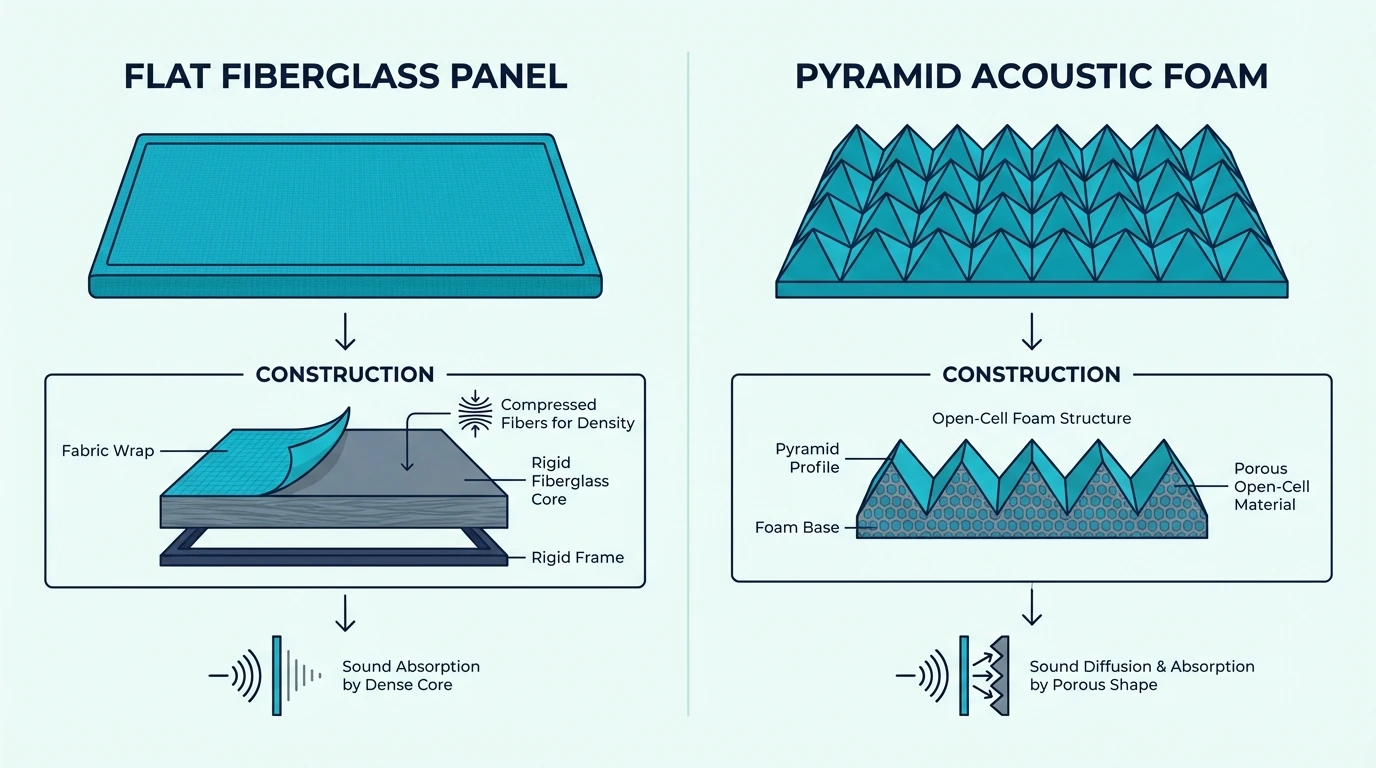
The core difference is the problem each one solves:
Acoustic Panels treat sound inside your room. They absorb reflections that cause echo, reverb, and poor clarity.
When you clap in an empty room and hear ringing, panels fix that. They’re made of porous materials—fiberglass, mineral wool, or polyester—that convert sound energy to heat through friction.
Mass Loaded Vinyl (MLV) blocks sound from passing through structures. When your neighbor’s TV bleeds through the wall, MLV helps stop that.
It’s a dense, heavy barrier that resists vibration. The mass law principle: heavier barriers transmit less sound.
Choose panels when you need better room acoustics. Choose MLV when you need sound isolation between spaces.
Many projects require both.
What Are Acoustic Panels?
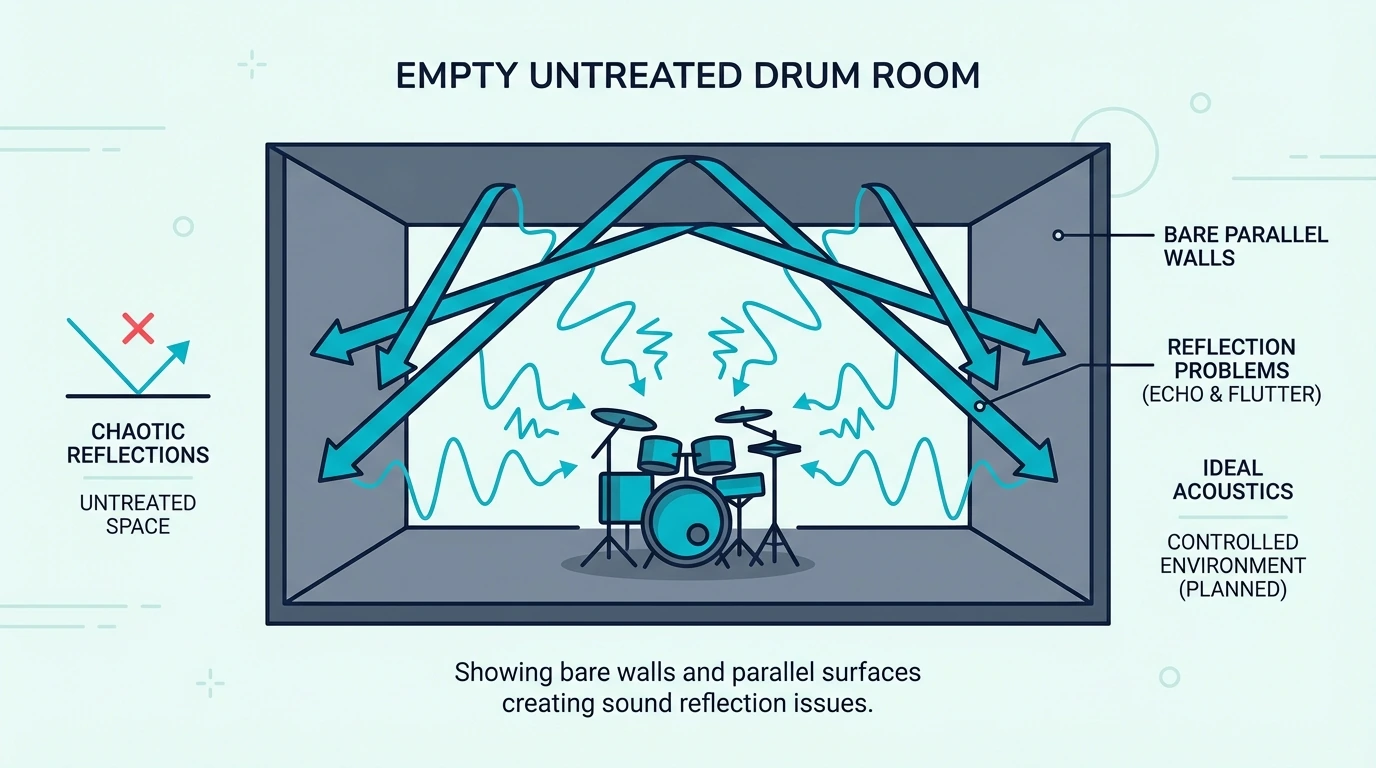
Acoustic panels are porous absorbers designed to control sound reflections within a space. They’re the foundation of room acoustic treatment—used in recording studios, home theaters, offices, and anywhere clarity matters.
What Materials Are Acoustic Panels Made Of?
Professional acoustic panels use dense, fibrous cores that trap and absorb sound energy. Fiberglass—like Owens Corning 703—offers excellent absorption across the full frequency spectrum and remains the industry standard for studio treatment.
Mineral wool (Rockwool) provides similar acoustic performance with better fire resistance, making it popular for commercial installations. Polyester fiber panels are lighter and safer to handle without protective equipment, though they typically cost more.
These cores get wrapped in acoustically transparent fabric—material that lets sound pass through to the absorbent core while providing clean aesthetics.
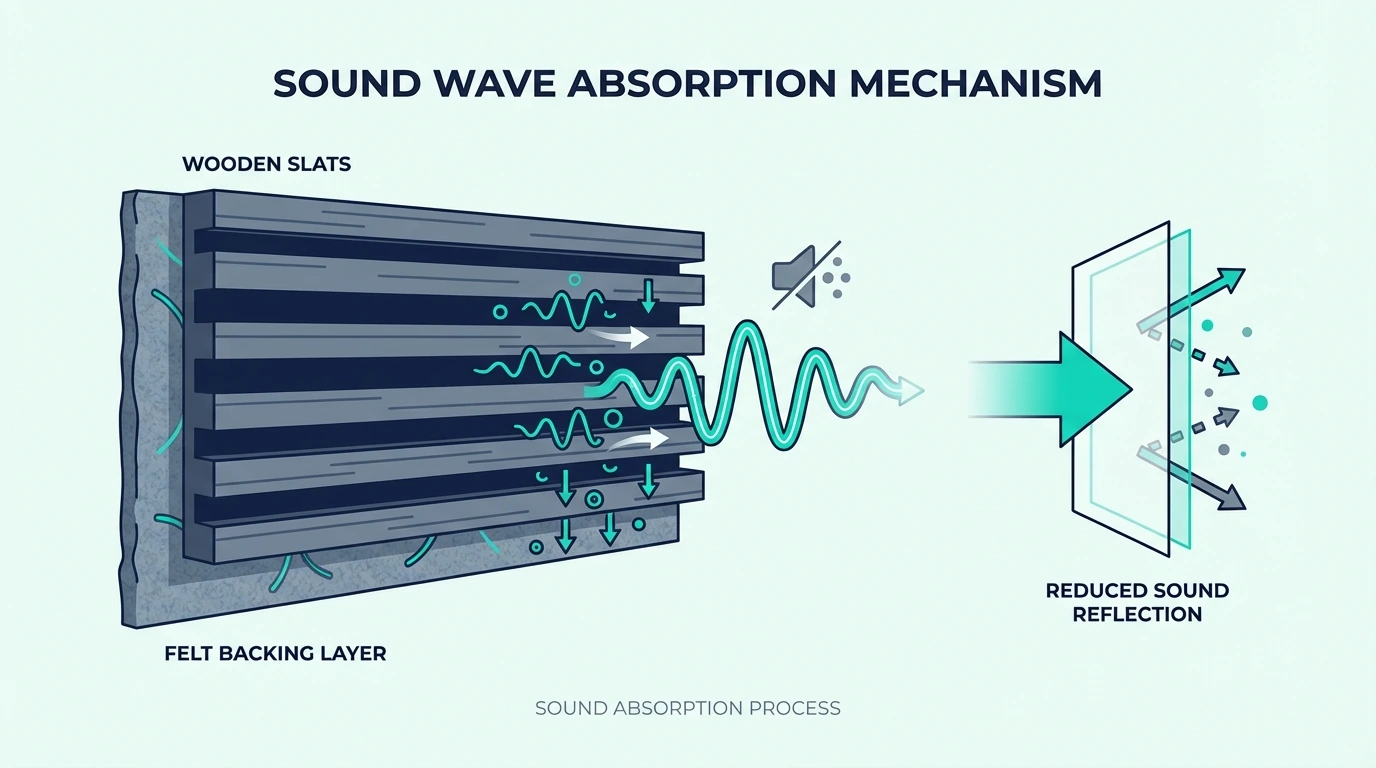
The key property is porosity. Sound waves enter the material, and friction between air molecules and fibers converts acoustic energy to small amounts of heat.
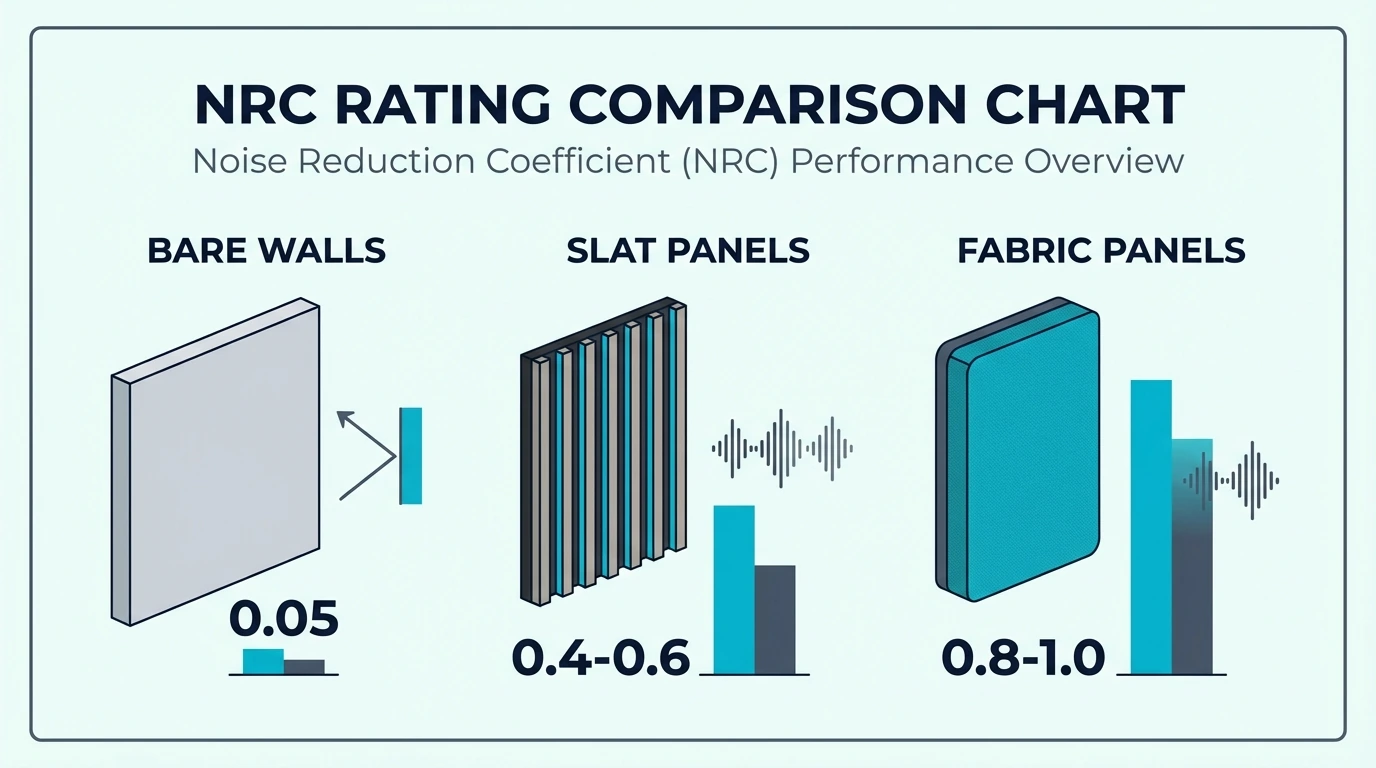
The NRC rating guide explains how this absorption process works at a fundamental level.
How Do Panels Change the Sound in a Room?
Panels reduce the sound reflections that cause common acoustic problems. The panel count guide covers how many panels different room sizes need.
Flutter echo—that metallic ringing you hear when you clap between parallel walls—disappears when panels absorb those back-and-forth reflections.
Excessive reverb that muddies speech and music gets controlled as panels absorb the reflected energy before it builds up. Comb filtering at listening positions and standing waves at specific frequencies also improve with strategic panel placement.
When you place panels at reflection points, the first reflections that would otherwise interfere with direct sound get absorbed instead. Clarity improves noticeably for recording, mixing, video calls, and critical listening.
For quality absorption, the UMIACOUSTICS 4-Pack Fiberglass Panels offer professional-grade absorption with NRC ratings suitable for studios and home theaters.
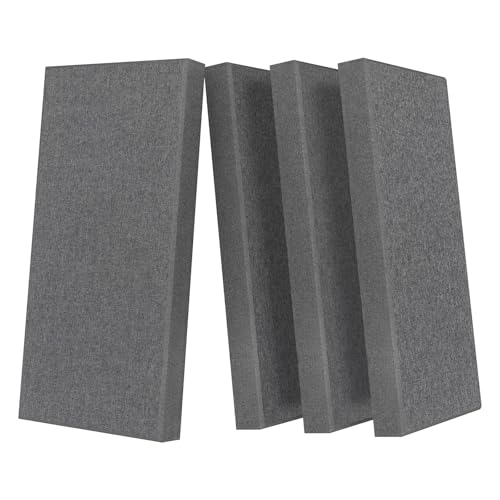
UMIACOUSTICS 4-Pack Fiberglass Panels
When to Use Acoustic Panels
Acoustic panels excel in spaces where sound clarity matters. Recording studios and vocal booths rely on panels to capture clean audio without room coloration.
Home theaters and listening rooms use panels to hear movies and music as intended, not filtered through room reflections.
Video conferencing and podcast spaces benefit from panels that eliminate the hollow, echoey sound that makes remote communication fatiguing.
Open offices use panels for speech privacy—absorbing conversations before they carry across the room.
They won’t block sound transmission. Someone in the next room will hear you just as clearly whether you have panels or not—your voice will just sound less reverberant on your side.
Get Studio Tips Weekly
Join 5,000+ creators getting acoustic treatment advice every week.
No spam. Unsubscribe anytime.What Is Mass Loaded Vinyl?
Mass loaded vinyl is a dense, flexible barrier material designed to block sound transmission through walls, floors, and ceilings. It’s a soundproofing material, not an acoustic treatment material—a critical distinction.
What Is MLV Made Of?
MLV combines a vinyl polymer base with heavy mineral particles—typically barium sulfate or calcium carbonate—that give it exceptional density. Plasticizers keep the material flexible enough to drape over surfaces while maintaining its mass.
Standard MLV weighs 1 pound per square foot (1 lb/sq ft), though heavier versions (2 lb/sq ft) exist for demanding applications. This density is the source of its sound-blocking ability.
The material feels like thick, heavy rubber. It’s flexible enough to drape over surfaces but dense enough to resist the vibrations that transmit sound.
How Does MLV Block Sound?
MLV works through the mass law: adding mass to a barrier reduces sound transmission. When sound waves hit a wall, they cause the wall to vibrate, and those vibrations radiate sound on the other side.
Heavy materials resist vibration better than light ones. Adding MLV to a wall assembly increases its mass without adding much thickness—typically 1/8” thick but weighing considerably more per square foot than drywall.
The effectiveness is measured in STC (Sound Transmission Class) rating improvements. A standard drywall wall might rate STC 33-35.
Adding MLV can push that to STC 40-45, a noticeable reduction in transmitted sound.
For DIY soundproofing projects, the Trademark Mass Loaded Vinyl provides the industry-standard 1 lb per square foot density for effective sound blocking.
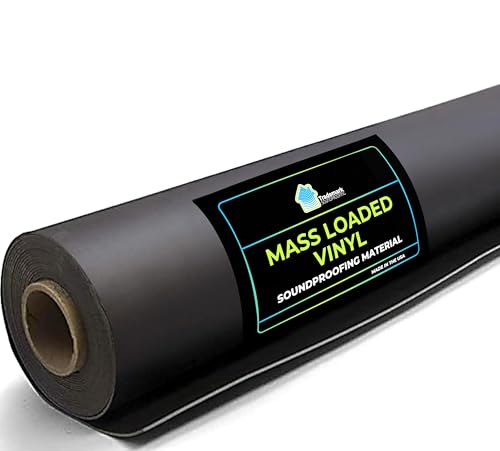
Trademark Mass Loaded Vinyl
When to Use MLV
MLV excels at reducing sound transmission between rooms—the primary use case for most buyers. Home studios use it to isolate recording spaces from living areas, preventing bleed in both directions.
Traffic and industrial noise from outside can be reduced with MLV on exterior walls. Shared walls in apartments and condos see noticeable improvement, though landlord permission is typically required.
MLV also works well wrapped around HVAC ducts and pipes to reduce transmitted mechanical noise.
It doesn’t absorb sound or improve room acoustics. Your room will sound exactly the same with MLV installed—it just blocks what gets in or out.
When to Use Panels vs When to Use MLV
The choice depends entirely on which problem you’re solving. Many people buy the wrong product because they conflate “acoustic treatment” with “soundproofing.”
How to Choose Between Them
Choose panels if you experience echo when you clap or speak loudly. Difficulty understanding speech, muddy music, and ringing between parallel walls all point to absorption problems that panels solve.
Harsh reflections during video calls—that hollow, echoey quality—also respond well to panel treatment.
Choose MLV if you hear neighbors through walls or if sound from your space disturbs others. External traffic noise, the need for confidential conversations, and recording situations where you pick up sounds from other rooms all require blocking.
MLV provides that blocking capability.
Why Don’t Panels Work for Soundproofing?
The most frequent error is buying acoustic panels (or worse, acoustic foam) expecting them to block neighbor noise. Marketing sometimes implies soundproofing benefits that don’t exist.
The word “acoustic” sounds like it should handle all sound problems, but it only refers to absorption. And panels are so much easier to install than full wall soundproofing that people hope they’ll work anyway.
That porosity? It’s the problem here.
Panels are porous—sound passes through them easily.
They only absorb sound that’s already in your space. Sound transmitting through your wall bypasses the panel entirely.
The panels vs soundproofing comparison covers the absorption vs blocking difference further.
What Solution Does Each Room Type Need?
| Room Type | Typical Problem | Solution |
|---|---|---|
| Home studio | Echo + neighbor bleed | Both: MLV in walls, panels on surfaces |
| Podcast room | Echo only | Panels at reflection points |
| Home theater | Echo + bass from subs | Panels + bass traps; MLV if disturbing others |
| Shared apartment | Neighbor noise | MLV (panels won’t help) |
| Office | Speech privacy | Panels for reverb, MLV for confidentiality |
Can you Combine Panels and MLV?
Yes, and many professional spaces do exactly this. Panels and MLV address different parts of the acoustic equation—using both gives you isolation AND good room sound.
What Does a Fully Treated Room Include?
A properly treated room starts with an MLV layer in the wall assembly—installed behind the drywall for isolation. Decoupled mounting using resilient channels breaks the vibration paths that would otherwise transmit sound through the structure.
On the finished surface, acoustic panels handle absorption for room acoustics. Bass traps in the corners control low-frequency buildup that panels can’t address.
The MLV prevents sound from entering or leaving. The panels control what happens to sound inside the room.
Neither can do the other’s job.
What Order Should you Install Them?
When building from scratch or renovating, start with the MLV layer on studs or existing drywall. Seal every seam with acoustic caulk—gaps defeat the entire purpose of the barrier.
Install new drywall over the MLV, ideally with green glue between layers for additional damping. Once the room is finished and painted, mount acoustic panels on the completed surface.
For existing rooms where you can’t access the wall cavity, surface-mounted MLV with a decorative covering becomes an option, though less effective than in-wall installation.
How Does Installation Differ?
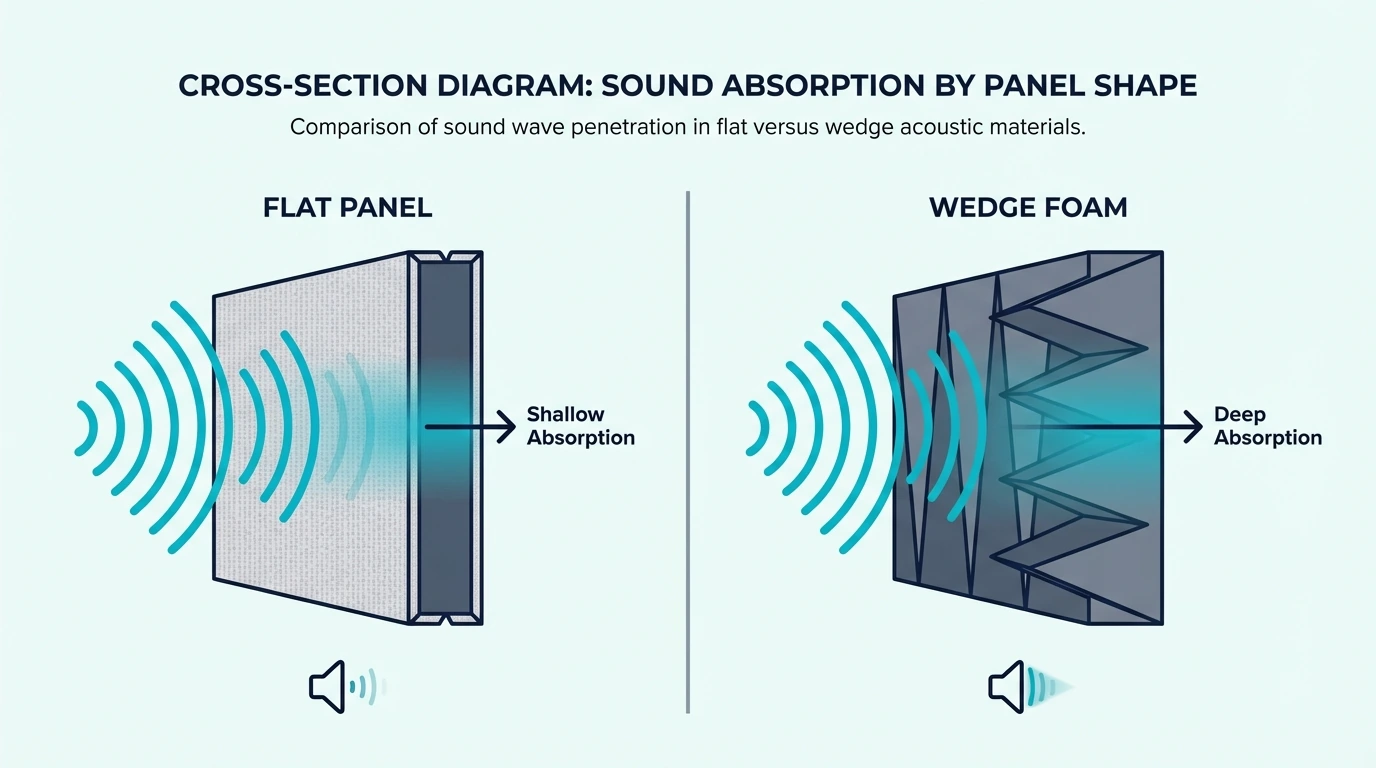
Panels and MLV sit at opposite ends of the installation spectrum.
How Hard Is Panel Installation?
Acoustic panels mount on finished surfaces using Z-clips, impaling clips, or French cleats. Some panels come with adhesive backing for even simpler installation.
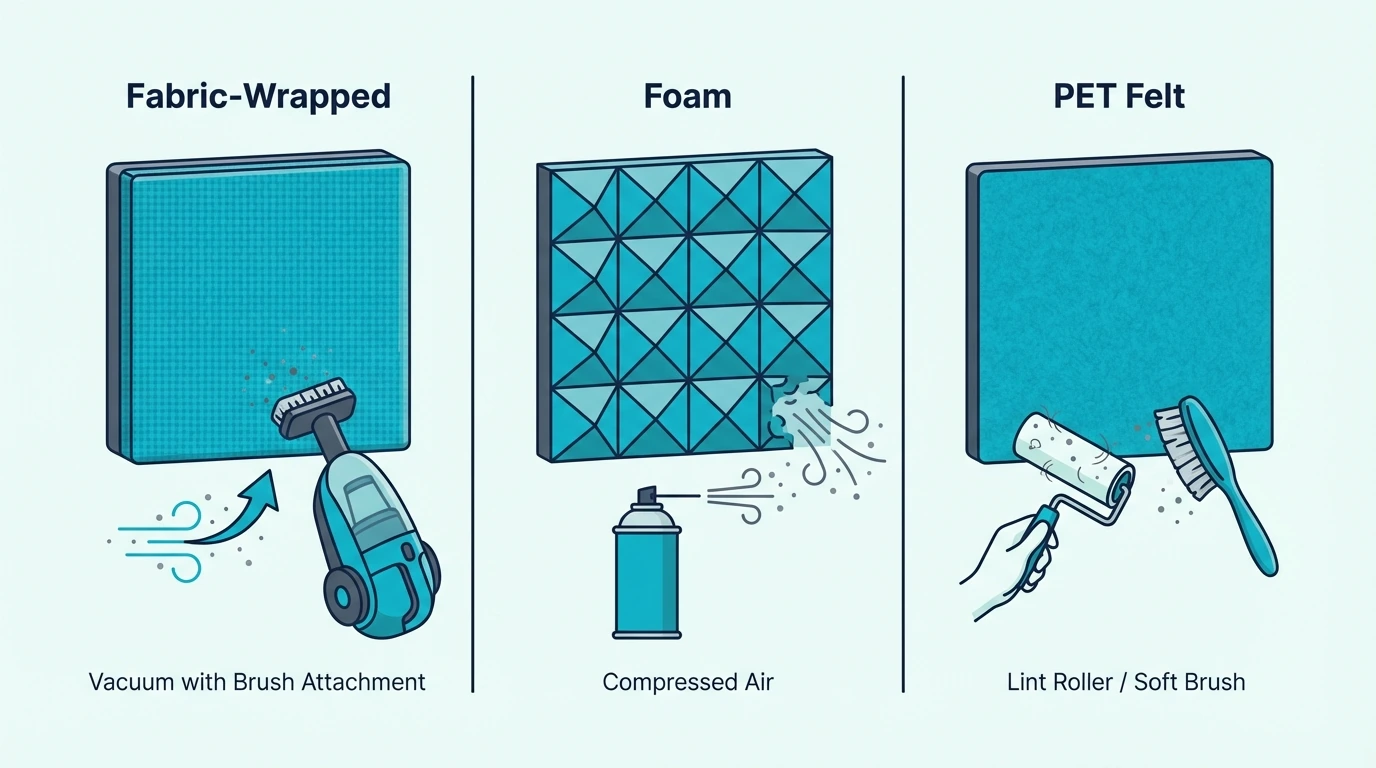
No special tools are required, and the installation is fully reversible—making panels renter-friendly. The panels remain visible as design elements, which is why fabric color and style matter.
For renters who can’t modify walls, the VEVOR Sound Dampening Blanket provides portable sound reduction without permanent installation.
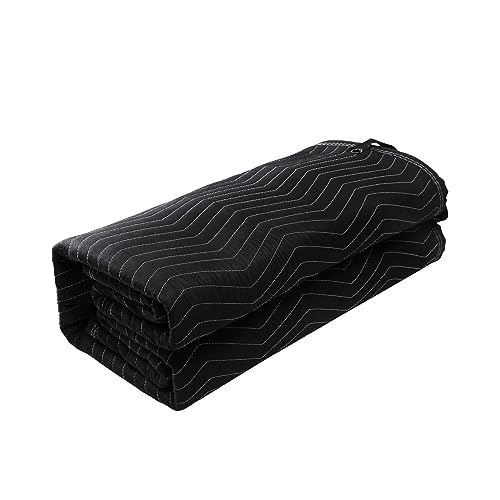
VEVOR Sound Dampening Blanket
Coverage matters more than placement perfection. Aim for 25-40% wall coverage for noticeable improvement.
The 1-inch vs 2-inch panel guide covers how thickness affects coverage and positioning.
How Hard Is MLV Installation?
MLV installation is more involved—it goes inside wall assemblies, requiring access to stud cavities or adding layers to existing walls. The material is heavy; 100 square feet weighs 100 pounds, so handling requires planning.
All seams must be overlapped and sealed with acoustic caulk. Electrical boxes need acoustic putty pads to prevent sound flanking through outlets.
Once installed, MLV is hidden behind drywall and invisible in the finished room.
Flanking paths matter enormously. Sound finds the easiest route—an unsealed outlet or gap around the door frame can undermine an otherwise excellent MLV installation.
The barrier is only as good as its weakest point.
How Do Panels and MLV Compare Side by Side?
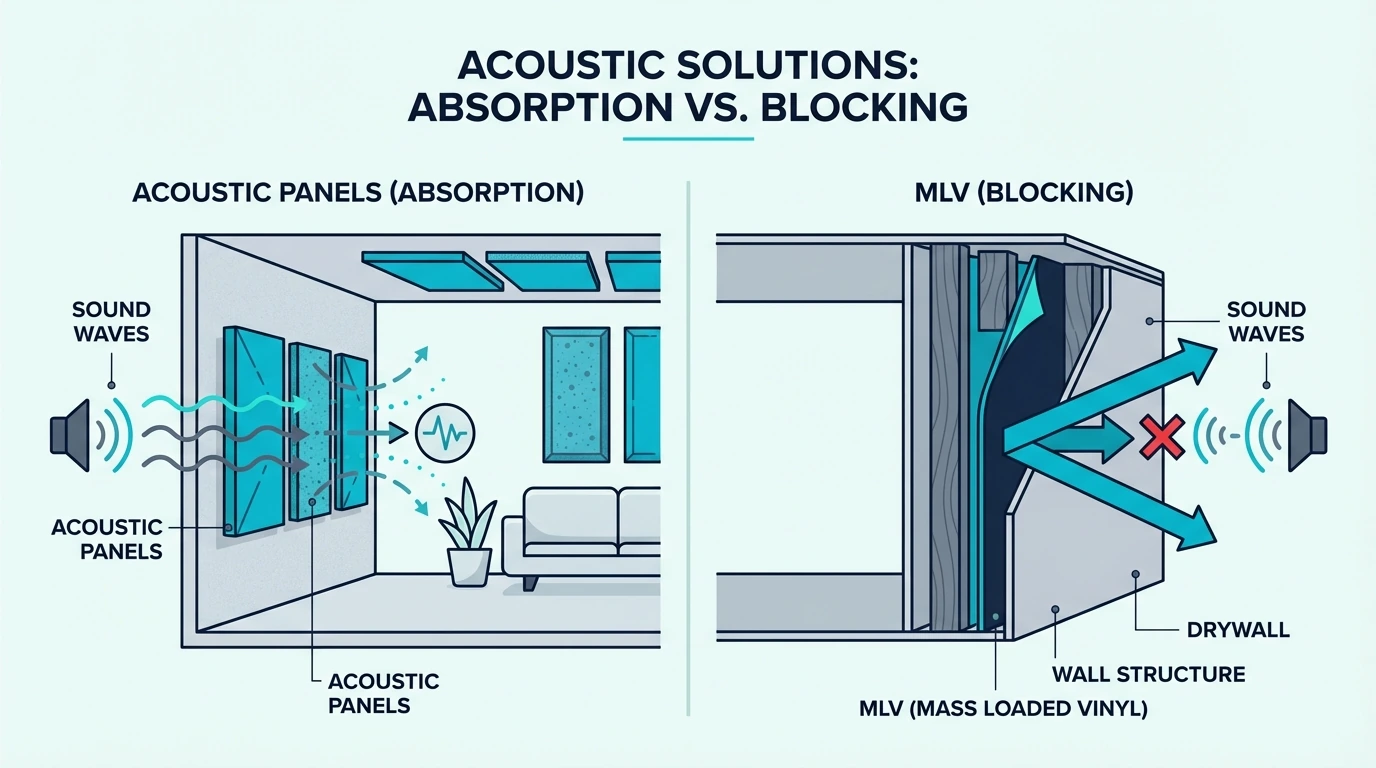
The table below puts every practical difference side by side. Scan the rows that matter most to your situation — the right choice usually becomes obvious once you see the tradeoffs lined up.
| Factor | Acoustic Panels | Mass Loaded Vinyl |
|---|---|---|
| Primary Function | Absorb reflections inside room | Block sound through structures |
| Measures | NRC rating (0-1.0+) | STC rating improvement |
| Typical Cost | $50-150 per panel | $1-2 per sq ft |
| Installation | Surface mount, DIY friendly | In-wall, more complex |
| Reversibility | Fully removable | Permanent (in-wall) |
| Renter Friendly | Yes | Usually no |
| Visible | Yes (design element) | No (hidden) |
| Weight | 5-15 lbs per panel | 1-2 lbs per sq ft |
| Fire Safety | Class A available | Varies by product |
Two rows tend to settle the decision for most buyers: function and reversibility.
If your problem is echo or muddy audio, panels solve it the same afternoon with zero wall damage. If sound is leaking between rooms, MLV is the only real fix — but it means opening walls or adding layers you can’t easily undo.
Cost per panel looks higher than cost per square foot of MLV, but that comparison is misleading. A full MLV installation includes drywall, caulk, labor, and finishing that push the real cost to $3-8 per square foot once the wall is closed back up.
Renters don’t have a choice here — panels are the only option that leaves the apartment intact. Homeowners who plan to stay long-term get the most value from MLV because the investment disappears into the wall and outlasts any surface treatment.
What Are the Cost and Practical Differences?
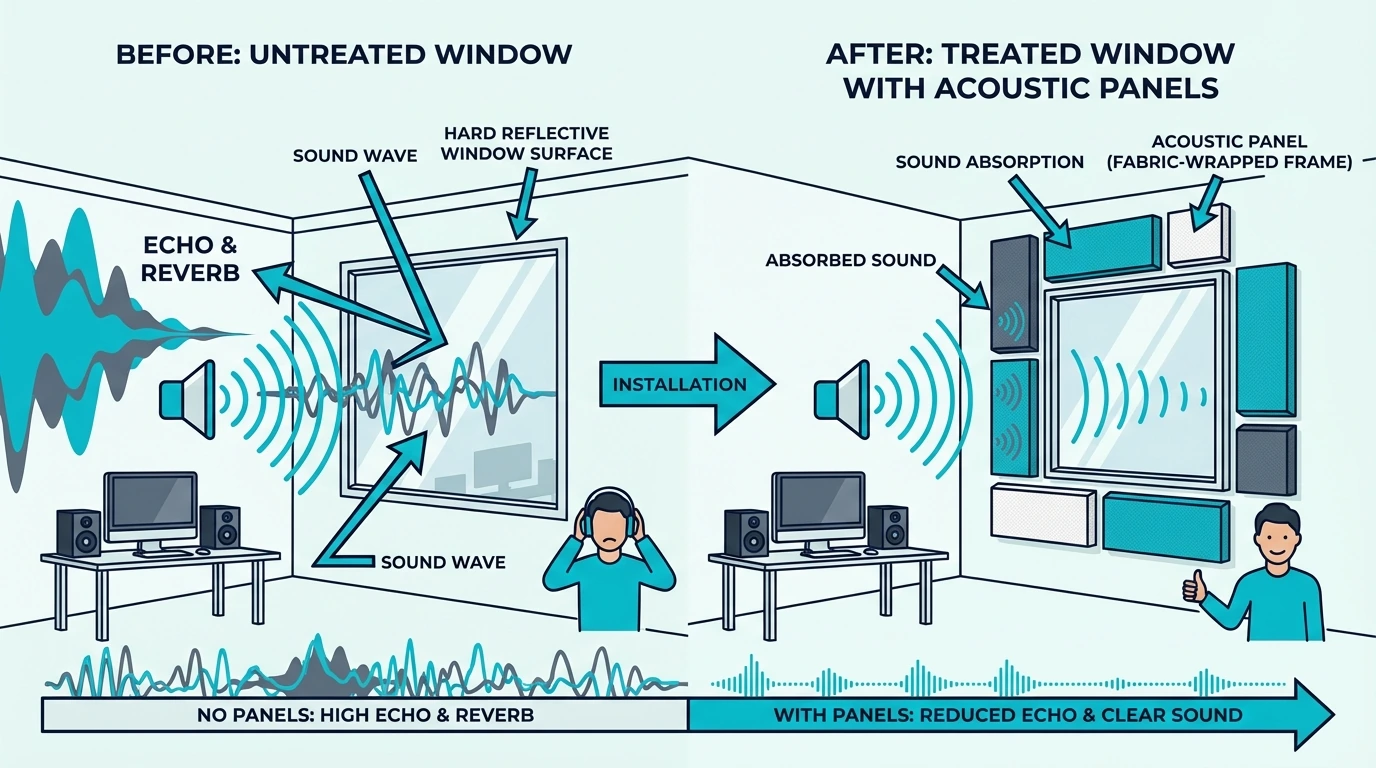
Beyond performance, panels and MLV differ in price, visual impact, and code compliance — all three shape which option fits a given project.
How Much Does Each Option Cost?
Acoustic Panels: Budget foam tiles start around $15-30 for a multi-pack, but real absorption starts with fabric-wrapped panels at $30-50 per 2×4-foot panel. Professional fiberglass panels from brands like ATS Acoustics and GIK sit at the premium end.
A typical room needs 8-16 panels for adequate coverage, depending on room size and how reflective the surfaces are. Total investment ranges from $250-2,000+ — the wide range reflects the gap between budget polyester and premium fiberglass.
For budget-friendly panel treatment, the Olanglab Fiberglass 4-Pack provides solid absorption at reasonable cost. The best acoustic panels guide has specific recommendations across price points.
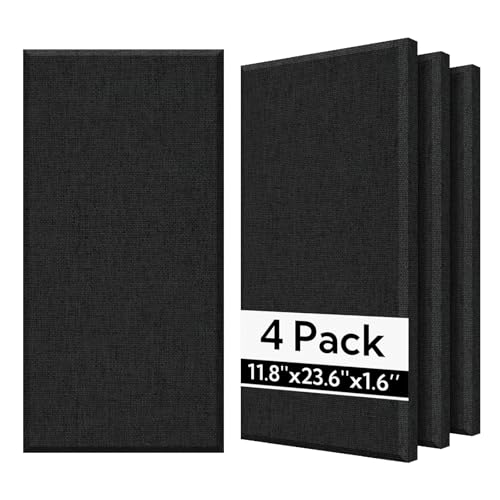
Olanglab Fiberglass 4-Pack
DIY panels cut costs by 50-70%. Buying fiberglass insulation, wood framing, and acoustic fabric separately runs $20-40 per panel — less than half the retail price for identical acoustic performance.
Mass Loaded Vinyl: The material itself costs $1-2 per square foot. A single 100-square-foot wall requires $100-200 in MLV alone — and most rooms have more than one wall that leaks sound.
The hidden costs add up fast. Every MLV installation needs acoustic caulk for seams ($10-15 per tube, multiple tubes per wall), putty pads for electrical outlets ($3-5 each), and often a second layer of drywall over the MLV ($0.50-1.00 per square foot).
Factor in green glue between drywall layers for extra damping and you’re looking at $300-800 per wall in materials and labor. A full room treatment can easily exceed $2,000-4,000 — and that’s before counting the disruption of tearing open walls.
The price gap explains why most homeowners try panels first. Panels are a weekend project; MLV is a renovation.
What Do They Look Like Once Installed?
Acoustic panels sit on the surface of your walls, fully visible. Aesthetics matter — and manufacturers know it.
Standard rectangular panels come in dozens of fabric colors, from neutral grays and blacks to bold reds and blues. Hexagonal, circular, and triangular shapes let you create geometric patterns that double as wall art.
Printed panels take this further — custom images, company logos, or abstract designs printed directly on the acoustic fabric. Some studios and offices treat their panel layout as interior design, arranging colors and shapes intentionally.
Wood slat panels have surged in popularity for living rooms and offices where a “studio look” doesn’t fit. They combine a decorative wood surface with an absorptive felt backing, though absorption performance is lower than fabric-wrapped fiberglass.
MLV is the opposite — it’s meant to disappear. When installed correctly inside wall assemblies, MLV sits behind drywall where nobody sees it.
The finished room looks identical to any other room.
Surface-mounted MLV is another story. The material is black, rubbery, and industrial-looking.
It needs covering with fabric, a second layer of drywall, or some other decorative finish — which adds cost and complexity.
Are There Fire Safety or Code Requirements?
Fire ratings matter more than most buyers realize, especially for panels that sit exposed on walls. Class A fire rating (ASTM E84) means the material has a flame spread index of 25 or less and a smoke development index of 450 or less — the strictest classification for interior finishes.
Professional fiberglass and mineral wool panels typically meet Class A without any special treatment. Polyester (PET) panels vary — some achieve Class A, others don’t, so check the spec sheet before buying.
Acoustic foam is the biggest fire concern. Most consumer-grade foam panels lack any fire rating.
In a house fire, untreated foam can ignite quickly and produce toxic smoke.
For MLV, fire ratings depend on the specific product formulation. Most quality MLV products meet building code requirements for in-wall installation, but local jurisdictions sometimes have additional rules about barrier materials in wall cavities.
Commercial spaces — offices, restaurants, studios open to the public — almost always require Class A panels by code. Insurance policies sometimes mandate fire-rated materials too, even in residential settings.
Residential projects have more flexibility, but choosing fire-rated panels costs little extra and eliminates a real safety risk. The price difference between rated and unrated panels is typically $5-15 per panel.
Conclusion
Acoustic panels and mass loaded vinyl solve fundamentally different problems. Panels absorb sound reflections inside your room—fixing echo, reverb, and clarity issues.
MLV blocks sound transmission through structures—providing isolation between spaces.
Buying panels expecting soundproofing results in disappointment. Installing MLV expecting better room acoustics misses the point entirely.
Identify your actual problem first. If you hear too much echo and reverb, panels are the answer.
If sound bleeds through walls, MLV is the answer. If both problems exist—as they do in many recording studios and media rooms—you need both solutions working together.
The panels vs soundproofing guide covers the full isolation approach for walls, floors, and ceilings.
Frequently Asked Questions
Will Acoustic Panels Stop Neighbor Noise?
No. Acoustic panels absorb sound that’s already inside your room—they won’t block sound from entering through walls.
Neighbor noise transmits through the wall structure itself and bypasses surface-mounted panels entirely. For neighbor noise, you need mass (like MLV), decoupling, and sealed construction.
Panels will make your room sound better acoustically, but they won’t reduce what you hear from next door.
Do I Need Both Panels and MLV?
It depends on your goals. If you only need better room acoustics (less echo, clearer sound), panels alone suffice.
If you only need isolation from external noise, MLV alone works. If you need both—like a home studio that sounds good AND doesn’t disturb family—you need both products, as many professional spaces demonstrate.
Is Acoustic Foam the Same as Acoustic Panels?
No. Acoustic foam is a budget absorption material with lower density and effectiveness compared to professional panels.
Foam typically provides NRC ratings of 0.4-0.7, while quality fiberglass or mineral wool panels achieve 0.8-1.0+. Foam also lacks the aesthetic finish of fabric-wrapped panels and may yellow or crumble over time.
For serious acoustic treatment, panels outperform foam in both absorption and durability by a wide margin.
Can I Use MLV Without Covering It?
Technically yes, but it’s not recommended. Exposed MLV has an industrial appearance and may release odors.
It’s designed to be installed behind drywall or covered with fabric. Some products are available with pre-attached fabric backing for exposed applications, but standard MLV works best as a hidden layer within the wall assembly.