Rugs vs Acoustic Panels: Which Actually Treats Your Room? [2026]
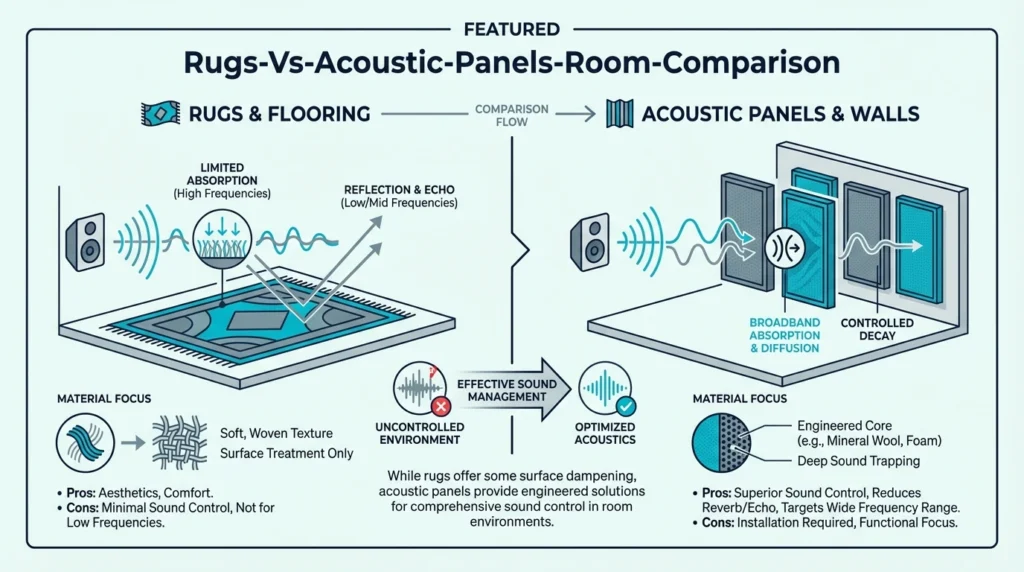
Rugs vs acoustic panels — which one actually fixes your room’s sound problems? Both help, but for completely different frequency ranges and surface types.
Most people pick one or the other and wonder why the room still sounds off. The frustration comes from treating floor reflections with panels and wall reflections with rugs — putting each solution in the wrong place produces almost no improvement.
Using the right tool on the right surface eliminates the specific reflections causing your problem, without overspending on treatment that doesn’t apply to your room.
The rest of this guide covers what each handles, where to deploy them, and when you need both — you’ll know exactly which to buy by the end.
Rugs absorb high-frequency floor reflections (500Hz and above) with NRC ratings around 0.30-0.50, while acoustic panels absorb a full frequency range with NRC ratings of 0.85-1.05. Use rugs for hard floors and panels for walls — they solve different problems and work best together.
What’s the Real Difference Between Rugs and Acoustic Panels?
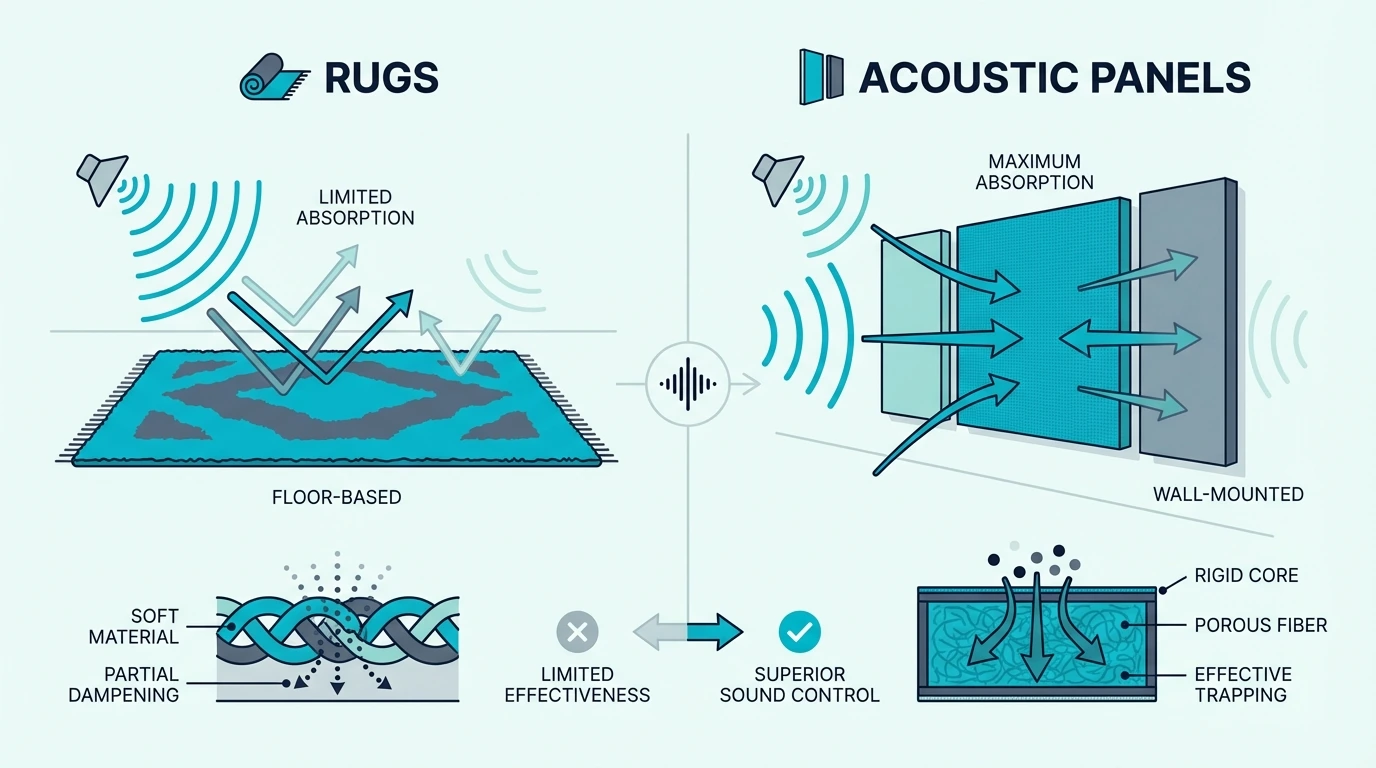
Rugs and acoustic panels serve fundamentally different purposes in room acoustics — comparing them directly is like comparing tires to headlights on a car. Both matter, but they do completely different jobs.
Rugs sit on your floor and absorb sound that would otherwise bounce off hard surfaces like hardwood, tile, or concrete. That’s their entire job.
They reduce footstep noise, dampen floor reflections, and add warmth to rooms with echoey hard floors.
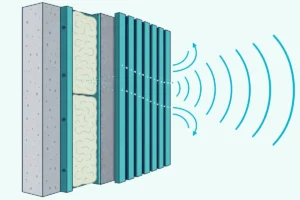
Acoustic panels mount on walls and ceilings where the real acoustic problems happen. Wall reflections cause the echo you hear in untreated rooms.
Understanding how absorption differs from soundproofing prevents buying the wrong product. Ceiling reflections create that “hollow” sound in recordings — panels target these surfaces because that’s where sound bounces most problematically.
Why Do People Compare Them?
The comparison usually comes from a misunderstanding about what causes acoustic problems. People hear echo and think “I need something soft” — and rugs are soft.
Softness alone doesn’t equal sound absorption, and floor treatment alone rarely solves room acoustic issues.
Rug manufacturers sometimes market their products as “acoustic solutions,” which adds to the confusion. While technically true — rugs do absorb some sound — the claim oversimplifies what’s actually happening in your room.
The truth is less convenient for marketing but more useful for you: rugs help floors, panels help walls, and complete room treatment usually requires both.
How Do Rugs Absorb Sound?
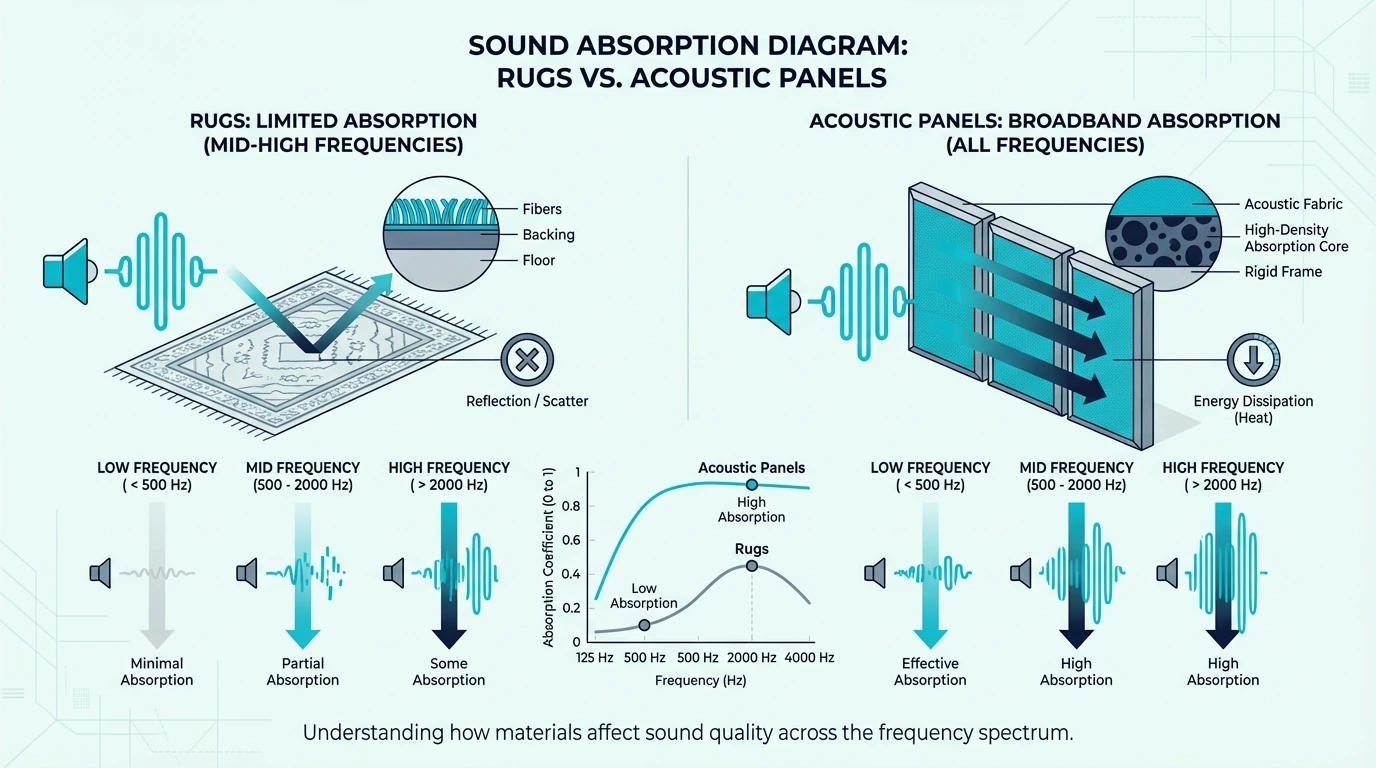
Rugs absorb sound through friction — when sound waves hit the rug fibers, the wave energy gets converted to tiny amounts of heat through fiber movement. Thicker pile means more fibers, which means more friction and more absorption.
What Frequencies Do Rugs Absorb?
Rug fibers are thin and relatively short — even a thick shag rug only has fibers a few inches long. That physical characteristic limits them to absorbing high frequencies only.
Most rugs effectively absorb frequencies above 500Hz. They struggle with mid-range frequencies (200-500Hz) and do almost nothing for bass frequencies below 200Hz.
The human voice sits around 100-400Hz — right where rugs perform worst. That frequency gap explains why rugs alone never solve echo problems.
The Carpet and Rug Institute has tested this extensively. A typical wool area rug has an NRC (Noise Reduction Coefficient) of about 0.30-0.50.
That means it absorbs 30-50% of sound energy — but only in the frequencies it can actually affect.
Does Rug Thickness Matter?
Pile height directly correlates with absorption. Studies consistently show that rugs with pile heights above 10mm absorb more sound than flat-weave rugs.
The sweet spot for acoustic performance sits between 10-18mm pile height. Beyond that, you get diminishing returns acoustically while collecting more dust and complicating maintenance.
Wool rugs generally outperform synthetic materials for sound absorption. The natural fiber structure creates more friction per unit of thickness.
Hand-tufted and hand-knotted constructions also typically beat machine-made alternatives.
Get Studio Tips Weekly
Join 5,000+ creators getting acoustic treatment advice every week.
No spam. Unsubscribe anytime.How Do Acoustic Panels Compare?
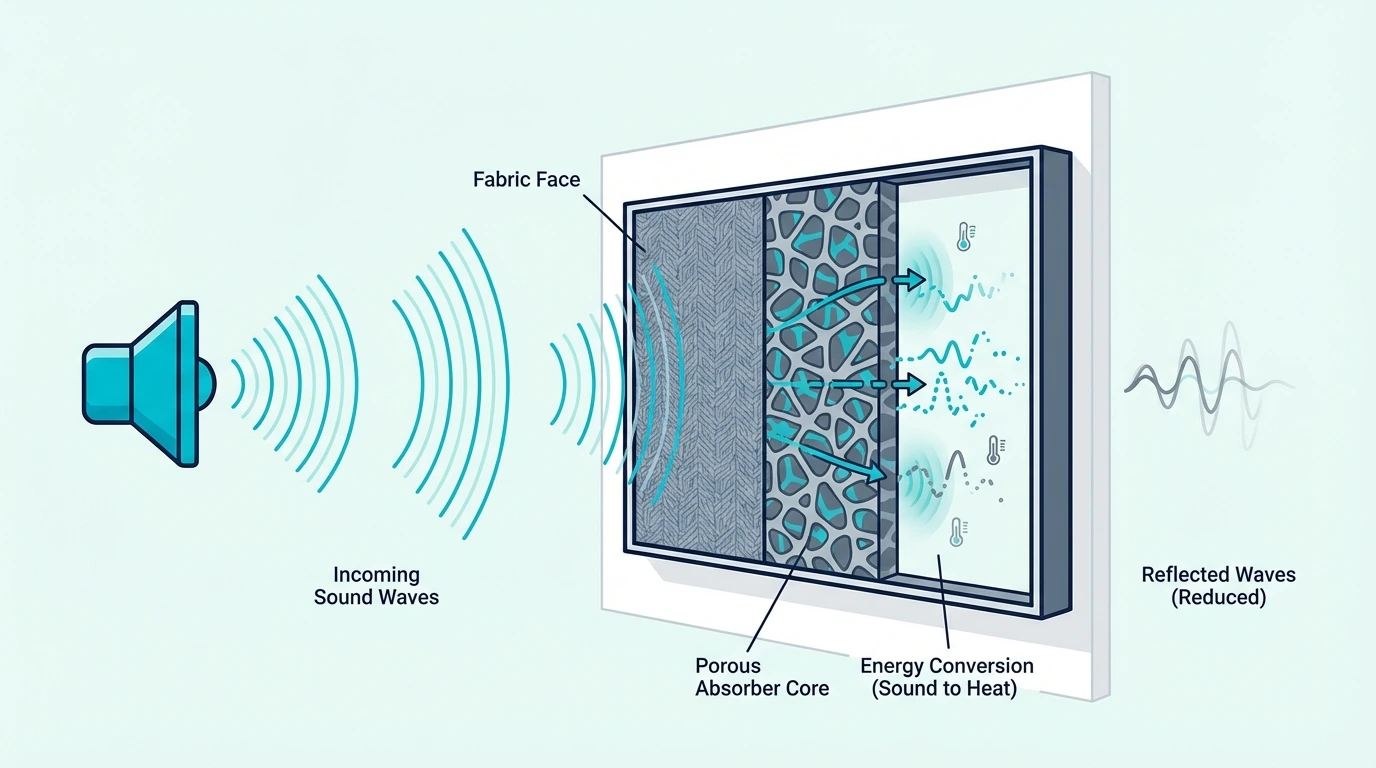
Acoustic panels differ from rugs in almost every measurable way — the contrast becomes stark when you compare the actual performance numbers. They use materials specifically chosen for acoustic properties — typically rigid fiberglass or mineral wool — wrapped in acoustically transparent fabric.
The NRC rating guide covers the science behind panel absorption in depth.
What’s the Absorption Difference?
Quality acoustic panels achieve NRC ratings of 0.85-1.05 — absorbing 85-105% of sound energy across a broad frequency range. Compare that to a rug’s 0.30-0.50 NRC, and panels absorb roughly twice as much sound.
More importantly, panels work across the full frequency spectrum. A 2-inch fiberglass panel effectively absorbs frequencies from about 250Hz up through the highest audible frequencies.
Panel density determines how far absorption extends into lower frequencies. Thicker panels (4-6 inches) extend this down to 125Hz or lower.
That mid-range coverage is the key difference. The frequencies where voices live, where music has body, where room echo sounds most unpleasant — panels handle all of these.
For panels that deliver that 0.95+ NRC performance, the UMIACOUSTICS 4-Pack Fiberglass Acoustic Panels uses a professional-grade fiberglass core that outperforms any rug on the market.
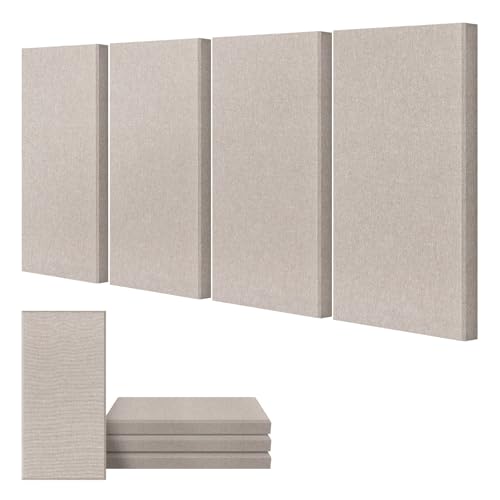
UMIACOUSTICS 4-Pack Fiberglass Acoustic Panels
Why Does Placement Matter?
Panels go where sound problems actually occur — on walls and ceilings. Walls and ceilings create far more reflection surface area than floors in most rooms.
First reflection points on walls cause the most noticeable acoustic problems. These are the spots where sound from your speakers or voice bounces directly to your ears after hitting the wall.
Treating these points with panels noticeably improves room sound. The placement guide shows exactly where to position panels for maximum effect.
Ceiling reflections matter especially in rooms with hard floors. Sound bounces floor-to-ceiling repeatedly, creating a “flutter echo” that makes rooms sound unpleasant.
Ceiling panels or clouds address this directly.
Can Rugs Replace Acoustic Panels?
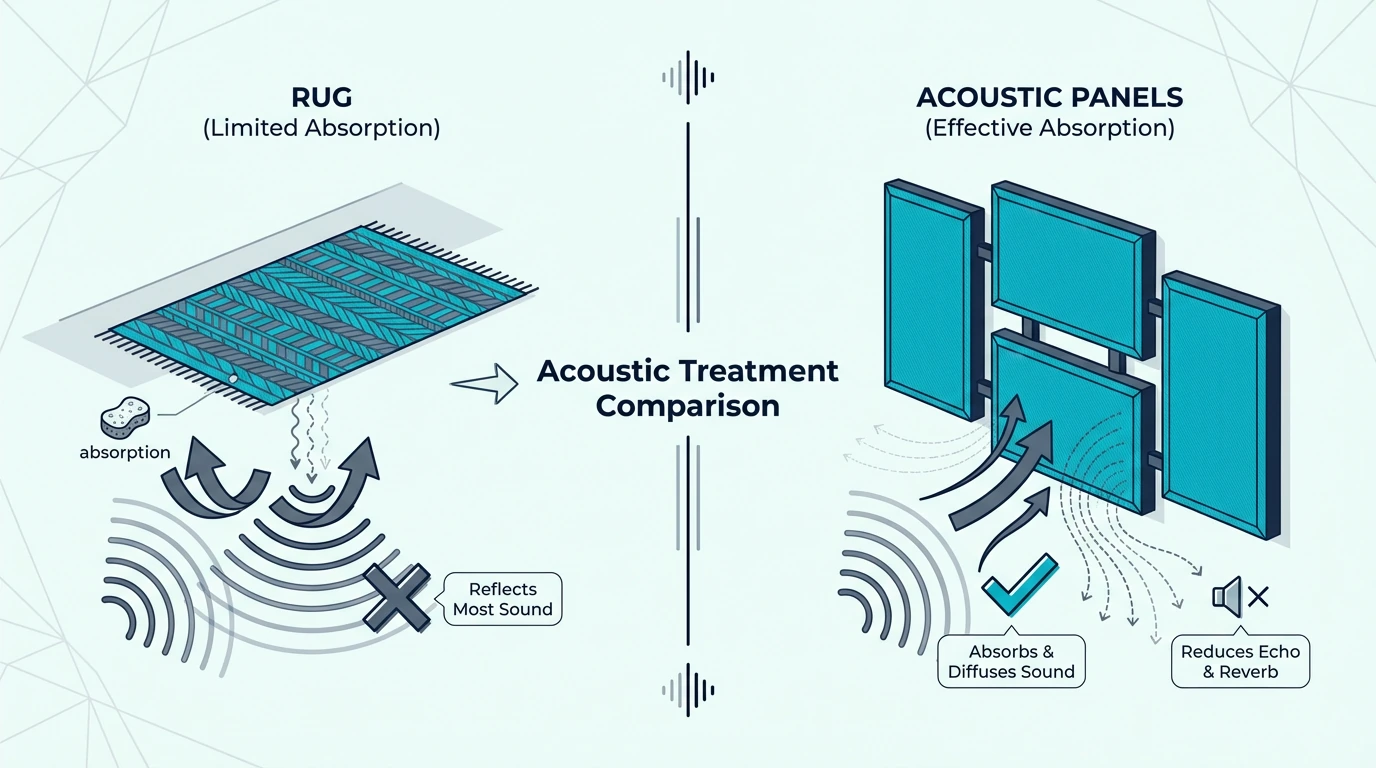
With those NRC differences clear — 0.30 for rugs versus 0.85+ for panels — the short answer is no. You cannot skip panels and just use rugs for acoustic treatment if you want meaningful improvement.
Sound problems primarily come from walls and ceilings. That 80% of reflective surface area stays untreated when you only lay down a rug.
What Rugs Actually Fix
Rugs excel at specific problems that panels can’t address. Hard floor surfaces create footstep noise, chair scraping sounds, and high-frequency “slap” reflections that add harshness to room acoustics.
If you have hardwood, tile, laminate, or concrete floors, a quality area rug genuinely helps. It won’t fix your room’s echo problem, but it will reduce one component of the overall acoustic picture.
For home offices, rugs reduce keyboard clicks and chair noise that would otherwise bounce around the room. For recording spaces, rugs prevent floor reflections from reaching microphones.
These are real benefits — just not full room treatment.
Where Rugs Fall Short
Rugs can’t treat wall reflections. They can’t address ceiling flutter.
They can’t absorb the mid-range frequencies where most acoustic problems actually live.
Hanging a rug on the wall doesn’t solve this either. Rugs lack the thickness and density to perform like acoustic panels.
A decorative wall rug might absorb slightly more than bare drywall, but it won’t approach the performance of actual acoustic treatment.
The physics don’t work. Effective sound absorption requires material thickness proportional to the wavelengths you’re trying to absorb.
Bass frequencies have wavelengths measured in feet. A half-inch rug can’t meaningfully absorb them.
When Should You Choose Rugs Over Panels?
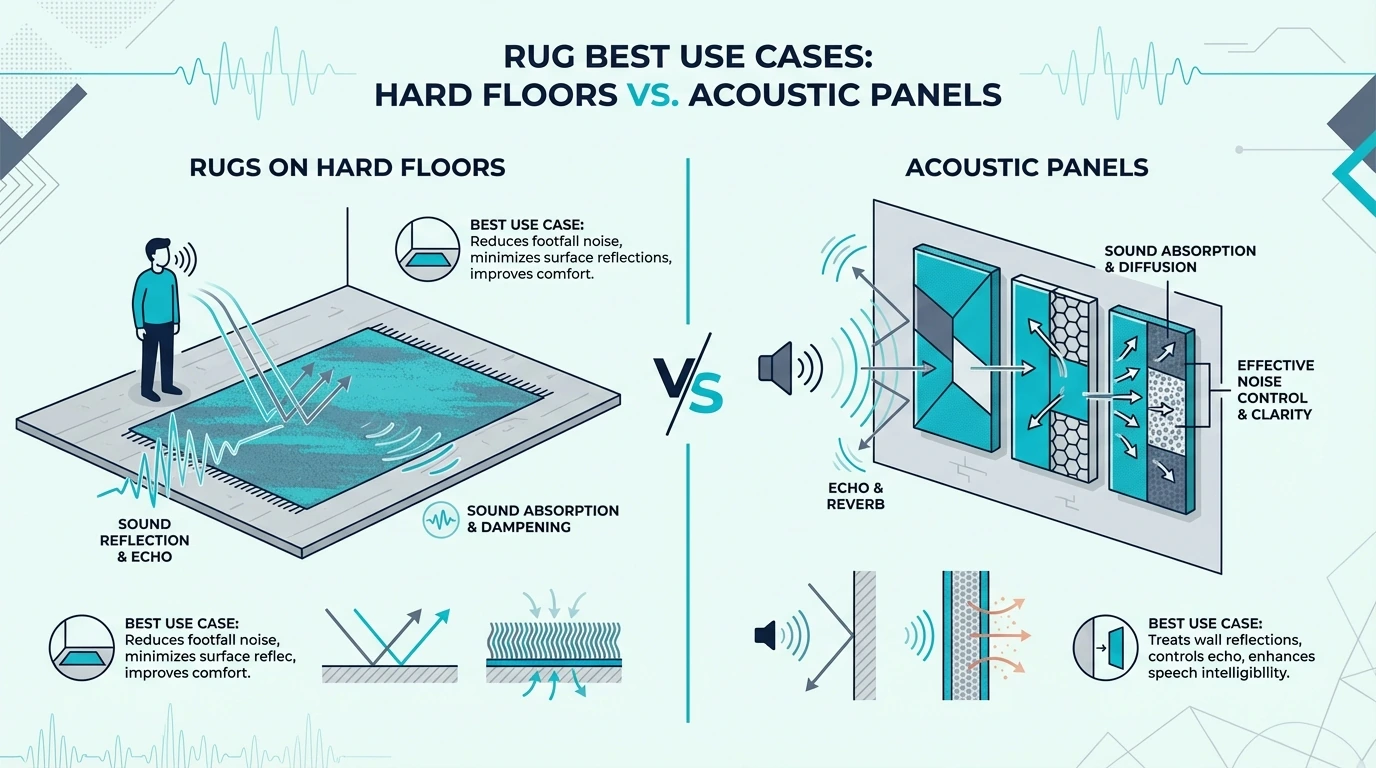
Despite their limitations, rugs genuinely are the better choice in specific situations. Knowing when to prioritize floor treatment helps you allocate your acoustic treatment budget effectively.
Hard Floor Echo Problems
If your room has hard floors and you’re primarily bothered by footstep noise, chair sounds, and that harsh “clicky” quality that hard surfaces create, a quality area rug is your first purchase. Panels won’t help with floor reflection issues.
Large area rugs work better than small accent rugs for acoustic purposes. More surface coverage means more absorption.
A rug that covers 50-75% of your floor area makes a noticeable difference; a 3×5 accent rug barely registers.
Aesthetic Priorities
Rugs integrate into room design more naturally than panels in many spaces. Living rooms, bedrooms, and home offices often benefit from the warmth and visual interest a quality rug provides.
If you need some acoustic improvement but won’t tolerate panels on your walls, a thick area rug at least addresses floor reflections. Incomplete treatment beats no treatment.
Budget Constraints
Quality acoustic panels cost more than equivalent-size rugs in most cases. If budget limits your options, starting with a rug for floor treatment makes sense — as long as you understand it’s not a complete solution.
You can add wall panels later as budget allows. The rug will continue helping with floor reflections even after you install dedicated wall treatment.
When Should You Choose Panels Over Rugs?
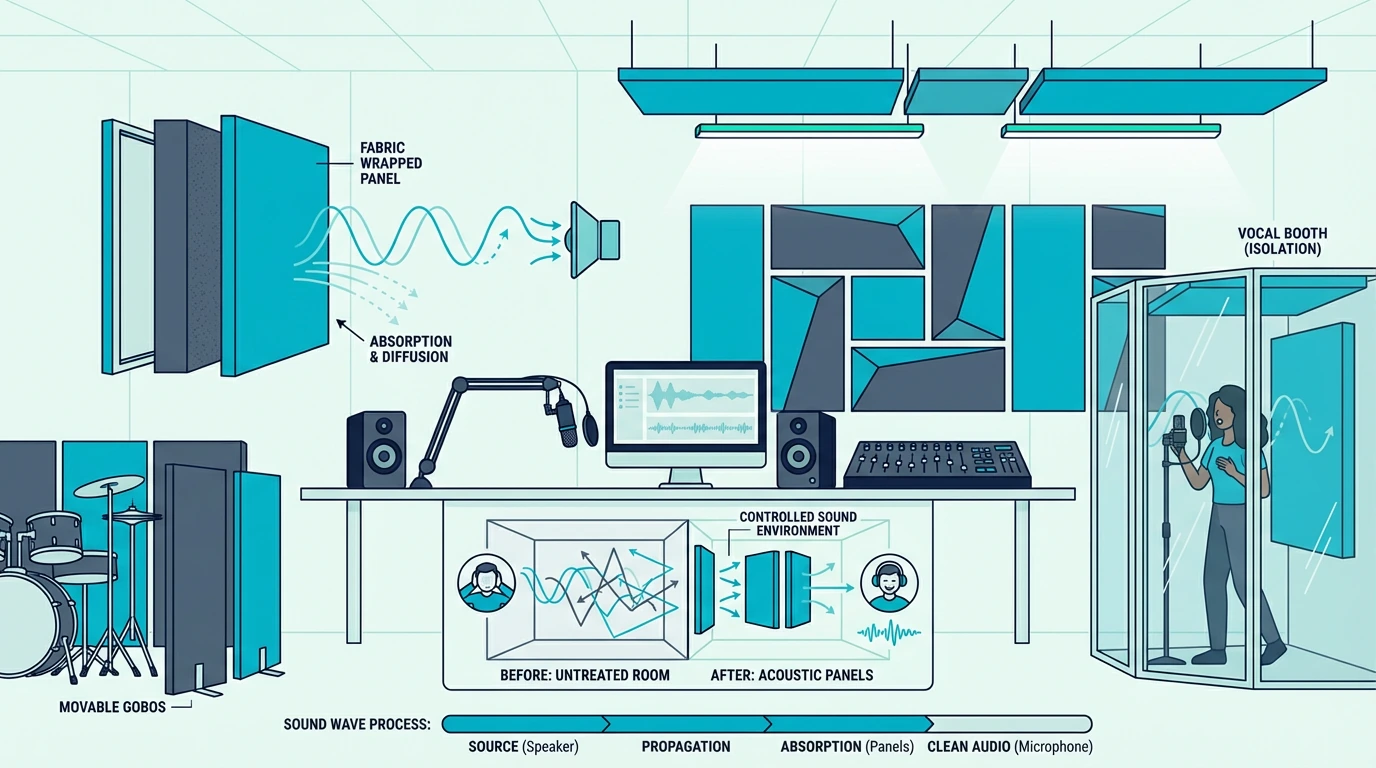
Panels should be your priority when the acoustic problems you’re experiencing relate to echo, reverb, or sound clarity — these issues originate from wall and ceiling reflections.
Recording and Podcasting
Any space where you record audio needs panels first, rugs second. Microphones pick up room reflections far more than human ears notice.
Wall reflections create the “roomy” or “boxy” sound that makes amateur recordings immediately identifiable.
First reflection points on walls behind and beside microphones require treatment. Ceiling clouds above recording positions matter almost as much — the ceiling panel guide covers cloud mounting techniques.
For quick, tool-free panel mounting in a recording setup, the Art3d 6-Pack Self-Adhesive Acoustic Panels sticks directly to walls without hardware.
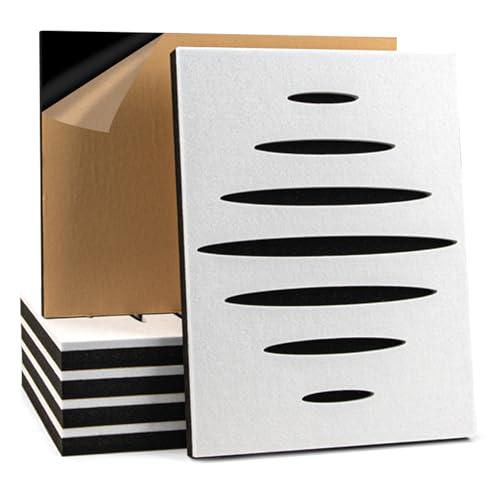
Art3d 6-Pack Self-Adhesive Acoustic Panels
Home Theaters
Film dialogue clarity depends on controlling early reflections from walls and ceilings. The surround sound experience relies on your room not adding unwanted echo to the carefully mixed audio.
Panels at first reflection points and rear wall diffusion create noticeably better home theater sound. The home theater acoustic treatment guide covers best panel placement for surround systems.
Rugs help if you have hard floors, but they’re secondary to wall treatment.
Music Listening Rooms
Critical listening requires accurate sound reproduction without room coloration. Wall reflections smear stereo imaging and muddy frequency response.
Panels restore clarity that room reflections destroy.
A rug absorbing 30% of high frequencies barely touches the problem. Panels absorbing 90%+ across the full spectrum actually solve it.
What About Combining Both?
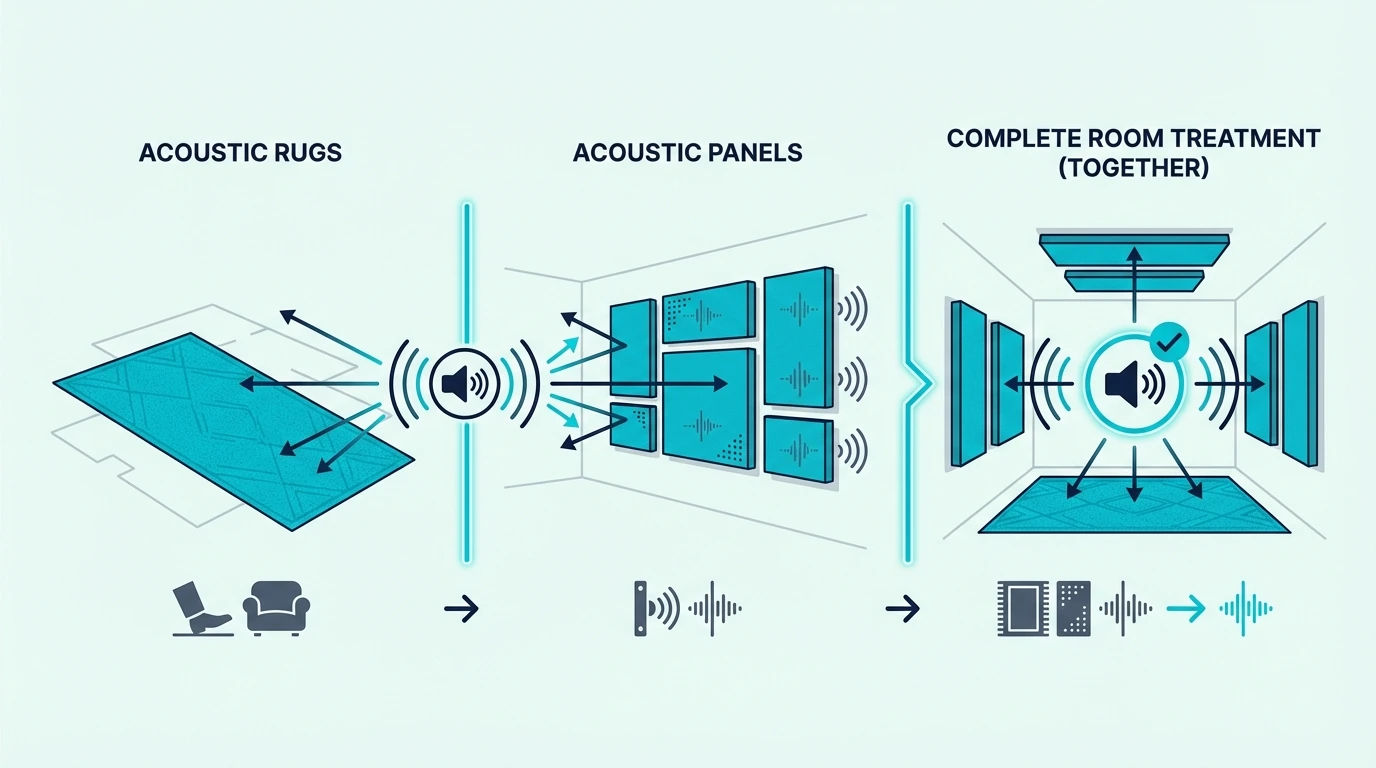
Each product excels on its own surface — the best acoustic treatment combines floor and wall treatment appropriately for your specific room and needs.
The Ideal Approach
Start with your primary acoustic goal. If echo and reverb bother you most, panels come first.
If hard floor noise and harshness bother you most, rugs come first.
For complete room treatment, you’ll eventually want both. Panels handle walls and ceilings where 80% of reflection problems originate.
The installation guide covers every mounting method for getting panels up. Rugs handle floors where the remaining 20% lives.
The combination creates results neither achieves alone. Panels without floor treatment can leave rooms sounding overly “dead” at high frequencies while floor reflections remain.
For wall treatment that also adds visual appeal, the BUBOS 4-Pack Fabric Acoustic Panels pairs well with area rugs for a room that sounds good and looks intentional.
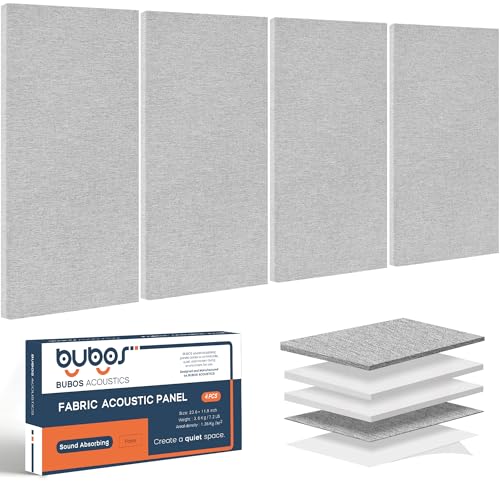
BUBOS 4-Pack Fabric Acoustic Panels
Coverage Recommendations
For wall treatment, aim for 20-30% of wall surface area covered with panels. Focus on first reflection points first, then expand coverage based on remaining issues.
The panel quantity guide provides room-specific calculations.
For floor treatment, cover 50-75% of hard floor surface with rugs. Thick pile (10mm+) provides better absorption than thin flat-weaves.
Even modest panel coverage at key reflection points combined with a quality area rug improves most rooms more than full coverage of either product alone.
Rugs vs Panels: Quick Comparison
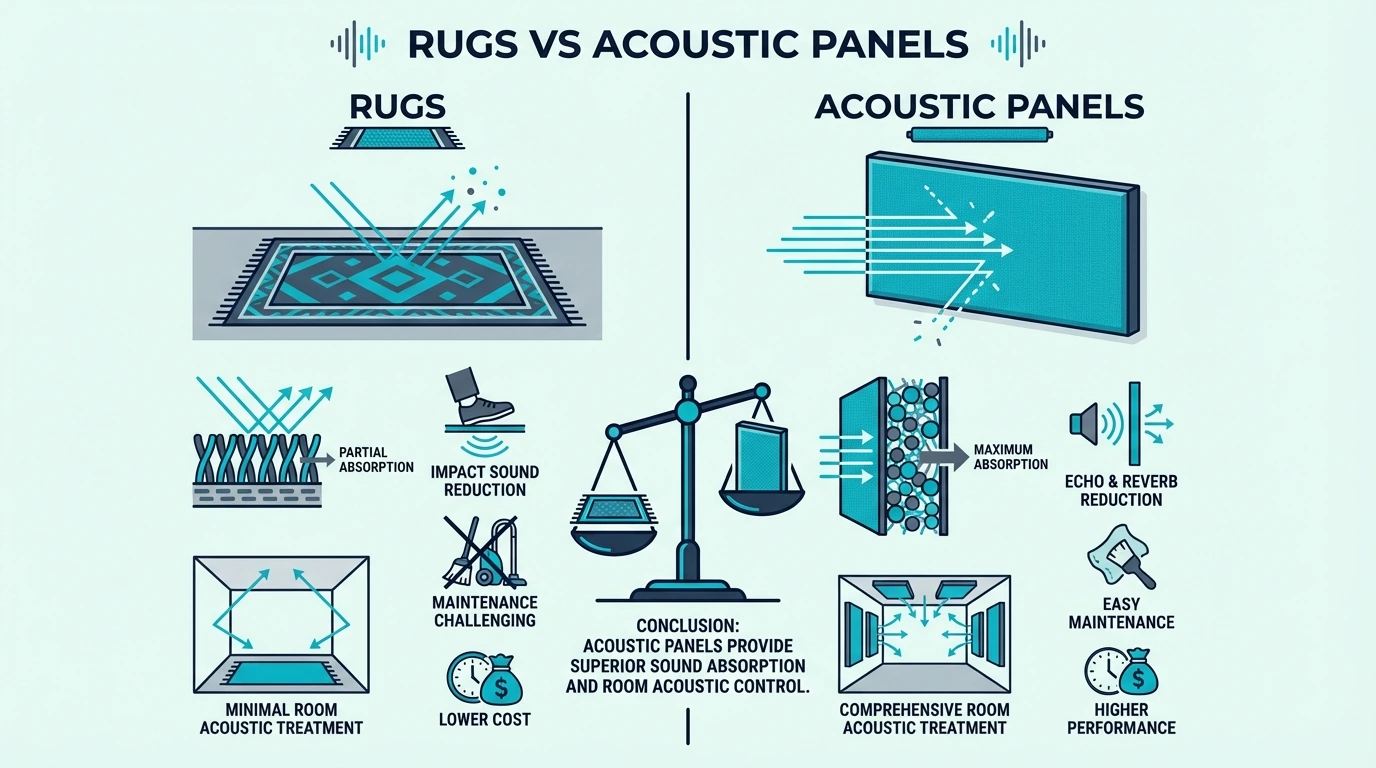
The table below puts the key differences side by side for quick reference.
| Factor | Rugs | Acoustic Panels |
|---|---|---|
| Primary Surface | Floors only | Walls and ceilings |
| NRC Rating | 0.30-0.50 | 0.85-1.05 |
| Frequency Range | 500Hz+ (high only) | 125Hz+ (mid to high) |
| Best For | Hard floor echo, footsteps | Room echo, recording, clarity |
| Aesthetic Integration | Natural in most rooms | Requires design consideration |
| Installation | Lay on floor | Mount on walls/ceiling |
| Complete Solution? | No — floors only | Partial — walls/ceiling only |
The NRC gap tells the story — rugs absorb a third of what panels do, and only at high frequencies. For any room where sound quality matters, panels are the primary tool.
Rugs earn their place on hard floors, but as a complement to wall treatment, not a substitute.
Conclusion
Rugs and acoustic panels aren’t competing products — they’re complementary treatments for different parts of your room. Rugs handle floor reflections with that 0.30-0.50 NRC rating.
Panels handle walls and ceilings with full-spectrum absorption at 0.85-1.05 NRC.
For complete room treatment, you need both. If budget forces a choice, prioritize based on your specific problem: hard floor noise means rugs first; echo and reverb means panels first.
The best acoustic panels guide has specific recommendations when you’re ready to buy. Rugs help, but they can’t substitute for dedicated wall and ceiling treatment when you need meaningful acoustic improvement.
Frequently Asked Questions
Do Rugs Help With Room Echo?
Rugs reduce floor-bounce echo only — they can’t address wall and ceiling reflections where most echo originates. A rug helps hard-floor rooms sound less harsh but won’t solve noticeable echo problems alone.
Can I Hang a Rug Instead of Buying Panels?
Hanging a rug provides minimal acoustic benefit compared to actual panels. Rugs lack the thickness and density for effective mid-frequency absorption.
Decorative wall rugs look nice but don’t perform acoustically.
What’s the Best Rug for Sound Absorption?
Thick pile wool rugs (10-18mm pile height) absorb the most sound — hand-tufted and hand-knotted constructions outperform machine-made alternatives, and larger area rugs covering 50%+ of floor space provide the most meaningful treatment.
How Many Panels Do I Need If I Have Rugs?
Rugs don’t reduce panel requirements — they treat different surfaces. Aim for panels covering 20-30% of wall surface area at first reflection points regardless of floor treatment.
The rug handles floors; panels handle walls.