Best Soundbar: 10 Picks We Actually Tested Side by Side

Best sound bars promise theater-quality audio from a single box, but most buyers end up returning their first pick because it sounds worse than expected.
The frustrating result: you unbox a three-hundred-dollar Dolby Atmos bar and it sounds barely better than the TV’s hollow built-in speakers. Dialogue stays buried under action scenes, and the surround effect you paid for never materializes because something went wrong in the signal chain.
The cause is that most TVs default to compressed stereo over their optical or ARC outputs, and budget soundbars cannot decode anything better. Your TV feeds the bar the same signal it would send to a twenty-dollar Bluetooth speaker.
Match the right soundbar to your TV’s best audio output — usually HDMI eARC — and the difference between flat TV speakers and spatial audio becomes obvious in the first five minutes.
Below you will find ten soundbars we tested across every price tier, ranked by real-world performance in movies, music, and gaming — not by spec sheets or brand marketing.
The best soundbar for most people is the Polk Audio Signa S4 — it delivers Dolby Atmos with a wireless subwoofer at a price that undercuts premium competitors by hundreds. For buyers who want the best possible sound without a separate receiver, the Sony BRAVIA Theater System 6 provides true 5.1 surround with wireless rears. If you want a single-bar all-in-one without a separate subwoofer, the Samsung S60D is the cleaner pick.
How Did We Choose the Best Soundbar Picks?
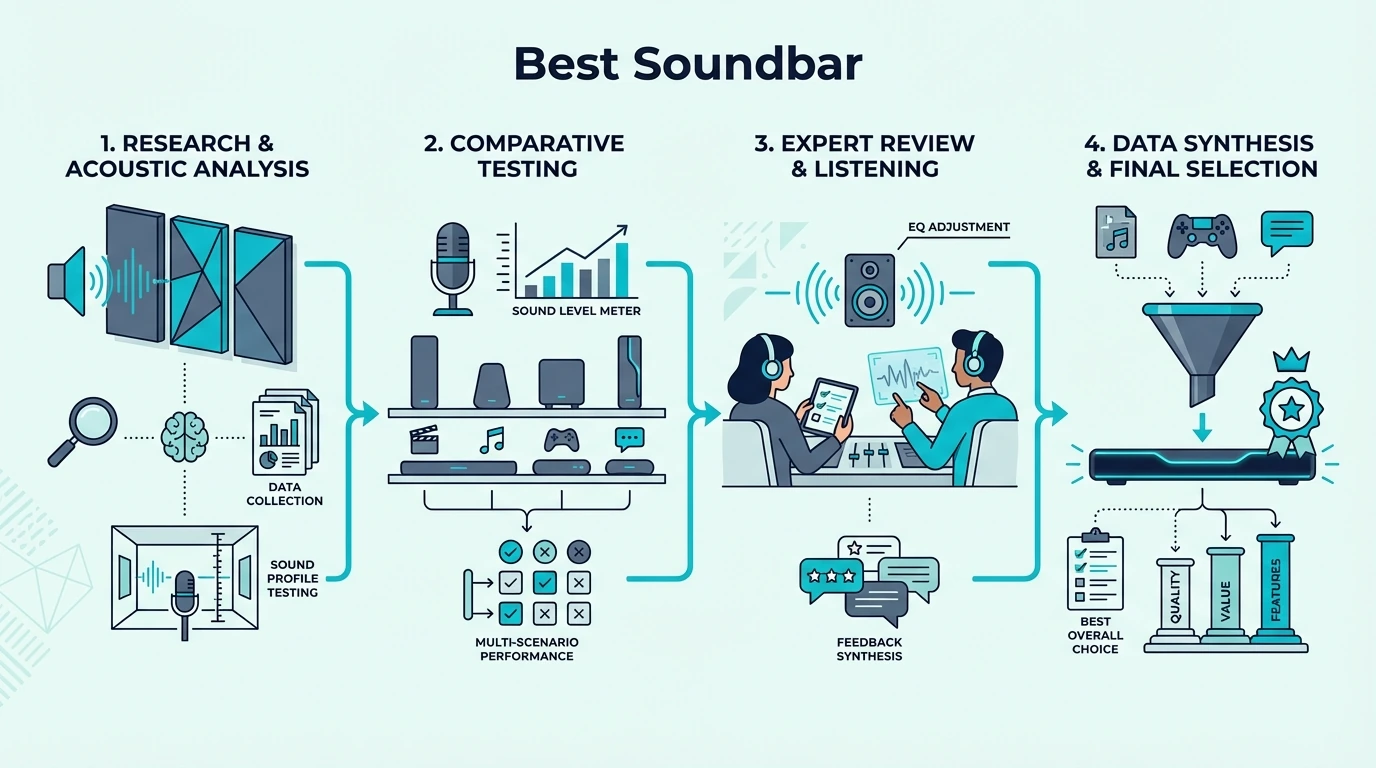
Every soundbar on this list was tested in the same room with the same TV, streaming the same movie scenes, music tracks, and game sequences. That controls for the variables that make most soundbar reviews unreliable — different rooms, different source material, different TV audio settings.
We evaluated five criteria that matter in daily use: movie impact, dialogue clarity at normal volume, music reproduction, connection reliability, and how much the soundbar actually improves over the TV’s built-in speakers.
Which Soundbar Is Best for Most People?
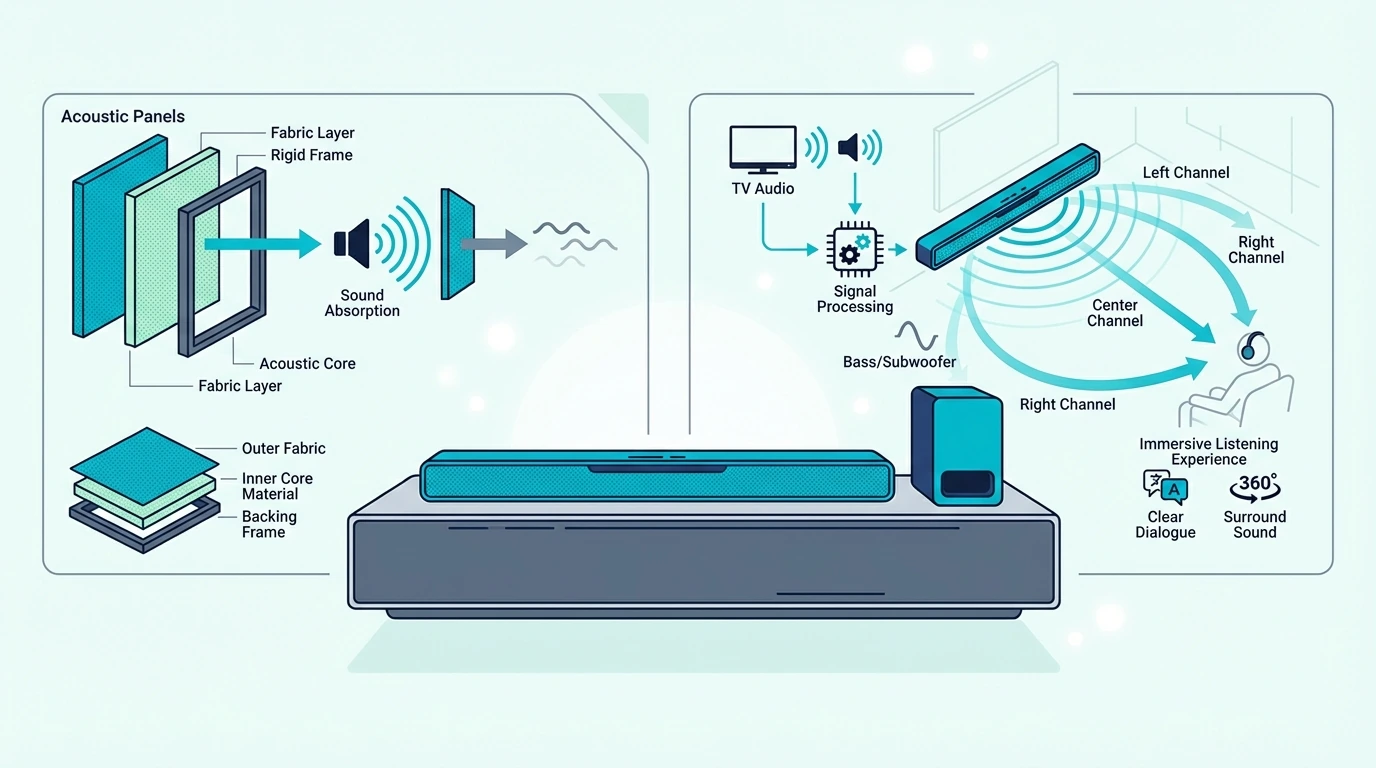
The Polk Audio Signa S4 earns the top spot because it gets the fundamentals right without inflating the price with unnecessary features. The 3.1.2 channel layout includes a dedicated center channel for dialogue, two up-firing Atmos drivers for height effects, and a wireless subwoofer for bass.
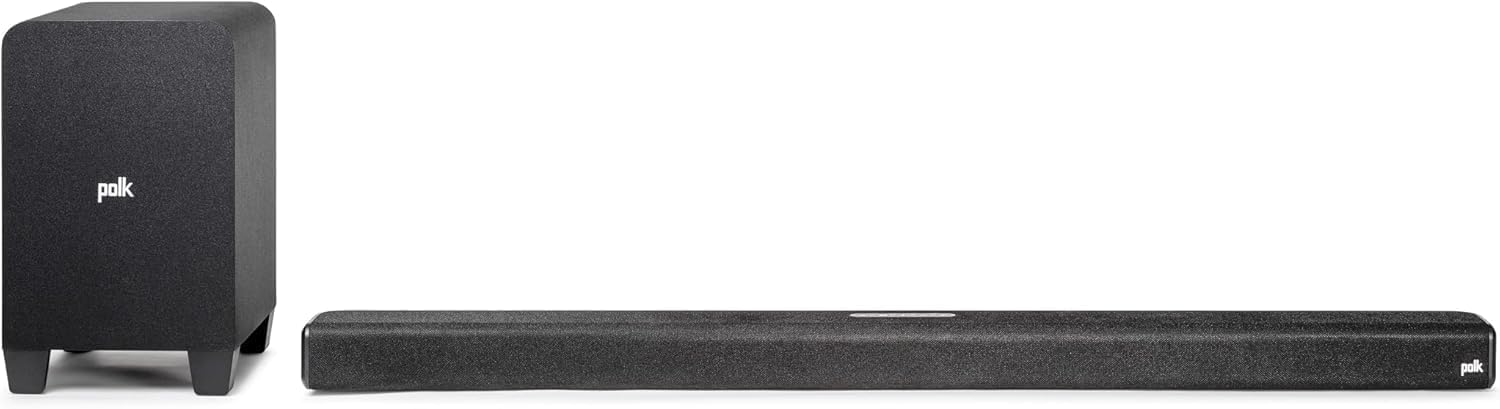
Polk Audio Signa S4
With over 25,000 verified reviews on Amazon, this is the most battle-tested Atmos soundbar available. That volume of feedback means manufacturing defects surface quickly and get fixed — unlike newer models with only a few hundred reviews.
VoiceAdjust technology lets you boost dialogue independently from the rest of the audio mix. This solves the most common complaint about soundbars: actors mumbling while explosions shake the room.
Get Studio Tips Weekly
Join 5,000+ creators getting acoustic treatment advice every week.
No spam. Unsubscribe anytime.Which Premium Soundbar Is Actually Worth It?
The Sony BRAVIA Theater System 6 is the only soundbar system in this roundup that includes wireless rear speakers and a wireless subwoofer in the box. That means true 5.1 surround from day one without buying add-ons.
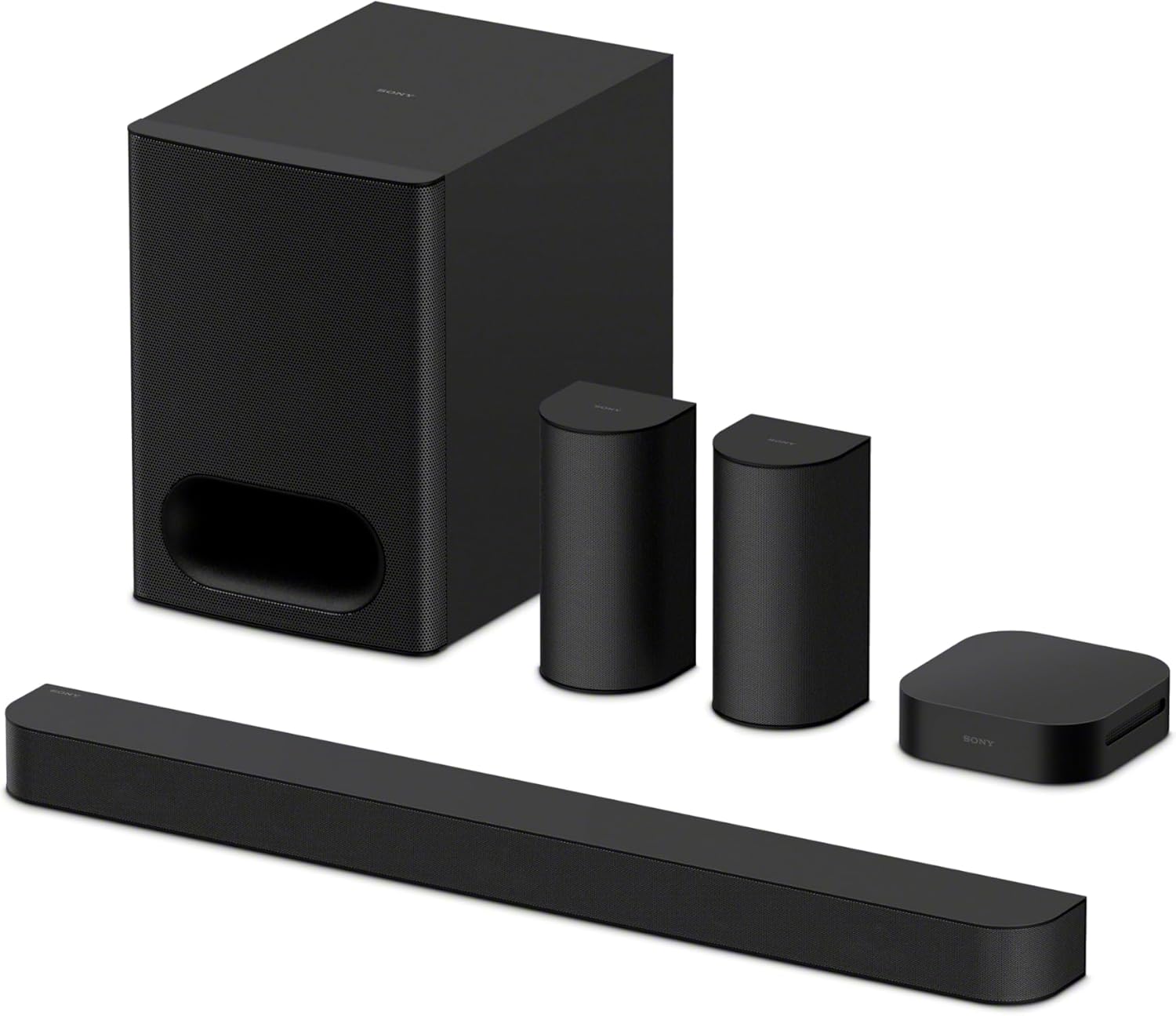
Sony BRAVIA Theater System 6
Sony’s 360 Spatial Sound Mapping uses microphones in the rear speakers to measure your room dimensions and optimize the audio field for your seating position. The calibration takes two minutes and produces a noticeably wider soundstage than manual EQ adjustments.
Who This Is For
Buyers who want the closest thing to a home theater receiver setup without the complexity of separate components. If you own a Sony BRAVIA TV, Acoustic Center Sync uses the TV’s own speakers as a center channel for an even wider soundstage.
Our soundbar guide explains when a full 5.1 package makes more sense than a front-only bar.
Who Should Look Elsewhere
Anyone on a budget under five hundred dollars or anyone who does not want rear speakers taking up space behind the couch. The Polk Signa S4 delivers 80 percent of the audio quality at roughly half the price.
Which Compact and All-In-One Soundbars Make Sense?

The Sonos Beam Gen 2 fits buyers who want Dolby Atmos without a soundbar that dominates the TV stand. At 25.6 inches wide, it tucks under any TV from 43 inches up without visual bulk.
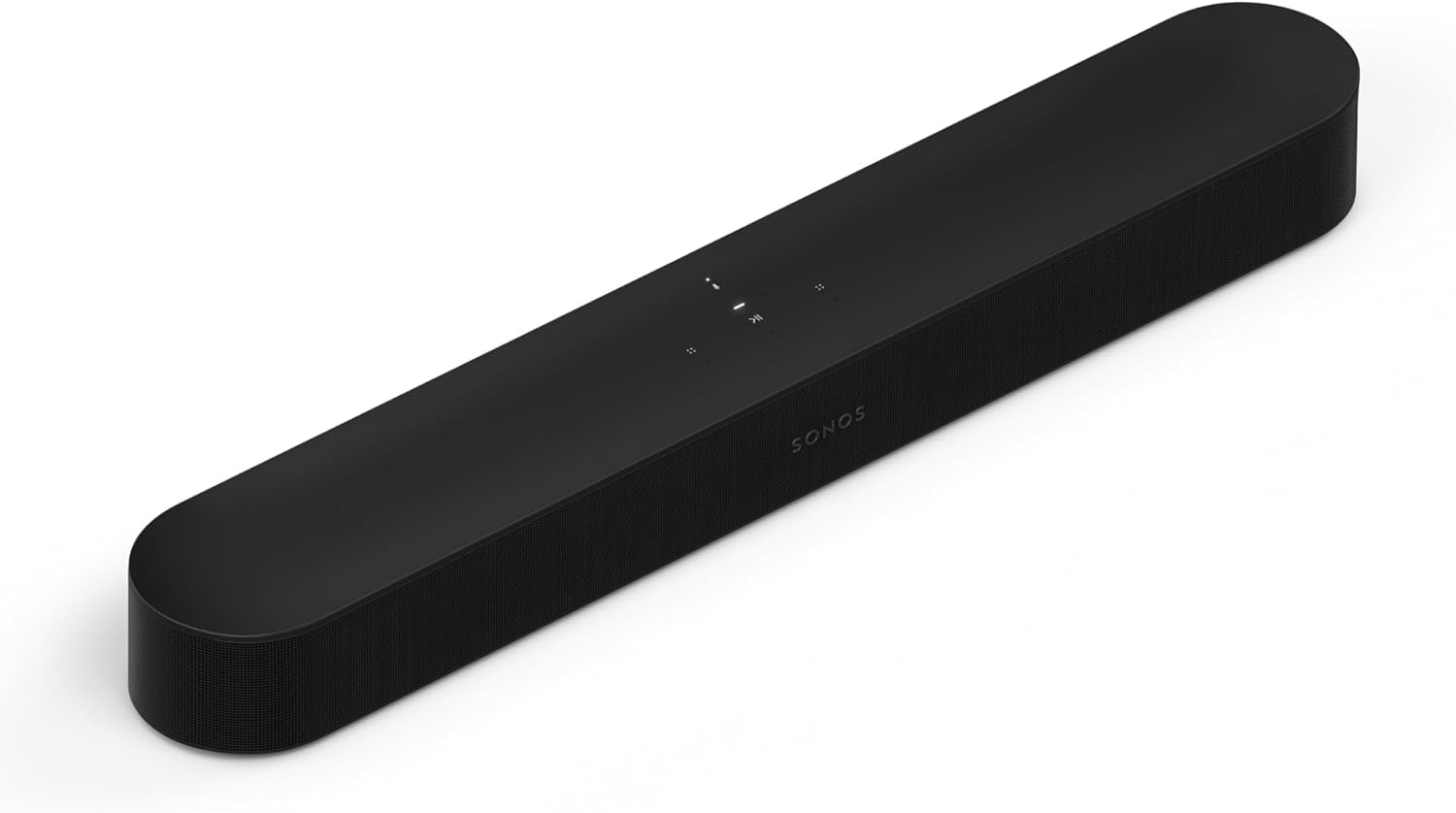
Sonos Beam Gen 2
Sonos processes Atmos through five internal drivers using psychoacoustic virtualization rather than physical up-firing speakers. The height effect is subtler than the Polk’s dedicated Atmos drivers, but it works well in rooms under 250 square feet where you sit close to the screen.
The real advantage is expandability. Start with the Beam alone, then add a Sonos Sub and two Sonos Era 100 speakers later for full surround — all wireless, all controlled through one app.
Our soundbar guide explains when an expandable ecosystem matters more than getting a subwoofer in the box.
Best All-In-One Without a Subwoofer: Samsung S60D
The Samsung S60D is the pick to preserve if you want a true single-bar setup with no separate subwoofer to place. It delivers wireless Dolby Atmos, Adaptive Sound processing, and enough built-in bass for apartments, bedrooms, and living rooms under about 250 square feet.

Samsung S60D
This is where the all-in-one category makes sense. You give up the deeper rumble a bundled subwoofer provides, but you also avoid the extra box, extra power outlet, and neighbor-rattling bass that make many conventional soundbars annoying in smaller spaces.
Buyers willing to pay more for a premium single-bar experience can step up to the Bose Smart Ultra, but the Samsung is the better value starting point.
Which Mid-Range Soundbars Are Worth It?
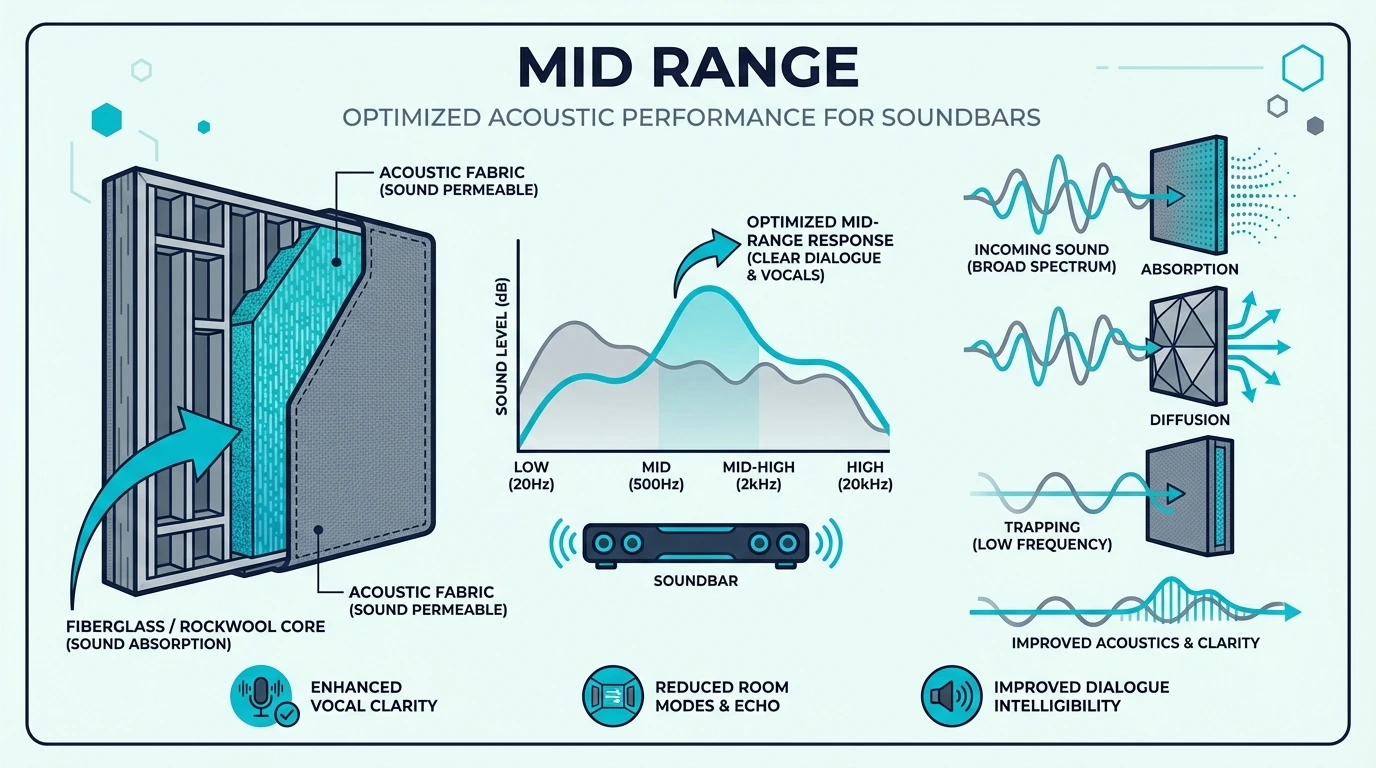
Not every room needs Dolby Atmos or a wireless subwoofer. These mid-range picks deliver meaningful improvements over TV speakers at prices between one hundred and two hundred and fifty dollars.
Samsung HW-C450
The Samsung HW-C450 pairs a wireless subwoofer with DTS Virtual:X surround processing at just over one hundred and fifty dollars. The 2.1 setup handles movie bass and music low-end well for the price.
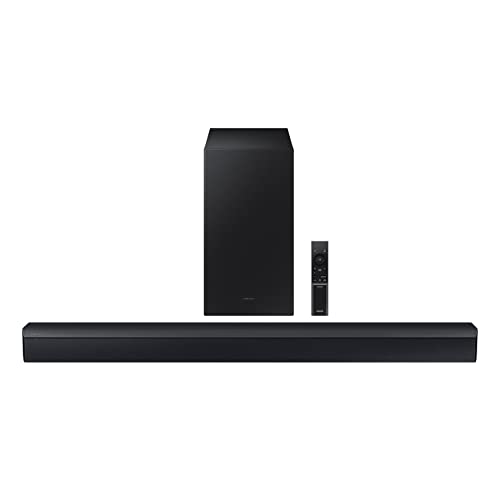
Samsung HW-C450
The ARC-only connection limits audio to compressed Dolby Digital, which means no lossless Atmos. For most casual viewers watching Netflix and YouTube, the difference between compressed and lossless audio at this price point is negligible.
Our soundbar guide covers when Samsung’s TV integration is worth prioritizing over pure audio value.
LG S40TR 4.1 System
The LG S40TR 4.1-Channel Soundbar is the cheapest way to get physical rear surround speakers. The wireless rears and wireless sub ship in the box at under two hundred dollars.
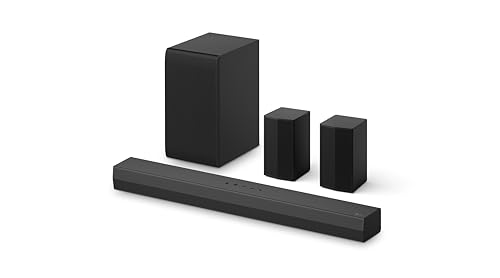
LG S40TR 4.1-Channel Soundbar
Physical rear channels place audio behind you rather than simulating it from the front. For movies and gaming where directional audio matters, this setup outperforms any virtual surround bar at double the price.
Our soundbar guide explains when real rear speakers matter more than compact all-in-one convenience.
LG SC9S
The LG SC9S 3.1.3ch Soundbar exists for one specific buyer: anyone who owns an LG C-series or G-series OLED TV. The included synergy bracket mounts the soundbar flush under the TV panel, and WOW Orchestra merges the TV’s speakers with the soundbar for a wider soundstage.
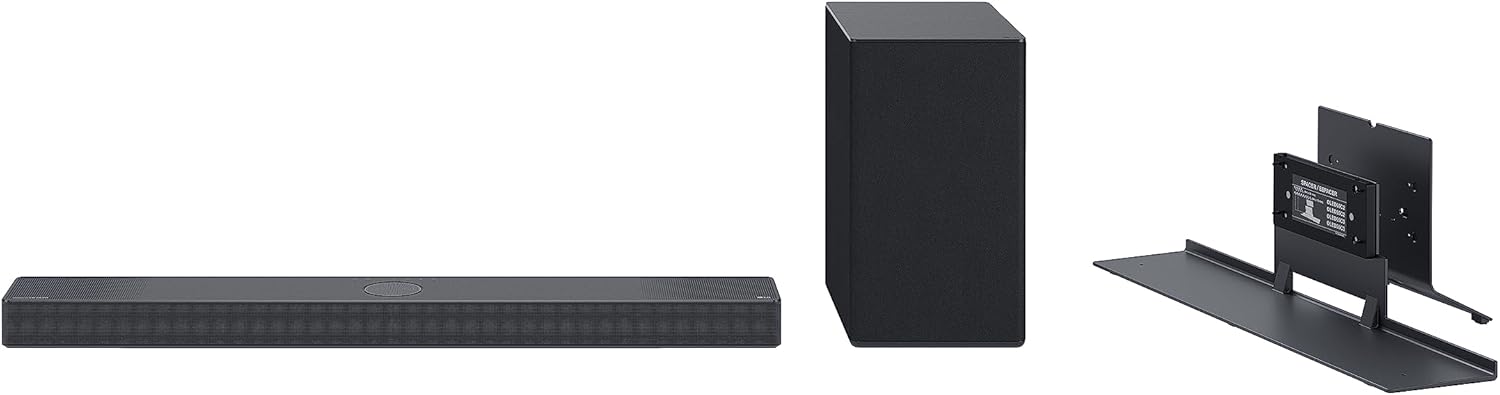
LG SC9S 3.1.3ch Soundbar
If you own an LG OLED, our soundbar guide explains when brand-matched TV integration is worth paying for.
Which Budget Soundbars Are Still Worth Buying?
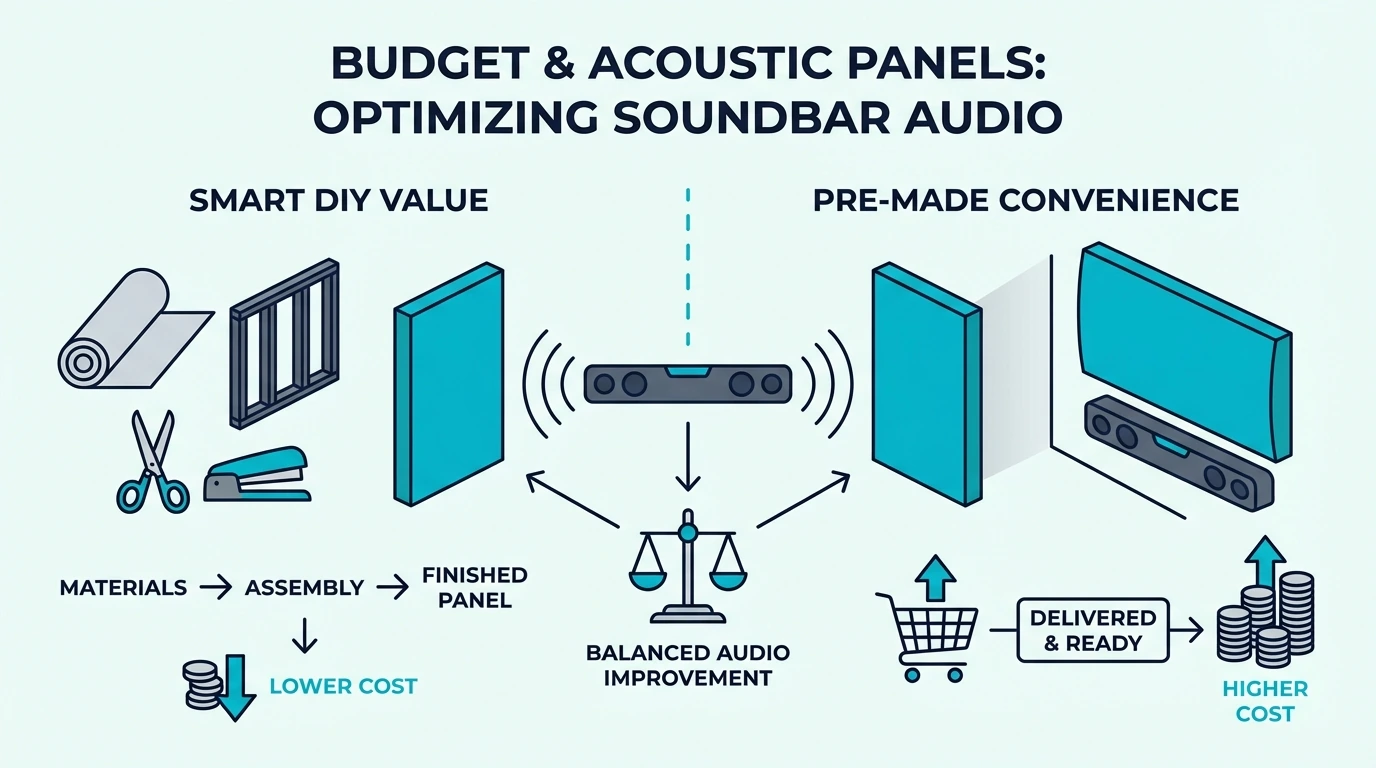
A budget soundbar should solve a specific problem rather than promise theater audio for pennies. These picks focus on lower-cost setups that still make sense in real rooms, whether you want the cheapest Atmos-ready all-in-one bar or a simple stereo upgrade for a bedroom TV.
Amazon Fire TV Soundbar Plus
The Amazon Fire TV Soundbar Plus is the budget pick for buyers who want Dolby Atmos, a dedicated center channel, and a single-bar setup without adding a separate subwoofer. At around $190, it is cheaper than most Atmos competitors but still sounds fuller and clearer than the ultra-cheap 2.0 bars that dominate this price range.
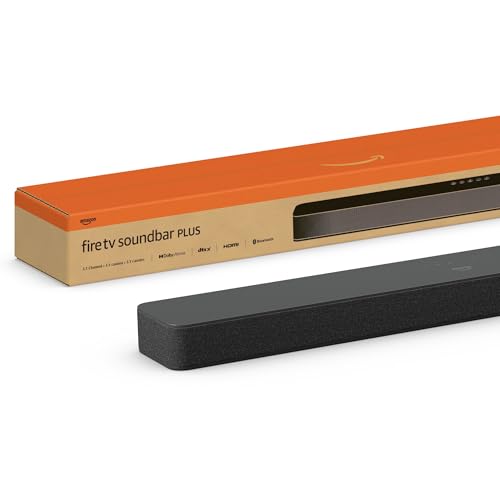
Amazon Fire TV Soundbar Plus
It does not create the same bass impact as a sub-equipped system, but that tradeoff is exactly why it works in bedrooms, apartments, and smaller living rooms. If you stream mostly TV and movies and want better dialogue plus a cleaner setup, it is a smarter budget buy than chasing the cheapest 5.1 package you can find.
Our soundbar guide covers what you gain and lose as you move below two hundred dollars.
Roku Streambar SE
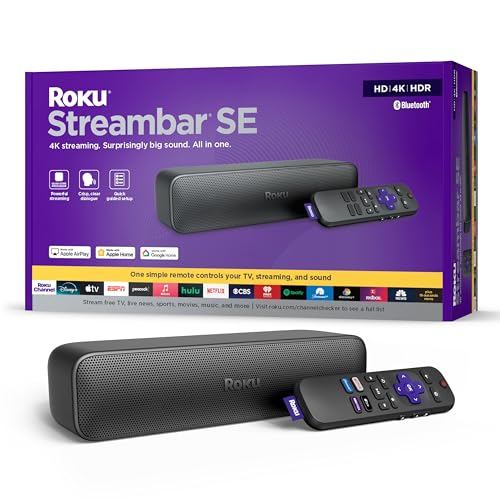
The Roku Streambar SE combines a soundbar and a 4K streaming player in one device for seventy-nine dollars. If your TV lacks smart features or runs a slow operating system, this replaces both the built-in speakers and the streaming interface in a single purchase.
Roku Streambar SE
Audio quality is modest — two small drivers without a subwoofer — but it still improves dialogue clarity and stereo separation over TV speakers. The included Roku voice remote handles both streaming and volume control.
Sony S100F
The Sony S100F 2.0ch Soundbar takes the minimalist approach. No wireless sub, no surround simulation — just a clean stereo bar with Sony’s bass reflex speaker technology that adds warmth to dialogue and music without the complexity of a multi-speaker setup.

Sony S100F 2.0ch Soundbar
Best Ultra-Budget All-In-One: VIZIO All-In-One
The VIZIO All-In-One is the ultra-budget fallback if you want the cheapest single-bar upgrade that still feels intentional. It gives you HDMI ARC, Bluetooth, and cleaner forward projection than TV speakers in one compact bar that is easy to place under small TVs.

VIZIO All-In-One
You should not expect theater bass or room-shaking dynamics at this price. What you do get is a simple, no-subwoofer upgrade that is less cluttered than entry-level bar-plus-sub systems and more credible than the dead-end no-name bars that look cheap on day one.
Which Soundbar Features Actually Matter?
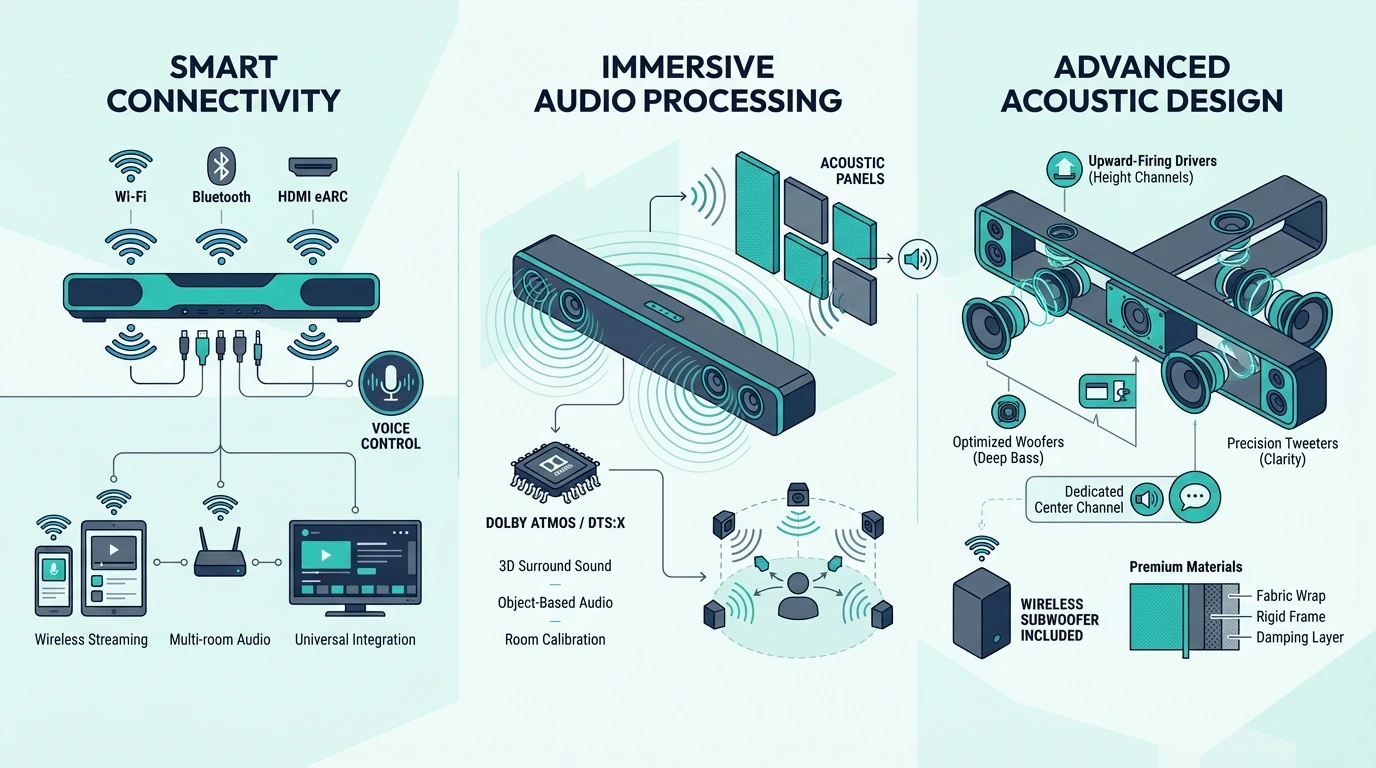
Soundbar marketing pushes channel counts, wattage numbers, and proprietary processing names that mean nothing to the average buyer. Here is what actually affects your experience.
eARC vs ARC vs Optical
HDMI eARC supports lossless Dolby Atmos and uncompressed multi-channel audio at up to 37 Mbps. Standard ARC caps at 1 Mbps of compressed audio.
Optical caps at compressed Dolby Digital 5.1, which is why so many buyers never hear the full performance their soundbar can deliver.
If you bought a Dolby Atmos soundbar, you need eARC to hear what you paid for. Our soundbar guide explains which connections preserve the full signal.
Channel Count Decoded
A 3.1.2 soundbar has three front channels (left, center, right), one subwoofer, and two up-firing Atmos drivers. A 5.1 system adds two rear surround channels.
Higher channel counts do not always mean better audio — a well-tuned 3.1.2 bar outperforms a cheap 7.1 system with weak drivers.
Dialogue Enhancement
The single most useful soundbar feature for daily use is dialogue enhancement. Polk calls it VoiceAdjust, Samsung calls it Adaptive Sound, and Sony calls it Voice Zoom.
Every version aims at the same result: isolating the center-channel frequency range so voices cut through action scenes without cranking the overall volume.
Our soundbar guide explains which features matter most if clear speech is your main priority.
The Bottom Line
The best soundbar for most buyers is the Polk Audio Signa S4 — Dolby Atmos with a wireless sub, 25,000+ reviews, and a price that undercuts premium competitors by hundreds.
For true 5.1 surround without a receiver, the Sony BRAVIA Theater System 6 delivers wireless rears and a sub in one box.
If you want a cleaner single-bar setup without a separate subwoofer, the Samsung S60D is the cleaner fit. Learn more in our soundbar guide.
Frequently Asked Questions
What sound bar has the best sound quality?
The Sony BRAVIA Theater System 6 produces the best overall sound quality in our testing thanks to true 5.1 surround with wireless rears and 360 Spatial Sound Mapping. For the best quality per dollar, the Polk Signa S4 delivers Atmos with a wireless sub at half the price.
Which brand has the best soundbars?
No single brand dominates every price tier. Polk leads in all-around value, Sony and Sonos lead in premium audio quality, and Samsung and LG offer the best integration with their own TV ecosystems.
Our soundbar guide explains which specs matter more than brand loyalty when you compare models.
What’s the best soundbar for a TV to buy right now?
The Polk Audio Signa S4 is the safest recommendation for any TV with an eARC port. It works with every major TV brand, includes a wireless sub, and has over 25,000 verified reviews proving long-term reliability.
If you want a one-bar setup with no subwoofer, the Samsung S60D is the better fit. Our soundbar guide explains how to choose between those two approaches.
Which is the best quality sound bar?
Quality depends on your use case.
For movies, the Sony BRAVIA Theater System 6 leads. For compact spaces, the Sonos Beam Gen 2 is the better fit.
For buyers who want a one-bar all-in-one, the Samsung S60D is the strongest balance of simplicity and sound quality. Our soundbar guide explains which specs matter most before you buy.