How To Soundproof A Rental Room (What Works Without Losing Your Deposit)
How to soundproof a rental room is a different problem than soundproofing a home you own, but only because the best fixes in a rental have to be reversible, removable, and safe for the walls, doors, and windows you are not allowed to modify permanently.
So many renters feel stuck because the noise is real, the disruption is daily, and the most common advice involves construction-level changes that no landlord will approve.
The result is either doing nothing or wasting money on products that barely help because they were not designed for the actual weak point in the room.
The better approach is to treat the rental constraint as a filter, not a limitation. There are real fixes that work without damaging anything, and the key is matching them to the noise path that matters most in your specific room.
Start with which parts of a rental room leak the most sound, then move through which reversible fixes actually help, how to reduce shared-wall neighbor noise without modification, how to handle ceiling and floor noise, and when the honest answer is that the room itself is the problem.
This guide makes that order practical so you can decide whether your next renter-safe fix belongs at the door, the window, the wall, or the one quiet zone that matters most.
How to soundproof a rental room works best when you focus on the weakest barrier first — usually the door, then the window, then the shared wall — using reversible fixes like sealing, heavy blankets, and removable panels. The strongest renter-friendly results come from covering the right surface completely rather than spreading thin upgrades everywhere.
Rental-Room Soundproofing Starts With The Weakest Barrier
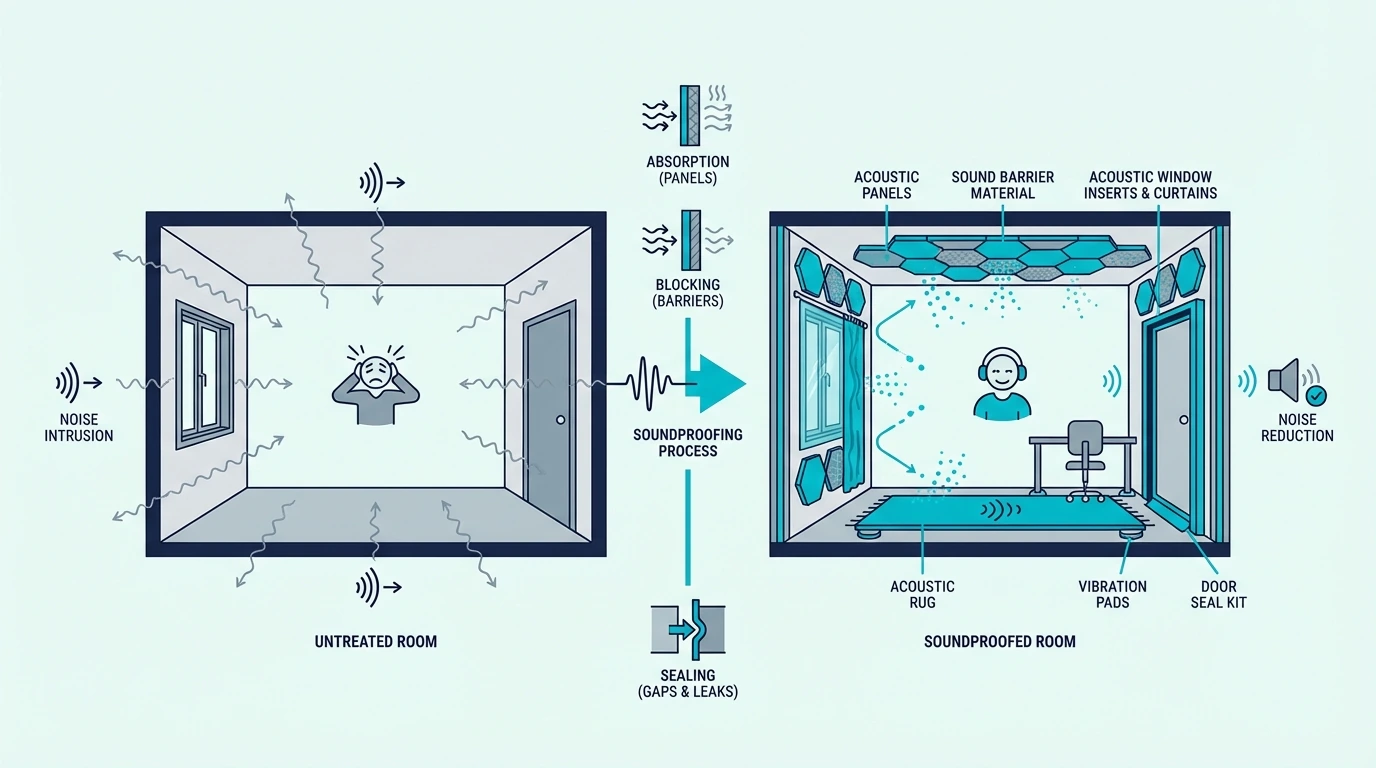
The smartest first step is identifying what you are actually dealing with.
Airborne Noise, Impact Noise, And Street Noise Need Different Fixes
The type of noise changes which fix matters most. Neighbor voices and TV sound through a shared wall are airborne noise that responds to mass and sealing.
Upstairs footsteps are impact noise that responds to cushioning and decoupling. Traffic and street noise through windows respond to sealing and heavier window coverage.
Knowing which type you have saves you from buying the wrong product. A foam panel on the wall will not stop footsteps from above, and a rug on the floor will not stop voices coming through the wall beside you.
Doors, Windows, And Shared Walls Usually Leak First
The door is almost always the weakest point. Most interior doors in rentals are hollow-core with visible gaps at the bottom and sides.
The window is usually the second weakest, especially if it is single-pane or has air leaks around the frame.
Shared walls come third because they are at least solid, even if they are thin. Ceilings and floors are usually the hardest to treat in a rental because you cannot modify the structure from either side.
That is the same weak-link logic that drives results in soundproofing an apartment and the broader soundproofing a door guide. The barrier that leaks the most is where your first dollar should go.
Rentals Usually Improve More Than They Completely Isolate
Expect a noticeable improvement, not total silence. Renter-friendly fixes can typically reduce noise enough that neighbor voices become a faint murmur instead of a clear conversation, and traffic noise drops from intrusive to background-level.
That improvement is meaningful for sleep, focus, and daily comfort, even if the room is not perfectly quiet. The goal is “quiet enough” rather than “silent,” and that bar is achievable in most rentals with the right approach.
Renter-Friendly Fixes Work Best When They Stay Reversible And Targeted
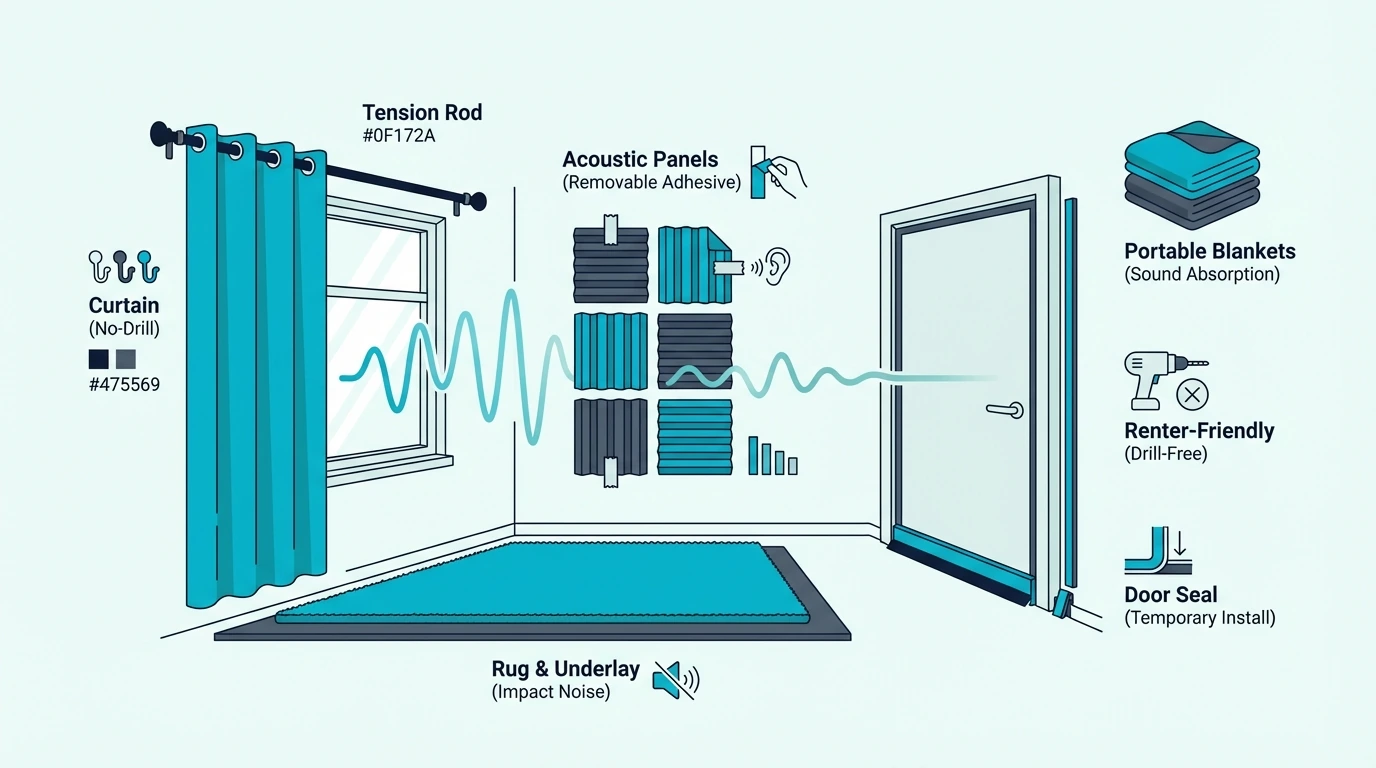
The constraint is real, but it does not eliminate the strongest first moves. It just changes the order: seal the obvious leaks, add removable mass to the weakest surface, then ask whether landlord approval unlocks anything more effective.
Reversible Fixes Help Most When They Start With Openings
The three highest-value renter-friendly fixes are sealing door and window gaps, hanging a heavy blanket or curtain over the weakest surface, and adding a thick rug with a dense pad on hard floors. That order matters because openings usually leak more sound than the wall people instinctively want to treat first.
Sealing gaps with removable foam strips like Cuysfead Foam Seal Strip is the single most cost-effective renter-friendly move because it closes the air paths that carry the most noise per square inch. If you can feel air moving around the door or window frame, that path is transmitting more sound than you probably realize.
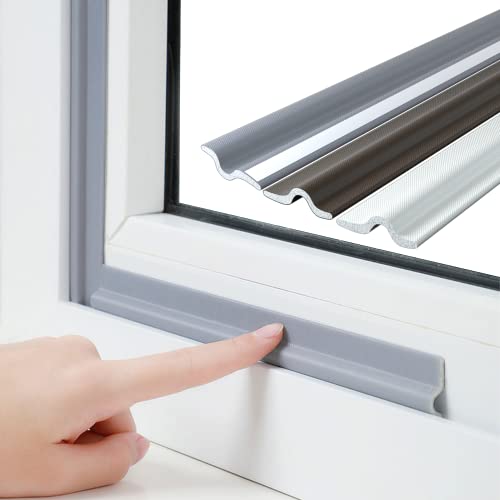
Cuysfead Foam Seal Strip
Once the leaks are controlled, the next step is covering the noisiest surface completely rather than decorating several surfaces lightly. One heavy blanket on the real weak point usually beats a handful of thin foam tiles spread around the room.
Most “Renter-Friendly” Hype Is Just Lightweight Decoration
Egg cartons, thin tapestries, and cheap foam tiles are the most commonly recommended and least effective renter-friendly options. They add almost no mass, create no meaningful barrier, and mostly just make the room look different without changing the noise.
Command-strip mounted thin panels are another overpromise. They can help with echo inside the room, but they do not add enough mass to block noise coming through the wall from the other side.
Landlord Permission Can Unlock Better Reversible Options
Ask about hanging heavy items from the wall, applying removable adhesive products, swapping curtain hardware, and whether they already have a policy for weatherstripping, rugs, or recurring noise complaints. Some landlords will allow minor changes like seal strips or heavier curtain rods if you explain the purpose and promise to restore the original condition.
Getting permission in writing protects you at move-out and sometimes opens the door to slightly better options than pure no-contact fixes allow.
Get Studio Tips Weekly
Join 5,000+ creators getting acoustic treatment advice every week.
No spam. Unsubscribe anytime.Shared-Wall Noise Usually Decides Whether The Rental Feels Livable
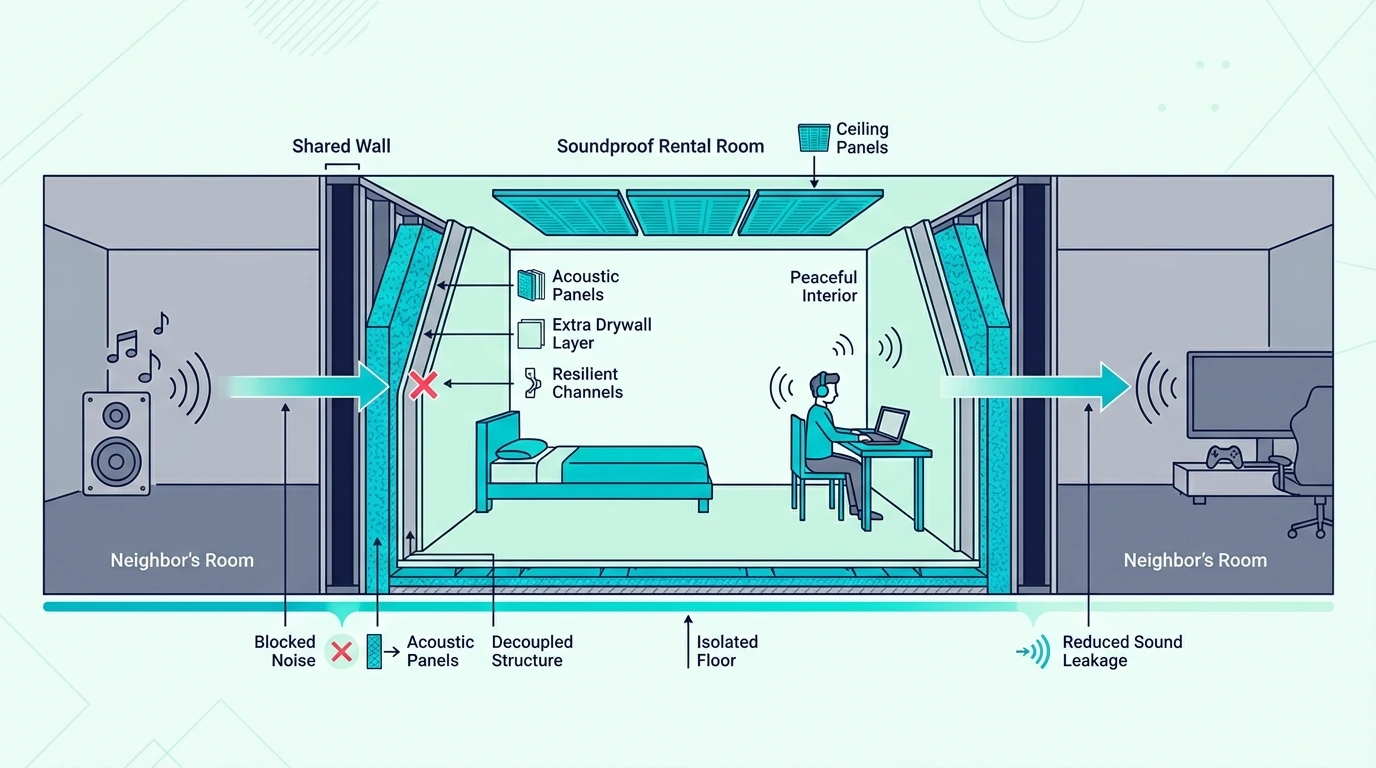
Shared-wall noise is the most common and most frustrating rental noise problem because the wall is the one surface you usually cannot modify.
Neighbor Noise Improves Most With Removable Mass On The Real Wall
The most effective renter-friendly approach for shared walls is adding mass to the wall surface using heavy, dense materials that you can remove later. A sound dampening blanket like US Cargo Control Sound Dampening Blanket hung on the shared wall adds both mass and absorption, which reduces the amount of neighbor noise that reaches you.
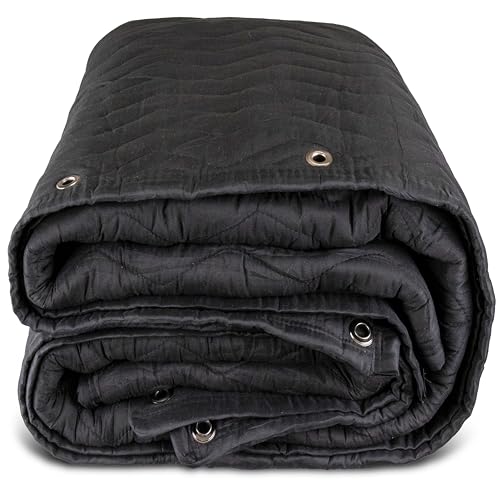
US Cargo Control Sound Dampening Blanket
Placing a heavy bookshelf loaded with books against the shared wall also helps because it adds mass to the weakest section. The combination of a blanket behind a loaded bookshelf is one of the strongest no-damage approaches available.
Doors And Windows Can Outrank The Wall Very Quickly
If the noise is louder near the door or window than near the shared wall, the wall is not the main weak point.
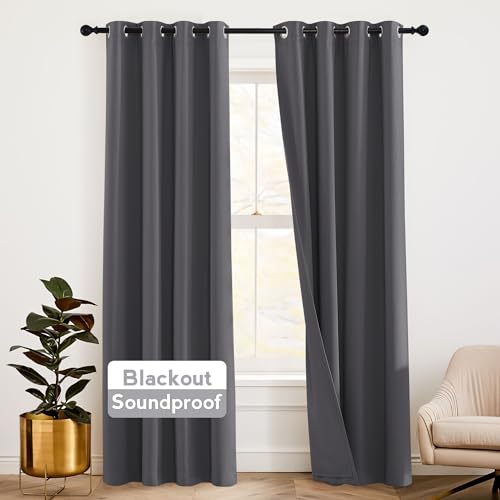
In that case, treat the door first with a removable sweep like the HomeProtect Door Draft Stopper and perimeter sealing, then cover the window with a heavier curtain like RYB HOME Soundproof Curtains or a blanket.
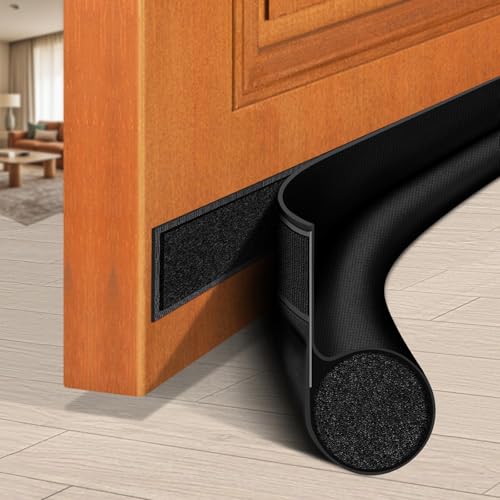
HomeProtect Door Draft Stopper
That one-two combination often delivers more improvement than anything you could do to the wall because it closes the obvious leak paths first.
Compare this with soundproofing windows and best door sweep for soundproofing for the specific product options that work in rental situations.
Some Buildings Stay The Hard Limit Even After Good Renter Fixes
The building is the limiting factor when the walls are paper-thin, the floors transmit every footstep, and the structure itself carries sound through the framing regardless of what you put on the surfaces. Older buildings with minimal insulation and thin party walls fall into this category most often.
In those cases, renter-friendly fixes can still help, but the improvement ceiling is lower. If you have tried the main reversible fixes and the noise is still severely disruptive, the honest answer may be that the room itself is not suitable for your noise sensitivity, and looking for a quieter unit or a different floor may be more practical than spending more on products.
Ceiling And Floor Noise Need Damage-Free Workarounds, Not Fantasy Fixes
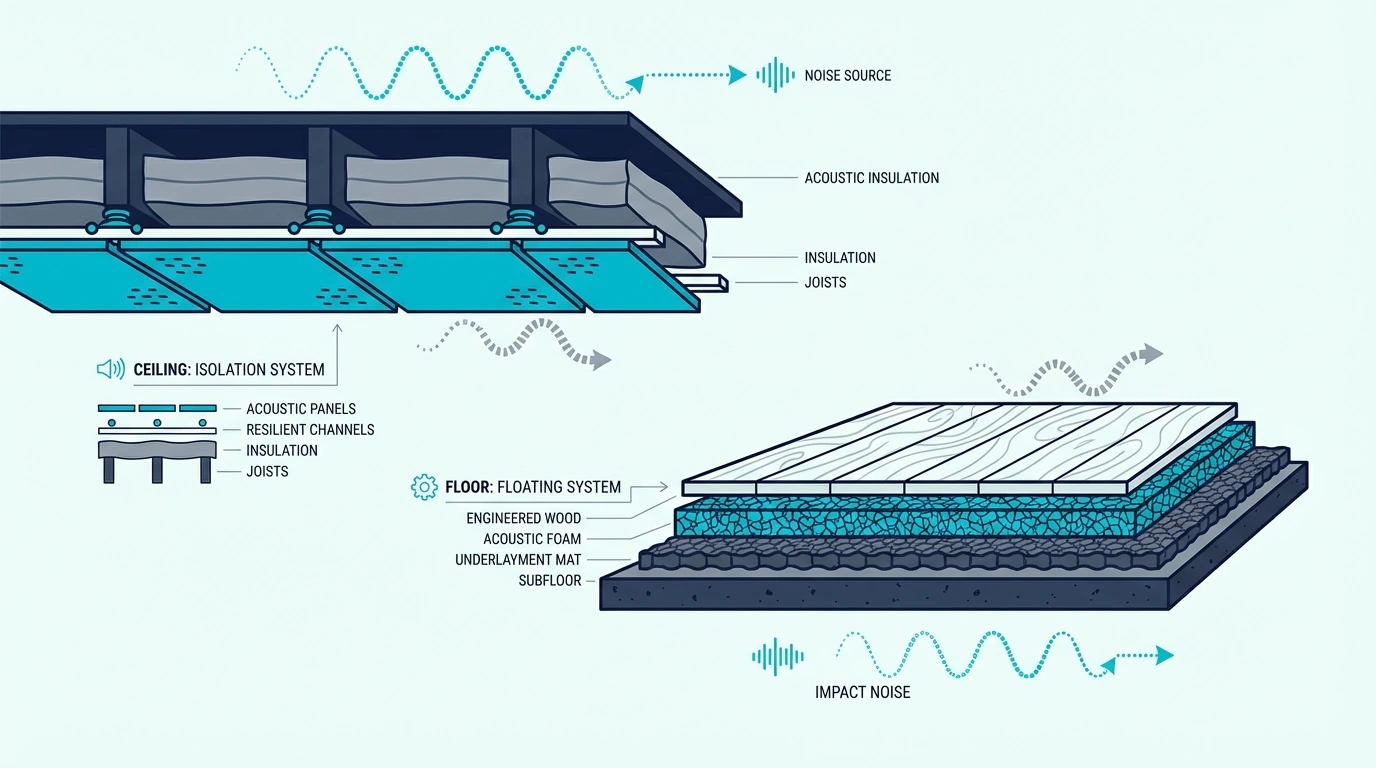
Ceiling and floor noise are the hardest rental noise problems because renters usually control neither side of the structure. That means the smartest approach is reducing what you can at the listening position, the walking surface, or the one zone where quiet matters most.
Upstairs Footsteps Usually Need Softer Surfaces Below, Not More Wall Products
If footsteps from above are the main complaint, the most effective renter-friendly move is softening the room below the noise and reducing the harsh reflections that make each impact feel sharper. A thick rug with a dense pad in the area where you spend the most time helps because it absorbs some of the reflected energy and makes the room feel less hard and echoey.
You usually cannot treat the ceiling itself without landlord cooperation, so the renter-safe goal is lowering the perceived loudness rather than pretending you can fully block the structure-borne path. Heavy curtains, blankets on the walls, and soft furnishings all help because they reduce the reverberant buildup that makes impact noise feel louder than it actually is.
Downstairs Complaints Usually Improve With Rugs And Behavior First
If you are the one making noise for neighbors below, thick rugs and pads are the most effective and most expected courtesy. Many lease agreements in multi-story buildings require floor coverage for exactly this reason.
Walking softly, using furniture pads under chair legs, and avoiding hard-soled shoes on bare floors are free fixes that many people overlook. The combination of rugs plus behavioral awareness is usually enough to satisfy a reasonable downstairs neighbor.
A Quiet Zone Often Beats Trying To Quiet The Whole Room
If you cannot quiet the whole room, focus on the area where noise matters most.
For sleep, that usually means the bed wall or headboard corner. For work, it means the desk area and the path between you and the noisiest surface.
A heavier renter blanket like US Cargo Control Sound Dampening Blanket hung behind the bed or beside the desk can create a noticeably quieter zone within the room even when the rest of the space is still noisy.
Budget Rental Fixes Work Best When They Prove The Real Weak Point
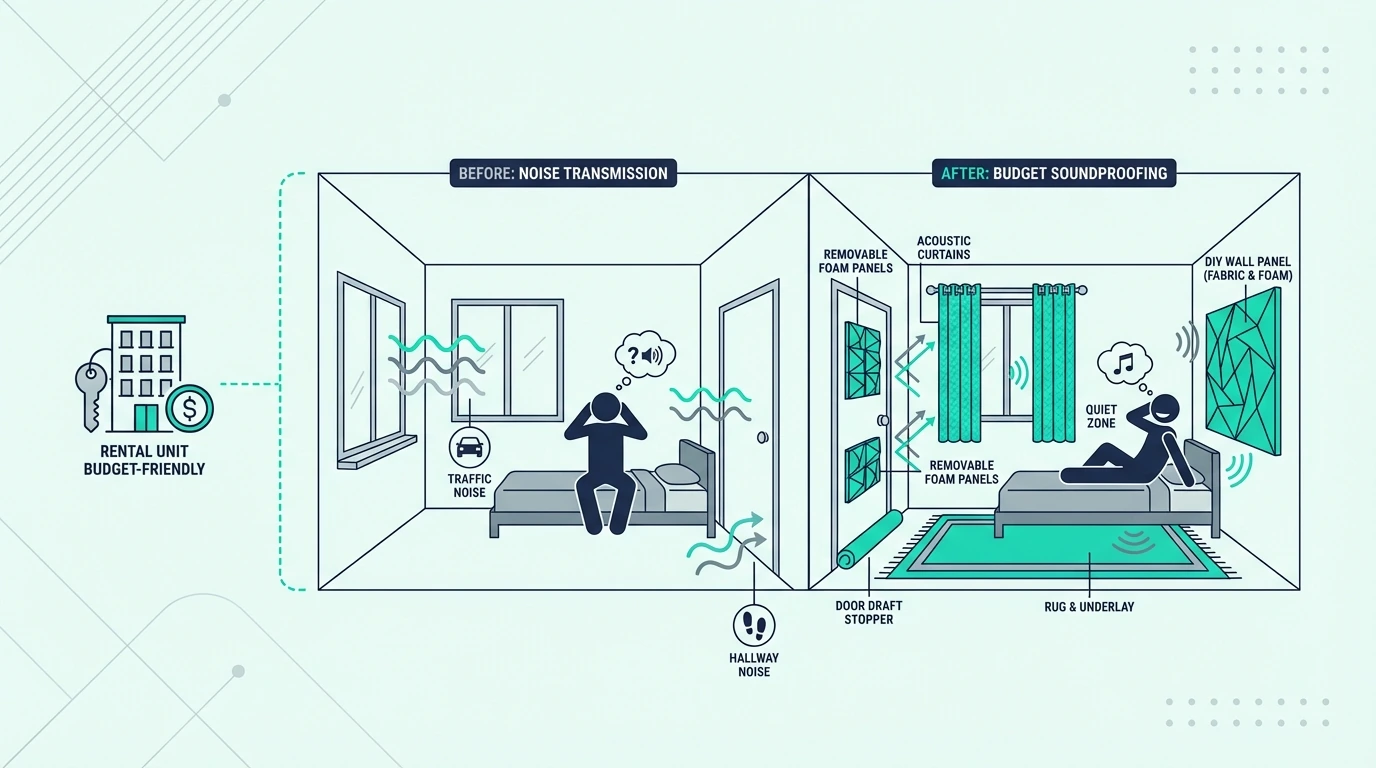
Yes, and the budget approach is often the smartest approach because it forces you to diagnose the real problem before you buy decorative fixes that do not touch the real weak point.
Cheap Rental Wins Start With Sealing And Selective Mass
Sealing door and window gaps is the cheapest fix that consistently works. Foam seal strips can be installed in minutes, and if the door has a visible gap at the bottom, a removable draft stopper or adhesive sweep is the next cheapest upgrade.
After sealing, the next best budget move is adding mass to the noisiest surface. A heavy blanket, a loaded bookshelf, or even moving existing furniture against the shared wall can make a measurable difference without buying anything new.
Thin “Soundproof” Products Usually Waste Budget In Rentals
Thin foam panels marketed as “soundproof” are the biggest waste of money in rental soundproofing. They absorb echo inside the room but do not block noise from outside, and they usually cost more than a proper seal strip or a heavy blanket that would actually help.
Expensive white-noise machines are also overrated as a soundproofing substitute. They can mask light noise, but they do not reduce transmission, so they belong in the comfort category rather than the soundproofing category.
Sometimes The Honest Next Step Is A Better Unit, Not Another Product
Move beyond DIY when you have sealed the gaps, covered the weakest surfaces, and the noise is still disrupting sleep or work. At that point, the options are asking the landlord for permission to make bigger changes, requesting a quieter unit or floor, or accepting that the building itself is the limit.
If you are also comparing broader room-level fixes, soundproofing a wall, soundproofing a ceiling, and best soundproof curtains cover the permanent and semi-permanent options that become available if the landlord cooperates or if you eventually move to a place you own.
The Bottom Line
How to soundproof a rental room gets much easier once you treat the renter limits as a filter instead of a dead end.
If the room leaks most at the door or window, start there with sealing and removable coverage first.
If the shared wall is still the loudest path after that, add removable mass where the noise is actually strongest instead of decorating the whole room.
If ceiling or floor noise is the main problem, focus on softer surfaces and one quiet zone rather than pretending a renter can rebuild the structure.
If the building is still the hard limit after the best reversible fixes, use that information honestly and compare this page with the broader soundproofing hub and soundproofing a bedroom so the rental fix stays in proportion to the rest of your options.
Frequently Asked Questions
How can I stop hearing my neighbors through walls in an apartment?
The most effective renter-friendly approach is adding mass to the shared wall with a heavy blanket or loaded bookshelf, sealing the door and window gaps, and reducing the reverberant buildup inside the room with soft furnishings and rugs.
How to sound proof a rental property?
Soundproof a rental property by focusing on the weakest barriers first — usually doors and windows — with reversible fixes like seal strips, heavy curtains, and sound dampening blankets. Avoid permanent modifications unless the landlord gives written permission.