Best Acoustic Panels for Home Theater: Top Picks for Movie Room Clarity [2026]
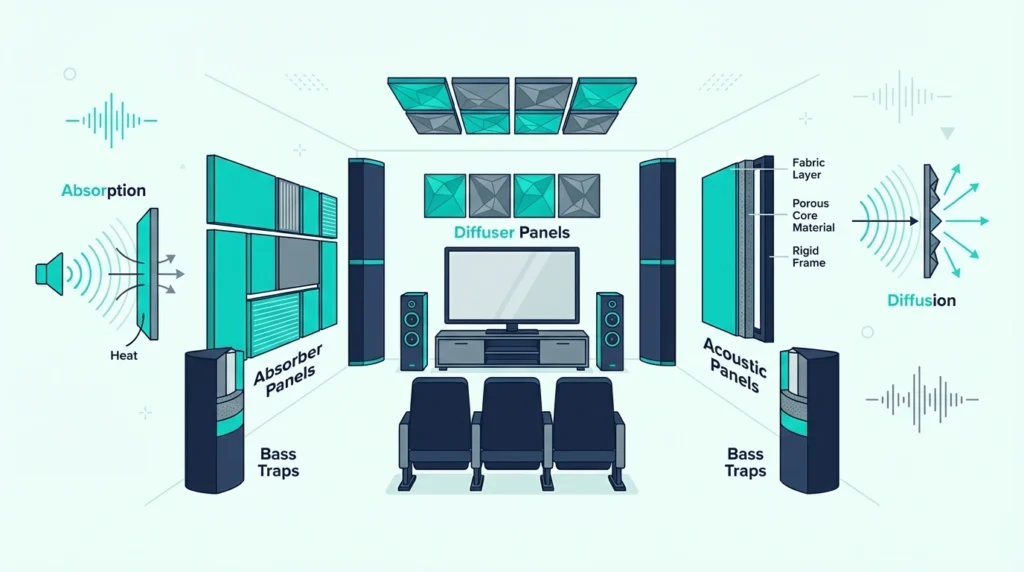
Best acoustic panels for home theater make a measurable difference in movie clarity — but only when placed at the right positions, and most home theaters get this wrong from day one.
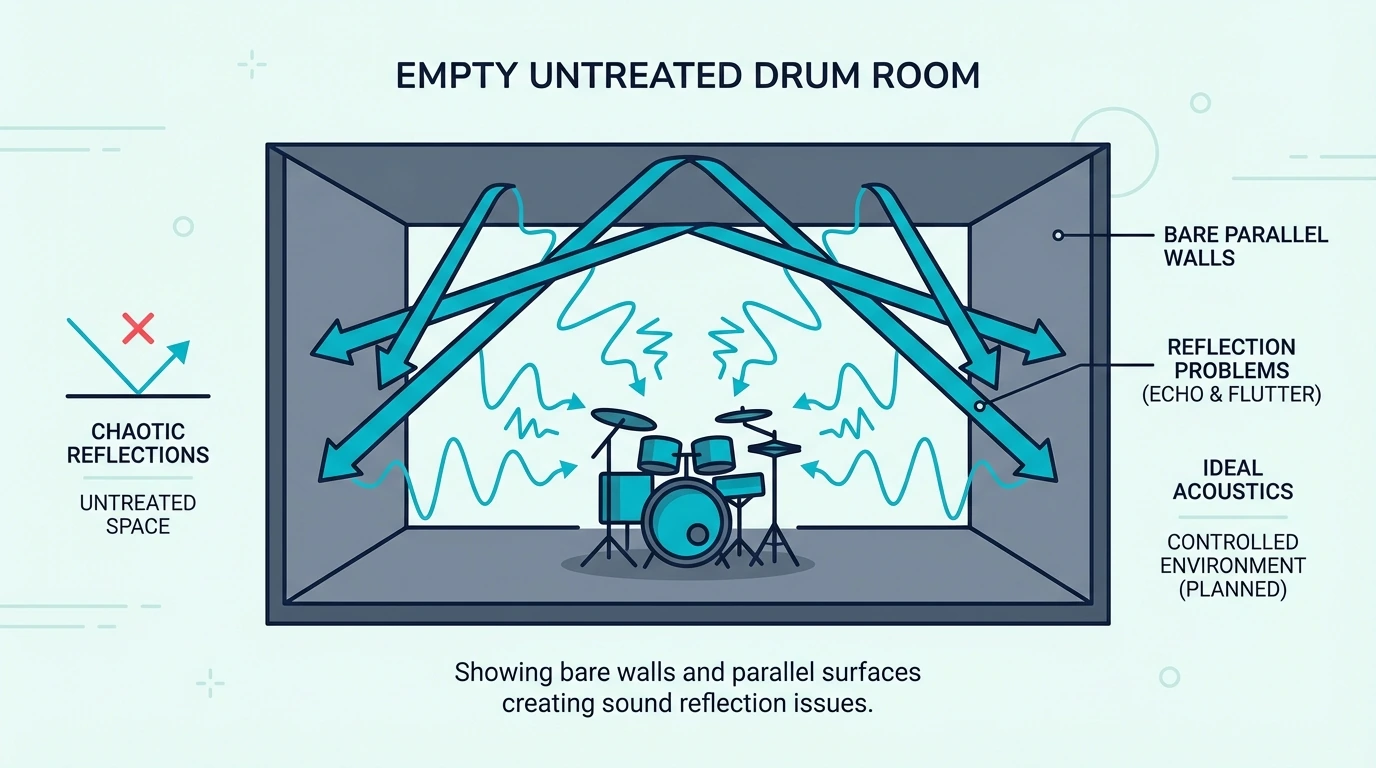
Most theater owners invest thousands in equipment, then leave the room untreated. Bare drywall bounces sound off every surface, arriving at your ears milliseconds after the direct signal.
The result is muddy dialogue, blurred surround placement, and bass that sounds boomy in some spots and dead in others.
Two inches of fiberglass at the first reflection points fixes most of those problems in one installation.
Below you’ll find which panels perform best for theater use, where to place them for maximum impact, and what you’ll spend at each budget tier.
The best acoustic panels for home theater are 2-inch thick fiberglass or mineral wool panels with fabric wrapping. Focus on first reflection points (side walls at ear level), the ceiling above seating, and rear wall treatment. Budget around 8-12 panels for a typical room, prioritizing side walls first.
What Are the Best Acoustic Panels for Home Theaters?
Three panels consistently deliver the best results for home theater applications — one for value, one for budget, and one for dedicated rooms with no compromises.
Best Overall Pick
The UMIACOUSTICS 4 PCS Acoustic Panels with Hanging Bracket hits the sweet spot between performance and value. The 2-inch fiberglass core absorbs frequencies from 250Hz up to 4kHz effectively — exactly the range where dialogue clarity lives.
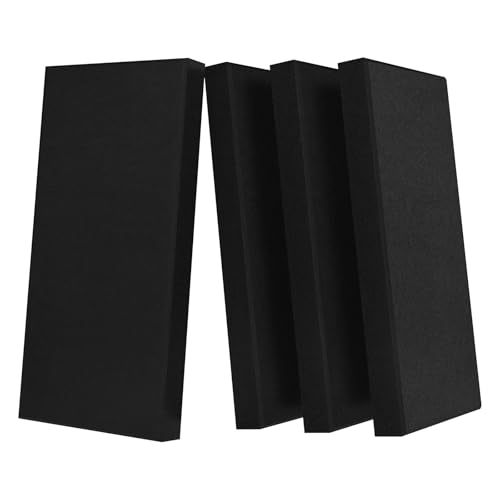
UMIACOUSTICS 4 PCS Acoustic Panels with Hanging Bracket
What sets these apart is the included mounting hardware. Most panels require separate purchases for hanging systems, which adds both cost and complexity.
The fabric wrap comes in multiple colors, including dark options that disappear into theater rooms. For a standard home theater, two packs (8 panels) cover first reflection points on both side walls.
These panels earn their “best overall” spot because they solve the most common home theater problems without requiring acoustic engineering expertise. Position them at ear level on side walls, and you’ll immediately notice cleaner dialogue and tighter bass response.
For detailed mounting techniques, the bedroom acoustic treatment guide covers each method.
Best Budget Pick
If your theater budget is already stretched, the 18 Pack Black Acoustic Panels prove you don’t need to spend a fortune to improve your room. With over 3,400 reviews, these are among the most purchased home theater panels on Amazon.
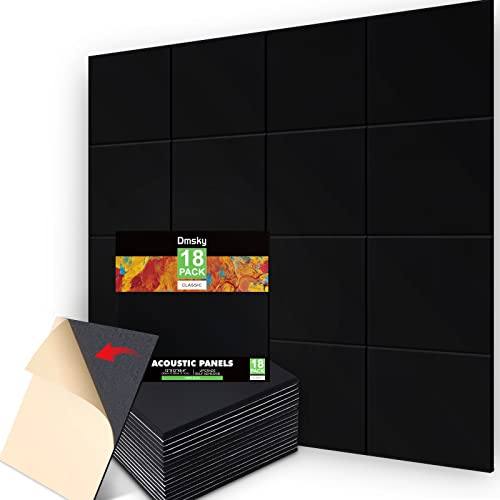
18 Pack Black Acoustic Panels
The tradeoff is thickness — at 0.4 inches, they primarily address flutter echo and high-frequency reflections. Don’t expect bass control from these.
However, for rooms with severe echo problems, 18 panels cover a large portion of wall space. The black color works perfectly in dedicated theater spaces with dark walls and ceilings.
Use these as supplementary treatment rather than your primary panels. They’re excellent for filling in rear walls and ceiling areas after you’ve addressed first reflection points with thicker options.
Best Premium Pick
For dedicated theater rooms where aesthetics and performance both matter, the UMIACOUSTICS 2 PCS Large Acoustic Panels offer studio-grade absorption in a visually impressive format.
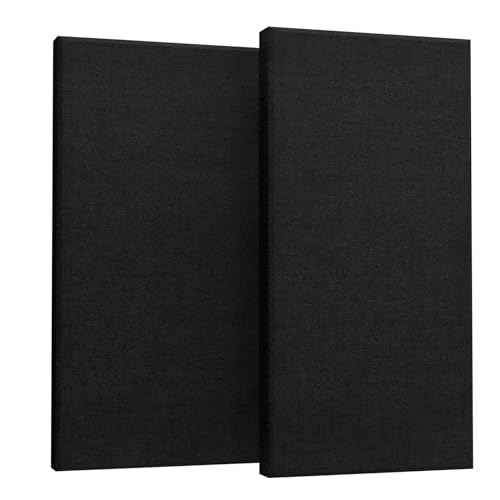
UMIACOUSTICS 2 PCS Large Acoustic Panels
These 47-inch by 24-inch panels mean fewer seams and a cleaner look. One panel covers what would require two or three smaller options.
The premium price reflects the professional construction — dense fiberglass core with careful fabric wrapping. These are the same quality you’d find in commercial cinema installations.
If your home theater is a showpiece room for entertaining guests, these panels look intentional rather than like afterthought treatment. They make a statement while solving acoustic problems.
Why Do Home Theaters Need Acoustic Treatment?
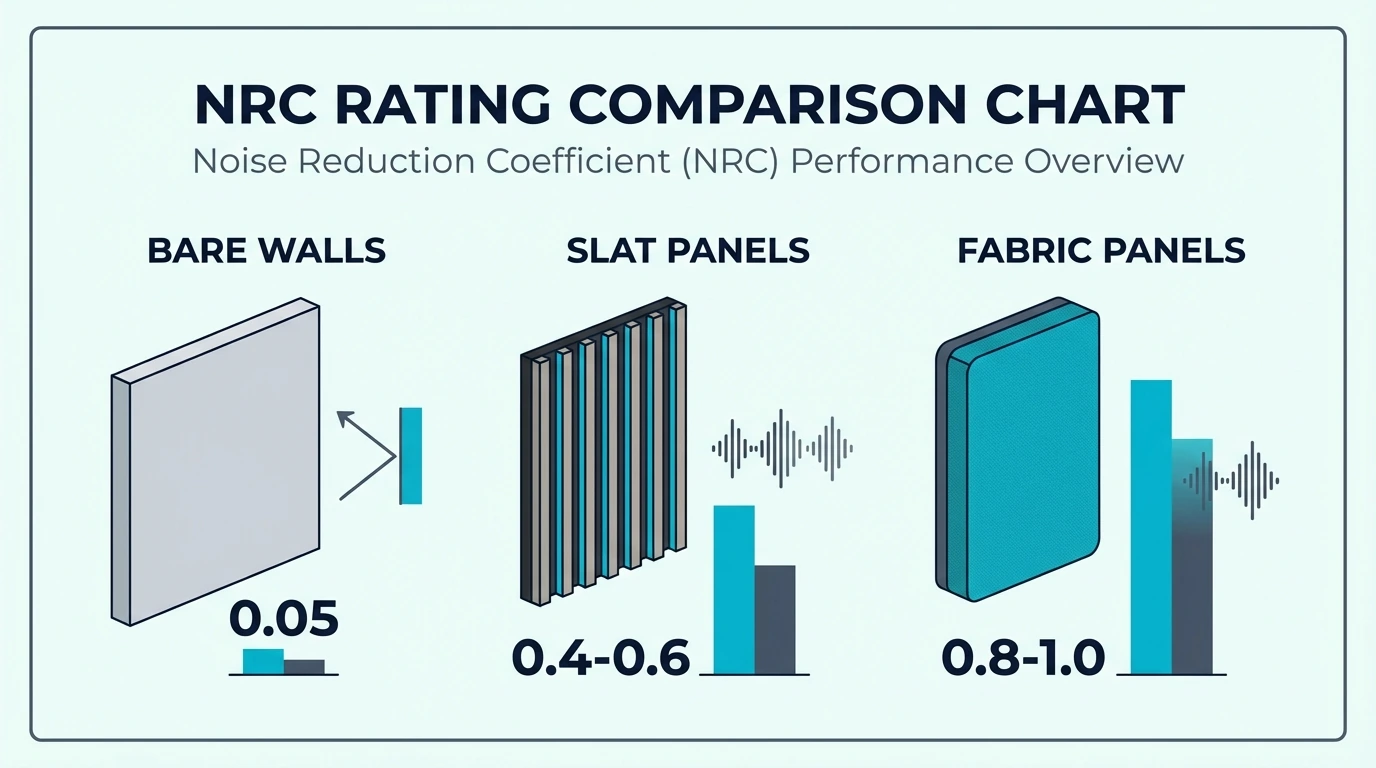
Home theater acoustics create problems that other rooms avoid. Powerful equipment in an enclosed space means every reflection competes directly with your speakers — and the three biggest casualties are dialogue, surround imaging, and bass control.
Reflection Problems in Enclosed Spaces
The enclosed shape of a typical theater room is exactly what makes reflections so aggressive. When your subwoofer hits a 40Hz explosion scene, that sound wave bounces off every surface in the room.
Without absorption, these reflections arrive at your ears milliseconds after the direct sound. Your brain tries to process both — and fails.
The result is muddy bass, unclear dialogue, and a sense that something is “off” even if you can’t identify why. Many theater owners blame their speakers when the room is actually the problem.
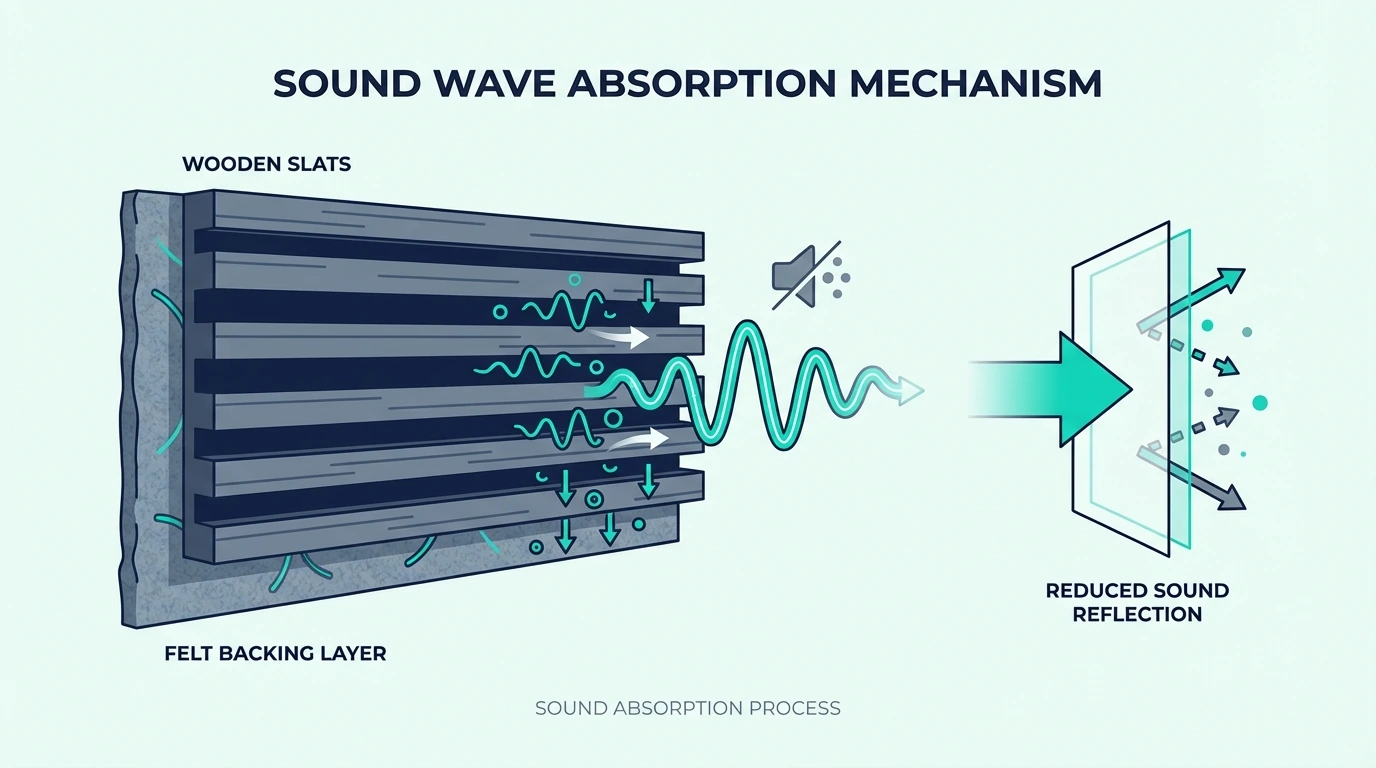
Acoustic panels absorb these reflections before they can bounce back. The sound that reaches your ears is primarily the direct signal from your speakers, not a confused mix of reflections.
Specific Improvements After Treatment
Once those reflections stop competing with the direct signal, the changes are audible across every part of the soundtrack. Dialogue clarity improves noticeably — you’ll stop reaching for the remote to turn up voices during quiet scenes.
Second, surround sound actually surrounds. Reflections from bare walls confuse the spatial placement of effects, making your 7.1 system sound like stereo with extra noise.
Third, bass tightens. Low frequencies are particularly prone to room interaction, creating “boomy” spots and dead zones.
Panels with sufficient thickness help smooth these inconsistencies.
The improvement is most noticeable during dynamic scenes where quiet dialogue follows loud action. Untreated rooms blur the transition; treated rooms maintain clarity throughout.
The decorative panel options guide covers the science behind absorption and room treatment.
Get Studio Tips Weekly
Join 5,000+ creators getting acoustic treatment advice every week.
No spam. Unsubscribe anytime.What Types of Panels Work Best for Home Theaters?
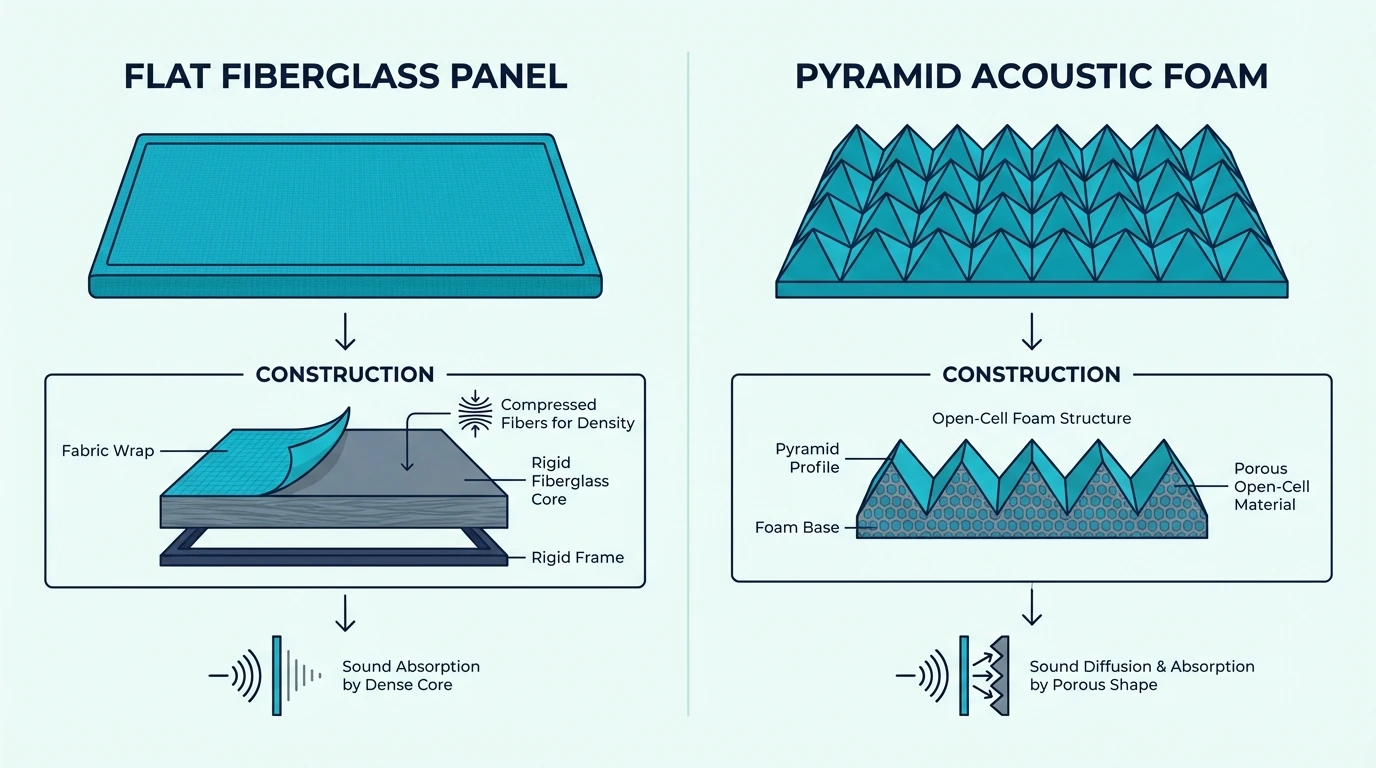
Not all panels perform equally in home theater environments. The choice between absorbers, diffusers, and bass traps depends on your room size and primary problem.
Absorption Panels vs Diffusers
Home theaters primarily need absorption panels — the fabric-wrapped fiberglass or mineral wool products covered above. These convert sound energy into tiny amounts of heat, preventing reflections.
Diffusers scatter sound instead of absorbing it. They’re useful in large spaces where you want to maintain some liveliness while breaking up direct reflections.
For most home theaters under 500 square feet, focus on absorption first. Diffusers add complexity without solving the primary problems.
You can always add them later if the room feels too “dead” after treatment.
The Olanglab Fiberglass Acoustic Wall Panels offer excellent absorption at a reasonable price point for those building out full room treatment.
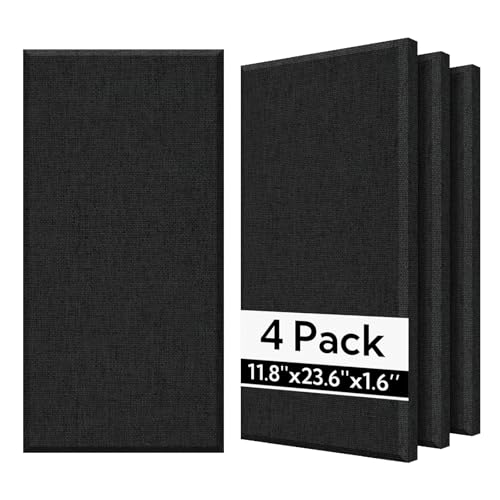
Olanglab Fiberglass Acoustic Wall Panels
Bass Traps for Low-Frequency Control
Absorbers handle the mid and high range, but the low end plays by different rules. Bass frequencies accumulate in corners, creating boomy zones and null points where bass nearly disappears.
Standard acoustic panels help somewhat, but dedicated bass traps placed in room corners provide more effective low-frequency control. These are typically thicker — 4 inches or more — and mounted floor-to-ceiling.
For home theaters, address first reflection points with 2-inch panels first. If bass problems persist after basic treatment, corner traps are your next investment — the low-frequency panel guide covers dedicated bass solutions.
The acoustic panels hub covers bass trap options for deeper low-frequency control.
Panel Thickness and Frequency Range
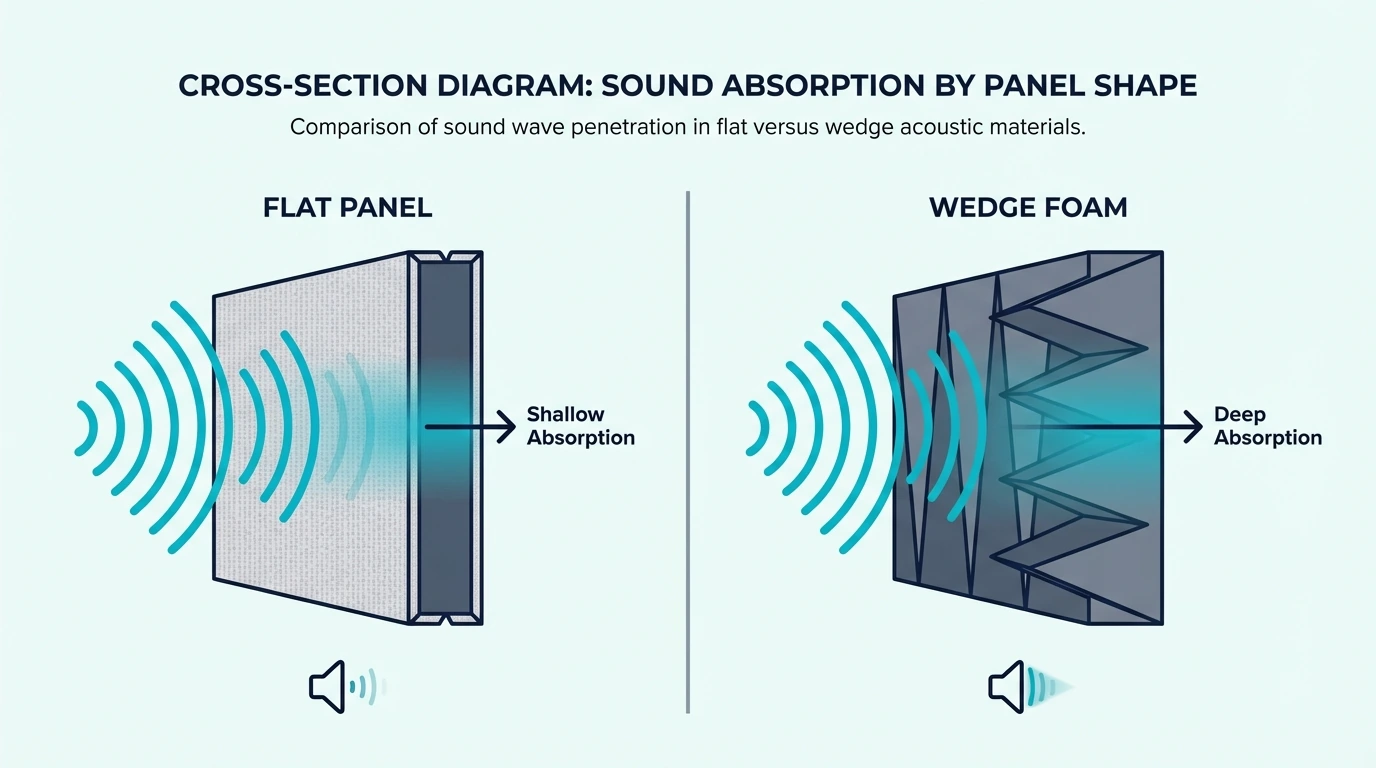
The reason bass traps need to be so thick points to a broader rule that applies to every panel in your theater. Thin panels only catch high frequencies; thick panels absorb deeper into the bass range.
Two inches is the minimum recommended thickness for home theater panels. This handles the critical 250Hz-4kHz range where most movie soundtrack content lives.
The UMIACOUSTICS 4 PCS Acoustic Panels at 2 inches thick represent the sweet spot for most installations. Go thicker (4 inches) only if you have severe bass problems or a very large room.
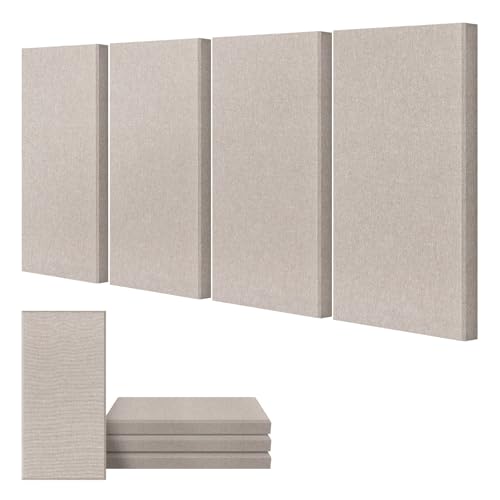
UMIACOUSTICS 4 PCS Acoustic Panels
Where to Place Panels in a Home Theater
Placement determines whether your panels fix the problem. Strategic positions deliver audible improvement; random placement delivers marginal results.
First Reflection Points
These are the most critical positions in any home theater. First reflection points are the spots on side walls where sound from your front speakers bounces directly toward your listening position.
Find them by sitting in your primary seat while a helper slides a mirror along the side wall. When you can see the speaker in the mirror’s reflection, mark that spot.
Place panels at these locations first — typically two to three per side wall, centered at ear height when seated. This single improvement often delivers more audible benefit than any other treatment.
The Fiberglass Wall Panels 4 Pack are sized perfectly for first reflection treatment.
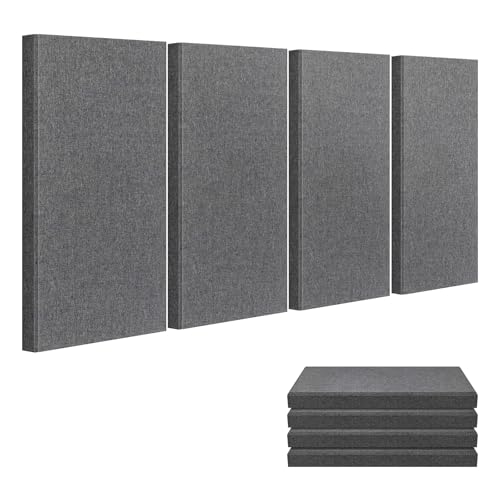
Fiberglass Wall Panels 4 Pack
Ceiling Panels and Atmos Setups
The ceiling is the most neglected surface in home theaters. Sound reflects off your ceiling just as it does off walls, and the reflection path is often shorter.
A “cloud” — a panel or group of panels suspended above the primary seating area — addresses ceiling reflections effectively. This is particularly important for Dolby Atmos setups with height channels.
Mounting ceiling panels requires more planning than wall treatment. The ceiling panel guide covers mounting options that securely suspend panels without risking them falling onto viewers below.
Start with the ceiling area directly between your front speakers and listening position. Expand rearward over the seating area as budget allows.
How Many Panels Needed?
Room size determines panel count, but a typical home theater (150-300 square feet) benefits from 8-12 panels total. A practical starting framework follows.
Side walls: 4-6 panels (2-3 per side at first reflection points). Ceiling: 2-4 panels above seating.
Rear wall: 2-4 panels to prevent slap-back echo.
You can always add more, but starting with these positions covers the highest-impact treatment zones. The fiberglass panel guide helps determine exact quantities for your room dimensions.
How Do the Best Home Theater Acoustic Panels Compare?
Beyond the top three picks, these options cover specific use cases — easy installation, decorative treatment, and budget full-room coverage.
Best for Easy Installation
Not everyone wants to drill into walls or fuss with mounting hardware. The 4 Pack High-Density Core Acoustic Panels feature self-adhesive backing that eliminates the mounting problem entirely.
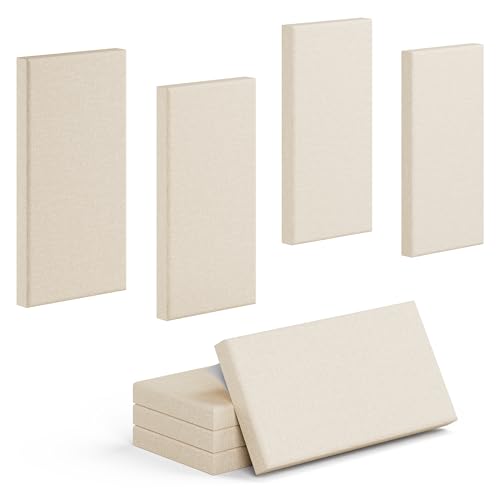
4 Pack High-Density Core Acoustic Panels
The 4.8-star rating (highest on this list) reflects both acoustic performance and installation satisfaction. Users consistently praise the “peel and stick” simplicity.
The adhesive works best on smooth, painted surfaces. Textured walls or wallpaper may require supplemental mounting methods.
These are ideal for rental properties or situations where you want treatment without permanent wall modifications. The adhesive typically removes cleanly, though always test in an inconspicuous area first.
Best Looking Panels
Visual design matters as much as acoustic performance when the theater doubles as an entertainment room.
Dedicated home theaters are often showpiece rooms. The BUBOS Fabric Acoustic Panels bring designer aesthetics to acoustic treatment.
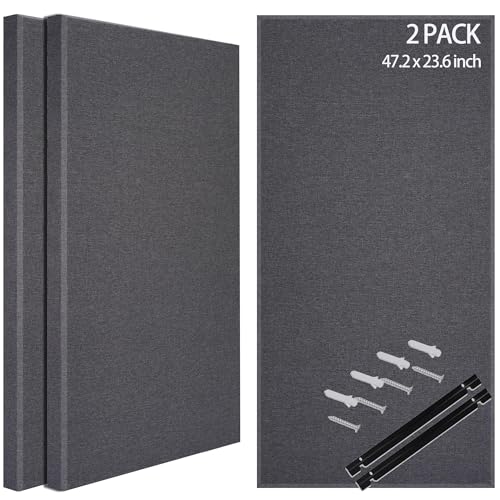
BUBOS Fabric Acoustic Panels
At nearly 4 feet by 2 feet per panel, these make statements on your walls while solving acoustic problems. The fabric wrapping includes decorative options beyond basic black.
Position these on the most visible walls — typically the side walls adjacent to seating that guests see when entering. Use more utilitarian panels on less visible surfaces like ceilings and rear walls.
The premium per-panel cost makes sense when aesthetics matter. For purely functional treatment in dedicated rooms with minimal visibility, less expensive options perform equally well acoustically.
Best for Dark Rooms
Home theaters often feature dark color schemes to reduce light reflection from projector screens. The Olanglab Fiberglass Acoustic Wall Panels Gray disappear into dark-painted rooms.
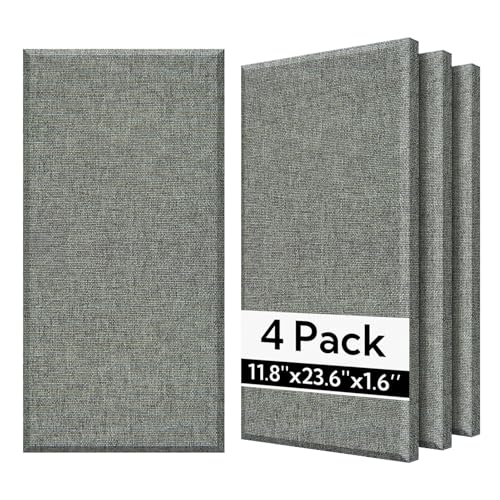
Olanglab Fiberglass Acoustic Wall Panels Gray
The gray fabric complements both black and charcoal wall colors common in serious home theaters. Against dark walls, these panels are nearly invisible from viewing distance.
Acoustic performance matches the other Olanglab fiberglass panels — solid construction with good mid-frequency absorption. The color choice is the primary differentiator.
Pair these with the black budget panels for full-room treatment that maintains your theater’s dark aesthetic throughout.
Best Entry Level Option
Committing to a full treatment plan without proof that panels help your specific room is a gamble. For testing whether acoustic treatment helps your specific room before committing to larger purchases, the 2 PCS Decorative Acoustic Panels offer the lowest risk entry point.
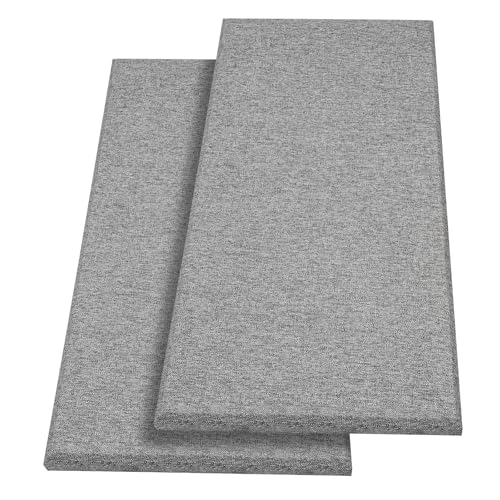
2 PCS Decorative Acoustic Panels
Two panels won’t transform a room, but they’ll demonstrate whether treatment helps your space. Position them at a first reflection point and listen for improvement in dialogue clarity.
If you notice a difference (most people do), scale up with broader coverage. If not, you’ve spent less than the cost of dinner for two to learn your room has other issues.
Once you’re convinced treatment helps, the recording studio panel guide shows options designed for critical listening.
The decorative fabric options also let you test aesthetic preferences before committing to full room treatment in a specific color.
How Much Does Home Theater Treatment Cost?
Treatment costs less than most theater upgrades and outlasts most electronics. Three budget tiers cover entry-level echo treatment, full first-reflection coverage, and complete room professional results.
Budget Tier Breakdown
Three price tiers cover the range from basic echo control to full-room professional treatment.
Entry Level (Under $150): Addresses flutter echo and basic reflections. Expect 8-12 thin panels or 4 quality panels.
Noticeable improvement for dialogue clarity. Limited bass control.
Mid-Range ($150-$400): Full first reflection treatment plus ceiling coverage. 8-12 quality 2-inch panels. Noticeable improvement in overall sound quality.
Good value for most home theaters.
Premium ($400+): Full room treatment including bass traps. 16+ panels with varied placement. Professional-grade results.
Worth it for dedicated theater rooms with quality equipment.
Most home theater owners find the mid-range tier delivers the best return on investment. The best panels for the money guide ranks options by cost-effectiveness across all budgets.
You can always expand treatment later, but starting with quality 2-inch panels at first reflection points provides the foundation.
Compare these costs to what you’ve spent on speakers and electronics. If your equipment budget exceeded $2,000, spending 10-20% of that on room treatment makes your entire investment perform better.
Wood acoustic panels can reduce costs further if you want a decorative alternative.
Conclusion
Two packs of 2-inch fiberglass panels at first reflection points fix the majority of home theater acoustic problems. That covers dialogue clarity, surround imaging, and the worst bass modes — all in one installation session.
Start with side walls at ear height. Add ceiling treatment if you run Atmos or notice overhead reflections.
Expand to rear walls and corners only after confirming the first-reflection panels made the expected difference.
The best acoustic panels guide covers options beyond home theater applications, and the home office panel guide covers placement for smaller rooms where the same principles apply at a different scale.
Frequently Asked Questions
Do Home Theaters Really Need Treatment?
Yes — and it’s not a minor improvement. Untreated rooms waste much of your speaker investment by allowing reflections to muddy the sound.
Even modest treatment at first reflection points creates audible improvement that guests notice immediately. For serious home theater enthusiasts, treatment is as essential as quality speakers.
Foam or Professional Panels?
Professional fabric-wrapped panels outperform acoustic foam in every measurable way. Foam is thinner, absorbs less, and degrades faster.
The price gap has narrowed in recent years. For the cost of covering a wall with foam, quality fiberglass panels perform better and last longer.
Foam has one advantage: it’s easier to cut for custom shapes. If you need to treat unusual surfaces or irregular spaces, foam’s flexibility helps.
Otherwise, choose panels.
Will Panels Help Surround Sound?
Absolutely — surround sound benefits even more than stereo from room treatment. Surround systems rely on precise speaker placement to create spatial effects.
Reflections confuse spatial positioning, making rear channels blend with fronts and sides bleed into each other. Treatment allows each speaker to contribute its intended signal without room interference.
If you’ve invested in Atmos or DTS:X with height channels, ceiling treatment becomes particularly important. Height effects require the ceiling to not reflect competing signals back to listeners.