Do Acoustic Panels Work in Apartments? Renter’s Guide [2026]
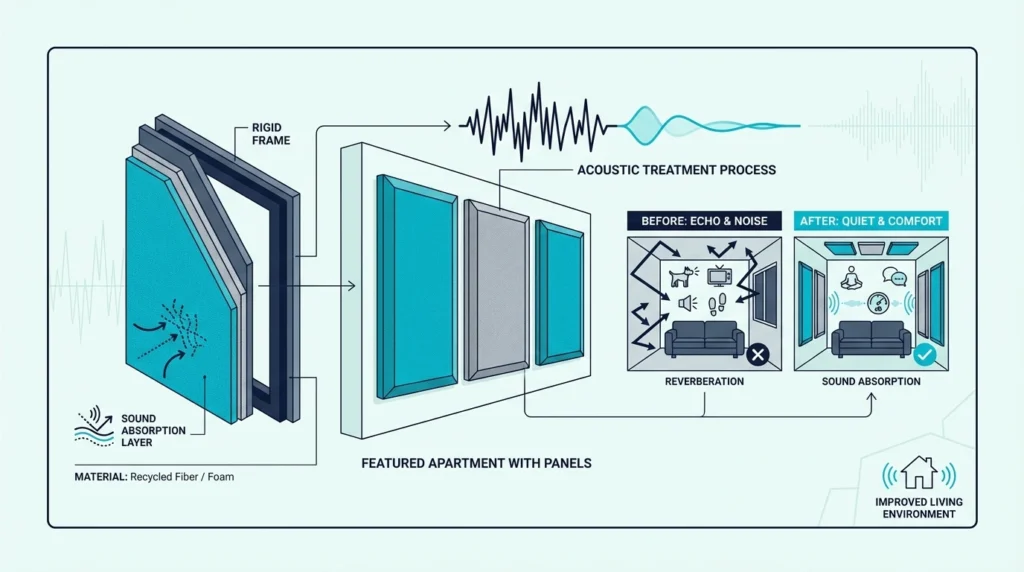
Do acoustic panels work in apartments? Yes—but only for improving the sound inside your unit, not for blocking noisy neighbors.
If calls sound boxy or music feels harsh, you are hearing reflections bouncing off drywall, windows, and bare floors.
A few well-placed panels can calm that echo so your voice sounds more direct and your speakers sound clearer.
Start by treating the wall behind your microphone or desk, then hit the first reflection points to your left and right.
Below you’ll find what panels can and cannot do in an apartment, plus renter-friendly ways to mount them without damaging walls.
Acoustic panels improve sound inside your apartment (less echo, clearer calls) but they do not block sound from neighbors. For renter-friendly installation, use Command strips, freestanding panels, or leaning panels that leave no wall damage.
Do Acoustic Panels Work in Apartments?
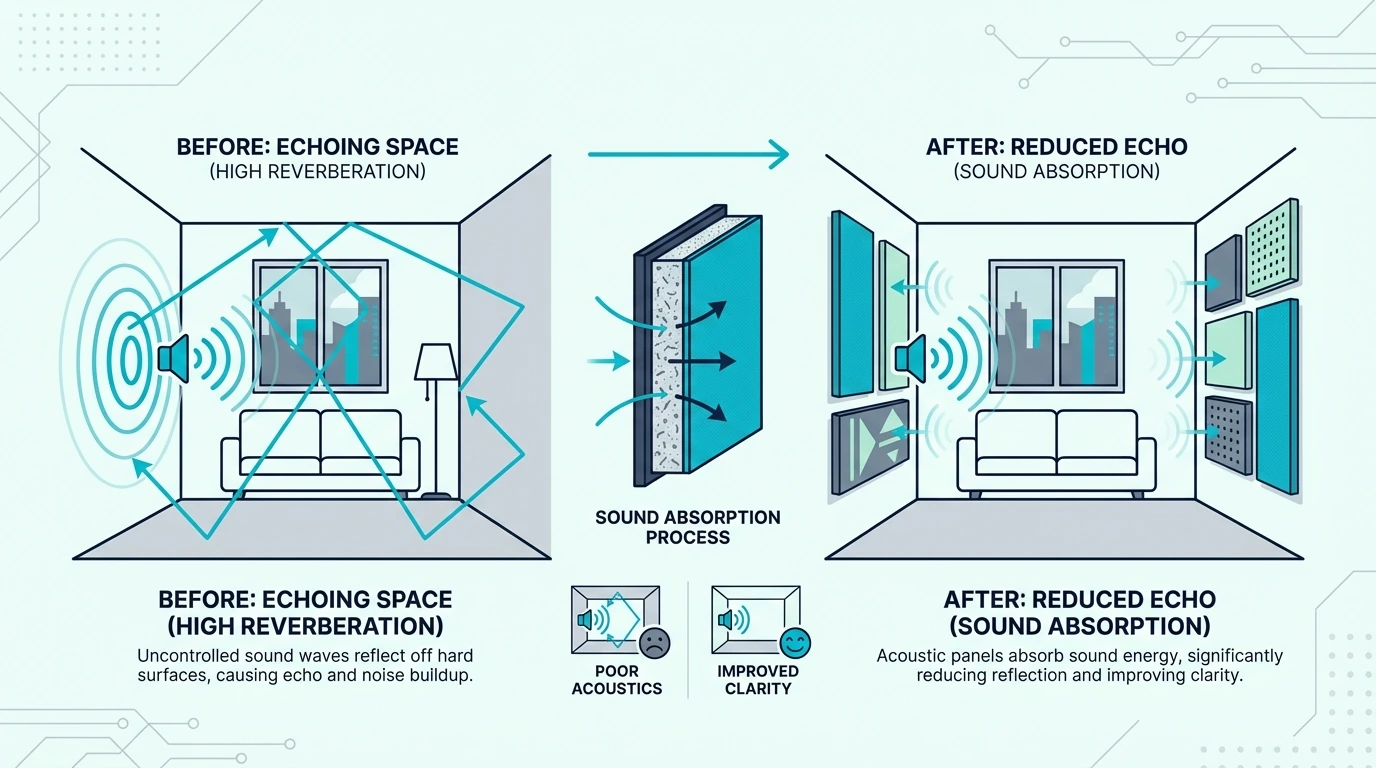
Yes, acoustic panels work in apartments—for acoustic treatment. They control sound within your space by absorbing reflections and reducing echo.
What they do not do is block sound from traveling between apartments.
That expectation is where most renters get disappointed.
What Panels CAN Do
Acoustic panels excel at taming the sound inside your room. Hard surfaces in apartments—hardwood floors, bare walls, large windows—create reflections that make spaces sound echoey and harsh.
Panels absorb these reflections, making your apartment sound warmer and more controlled.
Voice calls become clearer because your microphone picks up less room echo. Music sounds more defined because reflections are not muddying the original sound.
For work-from-home setups, panels behind your desk sharpen video call quality. The audio difference between a treated and untreated room is immediately noticeable to everyone on the call—the home office acoustic panels guide has the best options for desk setups.
What Panels Cannot Do ⚠️
The critical limitation: acoustic panels cannot block sound from traveling through walls, floors, or ceilings. Understanding the difference between panels and soundproofing matters before you spend money.
Sound travels through building structures via vibration. Your neighbor’s bass, footsteps upstairs, or TV sound moves through the physical materials connecting your apartments.
Panels sitting on your wall surface have zero effect on this transmission.
No amount of acoustic panels will stop you from hearing your upstairs neighbor’s footsteps. The sound travels through the floor/ceiling structure itself—panels only affect sound that’s already in your room.
Will Acoustic Panels Block Neighbor Noise?
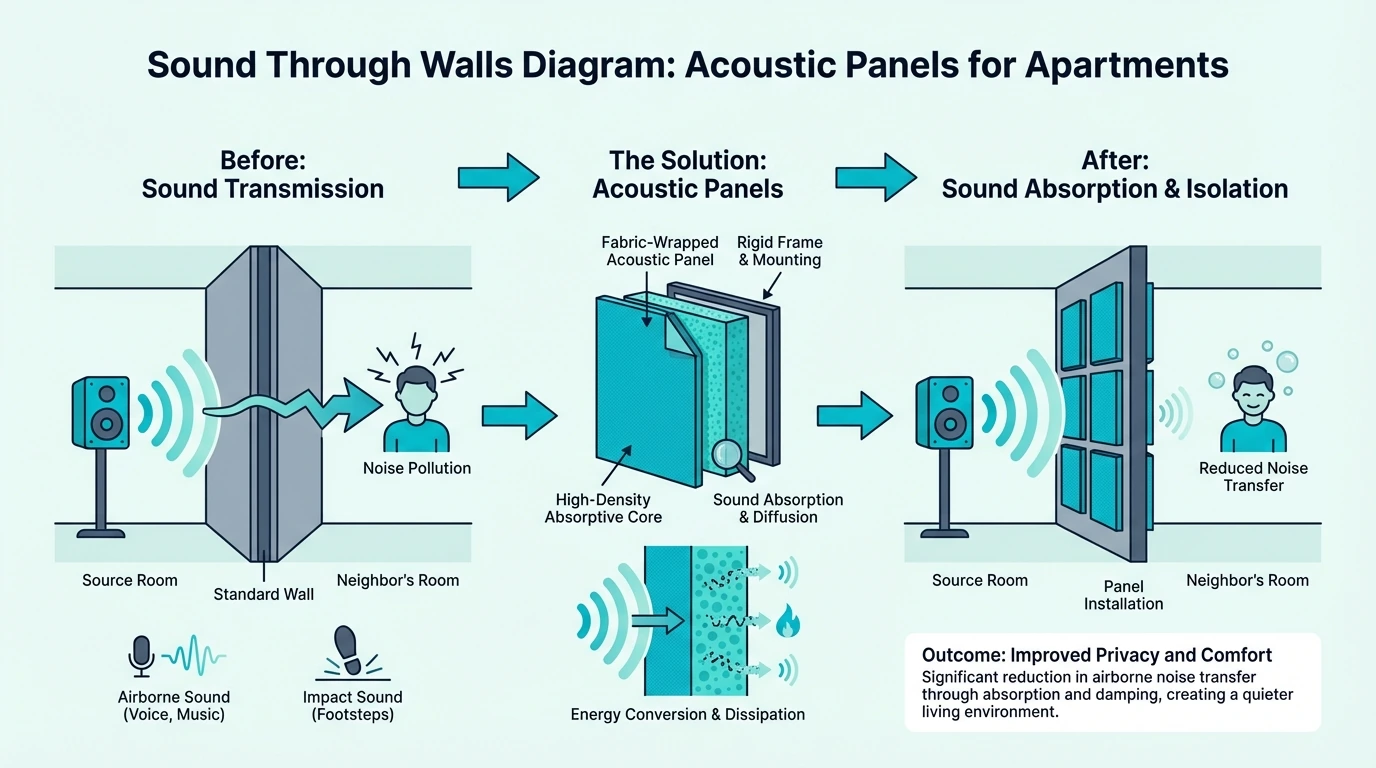
No. This is the biggest misconception about acoustic treatment, and it needs a direct answer before you spend money expecting the wrong results.
Why Panels Cannot Block External Sound
Sound transmission between apartments happens through structural pathways. When your neighbor plays music, the speaker vibrations transfer into the floor, which connects to your ceiling, which radiates sound into your space.
Acoustic panels are designed to absorb sound waves that are already traveling through air inside your room. They have no effect on sound traveling through solid materials like drywall, concrete, or wood framing.
Panels act like a sponge for sound already in your room. Neighbor noise is not in your room yet—it is coming through the structure itself.
The sponge cannot absorb what has not entered the air.
What Actually Soundproofs
True soundproofing requires mass, decoupling, and sealing—none of which acoustic panels provide.
Mass means heavy, dense materials that resist vibration. Adding mass-loaded vinyl to walls adds weight that reduces sound transmission.
Double or triple drywall layers work similarly.
Decoupling means separating wall layers so vibrations cannot transfer directly. Resilient channels and isolation clips create gaps that interrupt the structural pathway.
Sealing means eliminating air gaps around doors, windows, outlets, and any penetrations. Sound leaks through surprisingly small openings.
Most of these solutions are not practical for renters. You cannot add drywall layers or install resilient channels without major construction.
That is why managing expectations matters—panels help with what you can control (your room’s acoustics) rather than what you cannot (structural sound transmission).
Get Studio Tips Weekly
Join 5,000+ creators getting acoustic treatment advice every week.
No spam. Unsubscribe anytime.What CAN Panels Do in an Apartment?
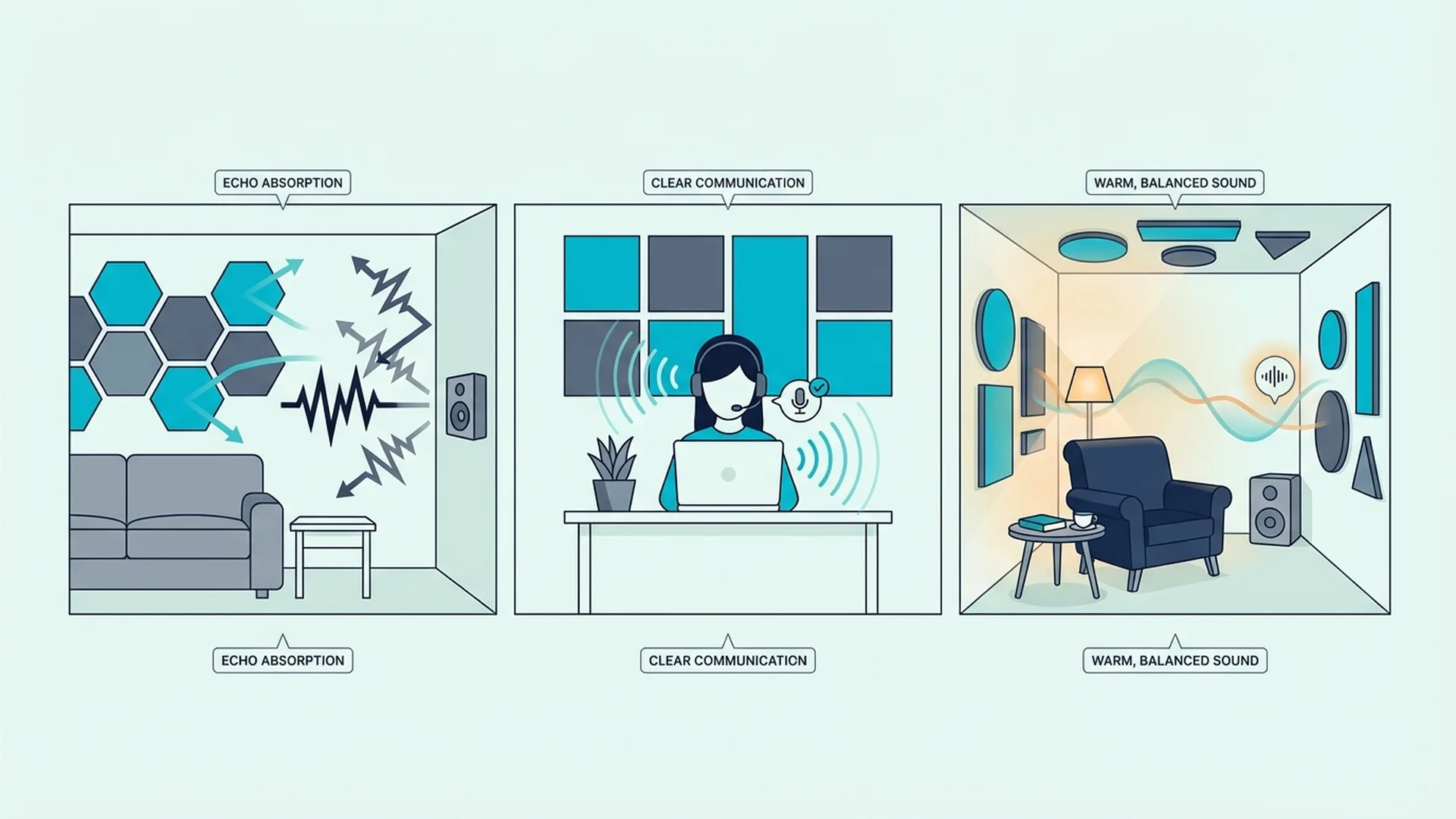
Once you stop worrying about the neighbors, you can focus on the acoustic problems panels are actually built to solve. The three benefits below completely change how a room feels to live and work in.
Reduce Echo and Reverb
Most modern apartments sound harsh simply because they are built from hard, reflective surfaces. Bare drywall, hardwood floors, massive windows, and minimalist furniture create a highly reverberant environment where every sound bounces multiple times before dying out.
The 2-Pack Fabric Acoustic Panels can start pulling that excess energy out of the air immediately. By absorbing those mid and high frequencies, the panels kill the “bathroom echo” effect, leaving the room feeling intimate and controlled rather than like an empty box.
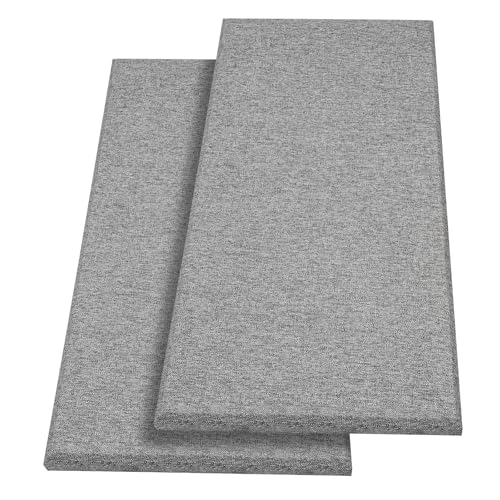
2-Pack Fabric Acoustic Panels
Improve Call and Recording Quality
That controlled environment provides massive, immediate benefits for remote workers and content creators. Desktop microphones are notoriously sensitive, picking up not just your voice, but every single reflection bouncing off your apartment walls.
When you treat the room, the microphone captures a clean, direct signal rather than a muddy mix of voice and delayed echoes. This single upgrade makes your Zoom calls, podcast recordings, and Twitch streams sound professional instead of amateur.
Make Small Rooms Sound Better
This acoustic control is especially critical in typical apartment dimensions, because small rooms naturally suffer the worst acoustic problems. Sound has less physical distance to travel before slamming into a wall and bouncing back, creating intense, rapid-fire reflections and devastating flutter echo.
Strategic panel placement allows a tiny 10×10 bedroom to punch far above its weight class acoustically, often sounding noticeably better than an untreated 15×15 living room. The acoustic panel placement guide explains how to use the mirror trick to find exactly where those panels belong.
What Are the Best Renter-Friendly Installation Methods?
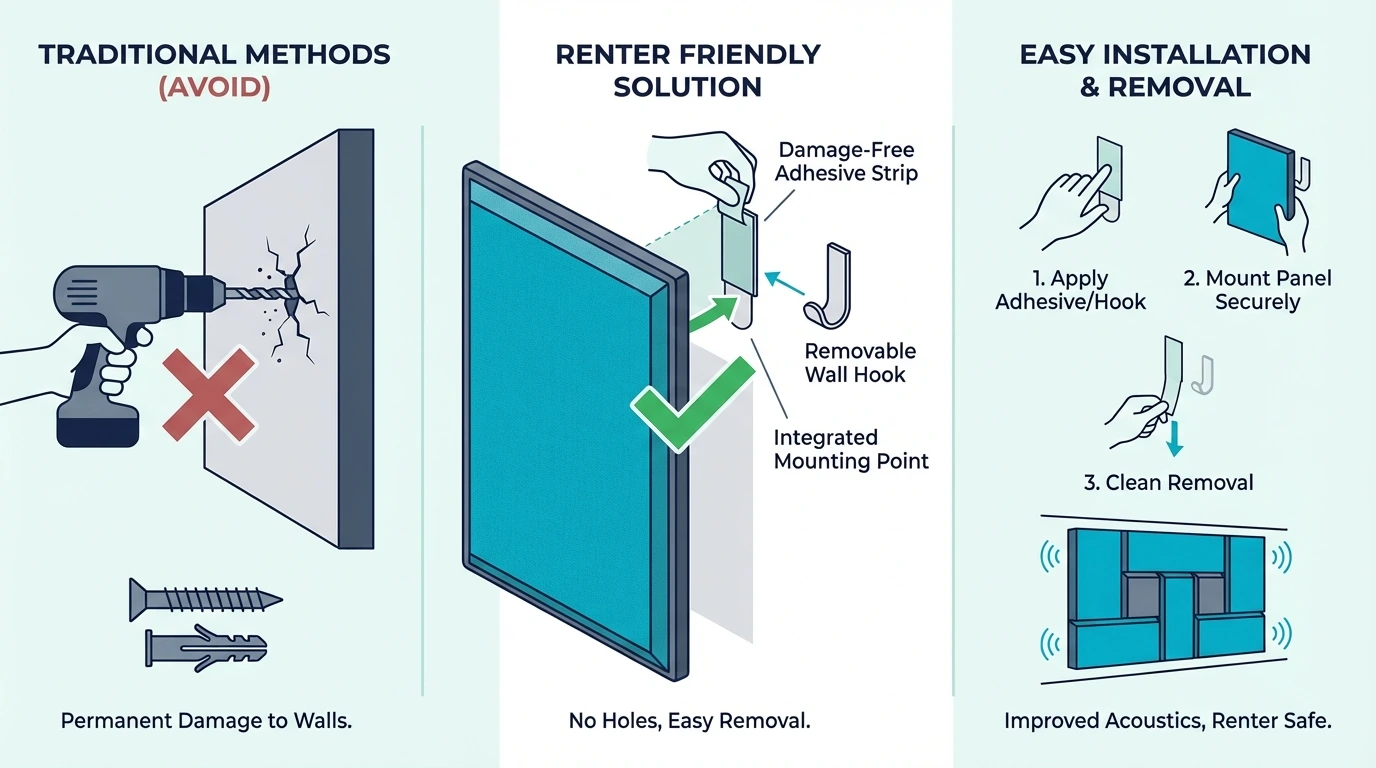
Knowing where the panels belong is only half the battle for renters. The actual challenge is mounting them securely without triggering a massive deduction from your security deposit on move-out day.
Command Strips
The most popular solution relies on heavy-duty adhesives rather than drill bits. Because standard acoustic panels are surprisingly light, Command Large Picture Hanging Strips can comfortably hold them to the drywall.
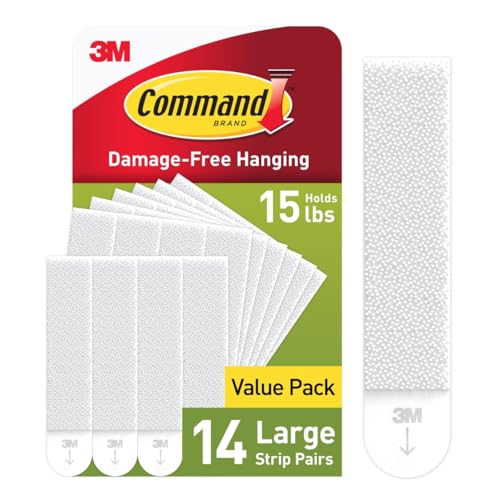
Command Large Picture Hanging Strips
You apply the strips to both the panel frame and the wall, let the adhesive cure for an hour before bearing weight, and then press them firmly together. The bond strengthens over the first 24 hours.
The danger with Command strips comes entirely during removal; if you yank the panel outward rather than pulling the tab straight down slowly, you will tear the paint off the wall regardless of what the packaging promises. The installation guide has the exact removal technique to avoid that disaster.
Freestanding Panels
If you refuse to risk the drywall entirely, freestanding panels bypass the wall mount completely. These systems use heavy floor stands or weighted frames to hold the absorption material vertically in the room.
A set like the UMIACOUSTICS 4-Pack with Hanging Brackets offers ultimate flexibility, allowing you to use the included hardware if permitted, or adapt them to freestanding studio stands if your lease is strict.
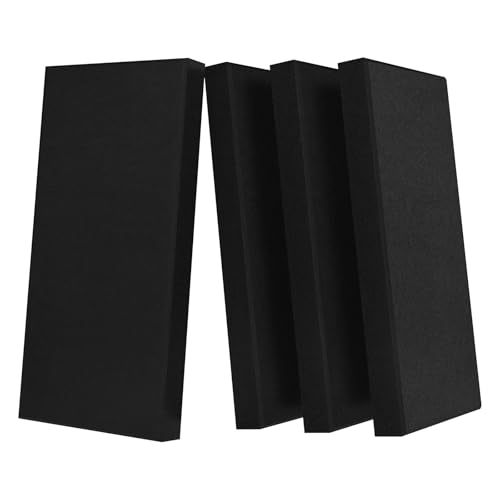
UMIACOUSTICS 4-Pack with Hanging Brackets
Leaning Panels
The simplest damage-free method requires no hardware at all: simply leaning large panels directly against the wall. Gravity handles the entire installation process, provided you angle the base out slightly so the panel rests stable against the drywall.
This leaning technique is the industry standard for corner bass traps, which naturally sit in low-traffic areas where they are unlikely to be knocked over. When your lease ends, you just pick them up and carry them straight to the moving truck without a second thought.
Do You Need Landlord Permission?
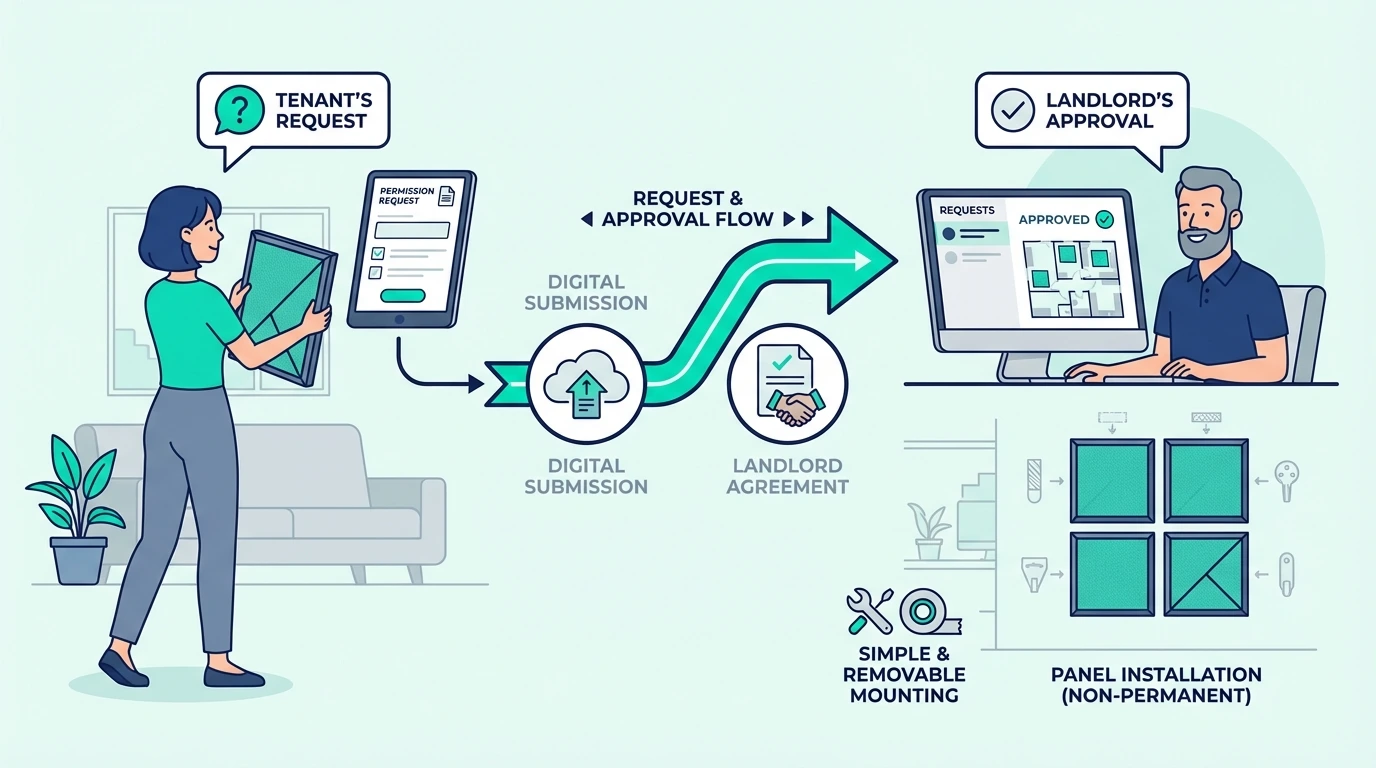
Before you commit to a mounting strategy, you have to verify what your lease actually prohibits. Assuming you know the rules usually leads to expensive mistakes.
Damage-Free Options
If you stick strictly to Command strips, freestanding stands, or leaning panels, you rarely need to involve the landlord. Most standard leases only prohibit permanent modifications like drilling anchors or painting; they don’t restrict you from placing temporary, removable items against the wall.
However, ultra-strict corporate leases sometimes explicitly ban all wall adhesives to protect cheap builder-grade paint. If you use adhesives anyway, take clear photos of the pristine wall before installation and immediately after removal to protect yourself from false damage claims during the final inspection.
What to Ask
If your panels are too heavy for adhesive and require actual drywall anchors, you absolutely must get permission before drilling. The good news is that most reasonable landlords will approve small picture-hanging holes, provided you promise to patch them with spackle when you leave.
Frame the request as a functional upgrade for remote work rather than a messy DIY project. Keep the approval explicitly in writing—a simple email confirming the use of “small mounting hardware that will be patched upon move-out” gives you the legal cover you need.
Should You Get Acoustic Panels for Your Apartment?
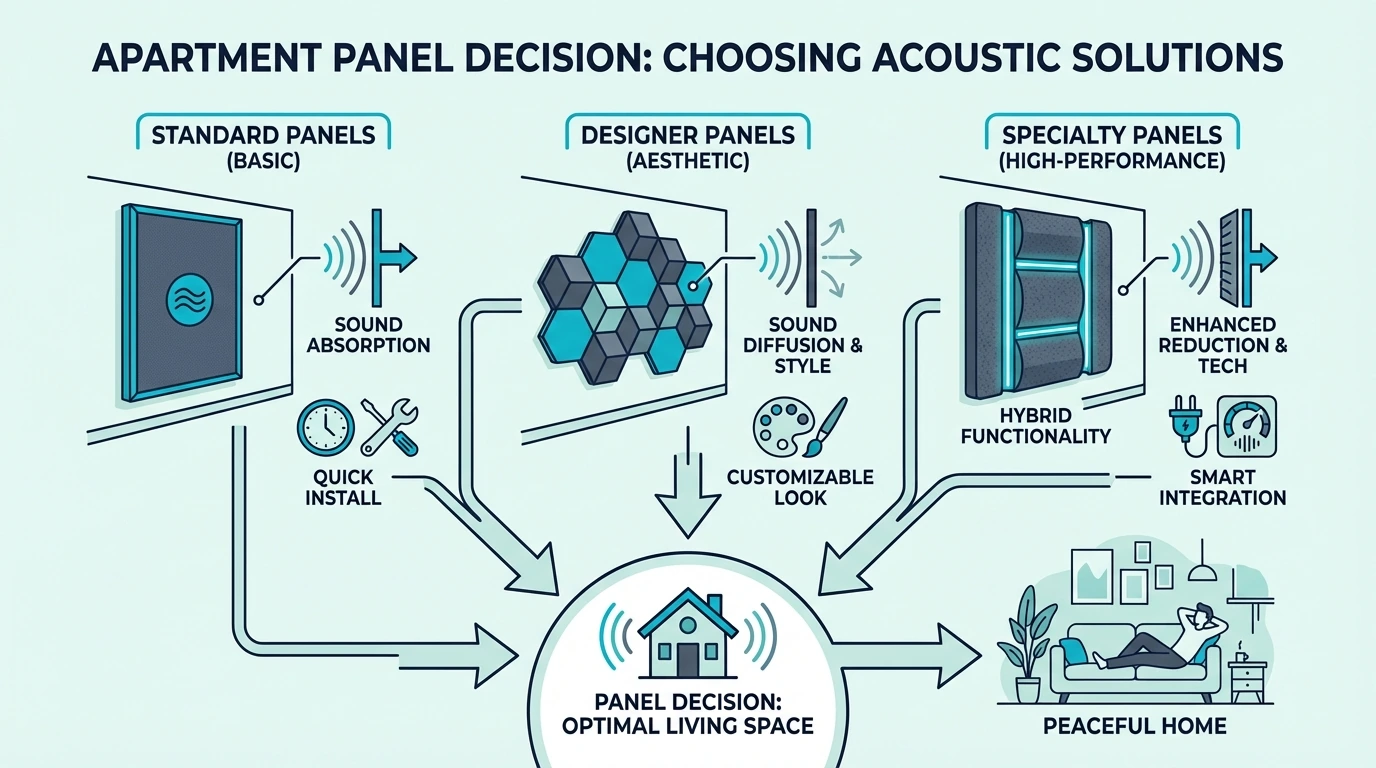
You know what panels can and cannot fix—now the question is whether your situation justifies spending the money.
Get panels if you work from home and want better call quality. The professional audio improvement justifies the investment for daily video meetings.
Get panels if you record content—podcasts, music, voiceovers, or streams. Acoustic treatment is the single biggest upgrade for audio quality after your microphone itself.
For recording setups, the recording studio panels guide has picks sorted by use case.
Get panels if your apartment sounds echoey and you want a more comfortable acoustic environment. Even for casual listening, reduced reflections make spaces more pleasant.
Do not get panels expecting soundproofing. They will not reduce neighbor noise, and disappointment is guaranteed if that is your goal.
Manage expectations correctly, and panels deliver real value.
For renter-friendly options that you can take with you, the Olanglab 4-Pack Fiberglass Panels offer a balance of performance and portability.
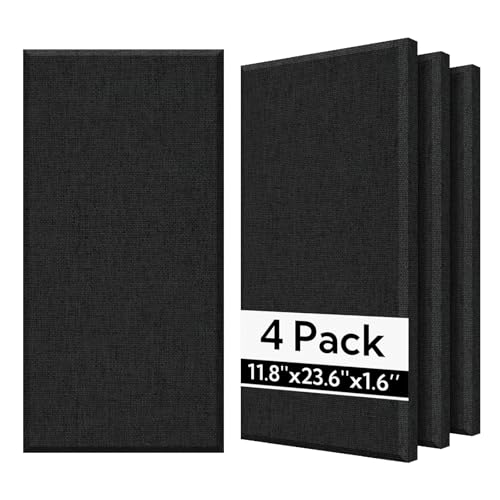
Olanglab 4-Pack Fiberglass Panels
The best acoustic panels guide has a side-by-side comparison across budgets, from starter packs to professional-grade fiberglass.
Conclusion
The single biggest mistake apartment renters make with acoustic panels is expecting them to block neighbor noise—then feeling disappointed when the bass still comes through the floor.
Set the right goal from the start: better sound inside your unit. Two or three panels at first reflection points can turn a boxy home-office setup into clean, professional-sounding audio for every video call.
That alone pays for the investment within the first month of remote work. The acoustic panel density guide explains which core materials absorb the most sound per dollar.
Frequently Asked Questions
If you still have a few renter-specific questions, these are the answers that come up most often.
Will Panels Stop Upstairs Footsteps?
No. Footsteps travel through the floor/ceiling structure as impact vibration—panels only absorb sound already in the air.
Rugs at the source floor or a rebuilt ceiling with mass and decoupling are the real fixes, but neither is realistic for most renters.
A white noise machine masks footstep sounds by raising the ambient noise floor—not a fix, but a practical workaround that costs under $30. The acoustic panel NRC guide explains which frequencies panels actually absorb versus which ones pass right through.
Can I Take Panels When I Move?
Yes—and that portability is one of the strongest arguments for renters. Use Command strips or freestanding mounts and your panels become furniture that travels with you.
Your ear gets trained over time, too. You learn where first reflection points land, how many panels a room needs, and which walls matter most.
Every future apartment benefits from that knowledge, and you can recreate a solid setup in a new room within an hour.
Should I Get Panels or Soundproofing?
Panels. True soundproofing demands construction—double drywall, resilient channels, sealed air gaps—none of which landlords allow.
Panels improve what you actually control: the acoustics inside your unit. Use the acoustic panel calculator to figure out how many you need rather than guessing based on wall size alone.