Acoustic Panel Density: How Thickness and Density Affect Absorption [2026]
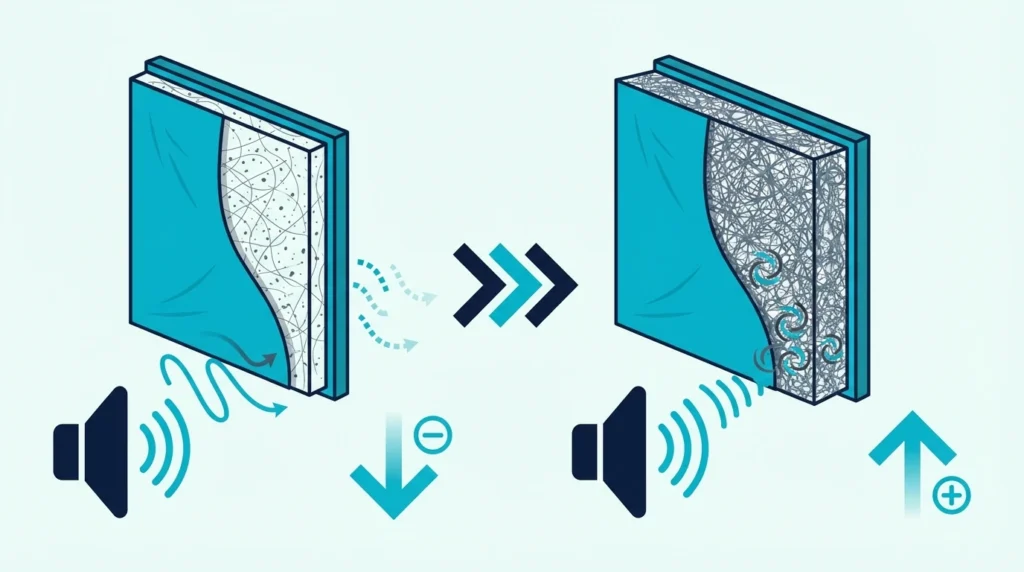
Best density for acoustic panels sits in a sweet spot, but only if you match it to panel thickness and the problem you’re actually hearing.
Pick the wrong density and you’ll either under-treat the low-mids (boxy, muddy rooms) or pay for boards that feel “pro” but don’t absorb better.
Pick the right density and your panels soak up reflections efficiently without wasting money, space, or effort.
The rest of this guide covers what density means in practice, which ranges work for wall panels versus bass traps, and how to avoid overspending on density you don’t need. You’ll know exactly which lb/ft³ number to target for your room.
For most wall panels, aim for about 3-6 lb/ft³ density with the right thickness. Step toward 6-8 lb/ft³ when you’re building bass traps or you need more low-frequency control in corners.
What Is Acoustic Panel Density?
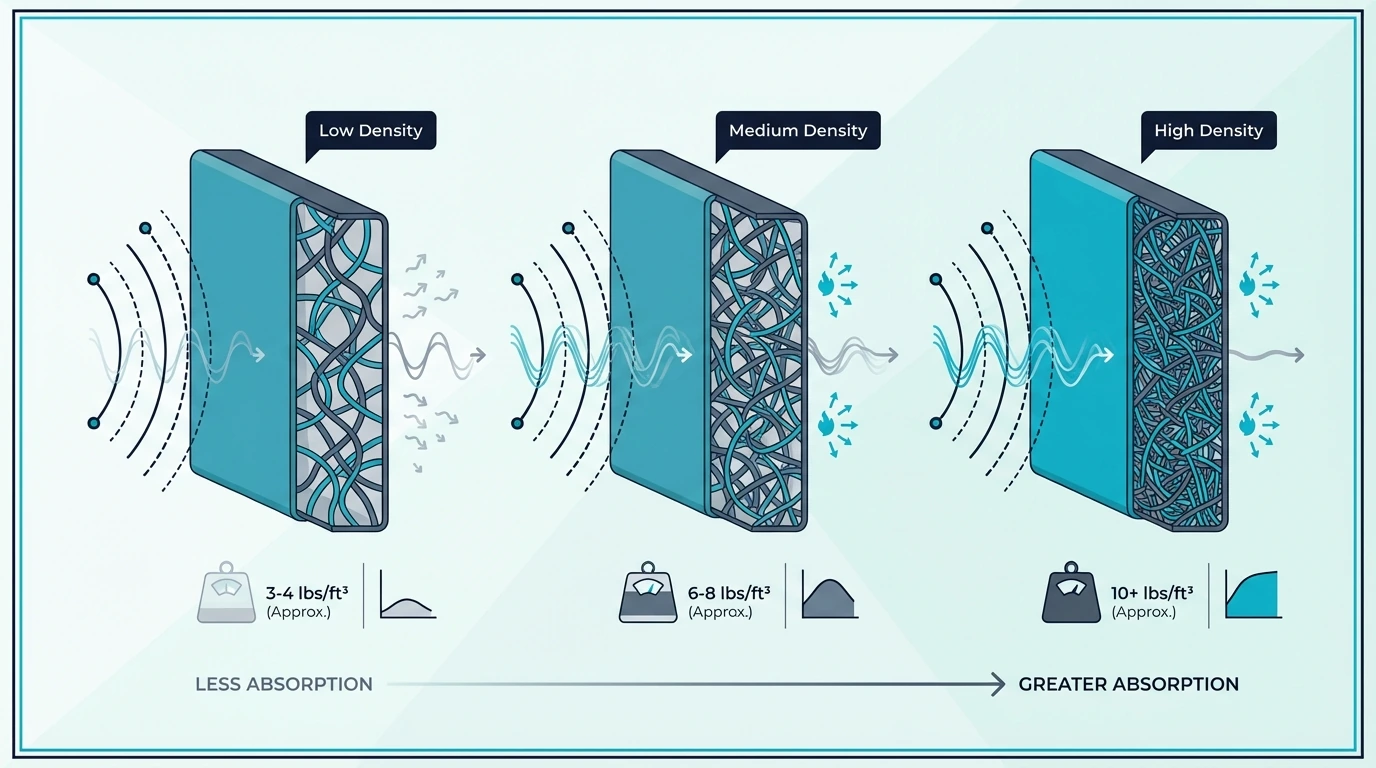
Acoustic panel density measures how much material is packed into a given volume—expressed as pounds per cubic foot (lb/ft³ or pcf). A 3 lb/ft³ panel contains three pounds of material in every cubic foot of volume.
This measurement tells you more about acoustic performance than almost any other specification. Density determines how sound waves interact with the material, which frequencies get absorbed, and how well the panel converts sound energy into heat.
If you’re also weighing panel thickness, the 1-inch vs 2-inch acoustic panels guide shows how thickness and density work together.
Think of it like a coffee filter: a loose, thin filter lets liquid (and sound) pass through quickly with minimal absorption.
A dense, packed filter slows everything down and traps more particles. Acoustic materials work similarly—denser materials slow sound waves down and absorb more energy.
Why Does Density Matter for Sound Absorption?
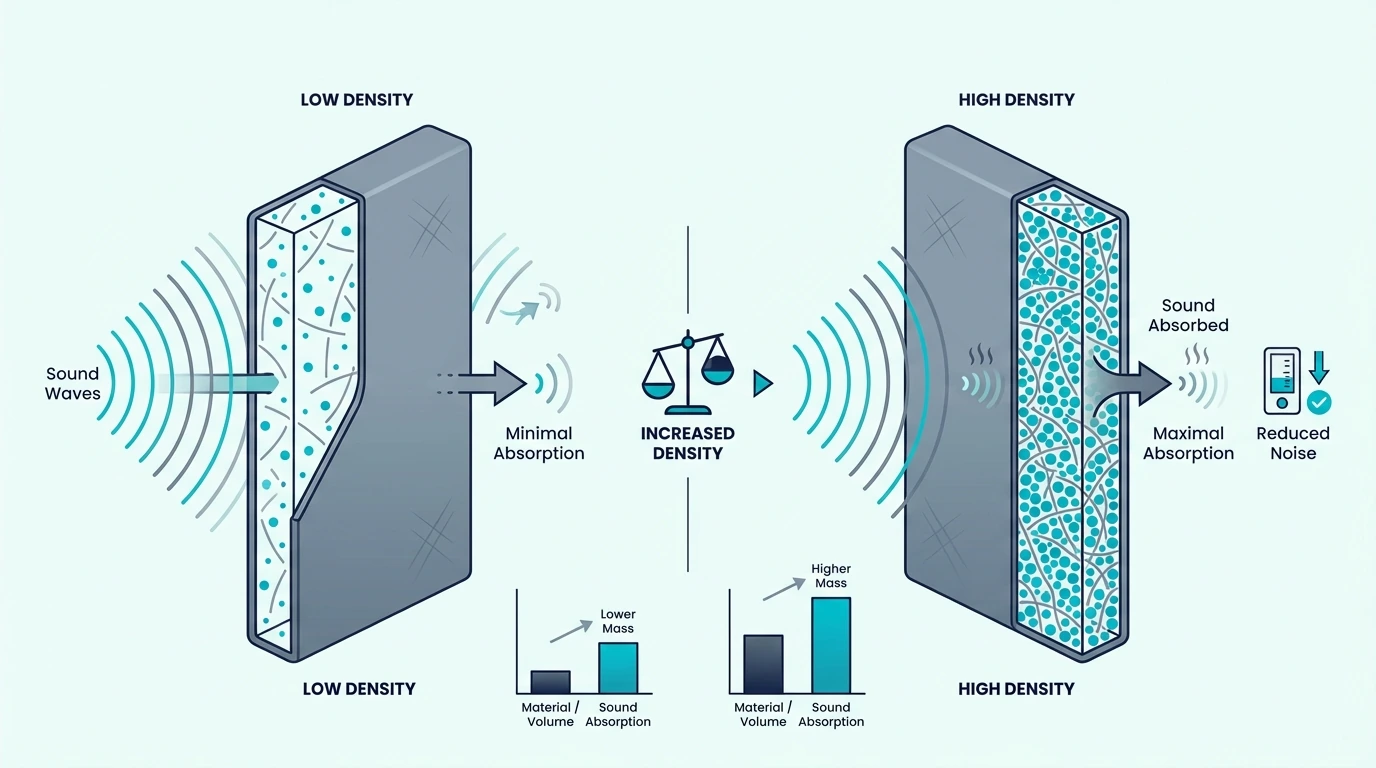
Density controls which frequencies your panels absorb — and by how much. Three factors shape the recommendation: how friction converts sound to heat, why bass needs more density than treble, and where diminishing returns set in.
How Density Affects Absorption
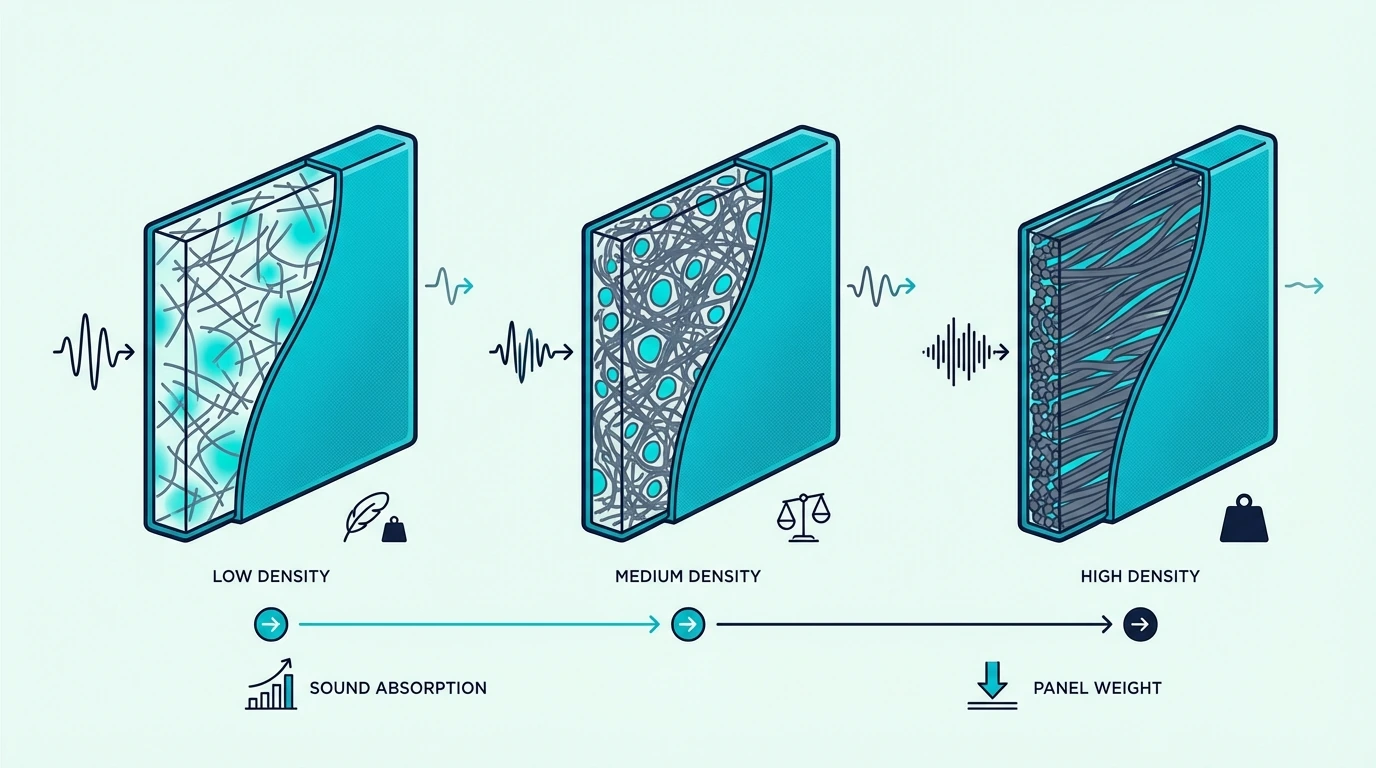
Sound absorption happens when air movement through fibrous material creates friction. Denser materials have more fibers per volume, creating more friction opportunities as sound waves pass through.
A practical way to understand this: blow air through a thin t-shirt versus a thick winter coat.
The coat provides more resistance because it has more material packed into each inch. Sound behaves the same way—more density equals more resistance equals more absorption.
Lower frequencies require more material interaction to absorb effectively. Bass waves have more energy and longer wavelengths, so they need denser materials (or thicker panels) to lose enough energy before passing through.
The Frequency Connection
Low frequencies are where density matters most. Bass waves need higher density to lose energy before passing through.
A 2 lb/ft³ panel might absorb 90% at 2000Hz but only 40% at 250Hz. Bump that to 6 lb/ft³, and the 250Hz absorption jumps to 70%.
High frequencies absorb easily regardless of density—even lightweight materials catch them. The density question primarily concerns mid and low frequency performance.
The air gap guide explains another way to improve low-frequency absorption without changing density.
Air gaps help lower density materials perform better at bass frequencies by positioning them optimally. But starting with 3–6 lb/ft³ material makes the whole system more predictable.
Diminishing Returns
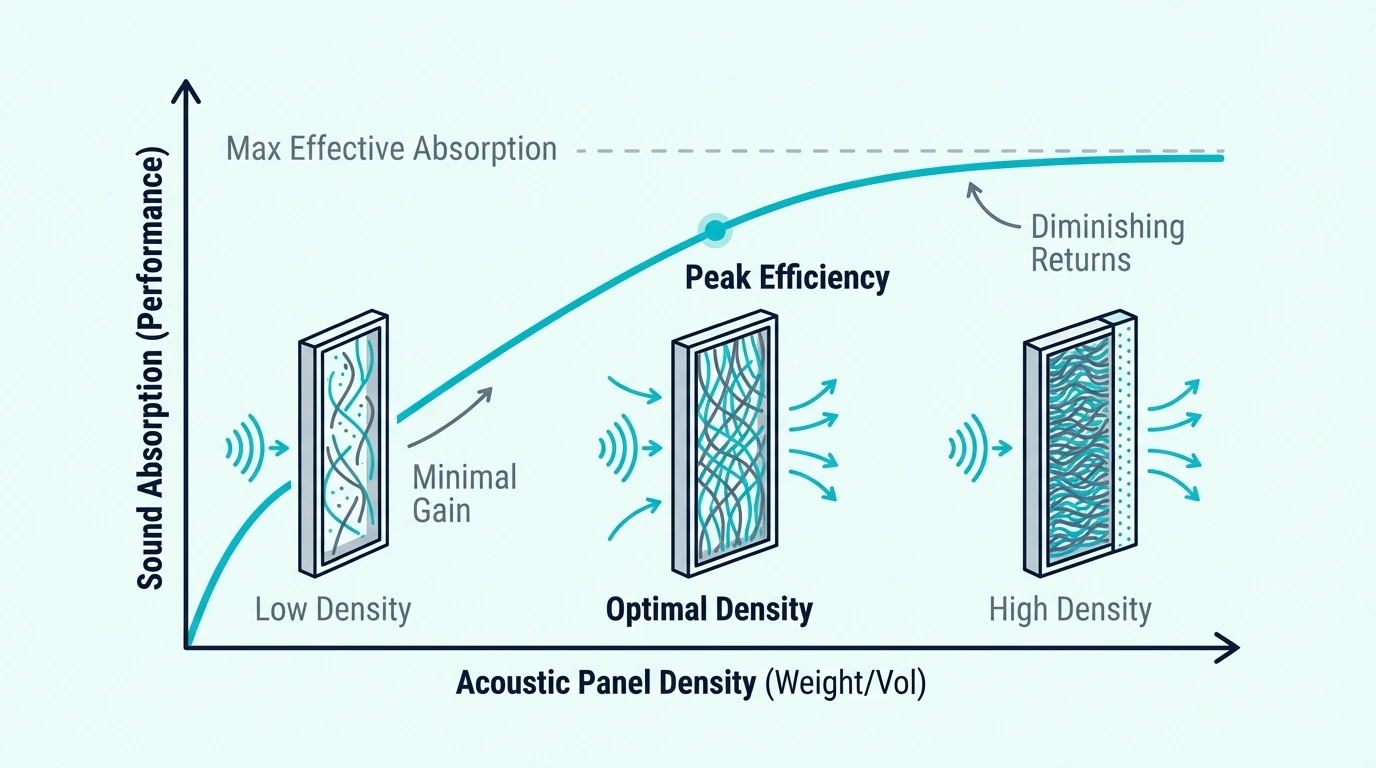
One important caveat: density improvements aren’t linear.
Going from 2 lb/ft³ to 4 lb/ft³ provides a large improvement. Going from 6 lb/ft³ to 12 lb/ft³ provides modest improvement at two to three times the cost.
The sweet spot exists because of physics, not marketing. Most acoustic engineers target 3-6 lb/ft³ for standard panels because that range captures most of the benefit without excessive cost.
Get Studio Tips Weekly
Join 5,000+ creators getting acoustic treatment advice every week.
No spam. Unsubscribe anytime.What Density for Fiberglass Panels?
Fiberglass is the most common acoustic panel core material. Two products cover nearly every application.
Owens Corning 703 (3 lb/ft³)
OC 703 is the industry standard for acoustic panels. At 3 lb/ft³, it provides excellent mid and high frequency absorption with decent performance down to 250-500Hz depending on thickness.
For most home studios, vocal booths, and general room treatment, 703 delivers the performance you need at reasonable cost. A 2-inch thick 703 panel achieves NRC ratings around 0.85-0.95.
The acoustic panel NRC rating guide explains what that number actually tells you and what it leaves out.
The Olanglab Fiberglass Panels demonstrate typical 703-equivalent performance in pre-made form.
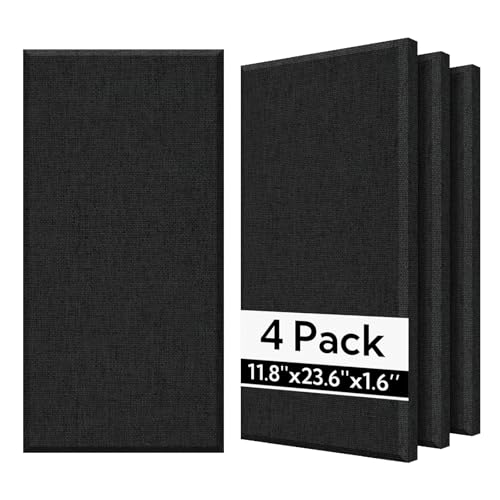
Olanglab Fiberglass Panels
If you’re buying pre-made panels and the seller doesn’t list density, that’s normal. Use thickness, core type (fiberglass/mineral wool/PET), and rigidity as your proxy instead of chasing an exact lb/ft³ number.
Owens Corning 705 (6 lb/ft³)
OC 705 doubles the density of 703, providing superior bass absorption. It’s the go-to material for bass traps, corner treatment, and studios where low-end accuracy matters.
At 6 lb/ft³, 705 absorbs down to 125Hz in 2-inch thickness — reaching well below what 703 manages at the same thickness. The trade-off is cost: 705 runs roughly 2-3x the price of 703.
Which Fiberglass Density to Choose?
For wall panels at first reflection points: 703 (3 lb/ft³) works perfectly. You’re targeting mid and high frequencies where flutter echo and voice reflections occur.
For bass traps and corner treatment: 705 (6 lb/ft³) justifies the extra cost. Bass problems require denser materials to control.
For ceiling clouds: 703 handles the job. Ceiling reflections are primarily mid-high frequency.
For a room kit that covers wall panels and first reflections in one order, the Acoustic Panels Room Kit (Large 4-Pack) bundles 703-equivalent fiberglass at a price that undercuts buying individual boards.
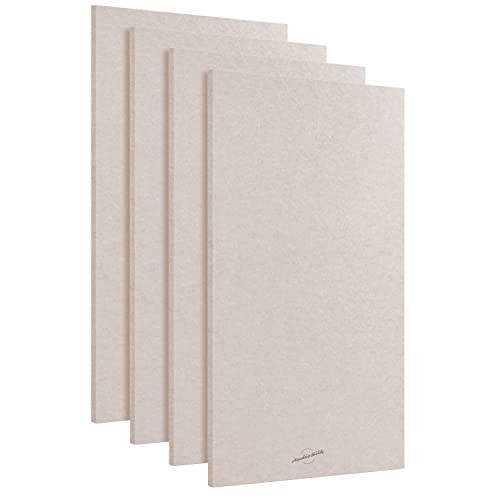
Acoustic Panels Room Kit (Large 4-Pack)
What Density for Rockwool Panels?
Rockwool offers different density options and is increasingly popular for DIY acoustic panel builds. Three products cover the range: Safe’n’Sound for budget builds, ComfortBoard for bass traps, and a direct comparison to fiberglass at equivalent densities.
Rockwool Safe’n’Sound
Safe’n’Sound runs approximately 3 lb/ft³, comparable to OC 703. It’s marketed for soundproofing (blocking sound between walls) but works acceptably for absorption panels too.
The advantage: widespread availability at home improvement stores. The disadvantage: inconsistent density compared to purpose-made acoustic products.
Rockwool ComfortBoard
ComfortBoard 80 runs 8 lb/ft³—denser than OC 705. It’s rigid enough to stand without frames and provides excellent bass absorption.
For DIY bass traps, ComfortBoard offers a convenient option that doesn’t require specialized sourcing. The DIY panel materials guide covers working with these materials.
Rockwool vs Fiberglass Density
At equivalent densities, rockwool and fiberglass perform similarly. The choice usually depends on availability, price, and personal preference for working with the material.
Rockwool is more rigid and easier to cut; fiberglass is lighter and more forgiving during installation. Both hit NRC 0.85+ when matched to the right thickness.
How Does Density Affect Panel Performance?
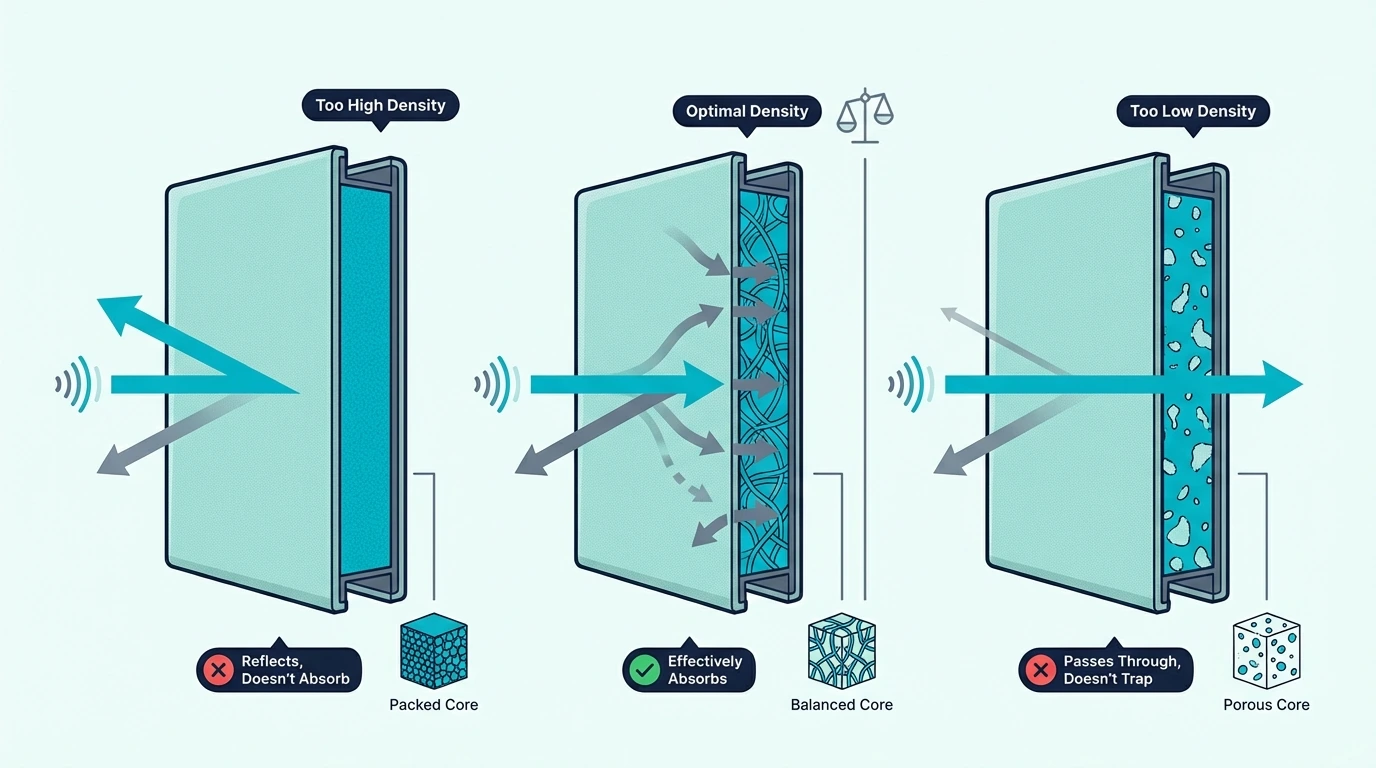
Density translates directly to absorption numbers. Four subsections below cover bass absorption, mid-high performance, the trade-off list, and why thickness sometimes matters more than density.
Low-Frequency Absorption
At 125Hz (low bass), a 2-inch panel performs approximately:
- 2 lb/ft³: 35% absorption
- 4 lb/ft³: 55% absorption
- 6 lb/ft³: 70% absorption
- 8 lb/ft³: 75% absorption
Notice the diminishing returns above 6 lb/ft³. The jump from 2 to 4 pcf is large; the jump from 6 to 8 pcf is modest.
Mid and High Frequency Performance
At 1000Hz (mid frequency), density matters less:
- 2 lb/ft³: 85% absorption
- 4 lb/ft³: 92% absorption
- 6 lb/ft³: 95% absorption
Even lightweight materials catch mid-high frequencies effectively. If your problem is speech clarity or flutter echo rather than boomy bass, density optimization provides marginal benefit.
The Trade-Offs
Higher density means:
- Better bass absorption
- Heavier panels (harder to mount)
- Higher material cost
- Stiffer, harder to cut
The right density balances these factors against the frequencies you need to control.
Density vs Thickness: Which Matters More?
If you’re stuck choosing between a denser 2-inch panel and a thicker 4-inch panel, thickness usually wins for low-frequency absorption.
Density helps, but it can’t replace depth. A thicker absorber gives the wave more material (and more distance) to lose energy.
That’s why a 4-inch panel at 3-4 lb/ft³ can outperform a 2-inch panel at 6 lb/ft³ in the low-mids where rooms sound boxy.
If you’re deciding between sizes, the 2-inch vs 4-inch acoustic panels guide covers the practical trade-offs.
Is Higher Density Always Better?
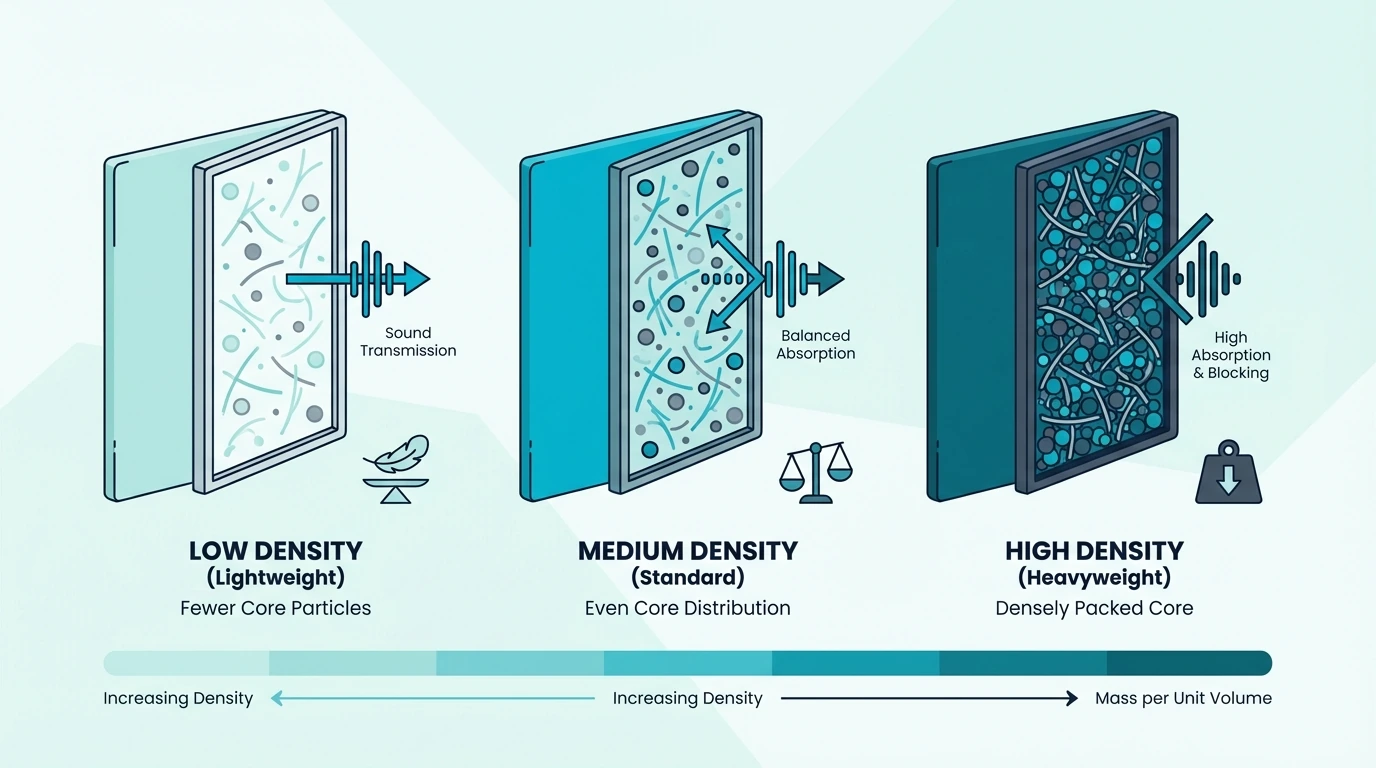
The intuitive answer — “more is better” — isn’t accurate. Two scenarios separate when extra density helps from when it wastes money.
When Higher Density Helps
Bass-heavy music production benefits from 6+ lb/ft³ panels. Kick drums, bass guitars, and synthesizers create problematic low frequencies that need dense treatment.
Home theaters with subwoofers need denser corner treatment. Movie soundtracks and music with powerful bass overwhelm lightweight panels.
When Standard Density Suffices
Podcasting and voice work stays above 200Hz—well within standard density effectiveness. Spending extra on high-density materials provides no audible benefit.
General echo reduction and reverb control target mid-high frequencies. Standard 3–4 lb/ft³ materials handle these problems without high-density boards.
The UMIACOUSTICS 2-Inch Panels show typical pre-made panels with 3–4 lb/ft³ density suited to general room treatment.
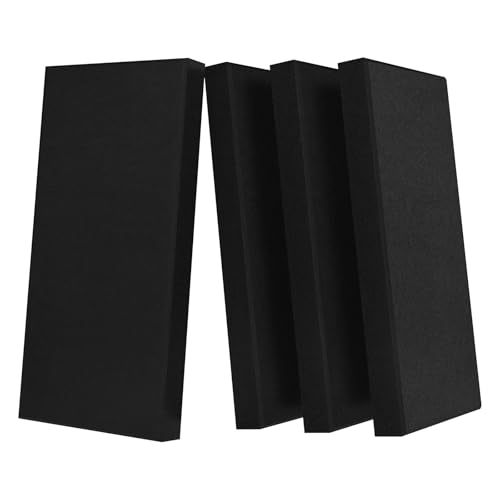
UMIACOUSTICS 2-Inch Panels
Cost Considerations
High-density materials cost 2-3x more than standard density. For a full room treatment requiring 8-12 panels plus bass traps, this difference adds hundreds of dollars.
Prioritize density where it matters — corner bass traps — and use standard density elsewhere. That split maximizes acoustic improvement per dollar spent.
What About Foam Density?
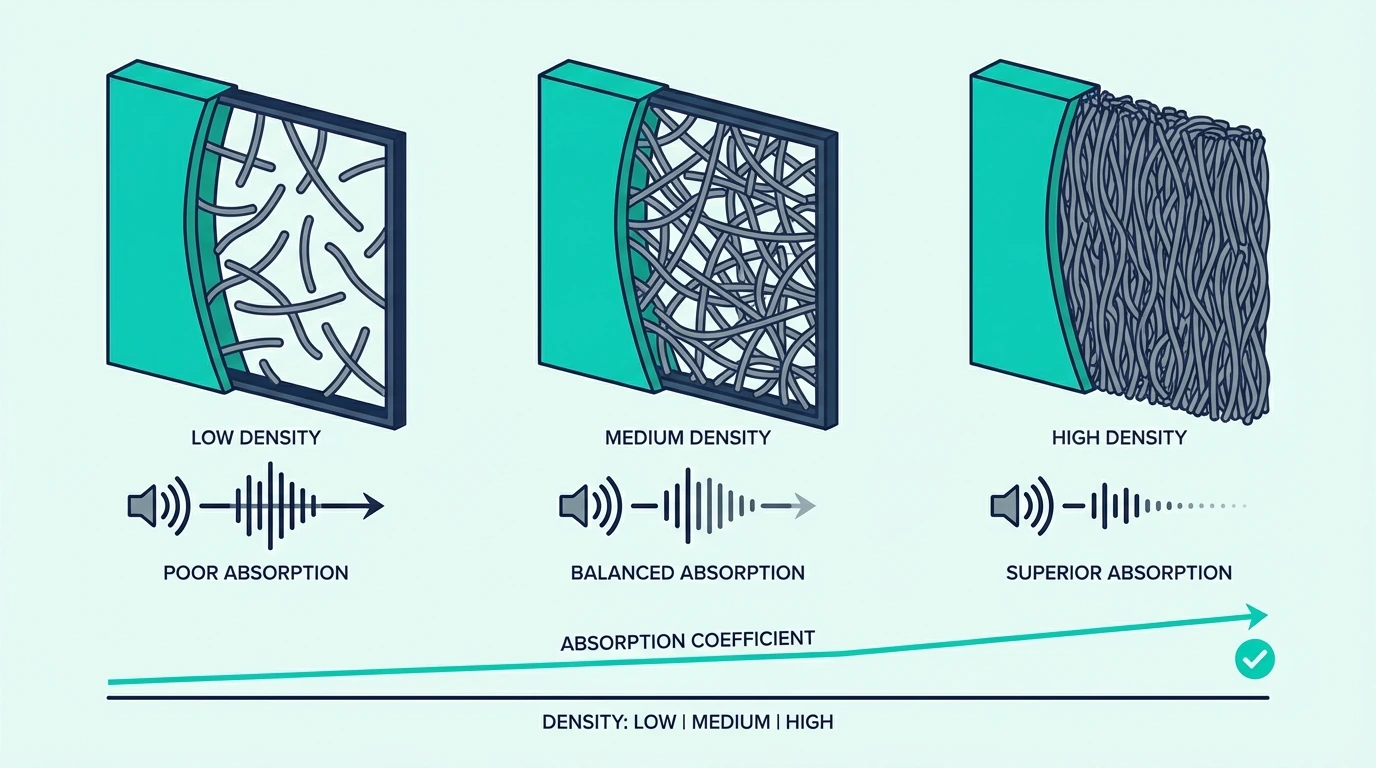
Acoustic foam operates on a different density scale than fiberglass or rockwool. Three aspects set it apart: why the material itself limits performance, where those limits show up, and the one use case where foam density is enough.
For real-world panel performance data, the best fiberglass acoustic panels guide reviews top-rated options with verified NRC ratings.
Why Foam Is Different
Acoustic foam typically runs 1-2 lb/ft³ — far lighter than even budget fiberglass. The open-cell structure provides some absorption, but the low density limits effectiveness to high frequencies only.
Foam Limitations
Even “high-density” foam at 2 lb/ft³ can’t match 3 lb/ft³ fiberglass for mid-frequency absorption. The material properties simply don’t allow equivalent performance regardless of density.
When Foam Works
For voice recording behind a microphone, foam’s high-frequency absorption reduces sibilance and air reflections acceptably. It’s a budget solution for targeted, limited treatment.
For full room treatment or any bass-related goals, foam — at any density — underperforms fiberglass or rockwool panels.
How Do Different Materials Compare on Density?
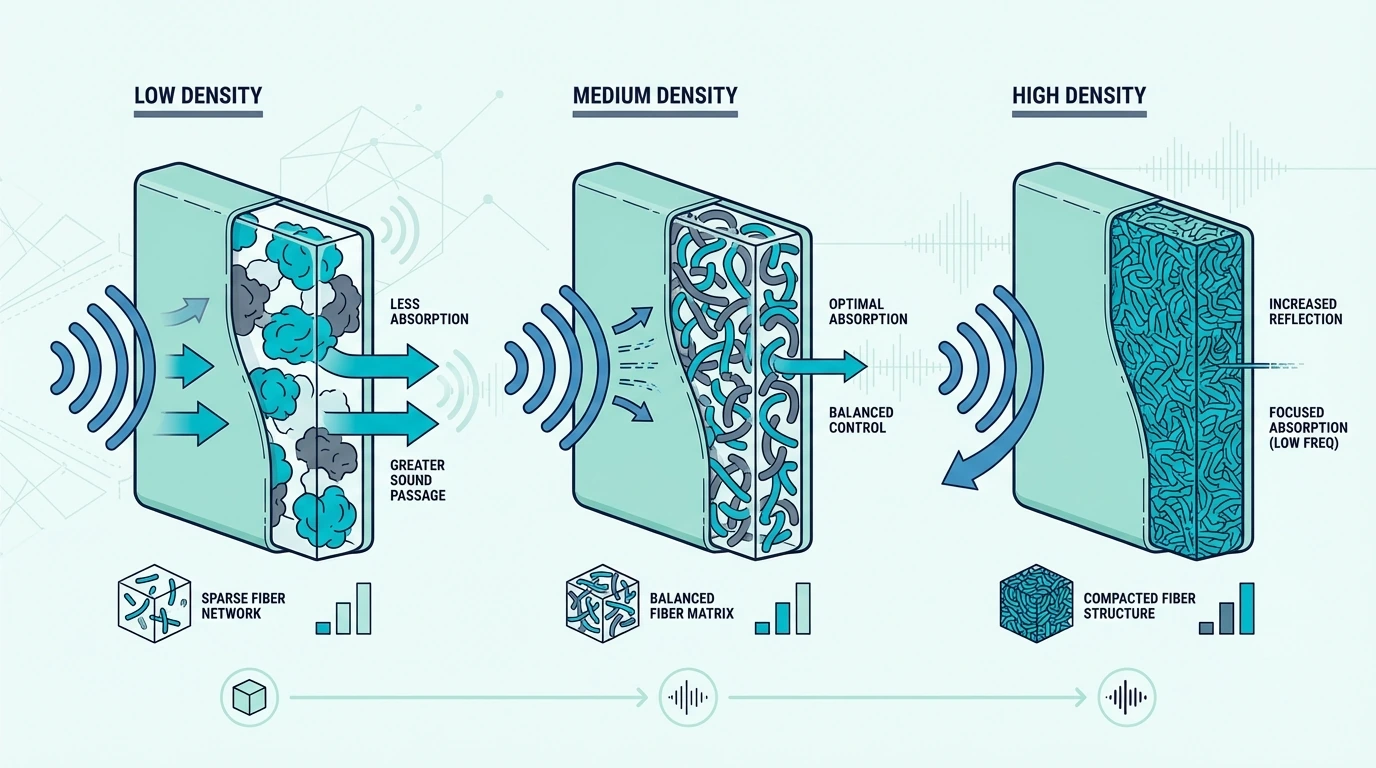
| Material | Density (lb/ft³) | NRC Rating | Bass Absorption | Best For |
|---|---|---|---|---|
| OC 703 Fiberglass | 3.0 | 0.85-0.95 | Moderate | General panels |
| OC 705 Fiberglass | 6.0 | 0.90-1.0 | Good | Bass traps |
| Rockwool Safe’n’Sound | ~3.0 | 0.80-0.90 | Moderate | DIY panels |
| Rockwool ComfortBoard 80 | 8.0 | 0.95-1.0 | Excellent | Bass traps |
| Acoustic Foam | 1-2 | 0.30-0.60 | Poor | Voice only |
| Polyester Fiber | 2-4 | 0.70-0.85 | Fair | Budget panels |
The biggest jump in the table sits between acoustic foam (1–2 lb/ft³) and OC 703 fiberglass (3 lb/ft³). That single step nearly doubles the NRC rating and opens up mid-frequency absorption that foam can’t reach at any thickness.
Above 6 lb/ft³, the gains shrink fast. ComfortBoard 80 at 8 lb/ft³ edges out OC 705 at 6 lb/ft³ on paper, but the audible difference in a treated room is minimal — while the price gap is not.
Polyester fiber lands in between: lighter than fiberglass, cheaper per panel, but weaker on bass. It’s a reasonable choice for wall panels in offices or bedrooms where low-frequency control isn’t the priority.
Conclusion
Most rooms need exactly two density tiers — and nothing else. Use 3–4 lb/ft³ fiberglass or rockwool for wall panels and ceiling clouds, then step up to 6–8 lb/ft³ for corner bass traps.
That two-tier split captures 90%+ of the absorption benefit at roughly half the cost of treating everything with high-density boards. Spending beyond 8 lb/ft³ buys marginal numbers on a test report but no audible difference in the room.
The one exception: if your only goal is taming voice reflections or flutter echo above 200 Hz, a single tier of 3–4 lb/ft³ handles it. You can skip dense corner treatment entirely.
Once you’ve locked in a density target, the panel placement guide covers positioning for maximum effect, and the panel count guide helps calculate total coverage before ordering. The best acoustic panels guide ranks pre-made options by verified performance data, and the hanging guide matches hardware to your wall type.
Frequently Asked Questions
What Density Is Optimal for Acoustic Panels?
The best-performing density range is 3–6 lb/ft³ for most applications. Use 3-4 lb/ft³ for general wall and ceiling treatment; use 6-8 lb/ft³ for bass traps and corner treatment.
There’s no single “correct” density—the right choice depends on which frequencies you’re targeting.
Voice frequencies (200Hz+) absorb well at 3 lb/ft³.
Bass frequencies (under 200Hz) benefit from 6+ lb/ft³.
Is Higher Density Always Better for Absorption?
No—higher density provides diminishing returns beyond 6-8 lb/ft³ for most applications. The improvement from 3 to 6 lb/ft³ is meaningful; the improvement from 8 to 12 lb/ft³ is marginal.
Higher density also means heavier panels, higher costs, and more difficult installation. Match density to your acoustic goals rather than assuming more is always better.
How Does Foam Density Compare to Fiberglass?
Foam density doesn’t compare directly—the materials work differently. High-density foam at 2 lb/ft³ performs worse than budget fiberglass at 3 lb/ft³ for mid and low frequencies.
Foam is effective only for high frequencies (2000Hz+). For full-range absorption, fiberglass or rockwool at 3+ lb/ft³ outperforms foam regardless of foam density specifications.
Where Can I Find Materials at Specific Densities?
Acoustic specialty suppliers stock OC 703, 705, and equivalent products with exact density specifications. Industrial insulation distributors often carry these materials at lower prices than acoustic retailers.
Home improvement stores carry Rockwool products, though density consistency may vary. For DIY projects, the DIY panel materials guide covers sourcing options and what specifications to request.