Acoustic Panel NRC Rating Explained: What It Means and Why It Matters [2026]
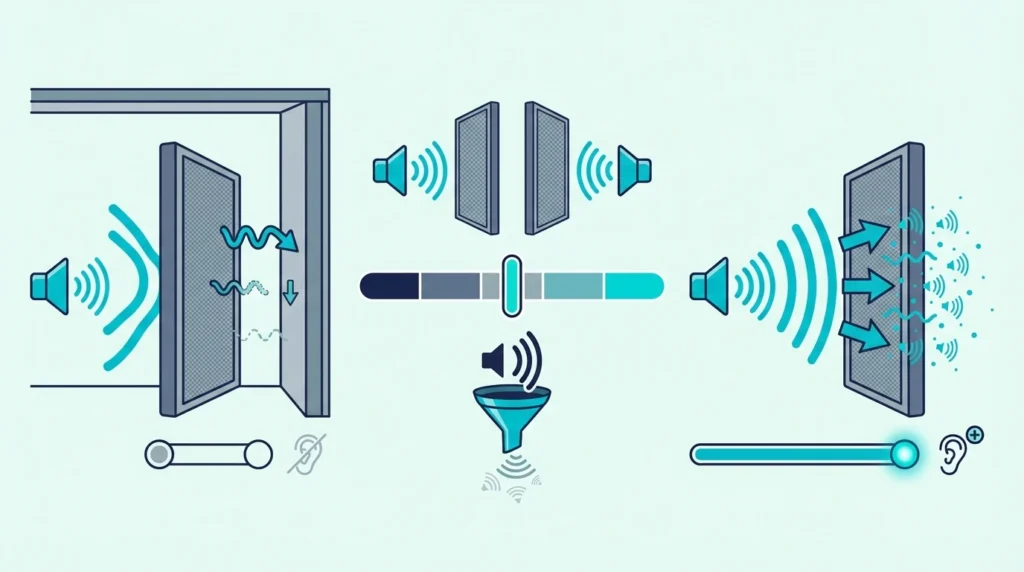
What does NRC mean in acoustic panels? NRC is a useful absorption score, but treating it like a “best panel” ranking leads to bad purchases.
That mistake shows up fast: you buy panels with a high NRC and the room still sounds splashy or boxy, because reflections depend on placement and frequency range, not just one averaged number.
Once you know what NRC actually measures and what it leaves out, you can compare panels realistically and get a room that sounds noticeably drier and clearer.
Below you’ll find how NRC is tested, what the numbers mean at each tier, and how to match ratings to your specific room. By the end, you’ll know exactly which specs to trust and which to ignore.
NRC (Noise Reduction Coefficient) is an absorption score from 0.0 to ~1.0 that summarizes how much mid-range sound a panel absorbs in a lab test. For most rooms, look for 0.80+ NRC from real fiberglass or mineral wool panels, then prioritize first reflection points for the biggest audible improvement.
What Does NRC Mean in Acoustic Panels?
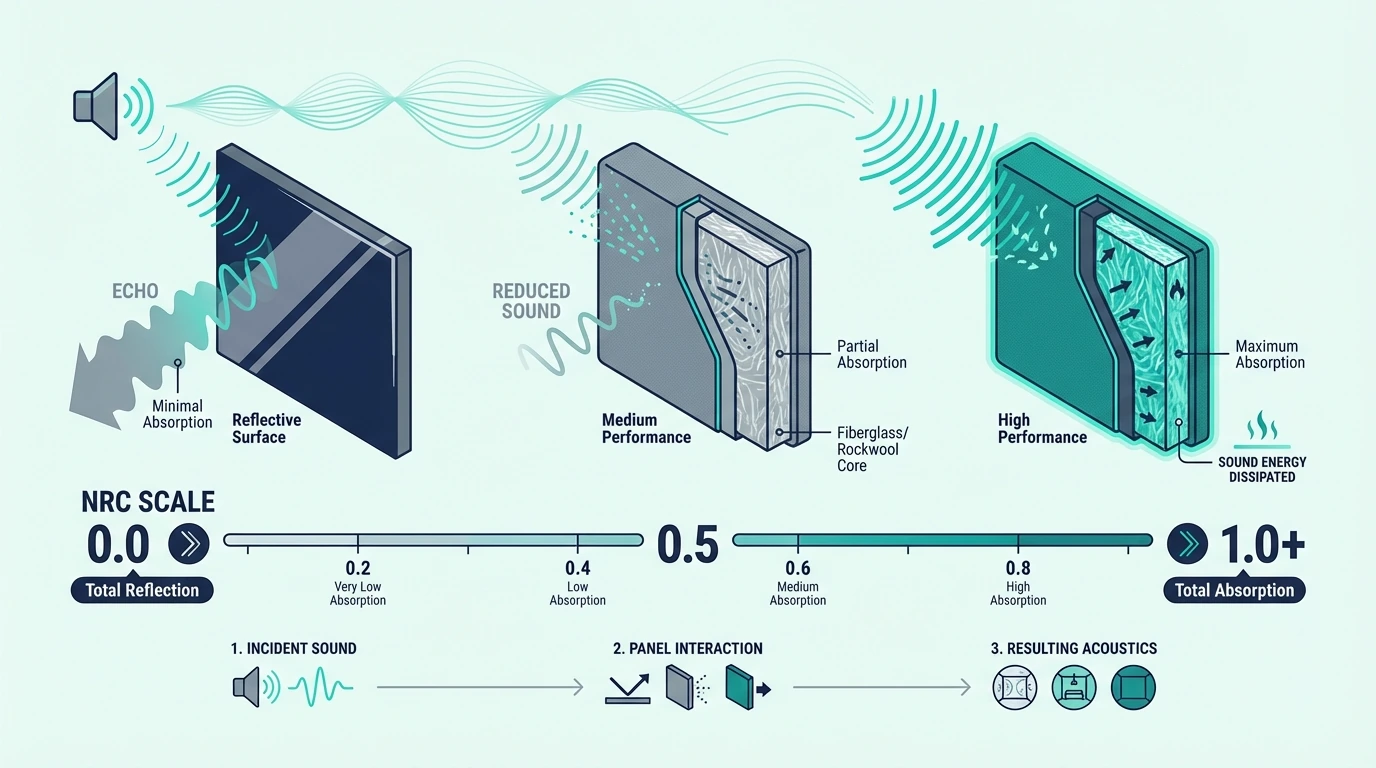
NRC stands for Noise Reduction Coefficient — a standardized measurement of how effectively a material absorbs sound energy rather than bouncing it back into the room.
The rating runs from 0.0 (total reflection, like concrete) to 1.0 (near-total absorption), though you’ll sometimes see numbers above 1.0 because of how the test geometry works. But before comparing scores, you need to know exactly which frequencies are being graded.
The Four Frequencies Behind the Number
Rather than testing every possible pitch, NRC takes a snapshot by averaging absorption coefficients at four specific frequencies: 250Hz, 500Hz, 1000Hz, and 2000Hz. Each point on that spectrum represents a different slice of everyday sound that panels are expected to control.
The lowest test point, 250Hz, covers the low-mid range — male voice fundamentals, guitar body resonance, and the muddy warmth in music. Moving up, 500Hz sits squarely in the speech intelligibility zone where conversational energy peaks.
The top two points, 1000Hz and 2000Hz, capture upper-mid detail. This is where consonant clarity, cymbal attack, and the piercing “presence” range live. Together, these four frequencies span the exact band where flutter echo and room harshness are most obvious to human ears.
However, that targeted coverage is also the rating’s biggest blind spot. The formula completely ignores deep bass below 250Hz and high treble above 2000Hz, meaning a panel can score a near-perfect 0.95 NRC and still leave a room sounding overwhelmingly boomy. The 2-inch vs 4-inch comparison shows how much extra depth you need before low-frequency absorption becomes meaningful.
Why a Single Number Can Mislead
Because the final score collapses those four distinct data points into one flat average, two panels with identical NRC ratings can perform radically differently in the same room. A thin foam panel that absorbs heavily at 2000Hz but fails completely at 250Hz can easily generate the same mathematical average as a thicker fiberglass board that absorbs evenly across the entire spectrum.
That mathematical averaging makes the headline NRC useful as a quick first filter (“skip anything below 0.80”) but unreliable as a tiebreaker between two premium products. When you are doing serious room treatment, you must look past the average and demand the full frequency absorption curve from the manufacturer.
How Is NRC Measured?
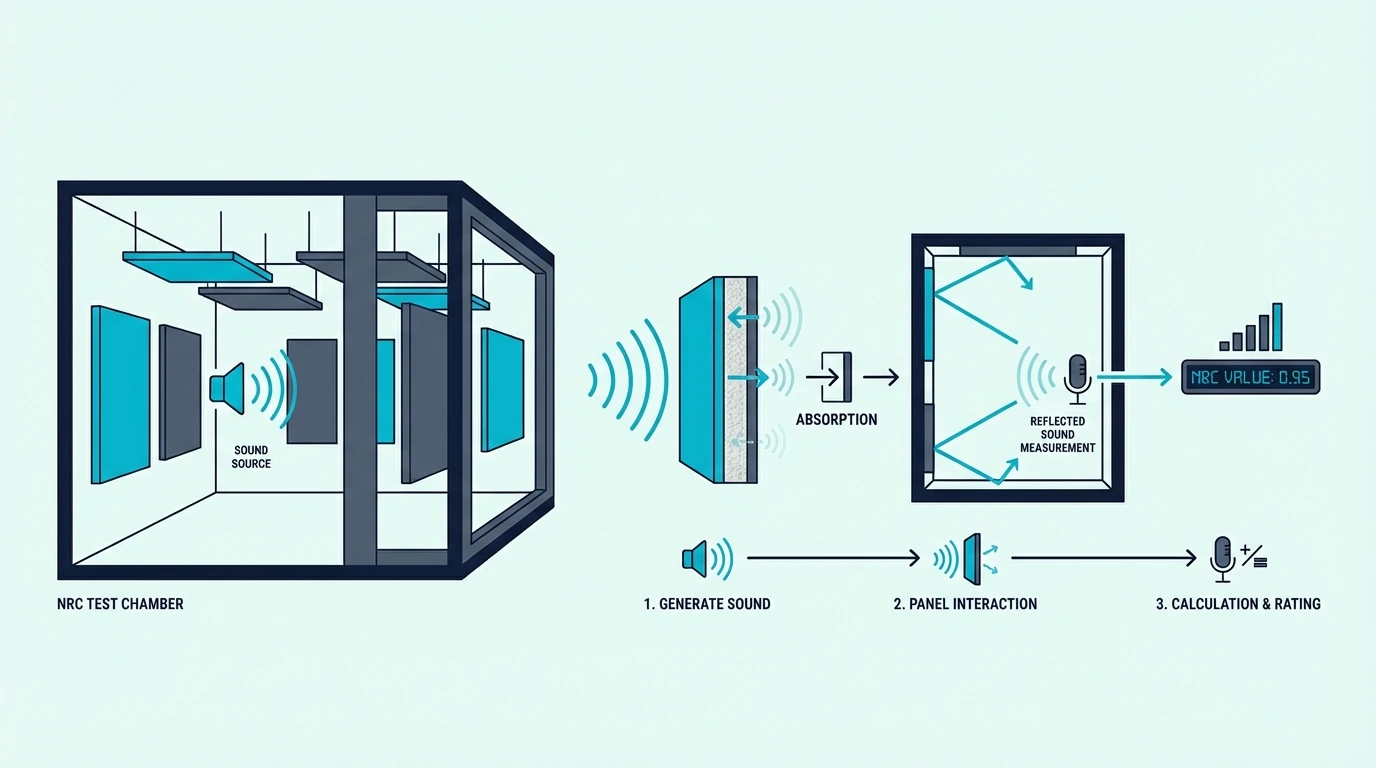
NRC comes from a highly standardized lab test designed to make competing materials directly comparable. But that heavily controlled environment also explains why a panel’s performance can feel underwhelming when you finally mount it in a real room.
Laboratory Testing Standards
The testing protocol follows ASTM C423, which requires engineers to place the panels inside massive reverberant chambers built specifically for acoustic measurement. To ensure accuracy, the standard requires a massive sample size of at least 72 square feet, which prevents the exposed edges of the panels from artificially inflating the absorption scores.
The lab measures the chamber’s baseline reverberation time, hauls the massive panel array inside, and measures the room’s decay time again. By controlling the temperature, humidity, and geometry perfectly, the resulting absorption coefficients remain entirely objective.
That objectivity is the entire point of the ASTM C423 standard. It guarantees that a 0.85 NRC rating from a premium fiberglass brand was tested under the exact same physics as a 0.90 NRC rating from a budget foam seller.
The fatal flaw in this system is that real rooms are not reverberant chambers. During testing, the panels are bombarded by sound waves arriving simultaneously from every possible angle in a highly reflective concrete box. When you mount that same panel flat against the drywall in your carpeted bedroom, it receives sound from a much narrower directional path, which inevitably alters its real-world performance.
What NRC Doesn’t Tell You
Beyond the geometry mismatch, the biggest secret of NRC is what it hides about mounting techniques. The lab test almost always assumes the panel is mounted completely flush to a hard surface.
If you take that exact same panel and mount it with a 2-inch air gap behind it, the absorption curve shifts noticeably toward the lower frequencies. The panel installation guide has air-gap mounting options that exploit this physics without special hardware.
For critical applications like music studios, the headline NRC is just marketing. You have to request the full “alpha curve” chart from the manufacturer to see the raw test data across every frequency band.
But for general acoustic treatment where you just want to reduce the echo in an office or tame the harshness in a living room, the basic NRC average provides enough data to keep you from buying useless decorative foam.
Get Studio Tips Weekly
Join 5,000+ creators getting acoustic treatment advice every week.
No spam. Unsubscribe anytime.What Do NRC Numbers Mean?
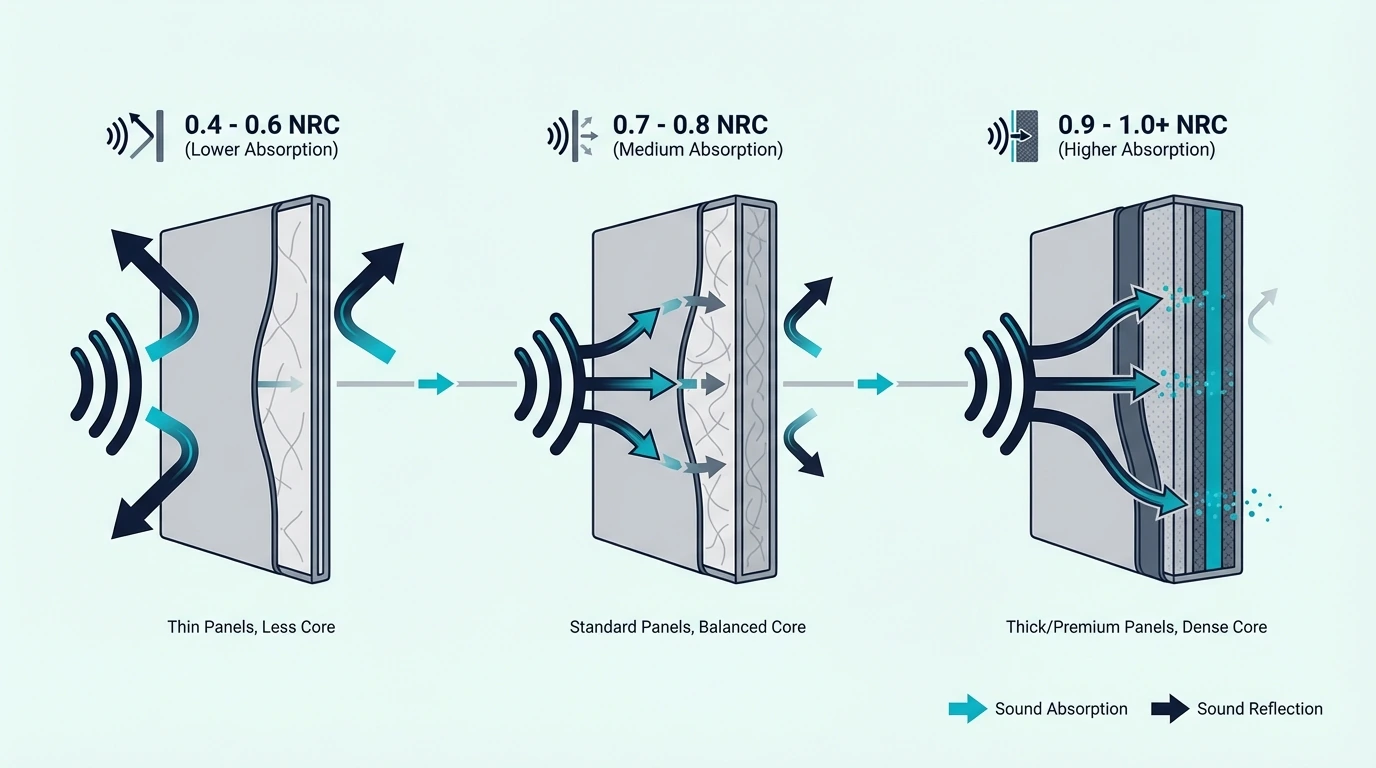
The raw math of the 0.0 to 1.0 scale is abstract until you connect it to materials you already know.
The Scale Explained
At the absolute bottom of the scale sits pure reflection. A 0.0 rating means sound hits the surface and bounces back completely intact, which perfectly describes bare drywall, window glass, and concrete floors.
Moving to the middle, a 0.50 rating means the material acts like a toll booth, soaking up half the acoustic energy and reflecting the rest. Heavy carpet, thick curtains, and entry-level egg-crate foam usually land around this halfway point.
At the very top, a 1.0 rating represents total absorption within the tested frequencies. Thick fiberglass bass traps and heavy mineral wool boards are the few materials capable of killing reflections entirely.
The jump from an untreated drywall room (0.05) to a wall treated with professional panels (0.90) represents an 18x mathematical improvement in absorption. That massive multiple is exactly why hanging just a few panels in an empty room makes the space feel instantly “deadened.”
Why Higher Isn’t Always Necessary
Because that initial leap is so dramatic, a standard 0.85 NRC panel handles almost every common acoustic problem effectively. The perceptual difference to human ears between a 0.85 panel and a premium 0.95 panel is marginal compared to the difference between bare drywall and that 0.85 panel.
This law of diminishing returns means chasing a perfect 1.0 rating usually results in overspending for an upgrade you cannot hear. Once you cross the 0.80 threshold, the total square footage of your coverage matters vastly more than the decimal points on the spec sheet.
The one exception to this rule is professional mixing environments. In a recording studio where you are making EQ decisions based on what the room tells you, the accuracy of a higher-rated, linear-absorbing panel justifies the premium price tag.
What’s a Good NRC Rating for Acoustic Panels?
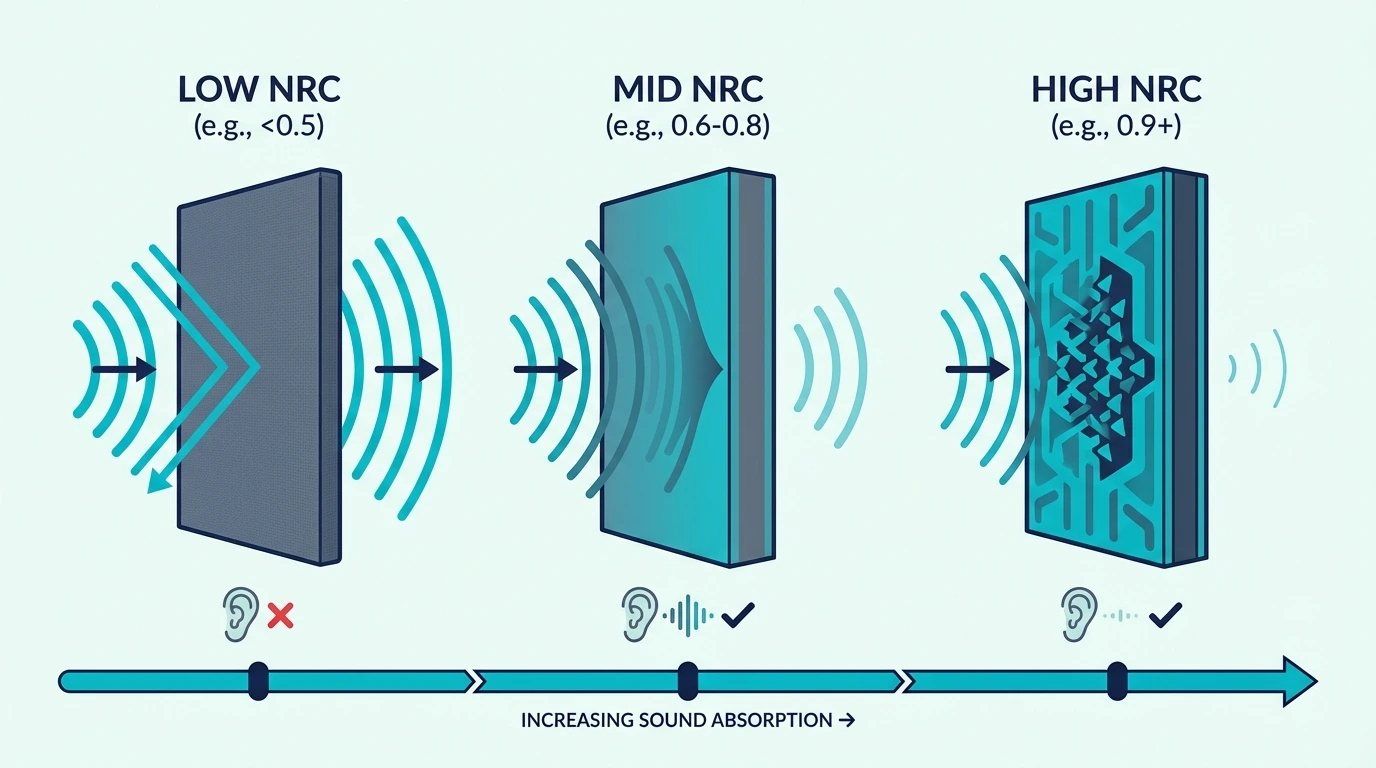
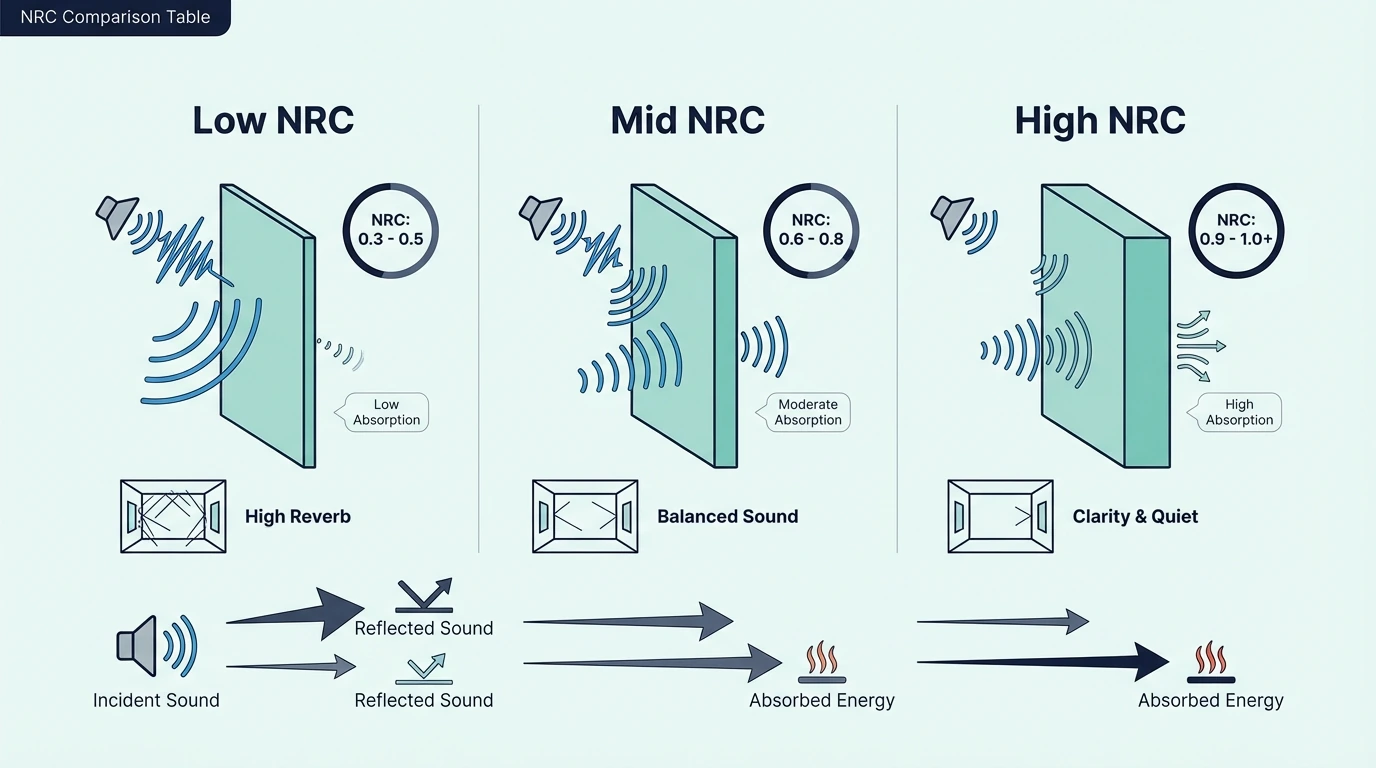
Because the market is flooded with products claiming to be “acoustic,” filtering by these three distinct NRC tiers is the fastest way to spot cheap decorative foam masquerading as serious treatment.
Low NRC (0.0-0.40)
If a product falls into this bottom tier, it is providing purely decorative value with almost zero acoustic benefit. You will find ultra-thin 1-inch foam wedges, rigid PET felt tiles, and unverified Amazon specials living in this bracket.
At 0.20 to 0.30 NRC, the material is only capturing a quarter of the mid-range energy that hits it. That might take the harsh edge off a small bathroom or a narrow hallway, but it will do absolutely nothing to fix the ringing slap-echo in a living room or a podcast studio. If a seller completely hides their NRC rating on the product page, it is because the foam belongs in this tier.
Medium NRC (0.50-0.70)
The middle tier provides legitimate, functional absorption for general residential spaces. Thicker 2-inch foam wedges, dense polyester panels, and lightweight acoustic baffles populate this bracket.
When you install 0.60 NRC panels, the room immediately feels less chaotic. Background chatter becomes clearer, and the “gymnasium” reverb drops out of video calls. For conference rooms, open offices, and gaming setups, this tier delivers exactly the improvement people expect without the hefty price tag of fiberglass.
If you want a “better than bare walls” baseline to tame flutter echo without spending a fortune, ATS Acoustics Sound Absorbing Acoustic Panel 24 × 48 × 2 is the standard entry point for this tier. For a deeper look at how quality foam stacks up against rigid panels in this range, the polyester vs foam acoustic panels comparison covers the trade-offs.
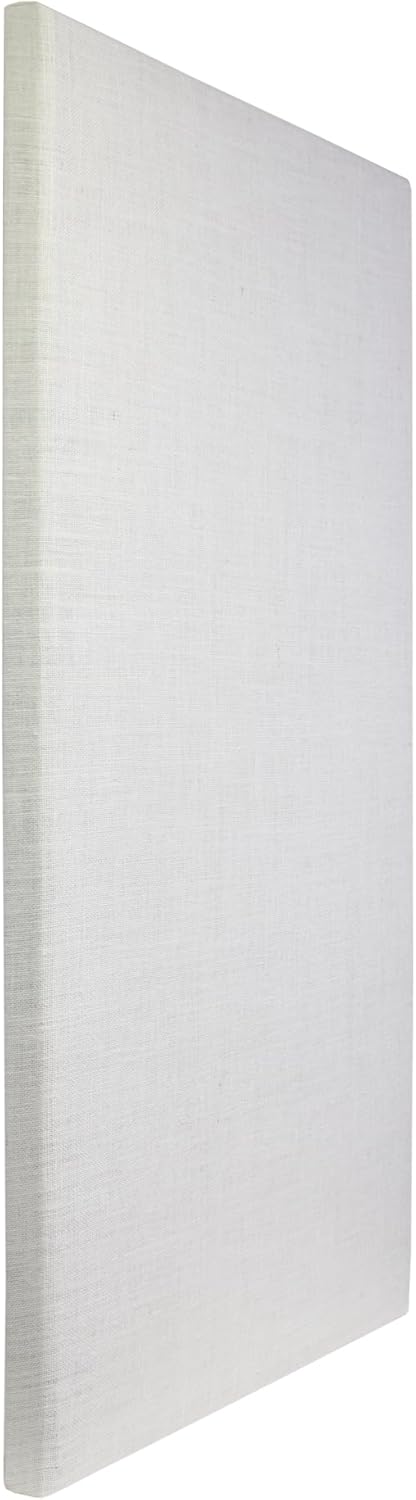
ATS Acoustics Sound Absorbing Acoustic Panel 24 × 48 × 2
High NRC (0.80-1.0+)
This top tier represents professional-grade, uncompromising absorption. To hit these numbers, manufacturers must use dense fiberglass boards (like Owens Corning 703), heavy mineral wool, or specially engineered acoustic cores wrapped in transparent fabric. The fiberglass panel roundup ranks the top options in this tier by verified NRC data.
At 0.85 NRC and above, the treated space sounds surgically dry. Reverb tails vanish, dialogue becomes razor-sharp from across the room, and studio monitors finally reveal the true detail in a mix because the room is no longer fighting the speakers.
The Acoustic Panels 4 Pack ROOM KIT Large demonstrates how this tier is built — larger absorptive panels that prioritize serious wall coverage over decorative softness.
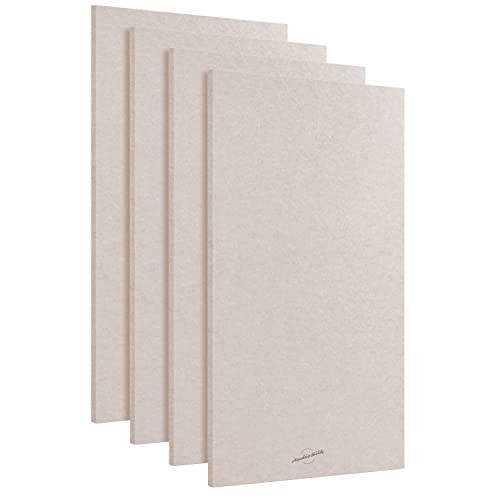
Acoustic Panels 4 Pack ROOM KIT Large
If you are treating a recording studio, a dedicated home theater, or a critical listening room, never buy a panel rated below 0.80 NRC. The performance gap between a 0.60 foam tile and a 0.85 fiberglass board is the single most dramatic acoustic upgrade you will ever hear. NRC is often quoted alongside the blocking ratings, which measure the opposite thing entirely: STC covers airborne transmission and IIC covers impact, and neither describes absorption.
NRC vs STC vs SAA: What’s the Difference?
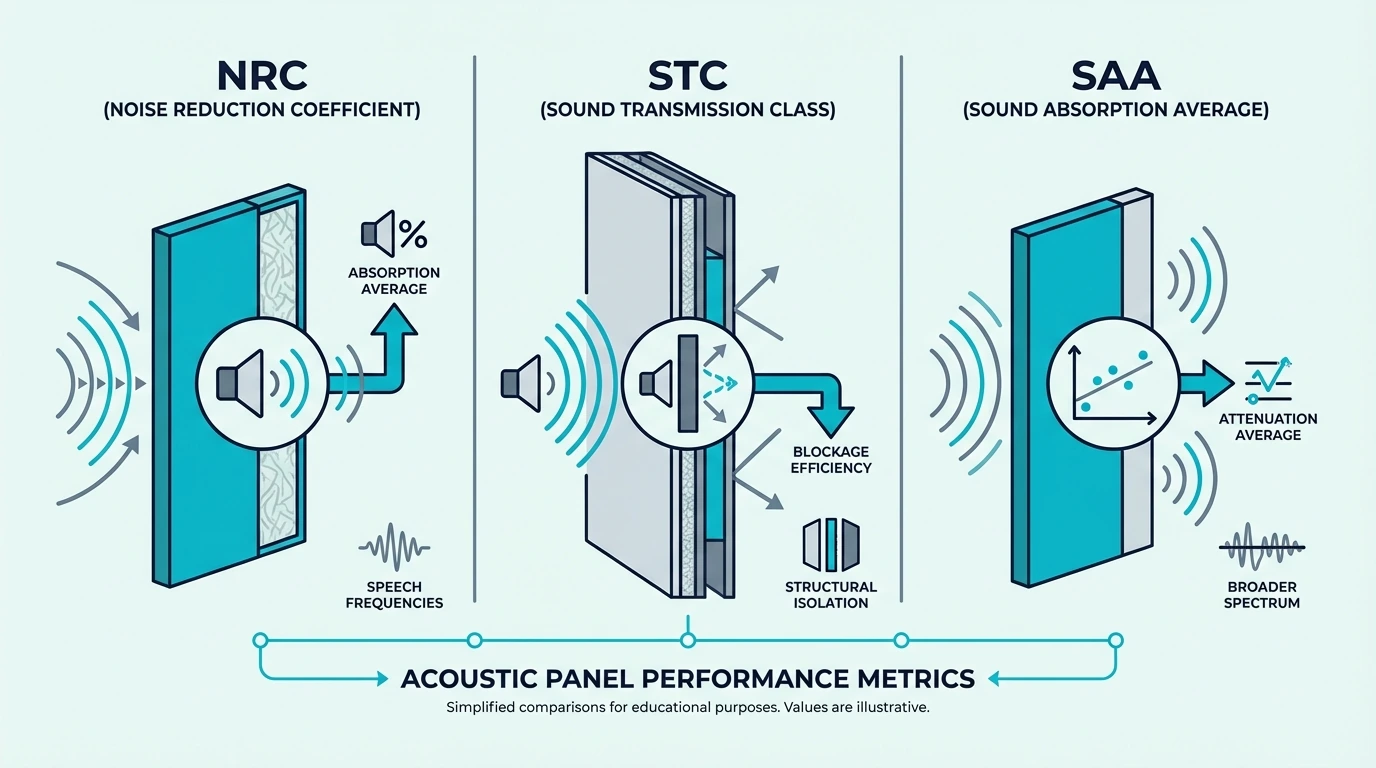
Acoustic specs are full of acronyms that sound identical but measure completely different physics. Confusing them guarantees you will buy the wrong material for your room.
NRC (Noise Reduction Coefficient)
NRC only measures internal room absorption. It scores how effectively a material acts like an acoustic sponge, soaking up the reflections that bounce off the walls inside your room. When you want to kill the echo inside a podcast studio, you hunt for high NRC ratings.
STC (Sound Transmission Class)
STC measures barrier blocking. It scores how effectively a wall, door, or window stops sound from escaping your room and traveling into the hallway or the neighbor’s apartment.
Acoustic panels have high NRC ratings but very low STC ratings. They will make your drum kit sound perfectly dry and crisp inside the room, but they will do absolutely nothing to stop your neighbor from hearing the kick drum through the drywall. If you need to contain sound, you need mass and decoupling, which the acoustic panels vs bass traps comparison explains in the isolation section.
SAA (Sound Absorption Average)
SAA is simply a more granular version of NRC. Instead of averaging just four frequencies, the newer SAA standard averages the absorption across twelve distinct frequency bands to provide a slightly more accurate picture of the panel’s broadband performance.
Because the two metrics track the exact same physics, SAA and NRC scores on a spec sheet are almost always nearly identical.
Can NRC Exceed 1.0?
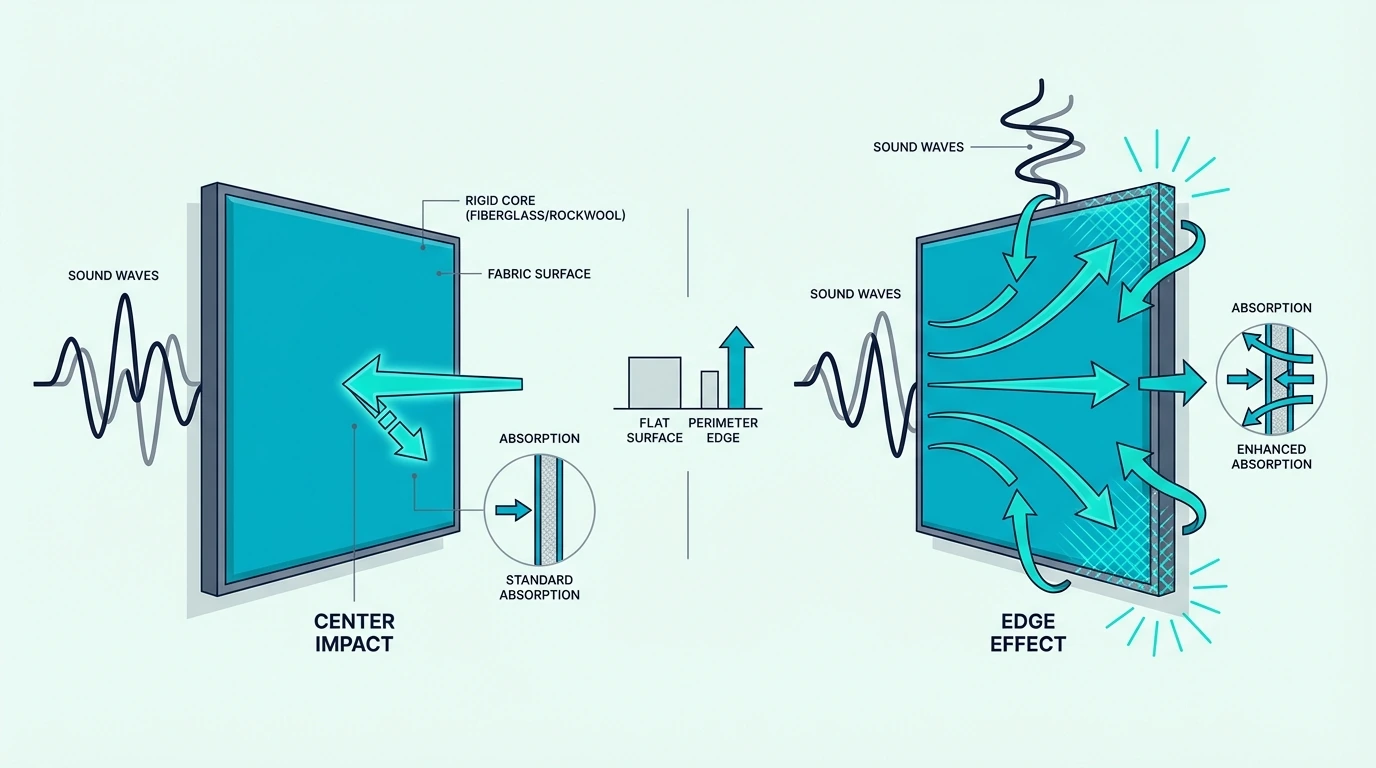
You might see panels rated at 1.05 or 1.15 NRC, which seems impossible — how can something absorb more than 100% of sound? Two things explain it: the edge effect during testing, and what those above-1.0 numbers actually mean in practice.
The Edge Effect Explained
When panels are tested in a reverberant chamber, sound waves hit not just the front surface but wrap around the edges. This “edge effect” increases the effective absorption area beyond the panel’s physical dimensions.
A 24×48” panel absorbs sound across a larger area than its 8 square feet because edge diffraction brings additional sound energy into contact with the material. The thicker and more absorptive the panel, the stronger the edge effect — which is why thick fiberglass and rockwool panels are the products most likely to exceed 1.0.
Smaller test samples show larger edge effects relative to their face area, which is one reason the ASTM C423 standard requires a minimum 72 square foot sample. That minimum keeps edge effects from inflating the result beyond what you would see in a real installation.
What Ratings Above 1.0 Mean
An NRC above 1.0 indicates excellent absorption — the panel absorbs all direct sound plus additional energy from edge effects. In practical terms, treat anything above 0.95 as full absorption.
When comparing two products at 1.05 and 1.10 NRC, the difference is not meaningful in a real room. Both are absorbing effectively all the mid-range energy that reaches them, and the 0.05 gap reflects test geometry more than audible performance.
The Olanglab Sound Absorbing Acoustic Wall Panels 2 Pack sits in the kind of premium fiberglass category that regularly posts professional-grade absorption numbers.
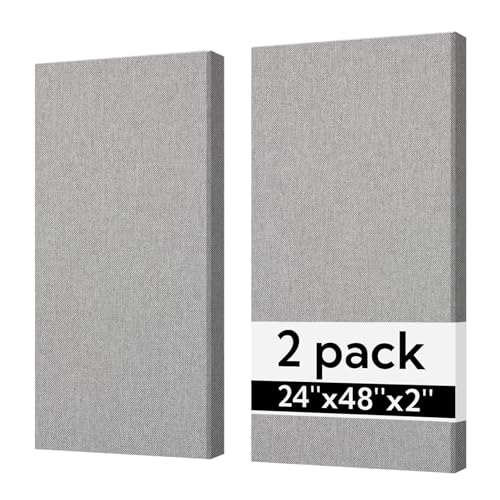
Olanglab Sound Absorbing Acoustic Wall Panels 2 Pack
If you see a product rated above 1.0, it is a good sign — but prioritize the full frequency data over the headline number. A panel at 1.05 NRC with weak 250Hz absorption is less useful in a boomy room than a 0.90 NRC panel with even absorption across all four bands.
What NRC Rating for Different Applications?
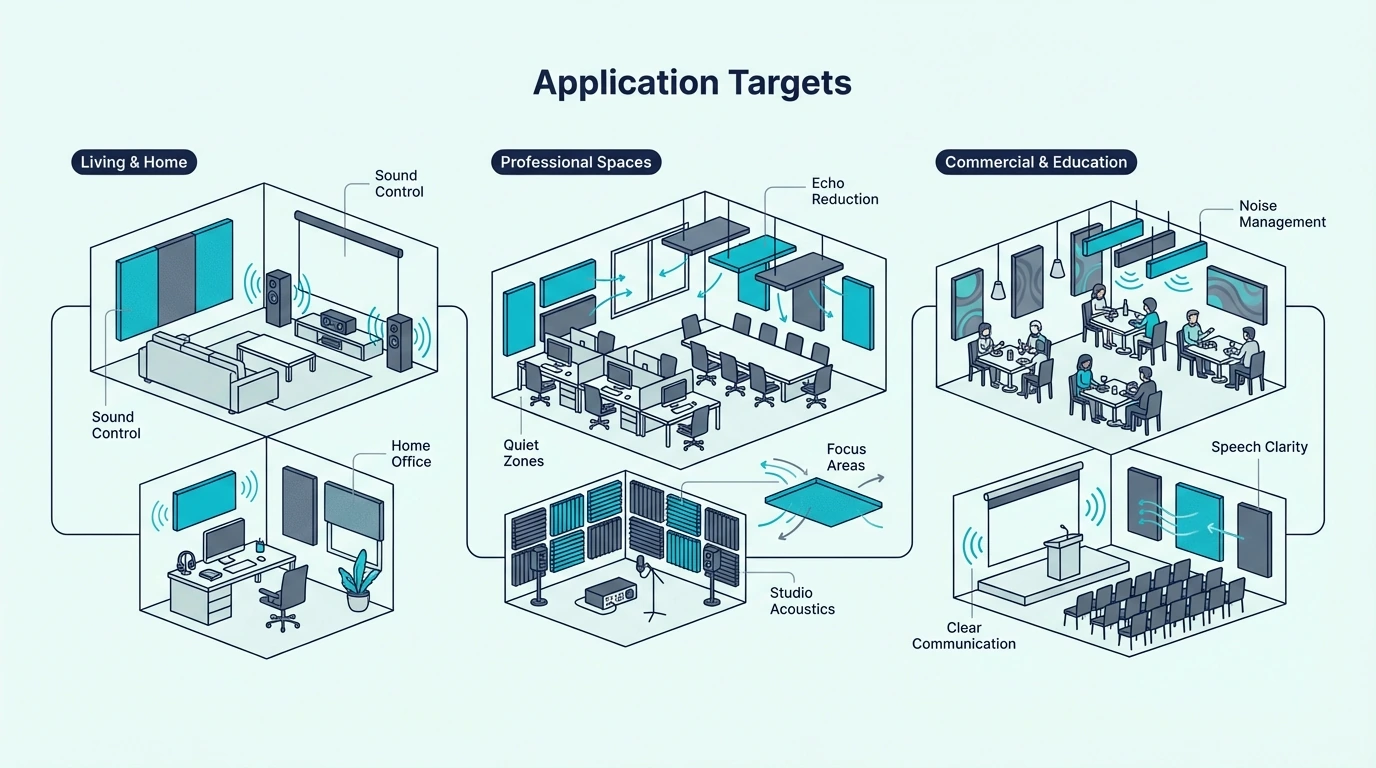
The exact target NRC shifts depending on what you’re doing in the room. You can actually ruin a space by chasing maximum absorption when the room doesn’t call for it.
Recording Studios and Mixing Rooms
Mix rooms demand absolute maximum absorption (NRC 0.90+) at the primary treatment positions. If the walls reflect sound back to your chair, the room will color what you hear, tricking you into making EQ decisions that sound terrible on every other playback system.
The first reflection points on the side walls and the ceiling cloud are the absolute priority. The panel placement guide maps exactly where those bounce paths land in a typical room. However, the rear wall usually requires a hybrid approach — over-treating the entire room with 1.0 NRC panels makes it feel unnaturally suffocating, which throws off your perception of reverb tails.
Home Theaters
Dedicated cinema rooms thrive in the NRC 0.80 to 0.90 pocket. The theater requires heavy absorption to keep the dialogue perfectly clear and the surround-sound panning tight, but it still needs to breathe.
If you coat every single wall in 1.0 NRC fiberglass, the room loses the ambient acoustic energy that makes movie soundtracks feel massive and immersive. The sweet spot is usually 40–60% coverage on the front and side walls, leaving the rear surfaces slightly reflective. The home theater acoustic panels guide maps out exactly which speakers need which treatment.
Offices and Conference Rooms
Corporate spaces and home offices hit their sweet spot between NRC 0.70 and 0.85. The goal here isn’t surgical audio accuracy; the goal is killing the painful flutter echo so people can survive a two-hour Zoom call without fatigue.
Ceiling baffles are the most powerful weapon for offices because they catch the reflections from every single desk simultaneously. For conference rooms, flanking the ends of the table with medium-NRC wall panels instantly kills the “speaking into a tunnel” effect that ruins speakerphone audio.
General Rooms
Living rooms and bedrooms rarely need to exceed NRC 0.60 to 0.80. These spaces just need basic echo control to tame the harsh slap off hardwood floors and large glass windows.
Because couches, heavy curtains, and area rugs already absorb a massive amount of high-frequency energy naturally, you are just filling in the gaps. Two or three stylish polyester panels at the worst reflection points will drop the room’s reverb time into a perfectly comfortable range. The 1-inch vs 2-inch panel comparison helps you pick the right depth for casual spaces where slim profiles matter.
How Do Common Materials Compare by NRC?
| Material Type | Typical NRC | Best Application |
|---|---|---|
| Bare Drywall | 0.05 | — (baseline) |
| Carpet (heavy) | 0.30-0.40 | Floor absorption |
| Acoustic Foam (2”) | 0.40-0.60 | Voice recording |
| PET Felt Panels | 0.50-0.70 | Office aesthetics |
| Fiberglass Panels (2”) | 0.85-0.95 | Studios, theaters |
| Rockwool Panels (2”) | 0.85-0.95 | Studios, theaters |
| Bass Traps (4”+) | 0.95-1.15 | Corner treatment |
Conclusion
NRC gives you one number to filter acoustic products, but the score alone won’t tell you how a panel performs at a specific frequency or in a specific position.
For any room where sound quality matters, set a floor of 0.80 NRC and skip products that don’t publish their rating. That single threshold cuts out most decorative panels and thin foam tiles.
Match NRC to the Room
A home office doesn’t need 1.0 NRC bass traps. Basic 0.80 NRC fiberglass panels solve speech echo in most setups.
A mixing studio benefits from maximum absorption at every critical listening position.
Placement Outweighs the Rating
A 0.85 NRC panel at the first reflection point outperforms a higher-rated panel mounted in a random spot.
Once you’ve settled on a target NRC, the panel count guide helps calculate total coverage, and the hanging guide matches hardware to your wall type. For product picks across every tier, the best acoustic panels guide ranks options by verified performance data.
Frequently Asked Questions
What Does NRC Mean in Simple Terms?
NRC is an absorption percentage — a panel rated 0.85 absorbs roughly 85% of mid-range sound and bounces back the rest. The rating only covers 250Hz to 2000Hz, so it says nothing about deep bass.
What’s a Good NRC Rating for Acoustic Panels?
Set 0.80 NRC as your floor. Fiberglass and rockwool panels typically rate 0.85 to 1.0, while budget acoustic foam sits around 0.40 to 0.60.
That gap is immediately audible once you treat even two or three first reflection points.
Is Higher NRC Always Better?
Diminishing returns kick in above 0.90 — the gap between 0.90 and 0.95 is barely audible. A well-positioned 0.85 NRC panel outperforms a poorly positioned 1.0 panel every time.
What’s the Difference Between NRC and STC?
NRC measures absorption (sound soaked up inside a room). STC measures blocking (sound stopped from traveling between rooms).
Acoustic panels have high NRC but low STC — they reduce echo but don’t soundproof. For sound blocking between spaces, you need mass, decoupling, and air sealing, not absorptive panels.