Best Adhesive for Acoustic Foam: 8 Products That Actually Hold [2026]
Finding the best adhesive for acoustic foam saves you from watching your panels fall off the wall at 3 AM.
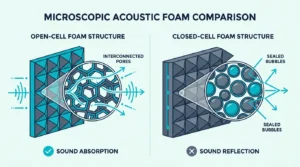
Most people grab whatever glue is lying around, stick up a few panels, and then wonder why the foam starts peeling off. Acoustic foam is porous and springy, so you need an adhesive that bonds to lightweight, uneven surfaces.
If you want the bigger picture too, start with our acoustic foam guide. And if you’re still deciding where foam should go after you mount it, our how to arrange acoustic foam guide walks you through the placement logic.
Use spray adhesive (like 3M Super 77) for a permanent hold, and use Command strips or industrial velcro when you need clean removal. Skip hot glue, white glue, and super glue — they fail fast and make re-positioning miserable.
What’s the Best Adhesive for Acoustic Foam?
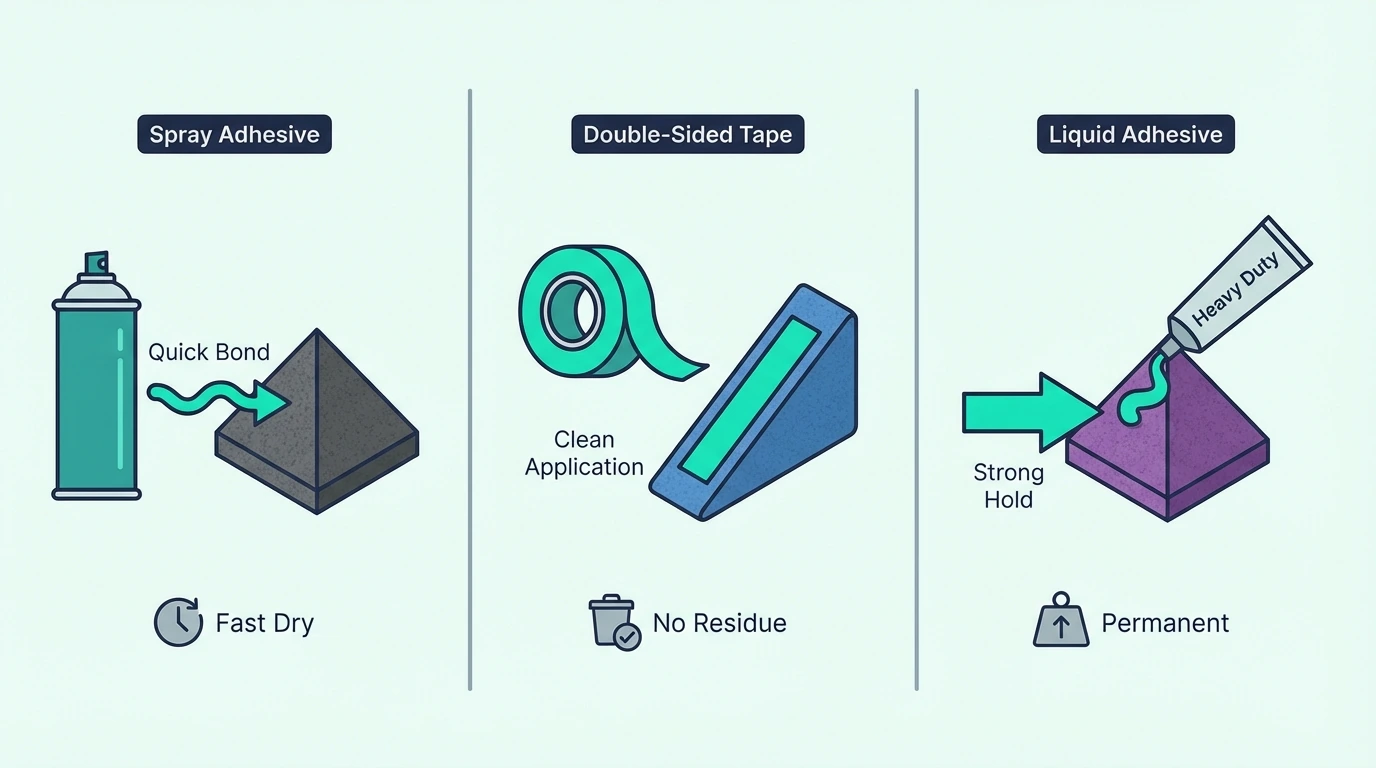
The answer depends on whether you want permanent mounting or need the option to remove your foam later. Both approaches work, but they require completely different products.
Spray adhesive wins for permanent installs because it bonds across the entire foam surface. Once it cures, it usually holds for years without slowly peeling at the edges.
The trade-off is wall damage on removal and more prep work up front. If you’re renting (or you might move soon), skip spray and jump to the removable options below.
Why Does Spray Adhesive Work Best for Permanent Installs?
Spray adhesive coats the porous foam surface evenly, filling the tiny gaps that liquid glue can’t reach. This creates a stronger bond because more surface area actually touches the adhesive.
The aerosol format lets you apply thin, even coats without over-saturating the foam. Too much adhesive weighs down lightweight foam and can cause sagging over time.
Professional studios almost universally use spray adhesive for this reason. When you’re mounting hundreds of panels, consistency matters more than anything else.
What’s the Best Option for Renters?
Command strips and heavy-duty mounting tape let you install foam without damaging walls. You won’t get the same rock-solid hold as spray adhesive, but removal is clean and simple.
The trade-off is weight capacity: most Command strips hold two to four pounds per strip. Bigger panels need multiple strips, spaced near the edges so they don’t curl.
Lightweight 12×12 foam usually works with two strips per panel, but test one panel first. If it starts peeling in a week, switch methods before you mount the whole room.
Velcro strips offer a middle ground — decent hold strength with easy removal. Industrial-grade velcro handles heavier foam better than command strips.
What Types of Adhesive Work for Acoustic Foam?
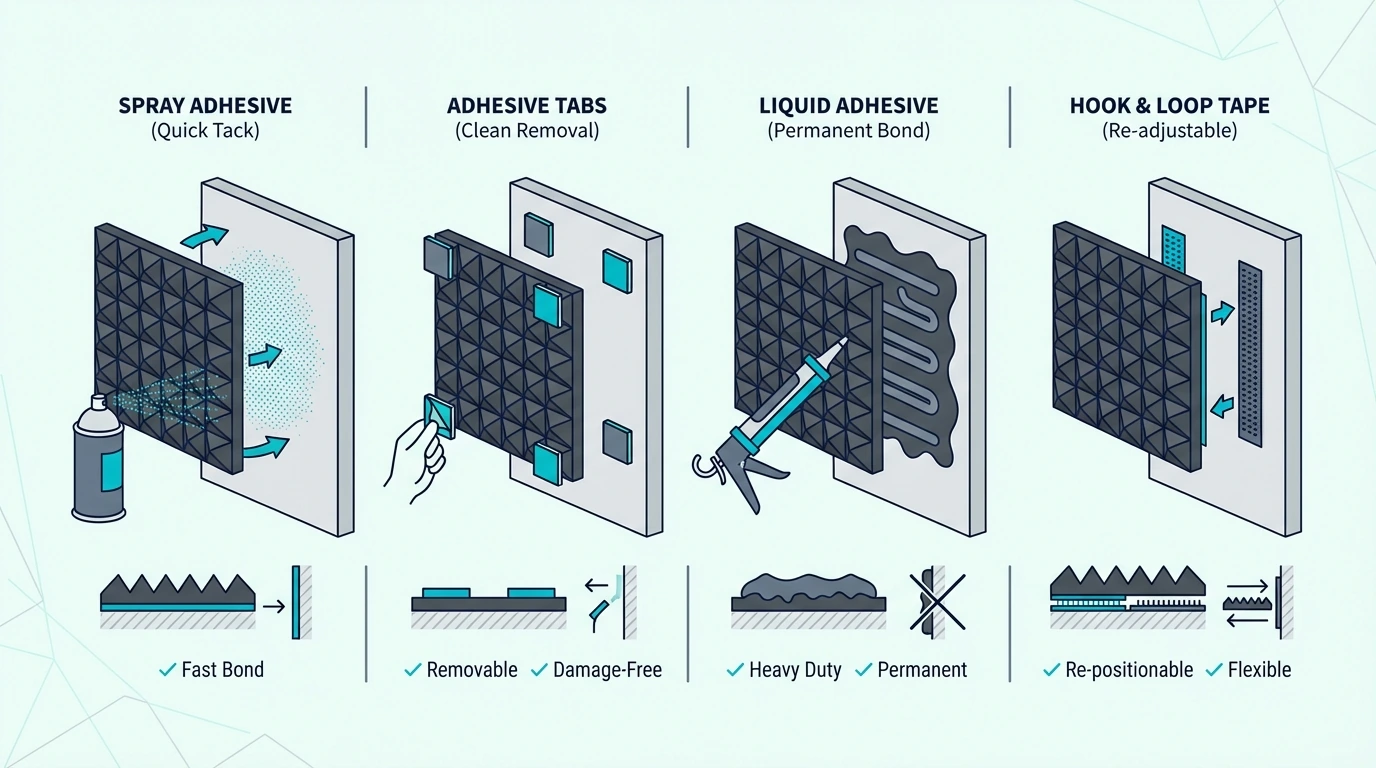
Four main adhesive categories work for acoustic foam: spray adhesive, double-sided tape, command strips, and liquid construction adhesive. Each has specific strengths and weaknesses.
Most “my foam won’t stick” problems come from picking the wrong category for your wall and your timeline. If you need clean removal, start with Command strips or velcro; if you need permanent hold, start with spray adhesive.
Why Is Spray Adhesive the Best Overall Choice?
Spray adhesive creates a permanent bond that handles temperature changes and humidity without failing. Products like 3M Super 77 are specifically designed for lightweight porous materials like foam.
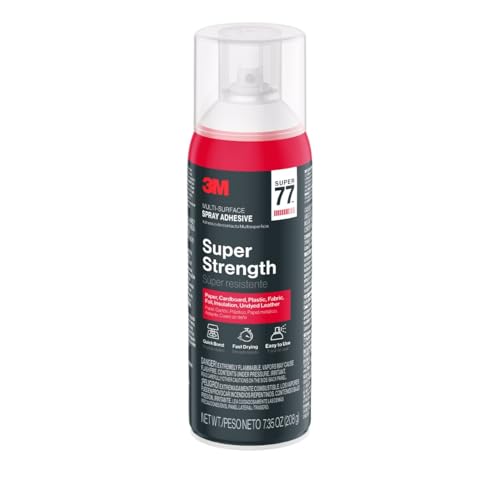
3M Super 77
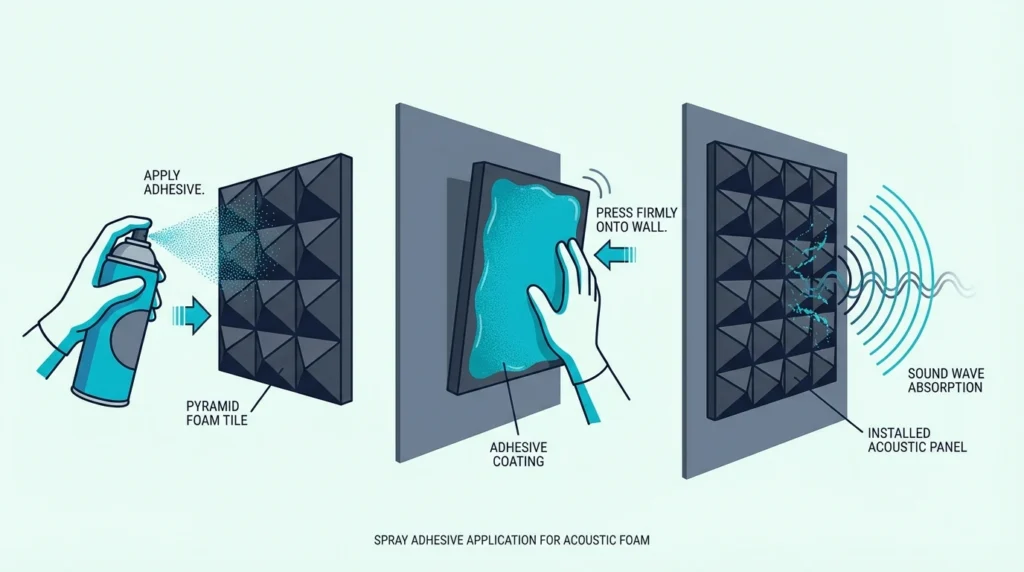
Application is straightforward once you’ve done one test panel. Spray both the foam and the wall, wait until tacky, then press the panel into place.
The initial grab is fast, but full strength still takes about 24 hours. Don’t yank on the panel or start hanging adjacent panels until it’s cured.
The main drawback is permanence: spray-glued foam will take paint (and sometimes drywall paper) with it when you remove it. If you’re renting, skip this option entirely.
When Should You Use Double-Sided Tape?
Heavy-duty mounting tape works for medium-weight foam panels in climate-controlled spaces. Products like Scotch Extreme Mounting Tape handle up to 30 pounds, which covers most acoustic foam applications.
Temperature matters with tape. Extreme heat or cold can weaken the bond over time.
If your room swings from cold to hot (garage, attic, non‑climate‑controlled basement), expect tape to fail sooner. In a normal, air‑conditioned room, tape can hold up surprisingly well.
Tape is faster than spray adhesive. You cut strips, peel the liner, and stick the panel in place.
There’s no drying time, no fumes, and no cleanup. That convenience is why tape is the go-to for renters and quick installs.
Are Command Strips Worth Using?
Command strips are the safest choice for renters who need clean removal. They hold surprisingly well when applied correctly and leave no residue behind.
The catch is weight limits: standard picture hanging strips hold about four pounds per pair. Most 12×12 foam panels are under a pound, so one pair per panel usually works.
Larger panels need multiple strips positioned around the edges. Don’t rely on a single strip in the center — the foam will peel away from the edges over time.
When Does Liquid Glue Make Sense?
Liquid construction adhesive like Auralex Tubetak Pro works for permanent installations where spray adhesive isn’t practical. It’s cheaper for small projects and available at any hardware store.
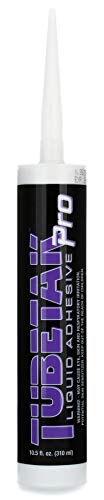
Auralex Tubetak Pro
Apply liquid adhesive in an X pattern across the foam back so the corners stay anchored. Use less than you think you need—too much glue creates lumps that telegraph through thin foam.
Let it get tacky before you press the panel to the wall. If you stick it on wet, it’ll slide and sag.
The downside is application control: liquid adhesive is harder to spread evenly than spray. If you misplace a panel, fixing it is messy.
Most pros still prefer spray adhesive even when it costs more. It’s simply more consistent when you’re mounting lots of panels.
Get Studio Tips Weekly
Join 5,000+ creators getting acoustic treatment advice every week.
No spam. Unsubscribe anytime.What’s the Best Spray Adhesive for Acoustic Foam?
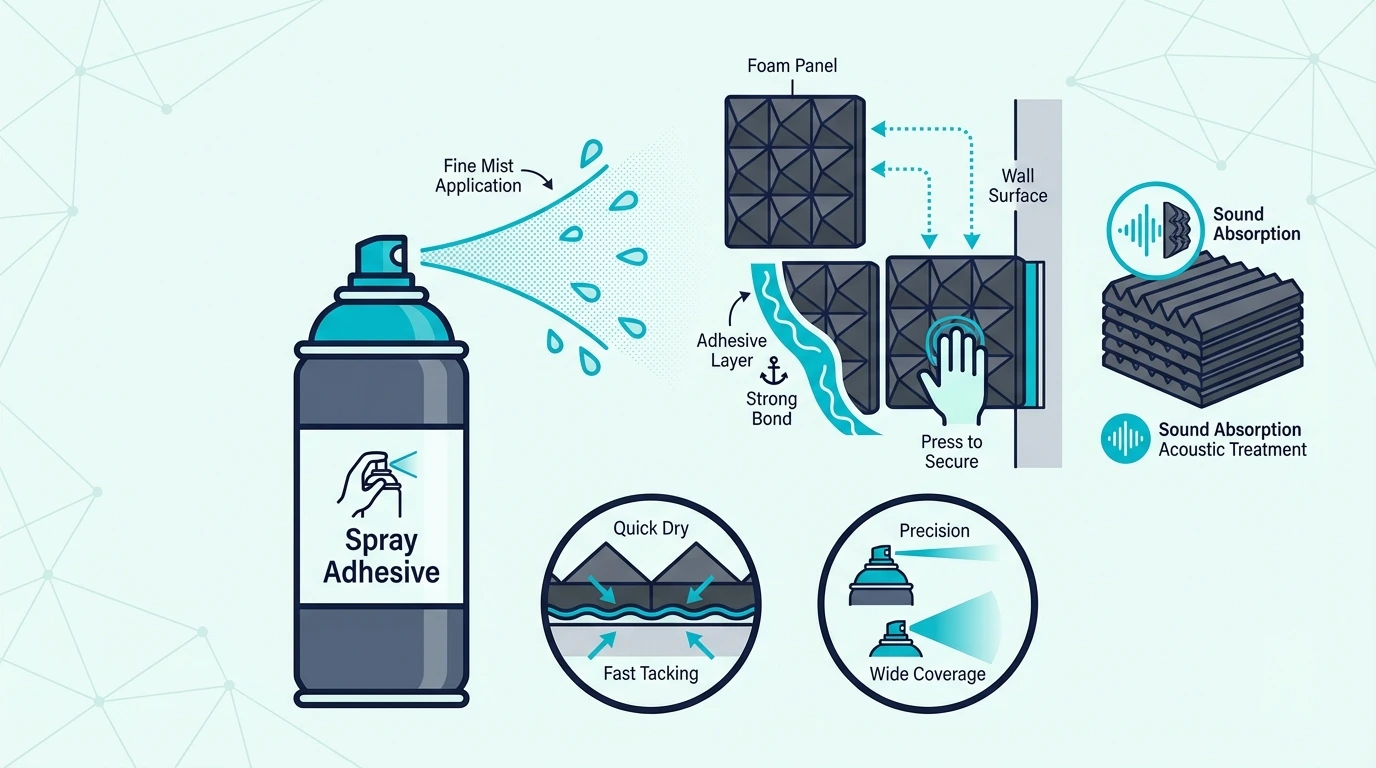
Three spray adhesives dominate the acoustic foam market: 3M Super 77, Loctite General Performance, and Gorilla Spray Adhesive. Each serves slightly different needs.
All three products work for acoustic foam. The differences come down to bond strength, drying time, and price per ounce.
Why Is 3M Super 77 the Industry Standard?
3M Super 77 has been the go-to spray adhesive for professional studios for decades. It’s specifically formulated for lightweight porous materials including foam, fabric, and paper.
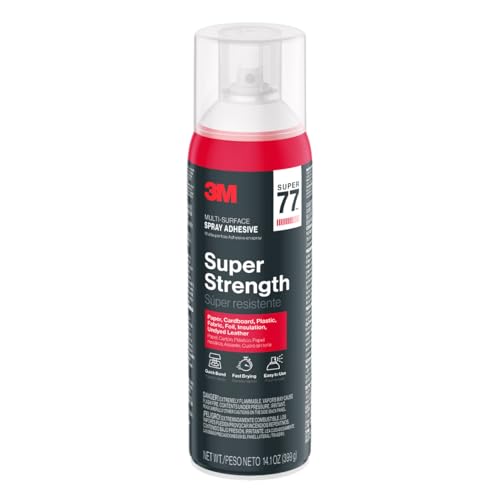
3M Super 77
The bond stays flexible after curing, which matters for foam that expands and contracts slightly with temperature changes. Rigid adhesives crack under this stress.
Coverage is excellent — one 16-ounce can handles about 30 to 40 standard foam panels. The fine spray pattern creates thin, even coats without overspray waste.
Is Loctite General Performance a Good Budget Alternative?
Loctite Spray Adhesive Professional Performance costs about 30% less than 3M Super 77 while delivering similar results. It’s the smart choice for budget-conscious buyers who still want professional-quality hold. Choosing the adhesive is only half of it; the rest is where the panels actually go on the wall.
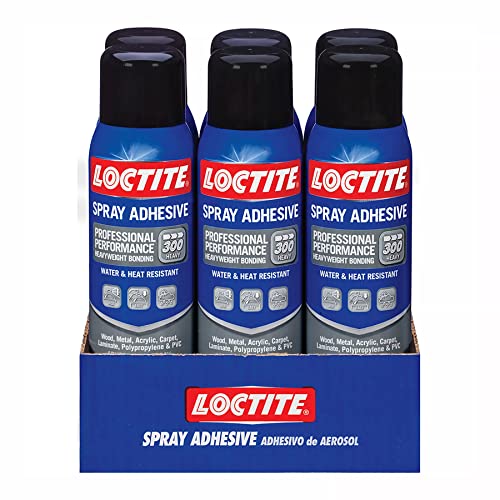
Loctite Spray Adhesive Professional Performance
Bond strength is slightly lower than 3M Super 77, but the difference rarely matters for lightweight foam. Both products hold far more weight than any acoustic panel actually weighs.
Drying time is comparable — about 15 to 30 seconds until tacky. Full cure takes 24 hours for both products.
When Should You Choose Gorilla Spray Adhesive?
Gorilla Heavy Duty Spray Adhesive offers the strongest bond of the three main options. It’s overkill for standard foam panels but makes sense for heavy-duty applications or outdoor installations.
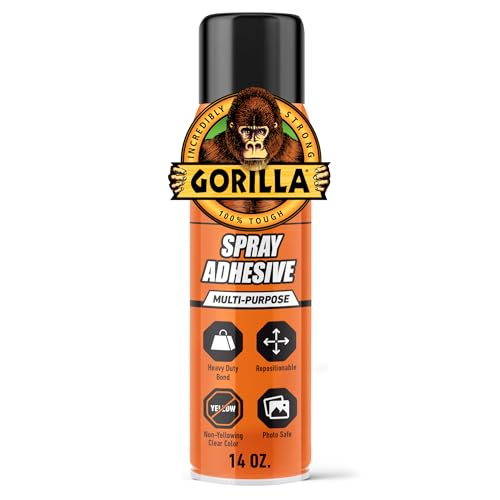
Gorilla Heavy Duty Spray Adhesive
The heavy-duty formula costs more and has a stronger odor during application. Use it in well-ventilated spaces and consider a respirator mask for large projects.
For typical home studio foam mounting, Gorilla’s extra strength isn’t necessary. Save it for situations where 3M Super 77 genuinely isn’t strong enough.
What’s the Best Tape for Acoustic Foam?
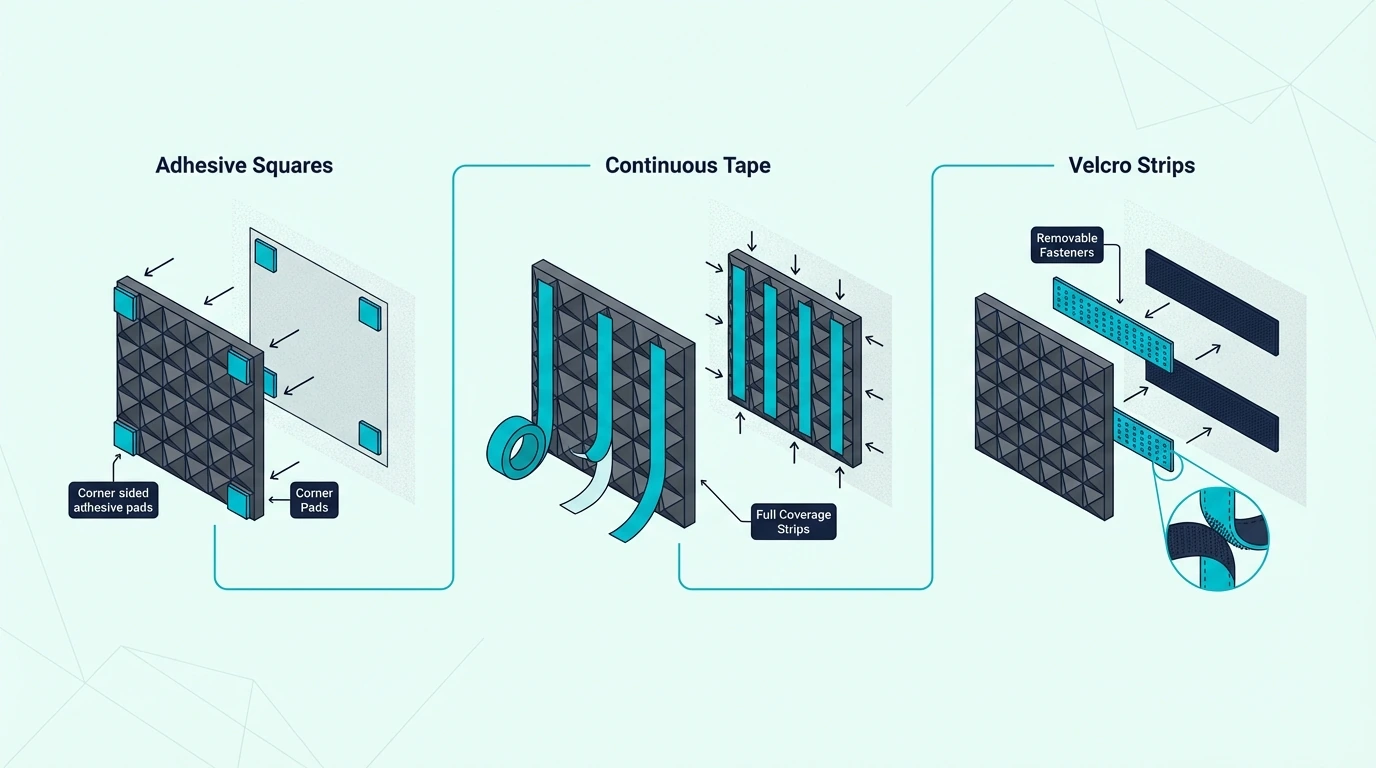
Tape-based mounting options work best for renters and temporary installations. Three products stand out: Command Picture Hanging Strips, Scotch Heavy-Duty Mounting Tape, and industrial velcro strips.
Tape mounting is faster and cleaner than spray adhesive. You trade some hold strength for convenience and removability.
How Well Do Command Picture Hanging Strips Work?
Command Large Picture Hanging Strips are designed for easy removal without wall damage. They use a stretch-release mechanism that cleanly separates the adhesive from surfaces.
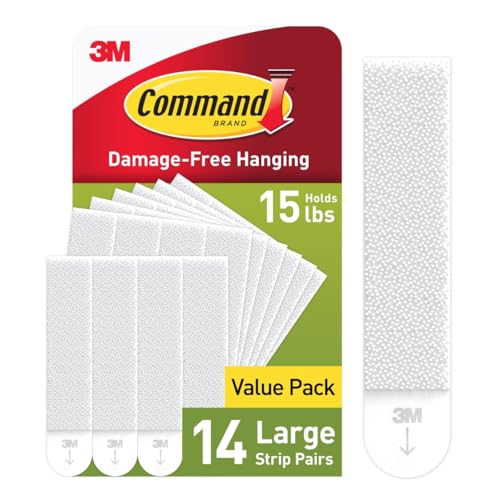
Command Large Picture Hanging Strips
For acoustic foam, use the medium or large picture hanging strips rather than the small ones. Each pair holds about four pounds, which is plenty for most foam panels.
Apply strips near the edges of each panel, not just in the center. Edge mounting prevents foam from peeling away over time as the adhesive slowly weakens.
Is Scotch Heavy-Duty Mounting Tape Strong Enough?
Scotch Double-Sided Mounting Tape holds up to 30 pounds, far exceeding what any acoustic foam panel weighs. It’s the strongest tape option for permanent installations where you don’t plan to remove foam.
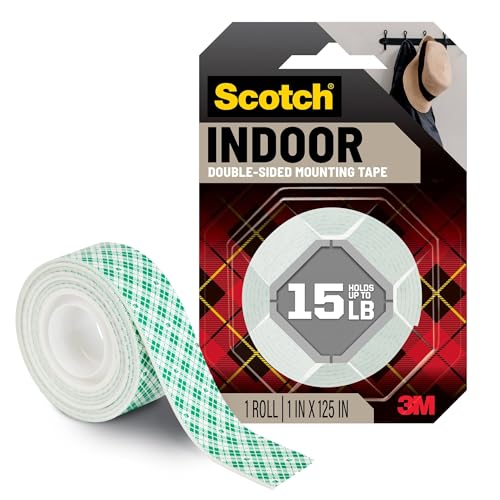
Scotch Double-Sided Mounting Tape
The catch is removal difficulty. Unlike Command strips, heavy-duty mounting tape doesn’t release cleanly.
Removing it will likely damage paint and possibly drywall. Use it only when you’re comfortable treating it like a permanent install.
Use this tape when you want tape convenience with spray-adhesive permanence. Products like Gorilla Heavy Duty Mounting Tape work well for specific situations.
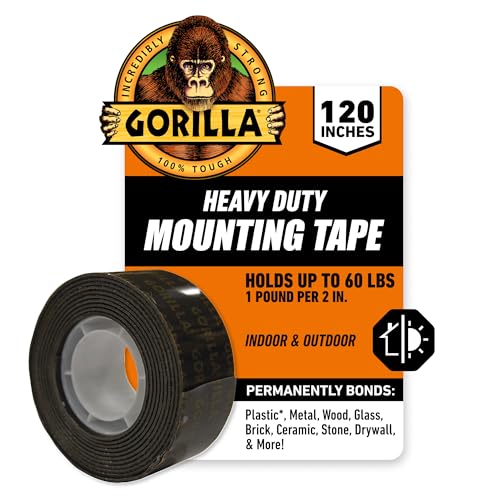
Gorilla Heavy Duty Mounting Tape
When Should You Use Industrial Velcro?
Industrial-strength velcro lets you remove and reposition foam panels whenever you want. This matters if you’re experimenting with placement or might move to a different space.
Apply the hook side to the wall and the loop side to foam. This orientation is easier on foam surfaces and makes cleaning dust from velcro simpler.
Velcro holds about 10 pounds per square inch of contact area. A few one-inch squares per panel provide plenty of support for standard acoustic foam.
Which Adhesives Should You Avoid?
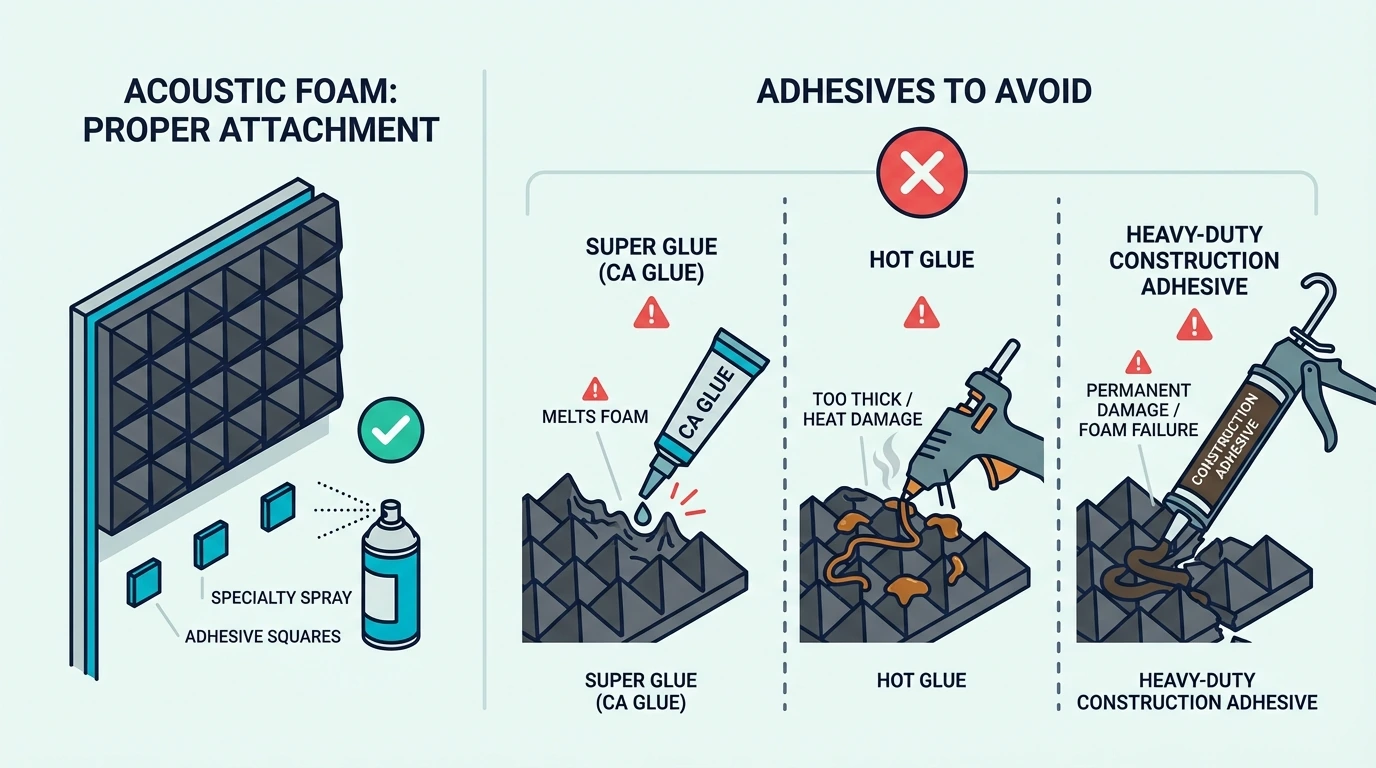
Some common adhesives seem like they should work for acoustic foam but actually fail quickly. Knowing what to avoid saves money and frustration.
The main culprits are hot glue, standard white glue, and super glue. All three have properties that make them poor choices for foam mounting.
Why Is Hot Glue a Bad Idea for Foam?
Hot glue melts foam. The high application temperature can physically damage polyurethane acoustic foam, creating holes or discoloration where you apply it.
Even when hot glue doesn’t visibly damage foam, the bond is weak. Hot glue creates a rigid connection that cracks as foam flexes with temperature changes.
Hot glue also sets too fast. You have seconds to position the panel before the glue hardens.
If you miss the spot, you’re scraping glue off the wall and starting over. That’s a miserable workflow once you’re mounting more than a couple panels.
Why Does Regular White Glue Fail?
White glue like Elmer’s needs to dry out to cure. Foam prevents air from reaching the glue trapped between panel and wall, so it never fully cures.
Partially cured white glue stays tacky forever without actually bonding. Panels seem attached at first but slowly peel away over days or weeks.
School glue and craft glue have the same problem. They’re designed for paper and porous materials where air can escape — not for sealing foam against a flat surface.
Can Super Glue Work in a Pinch?
Super glue creates an extremely rigid bond that doesn’t flex with foam movement. This rigidity causes the bond to crack and fail within weeks.
The instant bonding also makes positioning difficult. One touch and the foam is stuck exactly where it landed, whether that’s where you wanted it or not.
Super glue can also chemically react with certain foam types, causing discoloration or deterioration. It’s simply not designed for this application.
Can You Use Thumbtacks or Pushpins for Acoustic Foam?
This method gets dismissed quickly in most guides, but it deserves a fair assessment. Thumbtacks actually work for specific situations — with honest caveats about the trade-offs.
Do Thumbtacks Hold Foam Reliably?
Standard thumbtacks hold lightweight foam panels surprisingly well. Push through the foam at a slight angle toward the wall center so the pin grabs both foam and drywall.
Two to four pins per 12×12 panel is usually enough for months. It’s not elegant, but it works.
The weight limit is real, though. Thin foam handles pins better, while thick or dense foam can slowly pull pins through over time.
What About the Holes in Your Walls?
Pin holes are tiny—smaller than nail holes for picture frames. A tube of spackling paste and five minutes fixes a wall full of pin holes.
If you’re comparing pin damage to spray adhesive damage, pins win by a landslide. For strict rentals, though, even small holes might violate a lease, so check first.
How Should You Apply Adhesive to Acoustic Foam?
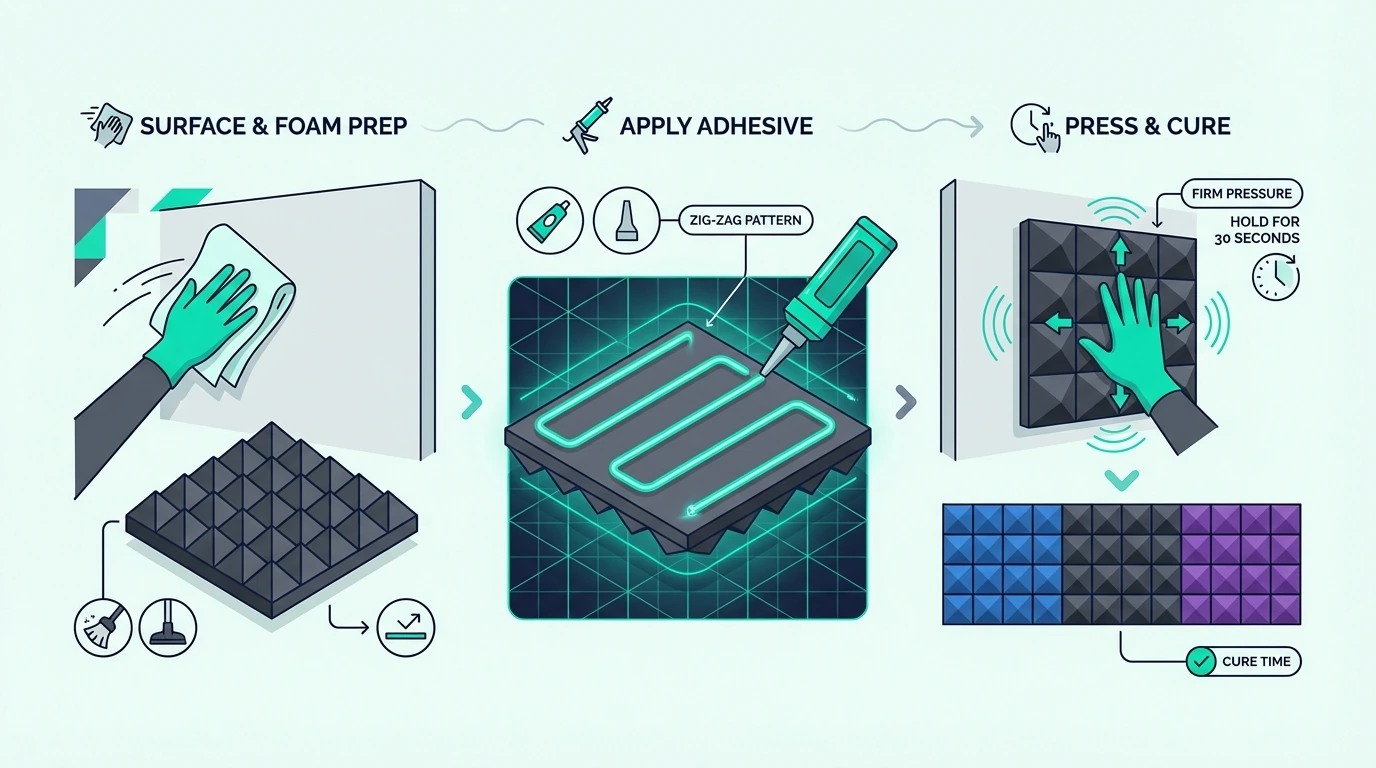
Proper application technique matters as much as adhesive choice. The same product performs differently based on how you apply it.
Following these steps ensures maximum bond strength and prevents common problems like sagging panels or uneven adhesion.
What’s the Correct Spray Adhesive Technique?
Start by cleaning both the foam back and the wall surface. Dust and debris are the number-one reason “good adhesive” fails.
A quick wipe with a dry cloth is enough for most walls. If the wall is greasy or recently cleaned, use rubbing alcohol and let it dry fully.
Spray both surfaces from about 8 to 10 inches away. Keep the can moving so you get a thin, even coat instead of wet spots.
Heavy spots drip and create weak bonds. They also soak the foam and make it sag.
Wait 30 to 60 seconds until the adhesive feels tacky rather than wet. Then press the foam firmly for 15 to 20 seconds.
The initial grab is immediate, but full strength takes about 24 hours. If you can, support heavier panels with painter’s tape while it cures.
How Long Should You Wait Before Mounting?
That tacky stage is the whole game with spray adhesive. Apply too early and the foam slides down the wall.
Wait too long and the adhesive dries past its best bonding window. When in doubt, test an edge—sticky is right, wet is too soon.
Most spray adhesives reach tacky stage in 30 to 90 seconds depending on temperature and humidity. Test by touching a non-visible edge — it should feel sticky but not transfer to your finger.
High humidity slows drying time significantly. In humid conditions, wait an extra 30 seconds beyond what the can recommends.
What Tips Ensure a Stronger Hold?
Apply adhesive in an X pattern rather than solid coverage for tape and liquid adhesives. This uses less product while maintaining strong corner-to-corner bonds.
Press the entire panel surface when mounting, not just the center. Walk your hands from the middle outward to ensure full contact across the adhesive area.
For heavy panels, support them with masking tape for 24 hours while spray adhesive cures fully. This prevents slow peeling before the bond reaches maximum strength.
What If Your Foam Keeps Falling Off?
Panels on the floor again? Before you reattach them, figure out why they failed.
The failure pattern usually points to the cause immediately. Fix the cause first, or you’ll just repeat the cycle.
How Do You Troubleshoot Adhesive Failures?
Clean release without residue usually means surface contamination at installation. Oils, dust, or cleaning product residue prevented bonding from the start. Clean the wall thoroughly with rubbing alcohol before your next attempt.
Foam tears leaving material on the wall indicates the adhesive was stronger than the foam backing. This happens with spray adhesive on low-density foam. Switch to mechanical mounting or use less adhesive next time.
Gradual peeling from edges inward suggests humidity degradation. Command strips and tape adhesives weaken over months in humid environments. Spray adhesive or mechanical mounting handles humidity better.
How Do You Reinforce Weak Bonds?
Adding fresh adhesive over old adhesive rarely works — the old layer prevents proper contact. If you must reinforce rather than remount, inject fresh spray adhesive around panel edges where separation started.
Better approach: remove the panel completely, clean both surfaces, and start fresh with proven technique. One proper installation beats three reinforcement attempts.
How Do You Prevent Future Adhesive Failures?
Once you’ve fixed immediate problems, prevent recurrence with better practices.
Wait for adhesive to cure before adding weight. Spray adhesive reaches handling strength quickly but full cure takes 24-72 hours. Mounting adjacent panels too soon can pull freshly installed panels off the wall as you work.
Match adhesive to environment. Humid basement studios need spray adhesive. Climate-controlled bedrooms can use Command strips. Choosing the right product for your conditions prevents failures months later.
Don’t overload tape-based mounting. One pair of Command strips per small panel works fine. Heavy panels need multiple pairs distributed across the surface. Exceeding weight limits guarantees eventual failure.
Test before committing. Mount one panel, wait a week, check the bond. If it’s solid, proceed with the full installation. If it’s already loosening, switch methods before wasting materials.
Best Adhesives Compared: Full Product Reviews
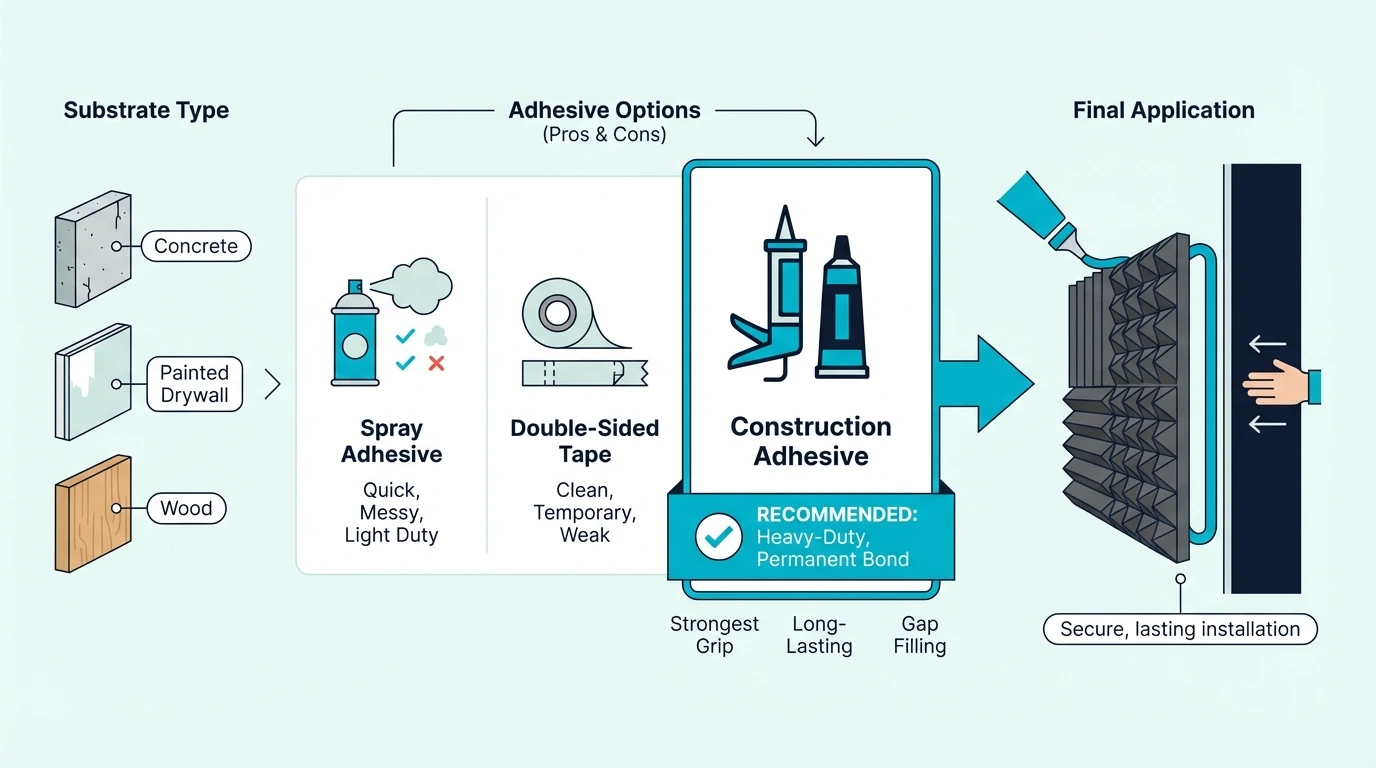
Below are the eight adhesives from the shortlist, with a quick read on where each one shines. If you’re in a hurry, read the “Best for” line first, then come back for the details.
3M Super 77 Spray Adhesive (Best Overall)
This is the adhesive professional studios have used for decades. The 14.1 oz can covers approximately 30-40 standard foam panels, making it cost-effective for serious installations.
The low-VOC formula keeps fumes manageable while maintaining the strong bond 3M is known for. Fast drying time means you can mount panels quickly without waiting around.
Best for: Home studios, permanent installations, anyone who wants industry-proven reliability.
3M Super 77 Budget Size (Best for Small Projects)
Same trusted formula as the full-size can, just in a more accessible package. The 7.35 oz size is perfect for small rooms or testing before committing to a larger purchase.
You get identical performance to the bigger can — this isn’t a watered-down version. The smaller size just means you’ll go through it faster on big projects.
Best for: Small rooms, testing acoustic treatment, budget-conscious first-time buyers.
Loctite Spray Adhesive Professional (Best Value)
If 3M Super 77 is out of stock or you want to save money on large projects, Loctite delivers comparable performance. The professional-grade formula handles acoustic foam just as well as 3M.
The 13.5 oz size offers slightly less coverage than a full 3M can, but the price difference often makes up for it. Works on multiple surface types beyond just foam.
Best for: Budget-conscious buyers, large installations where savings add up, multi-material projects.
Gorilla Heavy Duty Spray Adhesive (Strongest Bond)
When you need maximum hold strength, Gorilla delivers. The heavy-duty formula creates bonds stronger than most foam applications require, but provides extra security for heavy or oddly-shaped panels.
The 14 oz can size matches 3M Super 77 coverage. Expect stronger odor during application — definitely work in a ventilated space.
Best for: Heavy-duty foam panels, challenging surfaces, users who want absolute maximum hold.
Command Large Picture Hanging Strips (Best for Renters)
The 14-pair pack handles 14 foam panels with one pair each, or 7 larger panels with two pairs. The stretch-release removal system leaves zero residue when you move out.
Each pair holds up to 16 lbs — far more than any foam panel weighs. The real value is damage-free removal, not hold strength.
Best for: Renters, temporary installations, anyone who might reposition panels later.
Auralex Tubetak Pro (Best Liquid Option)
This is the only liquid adhesive specifically designed for acoustic foam. Auralex makes professional studio treatment products, so they know exactly what acoustic foam needs.
The tube format works with standard caulk guns for precise application. One tube handles approximately 10-15 panels depending on size.
Best for: Users who prefer liquid over spray, small installations, professional studio builds.
Scotch Double-Sided Mounting Tape (Strongest Tape)
At 125 inches, one roll provides enough tape for approximately 30 standard foam panels. The 30-pound hold capacity is overkill for foam but provides absolute security.
The catch: this tape bonds permanently. Removal will damage paint, so treat this like spray adhesive in terms of wall commitment.
Best for: Permanent tape installations, users who want tape convenience without spray mess.
Gorilla Heavy Duty Mounting Tape (Best for Textured Walls)
If you have textured or rough walls where other tapes struggle, Gorilla’s formula grips better. The slightly thicker tape fills wall texture gaps for stronger adhesion.
The 120-inch roll covers similar footage to Scotch tape. Black color means it’s less visible on darker foam panels.
Best for: Textured walls, rough surfaces, users who want maximum tape grip.
What’s the Bottom Line on Acoustic Foam Adhesive?
For permanent installs, 3M Super 77 spray adhesive is the clear winner. It’s the studio standard for a reason—reliable bonds, easy application, and reasonable cost per panel.
Start with our complete acoustic foam resource if you want panel picks and placement guidance, not just adhesive. It’ll help you treat the room, not just the wall.
Renters and temporary setups should use Command Picture Hanging Strips. They hold standard foam panels securely and remove without wall damage when you move out.
Skip hot glue, white glue, and super glue entirely. They fail quickly and waste both your time and your foam panels.
Buy the right adhesive once, then mount one test panel before you do the whole room. Re-mounting panels repeatedly is the most expensive “cheap” choice.
Frequently Asked Questions
Can You Use Gorilla Glue on Acoustic Foam?
Standard Gorilla Glue expands as it cures, which can warp lightweight foam panels. Gorilla Spray Adhesive is fine for foam, but skip the liquid expanding formula.
Will Spray Adhesive Damage My Walls?
Yes—removing spray-glued foam will pull paint and sometimes drywall paper with it. Plan on patching and repainting that wall section after removal.
If you need clean removal, use Command strips or velcro. That’s the trade you’re making.
How Much Adhesive Do You Need Per Panel?
One 16-ounce can of spray adhesive covers approximately 30 to 40 standard 12×12 inch foam panels. For a typical bedroom studio needing 20 panels, one can is sufficient with some left over.
Can You Remove Foam Without Damaging Paint?
Only with removable adhesives like Command strips or velcro. Spray adhesive and heavy-duty tape will damage paint on removal.
Choose your mounting method based on whether you need clean removal later. If you’re not sure, start removable and upgrade only if panels keep falling.
What If Spray Adhesive Fumes Bother You?
Work in a well-ventilated space and consider a respirator for large projects. Opening windows and running a fan makes a bigger difference than most people expect.
Low‑VOC sprays exist, but they often bond weaker than the standard formulas. If fumes are a deal‑breaker, use Command strips or velcro and skip spray entirely.