Best Acoustic Panels for Bedroom — Complete Guide [2026]
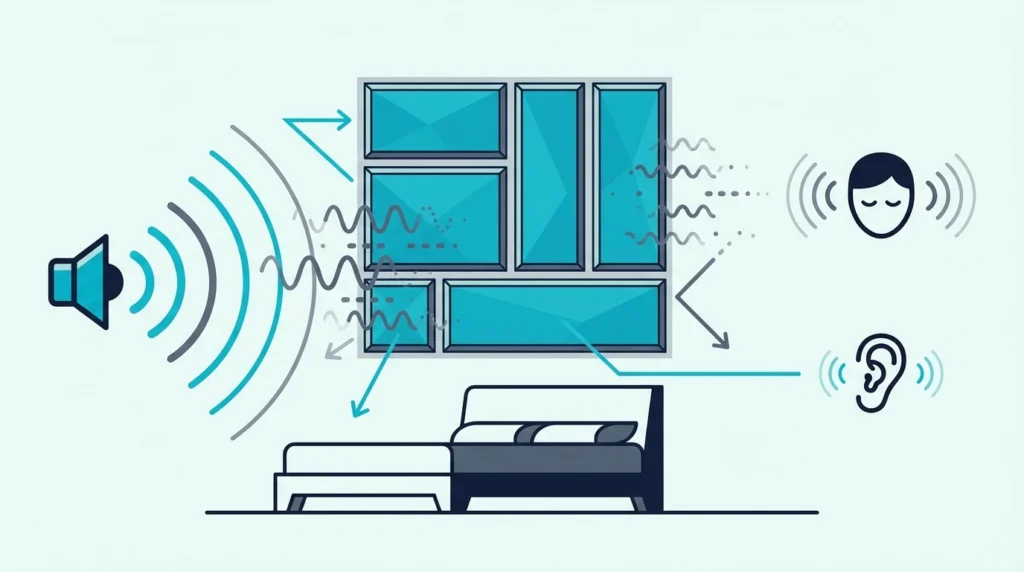
Best acoustic panels for bedroom transform your space from an echoey box into a controlled retreat — but only if you pick panels that look like bedroom decor, not studio gear.
Hard walls, bare floors, and large windows bounce sound around until everything feels hollow. The frustration is real when your music sounds muddy, calls echo, or you can hear every footstep from across the room.
The right panels absorb those reflections so your bedroom sounds cleaner and more controlled. Start with the wall behind your bed and first reflection points — four to eight panels handle most bedrooms.
Core material is the part that determines how a panel behaves once you get past basic echo control, especially if you’re deciding between polyester and fiberglass. If you want the highest absorption per panel, fiberglass panels are usually the safer pick. If you want treatment that reads more like decor than studio gear, acoustic art panels are usually the easiest win.
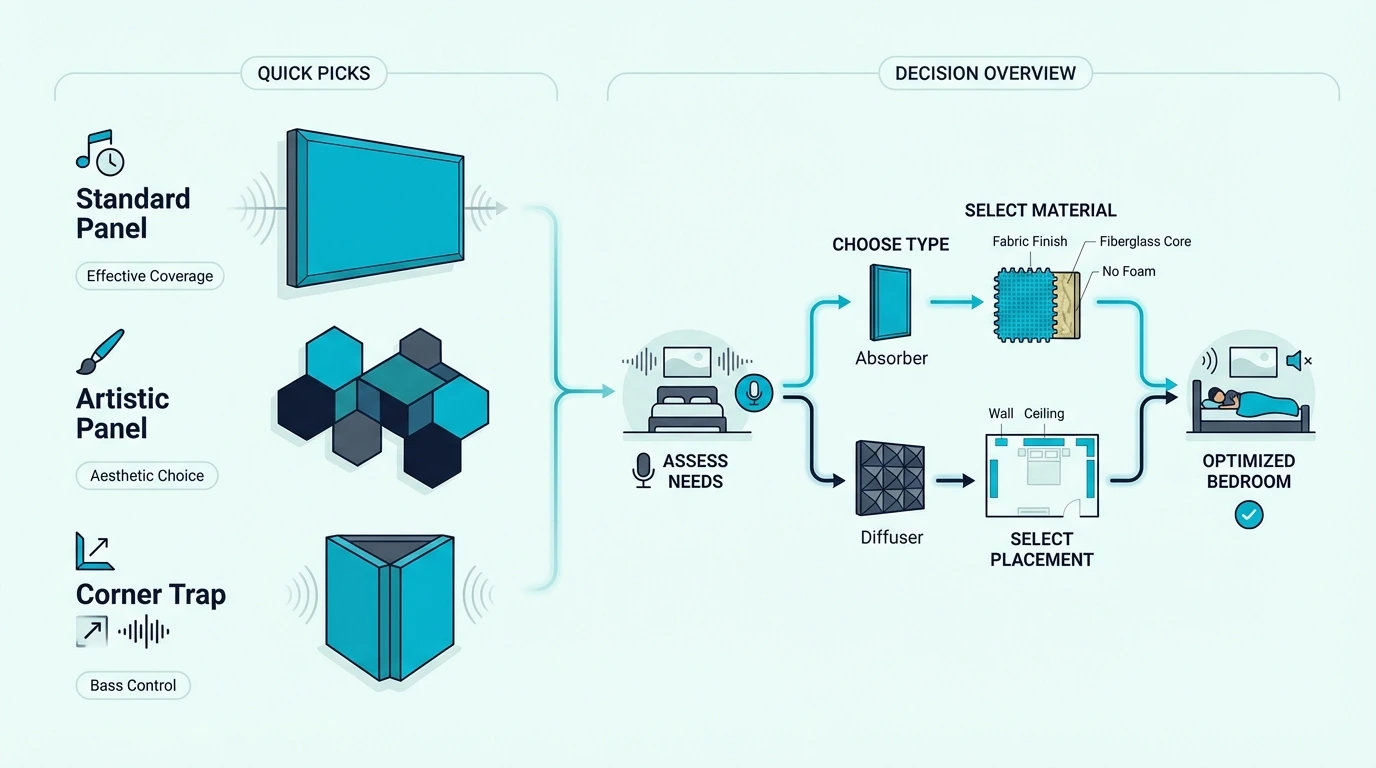
Below, you’ll see the top picks and a placement plan that tells you where panels matter most in a bedroom.
The best acoustic panels for bedrooms prioritize aesthetics alongside absorption. Aim for 1-2 inch fabric-wrapped panels in neutral colors and plan on 4-8 panels, starting with the wall behind your bed and first reflection points.
Quick Picks: Best Acoustic Panels for Bedroom
✓ Includes mounting hardware ✓ Bedroom-friendly colors ✗ Mid-range investment
✓ Covers large wall area ✓ Self-adhesive install ✗ Limited bass absorption
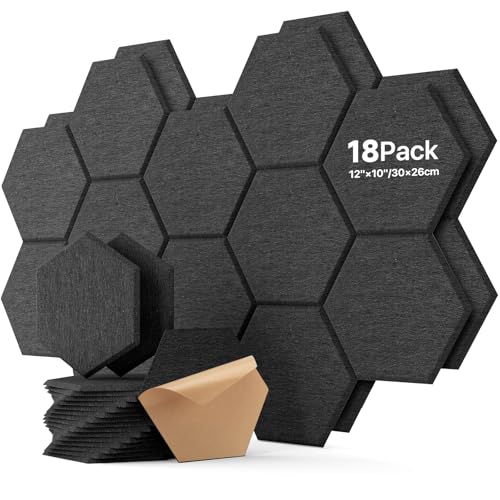
✓ Creates visual interest ✓ Custom arrangements ✗ Moderate absorption
After analyzing hundreds of reviews and testing panel performance, three options stand out for bedroom use. Each balances sound absorption with the aesthetic demands of a living space.
Best Overall
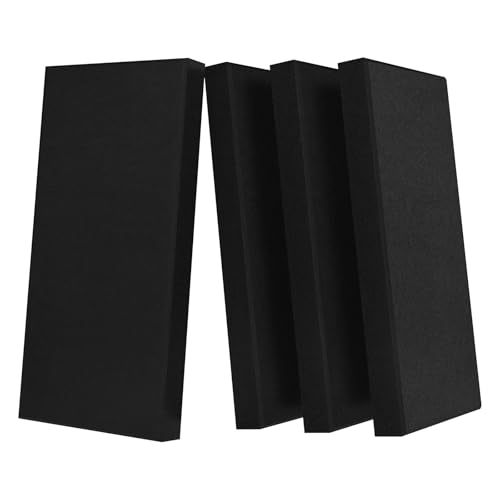
The UMIACOUSTICS 4 PCS Acoustic Panels with Hanging Bracket earn the top spot for bedroom use. The included mounting hardware eliminates the guesswork of installation.
UMIACOUSTICS 4 PCS Acoustic Panels
At 2 inches thick, these panels absorb the frequency range that causes most bedroom echo problems. The fabric wrap comes in colors that blend with typical bedroom decor rather than screaming “recording studio.”
Best Budget
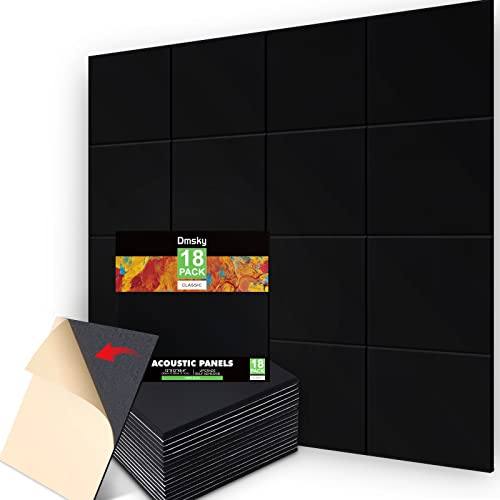
For bedrooms where budget matters more than maximum performance, the 18 Pack Black Acoustic Panels deliver surprising value. With over 3,400 reviews, these are among the most purchased bedroom panels on Amazon.
18 Pack Black Acoustic Panels
The 0.4-inch thickness limits bass control, but for reducing flutter echo and voice reflections, they work well. The 18-panel quantity lets you cover substantial wall area without a major investment.
Best Decorative
When aesthetics matter as much as acoustics, the 18 Pack Hexagon Acoustic Panels let you create artistic arrangements while improving room acoustics. The unique shape transforms acoustic treatment into wall art.
18 Pack Hexagon Panels
These work particularly well as accent pieces combined with traditional rectangular panels. Place them in a featured arrangement above your headboard or desk area.
What Makes a Good Acoustic Panel for Bedrooms?
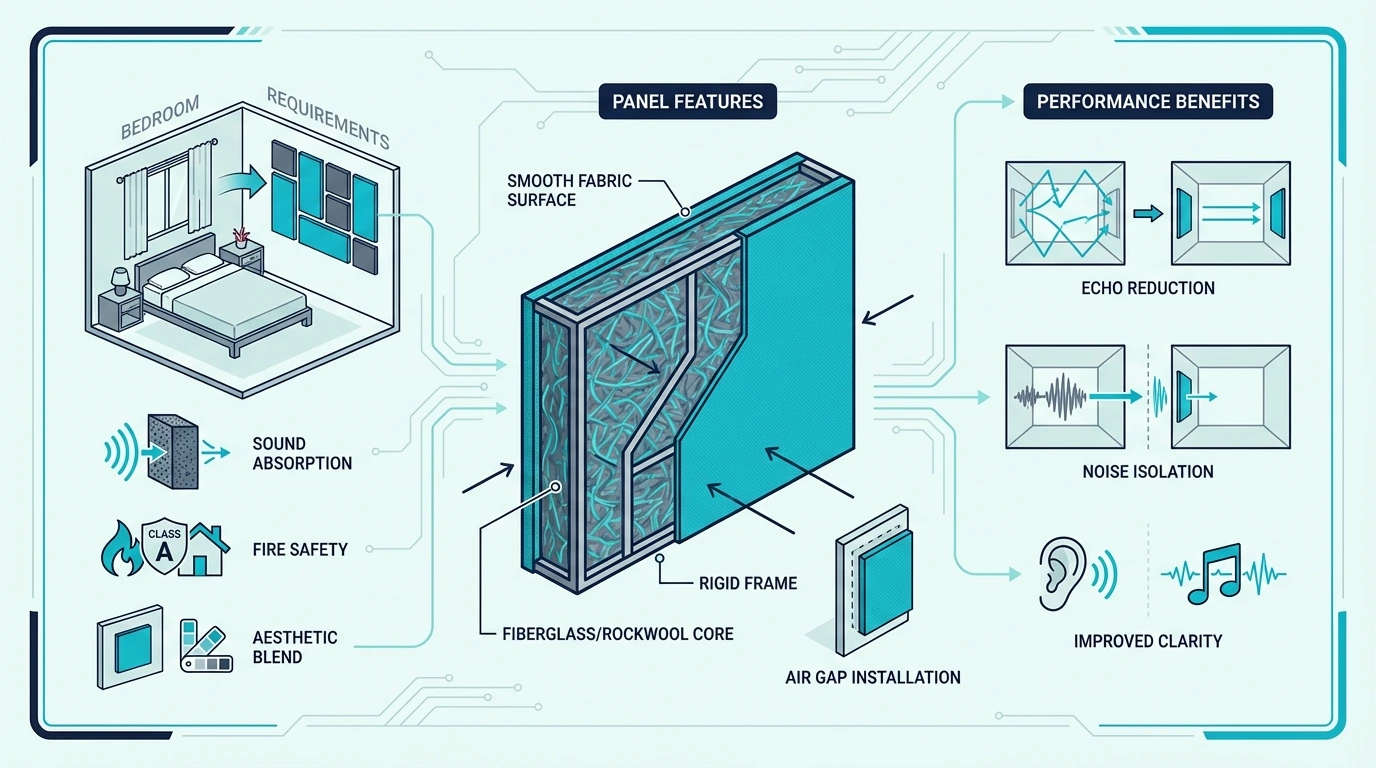
In a bedroom, panels need to solve reflections without making the room feel like a studio. That means you’re balancing absorption, appearance, and how you’ll mount them on real walls.
As a rule of thumb, 1-2 inch fabric-wrapped panels make the biggest difference for echo and voice clarity. If you also want a calmer low end for speakers, step up to thicker fiberglass panels and prioritize first reflection points.
Get Studio Tips Weekly
Join 5,000+ creators getting acoustic treatment advice every week.
No spam. Unsubscribe anytime.Why Use Acoustic Panels in a Bedroom?
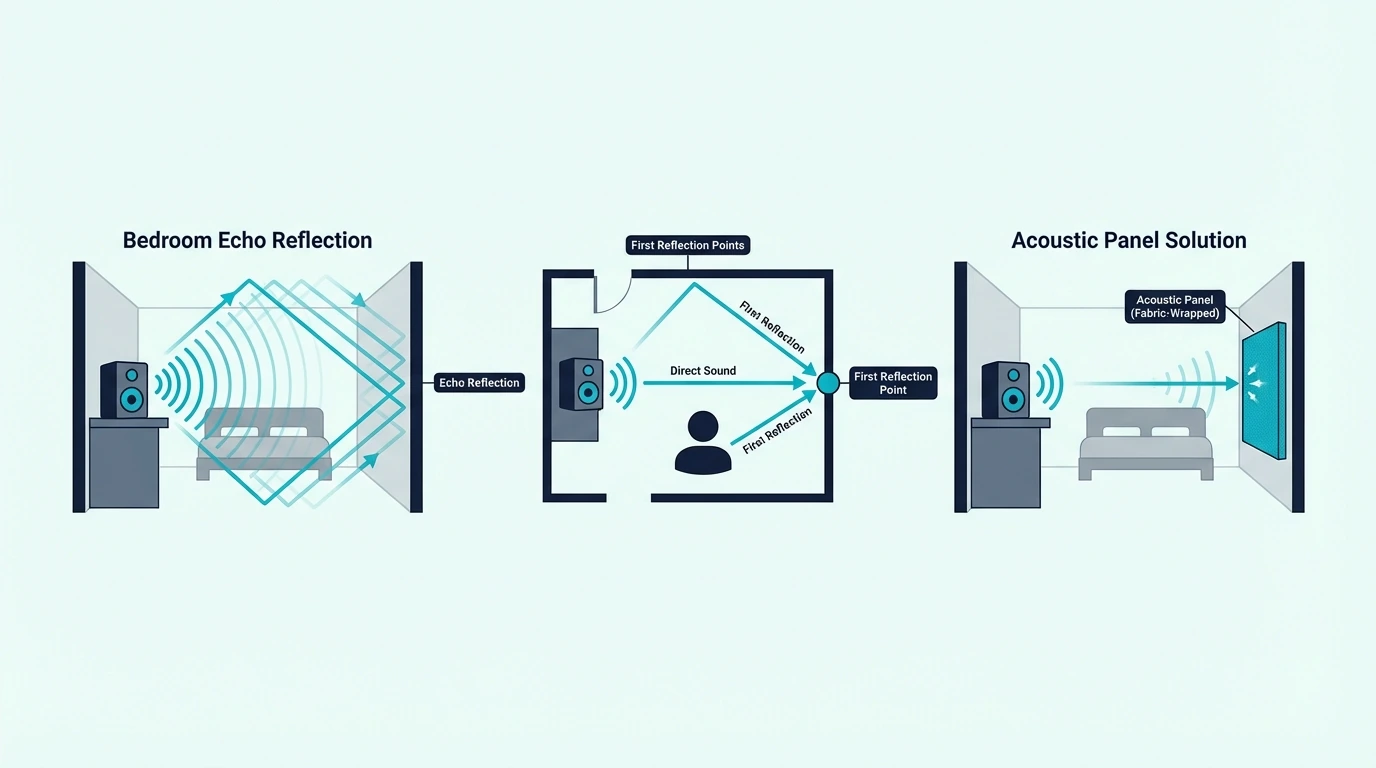
Now that you’ve seen the top picks, it’s worth understanding why bedroom acoustics matter. The same reflection-control fundamentals apply if you record or stream from your bedroom.
Reducing Echo and Reverb
Hard walls, floors, and ceilings reflect sound waves back into the room. When you speak, play music, or watch videos, the original sound mixes with these reflections to create a muddy, unclear audio experience, whether you’re using panels or acoustic foam.
Acoustic panels absorb these reflections before they bounce back to your ears. The result feels like the room “opened up” — cleaner dialogue in movies, tighter bass response from speakers, and less fatigue during long listening sessions.
If you’ve ever noticed how different your voice sounds in a closet full of clothes versus an empty room, you’ve experienced acoustic absorption in action. Panels replicate that effect strategically placed on your walls.
What Panels Won’t Do
That said, panels can help if you’re generating noise others hear. For a full-room plan, think in terms of acoustic treatment rather than one product type, because absorption is only one piece of the puzzle.
What Are the Most Aesthetic Acoustic Panels for Bedrooms?
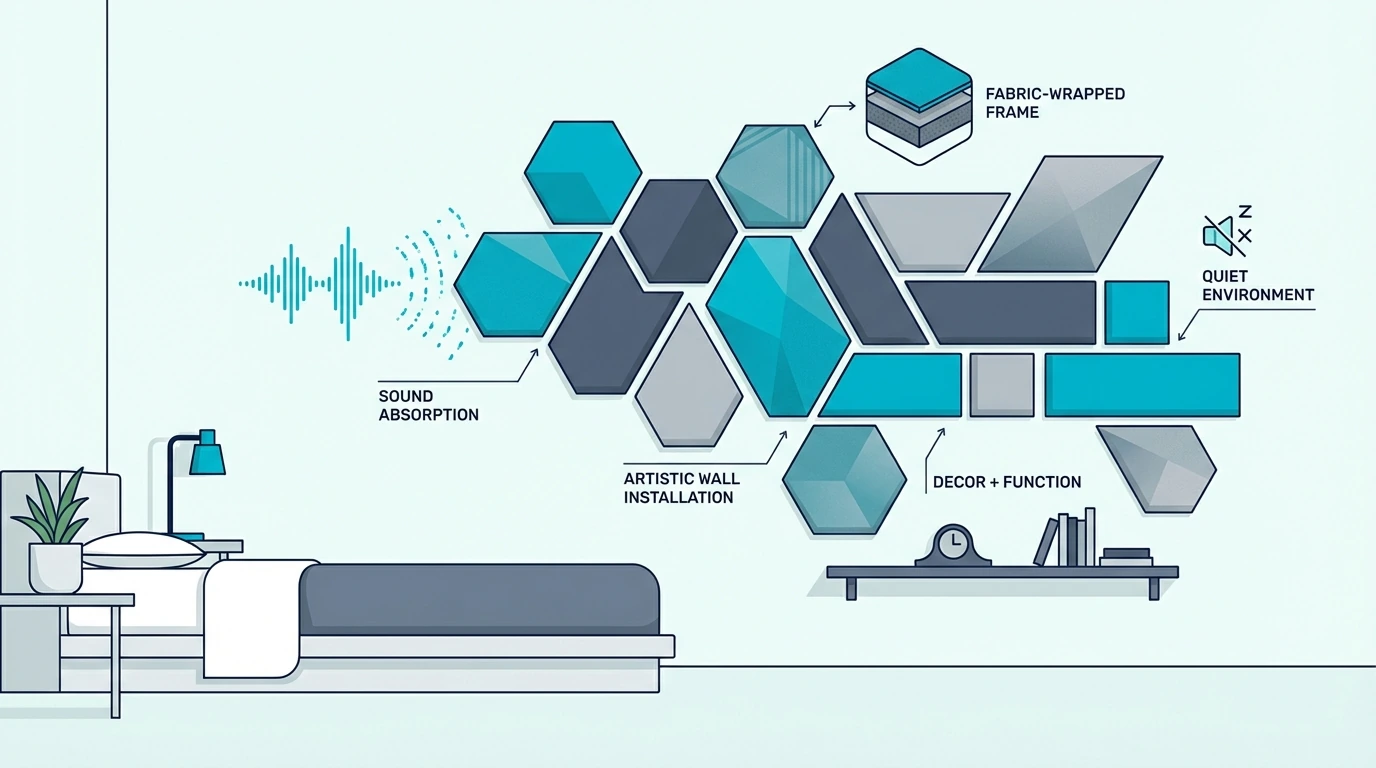
With the basics covered, here are options that prioritize bedroom aesthetics. Decorative formats like acoustic art panels keep treatment from looking like studio gear.
Art Panel Options
The BUBOS Large Fabric Acoustic Panels demonstrate how acoustic treatment can enhance rather than detract from room design. At nearly 4 feet by 2 feet, each panel makes a visual statement.
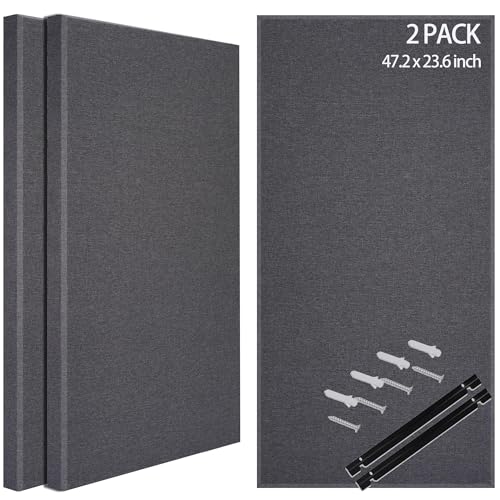
BUBOS Large Fabric Acoustic Panels
Large-format panels work particularly well behind beds as a combined headboard accent and acoustic treatment. One or two panels handle both decoration and sound control.
The best acoustic panels list includes more sizes and finishes if you want to match a specific color palette.
Bedroom-Friendly Colors
Most bedroom panels come in neutral tones that complement standard decor: charcoal gray, beige, cream, and black. These colors absorb visual attention rather than demanding it.
The Olanglab Fiberglass Acoustic Wall Panels come in multiple colors, letting you match your existing color scheme. The beveled edges add visual refinement compared to flat-faced alternatives.
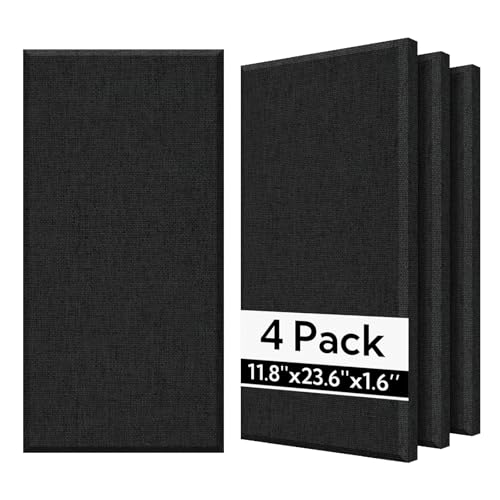
Olanglab Fiberglass Acoustic Wall Panels
If you’re treating a room with bold wall colors, black panels often work best — they recede visually while still providing absorption. For white or light gray walls, consider panels one or two shades darker than your paint.
What Are the Best Bedroom Acoustic Panels? (Full Reviews)
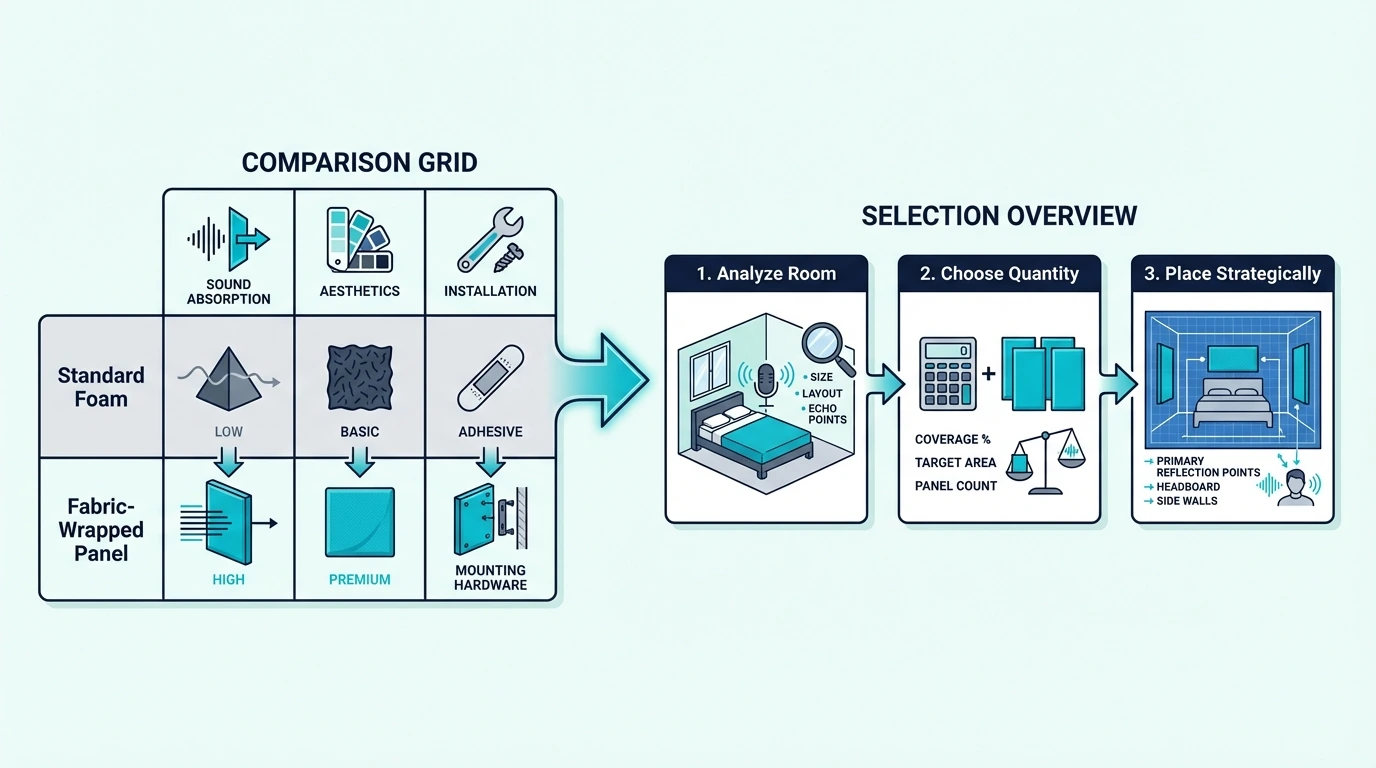
Building on our top picks, here’s the full selection of bedroom-appropriate panels. Each addresses different priorities in the aesthetic-performance-price triangle.
UMIACOUSTICS 4 PCS Fiberglass Panels
The UMIACOUSTICS 4 PCS Acoustic Panels offer similar performance to our Best Overall pick without the included hanging brackets. If you already have mounting hardware or prefer adhesive installation, this option saves a few dollars.
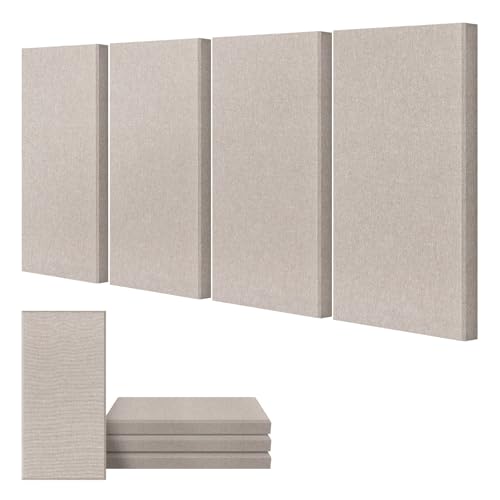
UMIACOUSTICS 4 PCS Acoustic Panels
The 2-inch fiberglass core matches professional studio specifications. For bedroom use, this thickness handles the frequency range most problematic for voice clarity and music playback.
High-Density Self-Adhesive Panels
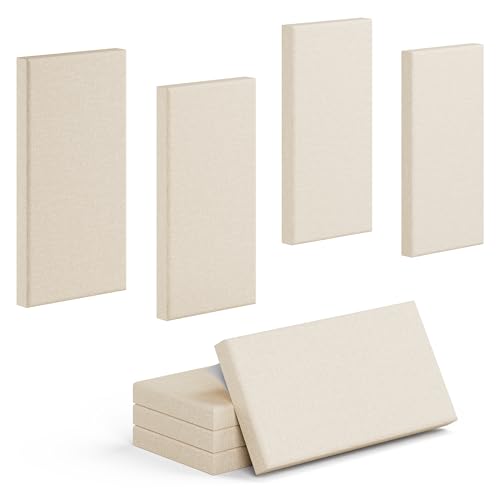
For renters or anyone avoiding wall damage, the 4 Pack High-Density Acoustic Panels use self-adhesive backing. The 4.8-star rating reflects consistent satisfaction with both performance and installation ease.
4 Pack High-Density Acoustic Panels
The high-density core provides absorption comparable to professional panels. At 2 inches thick and 24 by 12 inches, four panels cover first reflection points on one wall.
Olanglab Fiberglass Wall Panels
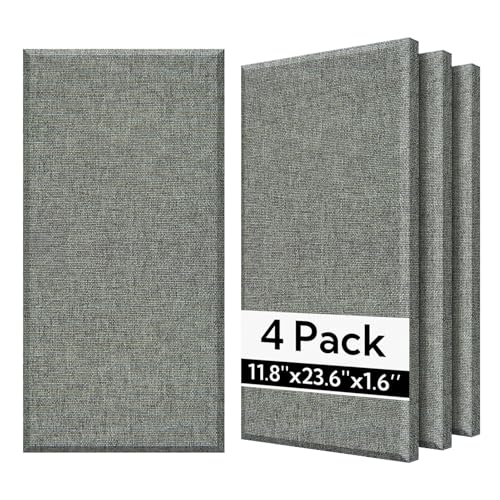
Another excellent mid-range option, the Olanglab Fiberglass Acoustic Wall Panels deliver professional-grade absorption in a bedroom-friendly package. The fiberglass core matches what you’d find in commercial installations.
Olanglab Fiberglass Acoustic Wall Panels
The 11.8 by 23.6 inch dimensions fit standard wall spacing between furniture. Four panels treat one wall adequately, with two packs covering primary reflection points.
Budget 2-Pack Fabric Panels
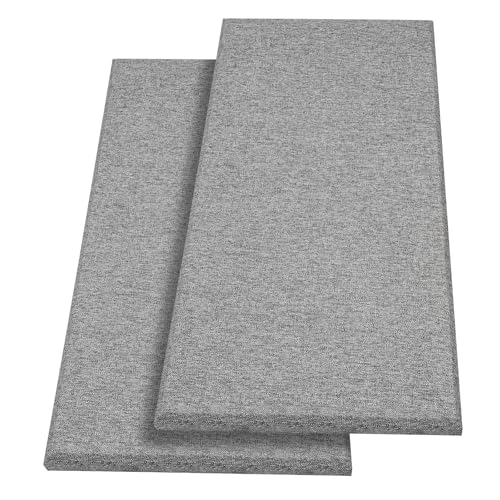
When you need just a few panels for targeted treatment, the 2 PCS Acoustic Panels offer the lowest entry point. These work well for testing acoustic treatment before committing to larger purchases.
2 PCS Acoustic Panels
Position these at your primary first reflection point — the wall directly opposite your speakers or TV. If you notice improvement, expand with additional panels.
Are Acoustic Panels Safe for Bedrooms?

Given that you’ll sleep near these materials every night, safety concerns are valid. Here are the most common questions about bedroom panel safety.
Fire Safety
Quality acoustic panels use fire-retardant materials and treatments. Look for products mentioning Class A or Class B fire ratings — these meet building code requirements for wall-mounted materials.
The fiberglass and mineral wool cores in professional panels don’t burn readily. The fabric wrapping typically receives fire-retardant treatment that prevents flame spread.
If fire safety is your primary concern, check whether panels mention Class A or Class B ratings. The top picks list includes panels that call out those ratings.
Air Quality and Off-Gassing
New panels may release volatile organic compounds (VOCs) initially — that “new product” smell. This typically dissipates within a few days in a well-ventilated room.
Fiberglass cores, when properly wrapped in fabric, don’t release particles into bedroom air. The fabric barrier contains any fibers within the panel structure.
For maximum peace of mind, let new panels air out in a garage or spare room for 48-72 hours before bedroom installation.
How Many Panels Does a Bedroom Need?
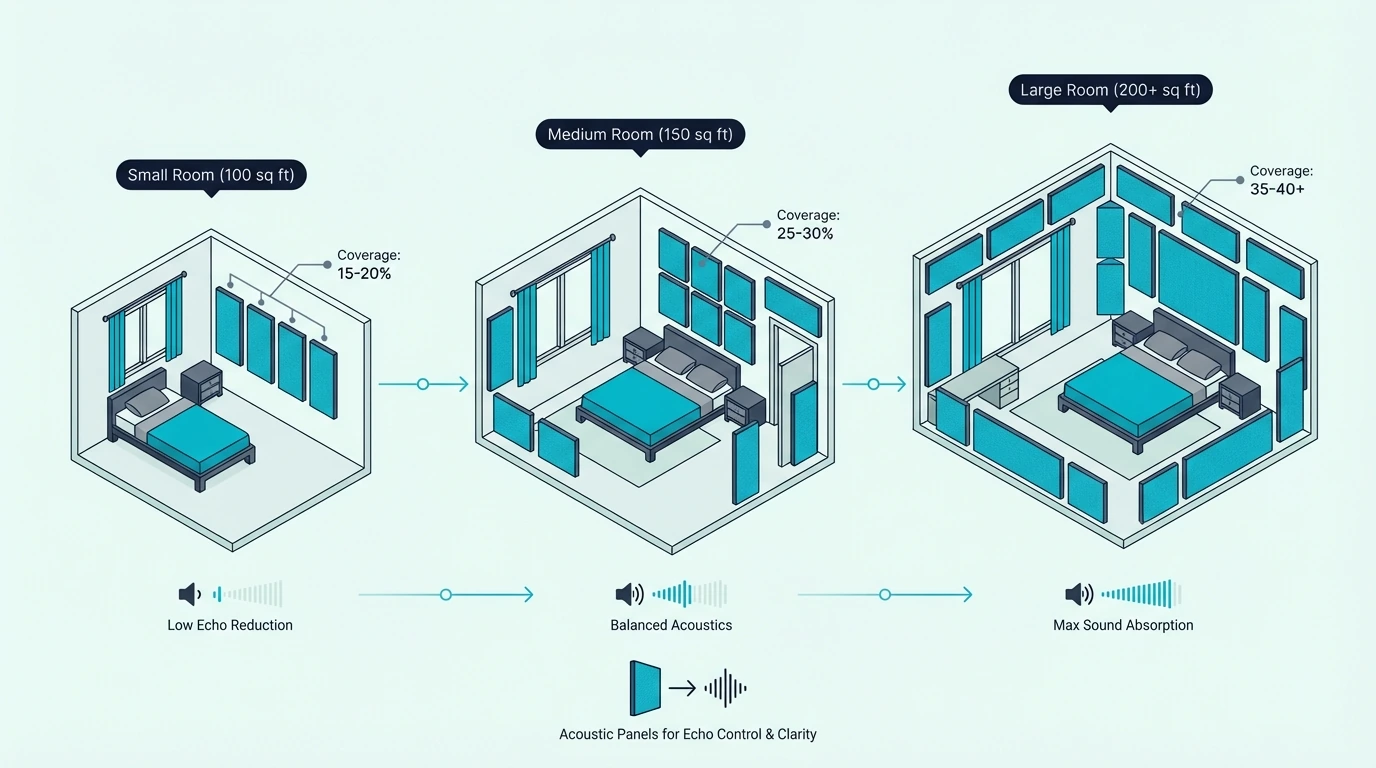
With all these options, how many panels actually make a difference? The answer depends on your room size and goals, and if bass buildup is part of the issue, bass traps matter more than adding extra wall panels.
Small Bedrooms (100-150 sq ft)
A typical small bedroom needs 4-6 panels for noticeable improvement. Focus on the wall behind your primary listening position — usually behind your bed or at your desk.
Start with 4 panels at ear-height on one wall. Assess the improvement before adding more.
Medium Bedrooms (150-250 sq ft)
Medium bedrooms benefit from 6-10 panels distributed across two walls. Treat the wall behind your listening position plus one adjacent wall.
The corner between these walls often creates bass buildup. Panels placed near corners help control this low-frequency energy accumulation.
Large Bedrooms (250+ sq ft)
Larger bedrooms may need 10-16 panels across three walls plus potentially the ceiling. The increased volume requires more absorption material to achieve similar results.
Consider starting with 8 panels and expanding based on results. Large rooms sometimes surprise you — strategic placement outperforms blanket coverage.
Where Should You Place Acoustic Panels in a Bedroom?
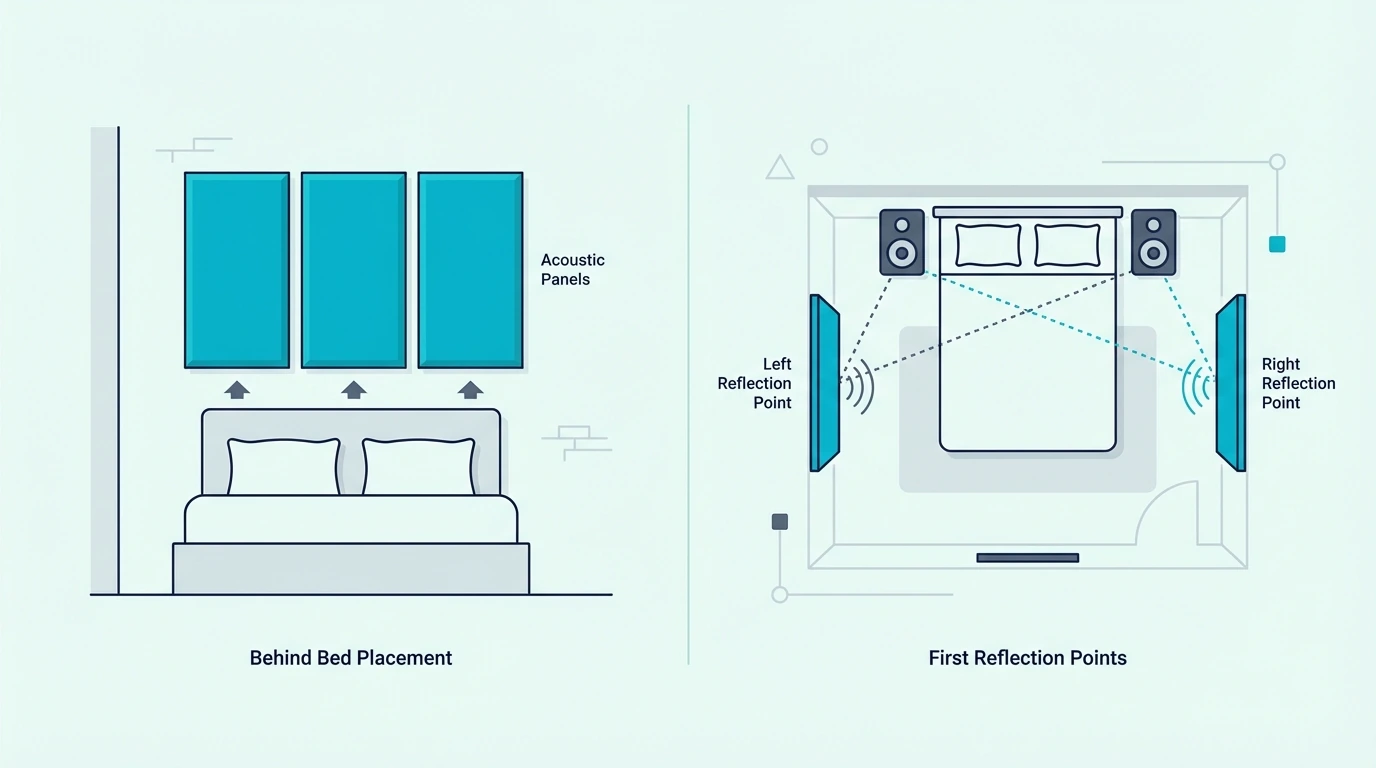
Placement matters more than quantity for bedroom acoustics, so start with the biggest reflection paths. The wall behind your bed, first reflection points, and big glass surfaces are usually the fastest wins for bedroom acoustic panels.
Behind the Bed
The wall behind your headboard reflects sound back toward your ears when watching TV or listening to music in bed. Panels here improve perceived audio quality significantly.
Mount panels at ear-height when you’re sitting up in bed. This targets the most problematic reflection path for bedroom audio.
First Reflection Points
Find first reflection points using the mirror trick: have someone hold a mirror flat against the wall while you sit in your primary position. Where you see your speakers or TV screen reflected, place panels.
These points create the most disruptive reflections because they arrive shortly after the direct sound. Your brain struggles to separate the original from the reflection.
Near Windows and Hard Surfaces
Windows and glass surfaces reflect sound almost completely. Panels adjacent to windows absorb sound that would otherwise bounce off the glass.
If curtains aren’t an option, strategic panel placement nearby compensates. The goal is intercepting sound waves before or after they hit the reflective surface.
How Do You Install Acoustic Panels in a Bedroom?
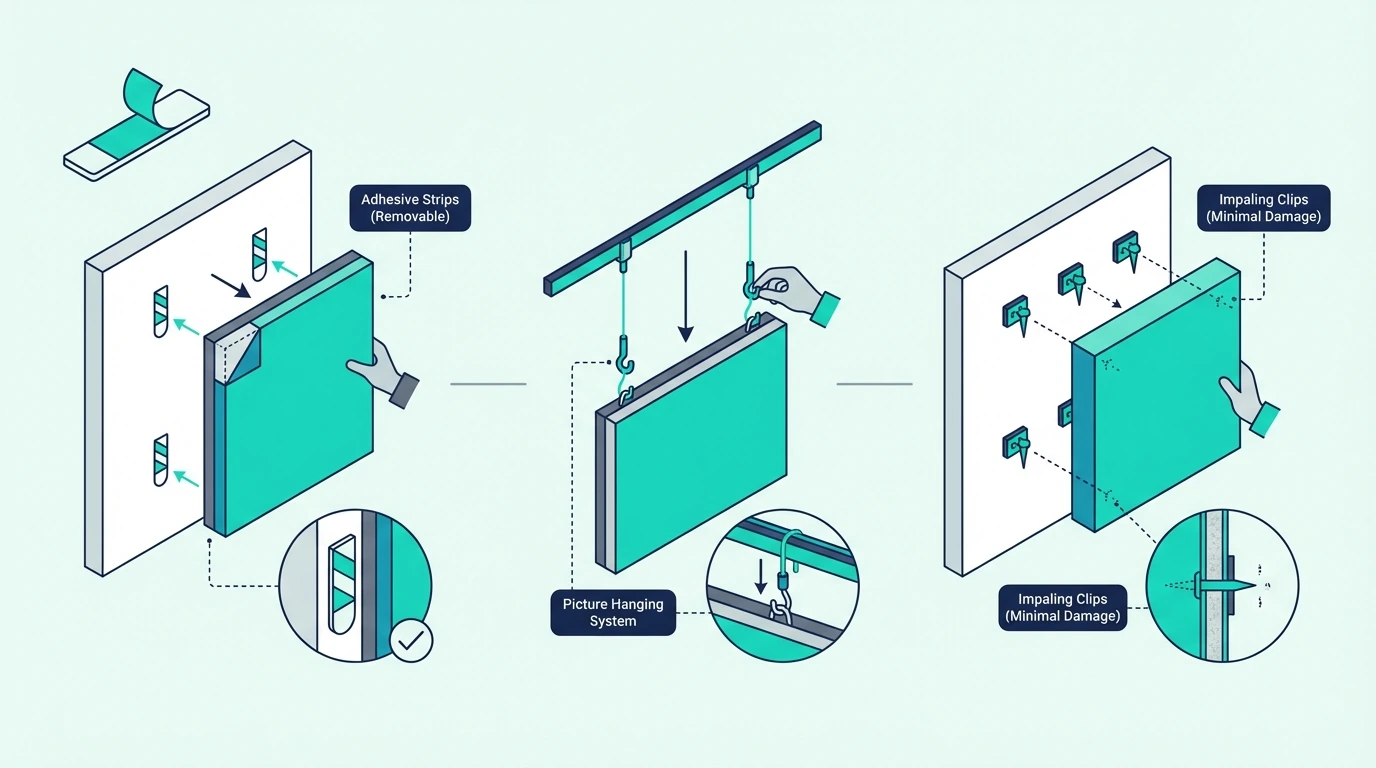
Installing acoustic panels in a bedroom requires balancing effectiveness with aesthetics. If you’re also treating a hard ceiling, ceiling panels can be worth it in echo-prone rooms.
Renter-Friendly Mounting
Command strips and removable adhesive work well for lightweight panels under 5 pounds each. The self-adhesive panels we reviewed earlier include their own mounting solution.
For heavier fiberglass panels, consider impaling clips with small pins. These leave minimal wall damage and hold substantial weight securely.
Symmetrical vs Asymmetrical Placement
Symmetrical placement on opposing walls creates balanced sound absorption. This works best for music listening and home theater setups where you want even frequency response.
Asymmetrical placement with panels on one wall and diffusion (bookshelves, textured surfaces) on the opposite wall creates a more natural sound. Many bedroom users prefer this approach for everyday use.
Combining Panels with Soft Furnishings
Your bedroom likely already contains absorption materials: bedding, curtains, carpets, and upholstered furniture. Panels supplement these existing elements rather than replacing them entirely.
Rooms with minimal soft furnishings need more panels. Bedrooms with thick carpet, heavy curtains, and plush bedding may need fewer panels to achieve the same result.
Consider what’s already in your room before purchasing. The acoustic panels hub has room-by-room layouts you can use as a starting point.
Which Panels Should You Buy?
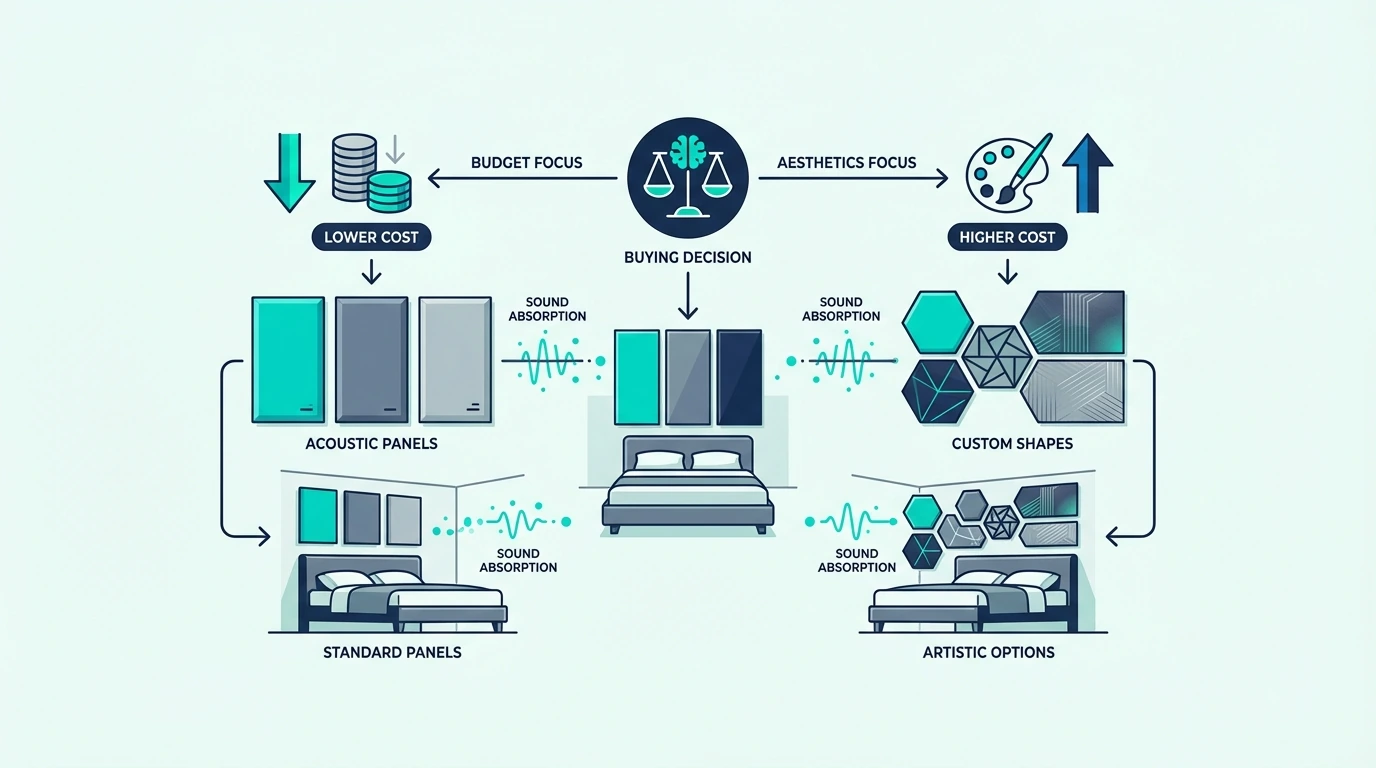
After covering all the options, here are the specific recommendations for common bedroom scenarios. Use them as a starting point, then prioritize the wall behind the bed and your first reflection points.
For most bedrooms, 4-8 fabric-wrapped panels make the biggest difference because they tame the reflections that smear voices and music. Start with the wall behind the bed and your first reflection points before you add more coverage.
For Most Bedrooms
For most bedrooms with moderate budgets, start with the UMIACOUSTICS panels with hanging brackets. Two packs give you 8 panels for comprehensive treatment of primary reflection points.
For Budget-Conscious Buyers
If budget is tight, the 18 Pack Black Panels let you experience acoustic treatment benefits before larger investments. Use these to identify which walls benefit most, then upgrade selectively.
For Decor-Focused Buyers
For bedrooms where aesthetics are paramount, combine hexagon decorative panels with a few strategic thicker panels. The hexagons add visual interest while the thicker panels handle the absorption work.
If you want to compare styles and sizes across rooms, the acoustic panels hub keeps the main options in one place. Match panel thickness and mounting style to your layout and listening habits.
Conclusion
For most bedrooms, 4-8 fabric-wrapped panels make the biggest difference because they tame the reflections that smear voices and music. Start with the wall behind the bed and your first reflection points before you add more coverage.
If you’re renting, begin with removable mounting and test adhesion on a small area first. Once you hear the difference, upgrade the key positions with thicker fiberglass panels for a more controlled, calmer room.
Frequently Asked Questions
Building on everything we’ve covered about bedroom acoustic treatment, here are direct answers to the most common questions.
Will Acoustic Panels Help Me Sleep Better?
Panels won’t block neighbor noise or traffic sounds — that’s soundproofing territory. However, they do reduce echo that can make nighttime sounds seem more prominent.
If your own movements or an air conditioner create distracting reverb, panels help. For external noise problems, look into soundproofing approaches instead.
Can Panels Block Noise From Neighbors?
No — this is the most common misconception about acoustic panels. Sound blocking requires mass and sealed barriers, not absorption.
Panels absorb sound waves that are already in your room. Sound traveling through walls needs completely different solutions involving dense materials and construction changes.
Do I Need Panels on the Ceiling?
Ceiling treatment helps but isn’t essential for most bedrooms. The ceiling reflects sound, but those reflections travel further before reaching your ears, making them less problematic.
If your bedroom has very high ceilings or exposed hard surfaces above, ceiling panels can provide meaningful improvement. Standard 8-foot ceilings rarely need overhead treatment.