How Many Sound Diffusers Do I Need (The Coverage Math Most People Skip)
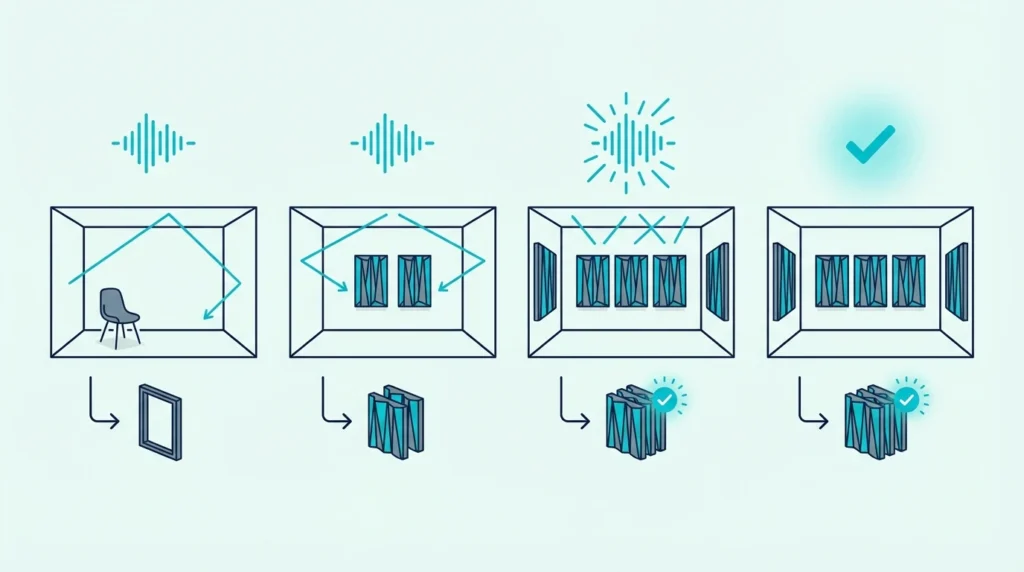
How many sound diffusers do i need depends on three variables — your rear wall area, the panel size, and how much coverage your room actually requires, but most people either buy one panel and expect miracles or cover every surface and create acoustic chaos.
A single diffuser on a 10-foot rear wall scatters a fraction of the reflections hitting that surface. The rest bounce back as focused echoes that cause comb filtering and flutter at your listening position.
Getting the count right means you scatter enough energy to eliminate harsh reflections while preserving the room’s natural liveliness — so your mixes translate and your recordings sound clean without the room feeling dead.
Below, you’ll see the exact calculation method, worked examples by room size, and the 38% rule that professional studios use to balance diffusion with absorption.
Most home studios need 4-8 diffuser panels on the rear wall. Calculate by measuring the wall area, choosing your panel size (typically 24×24 inches), and targeting 60-80% coverage of that wall. The 38% rule says roughly 38% of total room surface area should be treated — split between absorption (first reflection points, corners) and diffusion (rear wall, ceiling).
How Many Sound Diffusers Do I Need — And Why Does Coverage Matter?
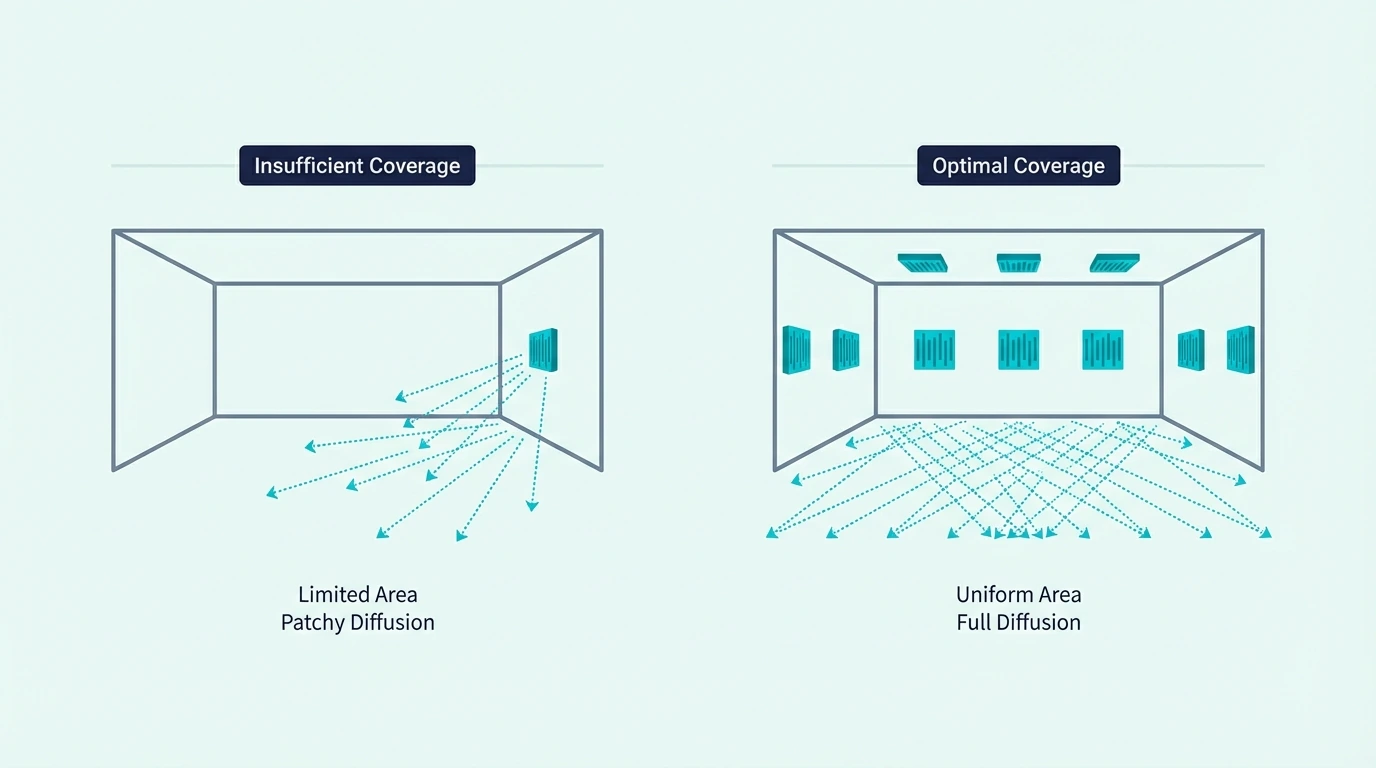
One diffuser panel on a large rear wall is like putting a single tile on a bare floor — it treats the square footage directly behind it but leaves the rest of the surface untreated. Sound waves hitting the bare sections still bounce back as focused reflections.
Coverage percentage determines how much of the target wall area actively scatters sound. Below 50% coverage, the untreated gaps between panels create an uneven scatter pattern — some frequencies get diffused while others reflect straight back.
The goal is continuous or near-continuous coverage across the primary reflection surface. For most rooms, that means the rear wall behind the listening position and sometimes the ceiling directly overhead.
For deciding where to place diffusers in your specific room layout, that guide covers rear wall, ceiling, and first reflection point positioning.
How Do You Calculate The Number Of Diffusers For A Room?
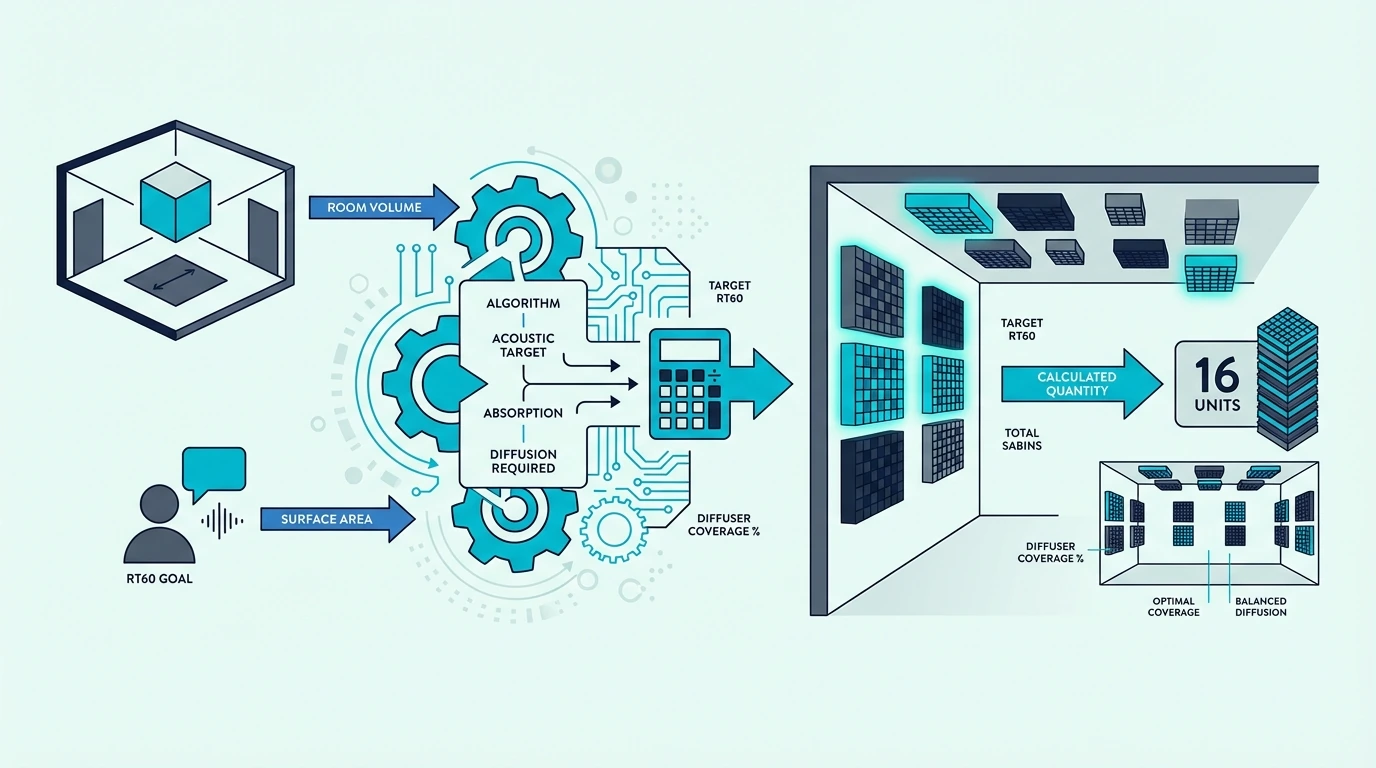
Factors Affecting The Number Of Diffusers
Five variables control the count. Room size sets the wall area available for treatment.
Panel dimensions determine how much each diffuser covers. Most commercial diffusers come in 24×24-inch or 12×12-inch sizes, which simplifies the math.
Coverage target (typically 60-80% of the rear wall) sets how much of that area you need to fill. Room usage matters too — a mixing studio needs more precise coverage than a casual listening room.
The final factor is the room’s existing acoustic character. Rooms with bookshelves, irregular furniture, and non-parallel walls already have some natural diffusion.
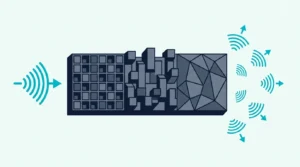
A bare rectangular room with flat drywall needs more engineered coverage. For understanding how sound diffusion works at the physics level, that guide covers why surface shape determines scatter quality.
Example Calculation
Take a typical home studio rear wall: 10 feet wide by 8 feet tall, giving 80 square feet of wall area. Using standard 24×24-inch (2×2 foot) diffuser panels, each panel covers 4 square feet.
At 70% coverage target: 80 × 0.70 = 56 square feet of diffusion needed. Divide by 4 square feet per panel = 14 panels for full 70% rear wall coverage.
If you use smaller 12×12-inch panels (1 square foot each), the count jumps to 56 panels for the same coverage. Panel size has a massive impact on both the installation effort and the total cost.
That’s a significant investment. In practice, most home studios treat the center section of the rear wall (the area directly behind the listening position) at roughly 60-80% coverage, which brings the count down to 6-10 panels depending on how wide you go.
The BXI Wood Sound Diffuser (1D QRD) covers 4 square feet per panel at 24×24 inches — a standard size that makes coverage calculations straightforward.
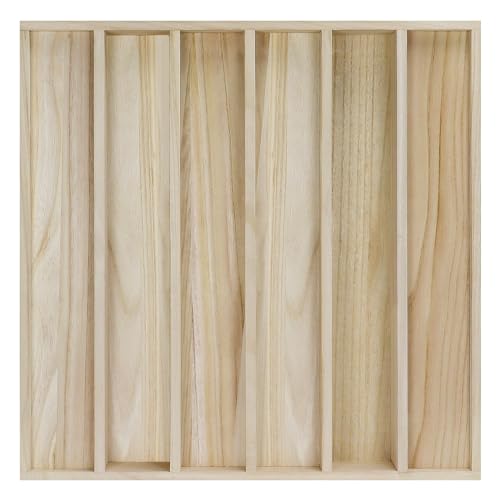
BXI Wood Sound Diffuser (1D QRD)
Get Studio Tips Weekly
Join 5,000+ creators getting acoustic treatment advice every week.
No spam. Unsubscribe anytime.What Is The 38% Rule In Room Acoustics?
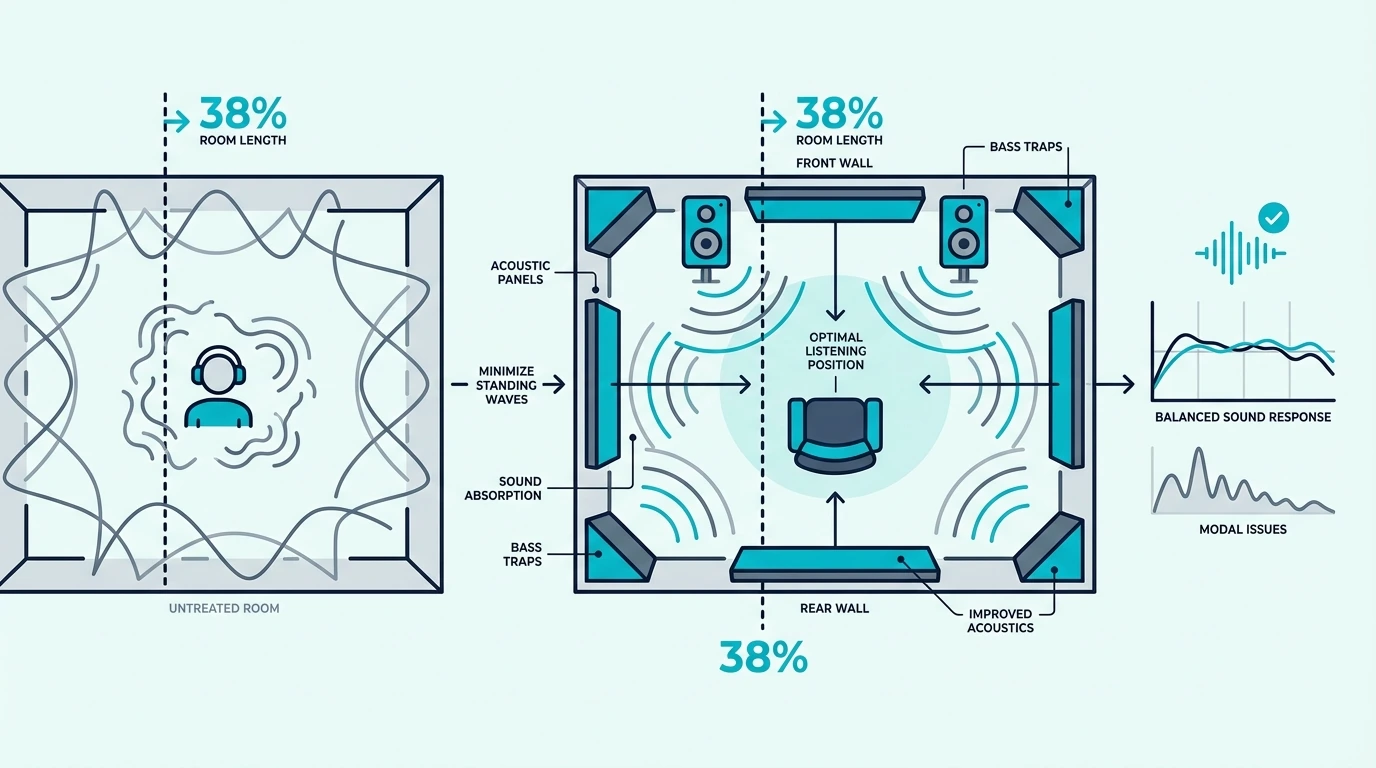
How The Rule Splits Between Absorption And Diffusion
The 38% rule states that roughly 38% of a room’s total surface area should be acoustically treated for balanced sound. That treatment budget splits between absorption and diffusion.
Absorption handles first reflection points (side walls, ceiling above the listening position) and bass buildup (corners). Diffusion handles the rear wall and sometimes the ceiling behind the listening position.
In practice, absorption typically claims 60-70% of the treatment budget, with diffusion covering the remaining 30-40%. For a room with 500 square feet of total surface area, that means roughly 190 square feet of treatment — with 60-75 square feet allocated to diffusion.
For understanding the difference between absorption and diffusion, that guide explains when each treatment type is the right choice.
When To Exceed The 38% Rule
Professional mixing rooms and mastering suites often treat 50-60% of total surface area. The extra treatment gives tighter control over the room’s decay characteristics and reduces the RT60 (reverb time) to the 0.2-0.4 second range that critical listening demands.
Home theaters also benefit from heavier treatment — especially diffusion on the rear and side walls behind the seating area. The surround channels in a 5.1 or 7.1 system rely on scattered reflections to create the immersive envelope.
The only risk of over-treating is creating a room that feels uncomfortably dead. If you’re exceeding 50% treatment, make sure diffusion (not just absorption) makes up a significant portion — diffusion preserves room energy while absorption removes it.
Does Room Size Change How Many Diffusers You Need?
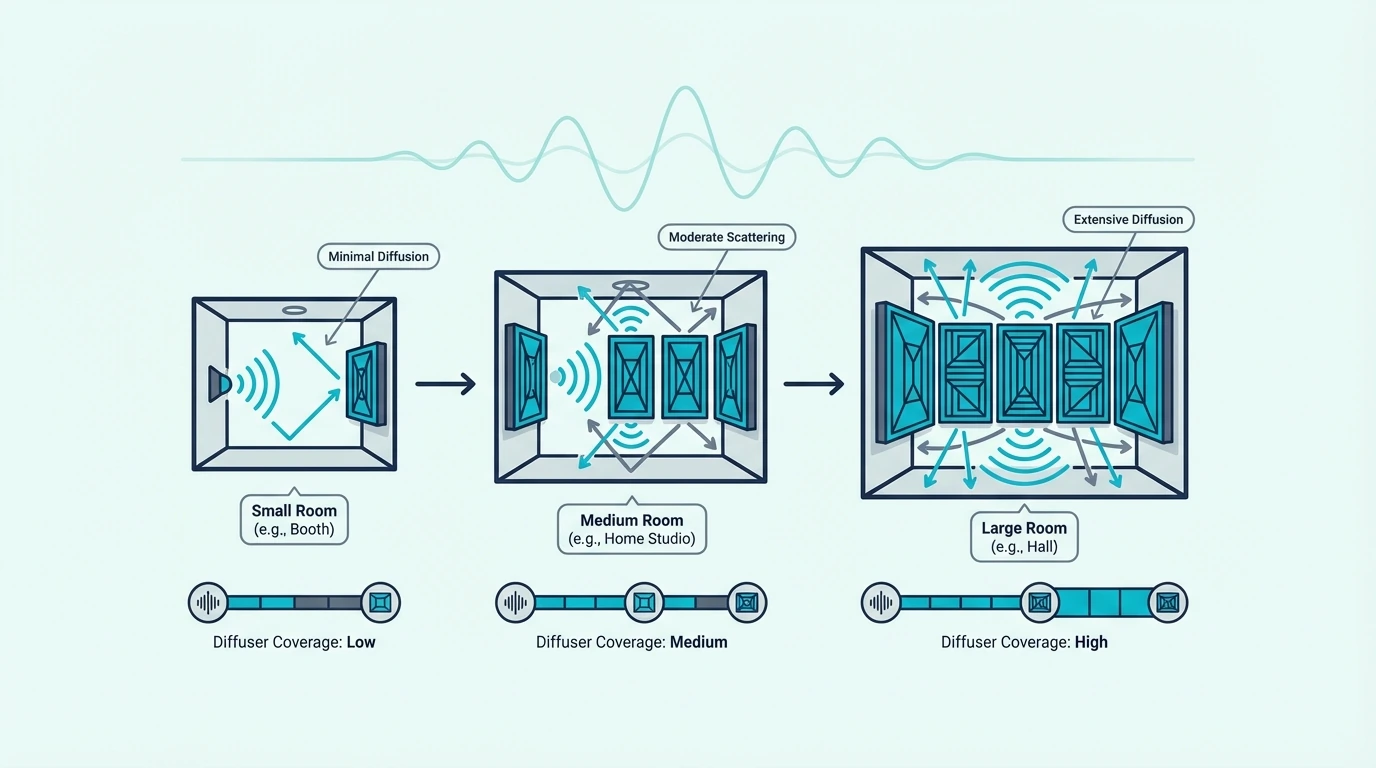
Small Rooms (Under 150 Sq Ft)
Small rooms present a unique challenge — the listening position is often too close to the rear wall for diffusion to work properly. Diffusers need at least 3-4 feet of clearance to scatter effectively.
If you have the clearance, 2-4 panels on the rear wall centered behind the listening position is usually sufficient. For rooms where diffusers in small spaces are practical, that guide covers the distance constraints and workarounds.
In very small rooms (under 100 square feet), absorption may be more effective than diffusion. The short distances mean reflected energy arrives so quickly that scattering it doesn’t provide the same benefit as in larger spaces.
Medium And Large Rooms
Medium rooms (150-300 square feet) are the sweet spot for diffusion. You have enough distance for the scatter pattern to develop, and 6-8 panels provide meaningful coverage of the rear wall.
At this room size, you also have enough wall area to create a proper hybrid treatment scheme — absorption on the side walls at first reflection points and diffusion across the rear wall. That combination addresses both early reflections and late-field decay in one setup.
The BXI 2D Skyline Diffuser scatters in both horizontal and vertical planes — ideal for ceiling mounting in medium rooms where overhead flutter echo is common.
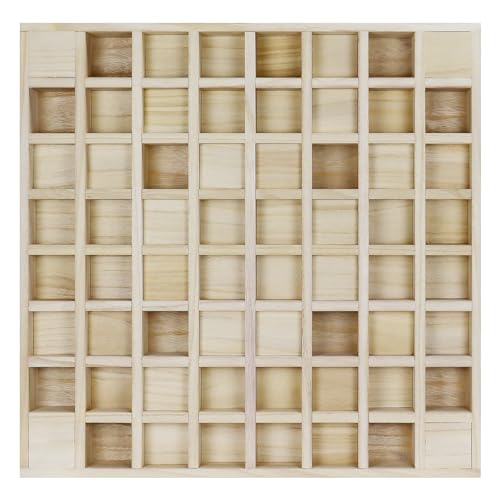
BXI 2D Skyline Diffuser
Large rooms and professional studios can justify full rear wall coverage (10-16+ panels). At this scale, the investment pays off in noticeably tighter imaging and smoother decay.
For how to mount that many panels efficiently, that guide covers French cleat systems designed for multi-panel installations.
The Bottom Line
Start with 4-6 panels centered on the rear wall behind the listening position. That covers the most critical reflection zone and gives you immediate improvement in imaging and decay smoothness.
If budget is tight, prioritize the center 4-6 foot section of the rear wall directly behind your head. That zone catches the strongest first-order rear reflections — the ones that cause the most audible comb filtering at the mix position.
Scale up to 8-10 panels if your room is larger than 200 square feet or if you’re doing critical mixing work. Full wall coverage (12-16 panels) is reserved for professional studios where every reflection matters.
The EVA Acoustic Diffusers (4-Pack) offer an affordable entry point — four panels per pack at a fraction of wood diffuser prices, though they only scatter high frequencies.
For a complete comparison of the best sound diffusers across all price points, that roundup ranks options by coverage, frequency range, and value. And for building your own panels to reduce costs at scale, our DIY wooden diffuser guide covers the full build process.
Frequently Asked Questions
How do you calculate the number of diffusers?
Measure the target wall area (usually the rear wall), multiply by your coverage percentage (60-80%), then divide by the panel size. A 10×8 foot wall at 70% coverage with 2×2 foot panels needs 14 panels.
Can you use too many diffusers in a room?
Full rear wall coverage is fine and often ideal for studios. The risk comes from treating every surface with diffusion — it creates a chaotic sound field with no clear early reflections, which makes the room feel disorienting rather than controlled.
How far apart should diffusers be spaced?
Mount them edge to edge with no gaps for maximum scatter continuity. Small gaps (1-2 inches) between panels are acceptable for aesthetics but reduce effectiveness slightly — each gap creates a flat reflection point in the scatter pattern.