What Is Diffusion In Sound? (Why Scattered Reflections Beat Dead Silence)

What is diffusion in sound comes down to one physical event — sound waves hit an uneven surface and scatter in many directions instead of bouncing straight back, but only if the surface irregularities are the right size for the frequencies causing problems.
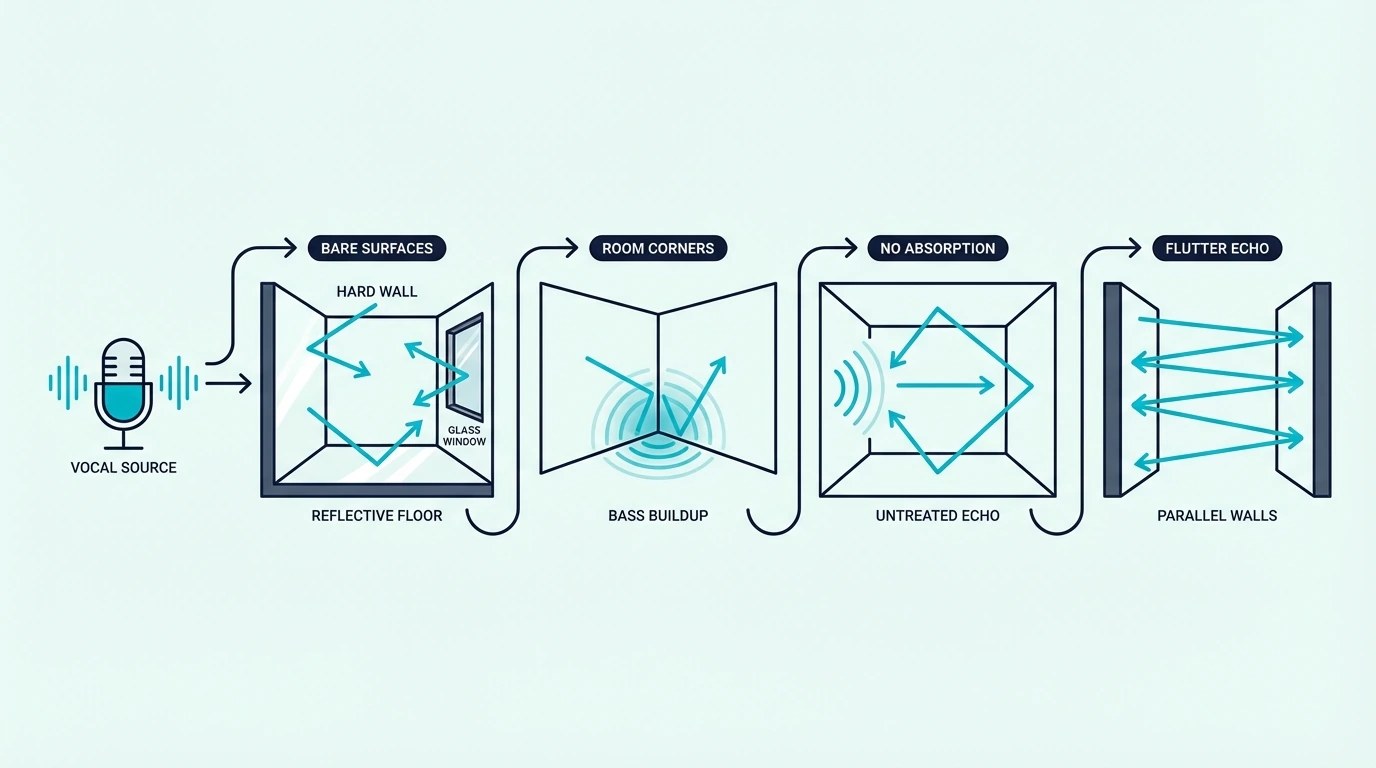
Your room has hard, flat walls that act like acoustic mirrors, and the reflections they create cause flutter echo and comb filtering that make everything from music to speech sound harsh and unnatural.
Diffusion solves that without removing energy from the room — so you can fix those harsh reflections while keeping the space sounding alive and open instead of dead and claustrophobic.
Below, you’ll see the physics of why surfaces scatter sound, then hear what diffusion actually sounds like in a real room.
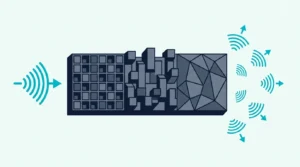
Sound diffusion is the scattering of sound waves off an irregular surface. Instead of reflecting in one direction (like a flat wall), the sound spreads evenly across the room. This preserves the room’s natural energy and liveliness while eliminating harsh focused reflections. Diffusion is not absorption — it redistributes sound energy rather than removing it.
What Is Sound Diffusion In Simple Words?
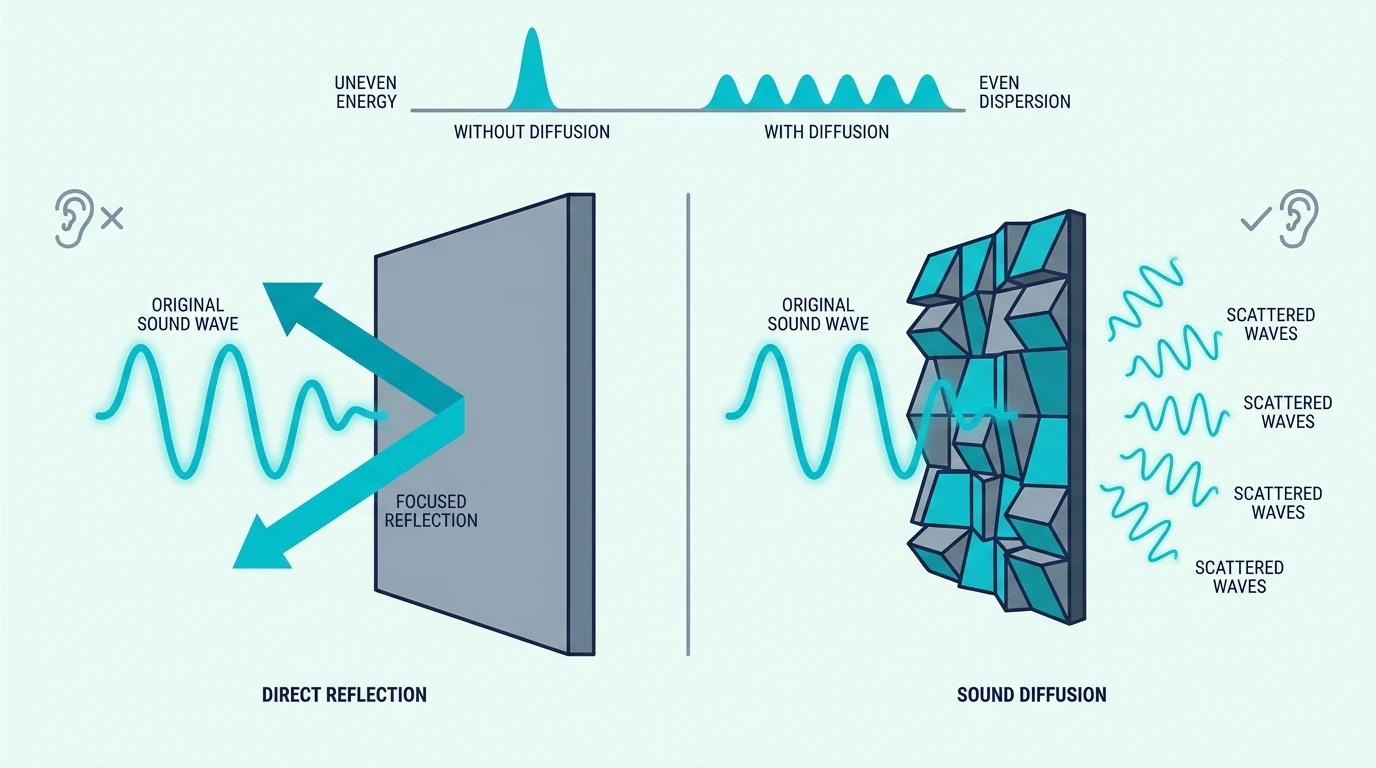
Think of light hitting a smooth mirror versus a rough stone wall. The mirror sends a sharp, focused beam back at you — that’s specular reflection.
The rough wall scatters light in every direction so no single beam blinds you — that’s diffusion.
Sound behaves the same way. A flat drywall surface reflects sound waves in a single, coherent direction — creating the slap-back echo you hear when you clap in an empty room.
An irregular surface breaks that reflection into dozens of smaller waves traveling in different directions.
The scattered waves still carry the same total energy as the original reflection. Nothing is absorbed or lost — the energy is redistributed across the room instead of concentrated in one path.
This is what separates diffusion from the two other acoustic concepts people confuse it with. Absorption removes sound energy from the room using porous materials like fiberglass or foam.
Soundproofing blocks sound from passing through walls using mass and isolation. Diffusion does neither — it keeps the energy in the room but prevents it from causing problems.
For a deeper look at what a sound diffuser actually does as a physical device, that guide covers the panel types and designs that create controlled diffusion.
What Causes Sound To Diffuse?
Surface Shape And Sound Wavelength
The key principle is scale. A surface irregularity only scatters a sound wave if the irregularity is comparable in size to the wave’s wavelength.
A 1 kHz sound wave has a wavelength of about 13.5 inches. Surface features smaller than that — say, the texture of a brick wall — scatter higher frequencies but let 1 kHz pass by as if the surface were flat.
Features deeper than 13.5 inches scatter 1 kHz and everything above it.
This is why engineered diffusers have wells or blocks of specific depths. Each depth targets a specific frequency range, and the mathematical sequence of depths (typically based on prime number calculations) ensures even scattering across the design bandwidth.
Flat surfaces reflect all frequencies in a single direction regardless of wavelength. The flatter and harder the surface, the more mirror-like the reflection — which is why untreated drywall rooms have the worst flutter echo problems.
Natural Vs Engineered Diffusion
Bookshelves filled with irregularly sized books create natural diffusion. The varying depths of book spines scatter mid and high frequencies in unpredictable directions — which is why a room full of bookshelves sounds warmer and more pleasant than the same room with bare walls.
Irregular architecture works the same way. Exposed brick, stone walls, coffered ceilings, and bay windows all create scattering at various frequencies depending on the depth of their surface features.
Engineered diffusers — QRD panels, skyline blocks, and slat designs — take this principle and make it precise. Instead of random scattering, the well depths follow a mathematical sequence that guarantees even distribution across a target frequency range.
The BXI Wood Sound Diffuser (1D QRD) is a good example of engineered diffusion — calculated well depths in solid wood that scatter mid-frequency energy across a wide horizontal arc.
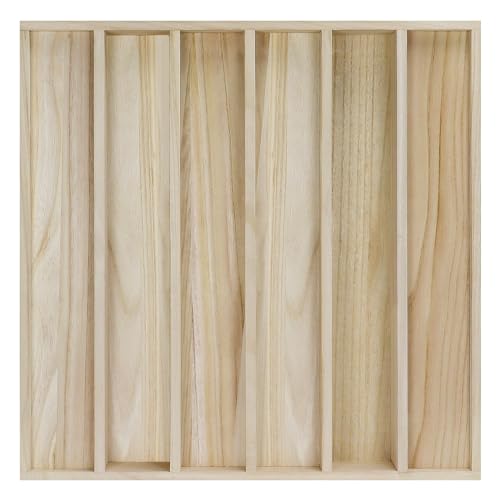
BXI Wood Sound Diffuser (1D QRD)
For which materials work best for engineered diffusion, that guide compares wood, plastic, and composite options.
Get Studio Tips Weekly
Join 5,000+ creators getting acoustic treatment advice every week.
No spam. Unsubscribe anytime.What Does Diffusion Sound Like In A Room?
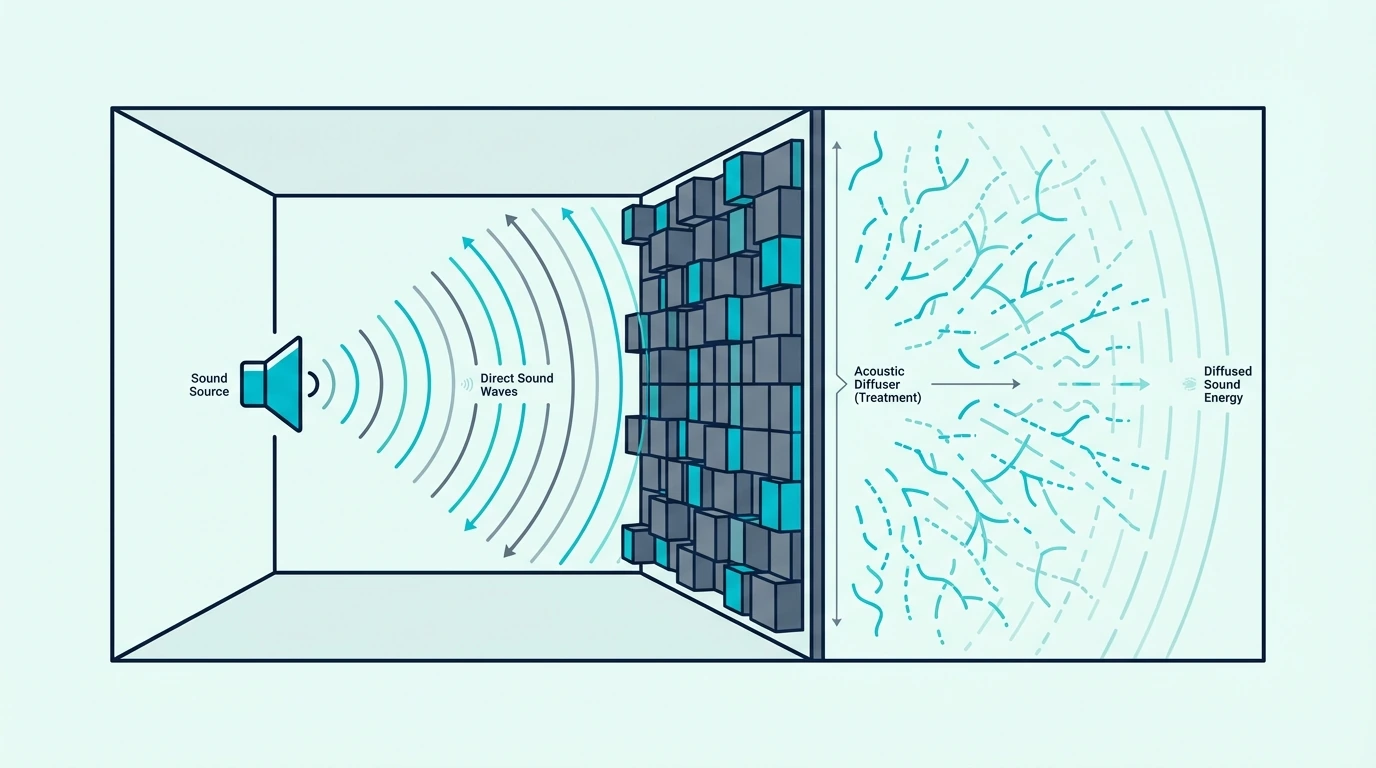
Untreated Room Vs Diffused Room
An untreated room with flat, parallel walls produces flutter echo — a rapid series of reflections that ping-pong between opposite surfaces. Clap your hands in a small, empty room and you’ll hear it as a metallic ringing that sustains for a second or more.
Add diffusers to one wall and that flutter echo disappears. The reflections still happen, but they scatter in so many directions that no coherent ping-pong pattern can form.
The room sounds open and alive without the harsh artifacts.
Compare this to adding absorption panels instead. The flutter echo also disappears, but the room loses its sense of space — it sounds smaller, tighter, and after extended listening, fatiguing.
For how absorption and diffusion compare in practice, that guide covers when to use each approach.
Concert Halls As The Gold Standard
The best concert halls in the world — Vienna’s Musikverein, Boston Symphony Hall, Amsterdam’s Concertgebouw — achieve their legendary acoustics through architectural diffusion. Ornate moldings, columns, coffered ceilings, and curved surfaces scatter sound waves naturally across every seat.
No two reflections arrive from the same direction. The result is a rich, enveloping sound field where every instrument occupies its own space — the opposite of a gymnasium where everything blurs into reverberant mush.
Modern concert hall design still relies on this principle. Acoustic architects calculate surface geometry to create controlled diffusion at specific frequency ranges, applying the same physics that a small QRD panel uses — just at building scale.
Where Is Sound Diffusion Used?
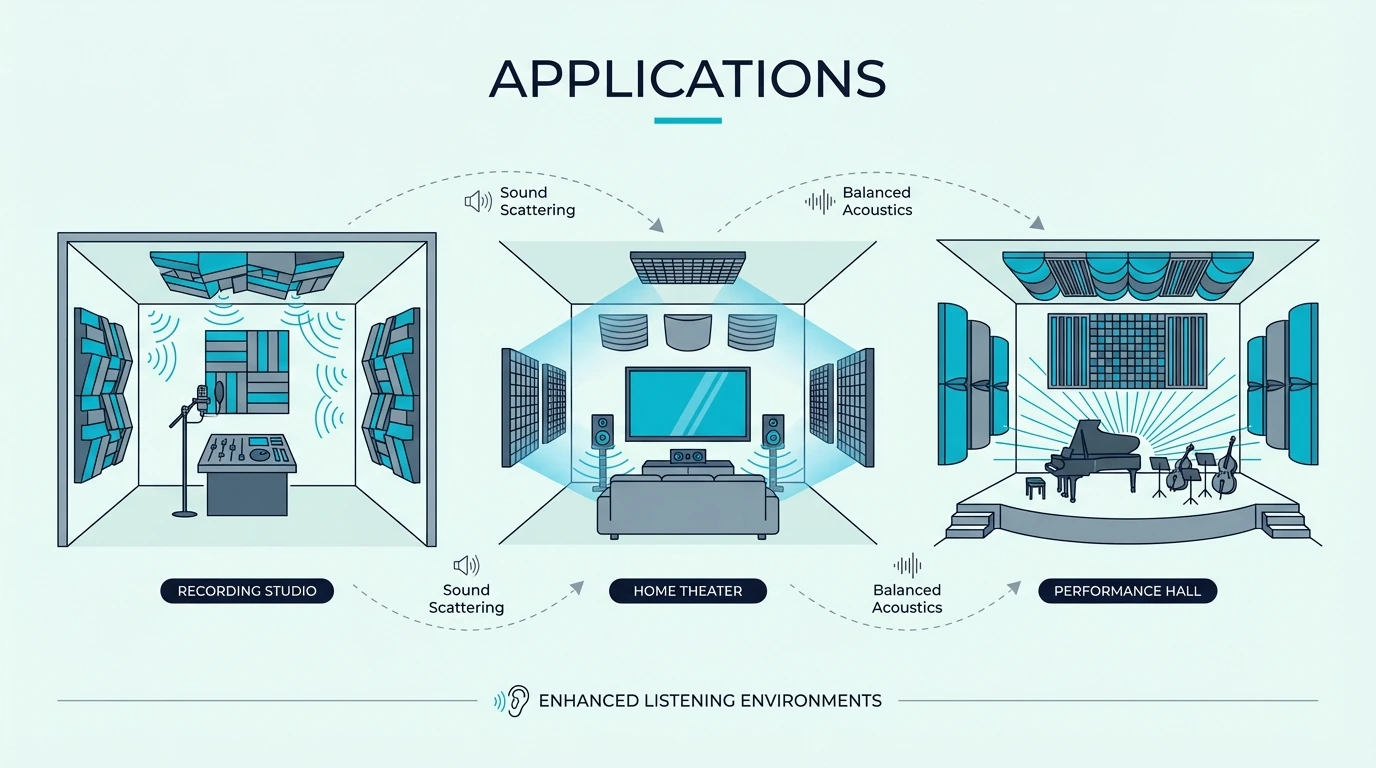
Recording Studios And Mixing Rooms
The rear wall behind the mixing position is the most common location for purpose-built diffusers. Engineers need to hear accurate reflections that reveal the depth and width of a stereo image — but those reflections must be diffuse, not focused.
A bare rear wall creates a strong specular reflection that interferes with the direct sound from the monitors. A diffused rear wall scatters that energy into a smooth wash that supports spatial perception without causing comb filtering.
For where to place diffusers in a studio, that guide covers rear wall, ceiling, and first reflection point options.
Ceilings above the listening position are the second most common application. Vertical flutter echo between a flat ceiling and desk/console surface is a persistent problem in studios — ceiling diffusers eliminate it while preserving the room’s vertical spaciousness.
The BXI 2D Skyline Diffuser is designed specifically for ceiling mounting — its block pattern scatters in both horizontal and vertical planes, which is what overhead treatment requires.
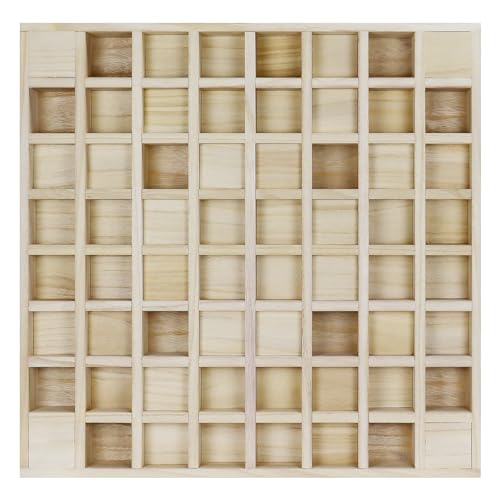
BXI 2D Skyline Diffuser
Concert Halls And Auditoriums
Architectural diffusion is designed into the building itself. Shaped wall panels, balcony fronts, and ceiling geometry create scattering without separate acoustic panels.
The advantage is scale. A concert hall can create diffusion at frequencies as low as 100 Hz because the architectural features are large enough to scatter long wavelengths.
A 24-inch studio diffuser can only scatter down to roughly 1 kHz.
Houses of worship use the same principles — vaulted ceilings, stone columns, and irregular wall surfaces create the reverberant but intelligible sound that makes speech and music fill a large space without becoming muddy.
Home theaters benefit from diffusion on the rear and side walls behind the seating area. The surround channels in a 5.1 or 7.1 system rely on scattered reflections to create the immersive envelope that makes movies sound three-dimensional.
If you’re treating a smaller space, our guide to diffusers in small rooms covers the distance constraints and workarounds.
The Bottom Line
Sound diffusion is the scattering of reflections off irregular surfaces — it preserves room energy while eliminating the focused echoes that make untreated rooms sound harsh.
Every room has some natural diffusion from furniture and architectural features. Engineered diffusers make that scattering precise and predictable — targeting specific frequency ranges where problems actually exist.
The choice between natural and engineered diffusion depends on how critical the listening environment is. A living room with bookshelves and mixed furniture already has decent scattering.
A mixing studio needs calculated, repeatable results.
For building your own diffuser panels, our DIY wooden sound diffuser guide covers both QRD and skyline designs. And our best sound diffusers roundup compares the top pre-built options.
Frequently Asked Questions
What does diffusion mean in audio?
Diffusion in audio refers to the even scattering of sound reflections across a room. Instead of a focused echo bouncing straight back from a wall, the sound spreads in many directions — creating a smooth, spacious sound field without harsh artifacts.
What does diffusion mean in music?
In music production and room acoustics, diffusion means treating a room so reflections scatter evenly rather than creating focused echoes or dead spots. Studios use diffuser panels on rear walls and ceilings to preserve the natural ambience that makes recordings sound three-dimensional.
What is the difference between diffusion and absorption?
Absorption removes sound energy from the room — porous materials convert sound waves to heat, making the room quieter and drier. Diffusion redistributes that energy by scattering it in many directions, keeping the room lively and spacious. Most well-treated rooms use both.