Best Acoustic Treatment Brands (Ranked By Material Quality And Performance)
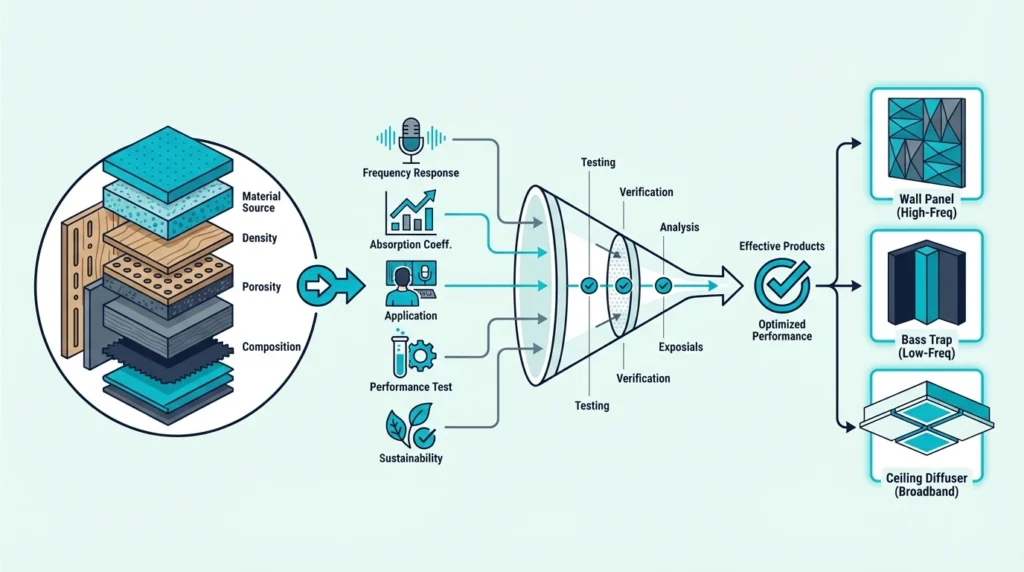
Best acoustic treatment brands are the ones that use dense fiberglass or mineral wool cores, publish tested NRC ratings, and offer a full product range including panels, bass traps, and mounting hardware — but most buyers never check these details and end up with thin foam panels from brands that prioritize marketing over acoustic performance.
The difference between a quality acoustic treatment brand and a mediocre one is not subtle. A 2-inch fiberglass panel from a reputable brand absorbs broadband frequencies effectively, while a 1-inch foam panel from a cheap brand barely touches frequencies below 1,000 Hz.
This guide ranks the best acoustic treatment brands available on Amazon based on material quality, absorption performance, product range, and value for money. Every brand listed here uses fiberglass or mineral wool — the two materials that professional acousticians actually specify for studio treatment.
Below you will find detailed brand profiles, direct product comparisons, selection criteria explained, and specific recommendations for different budgets and room types. Start with the selection criteria section if you want to understand what separates a good brand from a bad one before looking at specific products.
The best acoustic treatment brands use fiberglass or mineral wool cores with published NRC ratings. UMIACOUSTICS and Olanglab lead the mid-range with pre-built fiberglass panels. Rockboard dominates the DIY insulation category with high-density mineral wool boards. ATS Acoustics offers professional-grade dedicated bass traps. SoundAssured provides essential accessories for DIY builders. Avoid any brand that only sells thin foam panels without absorption data — foam is cosmetic, not acoustic treatment.
How We Chose The Best Acoustic Treatment Brands
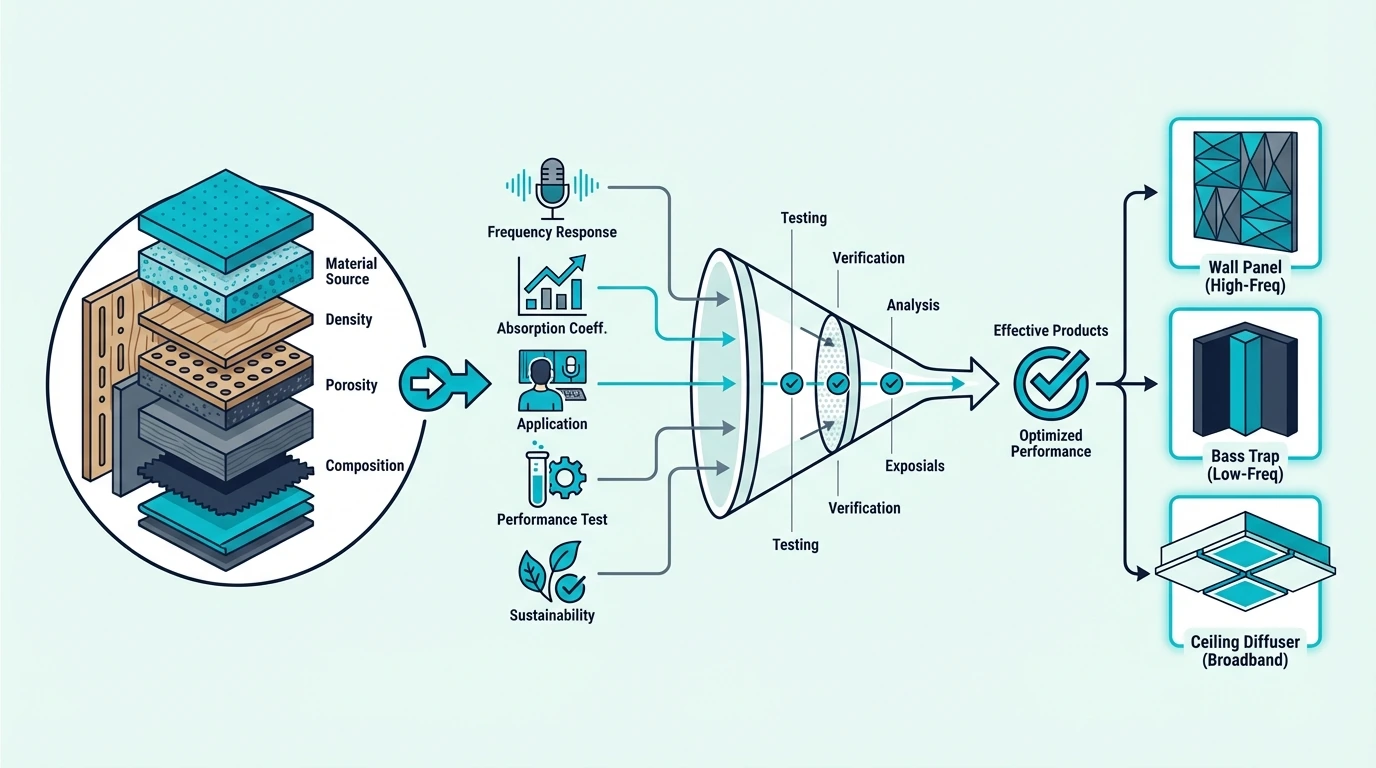
Every brand in this guide was evaluated against five criteria that determine real-world acoustic performance. Marketing claims and Amazon badge status were not factors — only measurable product characteristics mattered.
The acoustic treatment market on Amazon is flooded with products that look similar but perform very differently. These five criteria separate brands that deliver genuine sound absorption from brands that sell decorative wall hangings marketed as treatment.
Material Quality And Density
The core material determines absorption performance. Fiberglass and mineral wool are the only materials that provide effective broadband absorption across the full frequency range relevant to music production and speech recording.
Dense fiberglass (typically 3-6 lb per cubic foot) absorbs effectively from approximately 250 Hz upward in a 2-inch panel. Mineral wool at 6-8 lb per cubic foot extends absorption slightly deeper into the low frequencies due to its higher density.
Foam — even thick acoustic foam — has significantly lower density than fiberglass or mineral wool. This means foam panels absorb primarily high frequencies and provide minimal absorption below 500 Hz.
The best treatment materials guide covers why material density directly determines low-frequency absorption performance.
Any brand that only sells foam panels was excluded from this guide. Foam has a narrow use case (flutter echo reduction in vocal booths), but it is not a substitute for proper broadband treatment.
The density difference is dramatic. A typical acoustic foam panel weighs approximately 0.5-1 lb per cubic foot.
A fiberglass panel at 3 lb per cubic foot is 3-6 times denser, which translates directly to 3-6 times more absorption at low frequencies. This is not a marginal difference — it is the difference between treatment that works and treatment that does not.
NRC Ratings And Published Data
NRC (Noise Reduction Coefficient) is the standard measure of absorption performance. It ranges from 0 (no absorption) to 1.0 (total absorption).
The rating represents the average absorption across four test frequencies: 250 Hz, 500 Hz, 1,000 Hz, and 2,000 Hz. Higher NRC means more sound energy is absorbed rather than reflected back into the room.
Reputable brands publish NRC data for their products. This allows direct comparison between panels of different brands, thicknesses, and materials.
Brands that do not publish NRC data are either untested or underperforming — both are reasons to avoid them.
A quality 2-inch fiberglass panel typically achieves an NRC of 0.85-1.0. A quality 4-inch panel or a 2-inch panel with an air gap reaches NRC 1.0 or higher at specific frequencies. The best acoustic panels guide ranks panels by verified NRC performance.
NRC above 1.0 is possible because the coefficient measures average absorption and diffraction effects at panel edges can contribute additional absorption beyond the panel’s physical surface area. An NRC of 1.05-1.10 is common for thick, well-mounted fiberglass panels.
Product Range
The best acoustic treatment brands offer more than one product type. A complete treatment setup requires wall panels for first reflection points, bass traps for corners, and potentially ceiling clouds for overhead reflections.
Brands that only sell one panel size in one thickness are limited. The best brands offer multiple thicknesses (1-inch, 2-inch, 4-inch), multiple sizes (24×24, 24×48), bass traps, and mounting hardware.
A brand with a complete product range allows you to source your entire treatment setup from one manufacturer. This ensures consistent aesthetics, compatible mounting systems, and a single point of contact for warranty or support issues.
The best treatment kits guide covers which product types you need for different room sizes and use cases. The budget treatment guide shows how product range affects total treatment cost.
Build Quality And Finish
Pre-built panels should arrive with clean fabric wrapping, rigid frames, and no exposed insulation. Poorly finished panels shed fiberglass particles, look unprofessional, and may not hang properly.
For raw insulation boards (used in DIY builds), build quality means consistent density, clean cuts, and rigid boards that hold their shape when mounted vertically. Boards that sag or crumble are unusable for panel construction.
Edge integrity is another indicator. Quality insulation boards maintain crisp edges when cut with a bread knife or drywall saw.
Boards that crumble or fray at the edges produce messy panels and require extra fabric to conceal imperfections. Rockboard 60 scores well on edge integrity due to its high density, which holds the mineral wool fibers together firmly during cutting.
Value For Money
Value is measured in cost per square foot of effective absorption — not just the sticker price. A $90 pack of four 24×24-inch panels covers 16 square feet at $5.63 per square foot.
A $160 pack of two 24×48-inch panels covers 16 square feet at $10.00 per square foot.
Both may deliver identical absorption performance, but the first option costs 44% less per square foot. This guide factors in cost-per-square-foot alongside absorption performance to identify the best value at each price tier.
DIY builds shift the value calculation further. Raw insulation boards cost $2-4 per square foot, and frame materials add $1-2 per square foot.
A complete DIY panel costs approximately $3-6 per square foot — half the price of most pre-built panels with equivalent or better absorption. The savings compound quickly when treating an entire room that requires 10-20 panels.
What Should You Look For In An Acoustic Treatment Brand?
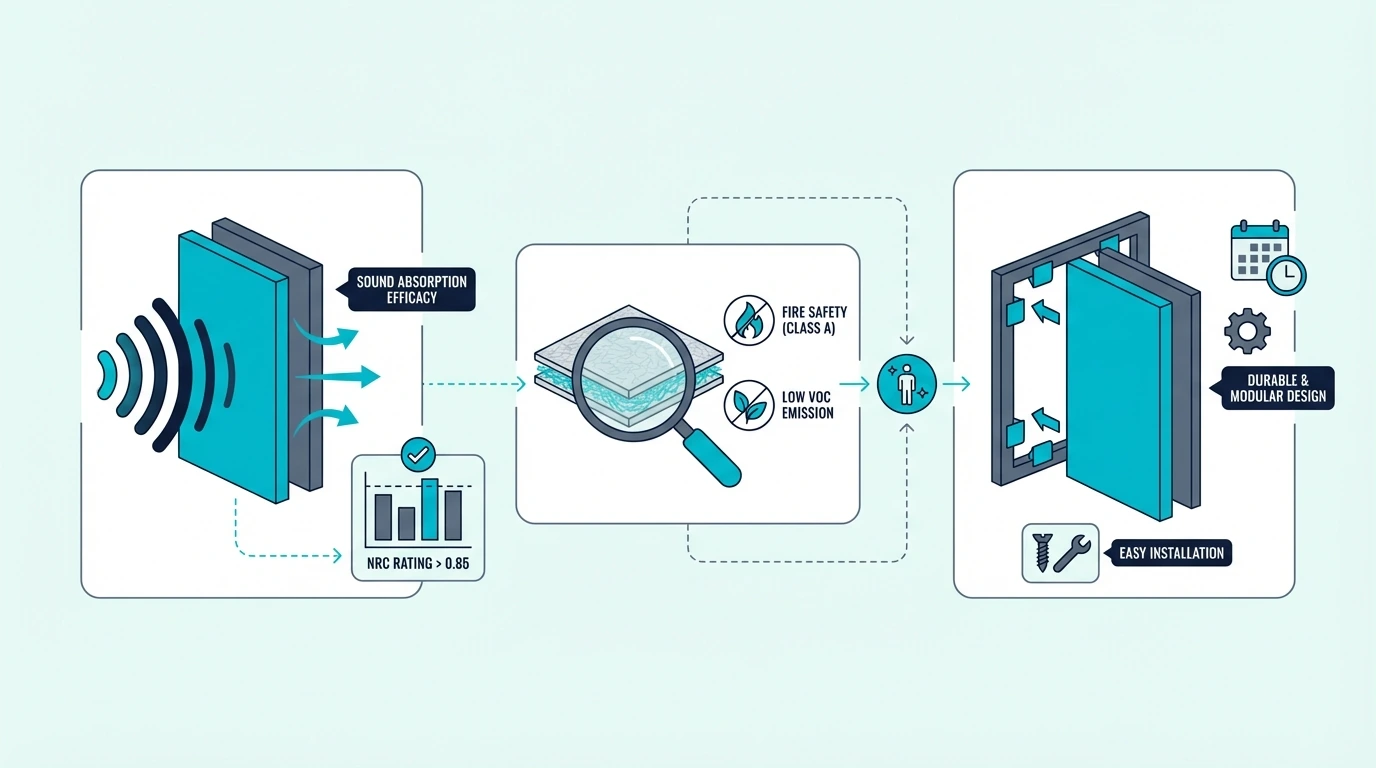
Before comparing specific brands, you need to know what separates effective acoustic treatment from decorative wall panels that happen to look like treatment. The features that matter most are not the ones listed on Amazon product pages.
Core Material Is Everything
The single most important factor is the core material. Fiberglass and mineral wool are the only materials that provide meaningful broadband absorption for music production and recording.
Fiberglass panels use rigid fiberglass boards (like Owens Corning 703 or equivalent) wrapped in acoustically transparent fabric. The fiberglass converts sound energy to heat through friction as sound waves pass through the porous material.
The denser the fiberglass, the more friction occurs per unit of thickness, which is why higher-density boards absorb more effectively at lower frequencies. A 3 lb per cubic foot board absorbs noticeably more bass than a 1.5 lb per cubic foot board of the same dimensions.
Mineral wool panels use dense rockwool boards (like Rockboard 60 or equivalent) in the same configuration. Mineral wool is slightly denser than fiberglass at the same thickness, which gives it a marginal advantage in low-frequency absorption.
Both materials are fire-resistant, moisture-resistant, and dimensionally stable over time. Neither degrades or loses absorption performance with age, which means panels built with quality fiberglass or mineral wool will perform identically ten years from now.
The best fiberglass panels guide provides detailed absorption coefficient data for different fiberglass densities and thicknesses. The best studio panels guide covers specific insulation board differences for recording environments.
Thickness Determines Low-Frequency Reach
A 1-inch panel absorbs effectively above approximately 500 Hz. A 2-inch panel extends down to approximately 250 Hz.
A 4-inch panel reaches approximately 125 Hz. Each doubling of thickness extends the effective absorption range approximately one octave lower.
For music production, 2-inch panels are the minimum useful thickness. For bass-heavy genres or rooms with severe low-frequency problems, 4-inch panels or 2-inch panels with an air gap behind them are necessary.
The air gap trick is one of the most cost-effective upgrades in acoustic treatment. Mounting a 2-inch panel with a 2-inch air gap behind it provides absorption equivalent to a 4-inch panel at a fraction of the cost.
The best ceiling panels guide covers this technique extensively for overhead panels where thickness is limited by room height.
Any brand that primarily sells 1-inch panels is targeting the budget or decorative market — not serious acoustic treatment. One-inch panels are acceptable for speech-only recording (podcasts, voice-over) where bass absorption is less critical.
The exception is 1-inch panels mounted with a significant air gap (4-6 inches) behind them. The air gap extends effective absorption depth, allowing a thin panel to absorb lower frequencies than its thickness alone would suggest.
This technique is commonly used for panels mounted over reflective glass surfaces where flush mounting would block natural light.
Mounting Hardware Matters
Panels are only effective when properly mounted. The best brands include mounting hardware or offer it as an accessory.
Common mounting methods include impaling clips, Z-clips, wire hangers, and adhesive strips. Each method creates a different air gap depth behind the panel, which directly affects low-frequency absorption.
Panels mounted with an air gap between the panel and the wall absorb significantly more low-frequency energy than panels mounted flush. The best treatment kits guide covers mounting methods and their effect on absorption performance.
A 2-inch air gap is the most common configuration. Z-clips naturally create approximately a 1-inch gap, while French cleats or custom brackets can create gaps of 2-4 inches.
The optimal air gap depth depends on the target frequency range and available wall space.
Get Studio Tips Weekly
Join 5,000+ creators getting acoustic treatment advice every week.
No spam. Unsubscribe anytime.Our Top Picks For Best Acoustic Treatment Brands
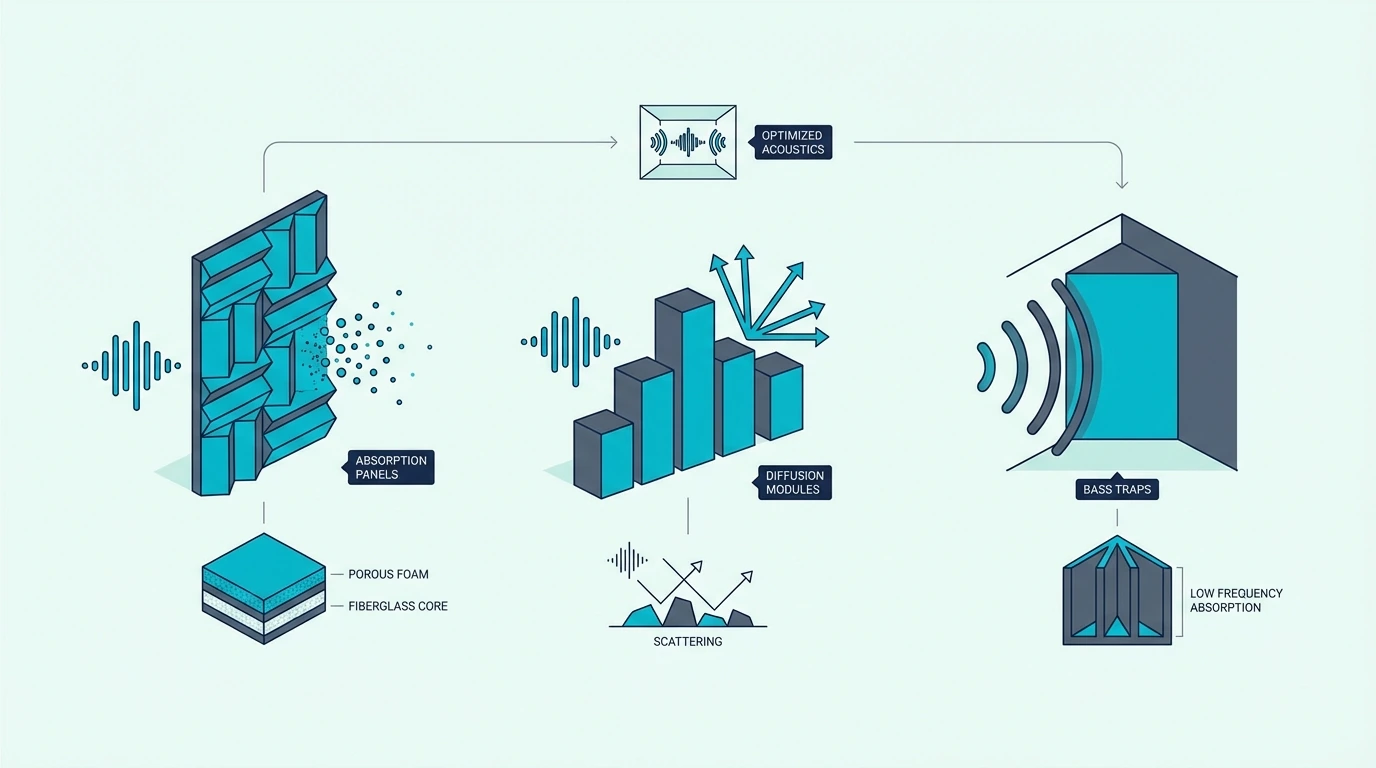
Each brand below is evaluated on material quality, product range, build quality, and value. Products are linked with current pricing for direct comparison.
These are not the only brands selling acoustic treatment on Amazon, but they represent the best options across different price points, product types, and user skill levels. Each brand solves a different part of the treatment equation.
UMIACOUSTICS — Best Mid-Range Fiberglass Panels
UMIACOUSTICS has established itself as one of the most popular acoustic panel brands on Amazon for home studio builders. Their panels use a fiberglass core wrapped in fabric with included mounting hardware.
The brand consistently receives high ratings from buyers who are upgrading from foam panels and hearing the difference that real fiberglass treatment makes for the first time. The jump from foam to fiberglass is the single biggest upgrade most home studio owners can make.
The standout feature is the included hanging brackets. Most competing brands sell panels without mounting hardware, which adds 10-20 dollars to the total cost and requires a separate purchase.
The brackets create a small air gap between the panel and the wall, which improves low-frequency absorption compared to panels mounted flush. This is a meaningful acoustic benefit that most buyers do not realize they are getting with the included hardware.
UMIACOUSTICS 2-inch fiberglass panels deliver broadband absorption that outperforms any foam panel at a similar price point. The 4-pack at $98.99 covers two first reflection points — the single highest-priority treatment position in any room.
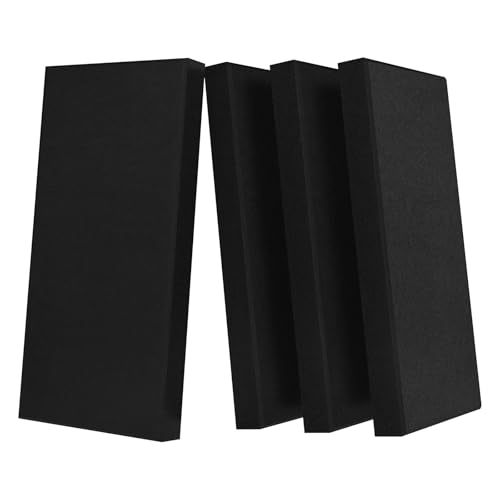
UMIACOUSTICS 2-inch fiberglass panels
At $6.19 per square foot, UMIACOUSTICS panels represent solid mid-range value. They are not the cheapest option per square foot, but the included hardware and consistent build quality justify the modest premium over bare-bones competitors.
For a typical home studio treatment setup (8-12 panels), two to three UMIACOUSTICS 4-packs at $98.99 each provides comprehensive wall coverage for $200-300. Add DIY corner bass traps and the total room treatment cost stays under $500.
The best studio panels guide explains why first reflection points are the highest-priority treatment position and how four panels at these positions produce the biggest audible improvement.
For larger rooms that need more than 8 panels, buying multiple UMIACOUSTICS 4-packs keeps the per-panel cost consistent. The brand does not offer bulk discounts, but the included mounting hardware saves $40-80 compared to buying panels and hardware separately from different brands.
Olanglab — Best Budget-To-Mid Range With Multiple Options
Olanglab offers the widest product range of any Amazon acoustic panel brand, with panels available in 1-inch and 2-inch thicknesses, 24×24-inch and 24×48-inch sizes, and various pack quantities.
This range means you can build an entire room treatment setup from a single brand. Wall panels, thicker panels for corners, and large-format panels for broad wall coverage — all from the same product line with matching aesthetics.
Consistency across products matters for rooms where panels are visible. Matching fabric color, frame profile, and overall finish across different panel sizes creates a cohesive look that mismatched brands cannot achieve.
Olanglab 1-inch fiberglass panels at $86.99 for a 4-pack are the most affordable fiberglass panels in this roundup. At $5.44 per square foot, they undercut most competitors while still using a real fiberglass core instead of foam.
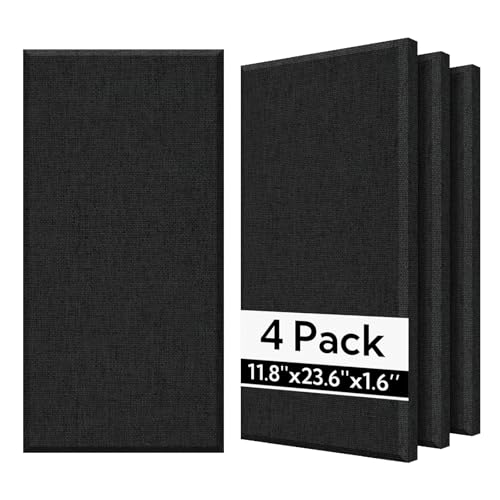
Olanglab 1-inch fiberglass panels
The 1-inch thickness is the primary trade-off. These panels absorb effectively above 500 Hz — excellent for speech frequencies and flutter echo control — but they do not reach the low-frequency absorption that 2-inch panels provide.
For podcasters and voice-over artists, this is perfectly adequate. Speech frequencies sit primarily between 500 Hz and 4,000 Hz, which falls entirely within the effective absorption range of 1-inch fiberglass panels.
For those who need deeper absorption, Olanglab 2-inch 24×48-inch panels provide broadband absorption in a large format. Each panel covers 8 square feet, which means fewer panels needed for equivalent coverage.
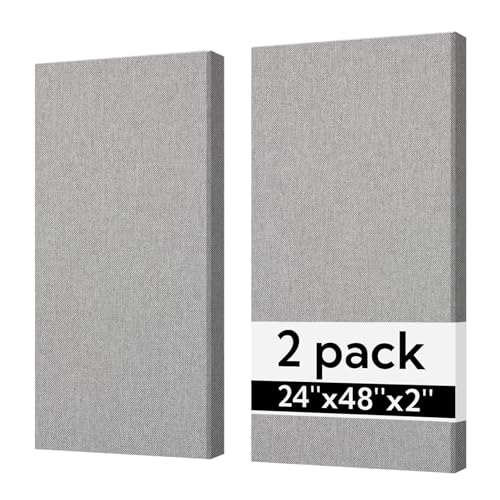
Olanglab 2-inch 24×48-inch panels
The best acoustic panels guide covers treatment planning for rooms where aesthetic consistency across many panels matters. Olanglab’s matching product line makes this straightforward.
Rockboard — Best Raw Insulation For DIY Builds
Rockboard is not a finished panel brand — it is the insulation brand that DIY panel builders use inside their frames. Rockboard 60 mineral wool boards are the most popular raw material for homemade acoustic panels and bass traps.
The 6 lb per cubic foot density is the key specification. This density provides excellent absorption across a wide frequency range, including low frequencies when used in thick configurations (4-6 inches for bass traps).
At 6 lb per cubic foot, Rockboard 60 is denser than most fiberglass insulation boards (typically 3-4 lb per cubic foot). This additional density translates to measurably better low-frequency absorption, which is why mineral wool is the preferred material for bass traps specifically.
Rockboard 60 mineral wool boards in a 6-pack provide 48 square feet of raw insulation — enough to build six 24×48-inch panels or three stacked 4-inch bass traps. At $2.56 per square foot for the raw material, DIY builds using Rockboard are the most cost-effective way to treat a room.
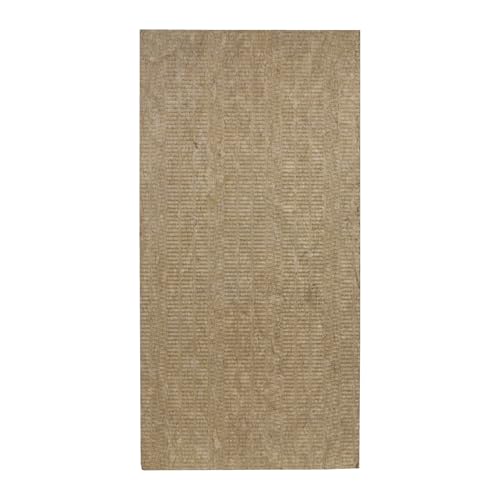
Rockboard 60 mineral wool boards
The trade-off is labor. Building frames, cutting insulation, wrapping fabric, and mounting the finished panels takes 4-8 hours for a full room setup.
But the absorption performance matches or exceeds pre-built panels costing 3-4 times more per square foot. For anyone comfortable with basic woodworking, Rockboard DIY builds offer the highest performance-to-cost ratio available.
The best treatment materials guide provides detailed comparisons of insulation options for building panels with Rockboard and similar products.
For bass traps specifically, stacking two Rockboard 60 boards creates a 4-inch thick trap that absorbs effectively down to approximately 125 Hz. Mounting these stacked boards diagonally across room corners places the absorber at the highest-pressure point for low-frequency standing waves, which maximizes bass absorption per dollar spent.
ATS Acoustics — Best Professional-Grade Panels And Bass Traps
ATS Acoustics is a US-based manufacturer that has been producing acoustic treatment for professional studios for decades. Their products carry a premium price tag compared to Amazon marketplace brands.
However, the build quality and acoustic performance reflect professional standards that justify the investment for serious studio environments. ATS panels are the products that recording studios, broadcast facilities, and post-production houses actually install.
ATS panels use rigid fiberglass cores with precision fabric wrapping. The frames are more robust than marketplace competitors, and the finished panels hang straight without warping or sagging over time.
The company also offers a free room analysis service where you submit room dimensions and photos, and their acousticians recommend specific products and placement positions. This level of support is rare from any acoustic treatment brand and adds significant value beyond the physical products.
ATS Acoustics corner bass traps are purpose-built for the highest-pressure locations in a room. Unlike generic panels straddled across corners, these traps are designed specifically for corner mounting with optimized depth and density for low-frequency absorption.
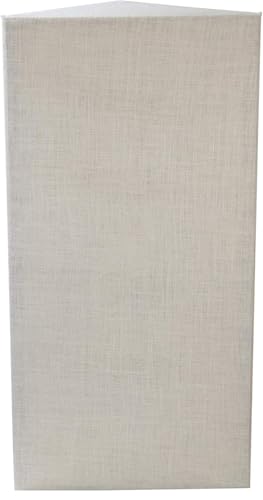
ATS Acoustics corner bass traps
At $249.99 per trap, ATS products are a significant investment. Treating four corners costs approximately $1,000 — compared to $200-300 for DIY traps using Rockboard insulation.
The premium buys convenience, professional build quality, and a warranty. For commercial studios where time is money and client perception matters, ATS products justify their cost.
The acoustic treatment hub explains why corners are the highest-priority treatment position and links to detailed bass trap comparison resources.
SoundAssured — Best Accessory Brand For DIY Builders
SoundAssured specializes in acoustic accessories — primarily acoustically transparent fabric for wrapping DIY panels. They are not a panel manufacturer, but their products are essential for anyone building their own treatment.
Acoustically transparent fabric looks identical to standard upholstery fabric but allows sound to pass through without reducing absorption performance. Using non-transparent fabric on a panel can reduce its NRC by 10-20%, which defeats the purpose of using quality insulation inside.
The test for acoustic transparency is simple: hold the fabric against your mouth and blow. If air passes through easily, the fabric is acoustically transparent.
If it resists airflow, it will reflect sound and reduce panel performance. Common household fabrics like canvas, denim, and vinyl are not acoustically transparent and should never be used for panel wrapping.
SoundAssured acoustical fabric at $21.95 is the most popular panel wrapping fabric on Amazon. Combined with Rockboard insulation and a simple wooden frame, this fabric completes a professional-looking DIY panel for approximately $15-25 per panel — a fraction of the cost of pre-built alternatives.
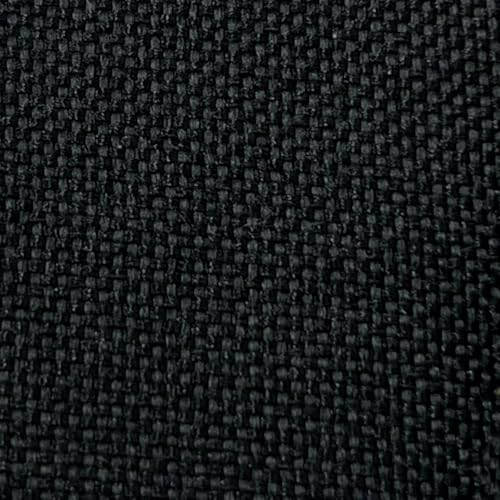
SoundAssured acoustical fabric
The fabric is available in multiple colors, which matters for rooms where treatment needs to blend with existing decor. Black is standard for studios, but white, grey, and other options suit living rooms, home theaters, and offices.
For DIY builders treating a home theater or living room, fabric color choice is often the most visible design decision in the entire treatment project. Choosing a color that matches or complements existing furniture prevents treatment from looking like an industrial afterthought.
The best acoustic art panels guide covers aesthetic considerations for treatment in shared or visible spaces where panel appearance affects room design.
Brand Comparison At A Glance
| Brand | Material | Best For | Price Range | Pre-Built? |
|---|---|---|---|---|
| UMIACOUSTICS | Fiberglass | Mid-range studio panels | Mid | Yes |
| Olanglab | Fiberglass | Budget panels, multiple sizes | Low-Mid | Yes |
| Rockboard | Mineral Wool | DIY bass traps and panels | Low | No (raw boards) |
| ATS Acoustics | Fiberglass | Professional bass traps | Premium | Yes |
| SoundAssured | Fabric | DIY panel wrapping | Low | Accessory only |
Brands To Avoid
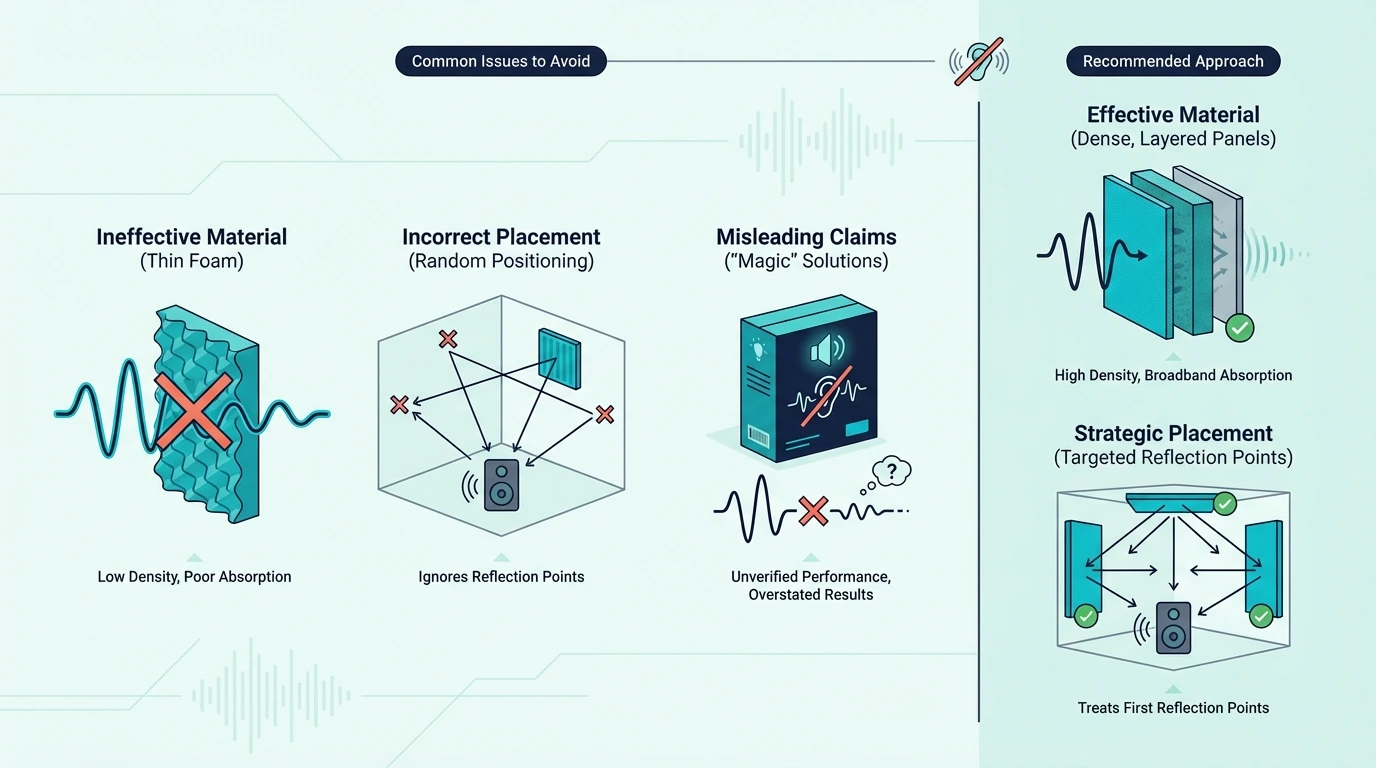
Not every brand on Amazon selling “acoustic panels” provides real acoustic treatment. Several categories of products should be avoided entirely.
The products below look like treatment and are marketed as treatment, but they deliver a fraction of the absorption performance that fiberglass or mineral wool panels provide. Buying these products wastes money that could go toward real treatment.
Thin Foam Panels
Brands selling 1-inch or 2-inch open-cell foam panels (typically the pyramid or wedge-shaped panels) provide minimal broadband absorption. These products absorb high frequencies (above 2,000 Hz) but do almost nothing below 500 Hz.
Pyramid and wedge shapes are designed to increase surface area, which marginally improves high-frequency absorption. But the fundamental limitation is material density — no amount of surface shaping compensates for foam’s extremely low density compared to fiberglass.
Foam panels have an NRC of approximately 0.3-0.5 in typical 2-inch configurations — compared to 0.85-1.0 for fiberglass panels of the same thickness. The acoustic treatment hub explains why thin porous materials fail at low-frequency absorption.
The visual similarity between foam and fiberglass panels is what makes this category so misleading. Both come in rectangular shapes, both mount on walls, and both are marketed as “acoustic treatment.” But the absorption performance difference is massive — a fiberglass panel absorbs 2-3 times more energy across the frequency spectrum than a foam panel of identical dimensions. The best fiberglass panels guide covers verified absorption data for panels that actually perform.
Polyester Felt Panels
Decorative felt panels (often sold as “acoustic panels” on Amazon) are designed primarily for aesthetics. They reduce flutter echo in offices and living rooms but do not provide the broadband absorption needed for music production or critical listening.
Many of these products feature attractive designs, hexagonal shapes, or custom prints that make them popular for office and living room decoration. As decoration, they are fine.
As acoustic treatment for recording or mixing, they are inadequate.
If a panel is less than 1 inch thick and made of compressed polyester felt, it is a decorative product. It may reduce high-frequency harshness in a room, but it is not acoustic treatment by any professional standard.
These panels are commonly marketed with claims like “reduces echo” or “improves room acoustics.” While technically true in a narrow sense (they do absorb some high-frequency energy), the improvement is minimal compared to fiberglass or mineral wool panels of any thickness. The best ceiling panels guide covers real fiberglass options that work for both wall and overhead treatment.
Brands Without Published Specs
Any brand that does not publish NRC data, core material specifications, or panel density should be treated with suspicion. Reputable manufacturers are transparent about performance data because their products can withstand scrutiny.
The absence of specifications usually means the product underperforms. It is more cost-effective to buy verified products from the brands listed above than to gamble on unspecified products at a slightly lower price.
A common tactic is listing “sound absorption” as a feature without providing any NRC data. Any panel absorbs some sound — even a cardboard box.
The question is how much, at which frequencies, and whether that absorption is meaningful for your application. Without published data, you cannot answer any of these questions.
How To Choose The Right Brand For Your Room
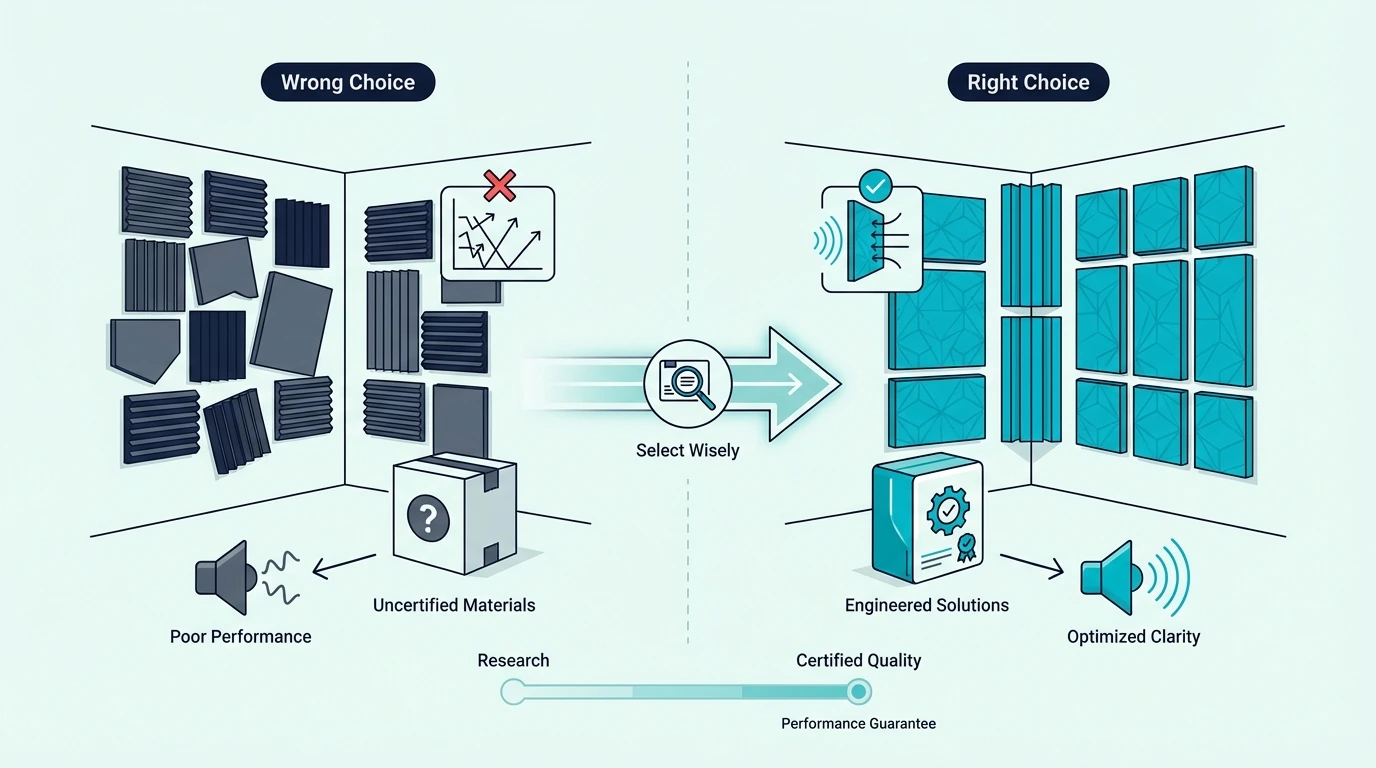
The best brand for you depends on your budget, your willingness to do DIY construction, and your room’s specific acoustic problems.
Budget Under $200
Start with Olanglab 1-inch panels for first reflection points and basic flutter echo control. A 4-pack at $86.99 handles the two most important wall positions.
Add a second 4-pack for the rear wall and ceiling reflection if budget allows. Even four panels at first reflection points produce a noticeable improvement in recording clarity.
This setup will not provide deep bass absorption, but it addresses the most audible problems in a small room. The best budget treatment guide covers treatment priorities ranked by audible impact for tight budgets.
If the room sounds boomy (excessive bass), add DIY corner treatment using heavy blankets or moving blankets folded and hung in corners. This is not ideal, but it provides some low-frequency absorption at zero additional cost until you can invest in proper bass traps.
Budget $200-$500
UMIACOUSTICS 2-inch panels for first reflection points combined with Rockboard 60 boards for DIY corner bass traps provides a comprehensive treatment setup. This combination treats both broadband reflections and low-frequency buildup.
Four UMIACOUSTICS panels at $98.99 handles reflection points. Three to four Rockboard boards at approximately $20 each, plus frame materials and SoundAssured fabric, builds two to three corner bass traps for approximately $100-150 total.
The best studio panels guide details this exact configuration as the recommended baseline for home studio mixing rooms.
Budget $500+
At this budget, you can choose between a full DIY build using Rockboard (maximum performance per dollar) or a full pre-built setup using UMIACOUSTICS and ATS Acoustics (maximum convenience).
A full DIY build using Rockboard 60 insulation treats an entire room — four corner bass traps, four wall panels, and a ceiling cloud — for approximately $400-600 including all materials. This matches the performance of a $2,000+ professional installation.
A full pre-built setup using UMIACOUSTICS panels and ATS corner traps costs $800-1,200 but requires no construction skills or tools. The treatment kits guide covers complete pre-built packages for different room sizes.
The choice between DIY and pre-built is primarily about time versus money. If you value your time at $30-50 per hour and the DIY build takes 8 hours, the labor cost is $240-400.
This narrows the gap between DIY and pre-built significantly. For professionals whose income depends on studio time, pre-built panels often make more financial sense.
Renters And Temporary Spaces
Olanglab 1-inch panels with command strip mounting are the best option for renters. The lightweight panels hang securely without screws or permanent hardware and remove cleanly when you move.
The key advantage for renters is zero wall damage. Command strips hold the lightweight 1-inch panels securely and peel off without leaving marks, holes, or adhesive residue.
This eliminates security deposit concerns that prevent many renters from treating their rooms. Portable and removable options also exist for extremely temporary setups where even command strips are not practical.
Home Theaters
Home theaters require more treatment surface area than music studios because the listening area is larger and includes multiple seating positions. Olanglab’s range of panel sizes (24×24 and 24×48) allows you to mix formats based on wall dimensions.
Side wall panels at first reflection points are the highest priority, followed by rear wall diffusion or absorption, then ceiling treatment. The best acoustic panels guide provides a complete treatment plan with panel placement recommendations.
For rooms that double as living spaces, panel aesthetics become a primary consideration alongside acoustic performance. Olanglab and UMIACOUSTICS both offer neutral fabric colors that blend with most interior design styles.
The acoustic treatment hub covers complementary treatment approaches that work alongside panels without adding more wall-mounted products.
The Bottom Line
The best acoustic treatment brands use fiberglass or mineral wool cores with published NRC ratings and offer multiple product types. UMIACOUSTICS leads the mid-range with convenient pre-built panels.
Olanglab covers the budget segment with real fiberglass at the lowest price point.
Rockboard dominates the DIY category with high-density mineral wool boards that deliver professional absorption at a fraction of pre-built panel prices. ATS Acoustics offers premium professional-grade bass traps for those who want top-tier corner treatment without DIY construction.
SoundAssured rounds out the ecosystem with essential accessories for DIY builders. Combined with Rockboard insulation and basic frame materials, their acoustical fabric turns raw materials into professional-looking panels at a fraction of pre-built prices.
Avoid any brand selling thin foam panels as “acoustic treatment.” Foam absorbs high frequencies but provides minimal absorption below 500 Hz — which is where most room acoustic problems actually exist.
The full guide to acoustic treatment covers the complete treatment workflow from material selection through installation. The best treatment kits guide helps determine which complete packages match your room and budget.
The budget treatment guide ranks the most cost-effective options across all price ranges.
Frequently Asked Questions
What is the best acoustic treatment brand?
For pre-built panels, UMIACOUSTICS offers the best combination of fiberglass core quality, included mounting hardware, and mid-range pricing. For DIY builds, Rockboard provides the highest-performing raw insulation at the lowest cost per square foot.
ATS Acoustics is the best choice for those who want professional-grade products and are willing to pay the premium. There is no single “best” brand — the right choice depends on your budget and whether you prefer pre-built convenience or DIY value.
For most home studio builders on a moderate budget, the combination of UMIACOUSTICS panels at reflection points and Rockboard DIY bass traps in corners delivers professional-grade treatment for under $500.
Is GIK Acoustics better than Auralex?
GIK Acoustics uses rigid fiberglass cores in their panels, which provides broadband absorption across the full frequency spectrum. Auralex primarily sells foam products, which absorb effectively above 1,000-2,000 Hz but provide minimal low-frequency absorption.
For broadband treatment in a studio, fiberglass-based products outperform foam. Auralex foam panels are adequate for flutter echo control in vocal booths or podcast rooms where only speech frequencies need absorption.
Auralex does offer some fiberglass products in their professional line, but these are significantly more expensive than competing fiberglass brands and harder to find on Amazon. For most buyers, the brands listed in this guide offer better value for fiberglass treatment. The best treatment materials guide compares fiberglass and mineral wool options across all major brands.
Are expensive acoustic panels worth it?
Mid-range brands like UMIACOUSTICS and Olanglab offer excellent acoustic performance at reasonable prices. The acoustic difference between a $100 fiberglass panel and a $300 premium panel from a boutique brand is minimal — both use similar core materials and achieve similar NRC ratings.
Premium brands primarily add build quality, aesthetic finish, and customer support. If your panels will be visible in a living room or commercial space, the upgraded finish may justify the cost.
For a dedicated studio where appearance is secondary, mid-range panels deliver identical acoustic performance.
Can I mix brands in the same room?
Yes. Treatment performance depends on material and placement, not brand consistency.
Using UMIACOUSTICS panels at reflection points and Rockboard DIY bass traps in corners is a common and effective approach. Many professional studios use products from three or four different manufacturers in the same room.
The only consideration is aesthetic. Panels from different brands may have slightly different fabric textures or frame profiles.
In a studio where appearance is secondary to performance, this is irrelevant. In a living room or home theater, matching panels from a single brand like Olanglab provides visual consistency.
How many panels do I need from any brand?
The number of panels depends on room size and treatment goals. A small home studio (10×12 feet) typically needs 8-12 panels plus 2-4 corner bass traps.
A larger room or home theater may need 16-24 panels. The general rule is approximately one panel per 15-20 square feet of floor area for adequate broadband treatment.
The best acoustic panels guide covers treatment scaling for rooms above 200 square feet. The budget treatment guide provides panel quantity estimates for different room sizes and budgets.