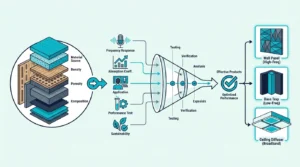
Best Material For Acoustic Treatment (Fiberglass, Mineral Wool, Foam, And Fabric Compared)

Best material for acoustic treatment depends on which frequency range you need to control — yes, all panels absorb sound, but a 2-inch fiberglass panel absorbs frequencies down to 125 Hz while a 2-inch foam wedge barely touches anything below 500 Hz.
That gap matters because bass buildup and low-mid room modes cause the biggest problems in home studios and listening rooms. Choosing a material that only handles highs leaves the worst issues untouched, and your mixes still will not translate.
The right material at the right thickness gives you broadband absorption that covers lows, mids, and highs — turning an unreliable room into one that tells the truth about your audio.
Below, this guide compares rigid fiberglass, mineral wool, polyester, and foam on the metrics that matter — NRC ratings, density, cost per panel, and durability — so you can pick the right core material for your acoustic treatment panels.
Rigid fiberglass (like Owens Corning 703) is the gold standard for acoustic panel cores — it offers the highest NRC ratings per inch of thickness and absorbs broadly across the frequency spectrum. Mineral wool (Rockwool Safe n Sound) is the best alternative: nearly identical performance at lower cost and wider availability. Acoustic foam only absorbs mid-high frequencies and degrades over time, making it a poor primary treatment material. Whatever core you choose, wrap it in acoustically transparent fabric — Guilford of Maine is the industry standard, but burlap and speaker cloth work as budget alternatives.
What Is The Best Material For Acoustic Treatment?
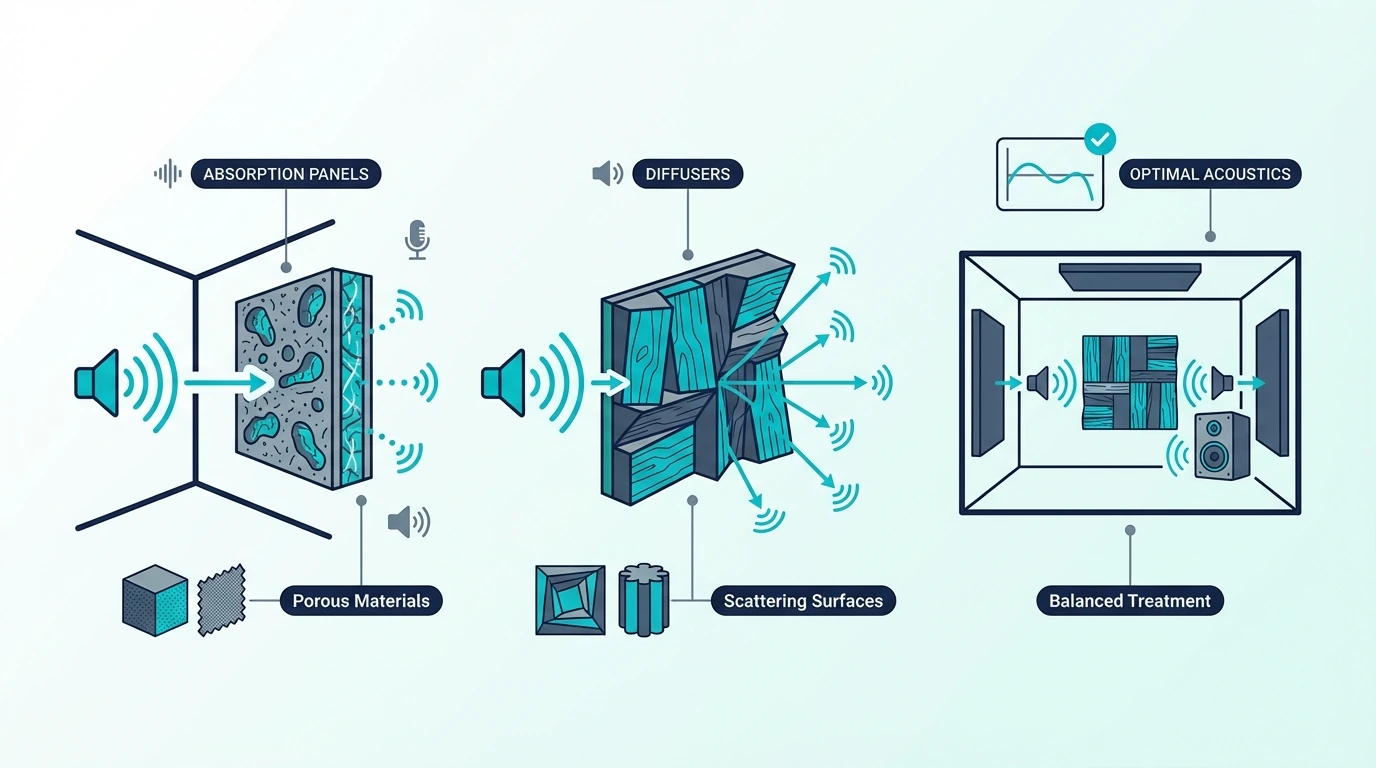
The best material for acoustic treatment is rigid fiberglass board. It delivers the highest noise reduction coefficient (NRC) per inch of thickness, absorbs across the widest frequency range, and lasts indefinitely without degrading.
Mineral wool is the closest alternative — nearly matching fiberglass in absorption performance while costing less and being easier to source from local hardware stores.
Polyester fiber panels have gained popularity as a formaldehyde-free option. They perform well in the mid-high range but require greater thickness to match fiberglass or mineral wool at low frequencies.
Acoustic foam is the weakest performer. It absorbs mid and high frequencies adequately but offers almost no low-frequency absorption, degrades over time, and carries fire risk with cheap formulations.
The material you choose determines the frequency range your panels can absorb. Density and thickness are the two variables that matter most — higher density and greater thickness push the absorption curve deeper into the bass range.
This is why two panels with the same outer dimensions can perform completely differently once you mount them. A thin decorative felt tile may calm a bright, reflective room, but it will not control the 120-250 Hz buildup that causes muddy low mids and unreliable bass decisions.
| Product | Size | Link |
|---|---|---|
Best Fiberglass Panel Pack 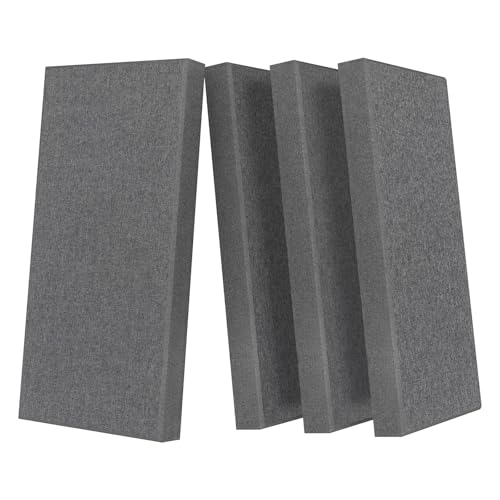 | 2 inch | See ratings |
Best Mineral Wool Board 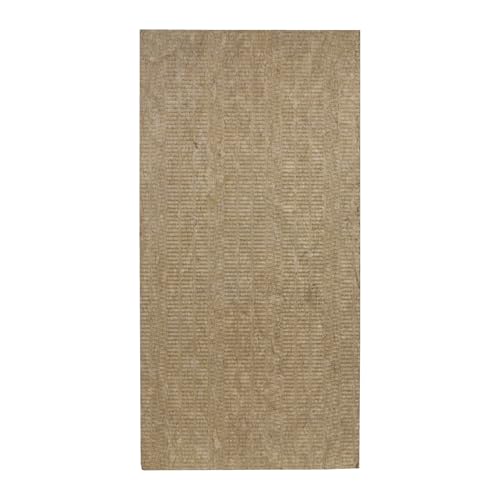 | 2 inch | See ratings |
Best Budget Entry Point 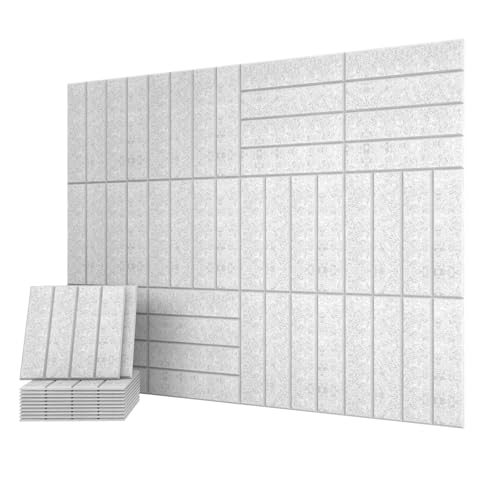 | 8 inch | See ratings |
Best Large Format Coverage  | — | See ratings |
Best Full-Size Fiberglass Pair 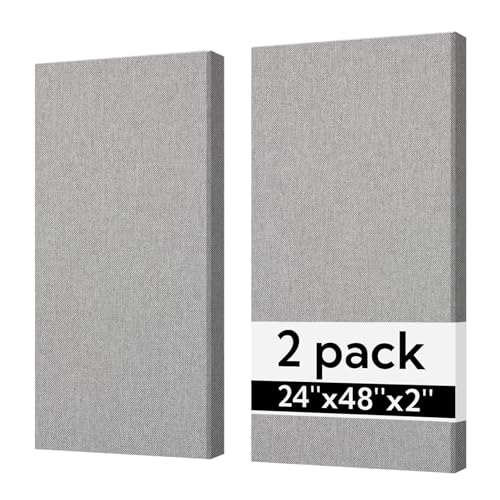 | 2 inch | See ratings |
Best Pre-Wrapped Panel  | — | See ratings |
Rigid Fiberglass vs Mineral Wool For Acoustic Panels
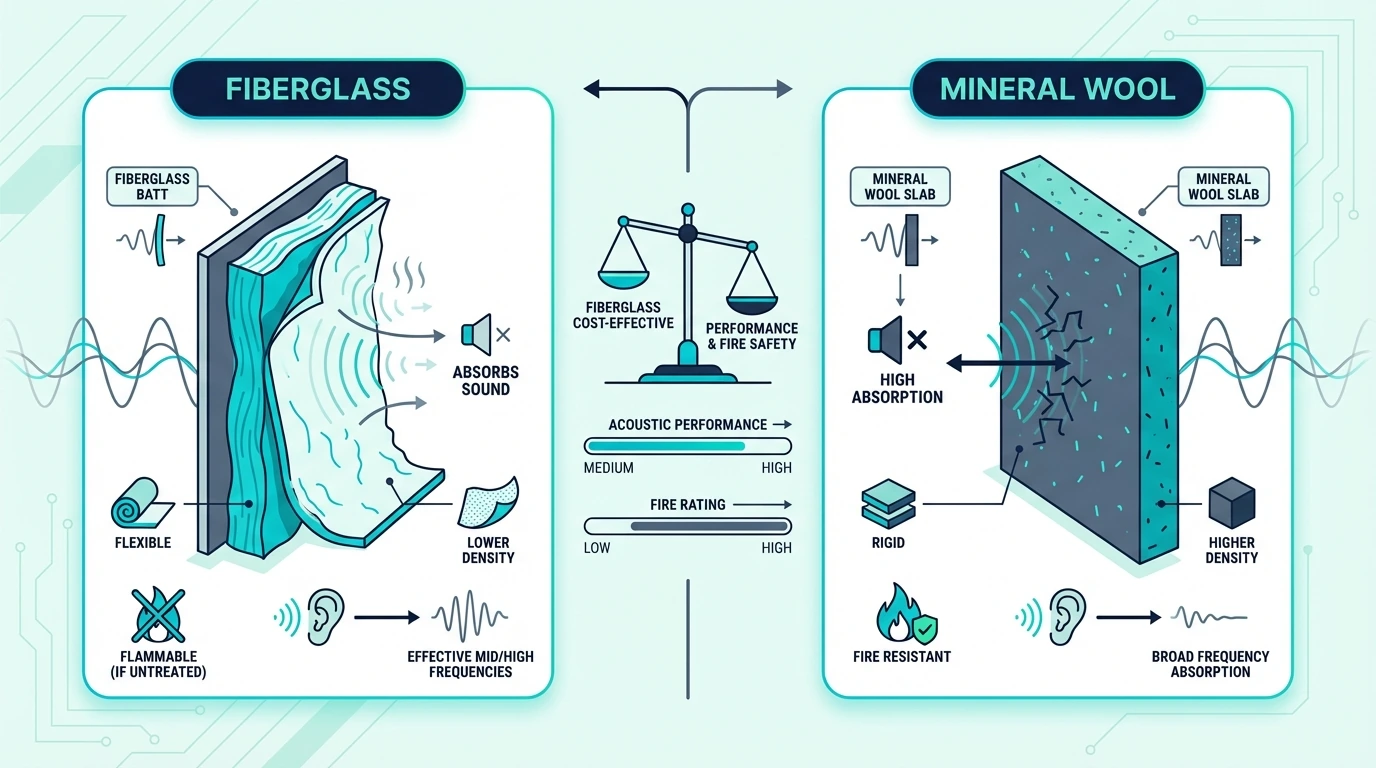
These two materials dominate professional and DIY acoustic treatment because they both deliver broadband absorption at reasonable cost. The differences between them are smaller than most forum debates suggest.
Owens Corning 703 And 705
Owens Corning 703 is a 3 lb/ft³ density rigid fiberglass board that has been the standard DIY panel material for decades. At 2 inches thick, it achieves an NRC of approximately 0.86 — meaning it absorbs 86% of the sound energy that hits it across the mid-frequency range.
OC 705 is a denser version at 6 lb/ft³, designed for applications where maximum bass absorption matters. It reaches deeper into the low-frequency range than 703 at the same thickness, making it the preferred choice for bass traps.
Both products are available in standard 24×48 inch boards that fit common wooden frames. The downside is availability — OC 703 and 705 are specialty products that require ordering from acoustic supply dealers or insulation distributors rather than walking into a hardware store.
Fiberglass also has a consistency advantage for DIY builds because the boards hold their shape cleanly inside a frame. The tradeoff is handling safety — gloves, sleeves, and a mask are smart during cutting because loose fibers can irritate skin and lungs.
The UMIACOUSTICS 4-Pack Fiberglass Panels deliver that fiberglass performance in a pre-built, fabric-wrapped format.
UMIACOUSTICS 4-Pack Fiberglass Panels
Rockwool Safe n Sound
Rockwool Safe n Sound is a stone wool (mineral wool) product originally designed for sound insulation inside wall cavities. It has become the go-to alternative to OC 703 for DIY acoustic panels because it is available at Home Depot and Lowe’s for roughly half the price of specialty fiberglass boards.
Safe n Sound has a density of approximately 2.5 lb/ft³ — lower than OC 703. That density difference means it absorbs slightly less energy at the lowest frequencies per inch of thickness.
The practical difference is small. At 2 inches thick, Rockwool delivers NRC values in the 0.80-0.85 range — close enough to fiberglass that most users cannot hear the difference in a treated room.
Rockwool has one advantage over fiberglass: it is naturally moisture-resistant and does not absorb water. In humid environments or basement studios, that property matters for long-term durability.
Mineral wool is also easier for many DIY builders to source locally, which changes the real-world cost equation more than lab measurements do. If one material ships expensively from a specialty supplier and the other is available ten minutes away at a big-box store, the cheaper project is usually the one you can buy locally and finish this weekend.
The Rockboard 60 Mineral Wool Boards are a strong pick if you want the mineral wool route in a rigid board format.
Rockboard 60 Mineral Wool Boards
If you want pre-built options rather than raw insulation boards, start with the best acoustic treatment brands instead of sourcing every material separately.
Get Studio Tips Weekly
Join 5,000+ creators getting acoustic treatment advice every week.
No spam. Unsubscribe anytime.Acoustic Foam vs Rigid Panels — When Does Each Make Sense?
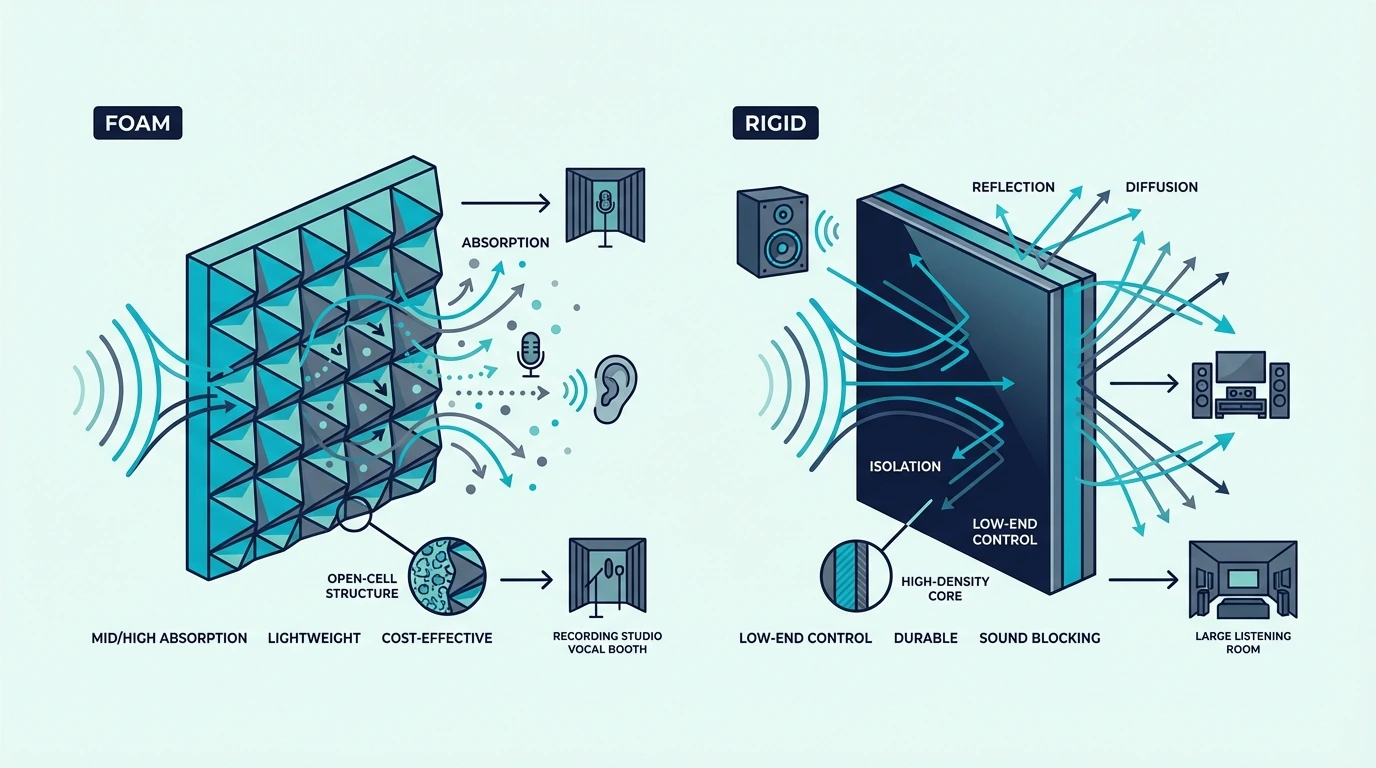
Foam and rigid panels serve different roles, and understanding when each makes sense prevents wasted money on the wrong material.
Where Foam Works Well
Foam excels at absorbing high frequencies in situations where bass control is not the primary goal. Flutter echo between parallel walls — that metallic ringing you hear when you clap — is a mid-high frequency problem that foam handles effectively.
Vocal booths and podcast recording spaces benefit from foam because the primary concern is reducing room reflections around the microphone, and those reflections are predominantly in the frequency range foam absorbs well.
Quick, temporary setups also favor foam. It is lightweight, inexpensive, and attaches to walls with adhesive strips.
For renters who cannot mount heavy panels, foam provides meaningful (if limited) improvement.
The UMIACOUSTICS 12-Pack Acoustic Panels provide an affordable entry point for basic room treatment.
UMIACOUSTICS 12-Pack Acoustic Panels
Where Rigid Panels Win
Rigid fiberglass and mineral wool panels win every comparison where broadband absorption matters. Mixing rooms, mastering suites, dedicated theaters, and any space where accurate bass reproduction is important require rigid panel treatment.
A 2-inch fiberglass panel absorbs meaningfully down to 125 Hz. A 4-inch panel reaches below 80 Hz.
A 2-inch foam wedge barely absorbs anything below 500 Hz.
That frequency gap means foam-treated rooms still have boomy, uncontrolled bass. If you need to keep spending under control, the best budget acoustic treatment options are a smarter starting point than thin foam tiles that only tame the top end.
Rigid panels also last indefinitely. Fiberglass and mineral wool do not degrade, yellow, or crumble over time.
Foam loses its absorptive properties within a few years as the cellular structure breaks down.
The 6-Pack 72×48 Sound Absorbing Panels provide broad coverage with rigid panel performance. Full-size 24×48-inch fiberglass panels are a better fit when you want rigid coverage for reflection points or rear-wall treatment.
6-Pack 72×48 Sound Absorbing Panels
Cost per performance favors rigid panels in the long run. While the upfront price is higher, rigid panels never need replacement.
Foam that degrades in 3-5 years costs more over a decade than fiberglass panels you buy once.
Installation efficiency matters too. One full-size rigid panel at a first reflection point usually solves more of the problem than several small foam squares scattered around the same wall, because the rigid panel covers the actual reflection zone in one continuous absorptive surface.
What Fabric Should You Use For Acoustic Panels?
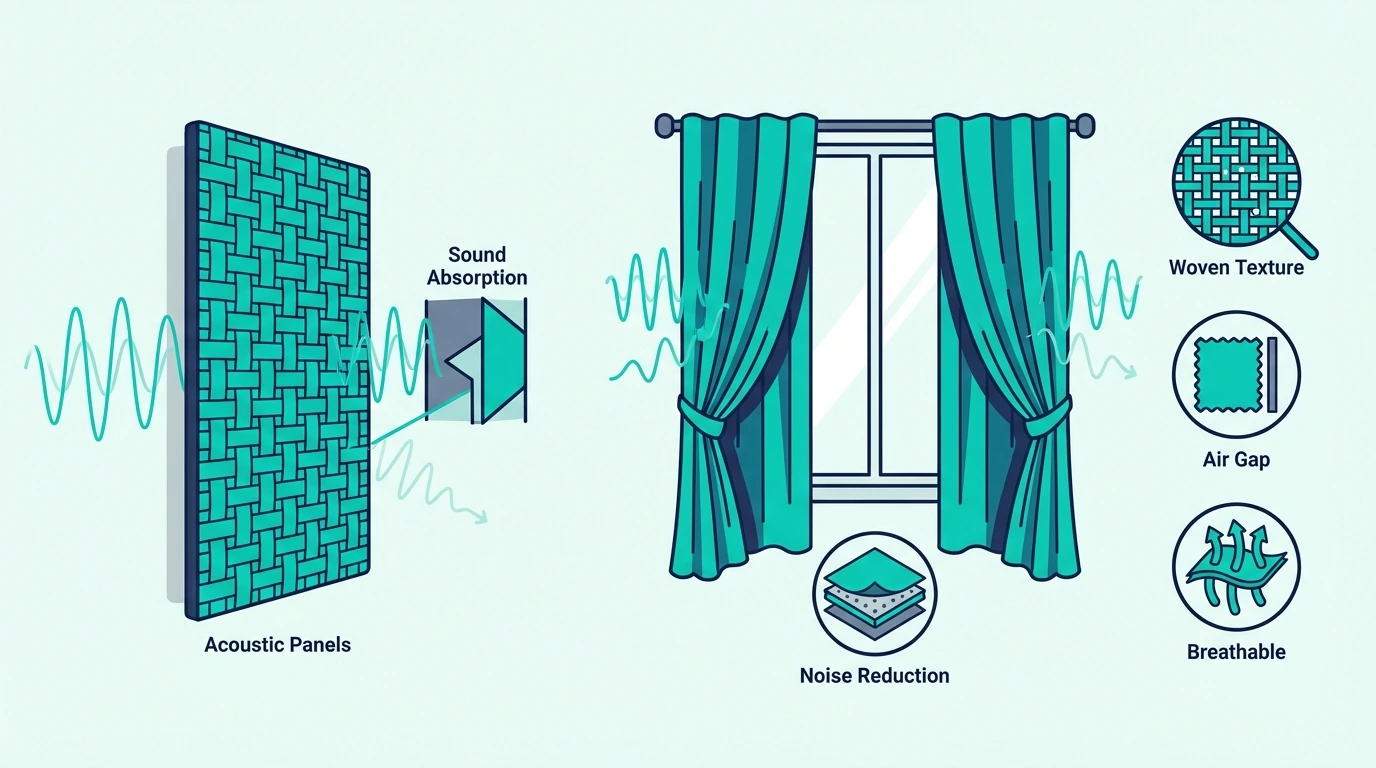
The fabric covering on an acoustic panel must be acoustically transparent — meaning sound passes through it freely to reach the absorptive core behind it. A fabric that reflects sound turns your carefully chosen core material into a decorative wall hanging that does nothing.
Guilford Of Maine And Alternatives
Guilford of Maine is the industry-standard acoustic fabric used by professional panel manufacturers. It is specifically engineered for high air permeability while maintaining durability and aesthetic quality.
The blow test is the simplest way to verify any fabric: hold it up to your mouth and blow. If air passes through easily with minimal resistance, the fabric is acoustically transparent enough.
If it blocks the airflow, it will reflect sound.
This matters most at the top end of the frequency spectrum, where dense weaves start reflecting energy before it ever reaches the core. A great fiberglass or mineral wool panel wrapped in the wrong fabric can underperform a cheaper build wrapped in proper speaker cloth.
Budget alternatives that pass the blow test include burlap, speaker grille cloth, and certain lightweight polyester blends. These fabrics cost a fraction of Guilford of Maine and perform identically in terms of acoustic transparency. The Olanglab 24×48 Fiberglass Panels come pre-wrapped in acoustically transparent fabric, which eliminates the sourcing step entirely.
Olanglab 24×48 Fiberglass Panels
If you would rather skip the fabric decision entirely, many best acoustic treatment kit options bundle finished panels and mounting hardware together.
The 8-Pack 48×32 Acoustic Panels come pre-wrapped, eliminating the fabric selection step entirely.
8-Pack 48×32 Acoustic Panels
Fabrics To Avoid
Canvas, vinyl, leather, and heavy upholstery fabrics reflect sound. A panel covered in canvas absorbs dramatically less than the same panel covered in speaker cloth because the canvas acts as a barrier that prevents sound from reaching the core.
Printed fabrics with heavy ink coverage can also reduce transparency. The ink fills the gaps between the fabric fibers, reducing air permeability.
If aesthetics demand a specific fabric, test it with the blow test before committing. Some decorative fabrics look dense but pass air freely, while others that appear lightweight actually block airflow.
The Bottom Line
Rigid fiberglass (OC 703) is the best-performing acoustic treatment material. Rockwool mineral wool is the best value — nearly identical performance at lower cost and wider availability.
Foam is acceptable for flutter echo and high-frequency control in temporary or budget setups, but it is not a substitute for rigid panels in any room where bass accuracy matters. If you want finished products instead of raw materials, compare the best acoustic treatment brands and the best budget acoustic treatment picks first.
Wrap your panels in acoustically transparent fabric — test with the blow test if you are unsure. The core material does the acoustic work, and the fabric should stay out of its way.
If you prefer a simpler shopping path, a best acoustic treatment kit can reduce the guesswork around matching panels, hardware, and coverage.
Whether you are building a studio, improving a theater, or tightening up a voice space, the material choice is the foundation — get this right and the rest of your treatment decisions become straightforward. For voice-focused spaces, choosing the right core material matters even more because microphones pick up every deficiency a thin panel leaves behind.
Frequently Asked Questions
Is Rockwool Or Fiberglass Better For Sound?
Both perform within a few percentage points of each other. Fiberglass (OC 703 at 3 lb/ft³) has a slight edge in absorption per inch due to higher density.
Rockwool is cheaper, more widely available, and naturally moisture-resistant. For most home studio and home theater applications, the difference is inaudible.
What Is The Best Material For DIY Acoustic Panels?
Rigid fiberglass (OC 703) or Rockwool Safe n Sound in a 1×4 or 1×3 wooden frame, wrapped with acoustically transparent fabric. Build panels at 2 inches thick minimum — 4 inches for bass traps.
Mount with a 1-2 inch air gap behind the panel for improved low-frequency absorption.
Is MDF Or Plywood Better For Acoustic Panel Frames?
Either works. MDF provides smoother edges for fabric wrapping but is heavier.
Plywood is lighter and structurally stronger. Neither affects acoustic performance because the frame is not an absorptive element — it just holds the core material and fabric in shape.