Best Insulation For Soundproofing (Rockwool vs Fiberglass vs The Rest)
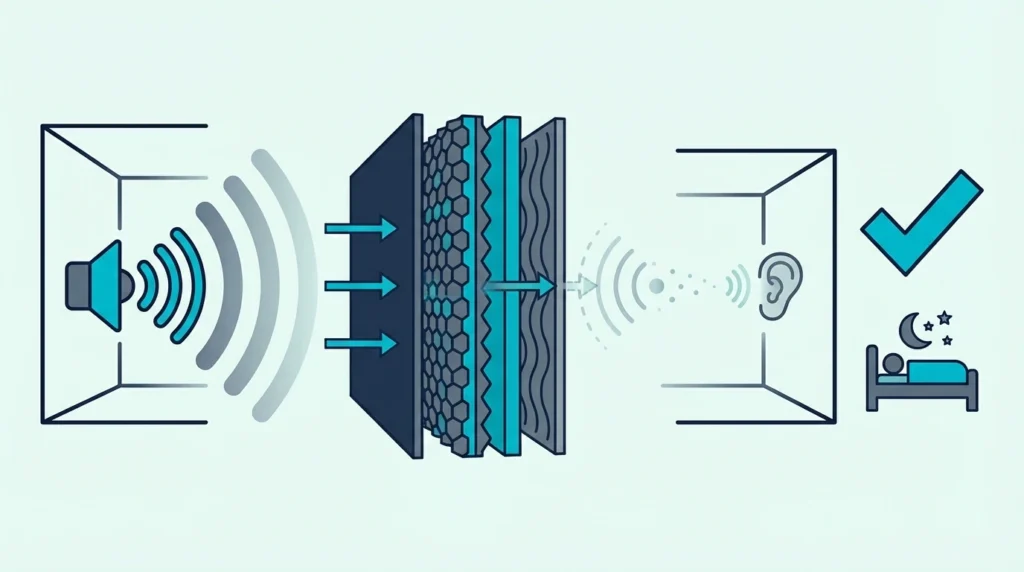
Best insulation for soundproofing is one of the most searched topics in noise control, but most answers skip the uncomfortable truth – insulation alone doesn’t soundproof anything. It’s one component in a system, and choosing the wrong insulation (or the right insulation without the rest of the system) wastes money.
The difference matters because insulation that helps with sound and insulation that barely matters comes down to density, fit, and what you pair it with. R-value – the number most people use to compare insulation – measures thermal resistance, not acoustic performance.
Below, you’ll find which insulation types actually reduce noise, how rockwool and fiberglass compare in real-world wall assemblies, and what else you need alongside insulation to get meaningful sound reduction.
Mineral wool (rockwool) is the best cavity insulation for soundproofing – it’s denser than fiberglass, holds its shape better in wall cavities, and provides superior mid-frequency absorption. But insulation only works as part of a complete wall system: you still need mass (extra drywall), damping, and proper sealing to achieve real noise reduction.
How Insulation Contributes to Soundproofing
Not all insulation performs equally for sound. Understanding what matters acoustically – versus thermally – prevents you from buying based on the wrong spec.
Insulation as a system component
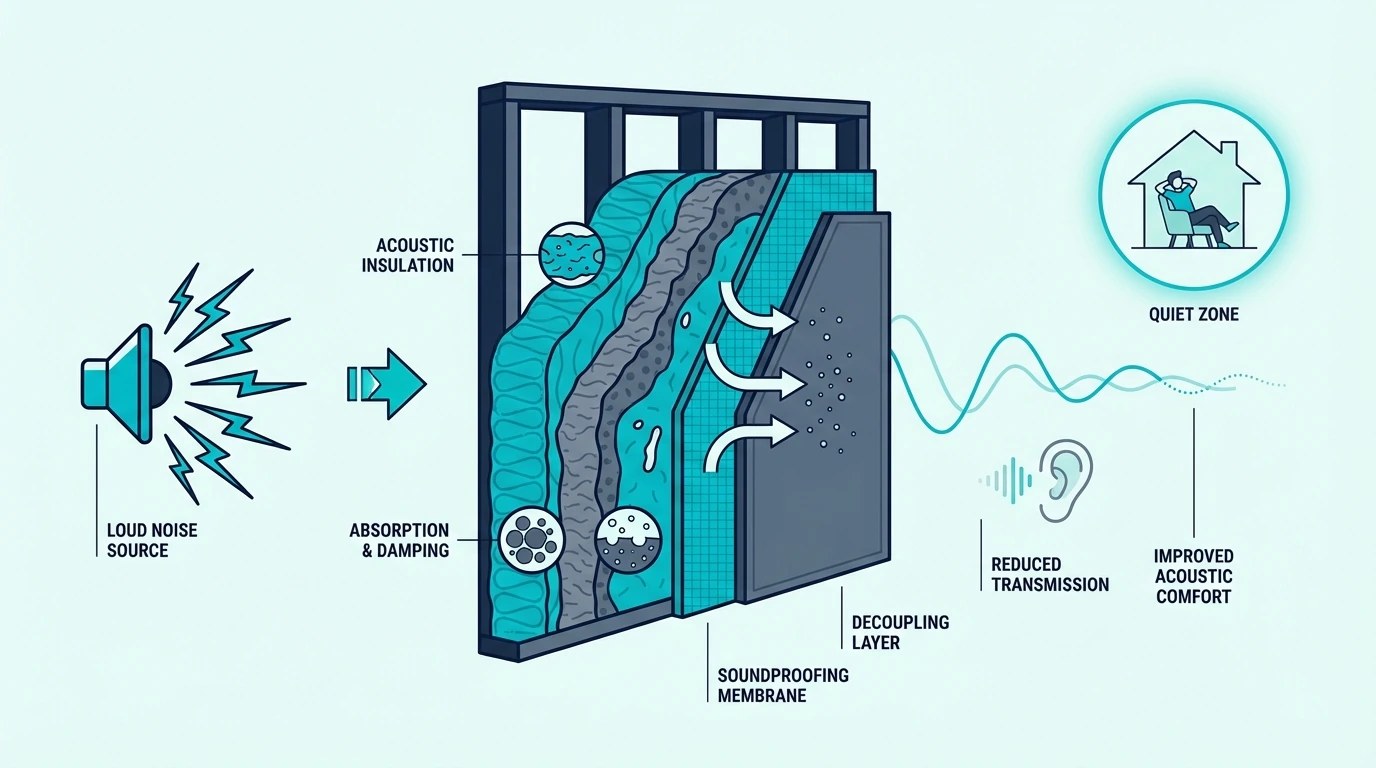
Insulation absorbs sound energy traveling through the air cavity inside a wall. Without insulation, the cavity acts like a drum – sound hits one side, the air space resonates, and the other side radiates the noise.
Filling that cavity with insulation dampens the resonance and absorbs a portion of the sound energy passing through. This typically adds 4 to 8 STC points to a wall assembly – meaningful, but not enough on its own to make a noisy wall quiet.
The insulation is one layer in a system that also needs mass (drywall thickness), damping (compounds that convert vibration to heat), and air sealing (caulk at every gap and penetration). Skipping any of those and relying on insulation alone produces disappointing results.
Density, thickness, and fit
That supporting role explains why not all insulation performs equally. Once you stop treating insulation as a magic fix, density is the first spec that actually changes the result.
Denser insulation absorbs more sound energy per inch of thickness. Mineral wool at 4 to 8 pounds per cubic foot outperforms standard fiberglass at 0.5 to 1 pound per cubic foot for this reason.
Fit matters second. Insulation that’s cut too small leaves air gaps around the edges, and sound exploits those gaps the same way it exploits any unsealed penetration. Batt insulation should friction-fit snugly in the cavity with no compression and no gaps.
Thickness matters less than most people expect. Going from 3.5 inches (standard 2×4 wall) to 5.5 inches (2×6 wall) of the same insulation adds roughly 2 to 3 STC points – a barely perceptible difference. Spending that money on denser insulation or an extra layer of drywall produces a bigger improvement.
Airborne noise vs impact noise
Even well-fitted dense insulation has a limit: it primarily helps with airborne noise – voices, TV, music – because it absorbs the pressure waves traveling through the wall cavity. For this type of noise, cavity insulation is an essential part of the solution.
Impact noise – footsteps, door slams, objects dropped on floors – travels through the building structure as vibration. Insulation in the cavity does very little against structure-borne vibration because the sound bypasses the air space entirely by traveling through the studs and framing.
Stopping impact noise requires decoupling (resilient channels or clip systems) to break the vibration path, which is a different problem than what insulation solves.
Rockwool vs Fiberglass for Sound
This is the most common comparison, and the answer is straightforward for acoustic applications.
Where rockwool wins
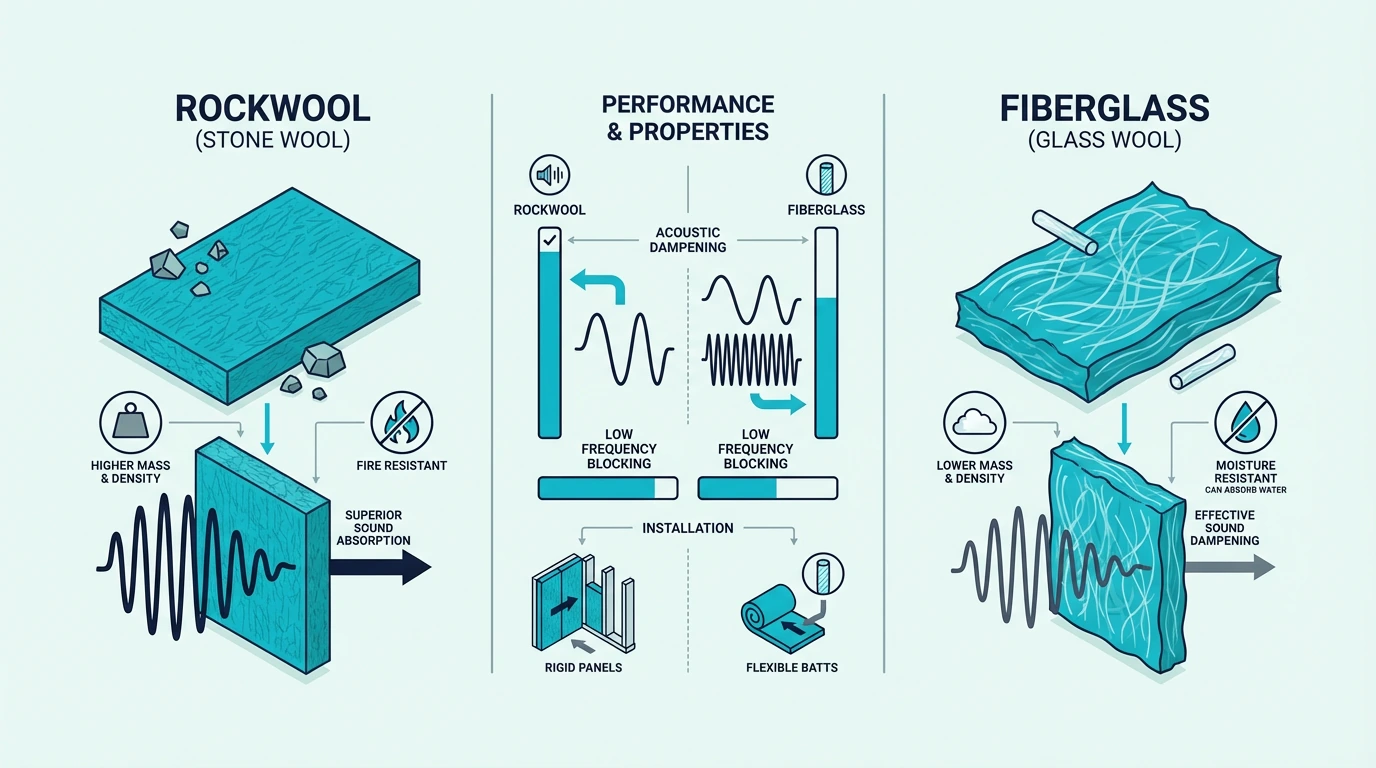
Rockwool (mineral wool) is denser, stiffer, and holds its shape in the cavity without sagging over time. Its density – typically 4 to 8 pounds per cubic foot – gives it better sound absorption across the frequency range that matters most for speech and music.
That density advantage is why Safe ‘n’ Sound-style batts keep coming up in real wall builds, not just in spec sheets. A batt product like AFB Mineral Wool Insulation is a good example because it friction-fits tightly in standard stud cavities and doesn’t need stapling or support.
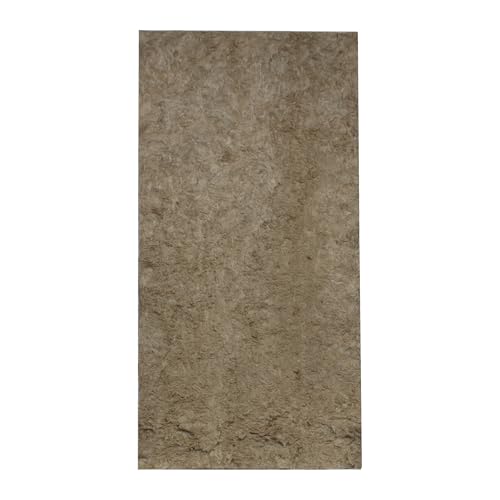
AFB Mineral Wool Insulation
Handling is also easier in some ways – rockwool batts cut cleanly with a serrated knife and don’t release the itchy glass fibers that make fiberglass unpleasant to work with.
When fiberglass still makes sense
Rockwool’s density advantage comes at a higher price. Fiberglass costs less per square foot and is available everywhere. For projects where the budget is tight and every dollar of insulation money matters, standard R-13 fiberglass batts in the wall cavity still provide a meaningful acoustic improvement over an empty cavity.
If you’re insulating an entire house and soundproofing is a secondary goal behind thermal performance, fiberglass makes sense because you’re already installing it. That doesn’t make it the acoustic winner, but it can still be the practical choice.
If you want a denser fiberglass-based option for a more specialized build, Owens Corning 703 Semi Rigid Fiberglass Board gives you more control than standard fluffy batts, though it’s usually reserved for higher-performance assemblies rather than full-house thermal installs.
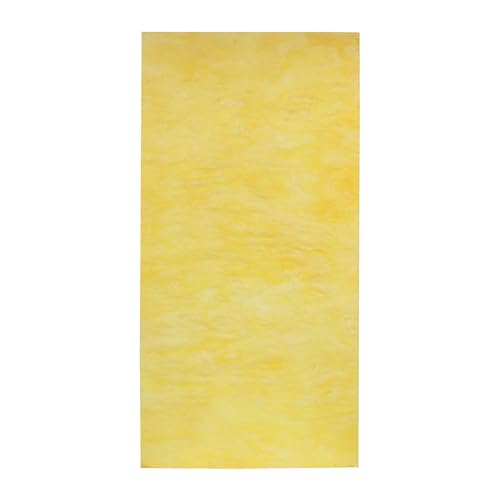
Owens Corning 703 Semi Rigid Fiberglass Board
The real-world gap between them
With both options on the table, the practical question is how much the difference actually matters. In controlled lab tests, rockwool typically adds 2 to 4 more STC points than fiberglass of the same thickness. In a real wall assembly with drywall, sealing, and proper construction, that translates to a small but measurable difference.
The honest answer is that the gap between rockwool and fiberglass is smaller than the gap between having any insulation and having none. An empty cavity wall at STC 33 jumps to STC 37-39 with fiberglass and STC 39-43 with rockwool. Both are significant improvements; rockwool is incrementally better.
Get Studio Tips Weekly
Join 5,000+ creators getting acoustic treatment advice every week.
No spam. Unsubscribe anytime.Best Insulation by Location: Walls, Ceilings, and Basements
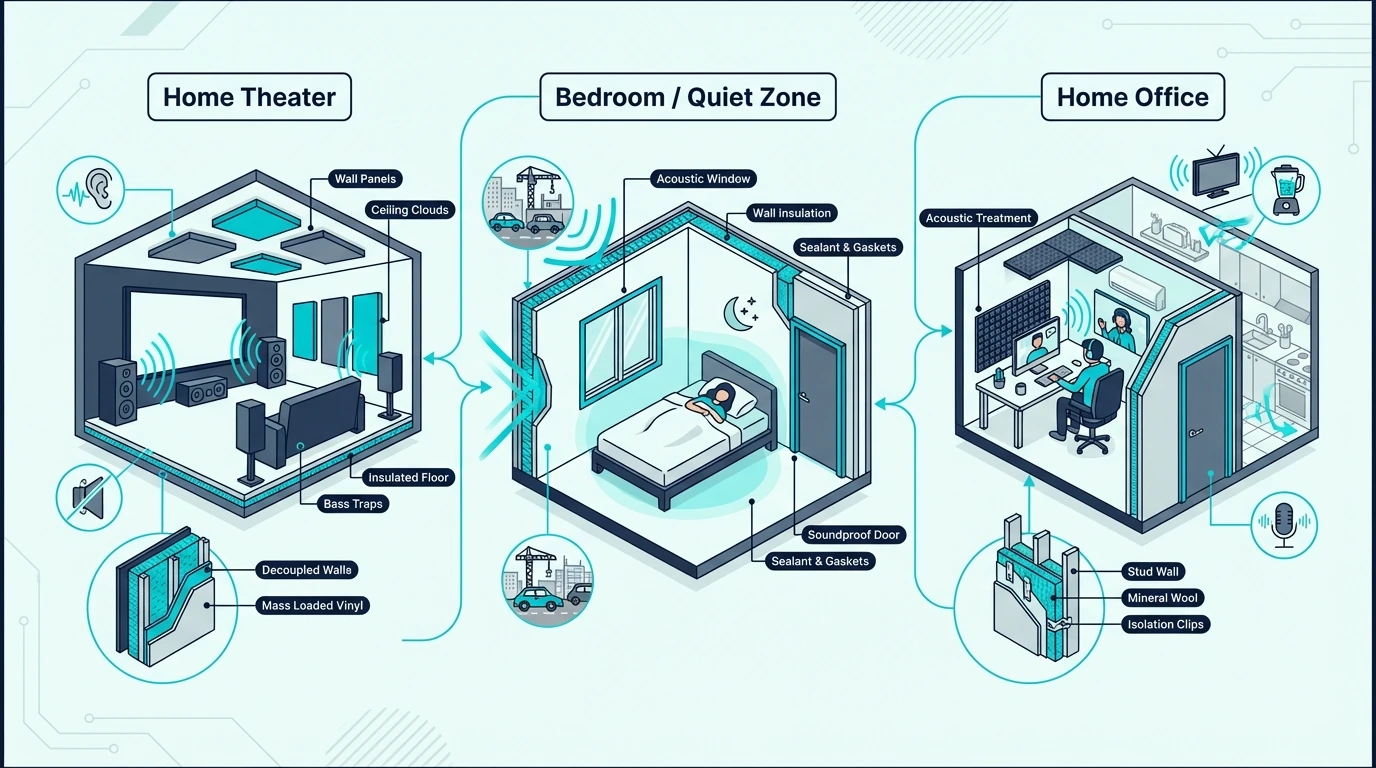
Different spaces have different noise challenges. The best insulation choice depends on what you’re building and what noise you’re trying to stop.
Interior partition walls
For interior walls between rooms, rockwool batts (like Safe ‘n’ Sound) in 2×4 stud cavities are the standard recommendation. They’re designed for the application, fit standard framing, and provide the best acoustic performance per inch.
If the wall is already closed and you can’t access the cavity, blown-in cellulose is an alternative – it’s dense enough to provide reasonable acoustic absorption and can be installed through small holes drilled in the drywall. It’s not as effective as rockwool batts, but it’s far better than leaving the cavity empty.
Ceilings and between floors
The same rockwool-first logic applies above, but the challenge changes because impact noise dominates. Ceiling insulation for noise between floors follows the same principle – dense cavity fill – but the challenge is different because impact noise (footsteps) dominates over airborne noise.
Rockwool batts in the joist cavity help with airborne sound but do almost nothing for footfall impact. For impact noise, you need decoupling (resilient channels on the ceiling joists) or a floating floor assembly above. Insulation supports these systems but doesn’t replace them.
Basements, garages, and utility rooms
Unlike finished rooms, basements and garages often have exposed framing, which makes insulation installation straightforward. Use rockwool batts in the stud or joist cavities and combine them with a properly sealed drywall finish for the best result.
For these louder spaces, a denser product like Rockwool 8 lb Density Mineral Wool can make sense when the space is louder and you want more control than basic residential batts usually give.
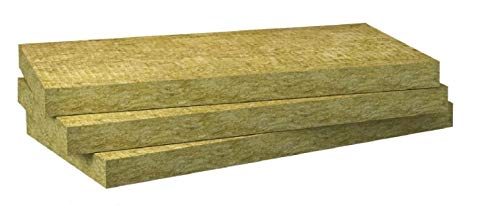
Rockwool 8 lb Density Mineral Wool
But even there, cavity fill is still only half the story. Pairing the insulation with mass loaded vinyl behind the drywall adds the mass component that insulation alone can’t provide. The combination of dense cavity fill plus a mass barrier on the surface creates a wall assembly that outperforms either material used alone.
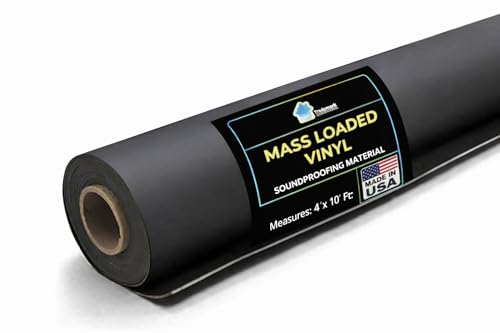
mass loaded vinyl behind the drywall
What to Pair with Insulation for Real Results
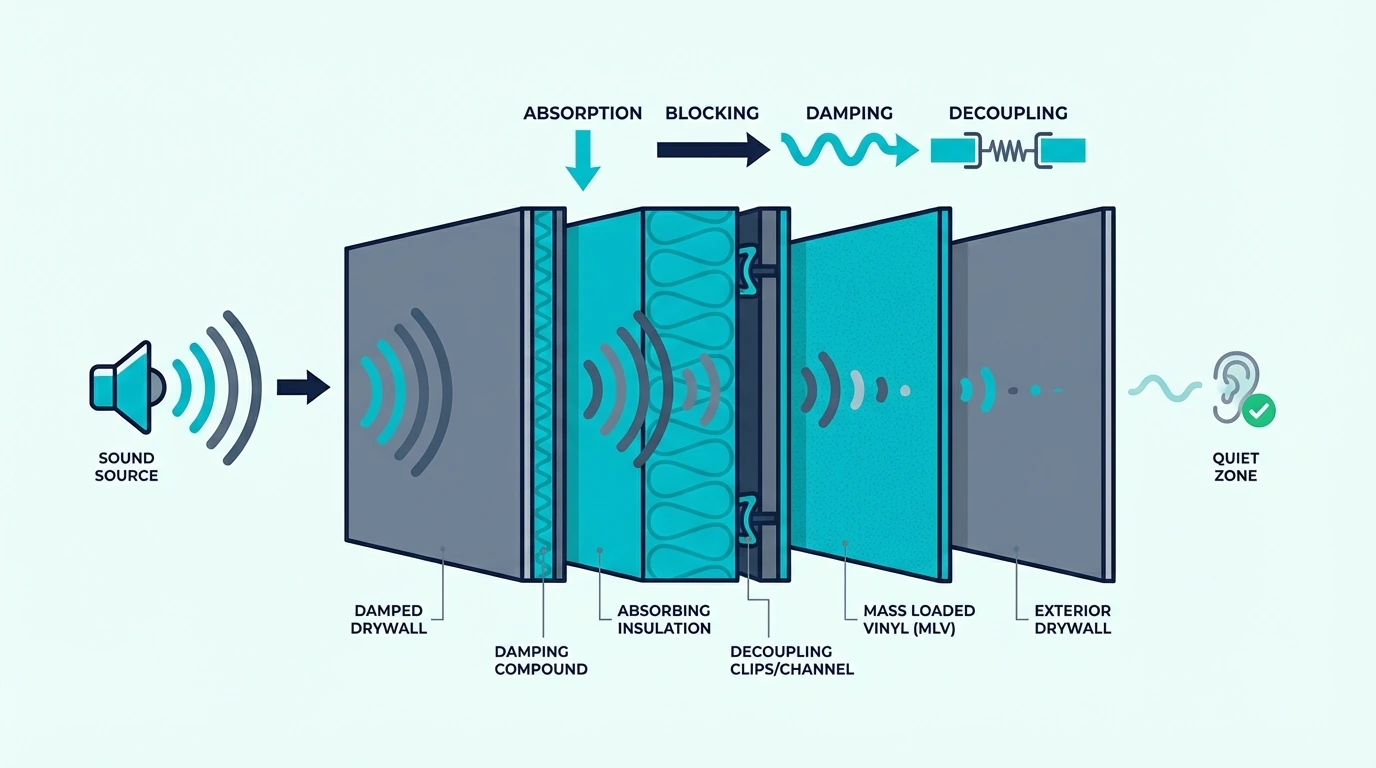
Insulation is the foundation, not the complete solution. Here’s what makes it work.
Extra drywall and damping compound
Adding a second layer of 5/8-inch drywall with damping compound (like Green Glue) between the layers is the single most effective upgrade you can add to an insulated wall. The damping compound converts vibration energy into heat, and the extra drywall adds mass.
An insulated wall with double drywall and damping compound on one side typically reaches STC 48 to 52 – enough to make loud speech inaudible through the wall. Without the extra drywall, the same wall with insulation alone sits around STC 39 to 43.
Resilient channels and clips
Those STC gains from extra drywall cover airborne noise well, but structure-borne noise needs a different layer. Decoupling is worth adding when you need to stop structure-borne noise (bass, impact) or when you need the highest possible STC rating. A clip-and-channel system with insulation, double drywall, and a properly planned mass layer can reach STC 55 to 60 – studio-grade isolation.
For most residential applications – bedrooms, offices, and shared walls – insulation plus extra drywall and damping delivers enough improvement without the added complexity and cost of decoupling.
Installation mistakes that ruin performance
Even the best assembly fails if the details are sloppy. Gaps around insulation batts let sound bypass the material entirely. Cut batts to fit snugly without compression – compressed insulation loses both thermal and acoustic performance.
Unsealed electrical boxes, pipe penetrations, and gaps at the top and bottom plates create air paths that insulation can’t fix. Every penetration needs acoustic caulk or putty pads.
Resilient channels installed incorrectly – with screws that penetrate through the channel into the stud – create a rigid connection that defeats the entire purpose of decoupling. This is the most common and most expensive installation mistake in wall soundproofing.
Choosing the Right Insulation for Your Project
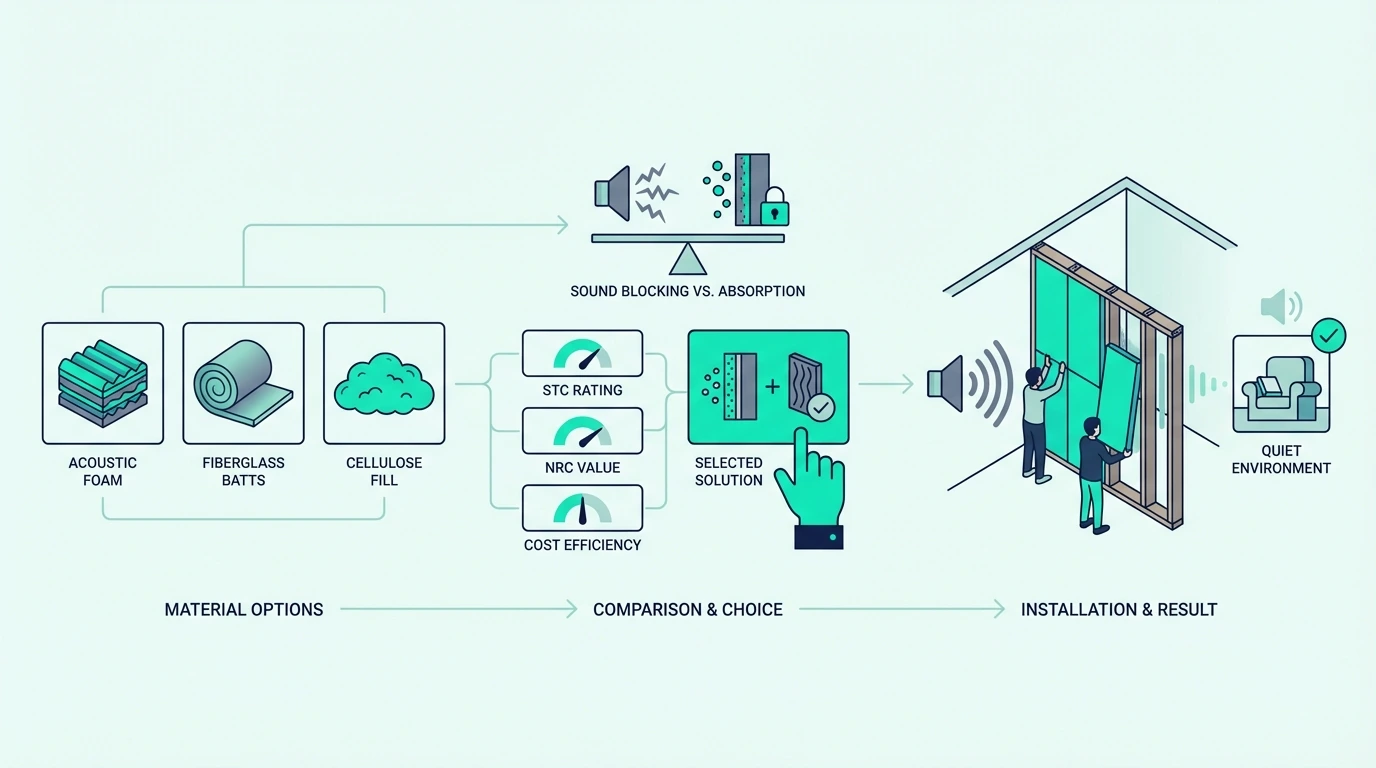
For most wall and ceiling soundproofing projects, the decision framework is simple.
If you can access the cavity and budget allows, use rockwool batts (Safe ‘n’ Sound or equivalent). If budget is tight, fiberglass batts are a meaningful second choice.
If the cavity is already closed, blown-in cellulose is the practical option.
If you cannot access the cavity, skip cavity insulation entirely and spend that money on the layers the wall can still accept – better sealing, more drywall mass, damping compound, or a proper barrier layer. Insulation only makes sense once the cavity is actually open.
Regardless of which insulation you choose, pair it with at minimum a properly sealed drywall surface. For serious noise problems, add a second drywall layer with damping compound.
The insulation handles cavity absorption; the drywall and sealing handle mass and air-tightness.
For a complete overview of materials beyond insulation, see our guide to the best soundproofing materials. For the full picture of how all surfaces work together, start with our how to soundproof a room guide.
Frequently Asked Questions
How Do I Stop Noise Coming Through Walls?
Insulate the wall cavity with dense batts (rockwool is ideal), seal every gap and penetration with acoustic caulk, and add mass with an extra layer of drywall and damping compound. These three steps – insulation, sealing, and mass – address the main paths sound uses to pass through a wall.
Is Rockwool Or Fiberglass Better For Sound?
Rockwool is better – it’s denser, absorbs more sound energy, and holds its shape in the cavity. The real-world difference is 2 to 4 STC points in a typical wall assembly. Both are significantly better than an empty cavity, but rockwool consistently outperforms fiberglass for acoustic applications.
Is Insulation Alone Enough For Soundproofing?
No. Insulation absorbs sound in the wall cavity but doesn’t add mass or seal air gaps – the other two critical components of sound blocking. A wall with only insulation and single-layer drywall reaches STC 37 to 43, which still allows conversation to be heard. Adding extra drywall with damping and proper sealing pushes that to STC 48 to 52.