How to Soundproof an Office (Privacy, Calls, and Real Weak Points)

How to soundproof an office can work, but only if you fix the right office problem first. A therapy room, home office, glass-front consult room, and open office all fail in different ways, so the wrong fix will not give you privacy or focus.
Office projects go sideways so often because people buy panels before checking the door, the drop ceiling, the glass, or the shared wall, then wonder why the office still leaks conversation or feels noisy.
The good news is that office soundproofing improves fast when you match the fix to the actual office type.
Start with the decision table, then move through the higher-ROI cheap fixes, the small-office scenarios, and the upgrade order that matters most.
This guide makes that order practical so you can decide whether you need better sealing, more absorption, or a stronger privacy assembly.
Start with the opening and the leak path, not the product. Closed offices usually need better door sealing, wall or ceiling control, and sometimes more mass, while open offices usually need absorption, layout changes, and sound masking before they need true room-to-room soundproofing.
| If your office situation is… | Best first move | Usually enough when… | Escalate when… |
|---|---|---|---|
| Private office with speech leaking into the hall | Seal and upgrade the door path first | Speech gets less intelligible outside the room | The door is fixed and calls are still clear through wall or ceiling |
| Open office with chatter and distraction | Use absorption, layout control, and sound masking first | The problem is focus and comfort more than confidentiality | You need true room-to-room privacy, not just a calmer space |
| Home office with traffic or exterior noise | Treat the window side first, then the door | Outside noise is the main call and concentration problem | The shared wall or ceiling is still dominating after window work |
| Leased office with a drop ceiling | Check the plenum and ceiling path before blaming the wall | The main leak is over the partition line | The wall is also lightweight or confidentiality is high |
| Glass-front office or consult room | Improve the door, seals, and privacy weak points around the glazing | You need a practical improvement, not total isolation | Speech privacy is still too weak because the envelope is too exposed |
| Small office on a budget | Rank door sealing, visible gaps, and selective softening first | The room mainly feels leaky or harsh | Cheap fixes stop improving privacy and the assembly is still weak |
Office Soundproofing Starts With The Right Noise Problem
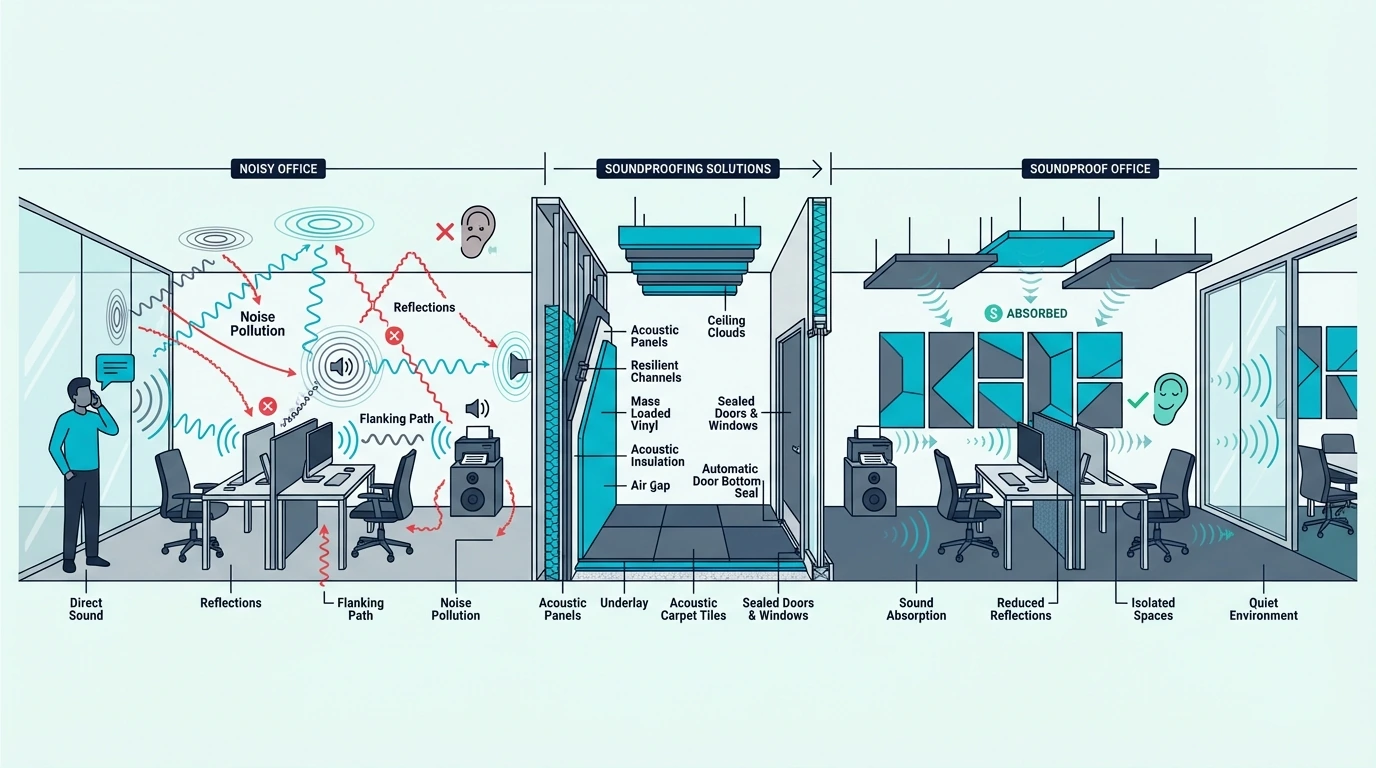
Sort the office into the right problem bucket before you buy anything. Office noise gets easier to fix once you know whether the room is failing as a closed privacy room, an open collaborative area, a home office, or a leased suite with ceiling and glass weak points.
Speech Privacy, Distraction, And Exterior Noise Need Different Fixes
Closed offices with confidential calls are speech-privacy problems. Open offices are often distraction-and-reverb problems, which means they usually need acoustic control and sound masking sooner than they need wall reconstruction.
If cubicle walls divide your open office, our guide to where to buy the best soundproof cubicles for offices separates the panels that only absorb from the pods that enclose a call.
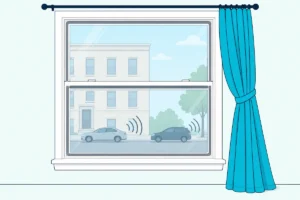
Home offices often split between exterior noise at the window and household noise at the door or shared wall. Mechanical noise is different again, because vents, return grilles, and office equipment can keep a room sounding busy even when the walls are decent.
For a home office specifically, STC targets for a home office puts numbers on how far the door, the wall and the window need to go.
Doors, Plenums, Glass, And Shared Walls Usually Leak First
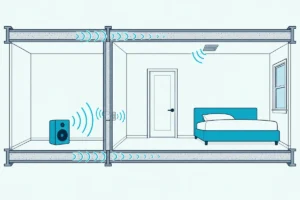
The door is the first failure point in many offices, especially if it is hollow-core or badly sealed. In commercial suites, the plenum above a drop ceiling is just as important because sound can travel over the wall even when the partition looks solid at eye level.
For that plenum path the number to shop by is a tile’s CAC, and Armstrong’s and USG’s published CAC ratings for ceiling tiles sit mostly between 35 and 40, with a few thick tiles up to 50.
Glass fronts, sidelites, shared walls, and small perimeter gaps come next. If the problem sounds like hallway speech, conference-room bleed, or street noise, compare the office path with the relevant guides for the door, the window, the wall, or the ceiling before buying generic office products.
Acoustic Treatment Leads When Privacy Outside The Room Is Not The Main Problem
If the office feels echoey, tiring, and hard to talk in but privacy outside the room is not the main issue, acoustic treatment is the first move. That is common in open offices, glass-heavy rooms, and small call rooms that sound loud inside before they truly leak outside.
If confidential speech is still understandable in the corridor or the next room, soundproofing has to lead. That is where sealing, mass, and better assemblies matter more than simply softening the inside experience.
Cheap Office Fixes Only Work When They Target The Leak Path

Once the room is staying mostly as-is, cheap office soundproofing becomes a ranking exercise. The best low-cost moves attack the highest-return leak paths first instead of scattering money across decorative products.
Door Paths And Gap Sealing Usually Have The Highest ROI
First, seal and upgrade the door path. A solid-core slab, perimeter seals, and a proper sweep usually beat random wall products because office doors leak far more sound than people expect.
Second, seal the room’s small weak points. Gaps at trim, outlets, data penetrations, glazing edges, and ceiling lines all act like bypass paths, which is why air-sealing often outperforms another cosmetic layer.
Third, calm the room after leakage control. Soft finishes, selective absorption, and basic sound masking help focus and call comfort once the obvious leaks are no longer dominating the room.
If you need a temporary, renter-safe way to test whether a heavier layer helps over a weak door or glass area, US Cargo Control sound dampening blanket is the kind of stopgap product that can make sense.
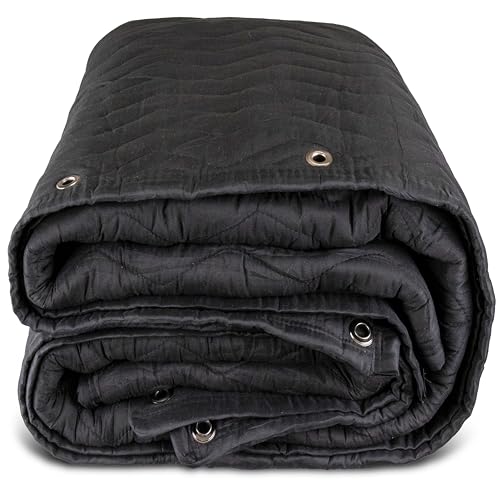
US Cargo Control Sound Dampening Blanket
Decorative Quick Fixes Usually Waste Money On Privacy Problems
Thin foam on a shared partition is the classic office money sink. It can reduce some reflections inside the room, but it does almost nothing for real speech privacy when the door, ceiling path, or wall assembly is the actual failure point.
The same caution applies to vague “quiet office” products that do not add mass, create a seal, or absorb sound where it matters. If the main complaint is intelligible speech outside the room, the office needs more than a decorative accessory.
Cheap Fixes Are Good Enough For Focus Before They Are Good Enough For Confidentiality
A cheap fix is often good enough when the room is already structurally decent and the biggest problems are leakage, mild reverb, or moderate distraction. That is common in home offices, leased rooms with limited authority to rebuild, and small professional offices that need improvement rather than perfect isolation.
Cheap fixes stop being enough when confidentiality is high or when the drop ceiling, shared wall, or glass front is clearly the weak link. At that point it is usually smarter to save for one real assembly upgrade than to keep stacking minor products.
Small Offices Reward Selective Fixes Faster Than Blanket Coverage
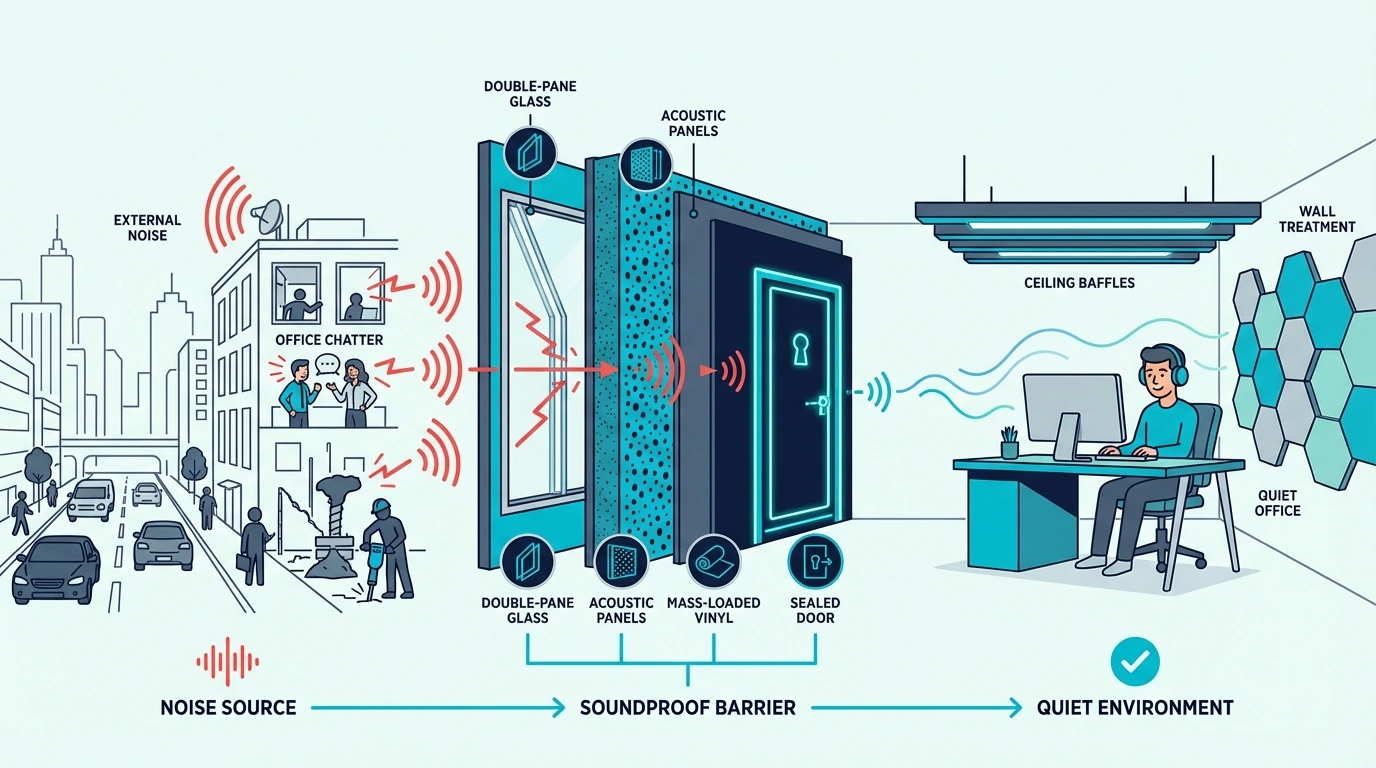
Small offices improve fast, but they also reveal mistakes fast because every surface is close. That makes scenario-based choices more useful than blanket coverage.
Home Offices Usually Split Between House Noise And Exterior Noise
In a small home office, the usual split is house noise versus outside noise. Start with the door and window first, then decide whether the shared wall or ceiling actually needs more weight.
That order matters because many home-office complaints are half room problem and half house problem. A spare-bedroom office with family noise needs a different fix from a street-facing office with traffic and parking-lot noise.
If the window side is the first thing hurting calls and concentration, RYB HOME 3-Layer Soundproof Curtains is the kind of product that fits the home-office side of the problem naturally.
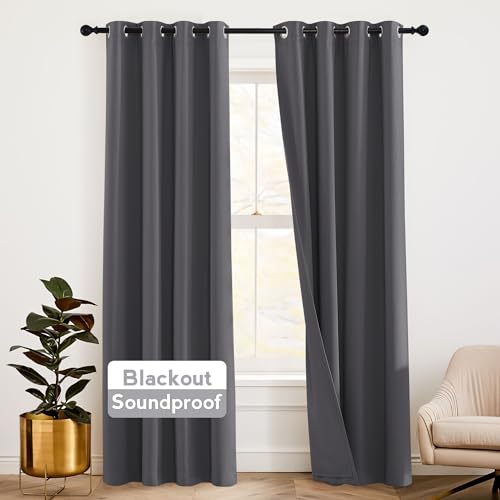
RYB HOME 3-Layer Soundproof Curtains
Use how to soundproof a room as the wider framework, then tighten it around the office-specific weak points instead of treating the office like a blank slate.
Small Professional Offices Live Or Die On Speech Privacy
A small professional office usually lives or dies on speech privacy. Therapy rooms, legal consult rooms, HR spaces, and medical offices need the door, the ceiling or plenum, and the shared wall checked before anyone talks about decorative panels.
Glass-heavy rooms make this harder because the inside experience and the privacy envelope are not the same thing. Acoustic treatment can make the room sound calmer, but true privacy still depends on how the glazing, door, and partition are built.
Privacy Improves Faster When The Room Stays Visually Open
Do not cover every wall first. Treat the door, the ceiling path, and the few surfaces with the highest payoff so the room keeps its visual space while the privacy problem actually improves.
When the wall or ceiling cavity is already open, stud-bay insulation like mineral wool batts supports the assembly without stealing visible office space. Our guide to best insulation for soundproofing helps you choose the hidden layer more deliberately.
Major Office Upgrades Start With The Weakest Opening
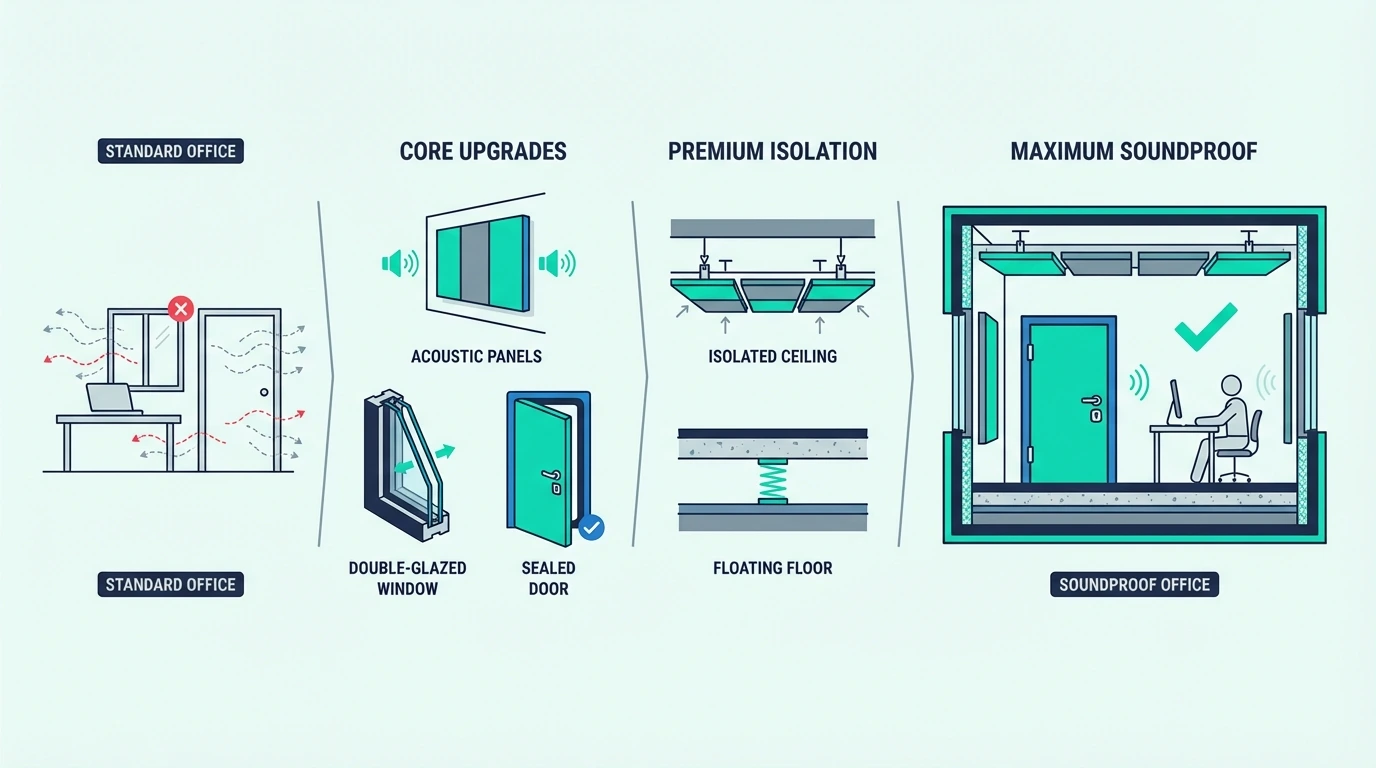
By this point, the upgrade order should be clearer. In offices, the biggest gains usually come from fixing the weakest opening first, then the assembly that still fails after that.
Doors, Windows, Ceilings, And Walls Need To Be Ranked In That Order
Start with the door if you can hear speech around or under it, or if the room has a hollow slab. Start with the window if the main complaint is street noise, parking lot noise, or glass-side reflection and leakage.
Start with the ceiling if the office has a drop ceiling, open plenum, or obvious sound transfer from above or over the wall line. Start with the wall only after you confirm the door, glass, and ceiling path are not the bigger problem.
That ranked logic is why many office upgrades look boring at first. But boring fixes like better seals and ceiling-path control often outperform glamorous wall products because they attack the true weak point.
Shared Walls And Drop Ceilings Become The Real Bottleneck After The Door
Shared walls become the real problem when the door is no longer the obvious failure and normal speech is still clear through the partition. Drop ceilings become the real problem when the sound seems to travel over the room rather than through the visible wall face.
A product like Soundsulate 1 lb MLV helps illustrate what a real barrier-layer or ceiling upgrade looks like when the assembly itself is too light.
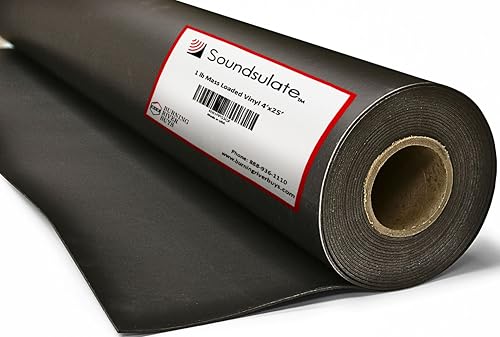
Soundsulate 1 lb MLV
That same decision tier includes a second drywall layer, better perimeter sealing, and sometimes a more complete soundproofing material decision. If the office fails because the partition or plenum path is fundamentally weak, surface treatment alone usually will not get you to private-room performance.
Professional Help Pays Off When Privacy Requirements Are High
Call a professional when confidentiality requirements are high, the ceiling or plenum path is unclear, the office uses lots of glass, or the project may involve ducts, electrical relocation, or structural flanking. Those are the office jobs where guessing gets expensive quickly.
Professional help also makes sense when you move from leak fixes to assembly upgrades. A product like Green Glue Noiseproofing Compound works best when it is part of a deliberate wall or ceiling build instead of an improvised patch.
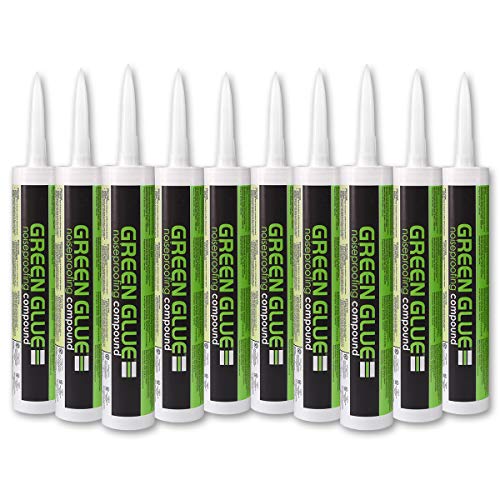
Green Glue Noiseproofing Compound
If you are already at that point, compare the office plan against best soundproofing material and soundproofing a ceiling, then decide whether the room needs a better partition, a better plenum treatment, or both.
The Bottom Line
How to soundproof an office gets much easier once you match the fix to the office type and the leak path.
If the office is closed and speech privacy is failing, start with the door, the plenum, and the obvious perimeter gaps first.
If the office is open and the main complaint is distraction or fatigue, start with acoustic control, layout, and masking before you think about true isolation.
If cheap fixes stop improving privacy, move to the weakest assembly next instead of stacking more decorative products.
If you want the broader framework behind the office-specific advice, start with how to soundproof a room and then adapt it to the door, wall, ceiling, and privacy realities of the office you actually have.
Frequently Asked Questions
Does rockwool soundproof an office by itself?
Rockwool helps, but it does not soundproof an office by itself. It works best inside a wall or ceiling assembly where it reduces cavity resonance and supports better performance from drywall, sealing, and damping.
How Can I Make My Office More Private For Calls?
Start with the door, the perimeter gaps, and the obvious sound leaks before you buy treatment. If calls are still intelligible outside the room after sealing and softening the office, the wall or ceiling assembly probably needs more mass or damping.
What Is The Cheapest Office Fix That Usually Helps First?
The cheapest wins are usually sealing the door, sealing visible gaps, softening hard surfaces, and adding basic sound masking if the room still feels distracting. Those moves do not create full isolation, but they often improve focus and call comfort much faster than decorative quick fixes.