Best Floor Soundproofing: Carpet, Underlayment and the Ceiling Below
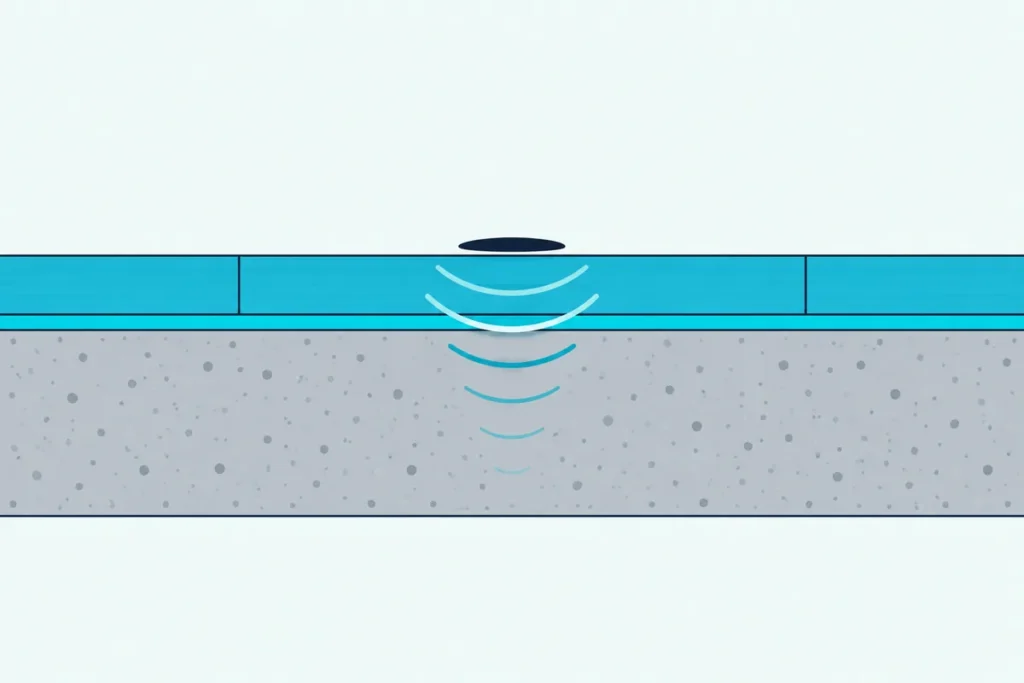
The family upstairs crosses the room in boots and every step lands on your ceiling, so you start hunting for the best floor soundproofing.
The building code asks for an impact rating of IIC 50 between homes, and a bare concrete slab lists at 34 in one lab series and 19 in another, so a floor has real ground to make up.
This guide uses the 2021 building code, the Carpet and Rug Institute, the Carpet Cushion Council and the published test data of Regupol, Amorim and MP Global.
You’ll see what carpet and each underlayment add, why the ceiling below can swing a rating by 20 points and which products fit which floor.
Start with the short answer, because the best fix depends on what you’re allowed to change.
What Is the Best Floor Soundproofing?
That depends on what you can change, because the best-documented fix is carpet over a cushion and the best for a hard floor is a dense underlayment beneath it.
In the Carpet and Rug Institute’s slab tests, carpet over a cushion rates IIC 73 to 80 against 34 bare. The makers of hard-floor underlayments list gains of 22 to 28 IIC points over a bare slab.
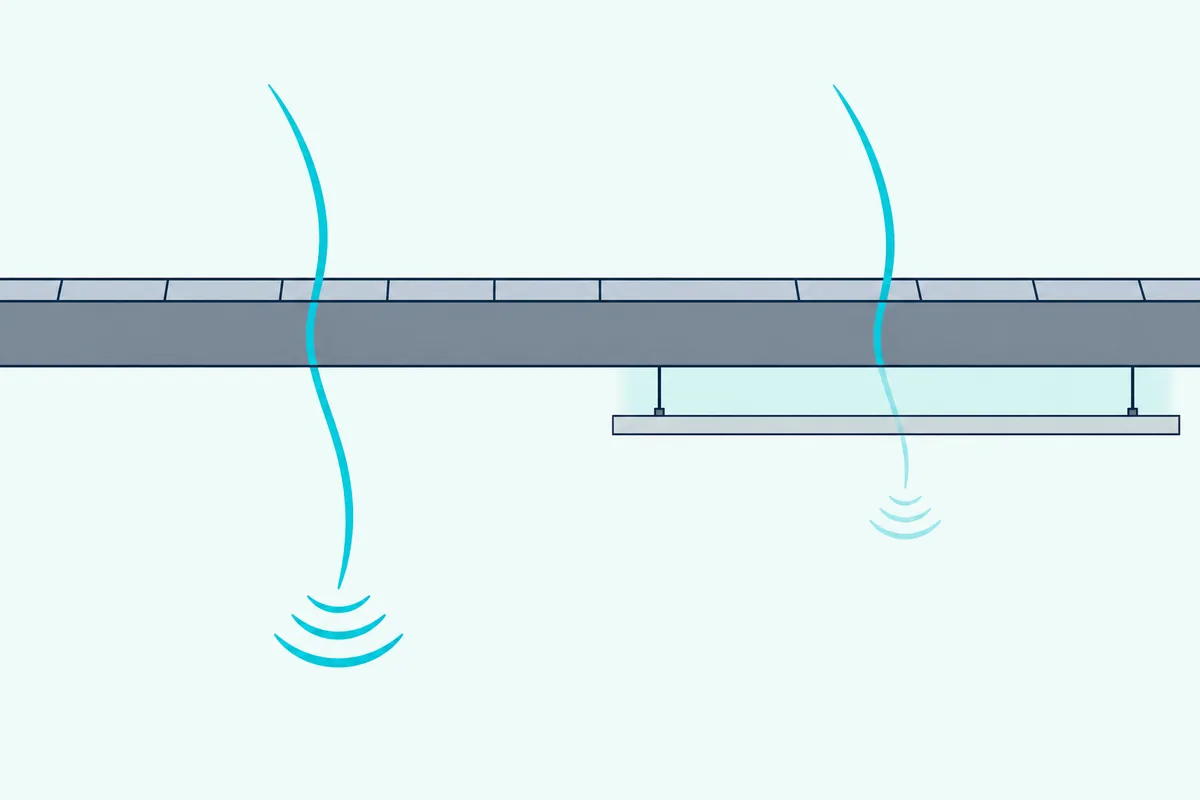
The ceiling below matters as much as the floor on top, because the same flooring lists at IIC 70 under a suspended ceiling and 50 under none.
Here’s the order that pays off:
- Check the target. The 2021 International Building Code asks for IIC 50 between homes.
- Change the covering if you can. Carpet over a foam or sponge rubber cushion is the best-documented option.
- Under a hard floor, add a dense underlayment. Makers list 22 to 28 points of improvement over a bare slab.
- Work on the ceiling below and the edges. The ceiling assembly moved one maker’s rating by 20 points, and installers are told to keep the floor off the walls.
| Product | Link |
|---|---|
Best Under Vinyl Plank and Laminate 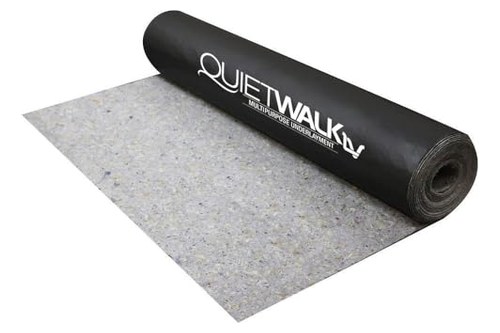 | See ratings |
Best Under Hardwood and Laminate 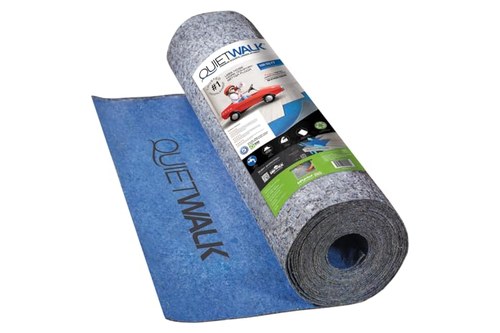 | See ratings |
Best Cork Underlayment 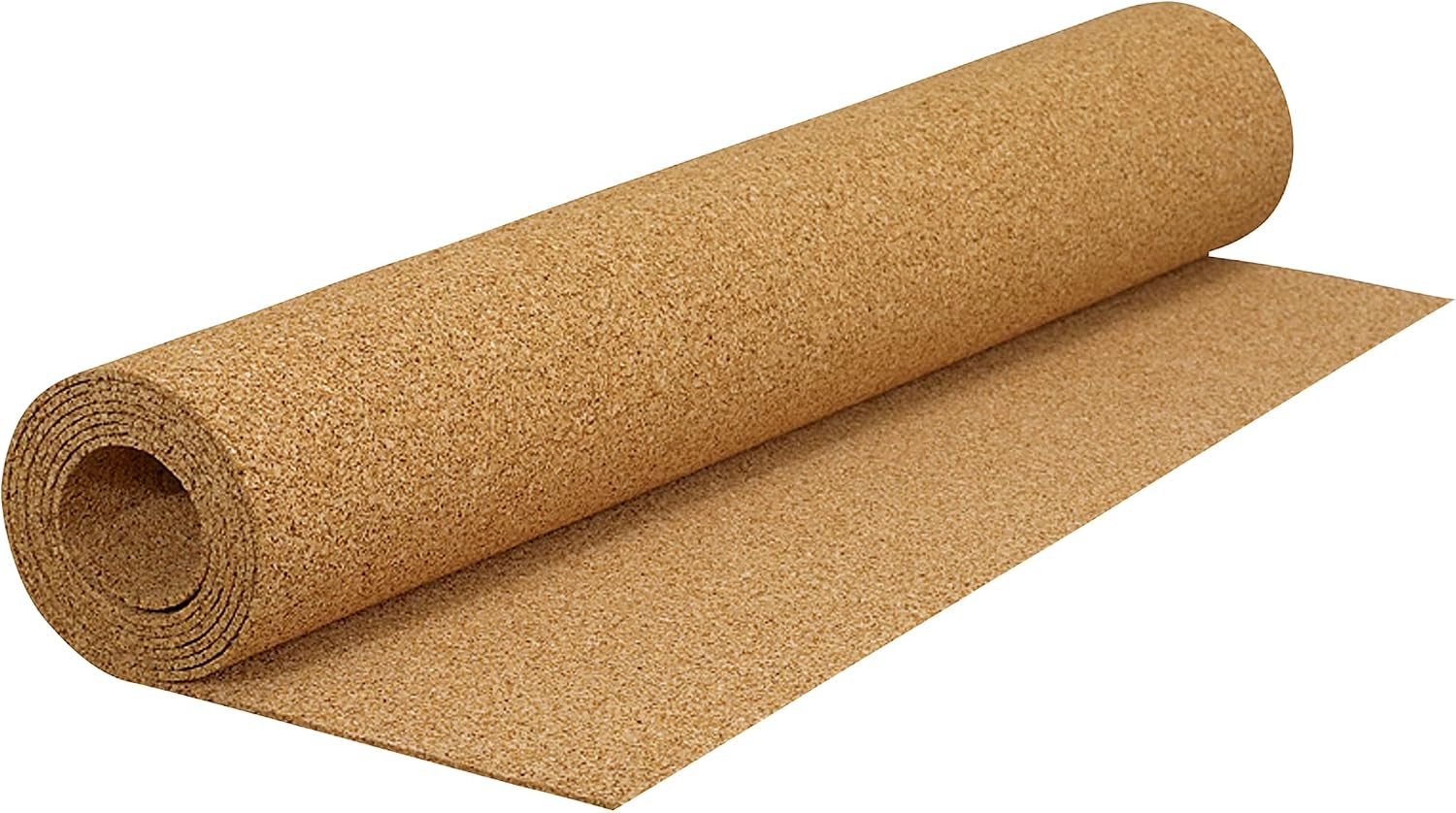 | See ratings |
Best Foam With a Moisture Barrier 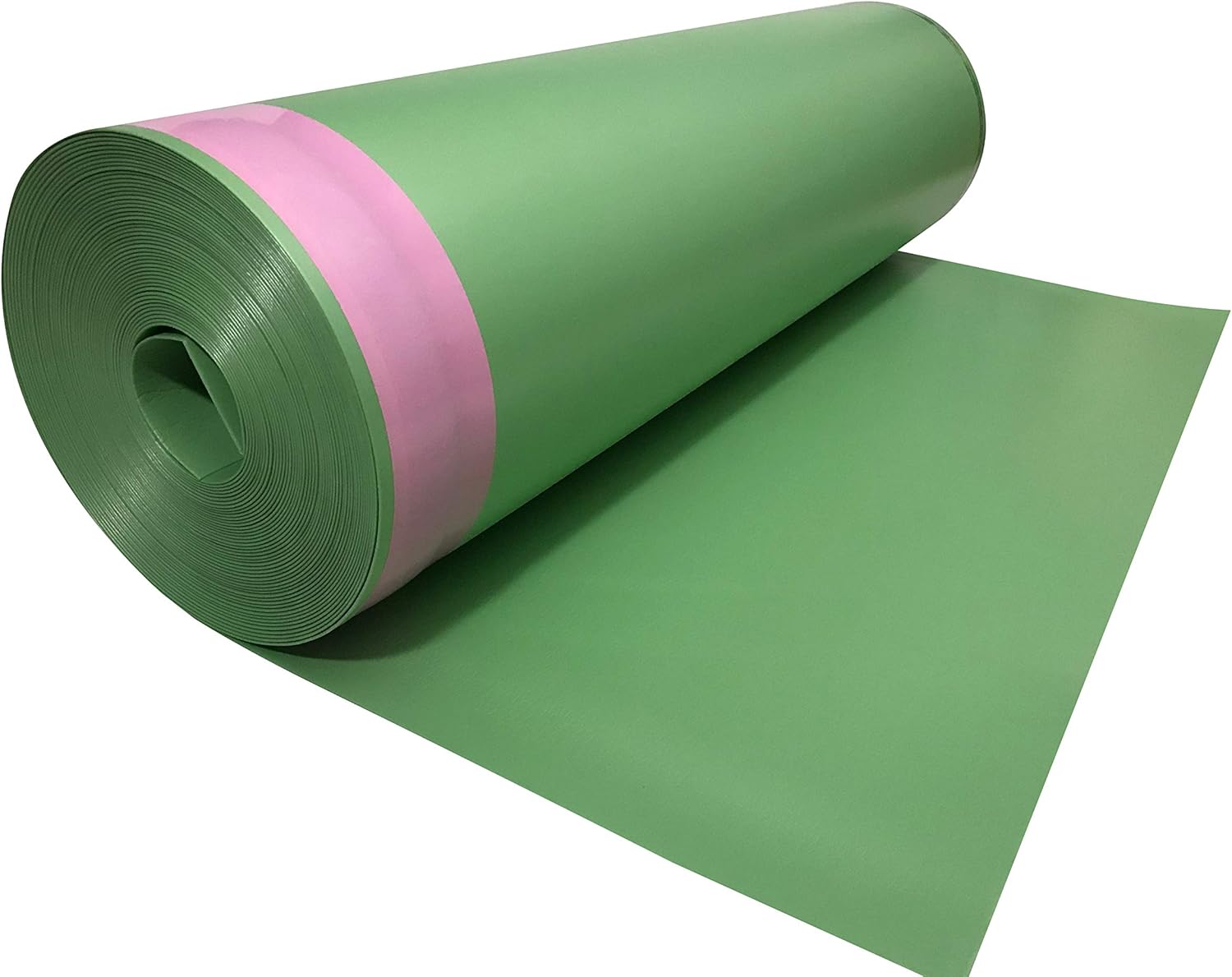 | See ratings |
What Do IIC and Delta IIC Mean for a Floor?
Those ratings come from a tapping machine, and the Carpet and Rug Institute describes the test: five hammers strike the floor at a combined ten times a second while a microphone in the room below measures the sound.
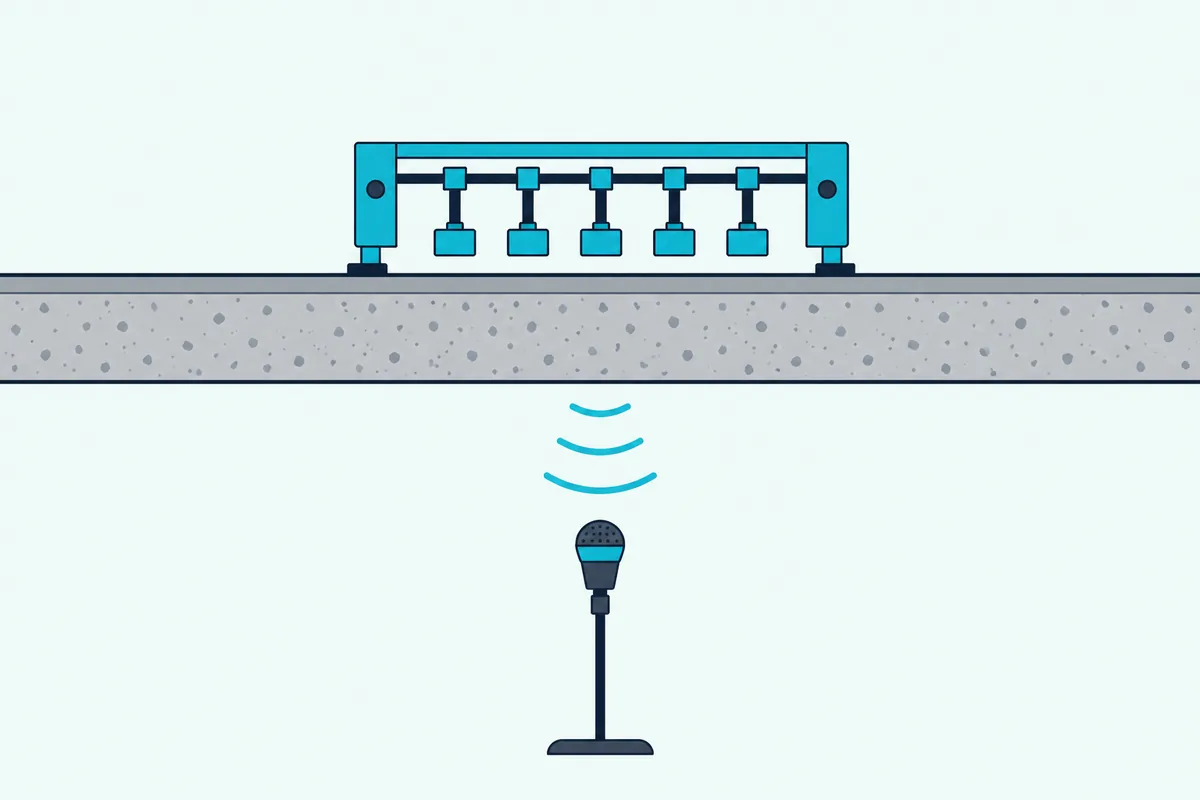
The result is the impact insulation class, IIC, and a higher number means less impact sound reaches the room below. The building code sets IIC 50 for floors between homes, or a normalized impact sound rating, NISR, of 45 when the finished floor is measured in the building.
Delta IIC is the difference between a bare concrete slab and the same slab with the flooring on it, and MP Global calls it the best number for comparing underlayments. A plain IIC includes the whole assembly.
One limit applies to every number here. The Carpet and Rug Institute says footfalls make low-frequency sounds that are hard to measure in a test room, so a rating can understate heavy steps.
Our guide to how IIC and STC numbers are read sets the two scales side by side.
Get Studio Tips Weekly
Join 5,000+ creators getting acoustic treatment advice every week.
No spam. Unsubscribe anytime.Is Carpet the Best Soundproof Flooring?
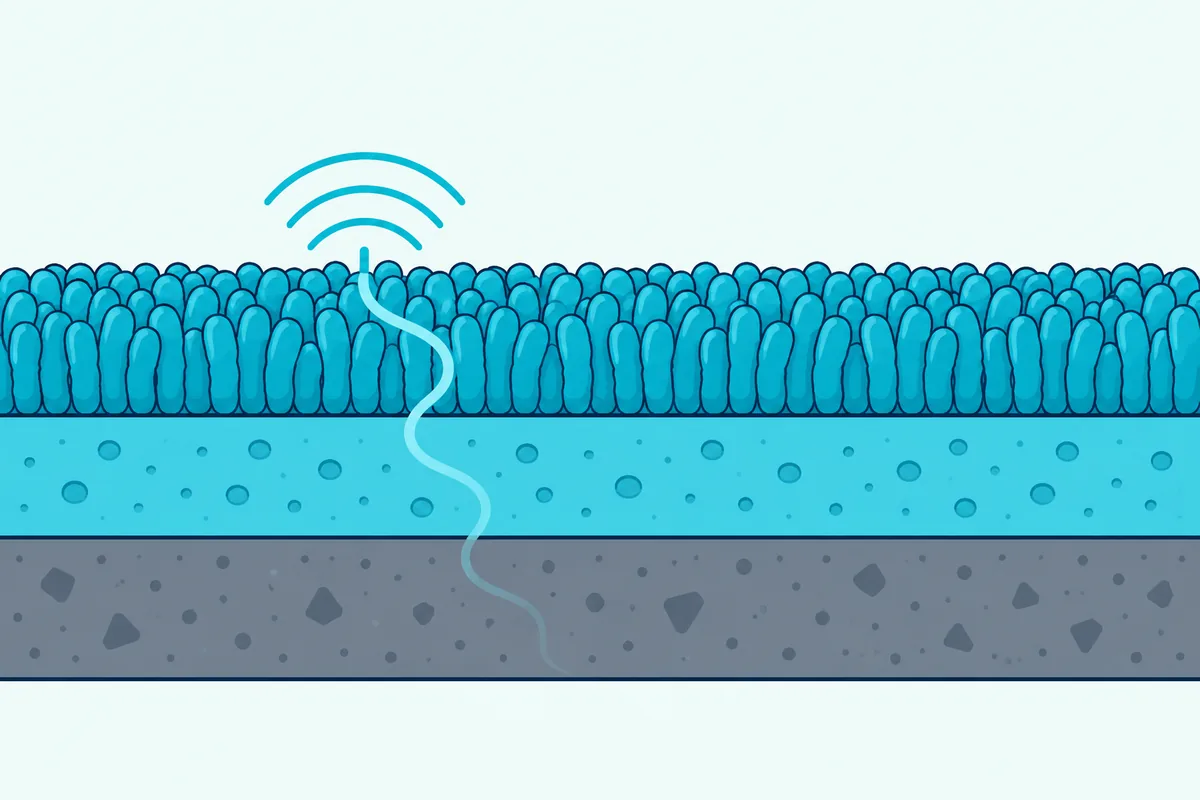
Those scales make carpet the hardest covering to beat, and the Carpet and Rug Institute’s lab series shows by how much on a concrete slab:
| Floor on a concrete slab | IIC |
|---|---|
| Bare slab | 34 |
| 20 oz wool loop carpet, no cushion | 53 |
| 44 oz woven wool loop carpet, no cushion | 68 |
| 60 oz wool loop carpet, no cushion | 70 |
| The 44 oz carpet over a 40 oz hair-jute cushion | 73 |
| The 44 oz carpet over a polyurethane foam cushion | 76 |
| The 44 oz carpet over a 44 oz sponge rubber cushion | 79 |
| The 44 oz carpet over an 80 oz sponge rubber cushion | 80 |
Heavier pile scored higher without a cushion, and a cushion added 5 to 12 points to the same 44-ounce carpet. On a wood joist floor with a plywood subfloor, the bare floor rated 32 and the same carpet over cushions rated 61 to 68.
The Carpet Cushion Council’s own series on a different slab had the same shape: 19 bare, 58 with a 36-ounce carpet and an average of 72 with a cushion under it.
Both are carpet industry groups and the Institute’s bulletin dates from 2018, so treat the sizes as a guide and the order as the point.
What Is the Best Underlayment for a Hard Floor?
Carpet isn’t an option under tile, hardwood or vinyl, and there the underlayment does the work, so the makers’ own delta IIC numbers are the fair comparison:
| Underlayment | What the maker lists |
|---|---|
| QuietWalk LV, recycled fiber (MP Global) | IIC 70, STC 62, delta IIC 28 |
| REGUPOL sonus core, recycled rubber | Up to IIC 74, STC 66, delta IIC 27, depending on covering and assembly |
| FloorMuffler UltraSeal, polypropylene foam | IIC up to 74, STC up to 73, delta IIC up to 25 |
| QuietWalk, recycled fiber (MP Global) | IIC 71, STC 66, delta IIC 24 |
| QEP natural cork, 6 mm | Delta IIC 22, IIC 74 and STC 70 under tile on a 6 in slab with a suspended ceiling |
| AcoustiCORK S130, 1/2 in cork (Amorim) | Lab IIC 50 under tile on an 8 in hollow-core slab with no ceiling, delta IIC 22 calculated, field IIC 54 under tile and 56 under hardwood |
| SoundStep LV, 1 mm (MP Global) | Delta IIC up to 22 |
These are the makers’ own figures for different floors, ceilings and coverings, so they show a range of 22 to 28 points and not a ranking.
Which Underlayments Are Worth Buying?
Those listings leave four products on Amazon that list their own sound figures, and the right one depends on what’s going on top.
Best Under Vinyl Plank and Laminate
For a vinyl, laminate or engineered wood floor, QuietWalk LV 360 sq ft underlayment lists the highest delta IIC in the table.
QuietWalk LV 360 sq ft underlayment
It’s the pick for vinyl, laminate or engineered wood, and it won’t turn a bare slab ceiling below into a quiet one.
Best Under Hardwood and Laminate
For a floating hardwood or laminate floor, QuietWalk 3 mm underlayment is the 3 mm option for those floors.
QuietWalk 3 mm underlayment
Best Cork for Tile and Other Hard Floors
Over concrete under tile or other hard flooring, QEP natural cork underlayment is the cork option.
QEP natural cork underlayment
Best Foam With a Moisture Barrier
When the floor needs a moisture barrier as well as sound control, FloorMuffler UltraSeal 300 sq ft underlayment is the foam pick.
FloorMuffler UltraSeal 300 sq ft underlayment
Our guide to underlayment picks for hardwood floors goes deeper on that one floor type.
Why Does the Ceiling Below Change the Rating?
Those delta numbers belong to the flooring, but an IIC rating belongs to the whole floor-ceiling assembly, and MP Global’s SoundStep sheet shows how far the ceiling moves it:
| SoundStep LV (1 mm) under a plank floor on a 6 in concrete slab | IIC | STC |
|---|---|---|
| 4 mm floating plank, suspended ceiling | 70 | 62 |
| The same floor with no ceiling | 50 | 51 |
| 2 mm glued plank, suspended ceiling | 69 | 61 |
That’s a 20-point swing from the ceiling alone. Amorim’s listings show a similar spread, though for different floors: IIC 66 for its ECOx2 cork underlay under vinyl plank on a 6-inch slab with a drop ceiling, and a lab IIC of 50 for its S130 under tile on a hollow-core slab with no ceiling.
So an IIC 70 on a box may describe a floor with a ceiling under it, and a bare slab ceiling below may measure closer to 50 with the same floor. That’s an inference from the SoundStep pair and not a promise.
If you control the ceiling below, treat it too. Our guide to adding a layer under the ceiling downstairs covers that, and the Carpet and Rug Institute’s open-joist floor with resilient channels, 5.5 inches of insulation and a 5/8-inch gypsum ceiling measured STC 49 for airborne sound with carpet over cushion on top.
Leave a gap at the walls as well. Amorim asks for a perimeter isolation strip so the finished floor never touches them, and MP Global says to hang the baseboard slightly off the floor.
Do Rugs, Mats and Other Renter Fixes Help?
That leaves the floor you can’t change, and the honest answer is that the sources here don’t rate it.
The Carpet and Rug Institute and the Carpet Cushion Council test installed carpet, not area rugs, so none of the IIC numbers above applies to a rug on a hard floor.
What they do show is absorption: carpet on concrete rates NRC 0.15 to 0.55 in the Institute’s series, and the Council’s cushion doubled one carpet from 0.25 to 0.50, which cuts echo in your own room.
A thick rug and pad may soften footsteps and echo, but no source here gives them an IIC. If the noise is yours, our guide to what a renter can change under the lease covers the other steps.
Which Floor Soundproofing Fits Your Situation?
Those limits point to one choice per situation, and this table matches each to the figures behind it:
| Your situation | Best fit | What the numbers say |
|---|---|---|
| Wall-to-wall carpet is allowed | Carpet over a foam or sponge rubber cushion | IIC 73 to 80 on a slab, 61 to 68 on joists (Carpet and Rug Institute) |
| Vinyl plank or laminate over concrete | A high delta IIC underlayment | Makers list 24 to 28 |
| Hardwood or tile over concrete | Cork or rubber underlayment, with a gap at the walls | Field IIC 54 to 56 for Amorim’s S130 |
| Any hard floor over joists | Underlayment plus work on the ceiling below | The bare joist floor rated 32 |
| You rent and can’t change the floor | Rugs and pads for comfort, and a talk with the neighbor | These sources rate no rugs |
Our guide to stopping footsteps between stories covers the joist cases in more detail.
The Bottom Line
The best floor soundproofing is carpet over a foam or sponge rubber cushion, or a dense underlayment under a hard floor, and both work better with a ceiling assembly below them. Makers list 22 to 28 points of improvement for underlayments, and the ceiling alone moved one rating by 20.
Compare delta IIC numbers, read which ceiling a rating assumes and leave a gap at the walls.
Frequently Asked Questions
What is the best soundproof flooring?
Carpet over a foam or sponge rubber cushion has the strongest lab record, with IIC 73 to 80 on a slab in the Carpet and Rug Institute’s series. For hard floors, a dense underlayment is the best route, since makers list 22 to 28 points of improvement.
What IIC rating is good for a floor?
The International Building Code asks for IIC 50 in a lab test or a normalized impact sound rating of 45 measured in the building, for floors between homes. A bare concrete slab lists at 34 in the Carpet and Rug Institute’s series.
Does underlayment make a floor soundproof?
No, but it helps a lot: makers list delta IIC gains of 22 to 28 over a bare slab. The ceiling below, the edges of the floor and the covering on top all change what you hear.
Is IIC or STC more important for floors?
Both count. MP Global defines IIC as sound transmission through the floor and STC as airborne sound transmission through a partition, so IIC covers footsteps and STC covers voices and television.