How To Soundproof An Apartment (Renter-Friendly Fixes That Actually Work)
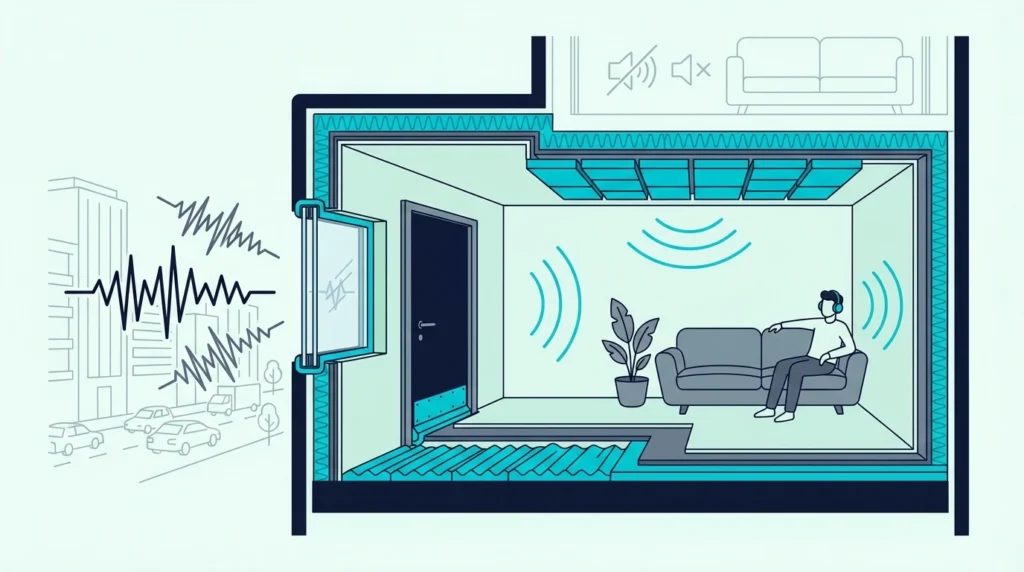
How to soundproof an apartment works, but only when you stop chasing owner-level fixes and start with the renter-side weak links you can actually change.
That is what makes apartment noise so frustrating. You hear the upstairs footsteps, the TV through the shared wall, or traffic through thin windows, but most advice assumes you can rip open walls and rebuild the shell.
The reality is narrower, but it is not hopeless. If you prioritize sealing, removable mass, and the noisiest surface first, you can often make the apartment meaningfully calmer without breaking the lease.
The sections below sort out which renter fixes actually matter, which surfaces deserve attention first, and when the problem is big enough to push back on the landlord or rethink the building.
Start with sealing — air gaps under doors, around windows, and at outlet covers are the cheapest and most effective fix. Then add mass where you can: heavy curtains on windows, a sound blanket on the noisiest wall, and rugs on hard floors. These won’t make your apartment silent, but they can reduce noise enough to make it livable.
Why Apartments Are So Hard To Soundproof
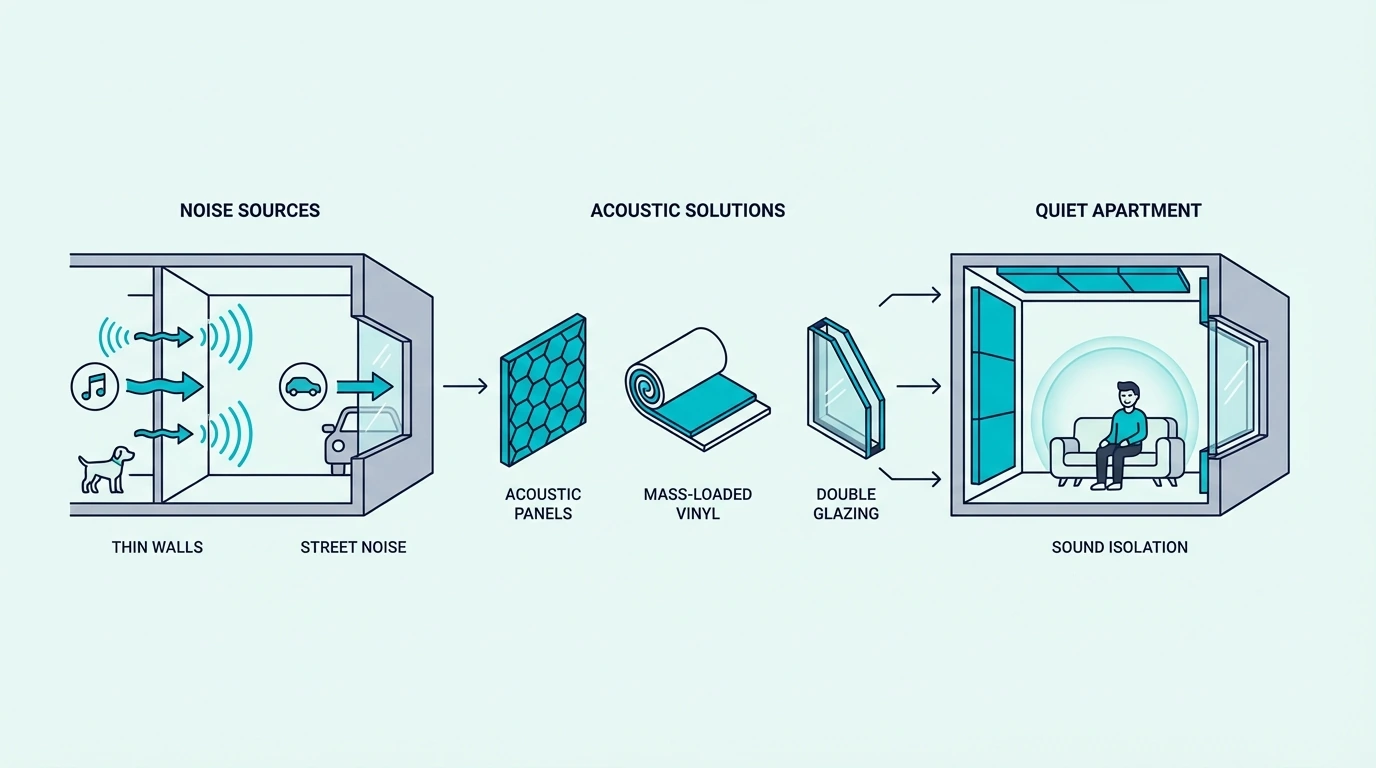
Apartments are built to a cost target, not an acoustic standard. Once you see where that cheap construction fails, the useful fixes get much easier to rank.
The Most Common Noise Sources
Upstairs neighbors produce the most common complaint — footsteps, dropped objects, and furniture movement create impact noise that travels through the floor and ceiling structure. This type of noise is structure-borne, meaning it bypasses air gaps and passes directly through the building frame.
Shared walls transmit airborne noise — conversations, TV, music — because single-layer drywall on wood or metal studs without insulation provides minimal sound blocking. Most apartment partition walls rate around STC 33 to 38, which means normal conversation is clearly audible through the wall.
Hallway noise leaks through the front door, which is usually the weakest point in the apartment’s sound envelope. Exterior traffic noise enters through windows, especially if the seals are worn or the glass is single-pane.
What Renters Can Actually Change
Those noise paths are real, but renters can only work on the surface side of the shell. That means sealing air gaps, adding soft furnishings, hanging heavy curtains, placing rugs and underlayment on floors, using door sweeps and weatherstripping, and rearranging furniture—none of which require permanent modifications to the building.
What renters typically cannot do without landlord approval: add drywall layers, install resilient channels, blow insulation into wall cavities, replace doors or windows, or modify any shared or structural surface. Some landlords will approve specific upgrades if you explain the problem and offer to pay — especially if the improvement stays when you leave.
Full Soundproofing Versus Realistic Reduction
Even with those surface-side tools, full soundproofing is not on the table because it requires construction-level work on every surface—walls, ceiling, floor, doors, and windows—which is not possible in a rental. The realistic goal is noise reduction: making the problem quiet enough that it doesn’t disrupt sleep, work, or daily life.
A combination of sealing, mass additions, and strategic furnishing can reduce perceived noise by 5 to 10 decibels, which feels like cutting the noise roughly in half. That’s often enough to turn an unbearable situation into a tolerable one.
Reducing Neighbor Noise
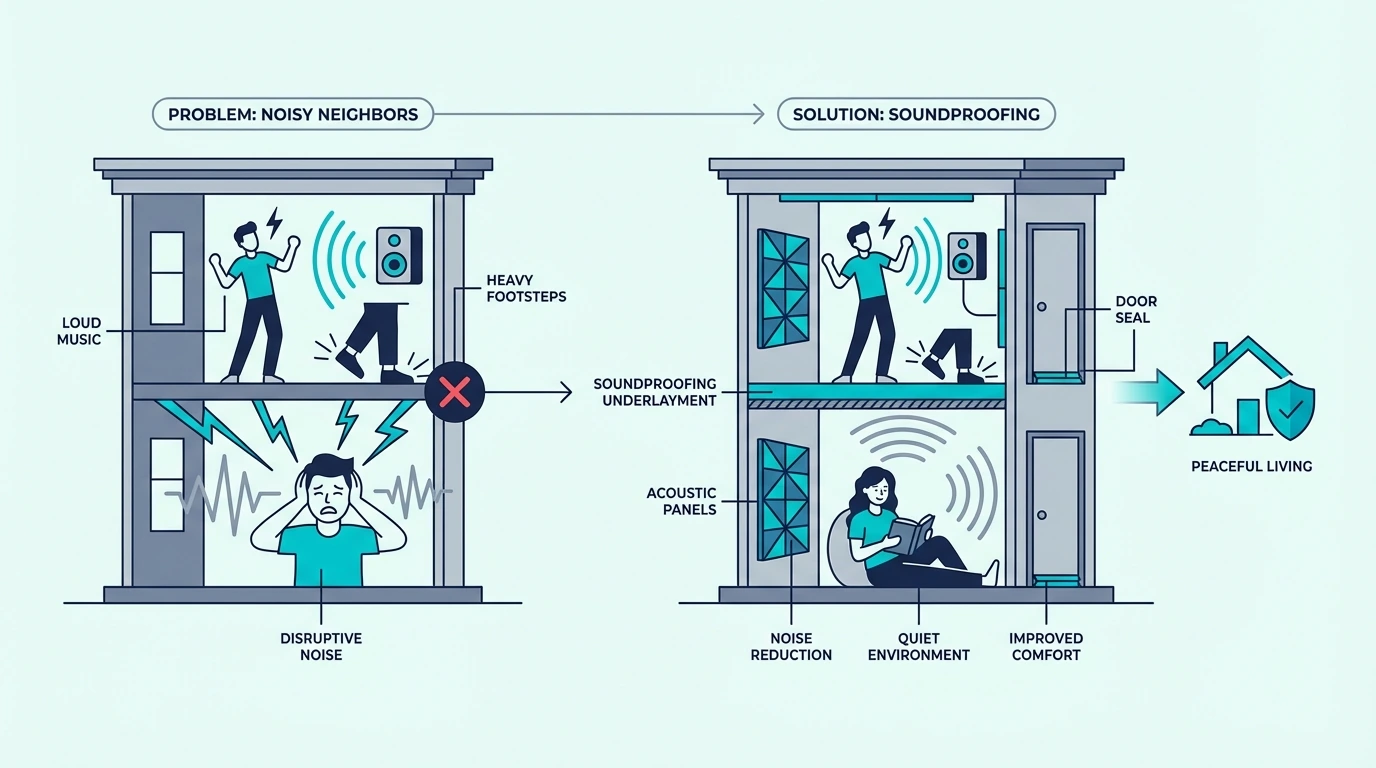
Once the building limits are clear, the next step is prioritizing the noisiest path. Neighbor noise is the main reason people search for apartment soundproofing, and the right fix depends on where that noise enters.
Shared-Wall Noise
Seal every gap first. Check electrical outlets on the shared wall — sound travels through the open box behind the cover plate. Foam gaskets behind outlet covers and acoustical caulk around the perimeter close these air paths.
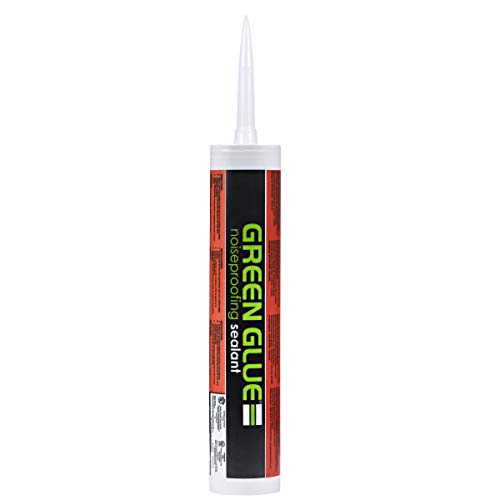
Acoustical Caulk (29 oz)
Place your heaviest furniture — bookshelves full of books, dressers, wardrobes — against the shared wall. Dense furniture acts as a mass barrier that absorbs and blocks a portion of mid-frequency sound. It’s not real soundproofing, but it provides a few decibels of improvement at zero cost.
For more significant reduction, hang a US Cargo Control Sound Dampening Blanket on the shared wall. The heavy, dense blanket adds mass that blocks mid-frequency noise. Mount it with grommets on a curtain rod for a renter-friendly installation you can remove when you leave.
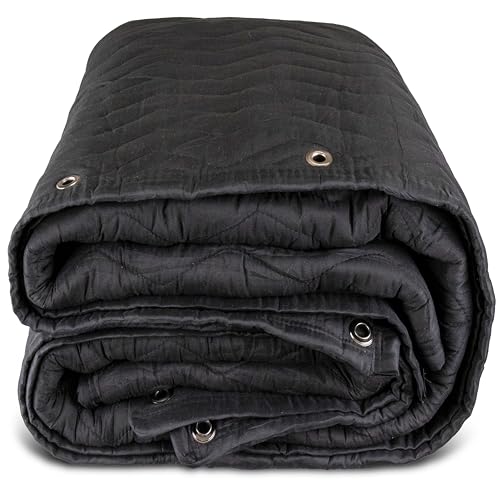
US Cargo Control Sound Dampening Blanket
Upstairs Footsteps And Ceiling Noise
Shared walls respond to sealing and added mass, but ceiling noise is the hardest apartment problem because you cannot modify the ceiling structure and the noise is impact-based rather than airborne. Insulation and mass additions to your ceiling require landlord approval and professional installation.
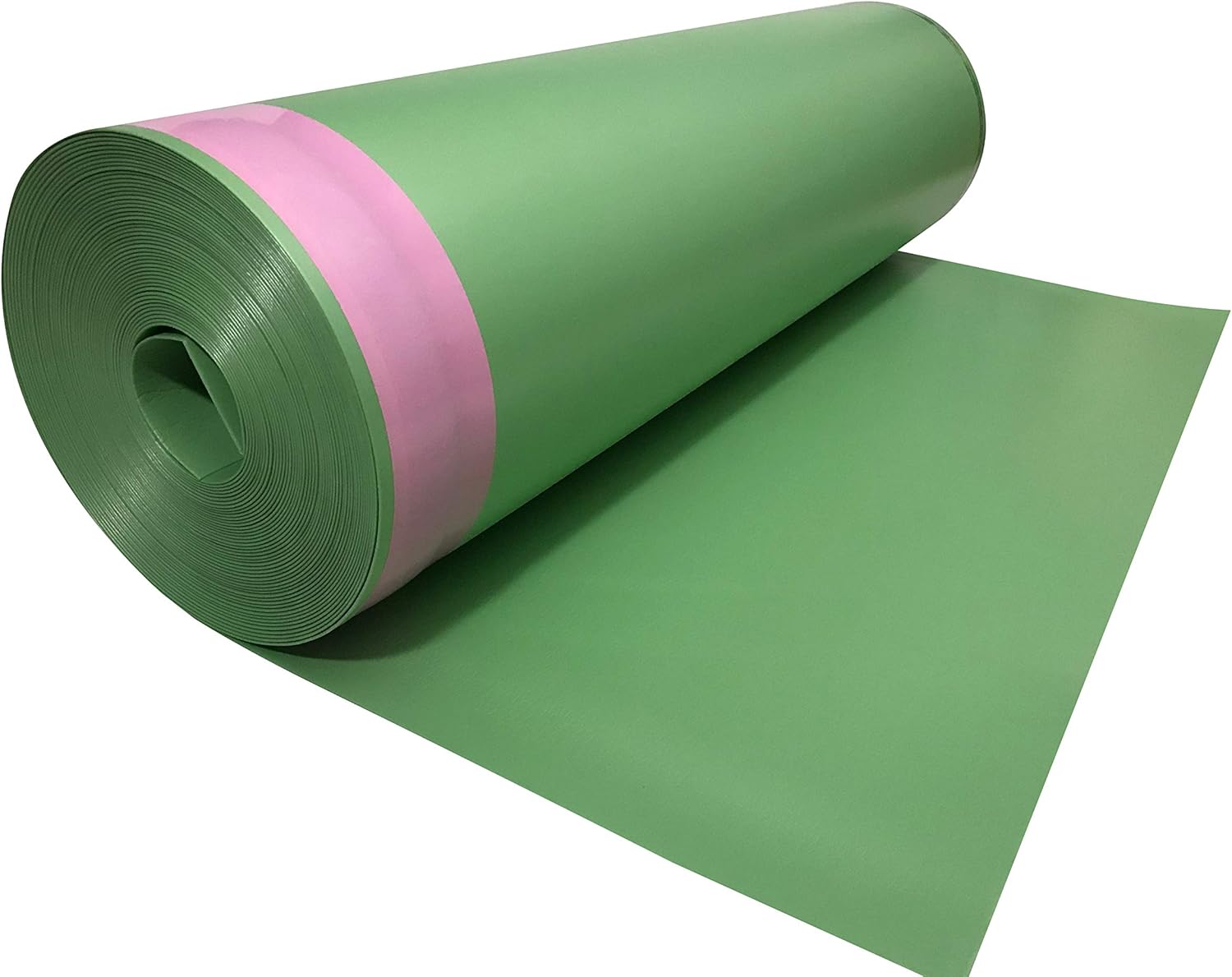
What you can do: ask your upstairs neighbor to add thick rugs with a removable layer like TroyStudio Thick Sound Absorbing Interlocking Floor Mats over the hard-floor problem zone, or a real underlayment like FloorMuffler Ultra Seal Underlayment if the flooring is already coming up with landlord approval. A polite conversation or a note explaining the situation works more often than people expect. If your building has rules about floor coverage percentages, reference them.
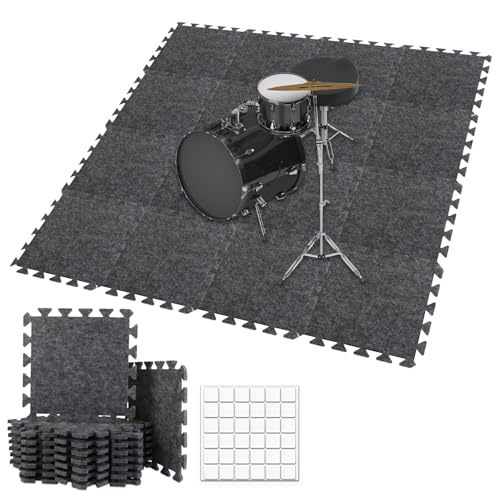
TroyStudio Thick Sound Absorbing Interlocking Floor Mats
From your side, the only meaningful option is masking — a LectroFan Classic White Noise Machine or a fan that creates a constant background sound to make intermittent footstep noise less noticeable. This doesn’t reduce the noise, but it reduces how much the noise bothers you.
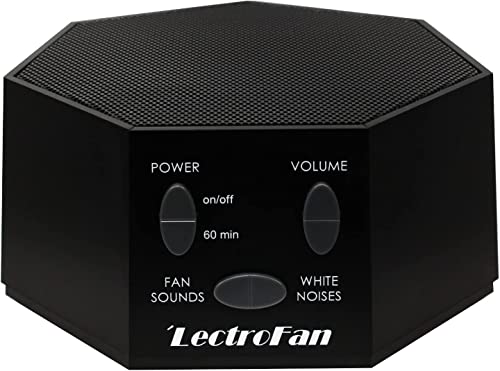
LectroFan Classic White Noise Machine
If your landlord approves ceiling work, the same insulation approach used on walls applies overhead. A second layer of drywall with Green Glue between layers adds mass and damping to the ceiling surface, and filling the joist cavity with mineral wool like AFB or a rigid board like Owens Corning 703 absorbs sound energy before it passes through. This is the same assembly described in the landlord-permission section below — the materials work identically on ceilings, but the overhead installation is harder and usually requires professional help. For the full ceiling approach, see our ceiling soundproofing guide.
Hallway And Door Noise
Ceiling fixes are limited from below, but the front door is usually the weakest link you can actually change. Most apartment doors have a visible gap at the bottom and worn weatherstripping around the frame — both are direct air paths for hallway noise.
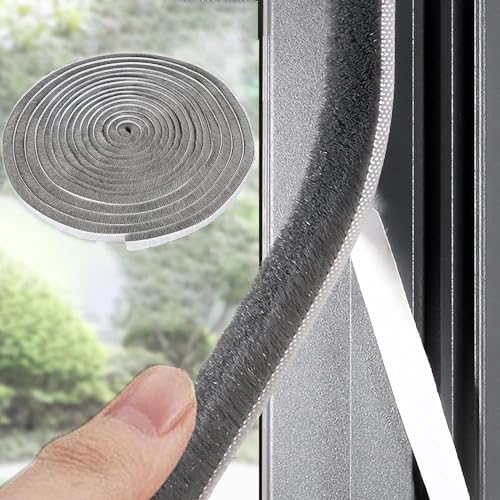
A door sweep or bottom blocker like HomeProtect Door Draft Stopper on the bottom edge and compression weatherstripping like self-adhesive soundproof weather stripping around the frame closes these gaps. Use adhesive-backed EPDM or silicone weatherstripping that can be removed without damaging the frame. This single fix often produces the most noticeable improvement in apartments where hallway noise is the primary complaint.
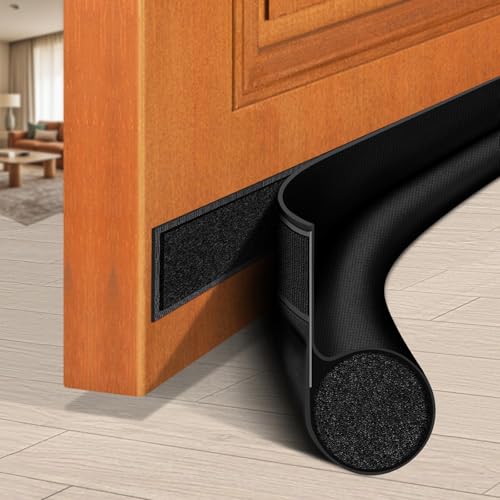
HomeProtect Door Draft Stopper
If the door itself is hollow-core (knock on it — if it sounds hollow, it is), the door transmits noise even when sealed. Replacing it requires landlord approval, but hanging the same US Cargo Control Sound Dampening Blanket on the inside of the door adds temporary mass.
Surface-By-Surface Strategy
Once the door, wall, and ceiling priorities are clear, the next step is matching each surface to a deeper guide. If the main problem is a shared partition, start with soundproofing a wall and soundproofing an existing wall. If the noise is coming through the entry, treat the door first because hallway leaks are usually easier to improve than an entire wall.
If traffic or street noise is the main complaint, go straight to soundproofing windows and reducing outside noise in a room. For upstairs footsteps, the useful references are soundproofing a ceiling and soundproofing between floors, even though the most effective fix usually has to happen above you. And if your concern is being a better downstairs neighbor, start with rugs, underlayment, and our guide to soundproofing a floor.
Get Studio Tips Weekly
Join 5,000+ creators getting acoustic treatment advice every week.
No spam. Unsubscribe anytime.Renter-Friendly Fixes Ranked By Effectiveness
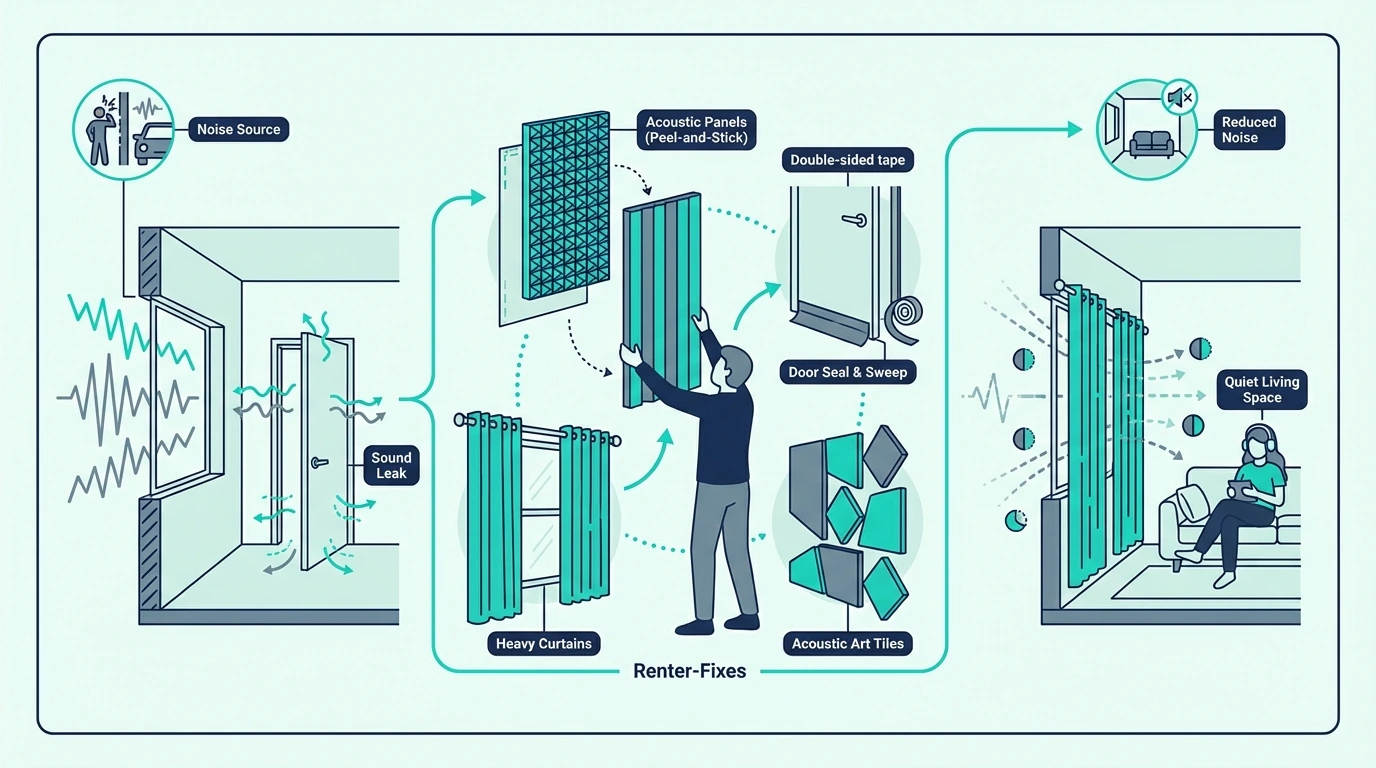
That path-by-path logic becomes more useful when you rank the renter-safe fixes by return. These are the practical, removable changes most likely to help before you spend more money.
Temporary Fixes That Actually Help
Sealing gaps is the single most effective temporary fix. A bottom blocker like HomeProtect, weatherstripping around the frame, and outlet gaskets cost little, take an afternoon to install, and address the biggest air leaks before you spend on heavier materials.
RYB HOME 3-Layer Soundproof Curtains add mass over windows while also blocking light. Pair them with the same weatherstripping around rattly window sashes, and mount the rod wide enough that the curtains overlap the wall on both sides of the window frame.
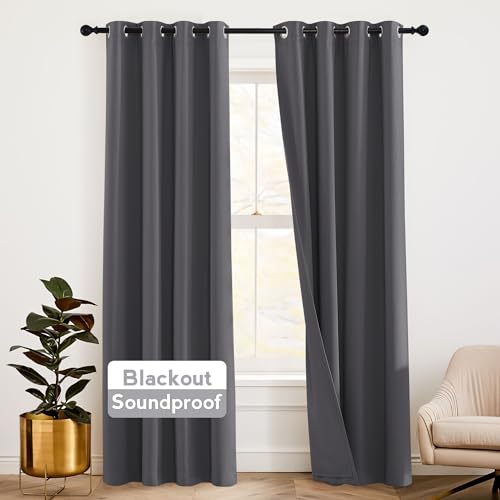
RYB HOME Soundproof Divider Curtain
Thick rugs with dense underlayment on hard floors reduce impact noise you create (helping your downstairs neighbor) and absorb some reflected sound in your room. If you want a removable top-side layer instead of full carpeting, TroyStudio Thick Sound Absorbing Interlocking Floor Mats are the kind of rental-safe first step that makes sense. They don’t reduce noise coming through the ceiling, but they improve the overall acoustic comfort of the space.
Popular Hacks That Barely Work
Those real fixes work because they seal or add mass, but egg cartons and thin foam panels do neither—they do not block noise from neighbors. They absorb a small amount of high-frequency echo inside your room, which is a completely different problem. For more on this, see acoustic panels vs soundproofing.
Tapestries and thin wall hangings look nice but add almost no mass. They need to be heavy and dense to affect sound transmission — a decorative tapestry weighing a few ounces doesn’t qualify.
Window films marketed as soundproof are too thin and lightweight to provide any meaningful noise reduction. Save that money for proper curtains or other window treatments.
Furniture Placement For Noise Reduction
With the useless hacks cleared out, the free fixes become the priority. Heavy, dense furniture—bookshelves, wardrobes, dressers—placed against the shared wall with the noisiest neighbor adds free mass between you and the noise source.
Move your bed or desk away from the shared wall. Even a few feet of distance reduces the perceived loudness of noise that does pass through. Position your sleeping or working area on the quietest wall of the room — typically an exterior wall or a wall shared with your own closet or bathroom.
Landlord Upgrades And When To Escalate
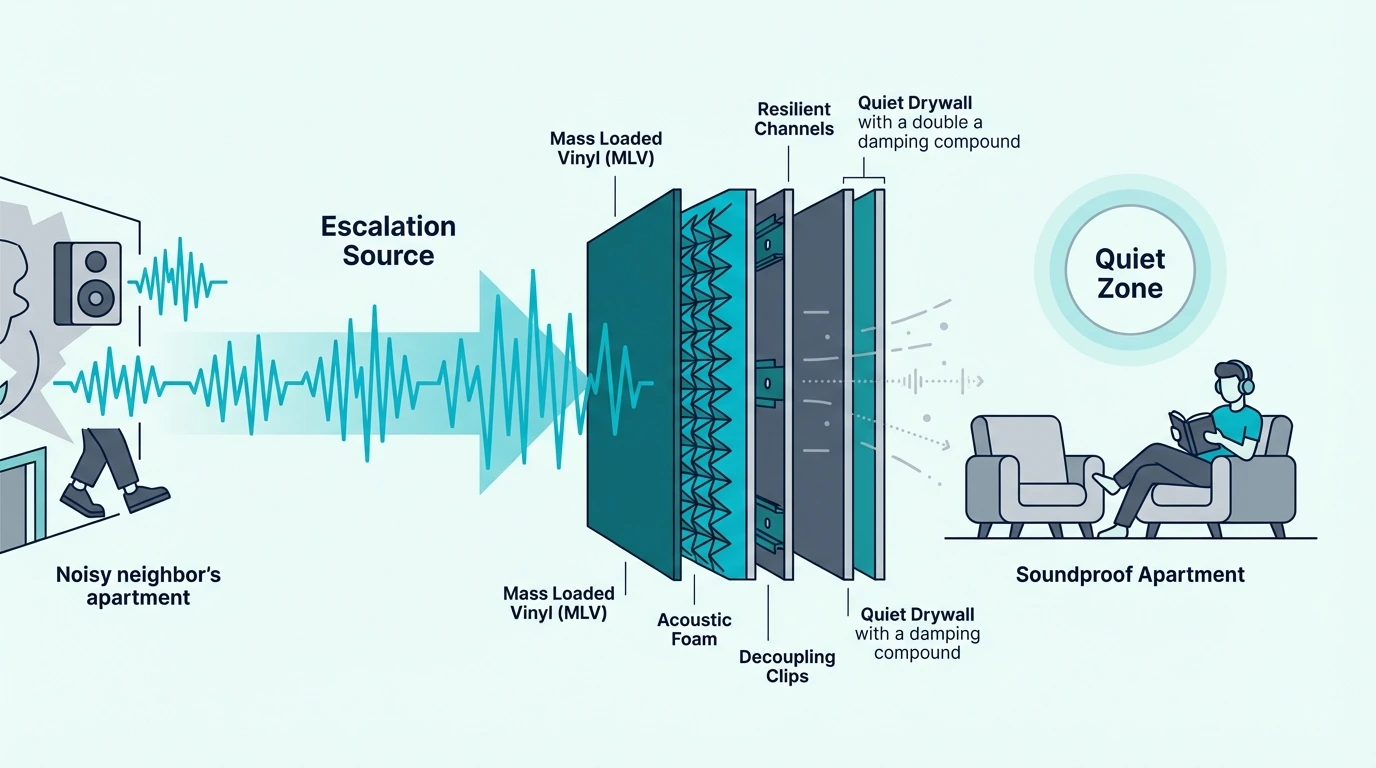
At some point the renter-safe fixes stop being enough. Knowing when to escalate saves you from spending money on solutions that cannot solve a structural problem.
Upgrades That Require Permission
Any modification to walls, ceilings, floors, doors, or windows requires landlord approval. This includes adding drywall layers, installing cavity insulation, replacing hollow-core doors with solid-core doors, and adding secondary window glazing.
The most effective shared-wall or ceiling upgrade is a second layer of 5/8-inch drywall with Green Glue Noiseproofing Compound sandwiched between the layers. The damping compound converts sound vibration into heat, and the added drywall mass blocks more noise — together they can add 8 to 12 STC points to a thin apartment partition.
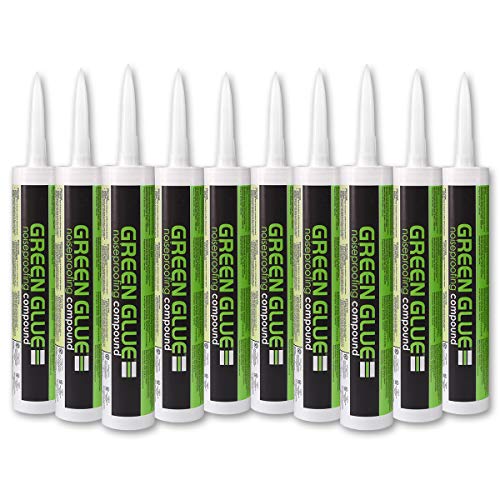
Green Glue Noiseproofing Compound
If the landlord agrees to open the wall or ceiling cavity, filling it with AFB Mineral Wool Insulation before closing it back up makes the entire assembly far more effective. The dense mineral wool absorbs sound energy that would otherwise bounce between the drywall layers.
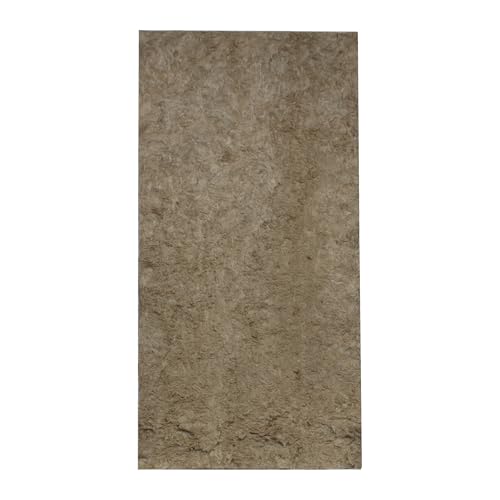
AFB Mineral Wool Insulation
A rigid fiberglass board like Owens Corning 703 Fiberglass Boards is the alternative when the installer wants a rigid panel that holds its shape inside the wall cavity instead of flexible batts.
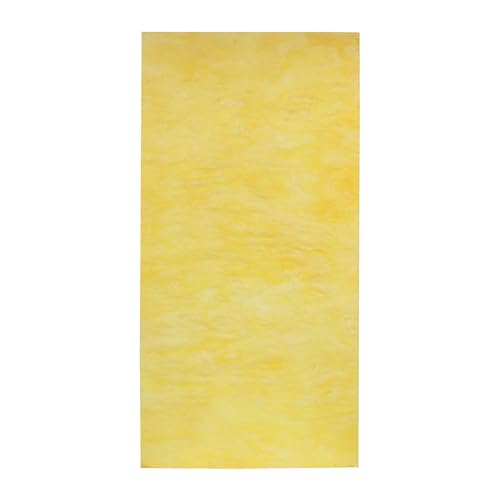
Owens Corning 703 Fiberglass Boards
Stick-on wall products sit in a gray area — they may look removable, but they can still leave residue or pull paint when you take them down. Check your lease or ask your landlord before applying anything directly to wall surfaces.
Paying For Better Materials Or Professional Help
Those permitted upgrades represent the ceiling of what apartment soundproofing can deliver, so if you have sealed gaps, added curtains, placed furniture strategically, and the noise still prevents sleep or work, the problem likely requires structural changes. At that point, a conversation with your landlord about splitting the cost of upgrades (extra drywall on a shared wall with Green Glue and mineral wool, solid-core door replacement, or real floor underlayment) is more productive than buying more temporary products.
Professional acoustic consultation costs two hundred to five hundred dollars and can identify exactly where the noise enters and what fix would be most cost-effective. Some landlords will invest in improvements that increase the property’s value and reduce tenant turnover.
When Moving Beats Upgrading
Even with landlord approval, some buildings are beyond what any reasonable investment can fix. If the noise is low-frequency bass that no treatment can stop, or if the building still transmits unbearable impact through concrete floors, the building itself is the problem. No amount of curtains, blankets, or furniture rearrangement will fix fundamentally poor construction.
Before signing a new lease, test the apartment for noise: visit during evening hours, listen at shared walls, check for gaps under doors, knock on walls to test thickness, and ask current tenants about noise levels. Preventing the problem is easier and cheaper than fixing it.
The Bottom Line
Seal every air gap first — door sweeps, weatherstripping, and outlet gaskets are the cheapest and most effective apartment fixes. Add mass where you can: heavy curtains on windows, a dense blanket or heavy furniture on shared walls, and rugs on hard floors.
Accept that full soundproofing isn’t possible in a rental. The goal is making noise tolerable, not eliminating it. If temporary fixes aren’t enough, escalate to your landlord for structural improvements or evaluate whether the building can support comfortable living.
For room-specific approaches, see our guides on doors, windows, walls, and ceilings. For the complete framework, start with how to soundproof a room.
Frequently Asked Questions
How Can I Stop Hearing My Neighbors Through Walls In An Apartment?
Seal gaps around outlets and along the wall edges with a flexible sealant such as acoustical caulk and foam gaskets. Place heavy furniture — full bookshelves, wardrobes — against the shared wall to add mass. For additional reduction, hang a heavy sound blanket on the wall. These won’t eliminate the noise but typically reduce it enough to stop being a constant distraction.
What Is The Cheapest Way To Soundproof An Apartment?
Weatherstripping tape, a door sweep, and foam outlet gaskets cost under thirty dollars total and address the biggest air leaks where sound enters. After sealing, rearranging heavy furniture against noisy walls is free. Heavy curtains on windows cost thirty to eighty dollars per window and add both mass and light blocking.
Can A Landlord Soundproof An Apartment Better Than A Tenant Can?
Yes — a landlord can authorize structural changes that tenants cannot. Adding a second layer of drywall with damping compound to shared walls, replacing hollow-core doors with solid-core models, and adding wall insulation all require building access and modification. These upgrades provide significantly more noise reduction than any renter-friendly temporary fix.