Best All-in-One Soundbar Picks With Built-In Subwoofers

Shopping for the best all-in-one soundbar means trusting one slim box to do the work of a bar and a subwoofer, and makers don’t all build that box the same way.
Some bars hide four 4-inch woofers and upward-firing Dolby Atmos drivers inside the cabinet, while others make do with two 3-inch woofers and process Atmos without any height speakers.
Pick the right one and a single HDMI cable replaces your TV’s speakers with nothing extra to place on the floor.
This guide compares six bars using only what their makers publish: the drivers, the built-in bass, the channels, Dolby Atmos support and the inputs on the back.
The short list comes first, then what each spec means for your room and the checks worth making before you order.
What Is the Best All-in-One Soundbar?
That depends on your TV and room, but the Sonos Arc Ultra is the best all-in-one soundbar on paper for most living rooms. Sonos builds 14 drivers into its 46-inch bar, including two upward-firing tweeters for height and a flat Sound Motion woofer for bass, and connects it to the TV over HDMI eARC (Sonos).
The other five each fit a narrower need:
| Pick | Channels, per the maker | Built-in bass drivers | Height drivers | Width | Best for |
|---|---|---|---|---|---|
| Sonos Arc Ultra | 9.1.4 | Sound Motion woofer | 2 upward tweeters | 46.4 inches | Most living rooms |
| Klipsch Flexus Core 300 | 5.1.2 | Four 4-inch | 2 | 54 inches | Big TVs, HDMI passthrough |
| Bose Smart Ultra Soundbar | Not stated | Not listed | 2 | 41.1 inches | Mid-size rooms |
| Klipsch Flexus Core 200 | 3.1.2 | Two 4-inch | 2 | 44 inches | Height drivers for less |
| Yamaha SR-B30A | Not stated | Two 3-inch | None listed | 35.9 inches | Budget Dolby Atmos |
| Denon DHT-S218 | 2.1 | Two 3-inch | None listed | 35 inches | A spare HDMI input |
Each pick had at least 4.0 stars and 50 reviews on Amazon and was in stock on 14 October 2026, and no prices appear because they change often.
If you’d rather give the bass its own box, our best soundbar with a subwoofer roundup covers bar-and-sub packages instead.
| Product | Size | Link |
|---|---|---|
Best Overall 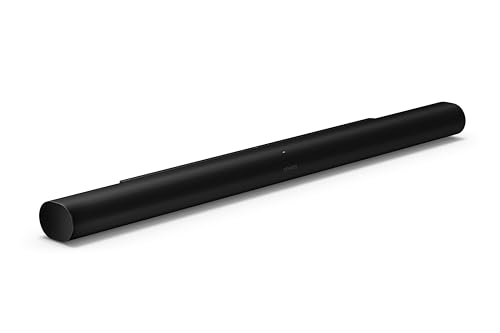 | 46.38 inch | See ratings |
Best for Big TVs 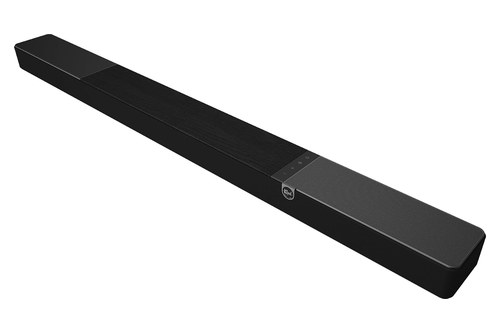 | 4 inch | See ratings |
Best for Mid-Size Rooms 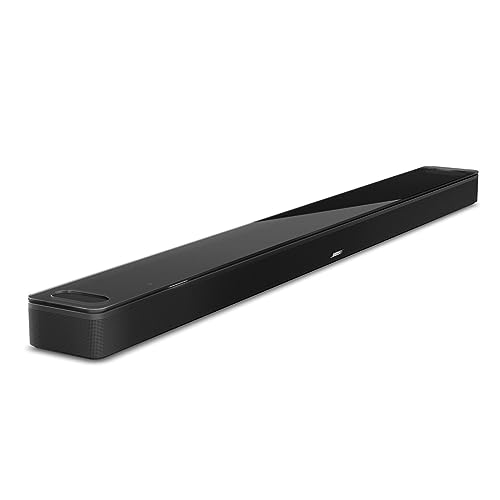 | 41.14 inch | See ratings |
Best Value 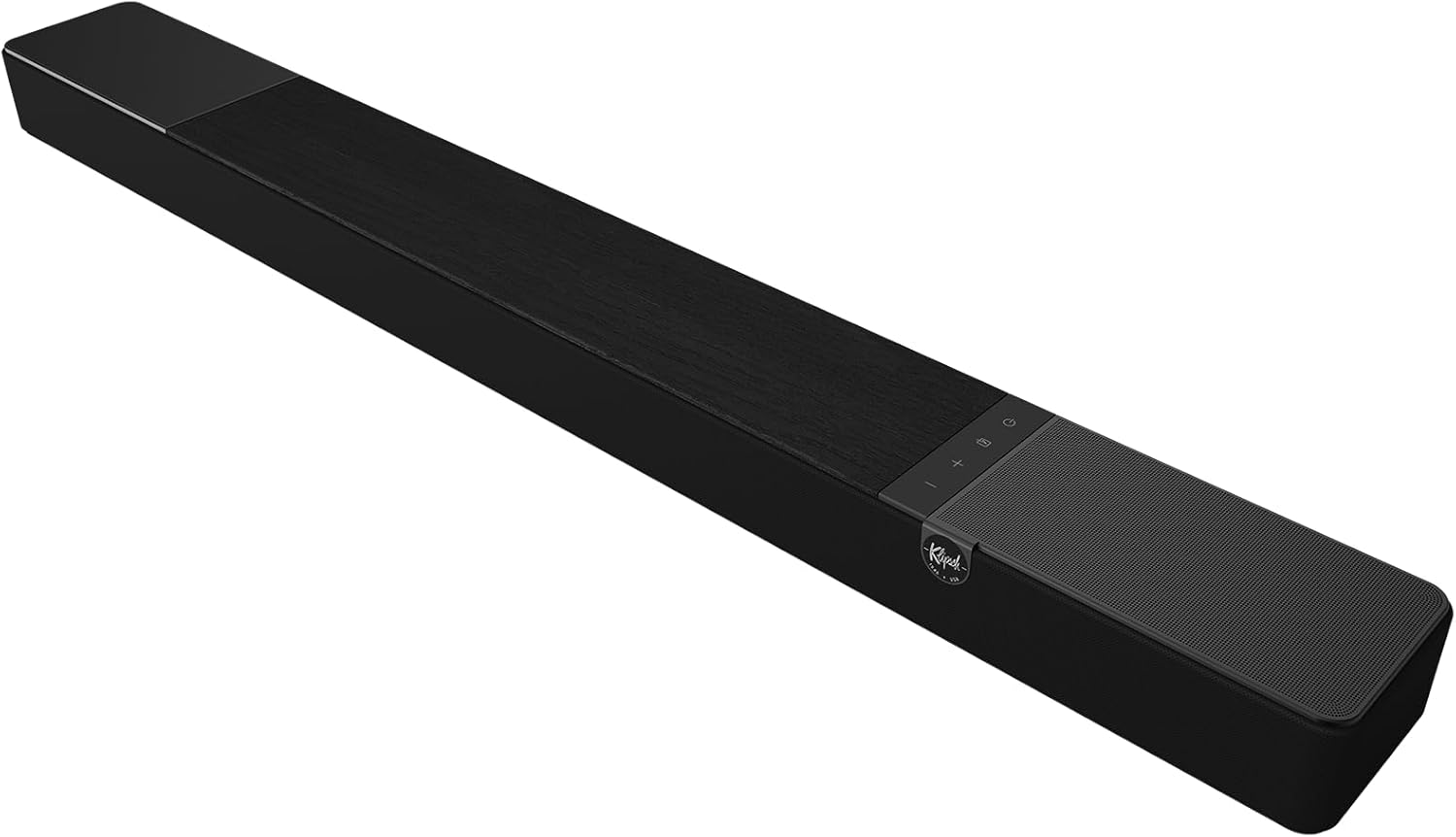 | 4 inch | See ratings |
Best Budget Dolby Atmos 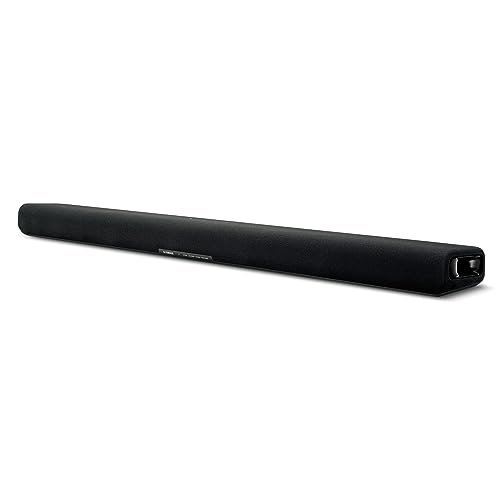 | 1.8 inch | See ratings |
Best Budget With HDMI Input 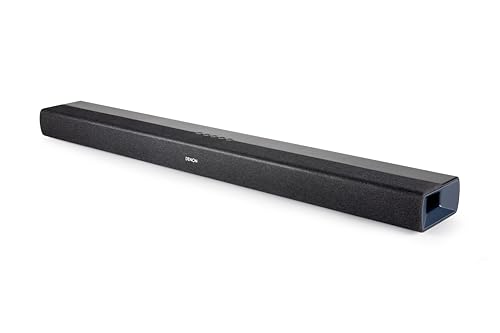 | 3 inch | See ratings |
Which All-in-One Soundbar Should You Buy?
Those six fall into three tiers: flagship bars with upward-firing drivers, a mid-priced Klipsch with its own height drivers, and budget bars that decode Atmos without them.
Sonos Arc Ultra
For the most complete single bar, the Sonos Arc Ultra is the pick.
the Sonos Arc Ultra
Sonos lists nine silk-dome tweeters, six midwoofers and a four-motor, dual-membrane woofer it calls Sound Motion, driven by 15 Class-D amplifiers. Trueplay measures your room and tunes the EQ, and Speech Enhancement offers four levels of dialogue boost in the Sonos app.
It can grow later with a Sonos Sub and Era 300 rear speakers. Sonos notes that it isn’t compatible with CCFL-backlit TVs made from 2004 to 2012.
Klipsch Flexus Core 300
For big screens and the most built-in bass hardware, the Klipsch Flexus Core 300 is the pick.
the Klipsch Flexus Core 300
Klipsch lists four 2.25-inch front drivers, a 0.75-inch horn-loaded tweeter, two upward-firing Atmos drivers, two side-firing drivers and the four woofers, with a frequency response from 43 Hz (Klipsch). Its HDMI 2.1 input passes a console’s or streaming box’s video through to the TV, and Klipsch says it decodes DTS:X onboard.
Music streams over AirPlay, Google Cast, Spotify Connect and TIDAL Connect, and the app adds a night mode and dialogue boost.
Bose Smart Ultra Soundbar
For a mid-size room and a slimmer flagship, the Bose Smart Ultra Soundbar is the pick.
the Bose Smart Ultra Soundbar
Bose pairs Dolby Atmos with TrueSpace, which analyzes stereo or 5.1 signals and upmixes them to add a sense of height (Bose). Its A.I. dialogue mode targets voices, and ADAPTiQ adjusts the sound to your room’s shape and furnishings.
Bose suggests it for rooms of about 12 by 14 feet, and it pairs wirelessly with a Bose Bass Module 500 or 700 if you want more low end later.
Klipsch Flexus Core 200
For height drivers without flagship size, the Klipsch Flexus Core 200 is the pick.
the Klipsch Flexus Core 200
Klipsch’s 3.1.2 layout combines four front-firing 2.25-inch aluminum drivers, a dedicated center-channel tweeter, two 2.25-inch elevation drivers and dual 4-inch built-in woofers (Klipsch). It shares the Core 300’s 43 Hz rating on Klipsch’s spec sheet.
Inputs are HDMI eARC, optical, USB-C and Bluetooth, and it has a sub output and wall brackets in the box.
Yamaha SR-B30A
For Dolby Atmos on a budget, the Yamaha SR-B30A is the pick.
the Yamaha SR-B30A
Yamaha calls it a single-body Dolby Atmos bar with two subwoofer drivers built in, made for smaller living rooms, bedrooms and dens (Yamaha). Its four sound modes cover stereo, standard, movie and game.
It connects with one HDMI eARC or optical cable, has a sub output, and hangs on the wall from built-in keyholes.
Denon DHT-S218
For a TV that’s short on HDMI ports, the Denon DHT-S218 is the pick.
the Denon DHT-S218
Denon builds in two down-firing 3-inch woofers alongside two racetrack midrange drivers and two 1-inch tweeters, and adds its Dialog Enhancer for speech (Denon). Its HDMI input passes 4K video with VRR and ALLM through to the TV, which frees up one of the TV’s ports.
It also supports Bluetooth LE Audio for lower-latency streaming from a phone or tablet.
Get Studio Tips Weekly
Join 5,000+ creators getting acoustic treatment advice every week.
No spam. Unsubscribe anytime.What Makes a Soundbar All-in-One?
Every bar on that list makes its bass inside the same cabinet as its other speakers, and that’s the whole definition. Yamaha’s description of the SR-B30A puts it plainly: a single body with two subwoofer drivers built in, so there’s no separate sub to place.

Makers word it differently, with Klipsch writing “no subwoofer required” and Denon “without a separate subwoofer,” and RTINGS calls the same category standalone soundbars. On these bars the “.1” in a channel count is built in: Denon calls the DHT-S218 a 2.1 bar with integrated down-firing bass drivers.
Think of it as a compact stereo against a component system. One box is simpler to live with, while separate parts give the biggest driver more room to work.
How Much Bass Can a Built-In Subwoofer Make?
Those built-in woofers vary more than the labels suggest, and the makers’ driver lists show it. The Klipsch Core 300 carries four 4-inch woofers, the Core 200 two 4-inch ones, and the Yamaha SR-B30A and Denon DHT-S218 two 3-inch ones each.
Sonos describes its Sound Motion woofer by design rather than size, as a four-motor, dual-membrane driver in a flat, compact housing. Bose doesn’t list a woofer among the Smart Ultra’s nine speakers at all.
Klipsch is the only maker here that publishes a frequency response, 43 Hz to 20 kHz for both Flexus bars. For the other four, bass depth is a gap in the spec sheet, not a number you can compare.
RTINGS, which says it has tested more than 255 soundbars, notes that even its top all-in-one pick, the Core 300, can’t output as much bass as a setup with a dedicated subwoofer (RTINGS). Treat that as the ceiling for every bar on this list.
Do All-in-One Soundbars Play Real Dolby Atmos?
Bass is half of the movie effect, and height is the other half. The Arc Ultra, Bose Smart Ultra, Core 300 and Core 200 each name two drivers for height: upward-firing tweeters on the Sonos, upward-firing speakers on the Bose and 2.25-inch elevation drivers on the Klipsch bars.
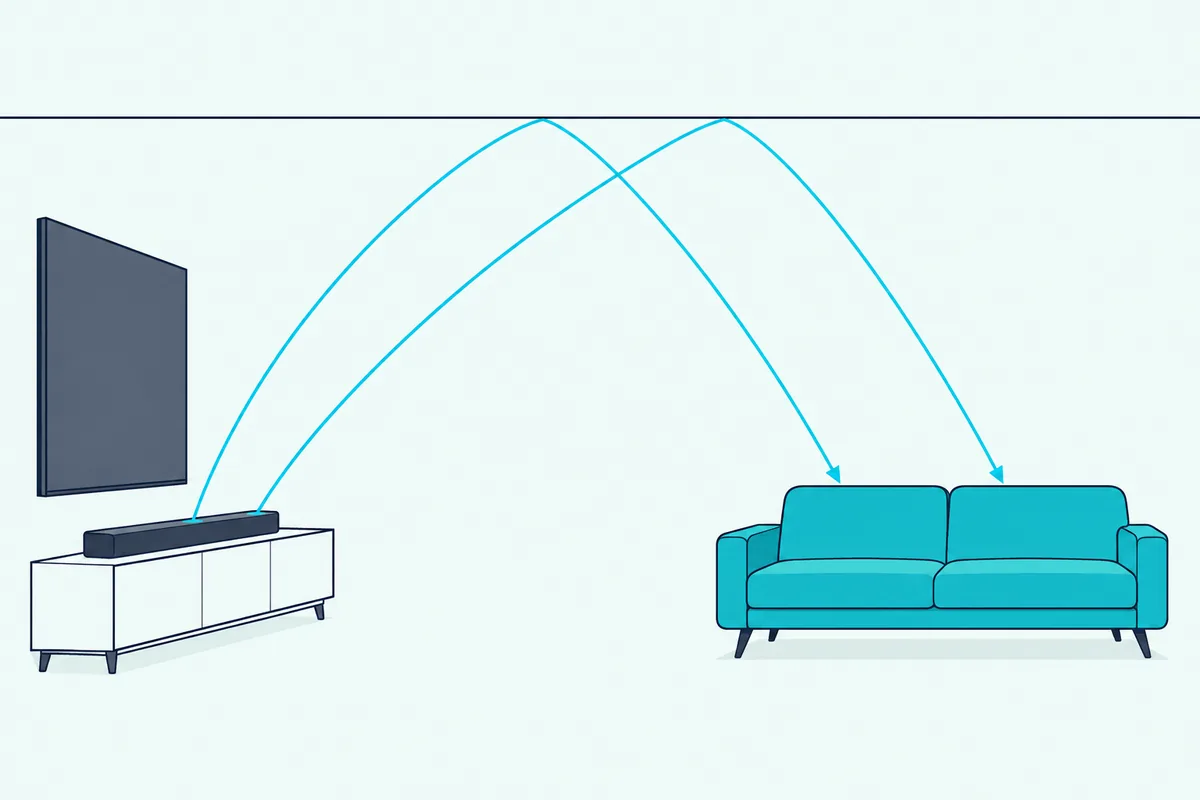
The Yamaha SR-B30A and Denon DHT-S218 decode Dolby Atmos without any upward-firing drivers in their spec lists, and Yamaha files its Atmos under virtual surround technology. Dolby says Atmos can create immersive sound using just the speakers built into a TV, so these bars still play Atmos content; they just have no dedicated drivers aimed overhead (Dolby).
So read the driver list, not the Atmos badge. Sonos, Bose and Klipsch name their height drivers, and Sonos says its two upward-firing tweeters create dedicated height channels.
For bars and systems built mainly around Atmos, see our Dolby Atmos soundbar picks.
Which Inputs Should an All-in-One Soundbar Have?
That Atmos layer arrives over HDMI, and all six picks connect to the TV through an eARC port. The HDMI Licensing Administrator says eARC carries up to 32 channels of uncompressed audio and formats including Dolby Atmos, Dolby TrueHD and DTS:X from the TV to a soundbar over one cable (HDMI LA).
It matters most with the Arc Ultra: Sonos marks Dolby Atmos, Dolby TrueHD and multichannel PCM “HDMI eARC connection required” (Atmos inside Dolby Digital Plus is the exception), and its optical input needs an adapter sold separately. Every other pick lists an optical input for TVs without HDMI ARC, and this HDMI versus optical rundown explains what that cable gives up.
Only two picks take a source directly. The Core 300 has HDMI 2.1 passthrough and the Denon a 4K HDMI input, which helps when a console and a streaming box already fill the TV’s ports.
For music, the Arc Ultra and Core 300 stream with AirPlay, while Yamaha lists Bluetooth and no Wi-Fi for the SR-B30A.
Can You Add a Subwoofer to an All-in-One Later?
That back panel also decides whether the bar can grow, and all six can take more bass later. The Klipsch, Yamaha and Denon bars list a wired sub output, and Klipsch also sells its own Flexus subs, one or two per bar.
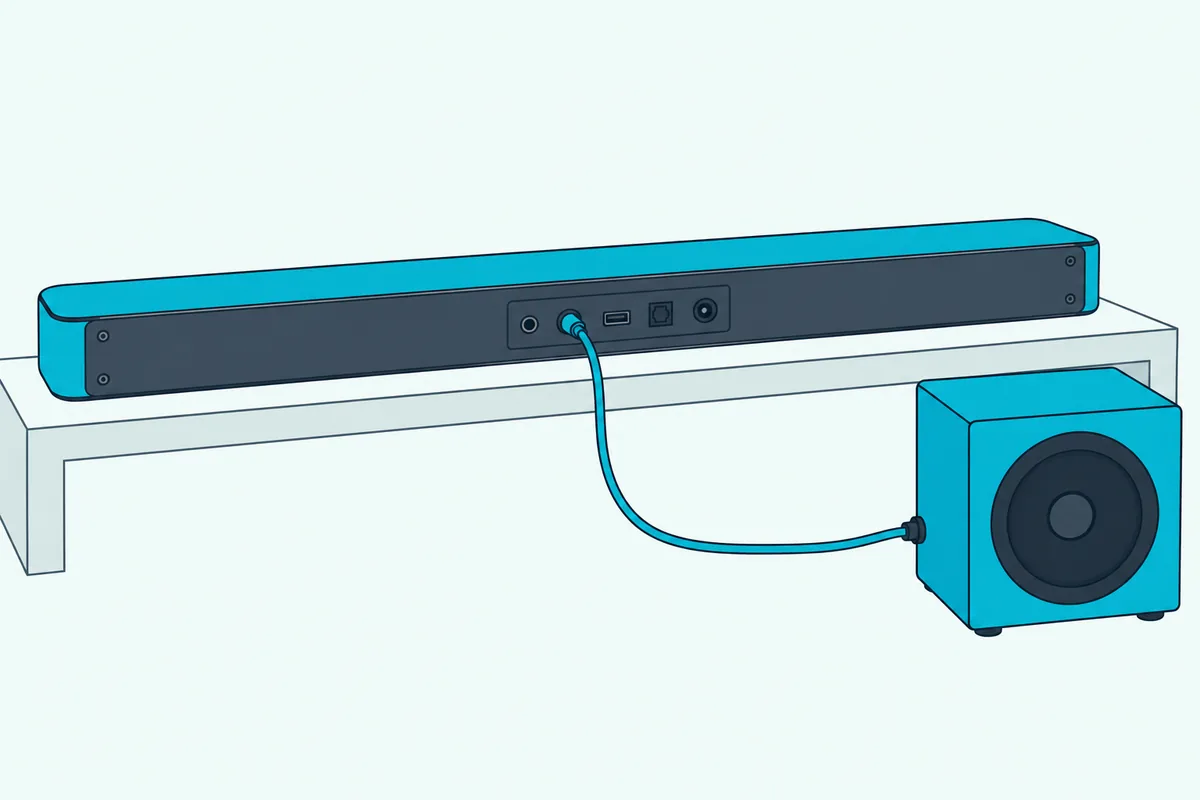
The Sonos pairs with a Sonos Sub, and the Bose with a Bass Module 500 or 700, or two of the same model. So an all-in-one is a safe first step: start with the bar and add a sub only if your room and your movies ask for it.
That decision depends on room size, neighbors and what you watch, and Burton Acoustix’s subwoofer explainer works through it.
Which All-in-One Soundbars Didn’t Make the List?
Those upgrade paths belong to bars that passed every check, and a few others came close. Klipsch’s 28-inch Flexus Core 100 and Yamaha’s SR-B20A also met the rating, review and stock bar on 14 October.
The Core 100 keeps dual 4-inch woofers but virtualizes Dolby Atmos without height drivers, and the SR-B20A pairs two 3-inch built-in woofers with DTS Virtual:X instead of Dolby Atmos. They’re the simpler siblings of the Core 200 and SR-B30A.
Samsung’s HW-S60D and HW-QS90H appear on other all-in-one lists, but Samsung’s product pages load their specs by script, so their drivers couldn’t be checked for this guide. Sony’s, TCL’s and JBL’s product pages couldn’t be read either, so the Sony HT-S2000, the TCL S45H and JBL’s all-in-one bars weren’t checked.
Smaller single bars, including Sonos’s Beam (Gen 2) and Bose’s Smart Soundbar, sit in our best small soundbar picks instead.
What Should You Check Before You Buy?
Those exclusions came down to documentation, but your own checks are about fit. Four take a minute each:
- The width fits your stand or wall: these picks run from 35 inches (Denon) to 54 inches (Core 300).
- Your TV has an HDMI eARC or ARC port, or you’re happy with optical (plus an adapter for the Sonos).
- You know whether you want height drivers or virtual Atmos, and the driver list shows which one a bar has.
- There’s a sub output or a wireless sub option if you might want more bass later.
Keep the box until the bar has played a few movies in your own room.
The Bottom Line
Those six bars cover every budget: buy the Sonos Arc Ultra for the most complete single bar, or the Klipsch Flexus Core 300 for the most built-in woofers and an HDMI input on a big TV.
Choose the Core 200 for height drivers for less, the Bose for a mid-size room, and the Yamaha SR-B30A or Denon DHT-S218 when the budget is tight.
Frequently Asked Questions
Is a standalone soundbar the same as an all-in-one soundbar?
Yes. Both mean one bar that makes its own bass, with no separate subwoofer in the box. RTINGS uses the terms interchangeably, calling its all-in-one picks the best soundbars without a subwoofer and the Samsung HW-QS90H its best standalone bar in the upper mid-range. A standalone bar can still accept a sub later, and all six picks here do, through a sub output or a wireless pairing.
Do you need a subwoofer with an all-in-one soundbar?
Not to get started. Each pick makes its bass inside the cabinet, from two 3-inch subwoofers in the Yamaha SR-B30A and Denon DHT-S218 to four 4-inch woofers in the Klipsch Flexus Core 300. RTINGS still notes that its top all-in-one pick can’t output as much bass as a setup with a dedicated subwoofer, so a large room or bass-heavy movies are the reason to add one later.
Which brand makes the best all-in-one soundbar?
No single brand wins every category. On the makers’ own specs, Sonos packs the most drivers into one bar, Klipsch the most built-in woofers and the only published frequency response, Bose the narrowest bar with upward-firing speakers, and Yamaha and Denon the budget bars with dual built-in subwoofers. Pick the brand whose bar fits your TV’s inputs, your room and the app you already use.
Is an all-in-one soundbar better than a sound bar system?
It’s simpler, not automatically better. A sound bar system adds a separate subwoofer and sometimes rear speakers, which gives the bass its own box, while an all-in-one keeps every driver in one cabinet on one cable. If floor space or close neighbors make a sub awkward, the all-in-one fits better; if you want the most impact, a bar-and-sub system still has the edge on bass, as RTINGS notes.
Can you wall-mount an all-in-one soundbar?
Yes, all six can go on a wall, but only some include the hardware. Klipsch puts wall brackets in the Core 200’s box and sells the Core 300’s bracket separately, Yamaha builds keyholes into the SR-B30A, and Denon lists a keyhole-style wall mount for the DHT-S218. Sonos lists a threaded mount point on the Arc Ultra and sells a wall mount, and Bose sells a soundbar wall bracket.