How to Soundproof a Blender and Make It Quieter
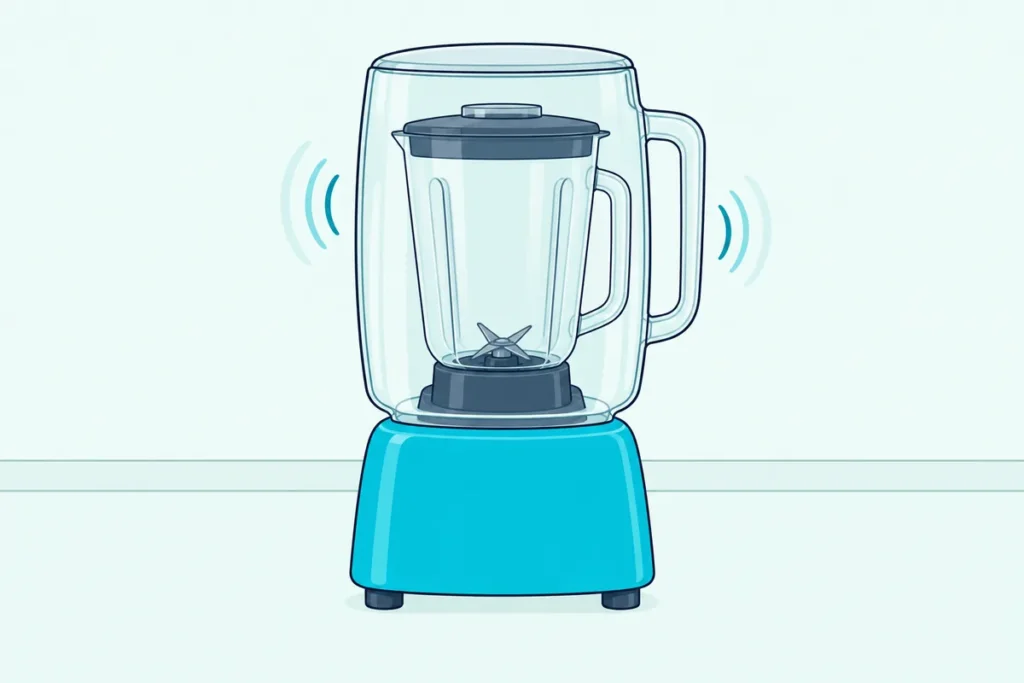
If you’re working out how to soundproof a blender, start with what its maker allows, because the vents that keep the motor cool are the one part you can’t cover.
The noise is a motor spinning at high speed plus a base shaking a hard counter, and the walls and cabinets nearby bounce it straight back into the kitchen.
Set the blender in the right spot, load and run it the way its maker says, and keep its parts tight, and you can take a noticeable bite out of that noise without wrapping anything around it.
This guide follows Vitamix, NutriBullet, Ninja and Hamilton Beach documents through placement, mats, speed, loading, maintenance and the sound enclosures makers build.
Start with the seven steps below, then use the sections after them to match each fix to the noise your blender actually makes.
How to Soundproof a Blender in Seven Steps
Those steps run from the most cost-effective to the most costly, so try each one before the next. Work down the list and stop when the noise does.
| Step | What to do | Whose documents back it |
|---|---|---|
| 1. Keep it breathing | Leave the vents and the space under the base clear | NutriBullet |
| 2. Move it out | Pull the blender away from the wall, backsplash and cabinets | NutriBullet |
| 3. Give it firm footing | A dry, level, hard surface, on the blender’s own feet | Vitamix, Ninja, NutriBullet |
| 4. Load to the line | Stay under the MAX line, in the order your maker gives | Ninja, NutriBullet, Vitamix |
| 5. Start low, finish fast | Start slow, then blend at speed briefly or in pulses | NutriBullet, Vitamix |
| 6. Tighten and check | Lock the jar, blade and lid; check the feet, gasket and drive socket | NutriBullet, Vitamix |
| 7. Choose a shielded model | Buy a blender whose maker builds in the enclosure | NutriBullet, Vitamix, Hamilton Beach |
Steps 1 to 6 cost little or nothing, so try them before step 7.
Can You Soundproof a Blender Safely?
That first step sits at the top for a reason. Yes, you can quiet a blender safely, as long as nothing covers its vents and nothing encloses it unless the blender’s maker sells or approves the enclosure.
NutriBullet says its blenders are designed to run on a hard, flat, stable surface, and that soft materials can affect stability and may block the ventilation openings under the motor base (NutriBullet). Proper airflow, it adds, keeps the motor cool while it runs.
Vitamix’s home manual warns that attachments it hasn’t expressly authorized or sold, and parts that aren’t genuine, may cause fire, electric shock or injury, and Ninja’s owner’s guide says the same of attachments SharkNinja doesn’t recommend or sell (Vitamix). On its commercial The Quiet One, Vitamix goes further: placing the blender in a sound enclosure not made by Vitamix voids the warranty (Vitamix).
So the rule this page follows is simple: quiet the blender from outside its airflow, and leave enclosures to the makers that design one for the model. It’s the same rule as in the portable AC guide: calm the machine down without smothering the parts that move its air.
Get Studio Tips Weekly
Join 5,000+ creators getting acoustic treatment advice every week.
No spam. Unsubscribe anytime.Why Is a Blender So Loud?
Those vents matter because the noise starts at the motor. NutriBullet’s product team puts most blender noise down to two sources: the motor spinning at high speed, and vibration passing from the blender into the countertop and the surfaces around it.
Hard countertops, nearby walls and cabinets then amplify it by bouncing the sound back into the room. Loose parts can rattle, a poorly seated blade assembly can add noise, and dense frozen fruit or ice cream can make the motor work harder than it needs to.
Hamilton Beach says its Sound Shield 950 is designed to reduce noise from four different areas of a traditional blender. It pairs a shield over the jar with a motor enclosure and a quiet fan design.
Think of the jar as a drum and the counter as a sounding board: a shield works on the first, and the blender’s feet on the second. That leaves three places to work on: the air around the jar, the base and what it stands on, and the hard surfaces nearby.
Where Should a Blender Sit on the Counter?
Those hard surfaces are the easiest of the three to change. Pull the blender away from the wall, backsplash and cabinets toward the middle of the counter, because NutriBullet says sound reflects off those surfaces and even a few inches of extra space can noticeably cut the reflected sound.
Set it on a dry, level surface, as Vitamix’s home manual and Ninja’s owner’s guide both say. NutriBullet adds that its blenders are made for a hard, flat, stable surface.
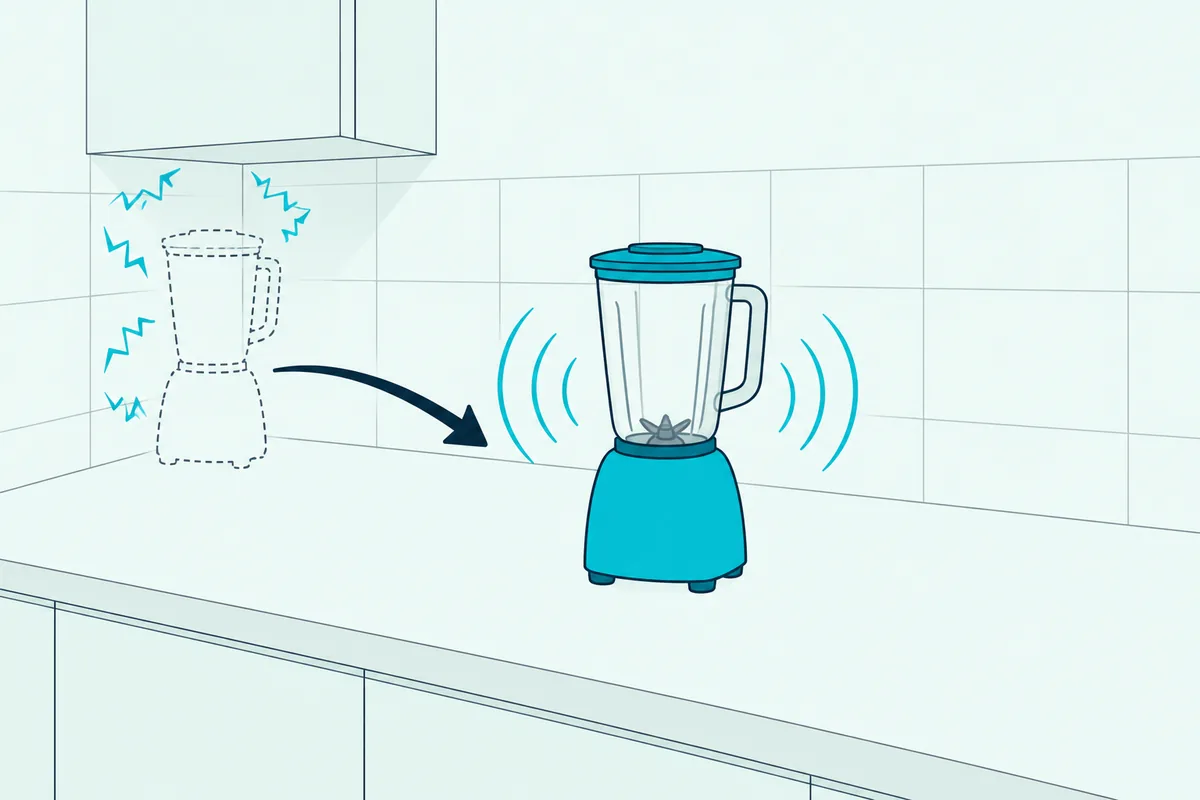
We’d avoid the corner under a wall cabinet, where sound waves meet hard surfaces on three sides, and keep a buffer of open counter around the jar instead. Try this once: run the same short blend of water in the old spot and then in the middle of the counter, and listen from where you usually stand.
The same counter may be carrying a louder neighbor. If it’s the dishwasher underneath, making a dishwasher quieter starts with how it was installed.
Does a Mat or Towel Under a Blender Help?
You can imagine a folded towel soaking up the noise, but that firm, level footing is exactly why the trick doesn’t hold up. No, at least not on a blender that breathes through its base: NutriBullet lists a towel, mat or folded cloth under the base as a myth and says it isn’t recommended, because soft materials can affect stability and may block ventilation openings under the motor base.
Vitamix’s C-Series manual points the same way. To cool a motor that has shut itself off, it has you blow cool air from a hair dryer into the center of the base’s underside, which suggests the underside is part of how that base cools.
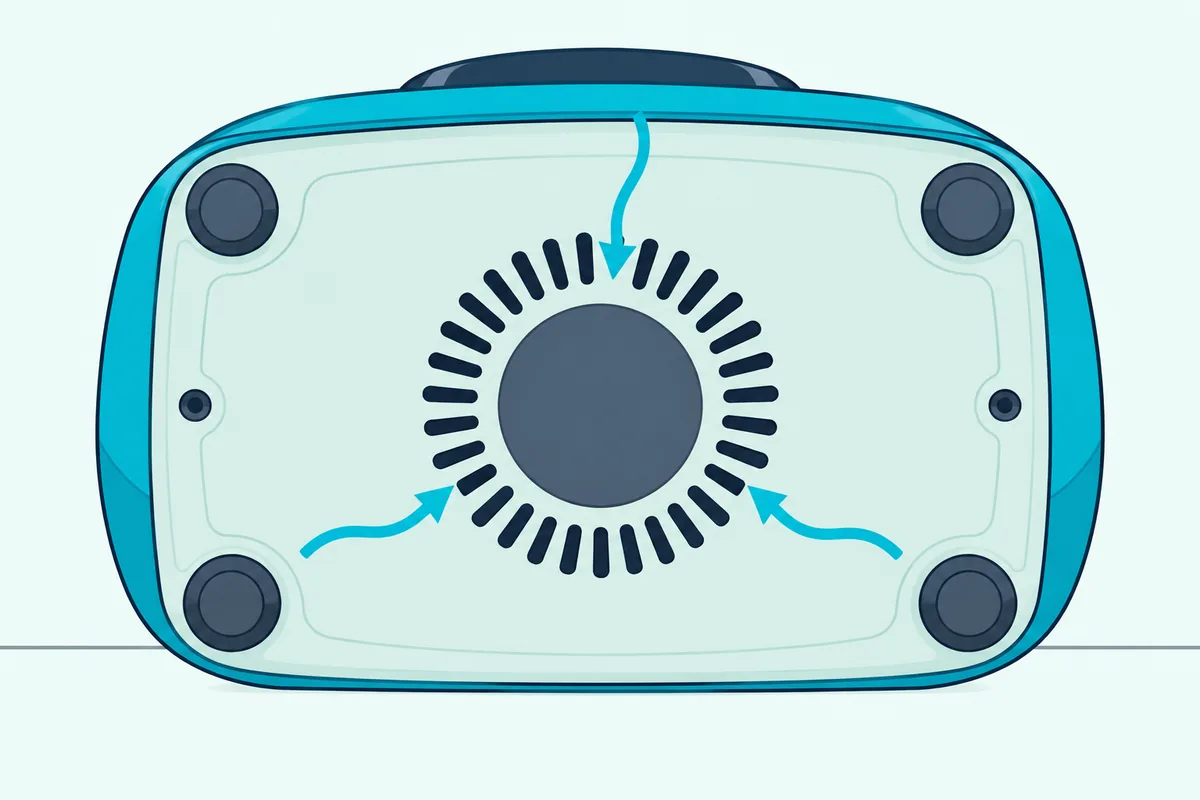
The vibration job already has a part built for it. NutriBullet says most blender bases include small rubber feet designed to absorb vibration and grip the countertop, and if they’re worn, cracked or missing, the blender may vibrate more than normal.
Vitamix ties a base that wobbles on the counter to the drive socket or the rubber feet, and asks owners to contact customer service (Vitamix). So check the feet before you reach for a mat, since replacement feet, NutriBullet says, are often inexpensive and easy to install.
If you still want a sound dampening mat, read your manual first. No maker document cited here recommends one under the base, so we’d leave the space under the feet clear.
Which Speed and Program Make a Blender Quieter?
Once the blender stands right, how you run it matters. Start on a low speed, ramp up, and finish quickly at speed or in short pulses, because NutriBullet says starting low lets the ingredients move before the motor ramps up, and Vitamix says most blends take less than 30 seconds on High.
Those two makers pull in different directions. NutriBullet suggests pulsing because short bursts are often quieter than one long cycle, while Vitamix warns that blending too long at too low a speed overheats the motor, and that High runs its cooling fan fastest.
So on a Vitamix, our pick for keeping the noise short is its own instruction: start on variable 1, move quickly to 10 and then High, and stop when the blend is smooth. On a blender with a pulse button, a few short pulses at the start keep the loudest moment brief.
Preset programs help for the same reason. On Vitamix’s commercial The Quiet One, each program button runs a set combination of speed and time and stops by itself.
The speed you can’t avoid is the one ice needs. NutriBullet calls the motor fighting through a dense mass of frozen ingredients one of the loudest moments in any blend cycle, which is where loading comes in.
How Should You Load a Blender to Cut Noise?
That dense frozen mass is the first thing to fix. Fill to the MAX line and no further, and layer the ingredients in the order your maker gives, because an overloaded blender works harder, and NutriBullet says more resistance typically means more noise and more heat.
Ninja’s owner’s guide is blunt about it: exceeding the maximum capacity is the most typical cause of an overloaded motor. Its thermal switch then shuts the motor off until the blender has cooled for about 15 minutes.
The order differs by maker, so follow your own manual. Vitamix puts liquids first and ice last in its full-size containers, while NutriBullet’s guide puts greens and soft produce first, then fruit, nuts or seeds, then liquid, with ice or frozen ingredients on top.
NutriBullet says its order helps ingredients circulate and prevents the motor fighting a dense frozen mass. Vitamix adds that its tamper breaks up air pockets when a thick blend stops moving, and its commercial manual recommends thawed or partially thawed fruit.
What Maintenance Makes a Blender Quieter?
If the load and speed are right and the noise is still there, look at the parts. Lock the jar, blade assembly and lid fully in place and keep the blade assembly and base clean, because NutriBullet says loose or badly seated parts can rattle and dried food can stop them fitting together.
Then check two wear parts NutriBullet names: the rubber feet from the mat section, and the gasket between the blade assembly and the container. A damaged, stretched or badly seated gasket can contribute to unusual vibration or rattling, and NutriBullet calls it one of the first parts to check when a blender suddenly sounds different.
On a Vitamix, inspect the drive socket as well, the plastic circle around the metal coupling where the container meets the base, as its FAQ describes it. Vitamix’s commercial manual has owners check it periodically for wear, cracks or breaks and swap in the extra drive socket enclosed with the blender if it’s damaged.

Home models differ: Vitamix’s Professional Series 750 manual says any repair, servicing or replacement of parts must be done by Vitamix or an authorized service representative.
Turn the blade by hand too. Vitamix’s commercial manual says the blade bearing should turn without hesitating and without spinning too freely, and to contact Vitamix if it does either.
Ninja’s owner’s guide has you inspect the blade assembly before each use. If a blade is bent or damage is suspected, it says to contact SharkNinja to arrange a replacement.
Which Blender Noises Mean Something Is Wrong?
Some of those worn parts generate a warning sound of their own. Vitamix says a grinding sound or a high-pitched squeak may mean the blade bearing assembly is starting to break down, and asks owners to contact customer service.
A sudden change counts too. Vitamix’s commercial manual says that if the sound of the machine changes or something hard touches the blades, don’t serve the drink, and check the blade assembly for loose, nicked or missing parts.
An overheating motor may give off a burning smell, Vitamix’s FAQ says. Turn the power off and let it cool: most users find about 30 minutes is enough, and Vitamix’s home manuals allow 20 to 45 minutes before the next blend.
Vitamix’s home manual also says to stop using a container whose retainer nut has loosened and no longer holds the blade assembly securely.
None of these is a soundproofing job. We’d treat each one as a call to the maker, not a noise to muffle, because a cover over a failing bearing only hides the warning.
Do Blender Sound Enclosures Work?
Once the blender itself is healthy, the enclosure question is the one most people search for. Yes, when the enclosure is designed with the machine’s airflow in mind: NutriBullet says a properly designed enclosure with adequate airflow can significantly reduce perceived noise.
Vitamix builds them into its commercial machines. The Quick & Quiet ships with a sound enclosure that comes apart for cleaning, and Vitamix credits its noise reduction to air management, vibration dampening and a large-rotor motor.
The Quiet One has a removable twist lock enclosure that comes off without tools, and Vitamix optimizes the machine for its 48-ounce Advance container.
Hamilton Beach brings the idea to home blenders. Its Professional Quiet Blender puts a removable quiet shield over the jar and pairs it with rubber-mounted components and a motor designed for airflow, and its Sound Shield 950 closes a hinged, two-piece shield over a 52-ounce glass jar (Hamilton Beach).
Commercial makers sell them as accessories too. Sammic offers a sound cover for its TB-2000 blender that covers the full machine.
Third-party enclosures exist as well, and Whisper Blend lists airflow openings that cool the blender among its features. Vitamix’s commercial warranty, though, is void if the blender sits in a sound enclosure Vitamix didn’t make, so ask your blender’s maker before you buy one.
Our take: an enclosure from the blender’s own maker is the only kind this page recommends.
Can You Build a DIY Soundproof Box for a Blender?
That warranty line is also the answer for homemade boxes. We wouldn’t build one: no maker document cited here gives a plan for a DIY blender box, and NutriBullet warns that covering the motor base traps heat and restricts airflow, which raises the risk of overheating.
NutriBullet draws the line clearly. A purpose-built enclosure is designed to reduce noise while still allowing proper ventilation, so if you want one, it says to choose one designed for blender use rather than improvising with household materials.
Lining a homemade box with acoustic foam doesn’t change that, because the foam adds no airflow around the motor housing. The blender can’t be left alone in a box either, since Vitamix’s home manual and Ninja’s owner’s guide both say not to leave it unattended while it runs.
If the real problem is noise reaching a bedroom or a neighbor through a shared wall, the wall is the job, not the blender. Burton Acoustix’s soundproofing materials guide sorts the materials that do real work in a wall, ceiling or floor: damping, decoupling, cavity absorption and impact control.
How Many Decibels Is a Blender?
Even the makers with built-in enclosures don’t put a number on it. None of the Vitamix, Hamilton Beach or NutriBullet documents cited here gives a decibel figure: Vitamix promises unparalleled sound reduction, Hamilton Beach says significantly quieter than leading competitors, and NutriBullet says its Ultra’s motor makes lower-frequency sound.
Without a published spec, comparisons between brands are claims, not measurements. Our suggestion is to judge your own changes instead: put a phone running a sound meter app in the same spot, blend the same cup of water at the same setting before and after each fix, and compare the two readings.
Treat those readings as a before-and-after check on that phone, not as the blender’s true level.
When Is a Quieter Blender the Real Fix?
If the blender is well placed, loaded and maintained and it’s still too loud, the machine itself is the limit. The real fix then is a blender whose maker designed the quiet in, with a shield over the jar or a motor built for less noise, because that keeps the enclosure and the airflow in the maker’s hands.
For a home kitchen, Hamilton Beach’s shielded models are the documented option among the makers here, and the Hamilton Beach Professional Quiet Shield Blender is one of them. Its listing describes a Quiet Shield that dampens noise during operation and a 32-ounce jar that’s dishwasher safe.
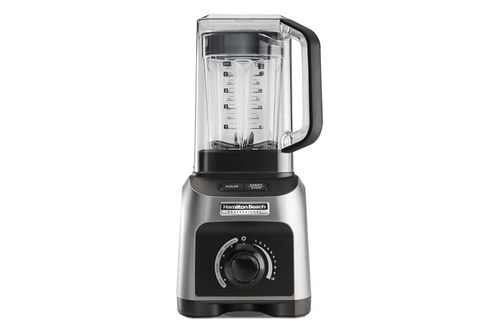
the Hamilton Beach Professional Quiet Shield Blender
For one person’s smoothies, NutriBullet names its Ultra, whose motor is designed to produce lower-frequency sound, as the quietest single-serve blender in its personal blender lineup. For soups, sauces, dressings and softer ingredients, NutriBullet’s own suggestion is an immersion blender, which it calls often considerably quieter.
Vitamix sells The Quiet One and the Quick & Quiet through its commercial line, so they suit a café counter more than most home kitchens.
The Bottom Line
So most of what quiets a blender happens outside it: a spot away from the wall, firm footing on its own feet, a load under the line and a short, sharp blend.
Keep the vents clear, enclose a blender only in what its maker sells or approves, and when that still isn’t enough, let the next blender come with its shield built in.
Frequently Asked Questions
Why is my blender louder than it used to be?
Worn or loose parts are the usual reasons makers give. NutriBullet points to worn rubber feet and to a damaged or badly seated gasket, one of the first parts to check when a blender suddenly sounds different. Vitamix links a grinding or high-pitched squeak to a blade bearing assembly that may be breaking down, and a wobbling base to the drive socket or the rubber feet. Lock every part in place, check those wear parts, and call the maker if the new sound stays.
How can I use a blender early in the morning without waking the family?
NutriBullet’s plainest advice is to blend at reasonable hours, or to use a portable blender somewhere the noise won’t bother anyone. If the morning smoothie can’t move, pull the blender to the middle of the counter, keep the load under the MAX line, start on a low speed and keep the blend short. An immersion blender, which NutriBullet calls often considerably quieter, can take over the soups and softer jobs.
Will a blender sound cover fit any blender?
No. Makers build enclosures around specific machines, and Vitamix’s The Quiet One cover won’t take the 64-ounce standard container. A third-party enclosure such as Whisper Blend’s names the brands it’s for, and Vitamix’s commercial warranty is void if the blender sits in a sound enclosure Vitamix didn’t make, so check with your blender’s maker before you buy one.