Is Foam Board Acoustic? Why Rigid Insulation Doesn’t Work for Sound
Is foam board acoustic? No—foam board is rigid insulation, not acoustic treatment.
The panels from hardware stores look like they might absorb sound, but foam board and acoustic foam are fundamentally different materials with opposite acoustic properties.
The confusion makes sense because both are lightweight and come in flat sheets. The difference is that foam board’s sealed cells reflect sound like a wall, while acoustic foam’s open cells absorb it.
Below you’ll find why the physics don’t work, how the absorption numbers compare, what materials actually do the job, and the most common mistakes to avoid.
Rigid foam board insulation (polystyrene, polyisocyanurate) reflects sound rather than absorbing it because its closed-cell structure blocks sound penetration entirely. For actual acoustic treatment, use open-cell acoustic foam, rigid fiberglass panels like Owens Corning 703, mineral wool, or fabric-wrapped acoustic panels.
What Is Foam Board and Why Do People Think It Works for Sound?

“Foam board” is a catch-all term for the rigid insulation panels sold at hardware stores. They come in a few types, and none of them absorb sound.
Common Types
Expanded polystyrene (EPS) is the white beaded foam you see in coolers and packaging. It’s lightweight, cheap, and completely closed-cell—zero acoustic absorption.
Extruded polystyrene (XPS) is the pink or blue rigid board. It’s denser than EPS but still sealed-cell, so it reflects sound the same way.
Polyisocyanurate (polyiso) is the foil-faced board with the highest R-value per inch. The foil face actually makes it worse for sound because it adds a reflective surface on top of an already non-porous material.
What Foam Board Is Designed For
All three types are engineered for thermal insulation: high R-value per inch, moisture resistance, and easy installation. Those properties come from sealed cells that trap still air—the same structure that makes foam board acoustically useless.
Why Doesn’t Foam Board Absorb Sound?

The answer comes down to cell structure, and once you see it, the logic is hard to argue with.
Closed-Cell Structure
Sound absorption requires open, interconnected cells that let sound waves enter and lose energy through friction. Acoustic foam has exactly that—a porous network of open cells.
Foam board has the opposite: sealed cells filled with trapped gas. Sound waves hit the surface and bounce back because there’s nowhere for them to go.
For more on cell structure, see acoustic foam open cell vs closed cell.
Hard Surface
Beyond the cell structure, foam board’s surface is relatively hard and smooth. Sound bounces off it the same way it bounces off drywall—efficiently.
There’s no friction to convert sound energy into heat, which is the mechanism that makes real acoustic materials work.
Wrong Material Properties
Acoustic absorption depends on three things: porosity, airflow resistance in the right range, and a density profile tuned for converting sound to heat. Foam board scores zero on porosity, infinite on airflow resistance, and wrong on density.
It fails on every metric that matters for sound absorption.
Get Studio Tips Weekly
Join 5,000+ creators getting acoustic treatment advice every week.
No spam. Unsubscribe anytime.How Does Foam Board Compare to Real Acoustic Materials?

The gap between foam board and real acoustic materials is not subtle—it’s a different category entirely.
Absorption Coefficients
| Frequency | Foam Board | 2” Acoustic Foam | 2” Rigid Fiberglass |
|---|---|---|---|
| 250 Hz | 0.05 | 0.25 | 0.55 |
| 500 Hz | 0.05 | 0.55 | 0.85 |
| 1000 Hz | 0.05 | 0.80 | 0.95 |
| 2000 Hz | 0.10 | 0.90 | 0.95 |
| NRC | 0.05 | 0.65 | 0.85 |
Foam board absorbs approximately 5% of sound—essentially nothing. Acoustic foam absorbs 65%+; rigid fiberglass absorbs 85%+.
Real-World Impact
If you cover a wall with foam board, you’ll hear no reduction in echo or reverb. The room sounds the same because the material reflects almost everything back.
You may notice a slight change in how the room resonates, but that’s not an improvement—it’s just a different flavor of the same problem.
What Gets Confused with Foam Board?

The name “foam” does most of the damage. People assume anything called foam absorbs sound, but the word tells you nothing about acoustic properties.
“Foam” in the Name
Acoustic foam absorbs sound because it’s open-cell and designed for it. Foam board insulation is closed-cell and designed for thermal—it reflects sound.
Mattress foam absorbs poorly because its density and structure are wrong for the job. Packing foam is closed-cell, so it reflects like foam board.
The word “foam” just describes a physical structure. It doesn’t promise acoustic performance.
Rigid Fiberglass Confusion
Rigid fiberglass panels like Owens Corning 703 look similar to foam board—they’re both rigid, flat, and roughly the same size. But 703 is made of compressed glass fibers with an open, porous structure that absorbs sound across a wide frequency range.
It’s the core material in most professional acoustic panels.
Foam board and rigid fiberglass are opposite materials with opposite acoustic properties. If someone recommended “rigid panels” for your studio, they almost certainly meant fiberglass.
Thermal vs Acoustic Insulation
Thermal insulation and acoustic treatment are different jobs that need different materials. Foam board is excellent for thermal and useless for acoustic.
Fiberglass batts handle both moderately well, while rigid fiberglass is moderate for thermal but excellent for acoustic. Acoustic foam barely insulates heat but absorbs sound effectively.
A material’s R-value tells you nothing about its NRC rating.
For more on this distinction, see acoustic foam vs insulation.
What Should You Use Instead of Foam Board?

If you’ve been eyeing foam board as a budget acoustic fix, these materials actually do the job.
Acoustic Foam
Open-cell polyurethane or melamine foam is purpose-built for sound absorption. It comes in various thicknesses, installs easily, and handles mid-to-high frequency reflections well.
A pack like the Foamily 12-Pack Acoustic Wedge Panels is a common entry point for budget setups. For more recommendations, see best acoustic foam for recording.
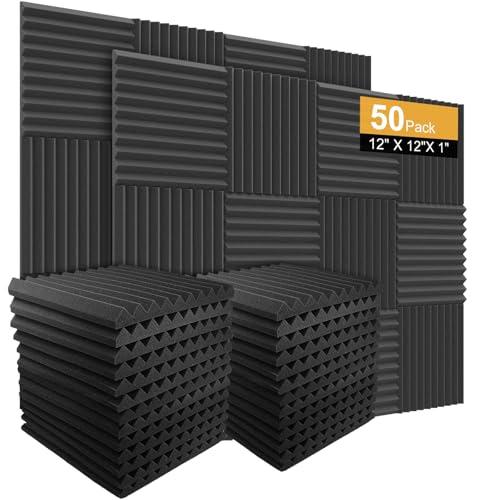
Foamily 12-Pack Acoustic Wedge Panels
Rigid Fiberglass (703/705)
Owens Corning 703 (3 lb/ft³ density) and 705 (6 lb/ft³ density) are the standard core materials in professional acoustic panels. They offer excellent broadband absorption, including lower frequencies that foam struggles with.
They require fabric wrapping for safe handling, but the performance is hard to beat. If you’re looking for a pre-wrapped option, TroyStudio Acoustic Panels skip the DIY wrapping step.
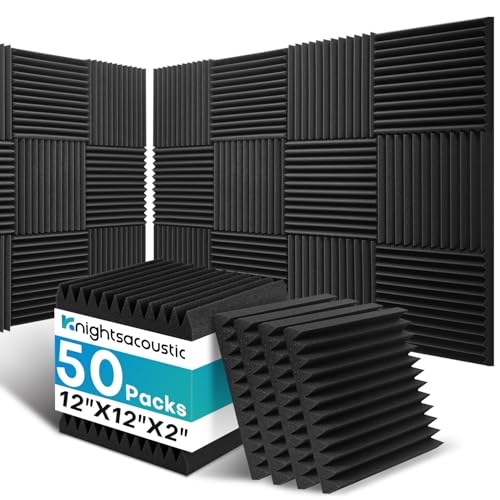
TroyStudio Acoustic Panel (2-Pack)
Mineral Wool/Rockwool
Rockwool Safe’n’Sound and ComfortBoard are popular for DIY panels because they absorb well into the low frequencies, resist fire, and cost less than rigid fiberglass.
If you want a ready-made option instead of DIY, BXI Sound Absorber Acoustic Panels are a decent middle ground. For DIY instructions, see DIY acoustic foam panels.
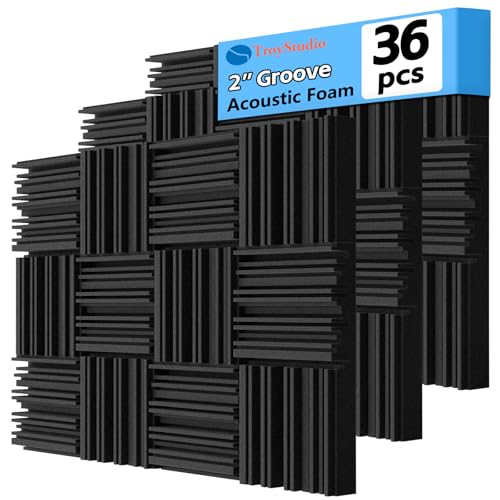
BXI Sound Absorber Acoustic Panels (6-Pack)
Fabric-Wrapped Panels
Commercial fabric-wrapped panels combine a fiberglass or mineral wool core with a fabric covering. They look professional, perform well across a wide frequency range, and cost more than DIY options—but deliver the best combination of performance and appearance.
Can Foam Board Help with Soundproofing?

Absorption and blocking are different problems, and foam board fails at both—but for different reasons.
Sound Blocking vs Absorption
Absorption reduces reflections inside a room. Blocking reduces sound transmission through walls and barriers.
Foam board does neither well, but people sometimes wonder if the “barrier” aspect helps even a little.
Foam Board for Blocking
Foam board adds a small amount of mass and can decouple surfaces if installed with an air gap. In theory, it could also help seal gaps.
In practice, it’s too light to block anything you’d actually notice—additional drywall or mass loaded vinyl would be far more effective for the same effort.
Verdict
Foam board is not a soundproofing solution. Blocking sound requires mass and proper construction techniques, and foam board doesn’t deliver enough of either.
For soundproofing information, see sound deadening material vs acoustic foam.
For understanding what makes foam acoustic, see what acoustic foam is made of.
What Mistakes Do People Make with Foam Board and Sound?

These are the most common ways people waste time and money trying to use foam board for sound.
Covering Walls with Foam Board
This is the biggest waste. You spend money on materials and time on installation, and the room sounds exactly the same afterward.
There’s no acoustic benefit because the material reflects sound instead of absorbing it.
Assuming Hardware Store Foam Works
Insulation foam, craft foam, and packing foam are all closed-cell and non-absorptive. The only foam that actually absorbs sound is open-cell acoustic foam sold by audio retailers.
If the label says “insulation,” it’s the wrong product for sound.
Confusing Thermal and Acoustic
A high R-value doesn’t mean a material absorbs sound. Thermal insulation and acoustic treatment rely on completely different physics, and buying a material because it’s good at one doesn’t mean it helps with the other.
The Bottom Line
Foam board is not acoustic. Rigid insulation panels (EPS, XPS, polyiso) have closed-cell structures that reflect sound rather than absorbing it, and no amount of layering or modification changes that.
For acoustic treatment, use materials with open structures that allow sound penetration: acoustic foam, rigid fiberglass (703/705), mineral wool, or fabric-wrapped panels. Even budget acoustic foam far outperforms any amount of foam board insulation.
For more guides on foam types, placement, and mounting, start at the acoustic foam hub.
Frequently Asked Questions
Can I use foam board behind acoustic panels?
It won’t help acoustically. Foam board behind acoustic panels adds no absorption benefit.
If you want an air gap behind panels (which can improve low-frequency absorption), just mount panels away from the wall — no foam board needed.
Is pink/blue foam board the same as acoustic foam?
No. Pink (Owens Corning XPS) and blue (Dow Styrofoam) foam boards are rigid insulation with closed-cell structure. Acoustic foam is open-cell polyurethane or melamine — they look similar but have completely opposite acoustic properties.
Why does foam board have high R-value but no acoustic value?
Thermal insulation traps still air in sealed cells to reduce heat transfer. Acoustic absorption requires open cells that sound can enter, where friction converts sound energy to heat.
Closed cells that make great thermal insulation make terrible acoustic treatment.
Can I make foam board acoustic by drilling holes in it?
No. Drilling holes doesn’t create the interconnected open-cell structure needed for absorption. You’d just have foam board with holes — still mostly reflective.
The cellular structure throughout the material needs to be open, not just the surface, and that’s not achievable by modifying foam board.
What’s the difference between foam board and rigid fiberglass?
Foam board (polystyrene/polyiso) is closed-cell plastic foam that reflects sound. Rigid fiberglass (Owens Corning 703) is compressed glass fibers that absorb sound excellently.
They may look similar as rigid panels, but their acoustic properties are opposite.
Is any type of foam board acoustic?
No common foam board insulation products are acoustic. EPS, XPS, and polyiso are all closed-cell and non-absorptive.
If a product is sold as thermal insulation foam board, assume it has no acoustic value. Look for products specifically marketed for sound absorption with published NRC ratings.