Polyester vs Foam Acoustic Panels: Which Actually Works? [2026]
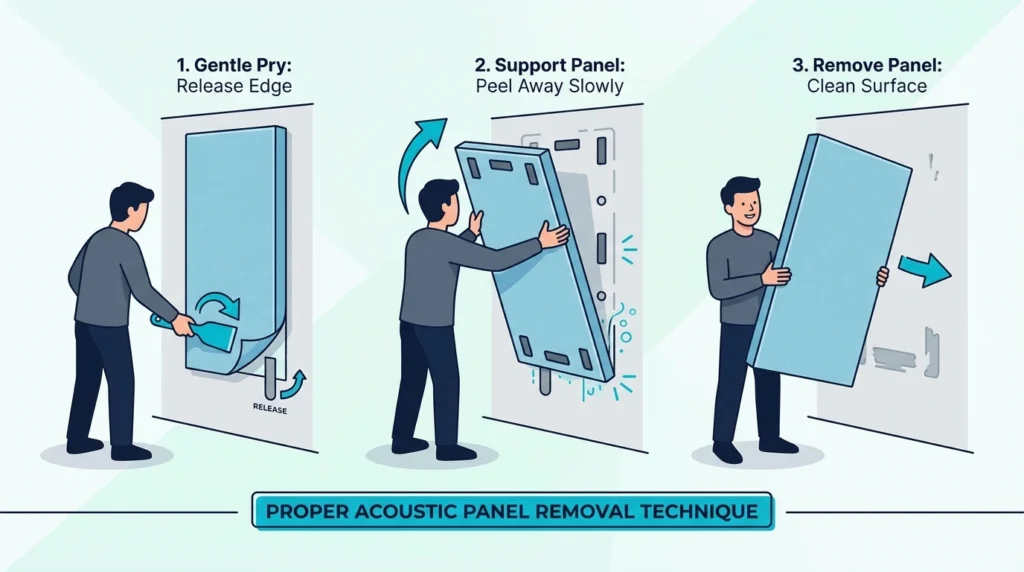
Polyester vs foam acoustic panels — polyester wins on almost every measure, but only if you need mid-to-high frequency absorption, because foam still has a cost edge for ultra-budget setups.
Most people end up regretting acoustic foam within 18 months: it yellows, crumbles, and loses absorption as the open-cell structure degrades. The frustration is real — you paid for treatment, the room still sounds off, and now the foam looks bad too.
It happens because foam’s NRC drops over time while polyester PET maintains performance for 10+ years.
Choosing the right material up front saves money over the lifetime of your setup and keeps performance consistent.
The rest of this guide compares both materials below across absorption, durability, safety, cost, and aesthetics — starting with what each panel is made of and ending with a decision framework for your room.
Polyester panels (usually PET) are the easiest win when you care about fire ratings, longevity, and a clean “finished room” look. Acoustic foam is still the cheapest way to tame flutter echo and bright reflections fast, but quality and safety ratings vary a lot between brands.
Acoustically, at the same thickness, they’re closer than most people expect. Neither one is a real bass absorber on its own.
Quick Picks: Polyester Panels vs Acoustic Foam
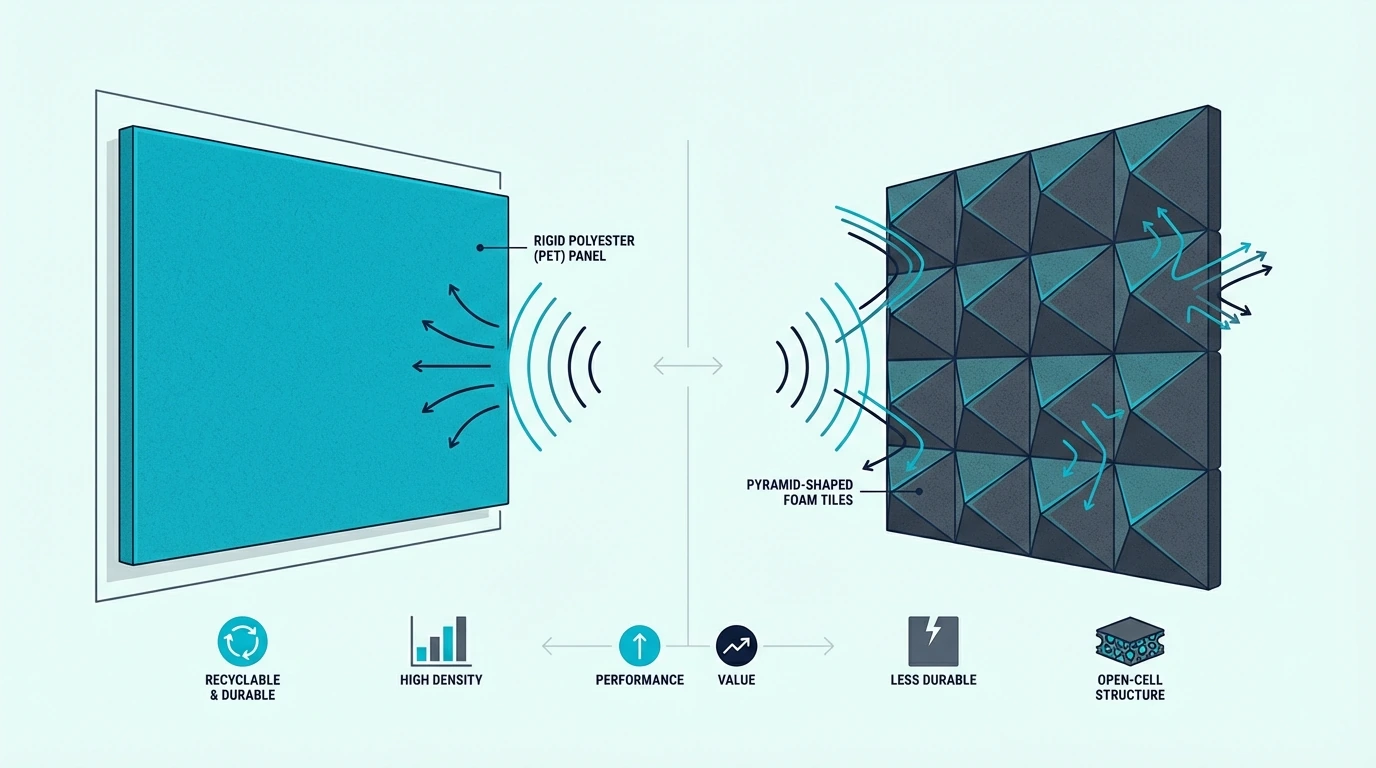
For polyester, a 48×24 polyester fiber panel set (5-pack) is a strong starting point. Each panel is large enough to cover a first-reflection point on its own, and the clean finish works in living rooms, offices, and on-camera setups.
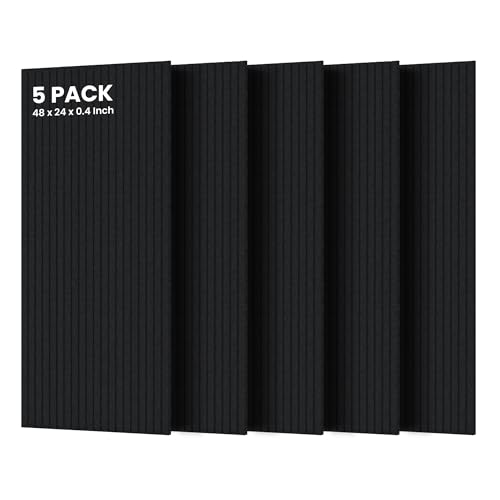
5 Pack Acoustic Panels (48x24, polyester fiber)
Polyester panels win on fire safety, durability (15-20+ year lifespan), and aesthetics. You pay more upfront, but the per-year cost ends up lower than foam in most rooms because you are not replacing them every few years.
The trade-off is heavier mounting hardware and a longer install process.
Acoustic foam flips those priorities: fast setup, low upfront cost, and easy removal if you are renting. The downside is weaker absorption at the thickness most people buy (1 inch), faster degradation from UV and humidity, and a “studio” look that clashes with normal rooms.
For a dedicated recording space or practice room where looks are secondary, foam gets the job done.
On the foam side, 2-inch pyramid foam tiles (12-pack) are the better foam pick because the extra thickness reaches into the mid frequencies where 1-inch tiles fall off. The pyramid texture also looks more intentional than flat foam.What Are Polyester Panels and Acoustic Foam Made Of?
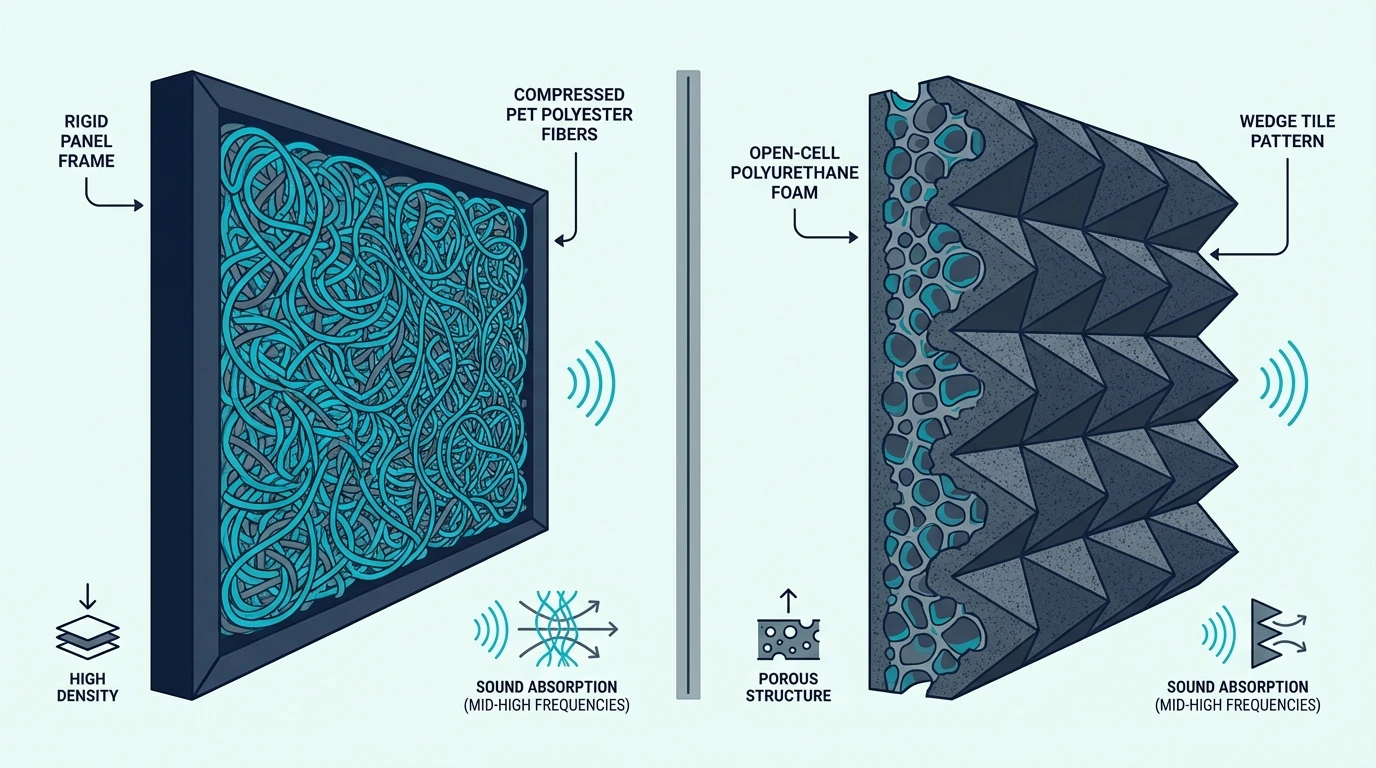
Before diving into absorption numbers, it helps to know what you’re actually comparing because polyester panels and acoustic foam are entirely different product categories.
Polyester Acoustic Panels
The core of a polyester panel is PET (polyethylene terephthalate) fiber, the same material used in plastic bottles. Manufacturers compress these fibers into dense boards or felt-like sheets that turn acoustic reflections into friction as sound waves pass through the matrix.
You’ll see this material sold as rigid boards, felt tiles, decorative shapes, and ceiling baffles, but the underlying mechanics are identical. That density gives them the “looks like decor” vibe, which is why large sets like 48×24 polyester panels work in living rooms and on-camera backgrounds.
Acoustic Foam
Foam takes the opposite approach: lightweight polyurethane or melamine shaped into wedge, pyramid, or egg-crate tiles. The open-cell structure lets sound waves penetrate and lose energy as friction between air molecules and cell walls converts acoustic energy to heat.
Because it isn’t a rigid “panel” in the traditional sense, you stick it directly to the wall. Most budget foam is only 1 inch thick, which limits its reach to upper-mid and high frequencies. Thicker options like 12-pack pyramid foam tiles dig deeper into the midrange, but neither thickness functions as a true bass absorber.
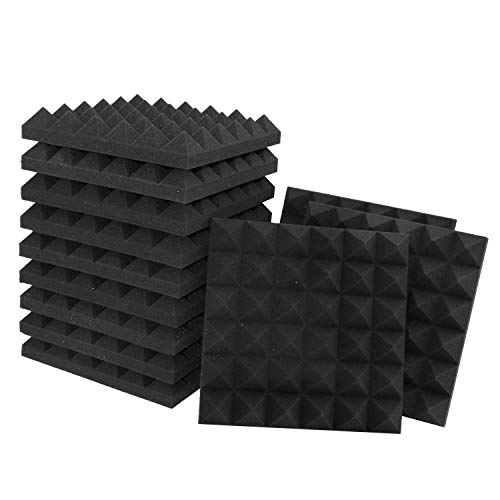
12 Pack 2-inch Pyramid Acoustic Foam Panels
If you want the bigger picture on what counts as a real acoustic panel (and what doesn’t), start with what acoustic panels are.
Get Studio Tips Weekly
Join 5,000+ creators getting acoustic treatment advice every week.
No spam. Unsubscribe anytime.How Do Polyester Panels and Acoustic Foam Compare on Absorption?
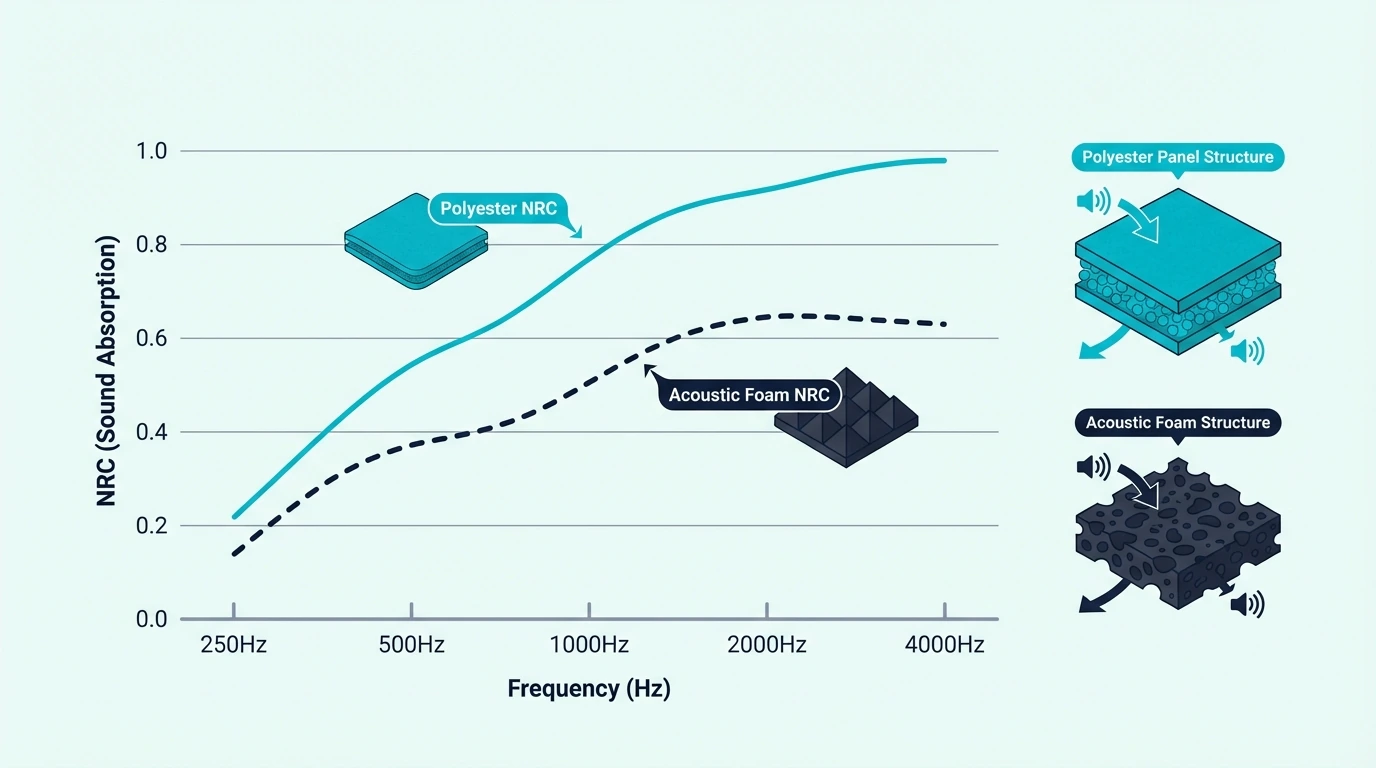
Most people assume polyester panels and acoustic foam perform about the same since both “absorb sound,” but the gap is real — especially at the 1-inch thickness most people buy.
Absorption Coefficients
| Frequency | 1” Polyester Panel | 1” Acoustic Foam | 2” Polyester Panel |
|---|---|---|---|
| 250 Hz | 0.20 | 0.08 | 0.45 |
| 500 Hz | 0.55 | 0.25 | 0.80 |
| 1000 Hz | 0.85 | 0.55 | 0.95 |
| 2000 Hz | 0.95 | 0.70 | 1.00 |
| 4000 Hz | 0.90 | 0.60 | 0.95 |
| NRC | 0.60 | 0.35 | 0.80 |
Values are representative; specific products vary widely.
At 1-inch thickness (the most common purchase), polyester panels absorb roughly twice as much sound energy as acoustic foam across the board. The gap narrows if you compare 2-inch foam to 1-inch polyester, but most budget foam sold online is 1 inch.
Foam concentrates its absorption in the upper frequencies (2 kHz+) and drops off fast below 500 Hz. Polyester panels maintain better absorption across a wider range, especially in the voice-critical 500–2000 Hz band.
Neither material is a true bass absorber. If the room booms below about 250 Hz, you still need dedicated bass treatment regardless of which material you choose.
For a deeper look at what panels actually absorb (and what they don’t), see do acoustic panels work.
For dedicated studios where you can cover a lot of wall area, foam can still get the job done through sheer coverage. But in spaces where you want fewer, better-performing panels (offices, living rooms, podcasting setups), polyester delivers more absorption per square foot.
Acoustic foam also does not block sound from leaving or entering a room. It absorbs reflections inside the room — if your goal is actual soundproofing, neither product will do that.
If you’re building a recording space, the best acoustic panels for a recording studio roundup helps match panel type to use case.
Are Polyester Panels Safer Than Acoustic Foam?
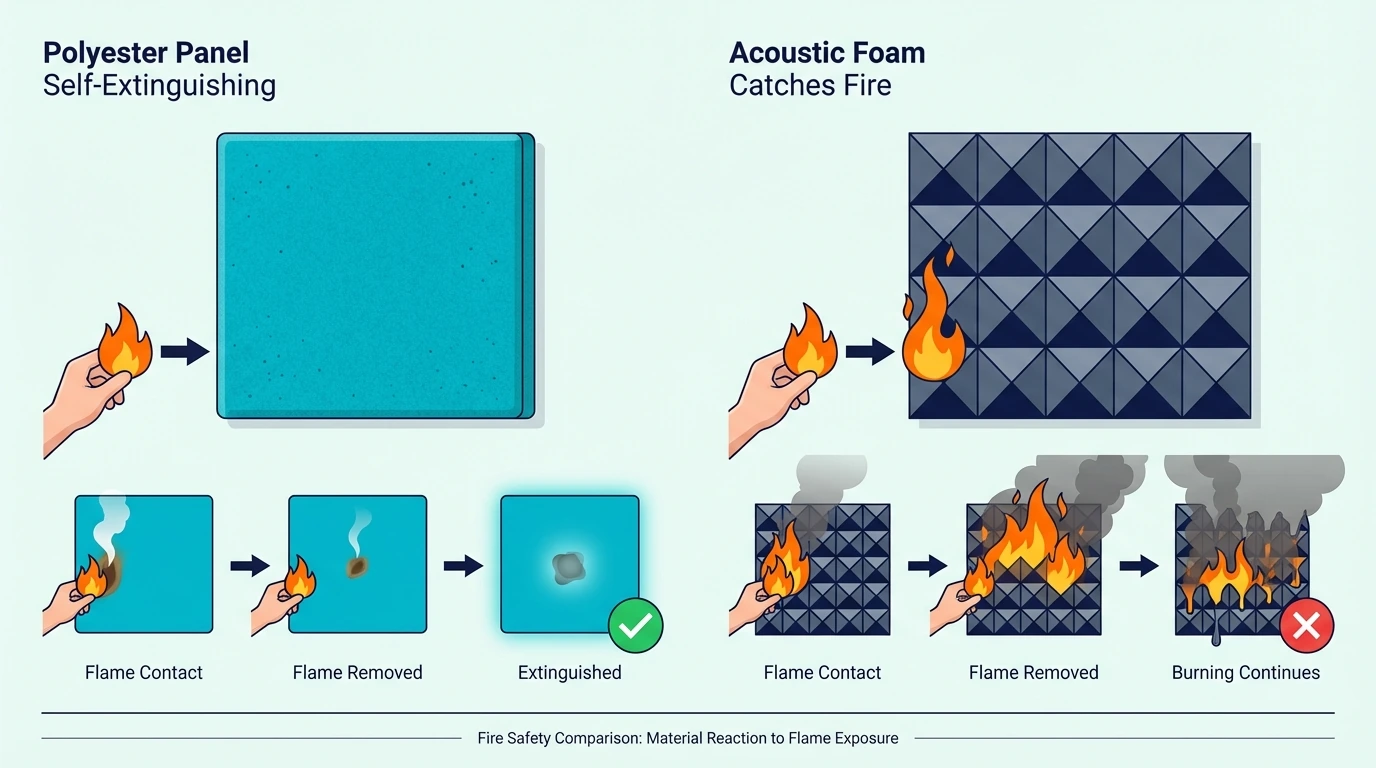
Fire safety is where the gap between these materials becomes a liability for commercial spaces.
Polyester Fire Properties
PET polyester is inherently flame-retardant, so it doesn’t need chemical treatment to meet Class A fire ratings. When exposed to a flame, the fibers tend to melt and self-extinguish rather than sustain a burn or drip flaming blobs.
That predictable, chemical-free fire resistance makes polyester the default choice when treating public buildings, offices, or anywhere a fire inspector might walk through.
Acoustic Foam Fire Properties
Polyurethane foam, by contrast, is inherently flammable and relies entirely on sprayed-in chemical retardants to meet safety codes. The issue is consistency — while name-brand foam (like Auralex) passes strict standards, budget acoustic foam from unknown sellers often ships with questionable or entirely fake fire ratings.
Even when treated, those chemicals can off-gas over time and their effectiveness can degrade. If you’re leaning toward classic studio panels but need verified safety, the best fiberglass acoustic panels guide covers alternative core materials that pass strict codes.
The acoustic panels for apartments guide covers fire code requirements for shared buildings in more detail.
Which Looks Better: Polyester Panels or Acoustic Foam?
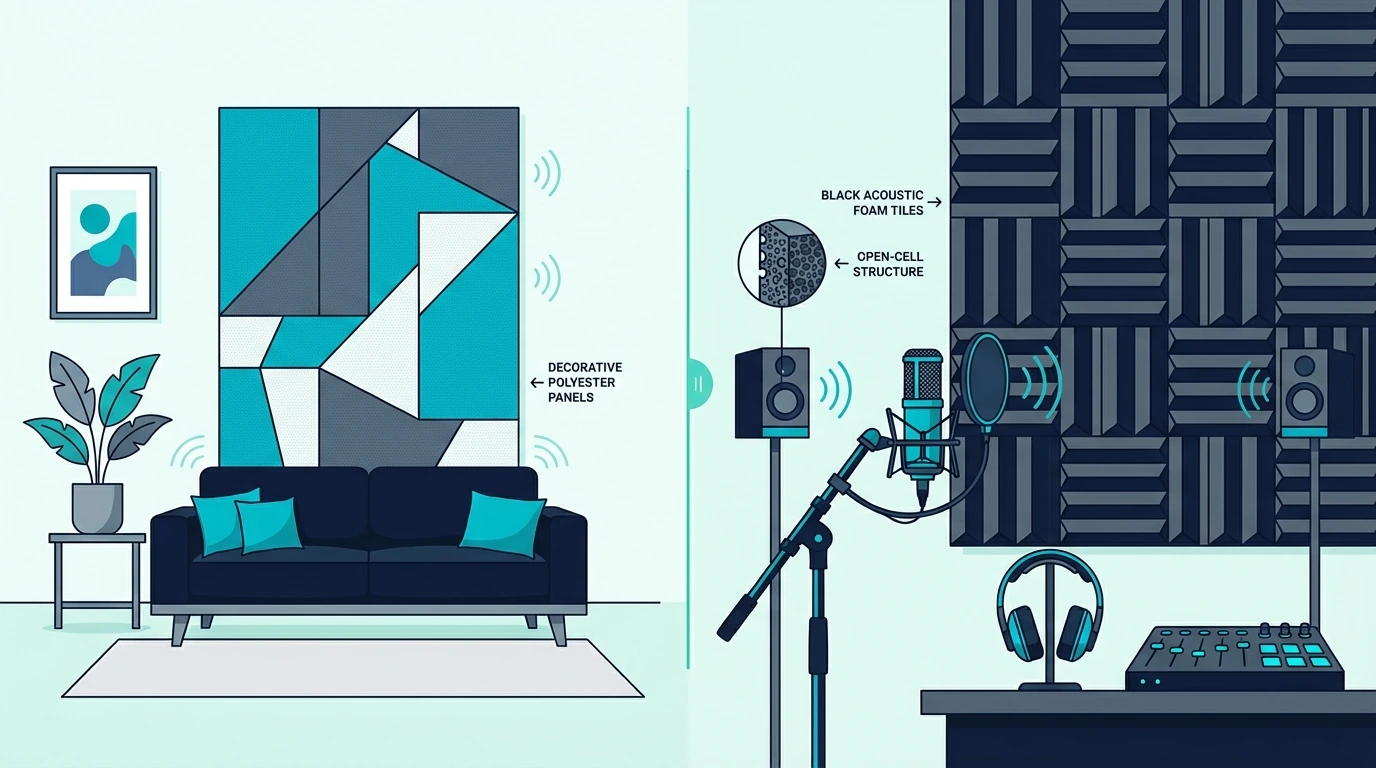
If these panels will be in a living room, office, or on camera, the aesthetic difference matters more than the acoustic one.
Polyester Aesthetics
Polyester’s density allows manufacturers to cut it into geometric shapes, print custom artwork across the surface, or press it into slatted wall panels. In a visible space, that flexibility means the treatment reads as intentional interior design rather than a desperate attempt to fix an echo problem.
Acoustic Foam Aesthetics
Foam only ever looks like one thing: a recording studio. The black or gray wedges scream “acoustic treatment,” which is perfectly fine for a dedicated tracking room or vocal booth where appearance takes a back seat to function.
But in a hybrid space — like a home office that doubles as a podcast studio — foam tiles look immediately out of place against normal furniture.
Do Polyester Panels Last Longer Than Acoustic Foam?
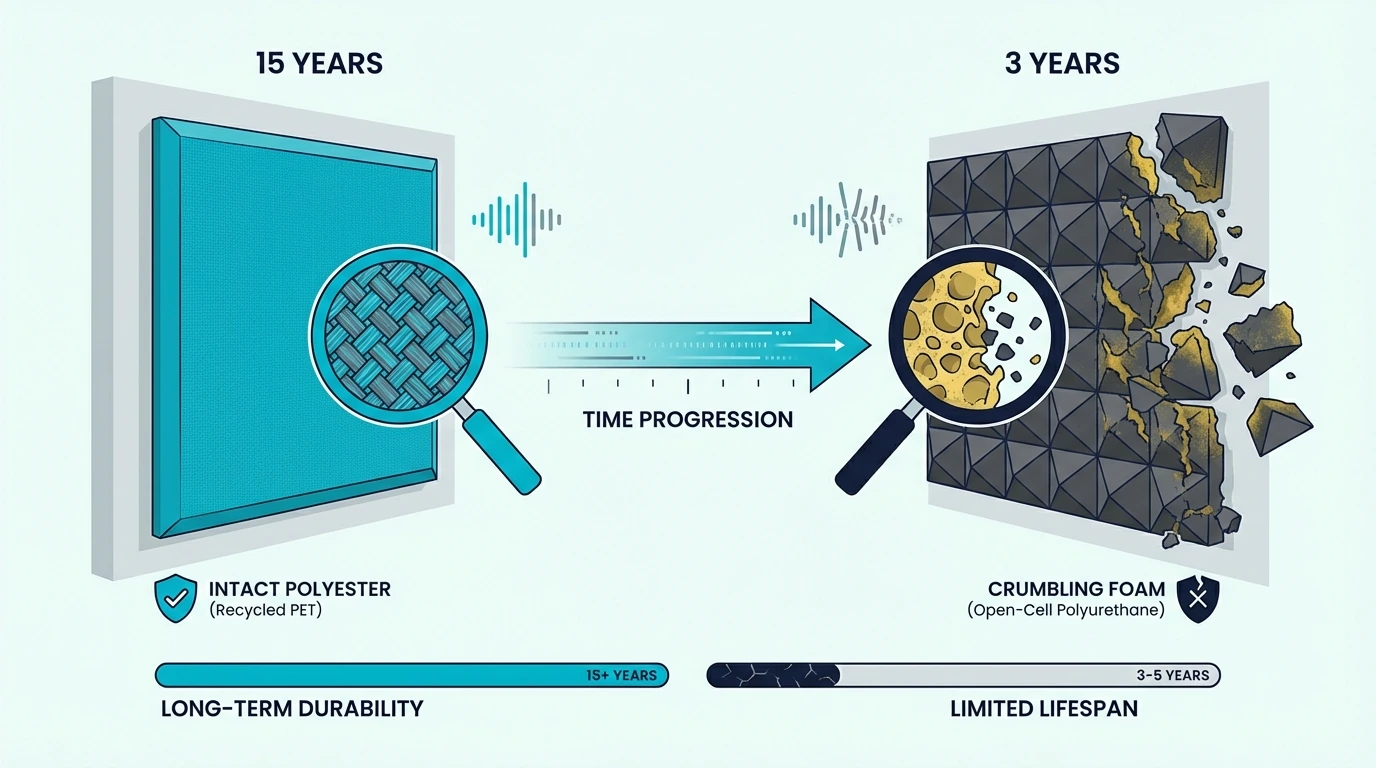
The lifespan gap between these materials is massive, driving the real cost difference over time.
Polyester Durability
Because PET fibers don’t crumble or compress easily, a polyester panel installed today will likely look identical a decade from now. They resist humidity, survive getting bumped or brushed against, and clean up with a basic vacuum attachment. It’s common to get 15 to 20 years of use from a permanent polyester installation without it ever turning into a maintenance chore.
Acoustic Foam Durability
Acoustic foam ages faster than almost any other treatment material on the market. Direct sunlight yellows it, high humidity covers the cell structure, and physical contact tears the delicate wedges.
Budget foam often looks tired and dusty within 18 months, and even premium foam eventually requires replacement as the polyurethane degrades. If you want a “mount it and forget it” solution, foam rarely survives the test of time. For a deeper look at long-term sizing strategies, the 1-inch vs 2-inch panel thickness guide covers how depth affects absorption longevity.
How Much Do Polyester Panels and Acoustic Foam Cost?
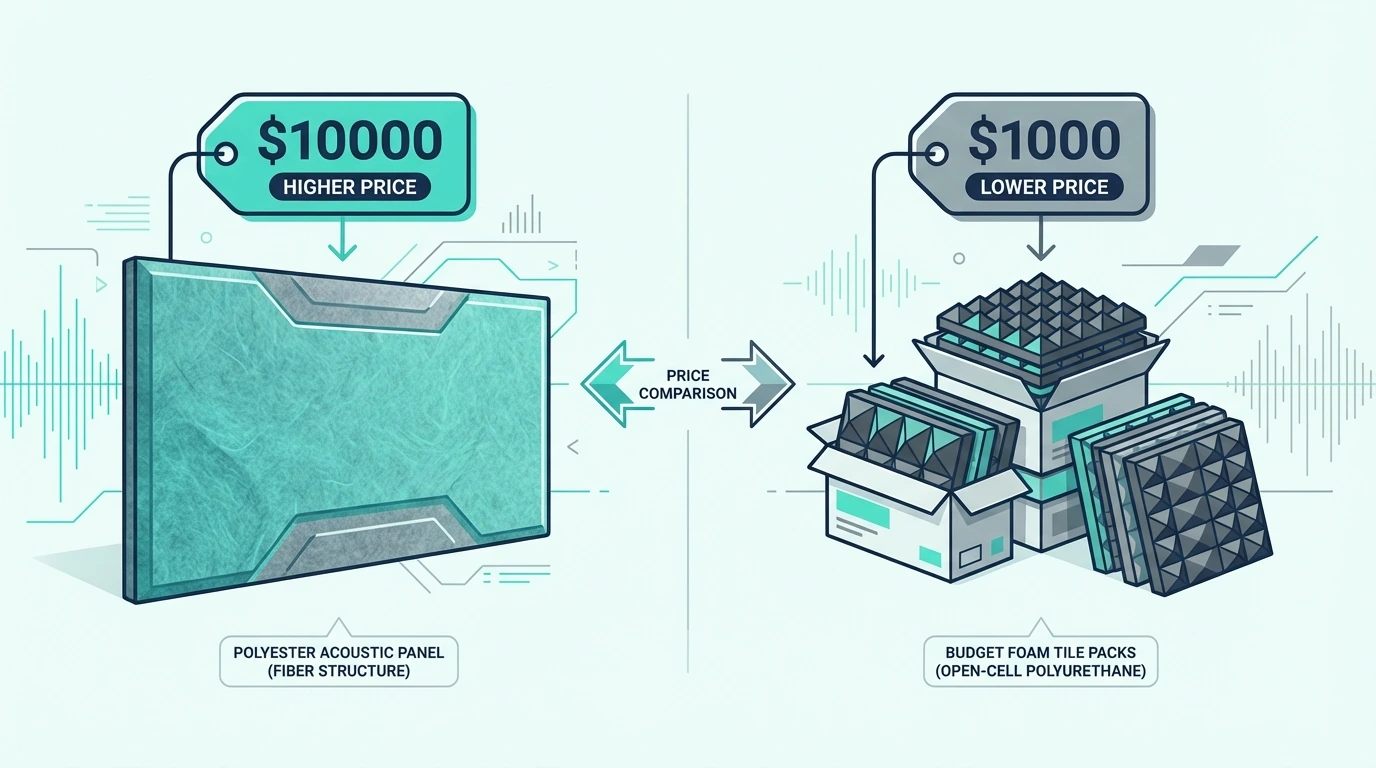
Upfront, foam is cheaper — but the full picture requires looking at the total cost of ownership over the life of the treatment.
Price Ranges
Foam’s lowest-in-class entry cost remains its biggest selling point for budget studios. A 24-pack of 1-inch wedge tiles can run under $30, allowing you to cover a real chunk of wall space immediately.
Polyester panels demand a higher initial investment, particularly for large decorative boards or custom cuts. If you want to test placement before committing to full-size rigid panels, thinner felt tiles like TroyStudio felt panels keep the entry cost low while maintaining the cleaner PET aesthetic.
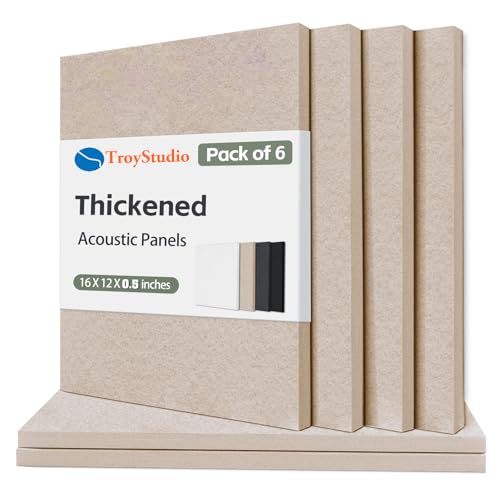
TroyStudio Thickened Felt Acoustic Panels (6-pack)
Total Cost of Ownership
The true cost calculation flips when you factor in replacement cycles. Acoustic foam often forces you to buy twice: once now, and again in three years when it begins to crumble or look dingy. Because polyester is a “buy once and leave it” material, its higher upfront premium frequently translates to a lower per-year cost over a decade of use.
Which Is More Eco-Friendly: Polyester or Foam?
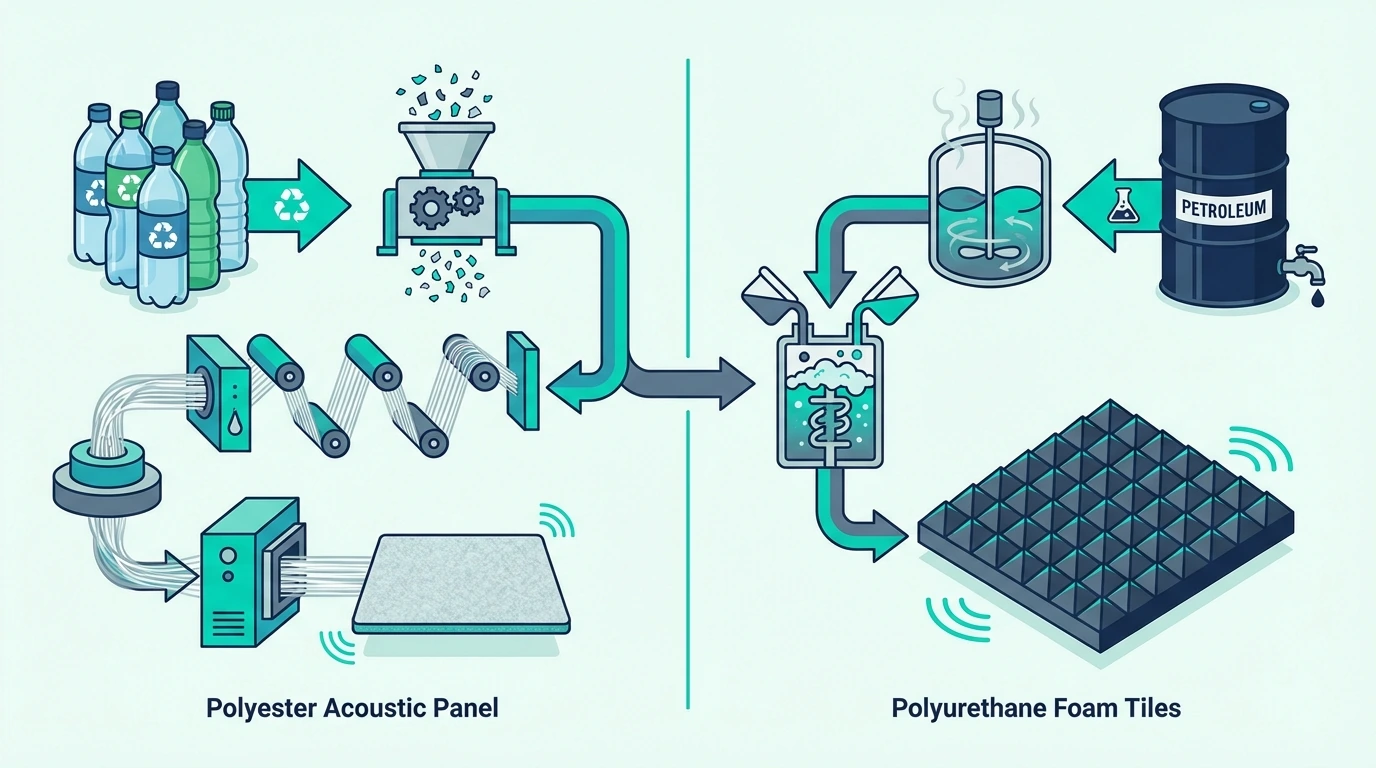
If you already prioritize safety and longevity, the environmental angle points in the same direction.
Polyester Environmental Profile
Many acoustic PET panels are manufactured directly from recycled plastic water bottles, keeping existing plastic out of landfills. Combined with their 15+ year lifespan and lack of added chemical fire retardants, they represent a highly sustainable treatment path.
Acoustic Foam Environmental Profile
Acoustic foam, conversely, is a petroleum-based polyurethane product that is difficult to recycle at the end of its life. Because the material degrades much faster, it generates much more waste over time as you cycle through replacements. Add in the chemical fire treatments required to make it safe, and foam’s environmental footprint is considerably heavier.
Which Is Easier to Install: Polyester Panels or Foam?
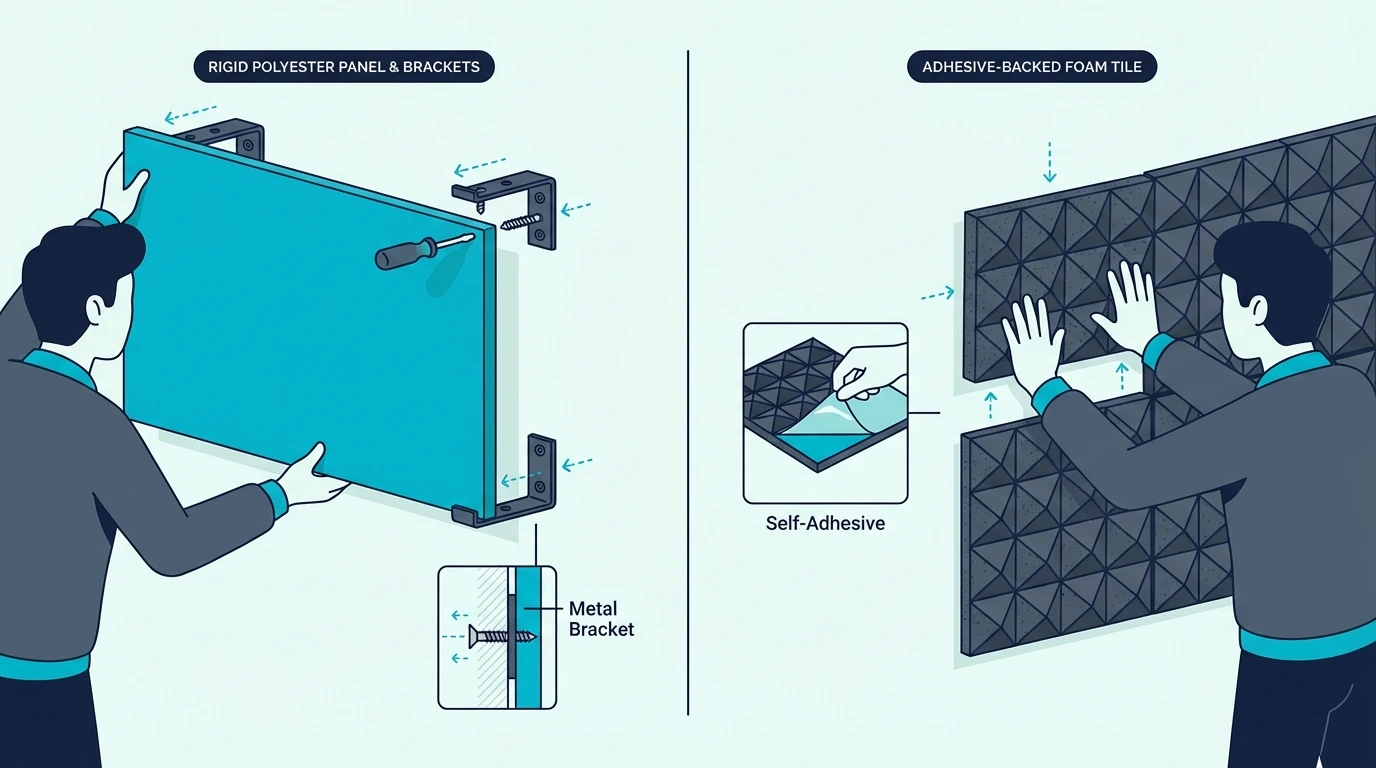
Foam takes the win for pure speed, but that convenience comes with long-term compromises.
Polyester Panel Installation
Rigid polyester boards mount exactly like traditional acoustic panels: you map out your reflection points, measure twice, and use dedicated hardware like Z-clips or impaling clips. It takes longer and often requires drywall anchors, but the result is a clean, permanent fixture that will never sag or peel away from the wall. If you’re not sure where to start with hardware, see how to hang acoustic panels.
Acoustic Foam Installation
Foam’s ultra-lightweight nature makes it very forgiving to hang. You can stick it up solo using double-sided adhesive tabs, 3M Command strips, or spray adhesive in an afternoon.
That speed appeals to renters and DIYers who want immediate results without drilling holes. The catch is that adhesives frequently fail on textured or dusty walls, and budget packs like the Focusound 24-pack wedge foam often leave sticky residue behind that requires patching and painting when you eventually move out.
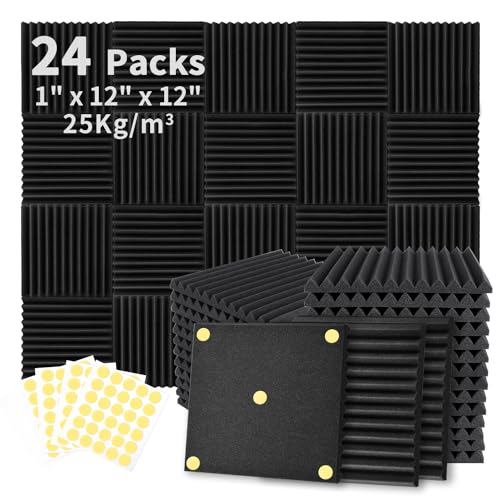
Focusound 24 Pack 1-inch Wedge Acoustic Foam Panels
For detailed mounting techniques that minimize damage, see how to install acoustic panels.
When Should You Choose Polyester Panels Over Foam?
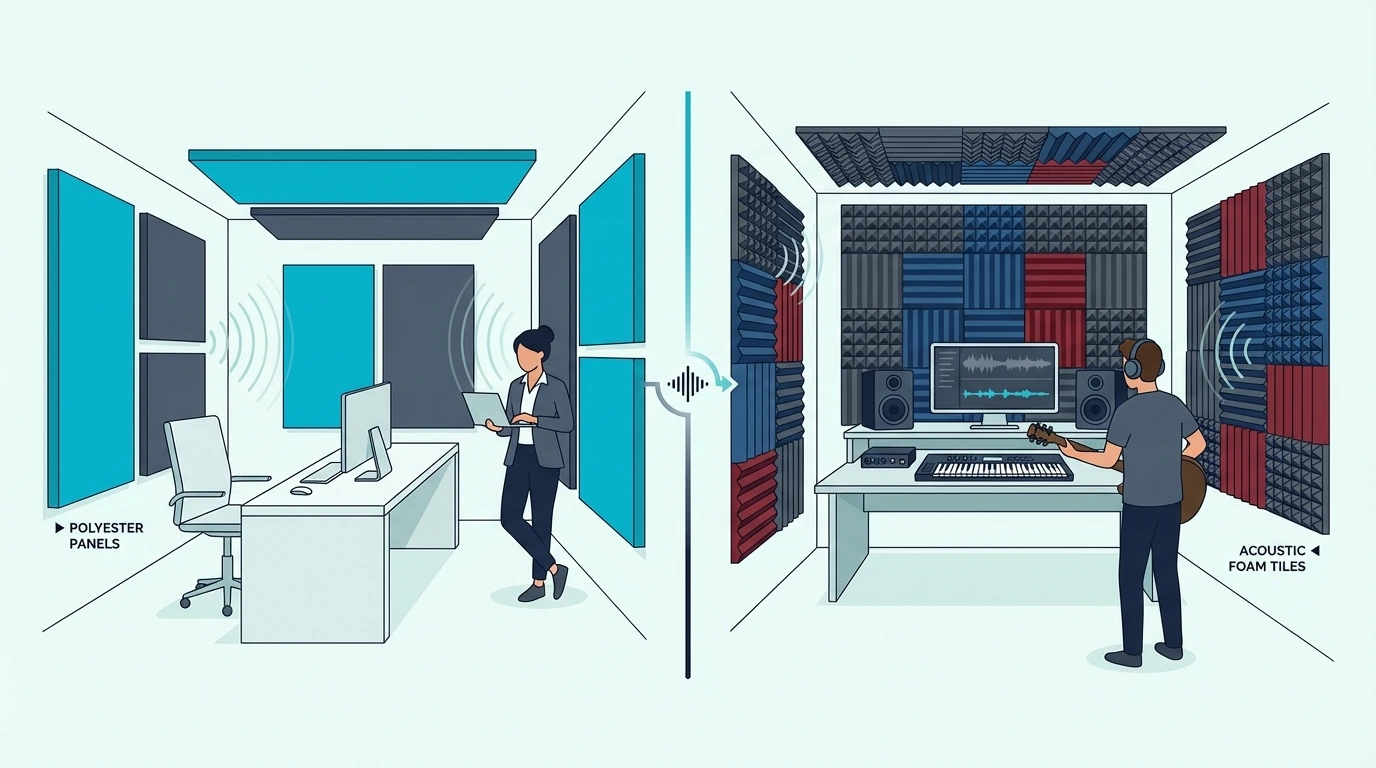
It all depends on the room’s constraints and who else has to look at the walls.
When to Choose Polyester
Invest in rigid PET boards for commercial spaces, living rooms, and on-camera podcast setups where aesthetics are non-negotiable. They are also the mandatory choice for schools, hotels, or public buildings where strict fire codes require inherently flame-retardant materials.
Polyester panels are ideal for long-term installations where you want to minimize replacement costs and hassle. They’re also the better choice for eco-conscious projects where environmental impact is a priority.
When to Choose Acoustic Foam
Stick to foam for dedicated tracking rooms and vocal booths where appearance is secondary to rapid, budget-friendly coverage. It’s also the pragmatic choice for temporary rental spaces where you plan to take everything down in a year and don’t want to drill holes.
Foam is the better option for quick DIY projects where you need immediate results without planning a mounting layout. It’s also the cheapest way to tame flutter echo and bright reflections fast, but be aware that quality and safety ratings vary widely between brands.
If you want to skip the debate and just see the top performers, the best acoustic panels roundup covers the exact models to buy. To estimate how much surface area you actually need to cover, use how many acoustic panels you need as a starting formula.
Can You Use Polyester Panels and Acoustic Foam Together?
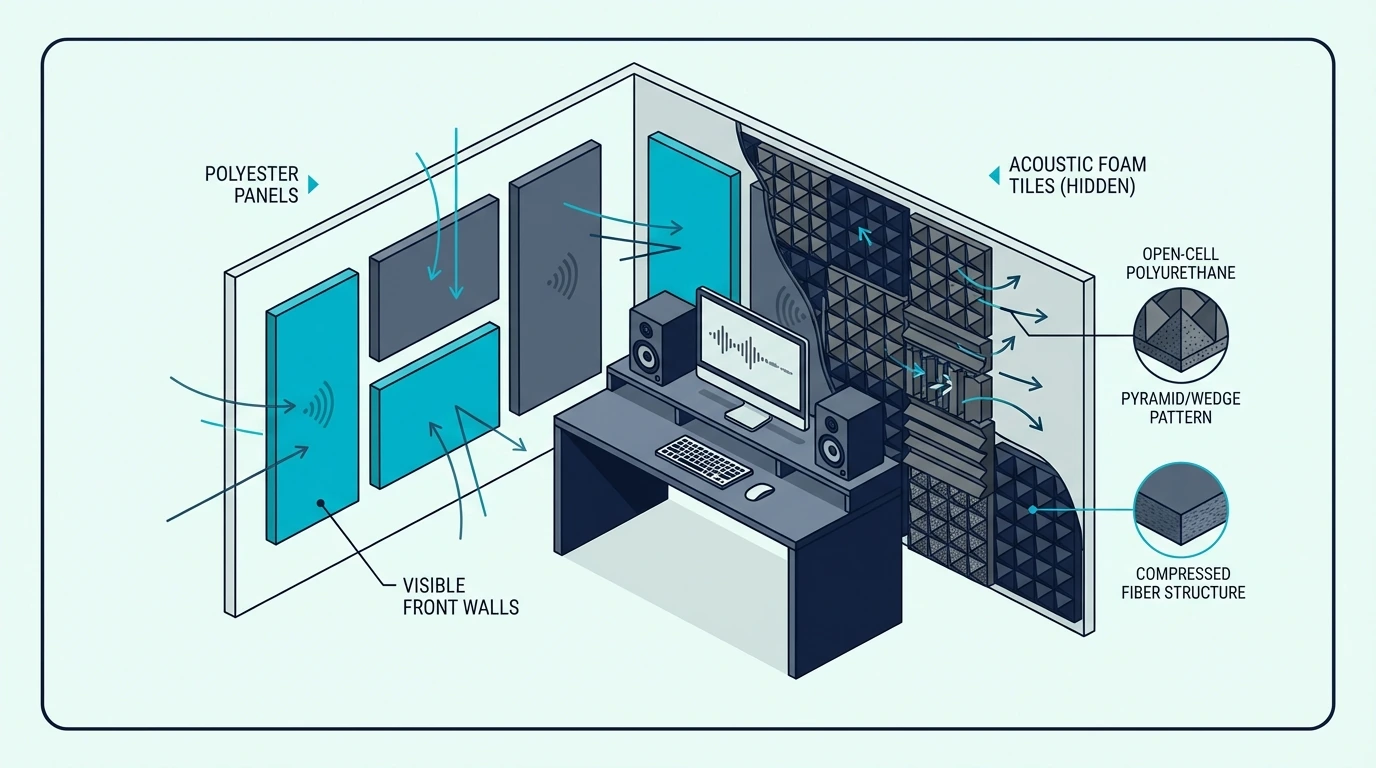
You don’t have to pick one product for every wall.
Strategic Combination
A practical hybrid is to use polyester panels in visible areas for the finished look, and stick foam tiles in hidden areas (behind monitors, closet walls, ceiling corners) where you just want cheaper absorption. Then handle corners separately, because neither polyester nor foam is a bass solution on its own.
Polyester handles the visible walls, foam fills the hidden gaps, and you save money without sacrificing the look.
Supplementing with Bass Traps
Neither polyester panels nor acoustic foam effectively absorbs bass. For complete treatment, add bass traps regardless of which material you choose.
The mounting bass traps guide covers low-frequency treatment options.
The Bottom Line
Polyester panels outperform acoustic foam on absorption (at the same thickness), fire safety, durability, aesthetics, and environmental impact. If you are treating a space you plan to keep for years, polyester is the stronger investment.
Acoustic foam still wins on two fronts: upfront cost and installation speed. If you are renting, experimenting, or treating a dedicated studio where looks do not matter, foam tiles are a practical entry point.
The key distinction most buyers miss: these are different product categories, not just different materials. Polyester panels are rigid, mountable, and designed to last.
Acoustic foam is lightweight, adhesive-backed, and built for speed and budget.
For help deciding how much coverage your room needs, the panel placement guide covers first reflection points and coverage ratios. If you are weighing polyester against other rigid options, the fabric for acoustic panels breakdown covers wrapping materials that pair well with PET cores.
And if fire safety is a dealbreaker in your space, the acoustic panels vs soundproofing comparison clarifies what panels can and cannot do for noise control.
Frequently Asked Questions
Are polyester acoustic panels better than acoustic foam?
At the same thickness, polyester panels absorb more sound energy across a wider frequency range. The gap is largest at 1-inch thickness, where most budget foam performs much worse than polyester.
Neither material handles bass below about 250 Hz, so treat low frequencies separately.
Are polyester panels safer than foam?
Usually, yes. Polyester is typically naturally flame-retardant, while foam depends on treatments and quality can vary by brand.
If fire safety and code compliance are a concern, polyester is the safer default choice.
Do polyester panels last longer than foam?
Yes, by a lot in most real rooms — quality polyester panels can last 15-20+ years with minimal degradation. Foam often covers faster (UV, humidity, handling), especially budget foam, so plan on replacing foam sooner in rooms with direct sunlight.
Which is better for a home studio: polyester panels or acoustic foam?
If it is a dedicated studio where looks do not matter, acoustic foam can be the most cost-effective way to cover enough surface area quickly. If the studio shares space with living areas (or clients visit), polyester panels usually look more professional and last longer.
Acoustically, polyester delivers better absorption per square foot, but foam can compensate through sheer coverage if budget allows enough tiles. Placement matters more than material once you have enough coverage.
Can I mix polyester panels and acoustic foam in the same room?
Yes — using polyester panels in visible areas and foam tiles behind monitors, in closets, or on ceiling corners is a practical way to balance aesthetics and budget. The room can still sound consistent as long as total coverage is adequate.
Are polyester panels worth the extra cost over foam?
For permanent installations in visible spaces, often yes. Better absorption per square foot, longer lifespan (15–20+ years vs 2–5 years for foam), stronger fire safety ratings, and more design options can justify the premium.
For temporary setups, rental spaces, or extremely tight budgets, acoustic foam tiles make more practical sense.