Can Acoustic Panels Reduce Noise From Neighbors? [2026]
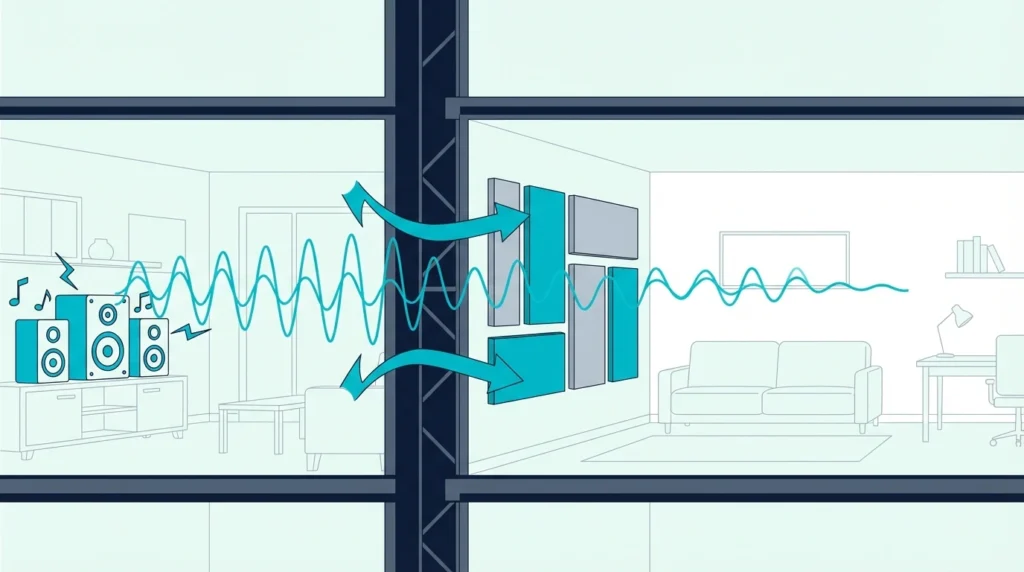
Can acoustic panels reduce noise from neighbors? No — and that mistaken purchase is why so many renters end up with cleaner-looking walls but the same late-night TV bleed, bass thump, or hallway noise.
Neighbor noise is a transmission problem through drywall, studs, ceilings, floors, and small air leaks. Acoustic panels only absorb reflections after sound is already inside your room, so they cannot stop the wall assembly itself from passing noise through.
The good news: once you separate soundproofing from room treatment, the buying decision gets much simpler. You can stop expecting panels to solve the wrong problem and choose either real blocking strategies or room-treatment panels that improve clarity inside your space.
Below, you’ll see why panels fail against neighbor noise, what actually reduces transmission, and which panel products still make sense when your real goal is better sound inside your room after you address the leakage paths first.
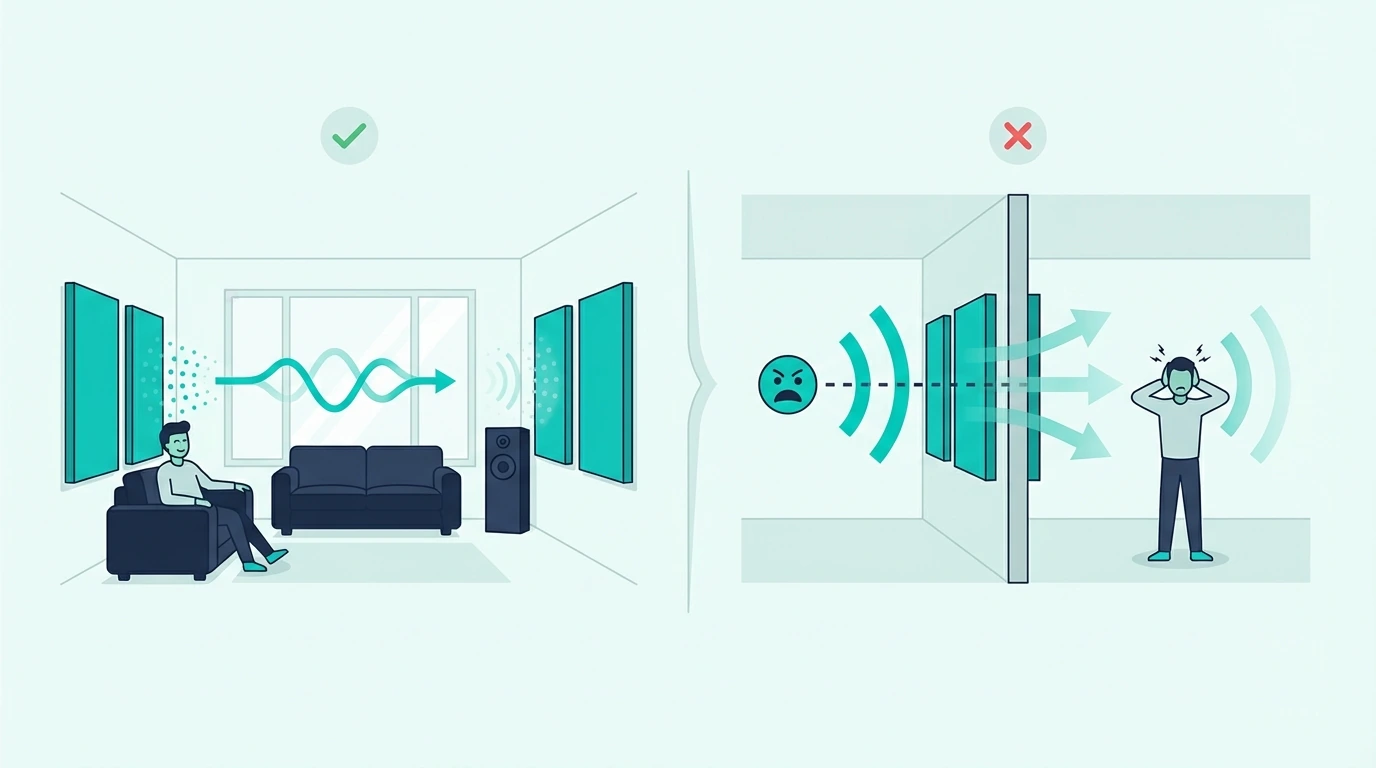
Acoustic panels will not reduce noise from neighbors. They absorb sound reflections inside your room but do not block sound transmission through walls, ceilings, or floors. For neighbor noise, focus on sealing gaps, adding mass, and decoupling structures; use acoustic panels only to improve echo, reverb, and speech clarity inside your own space.
Why Acoustic Panels Don’t Block Neighbor Noise
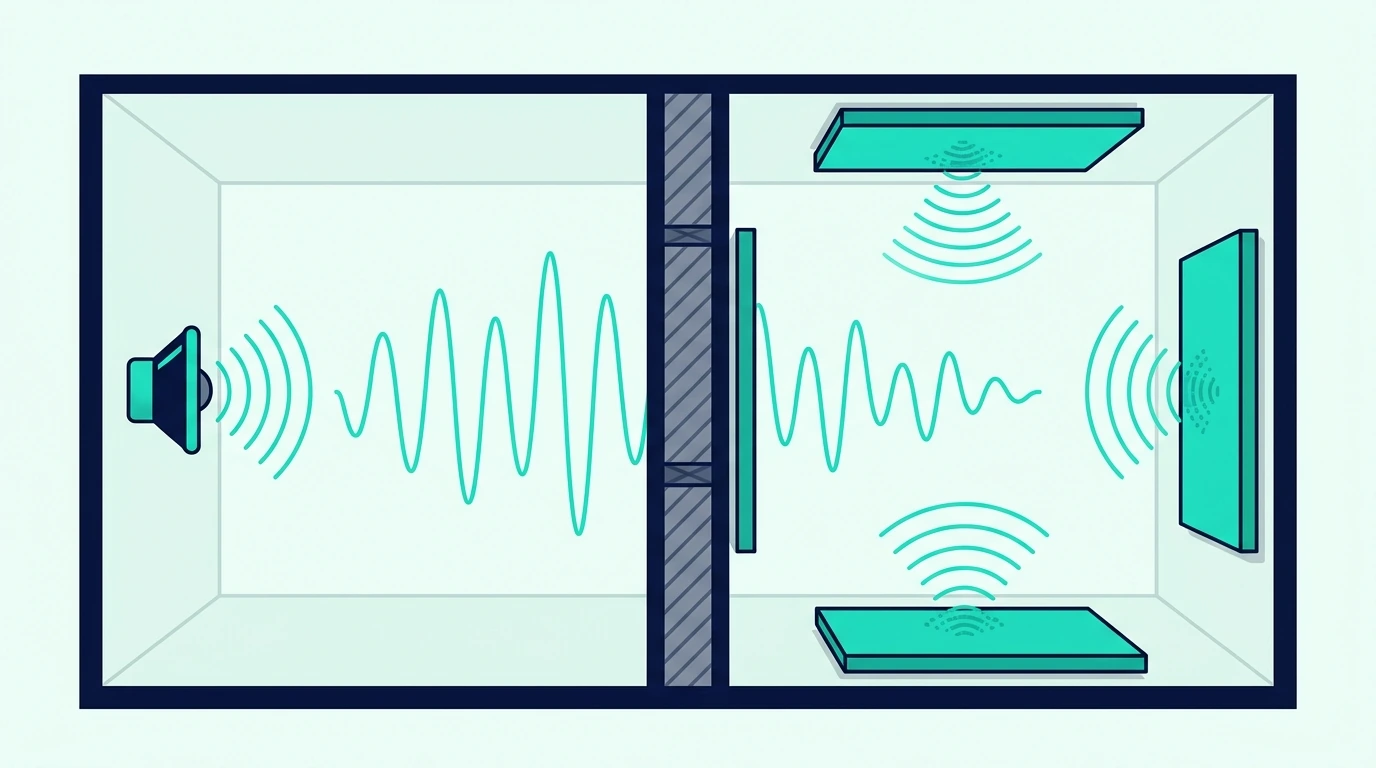
The confusion stems from mixing up two completely different acoustic problems. Understanding this distinction saves you from wasting money on treatments that won’t solve your actual issue.
Absorption vs Blocking: The Critical Difference
Acoustic panels absorb sound waves that hit them from inside your room. When you speak or play music, sound bounces off hard surfaces—walls, ceilings, floors. Panels catch those reflections and convert sound energy to heat through friction in the fibers.
But sound from neighbors doesn’t bounce around your room first. It transmits directly through the shared wall structure—through studs, drywall, and air gaps. By the time that sound reaches your panel, it’s already inside your space.
Think of it like a window screen. A screen blocks bugs that try to fly through it. But it does nothing to stop rain from coming through—rain passes right through the mesh. Acoustic panels work the same way with different types of sound problems.
How Sound Actually Travels Through Walls
Neighbor noise reaches you through structural transmission. Sound vibrates the wall on their side, those vibrations travel through the wall assembly, and the wall on your side radiates that sound into your room.
The path looks like this: neighbor’s sound → their drywall vibrates → studs transfer vibration → your drywall vibrates → sound radiates into your room.
Acoustic panels sit on top of your drywall. They can’t intercept sound that’s already transmitted through the structure. The panel only “sees” the sound after it’s already in your space—and at that point, blocking isn’t possible, only absorption of what’s already there.
This is why understanding the difference between panels and soundproofing matters before you spend money.
What Acoustic Panels Actually Do
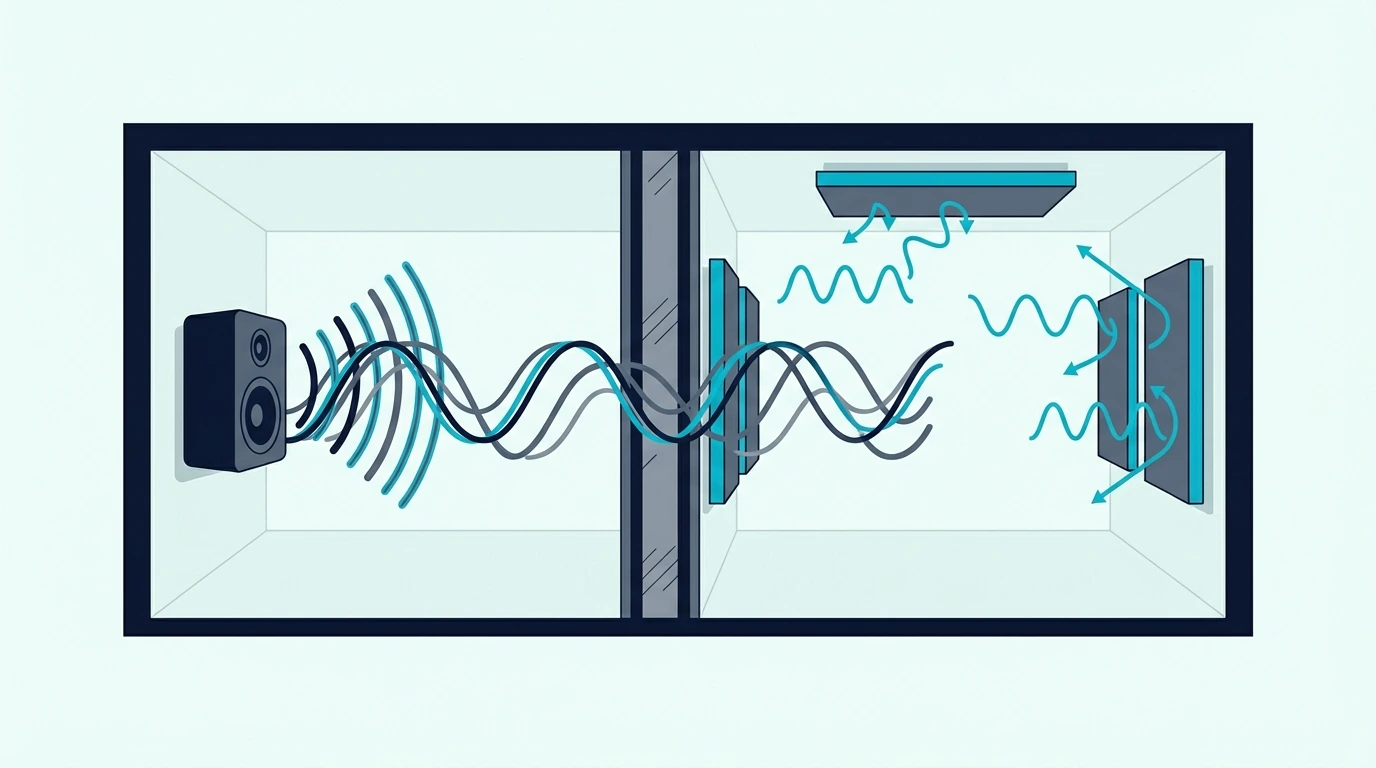
Now that you understand why panels don’t block neighbor noise, let’s clarify what they’re actually designed for. Panels solve legitimate acoustic problems—just not the one you’re asking about.
Reduce Echo and Reverb Inside Your Room
When sound bounces between parallel hard surfaces, it creates flutter echo—that ringing “boing” you hear when you clap in an empty room. Panels absorb these reflections, making the room sound controlled rather than live.
This matters for recording, video calls, and music listening. It doesn’t help with neighbor noise because echo reduction only affects sound already inside your room.
Improve Speech Clarity and Recording Quality
Panels at first reflection points reduce comb filtering—the interference pattern created when direct sound and reflected sound reach your ears at slightly different times. This dramatically improves vocal recording quality and video call clarity.
If you’re trying to improve how you sound on calls or recordings, panels work effectively for this purpose. For apartment dwellers specifically, our guide on acoustic panels for apartments covers renter-friendly options. Just don’t expect them to block the neighbor’s TV from bleeding through.
If your goal is a more controlled room for calls, mixing, or content work, a denser fiberglass option like Olanglab Sound Absorbing Acoustic Wall Panels 2 Pack is the kind of panel that helps your room sound more direct and less splashy.
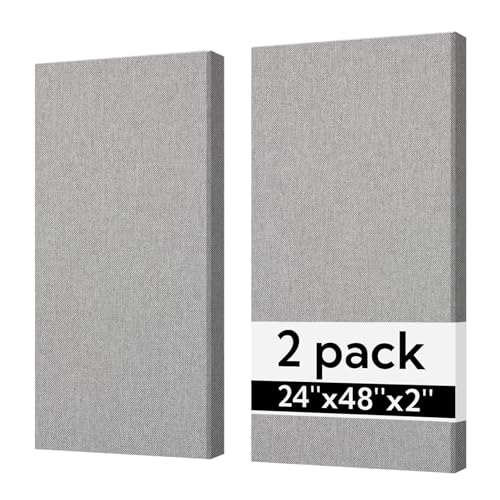
Olanglab Sound Absorbing Acoustic Wall Panels 2 Pack
Make Your Own Sounds Less Reverberant
Panels reduce how much your own sounds bounce around. This can marginally reduce how much of your noise reaches neighbors—not because panels block transmission, but because there’s less reverberant energy bouncing around to transmit.
The reduction is minimal and won’t solve a real noise complaint situation.
Get Studio Tips Weekly
Join 5,000+ creators getting acoustic treatment advice every week.
No spam. Unsubscribe anytime.What Actually Blocks Neighbor Noise?
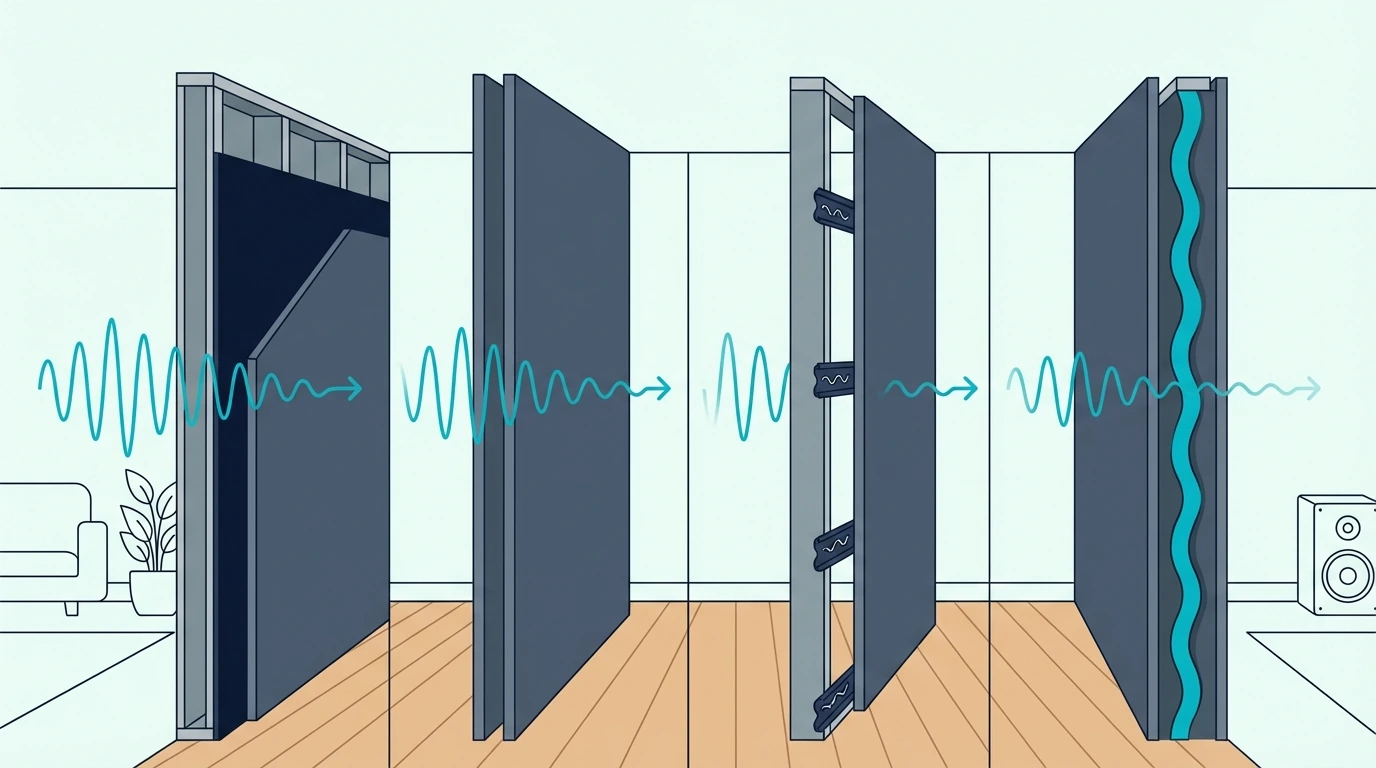
With panel limitations clear, let’s discuss what actually works. Blocking sound transmission requires different physics—mass, decoupling, and sealing.
Mass: Heavy Materials That Resist Vibration
Sound transmission decreases when walls have more mass. Heavier walls resist vibration better than light ones. This is why concrete buildings tend to be quieter than wood-frame construction.
Adding mass means adding material: – Second layer of 5/8” drywall (the heavier, the better) – Mass loaded vinyl (MLV)—dense rubber-like sheeting – Multiple drywall layers with damping compound between them
Each doubling of wall mass reduces transmission by approximately 6 dB—noticeable but not dramatic improvement without additional strategies.
If you still want to improve how your room sounds after dealing with transmission, a panel like UMIACOUSTICS 4 PCS Acoustic Panels with Hanging Bracket helps with the room-side echo problem, not the wall-mass problem described here.
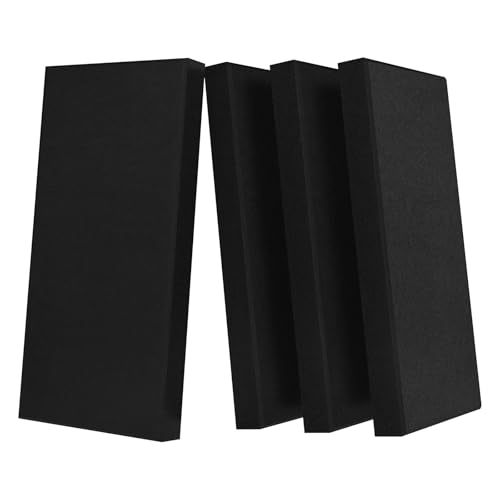
UMIACOUSTICS 4 PCS Acoustic Panels with Hanging Bracket
Decoupling: Breaking the Vibration Path
Sound travels through continuous solid connections. Breaking that path—decoupling—prevents vibrations from transferring efficiently.
Resilient channels mount drywall to the wall assembly with a flexible connection rather than rigid screws directly into studs. The channel absorbs vibration instead of transmitting it.
More aggressive decoupling uses completely separate wall assemblies—a new stud wall built in front of the existing wall with an air gap between them.
Sealing Gaps: Where Most Sound Leaks
Sound finds the path of least resistance. A small gap around an electrical outlet or under a door can leak as much sound as the entire wall transmits through its structure.
Sealing gaps is the most cost-effective first step: – Acoustic caulk around outlet boxes – Door sweeps and weatherstripping – Expanding foam in wall cavities (access points)
You might be surprised how much improvement comes from sealing before adding expensive mass or decoupling.
For budget-conscious renters, a finished panel kit like Acoustic Panels 4 Pack ROOM KIT Large can at least make your own apartment sound less harsh while you tackle the actual leakage paths first.
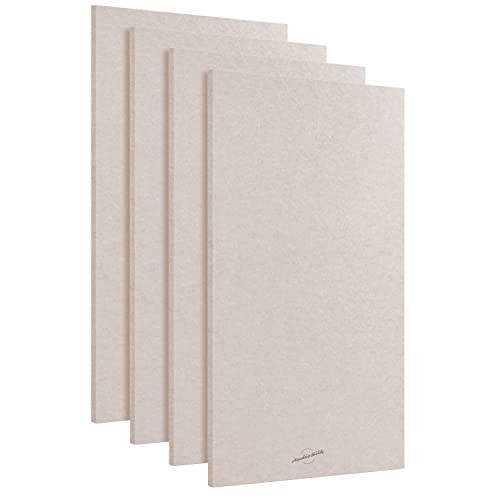
Acoustic Panels 4 Pack ROOM KIT Large
Acoustic Panels vs Soundproofing Comparison
| Factor | Acoustic Panels | Soundproofing |
|---|---|---|
| Primary Function | Absorb room reflections | Block sound transmission |
| Neighbor Noise Reduction | 0 dB (none) | 10-30+ dB |
| Echo Reduction | Excellent | Minimal |
| Recording Improvement | Significant | None (different purpose) |
| Typical Cost | $200-500 for room | $1,000-10,000+ |
| Installation | DIY friendly | Often requires contractor |
| Renter Friendly | Yes (removable) | Usually no (permanent) |
The fundamental difference: panels treat sound that’s already in your room; soundproofing prevents sound from entering or leaving.
Realistic Options for Apartment Dwellers

Most people asking about neighbor noise live in apartments where major construction isn’t possible. Here’s what you can actually do as a renter.
Seal What You Can
Even without construction, you can often seal obvious gaps: – Outlet and switch plate foam gaskets – Door sweep on entry door – Weatherstripping if doors have visible gaps
These won’t transform a noisy apartment, but they’re cheap and help with the easiest leakage paths.
Sound Masking Over Sound Blocking
Since blocking isn’t realistic without construction, consider masking. White noise machines or fans create consistent background sound that makes intermittent neighbor noise less noticeable.
This doesn’t reduce the actual noise level—it raises your ambient noise floor so the neighbor sounds don’t contrast as sharply. Many people find this more practical than attempting inadequate soundproofing.
Strategic Furniture Placement
Heavy furniture against shared walls adds mass, though the effect is modest. A full bookshelf provides more mass than bare drywall. A heavy couch against a wall adds some damping.
Don’t expect dramatic results, but these changes are free and can provide marginal improvement.
When Real Soundproofing Makes Sense
If neighbor noise genuinely affects your quality of life, the honest answer is: move to a better-built building, or invest in proper soundproofing (if you own).
Half-measures like hanging panels on walls or adding thin foam rarely provide meaningful improvement for transmission problems. Either the construction blocks sound adequately, or it doesn’t.
What About Bass Noise From Neighbors?
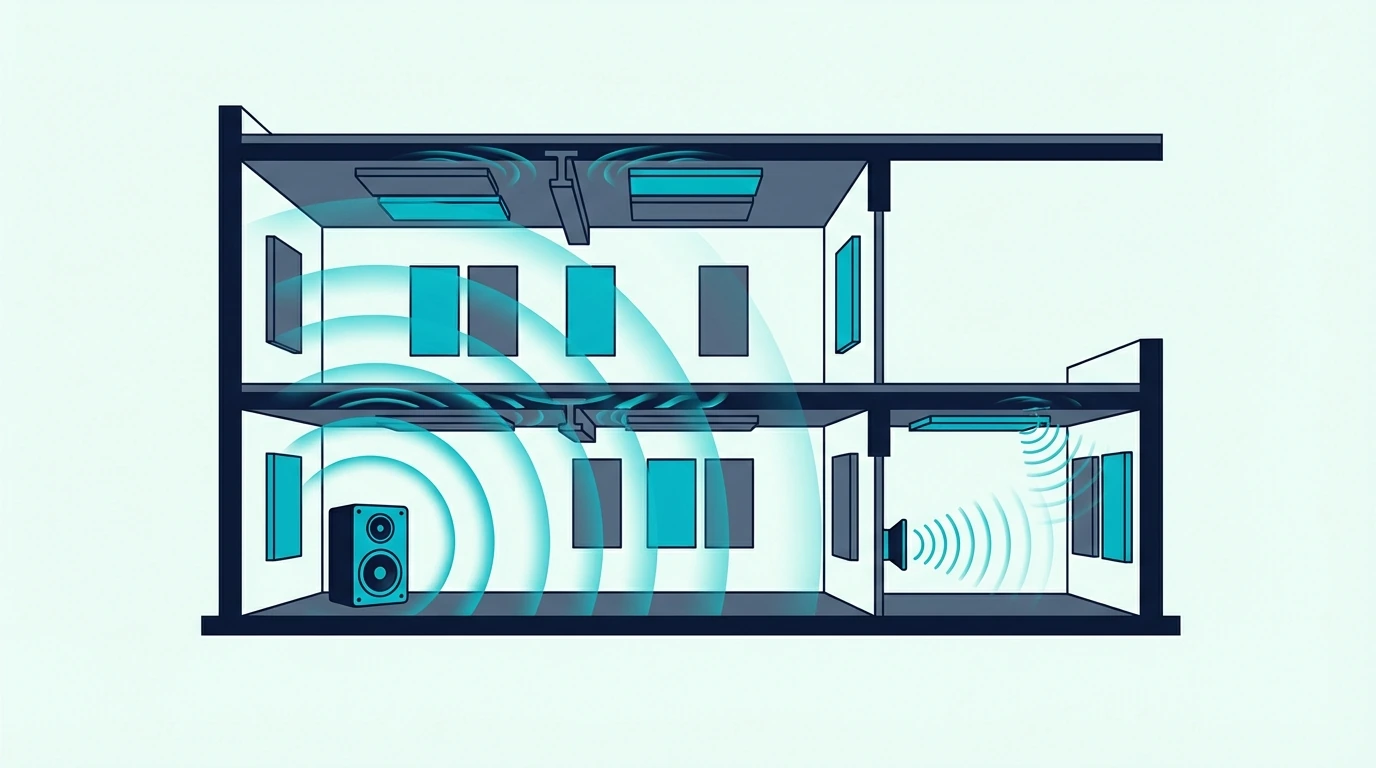
Bass frequencies are particularly difficult because they transmit through structures more efficiently than higher frequencies. That thumping subwoofer from upstairs? Panels definitely won’t help.
Low frequencies require even more mass to block. A wall that adequately reduces conversation levels might still transmit bass freely. This is why nightclub soundproofing involves massive concrete construction—bass needs serious mass.
For bass specifically, decoupling becomes even more important than mass. Floating floor assemblies and isolated ceiling systems address low-frequency transmission better than simply adding drywall layers.
If your neighbor noise is primarily bass, your options are even more limited without construction. Bass masking is also harder—you’d need to play your own music loud enough to cover it, which creates its own problems.
Conclusion
Acoustic panels improve room acoustics—they reduce echo, improve recording quality, and control reverb. They’re excellent tools for the right application.
But they don’t block neighbor noise. That requires soundproofing: mass, decoupling, and sealing. These are different categories of acoustic treatment solving different problems.
Before spending money, identify your actual problem. If you want better room sound for recording or calls, panels help significantly. If you want to block neighbor noise, panels are the wrong purchase entirely.
Check our comprehensive acoustic panels guide for guidance on what panels actually do well, or read our soundproofing comparison for deeper understanding of these distinct approaches.
Frequently Asked Questions
Will ANY Type of Acoustic Panel Help With Neighbor Noise?
No. Whether fabric-wrapped fiberglass, acoustic foam, polyester panels, or any other absorption material—none block sound transmission through walls. The physics doesn’t change based on panel type. Absorption materials treat reflections inside your room; they don’t prevent sound from entering through structures. Expensive panels work better for echo reduction, but they’re equally useless for neighbor noise.
What About Thick Panels or Multiple Layers?
Adding panel thickness or stacking panels still doesn’t block transmission. You could cover an entire wall with 4-inch thick acoustic panels and neighbor noise would pass through essentially unchanged. The sound bypasses the panels by traveling through the wall structure itself. Panel thickness affects absorption frequency range, not blocking capability.
Can Panels at Least Reduce How Much of MY Noise Reaches Neighbors?
Marginally. Panels reduce reverberant sound in your room, so there’s slightly less total sound energy bouncing around to potentially transmit. But the direct sound from your voice, speakers, or instruments still transmits through walls normally. If a neighbor complains about your noise, panels won’t solve that complaint meaningfully.
What’s the Cheapest Effective Option for Neighbor Noise?
Seal gaps first—this is the cheapest intervention that actually affects transmission. Outlet gaskets cost a few dollars. Door sweeps are under $20. If gaps are your main leakage path, sealing provides noticeable improvement. For actual wall transmission, there’s no cheap effective option. Mass loaded vinyl is the most affordable material that adds meaningful mass, but proper installation still costs hundreds to thousands of dollars depending on wall area.