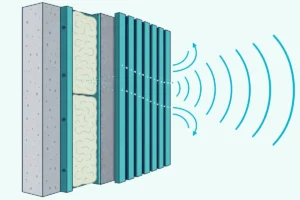
Acoustic Panels on Windows: Do They Help and How to Mount Them [2026]
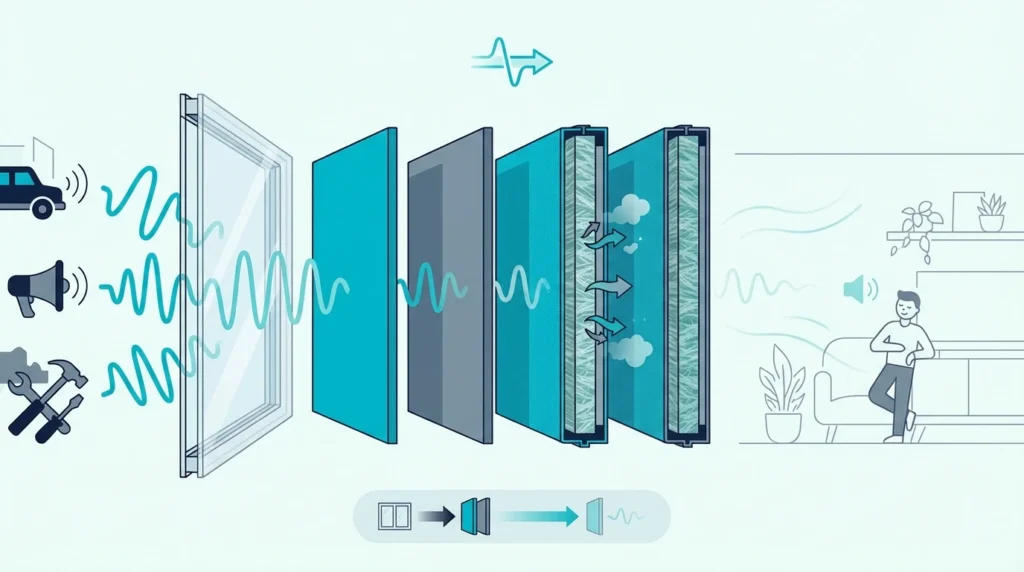
Can you put acoustic panels on windows? Technically yes, but it trades daylight and ventilation for only a small reduction in reflections.
Glass is a hard reflector, so windows can cause slapback echo, flutter, and a bright top end that makes a room feel harsh. Outside noise is a different problem, and it usually comes through air gaps and vibrating glass.
The goal is to control reflections without making the room unpleasant to use. With the right mix of curtains, wall treatment, and sealing, you can reduce echo and improve clarity while keeping the space livable.
Start by treating the wall sections beside the window or any first reflection points, then add heavy acoustic curtains if you need more control. If the real issue is traffic or neighbors, skip panels on the glass and focus on window inserts, secondary glazing, and weatherstripping.
The rest of this guide splits window fixes into echo control and outside noise, then covers curtains, inserts, and wall-panel placement so you can pick the first change that fits your room and budget.
Do not put acoustic panels directly on windows because you will lose natural light and ventilation without blocking outside noise. For window reflections, use acoustic curtains or treat the walls around the window, and for outside noise use window inserts or secondary glazing.
Why Would You Want Acoustic Panels on Windows?
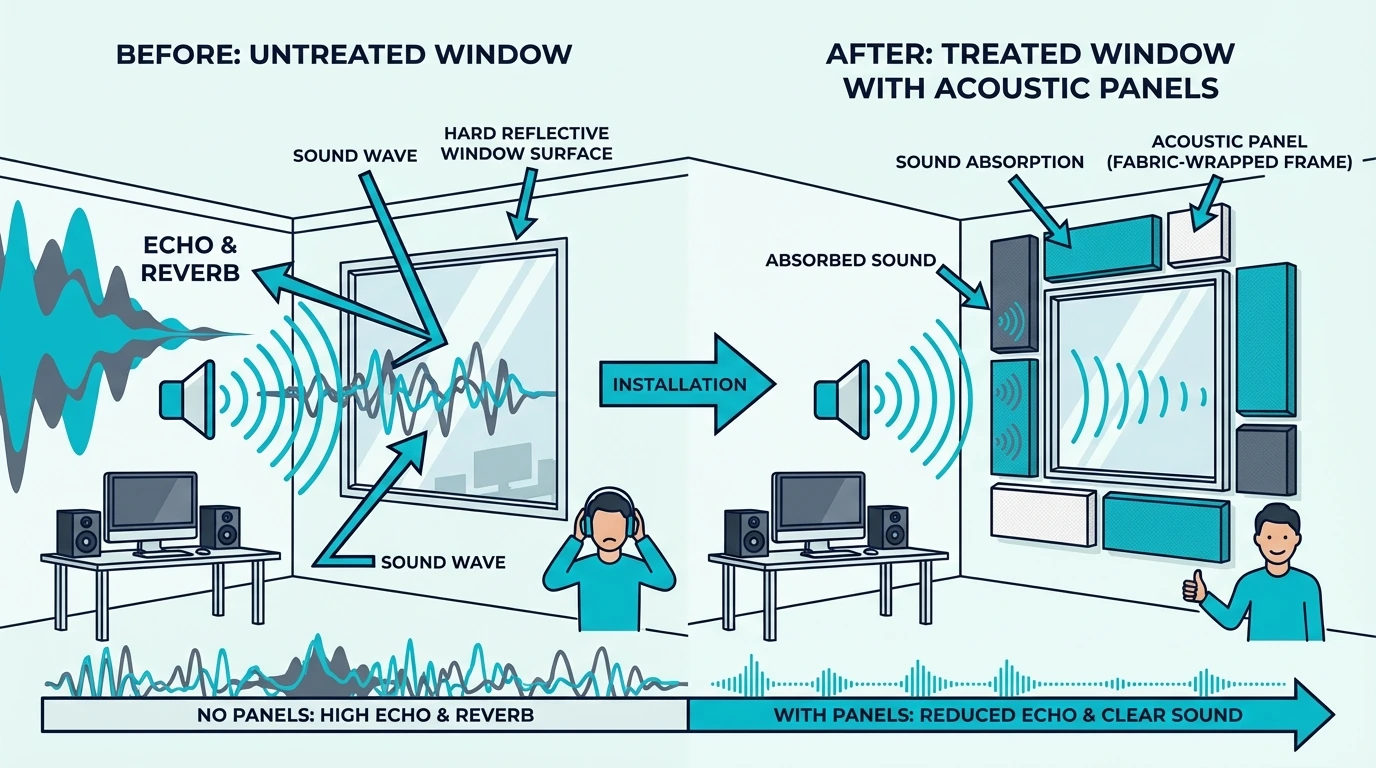
People reach for panels because a window acts like a hard mirror for sound. The catch is that windows create two different problems, and panels only address one.
Are Windows a Source of Acoustic Problems?
Windows are highly reflective surfaces. Glass bounces nearly 100% of sound energy back into the room, contributing to echo and reverb just like walls and ceilings.
In a room with large windows, those glass surfaces can dominate the reflection pattern. Sound from speakers or voices reflects off the glass and mixes with direct sound, creating the flutter and echo that degrades audio quality.
The acoustic panel density guide explains how panels absorb sound that would otherwise bounce back — which is why covering the glass seems like a logical fix.
Can Panels Block Outside Noise Through Windows?
The confusion is that acoustic panels absorb sound inside your room, but they do not block sound from entering through windows.
Outside noise — traffic, neighbors, construction — enters through air gaps around windows and by vibrating the glass itself. Putting an acoustic panel over the window does nothing to seal those gaps or add mass to block vibration.
For outside noise reduction, you need soundproofing rather than acoustic treatment. If you want the full breakdown, see acoustic panels vs soundproofing.
What Happens If You Put Panels Over Windows?
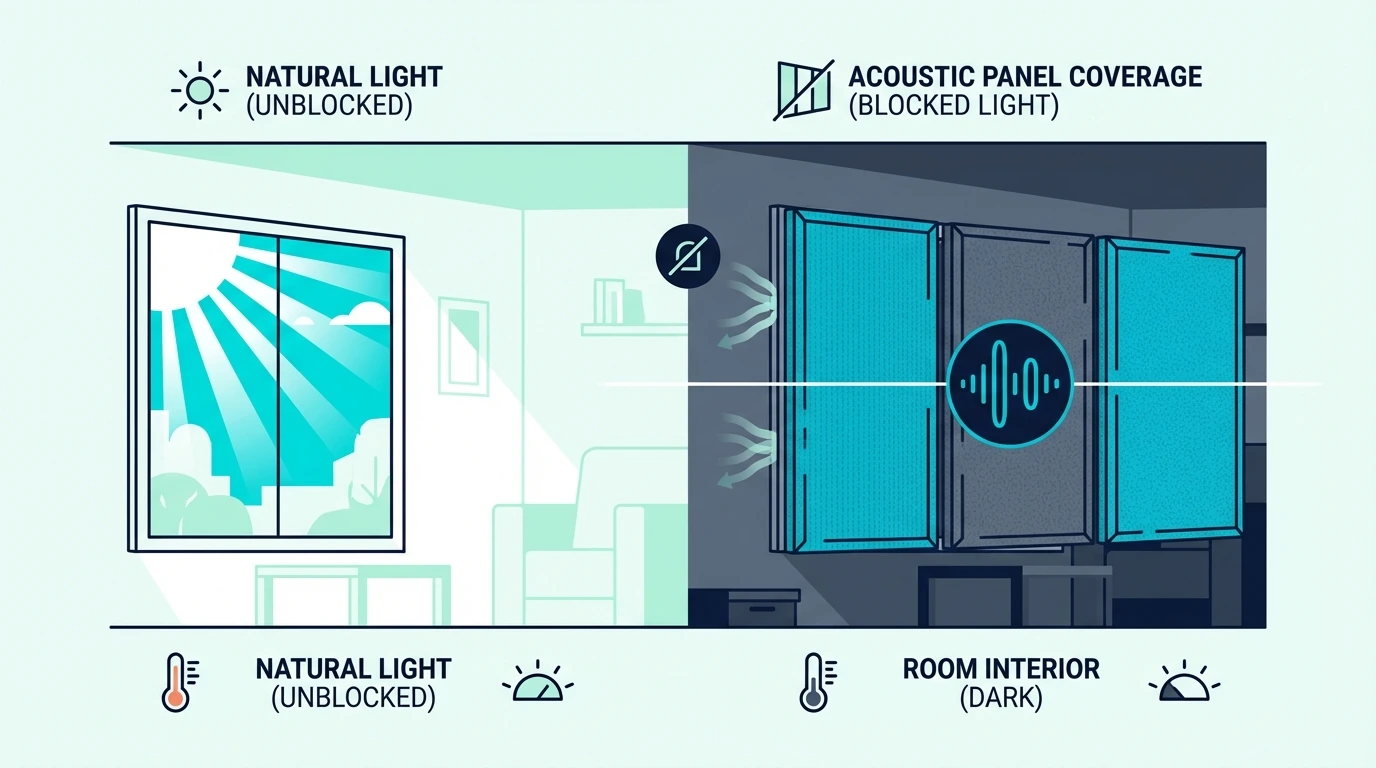
Even if a panel cuts some reflections, living with a blocked window is the real problem. Here is what you give up when you cover the glass.
Do Panels Block Natural Light?
Completely, because standard acoustic panels are opaque — fiberglass or mineral wool cores wrapped in fabric. Zero light passes through.
Covering windows eliminates natural daylight, forcing reliance on artificial lighting during all hours. For home studios and offices where people spend extended time, this can affect mood, productivity, and circadian rhythms.
Some people try this temporarily for recording sessions, but the setup and removal still adds friction. Even occasional use proves impractical for most workflows.
Can You Still Open the Window?
Not if panels cover it, so you lose ventilation and emergency egress capability. In bedrooms, this can violate building codes that require an openable window for fire escape.
The loss of fresh air circulation matters more than most people anticipate. Rooms become stuffy quickly, especially during longer recording or work sessions.
Get Studio Tips Weekly
Join 5,000+ creators getting acoustic treatment advice every week.
No spam. Unsubscribe anytime.Do Acoustic Panels Help With Window Noise?
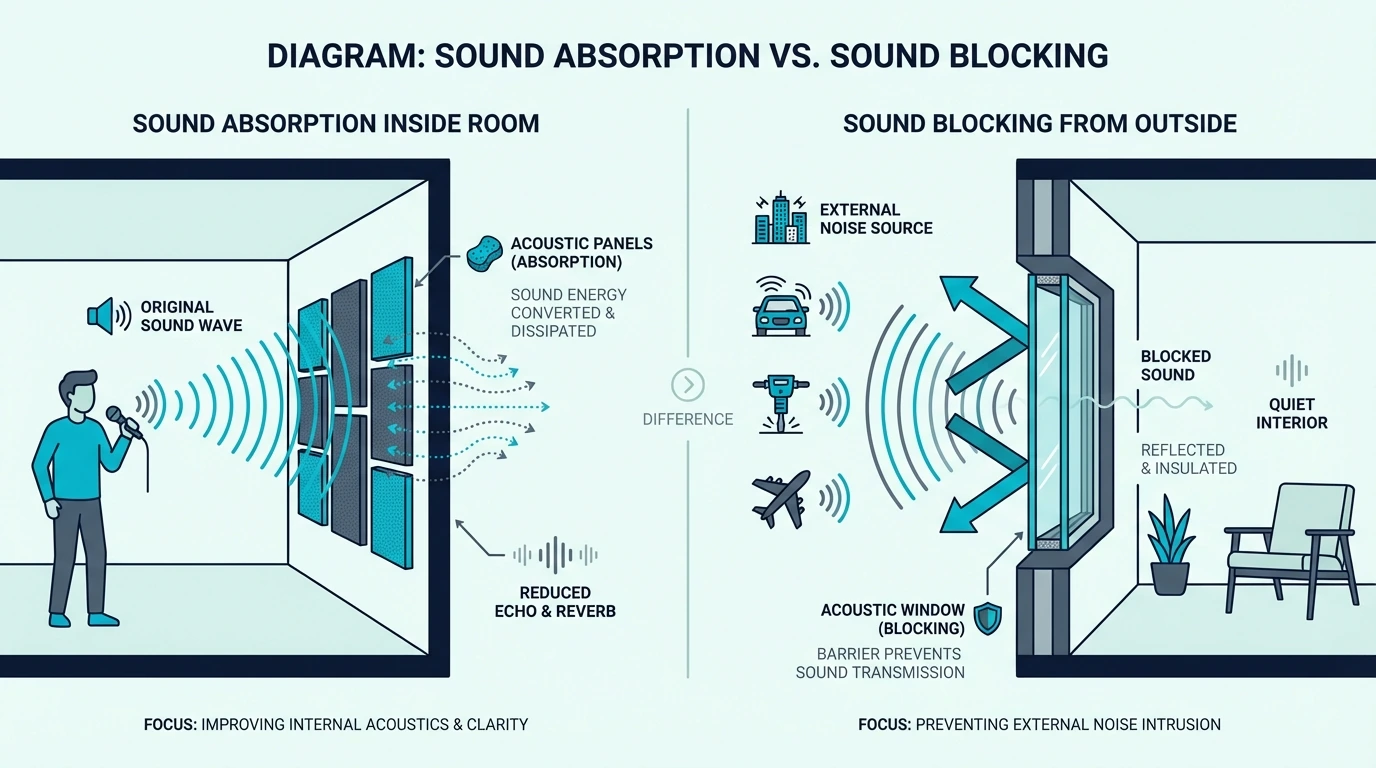
If the issue is traffic or neighbors, panels are the wrong tool. The two sections below explain why treatment and soundproofing solve different problems, and what actually stops outside noise.
What Is the Difference: Treatment vs Soundproofing?
Acoustic treatment controls sound within a room — reducing echo, taming reverb, improving clarity. This is what acoustic panels do.
Soundproofing blocks sound transmission between spaces — keeping outside noise out or inside noise contained. This requires mass, damping, and sealing air gaps.
Panels provide treatment, not soundproofing. A panel over a window absorbs reflections from inside the room but does nothing to stop traffic noise from entering — the acoustic panels hub covers the full breakdown.
Will Panels Stop Traffic Noise?
No, because traffic noise enters through window glass vibration and air gaps around the frame. An acoustic panel sitting in front of the window does not address either transmission path.
Even if you sealed the panel against the window frame, the minimal mass of a 2-inch acoustic panel provides almost no sound blocking. Window inserts or secondary glazing is far more effective.
If your goal is to reduce outside noise, start with sealing and mass, not absorption. A good companion read is can acoustic panels reduce noise from neighbors.
If your goal is to keep your own sound from leaking out, acoustic panels still are not the right tool. Start with sealing and mass — the sound-blocking guide covers the basics.
What Are Better Alternatives to Panels on Windows?
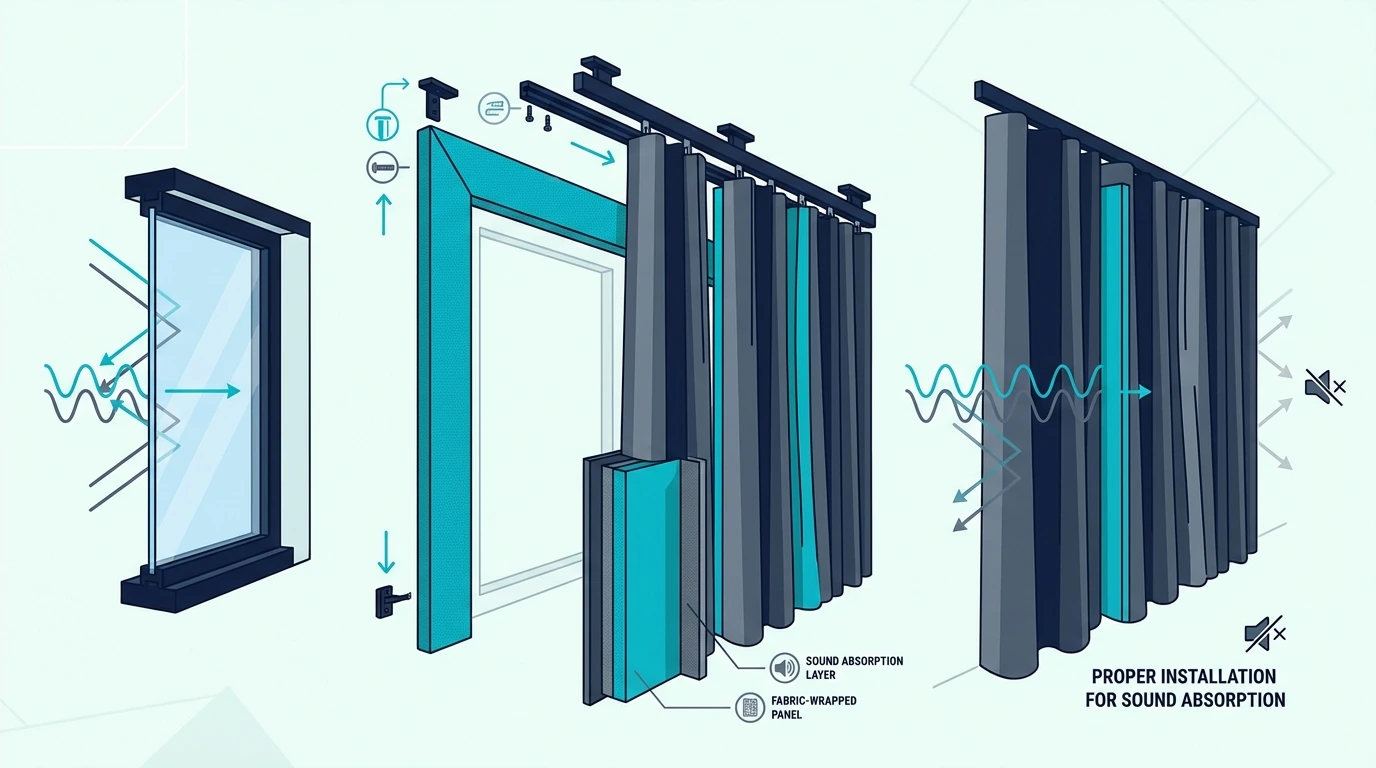
Do not treat the glass with panels. Choose a fix based on whether you need less echo, less outside noise, or both.
What Are Acoustic Curtains?
Acoustic curtains are heavy, dense fabric panels designed to absorb sound while functioning as window coverings. They reduce echo from window reflections without permanently blocking light.
Quality acoustic curtains use multiple fabric layers with mass-loaded materials sandwiched between. When closed, they absorb mid and high-frequency reflections.
When open, they let light through normally. This gives you absorption when you need it without permanently blocking the window.
If you are considering covering panels with fabric, acoustic curtains work on a similar absorption principle but with window-friendly functionality.
The RYB HOME 3-Layer Soundproof Curtains are a good example of multi-layer construction. The dense layers help reduce reflections and give the curtain real weight.
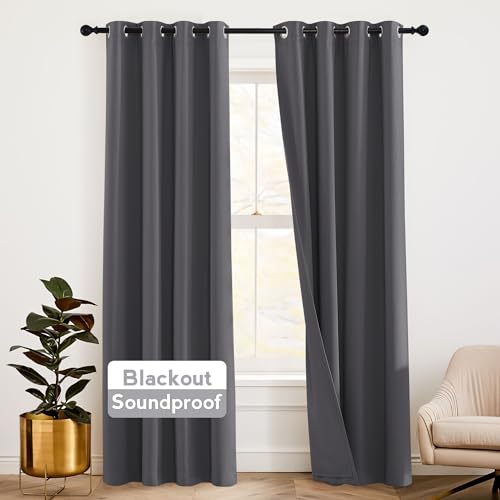
RYB HOME 3-Layer Soundproof Curtains
For a lower-cost option, single-layer blackout curtains also reduce reflections — not as well as triple-layer designs, but enough to tame a bright window without spending much.
The best acoustic curtains achieve NRC ratings around 0.35-0.50 — less than dedicated panels but meaningful for window treatment. They address the reflection problem without the cave-room consequence.
What About Acoustic Window Inserts?
For outside noise blocking, window inserts provide the best non-permanent solution. These are secondary panes that press-fit into existing window frames, creating an air gap that blocks sound transmission.
Quality inserts use laminated glass or thick acrylic and seal tightly to the frame. They can reduce outside noise by 50-70% — far more than any panel approach.
Inserts preserve light and can be removed for ventilation when needed. They are especially popular in urban apartments facing busy streets.
Can Window Plugs Work?
DIY window plugs — rigid insulation boards cut to fit and wrapped in fabric — provide temporary blocking for both sound and light. They are removable panels designed for windows.
If curtains are your main tool for echo control, choose a heavier option with multiple layers. The KGORGE 4-in-1 Soundproof Curtains includes a melt-blown layer designed to reduce sound transmission and is most useful when you want maximum coverage during recording sessions.
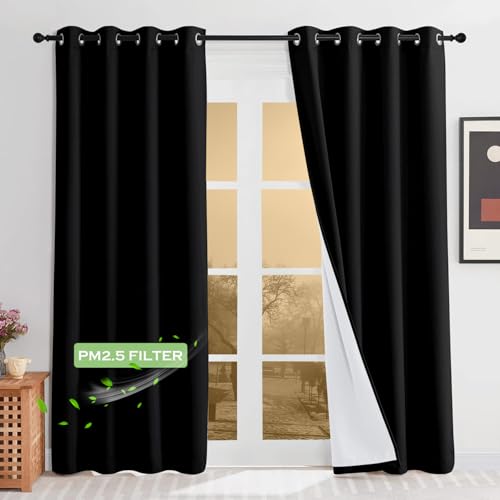
KGORGE 4-in-1 Soundproof Curtains
Plugs work for dedicated recording sessions where you want maximum isolation temporarily. You block the window during recording, then remove the plug to restore normal room function.
The downside is storage — plugs sized for large windows take real space when not in use. Plan a place to store them before you build a set.
Should You Treat Walls Around Windows Instead?
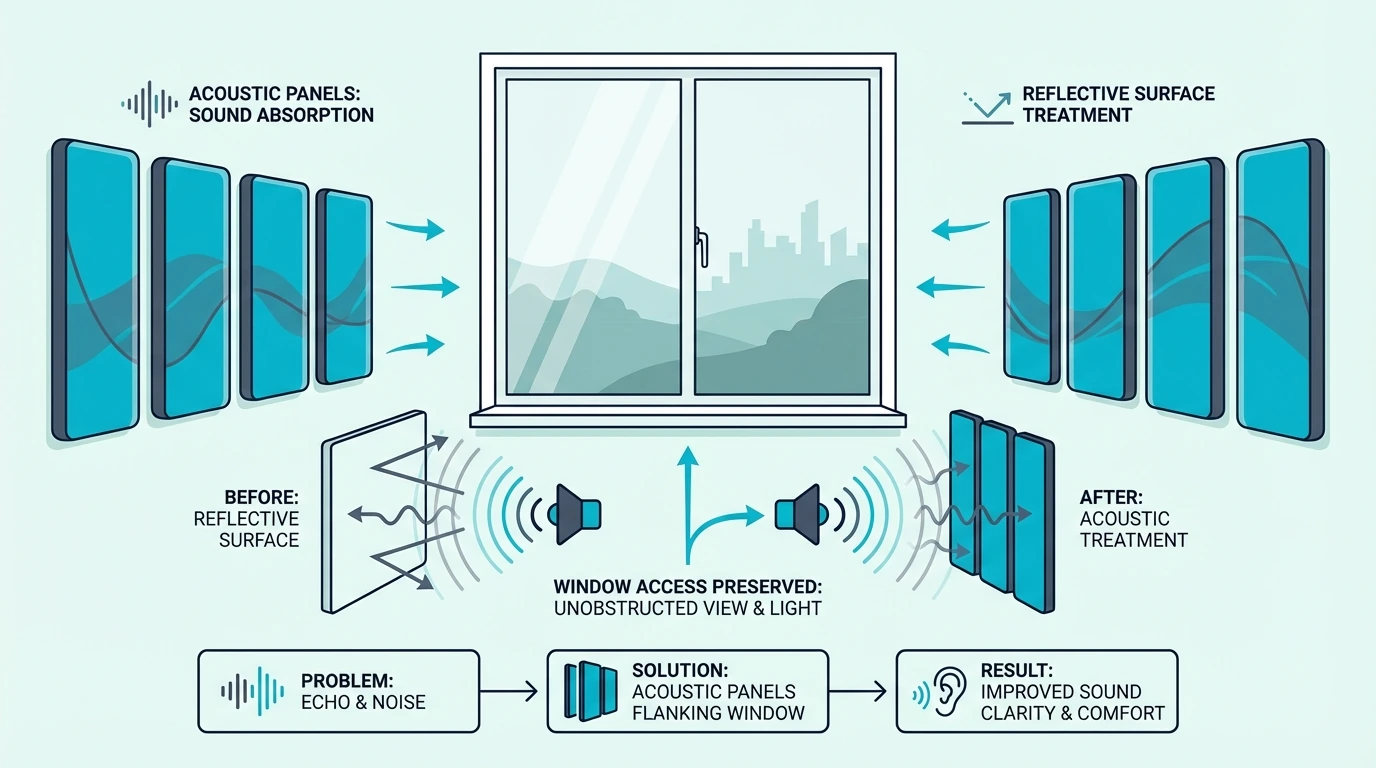
Treat the wall surfaces around the window, not the glass itself. The two setups below show where to place panels and how to pair them with curtains for the best result.
Where Should Panels Go Near Windows?
The wall sections immediately flanking windows create first reflections for many listening positions. Treating these surfaces with panels intercepts sound that would otherwise bounce off glass.
Position panels on the wall between windows or on the wall sections on either side of large windows. This placement catches reflections that the window would create while leaving the window itself unobstructed.
The panel placement guide covers the best positions for various room layouts.
What Is the Best Layout?
Wall-mounted panels around windows paired with acoustic curtains over the glass gives you the best of both worlds. Panels provide consistent absorption regardless of curtain position.
Curtains add adjustable high-frequency absorption — close them during critical listening or recording, then open them for daily use. The wall panels still do their job regardless of curtain position.
For a budget-friendly curtain to pair with wall panels, the NICETOWN Full Shade Curtains block light and dampen reflections at a fraction of the cost of multi-layer options.
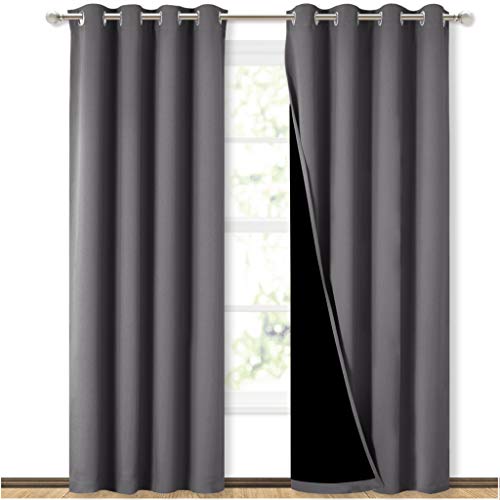
NICETOWN Full Shade Curtains
For panel installation methods, wall mounting near windows uses the same techniques as any other wall location.
Window Acoustic Treatment Options Comparison
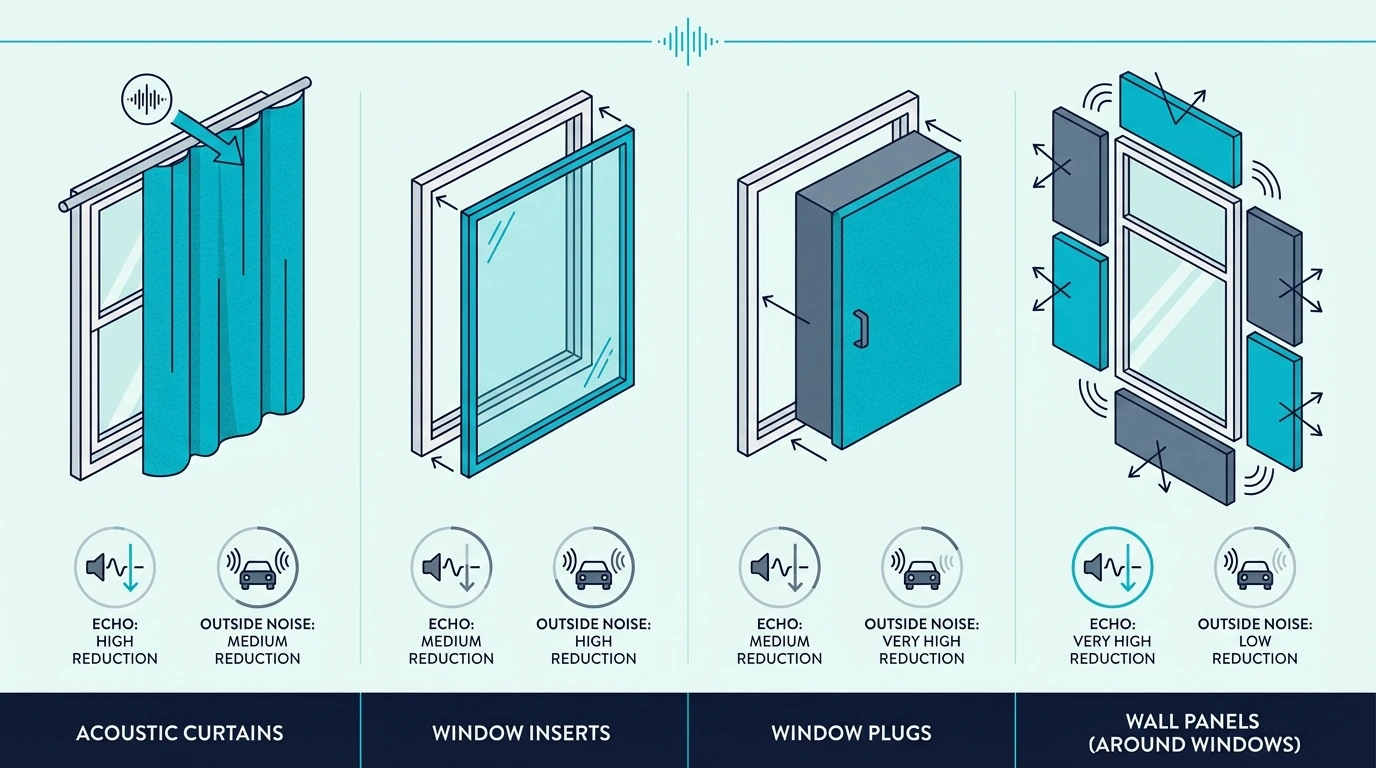
Panels on windows reduce reflections, but they eliminate light and ventilation. They also do not block outside noise.
Acoustic curtains reduce reflections while still working as a normal window covering. They can slightly reduce perceived outside noise, but they do not seal air gaps.
Window inserts or secondary glazing are for outside noise. They keep full light and window visibility while reducing traffic and neighbor sound.
Window plugs are a temporary option for recording sessions. They can improve isolation, but they block light and need storage space.
Panels around windows reduce reflections without covering the glass. This is a good way to treat echo while keeping the room livable.
Curtains plus wall panels is the most balanced setup for most rooms. It keeps daily usability while giving you extra control during recording or critical listening.
Conclusion
For most situations, do not put acoustic panels on windows. Instead, combine acoustic curtains with panels mounted on walls around the window area.
Curtains plus wall panels reduces reflections while keeping natural light and ventilation. Curtains give you adjustable treatment, and the wall panels give you consistent baseline absorption.
If your primary concern is outside noise rather than echo, window inserts or secondary glazing addresses the actual problem. Panels will not help with traffic or neighbor noise regardless of placement.
The best acoustic panels guide has wall-mounting options that complement window treatments.
Use the panel count guide to calculate how many panels your room needs before ordering.
Frequently Asked Questions
Can You Cover Windows With Acoustic Panels?
Physically possible but not recommended. You will lose natural light and ventilation while gaining only marginal acoustic benefit over better alternatives.
If you need temporary complete coverage for dedicated recording sessions, consider removable window plugs instead. These provide similar acoustic effect while being designed for removal and storage.
Do Acoustic Curtains Work as Well as Panels?
Not quite, but close enough for window applications — quality acoustic curtains achieve NRC ratings around 0.35-0.50 compared to 0.85-1.0 for dedicated panels, yet curtains are adjustable, let light through when open, and solve the reflection problem without the drawbacks of panel placement.
What Is the Best Way to Treat Windows for Sound?
For echo reduction: acoustic curtains plus wall-mounted panels flanking the window. This provides effective treatment while preserving window function.
For outside noise blocking: window inserts or secondary glazing. These address the actual transmission paths that let external noise enter.
Combining both approaches — inserts for blocking plus curtains for absorption — covers both problems for windows facing noisy environments.
Can You Soundproof Windows Cheaply?
Budget options exist but with trade-offs, and the best low-cost win is weatherstripping that seals air gaps around the window frame. Heavy blankets can add temporary blocking, but they are awkward and often leak around the edges.
For permanent solutions, expect a real investment — quality window inserts often cost hundreds per window. Secondary glazing or window replacement costs more, but it also yields the largest reduction and cheap soundproofing rarely works well.