Best Bass Traps — 6 Picks That Actually Absorb Low Frequencies
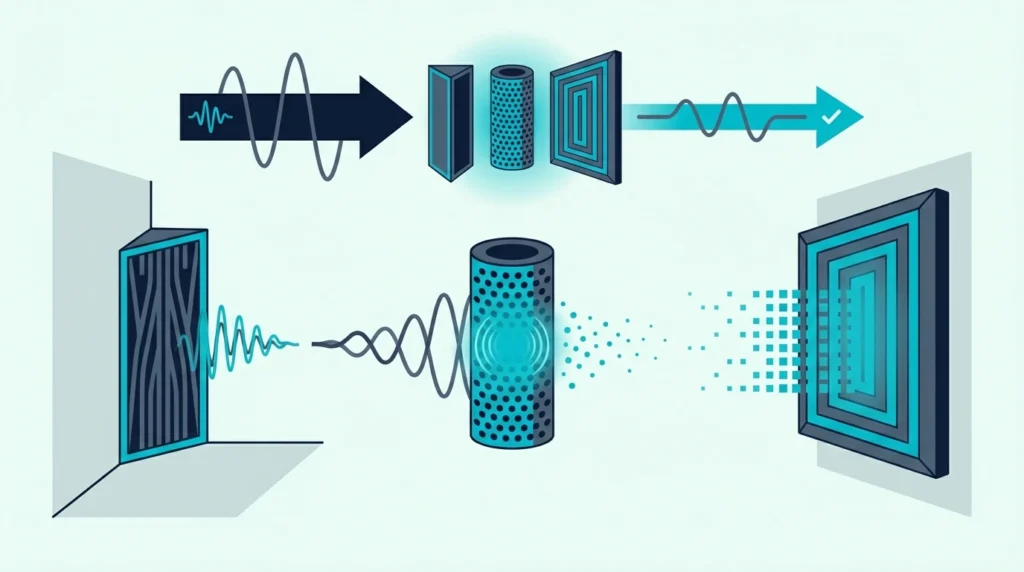
Best bass traps come in dozens of shapes and materials — but most foam options absorb mids and highs effectively while barely touching the low frequencies where your room actually needs help. Choosing the wrong bass trap means spending money on treatment that looks like it is working but leaves standing waves and bass buildup exactly where they were.
The difference between effective and ineffective bass traps comes down to material density, panel thickness, and corner placement — factors that product listings rarely explain because they focus on NRC ratings that average out the bass frequencies entirely. A trap rated NRC 0.9 can still absorb almost nothing at 80 Hz if it is too thin or too lightweight.
We evaluated dozens of bass trap products based on material type, thickness, pack size, corner coverage, and verified buyer feedback to find the options that deliver real bass absorption. Below you will find our top picks, a comparison table, category breakdowns, and a buyer’s guide to help you choose.
The best bass traps for most rooms are foam corner traps in 8-packs or larger that cover all four vertical corners plus ceiling-wall edges. For serious low-end control below 100 Hz, wooden or mineral-wool-filled traps outperform foam at every frequency but cost significantly more. Start with foam corner traps to address upper bass problems, then upgrade to denser materials as your budget allows.
Our Top Picks
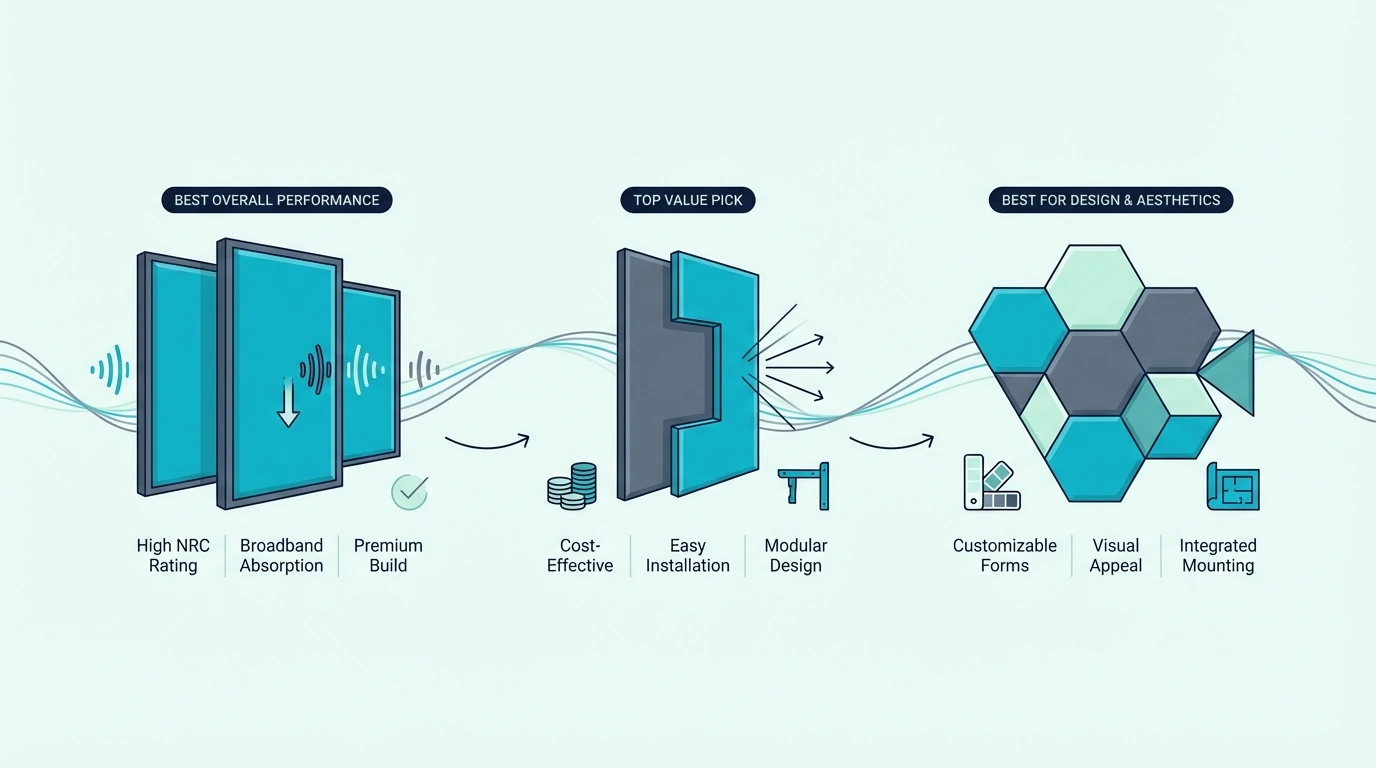
After comparing dozens of bass trap options, these six products stand out for their combination of absorption performance, build quality, and value across different budgets and room sizes.
8 Pack Bass Traps Acoustic Foam Corner
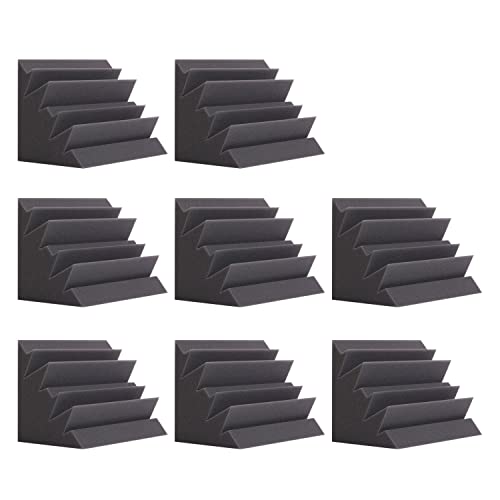
8 Pack Bass Traps Acoustic Foam Corner
ATS Acoustics 2-Inch Mineral Wool Panel
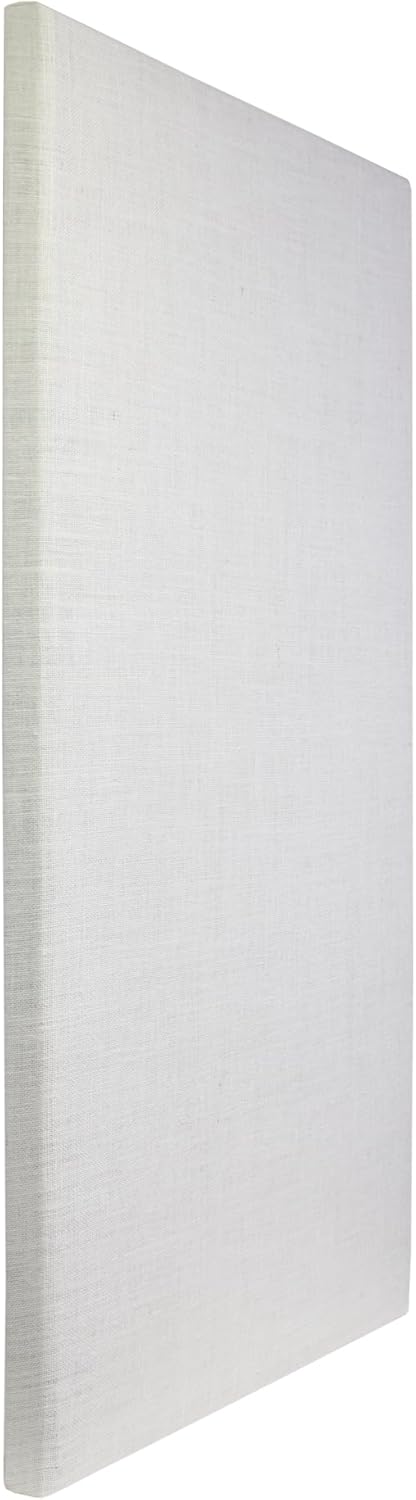
ATS Acoustics 2-Inch Mineral Wool Panel
12-Pack Foam Corner Bass Traps (12 x 7 x 7 in)
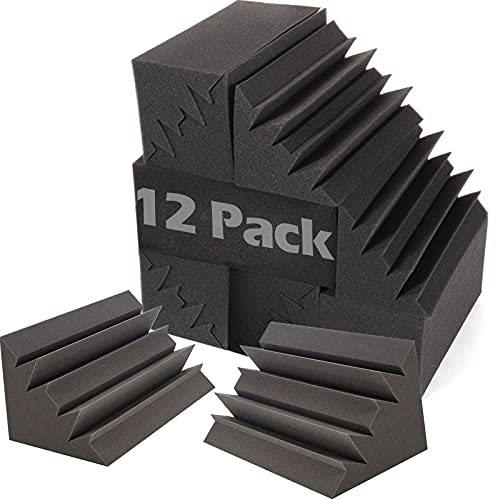
12-Pack Foam Corner Bass Traps (12 x 7 x 7 in)
4 Pack Bass Traps for Ceiling Corner
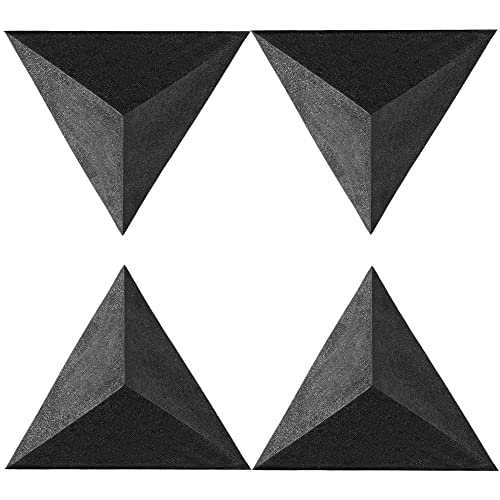
4 Pack Bass Traps for Ceiling Corner
JBER 16-Pack Column Corner Bass Traps
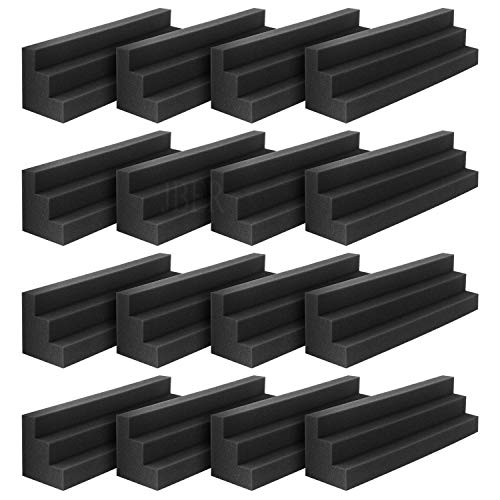
JBER 16-Pack Column Corner Bass Traps
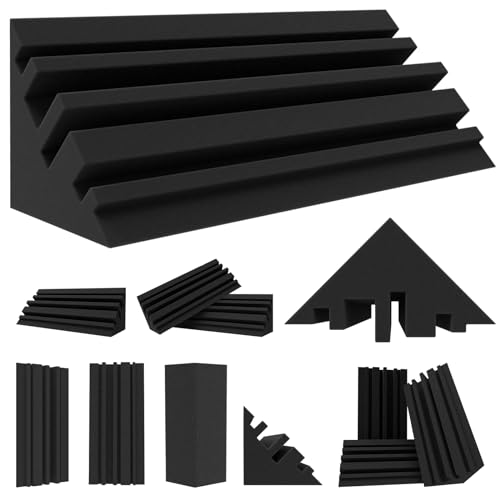
TroyStudio Bass Traps 12 Pack
| Product | Pack | Link |
|---|---|---|
Best Overall | 8 pack | See ratings |
Best Value | — | See ratings |
Best Coverage | — | See ratings |
Best Budget | 12 pack | See ratings |
Best Premium | — | See ratings |
Best for Small Rooms | 4 pack | See ratings |
How We Chose The Best Bass Traps
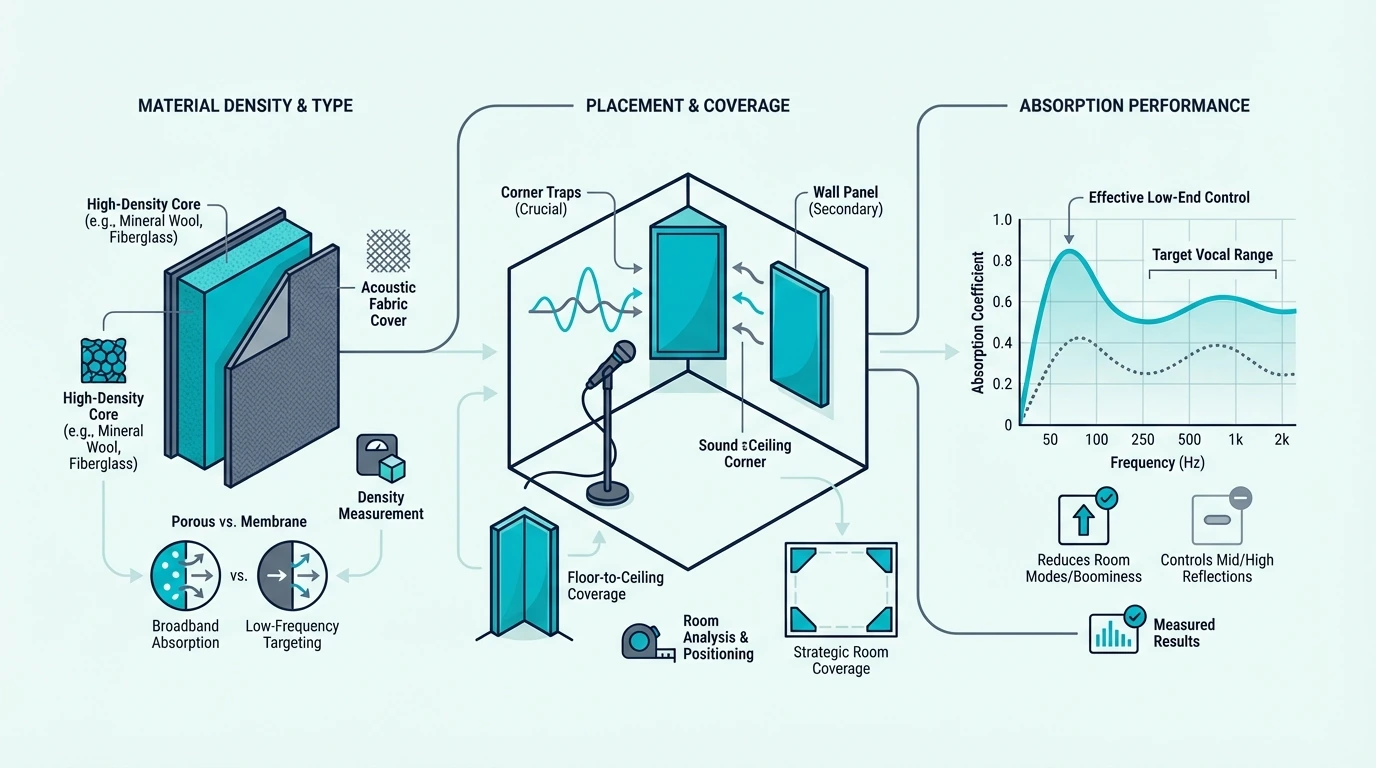
We evaluated bass traps on five criteria that determine real-world performance, not marketing claims.
Absorption at low frequencies matters more than overall NRC ratings because bass traps need to work below 300 Hz where room modes cause the biggest problems. Products with thicker profiles and denser materials scored higher because thicker panels absorb lower frequencies.
Material density separates bass traps that actually absorb bass from those that only handle mids and highs. Dense foam or mineral wool (2+ PCF) creates more friction against sound waves, converting more bass energy into heat.
Pack size and corner coverage determines how much of your room you can treat per purchase. Bass traps work best when they cover all four vertical corners plus ceiling-wall edges.
Build quality and fire safety was verified through buyer reviews and material specifications. Fire-retardant foam is non-negotiable for treatment installed in an enclosed space.
Value for money was calculated as absorption performance per dollar — how much bass each dollar of treatment actually removes from your room’s problem frequencies.
Get Studio Tips Weekly
Join 5,000+ creators getting acoustic treatment advice every week.
No spam. Unsubscribe anytime.What Are the Best Broadband Bass Traps?
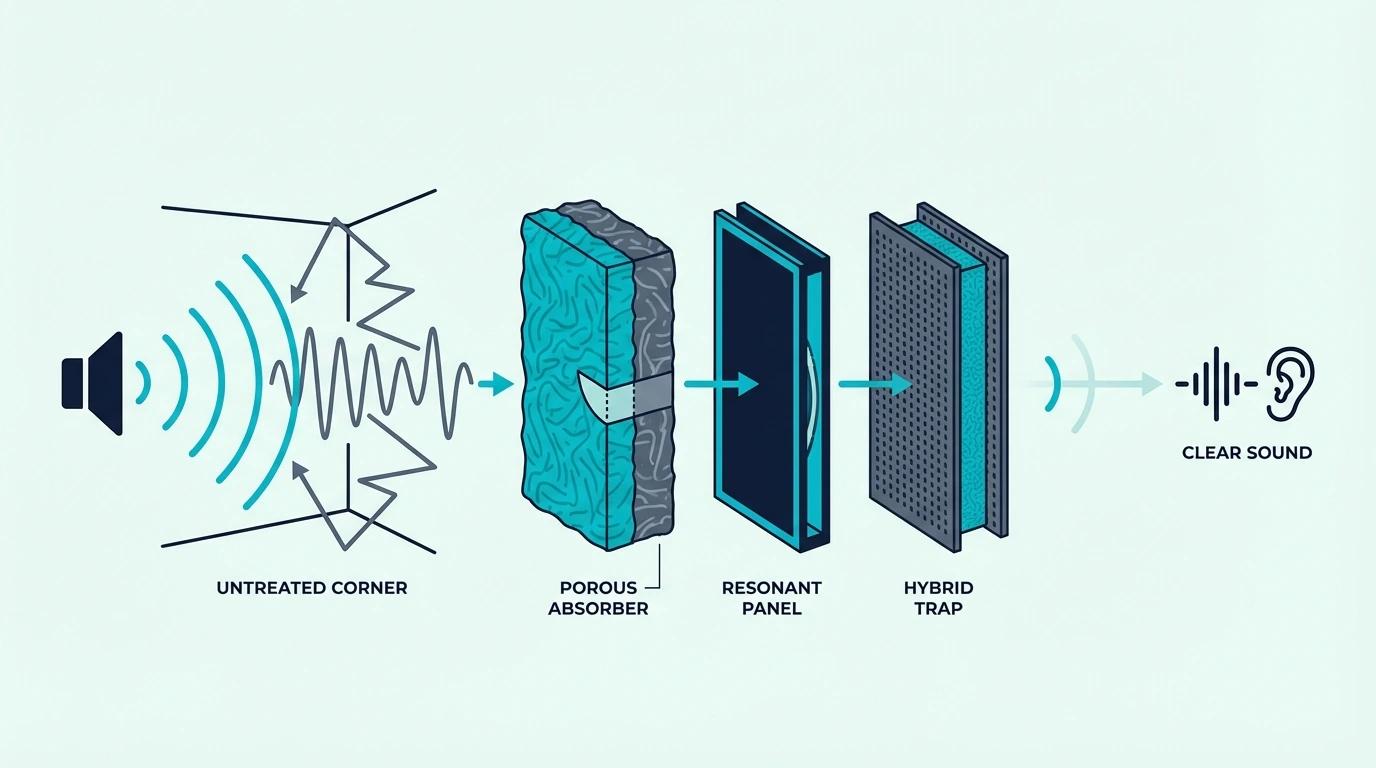
Broadband bass traps absorb across a wide frequency range from deep bass through mids and highs, making them the most versatile option for rooms that need general acoustic improvement.
The 8 Pack Bass Traps Acoustic Foam Corner earns our Best Overall pick because its 8-piece count covers all four vertical corners in a single purchase and its 12-inch depth provides meaningful absorption into the upper bass range. Stack two or three pieces per corner for maximum coverage.
For the best possible bass absorption, the ATS Acoustics 2-inch panel pairs a 2-inch mineral wool core with a solid wood frame; straddled across a corner, it absorbs lower than foam alone can. You’ll need one panel per corner.
What Are the Best Cheap Bass Traps?
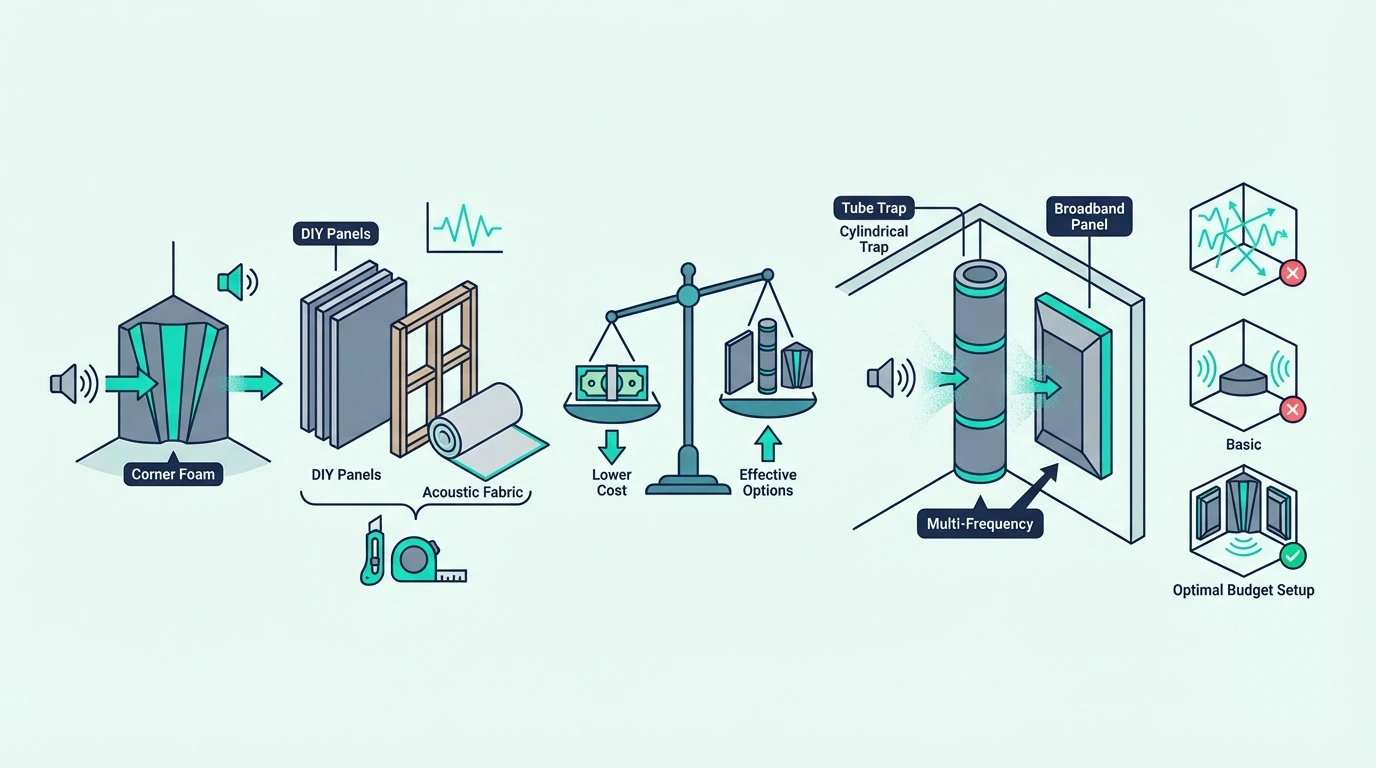
Budget bass traps under a hundred dollars can still make a meaningful difference in rooms where bass problems are noticeable but not severe enough to justify professional-grade treatment.
The TroyStudio Bass Traps 12 Pack is the budget pick, giving you enough dense foam pieces to treat two full vertical corners. The 4x4x12-inch pieces stack vertically in corners and provide absorption from 200 Hz upward.
The 12-pack of 12 x 7 x 7-inch foam corner blocks offers a triangular design that fits corners more snugly than flat-sided pieces. The triangular profile creates a natural air gap between the foam and the wall, which extends absorption to lower frequencies.
For taller corner columns, the JBER 16-pack of column corner traps gives you sixteen pieces, enough for a four-piece column in each vertical corner.
What Are the Best Bass Traps for Small Rooms?
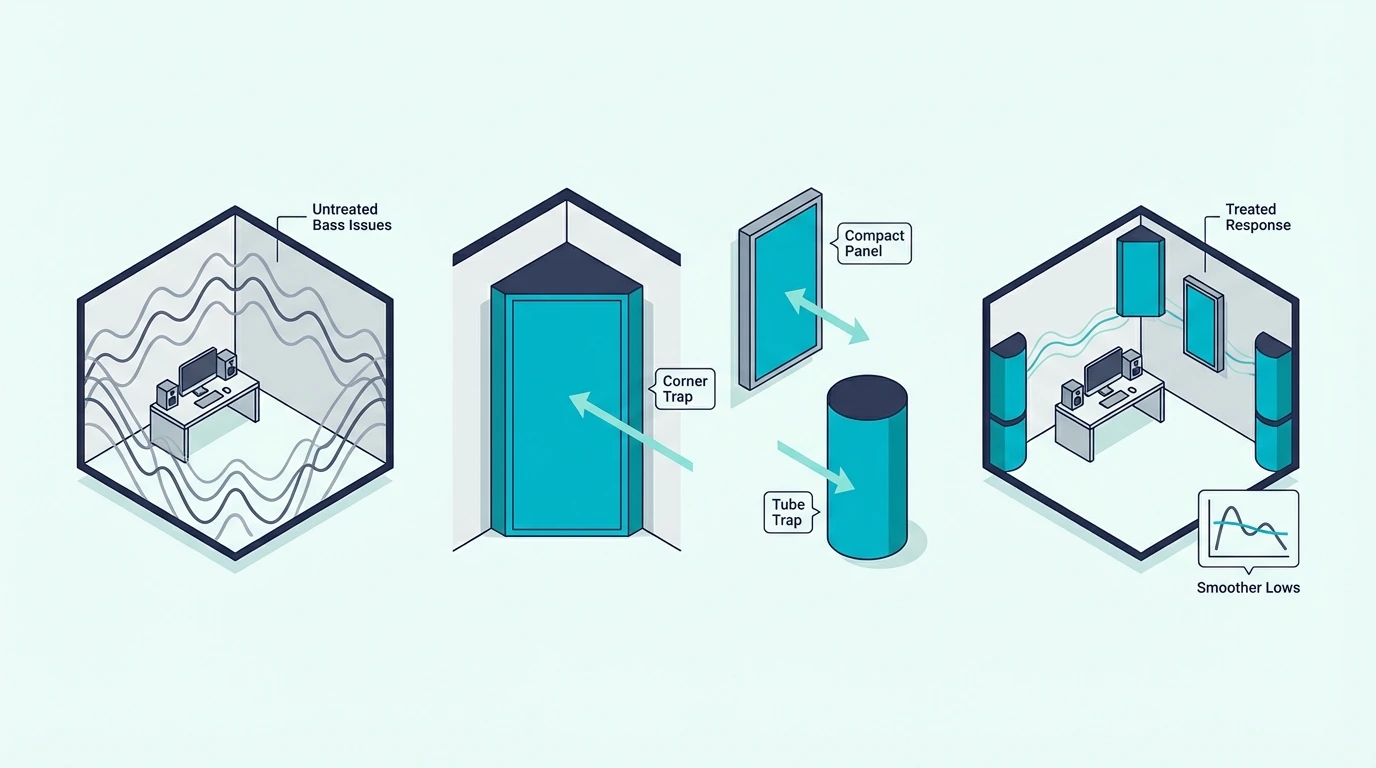
Small rooms have the worst bass problems because their dimensions create standing waves at frequencies you can actually hear — typically 80-200 Hz in rooms under 150 square feet. The good news is that small rooms need fewer traps to make a noticeable difference.
The 4 Pack Bass Traps for Ceiling Corner is purpose-built for smaller rooms where you want maximum corner coverage without using excessive wall space. The 16.5-inch triangular design covers significantly more corner surface than standard 8-inch pieces.
For small rooms on a tight budget, grab the TroyStudio 12 Pack in two vertical corners closest to your listening position, then add a second pack for the remaining corners once you hear the improvement. This staged approach lets you verify the impact before committing to full-room treatment.
What To Look For When Buying Bass Traps
The bass trap market is full of products that claim bass absorption while delivering mostly mid-frequency treatment. Here is what actually matters.
Material And Density
Foam bass traps are the most affordable option and work well for upper bass (150-300 Hz). Dense foam (2+ PCF) outperforms lightweight foam significantly at lower frequencies.
Mineral wool and fiberglass traps (3-6 PCF) absorb deeper into the bass range and are the professional standard for home studio treatment. These require frames and fabric covering, making them better suited for DIY builders willing to invest construction time.
Wooden bass traps with internal acoustic fill represent the premium tier — they combine the structural rigidity of a tuned panel with broadband porous absorption. These cost more per unit but deliver the deepest bass absorption available in a pre-made product.
Size And Thickness
A minimum of 4 inches of thickness is needed for any meaningful bass absorption. Thicker traps (6-12 inches) reach lower frequencies, and adding an air gap behind the trap extends its effective depth without additional material cost.
Larger panels cover more corner surface area per piece, reducing installation time and eliminating gaps between smaller stacked pieces. For rooms with severe bass problems, prioritize thickness over surface area.
When comparing products, ignore NRC ratings that average across 250-2000 Hz and look for absorption coefficients at 125 Hz specifically — that single number tells you more about bass trap performance than any other specification on the product listing.
The Bottom Line
The best bass traps for most rooms are the 8 Pack Bass Traps Acoustic Foam Corner for their combination of coverage, reliability, and value — covering all four vertical corners in a single purchase with fire-retardant foam. For premium performance, ATS Acoustics 2-inch panels deliver absorption that foam cannot match.
Start by treating all four vertical wall-wall corners from floor to ceiling — this single step addresses more bass energy than any other placement strategy. Add ceiling-wall edge treatment next for further improvement.
Frequently Asked Questions
What bass traps should I get?
Start with an 8-pack or 12-pack of foam corner traps to cover all four vertical corners in your room — this addresses the most bass energy for the least cost. If your budget allows, upgrade to mineral wool or wooden bass traps for deeper low-frequency absorption below 100 Hz.
Are GIK Acoustics bass traps worth it?
GIK Acoustics bass traps are independently tested and deliver measurable performance that exceeds most foam alternatives, making them worth the premium for dedicated studios where accurate bass response matters for mixing decisions. For casual listening rooms or budget-conscious builds, foam corner traps provide a meaningful improvement.
What are the best bass traps for home theater?
Home theater bass traps should prioritize corner placement with thick panels (4+ inches minimum) to address the low-frequency buildup that makes movie dialogue muddy and bass effects boomy. Start with corner traps in all four vertical corners plus ceiling-wall edges behind the seating position for the biggest improvement in clarity.