Best Bass Trap For Vocals — 6 Picks That Tighten Low-End In Your Vocal Room
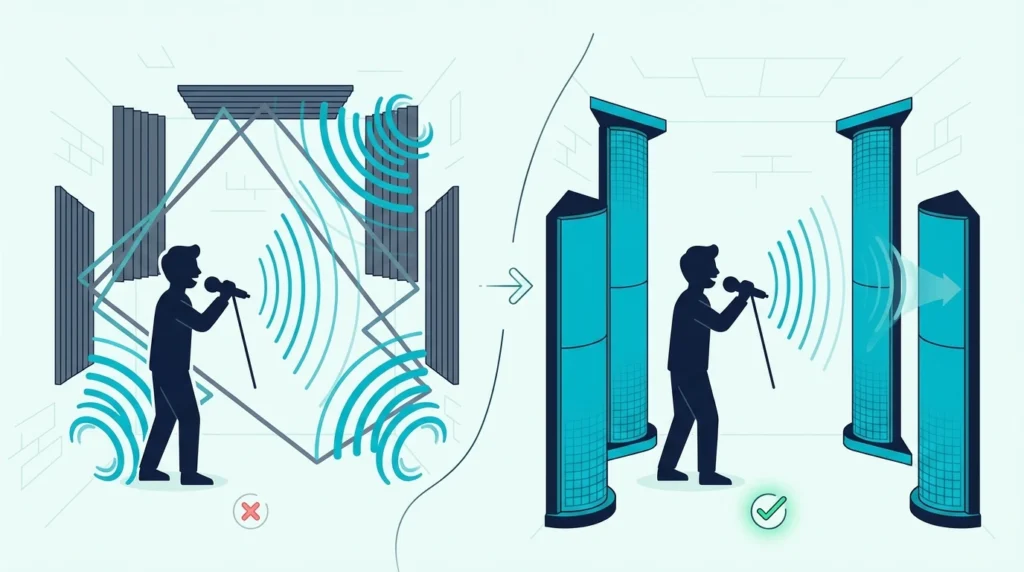
Best bass trap for vocals options range from budget foam wedges to wooden panel absorbers — but the wrong choice leaves your vocal recordings with the same muddy low-end buildup you are trying to fix. Vocal booths and small recording rooms amplify bass problems because their short wall dimensions create strong room modes right in the 80-300 Hz range where vocal body and warmth live.
Bass traps matter more for vocal recording than almost any other application because untreated bass buildup masks the clarity and detail that separates a professional vocal take from a bedroom demo. The proximity effect from condenser microphones makes this worse by boosting low frequencies the closer the vocalist stands to the mic.
These bass traps were chosen specifically for vocal recording, judged on corner fit in booth-sized spaces, absorption at vocal-relevant frequencies, pack sizing for small rooms, and verified buyer feedback from studio users. Below you will find our top picks and a complete buyer’s guide for choosing the best bass trap for vocals in any recording space, whether you are building a vocal booth or treating a home studio.
The best bass trap for vocals is an 8-pack foam corner trap that treats all four corners of your vocal room or booth. For professional vocal studios needing deeper bass control, framed mineral wool panels outperform foam at the frequencies that matter most for vocal clarity. Start with corner treatment before adding any other acoustic panels.
Our Top Picks
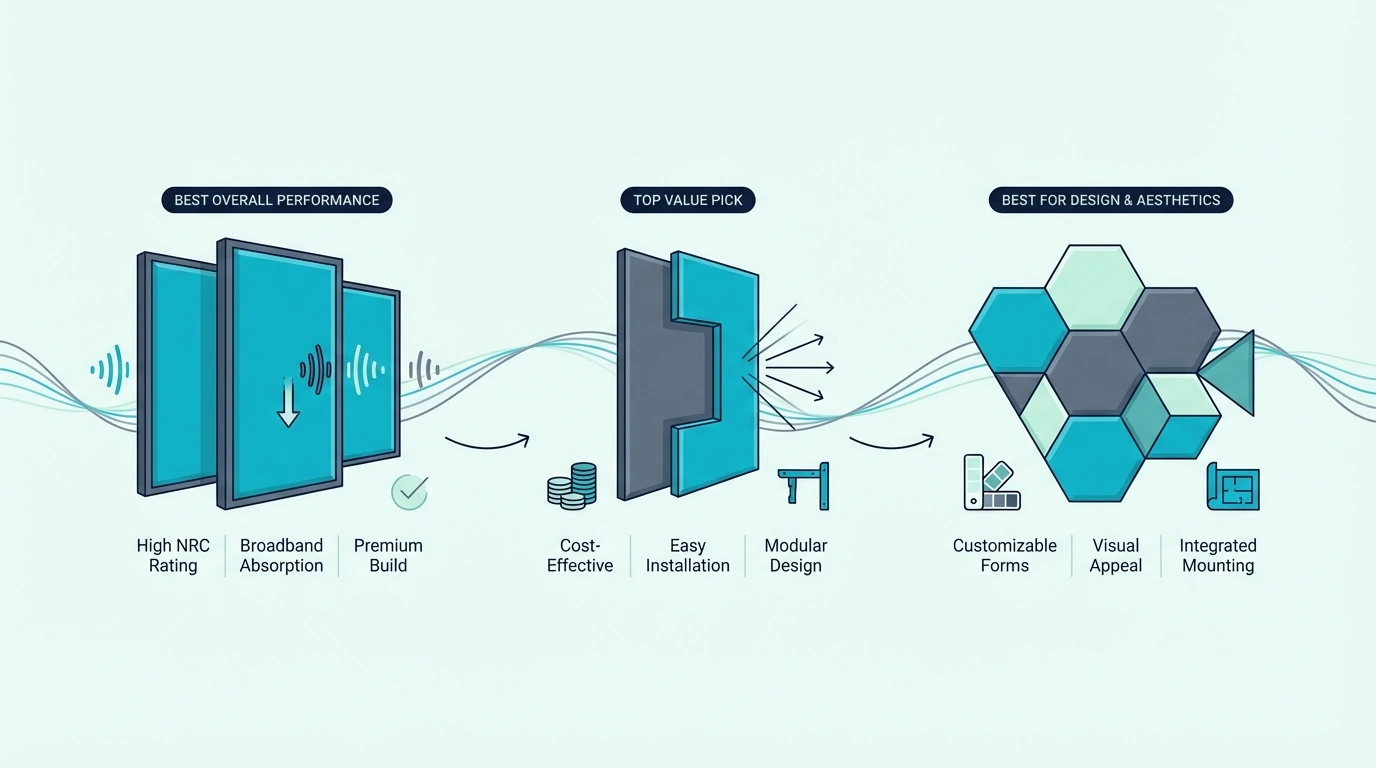
These six bass traps deliver the best results for vocal recording spaces, from compact booths to full home studios.
8 Pack Bass Traps Acoustic Foam Corner
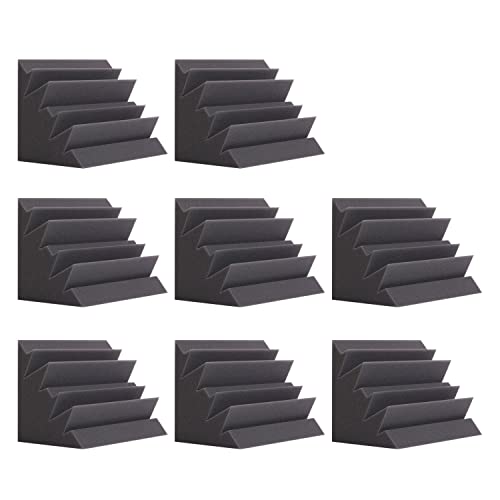
8 Pack Bass Traps Acoustic Foam Corner
ATS Acoustics 2-Inch Mineral Wool Panel
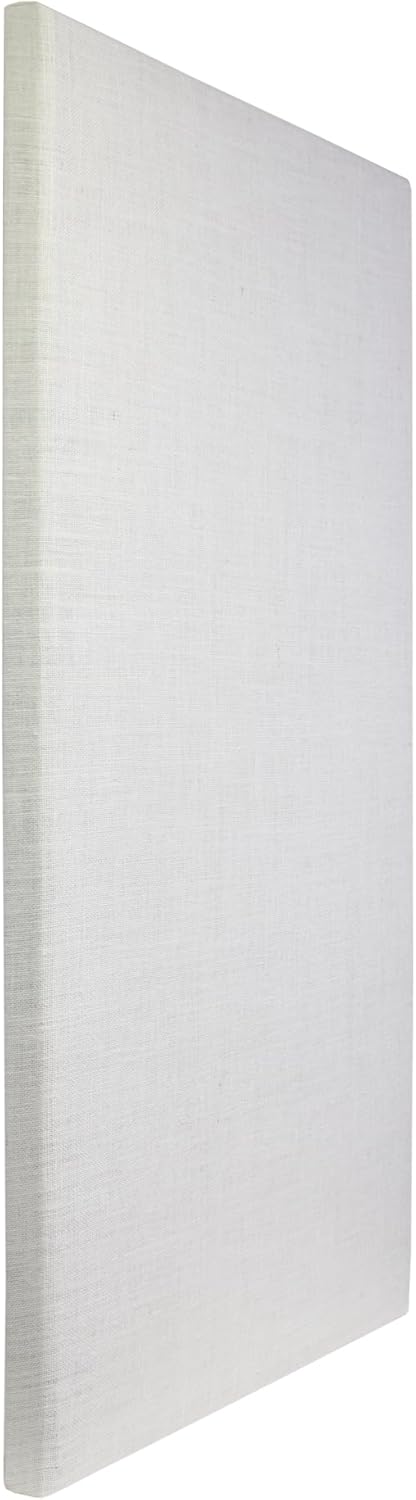
ATS Acoustics 2-Inch Mineral Wool Panel
12-Pack Foam Corner Bass Traps (12x7x7 in)
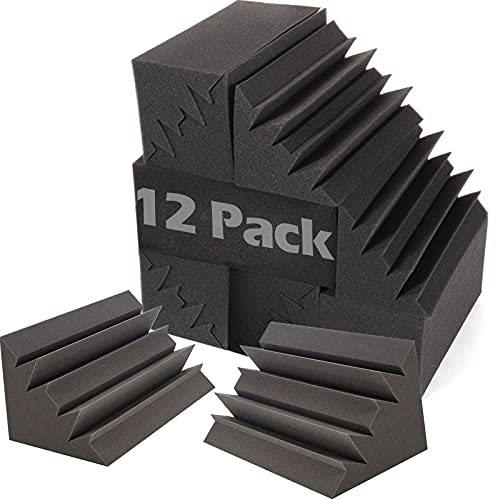
12-Pack Foam Corner Bass Traps (12x7x7 in)
4 Pack Bass Traps for Ceiling Corner
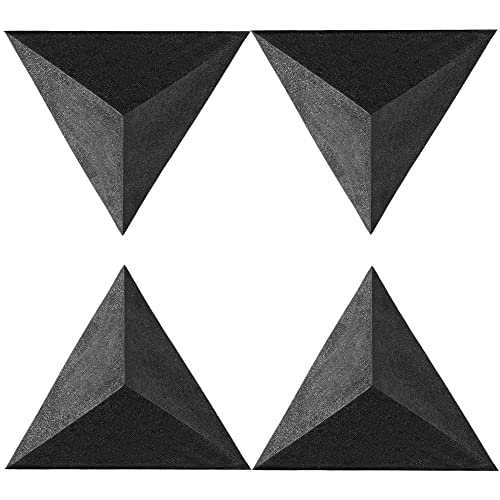
4 Pack Bass Traps for Ceiling Corner
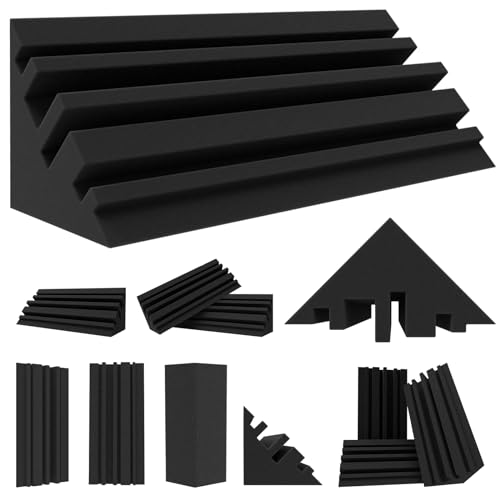
TroyStudio Bass Traps 12 Pack
TroyStudio Bass Traps 12 Pack Charcoal
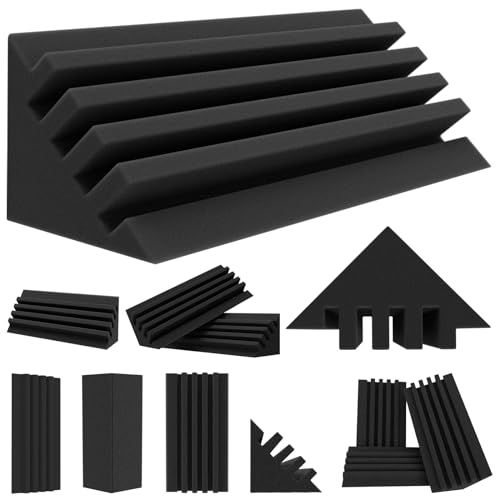
TroyStudio Bass Traps 12 Pack Charcoal
| Product | Pack | Shape | Link |
|---|---|---|---|
Best Overall | 8 pack | — | See ratings |
Best Premium | — | — | See ratings |
Best Value | — | Corner | See ratings |
Best for Vocal Booths | 4 pack | — | See ratings |
Best Budget | 12 pack | Corner | See ratings |
Best for Home Studios | 12 pack | Corner | See ratings |
How We Chose The Best Bass Traps For Vocals
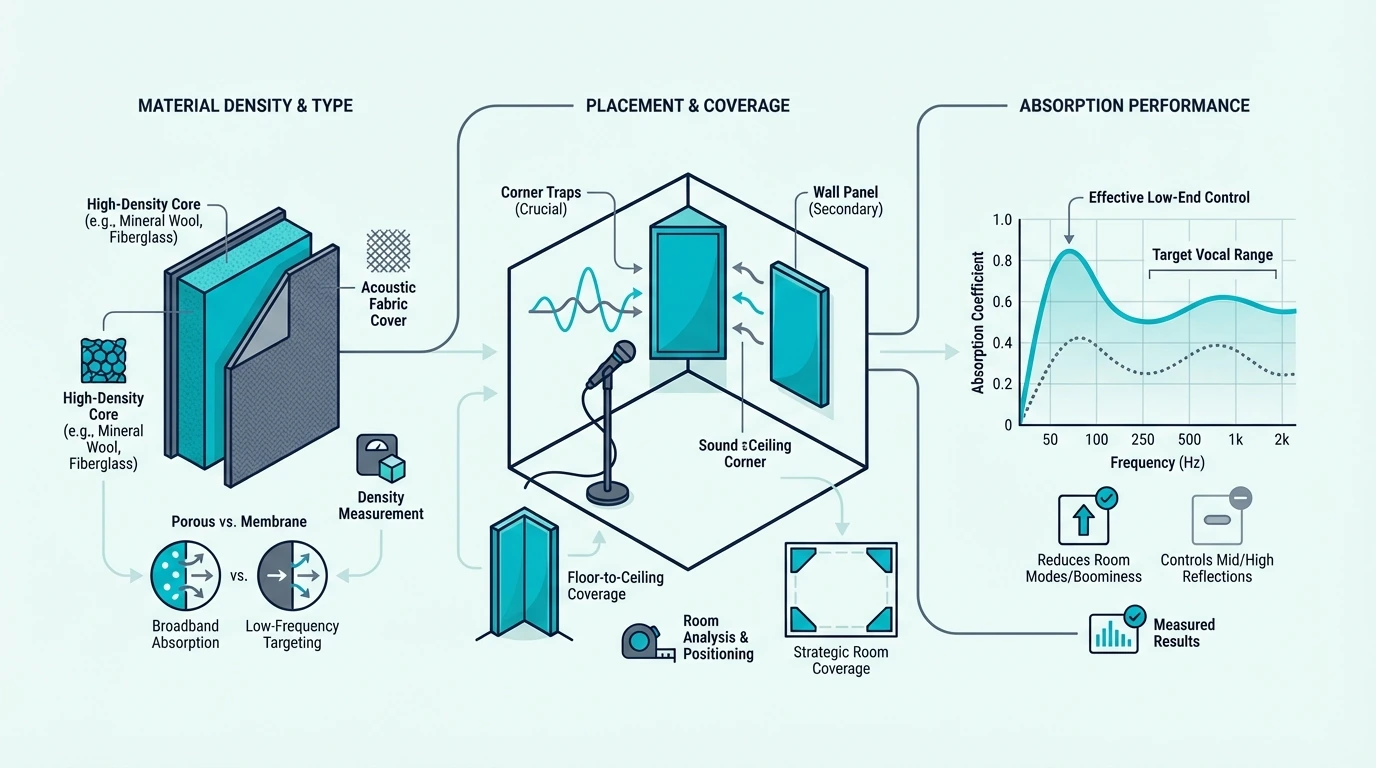
Vocal recording demands specific acoustic conditions that differ from general music production. We evaluated every product against criteria tuned to vocal applications.
Absorption at vocal frequencies (80-300 Hz) was the primary criterion because this range contains the bass buildup and room resonance problems that muddy vocal recordings. Products with sufficient thickness and density to absorb in this range scored highest.
Size compatibility with vocal spaces matters because vocal booths and isolation rooms are typically much smaller than full studios. Traps that fit tight corners without consuming valuable floor space scored higher.
Pack count relative to room size determines whether one purchase actually solves the problem. A typical vocal booth has four corners and two to four ceiling-wall edges that need treatment.
Fire safety and material quality was verified through certifications and buyer reports. Vocal booths are enclosed spaces where fire-retardant materials are essential.
Get Studio Tips Weekly
Join 5,000+ creators getting acoustic treatment advice every week.
No spam. Unsubscribe anytime.Why Vocal Recording Needs Bass Traps
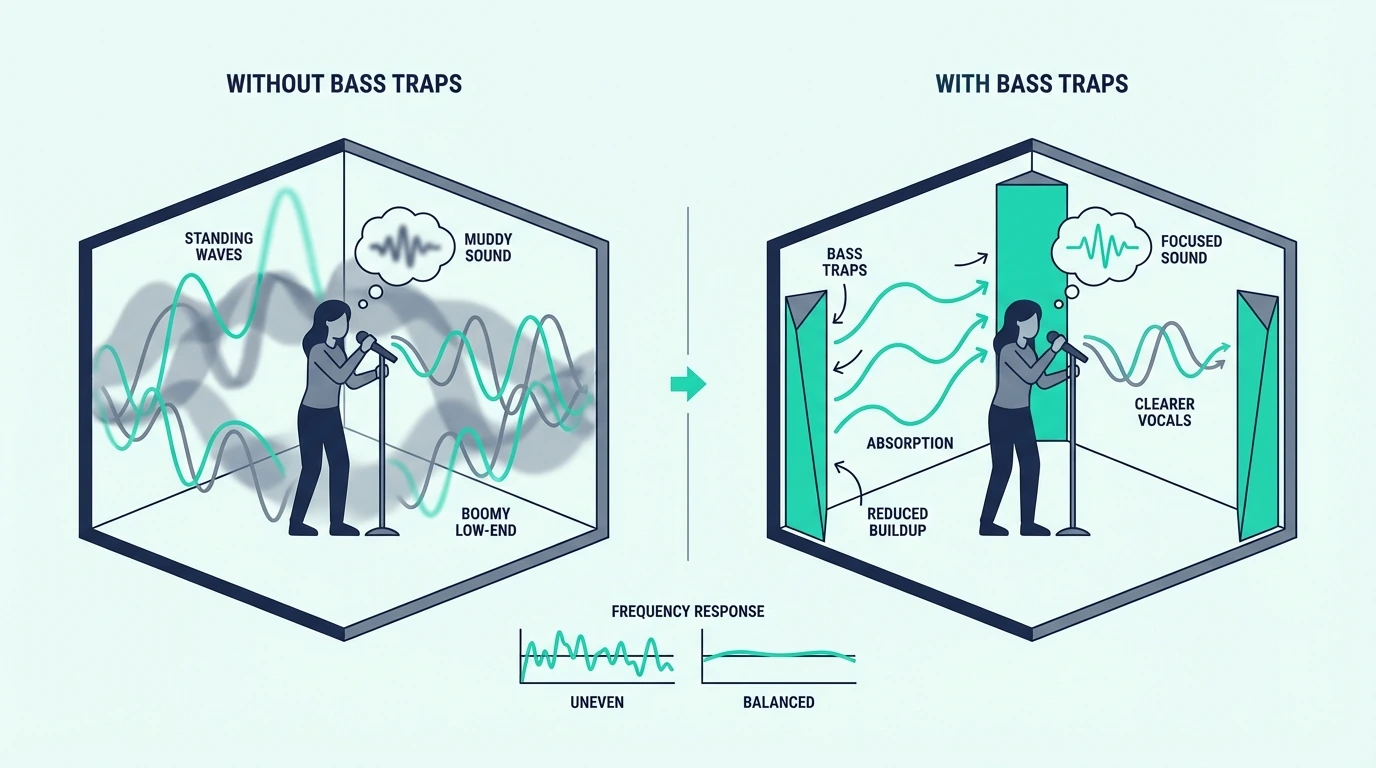
Vocal booths and small recording rooms create severe bass buildup because their short wall dimensions produce strong room modes concentrated in the 80-200 Hz range. A typical 6×4 foot vocal booth has its first room mode around 94 Hz — right where vocal body and chest resonance live.
Without bass traps in the corners, this buildup makes vocals sound boomy and unfocused on playback even when they sounded clean through headphones during recording. The microphone captures the room resonance along with the performance, and no amount of EQ can cleanly separate the two after the fact.
The proximity effect from condenser and dynamic microphones compounds this problem by boosting frequencies below 200 Hz as the vocalist moves closer to the capsule. Bass traps absorb this excess energy before it reaches the microphone, giving you cleaner raw takes that need less corrective processing.
This is why professional vocal studios always treat corners first — even before investing in reflection filters or vocal shields. Corner bass traps address the root cause of muddy vocals while reflection filters only treat symptoms.
What Are the Best Bass Traps for Vocal Booths?
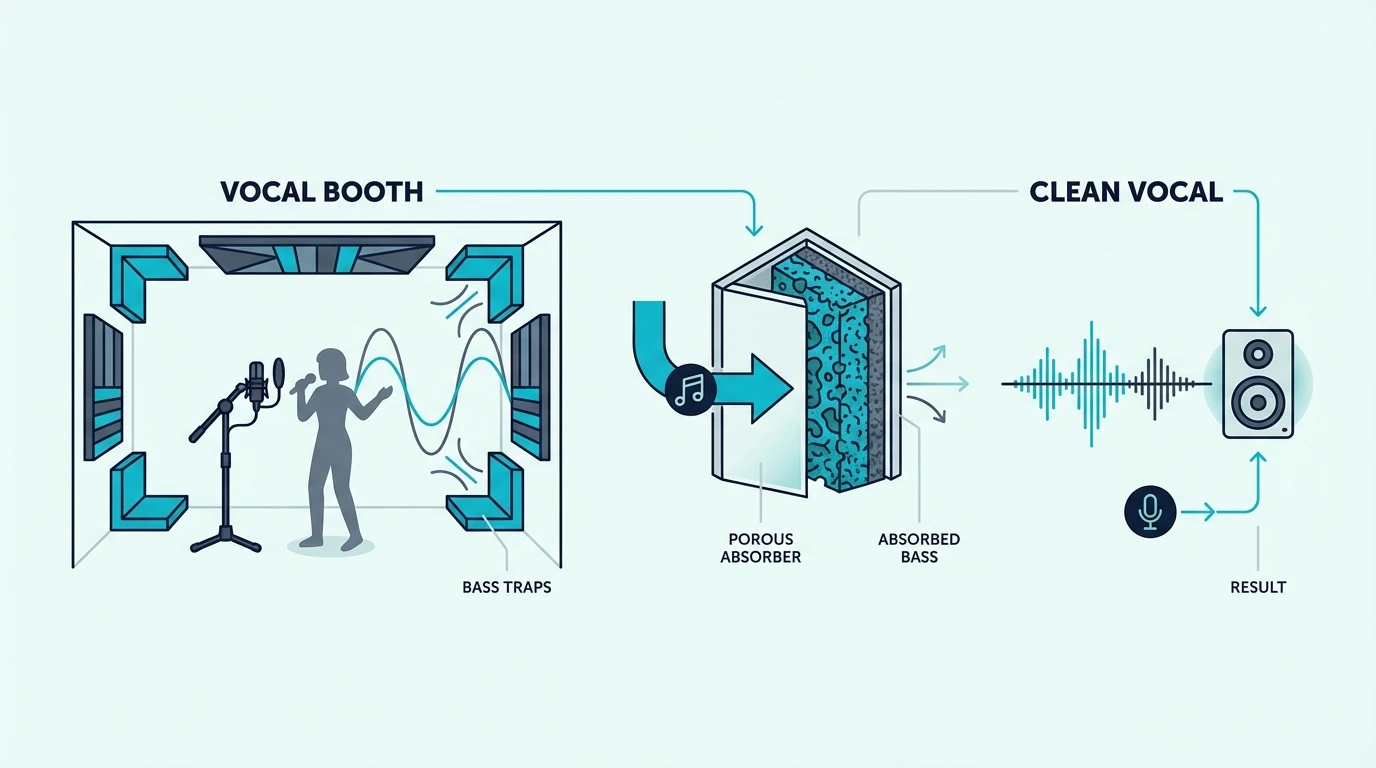
Vocal booths demand compact bass traps that fit tight corners without eating into the limited space where the vocalist stands. Every inch matters in a 4×6 or 5×5 foot booth.
The 4 Pack Bass Traps for Ceiling Corner is our top pick for vocal booths because the 16.5-inch triangular profile covers more corner surface than standard foam wedges. Four pieces treat two full corners from floor to ceiling, and a second pack completes all four corners.
For booth builders on a tight budget, the TroyStudio 12 Pack stacks neatly in booth corners. The 4x4x12-inch pieces stack vertically to create floor-to-ceiling columns in two corners per pack.
The 12-pack of foam corner blocks also works well in booths because the 7×7-inch triangular footprint takes up minimal corner space while the 12-inch depth provides meaningful absorption at vocal-relevant frequencies.
What Are the Best Bass Traps for Home Studio Vocals?
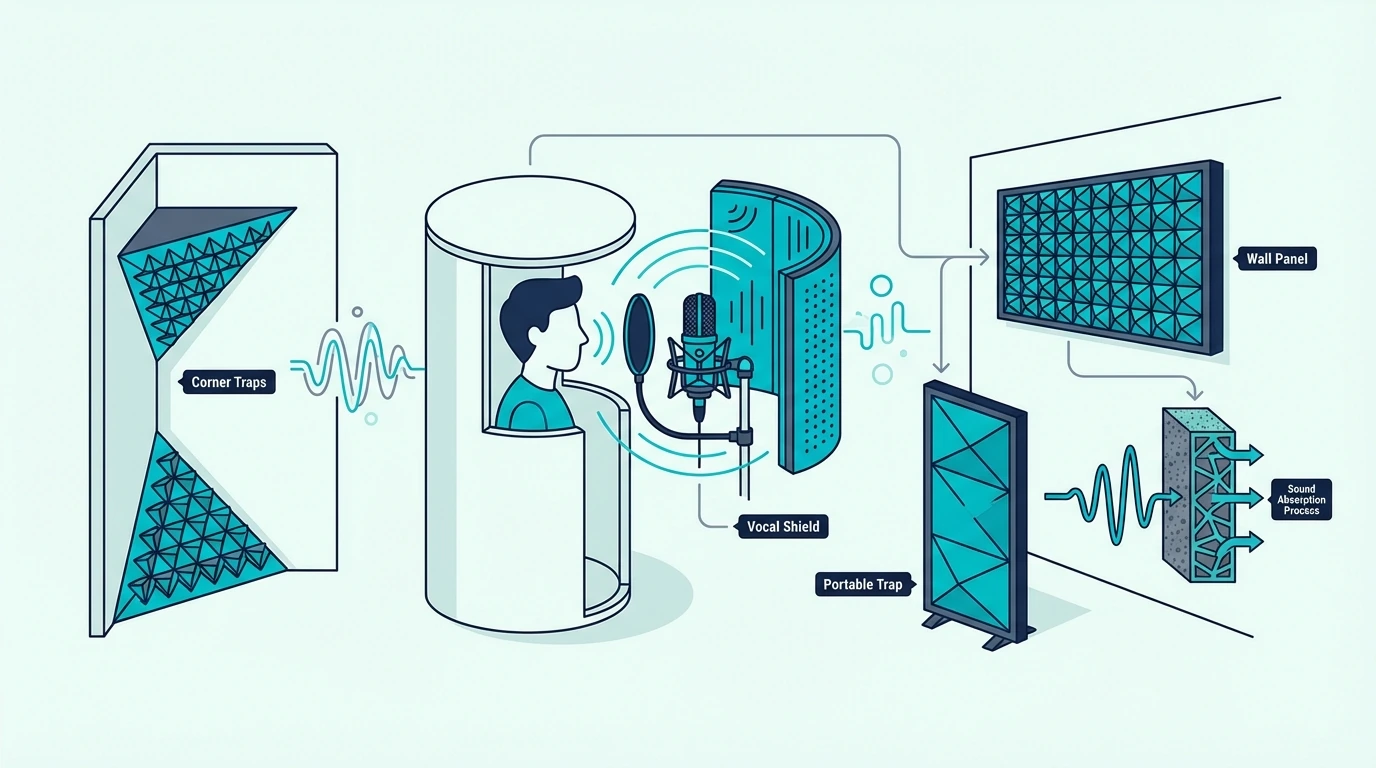
Home studios used for vocal recording typically have larger rooms than dedicated booths, which means different bass trap requirements. The room modes occur at lower frequencies and the corners are farther from the microphone position.
The advantage of larger rooms is that you have more options for corner bass trap sizing and placement. The disadvantage is that you need more material to treat the same number of corners.
The 8 Pack Bass Traps Acoustic Foam Corner is the best starting point for home studio vocal recording because the 8-piece count treats all four vertical corners in one purchase. Treating every corner creates even bass absorption across the room rather than the lopsided treatment that happens when you only treat two corners.
For home studios where vocal quality justifies a higher investment, ATS Acoustics 2-inch panels straddled across the corners reach lower than foam can, into the low-mid range where small-room muddiness builds up.
The TroyStudio 12 Pack Charcoal offers a visual upgrade for home studios where aesthetics matter alongside room acoustics. The charcoal finish blends with darker studio setups and recording furniture.
What To Look For In Bass Traps For Vocals
Choosing bass traps for vocal recording requires attention to factors that general acoustic treatment guides often overlook. Here is what matters most for vocal applications.
Thickness For Vocal Frequencies
Four inches of acoustic foam absorbs effectively at 200 Hz and above, which handles most vocal booth bass buildup. Six inches reaches down to around 150 Hz, covering the chest resonance range that causes the most audible muddiness in vocal recordings.
For rooms with severe low-end problems below 150 Hz, wooden or mineral-wool bass traps outperform any thickness of foam. The best bass traps for deep bass control use denser materials that create more friction per inch of depth.
Portable vs Permanent Options
Portable bass traps make sense for multi-use rooms where vocals are recorded alongside other activities. Freestanding corner panels can be positioned during recording sessions and stored afterward.
The tradeoff with portable traps is that repositioning them between sessions introduces inconsistency in your room acoustics, which makes it harder to develop reliable mixing habits.
Permanent corner traps mounted with adhesive or brackets deliver better results because they maintain consistent positioning session after session. For dedicated vocal rooms and booths, permanent installation is always the better investment because even small changes in trap position alter the room’s frequency response.
If you are setting up a permanent vocal space, treat all four corners first with the best bass traps you can afford, then add broadband absorption panels on the walls closest to the microphone.
The Bottom Line
The best bass trap for vocals for most recording spaces is the 8 Pack Bass Traps Acoustic Foam Corner — treating all four corners of your vocal room in a single purchase with fire-retardant foam. For dedicated vocal booths, the 4 Pack Bass Traps for Ceiling Corner delivers the best booth-specific performance.
Start with all four corner positions treated from floor to ceiling, then consider adding corner bass traps at ceiling-wall junctions for further improvement. Corner treatment alone transforms vocal clarity more than any other single room treatment.
Frequently Asked Questions
Do you need bass traps for voice over?
Yes — voice-over booths are typically even smaller than vocal recording booths, which means stronger room modes at higher bass frequencies. Even two corner bass traps in a voice-over booth noticeably reduces the boomy quality that makes spoken word recordings sound unprofessional.
How many bass traps for a vocal booth?
A typical 4×6 foot vocal booth needs 4-8 corner bass traps to treat all four vertical wall-wall corners from floor to ceiling. Start with the two corners closest to the microphone position, then add the remaining two corners and ceiling-wall edges for complete treatment.
Can foam bass traps work for vocals?
Foam bass traps handle the upper bass range (150-300 Hz) that causes most vocal recording problems effectively. For casual and home recording, foam corner traps provide sufficient bass control at a fraction of the cost of mineral wool or wooden alternatives.
Professional studios that need absorption below 100 Hz should consider wooden or mineral-wool options instead.