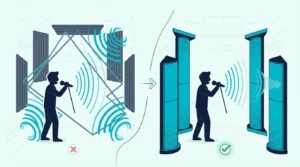
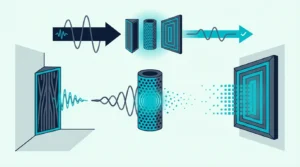
For most four-corner rooms the SODOCT 8 Pack is the best corner bass trap, with two 8 x 8 x 12-inch wedges for every vertical corner.
The picks
SODOCT 8 Pack
Eerbaier 12 Pack
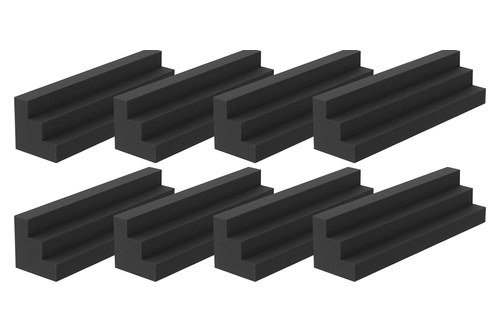
JBER 16 Pack
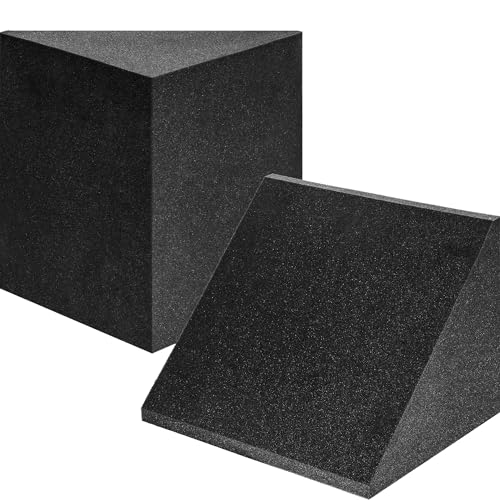
Foroomaco Delta Bass Traps
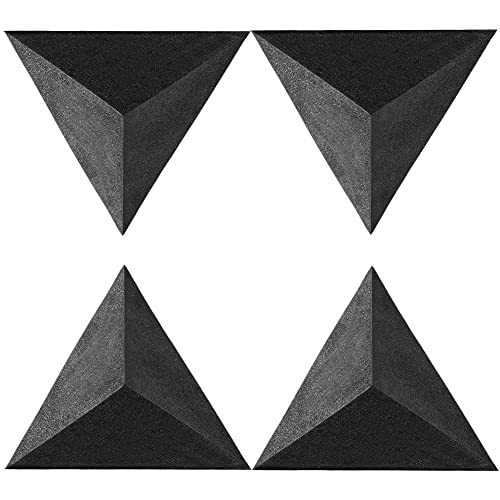
Foroomaco Triangular Pyramid Bass Traps
Finding the best corner bass trap starts with depth, because the makers’ own lab tables show absorption at 125 Hz climbing with every inch an absorber adds.
A pack’s piece count looks reassuring, and an NRC figure even more so, yet NRC averages 250 to 2,000 Hz and leaves out the low notes that pile up where two walls meet.

Size the trap and the pack to your corners, and you can fill each one to the height its maker recommends instead of scattering a few wedges and hoping.
Below, each foam corner pack is sized up by what its listing states, followed by the deeper traps that ATS, Primacoustic and Auralex document for the lowest notes.
Start with the comparison table, then jump to the pack that matches your corners, your ceiling height and the lowest notes your speakers play.
What Is the Best Corner Bass Trap?
That comparison rests on two numbers every listing gives: how big each piece is and how many come in the box. For most four-corner rooms, the best corner bass trap pack is the SODOCT 8 Pack, whose 8 x 8 x 12-inch wedges put two pieces in every vertical corner, while the Foroomaco Delta wedges reach deepest, at 12 inches along each wall.

| Rank and pick | Shape | Piece size in the listing | Pieces | Corner height filled, four corners | Best for |
|---|---|---|---|---|---|
| 1. SODOCT 8 Pack | Ridged wedge | 8 x 8 x 12 in | 8 | 24 in each | Four vertical corners |
| 2. Eerbaier 12 Pack | Ridged wedge | 12 x 7 x 7 in | 12 | 36 in each | More height per corner |
| 3. JBER 16 Pack | Stepped column | 12 x 3 x 3 in | 16 | 48 in each | Tight corners |
| 4. Foroomaco Delta | Solid wedge | 16.5 x 15.8 x 12 in | 2 | About 32 in of one corner | The deepest foam piece |
| 5. Foroomaco Triangular Pyramid | Three-sided pyramid | 16.6 x 14.3 x 12 in | 4 | The top of each corner | Ceiling corners |
The descriptions come from the makers’ manuals and spec pages. Every pick met Burton Acoustix’s rating, review and stock checks on 4 November 2026.
The order is this guide’s judgment: Auralex’s home studio guide puts traps in every corner first, so how much of four corners one pack fills comes first, then how far each piece reaches into the corner.
Every pick here is foam cut for corners, so flat panels and the other kinds of trap sit in our best bass traps guide. If the idea is new, start with what a bass trap does to the low notes in a room.
Which Foam Corner Bass Trap Pack Fits Your Room?
Those table rows come down to your room’s corners and how tall they are. SODOCT suits a first pass at four corners, Eerbaier and JBER fill more height, and the Foroomaco pieces go deeper or reach the ceiling corners.
SODOCT 8 Pack Bass Trap Corner Foam
For four corners from one box, the SODOCT 8 Pack is the pick.
SODOCT 8 Pack
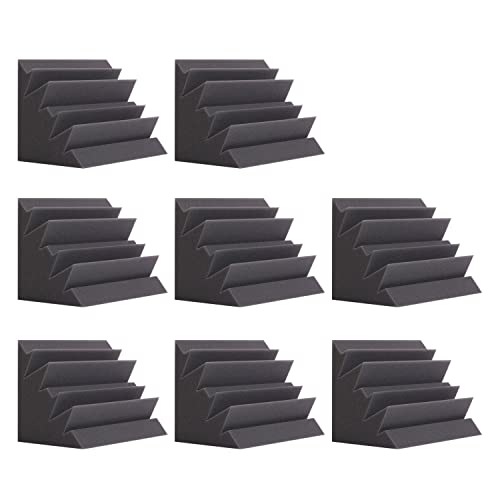
Each piece is an 8 x 8 x 12-inch ridged wedge of polyurethane foam, and SODOCT sells it as high-density corner foam. Eight pieces make two per vertical corner, which fills 24 inches of each one.
The foam ships vacuum-compressed, and the listing’s instructions say to let it expand fully before fixing it with spray adhesive or double-sided tape. This version of the pack comes without adhesive, so add some to the order.
Eerbaier 12 Pack Foam Corner Bass Traps
For more height in every corner, the Eerbaier 12 Pack is the pick.
Eerbaier 12 Pack
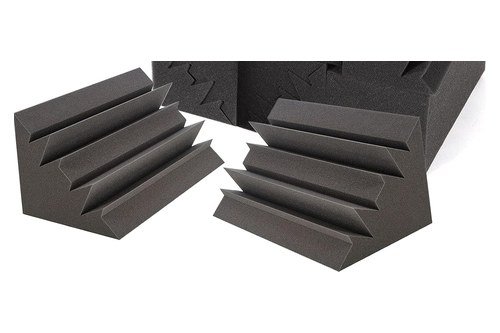
Its pieces are 12 x 7 x 7-inch polyurethane wedges, and the listing gives the foam’s density as 25 kg/m3. Twelve pieces make three per vertical corner, or 36 inches of each.
Those 7-inch sides are about an inch shorter than SODOCT’s, so each piece sits a little less far into the corner.
JBER 16 Pack Column Corner Bass Traps
For narrow corners, the JBER 16 Pack is the pick.
JBER 16 Pack
Each piece is a 12 x 3 x 3-inch stepped column, and sixteen of them make four per vertical corner, or 48 inches of each. JBER’s listing says to provide your own double-sided tape, spray adhesive or nails.
The 3-inch sides are the trade-off, since the board makers’ tables in the next section show the 125 Hz figure growing with thickness.
Foroomaco Delta Bass Traps
For the deepest foam piece, the Foroomaco Delta Bass Traps are the pick.
Foroomaco Delta Bass Traps
Each solid wedge is 16.5 inches across the face and 15.8 inches tall, and the listing’s drawing gives it 12 inches of depth along each wall. The box holds two pieces and 30 adhesive tabs.
Two wedges fill about 32 inches of a single corner, so four corners take several boxes: depth over coverage.
Foroomaco Triangular Pyramid Bass Traps
For the corners where two walls meet the ceiling, the Foroomaco Triangular Pyramid Bass Traps are the pick.
Foroomaco Triangular Pyramid Bass Traps
Each three-sided foam pyramid has a 16.6 x 14.3-inch face and, by the listing’s drawing, reaches 12 inches into the corner. Four pieces and 30 adhesive tabs come in the box, one piece per top corner.
They add nothing along the vertical seam below, so pair them with a vertical pack rather than replacing one. Most of these packs go up with tabs, tape or spray adhesive, and our guide to mounting methods that spare the paint compares them.
How Deep Should a Corner Bass Trap Be?
Pack counts settle coverage, but piece size settles depth, and the board makers’ tables show what depth does at 125 Hz. As deep as your corner allows: in Owens Corning’s tests, 703 board absorbs 0.05 at 125 Hz at 1 inch thick and 0.56 at 4 inches, while its NRC moves only from 0.70 to 1.15.
| Board and figure | 1 in | 2 in | 3 in | 4 in | 6 in |
|---|---|---|---|---|---|
| Owens Corning 703, 125 Hz | 0.05 | 0.15 | 0.34 | 0.56 | Not listed |
| Owens Corning 703, NRC | 0.70 | 1.00 | 1.15 | 1.15 | Not listed |
| ROCKWOOL AFB, 125 Hz | 0.05 | 0.22 | 0.42 | 0.73 | 1.11 |
| ROCKWOOL AFB, NRC | 0.65 | 0.95 | 1.10 | 1.10 | 1.15 |
The rows come from the Owens Corning 700 Series data sheet, tested with the board against a solid backing, and ROCKWOOL’s AFB data sheet. Read across any 125 Hz row and the figure keeps rising long after the NRC row has stopped.
That gap is built into the rating, because NRC averages the 250, 500, 1,000 and 2,000 Hz bands, as Auralex’s Acoustics 101 explains. Auralex adds that absorption coefficients aren’t percentages, so the figures above 1.00 in these tables are no error.
ATS says the same of its own panels in its acoustic panel FAQ: the 4-inch version performs four times as well as the 2-inch at 125 Hz, and the two match at 500 Hz and above. Auralex’s guide puts it plainly for foam too: thicker acoustic foam is better at absorbing low frequencies.
Try this before you order: measure how far a piece will stand out from the corner along each wall, then compare that figure across the packs above. Size is the one figure every listing above gives, so it’s the fairest thing to compare.
Which Corner Bass Traps Reach Below 100 Hz?
Even 4 inches has a floor, and ATS draws it plainly for its own panels. The traps documented below 100 Hz are deep ones: ATS’s 13-inch Corner Bass Trap, Primacoustic’s diaphragm MaxTrap and Auralex’s 12 x 24 x 48-inch Venus trap.
ATS’s FAQ says its 4-inch panels even out the bass but aren’t true bass traps and won’t absorb much below 100 Hz. For 50 to 125 Hz, it points buyers to its Corner Bass Traps instead.
The ATS Corner Bass Trap measures 24 x 48 x 13 inches, weighs about 40 pounds and has a core of ROCKWOOL Rockboard 60 and AFB inside a wood frame. In RAL’s tests the full-range version scores 0.58 at 50 Hz, 1.78 at 80 Hz and 2.11 at 125 Hz, and the low-range version, with a membrane on its face, reaches 1.21 at 50 Hz.
ATS adds that those figures come from traps set against a wall with the front and one side exposed. An air gap behind both sides raises them, and backing the trap fully into a corner lowers them.
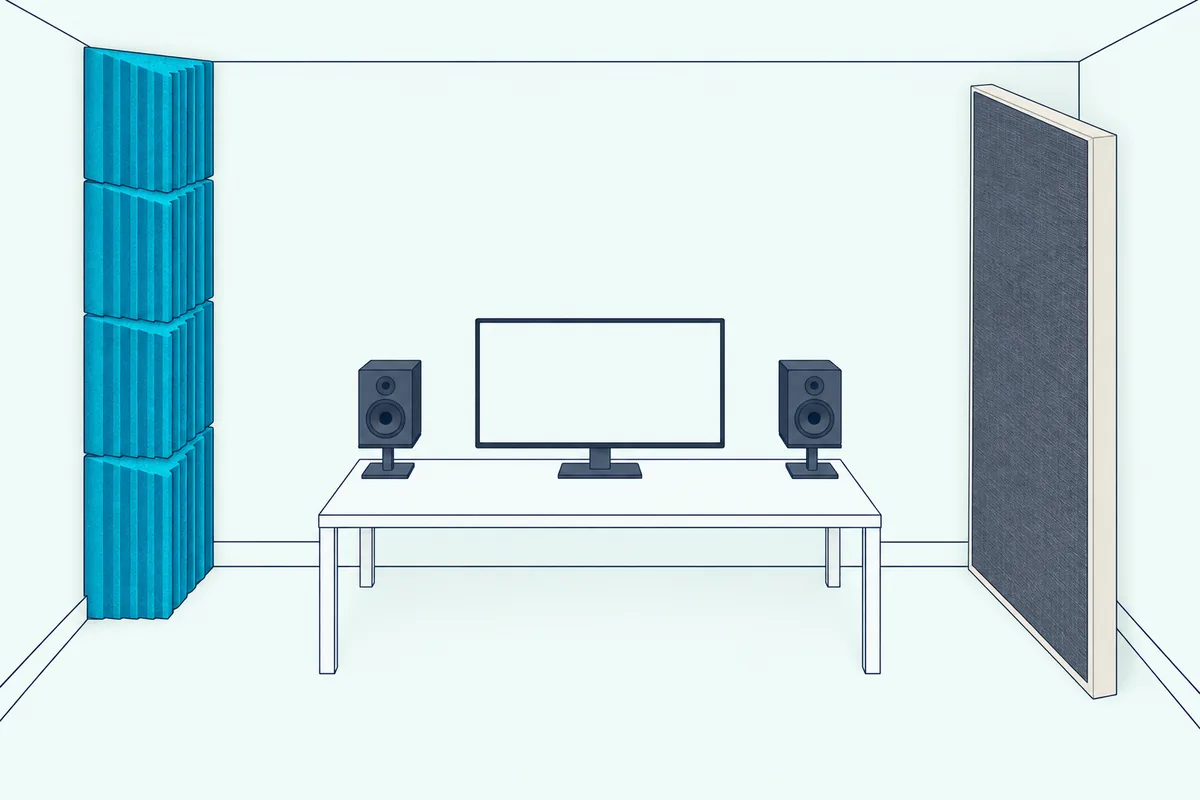
Primacoustic’s MaxTrap takes another route: high-density glass wool in front of a closed, wood-framed air space with a suspended diaphragm, which Primacoustic says absorbs sound below 100 Hz. It’s 24 x 48 inches and hangs in a corner on French cleats.
Auralex splits the job by frequency. Its LENRD corner traps are most effective for tangential and oblique modes and for axial modes above 75 Hz, and Venus traps should join them for axial modes below 75 Hz, which Auralex says Venus can absorb as low as 40 Hz when placed properly.
Does the Shape of a Corner Bass Trap Matter?
ATS’s note about exposed sides leads straight to shape, because shape decides what happens to the air behind a trap. Yes, it matters in three ways the makers document: the air space a trap leaves, the corner angle it fits and which corner it’s built for.
ATS says the air gap behind its Tri-Corner traps adds to their bass absorption, and its 4-inch open-back traps swap a wood back for fabric so that gap can work across a corner. Primacoustic’s Cumulus, a 2-inch glass wool panel for the three-way corner, leaves a 17-inch-deep air cavity behind it.
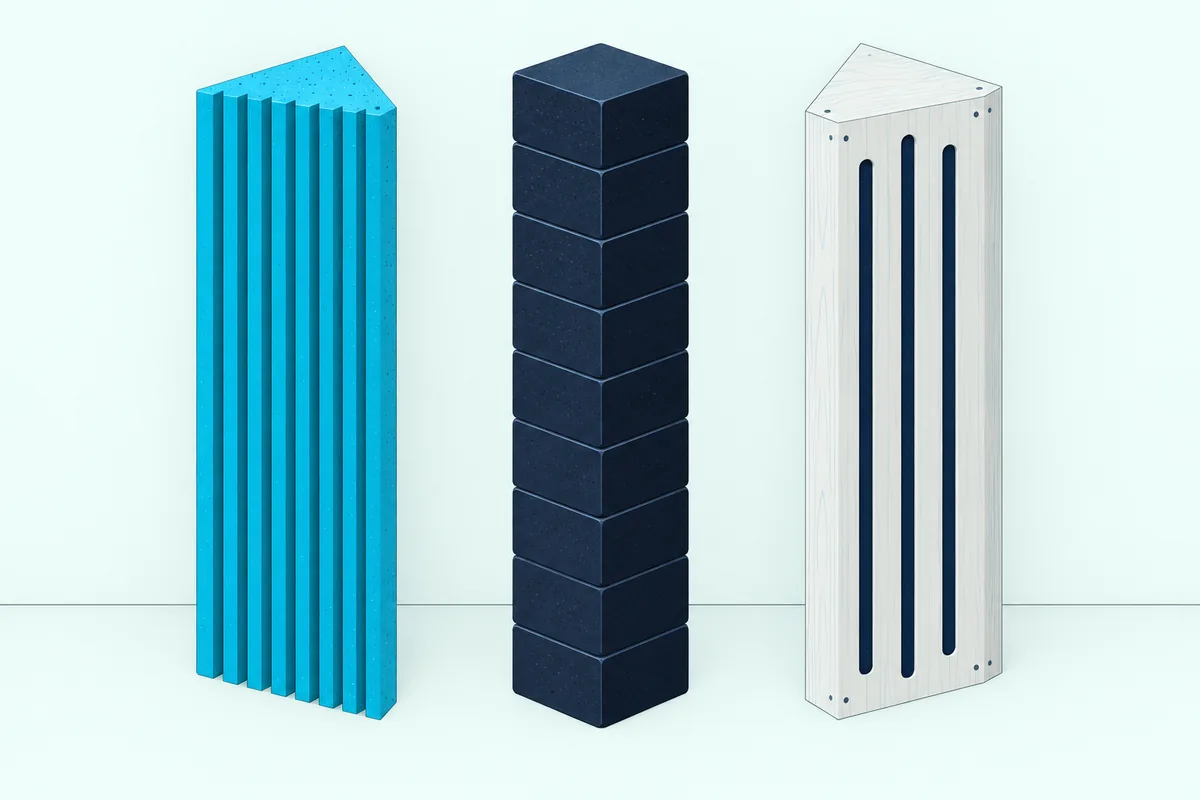
Corner angle is the second check. Auralex doesn’t recommend its LENRDs for vertical corners wider or narrower than 90 degrees and suggests its Sunburst absorbers there instead.
The wedges and pyramids in this guide are cut for a square corner, so dry-fit them in an older room before any adhesive goes on.
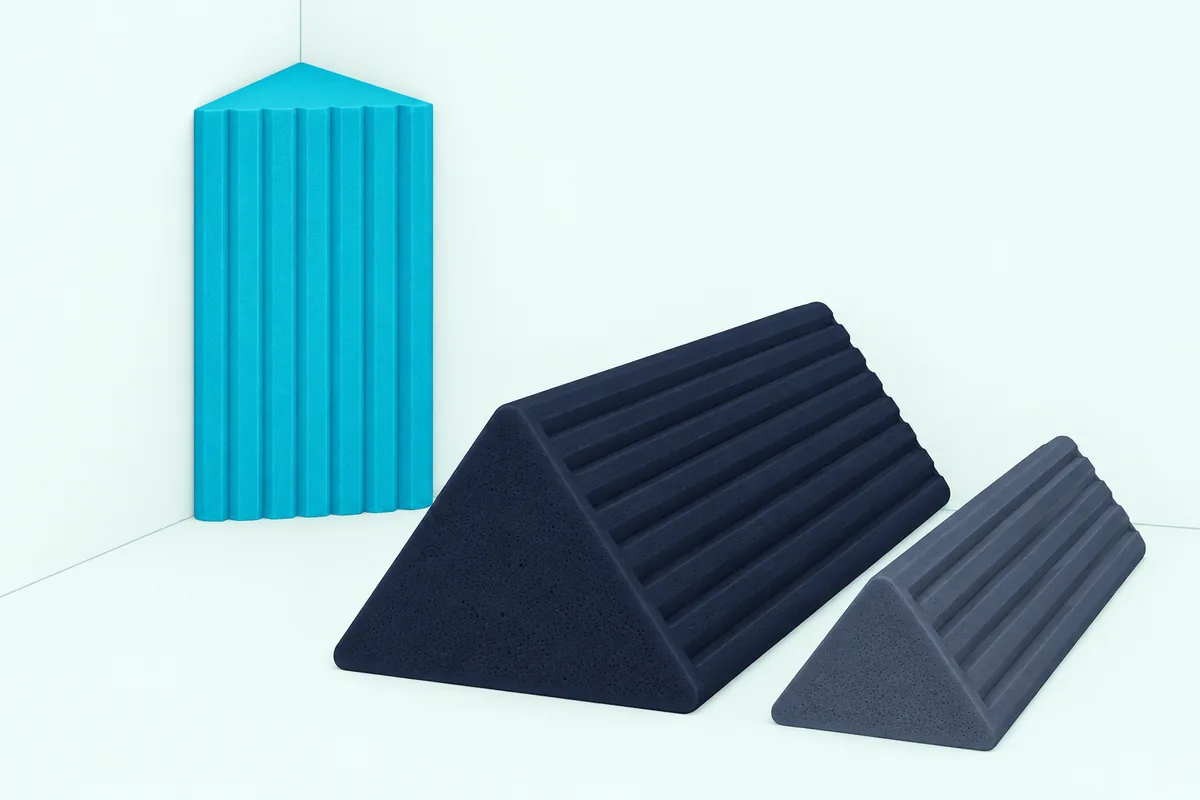
The third check is which corner you’re filling. Tri-corner traps, such as ATS’s Tri-Corner traps with their 35-degree mitered edges and the Foroomaco pyramids above, fill the point where two walls meet the ceiling, while wedges and columns run along the vertical seam.
Whether to choose a triangle or a panel straddling the corner gets a fuller comparison of its own.
How Many Pieces Does Each Corner Need?
Once the shape is settled, the count follows from your ceiling height. For an 8-foot ceiling, Auralex’s LENRD placement guidance calls for at least two of its 24-inch LENRDs per vertical corner, from the ceiling down 4 feet, and suggests considering four per corner for a 9-foot ceiling.
Matched to that 4-foot minimum, the JBER 16 Pack covers four corners from one box, and the SODOCT and Eerbaier packs take two boxes each. The Delta wedges need three per corner, or six boxes for four corners.

With only a few pieces to start, Auralex’s home studio guide puts them at ear level, about 30 to 36 inches off the floor.
Auralex’s garage case study in Acoustics 101, a 13 x 19-foot room with a drum kit in one corner, put LENRDs in all four vertical wall-wall corners. For the order to fill them in, see where each trap should go in the room.
What’s the Best Insulation for a DIY Corner Bass Trap?
A DIY corner trap follows the same depth rule, only now you choose the material too. The best insulation for a corner bass trap is a thick layer of rigid fiberglass board or mineral wool, such as Owens Corning 703 or ROCKWOOL AFB, because ATS says the two materials absorb nearly alike at similar densities.
ATS puts 703 at 3.0 pounds per cubic foot and sound attenuation fire batts at 2.5, and it says higher densities absorb sound only slightly better. ROCKWOOL’s own sheets show where density does show up: its 6 pcf Rockboard 60 lists 0.85 at 125 Hz at 3 inches, against 0.42 for AFB, nominally 2.5 pcf.
Owens Corning’s 6 pcf 705 sits close to 703 at 4 inches, 0.60 against 0.56, so add thickness first and density second.
These are the materials inside professional acoustic treatment, too. ATS builds its 4-inch panels around ROCKWOOL AFB and its Corner Bass Trap around Rockboard 60 and AFB.
The Bottom Line
Those boards and the foam packs answer the same question at different depths. For a four-corner room, the SODOCT 8 Pack is the place to start, the JBER 16 Pack fills the 4 feet per corner Auralex sets as its LENRD minimum under an 8-foot ceiling, and the Foroomaco pyramids reach the ceiling corners.
If your room is larger than about 12 x 12 x 8 feet and has a subwoofer, look past the foam packs to the deep traps ATS, Primacoustic and Auralex document below 100 Hz.
Check three things before you order: how far each piece reaches into the corner, how many inches of each corner a pack fills, and whether your corners are square.
Frequently Asked Questions
Do Ceiling Corners Need Bass Traps Too?
Auralex treats them as the next stop: when the vertical corners are full, its LENRD guidance moves extra traps to the wall-to-ceiling corners first and wall-to-floor second. ATS designs its Tri-Corner traps for the three-way corner where walls and ceilings meet, and the Foroomaco pyramids above are shaped for the same spot. Start with the vertical corners, though, as Auralex does.
Should a Corner Bass Trap Sit Tight Against the Walls?
Not always. ATS sells 4-inch open-back traps for mounting across a corner so the air gap behind them can work, and Auralex says Studiofoam on a backer board furred out from the wall slightly increases its low-frequency performance.
What’s the Best Corner Bass Trap for a Home Studio?
Auralex answers by room size. Its LENRD corner traps alone suit a small room, usually under 12 x 12 x 8 feet, with no subwoofer and monitors that don’t reach below 75 Hz, while a larger room with a subwoofer or deeper monitors calls for some Venus traps as well. For a vocal room, our best bass trap for vocals guide narrows the choice.
Do Corner Bass Traps Help a Home Theater?
Auralex’s Acoustics 101 advises extra low-frequency absorption in rooms for 5.1 listening or mixing, because of the LFE channel’s extreme bass output. That points to deeper traps in a home theater, and Auralex’s LENRD and Venus guidance adds Venus traps for rooms with a subwoofer once the room is larger than about 12 x 12 x 8 feet.