How Much Do Soundproof Windows Cost? (Real Scenario Math By Window Type)

How much do soundproof windows cost depends less on the phrase “soundproof window” and more on which weakness you are paying to fix, but that is exactly why the price range feels so chaotic at first. Sealing a rattly frame, adding a secondary layer, and replacing the whole unit live in completely different budget tiers.
That is why buyers overspend so easily. Window noise can come from loose sash seals, thin glass, or a room that is also leaking through the wall around the opening, and those problems do not deserve the same budget.
The smart move is to buy the cheapest tier that actually changes the weak point. That means treating sealing, curtains, inserts, and replacement as steps in a decision ladder rather than one giant price category.
Start with the method, then test a standard window, then scale the math up for bigger openings and multi-window rooms. That order keeps you from paying replacement money for a leak-control problem or cheap-fix money for a glass-transmission problem.
A standard 36 × 48 window costs about $45 to seal, about $125 with sealing plus heavy curtains, about $155 to $265+ for a DIY acrylic-style insert build, about $300 to $800+ for a professional custom insert, and about $500 to $1,500+ for full replacement. Large windows and multi-window rooms climb fast because panel size, frame condition, and installation complexity change the math more than most buyers expect.
The Fastest Cost Scenarios Make Sense Only After You See The Tiers
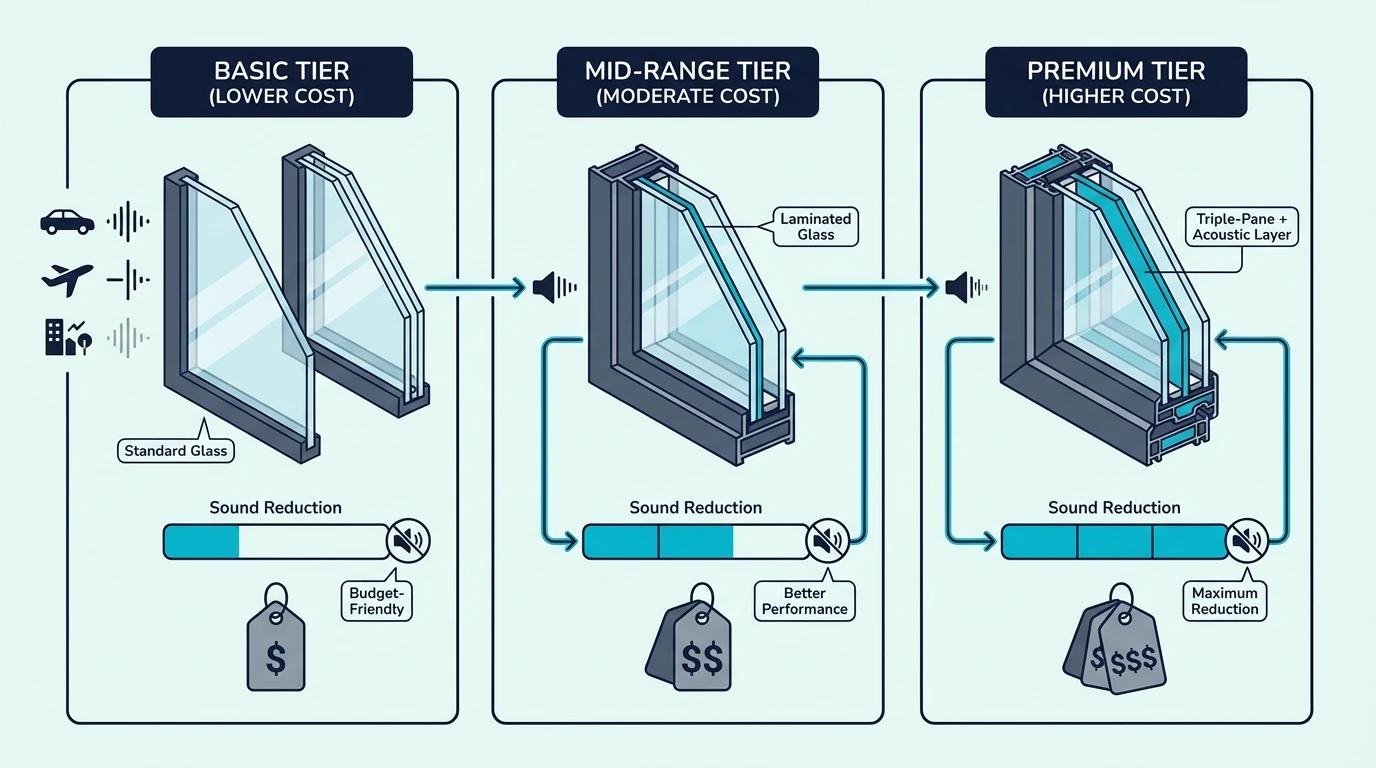
If you want the fastest answer first, this table shows the most common window scopes and what each one usually costs before labor unless noted.
| Scenario | What you are actually buying | Practical total |
|---|---|---|
| One standard window, leak-control only | Weatherstripping + acoustical caulk | About $45 |
| One standard window, daylight-friendly renter setup | Sealing + heavy curtains | About $125 |
| One standard window, removable diagnostic layer | Sealing + heavy blanket test | About $85 |
| One standard window, DIY insert | Acrylic-style secondary panel + seals + hardware | About $155 to $265+ |
| One standard window, professional custom insert | Measured secondary glazing panel | About $300 to $800+ |
| One standard window, full replacement | Laminated or acoustic replacement window installed | About $500 to $1,500+ |
| One large picture window, DIY insert | Larger acrylic-style panel + seals + hardware | About $225 to $455+ |
| Three standard windows in one room | Sealing + three curtain sets | About $330 |
Window Soundproofing Cost Starts With The Method, Not The Buzzword
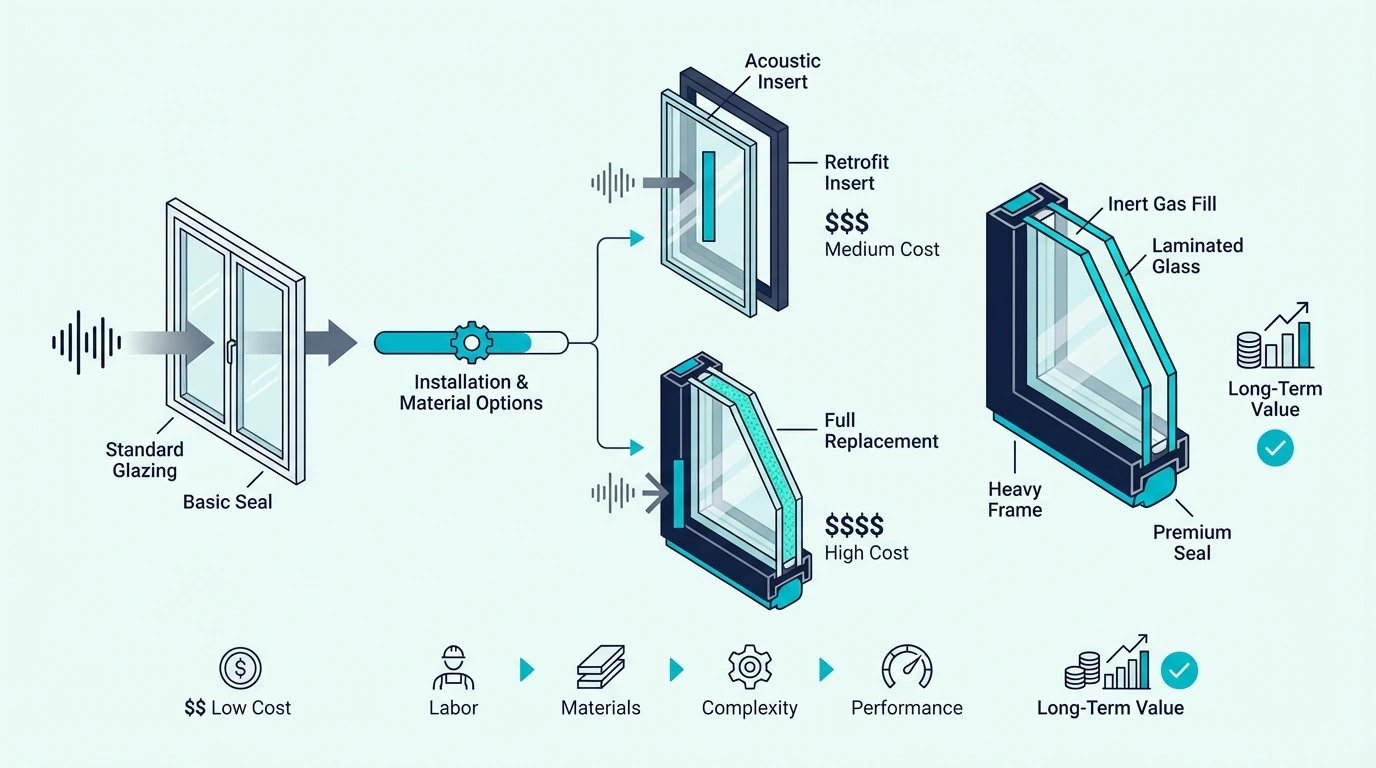
If you start with products instead of methods, every price range looks random.
In reality, cost follows the kind of upgrade you are buying, and that tells you what level of noise problem each tier is built to handle.
Each Cost Tier Solves A Different Window Problem
| Method | What you are actually buying | Practical spend | Best when |
|---|---|---|---|
| Air-leak control | weatherstripping plus acoustical caulk | About $16 to $45 per window | Air movement, rattles, or obvious frame leakage are the main issue |
| Curtain tier | Sealing plus heavy curtains | About $96 to $205 depending on size | You want a renter-friendly step that still preserves daylight and daily use |
| Diagnostic blackout layer | Sealing plus a removable blanket test layer | About $56 to $85+ | You want to test whether more mass over the opening helps before paying for an insert |
| DIY insert | Acrylic or polycarbonate secondary panel, mounting hardware, and seals | About $155 to $455+ | The frame is decent and you want a stronger daylight-preserving step without full replacement |
| Professional custom insert | Measured secondary glazing panel | About $300 to $1,200+ | You want a better fit, cleaner finish, and less trial-and-error than DIY |
| Full replacement | New laminated or acoustic-rated unit with labor | About $500 to $2,500+ | The existing window is old, weak, or already due for replacement |
Size And Frame Condition Change The Budget Faster Than Most People Expect
Once those method tiers are clear, the next question is why the numbers spread so widely.
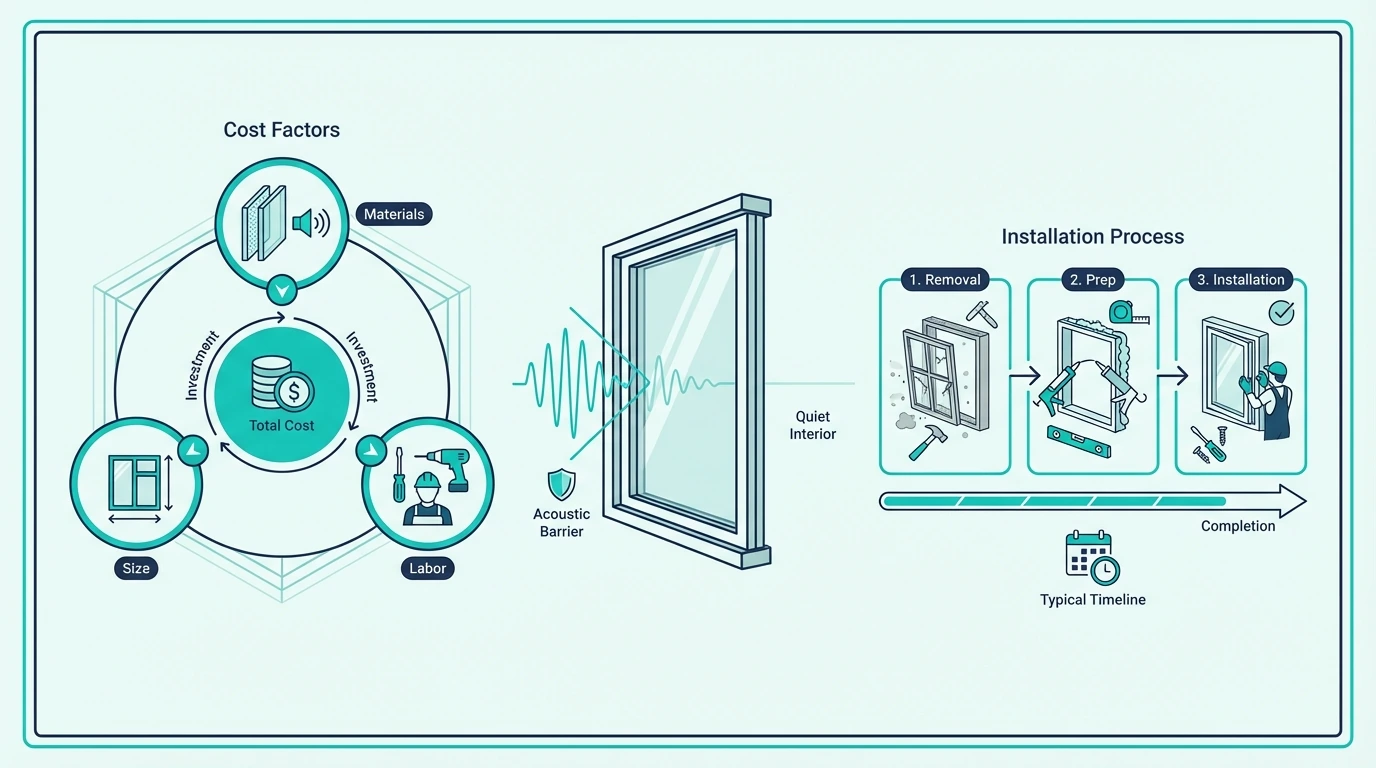
Window size changes the math immediately because a larger opening needs more curtain coverage, a larger custom panel, or a more expensive replacement unit. Daylight-preserving inserts also cost more than blackout-style test layers because the panel itself has to stay rigid, clear, and well-fitted.
Frame condition matters almost as much as size. If the sash, trim, or frame is loose, out of square, or worn out, a custom insert or replacement gets more expensive because the opening itself is less cooperative.
The Budgets Below Work Best When You Read Them As Buying Tiers
That is also why the math below is organized the way it is.
The seal, curtain, blanket, and blackout-panel tiers below use real current product prices and full retail units. That means the totals reflect what you actually spend at checkout, not a prorated number that ignores leftover material.
The acrylic-insert and replacement tiers use realistic market ranges because those costs are usually custom-measured, local-supplier, or contractor-priced rather than simple Amazon-cart purchases. For the broader method guide behind these numbers, compare this page with soundproofing windows and quieting a room from outside noise.
Get Studio Tips Weekly
Join 5,000+ creators getting acoustic treatment advice every week.
No spam. Unsubscribe anytime.One Standard Window Shows Where Each Spending Tier Actually Starts
Now the math gets practical.
A standard 36 × 48 bedroom or home-office window is the easiest place to see where each tier really lands, and it is also where buyers most often overshoot into replacement when they really needed a smaller step first.
Leak-Control Is The Cheapest Real Upgrade On A Standard Window
One standard opening usually needs one roll of weatherstripping and one tube of acoustical caulk if the frame and trim are the real weak points.
| Material | Product | Qty Needed | Unit Price | Line Total |
|---|---|---|---|---|
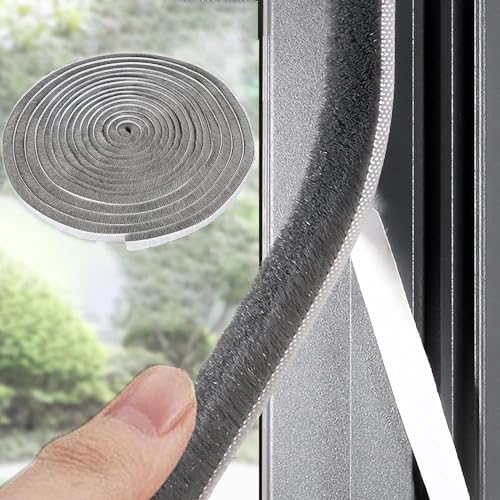
| Sash and frame sealing | 33 Ft Gray Self-Adhesive Soundproofing Weather Stripping | 1 roll | $15.99 | $15.99 |
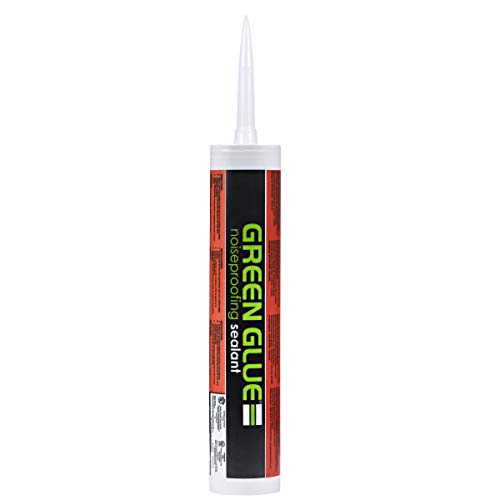
| Frame and trim joints | Acoustical Caulk (29 oz) | 1 tube | $29.14 | $29.14 |
| Total | $45.13 |
If air movement, rattles, or obvious sash leaks drop immediately, this is the highest-ROI first step. If traffic still dominates after sealing, the glass path is still the bigger problem.
Curtains Become The First Honest Daylight-Preserving Step
If that first sealing pass helps but does not go far enough, the next question is whether you want modest improvement without rebuilding the opening.
If you need a better result without rebuilding the opening, sealing plus one pair of heavy curtains is the first honest daylight-preserving tier.
| Material | Product | Qty Needed | Unit Price | Line Total |
|---|---|---|---|---|
| Sash and frame sealing | 33 Ft Gray Self-Adhesive Soundproofing Weather Stripping | 1 roll | $15.99 | $15.99 |
| Frame and trim joints | Acoustical Caulk (29 oz) | 1 tube | $29.14 | $29.14 |
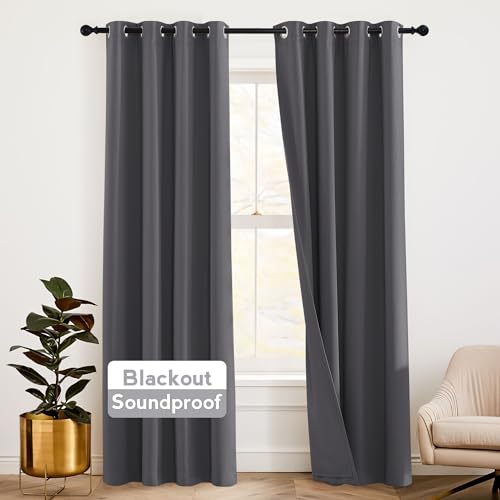
| Window coverage | RYB HOME Soundproof Curtains | 1 pair | $79.95 | $79.95 |
| Total | $125.08 |
This tier is strongest for moderate street noise, reflective harshness, and older windows that still leak a bit after sealing. If you are in a rental, this is usually the cleaner next step than jumping immediately to full replacement, which is why it pairs naturally with apartment soundproofing decisions.
Inserts And Replacement Only Make Sense After The Small Tiers Stall
Once curtains are not enough, you are no longer comparing accessories. You are comparing two more serious paths that try to change how the opening itself behaves.
Once curtains are not enough, the next decision is whether you want a removable insert or a full replacement.
| Option | What you are actually buying | Practical spend | Best when |
|---|---|---|---|
| DIY acrylic-style insert | Cut-to-size clear panel, mounting hardware, weatherstripping, and optional caulk | About $155 to $265+ | You want daylight, a tighter air gap, and a frame that is still in decent shape |
| Professional custom insert | Measured secondary glazing panel | About $300 to $800+ | You want a cleaner finish and less trial-and-error than DIY |
| Full replacement | New laminated or acoustic-rated unit with installation | About $500 to $1,500+ | The existing window is old, thin, or already due for replacement |
If you only want a fast diagnostic before paying for an insert, a removable blanket over the opening keeps the test around $85 total. That is useful when you want to confirm that more mass over the glass changes the result before you buy a custom panel.
Large And Street-Facing Windows Push You Up The Ladder Faster
What looks affordable on one standard window gets more serious once the opening becomes wide, tall, or constantly exposed to traffic noise.
Bigger openings need more coverage, a stiffer panel, and a better fit if you want the extra spend to translate into real noise reduction.
A Large 48 × 60 Window Changes The Math Quickly
For a large picture window, the seal-only tier barely changes, but every daylight-preserving solution above that gets more expensive because the opening is wider and taller.
| Option | What you are buying | Practical total |
|---|---|---|
| Seal only | 1 weatherstripping roll + 1 caulk tube | About $45.13 |
| Seal + curtain coverage | 1 weatherstripping roll + 1 caulk tube + 2 curtain pairs | About $205.03 |
| DIY acrylic-style insert | Larger clear panel + hardware + seals | About $225 to $455+ |
| Professional custom insert | Measured secondary glazing | About $600 to $1,200+ |
| Full replacement | Laminated or acoustic unit installed | About $1,000 to $2,500+ |
Bigger Glass Forces Better Materials And Tighter Fit
That jump is not just contractor markup.
Large daylight-preserving panels cost more because the sheet has to stay rigid across a bigger span, and the mounting method has to stay tight without sagging or rattling. Curtain coverage also doubles fast because one standard pair rarely spans a large picture window properly.
Replacement quotes climb for the same reason, then rise again if the unit is on an upper floor or needs trim and frame correction. That is why large-window buyers often feel the jump from “cheap fix” to “serious project” more sharply than buyers with one small bedroom window.
Persistent Street Noise Usually Means The Glass Path Is Still Winning
That is the moment when more cheap accessories start to lose their value.
If sealing and the curtain tier still leave clear traffic, aircraft, or construction noise, the glass path is still the bottleneck. At that point the smarter comparison is between a real insert and replacement, not between more small accessories.
If you go the replacement route, our summary of the glass builds that lab tables reward is worth reading before you price quotes.
That is also the stage where it helps to compare the rest of the room. If the wall beside the window is just as weak, the budget may need to be split between the opening and the existing wall instead of spent on the glass alone.
Multi-Window Rooms Reward Smarter Scaling, Not Automatic Overkill
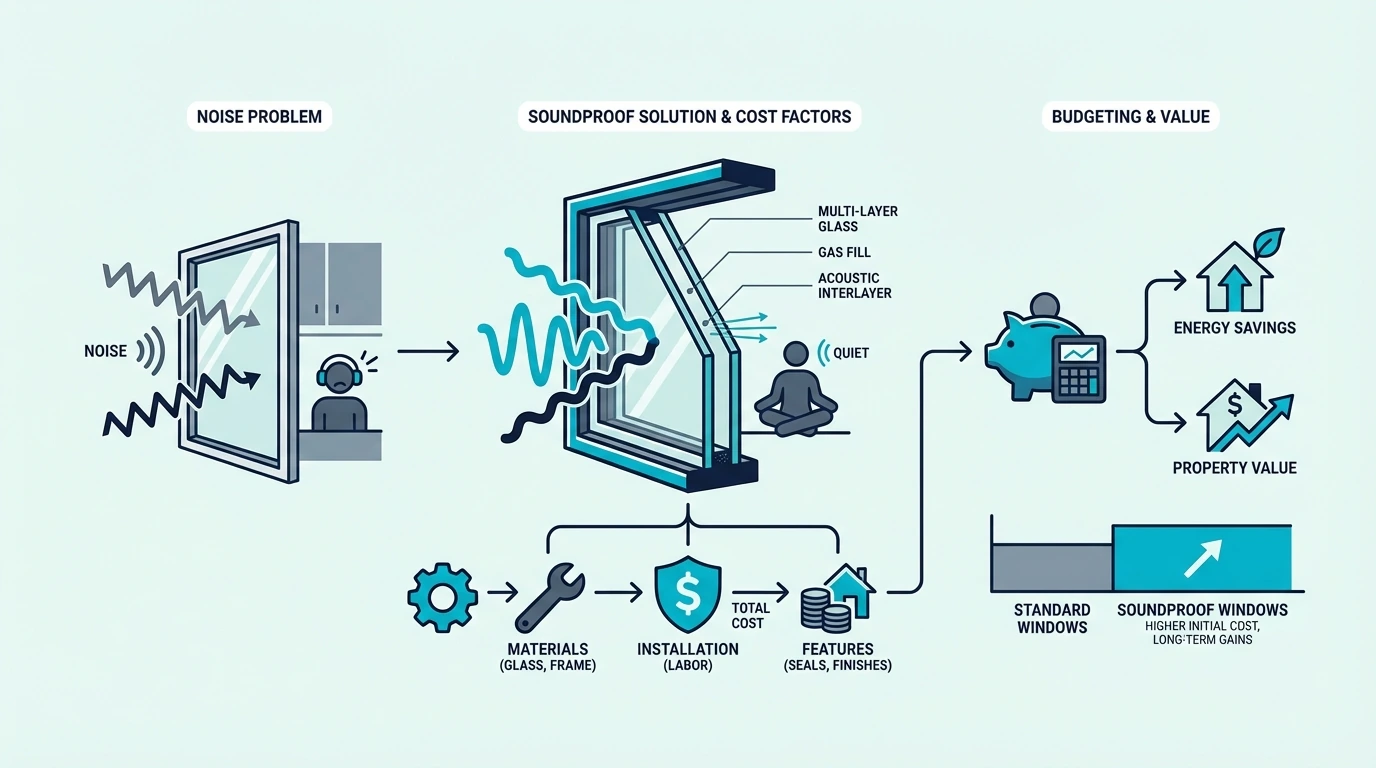
Once the room has several windows, the question stops being about one opening and starts being about how materials and labor scale across the whole wall.
That is where some tiers get more efficient while others still explode quickly.
Three Standard Windows Show Where Scaling Helps And Where It Hurts
This is a realistic street-facing bedroom, living room, or home office example where one noisy wall has multiple openings.
| Option | Materials | Project total |
|---|---|---|
| Leak-control only | 2 weatherstripping rolls + 2 caulk tubes | About $90.26 |
| Leak-control + three curtain pairs | 2 weatherstripping rolls + 2 caulk tubes + 3 curtain pairs | About $330.11 |
| DIY acrylic-style inserts for all three | 3 clear panels + hardware + 2 weatherstripping rolls + 2 caulk tubes | About $420 to $750+ |
| Professional custom inserts for all three | 3 measured inserts | About $900 to $2,400+ |
| Full replacement for all three | 3 installed units | About $1,500 to $4,500+ |
Shared Materials Improve The Small Tiers More Than The Big Ones
This is where multi-window budgeting finally gets a little friendlier.
Seal materials spread more efficiently across several openings, which is why the per-window cost on weatherstripping and caulk drops once you stop pricing one window in isolation. DIY insert projects can also improve per-window because the same tools, hardware strategy, and installation learning curve get reused.
Replacement only gets more efficient when the windows are similar enough for one crew to template and install them in one pass. If every opening is a different size or the frames need repair, the scale benefit falls quickly.
Some Rooms Need A Broader Budget Than Windows Alone
That is the part multi-window quotes can hide.
If the door, wall, or ceiling is obviously just as noisy as the window, no window budget will solve the whole room by itself. That is when it helps to compare the opening against soundproofing a wall or a broader room soundproofing cost plan before you overspend on the glass alone.
Lower Window Cost Comes From Better Diagnosis, Not Cheaper Tricks
At this point the pattern should be clear: the cheapest smart budget is usually a diagnostic budget first.
That first spend tells you whether the frame, the glass, or the broader room is really driving the problem before you move into a much more expensive tier.
The Best Cheap Fixes Tell You Something Useful Fast
Sealing air leaks is still the first move because it is cheap and it often tells you immediately whether the frame was the real failure point. Heavy curtains are the next honest step when you want a renter-friendly improvement that still preserves normal daylight use.
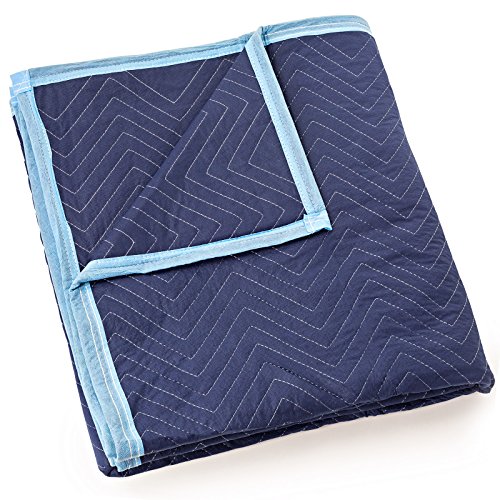
If you want a stronger temporary test, a removable blanket or blackout-style panel can tell you whether more mass over the opening changes the room enough to justify a real insert. A roll of Trademark Soundproofing Mass Loaded Vinyl makes more sense as a blackout plug or night-use panel than as a normal daylight-preserving insert.
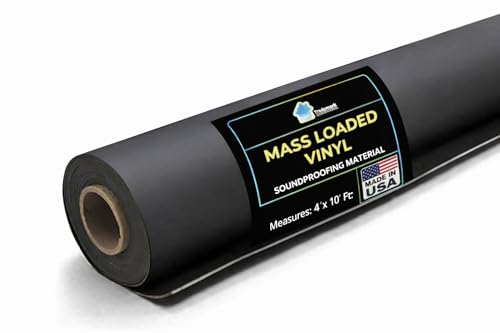
Trademark Soundproofing Mass Loaded Vinyl
The Worst Cheap Fixes Add Almost Nothing That Matters
That diagnostic mindset also makes it easier to ignore the usual hype.
Thin plastic film, bubble wrap, egg cartons, and lightweight foam stuck to the glass are still the most common waste-of-money fixes. They do not add meaningful mass, create a serious secondary layer, or deal with the real leakage paths around the frame.
That is why window cost guides should separate treatment from isolation. If the glass is still the bottleneck after sealing, the answer is usually a better insert or replacement, not another decorative add-on from the cheap-fix aisle.
Better Insert Money Wins When The Cheaper Tests Already Failed
That is the tipping point buyers should actually save for.
Save up when sealing and a temporary test layer still leave the window clearly noisy, especially if you need daylight, daily usability, and more than a modest improvement. That is also the point where better insert money usually beats stacking multiple weak accessories.
If the room also leaks through other surfaces, keep the budget in proportion by comparing the window plan against cheap room fixes and the best soundproof curtains. The cheapest fix that matches the real weak point is still the right first move.
The Bottom Line
How much do soundproof windows cost depends on the weakness you are actually paying to fix. One standard window can cost about $45 to seal, about $125 with sealing plus curtains, about $155 to $265+ for a DIY insert, about $300 to $800+ for a custom insert, or about $500 to $1,500+ for full replacement.
The right order is to diagnose first, then climb the spending ladder in tiers. Start with leaks, test whether more coverage or mass actually helps, and only step into insert or replacement money once the current tier has clearly hit its limit.
Frequently Asked Questions
How Much Does It Cost To Soundproof One Window?
One standard window usually costs about $45 for leak control, about $85 with a temporary blanket test, about $125 with sealing plus heavy curtains, about $155 to $265+ for a DIY insert, or about $500 to $1,500+ for replacement.
Is $100 Enough To Soundproof A Window?
Usually yes for sealing and a temporary diagnostic layer, but not for a true daylight-preserving insert or replacement. That budget is best used to confirm whether the frame leak or the glass path is the bigger problem.
Are Soundproof Windows Worth It?
They are worth it when the window is clearly the weak point and the room still stays noisy after basic sealing. If the wall, door, or ceiling is just as weak, the best return may come from splitting the budget across the whole room instead of buying a premium window solution first.
Can You Soundproof Windows Without Replacing Them?
Yes. Sealing, heavy curtains, removable test layers, and secondary inserts can all reduce noise without replacing the window.
Replacement is most justified when the unit itself is thin, old, loose, or still clearly underperforming after the smaller steps.