Best Acoustic Panel Material — Fiberglass, Rockwool, PET & Foam Compared [2025]
Best acoustic panel material comes down to four main options: fiberglass, rockwool, PET polyester felt, and foam. Each has distinct strengths that make it ideal for different situations, but the weaknesses matter more than manufacturers admit.
Fancy fabric, beautiful frames, and clever mounting systems won’t fix a room if the stuff inside doesn’t absorb sound. The core material carries the weight—everything else is cosmetic.
Start with the core material—that’s where your money matters most—and you’ll know which option fits your room before you spend a dime.
Best acoustic panel material depends on your priorities. Fiberglass delivers the highest NRC ratings (0.9–1.0), rockwool offers fire resistance plus strong absorption, PET felt is safest for DIY, and foam works for tight budgets. For most rooms, fiberglass or rockwool wrapped in breathable fabric gives you the best results.
What Makes Acoustic Panel Material Effective?
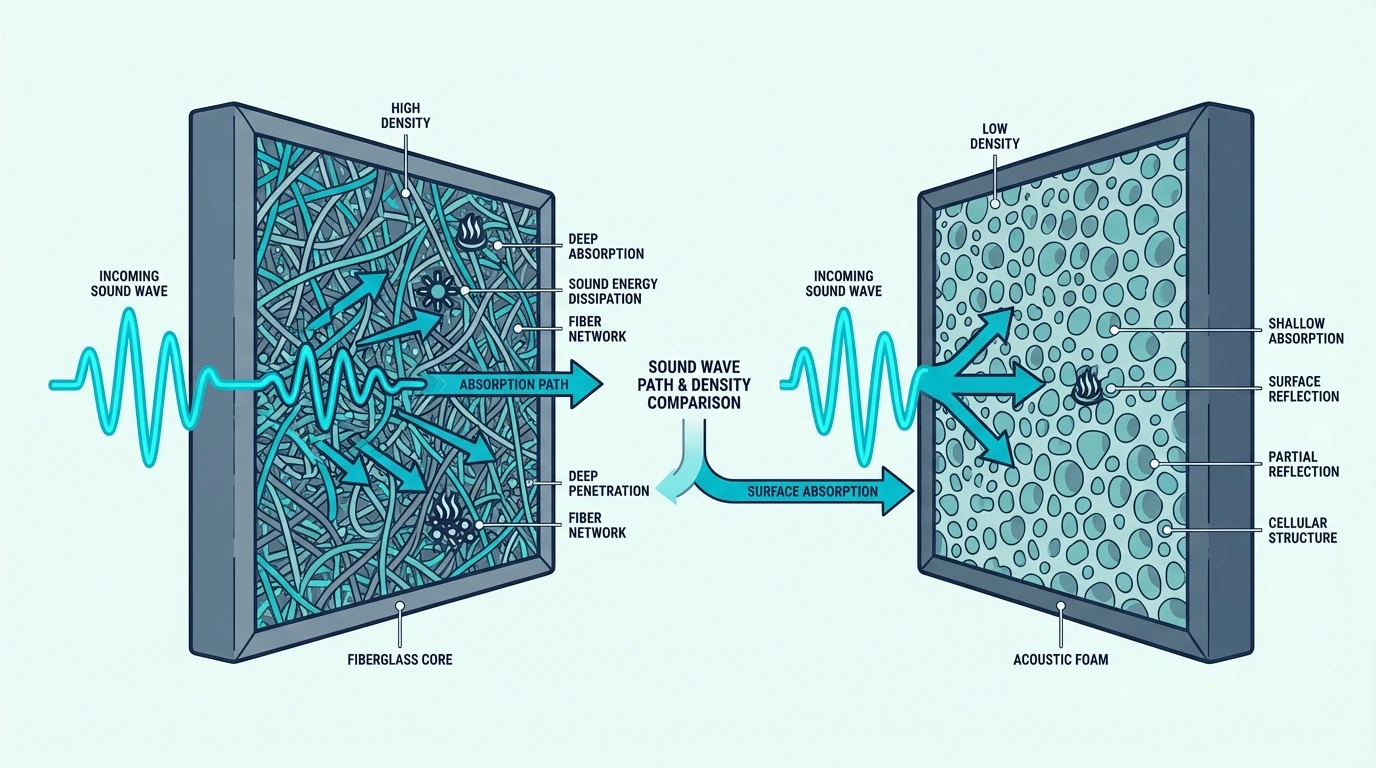
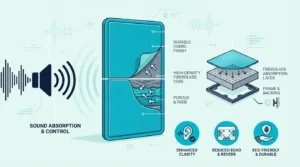
Sound absorption happens when sound waves enter a porous material and lose energy through friction. The material’s density, thickness, and fiber structure determine how much sound gets absorbed versus how much bounces back.
Core Material vs Fabric Cover
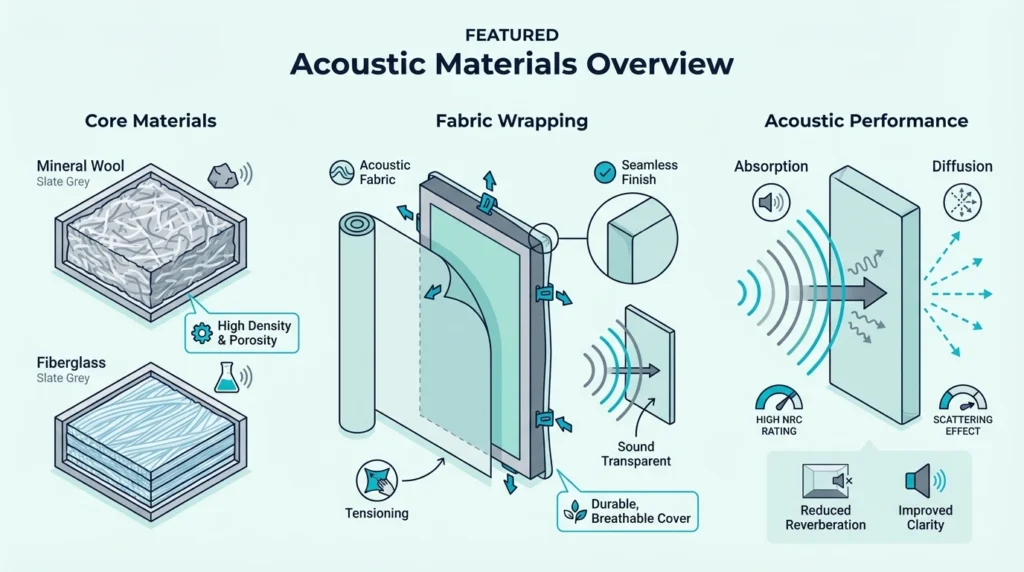
The core material handles absorption. Fiberglass, rockwool, PET felt, and foam are the four main options you’ll encounter in commercial panels and DIY builds.
The fabric cover serves two purposes: protecting the core and providing aesthetic options. Acoustically transparent fabric lets sound pass through to reach the absorptive core.
If your fabric is too thick or dense, you’ll reflect sound before it reaches the core—defeating the purpose entirely.
For home studios and professional spaces, the core material matters far more than the fabric choice. Budget your money toward better cores, not fancier fabric.
Understanding NRC Ratings
That core vs. fabric gap shows up clearly in NRC ratings. NRC—Noise Reduction Coefficient—measures absorption on a scale from 0 to 1.0.
Think of it as a percentage: an NRC of 0.85 means 85% of sound energy gets absorbed.
This number separates marketing from reality. Cheap foam scores 0.30-0.50, meaning most sound bounces right off.
Quality fiberglass panels hit 0.95 or higher—the difference between “barely works” and “problem solved.”
When shopping, ignore products that don’t list NRC ratings. If manufacturers won’t tell you, assume performance is poor.
Why Is Fiberglass the Top Acoustic Panel Material?
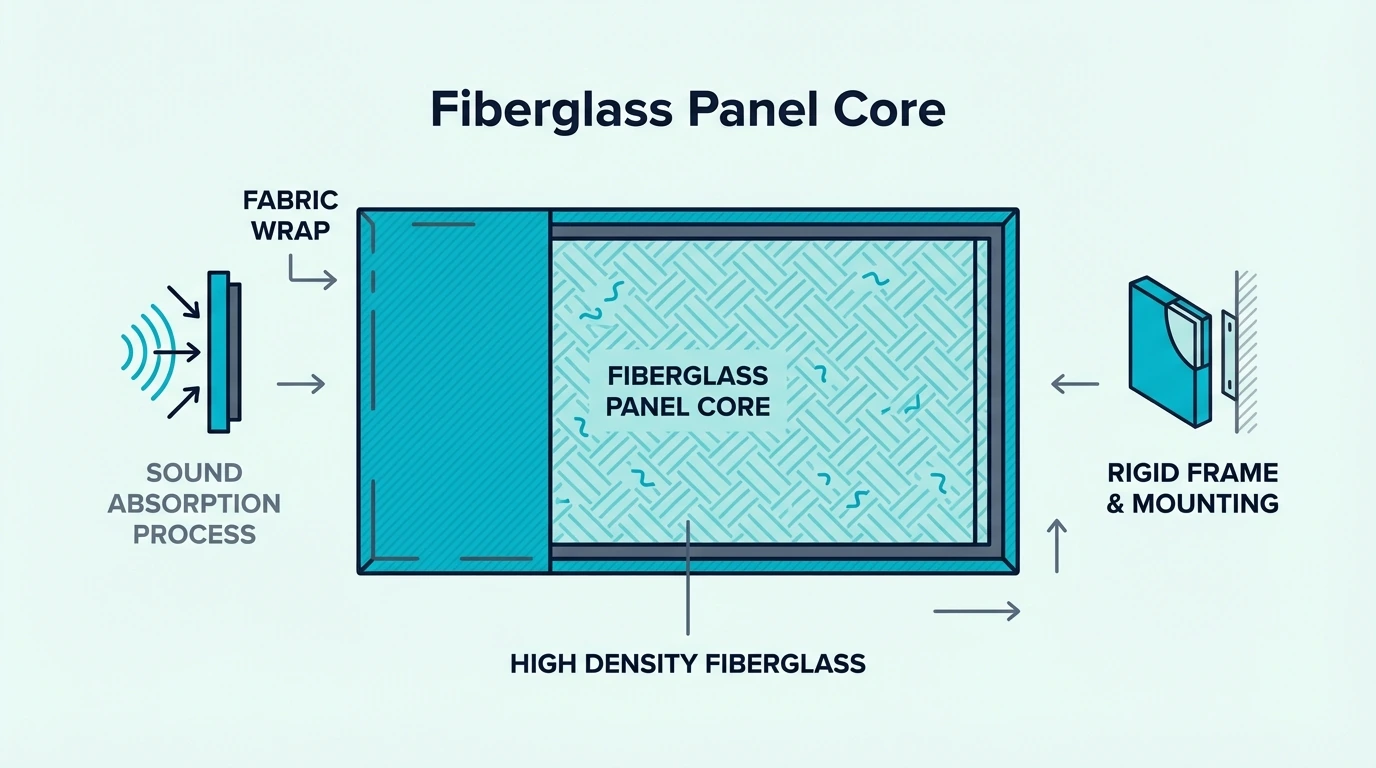
Fiberglass has dominated professional acoustic treatment for decades, and the NRC numbers explain why. It absorbs more sound per inch than any competing material—but you’ll need gloves to handle it.
Why Fiberglass Dominates
Fiberglass acoustic panels achieve NRC ratings between 0.90 and 1.05. That’s not a typo—NRC can exceed 1.0 due to edge diffraction effects, and fiberglass regularly hits these numbers.
The material’s fine glass fibers create millions of tiny air pockets. Sound waves entering these pockets lose energy through friction as they travel between fibers.
Thicker panels with denser fiberglass absorb lower frequencies more effectively.
Performance by Thickness
At 2 inches thick, fiberglass panels effectively absorb frequencies from about 500Hz upward. This covers most speech clarity issues, flutter echo, and high-frequency reverb problems that plague untreated rooms.
Jump to 4 inches and you’ll absorb down to roughly 250Hz—handling male vocals, guitar, and much of the problematic mid-bass range. The UMIACOUSTICS Fiberglass Panels hit that 2-inch sweet spot at a mid-range price.
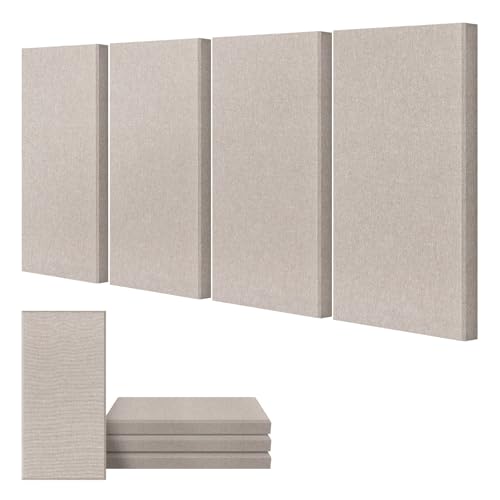
UMIACOUSTICS Fiberglass Panels
For bass frequencies below 250Hz, you need dedicated bass traps—no wall panel, regardless of material, absorbs those long wavelengths well. The home theater guide digs into bass management for larger rooms.
Safety Considerations
All that absorption performance comes with a handling trade-off. Raw fiberglass irritates skin, eyes, and lungs.
The tiny glass fibers cause itching and discomfort on contact.
Once wrapped in breathable fabric, these concerns disappear—the fibers stay contained while sound passes through.
DIYers should wear gloves, long sleeves, safety glasses, and an N95 respirator when cutting fiberglass. Once wrapped and mounted, it’s completely safe—the fabric creates a permanent barrier.
Get Studio Tips Weekly
Join 5,000+ creators getting acoustic treatment advice every week.
No spam. Unsubscribe anytime.Is Rockwool a Good Material for Acoustic Panels?
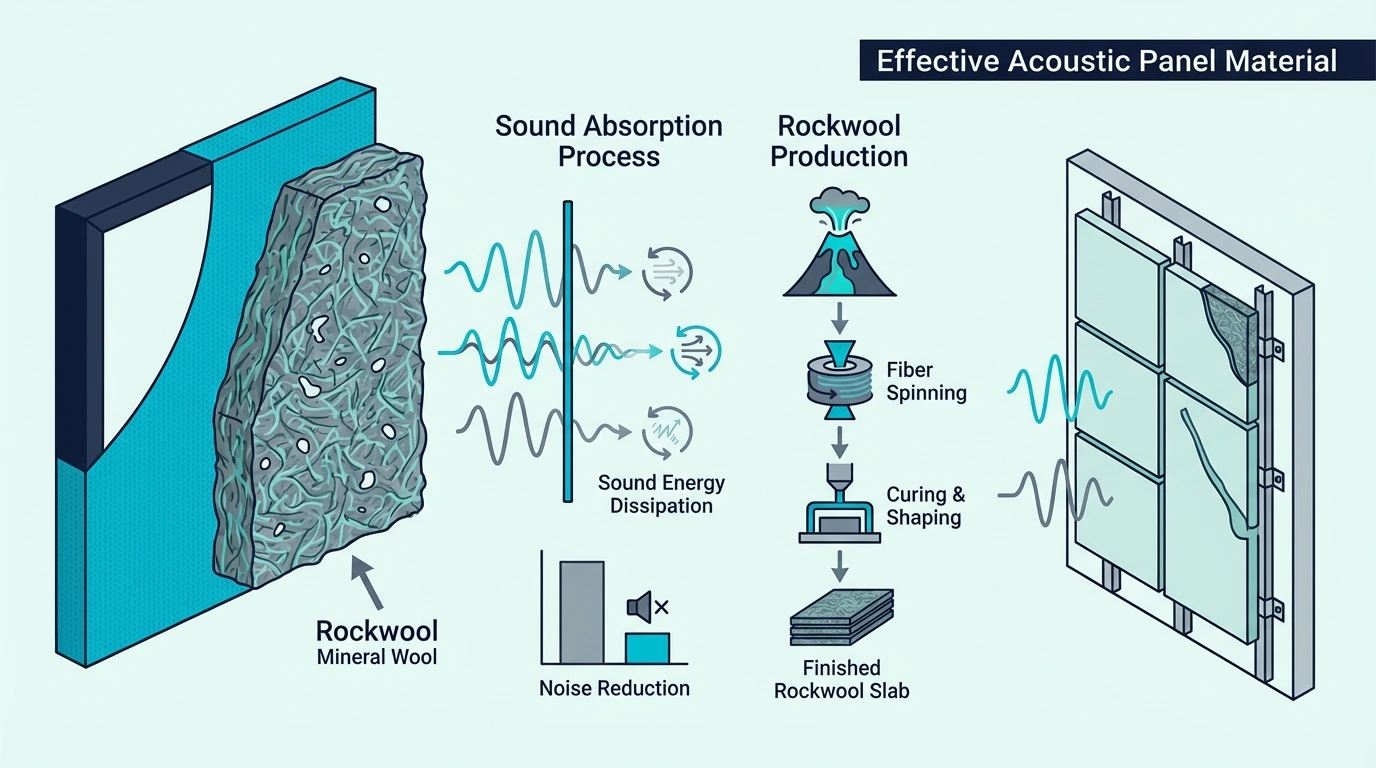
Rockwool matches fiberglass on absorption and adds genuine fire resistance—a combination that makes it the default for commercial installations. It costs slightly more, handles a bit easier, and won’t burn.
How Rockwool Compares
Rockwool—also called mineral wool or stone wool—achieves NRC ratings between 0.85 and 0.95. Slightly lower than fiberglass, but the difference is marginal in real-world applications.
The material is made from basite and slag spun into fibers. These fibers create the same porous structure that makes fiberglass effective, with one key advantage: rockwool is naturally fire resistant and won’t burn.
When to Choose Rockwool
Commercial installations often specify rockwool for fire code compliance. If your space requires fire-rated materials, rockwool meets those standards without sacrificing much acoustic performance.
Home studios in basements, near kitchens, or in older buildings benefit from rockwool’s fire resistance. The peace of mind matters even when not code-required.
For music rooms where you’ll spend hours recording, that safety margin adds real value.
DIY Friendliness
Rockwool cuts more easily than fiberglass and produces less airborne fiber dust. You still need protective gear, but the experience is somewhat more forgiving for first-time builders.
The material is slightly denser than fiberglass at similar thicknesses. This density provides a small edge on low-frequency absorption but makes panels heavier.
For wall-mounted panels, the weight difference rarely matters.
What Makes PET Felt the Safest DIY Option?
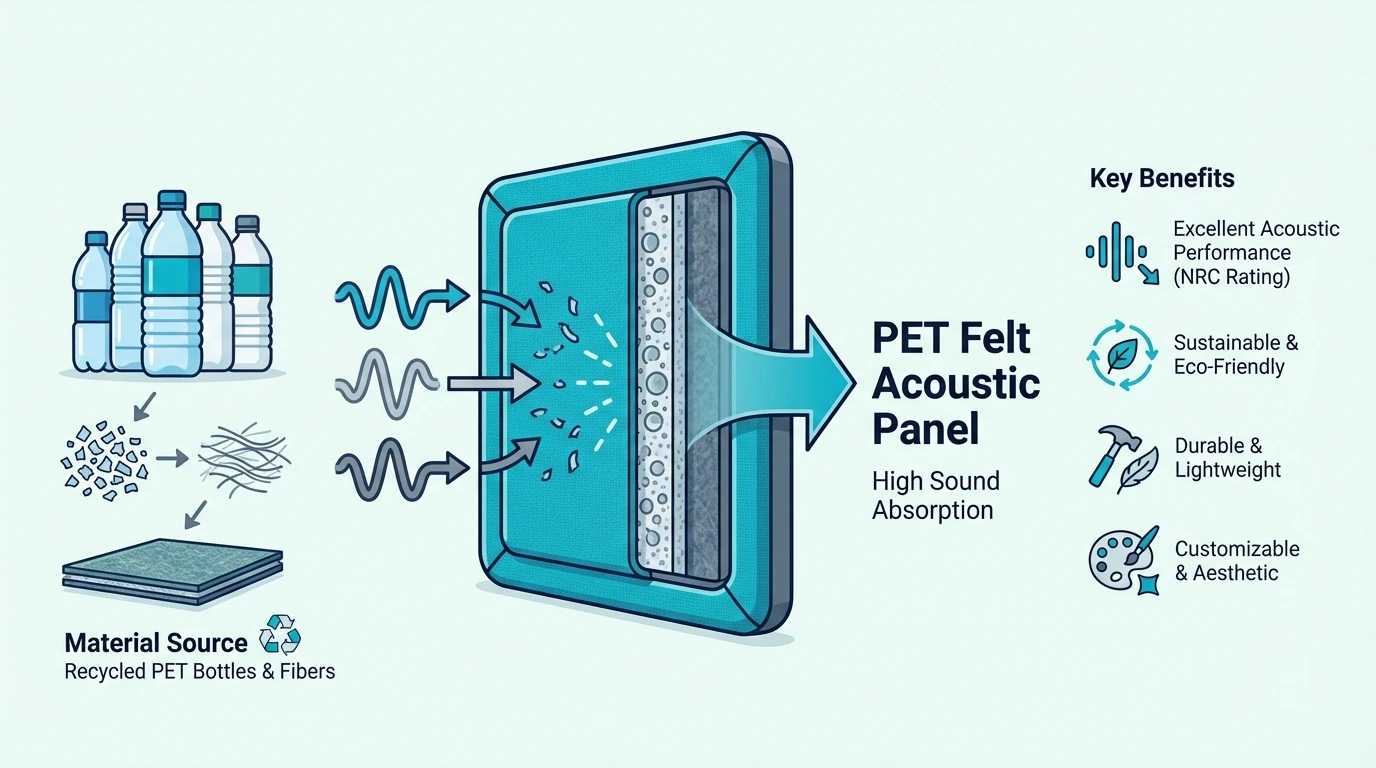
PET felt removes the biggest barrier to DIY acoustic treatment: protective gear. It trades some absorption ceiling for a material you can handle bare-handed.
What Makes PET Different
PET—polyethylene terephthalate—is made from recycled plastic bottles spun into felt-like sheets. No glass fibers, no mineral particles, nothing that irritates skin or lungs.
NRC ratings for PET panels fall between 0.75 and 0.85—lower than fiberglass or rockwool, but enough to kill echo in most home rooms.
The DIY Advantage
That lack of irritants changes the entire installation experience. You can cut, handle, and install PET panels without any protective equipment.
No gloves needed, no respirator required—just measure, cut, and mount.
That accessibility matters more than it sounds. Fiberglass projects stall because people don’t want to suit up on a Saturday afternoon.
PET skips that friction and still delivers NRC 0.75–0.85—enough for most home echo problems.
Ideal Applications
With that ease of installation in mind, PET panels excel in home offices where you want echo reduction without the hassle of traditional acoustic materials. They’re also popular for bedrooms and living spaces where aesthetics and safety matter more than maximum absorption.
For dedicated studios chasing peak absorption, fiberglass or rockwool still wins. But for casual acoustic improvement in everyday spaces, PET offers the right balance of performance and convenience.
Streaming setups often use PET for this reason.
Decorative PET Art Panels
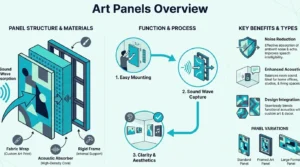
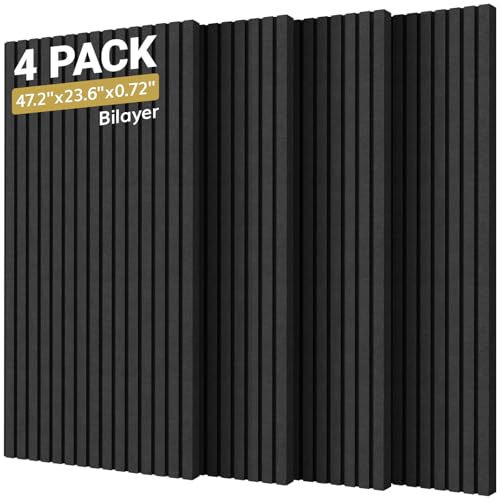
PET panels now come with printed artwork designs, combining acoustic function with visual appeal. These art panels use the same recycled polyester core but add decorative fabric prints on the surface.
The TONOR Dual-Layer Art Panels feature printed designs that look like actual wall art. Guests see a landscape print—you know there’s a dual-layer polyester core absorbing echo behind it.
TONOR Dual-Layer Art Panels
Should You Use Wood Wool for Acoustic Panels?
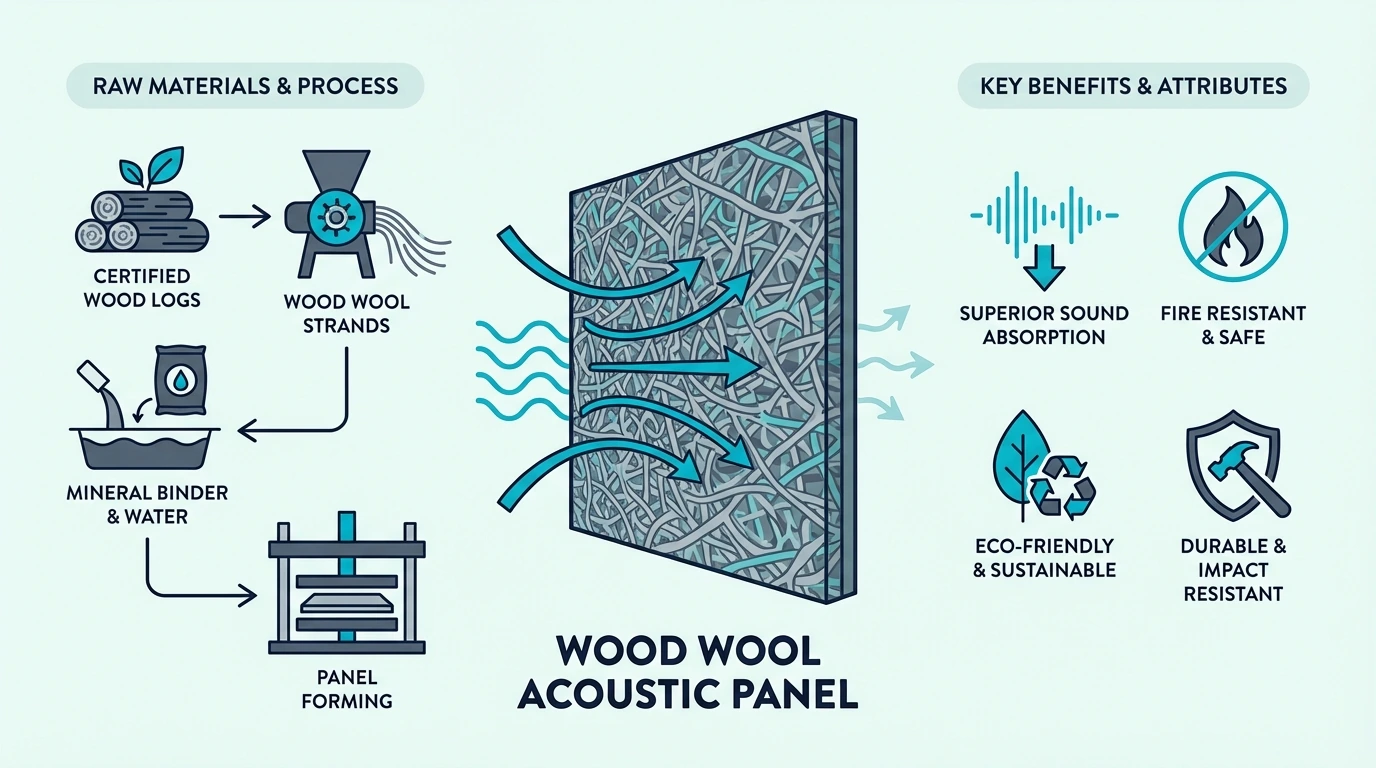
Wood wool panels—also called cement-bonded wood fiber—offer a natural aesthetic that synthetic materials can’t match. They look great exposed on a wall, but they’re heavy, expensive, and harder to install.
What Wood Wool Provides
These panels combine wood fibers with cement binder, creating an open-pored structure that absorbs sound. NRC ratings typically fall between 0.70 and 0.90 depending on thickness and mounting method.
The natural wood texture appeals to architects and designers seeking organic aesthetics. You’ll find wood wool in restaurants, lobbies, and modern offices where exposed acoustic treatment is part of the design language.
Limitations
That visual appeal comes at a cost. Wood wool panels are heavier than fiberglass or PET.
Installation requires sturdy mounting hardware—you can’t just stick them to walls.
They also cost far more than synthetic alternatives with similar NRC ratings.
For most home studios and DIY projects, fiberglass or rockwool delivers better performance per dollar. But if natural aesthetics matter and budget allows, wood wool creates a distinctive look that synthetic panels simply can’t replicate.
Does Foam Work as Acoustic Panel Material?
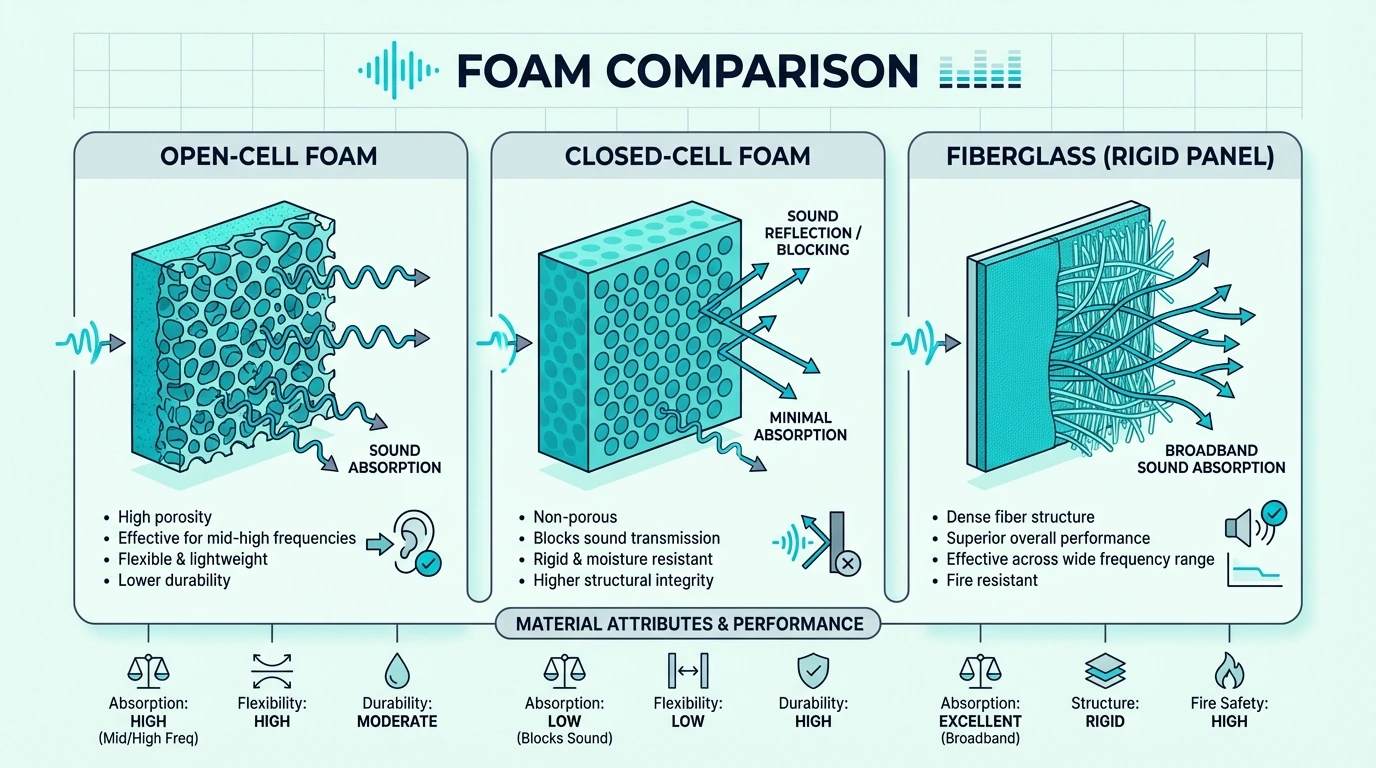
Foam panels dominate Amazon search results because they’re cheap—and cheap is all they deliver.
What Foam Actually Does
Open-cell polyurethane foam—the pyramid and wedge shapes you see everywhere—absorbs sound in a limited frequency range. NRC ratings typically fall between 0.30 and 0.60.
That’s 30-60% absorption compared to fiberglass’s 90%+. Foam works for high frequencies (cymbals, sibilance, some flutter echo) but does almost nothing for mid and low frequencies.
When Foam Makes Sense
Given those NRC numbers, foam’s use cases are narrow. For extremely tight budgets in casual spaces, it provides some improvement over bare walls.
A bedroom podcast setup where you just need slightly less echo might be satisfied with foam.
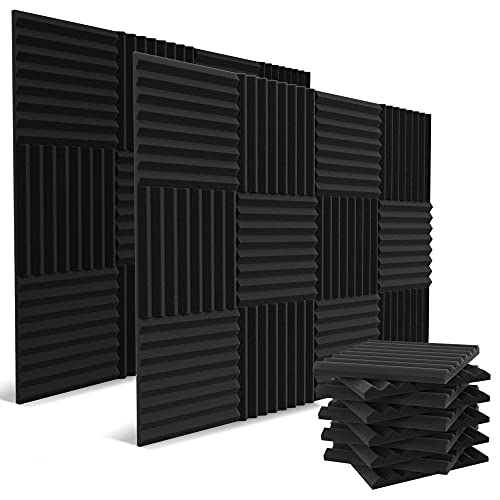
Budget wedge foam like the 52 Pack Acoustic Foam Panels covers a lot of wall cheaply—but NRC stays around 0.35, so most of the sound still bounces back.
52 Pack Acoustic Foam Panels
The Marketing Problem
Even in those narrow use cases, the way foam gets sold creates confusion. Manufacturers market their products as “soundproofing” or “studio treatment.”
Neither claim holds up to scrutiny.
Even casual gaming setups benefit from real panels over foam. Foam doesn’t soundproof anything—it provides limited absorption.
Professional studios use fiberglass or rockwool, not foam.
If your goal is genuine acoustic improvement, foam should be your last choice. If your goal is covering a wall cheaply, foam works fine—just don’t expect real results.
Which Is Better: Fiberglass or Rockwool?
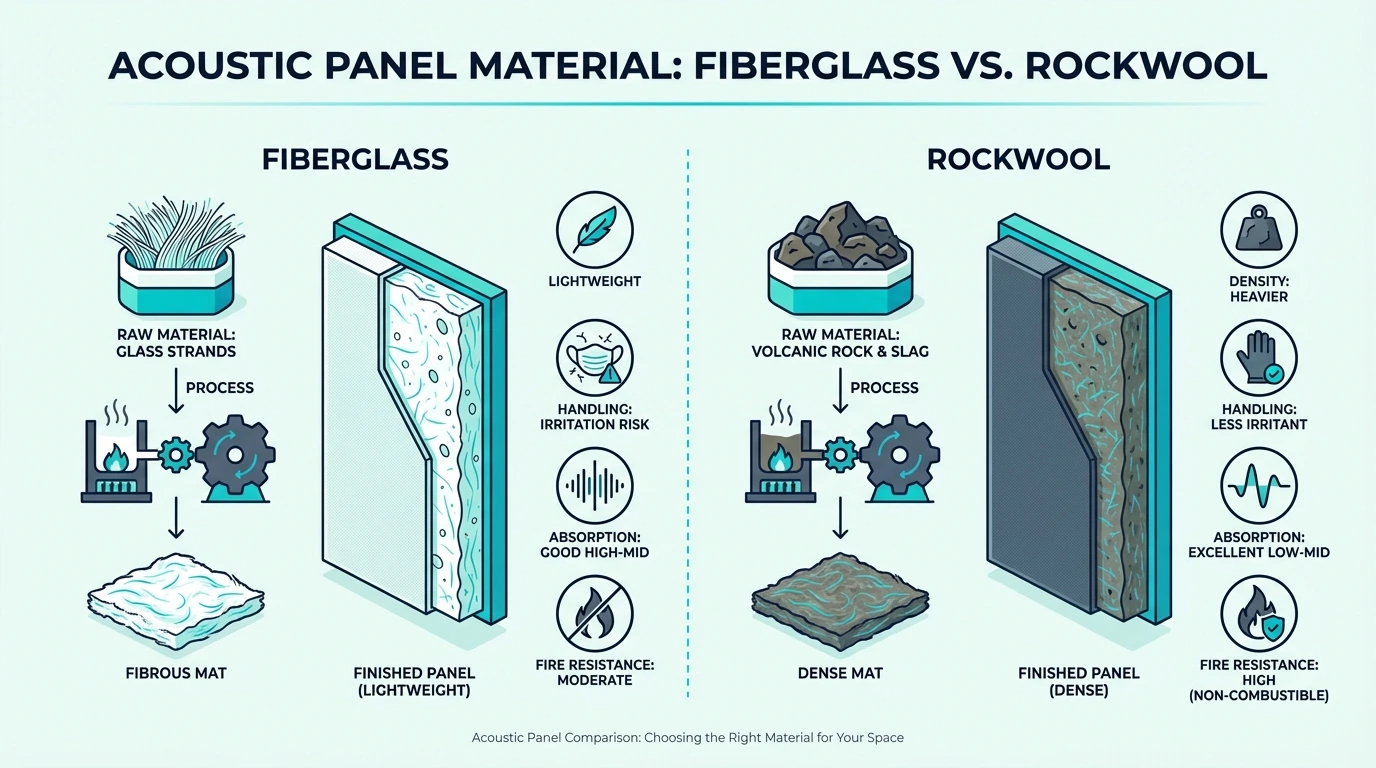
These two materials dominate professional acoustic treatment—and the differences between them are smaller than most people expect. Here’s the head-to-head breakdown.
Performance Comparison
| Property | Fiberglass | Rockwool |
|---|---|---|
| NRC (2”) | 0.90-1.05 | 0.85-0.95 |
| NRC (4”) | 1.00-1.10 | 0.95-1.05 |
| Low-Freq | Good | Slightly Better |
| High-Freq | Excellent | Excellent |
Fiberglass wins on pure absorption numbers. Rockwool’s slightly higher density gives it a marginal edge on low frequencies, but the difference is subtle in most rooms.
Safety Comparison
Performance is nearly identical, so the decision often comes down to handling. Both materials require protective gear during cutting and handling.
Both are completely safe once wrapped in fabric and mounted.
Rockwool wins on fire resistance—it won’t burn and is often used as fire blocking material in construction. Fiberglass resists fire too, but not to the same degree.
Cost Comparison
With safety roughly equal too, price becomes the tiebreaker. Fiberglass typically costs slightly less than rockwool for equivalent performance.
Both cost much more than foam but deliver 2–3x the absorption.
The UMIACOUSTICS Panels with Brackets include mounting hardware, which offsets some of the material cost difference.
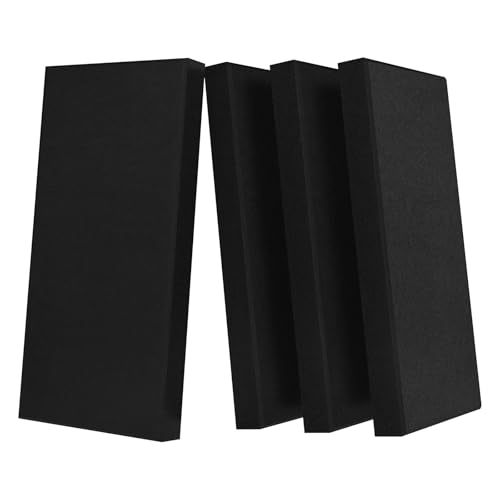
UMIACOUSTICS Panels with Brackets
What Is the Best Fabric for Acoustic Panels?
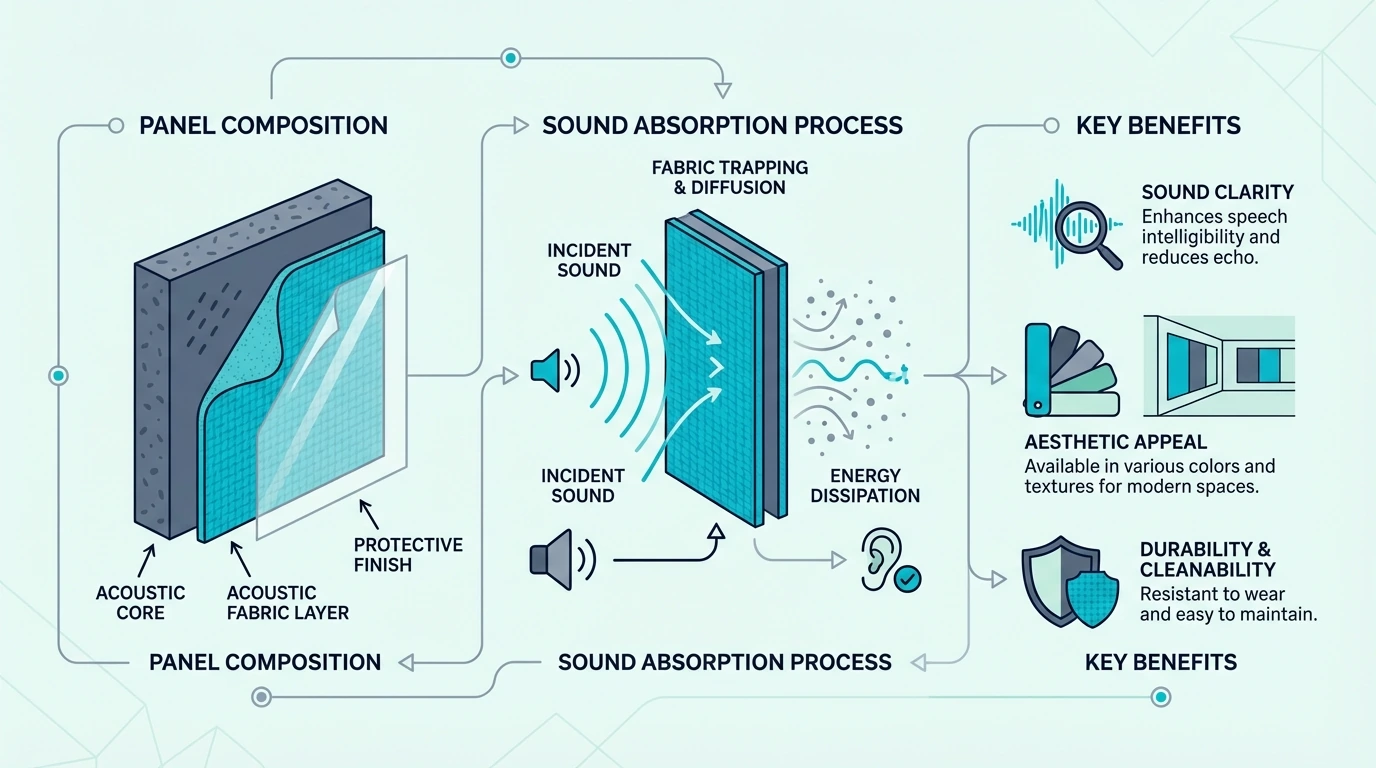
The core material handles absorption, but fabric determines whether sound actually reaches that core—and how the panel looks on your wall. Pick the wrong fabric and your fiberglass panel performs like foam.
Acoustically Transparent Fabrics
“Acoustically transparent” means sound passes through easily. You can test this by holding fabric against your mouth and breathing through it—if air flows easily, sound will too.
Guilford of Maine is the industry standard for professional panels. Their fabrics are engineered for acoustic applications, with published transparency ratings.
The acoustic panels fabric guide digs deeper into transparency ratings, budget picks, and exactly how the breath test works.
Budget Fabric Options
Guilford sets the benchmark, but you don’t have to pay benchmark prices. Burlap and speaker grill cloth work well for DIY panels at a fraction of the cost.
Polyester blends and loosely woven cotton can work if they pass the breath test.
Avoid fabrics with plastic backing, heavy canvas, or tight weaves. These reflect sound before it reaches the core—making your expensive fiberglass perform like cheap foam.
The fabric color and pattern are purely aesthetic—dark fabrics, light fabrics, patterns all work identically as long as the weave is open enough. For ceiling panels, fabric choice often matters more visually since you see them from below.
What Are the Best Materials for DIY Acoustic Panels?
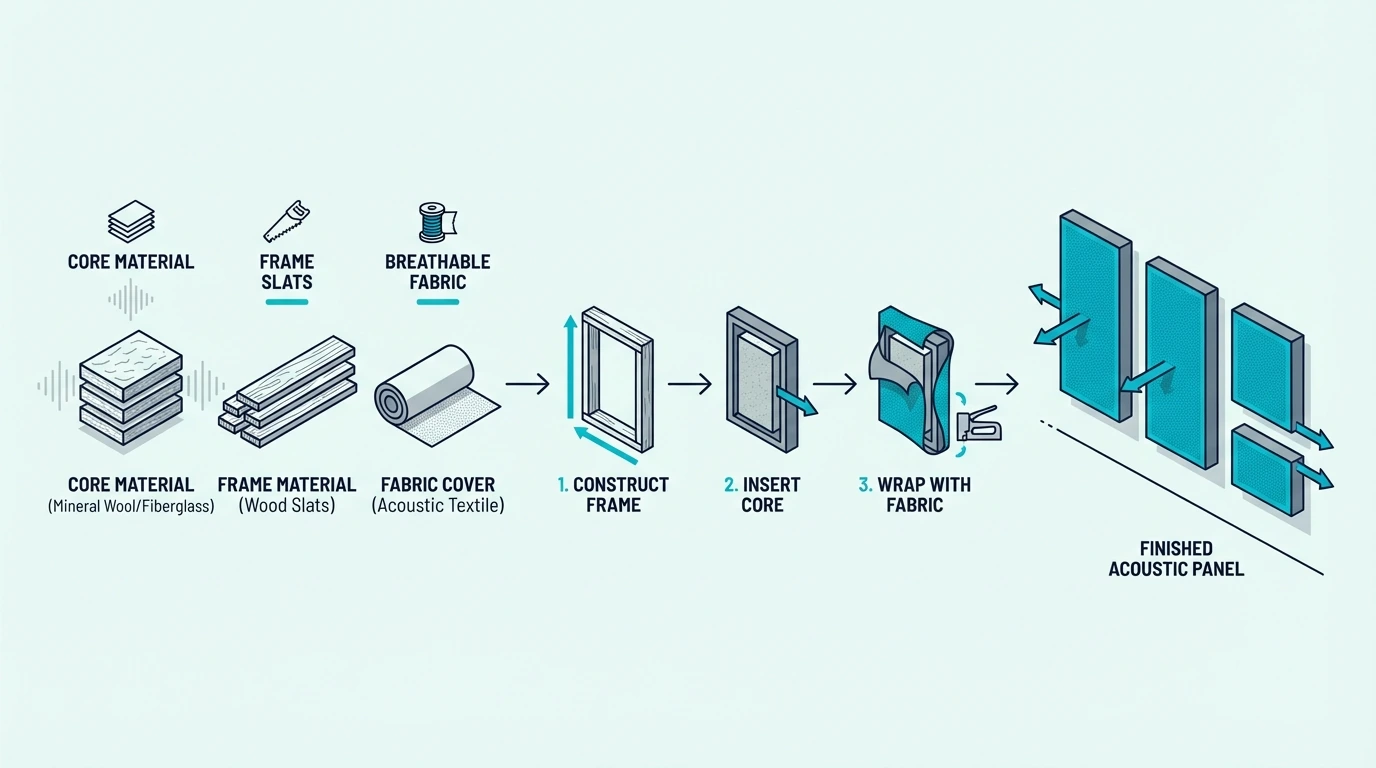
Material choice matters even more for DIY builds, where you’re handling raw materials directly. Some cores are plug-and-play; others need a respirator and a ventilated garage.
Easiest to Work With
PET felt wins for beginners—no protective equipment, no irritation, simple cutting with scissors or utility knife. Many PET panels now feature self-adhesive backing that eliminates the need for mounting hardware entirely.
Rockwool ranks second—easier to cut than fiberglass, less dust, but still requires protective gear.
Fiberglass provides the best performance but demands careful handling. Worth it for dedicated studios, overkill for casual treatment.
Where to Buy Materials
Once you’ve picked your material, sourcing is simple. Owens Corning 703 and Rockwool SafeNSound are available at building supply stores.
Both work excellently for DIY panels when wrapped in breathable fabric.
Avoid generic “soundproofing insulation” that doesn’t specify density. True acoustic insulation has specific density ratings (usually 3-6 lb/ft³) that generic products often lack.
If you’d rather skip raw materials entirely, the best acoustic panels guide ranks ready-to-hang options by room type and budget.
How Do All Acoustic Panel Materials Compare?
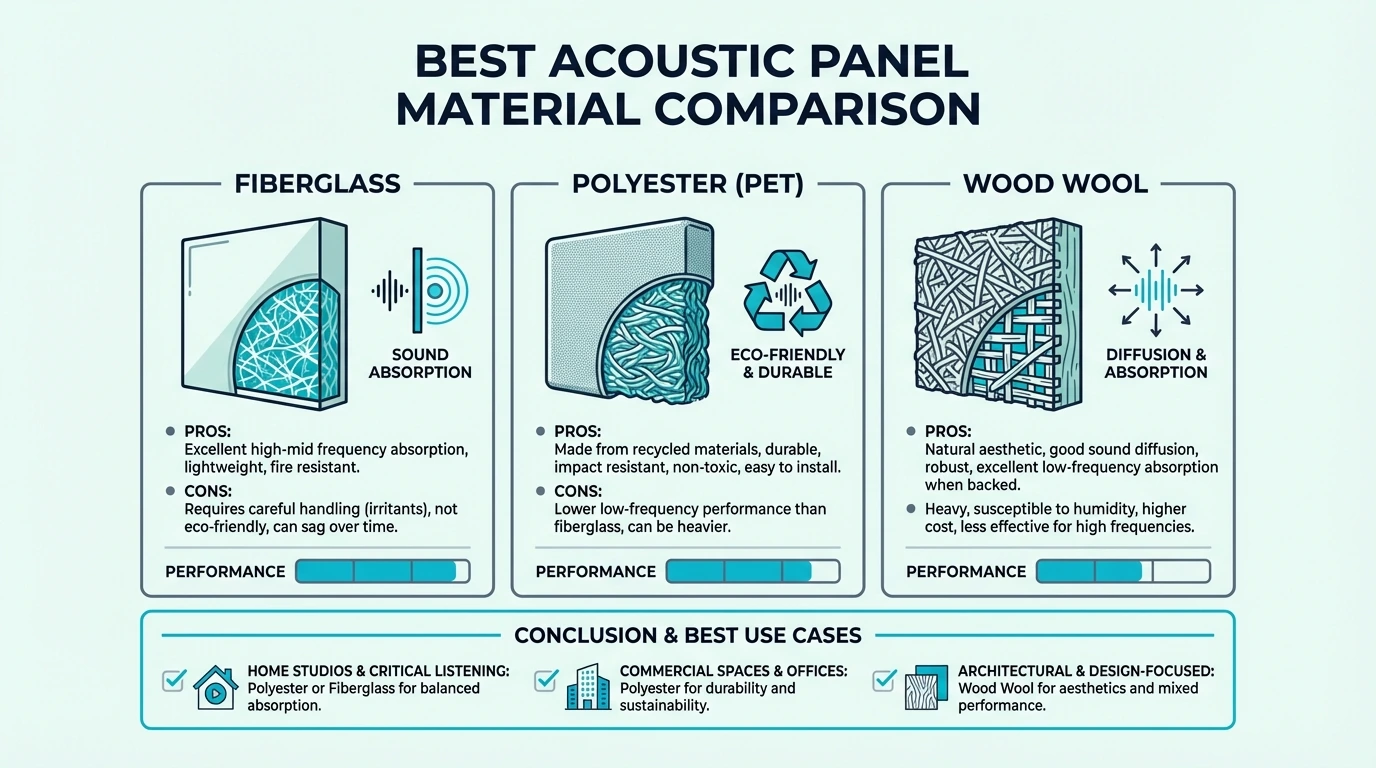
This table puts every material side by side:
| Material | NRC Rating | DIY Difficulty | Safety | Cost | Best For |
|---|---|---|---|---|---|
| Fiberglass | 0.90-1.05 | Medium | Needs PPE | Mid | Studios, max performance |
| Rockwool | 0.85-0.95 | Medium | Needs PPE | Mid | Fire safety, studios |
| Wood Wool | 0.70-0.90 | Hard | Safe | High | Natural aesthetics |
| PET Felt | 0.75-0.85 | Easy | No PPE needed | High | DIY, offices, bedrooms |
| Foam | 0.30-0.60 | Very Easy | Safe | Low | Tight budgets only |
Fiberglass and rockwool sit within ~0.10 NRC of each other. PET felt trails by another ~0.15—a real gap, but one most home rooms won’t notice.
Foam trails everyone by 0.40–0.50 NRC, and that gap you will notice.
The Bottom Line
Best acoustic panel material for raw performance is fiberglass, achieving NRC ratings above 0.90 that studios rely on. Rockwool comes close with added fire resistance.
PET felt trades some absorption for far easier handling. Foam works only when budget constraints leave no alternative.
Choose Fiberglass If
You want maximum absorption and don’t mind wearing protective gear during installation. Recording studios, home theaters, and critical listening rooms benefit most from fiberglass’s superior NRC ratings.
A 2-inch fiberglass panel absorbs roughly twice what a 2-inch foam panel does at the same wall position. That gap compounds across a whole room.
Choose Rockwool If
Fire safety matters for your space or local codes require fire-rated materials. The slight performance trade-off versus fiberglass is negligible in most applications.
Commercial installations and basement studios often choose rockwool for peace of mind. The material’s density also provides marginally better low-frequency absorption if that’s a concern.
Choose PET Felt If
Convenience trumps maximum performance. Home offices, bedrooms, and living spaces where you want acoustic improvement without the hassle of working with fiberglass benefit from PET’s safety and ease.
The NRC trade-off—0.75-0.85 versus 0.90-1.00—matters less in casual spaces. Most home office echo problems disappear at PET’s performance level.
Avoid Foam Unless
Your budget cannot stretch to better materials. Foam provides some absorption, but the gap versus real panels is enormous.
The money saved rarely justifies the performance lost.
If you start with foam planning to upgrade later, you’ll spend more total than buying the right materials once. The adhesive residue alone makes swapping panels a headache.
Pick the best core you can handle—fiberglass if you don’t mind PPE, PET if you want zero hassle—and wrap it in breathable fabric. Everything else is secondary.
For product recommendations sorted by room type, the acoustic panels hub has buying guides for every budget.
Frequently Asked Questions
What’s the safest acoustic panel material?
PET polyester felt requires no protective equipment to handle, cut, or install. Fiberglass and rockwool are completely safe once wrapped and mounted, but require gloves, long sleeves, safety glasses, and respirators during installation.
Does thickness matter more than material?
Both matter. A 4-inch foam panel still performs worse than a 2-inch fiberglass panel because the material’s NRC efficiency outweighs raw thickness.
Within the same material, thicker panels absorb lower frequencies better.
Can I mix different materials in one room?
Yes. Many studios use fiberglass panels on walls with rockwool bass traps in corners.
PET panels in living areas and fiberglass in a connected studio work fine together.
Each material absorbs sound regardless of what’s nearby.
How do I know if my fabric is acoustically transparent?
Hold it against your mouth and exhale. If air flows through easily, sound will too.
If you feel resistance or if the fabric puffs out, it’s too dense. Guilford of Maine fabrics always pass this test.
Is recycled material less effective?
No. PET panels made from recycled plastic bottles perform identically to virgin materials.
The recycling process doesn’t change acoustic properties.
Some rockwool contains recycled industrial slag with no performance penalty either.
What’s the minimum NRC I should accept?
Target NRC 0.70 or higher for meaningful treatment. Below that, you’re getting more decoration than function.
Most problems that motivate acoustic treatment need NRC 0.80+ to solve.