Are Acoustic Panels Waterproof? (And What to Use Instead) [2026]
Are acoustic panels waterproof? No — but the real question is whether yours will survive the humidity in your specific space.
Standard fiberglass and mineral wool panels absorb moisture just as easily as they absorb sound. Most people find this out the hard way after installing panels in a basement or bathroom, only to discover sagging, discoloration, or hidden mold months later.
The good news: the right material choice prevents all of that. PET polyester panels resist moisture because of their non-porous fiber structure — so you can stop worrying about humidity damage and focus on the acoustic results.
Below, you will find which materials survive moisture, what actually happens when panels get wet, and how to protect your investment in humid environments.
Standard acoustic panels are not waterproof — fiberglass and mineral wool absorb moisture, lose acoustic performance, and can grow mold. PET polyester panels offer the best moisture resistance of any standard panel material. For truly wet environments (bathrooms, outdoor), use dedicated water-resistant acoustic products instead.
Are Acoustic Panels Waterproof? Understanding the Core Problem
Most panels fail in humid rooms for one reason: the same physics that absorb sound also absorb water. The mechanism is worth understanding before you pick a material.
How Acoustic Panels Absorb Sound (And Why That’s the Problem)
Sound waves travel through air as pressure variations. When these waves hit a hard surface like drywall, most energy bounces back — creating that echoey “bathroom sound” that ruins recordings.
Acoustic panels intercept these waves before they can reflect. The porous core material — typically fiberglass or mineral wool — contains millions of tiny air pockets.
As sound enters these pockets, friction between air molecules and fibers converts acoustic energy into microscopic amounts of heat. The sound disappears into the material.
Those same air pockets that absorb sound also absorb water vapor. A fiberglass panel does not distinguish between sound waves and humidity — it just absorbs whatever enters.
Thicker panels have more material to absorb both sound and moisture. Panels with high NRC ratings (0.85+) are typically more vulnerable because better absorption means more porosity — and more pathways for water to enter.
What Makes a Material “Waterproof” vs. “Water-Resistant”
These terms get thrown around loosely in acoustic product marketing, and the difference matters more than most buyers realize.
Waterproof means zero water penetration under normal conditions. Think plastic, glass, or sealed metal.
These materials reflect sound — the opposite of what you want from acoustic treatment.
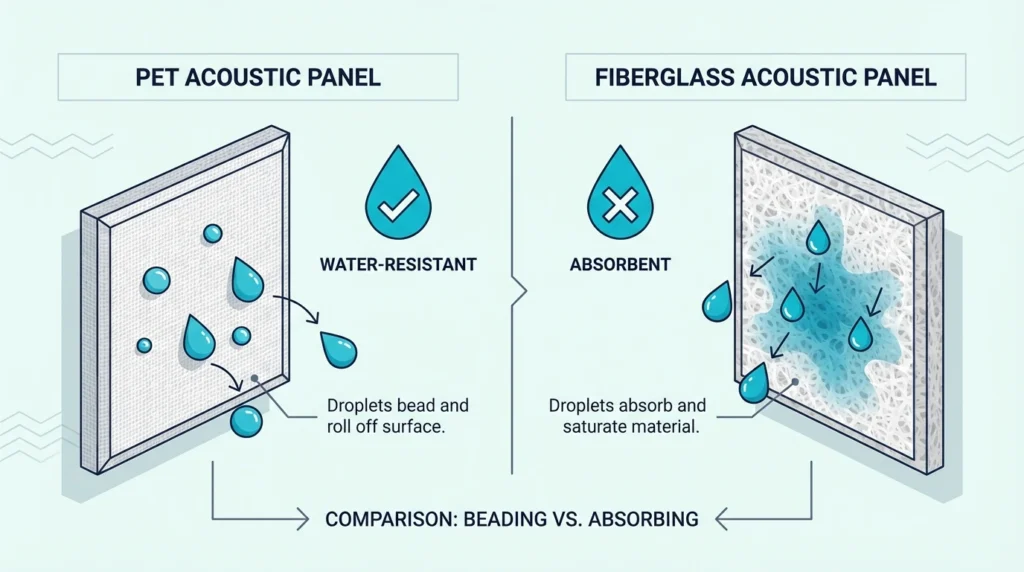
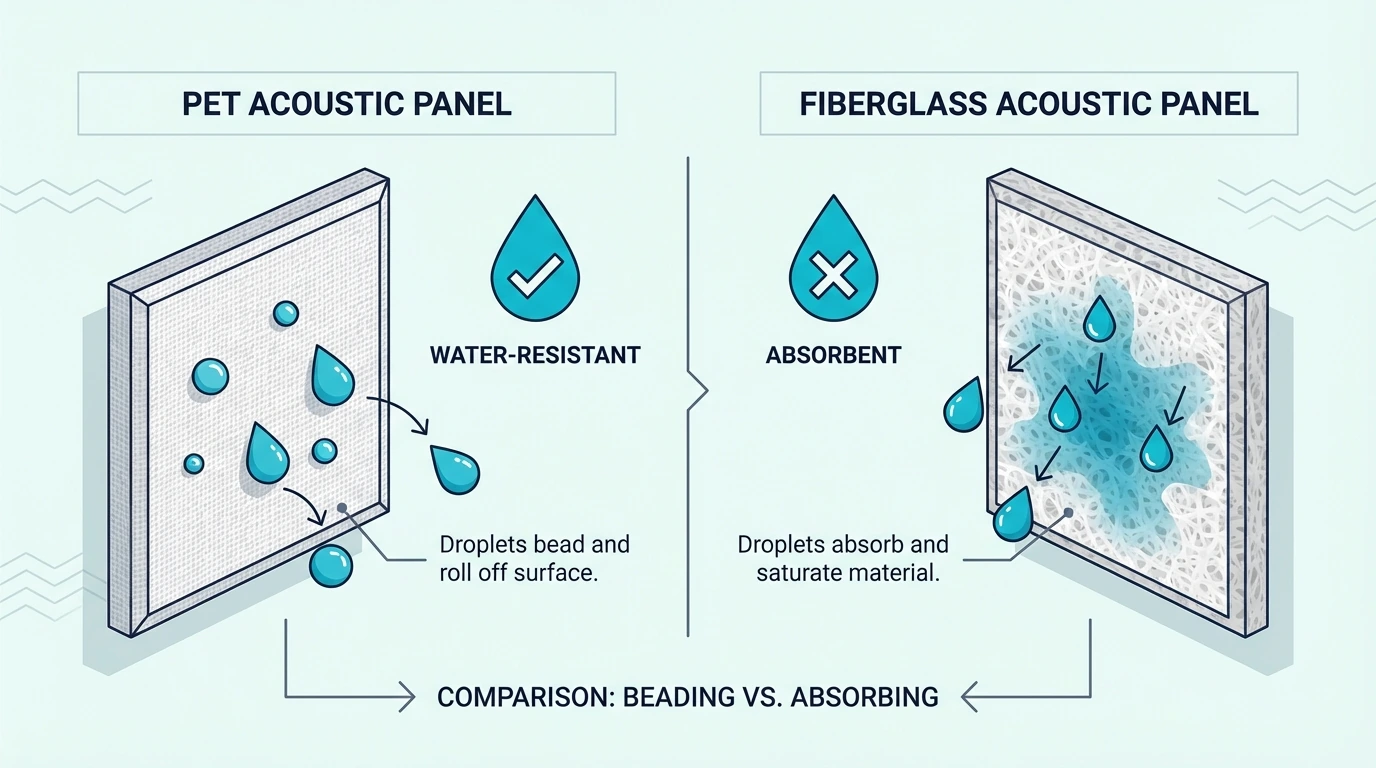
Water-resistant means the material can handle some moisture exposure without immediate damage. PET polyester panels fall into this category — water beads on the surface rather than soaking in.
Standard acoustic panels (fiberglass, mineral wool, foam) are neither waterproof nor water-resistant. They are moisture-vulnerable by design.
The only truly waterproof acoustic solutions are specialized products for swimming pools and outdoor venues — and they cost three to five times more than standard panels.
Why Standard Panel Materials Fail in Humid Environments
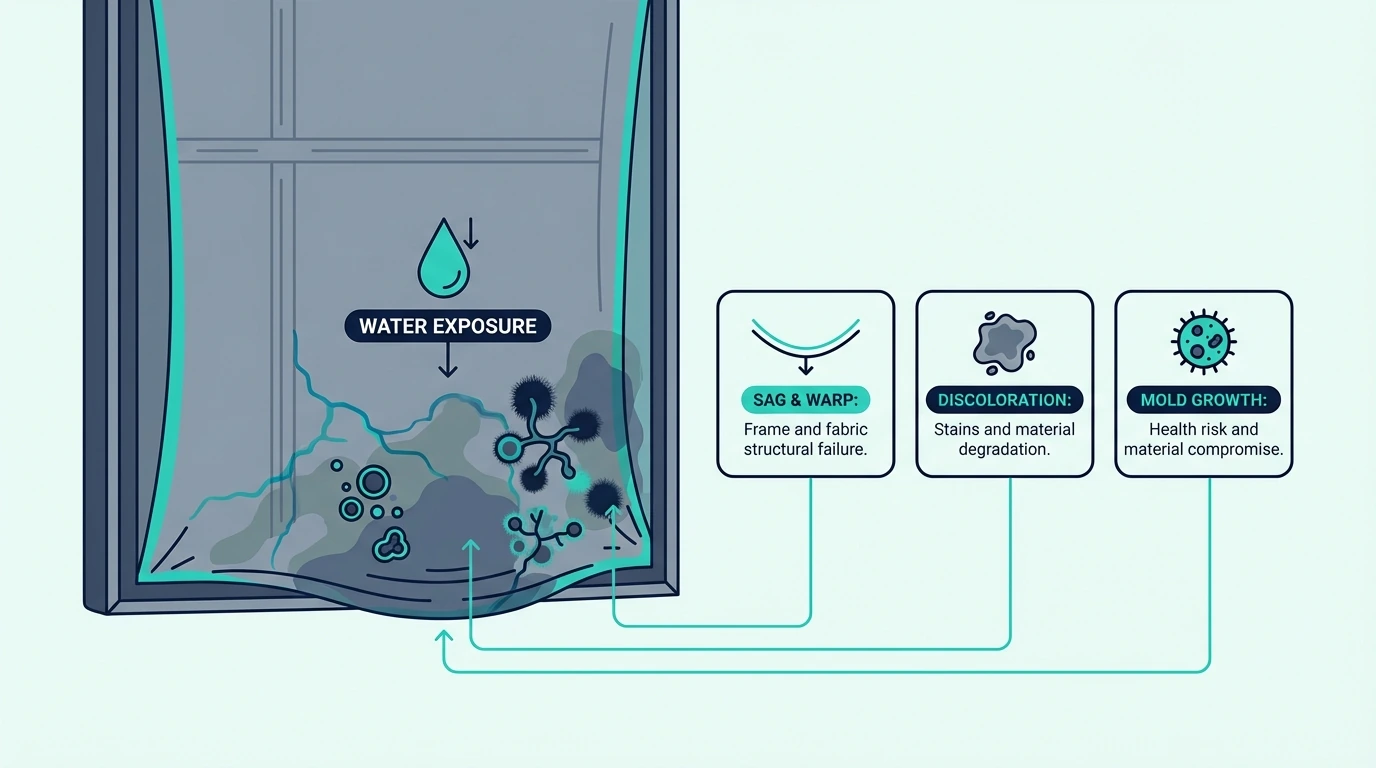
Fiberglass panels use glass fibers bonded with adhesive resins. When water enters, it weakens these bonds and causes the material to sag permanently.
Mineral wool (Rockwool, Safe’n’Sound) handles occasional humidity slightly better than fiberglass. But sustained moisture still causes degradation over weeks.
Open-cell foam absorbs water readily and holds it like a sponge. Closed-cell foam resists better but offers poor acoustic absorption — defeating the purpose.
The fabric covering on most panels provides zero moisture protection. Acoustic fabric is intentionally breathable — sound needs to pass through to reach the absorbent core.
That breathability means humidity passes through just as easily.
What Happens When Acoustic Panels Get Wet?
Water damage does not stop at the surface. The progression follows a predictable sequence that gets worse the longer moisture remains — and the first signs are easy to miss.
The First 24 Hours: Immediate Damage
Water contact triggers problems immediately — even before visible damage appears.
When water first touches the fabric covering, it may bead briefly on tightly-woven materials. But fabric is not a barrier — it is designed to let sound through, which means it lets moisture through too.
Within minutes, water penetrates to the core. Fiberglass darkens visibly in the saturated area.
Weight increases sharply as water fills the air pockets. A fully saturated 2×4 panel can weigh three to four times its dry weight — a serious concern when calculating how many panels you need for proper coverage.
This added weight stresses mounting hardware. Panels mounted with lightweight adhesive strips may fall, and wall anchors rated for dry panel weight may pull out — a particular concern for ceiling-mounted panels where gravity amplifies the problem.
Days to Weeks: Structural Degradation
Even if surface drying begins quickly, internal damage continues developing.
Compressed fibers do not recover their original structure. The fiber matrix that creates air pockets for sound absorption gets crushed under the water weight, permanently reducing acoustic performance.
Adhesive bonds between fibers weaken. Many fiberglass panels use formaldehyde-based binders that break down when wet, causing the panel to crumble internally.
Fabric develops permanent water stains where minerals in the water deposit on fibers. These marks will not wash out — they are bonded to the fabric at a molecular level.
If the panel does not dry completely within 48-72 hours, biological growth begins. Mold spores are everywhere — they just need sustained moisture to colonize.
The Hidden Danger: Mold Inside Panels
The fiber compression from the previous stage is bad enough, but mold is the real risk. And it is usually invisible until the problem becomes severe.
Fiberglass and mineral wool provide ideal conditions for mold: sustained moisture, organic matter (adhesives, fabric fibers, dust), and darkness inside the panel structure.
Mold can establish within 24-48 hours of sustained moisture. By the time you see visible growth on the fabric surface, the interior is likely heavily colonized.
You cannot clean mold from inside a porous panel. Surface cleaning removes visible growth but leaves the interior contamination that continues spreading.
Moldy panels should be discarded immediately. They release spores into your room air every time they are disturbed — creating health risks far exceeding the cost of replacement panels.
Choosing a mold-resistant fabric covering from the start is the only reliable prevention once panels are installed in humid rooms.
Get Studio Tips Weekly
Join 5,000+ creators getting acoustic treatment advice every week.
No spam. Unsubscribe anytime.Which Panel Materials Handle Moisture Best?
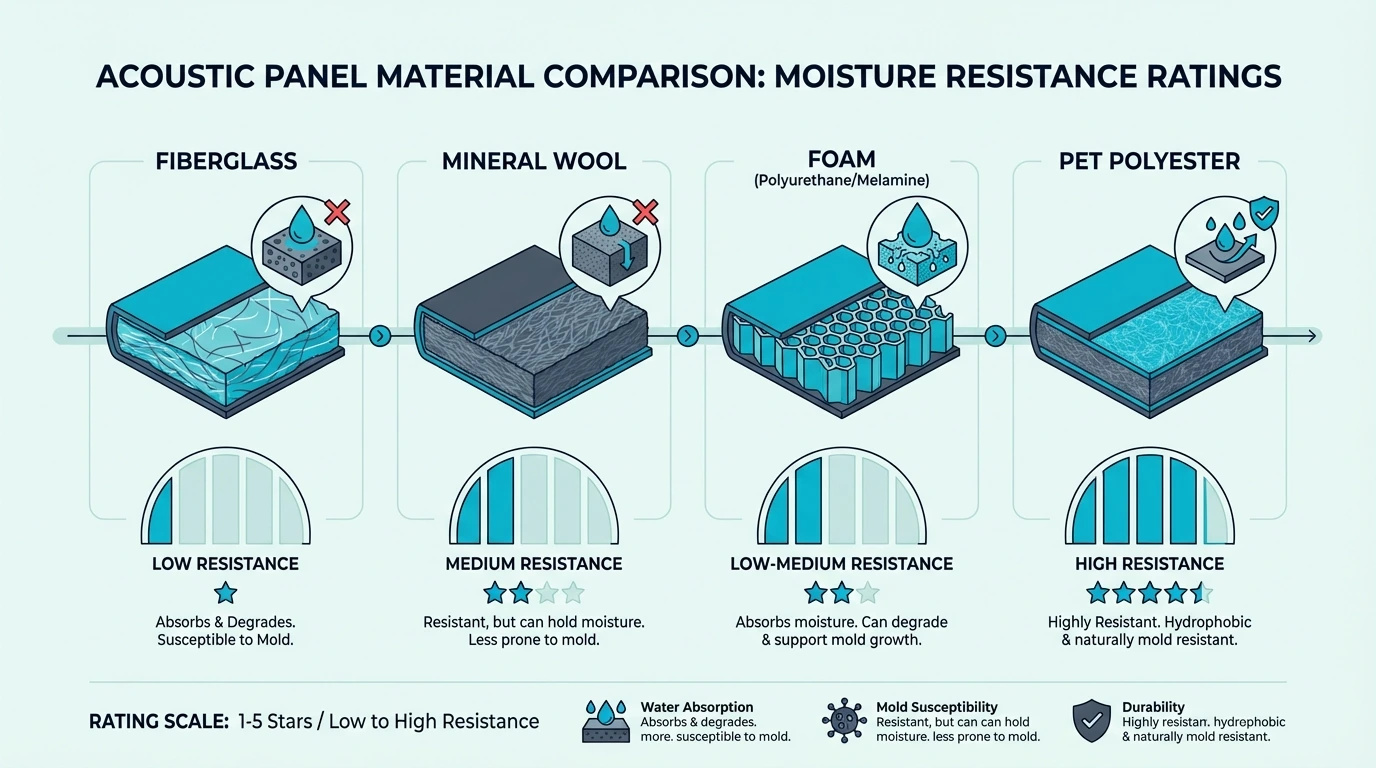
Not every panel material reacts to moisture the same way. Some tolerate occasional humidity; others need climate-controlled conditions to survive.
Fiberglass Panels: Poor Moisture Tolerance
Fiberglass offers excellent acoustic absorption (NRC 0.95-1.05) but poor moisture resistance. The glass fibers themselves don’t absorb water, but the binding agents do.
Positioning fiberglass panels in dry zones maximizes both performance and lifespan.
A finished fiberglass panel like ATS Acoustics Sound Absorbing Acoustic Panel 24 × 48 × 2 is exactly the kind of product that performs well in a climate-controlled room and ages badly in a damp one.
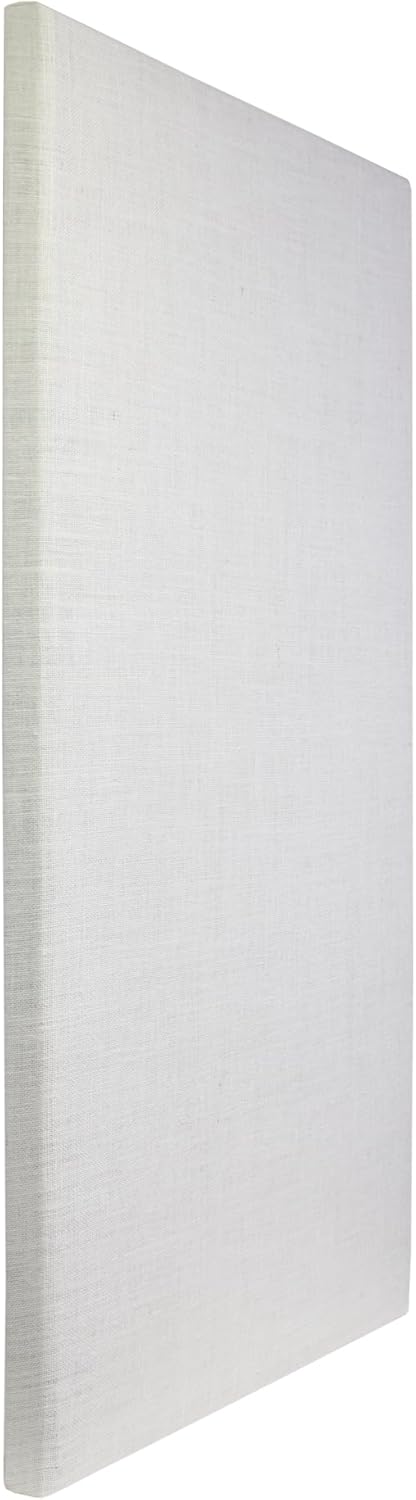
ATS Acoustics Sound Absorbing Acoustic Panel 24 × 48 × 2
Most fiberglass panels use formaldehyde-urea or phenolic binders. These adhesives soften when wet, allowing fibers to shift and compress.
Recovery potential is limited. Once saturated, fiberglass rarely returns to original performance — expect a 20-40% drop in NRC rating even after complete drying, which pushes panels below useful absorption thresholds.
Best environment: climate-controlled studios, offices, and listening rooms with consistent 30-50% relative humidity.
Mineral Wool Panels: Slightly Better Than Fiberglass
Those binding-agent failures in fiberglass are less severe with mineral wool. The volcanic rock base material does not absorb water as readily as glass fibers, so mineral wool can often survive brief humidity spikes that would damage fiberglass.
A mineral wool product like AFB Acoustical Fire Batts Mineral Wool Insulation buys you a bit more forgiveness than fiberglass, but it is still a dry-room material rather than a wet-room fix.
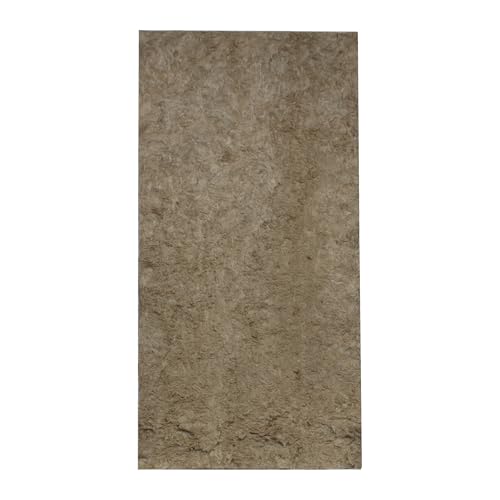
AFB Acoustical Fire Batts Mineral Wool Insulation
However, sustained exposure still causes problems. Water eventually penetrates, and mineral wool becomes heavy and saggy like any porous material.
Panel density affects moisture resistance too — denser panels have fewer air pathways for water to enter, but also dry more slowly if they do get wet.
PET Polyester Panels: Best Moisture Resistance
Where mineral wool and fiberglass both eventually lose to sustained moisture, PET polyester avoids the problem entirely. PET panels are made from recycled plastic bottles processed into felt-like sheets — the synthetic fibers do not absorb water at all.
Water beads on PET surfaces instead of absorbing. You can wipe spills away without damage.
The catch is that many listings marketed as “soundproof wall decor” are not PET at all, so material verification matters more here than brand promises.
The trade-off: PET typically delivers lower NRC ratings (0.65-0.85) compared to fiberglass (0.95-1.05). You sacrifice some absorption for moisture resilience.
For rooms where panel placement controls most of the echo, the NRC difference may matter less than durability.
Melamine Foam: Moderate Moisture Handling
Melamine foam offers a middle ground — better moisture resistance than fiberglass, not as good as PET.
The closed-cell structure resists water penetration better than open-cell foams. Surface moisture wipes away easily.
However, melamine is brittle and damages easily from impact. It also tends to yellow over time when exposed to UV light.
Best use: environments with occasional humidity spikes but not sustained high moisture — like conference rooms with variable occupancy.
Can You Use Acoustic Panels in Bathrooms?
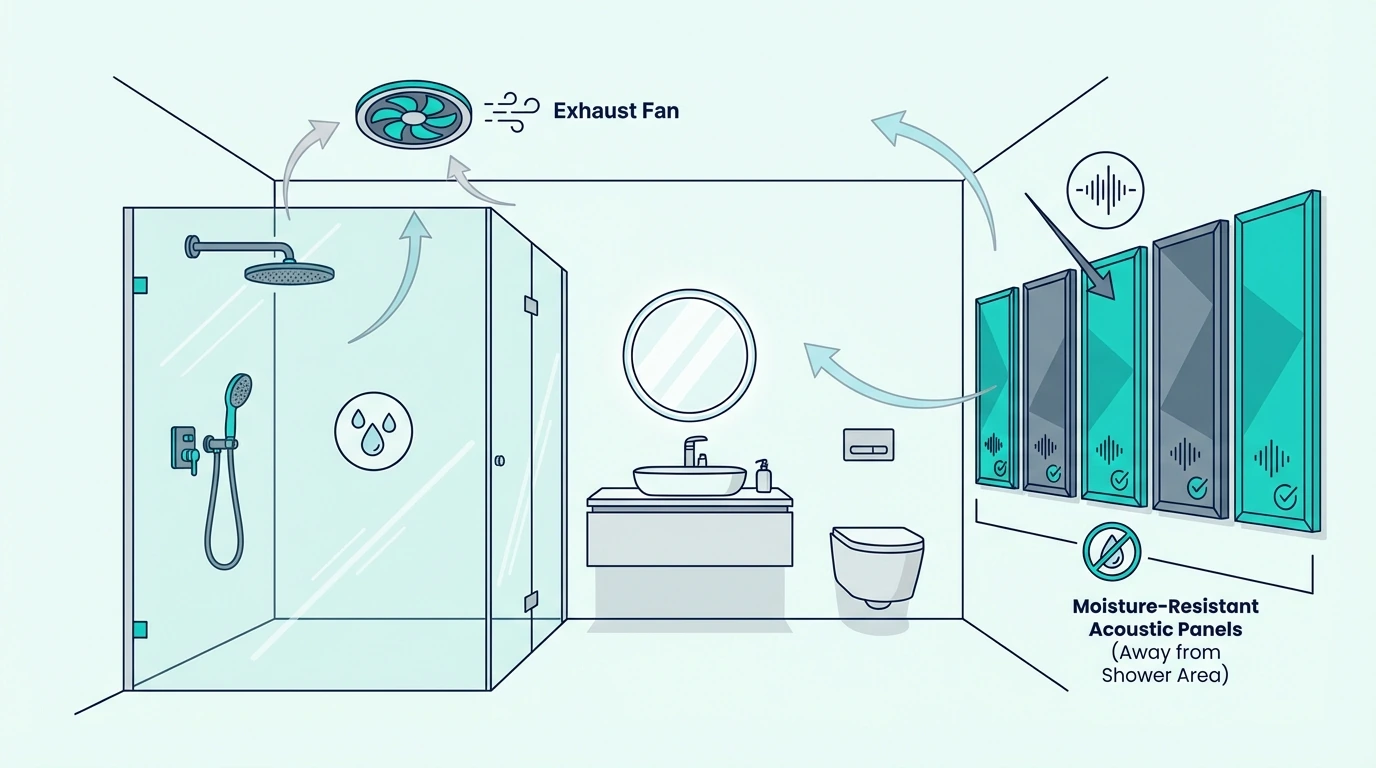
Bathrooms present the most common moisture challenge for home acoustic treatment. The question isn’t whether panels CAN survive — it’s whether the environment allows any reasonable panel lifespan.
Why Bathrooms Are Problematic for Standard Panels
Average bathroom humidity during showers reaches 80-90% relative humidity. Steam condenses on every surface — walls, mirrors, and any acoustic panels you have installed.
Standard fiberglass panels will absorb this humidity repeatedly. Even if they dry between uses, the constant moisture cycling accelerates degradation.
Within three to six months, panels in active bathrooms typically show visible staining, sagging, and sometimes visible mold. They become eyesores and potential health hazards that you cannot simply clean back to normal.
The absorption capacity that makes panels effective at controlling echo makes them moisture magnets in high-humidity rooms. If your goal is sound blocking rather than echo control, bathroom placement adds moisture challenges to an already difficult problem.
Scenarios Where Bathroom Panels Work
Those 80-90% humidity levels apply to full bathrooms with showers, but not all bathroom environments are equally hostile.
Half-baths without showers experience much lower humidity. Standard panels can survive here with good ventilation — humidity levels stay closer to normal room conditions.
Large master bathrooms with enclosed shower stalls may have “dry zones” far enough from moisture sources. Panels on the wall opposite a closed shower — combined with proper exhaust ventilation — can work.
If you are only experimenting in a low-humidity powder room, a lighter self-adhesive pack like 12Pack Acoustic Panels Self-Adhesive 3D Brick Pattern is a lower-risk experiment than installing expensive fiberglass near a shower.
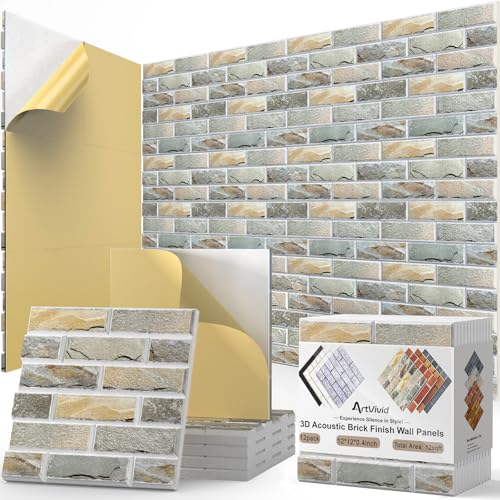
12Pack Acoustic Panels Self-Adhesive 3D Brick Pattern
Better Alternatives for Bathroom Acoustics
If those dry-zone scenarios do not apply to your bathroom, consider approaches designed for wet environments instead of forcing standard panels to survive.
PET polyester panels handle bathroom humidity far better than fiberglass. They will not absorb steam and can be wiped clean when condensation forms.
Proper ventilation solves the root problem. An exhaust fan running during and 20 minutes after showers keeps humidity manageable for any wall treatment.
Textured ceramic tiles with acoustic backing offer built-in sound absorption without moisture vulnerability. Several manufacturers make tiles specifically designed for acoustic bathrooms.
Sometimes the answer is accepting that bathrooms need different solutions. Soft towels, bath mats, and curtains provide some absorption without the moisture risk panels introduce.
How to Protect Acoustic Panels from Moisture Damage
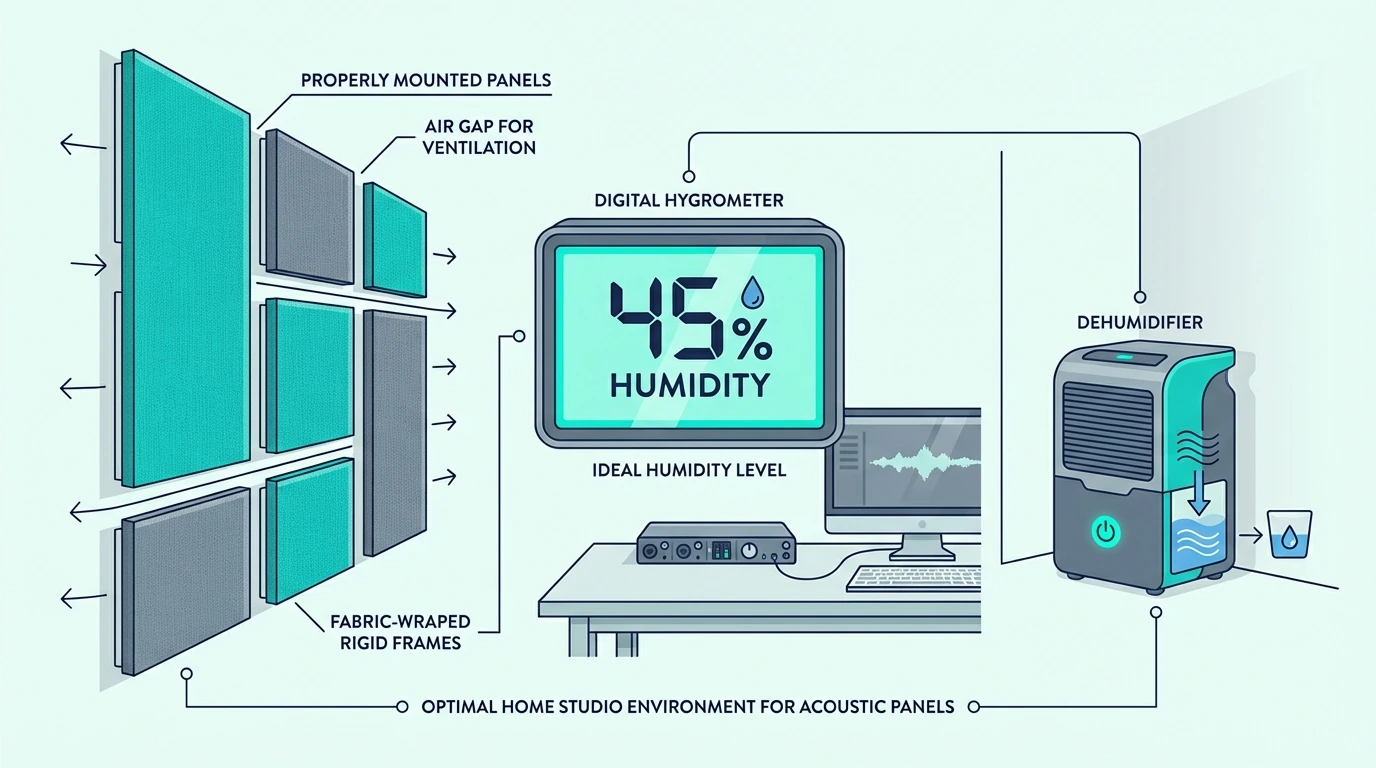
Prevention beats remediation every time. These strategies keep your panels dry and functional for years — but require ongoing attention to environmental conditions.
Monitor Your Room’s Humidity Levels
You cannot manage what you do not measure. Start with baseline humidity data before installing panels.
Ideal humidity for acoustic panels is 30-50% relative humidity. This range is also comfortable for people and safe for wooden instruments.
Above 60% sustained humidity, standard panels face accelerated degradation. Above 70%, mold risk jumps sharply.
Place hygrometers in different room locations — humidity varies noticeably between corners, near windows, and in the center of the space.
Track readings over several weeks before panel installation. Humidity patterns shift through weather changes and seasonal cycles — track long enough to catch the full range.
Climate Control Strategies
The humidity monitoring from the previous step tells you whether climate control is a necessity or a nice-to-have. For studios and listening rooms, it is almost always a necessity — both for your panels and your recording equipment.
Air conditioning naturally dehumidifies as it cools. Running AC during humid seasons protects panels while keeping the room comfortable for long sessions.
If you are going to the trouble of dehumidifying a room, it is usually because you want to preserve a serious absorber like Owens Corning 703 Semi Rigid Fiberglass Board rather than a decorative panel that never needed premium protection in the first place.
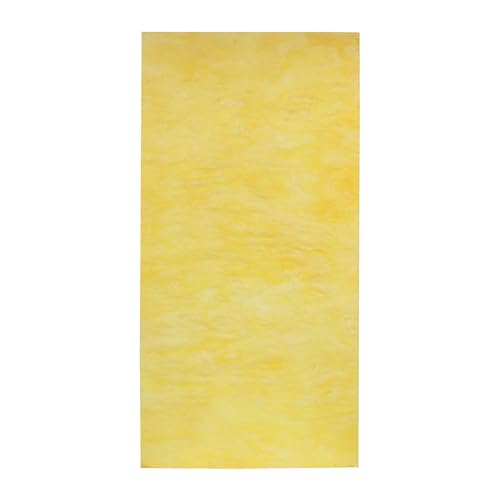
Owens Corning 703 Semi Rigid Fiberglass Board
Air gaps behind panels serve double duty here — they improve low-frequency absorption and allow air circulation that prevents moisture buildup between the panel and the wall.
Proper ventilation prevents humidity buildup from human activity too. Even breathing adds moisture — a room full of podcast guests can spike humidity noticeably over a two-hour recording session.
Smart Panel Placement
Climate control handles the air; placement handles the surfaces. Strategic positioning avoids moisture problems before they start.
Keep panels away from exterior walls in cold climates. Warm interior air meeting cold wall surfaces creates condensation — placing panels there traps moisture between panel and wall.
Maintain one to two inch air gaps behind wall-mounted panels. Flush mounting traps any moisture that penetrates, preventing evaporation and accelerating damage.
Avoid placement near HVAC vents that might blow humid air directly onto treatment surfaces. Vents near kitchens and bathrooms carry more moisture than you would expect.
Proper panel installation accounts for both airflow and moisture management — the mounting method you choose affects how quickly trapped humidity can escape.
What If Your Panels Already Got Wet?
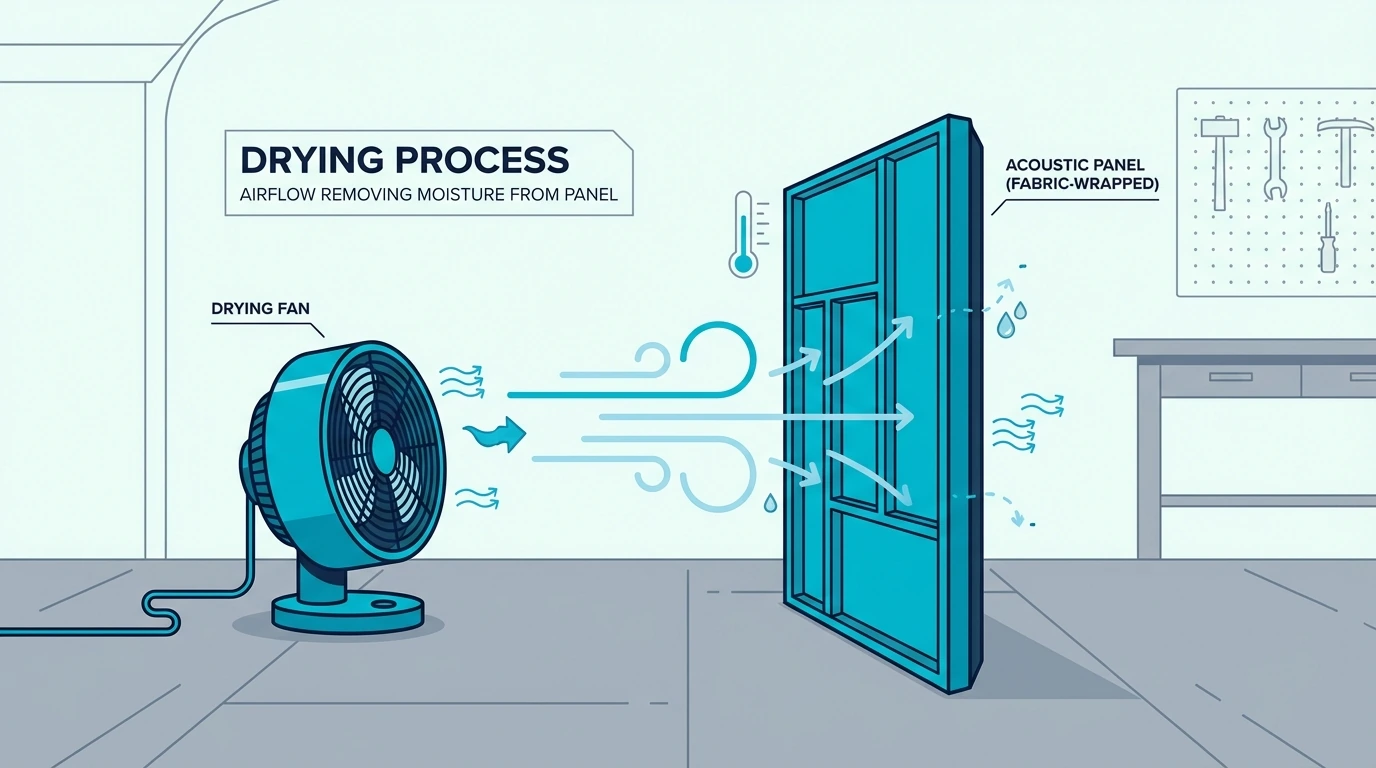
Accidents happen — roof leaks, burst pipes, spilled drinks. Recovery splits into three stages: immediate drying, damage assessment after 24-72 hours, and the replace-versus-salvage decision — and speed through the first stage determines whether the other two even matter.
Immediate Response Protocol
Act within the first hour if possible. Every delay increases permanent damage.
Remove wet panels from the wall immediately. Leaving them mounted stresses saturated cores and risks mounting hardware failure.
Stand panels upright on edge rather than laying flat. This allows air circulation on both sides for faster, more even drying.
Point fans directly at the panels — multiple fans from different angles work best. Air movement is the single biggest factor in evaporation speed.
Avoid heat sources like space heaters or hair dryers. Rapid localized heating can warp frames, shrink fabric unevenly, and damage fiberglass binders.
Assessing Damage After Drying
Once fans have been running for 24-72 hours, the panel should be dry enough to assess. Do not rush the evaluation.
Check for visible mold first. Any fuzzy growth, black spots, or musty smell indicates mold colonization — discard these panels immediately, no exceptions.
Inspect for permanent deformation. Sagging, bulging, or warped panels have suffered structural damage that will not recover.
Test acoustic performance informally by clapping near the panel and listening for reflected sound. Damaged panels reflect noticeably more sound than healthy ones because compressed fibers have lost their absorption capacity.
When to Replace vs. Attempt Salvage
Minor surface exposure — a few drops that dried within hours — typically causes no lasting damage. The panel should perform normally.
Significant saturation lasting more than a few hours usually causes permanent degradation. Even if the panel looks acceptable after drying, NRC rating has likely dropped 20-40%.
Any signs of mold mean immediate replacement. Cleaning surface mold does not address interior contamination that continues spreading and releasing spores.
When replacing damaged panels, consider whether your environment contributed to the problem. If humidity was the culprit, switching to PET panels or addressing climate control prevents repeat damage — moisture tolerance varies widely between core materials, and the wrong replacement leads right back to the same cycle.
Frequently Asked Questions
Can acoustic panels survive in basements?
Yes — if the basement is finished, climate-controlled, and stays below 55% relative humidity consistently. Unfinished basements or spaces with visible moisture and musty smells are too risky for fiberglass or mineral wool.
PET panels offer a better chance of survival in marginal conditions. Monitor humidity for at least two weeks before installing any acoustic treatment in basement spaces — home theater setups face the same basement humidity challenge, and the solutions overlap.
Will humidity damage acoustic foam differently than fiberglass?
Open-cell polyurethane foam absorbs moisture readily and holds it like a sponge — potentially worse than fiberglass for sustained humidity. Closed-cell foams resist moisture better but offer poor acoustic absorption.
Melamine foam falls between, with moderate moisture resistance and acceptable absorption for non-critical applications.
How do I know if my panels have hidden mold?
Musty odor near the panels (even if they look clean), allergic reactions when in the room, or discoloration spreading from edges or mounting points. Interior mold often shows at edges first.
If you suspect mold, remove a panel and examine the back surface and mounting area. When in doubt, replace — the health risks of mold exposure exceed the cost of new acoustic treatment.
Can I seal panels to make them waterproof?
No. Sealing panels with plastic wrap, waterproof coatings, or similar barriers destroys their acoustic function — a sealed panel becomes a reflector, not an absorber. The only effective approach is choosing inherently moisture-resistant materials like PET polyester from the start.
What is the humidity threshold for safe panel use?
Below 50% relative humidity, standard panels function normally with minimal moisture risk. Between 50-60%, you are in a marginal zone — panels may survive but monitor closely for early damage signs.
Above 60% sustained, standard panels face high risk — consider PET alternatives or address climate control before installing treatment. Above 70%, no porous acoustic treatment will survive without active dehumidification.
The Bottom Line
The single most useful thing you can do before buying any acoustic panel is spend two weeks with a hygrometer in the room. If sustained humidity stays below 50%, standard fiberglass or mineral wool will serve you for years without any special precautions.
If readings regularly climb above 60%, PET polyester panels are the practical choice — you lose roughly 0.20 NRC compared to fiberglass, but you avoid the slow cycle of sagging, staining, and hidden mold that ruins porous panels in humid spaces.
For music rooms and recording studios, climate control is non-negotiable regardless of panel material. A dehumidifier and proper air gaps behind panels protect your investment and keep acoustic performance consistent session after session.